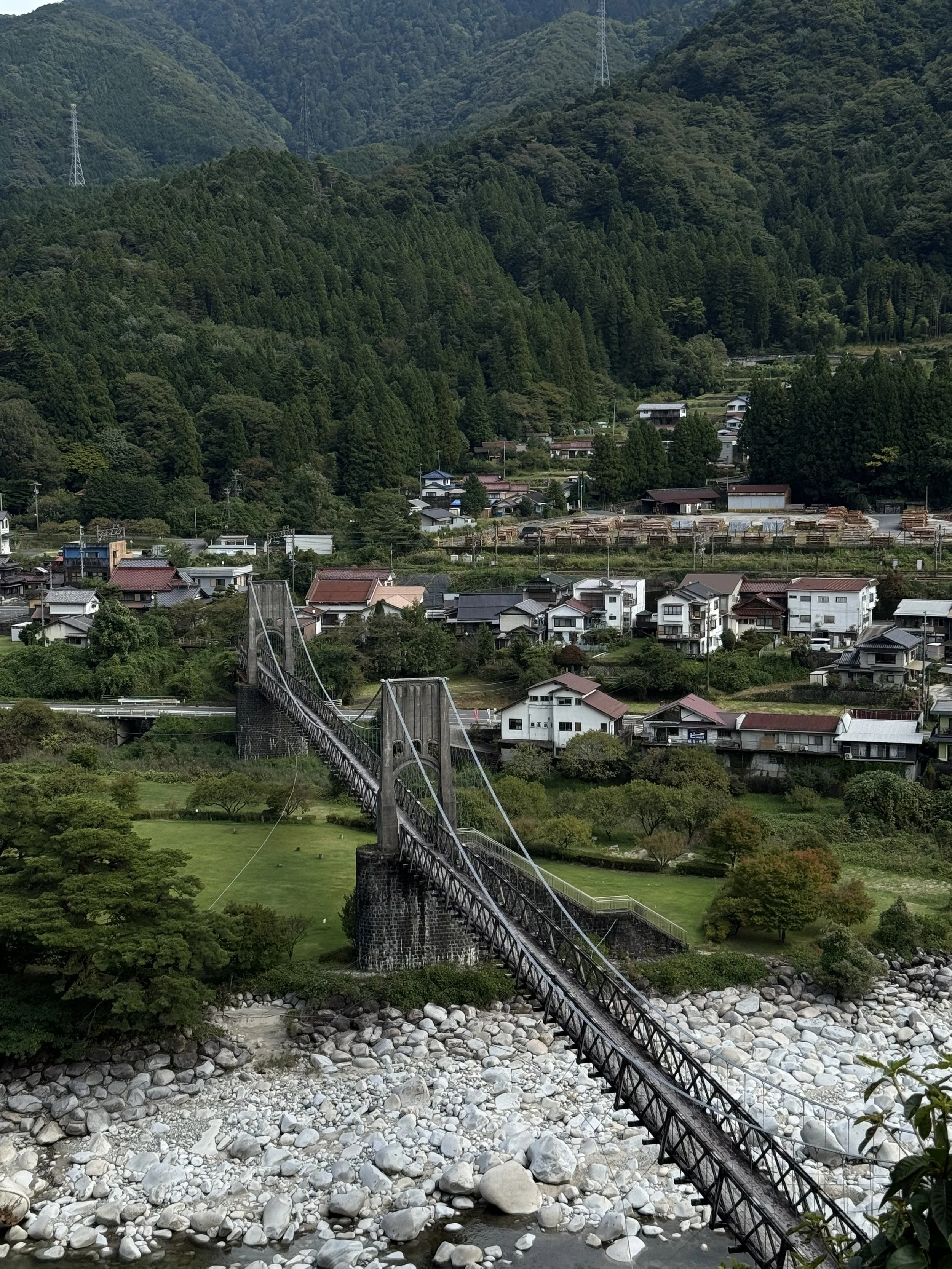
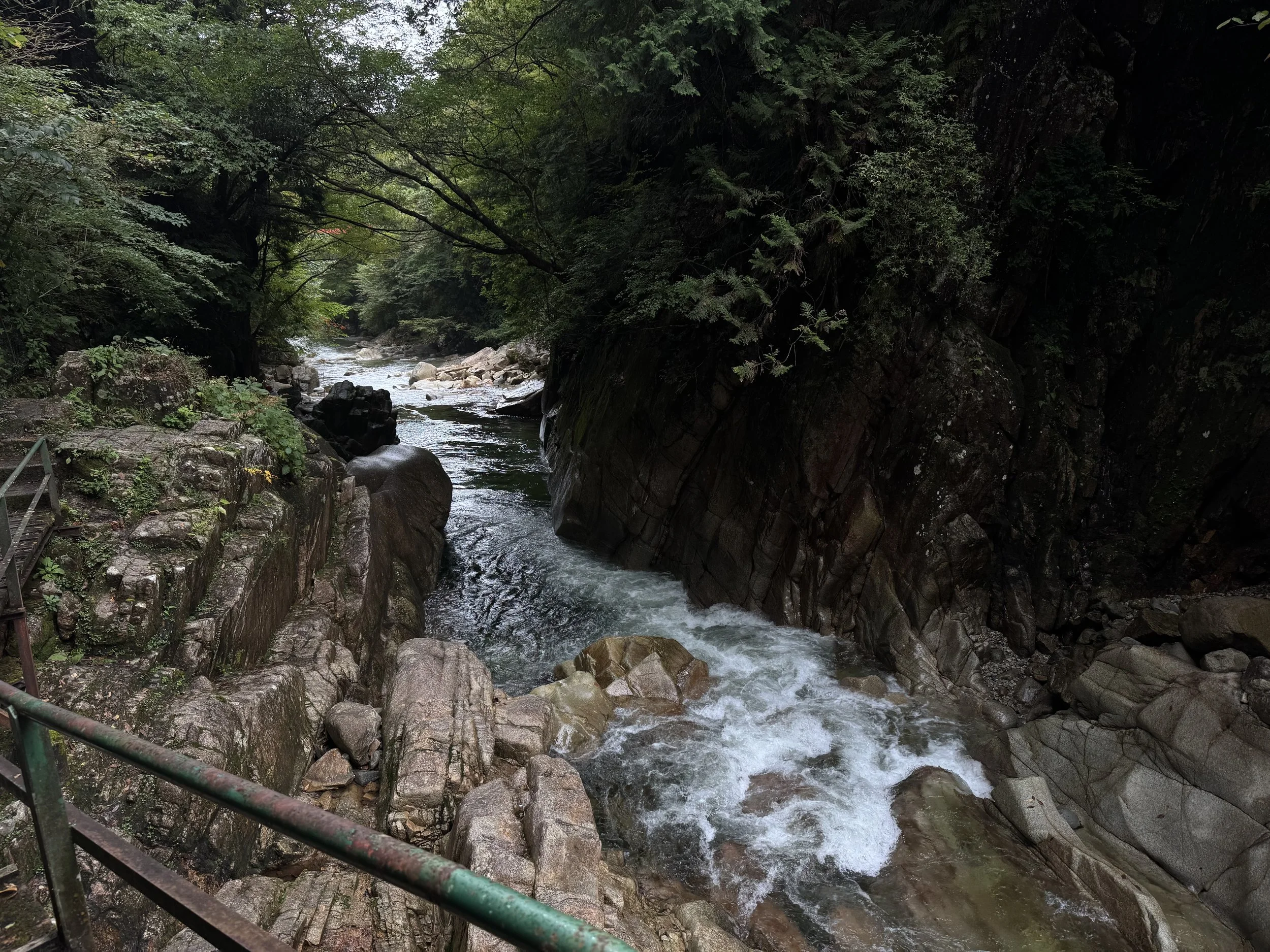
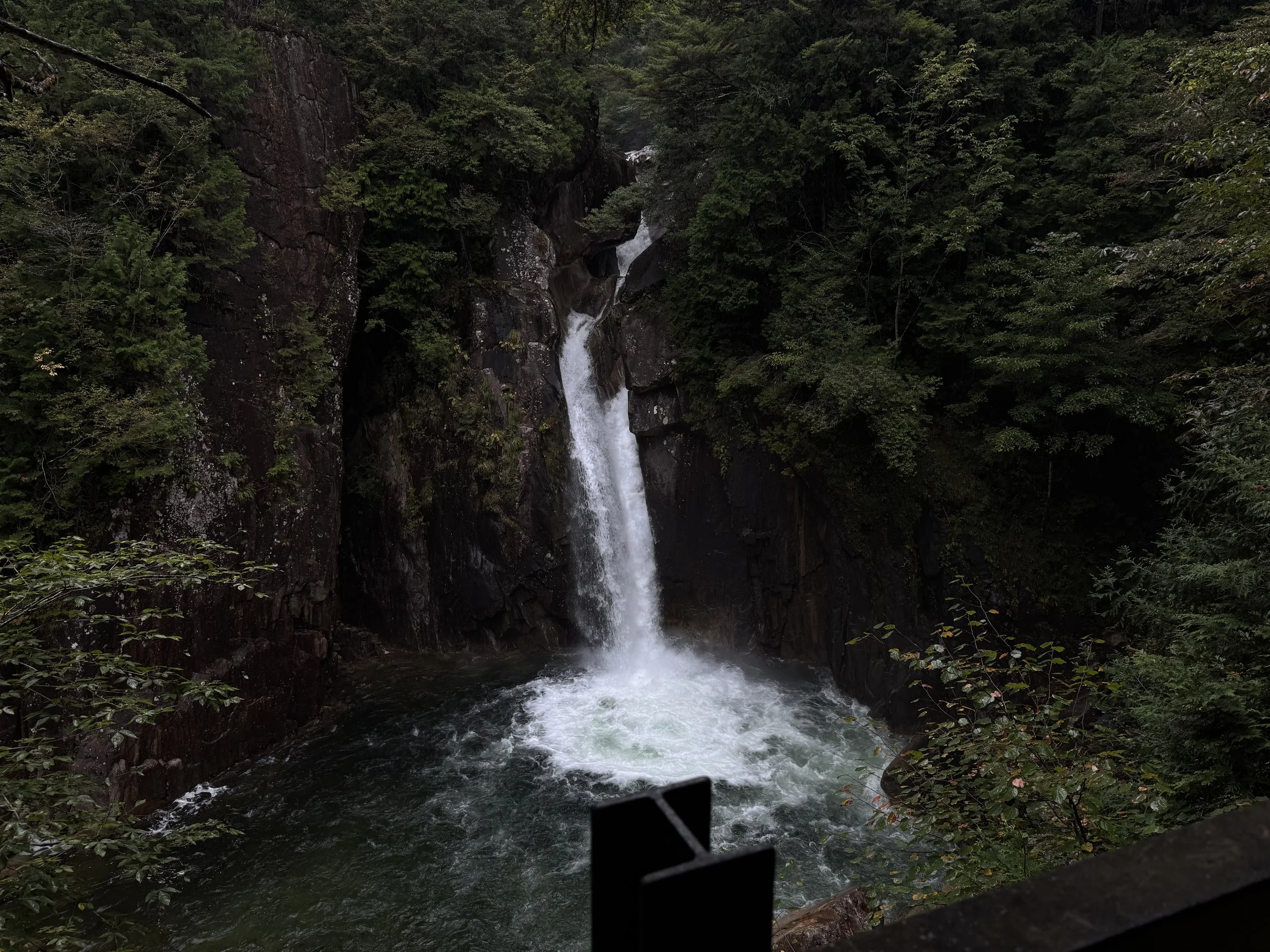
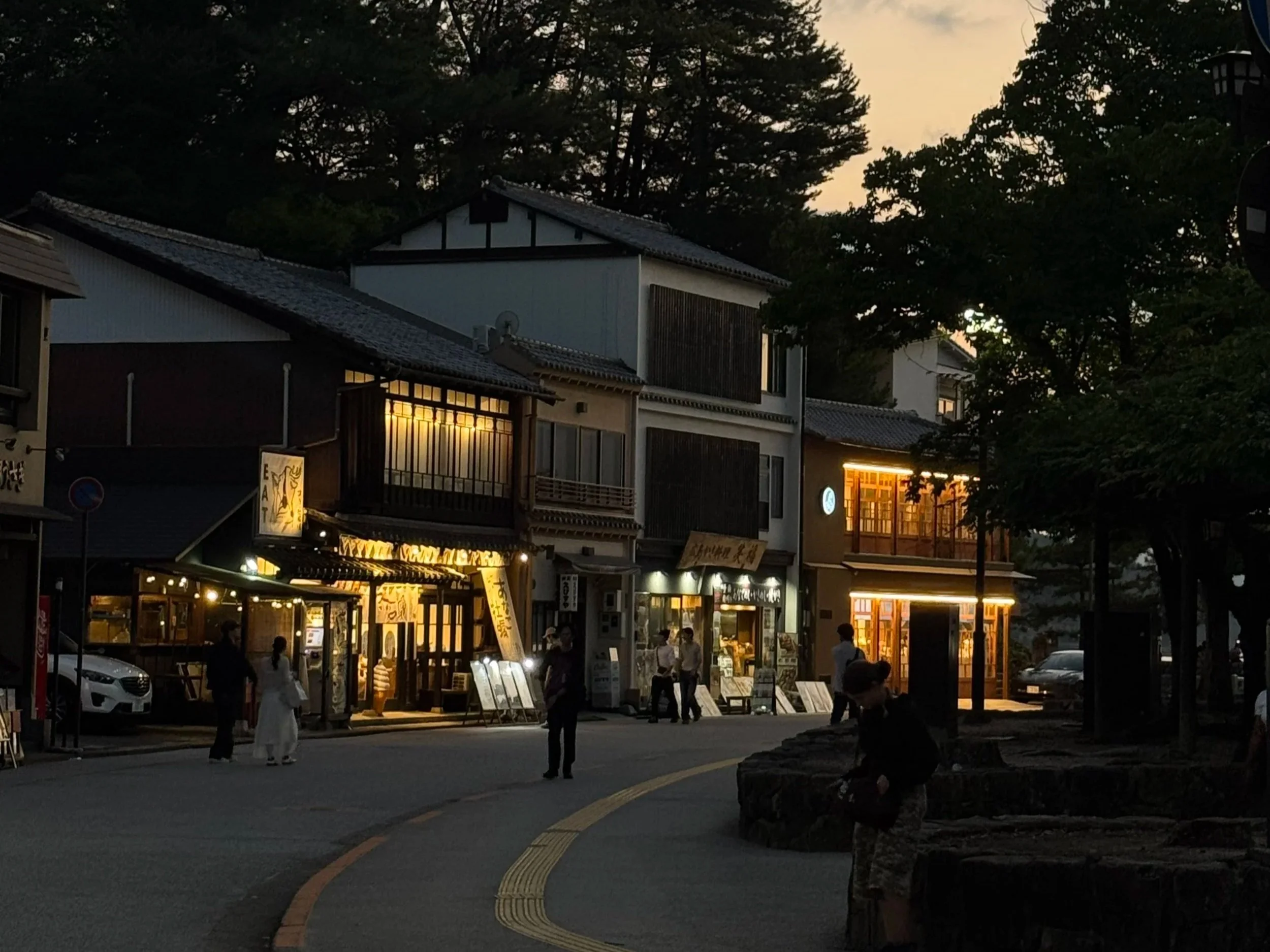
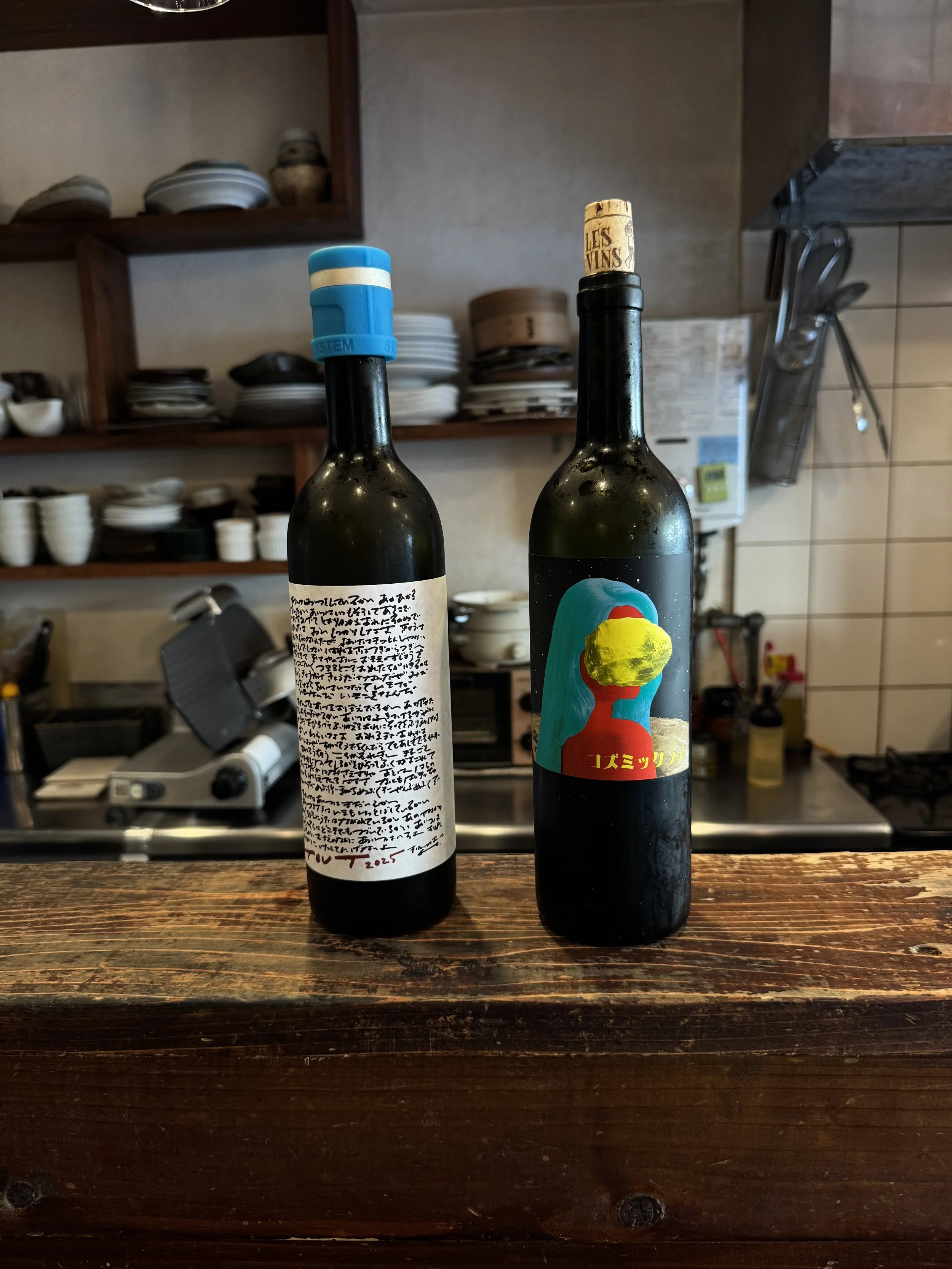
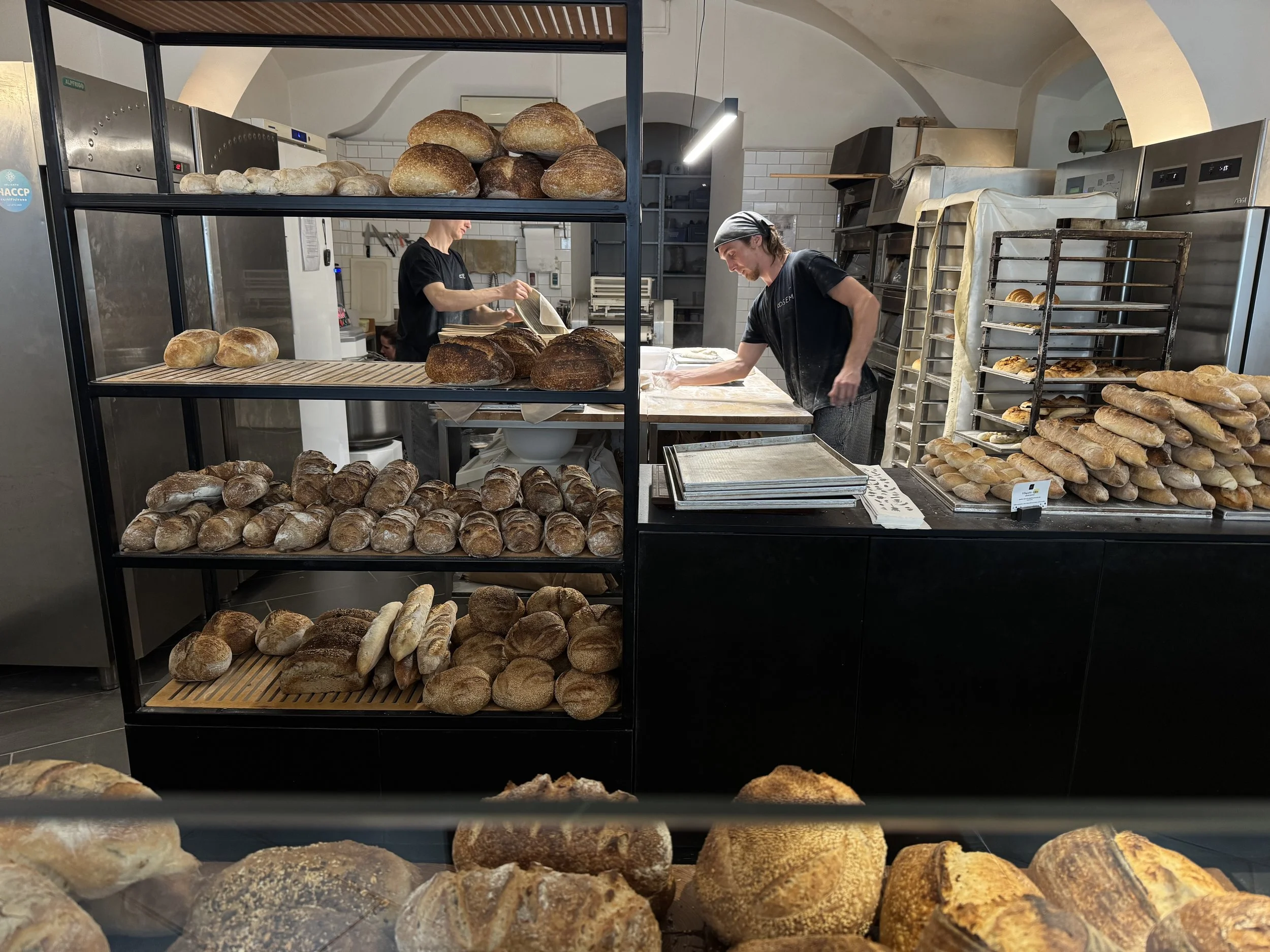
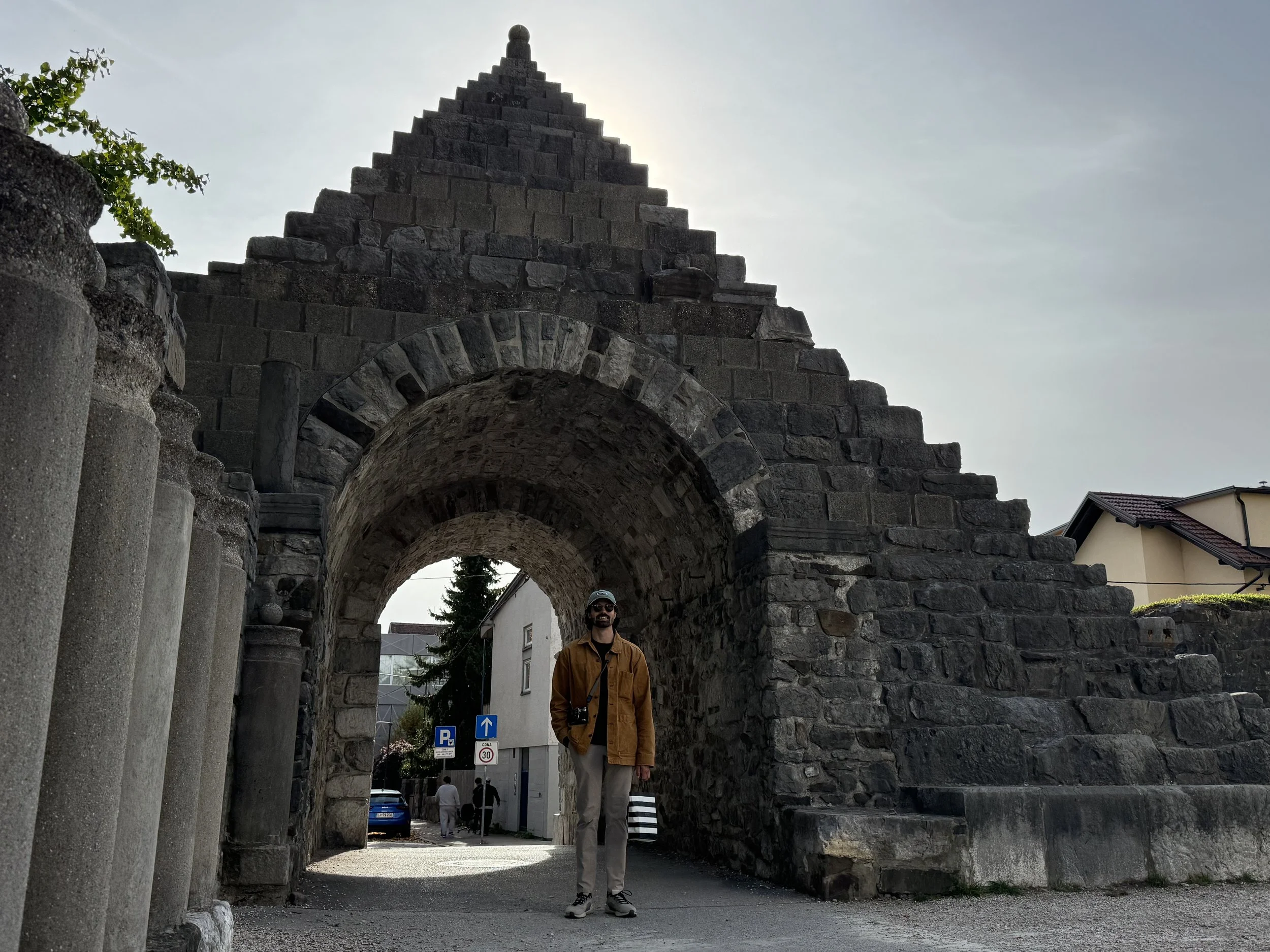
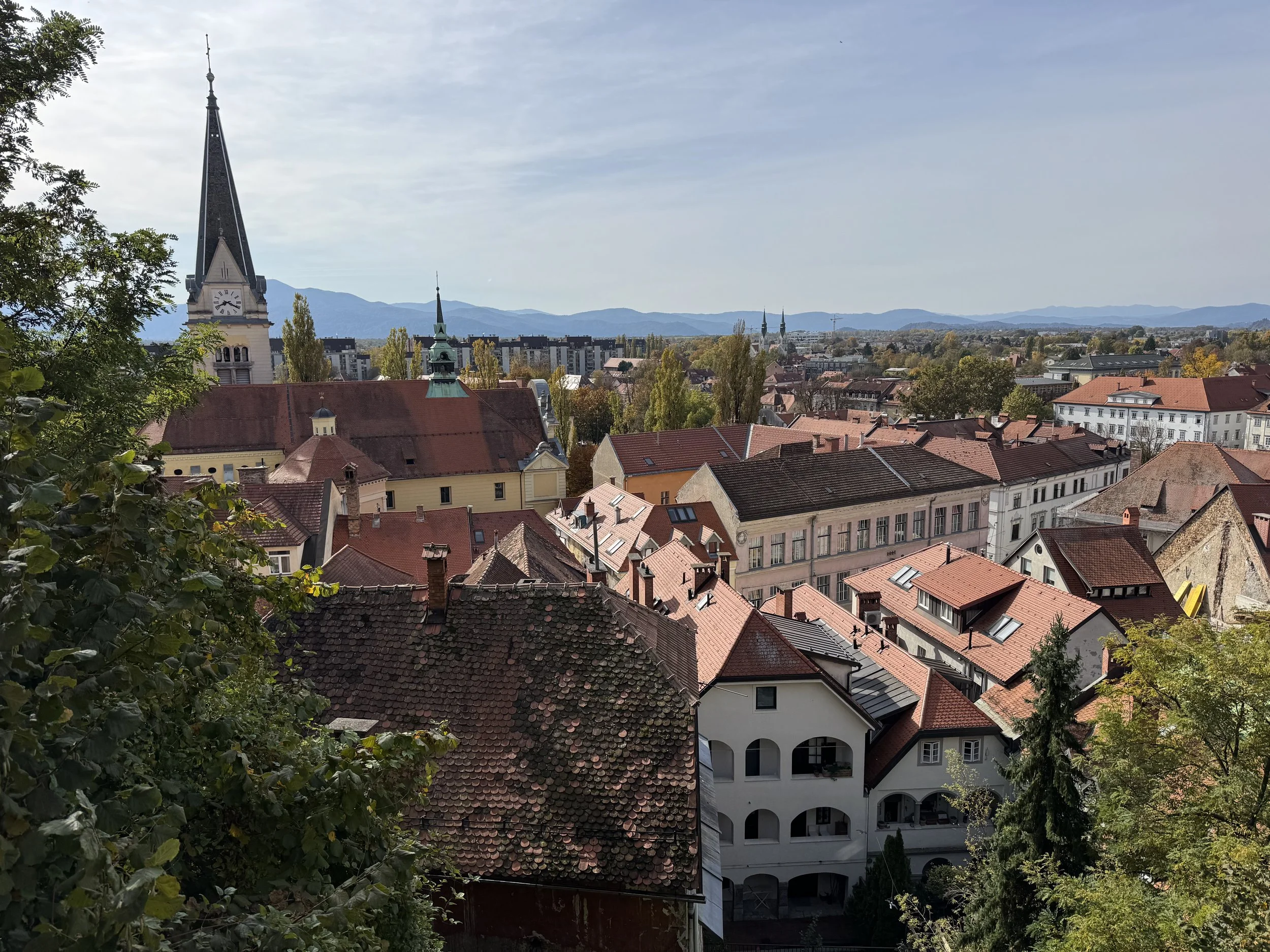
A Curiosity-Driven 3-Week Adventure through Japan: Food, Wine and Craft

We spent a wonderful three weeks in Japan following our curiosity, which turned out to be a very good guide. Some days that meant wandering Tokyo (in a typhoon nonetheless!) until our feet gave out, others took us into a woodworker’s shop or across a bridge toward an island covered in citrus groves. We went looking for beautiful places and good food, but the people who welcomed us every step of the way made each place hard to leave. This is our guide to the stays and small discoveries we’re still thinking about, with plenty of room left for you to find your own. Without further ado…
TOKYO

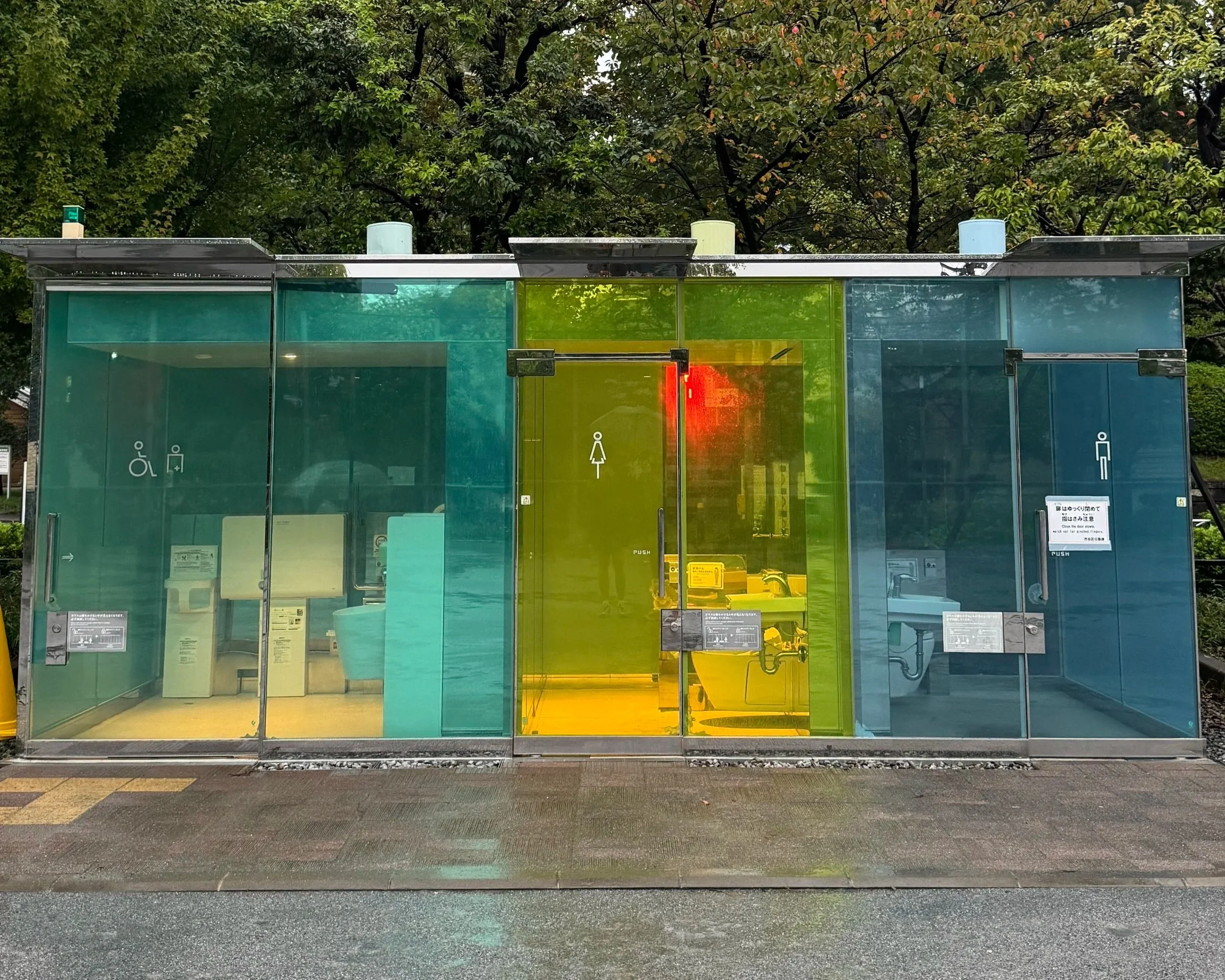
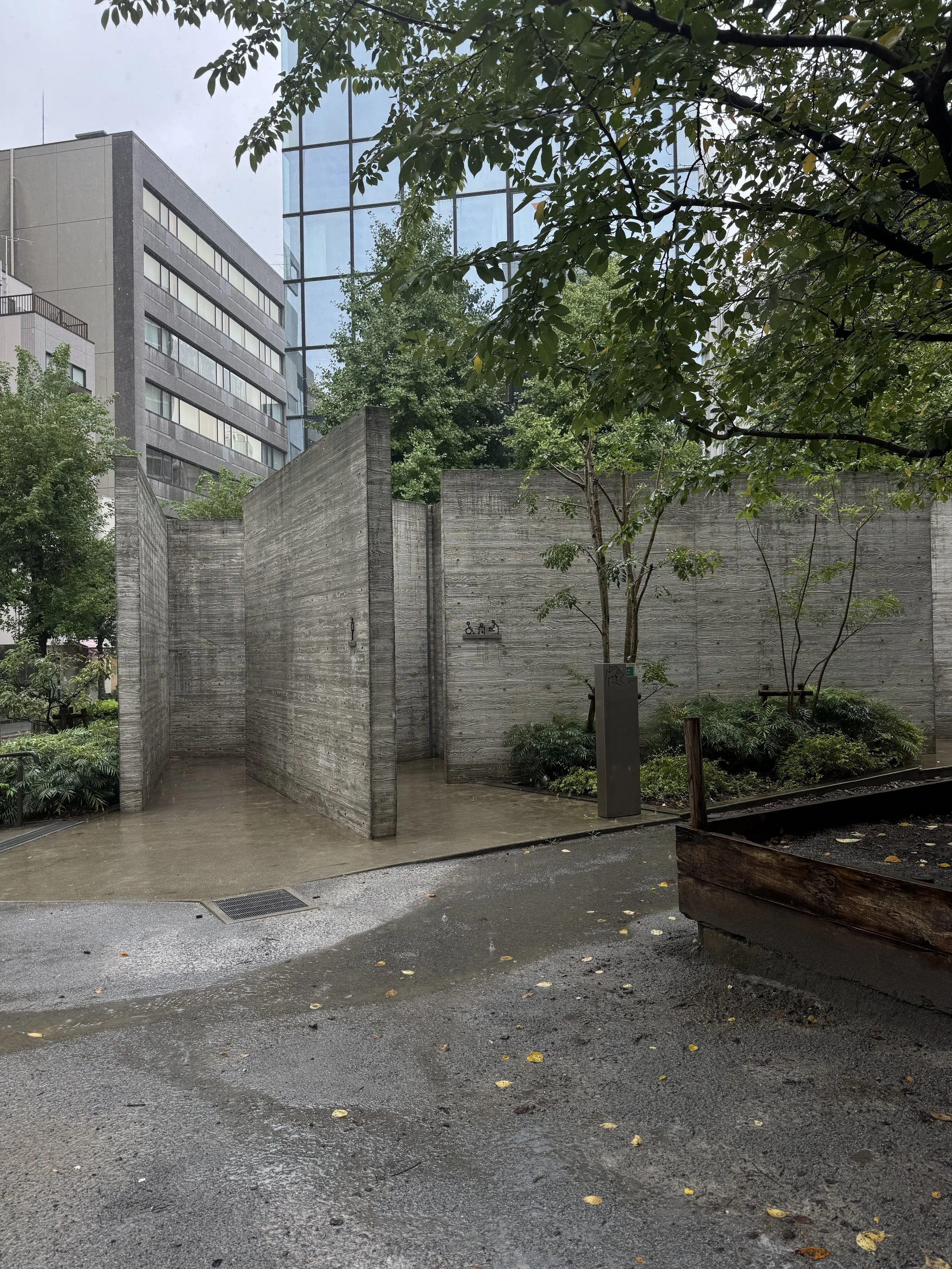
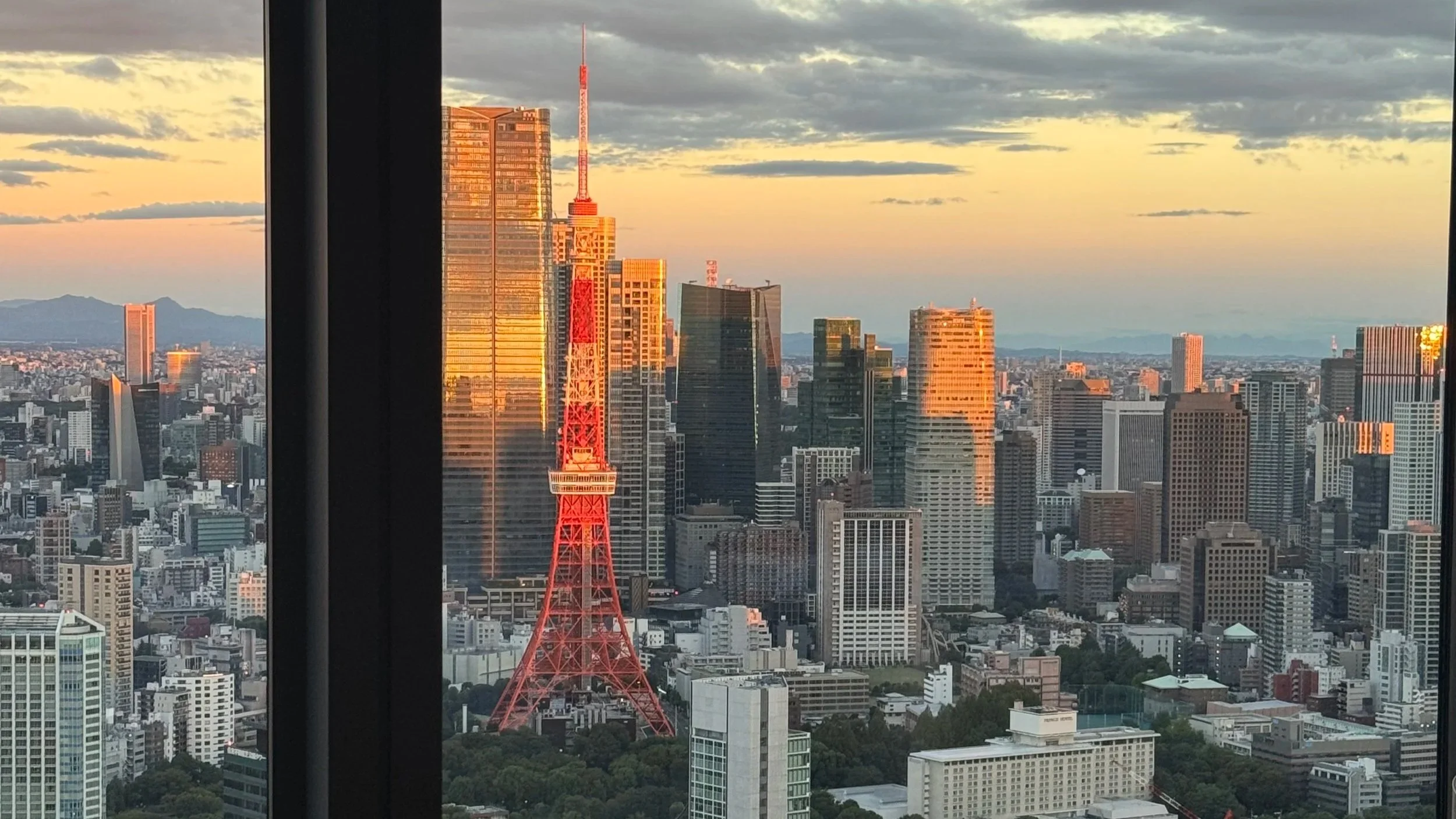
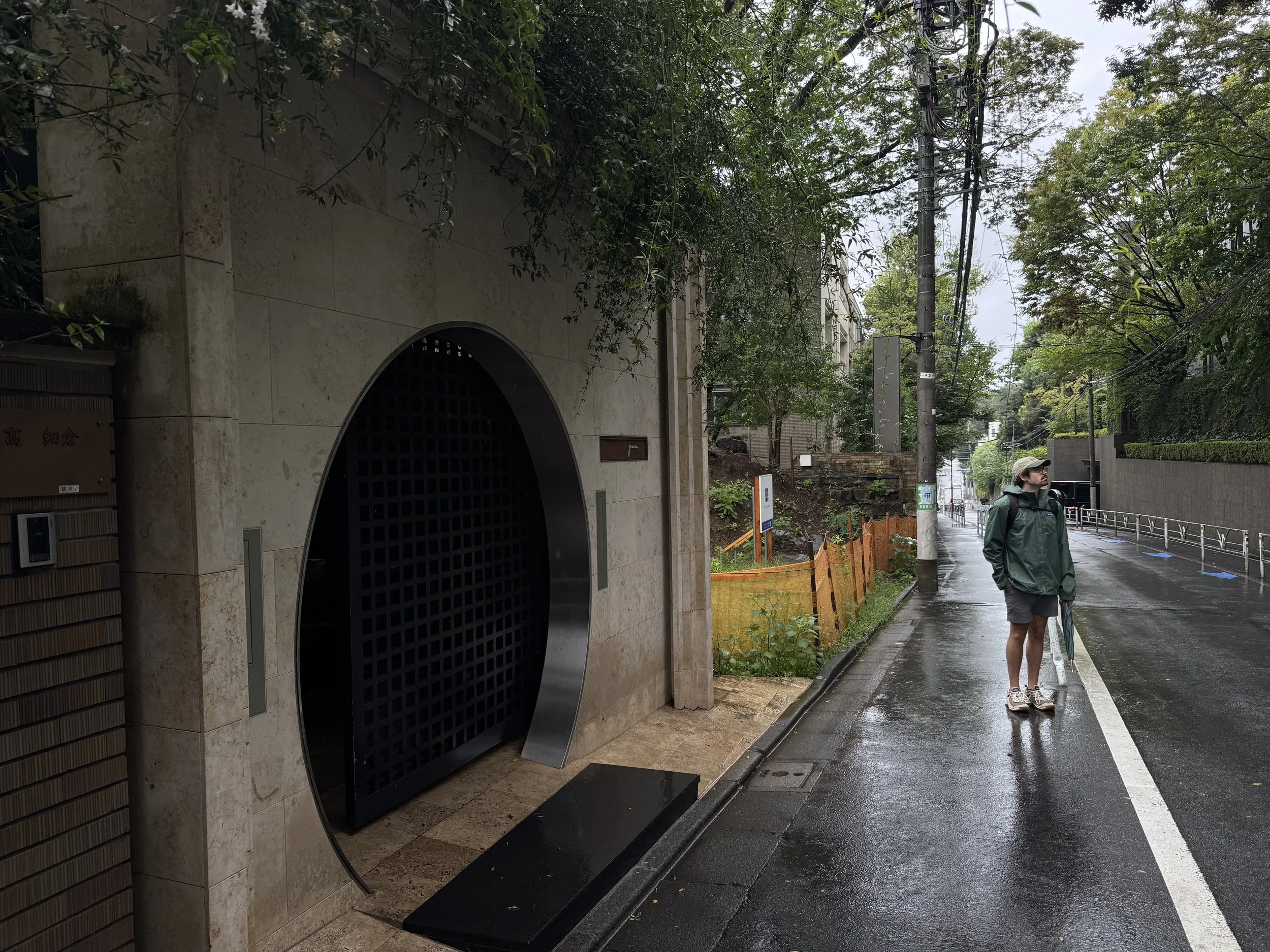
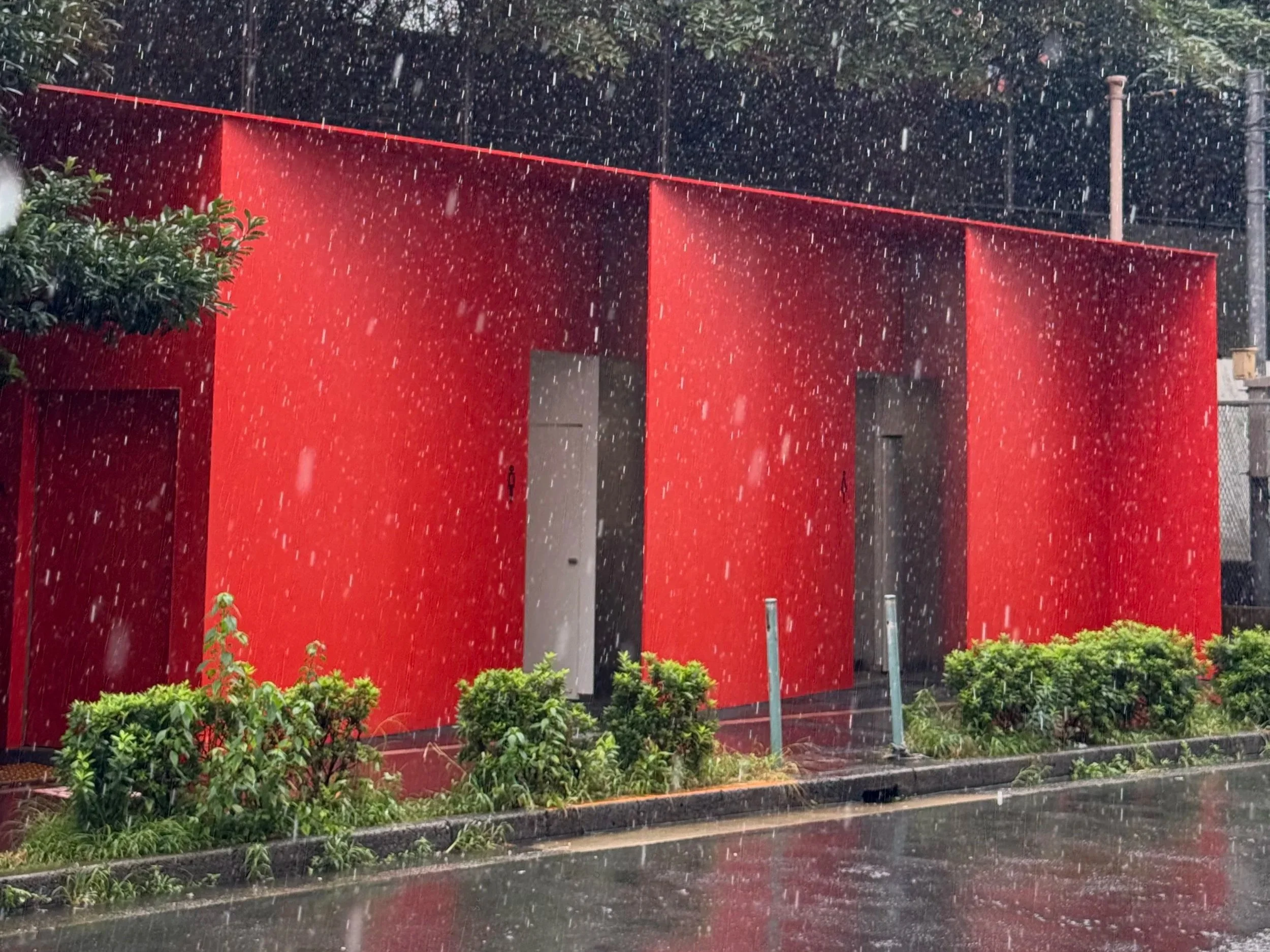
Tokyo is one of those cities where the best itinerary is honestly kind of anti-itinerary. Pick a neighborhood (there are so many!), start walking, and allow yourself to get drawn into the strange and wonderful things that draw you in whether that be a tiny bookstore, an interesting piece of architecture, or a public toilet designed by a Pritzker Prize-winning architect. Tokyo rewards curiosity and the possibilities are endless.

Where to Stay: Look no further than the Fairmont Tokyo.

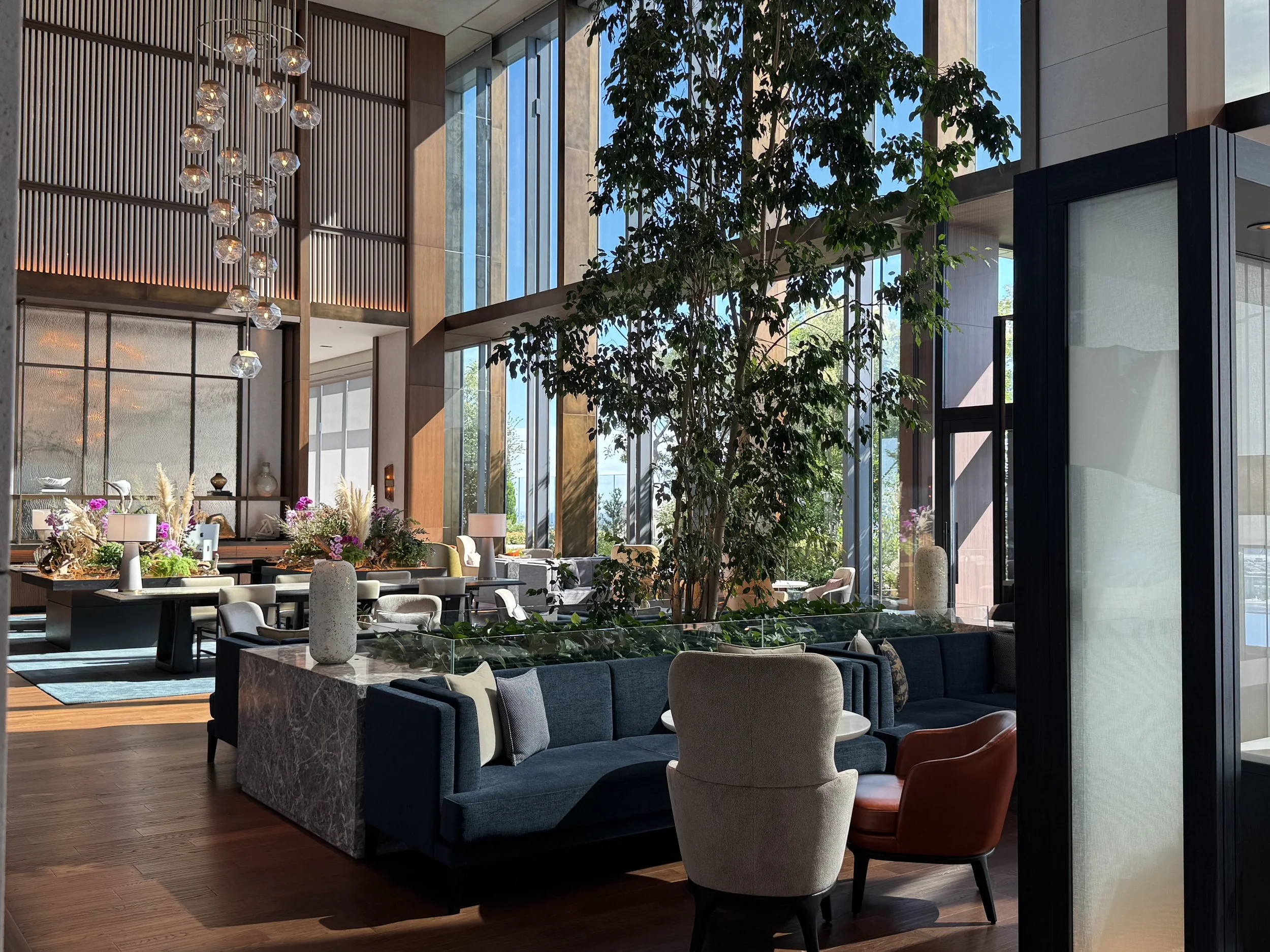
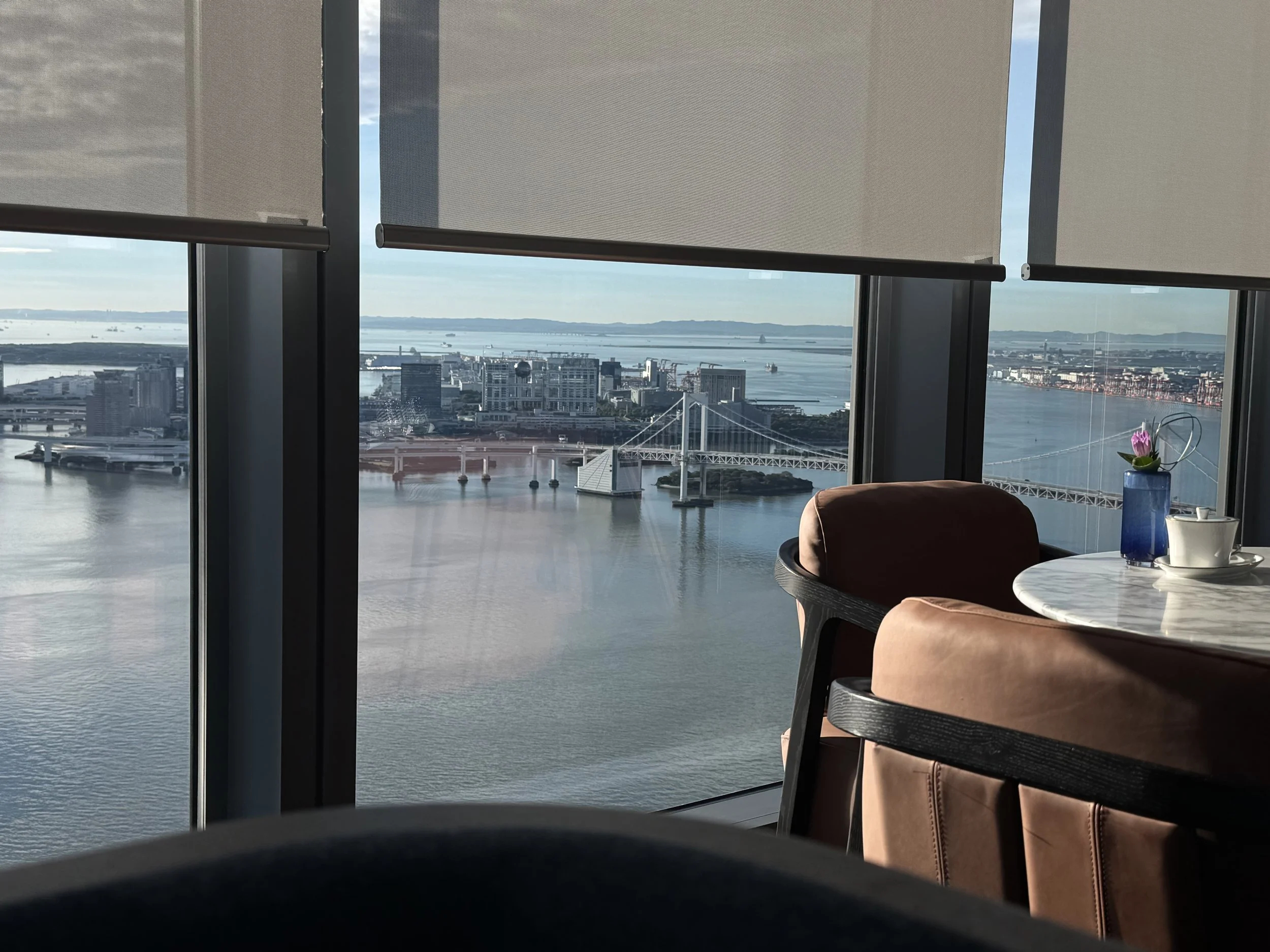
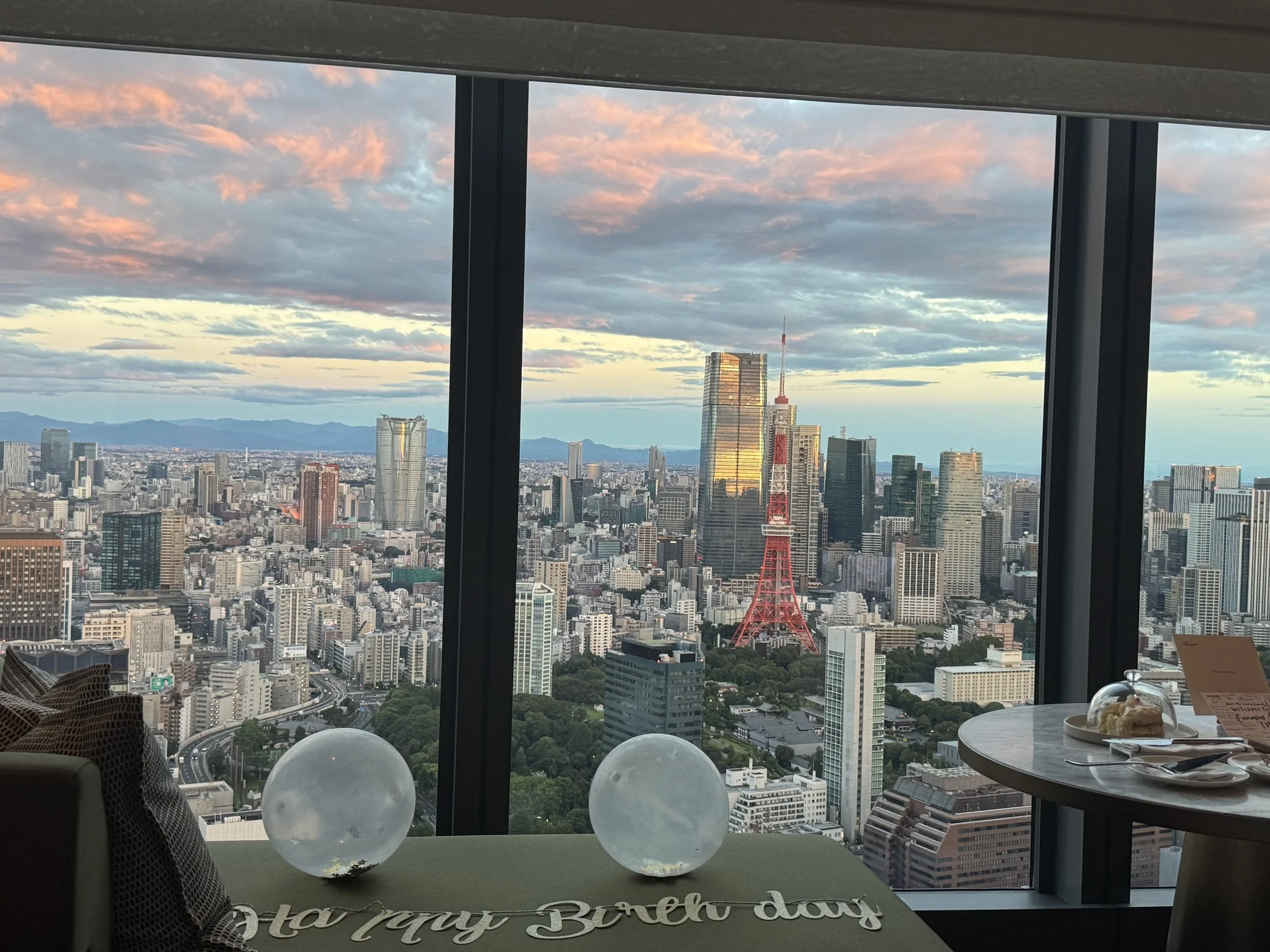
We absolutely loved everything about our stay at the Fairmont Tokyo. The hotel only opened in July 2025, and it feels like a very modernized version of Tokyo luxury. It’s a polished and stunningly beautiful oasis but without losing the sense that you are in the actual city. The views are spectacular. From high above Tokyo Bay, you are treated to an enormous panorama of the city, water and skyline that changes completely from morning into night. After long days of walking Tokyo, coming back to the Fairmont felt like coming “home,” rather than simply returning to a hotel.
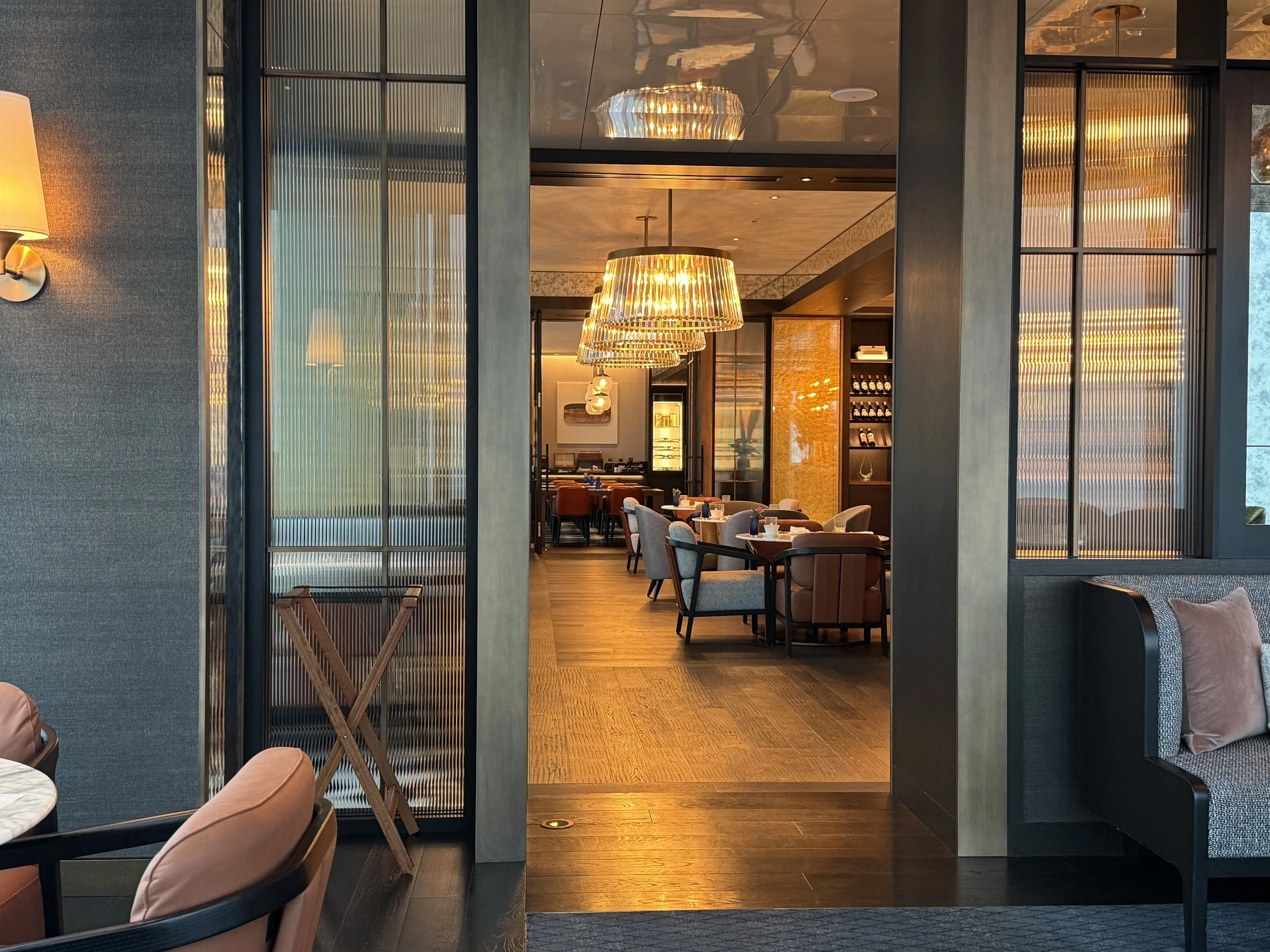
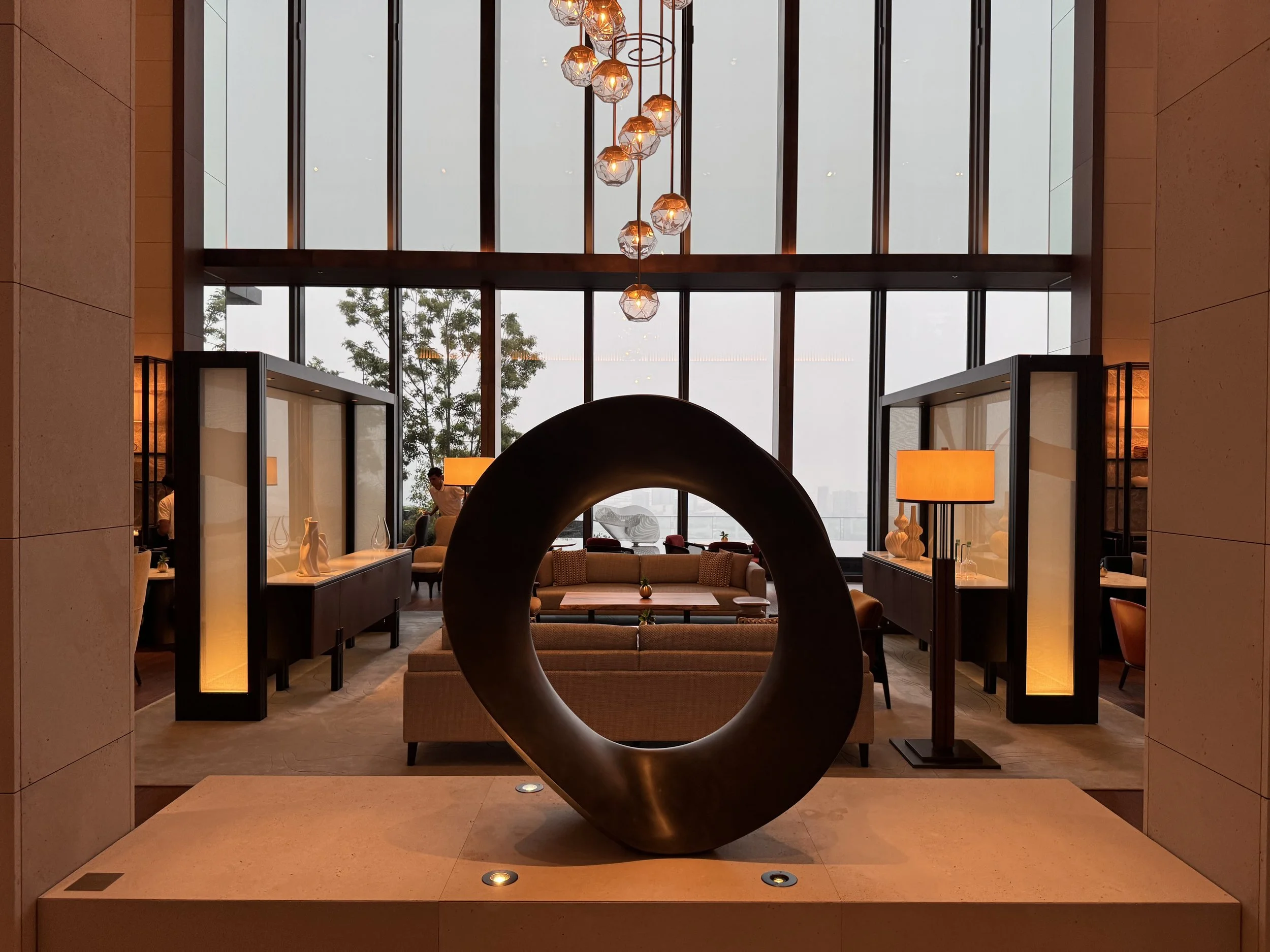
One of the biggest reasons we’d absolutely stay again is the wellness area. The 35th floor spa & wellness center has an indoor infinity pool with huge windows overlooking Tokyo, plus a sauna and other areas to just veg out. Not too many places where you can swim laps while hovering over one of the world’s largest and coolest cities.

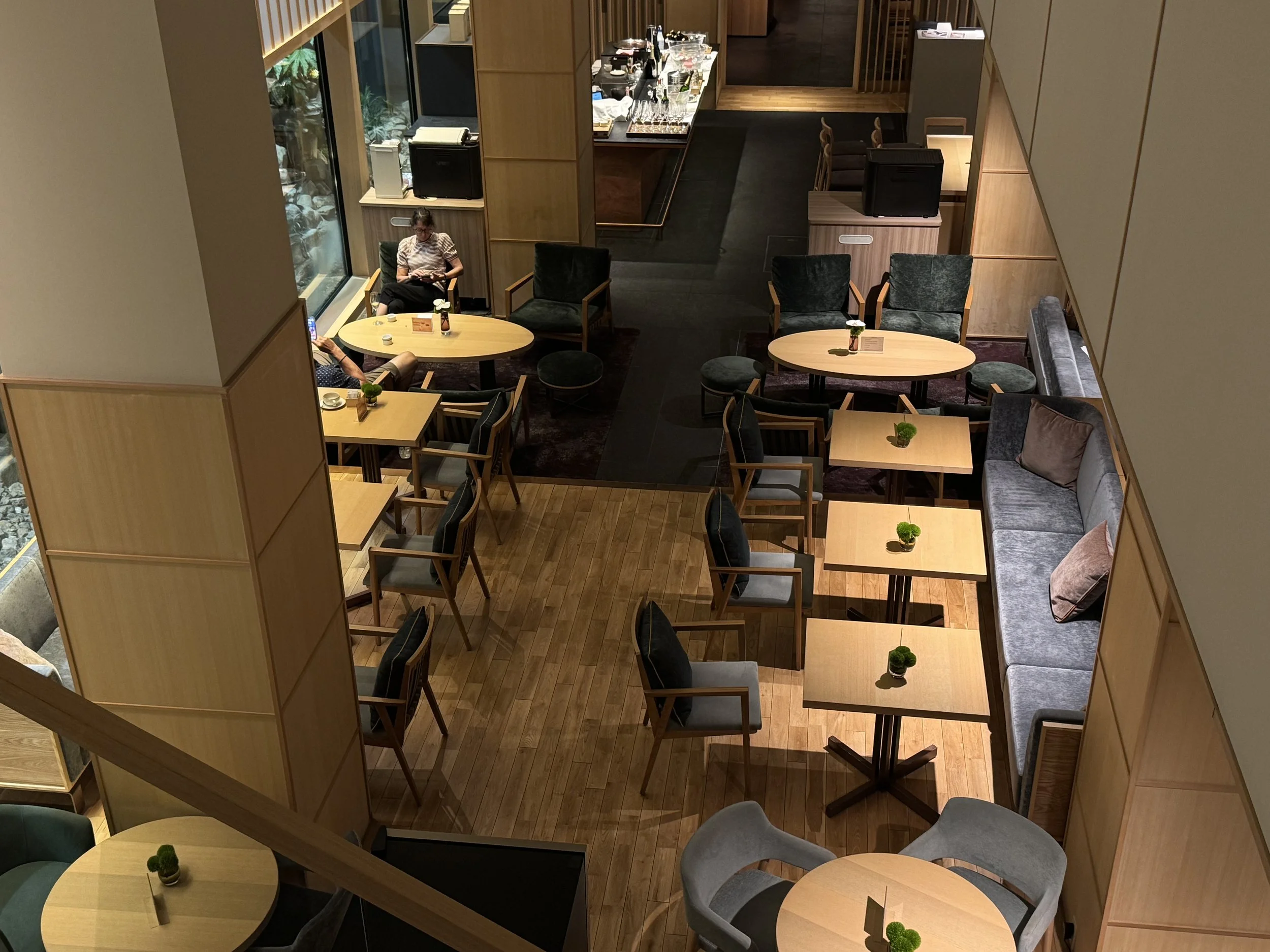
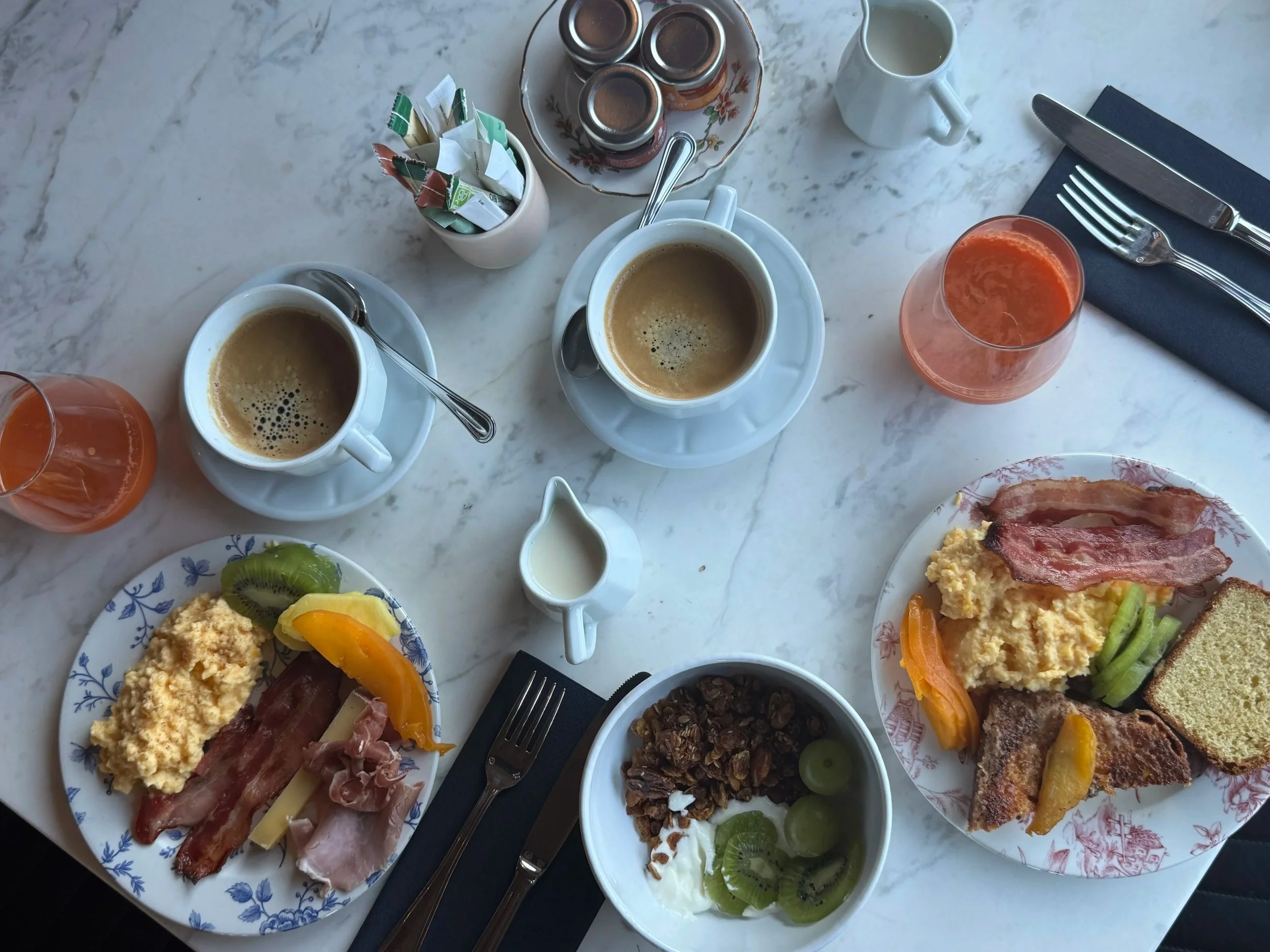
If your room includes Fairmont Gold as ours did, take full advantage. Gold guests have access to the private Fairmont Gold lounge, which includes breakfast, evening drinks, and a gorgeous tea set up when you check in. I really valued having a quiet, hearty breakfast high above Tokyo to prepare my nervous system for the sensory overload that lie ahead each day. It became one of the rituals I loved most when reflecting back on our 3 week trip.
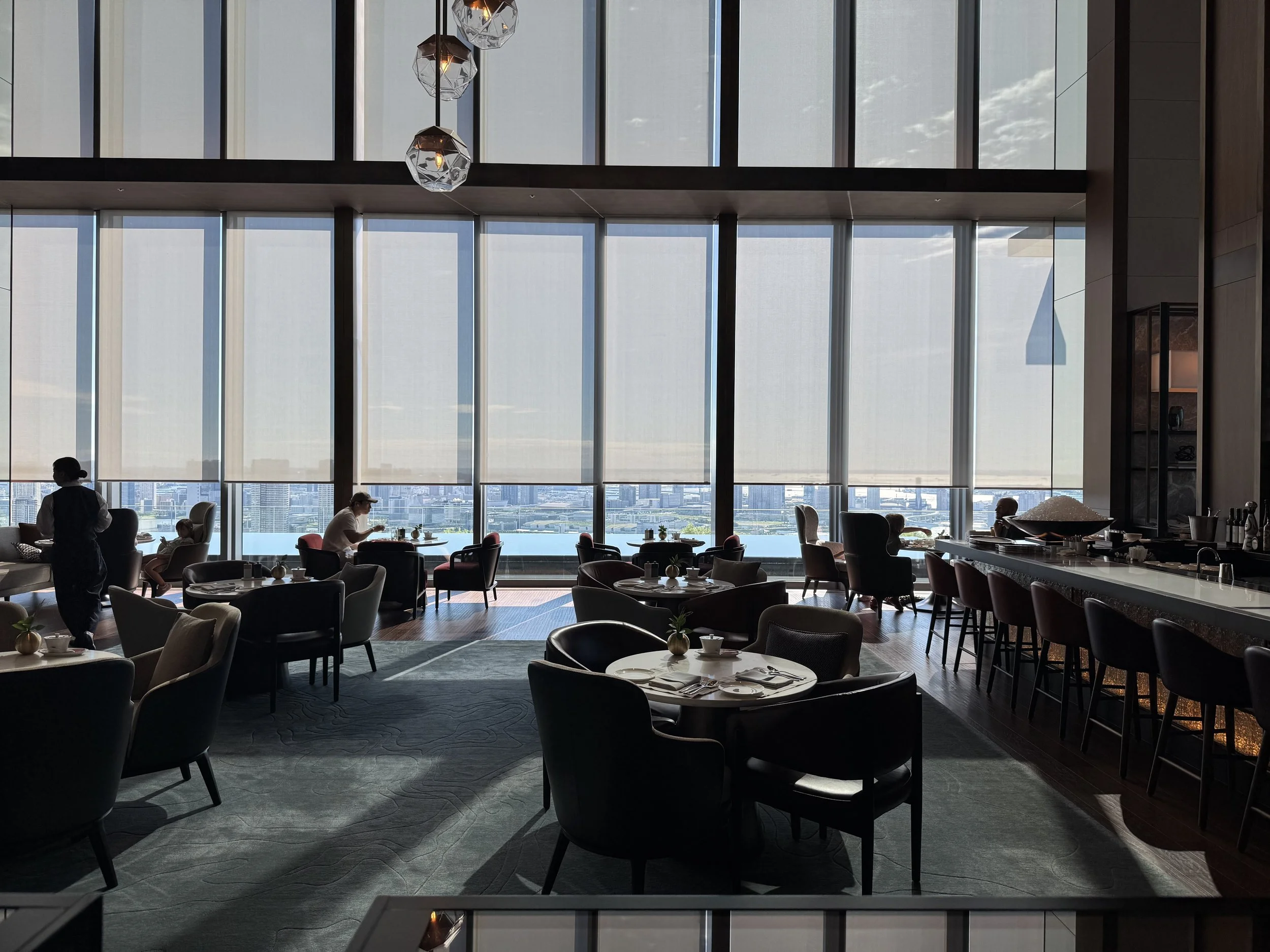
The service was also top notch and everyone was incredibly kind, from the front desk staff, to the breakfast team, right down to the concierge that handed us our umbrella everyday as we headed out into typhoon conditions (which honestly were not that bad, as long as you came prepared!)

Overall, worth it for: a splurge, a first few jet-lagged days in Japan, skyline views, the pool & spa for relaxation, and having somewhere calm & restorative to return to after 20,000 step days. I should also add that I turned 40 on our trip and they went above and beyond to make me feel special - so the hospitality is second to none!

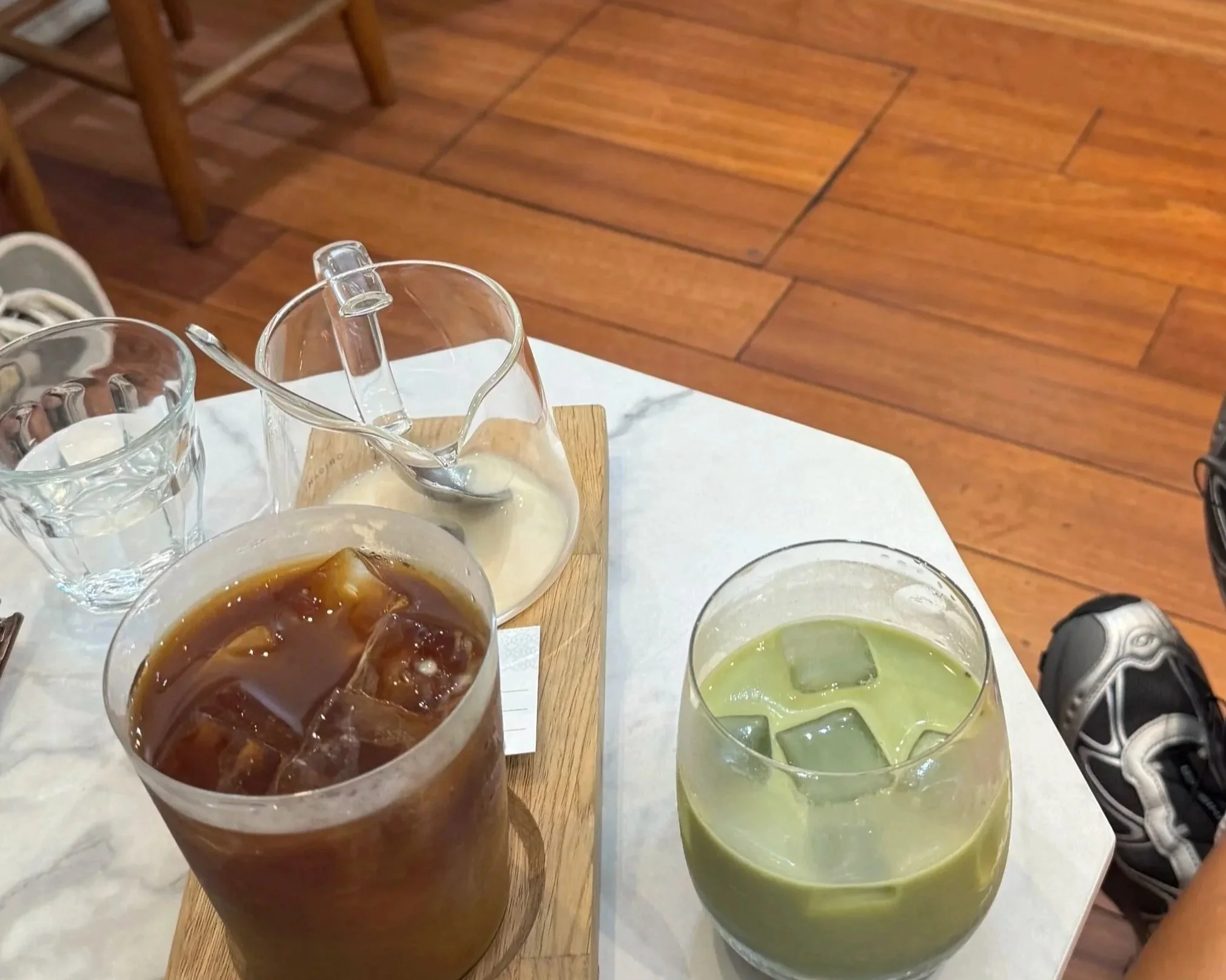
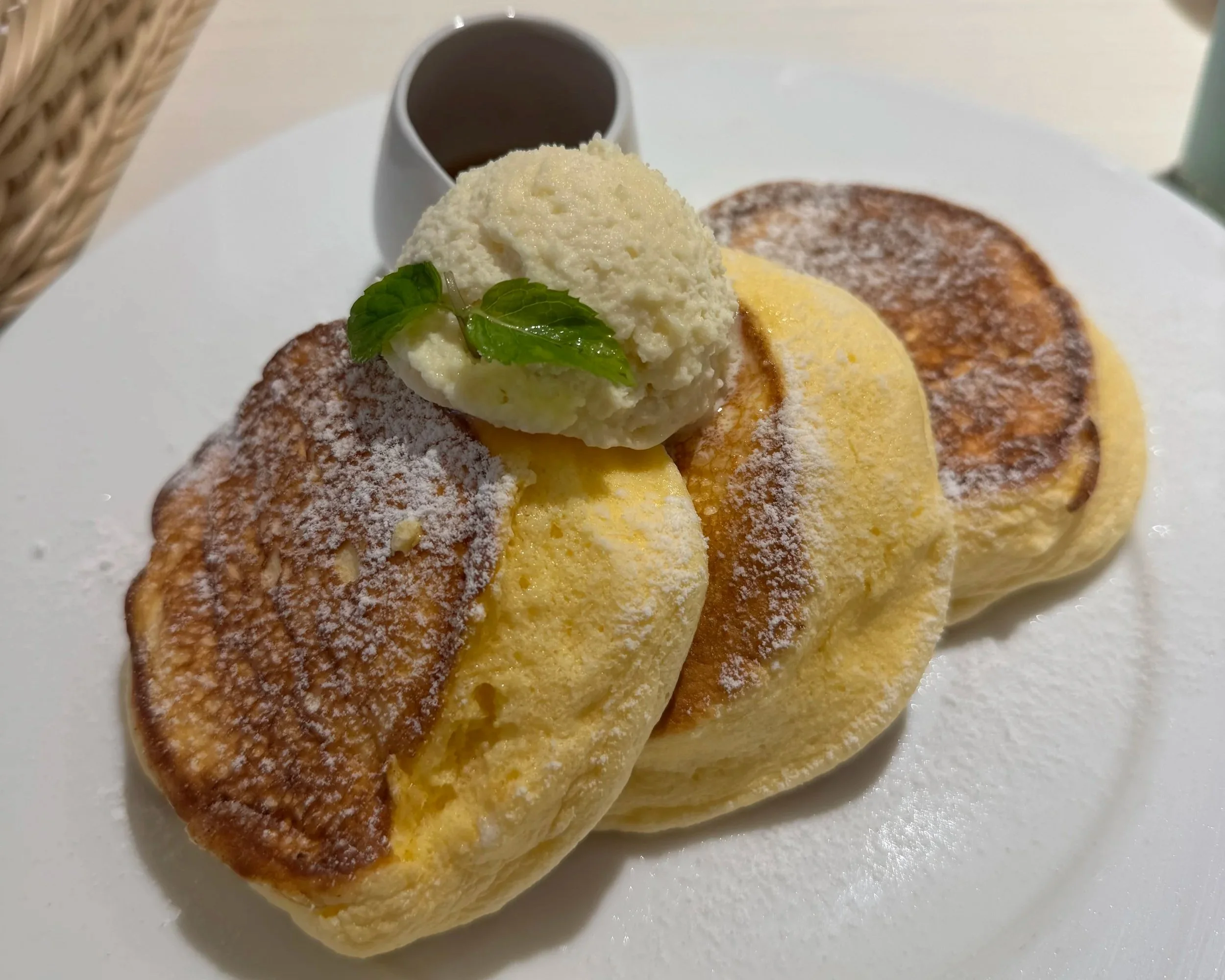
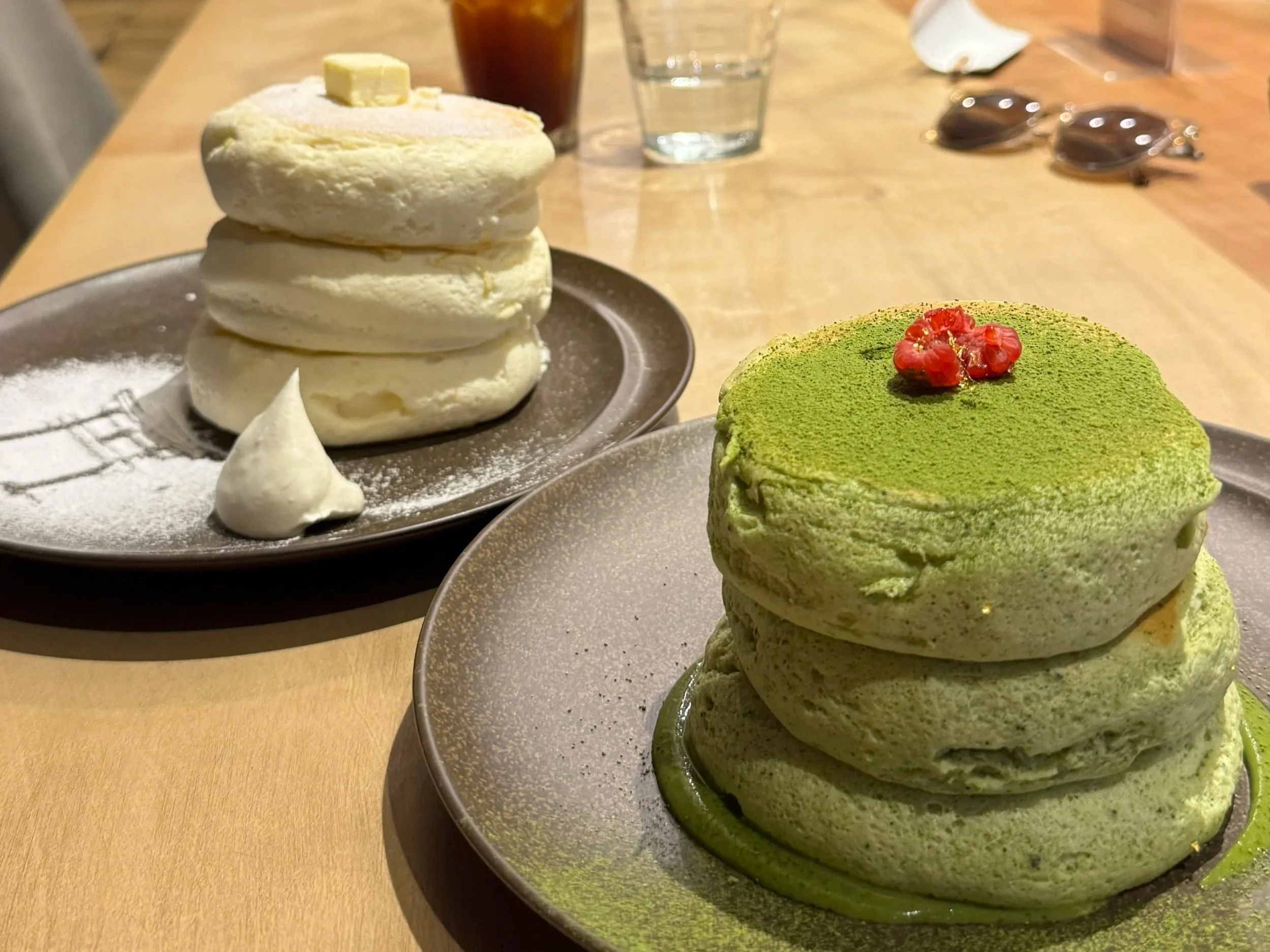
Where to Eat/Drink: Tokyo isn’t a city where I would build your entire days around only resto reservations but you do want to make some, as the most popular ones can and do book up - especially on the weekends. But I should add that some of our favorite food experiences mostly came from wandering food halls, tiny counters, and little grocers. And obviously, anywhere you can get a great matcha and ricotta pancakes (new to me, and certainly a revelation) always float to the top of my list.

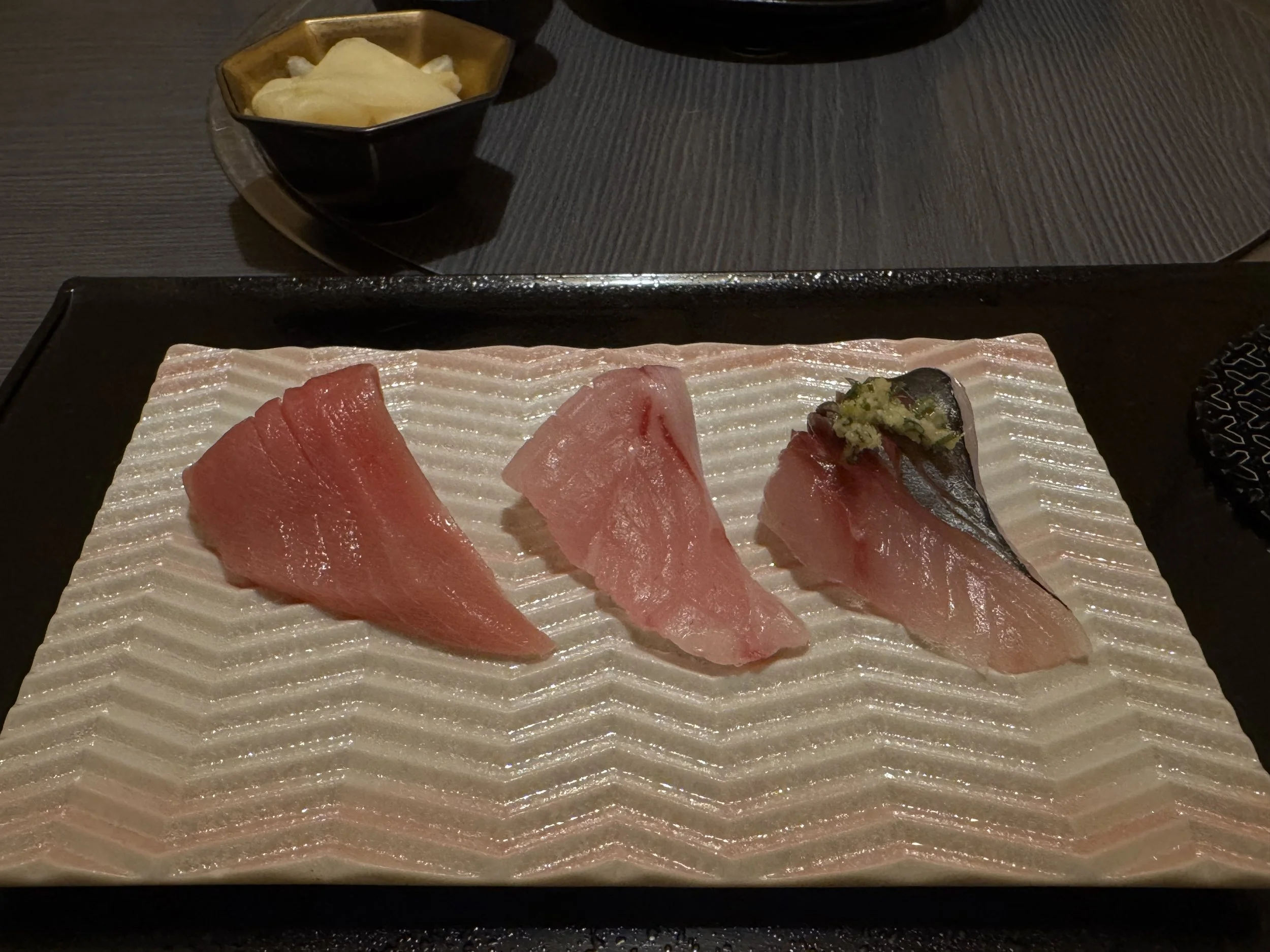
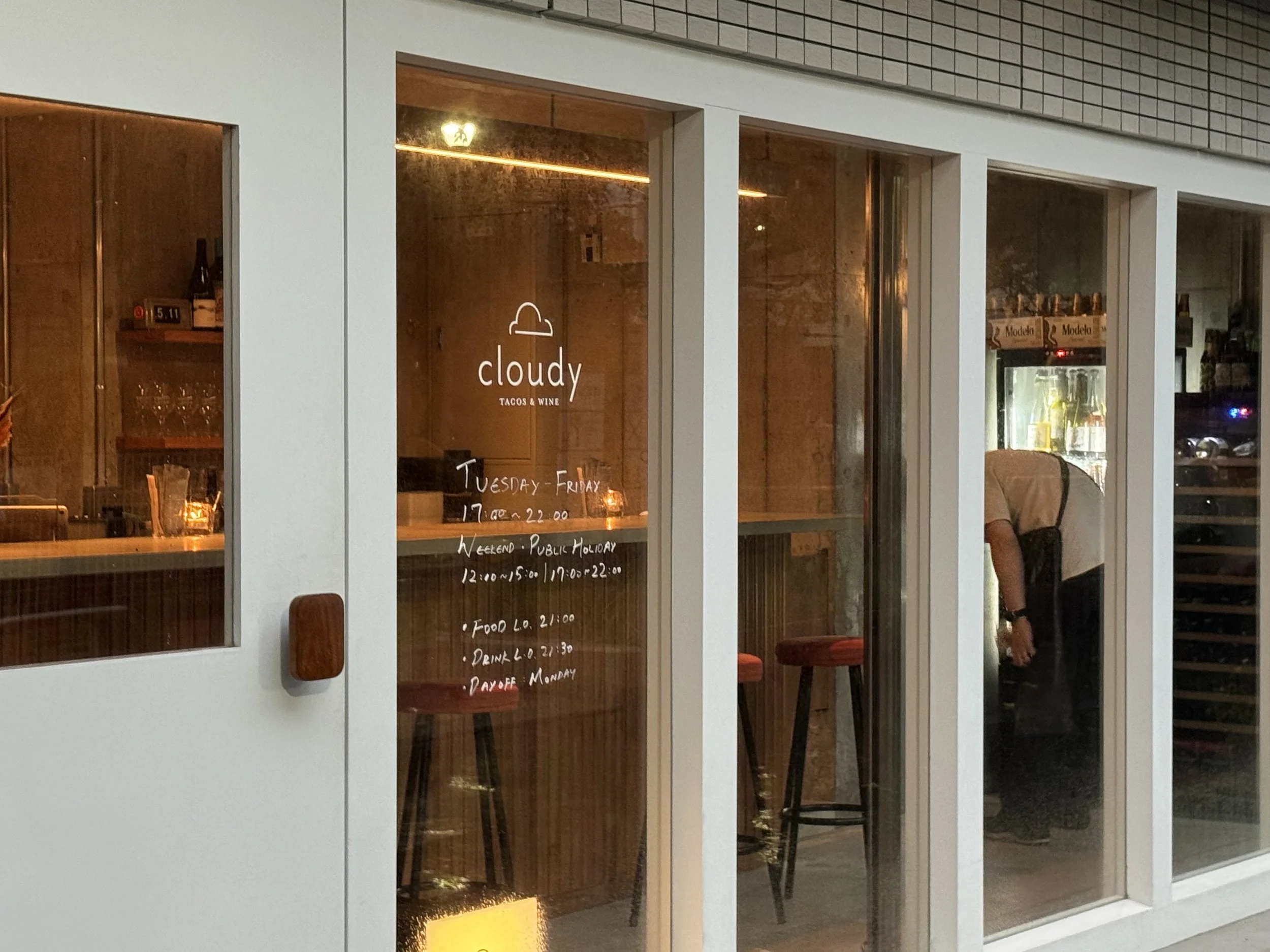
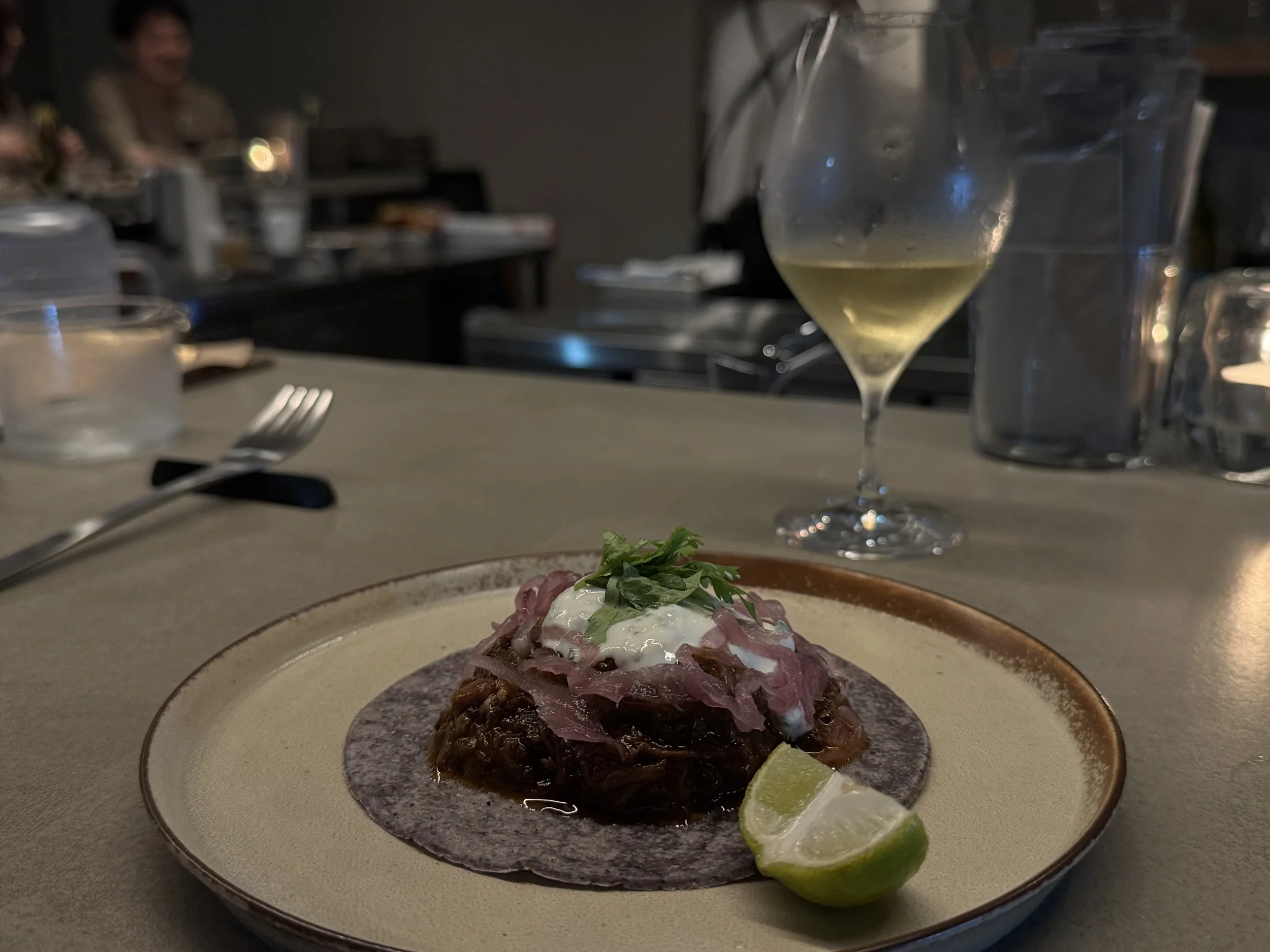
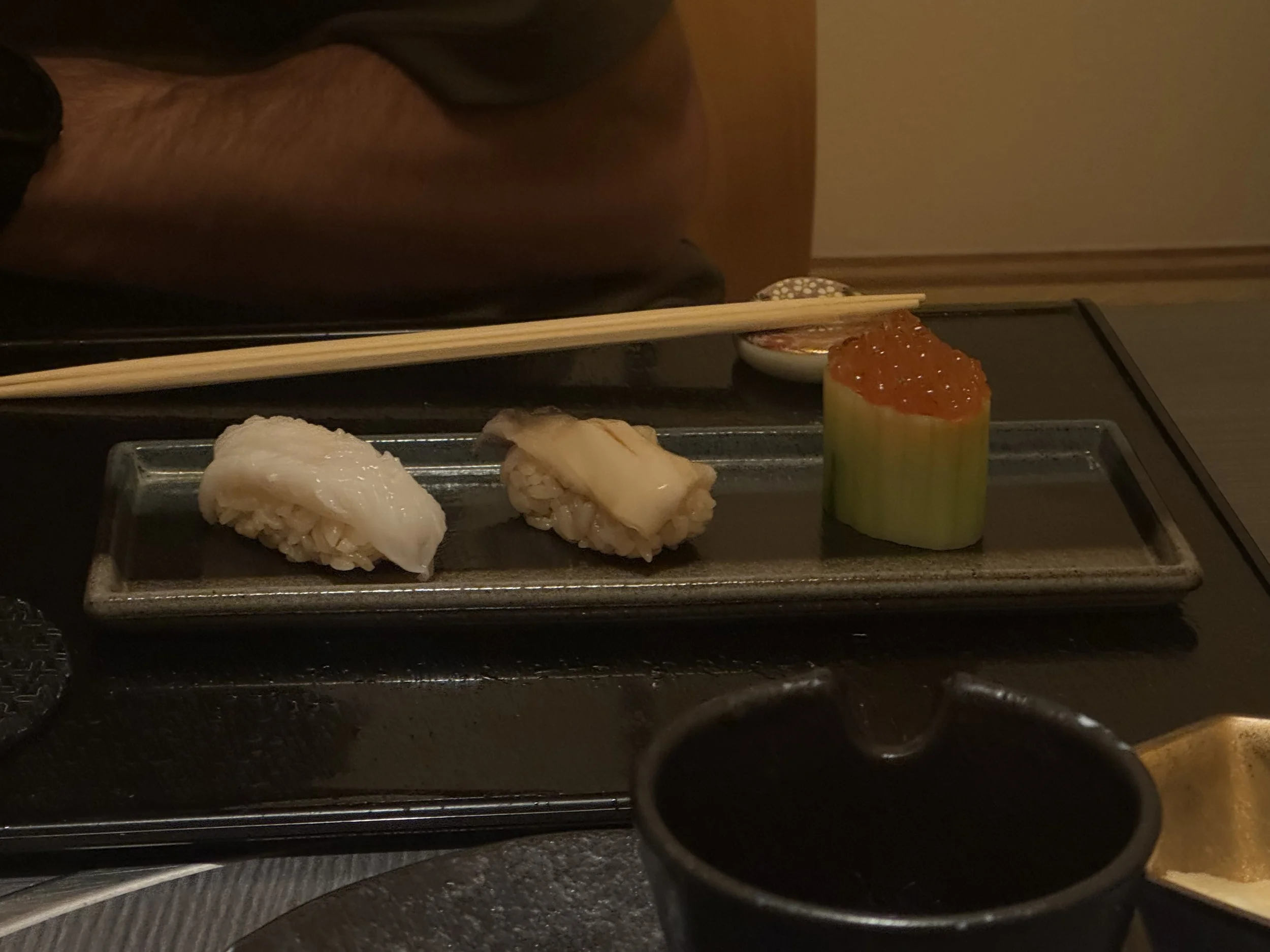
Some favorite spots visited were: For breakfast: Happy Pancake (best place to get Ricotta pancakes, in my opinion!), Ome Farm Kitchen, On the Pond, Cloudy (tacos + natty wine, what more could you ask for?), Driftwood (convenient and reliable if you are staying at the Fairmont, as it is on site), and we enjoyed an excellent sushi omakase meal at Sushi Minowa Akasaka. One word to the wise for Americans: do not trust a Google review score in Japan. I know we are used to seeking out the 4.7 and above back at home, but if it’s above a 3.0 in Japan, it’s actually quite good. The ratings scale is entirely different and some of our best finds were in the 3.3 - 3.8 range!
Design Shops/Bookstores:

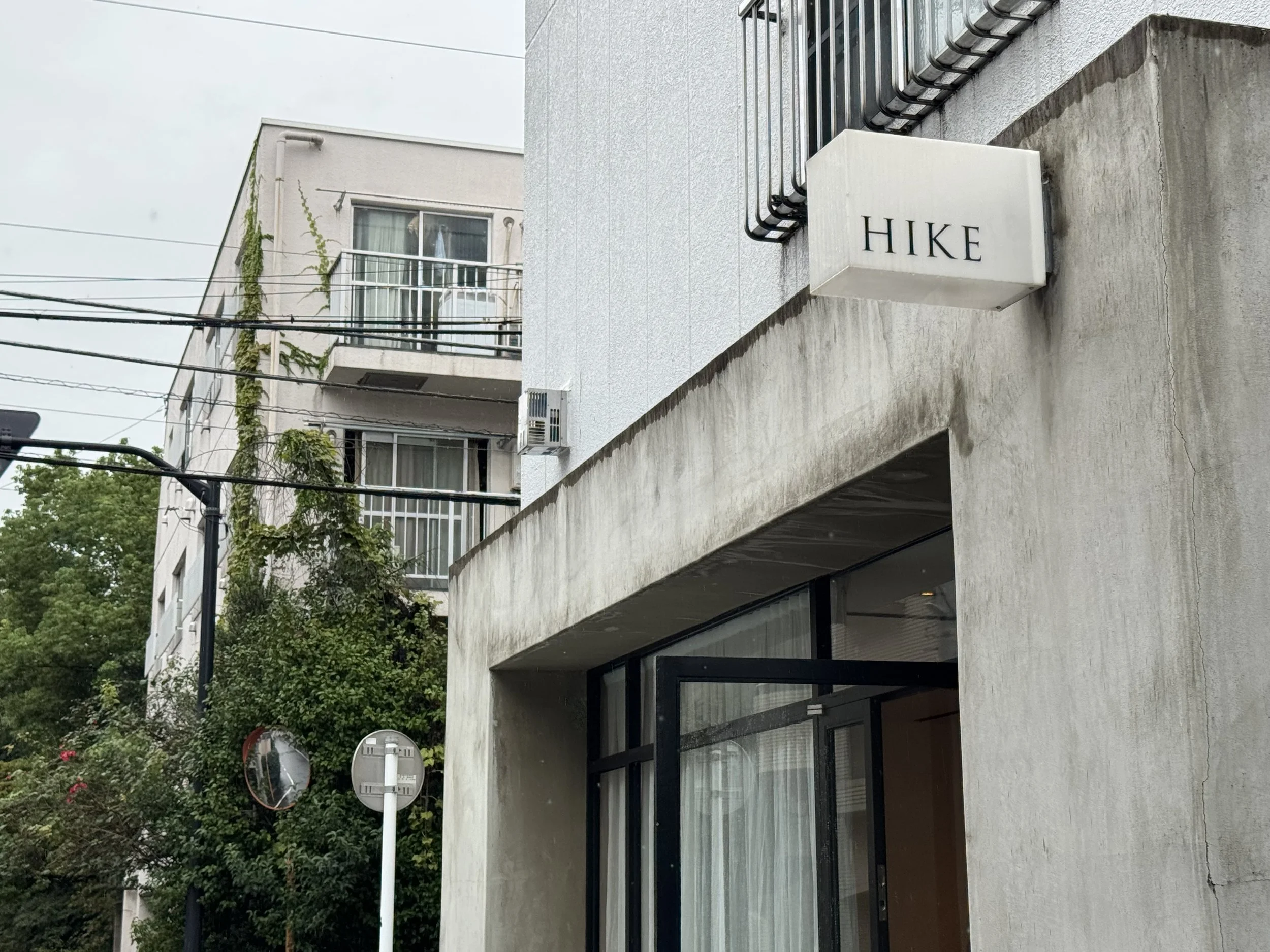
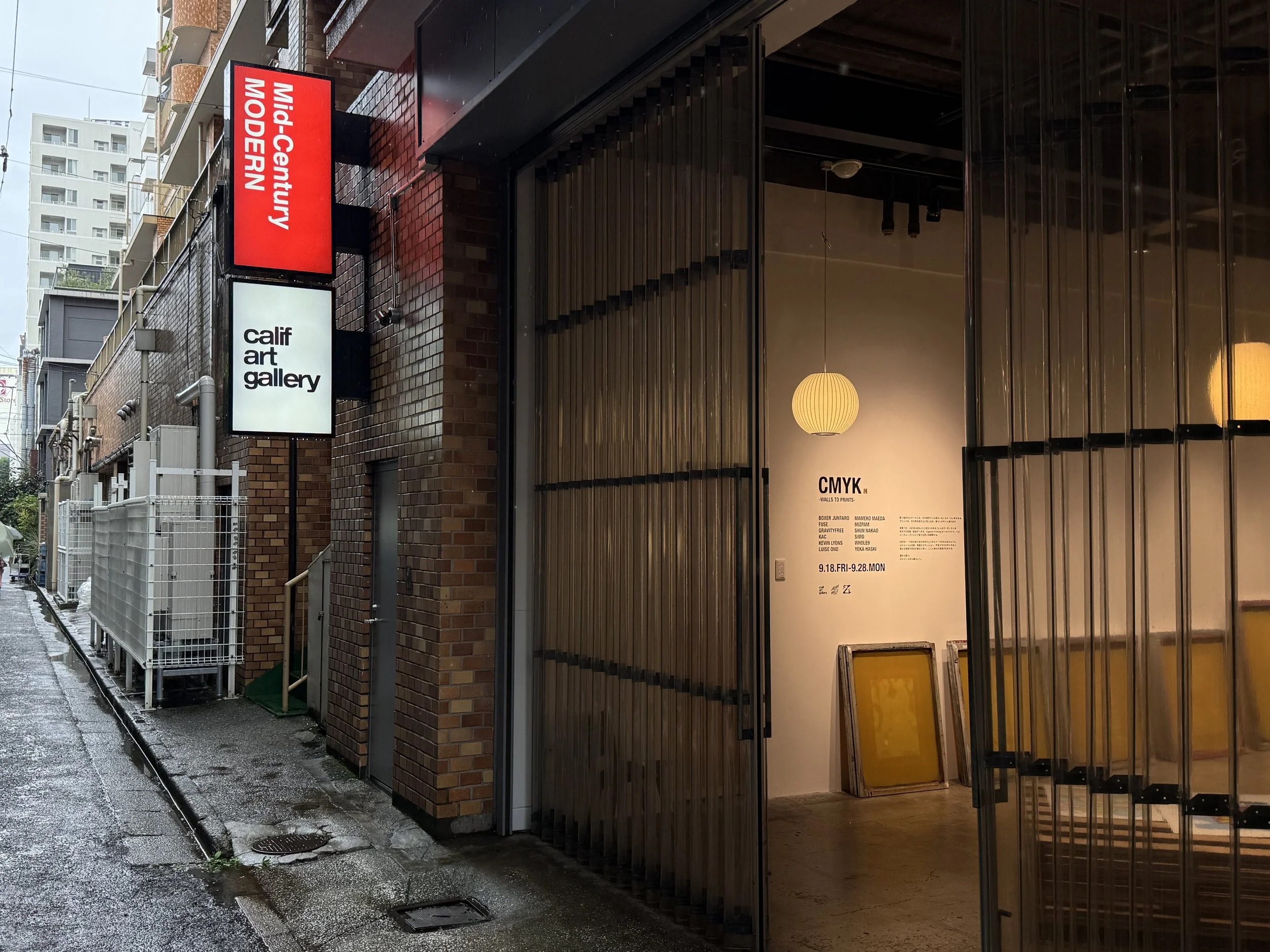
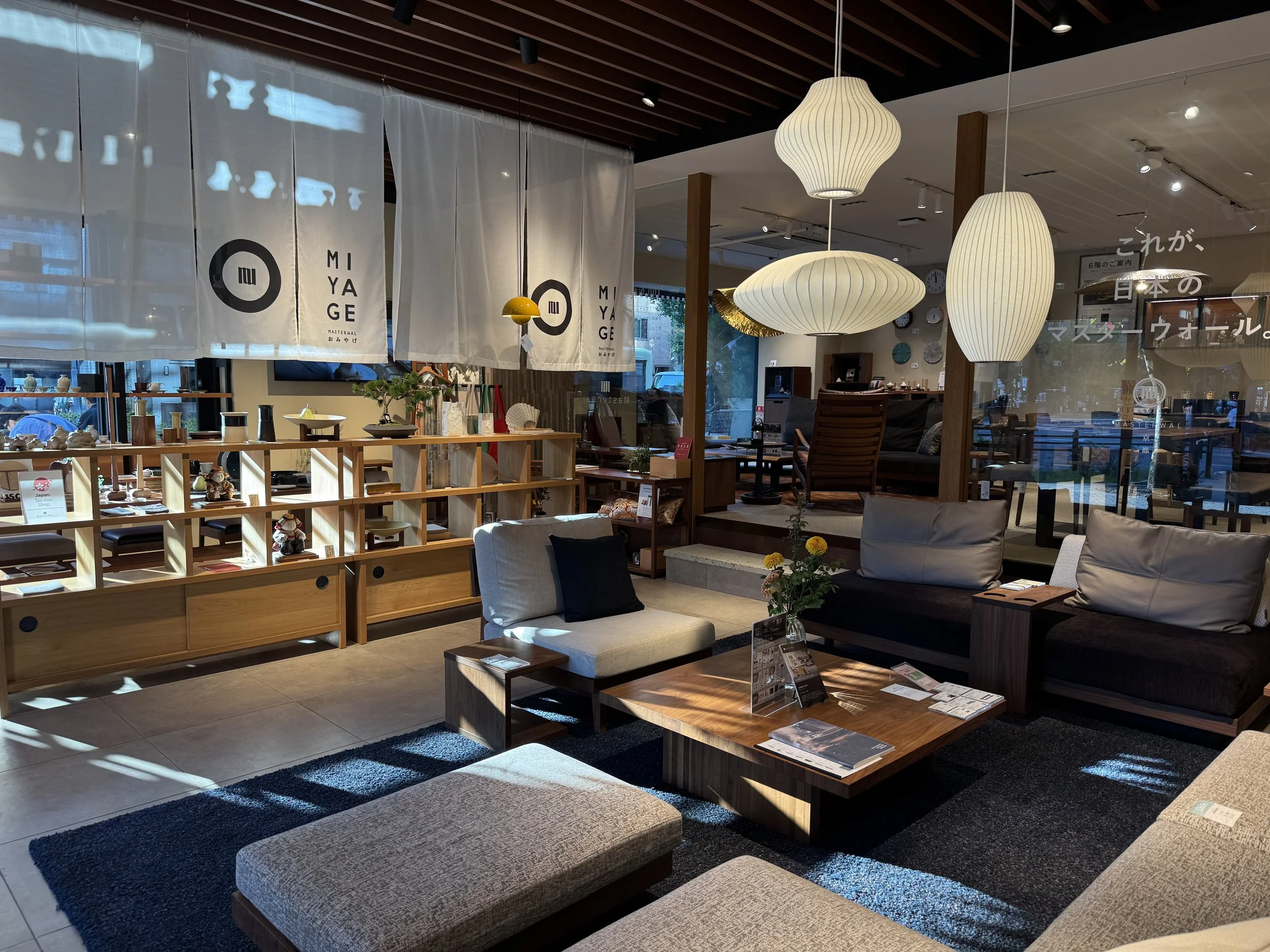
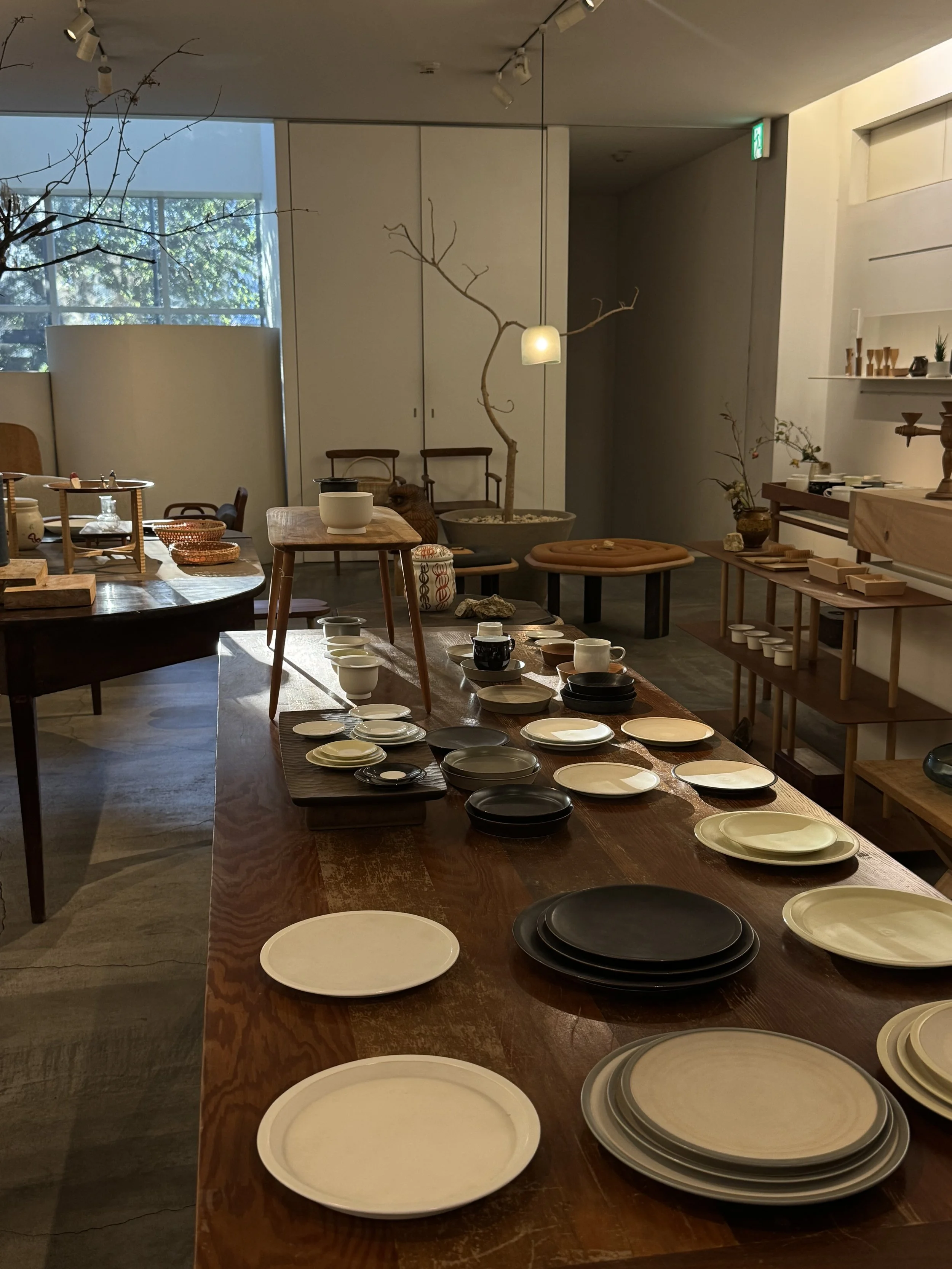
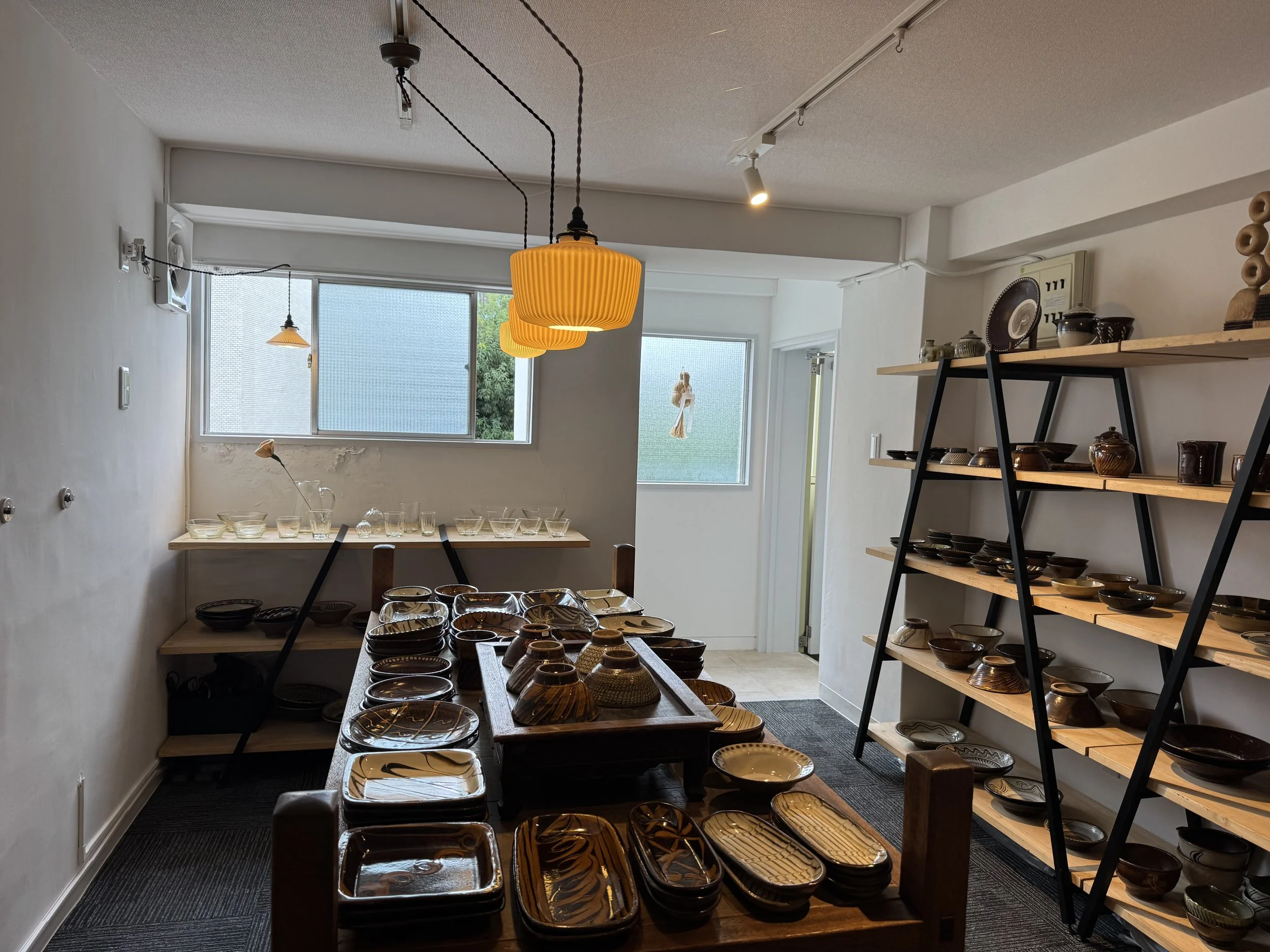
Tokyo is a stunning place to be if you like beautifully designed ordinary objects. It’s also one of the world’s great cities for people who still like physical things (hi, it’s me) like books, magazines, ceramics, records, etc. We truly could have spent weeks exploring all of the shops in Tokyo (and likely at some point will), but some of our favorite places to spend time were: Daikanyama T-Site / Tsutaya Books, Jimbocho Book Town, D&Department Tokyo, SML Design Shop, CIBONE, Spiral, Found MUJI. We also foraged around to find a few excellent midcentury modern stores like Camori, Mid-Century Modern, and HIKE - all of which are worth a visit.
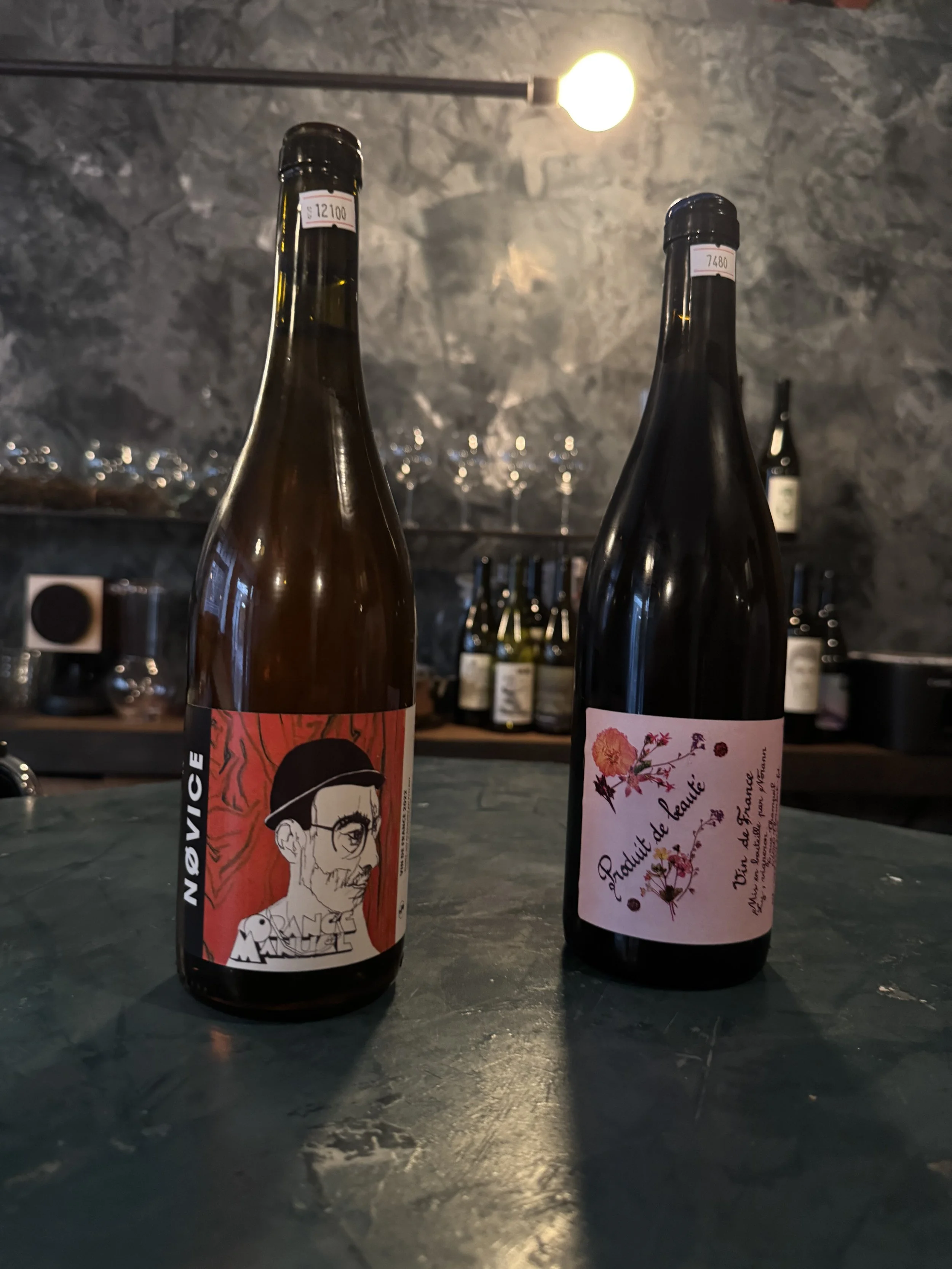
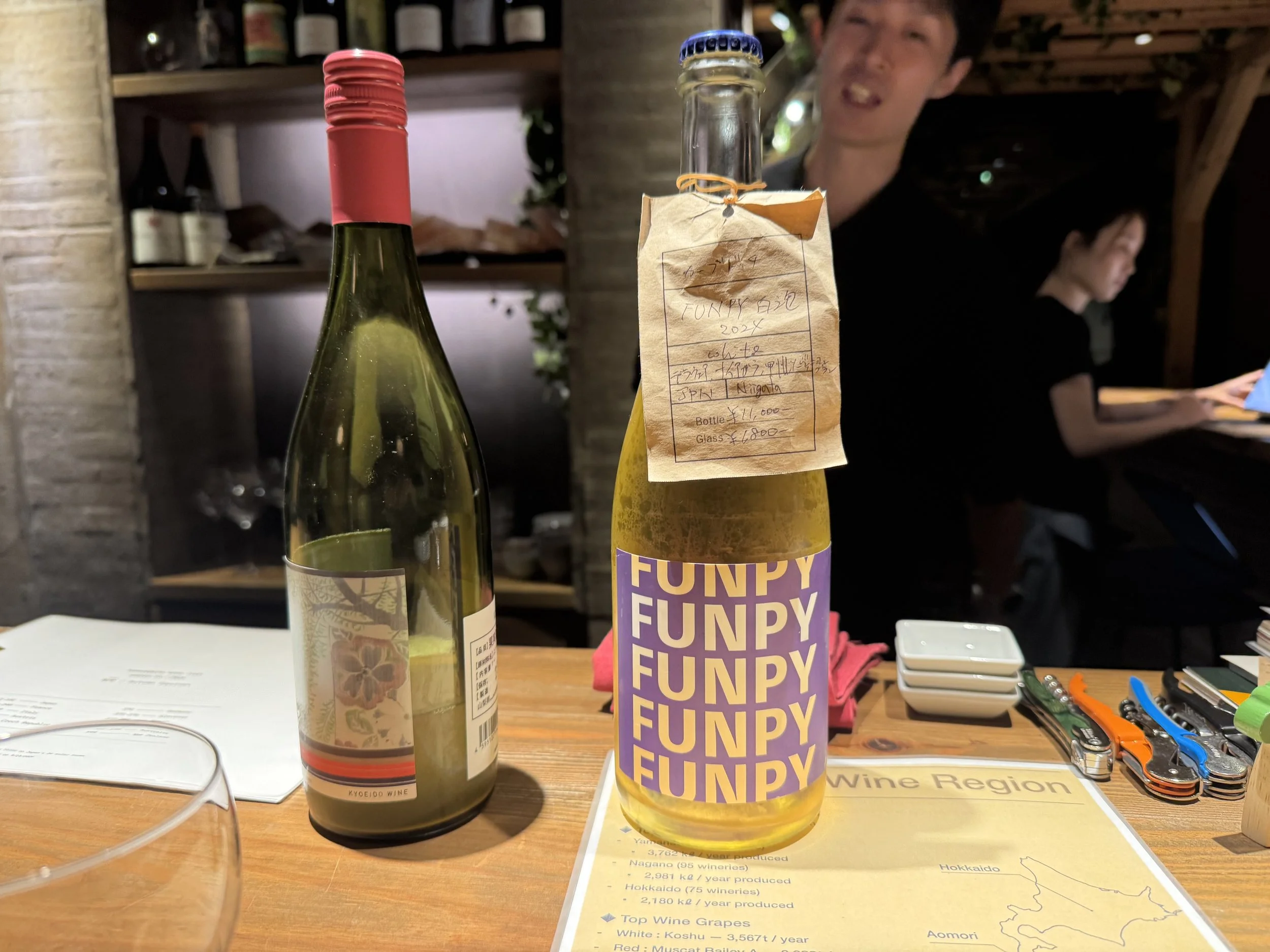
Wine Bars: Tokyo’s natural wine scene is so phenomenal that it’s actually problematic because there’s no way you can cover as much ground as you’d like. What we loved most is how casual most of our favorite spots were, as the best bottles tend to be poured in tiny standing bars, neighborhood restaurants and tiny tasting rooms. No-fuss but intimate, just how we like it.

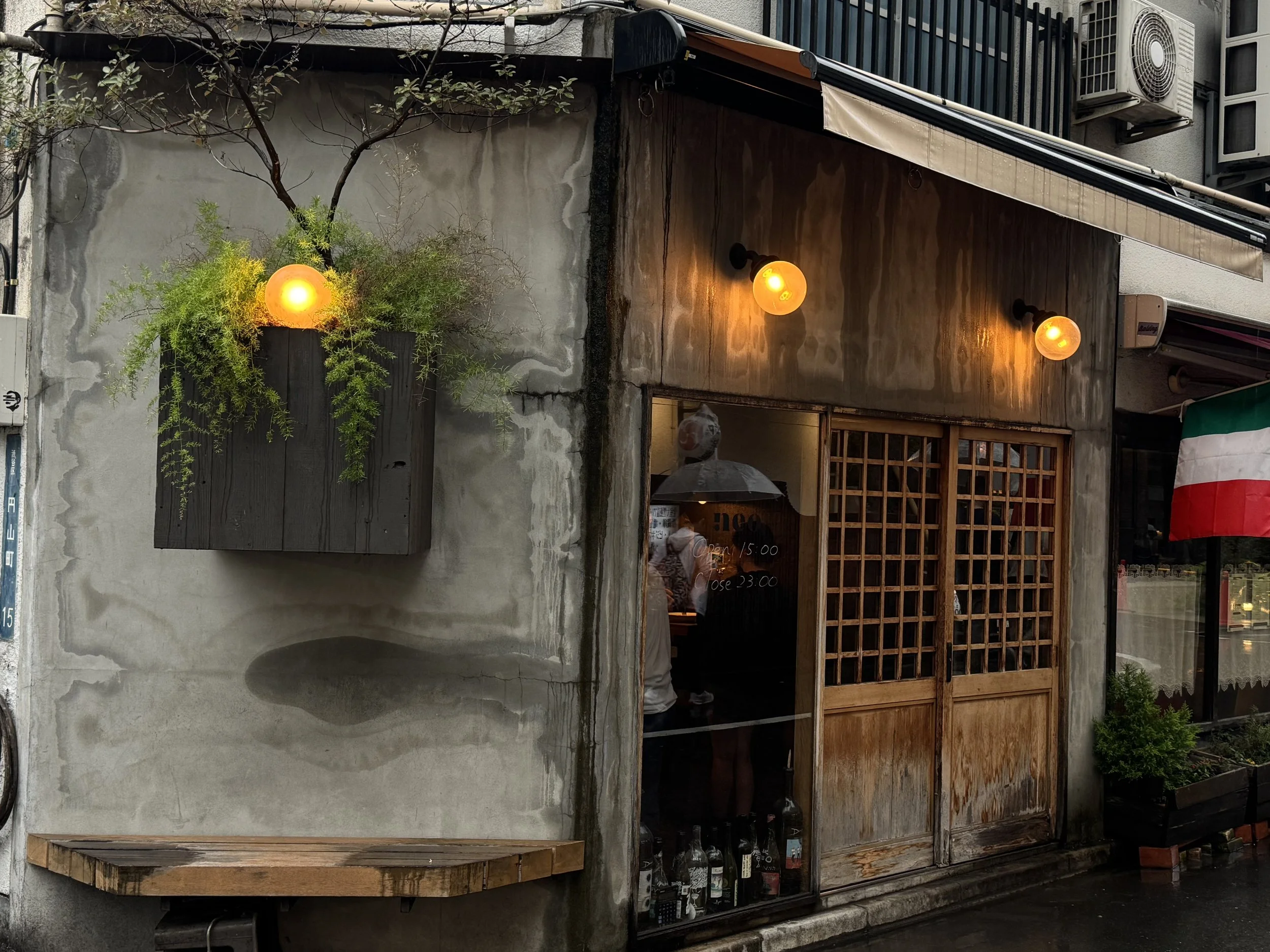
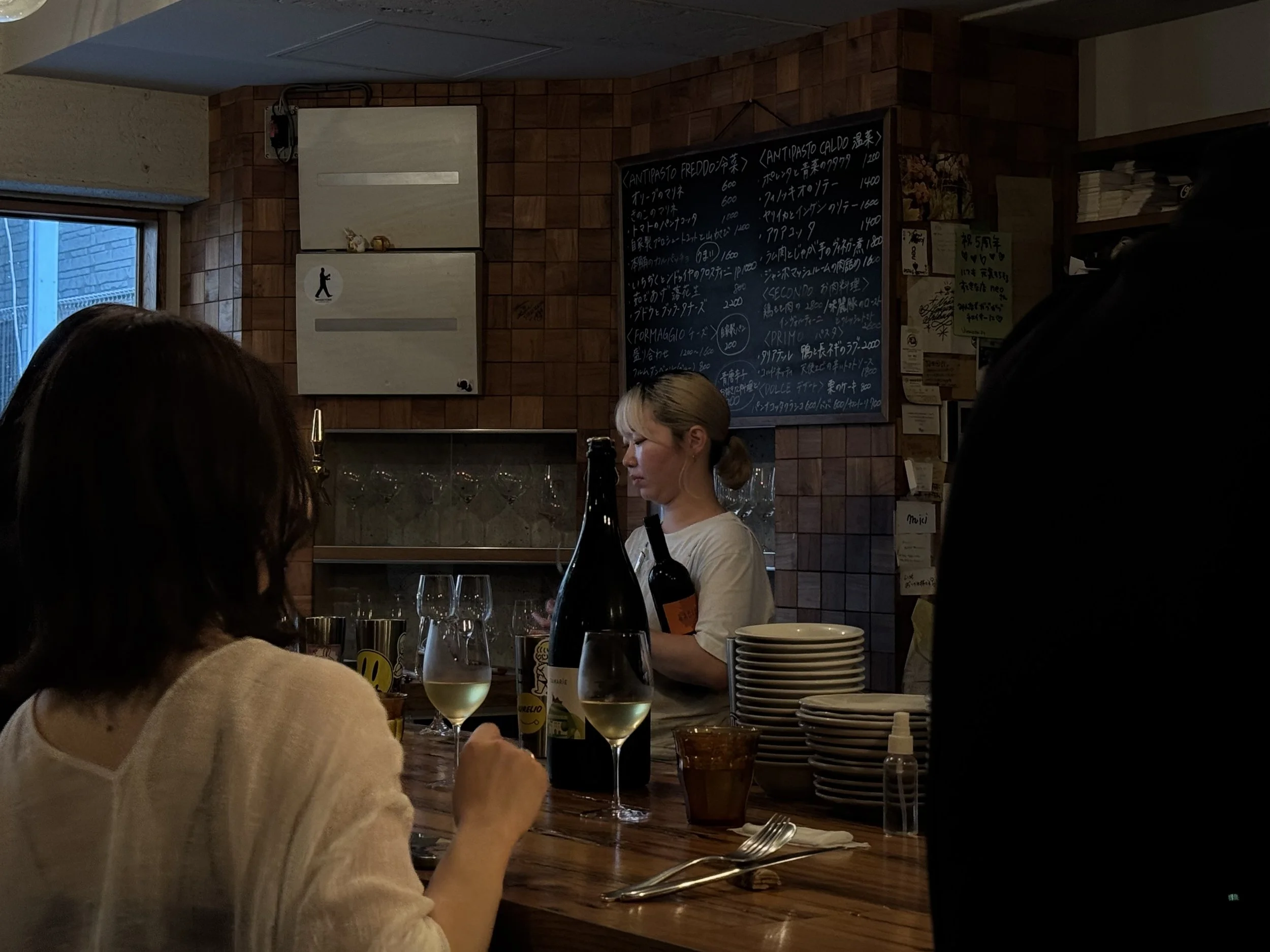
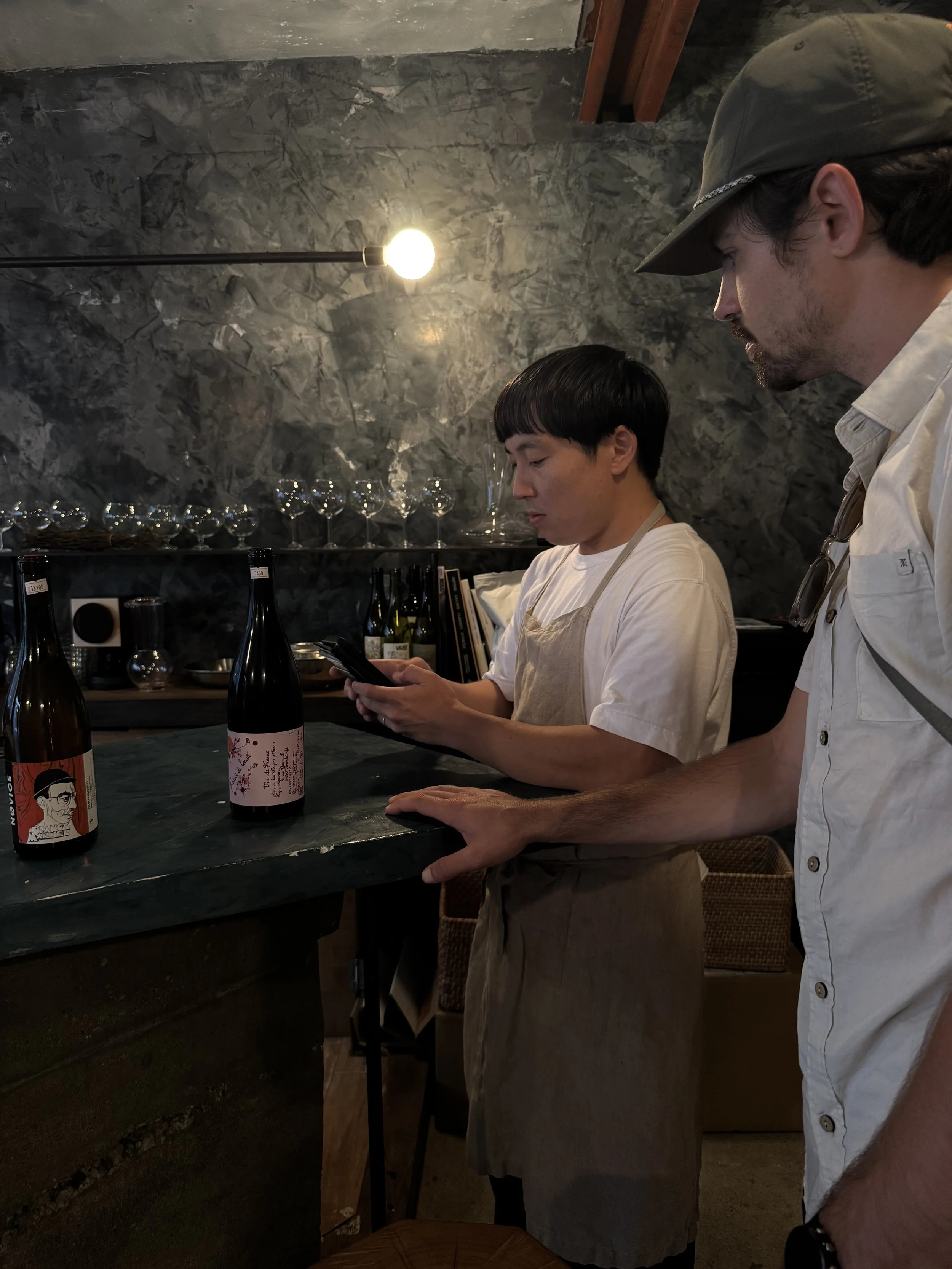
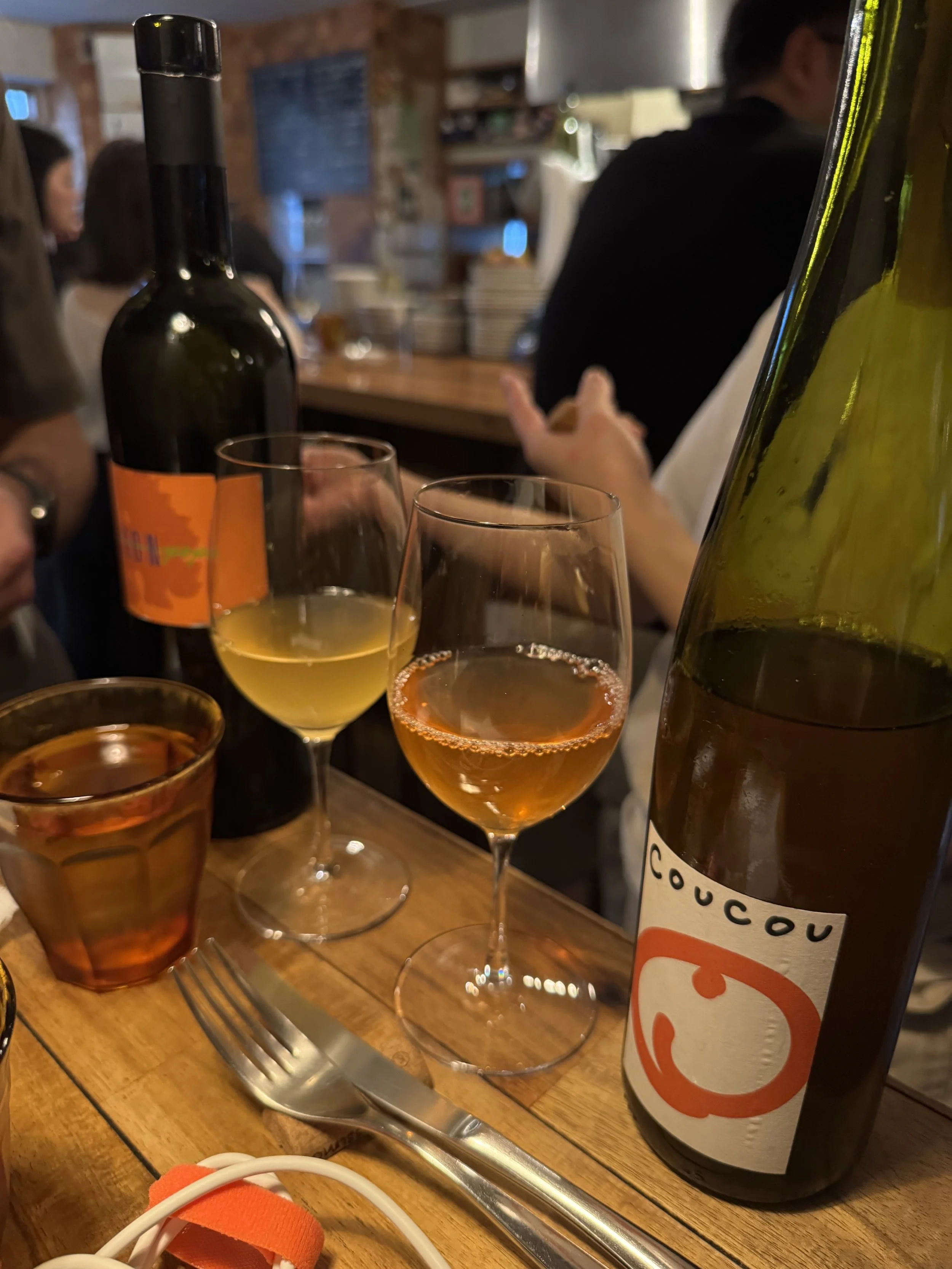
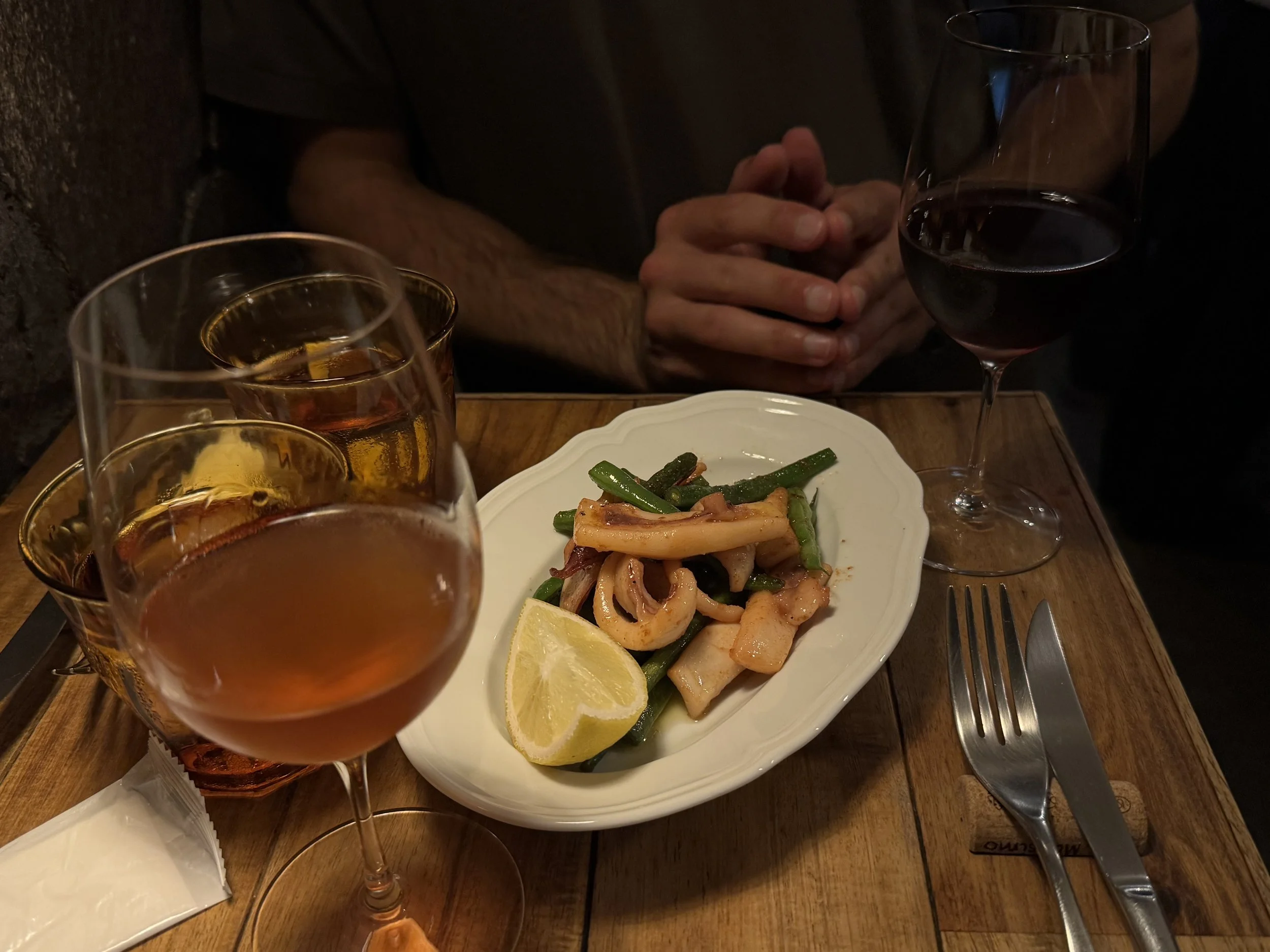
NEO - Shinsen was one of our favorite examples of Tokyo wine culture. It’s a tiny standing room only natural wine bar hidden on a backstreet in Shibuya. It’s the casual sibling of the acclaimed Italian restaurant Aurelio and the premise is simple: stand around the counter, drink really interesting wine and eat delicious home style food (we absolutely loved our squid appetizer!). The wine program leans heavily towards Italian natural and minimal intervention producers with many pours available by the glass. We entrusted our server to surprise us with pours after briefly describing our tastes and they absolutely nailed it with bringing over two bottles we had not yet tried but had on our radar. 10/10 recommendation. We appreciated the casualness of being able to tell them what we liked and let them pour to our tastes. Field note: go early (4-5pmish) as the tiny room can fill quite quickly.
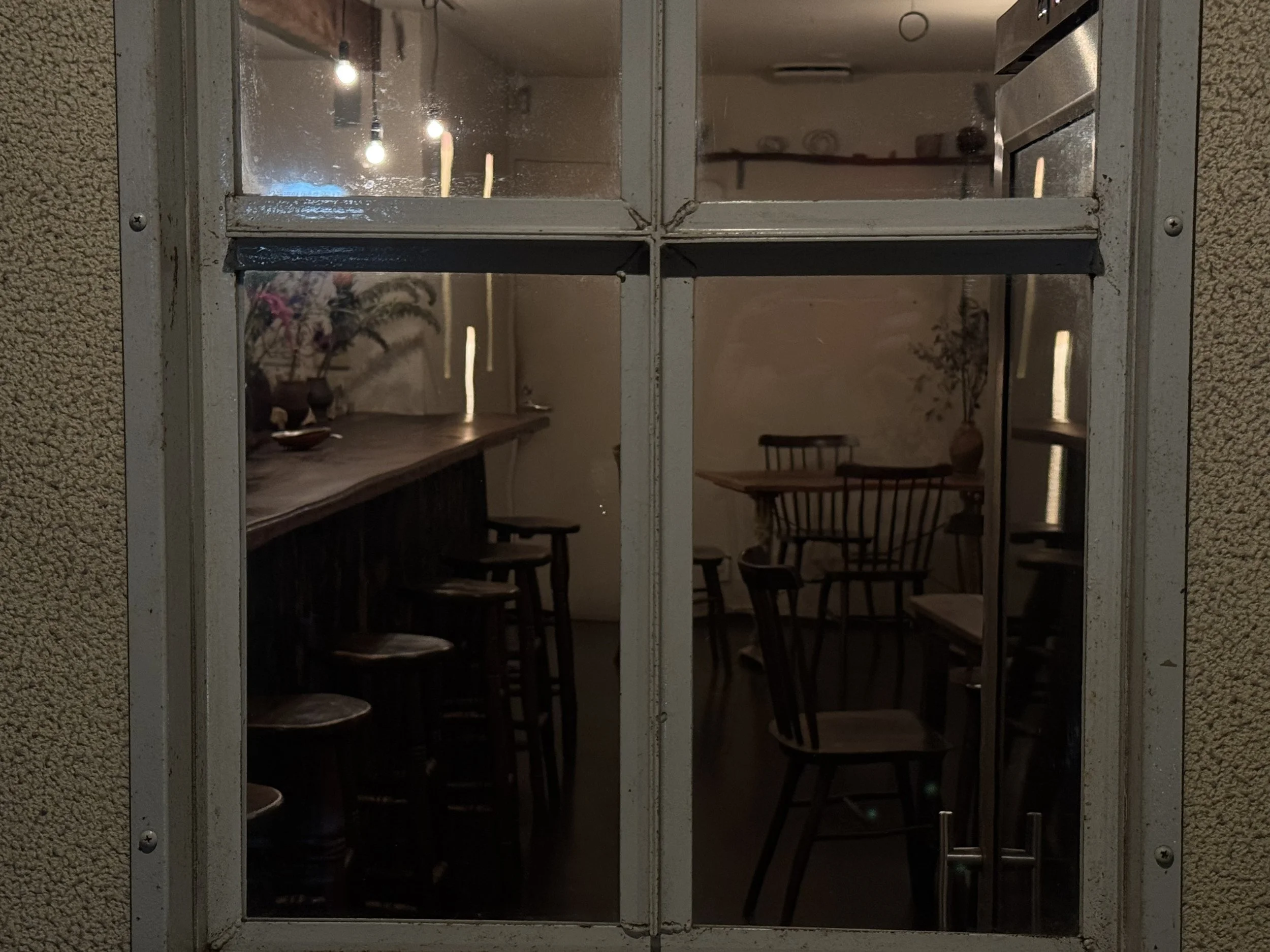
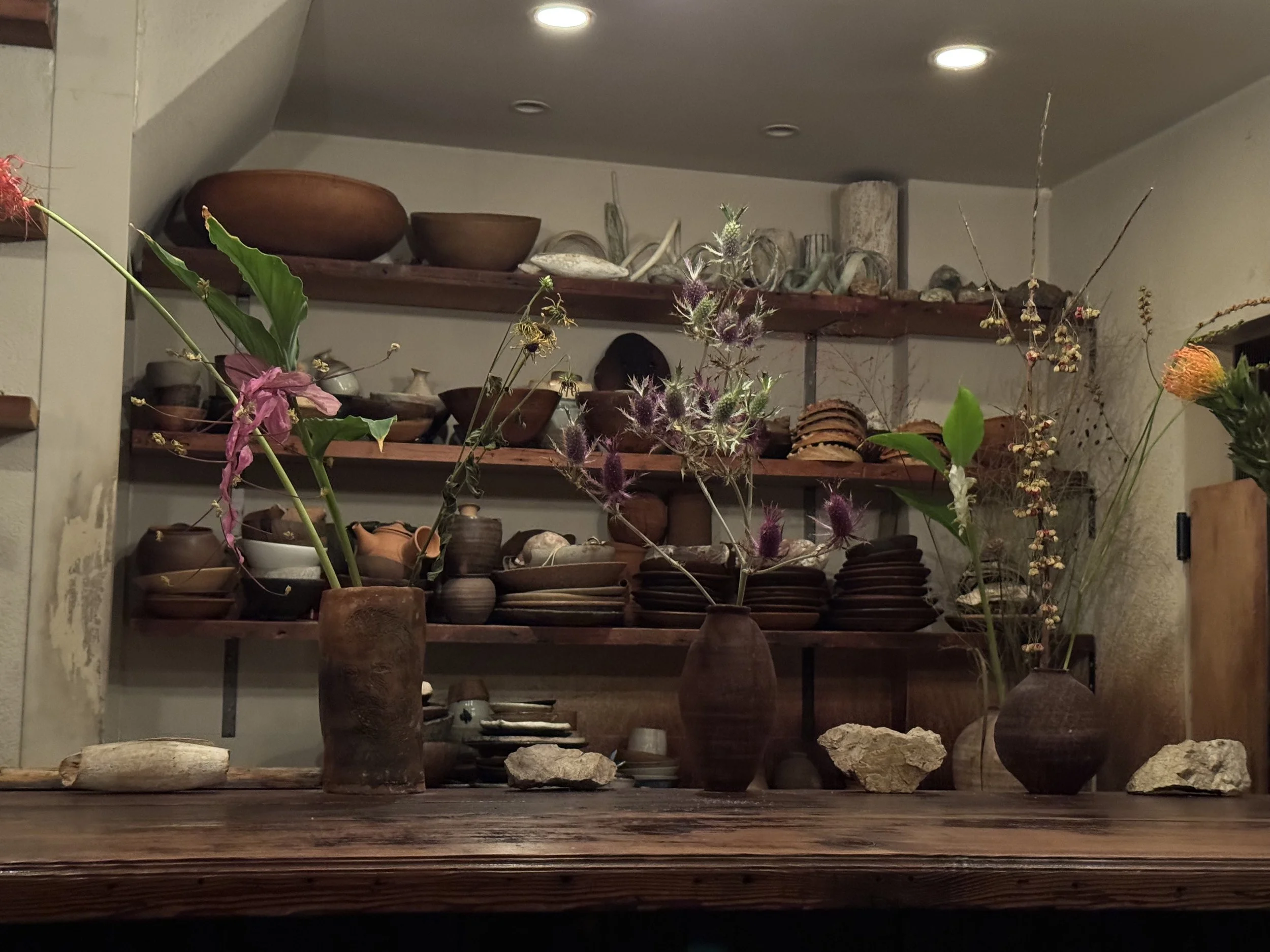
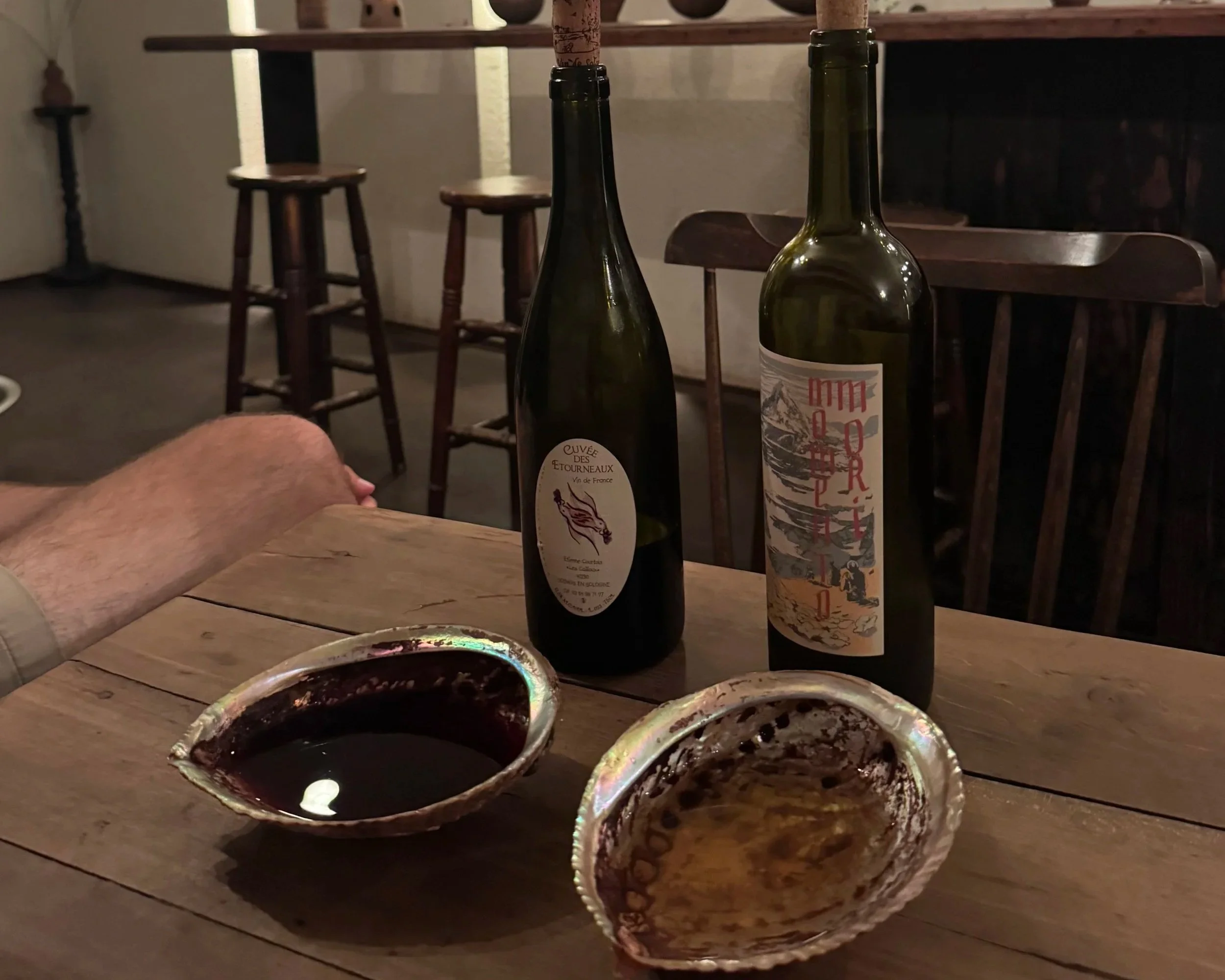
Vineria Il Passagio was another favorite. It’s a tiny 13-seat natural wine bar hidden on a quiet street in Nihonbashi Hamacho. The wines are natural as well, but what makes this place unique is the vessel: abalone shells, handmade earthenware and other unusual vessels instead of conventional wine glasses.

The owner isn’t doing it to be “out there” or to deliver on an aesthetic; the idea is that the material and shape of the vessel change your perception of the wine. One Japanese media piece explains that the owner believes natural wines with pronounced acidity and umami can be particularly expressive from a natural material such as a shell. The experience is cozy, quiet, peculiar… and very Japanese. Cash only, so come prepared.
Ahiru Store is one of the Tokyo natural wine institutions that I will always include in any guide. It’s tiny, casual and very neighborhood oriented, with natty wine as the main event and food geared towards drinking. It’s close quarters, good food, and very little fuss.

no. 501 is a great natural wine bar combined with bottle shop. The selection moves through European natty wines with some Japanese bottles mixed in, and you can drink there or buy something to take away.

Wineshop Cornerbar Blanco was also a great pre-dinner stop to sample a glass. They had quite an extensive selection in their chilled cellar which we enjoyed perusing even before selecting a glass to enjoy.

Things to Do: Don’t make it your personal mission to “finish Tokyo” as it is never going to happen. Walk Daikanyama and Nakameguro for design, books and markets. Wander Jimbocho for books. Go hunt down a place with traditional Kobe beef. Head to Kappabashi Street which is the famous kitchen town, an 800m long street filled with 160 shops selling cookware, specialty knives. Highly recommend buying an extra duffle bag for carry-ons for all the souvenirs you’ll inevitably buy along the way.
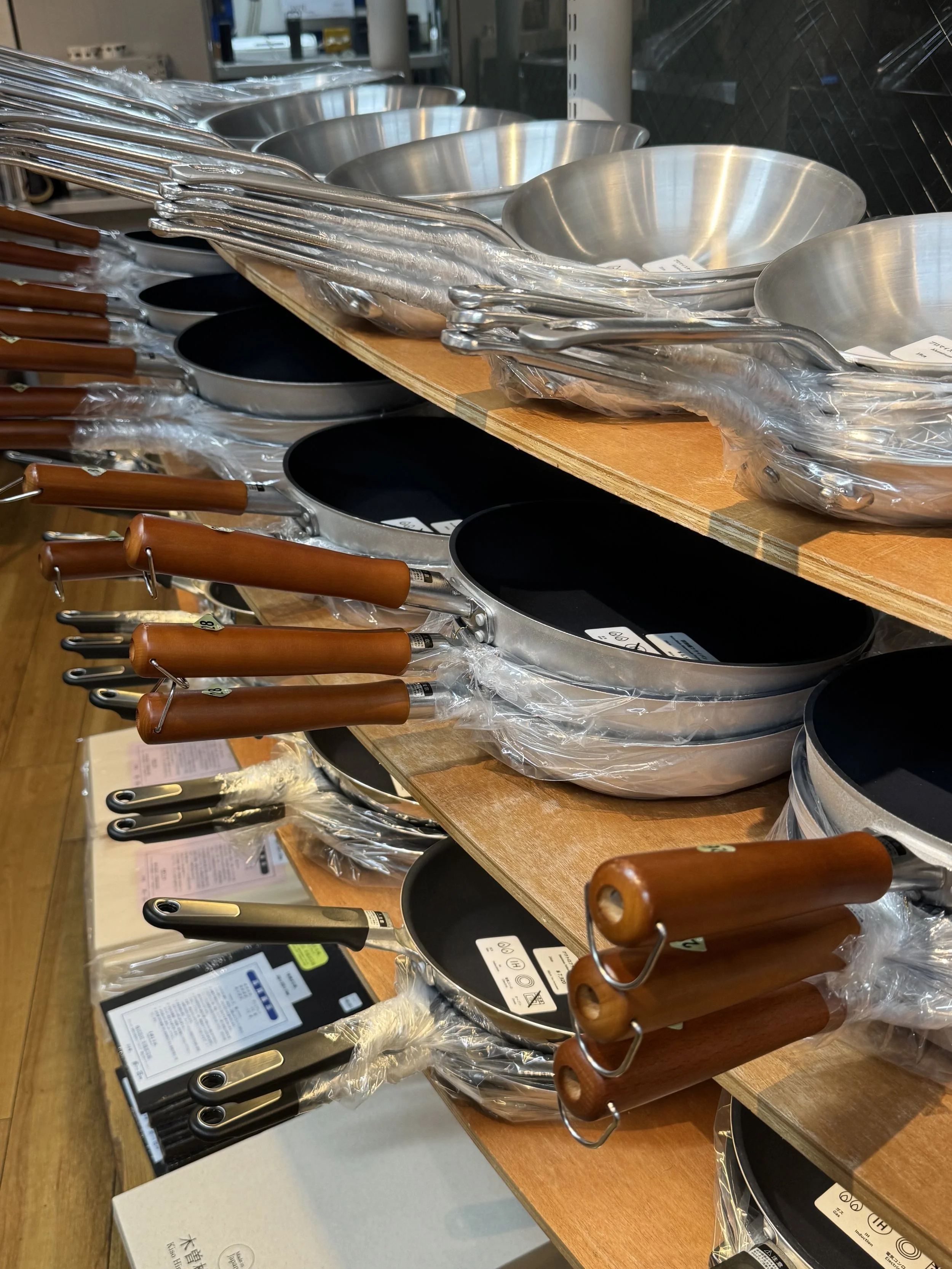
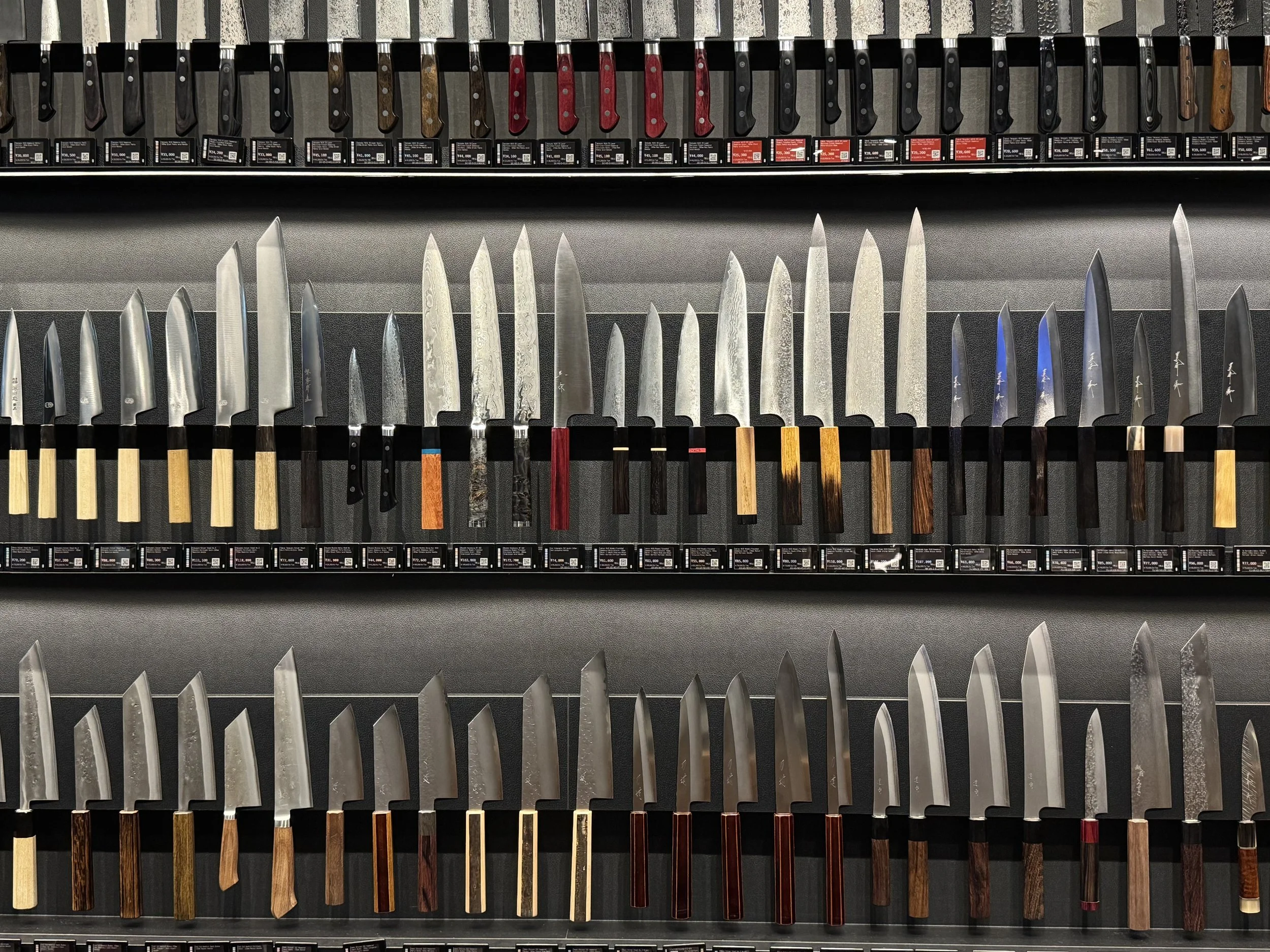
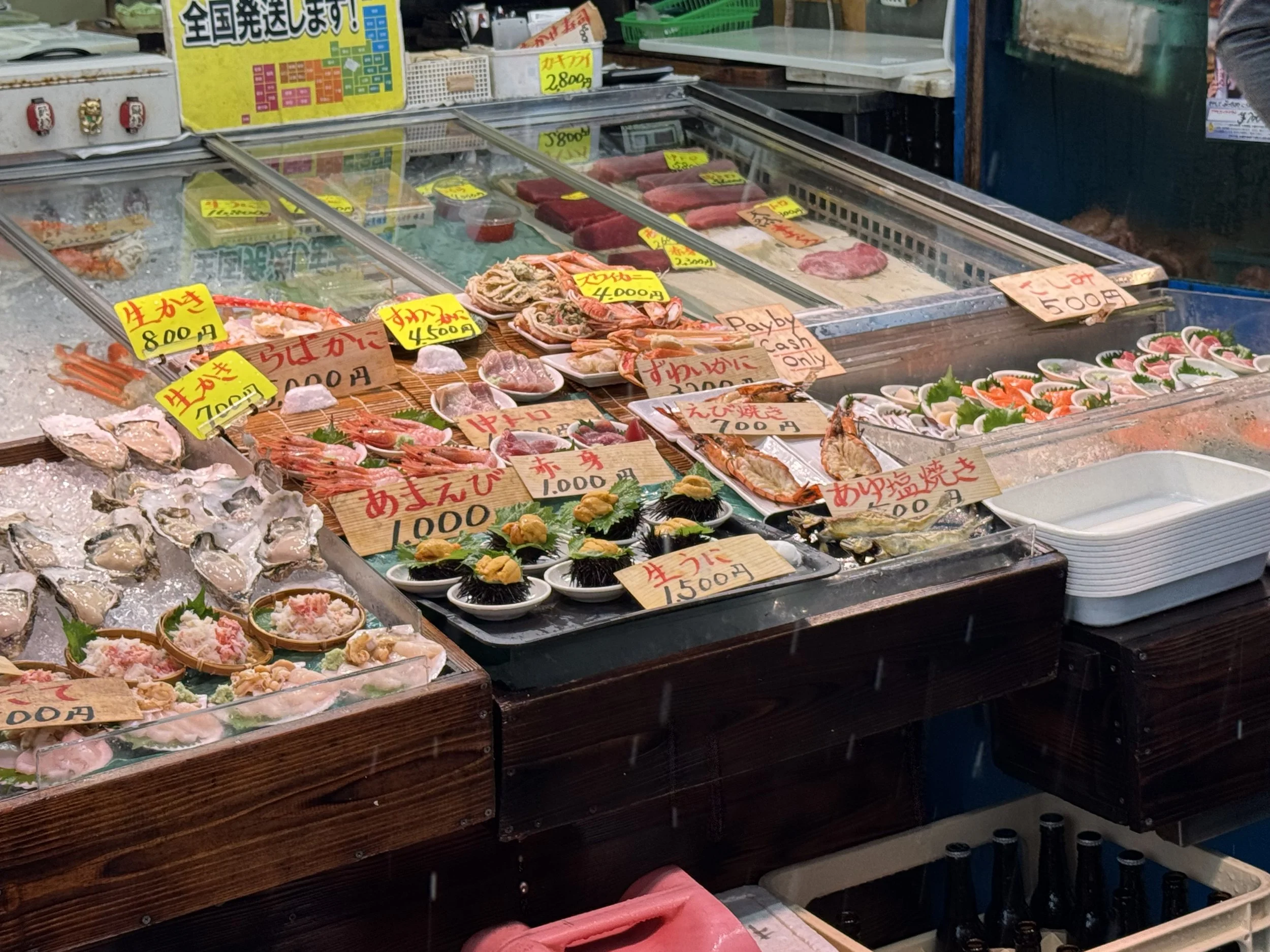
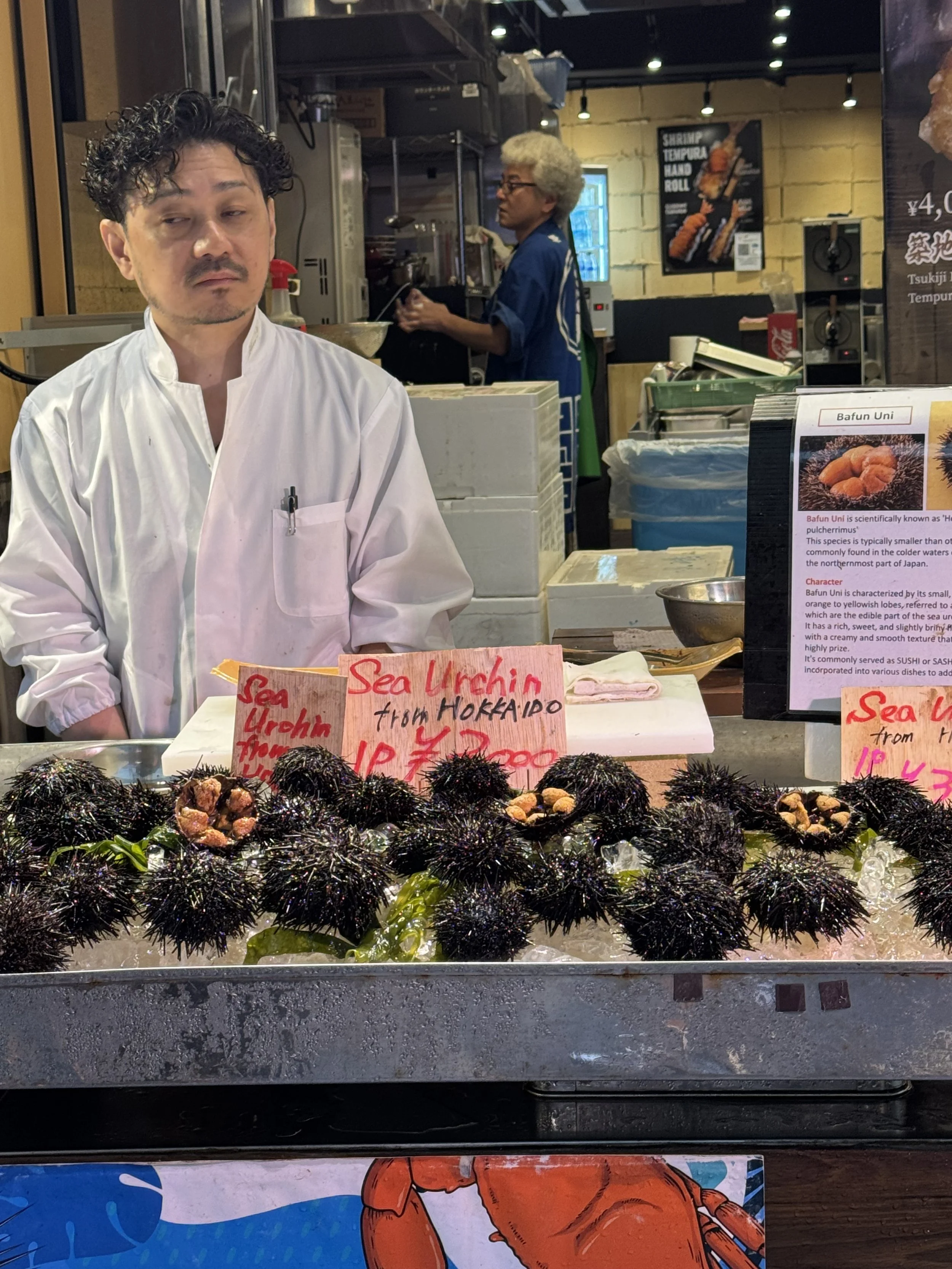
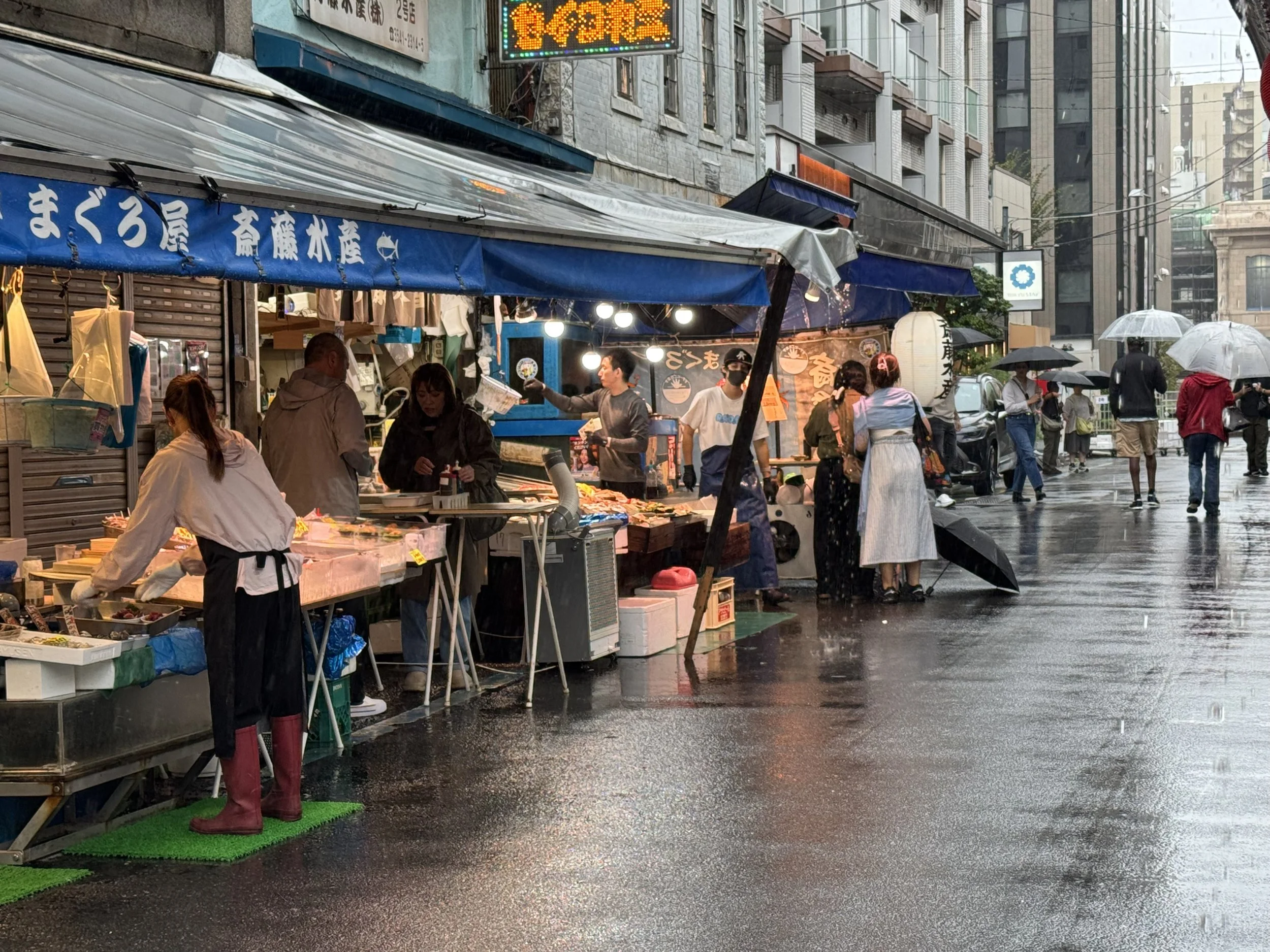
Check out the Tsukiji Fish Market (Anthony Bourdain was a big fan!), visit the many art museums, take yourself on a Tokyo Toilet tour (and watch the movie Perfect Days before you go, for context!), check out the many design and furniture stores, visit one of the many cat cafes.
And always, always keep looking down alleys and up staircases… you’d be surprised what’s hiding just immediately off the well-trodden path.

A special shoutout to the Tokyo Toilet Project, which we loved intensely. Backstory: Shibuya commissioned some of Japan’s most important architects and designers to rethink 17 public toilets scattered around the district. Instead of putting them together in an architecture park they are trickled throughout ordinary Tokyo neighborhoods. Ones to keep an eye out for: Fumihiko Maki (Ebisu East), Tadao Ando (Jingu-Dori Park), Shigeru Ban (Haru-no-Ogawa Park), Kengo Kuma (Nabeshima Shoto Park), and NIGO (Jingu-mae).

KARUIZAWA/NAGANO

Where to Stay:

Peanuts Nest is our top recommendation in Nagano.

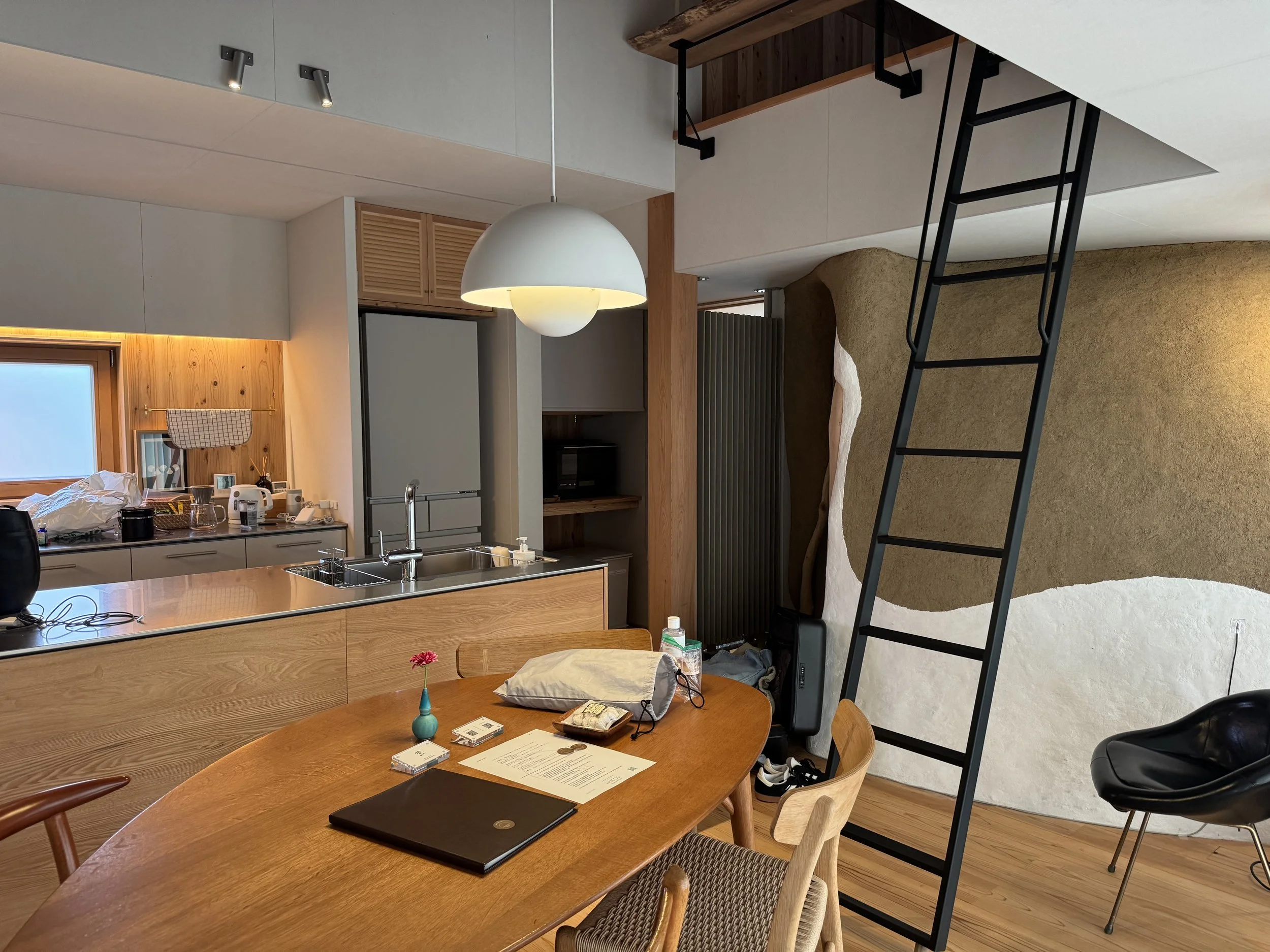
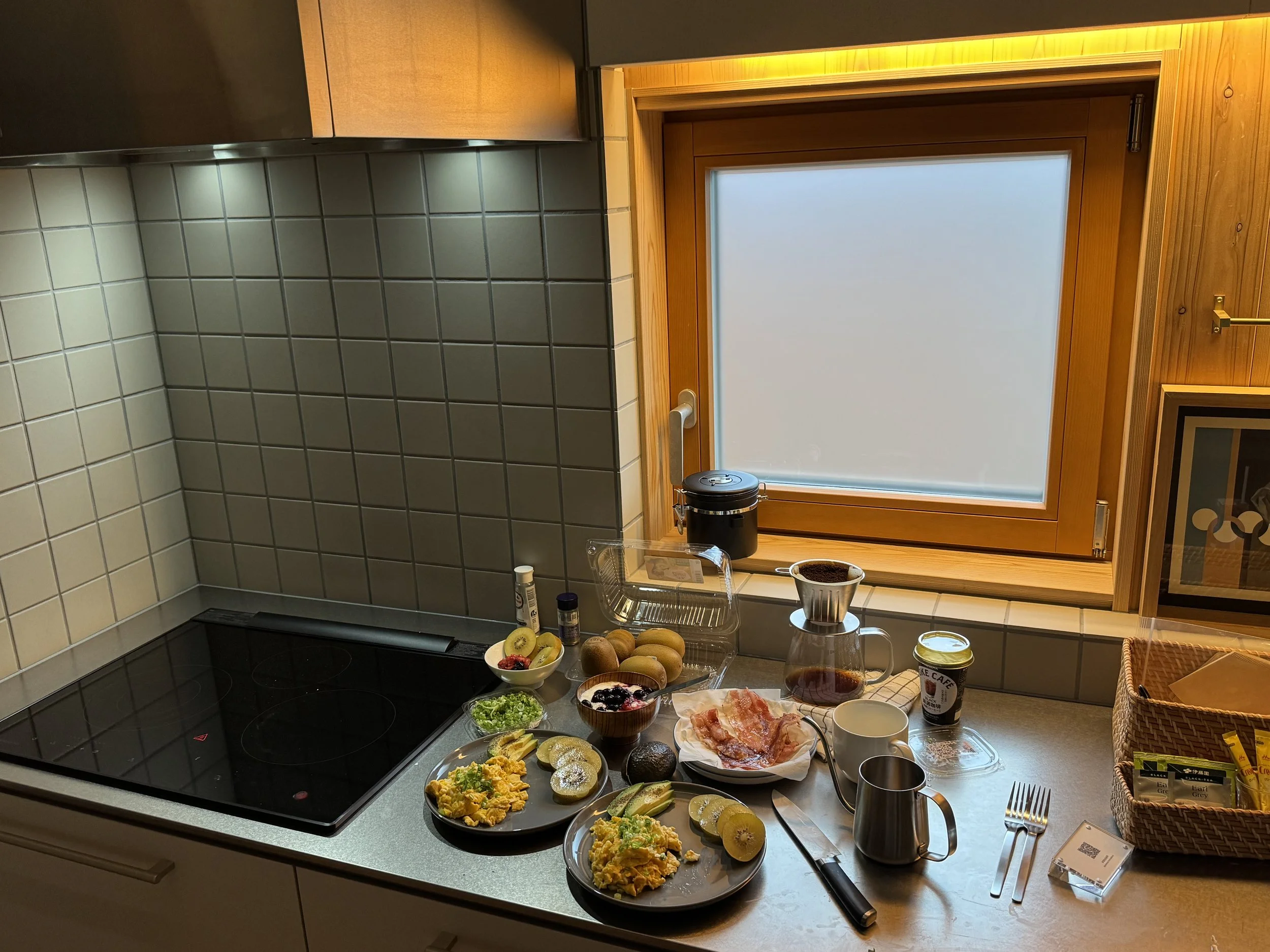
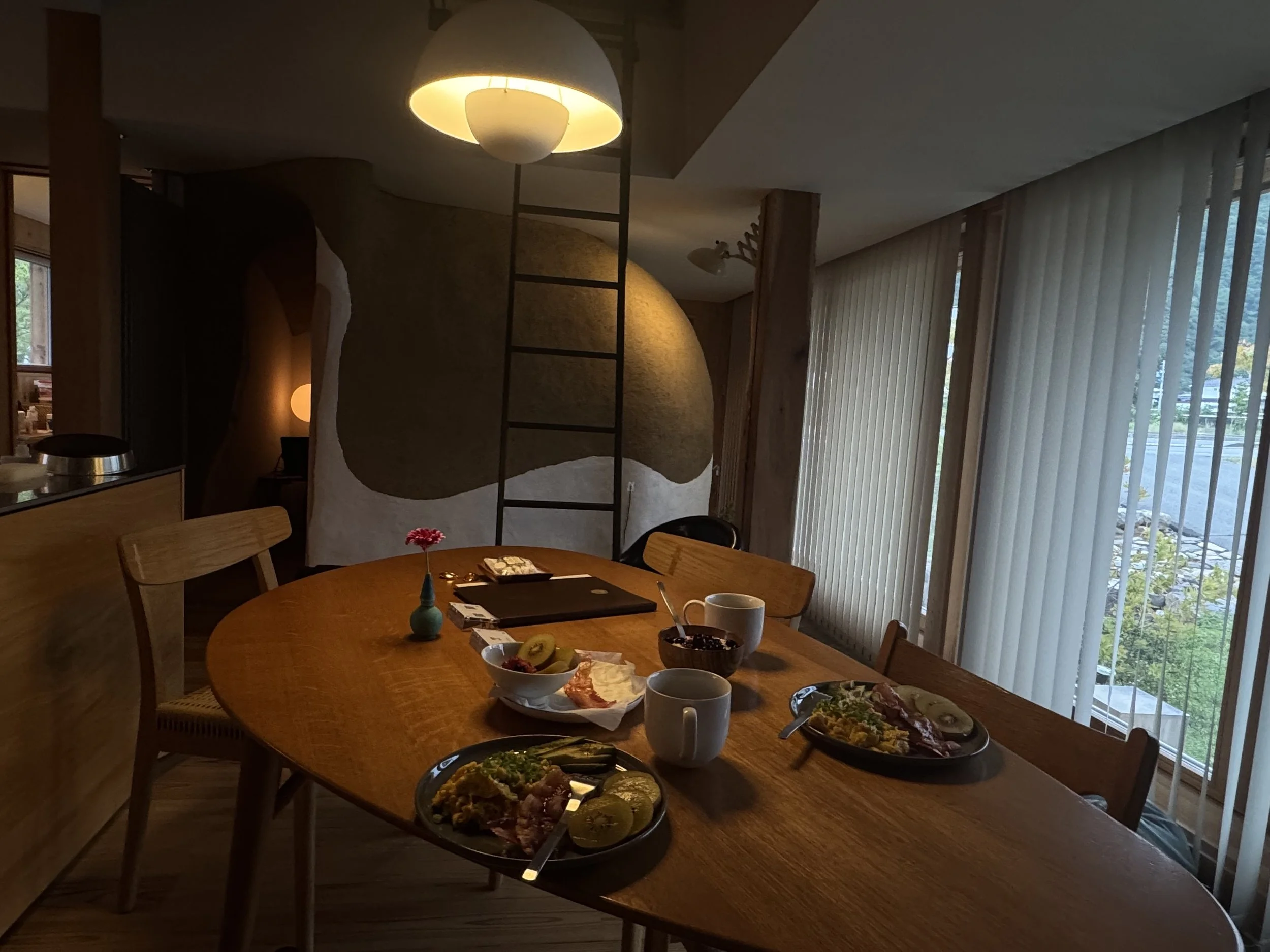
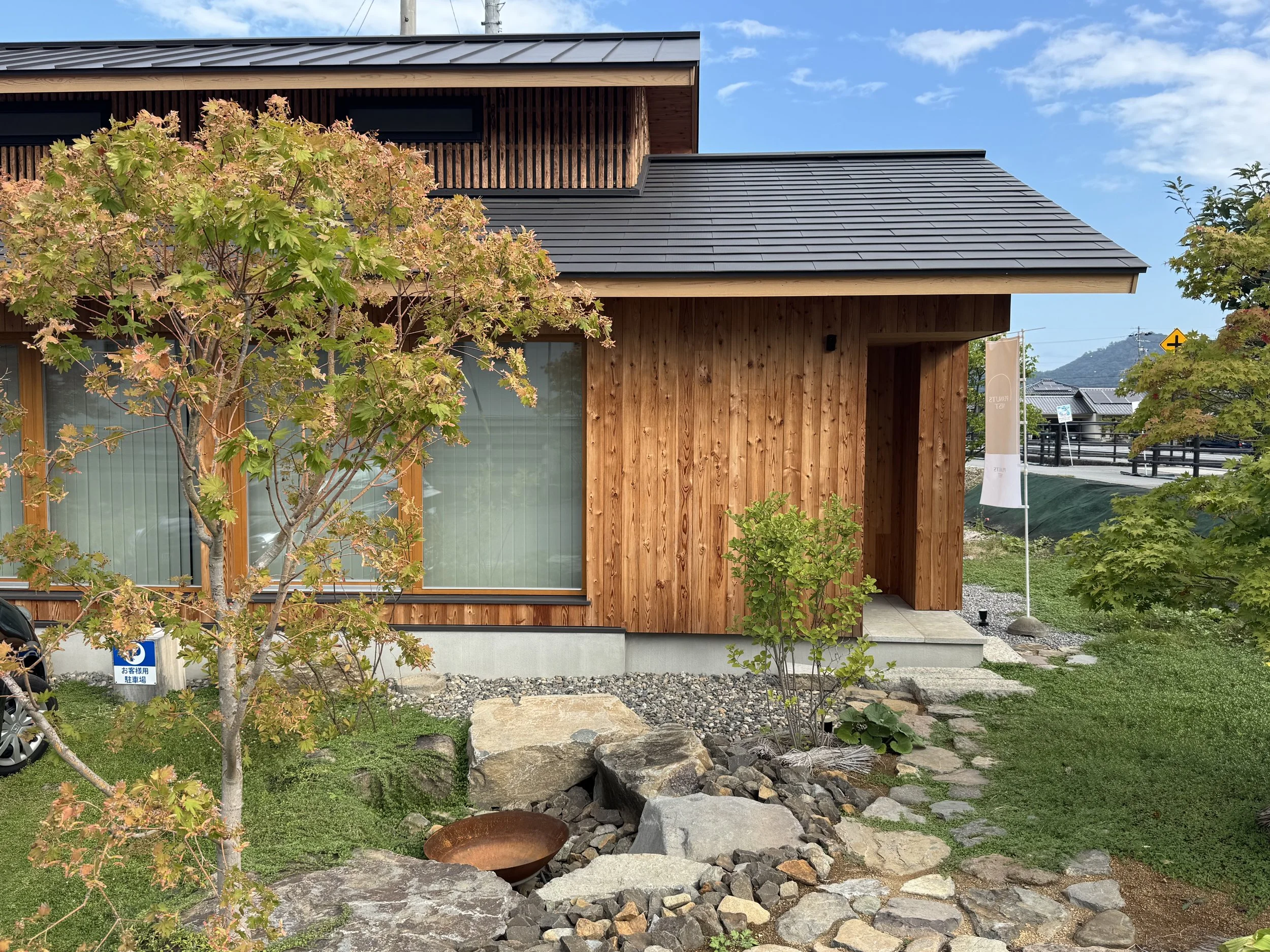
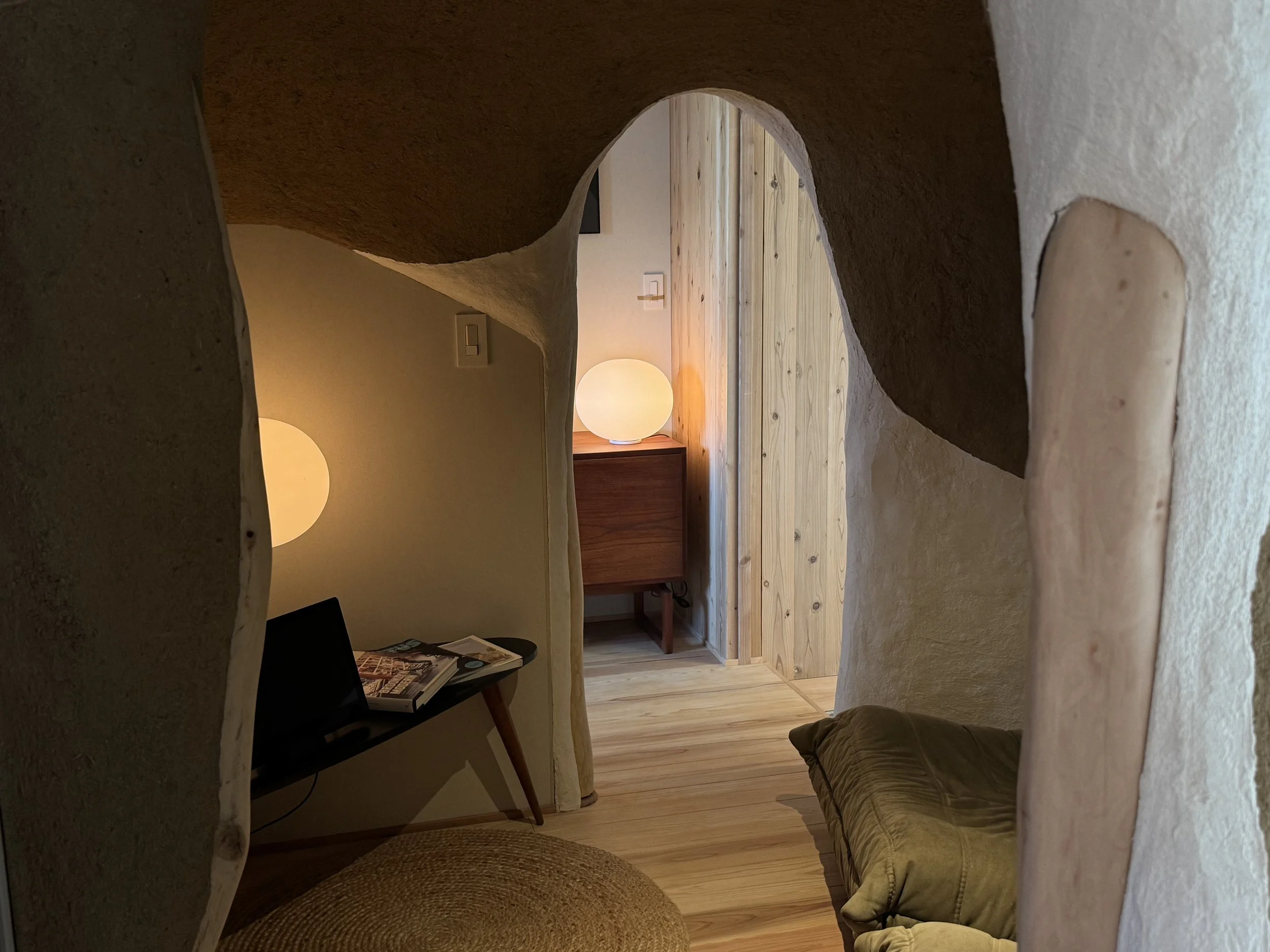
This is an entire house built around an interest of mine: how the materials we live with affect the way a space feels. Peanuts Nest combines earth, stone and wood + vintage Scandinavian furniture. There is an earthen dome for reading or doing very little, plus a large family-sized kitchen for cooking whatever you picked up that day. It sleeps up to four, with a Japanese-style bedroom and additional sleeping space up in the loft. The building uses radiant heating and cooling and its design draws on the materials’ ability to store heat. A particularly interesting stay if you like your architecture with something to investigate - and if you want a quiet, cozy place that feels like home away from home. The proximity to both Karuizawa and Nagano was also incredible and it served as an excellent home base for exploring both areas all in one stay. (Bookable on AirBnB here: https://www.airbnb.com/rooms/1549761499680947751)
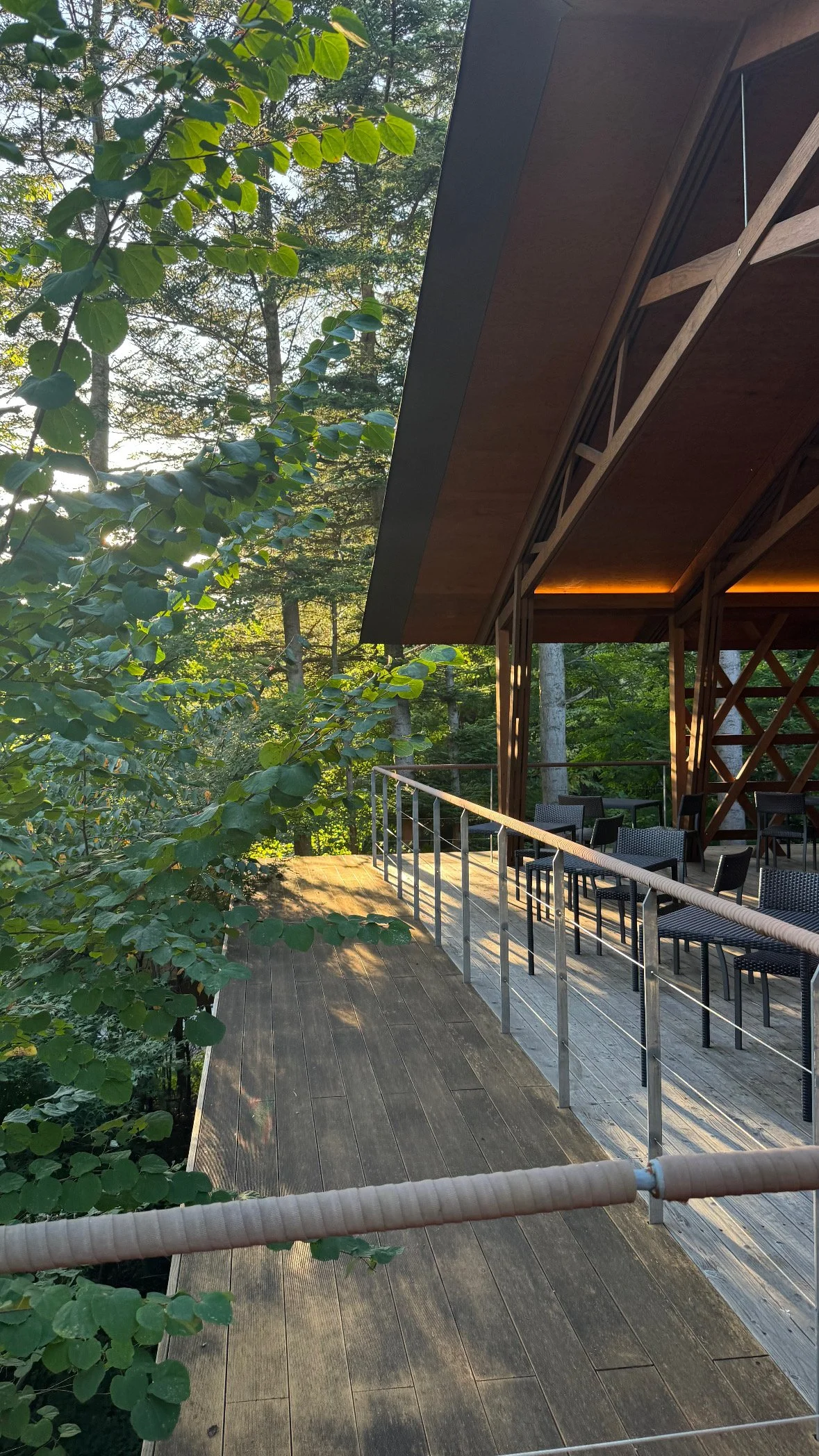
An alternative lodging option is Shishi-Iwa House. We did not stay here, but had it on our radar & did cruise by to take a glance for future stays and would recommend it.

If you have ever planned a trip around a building, Shishi-Iwa House makes a compelling case. Its three houses were designed by Pritzker Prize winners Shigeru Ban and Ryue Nishizawa. Before designing the first, Ban had more than 260 trees mapped so the building could curve around them. Nishizawa’s house brings a different approach, with hinoki interiors and interconnected pavilions inspired by traditional teahouses. There is an architecture library to disappear in for awhile and Shola serves Japanese-French cooking using seasonal and local ingredients. If you do decide to stay, I would leave enough time to enjoy the buildings themselves, as they are a substantial part of the reason to come. The architecture has been featured widely from local publications to Vogue Japan.
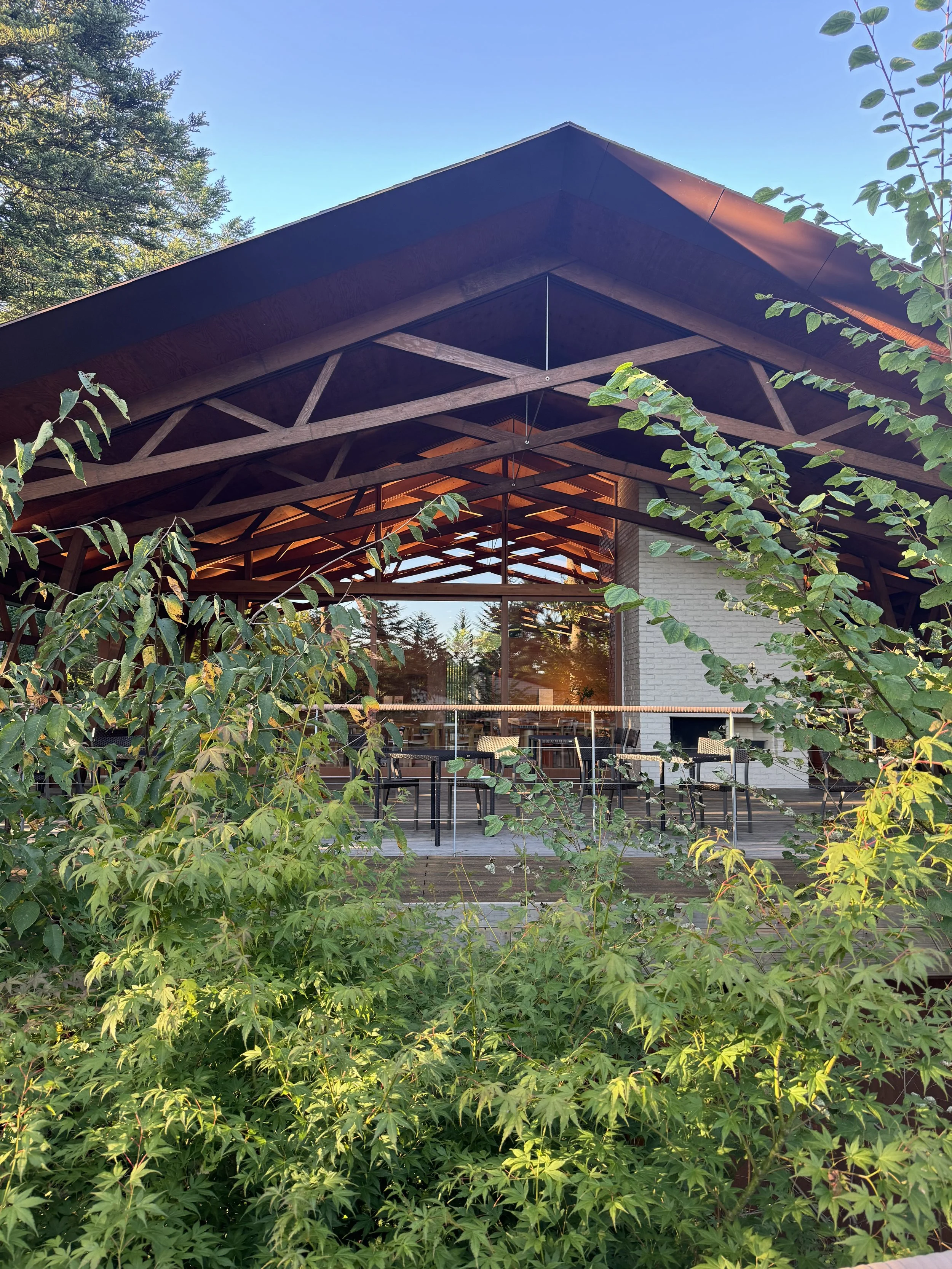
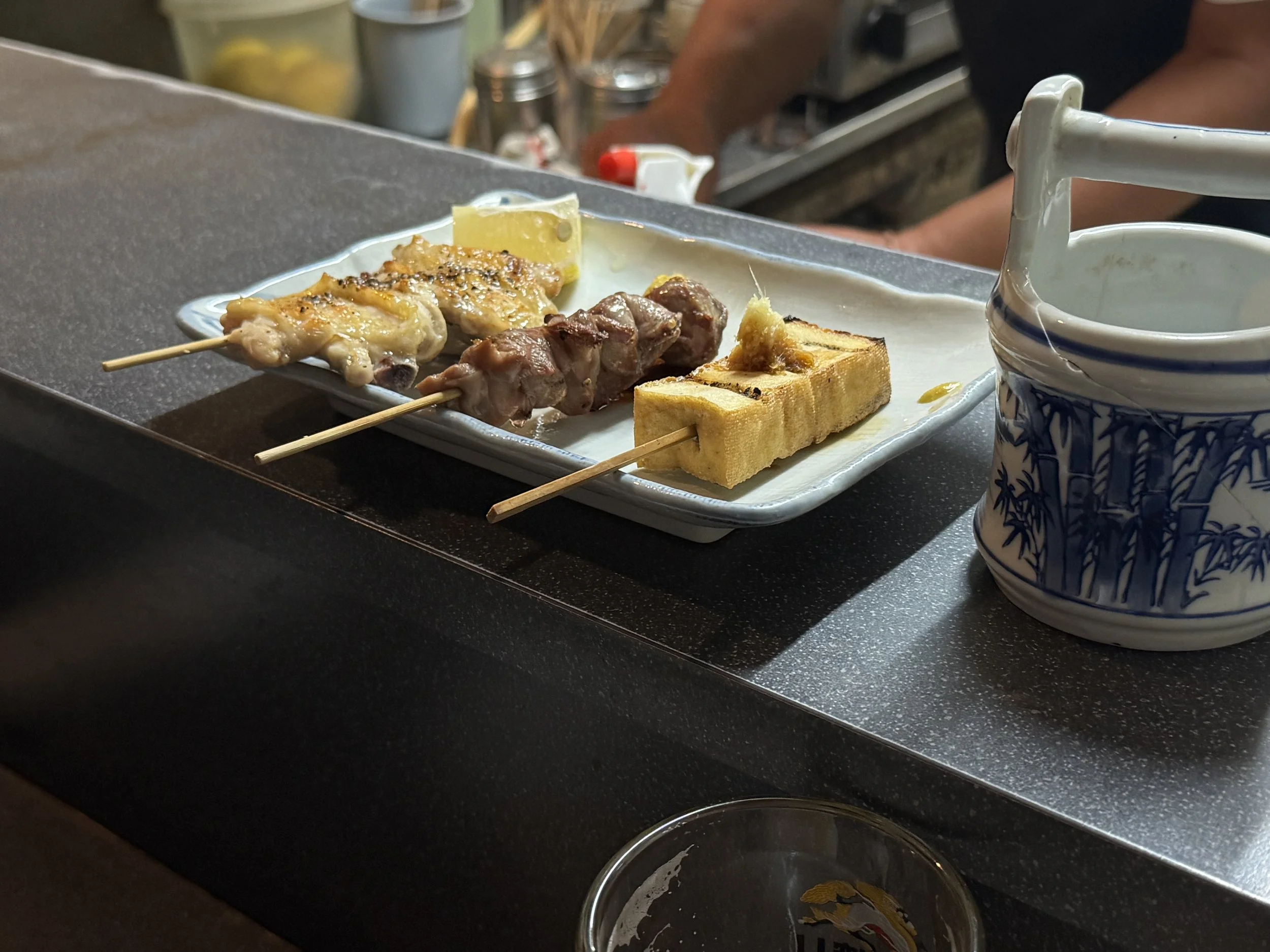
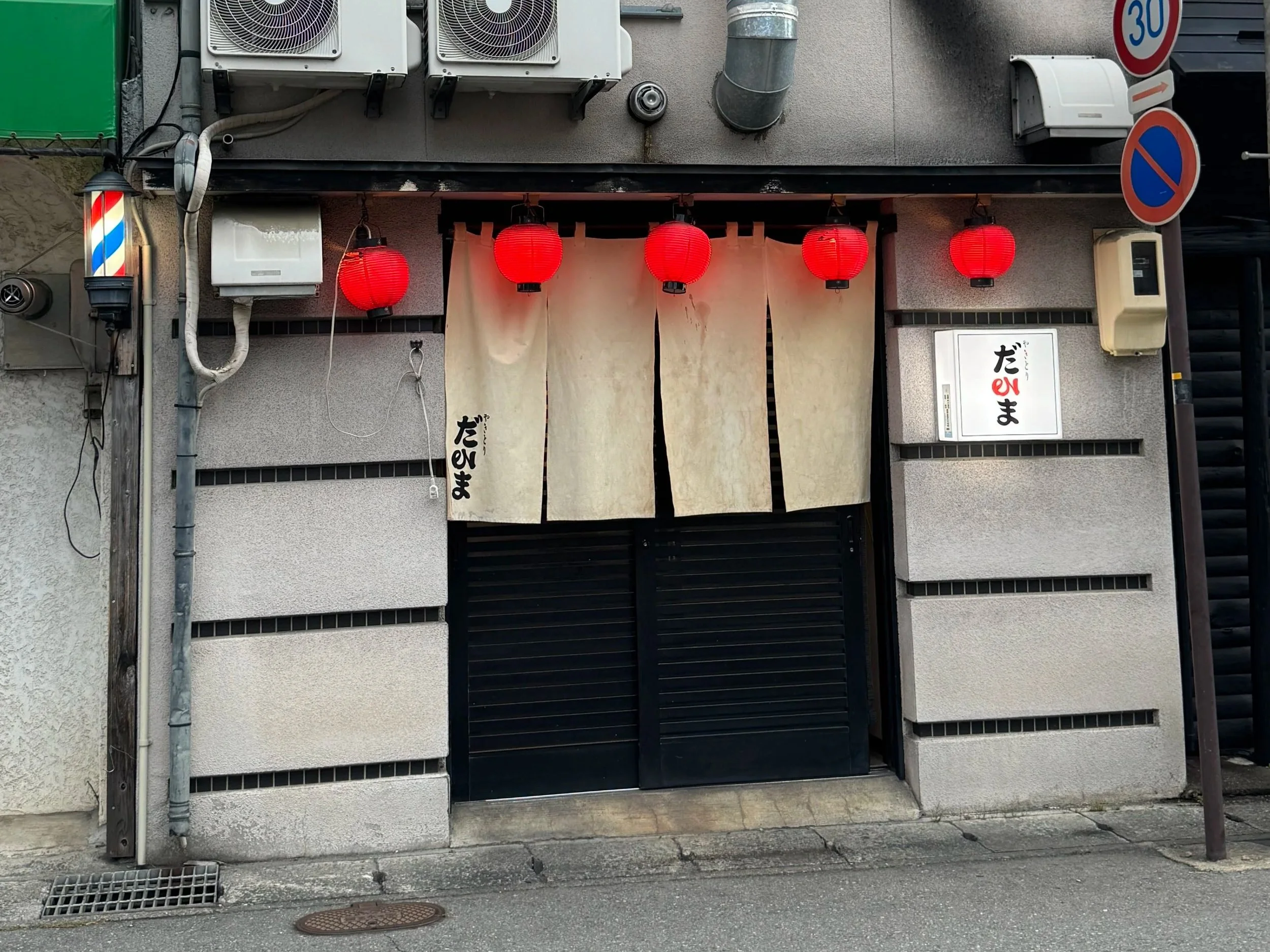
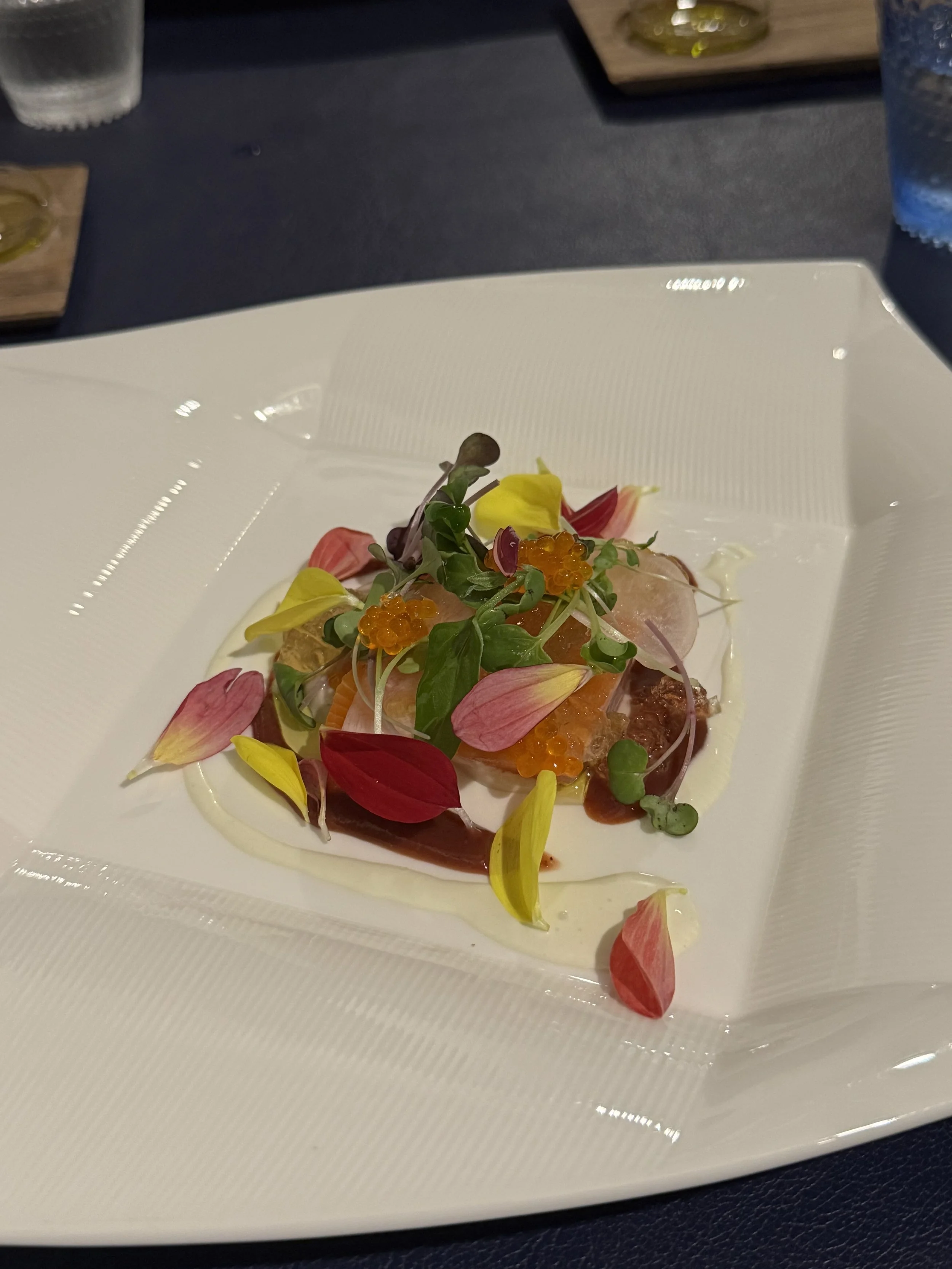
Where to Eat/Drink: We were mostly passing through to quickly scout out this region so are short on actual restaurant recommendations, but a farm dinner at Ristorante L’ombra was our top and favorite find for the area. There’s also plenty additional to explore in Karuizawa and Nagano (including great yakitori options like the one we popped into!) if you have the time, but this is a great place to start.
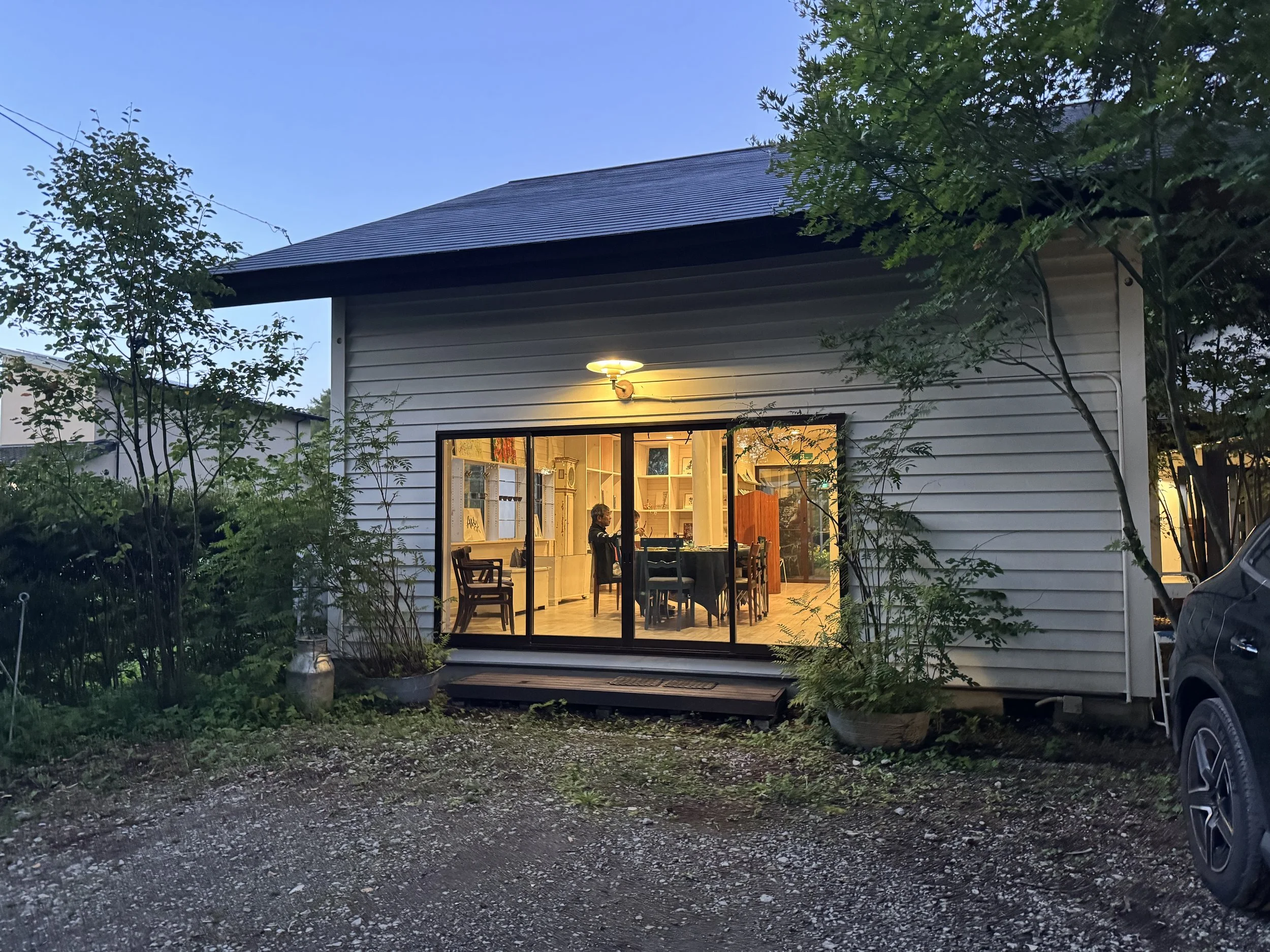
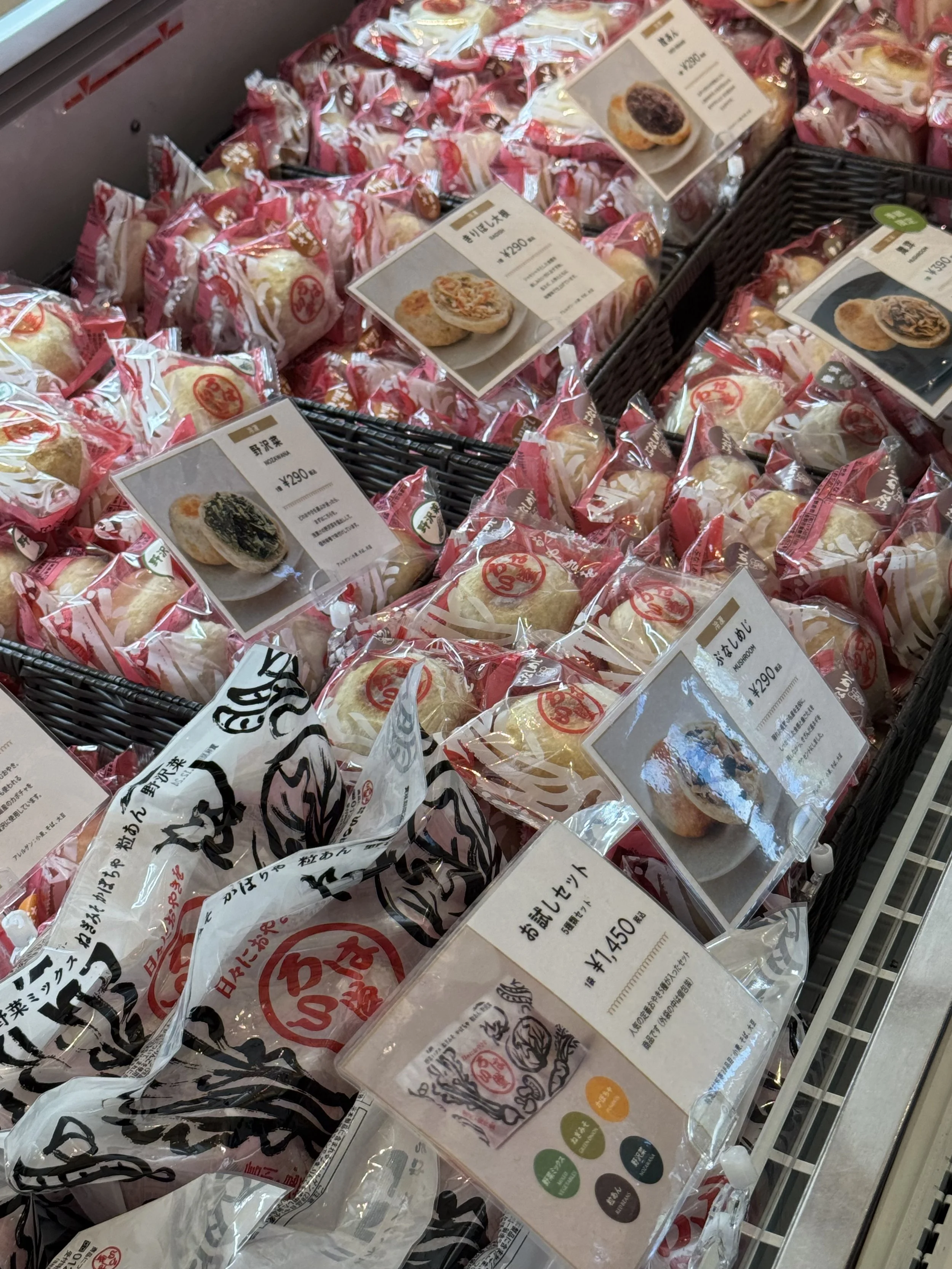
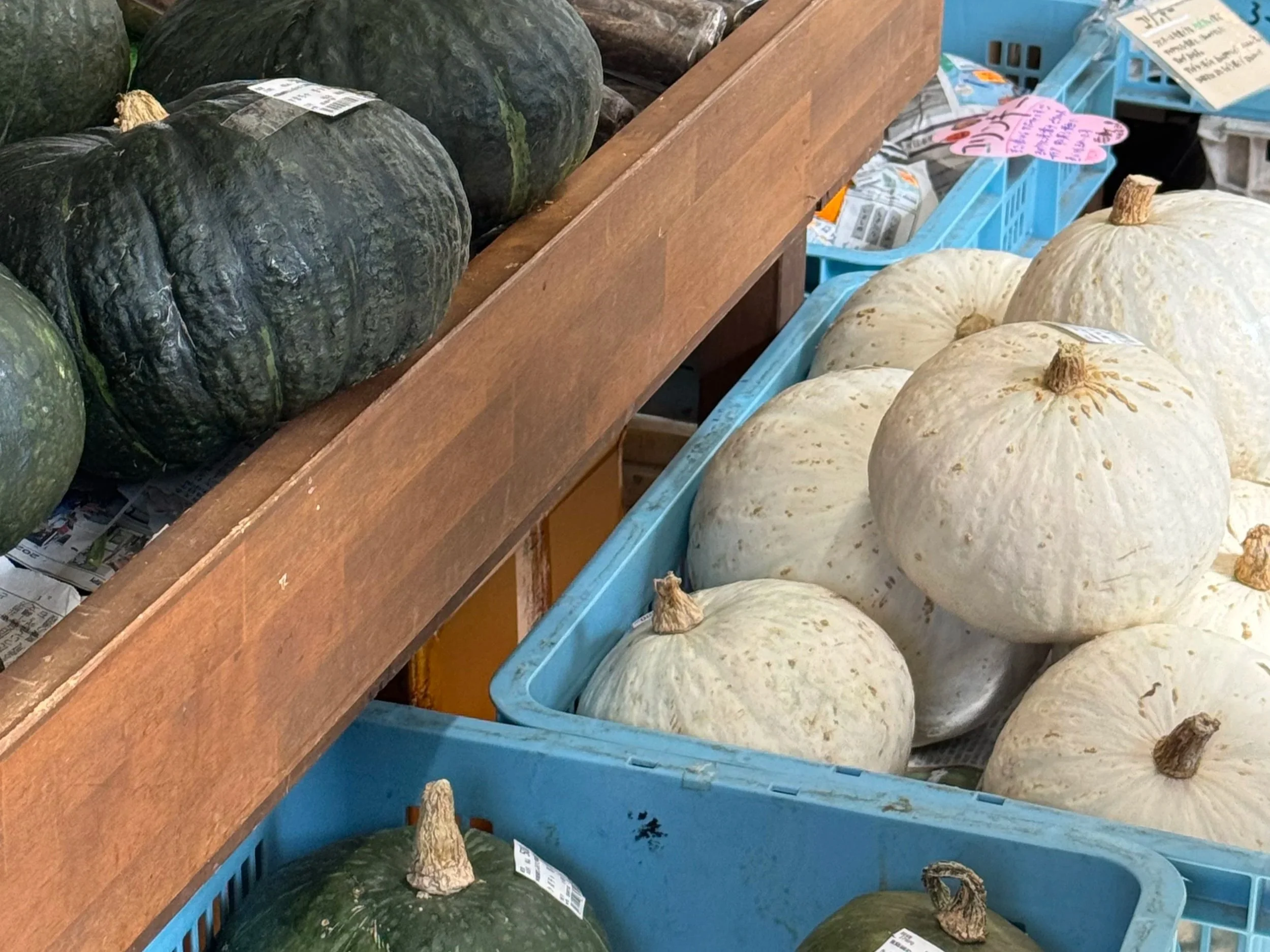
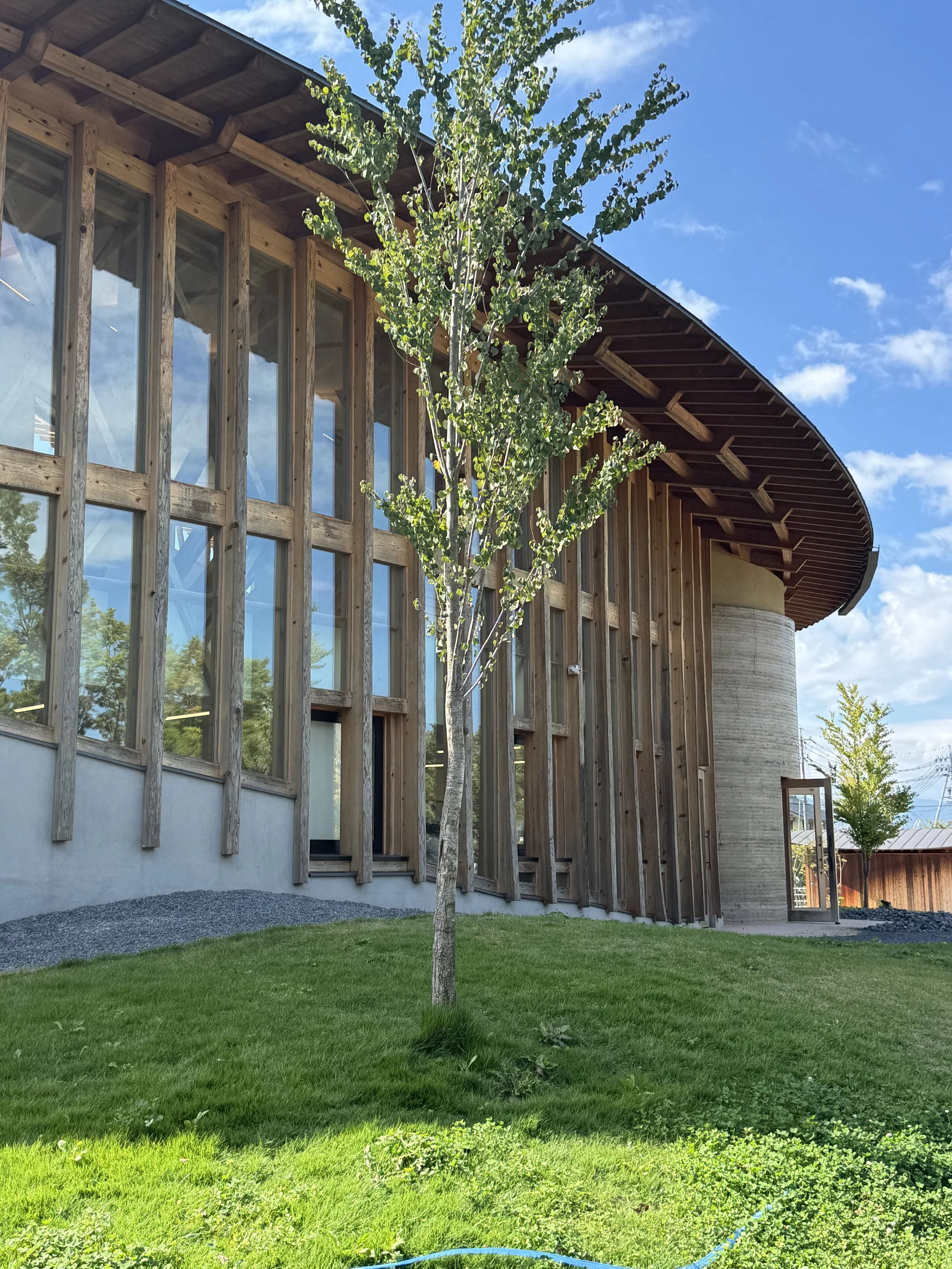
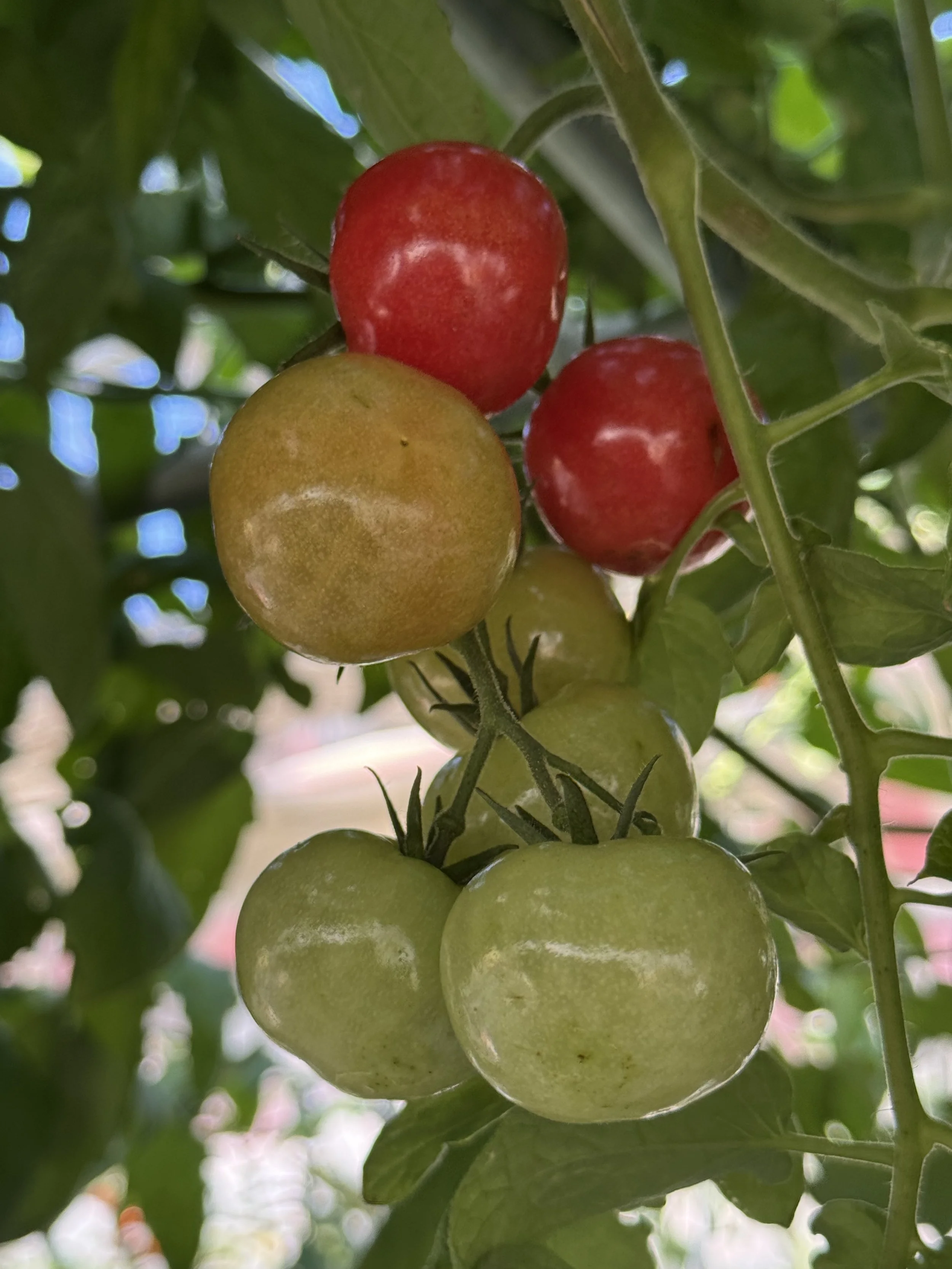
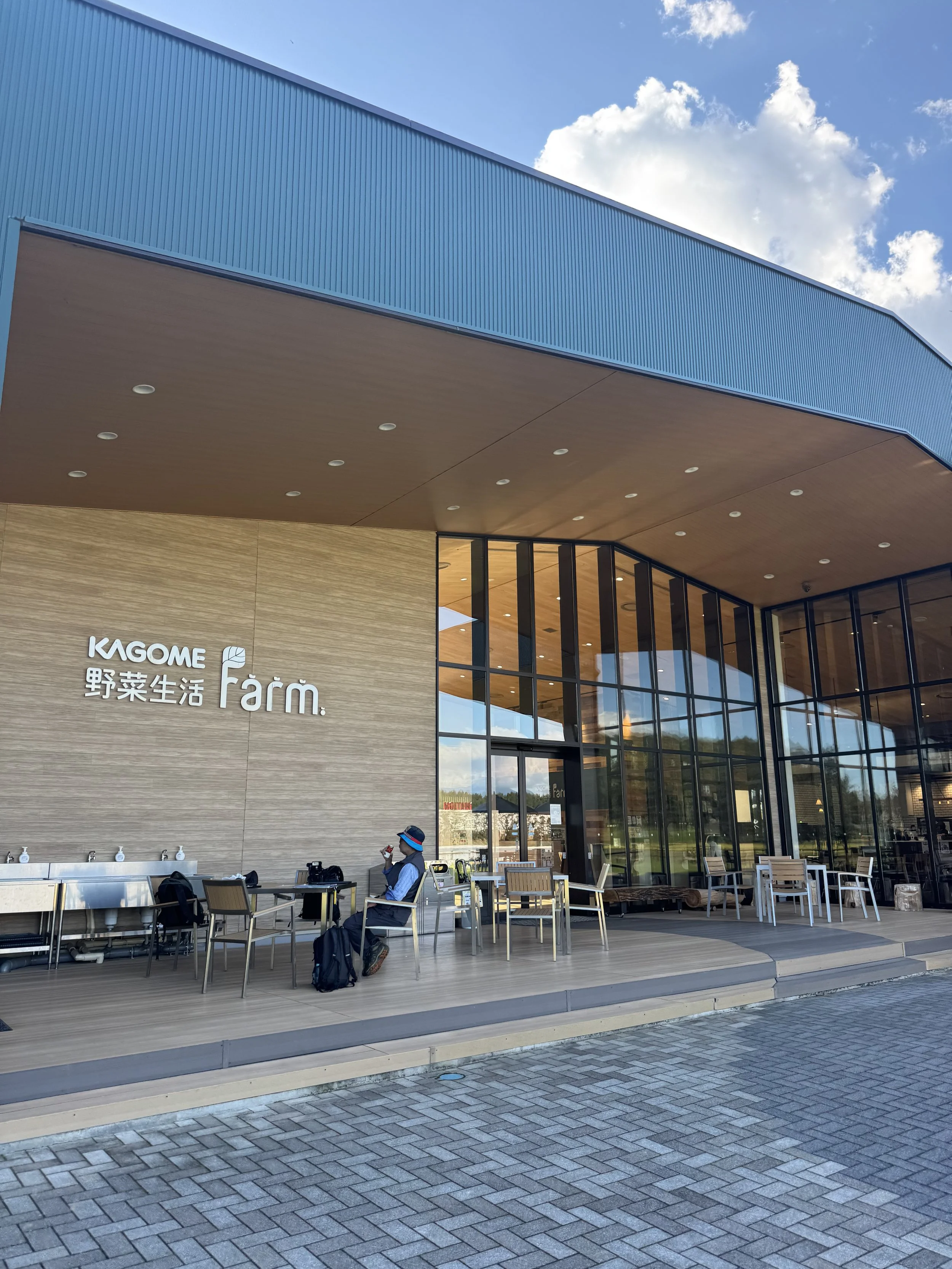
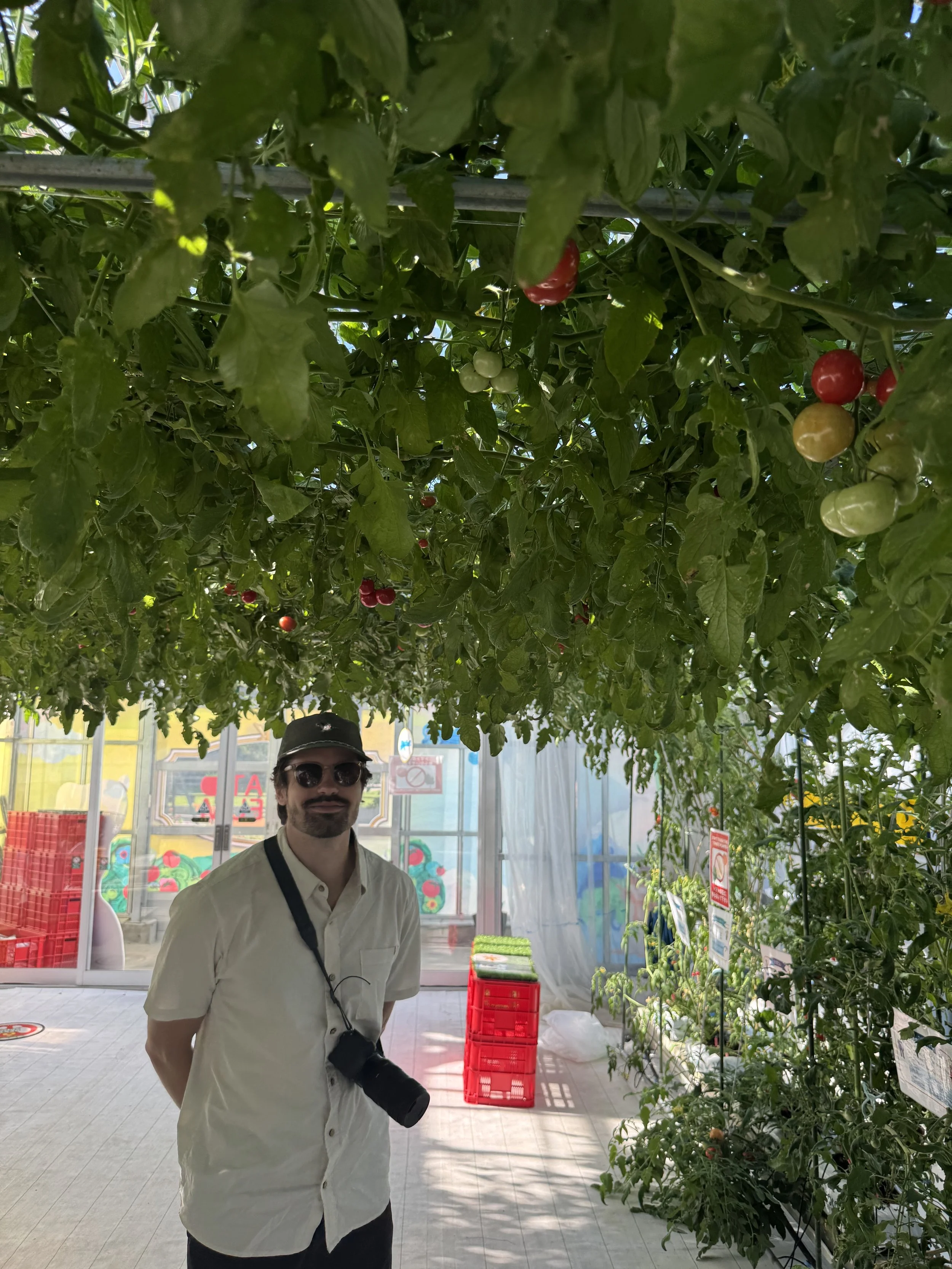
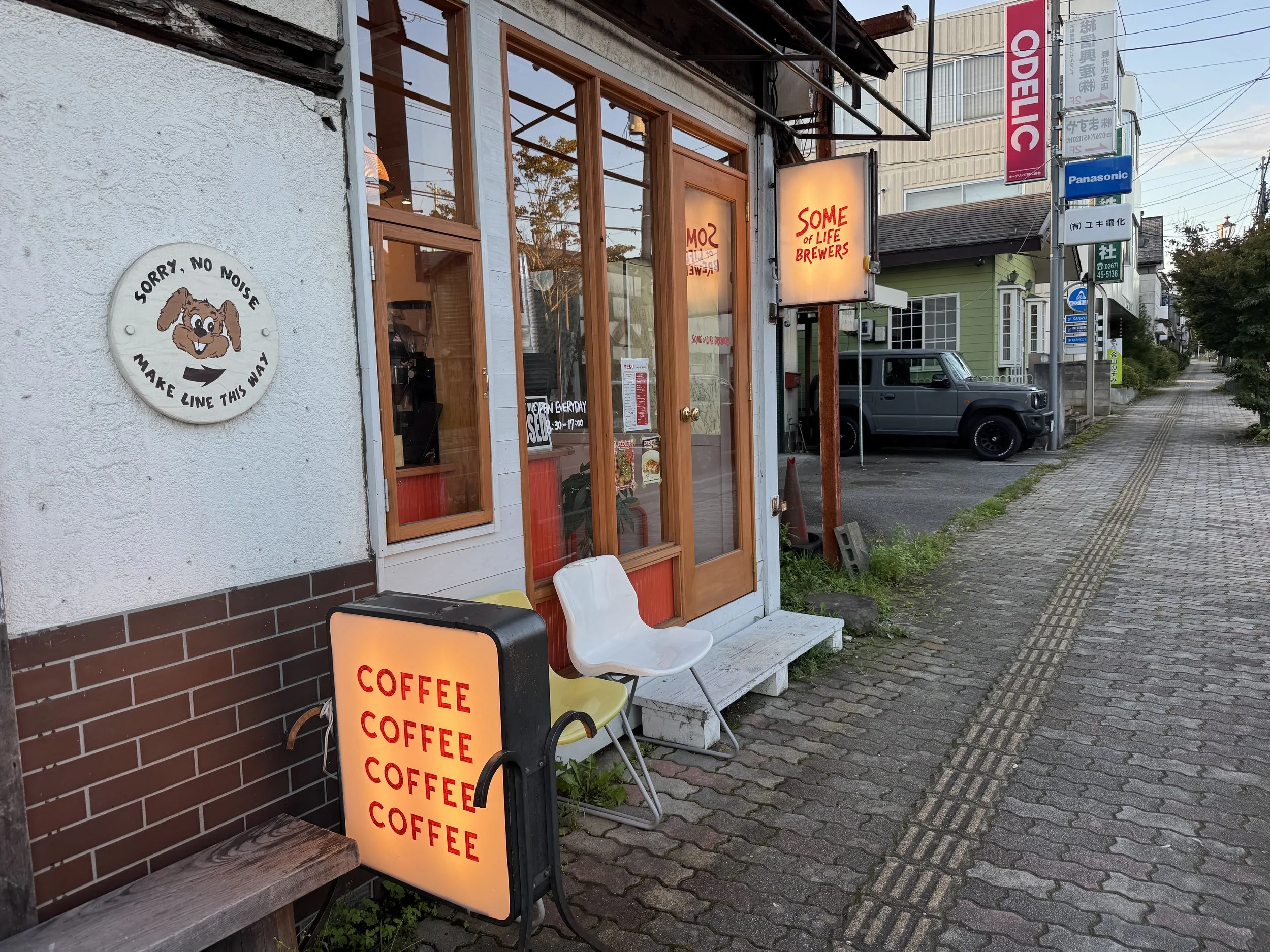
Things to Do: Give yourself time to browse Karuizawa’s smaller shops and stop for coffee before heading into the countryside. Walk around Kumoba Pond, where the trees reflect beautifully in the water particularly as the seasons change in the fall. Visit Shiraito Falls for its wide curtain of spring-fed water. Harunire Terrace is another lovely stop, with shops and restaurants connected by wooden walkways beside the trees. Beyond Karuizawa, leave time for country roads and farm stands, where the produce is an excellent entryway into what grows in Nagano. Further southwest, Kagome Yasai Seikatsu Farm in Fujimi offers seasonal vegetable harvesting and a tomato greenhouse, with factory tours available by reservation. Stay for lunch at IL FAGGIO, its Italian restaurant serving veggie focused dishes and wood-fired pizza. On a separate outing toward Nagano City, visit OYAKI FARM by Irohado to try oyaki, the region’s filled dumplings. The building itself is an architectural masterpiece, made of local wood and earth. The complex combines a working production facility with a shop and cafe, so its as interestinig for the behind the scenes architecture and production as it is the food. I’d say its smart to treat these as stops across a wider Nagano road trip, with enough time between each stop to pull over whenever a little bakery or farm shop catches your eye.
MATSUMOTO

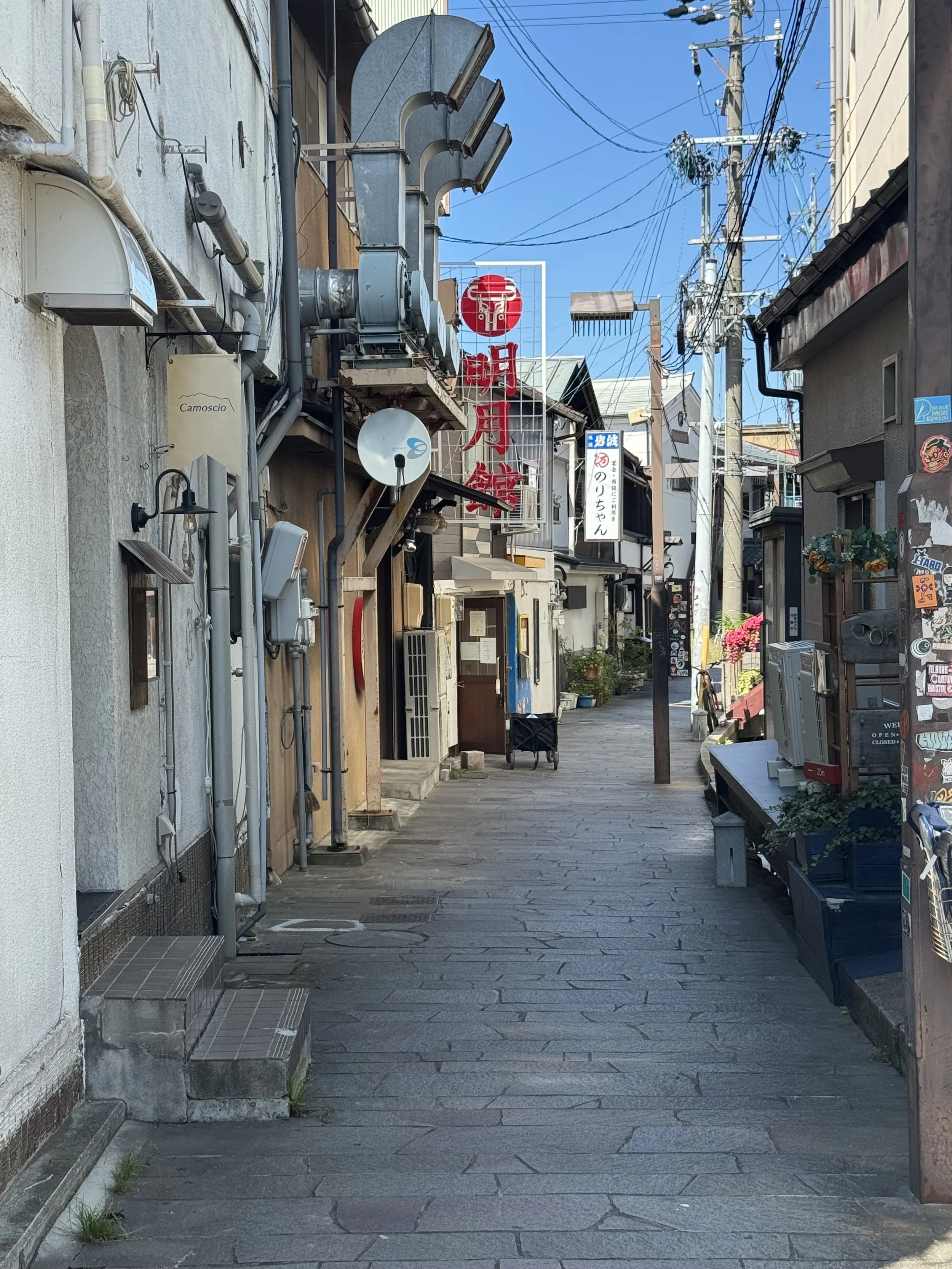
This was a swing through town for us, so we don’t have all of the accommodations scoped out. I’m also not sure you can’t cover it in an afternoon as more of a drive by destination, so will leave it at that. With that said, Matsumoto is an easy place to spend an afternoon on foot, with a castle to anchor the visit and plenty of smaller streets to explore afterward.

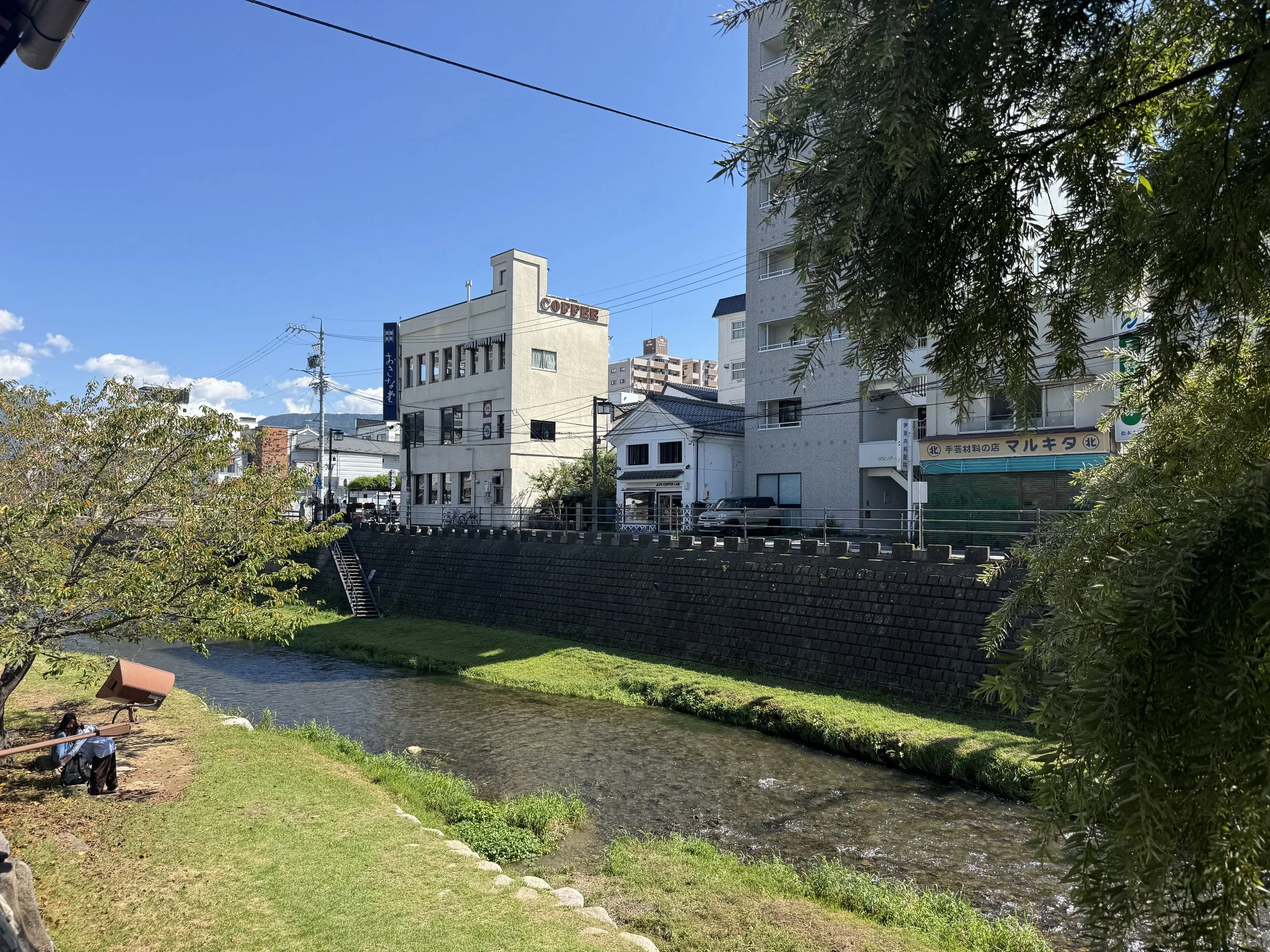
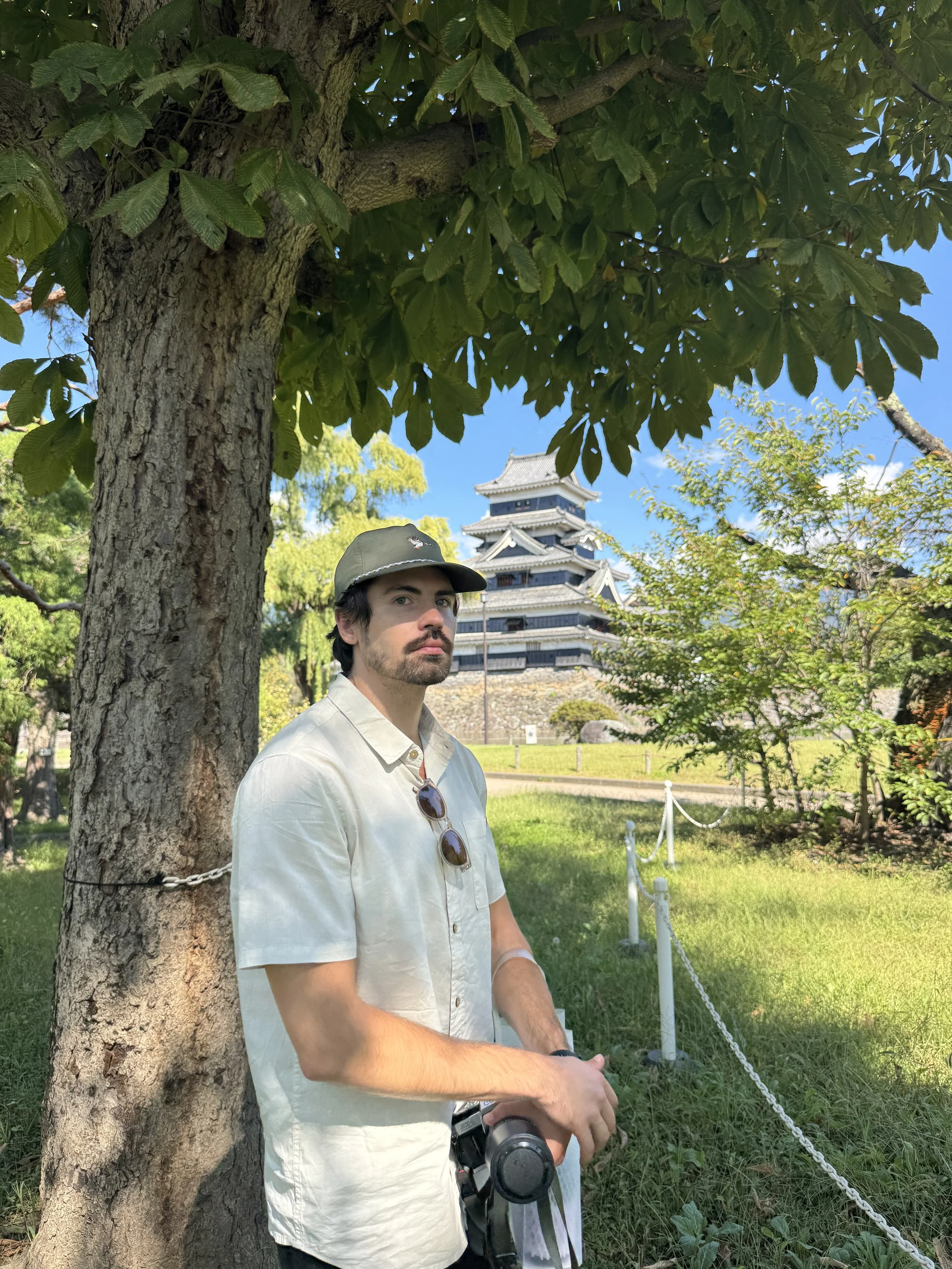
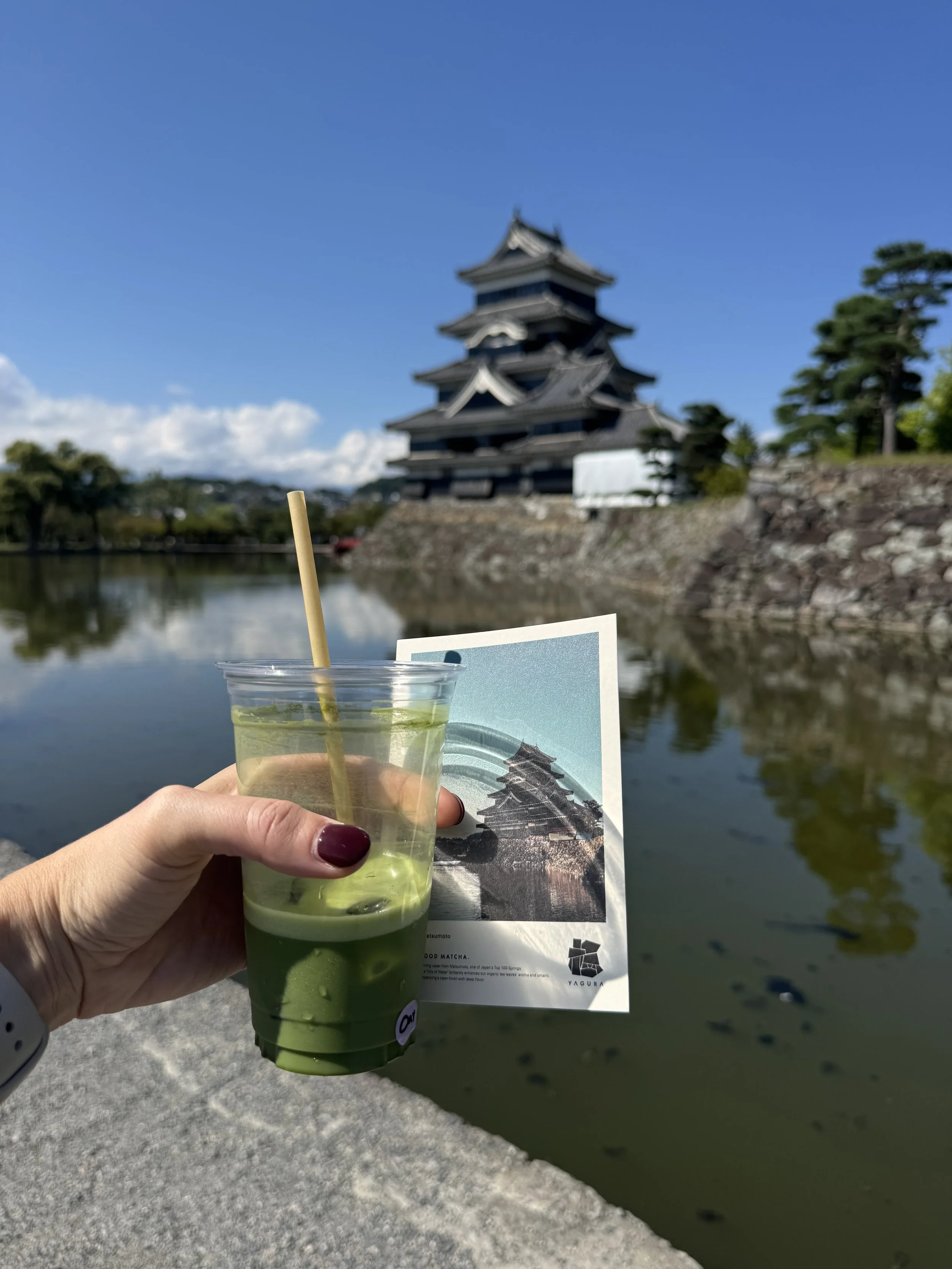
Start at Matsumoto Castle, its black and white exterior reflected in the moat, then wander toward Nawate Street beside the river and Nakamachi, known for its historic storehouses. There is no shortage of matcha stands and cute little shops to poke your head into. My favorite and probably the best matcha I had all trip was from Matcha Stand YAGURA, which had newly opened when we were there in October 2026. Its owner was lovely and very enthusiastic and they even gave me a little postcard to take on our way. Very cute spot and even better vibes, 5 stars. We also accidentally stumbled into the absolutely charming little natural wine bar called Ca Va. It had also recently opened and the owner was pulling a cheesecake out of the oven as we perused their wine selection. Easy to see ourselves spending a lot more time there had we not been needing to get on our way!
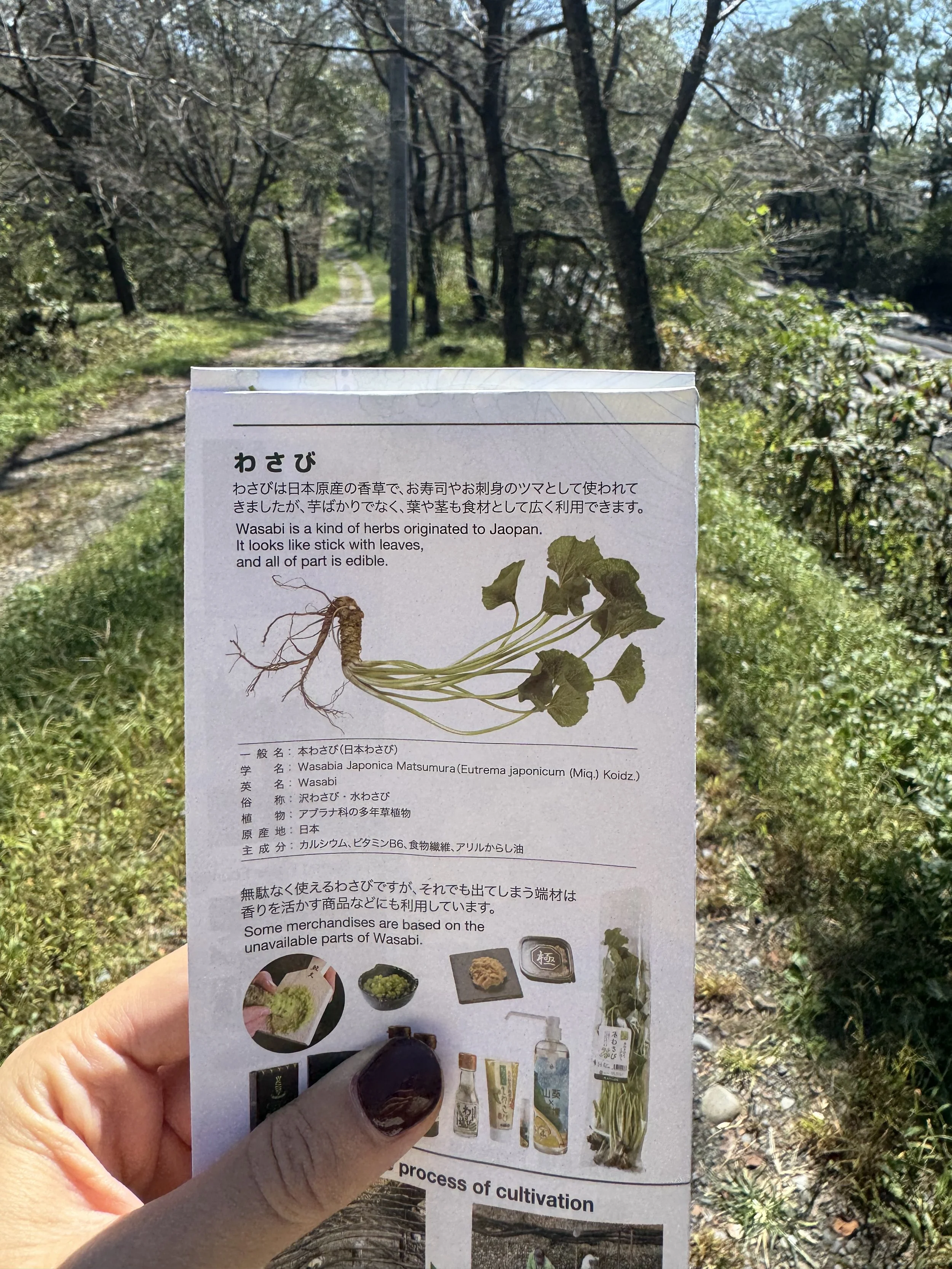
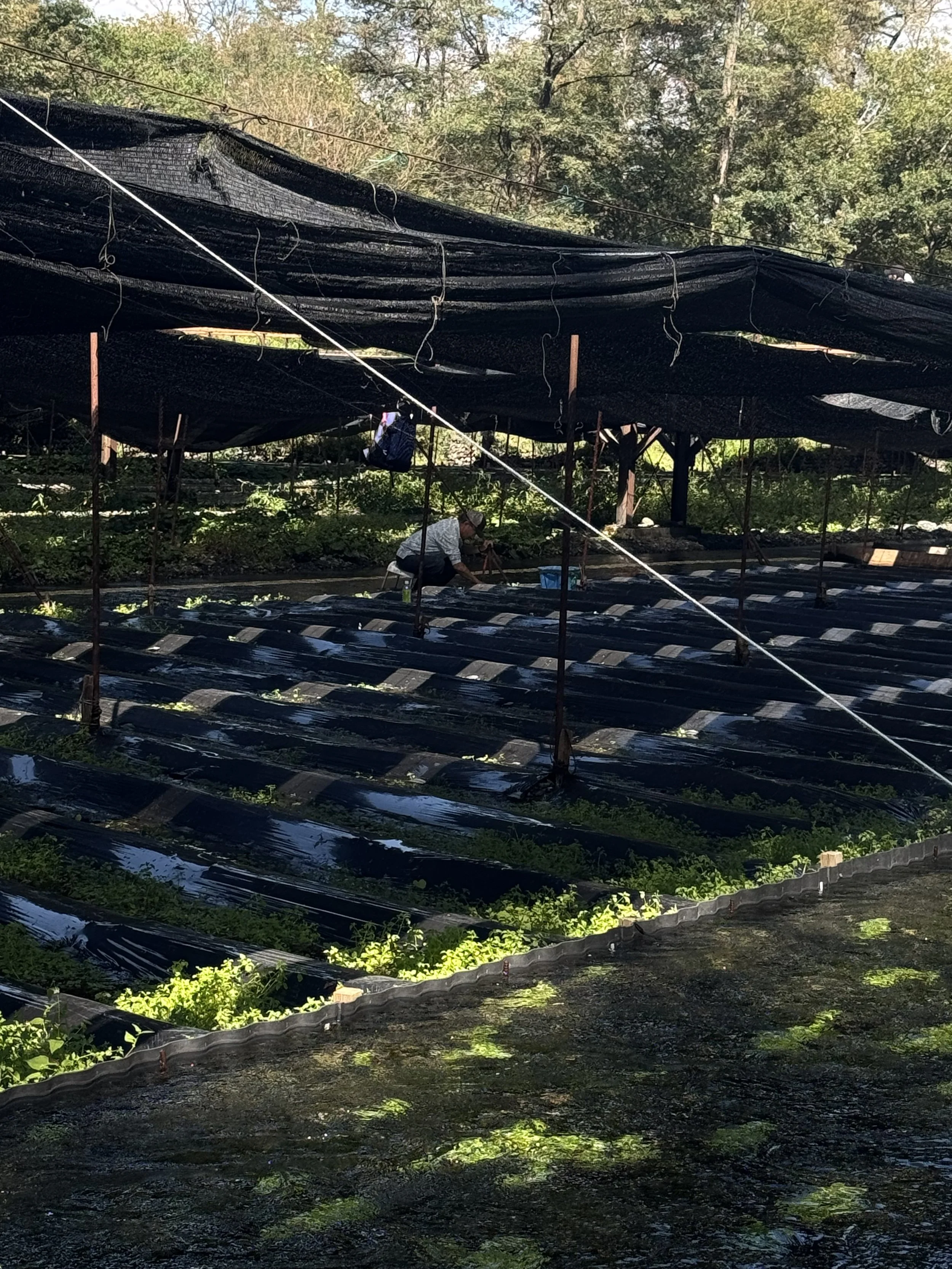
Nearby, in Azumino, is the Daio Wasabi Farm, which is my kind of detour.

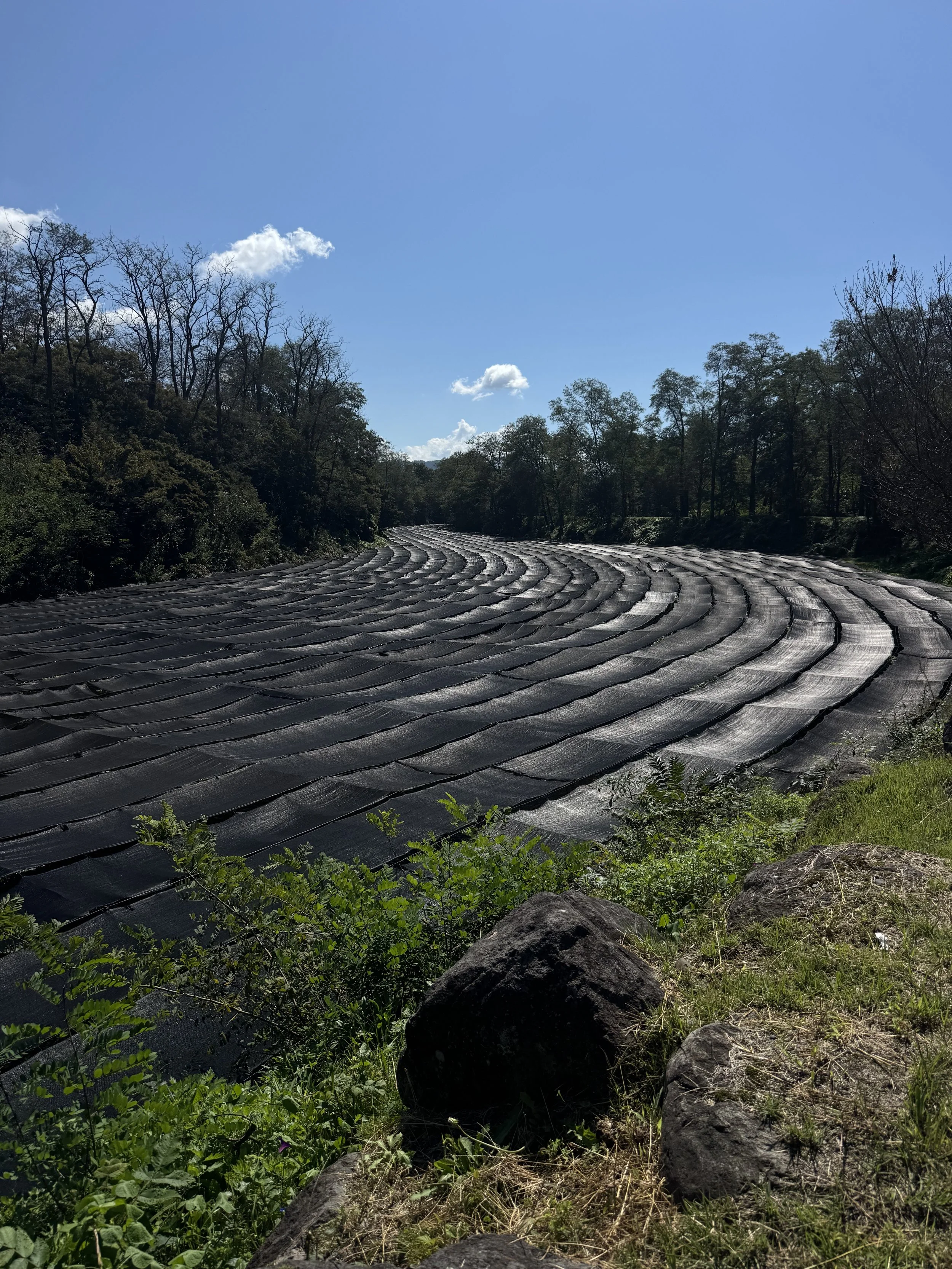
I am absolutely fascinated by seeing how something grows when I have spent years encountering it only on a plate. Here, long beds of wasabi grow in clear, flowing water supplied by the surrounding Japanese Alps. The growing conditions are demanding, which is much easier to appreciate when you see the beds and waterways up close.

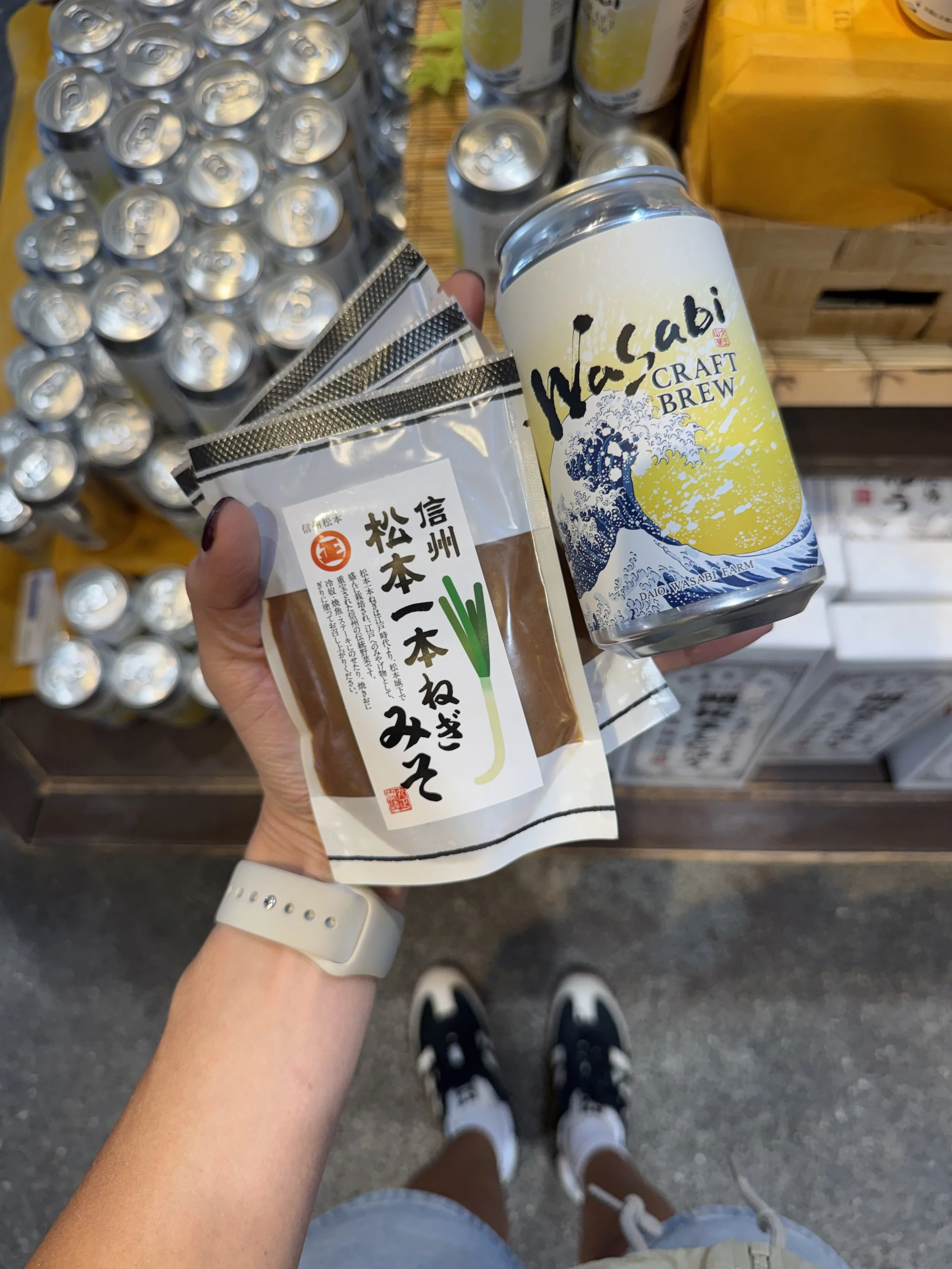
We walked beside the beds, looking beneath the shade cloth at plants that we usually only see once they’ve been formed into a small green mound next to our sushi. It is a beautiful place to wander, but the agricultural side was what drew me in. If you are curious about where your food comes from as we are, give this stop some time - and bring back loads of unique and weird wasabi items, including wasabi beer, cheese + miso!
HOKUTO/YAMANASHI

Where to Stay:

Yato Shintou combines a small sushi restaurant with dome-shaped glamping accommodation on the forested grounds, hosting just two overnight groups each night. Dinner is the reason to build a stay around it. One practical detail: each group has its own shower room, but these are in the separate restaurant building rather than inside the accommodation. More on the dinner experience below.

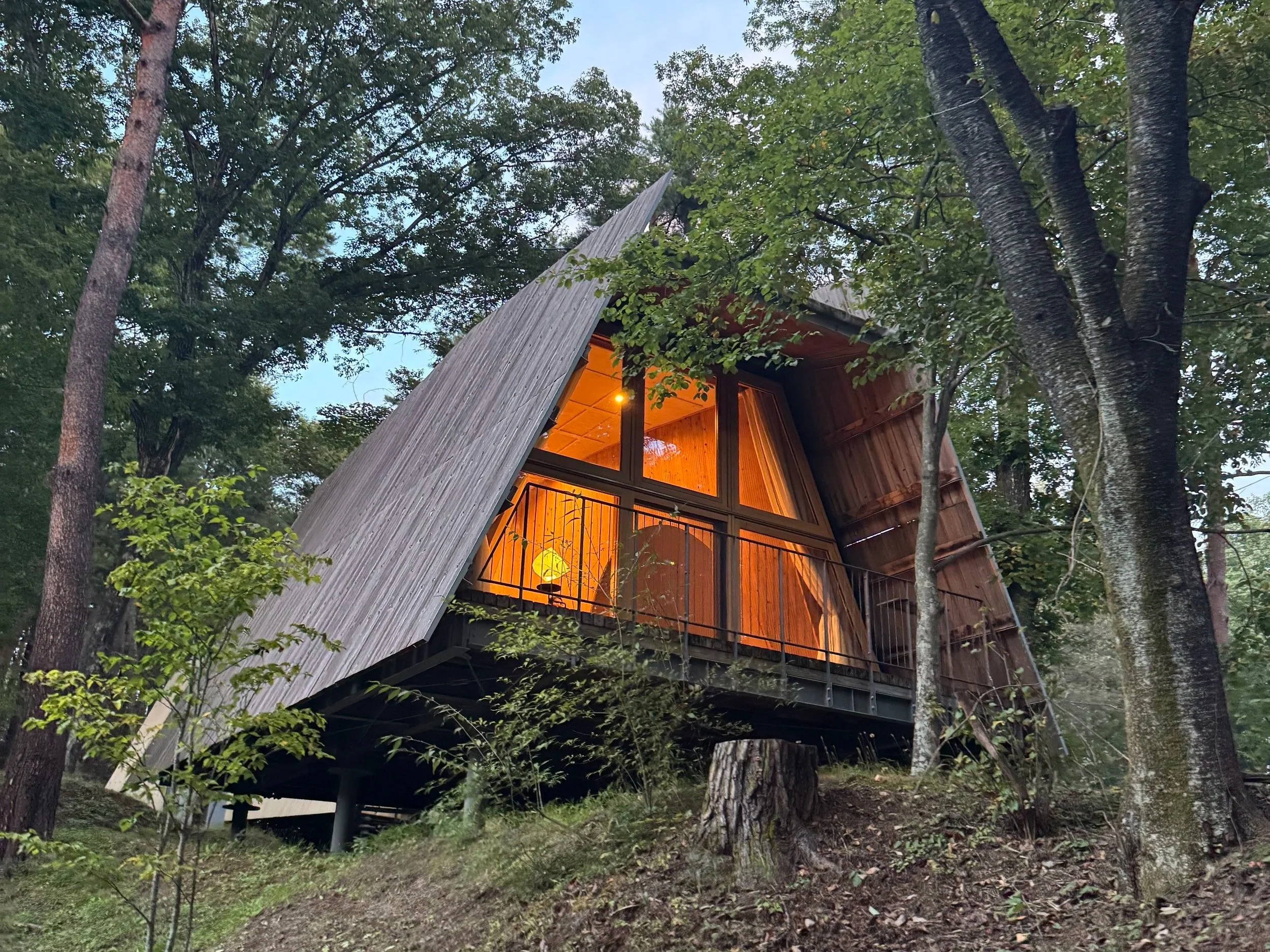
Sanu 2nd Home is an appealing option if you want a little house in the woods and the freedom to make yourself at home. Its Yatsugatake properties have private cabins with kitchens, giving you somewhere to cook the produce you may have spent the day acquiring. The cabins pair warm wood interiors with large windows facing the forest, and some have private saunas. I would leave a morning free for coffee and looking out the window.
Where to Eat/Drink: Yato Shintou, Truffle Bakery, Cami Lota

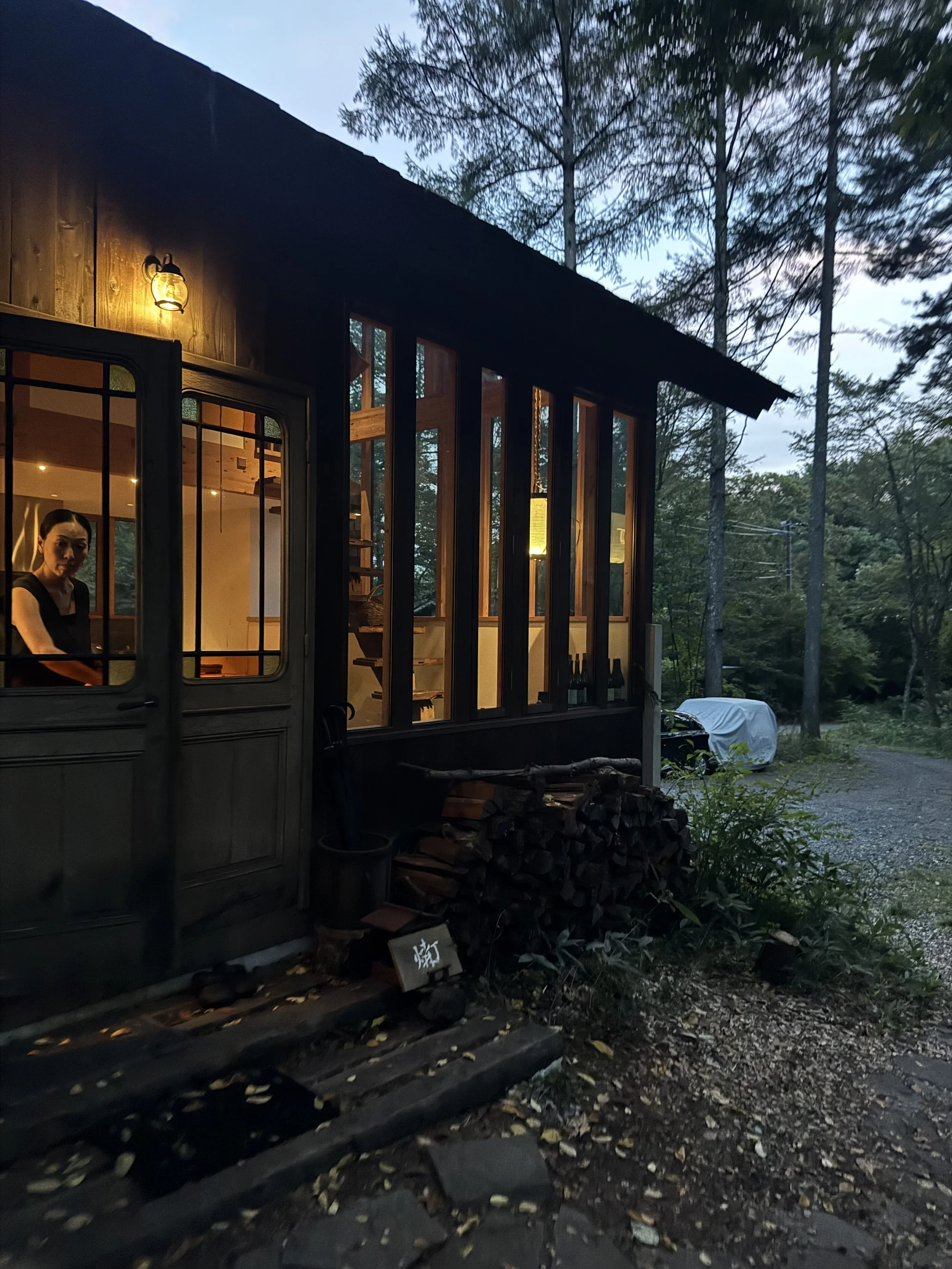
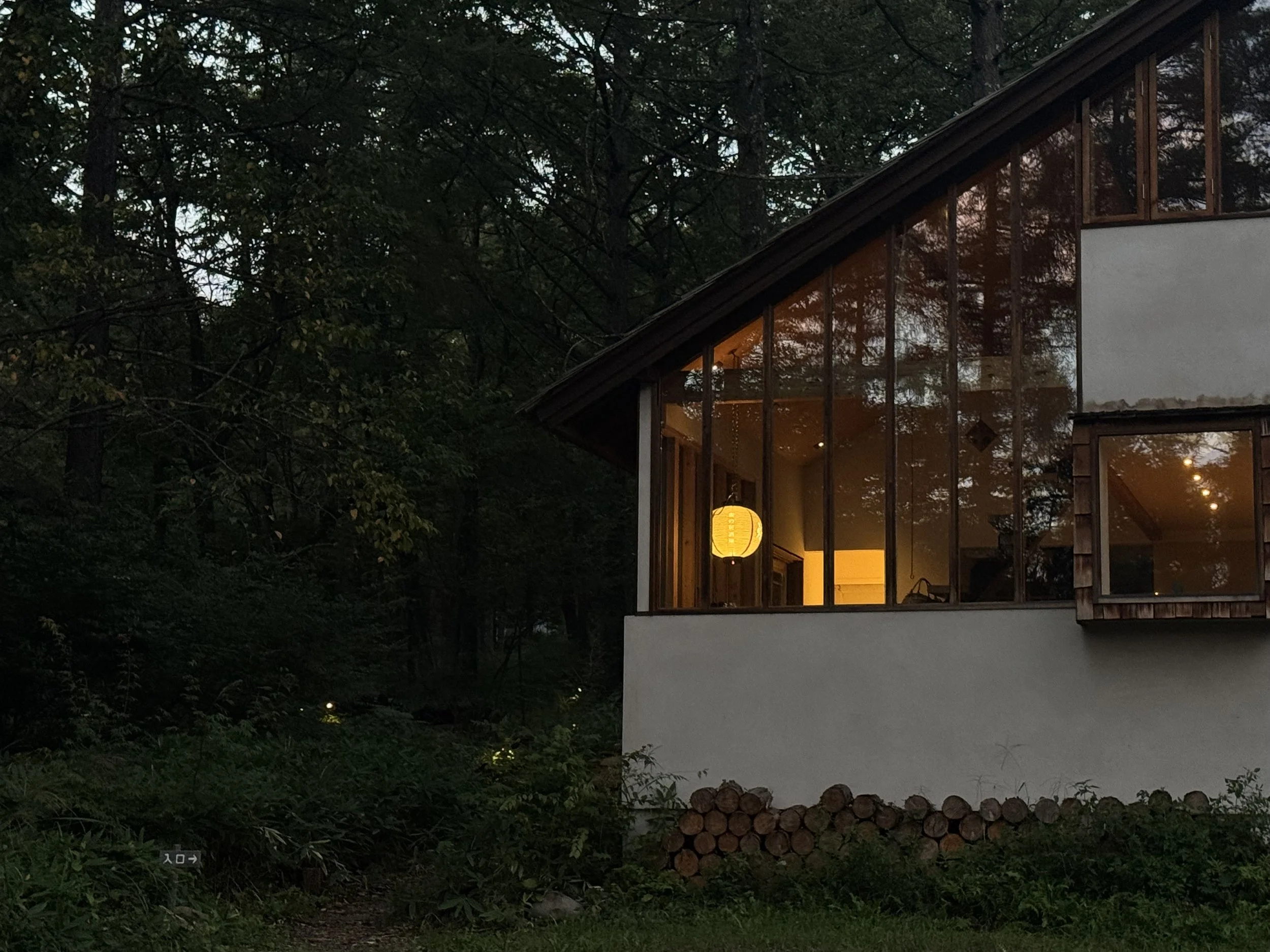
Yato Shintou - a great place to have sushi & a night in the forest. It’s in Hokuto beneath the Yatsugatake mountains.

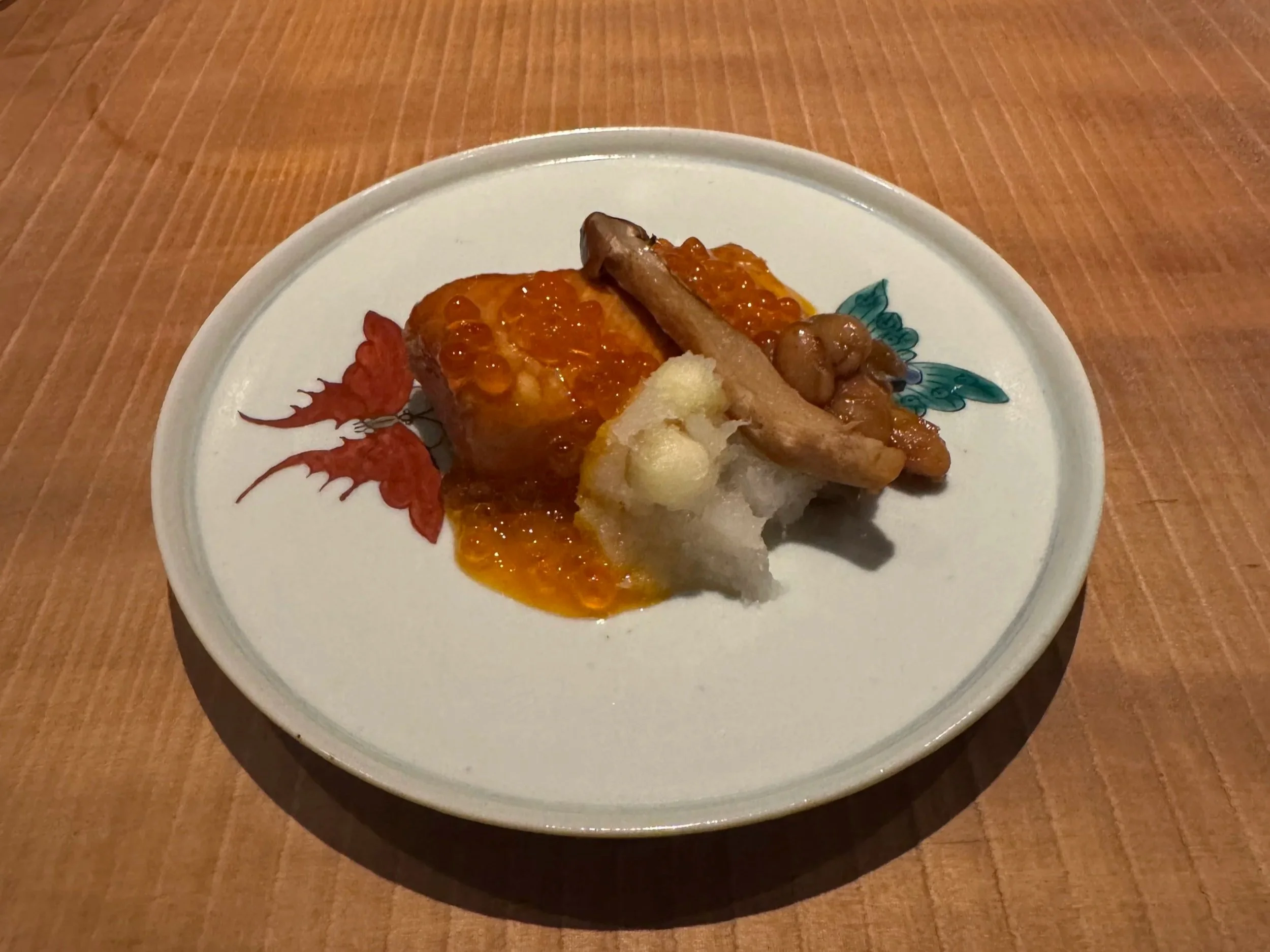
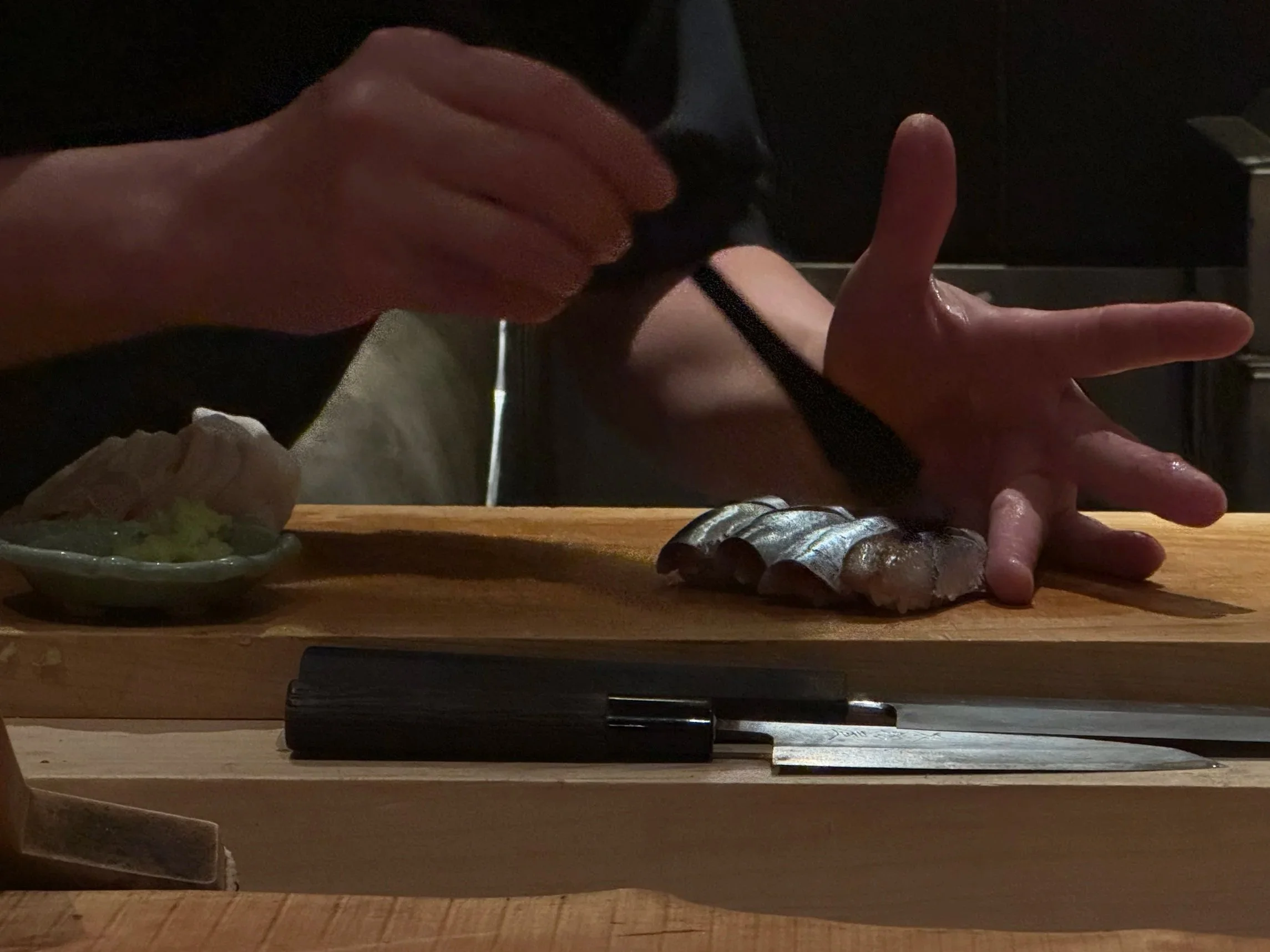
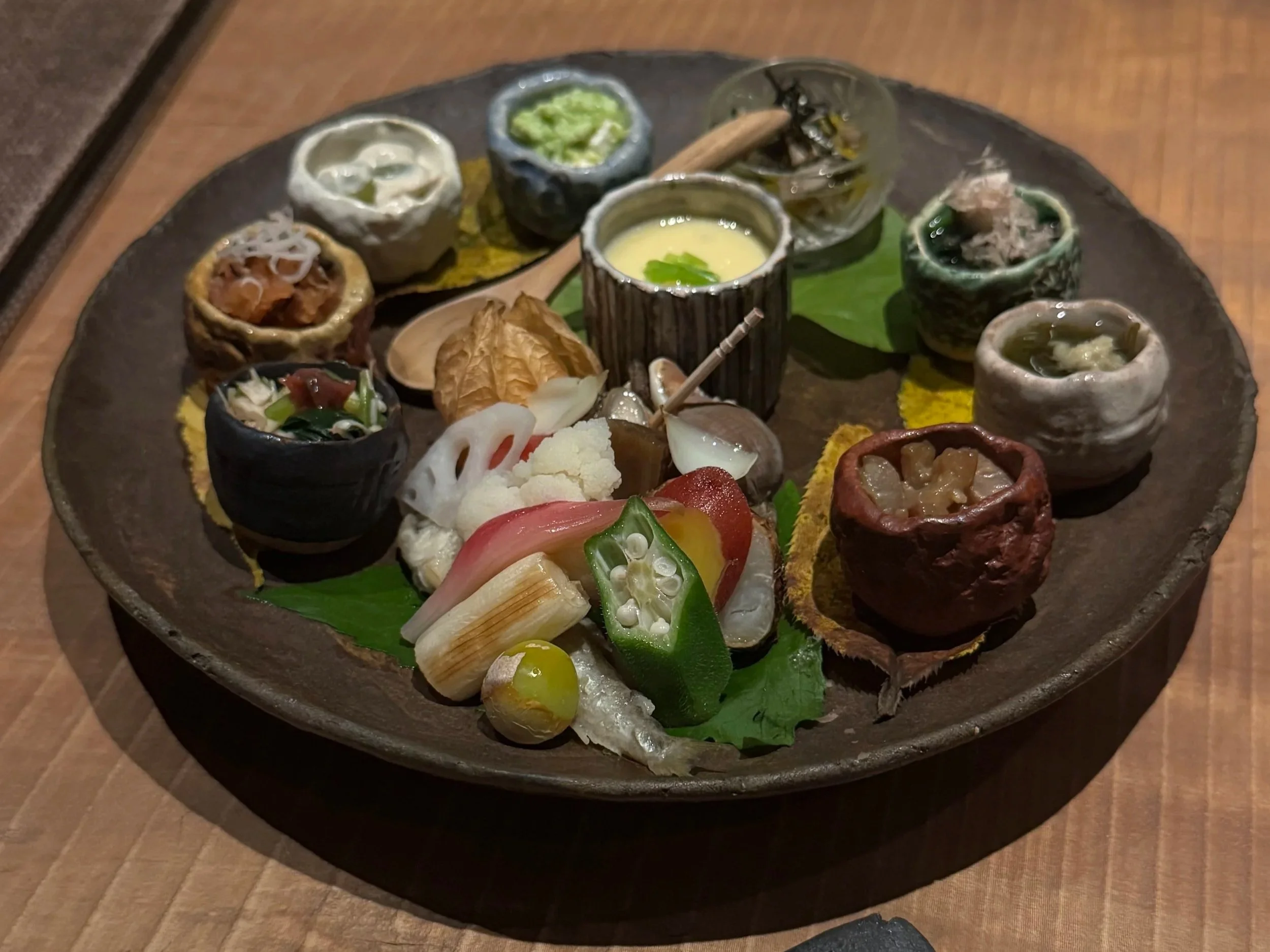
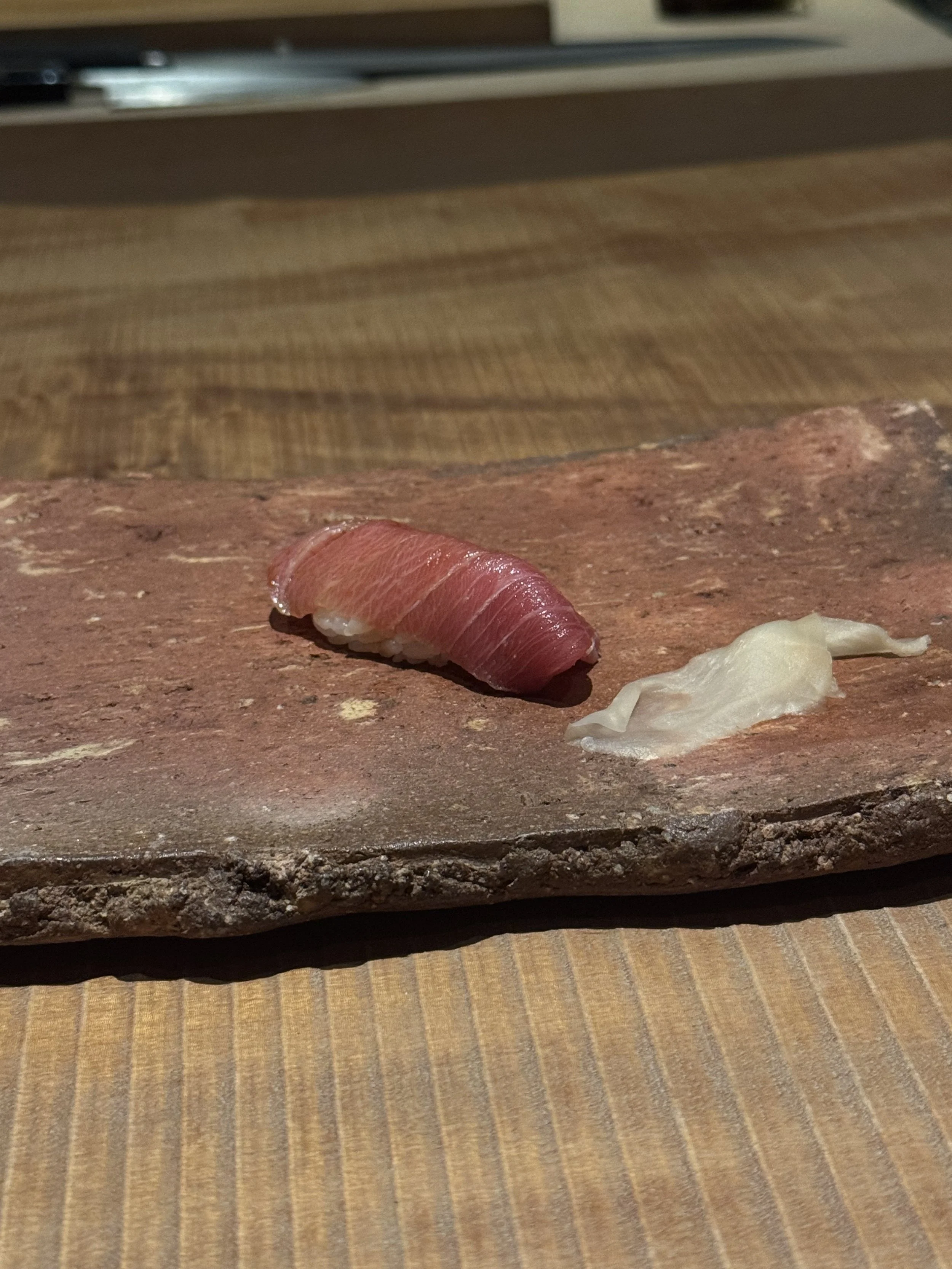
This was one of the most phenomenal experiences of our trip! You drive up to a charmingly lit building in the woods, and are seated at a sushi counter that only accommodates 6, so immediately it feels intimate. The dinner that then follows slowly brings the surrounding mountains into a sushi meal. Seasonal veggies, wild mountain greens or mushrooms appear alongside daily imported seafood, depending on time of year. The chef uses touches such as homemade yuzu kosho and garden-grown sansho, while the slightly sweet sushi rice follows his father’s recipe. It is the kind of detail I love to learn and enjoy: a family history manifested onto the plate. Divine. Made all the better with a brilliant selection of natty wines. We were hugging our hosts by the end - that’s how you know it was good.

Bonus: you can also stay on the grounds in a dome-shaped glamping tent among the trees. The appeal is straightforward: make dinner the evening’s main event, then retreat into the forest without having to drive anywhere. There is also the option of a bonfire afterward. Not sure you could ask for much more from an experience.
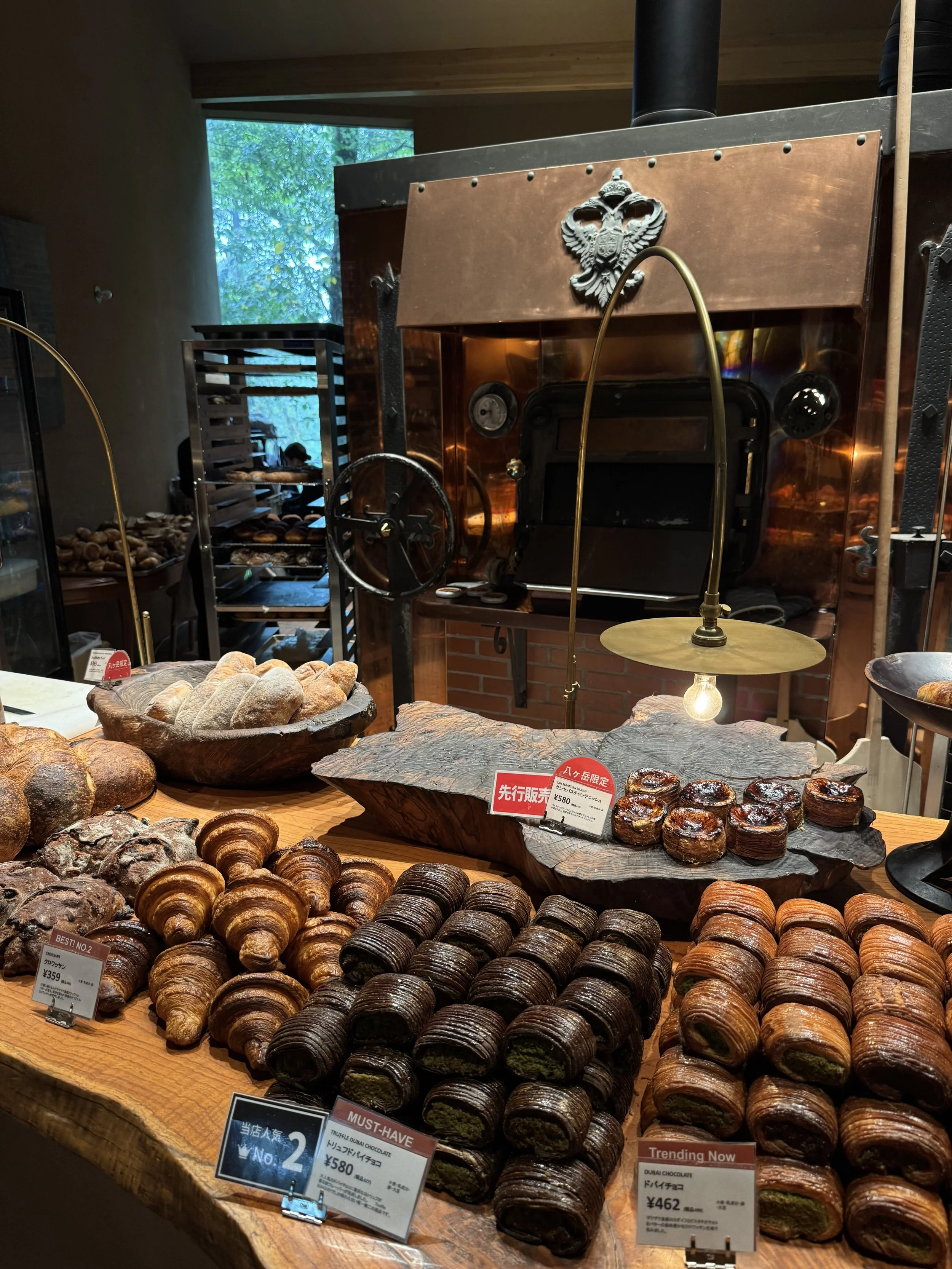
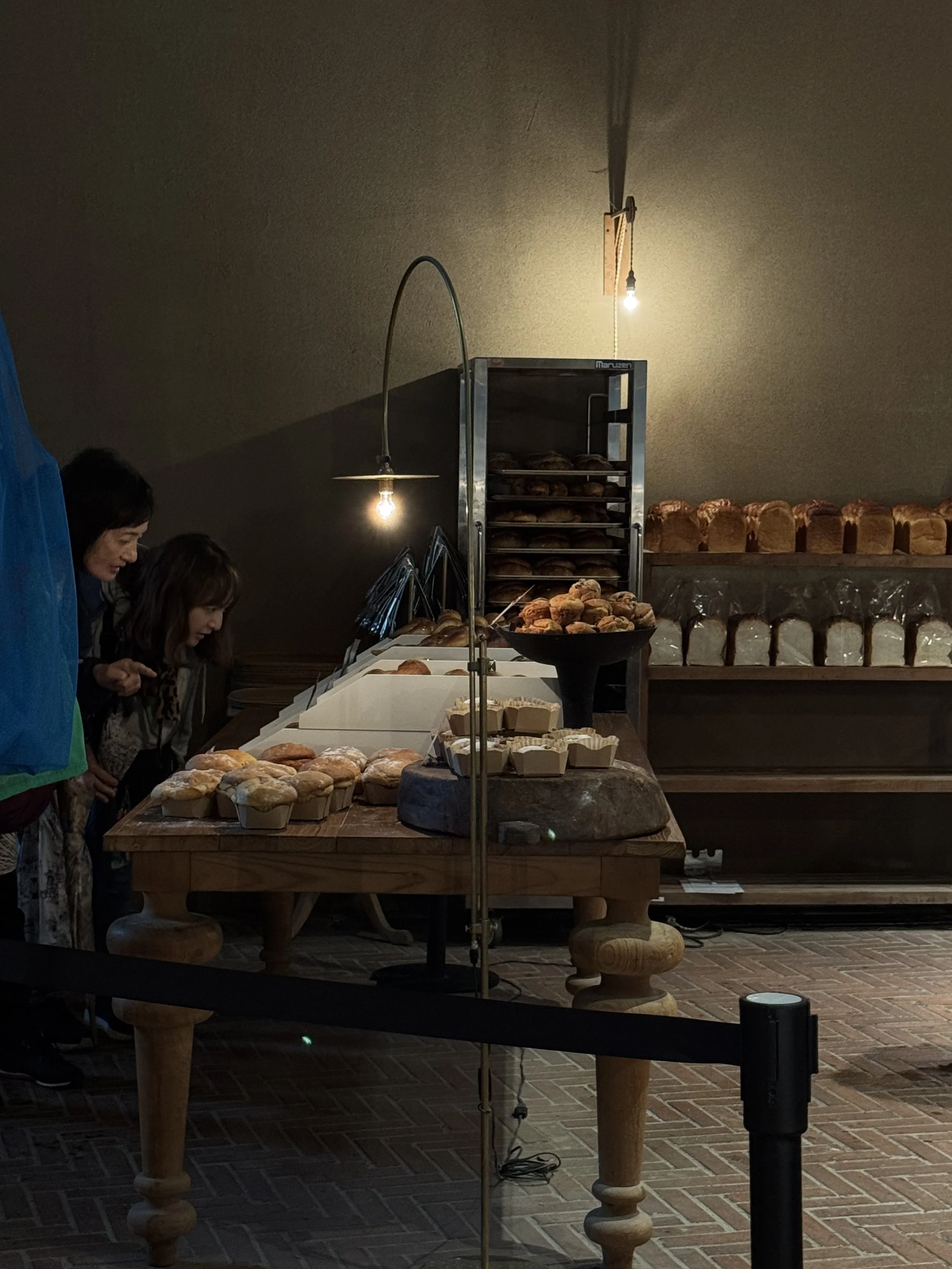
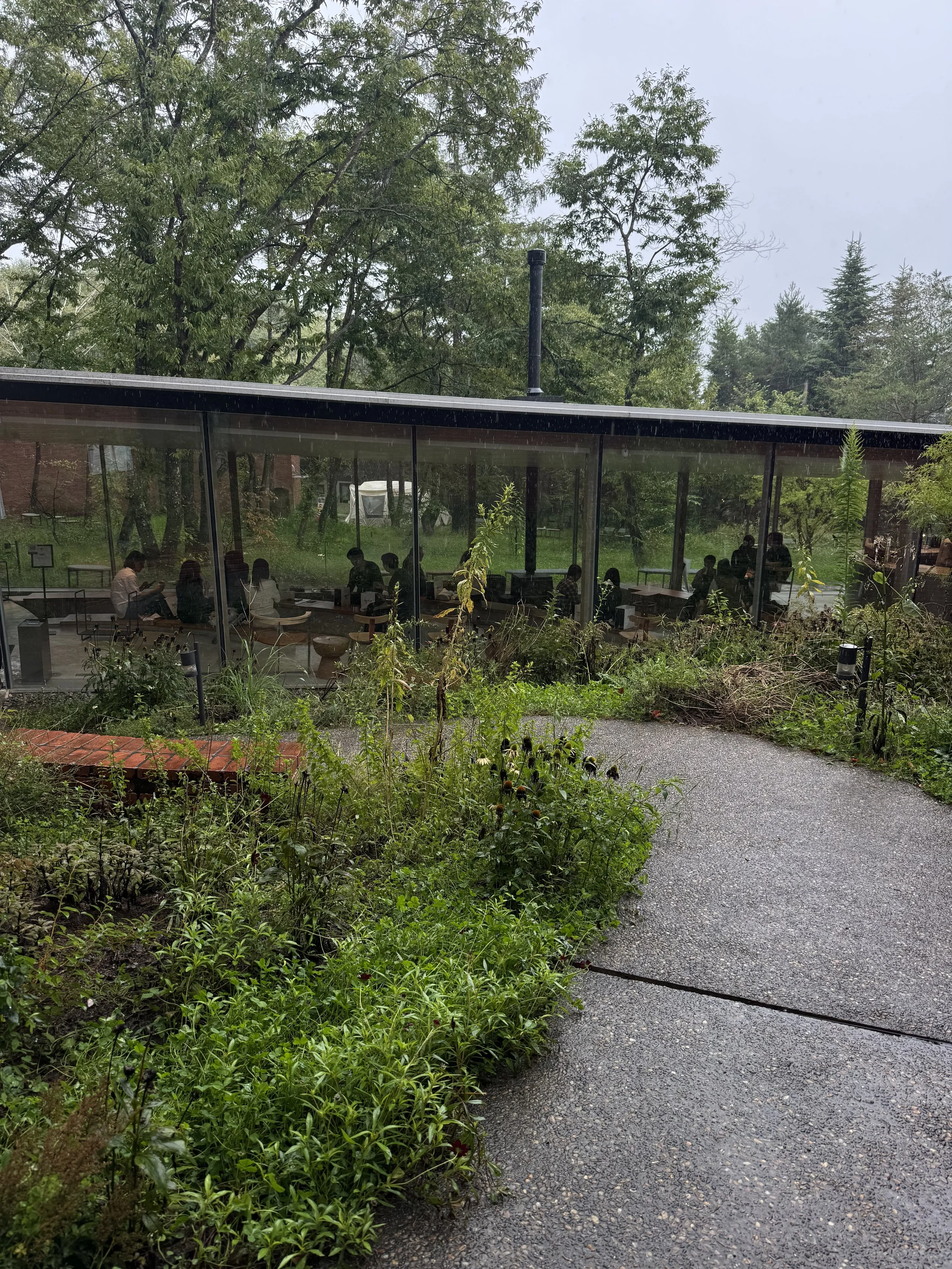
Truffle Bakery was one of our other standout experiences of the region. It’s a bakery with a research lab devoted to bread and water. Once I learned this… obviously, I was interested. This location doubles as its development center, with a bakery and cafe where you can try what the team has been working on. The signature white-truffle salt bread gets its own Yatsugatake version here, alongside breads and pastries that draw on regional ingredients. Come for coffee, great design, and something very buttery, then leave with a handful of bread for later. Absolutely loved the model of grabbing a tray upon entering the hearth of the bakery, and loading up on everything your heart could ever desire. Quite a few people told us that this place was a hot spot that was blowing up, and I can see why.
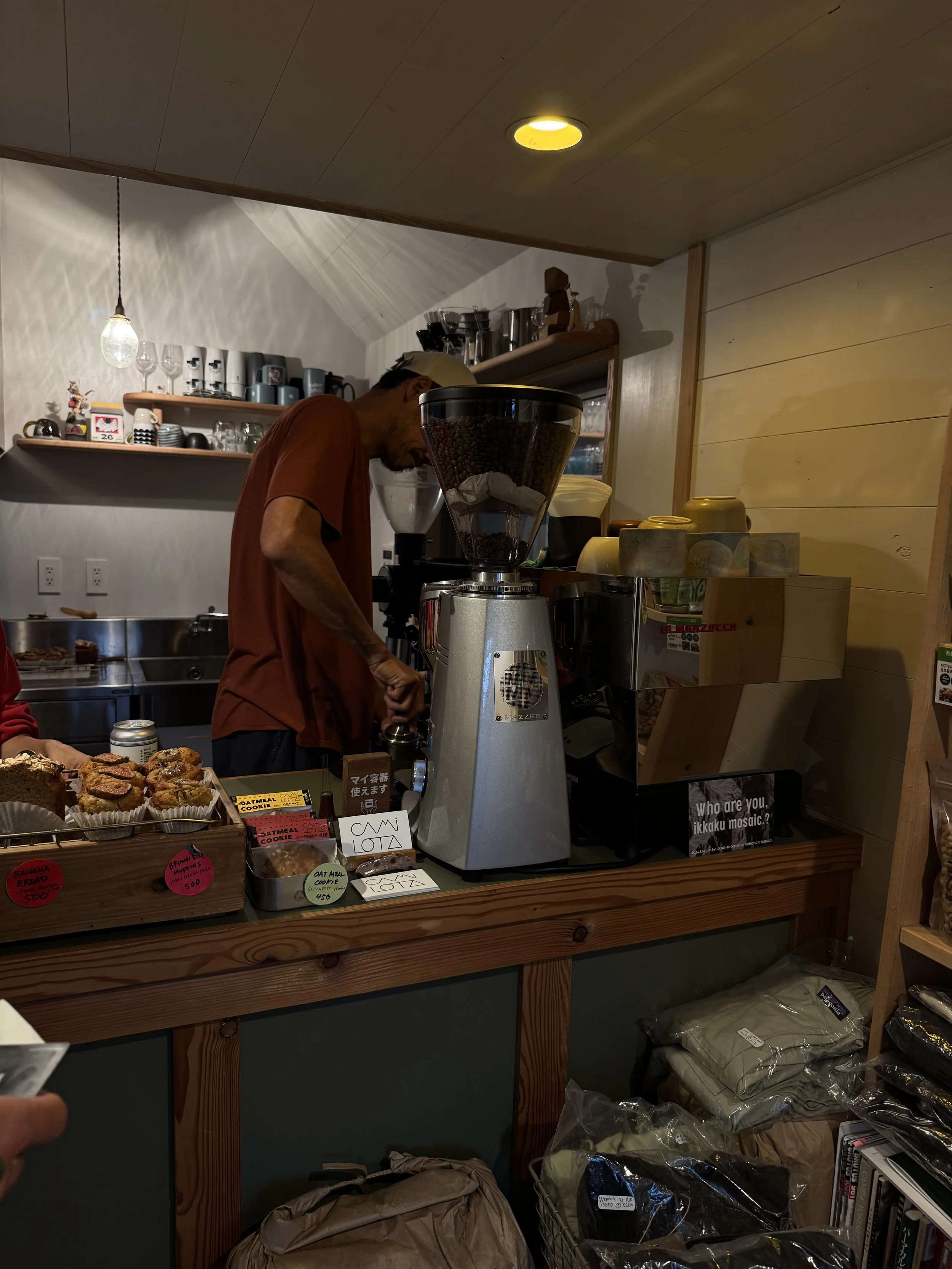
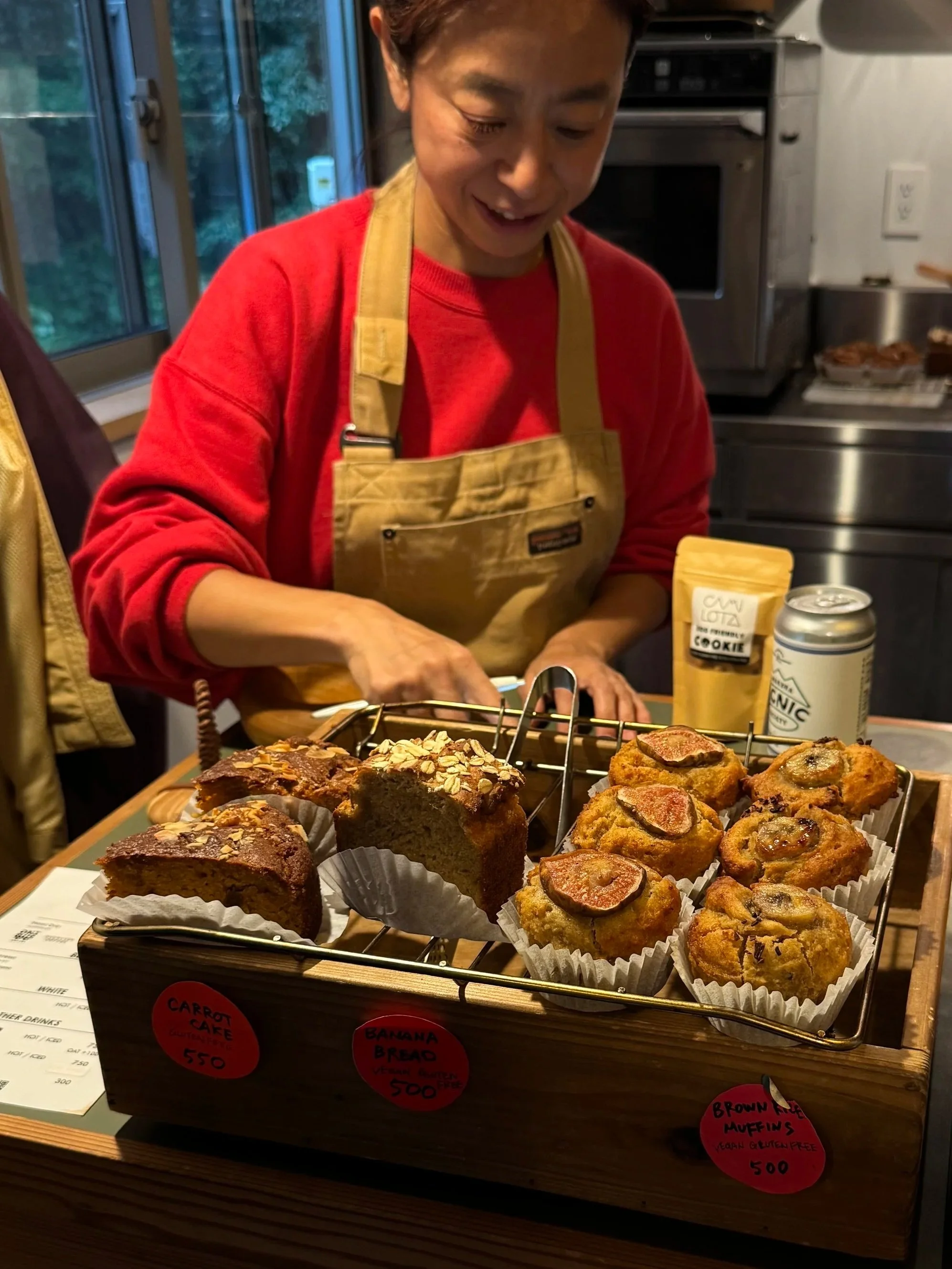
We also wanted to give a nod to the humble Camilota coffee stand here as it made for an absolutely perfect pit stop in the woods and we highly recommend you swing by.
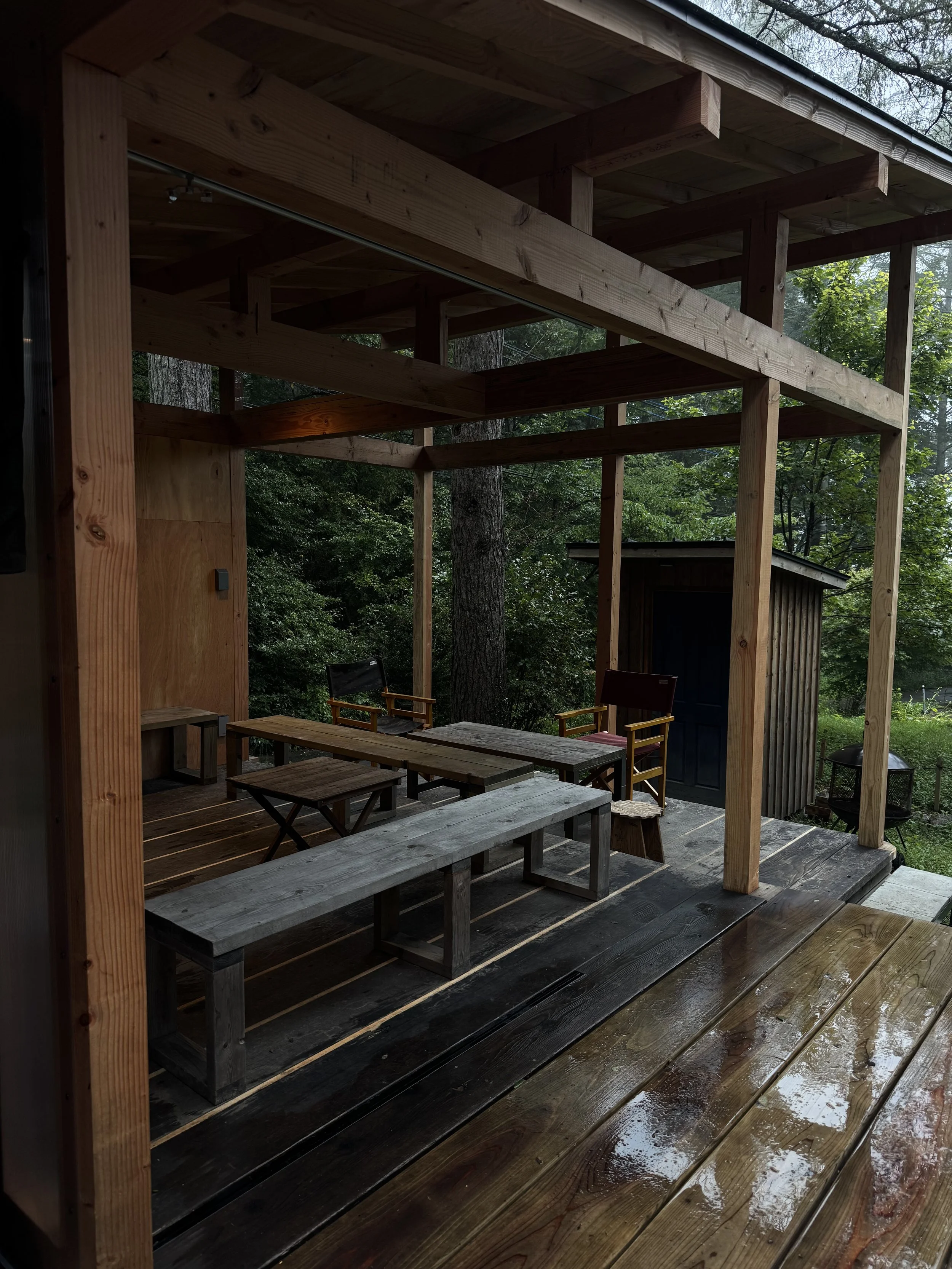
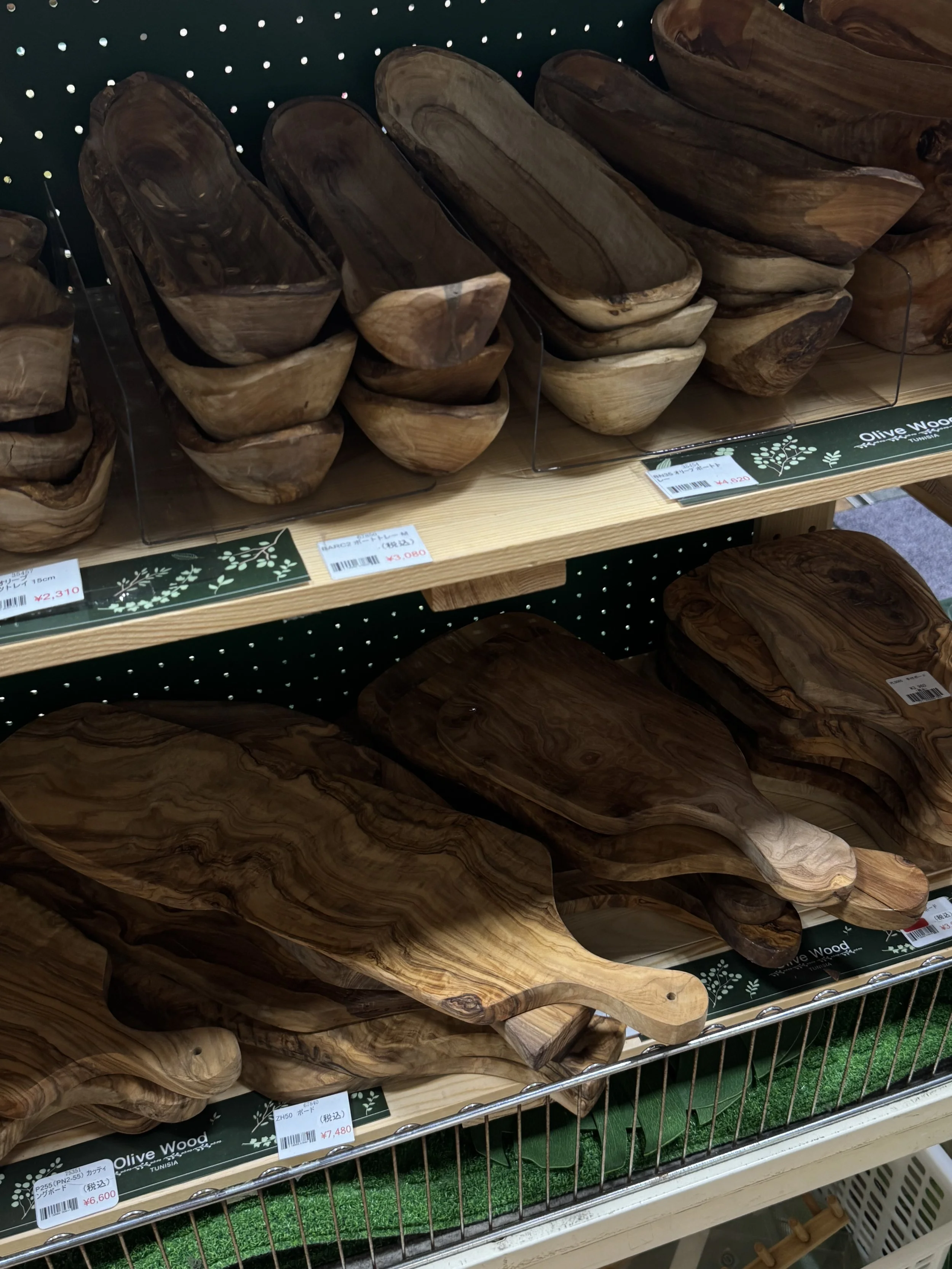
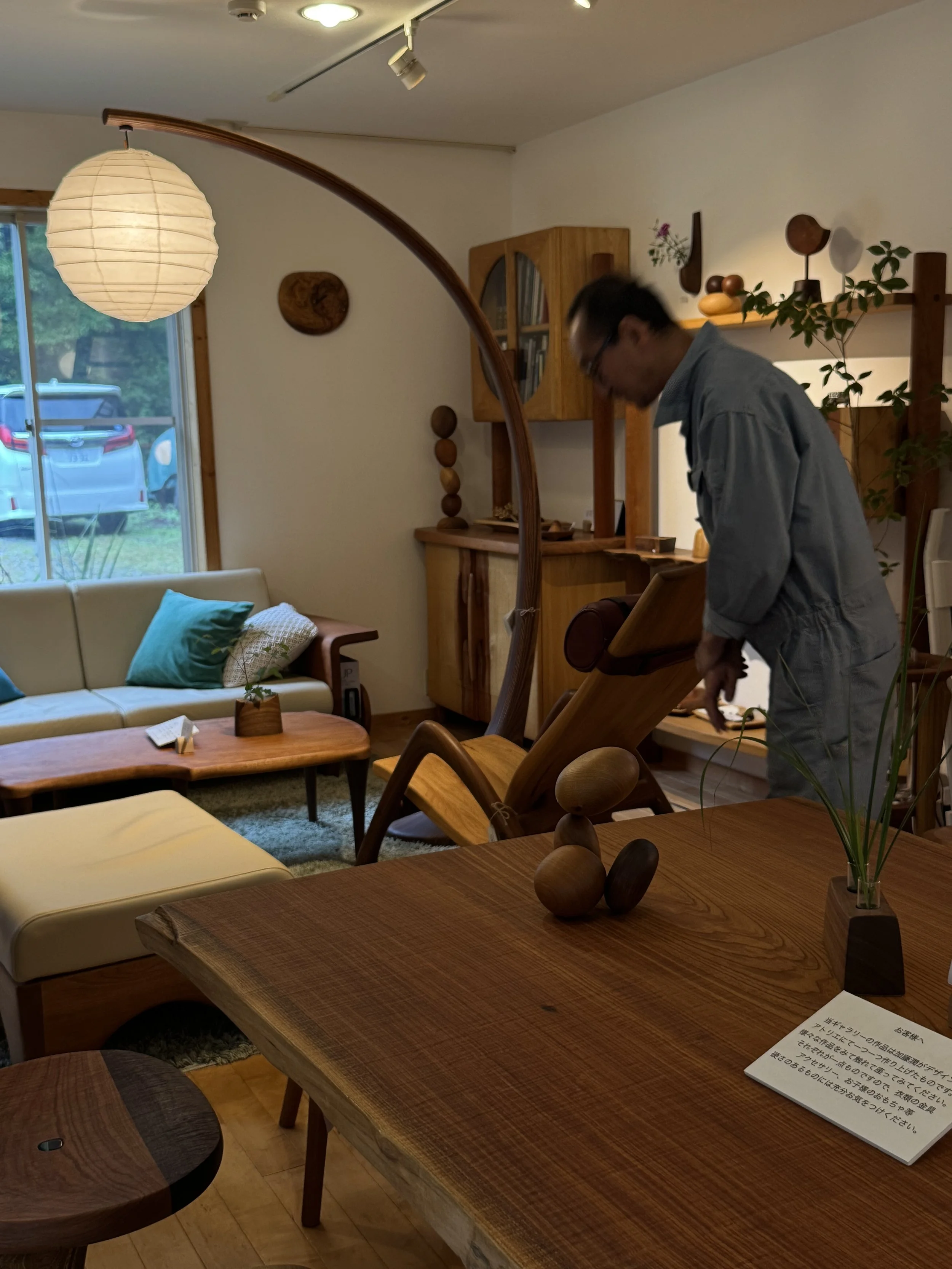
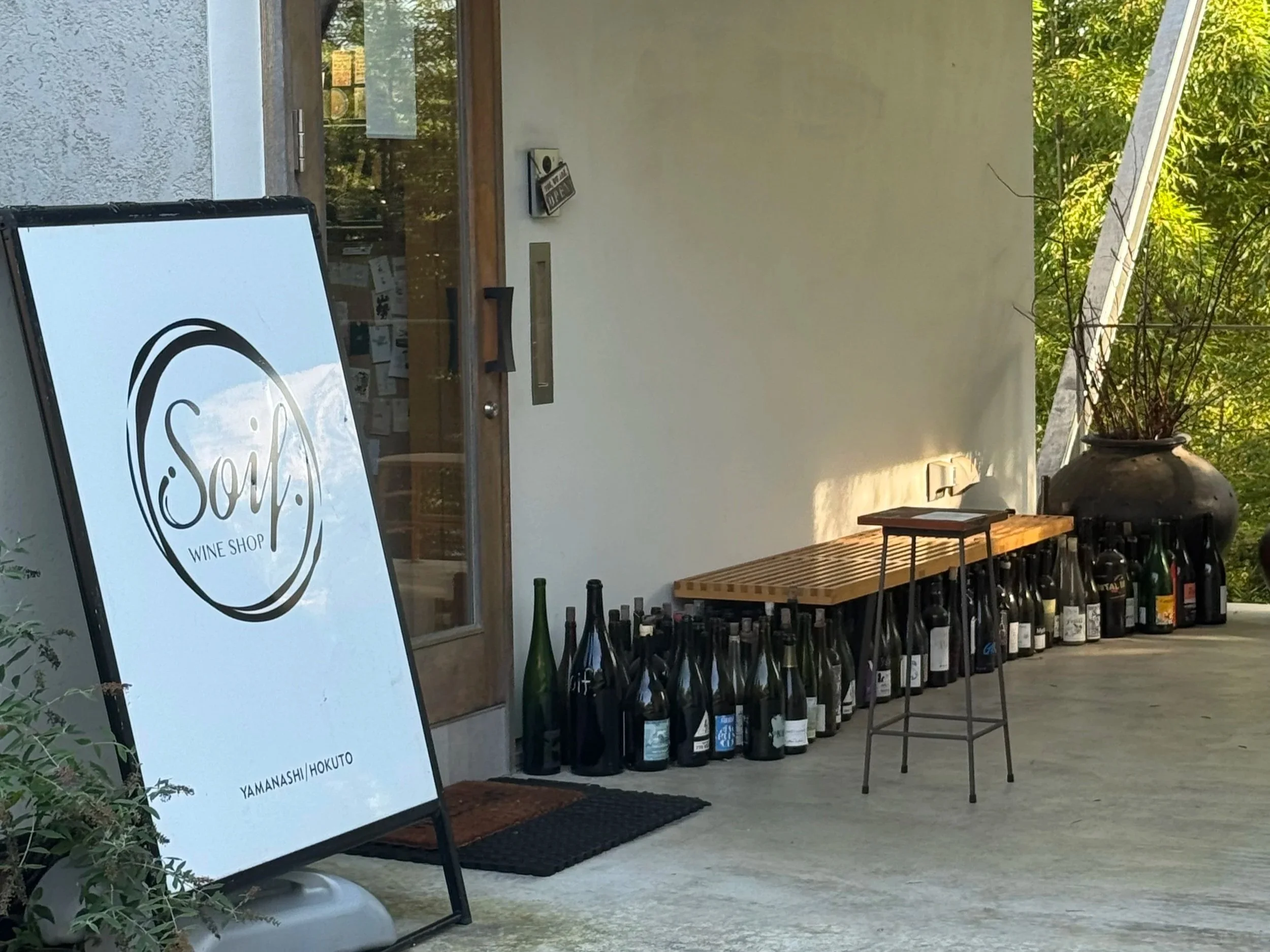
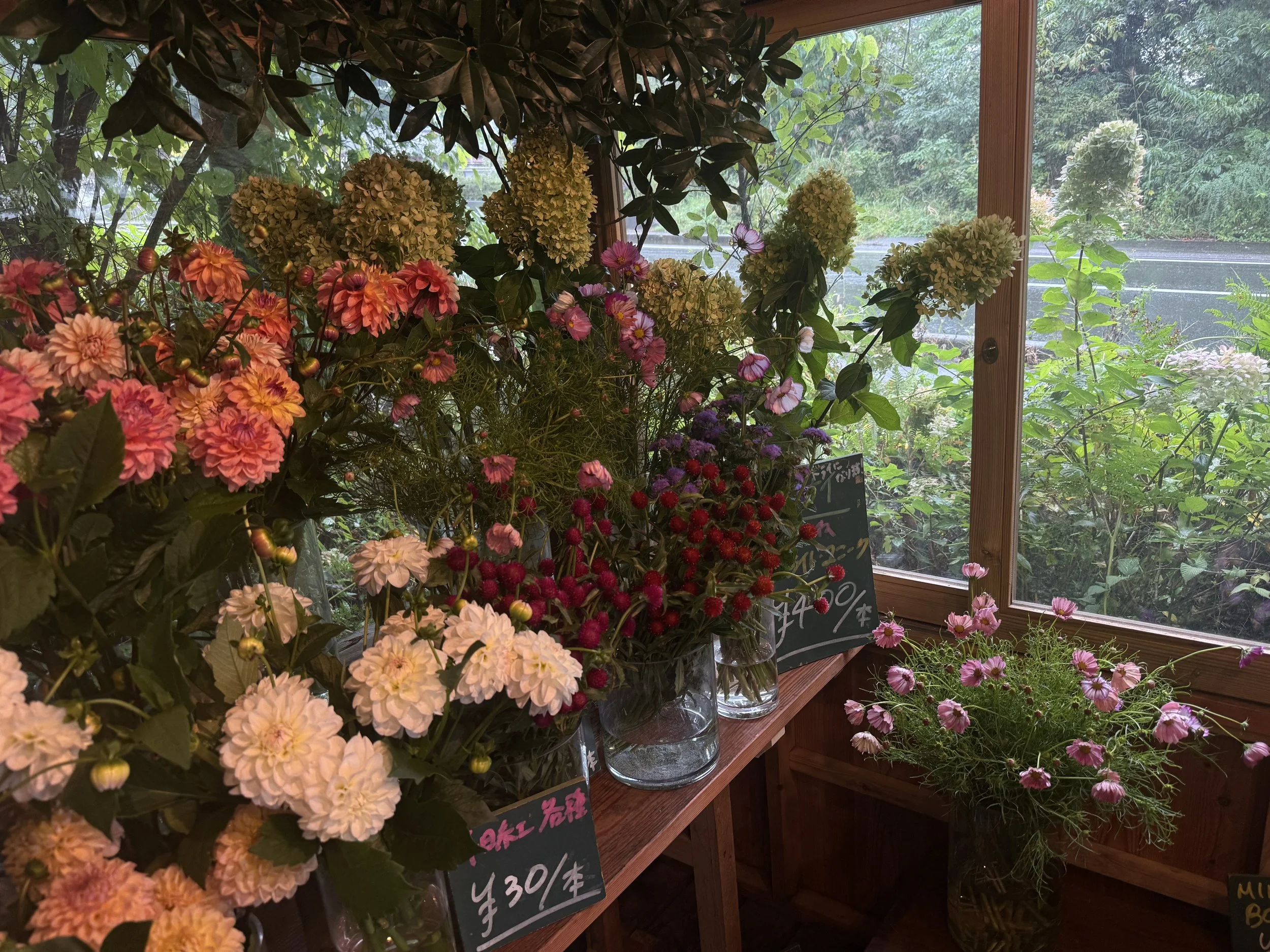
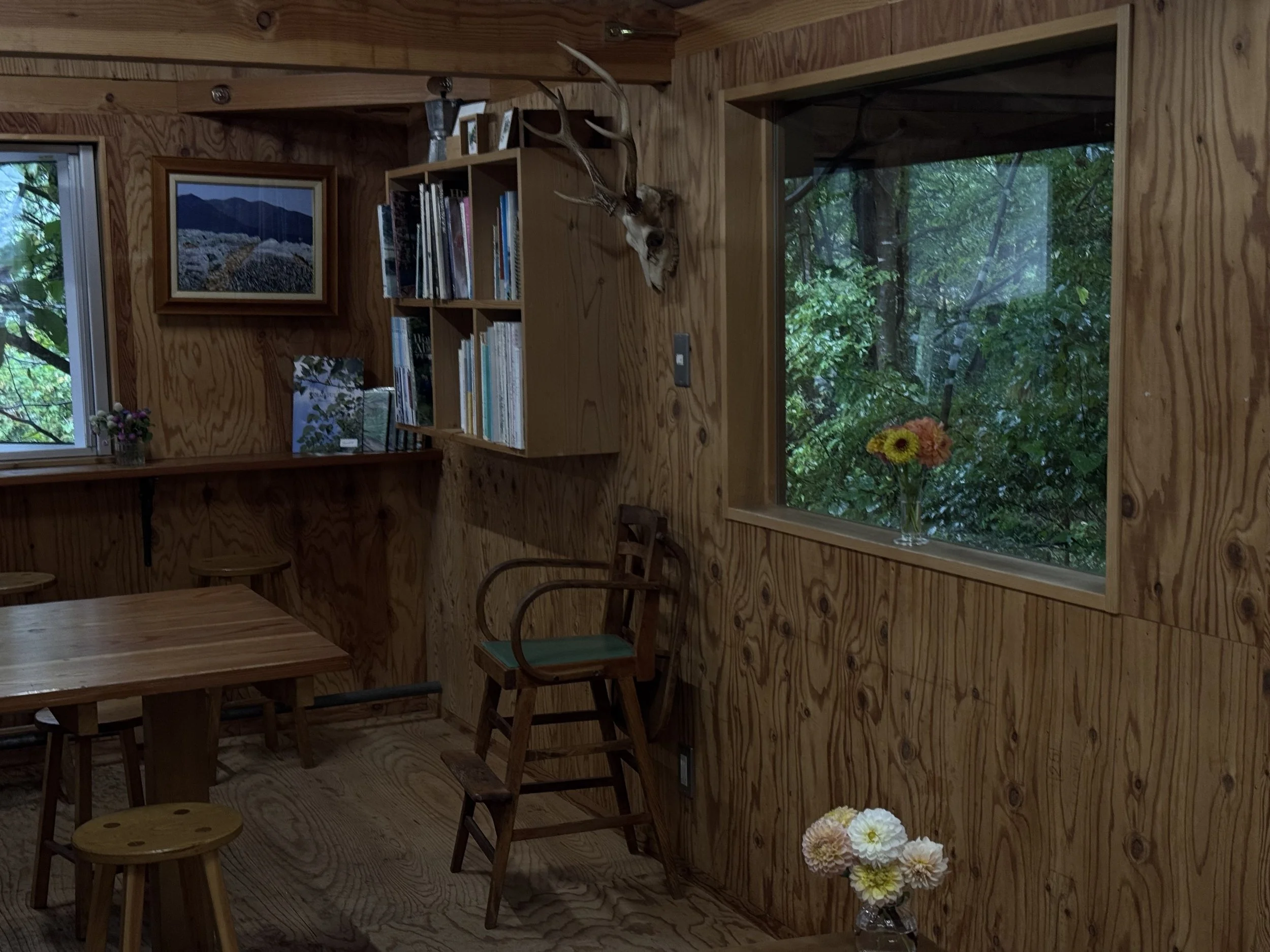
Where to Explore: Soif wine shop (one of the best wine cellars we visited in Japan), Ippin Kobo woodwork shop, BIO MART 八ヶ岳 RYOMI-YA, Zu For Rena (Flowers for Lena). Special shout out to Zu for Rena which may have been one of the most charming shops I’ve ever been in with endless amounts of gorgeous flowers but also an entire multiple building giftshop with local wares. The Ippin Koba woodwork shop will also stay with us for a long time as their hospitality and kindness - as well as craftsmanship - were second to none. We brought a few pieces home which we thoroughly enjoy admiring every day!
MT FUJI & LAKE YAMANAKA

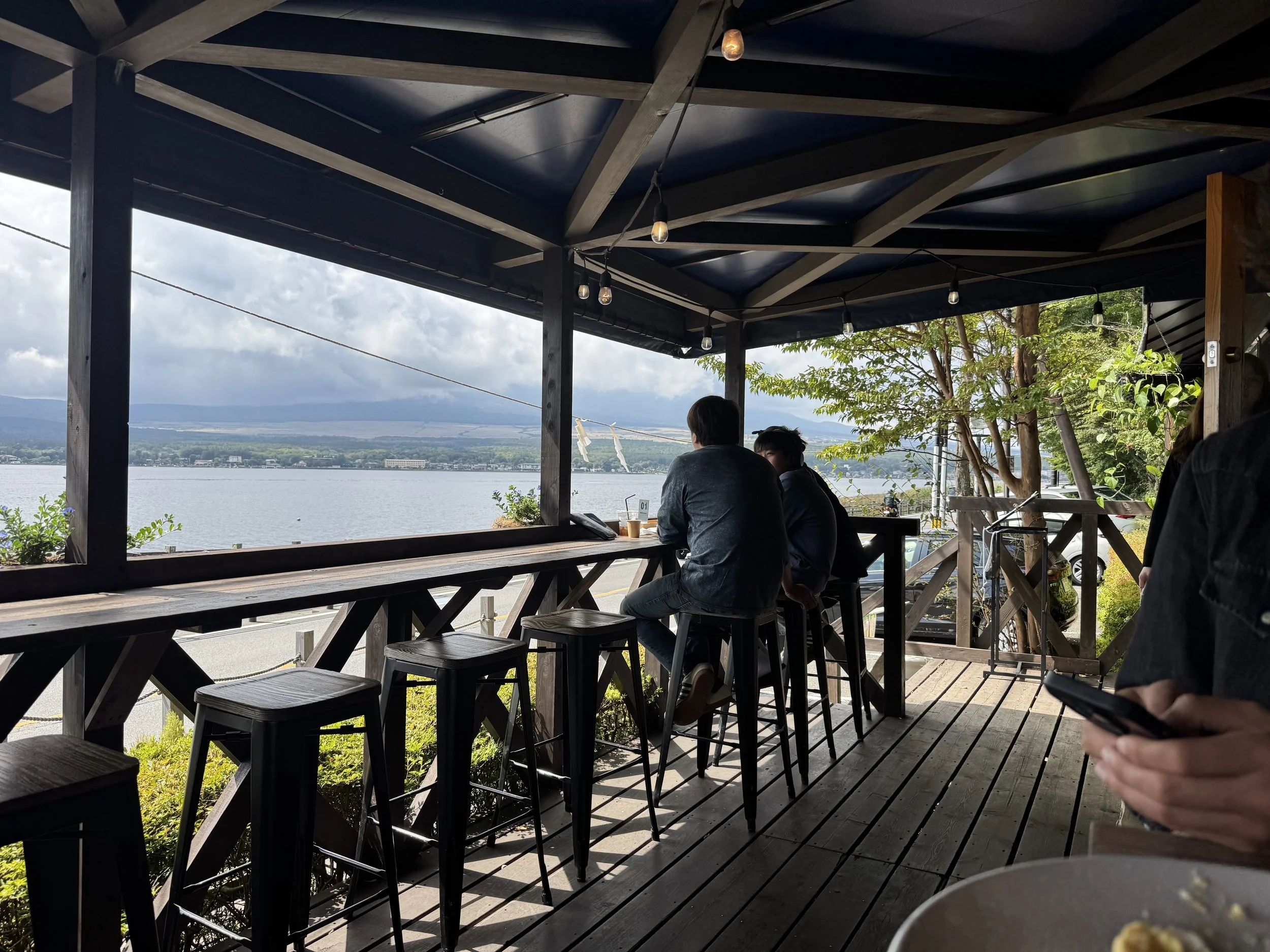
There is something slightly ridiculous about going about an ordinary day with Mount Fuji just hanging out outside your passenger window. You find yourself buying groceries or heading out for breakfast and then the clouds move and there it is. No photograph quite prepares you for its scale. We loved staying in Yamanakako because it gave us ample time for those peekaboo encounters. Rather than arriving for the sole purpose of a well-documented viewpoint and hoping the weather cooperated, we wanted to spend a few days exploring the breadth of the area, with the mountain appearing and disappearing as we went.

Lake Yamanaka is the largest of the Fuji Five Lakes and the highest, sitting approximately 980 meters above sea level. It lies northeast of Mount Fuji, with a highland setting that makes it appealing for lakeside walks and time spent outdoors. The lake also has a history beyond its scenery: Fujiko pilgrims once used its waters for purification before ascending the sacred mountain. Knowing that adds another dimension to a place that is so often presented purely (and dare I say flatly) as a simply photograph.

Despite being close to one of Japan’s most recognizable landmarks, our stay felt wonderfully spacious. We found room to wander and enjoy the landscape without every outing feeling like a major sightseeing tourist trap. I would happily return for a few days of walking, good breakfasts, and slowly checking in to see what Fuji was doing as a side quest.

Where to Stay:

Koti Yamanakako is our top recommendation, and the owner Allen’s hospitality is a substantial part of the reason.

After moving between hotels, we appreciated having a proper home for a few days. Unlike many Japan accommodations, there was ample space to spread out and settle in, with the comfort and practical conveniences that make a longer stay easy. For me, the accommodation is part of the trip, particularly when the surroundings are this beautiful. I want to stay somewhere that I am excited to return to as much as I am to leave on the day’s adventure.

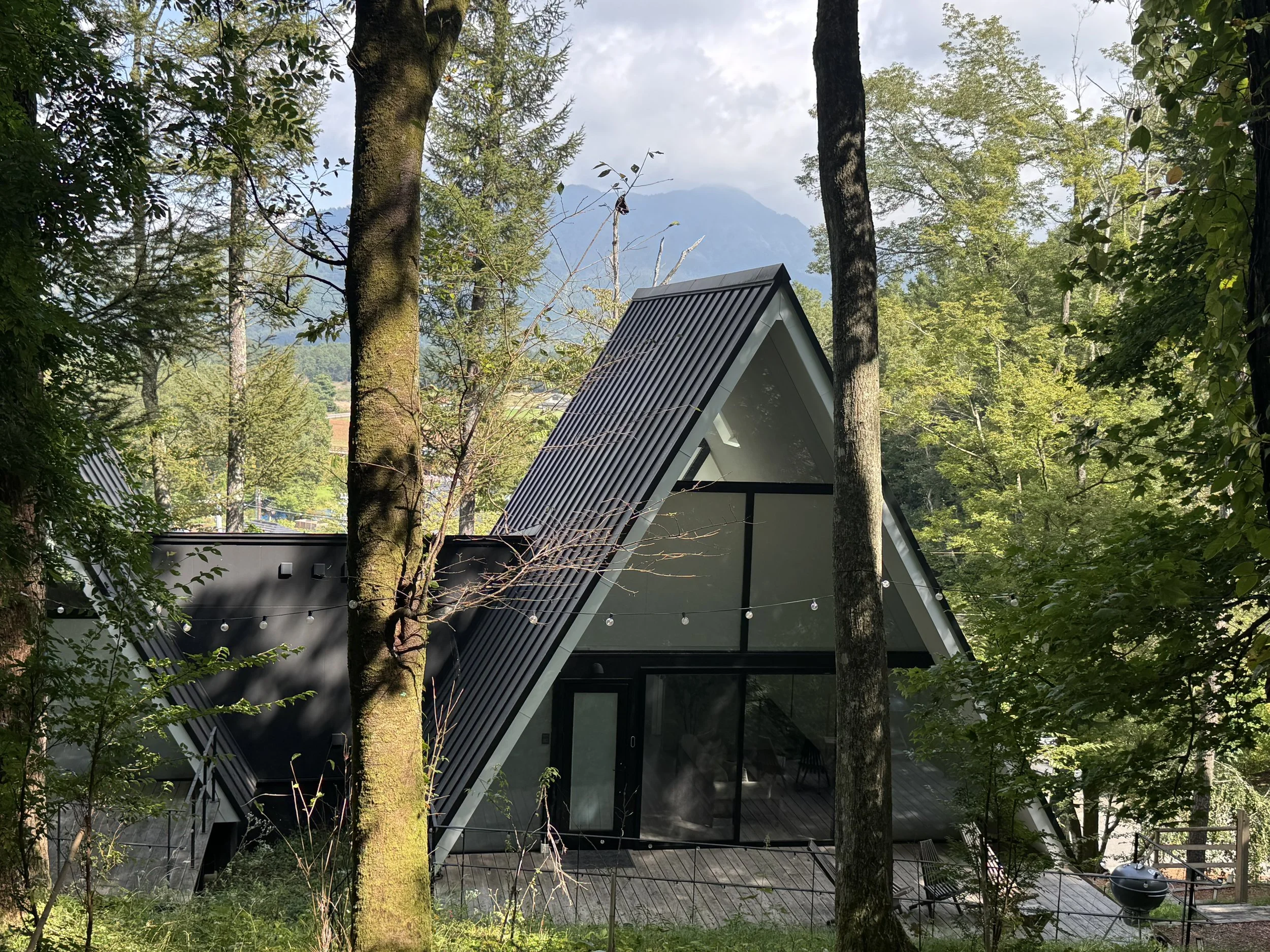
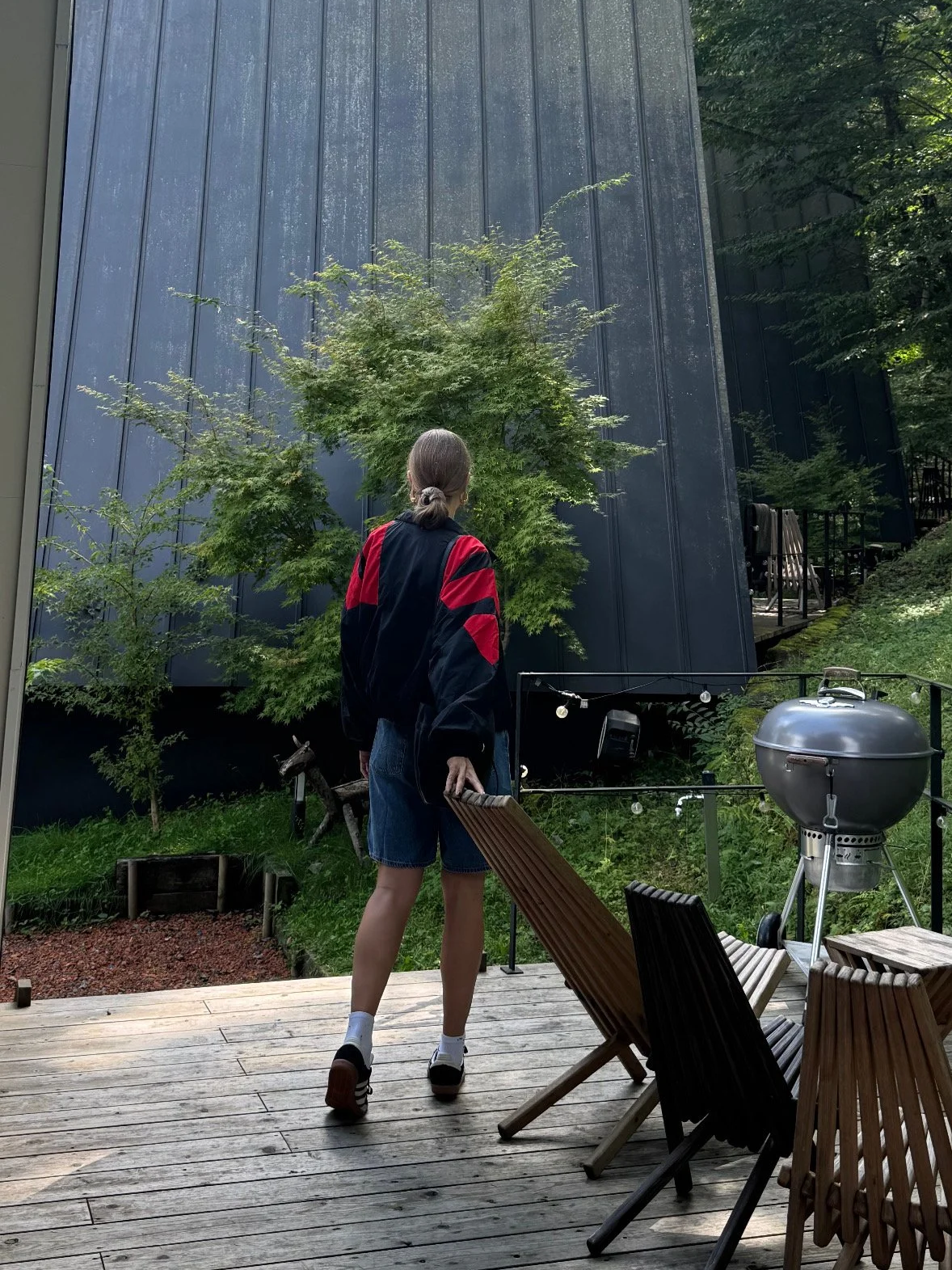
Koti offers several individual vacation houses, including striking A-frames among the trees and larger homes suited to families or friends. Each has a covered barbecue deck, and the layouts differ… so it is worth choosing the particular house that suits your trip. The A-frames are especially appealing if, like me, you have strong feelings about steep roofs, cozy lofts, and warm light coming through windows (how could you NOT love this, is the better question).
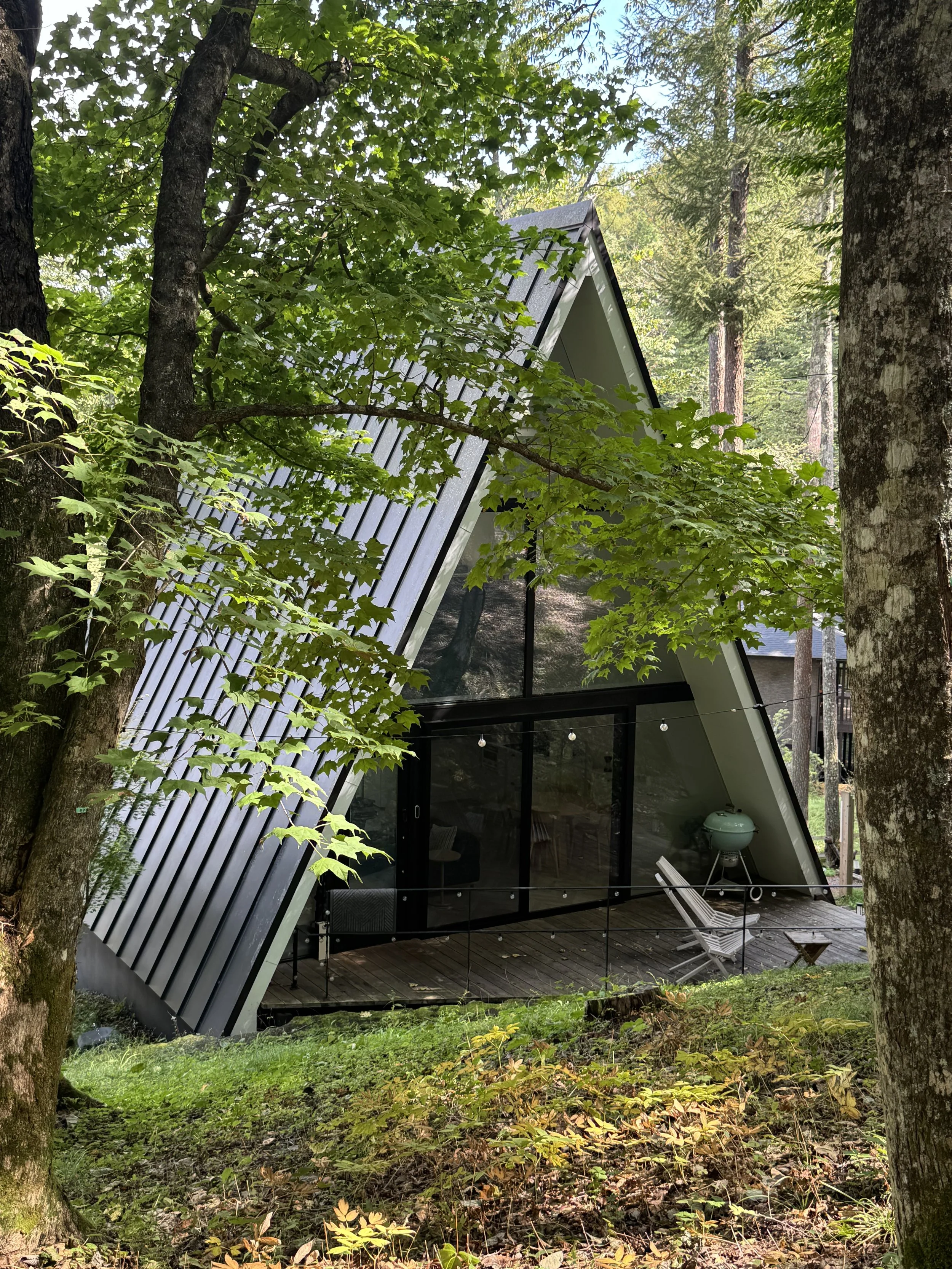
The original Koti house, for example, has approximately 93 square meters of space, two bedrooms and can hold 6 people, with a kitchen and in-house washing machine. I find these to be incredibly useful details when you are several stops into your 3 week Japan trip and would like a place to unpack, cook something simple and most importantly, do laundry. We certainly took full advantage of every amenity, including the high end toaster!

The accommodations also sit beside Hana no Miyako Park, with its flower fields and views toward Fuji. Shops and supermarkets are close by, making it easy to enjoy the setting while also still picking up what you need for dinner - particularly useful given the enormous kitchen in our abode.

What made Koti feel particularly personal, though, was Allen. He was a lovely host, and his knowledge of (and passion for!) the area surpassed any guidebook. He helped us understand how to explore it with more care and curiosity than your average tourist. He grew up in Taiwan and spent more than 20 years living in the United States before moving to Japan and running his hospitality business. That experience, along with his ability to speak several languages, brings an international perspective to the welcome. We cannot say enough about his hospitality.
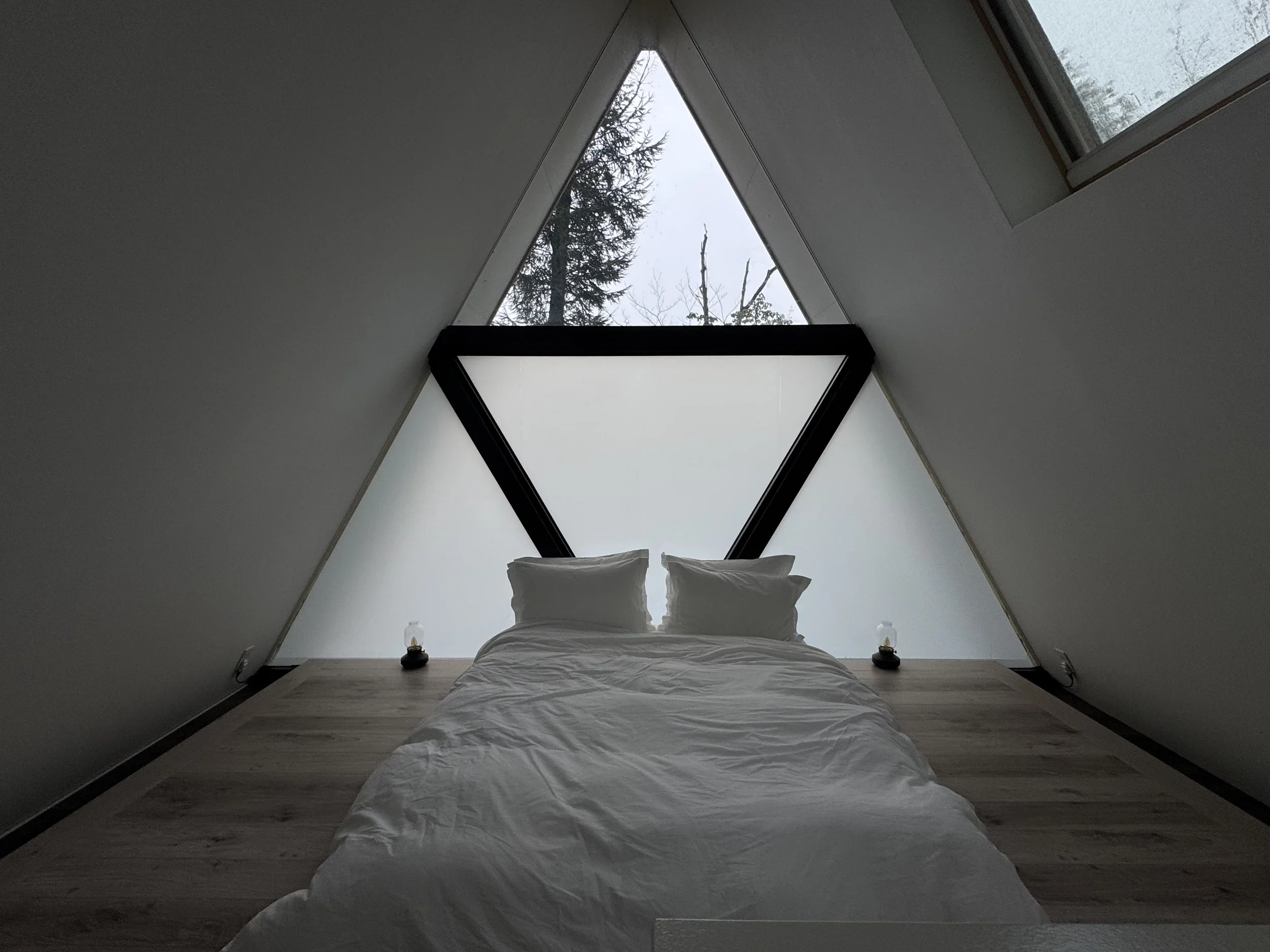
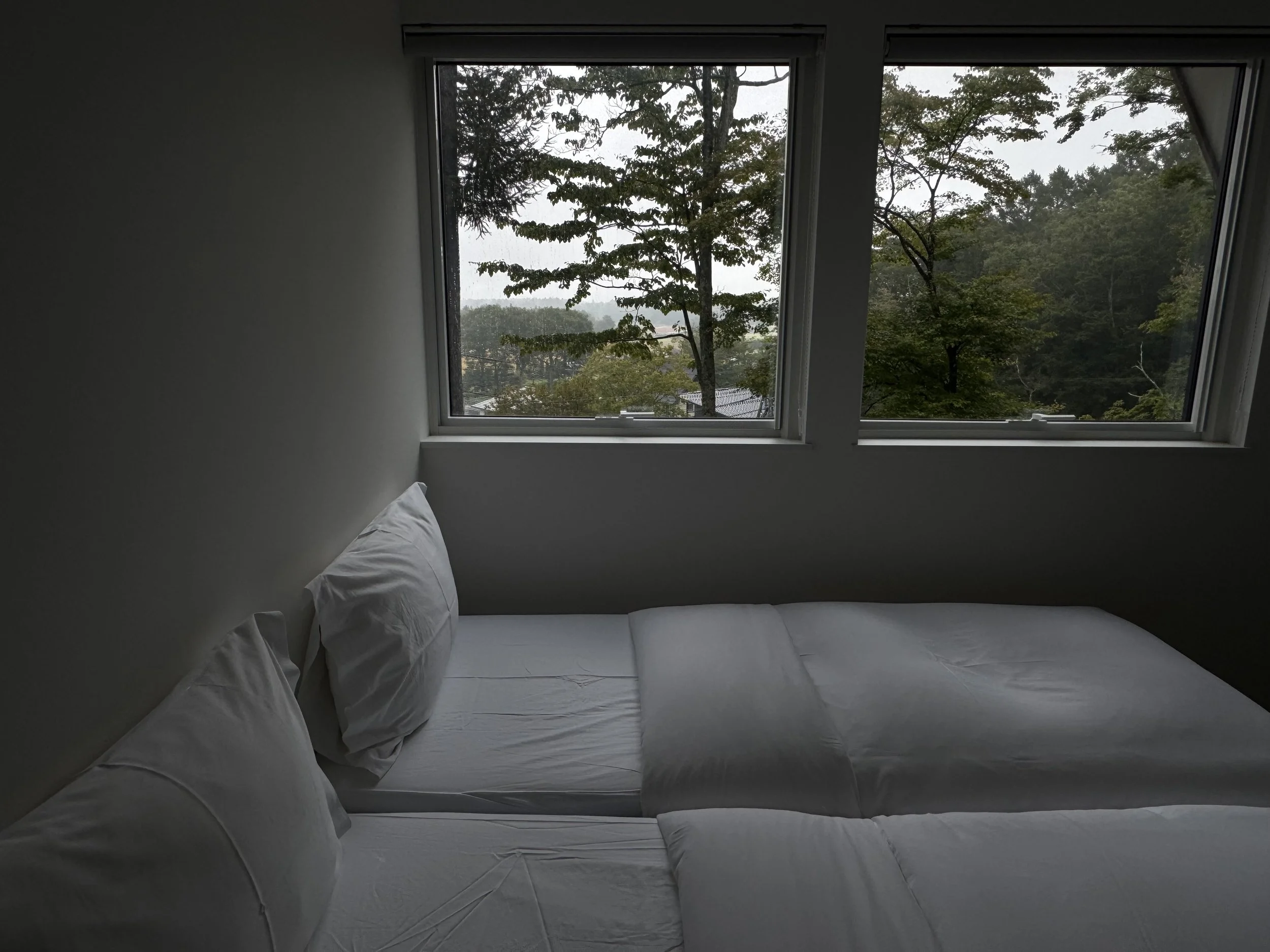
I would give Koti several nights if you can. There is enough nearby to fill your days, but part of the pleasure is having time at the house itself.

Where to Eat: We absolutely loved Auberge KOKI (which by the way, is an excellent alternative place to stay).

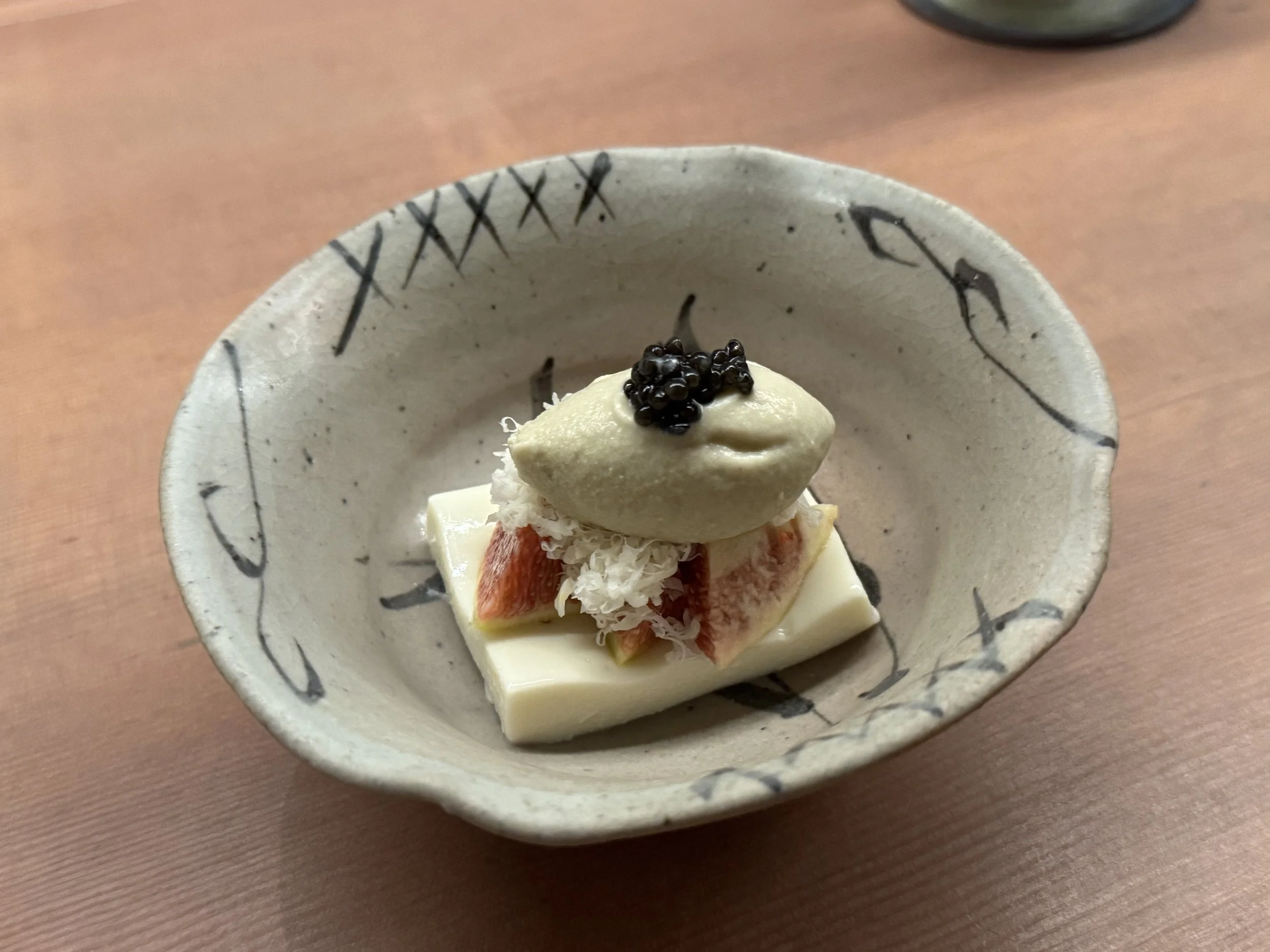
KOKI is the rebirth of the of the family bistro, opened in 2024 after a full renovation from it’s previous form known as HORO HORO long running bistro in the Doshi valley. Led by Soul Sato, he brings his life long experience exploring the Doshi valley to the plate. Every possible ingredient is sourced within 500m of the kitchen, with the only exception being the boar he hunted just over 2km away. The multi course tasting menu was not only delicious, but felt a bit like watching a story unfold in front of your eyes. He would bring out the ingredients, proud of what he found/foraged that morning, weaving a story between each bite.

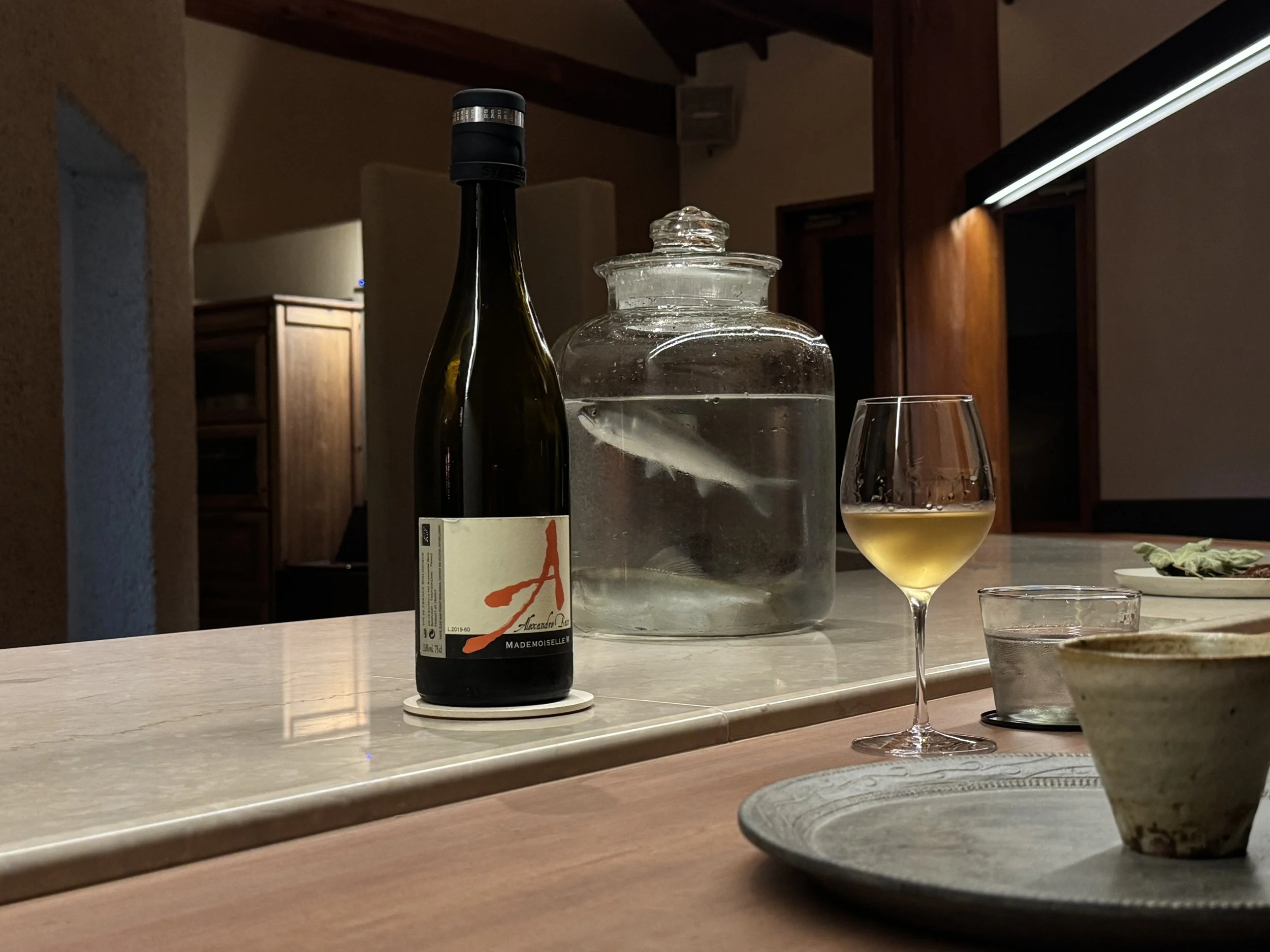
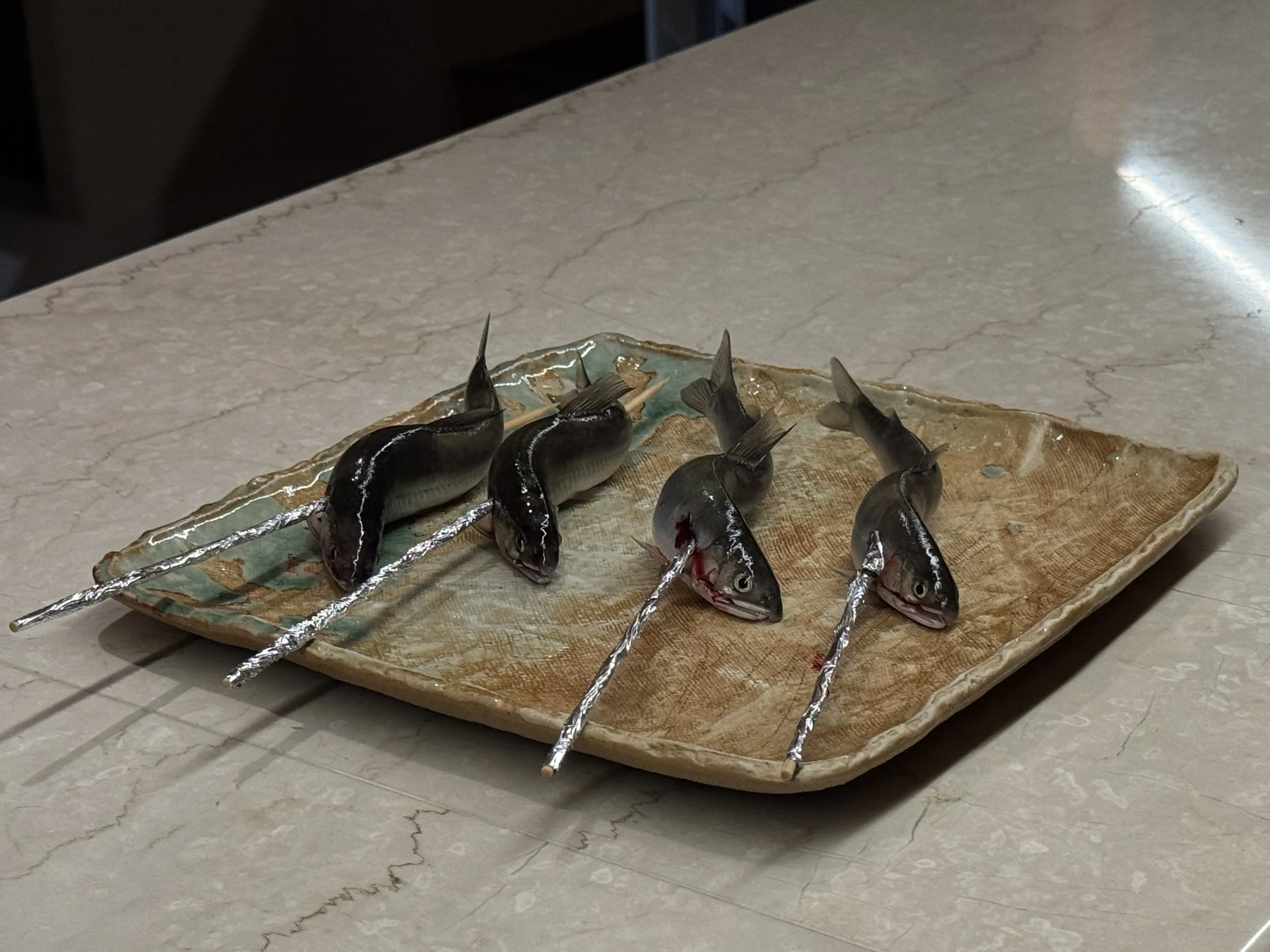
The most intriguing part of that story was the Ayu fish, which Soul places in front of you (alive, to be clear) at the beginning of the meal, fished from behind KOKI and stored in a holding pond until ready for primetime. Through each course, they were brought back out in a new form until they were placed over the fire, slow cooked over an open fire, slightly smoked.

KOKI brings the complete picture to the sense, from a beautiful dining room, elaborate tasting menu changing from day to day, an elite wine list, and two rooms available for the weary traveler. The Doshi valley is slightly off the beaten path, but it is worth the adventure. Take the day to wander and taste the valley.
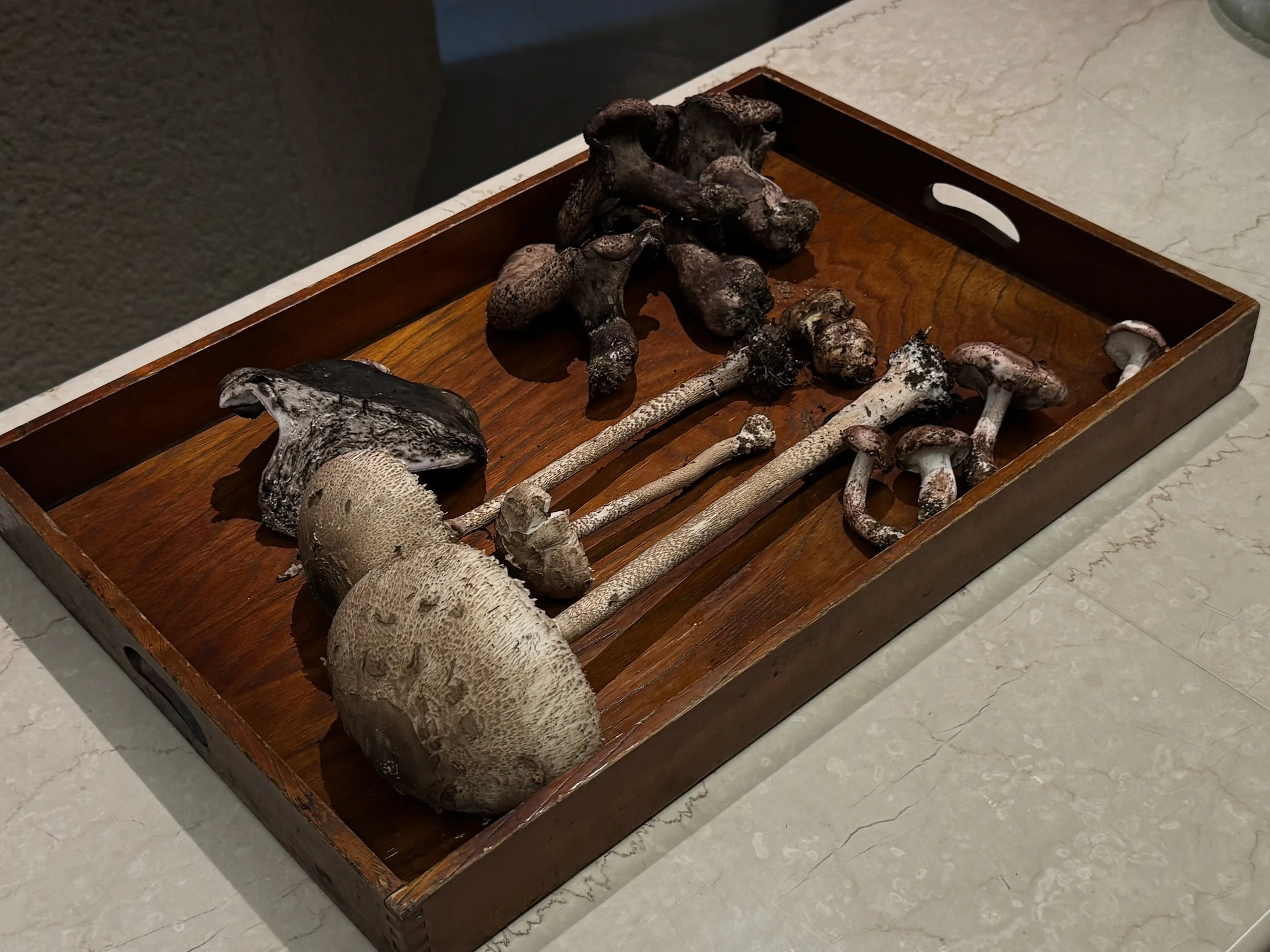
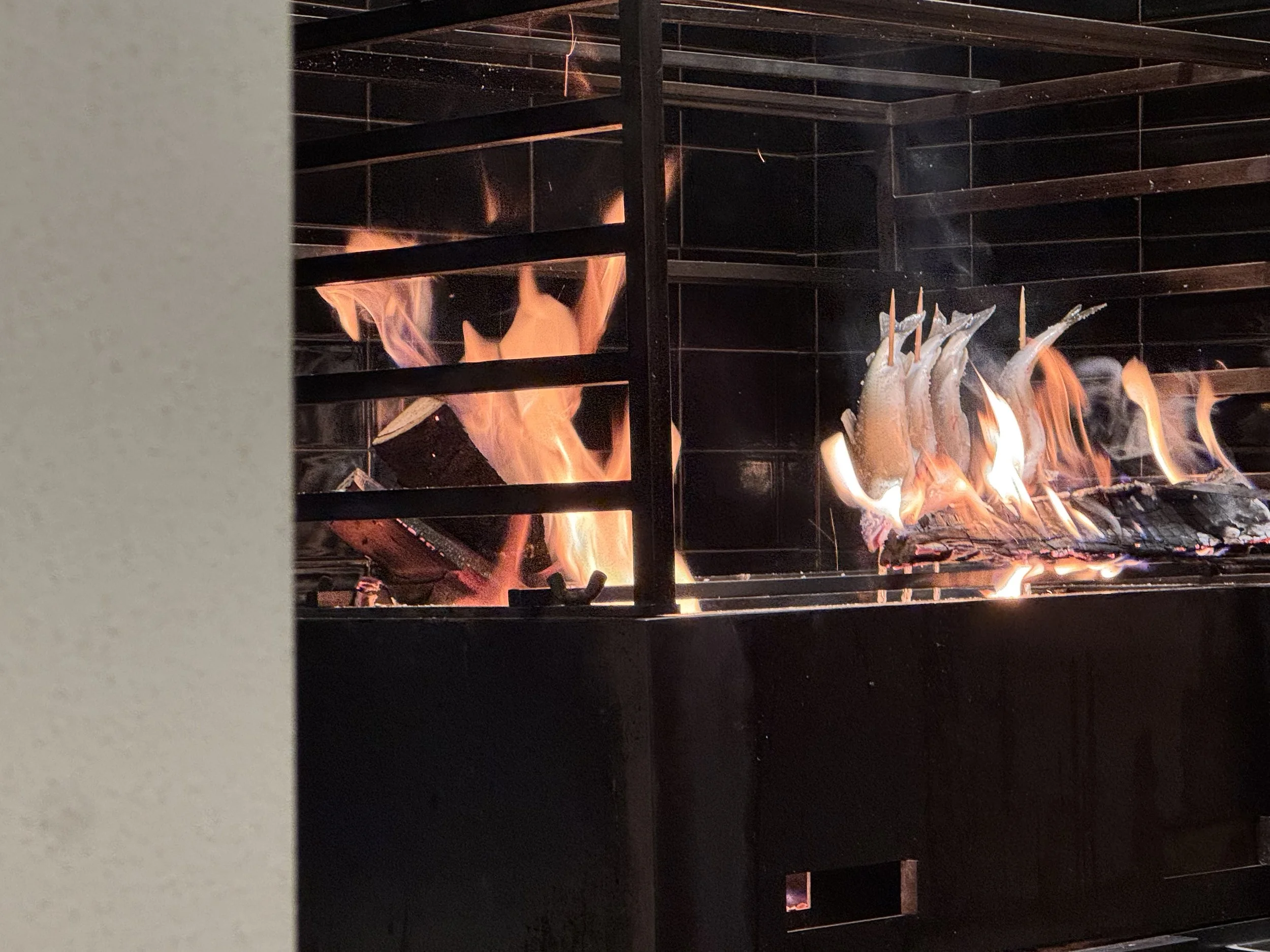
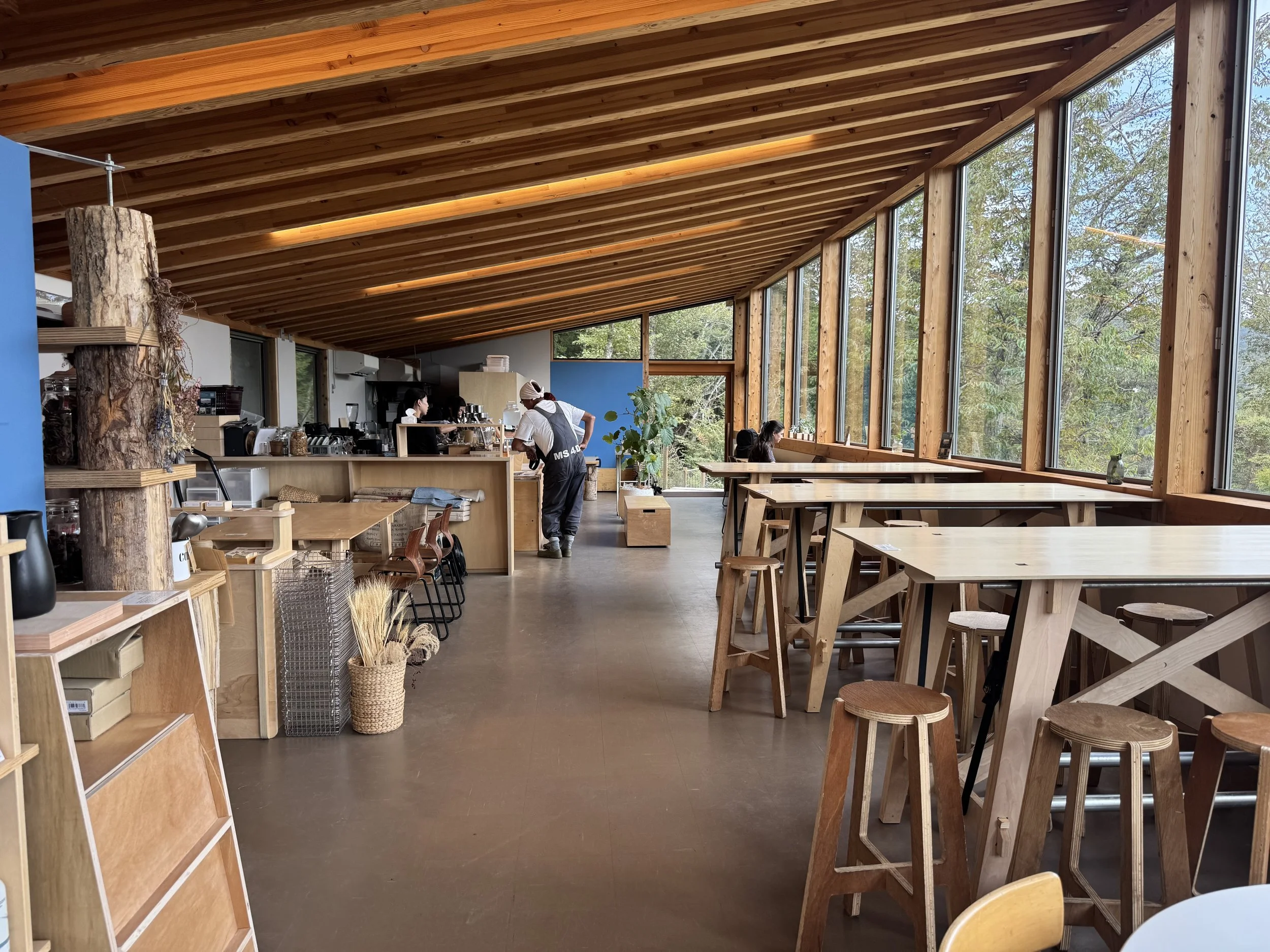
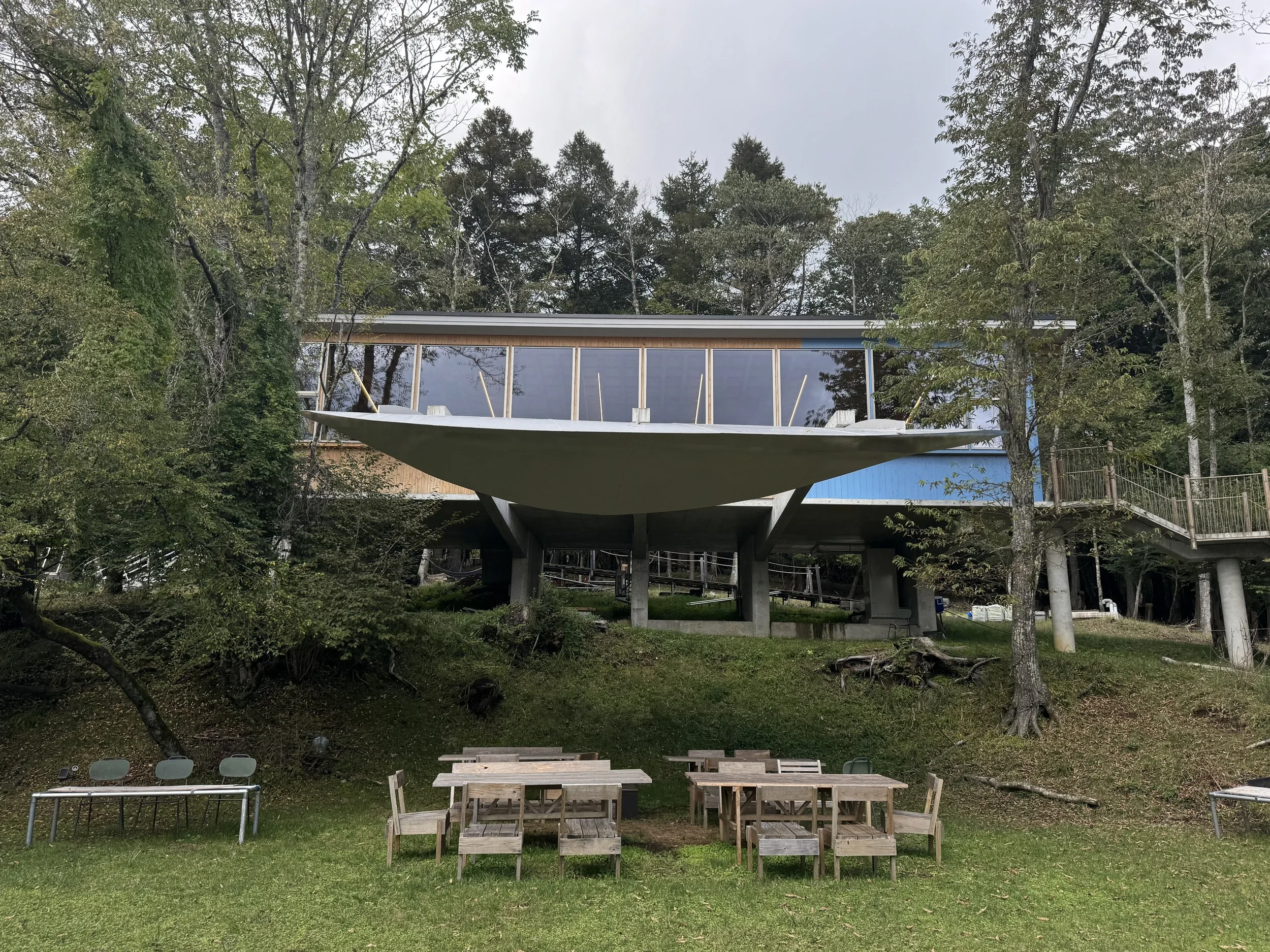
We were also thrilled by the community cafes in the area like Yamanaka Terrace. This was a stop that I had long coveted after seeing it on Instagram months prior to our trip and it did not disappoint. It is a thoughtfully designed cafe and refill shop in a wooded setting about a five minutes’ drive from Lake Yamanaka. On a clear day, you can see Mt Fuji from its grounds, making it a lovely stop between exploring the lake and the surrounding countryside. The best part about this special place though is its ethos. Its founders left corporate careers to create a business rooted in their love of nature, with a focus on community and more sustainable everyday habits. That ethos extends beyond the setting to food sold by weight and efforts to reduce disposable packaging, alongside solar power and composting initiatives. A special, thoughtful place, indeed.
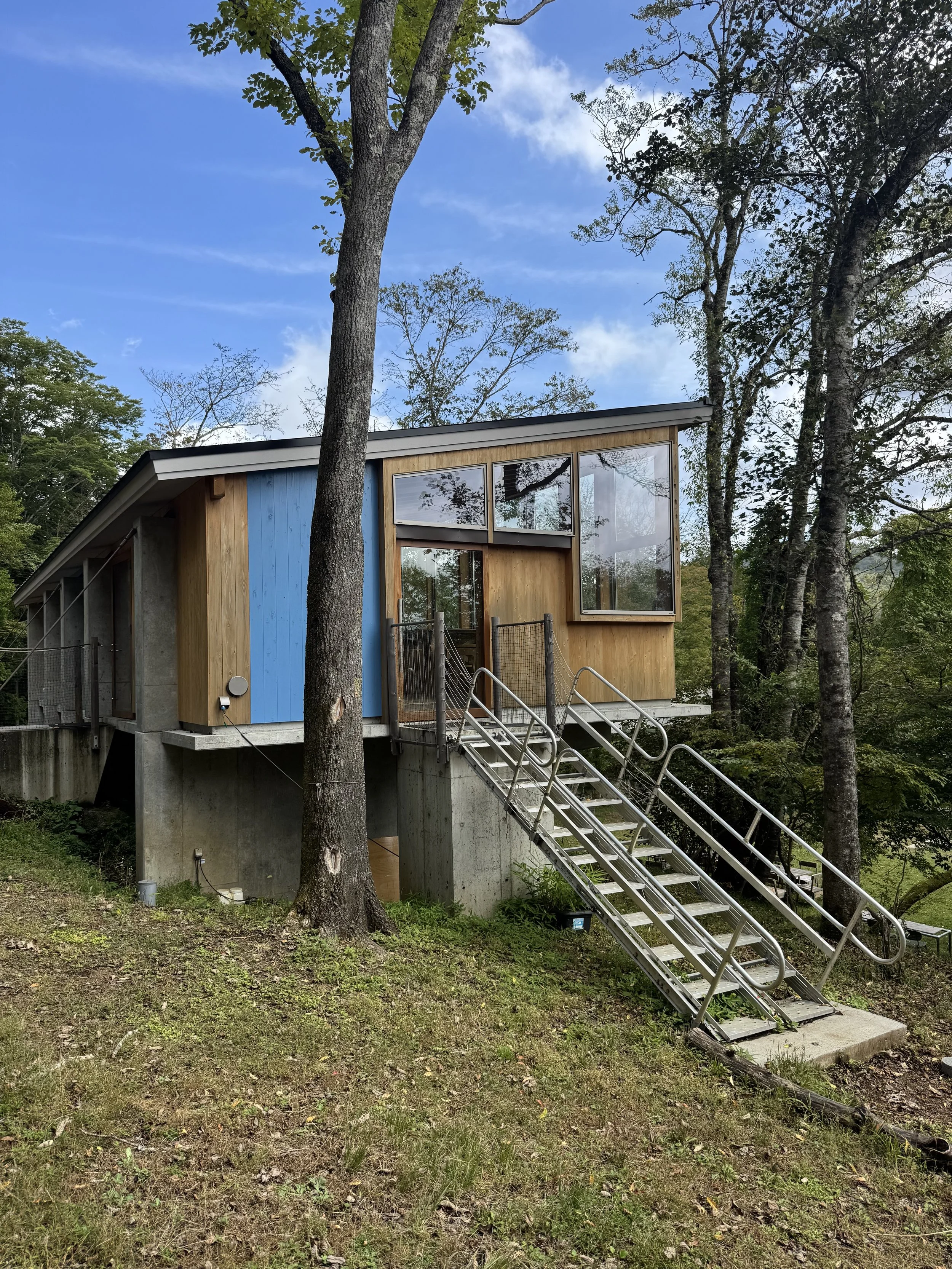
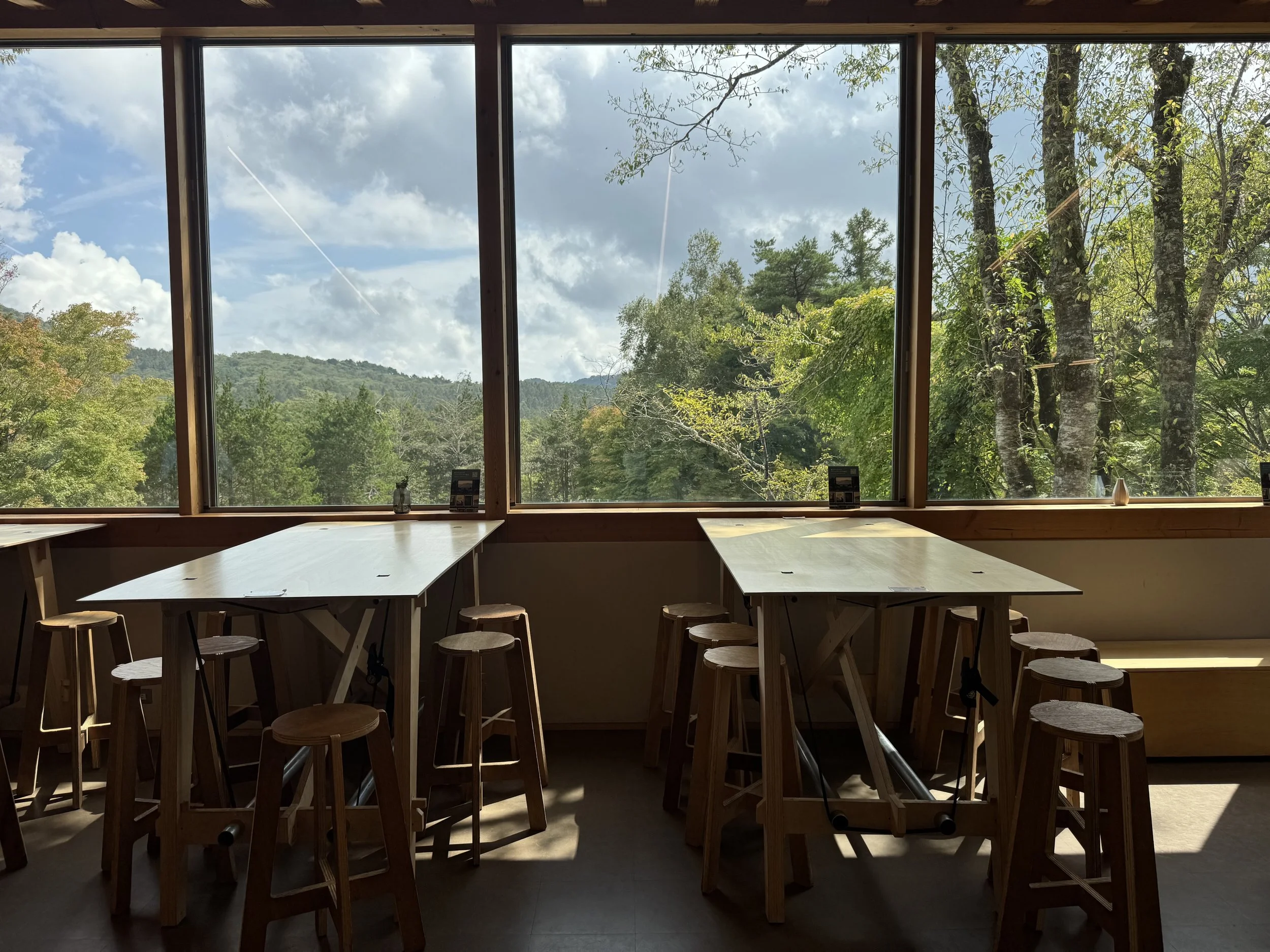
Things to Do: Give yourself time to explore beyond the obvious Fuji viewpoints. Some of our favorite stops involved a pottery studio or a farm stand, with the mountain appearing between errands. Start close to Lake Yamanaka, then plan a separate day further into Yamanashi for grapes and wine.
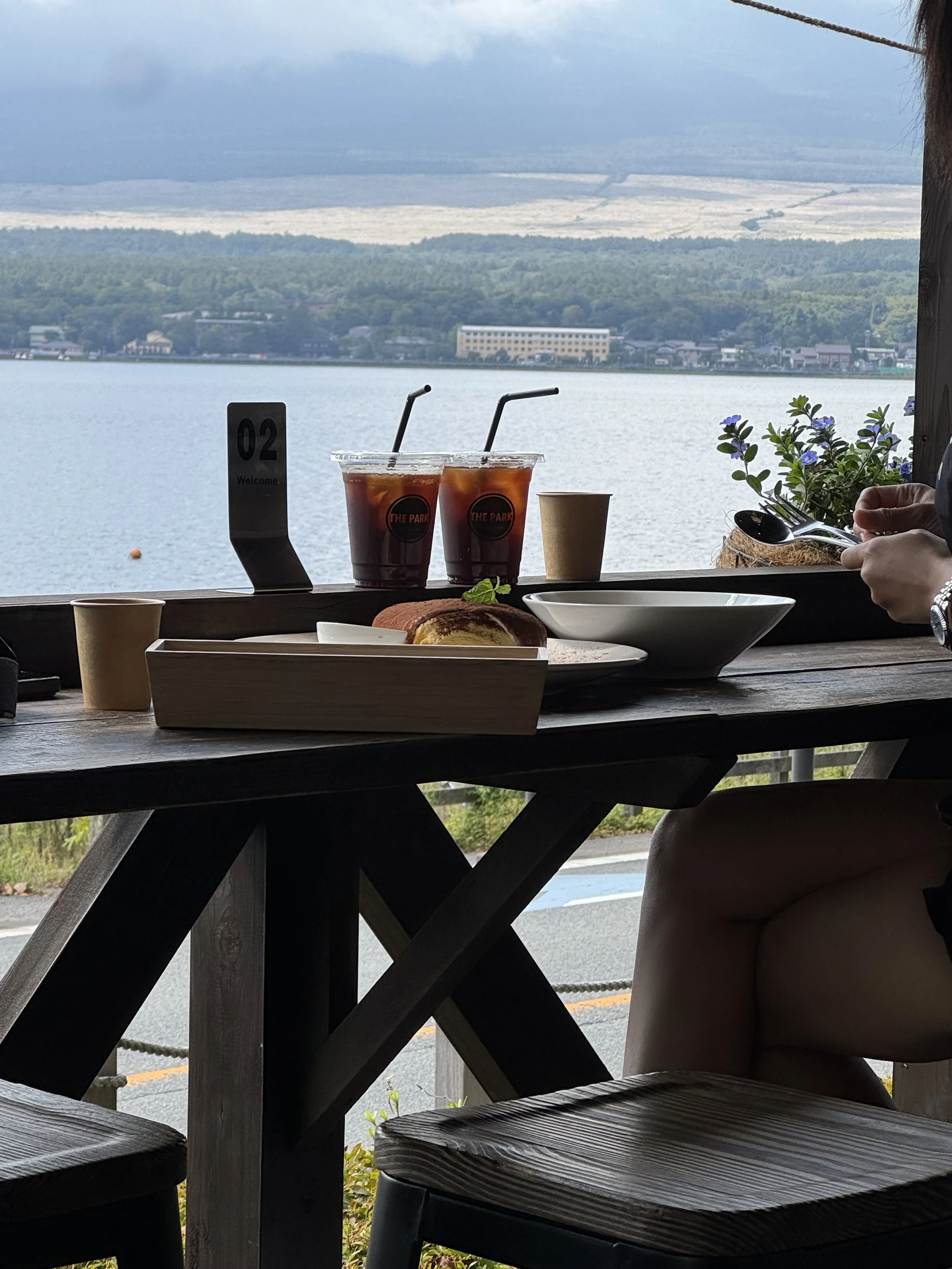
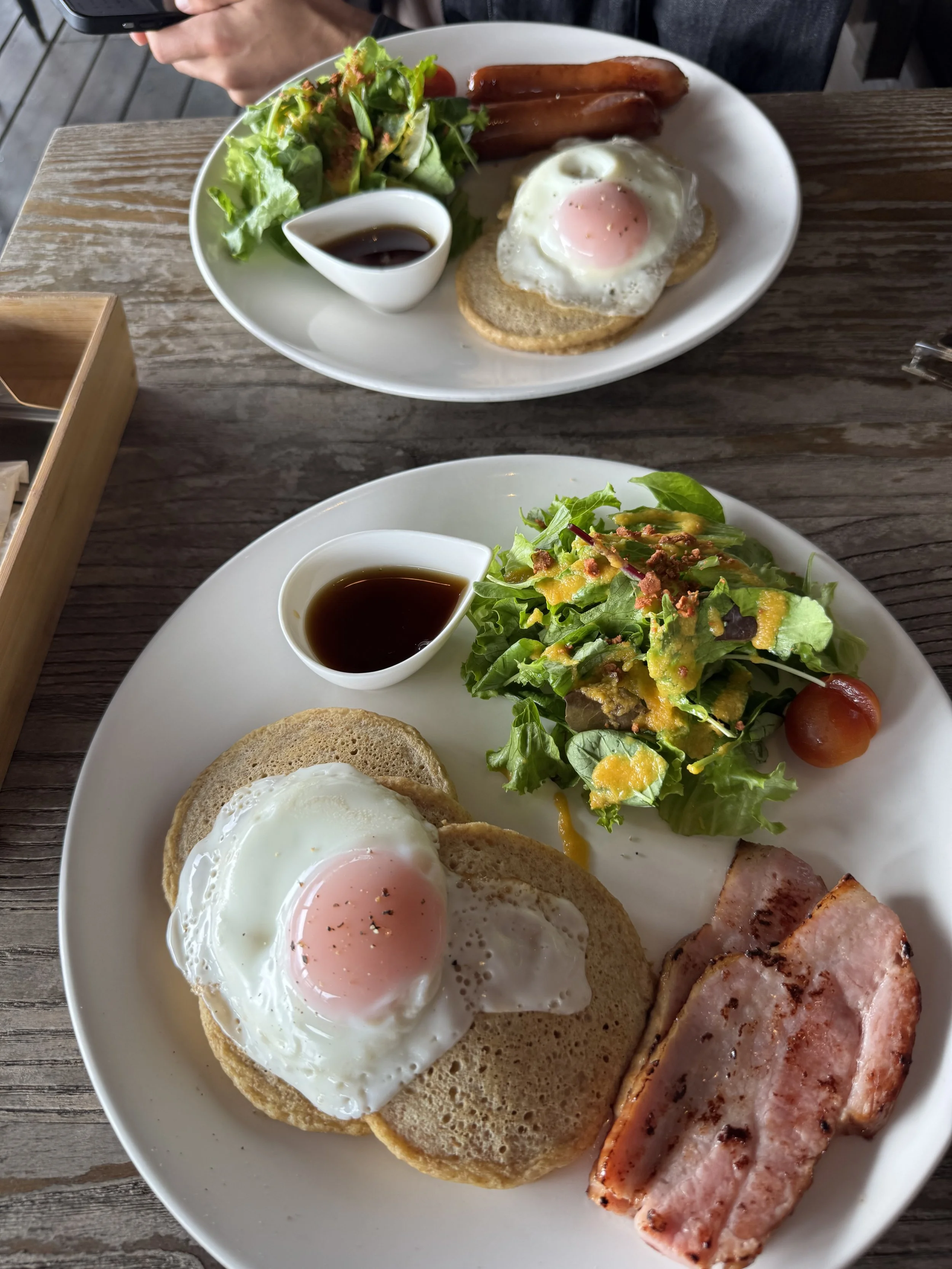
Explore the lake and its shrines. Walk a stretch of the lakeshort or rent bicycles to cover more ground. Much of Lake Yamanaka’s roughly 14-km shoreline has a dedicated cycling path, with plenty of reasons to stop along the way. For a broader view, head up to Panorama-dai, overlooking the lake toward Fuji. Leave time for the local shrines too. The mountain has a long history as a place of pilgrimage, which gives these visits more context than simply another beautiful building to photograph.

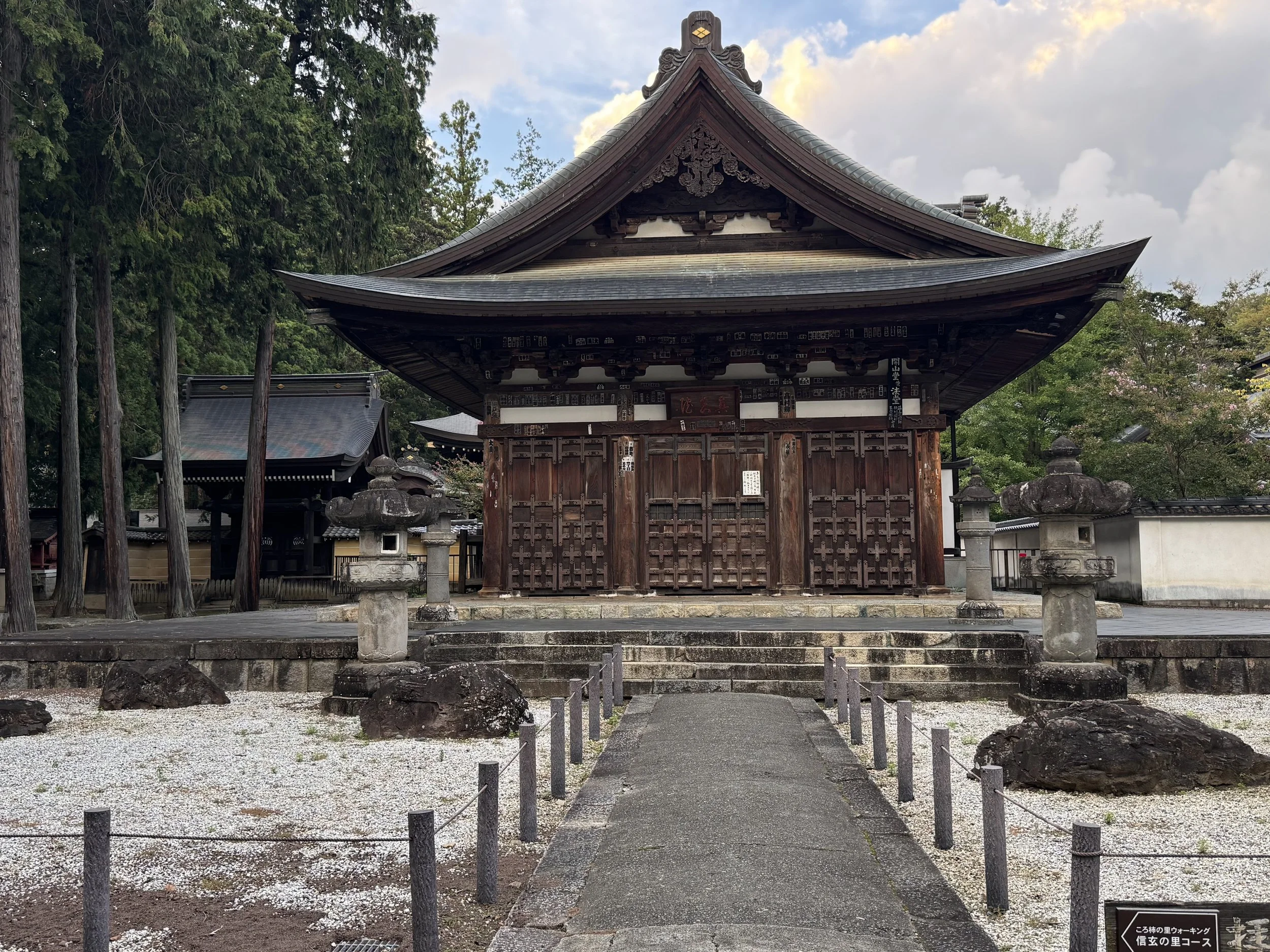
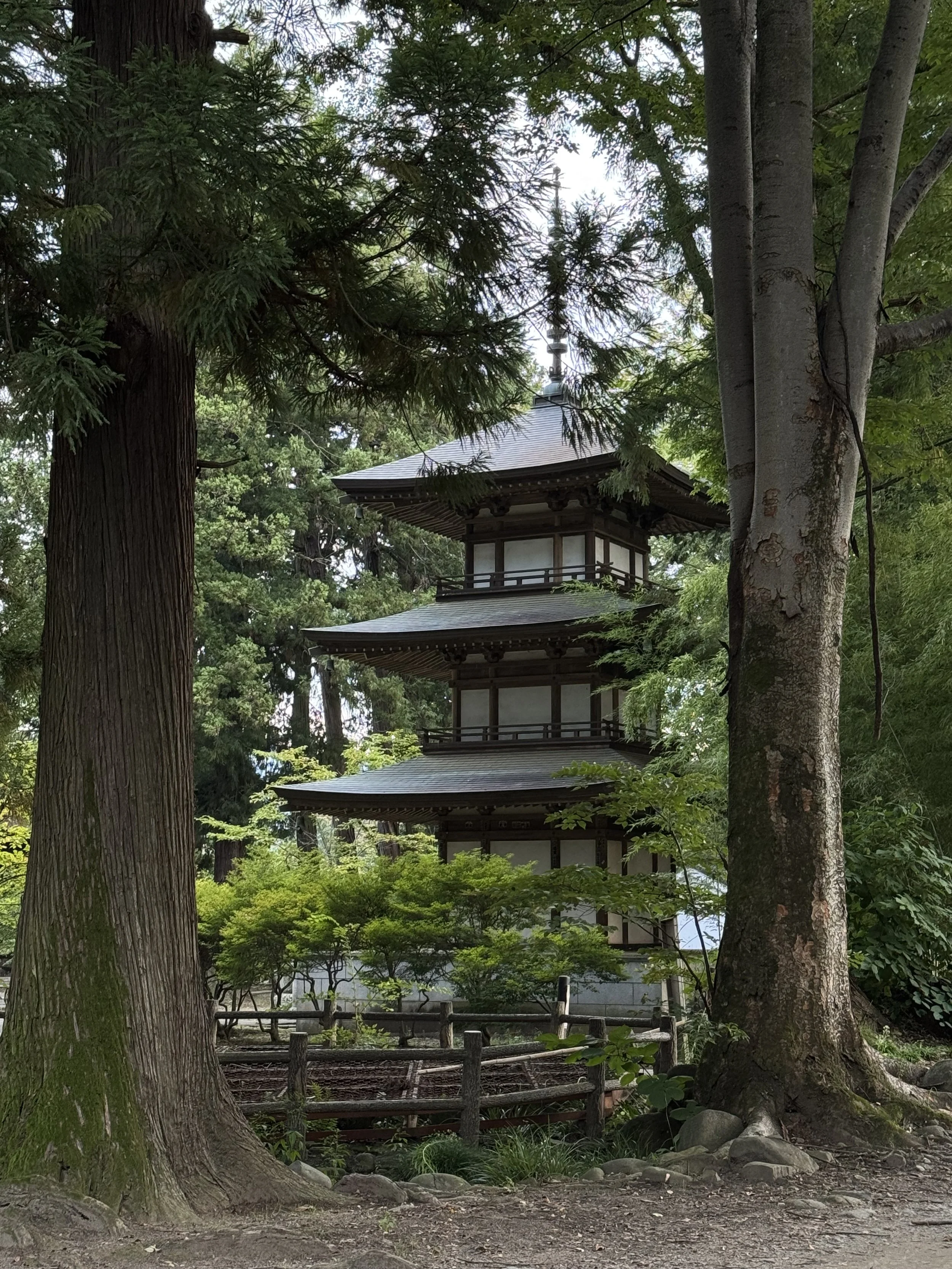
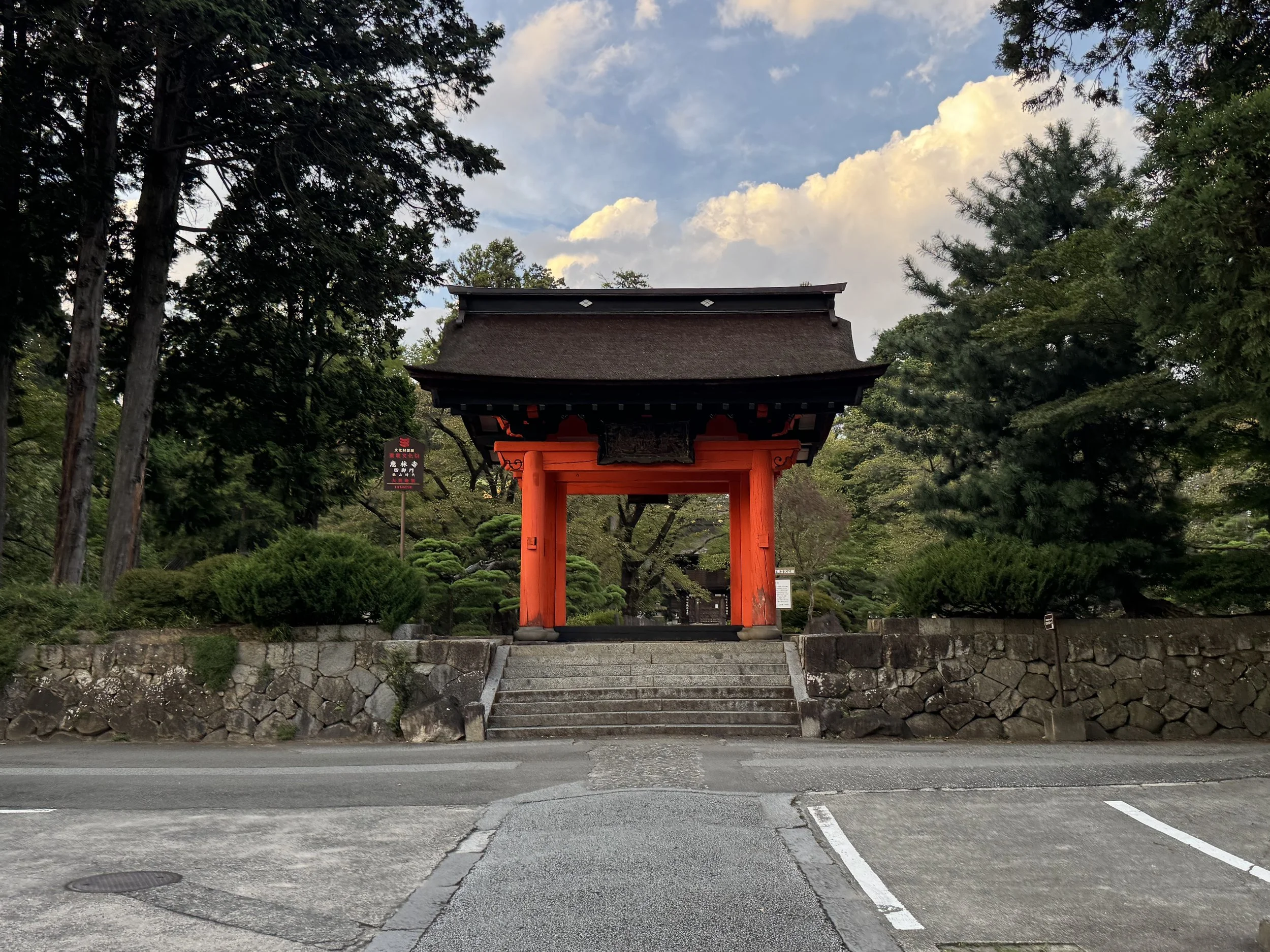
We also visited Erin-Ji temple, built in 1330 and chosen as the ancestral home of the legendary Samurai Takeda Shingen in 1541. It is one of the unique remaining Samurai temples, and it is worth wandering the grounds. The architecture is stunning, and walking through the gates, you are passing through history.
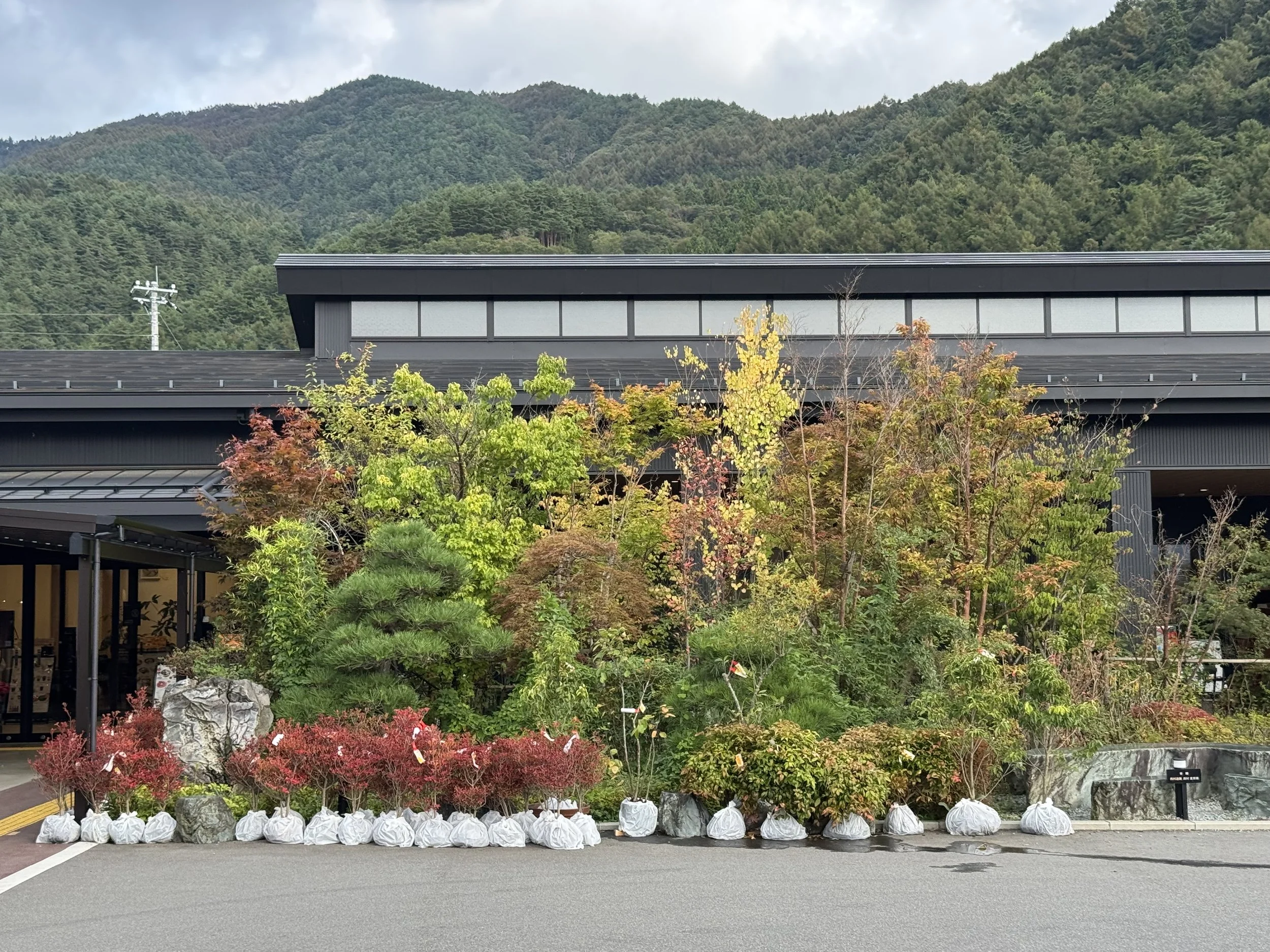
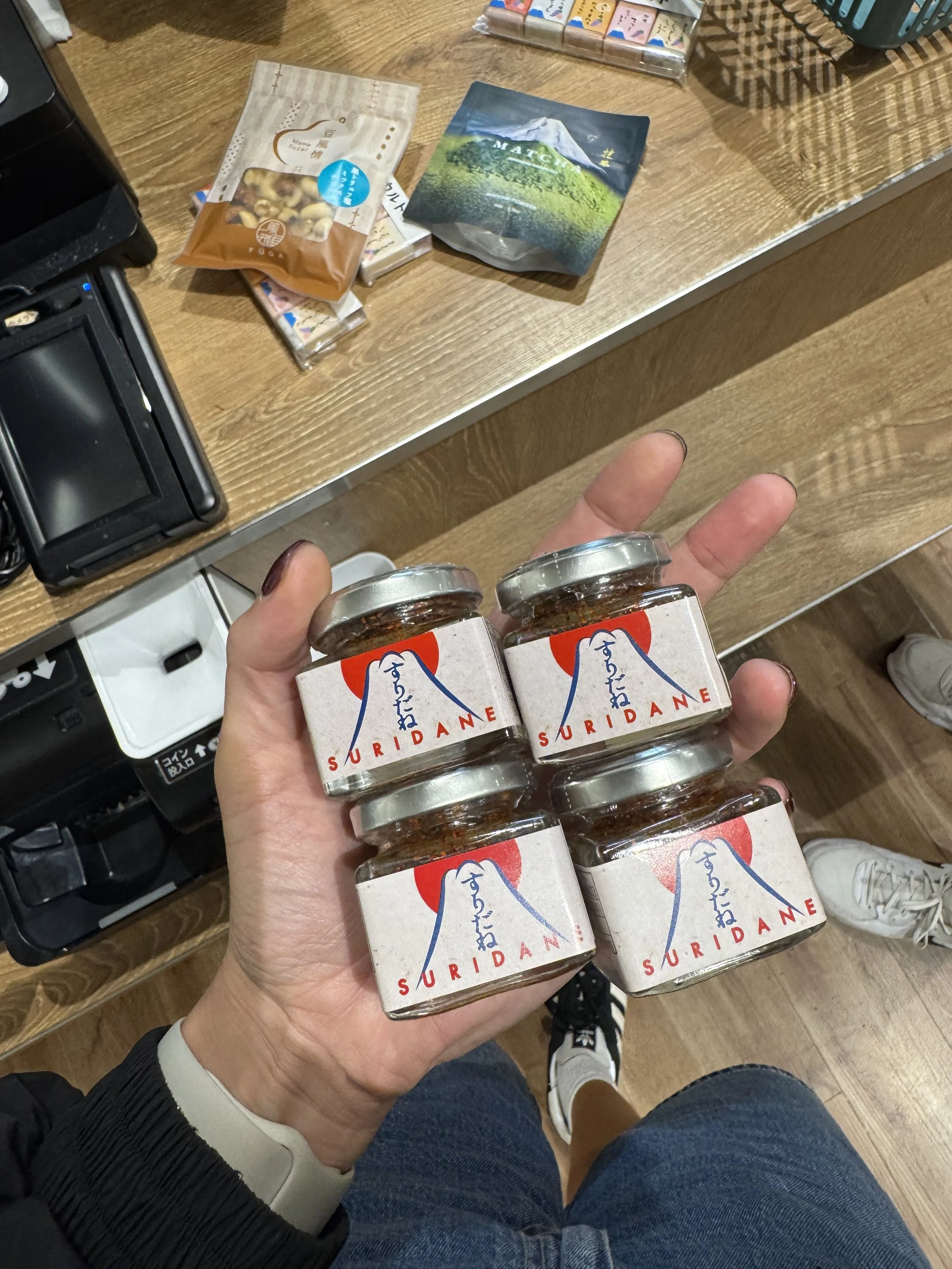
Browse Kawaguchiko Base. Over toward Lake Kawaguchi, Tabi no Eki Kawaguchiko Base is a generous introduction to the region’s local food. Its market brings together local produce and hundreds of specialty products, with a restaurant serving dishes also made from regional ingredients. I absolutely love a stop like this early in a stay, as you get an immediate sense for what grows nearby, find things that you may have never seen before, and inevitably acquire something for a late night snack. Allow more time than you would for a quick grocery run. Such a lovely place that we were so grateful to have had recommended to us, and otherwise so easy to miss!
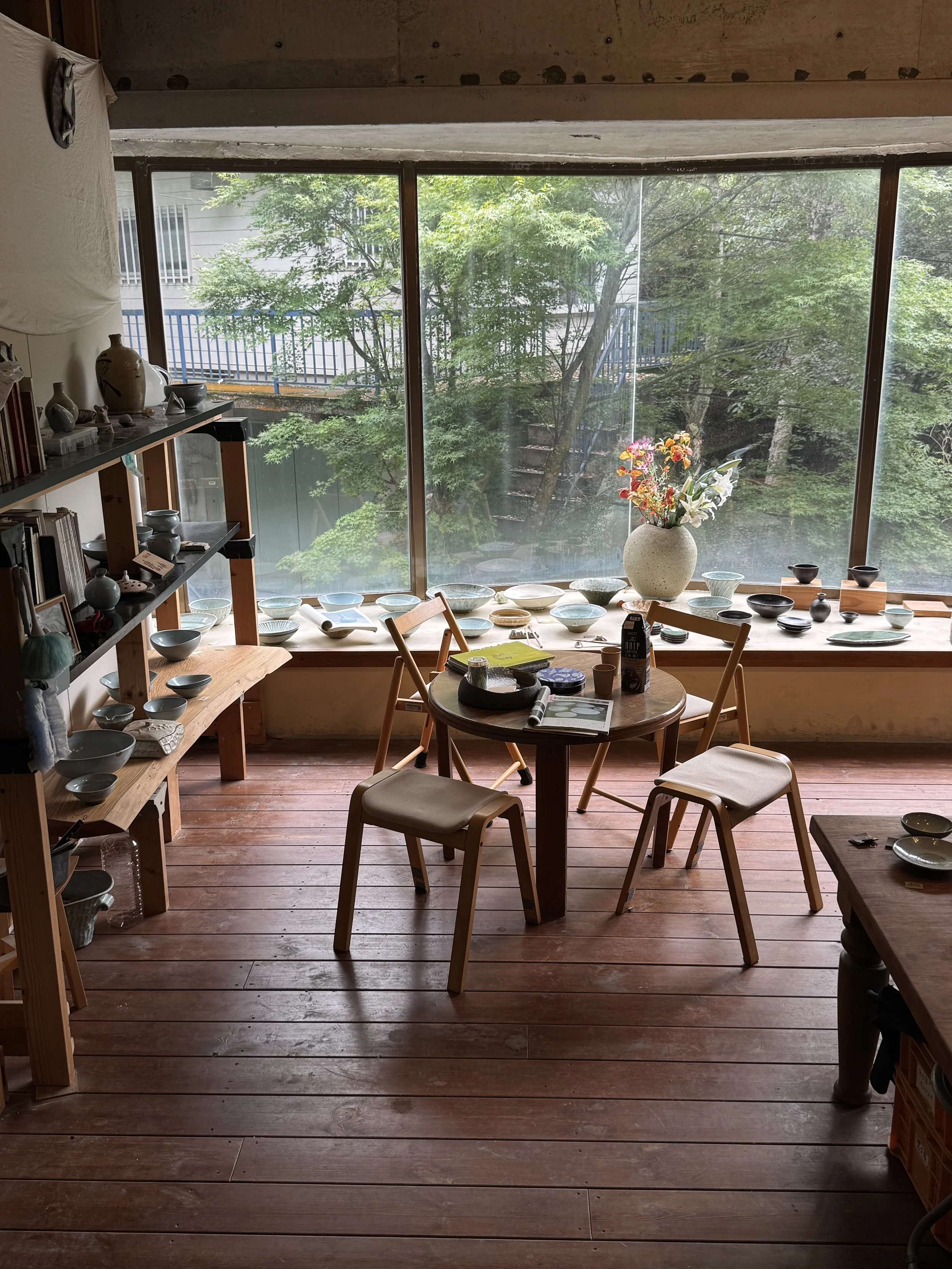
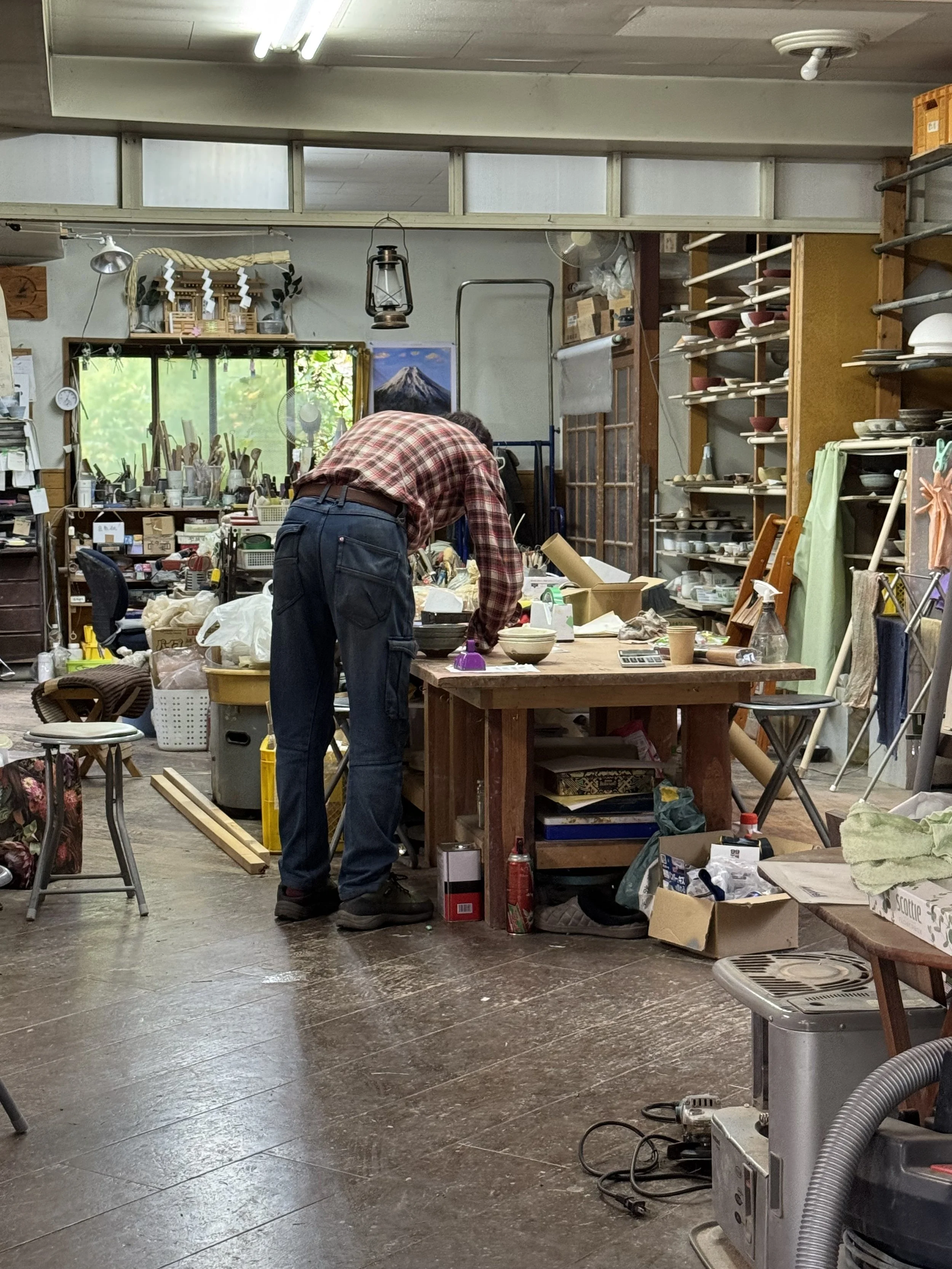
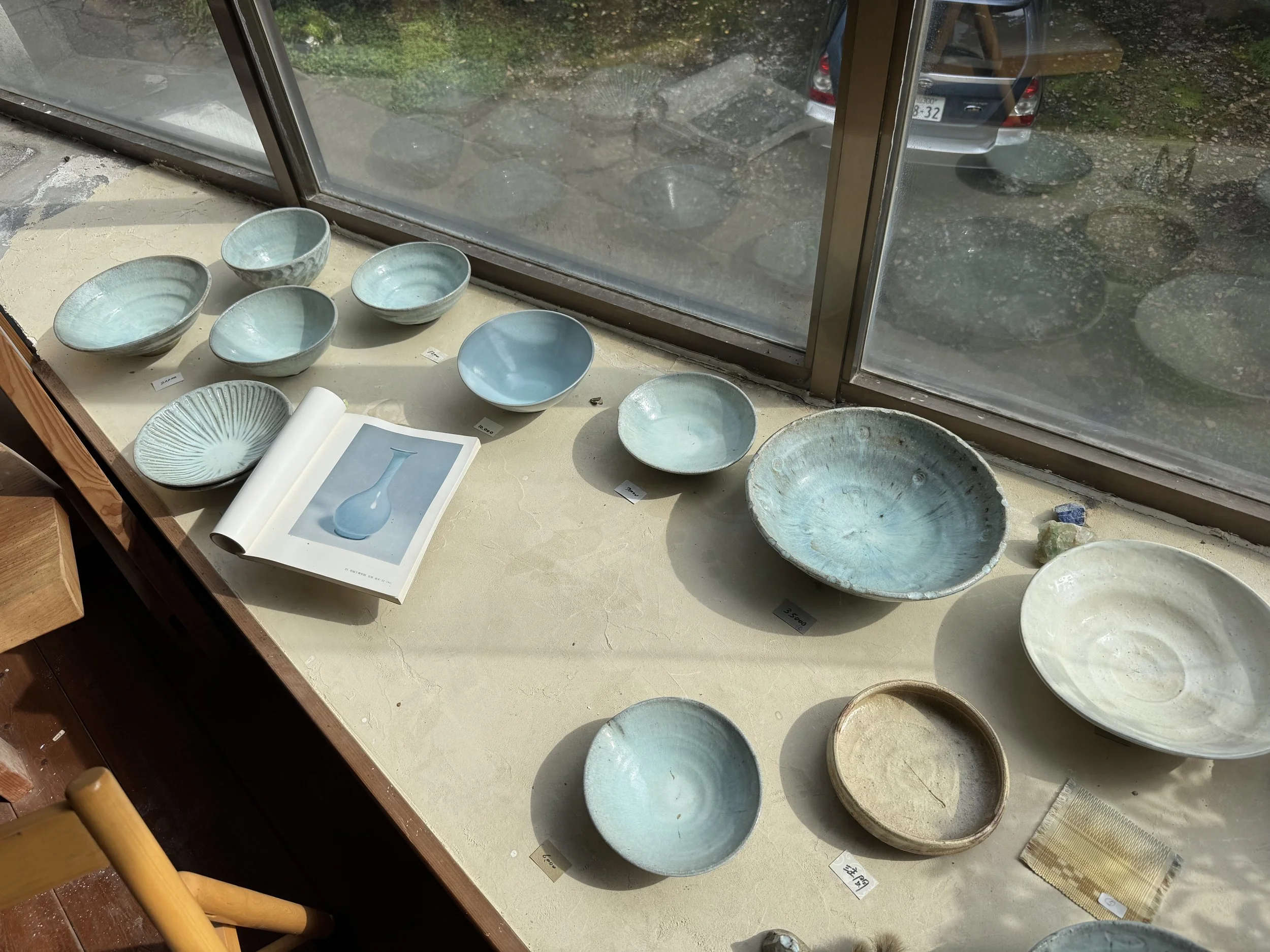
Find Ao Koubou pottery studio. Near Hana no Miyako, Ao Koubou is a working pottery studio and gallery known for its “Fujisan Blue” ceramics, inspired by the mountain’s colors. You knock on the door and simply see if the owner is there, and hope that they are. That makes finding it part of the pleasure. Browse the handmade pieces slowly and pick out something special to bring home. Shockingly, they do take card!
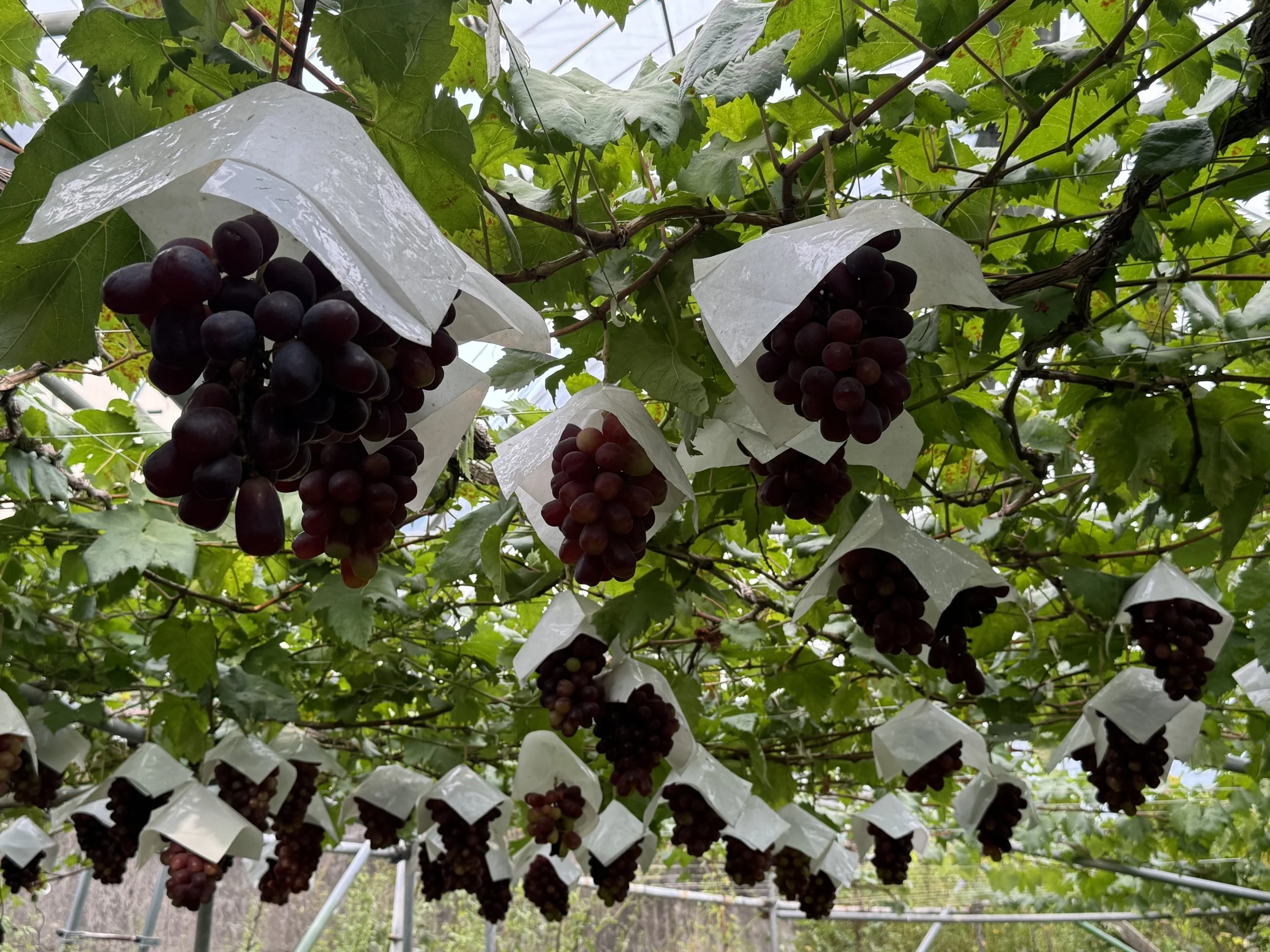
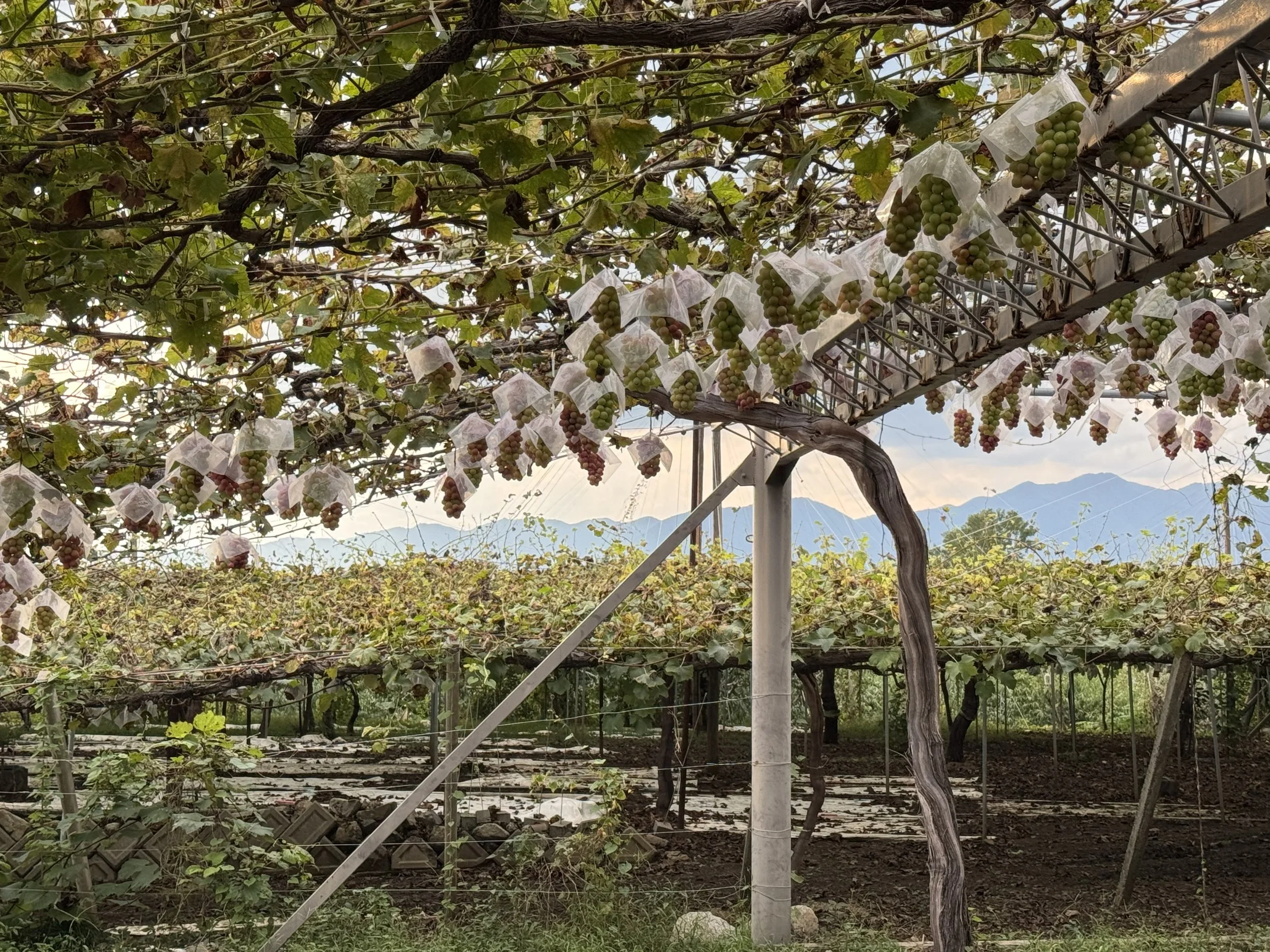
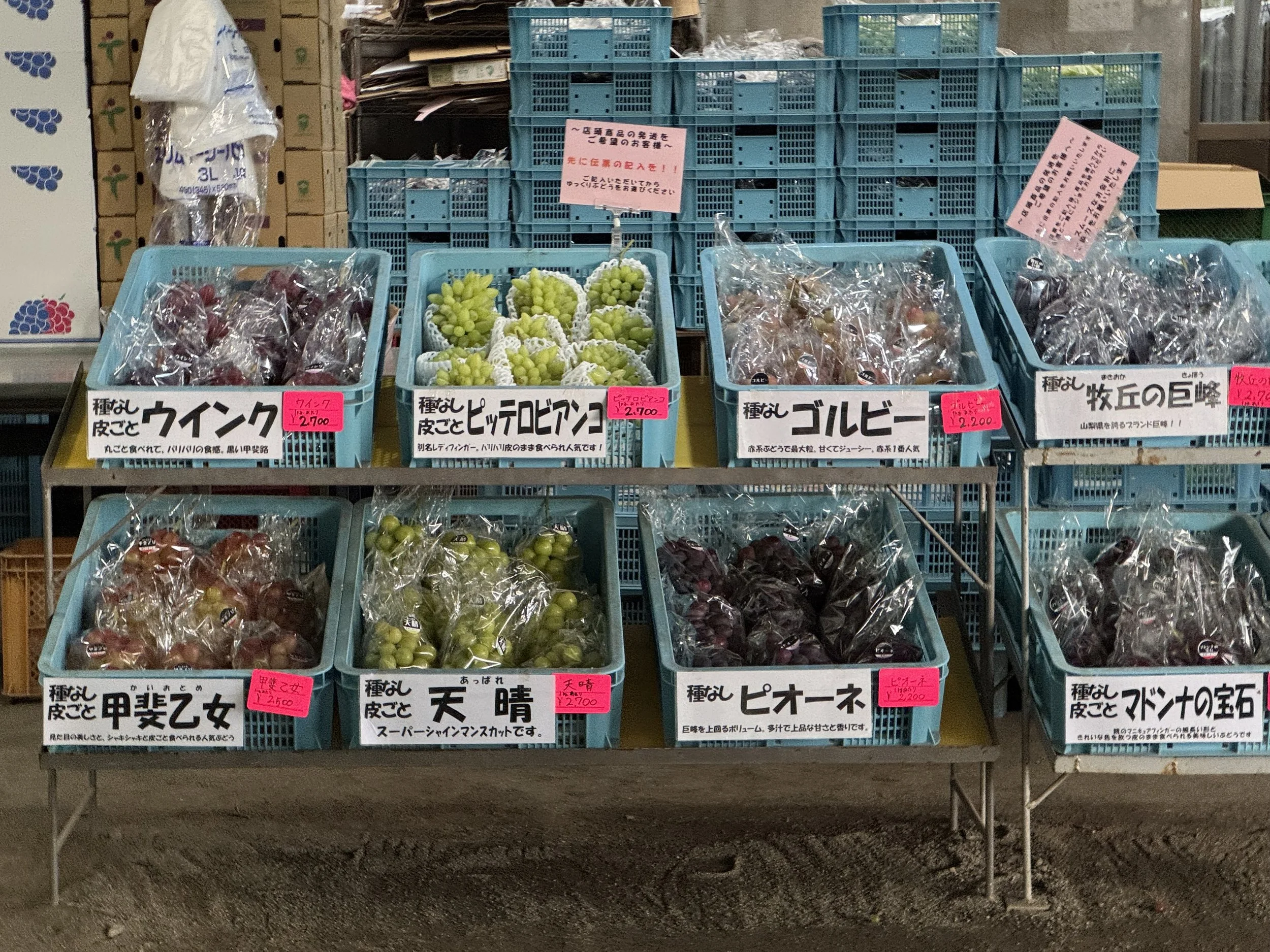
Spend a day among the grape farms. Further into Yamanashi, around Katsunuma and the Kofu Basin, the landscape changes to orchards and vineyards. We visited during peak grape season, when bunches hung beneath overhead trellises in individual protective bags and farm stands displayed tens if not hundreds of varieties (with plenty of samples to try!)

Yamanashi is Japan’s leading grape-producing prefecture and the variety is part of the attraction. There are dark, richly flavored Kyoho grapes and small, sweet Delaware, alongside pink-skinned Koshu, which is also important to the region’s wine. The prefecture’s outdoor grape harvest generally runs from late July into late October, depending on the variety and farm. Many growers offer picking experiences, but simply stopping to buy fruit and compare what is available makes it a worthwhile afternoon.
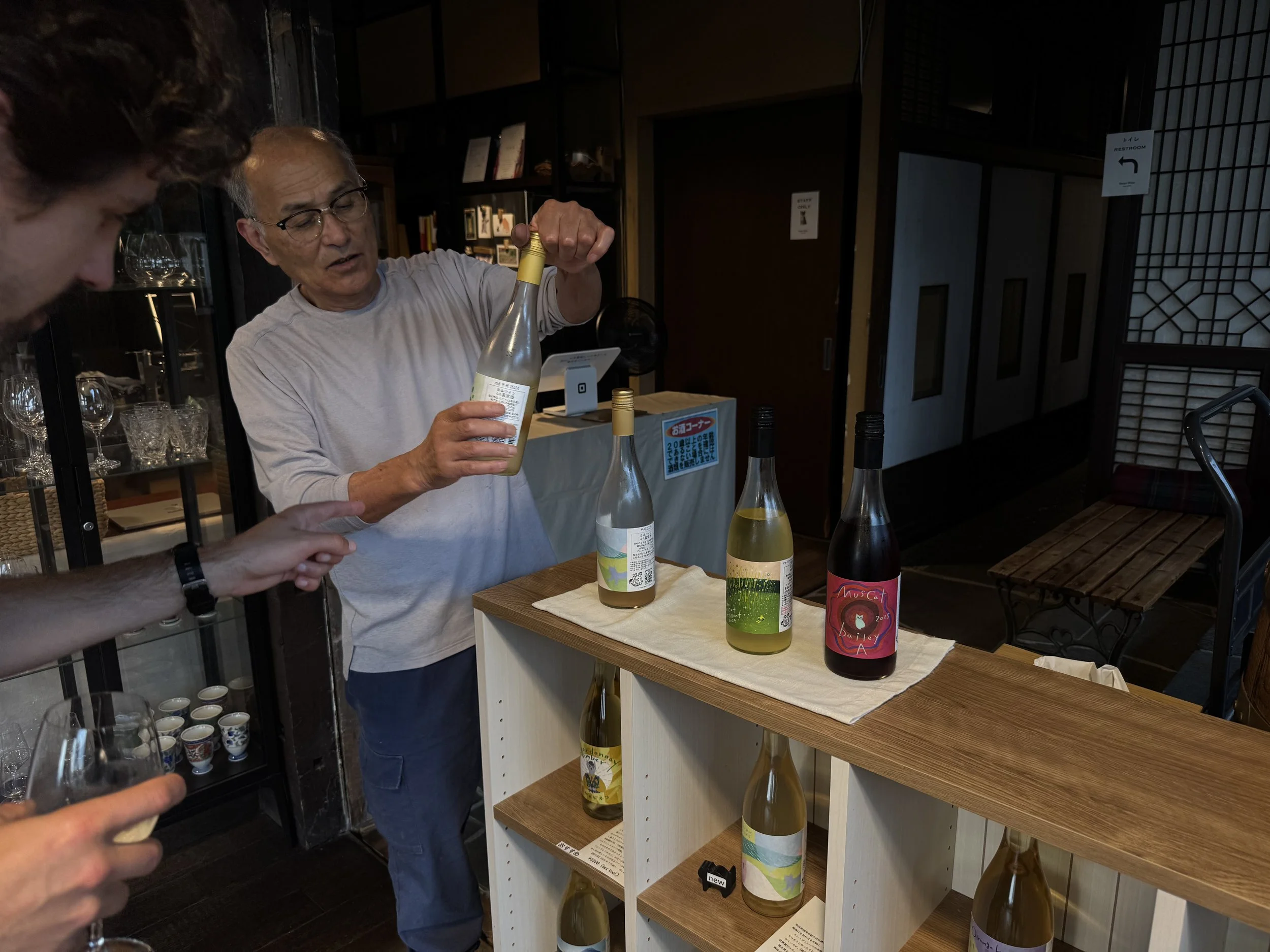
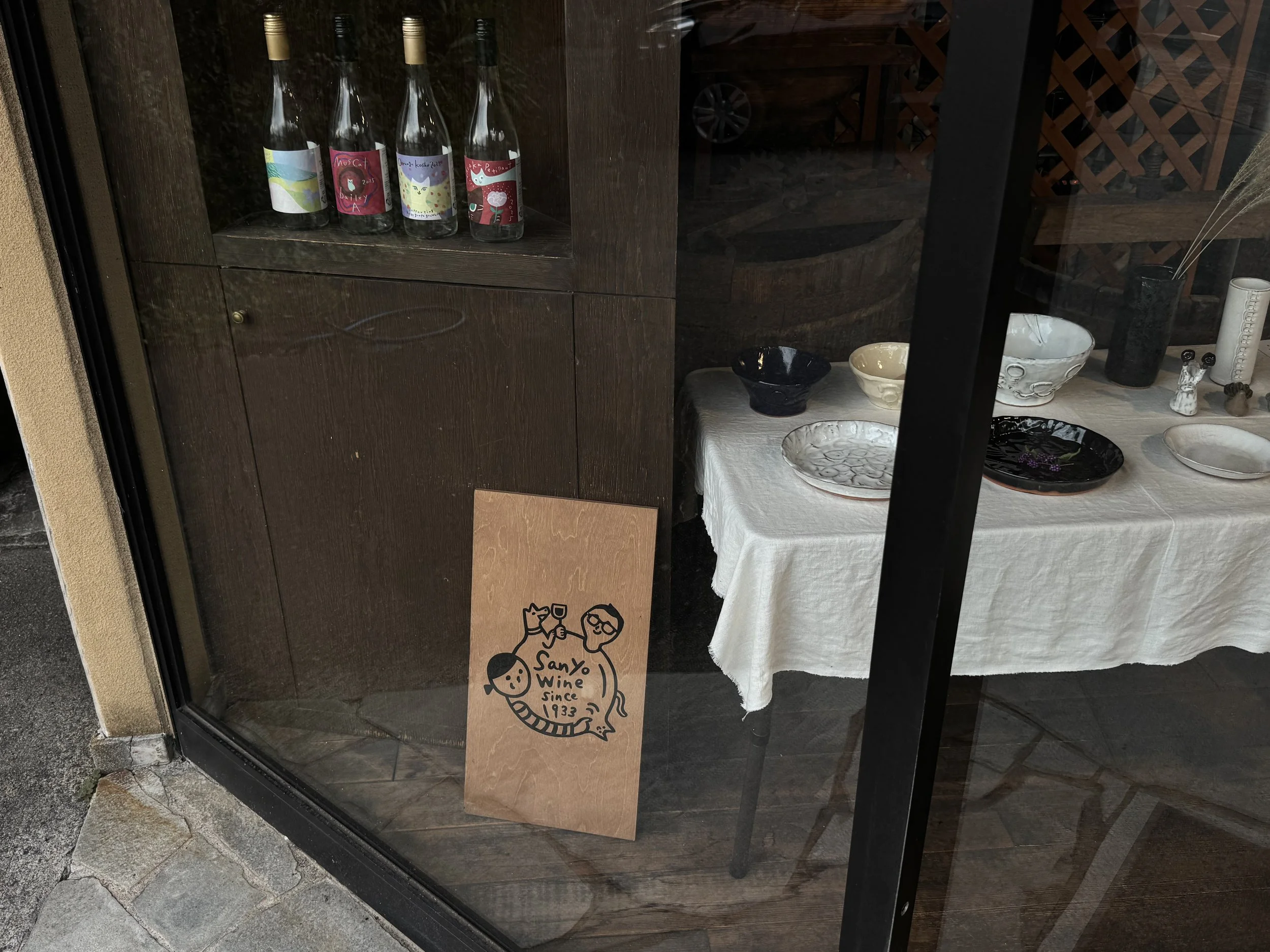
Visit Sanyo Wine in Makioka. Sanyo Wine, also called Sanyo Jozo, makes a great anchor for the wine country excursion. Founded in 1933, the wintery works with Yamanashi grapes, including fruit from its own vineyards. Its range includes Koshu wines and field blends, with red and white varieties grown together and fermented together. Some bottlings are made without added sulfites, making it mostly “natty”. There is another detail I loved about this winery: they ask visitors to support animal welfare through charity tastings. The cat labels become all that much more cute when you learn that fact. Check visiting arrangements before you go, as their hours can be spotty!
KISO VALLEY, NAGANO

Where to Stay:

Ame Nakasendo, a private 150-year old renovated kominka stay… with monkeys!

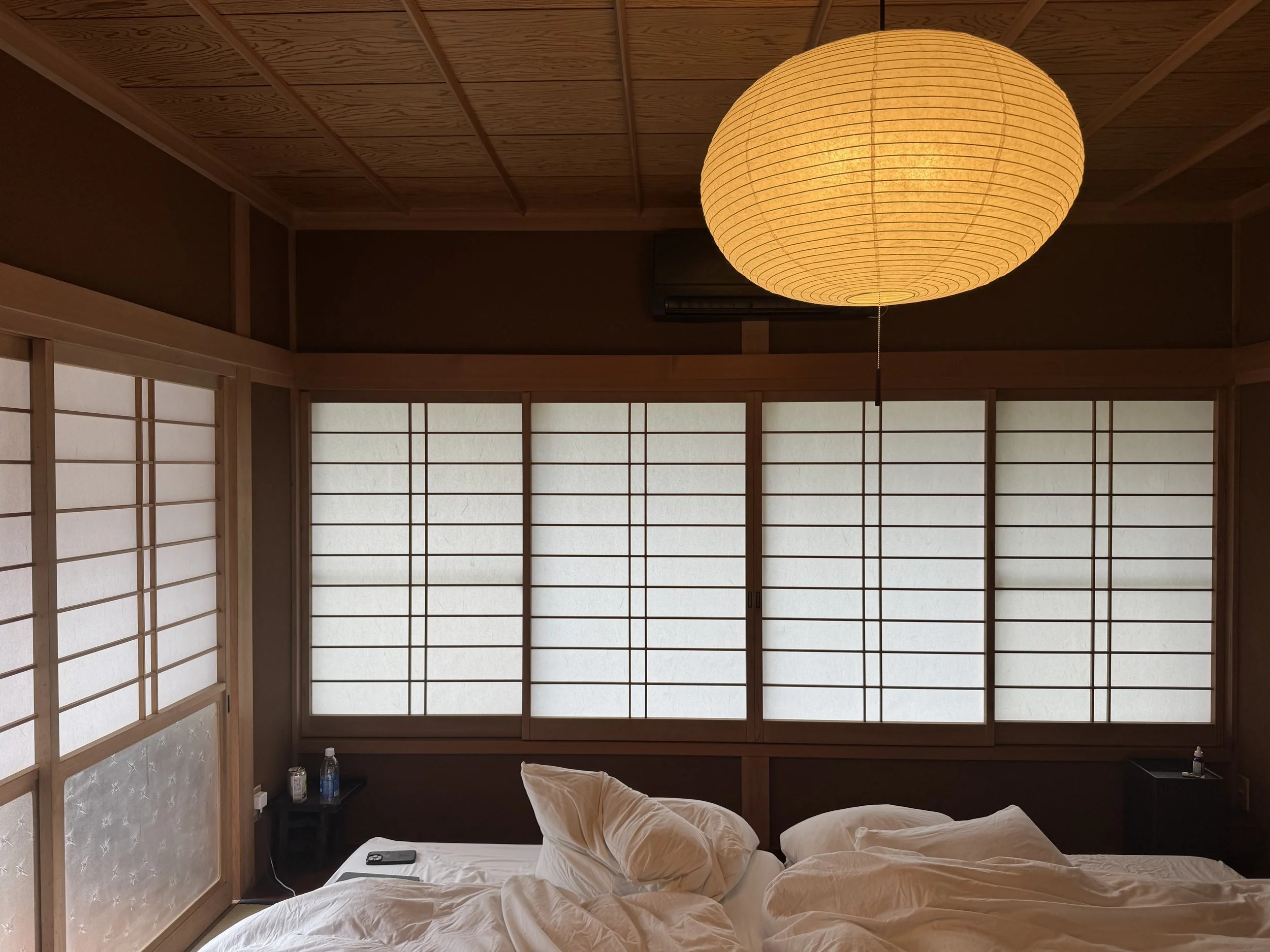
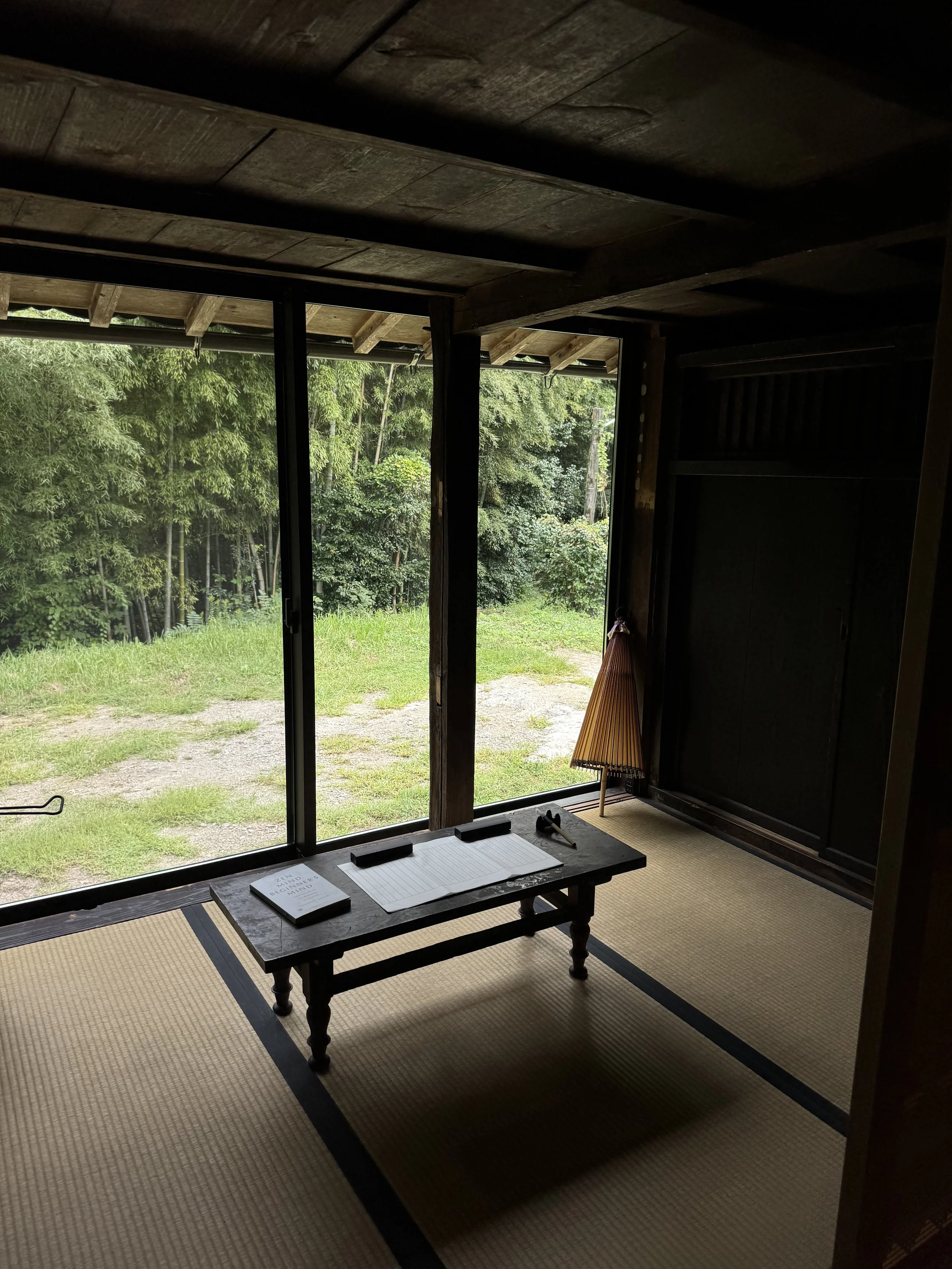
Ame Nakasendo was one of those places I knew I wanted to visit before we had worked out the rest of our trip itinerary. You might even say that it partly dictated this chapter of the trip - a fact with which I was perfectly fine. It is a roughly 150-year old kominka, or traditional Japanese house, lovingly restored as a private rental in Nagiso, and sits along the historic Nakasendo within a neighborhood where people still live. You are staying in a small mountain town, with the old walking route outside and the forest close by. It is also a useful base for exploring the preserved post towns of Tsumago and Magome.

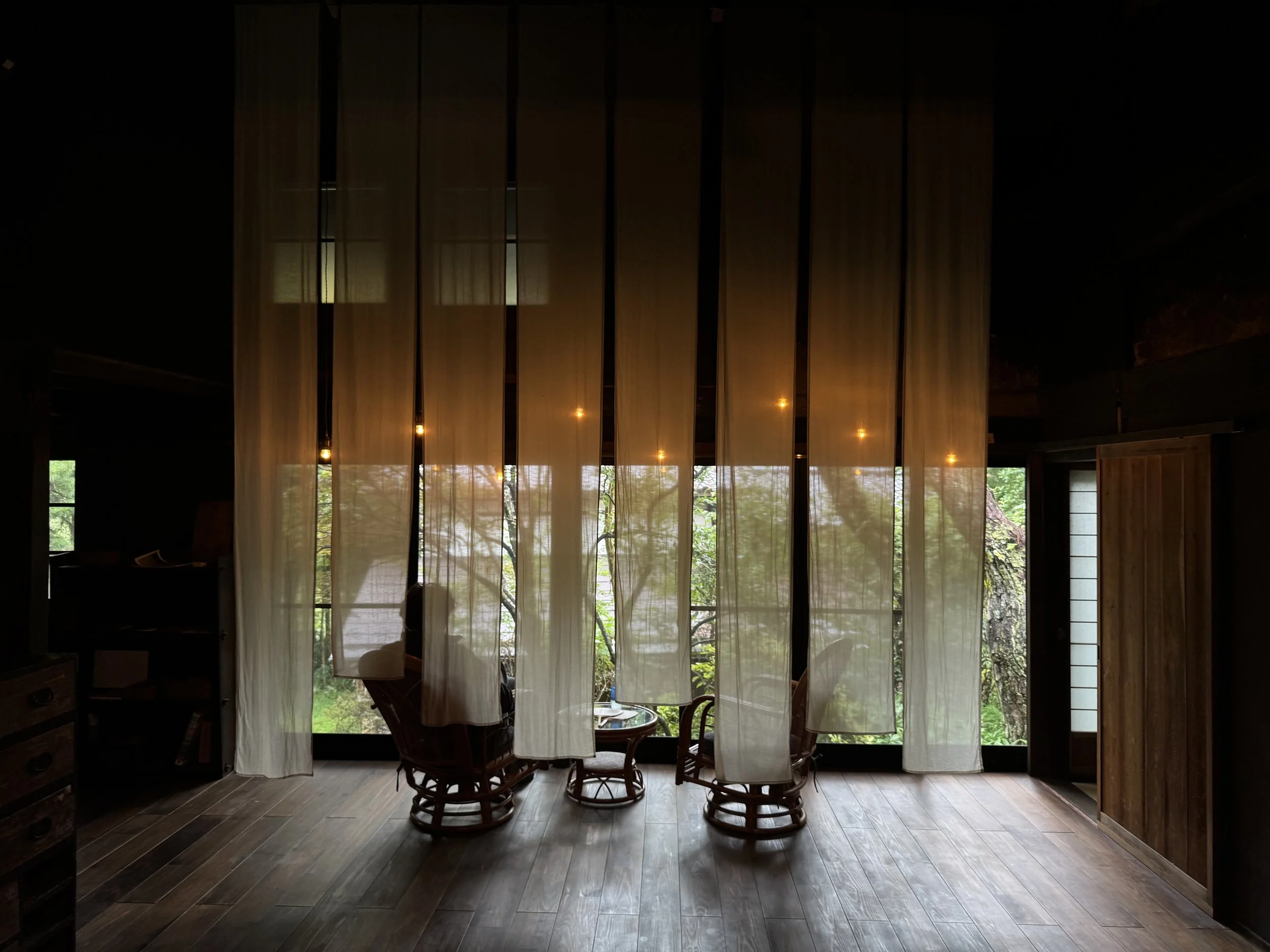
The renovation gives you plenty to look at inside the house. Heavy timber beams stretch overhead, while tatami bedrooms and views toward the bamboo grove etain the character that makes an old Japanese house so appealing. Local craftsmanship continues that story: Kiso woodworker Nobuaki Tsuchiya made the kitchen furniture and dining table, and a large, plant-dyed curtain hangs through the open living space. Even the bathroom incorporates an old sewing-machine base, repurposed beneath the basin.

I loved having time to notice these details. The house is beautiful enough to warrant an afternoon of its own, especially if your usual travel problem is booking somewhere lovely and cute but then spending absolutely zero time there. With two Japanese-style bedrooms accommodating up to 6 guests, it would work for a family or friends, through we also thoroughly enjoyed having the space to ourselves.
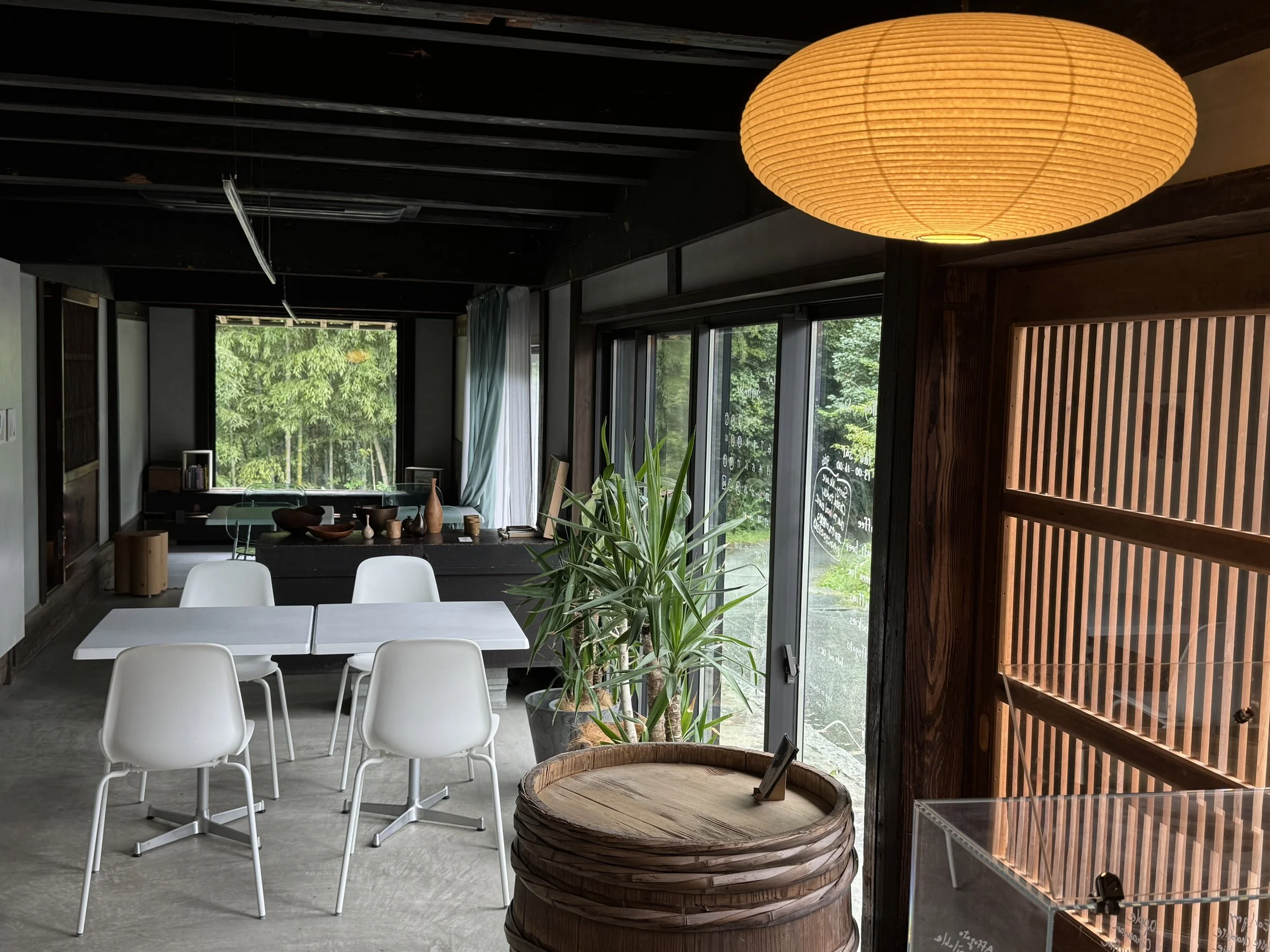
Notably, at the front of the property also sits a cafe which welcomes walkers and locals. It serves an original coffee blend and homemade baked goods, with a gallery showing work by Kiso-region woodworkers and makers. This gives the house a lovely public facing role: somewhere to stop along the trail, have coffee and encounter the people making things nearby.

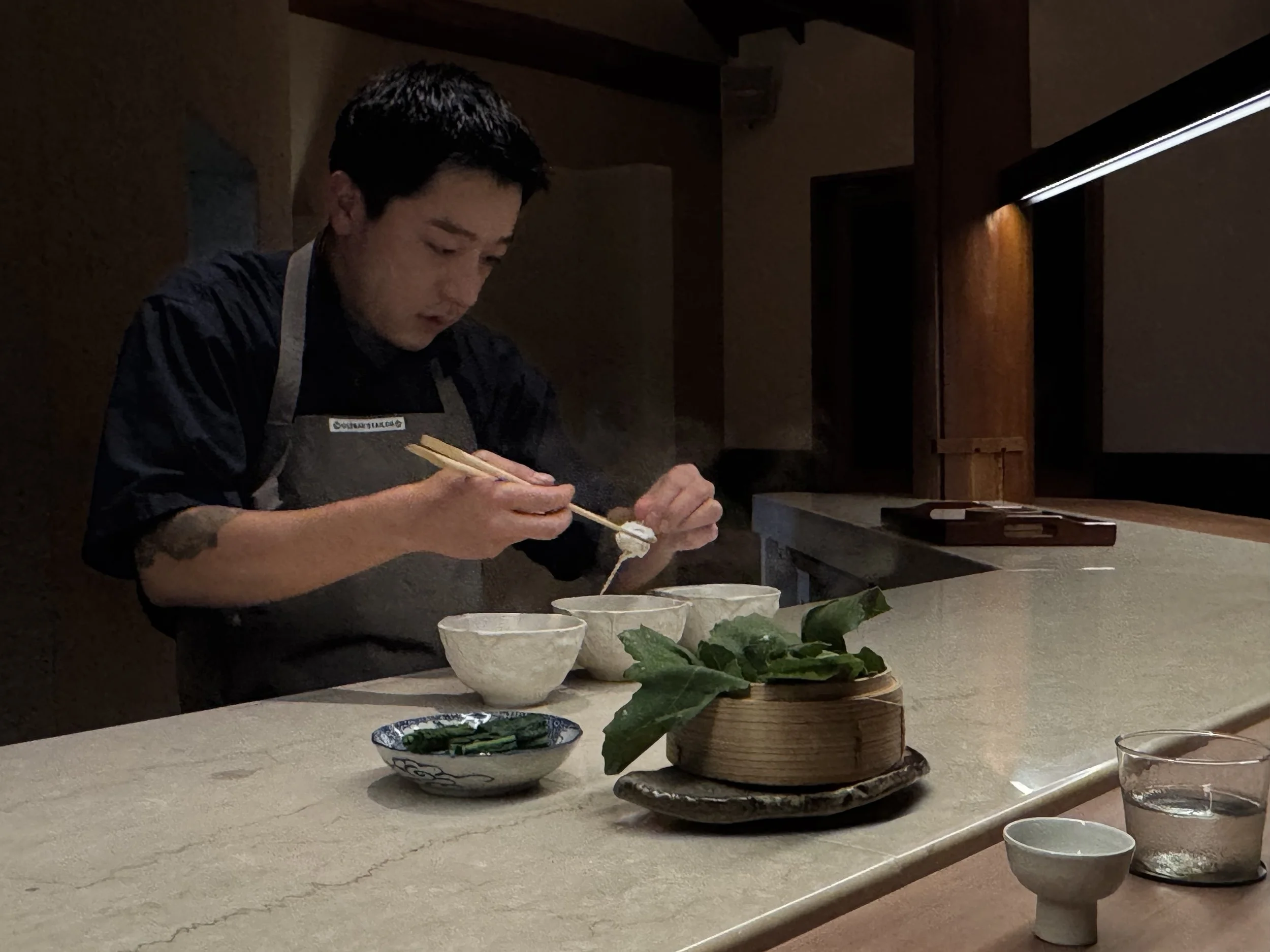
One of our other favorite parts of the stay was cooking dinner “in” house. Our host Tommy had arranged wagyu, vegetables and rice, along along with a bamboo steamer and clear instructions about how to make our night’s feast. The portions were generous and easy to put together and it inspired in us a new love for seiro steaming. We liked it so much that the very next evening, we cooked salmon with ginger and green onion in much the same way. Departing this stay with a new way to cook dinner felt like a particularly useful souvenir and I am not embarrassed to admit that we’ve done it weekly since returning back to Seattle.
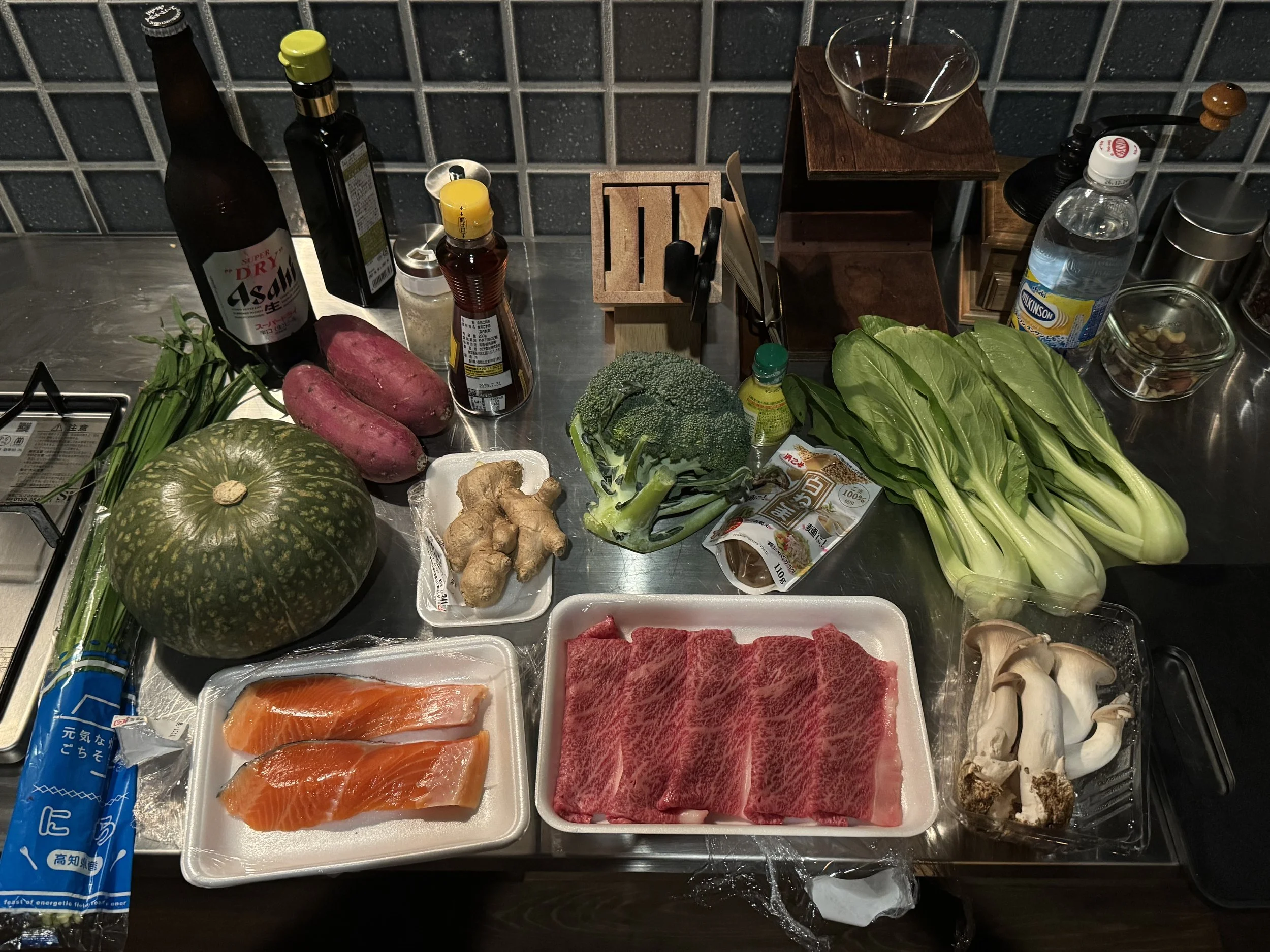
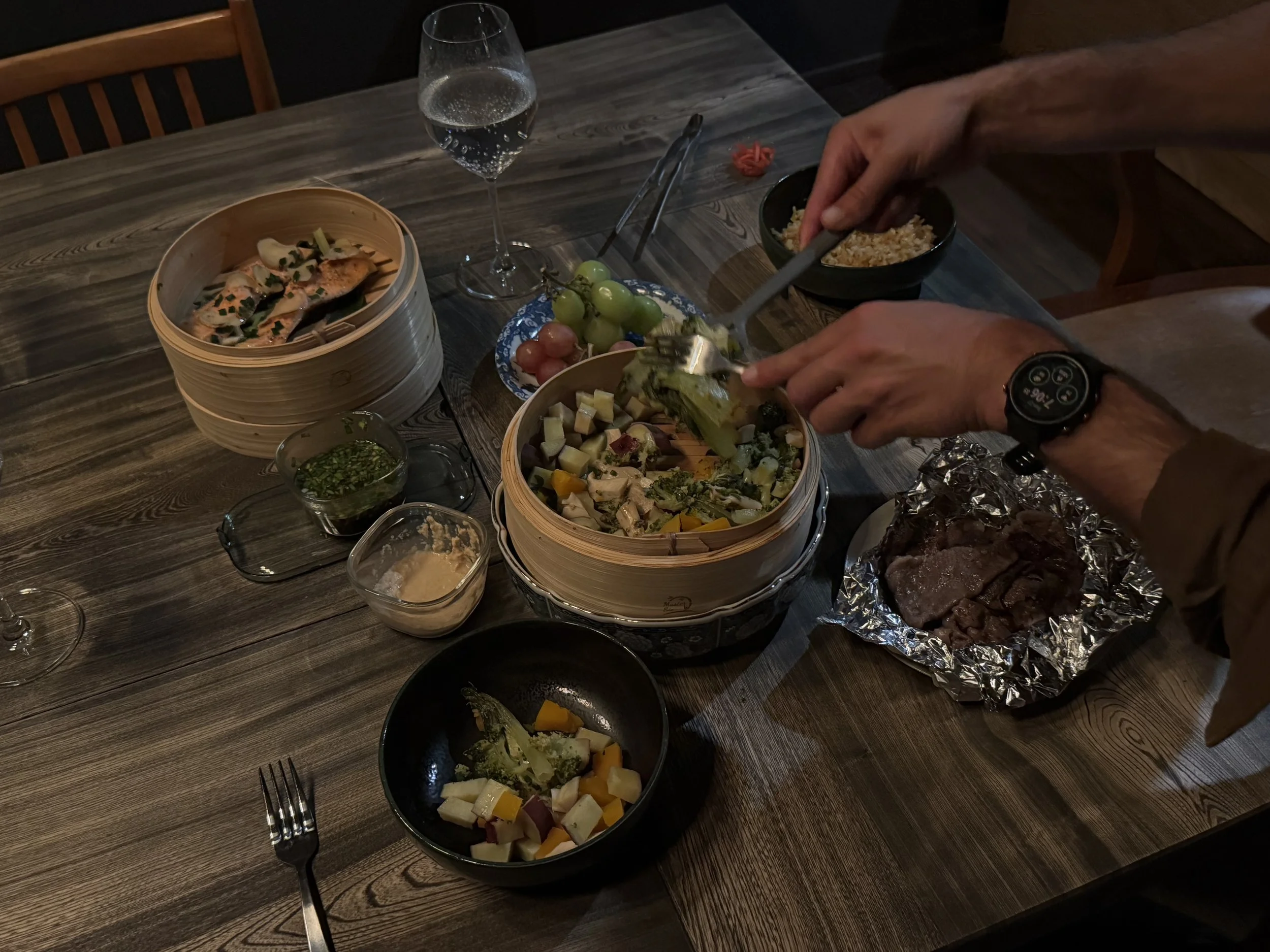
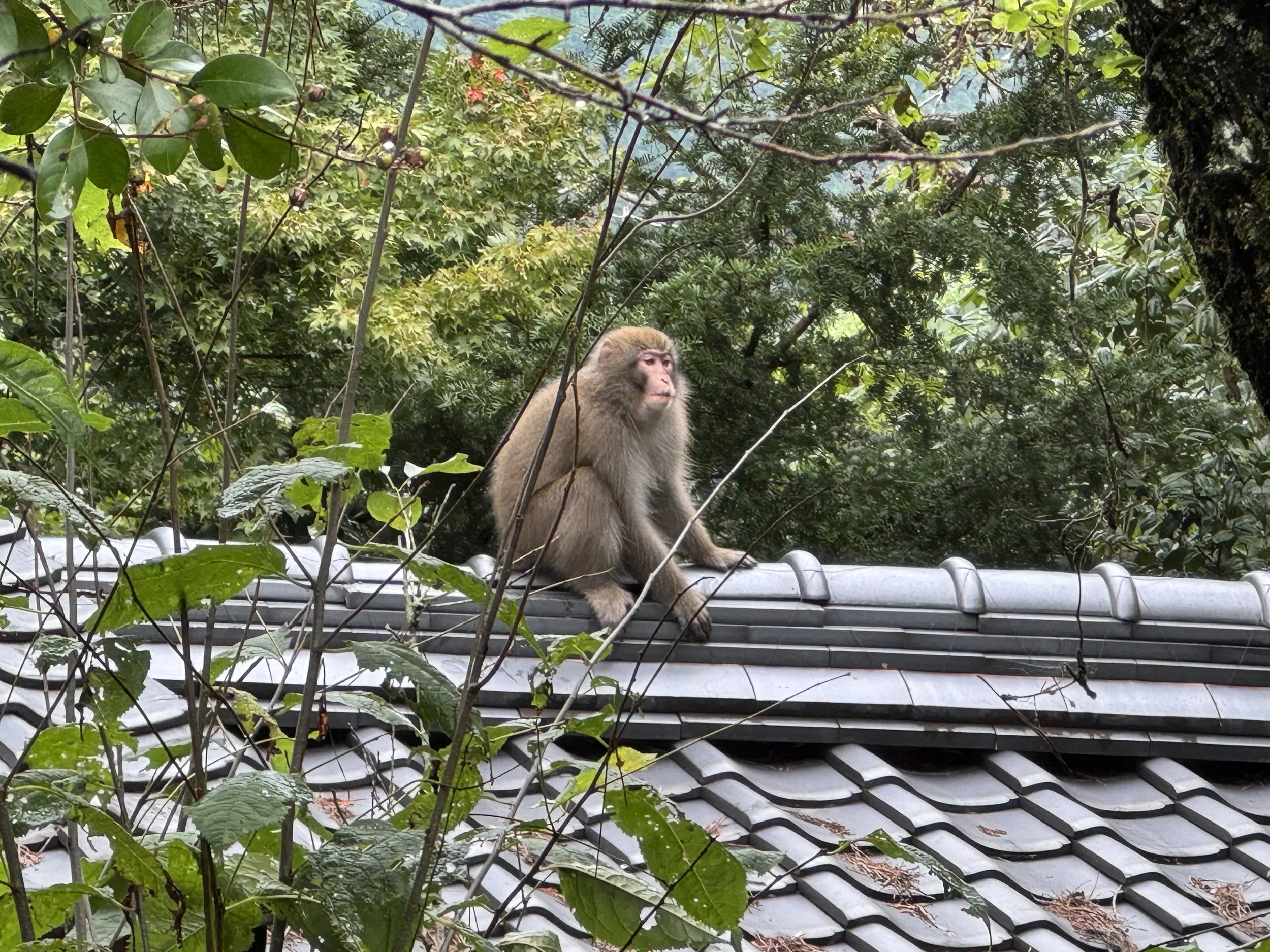
I would give Ame at least a couple of nights. Walk the old road and explore the surrounding towns, but leave yourself ample time to enjoy the house. We even had monkeys visit, an additional amenity I would hesitate to promise… but maybe, just maybe you’ll get lucky like we did.

Things to Do:

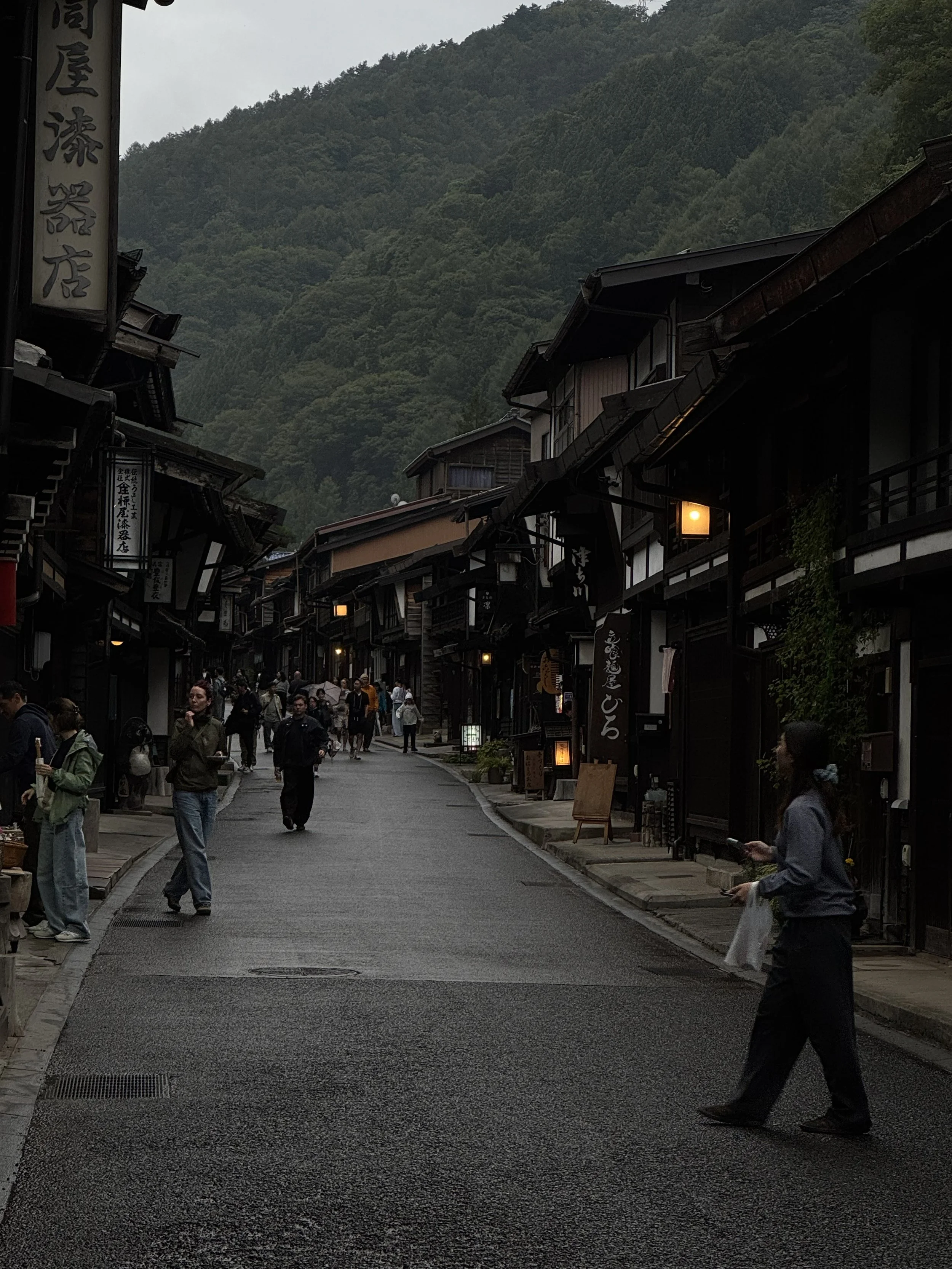
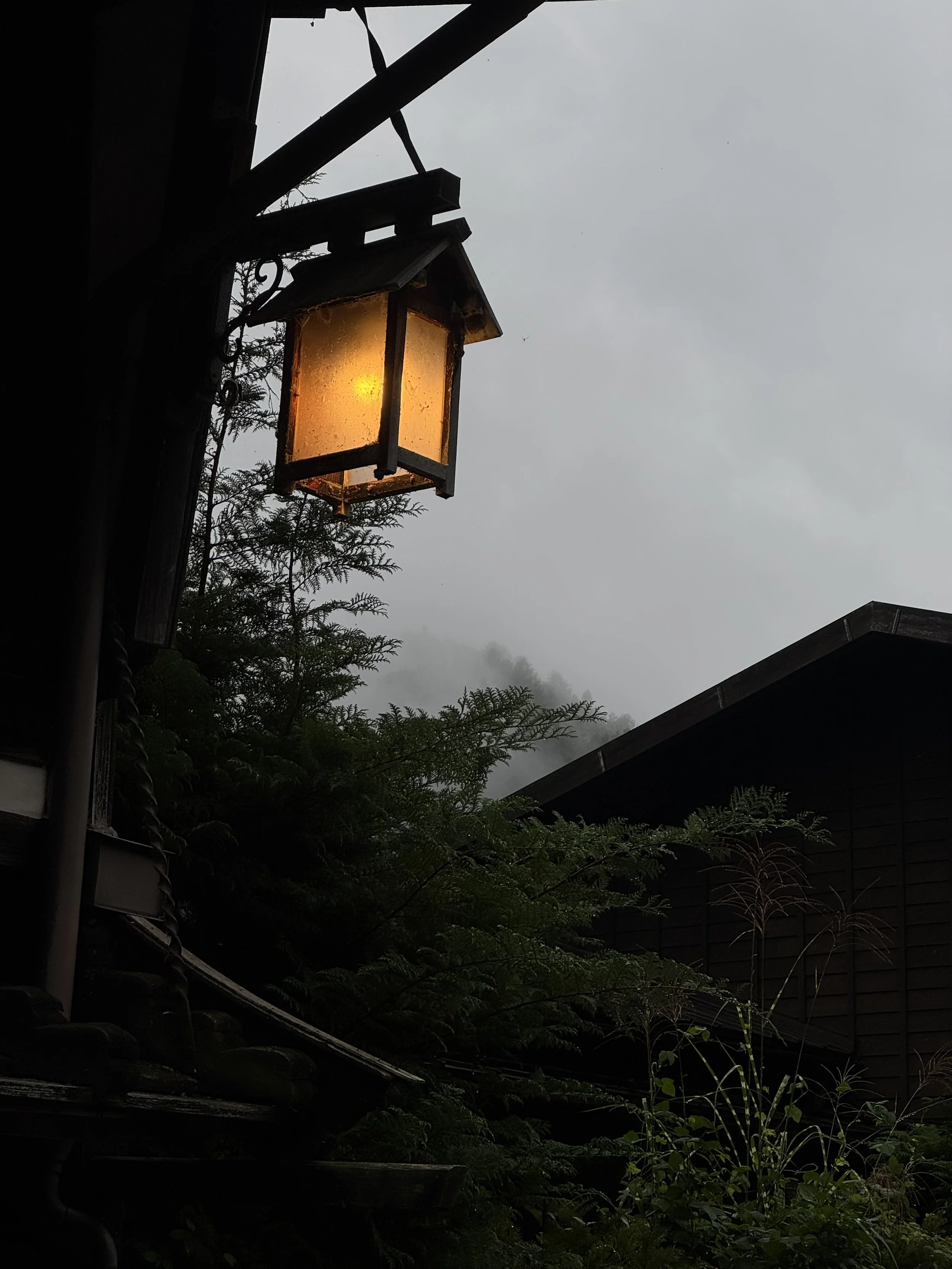
Visit all the little Juku towns (post towns along the Nakasendo trail, the old samurai highway linking Kyoto to Edo (Tokyo).

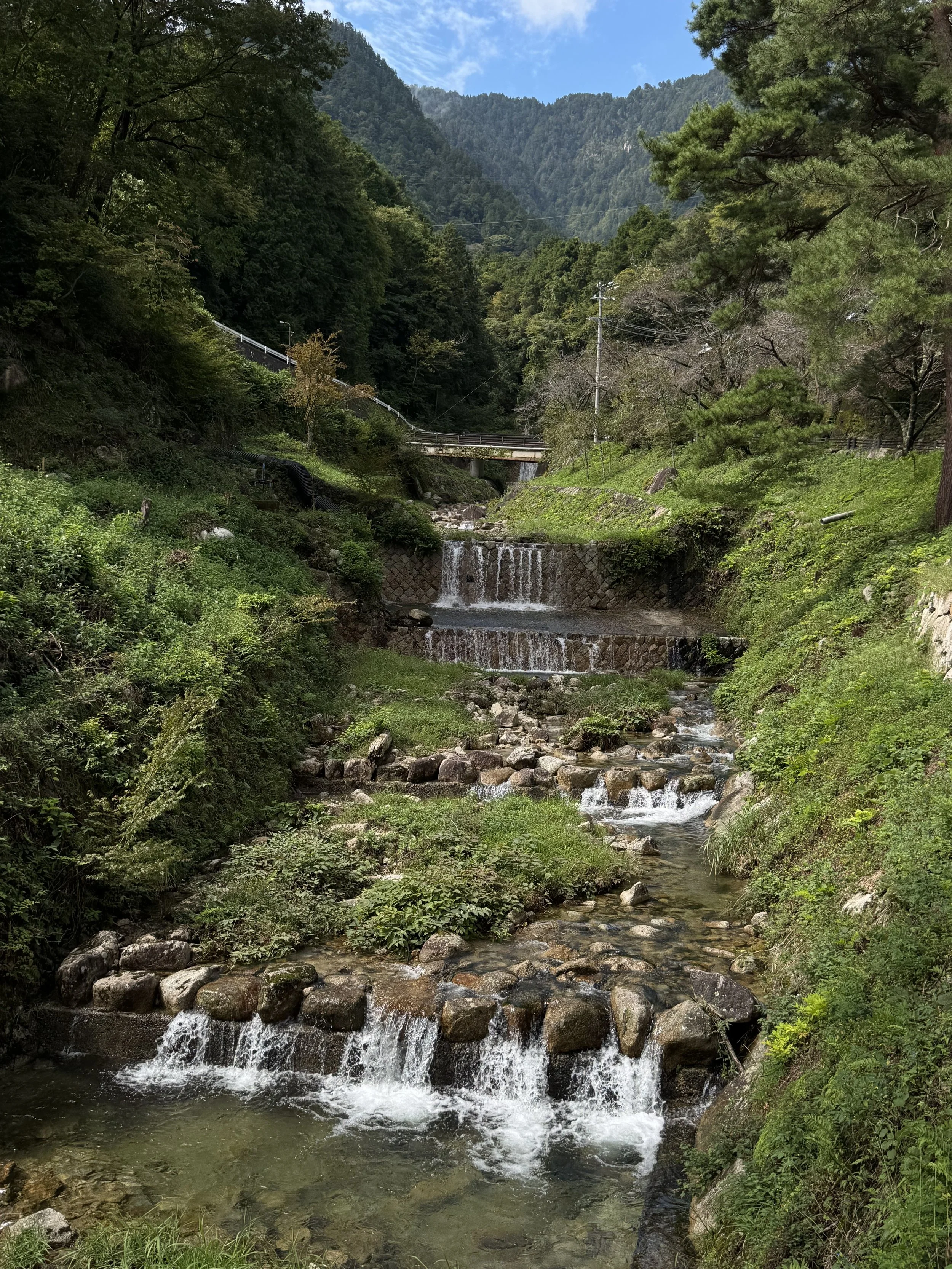
We visited two: Tsumago Juku & Narai-juku. Jukus are full of artisans and their shops (primarily lacquer bowls, textiles, wooden toys and soba noodles). We also recommend these towns for a matcha, oyuki, or a chestnut latte (so yum!). If you have time, also visit the Momosuke Bridge or explore the stunning Kakizore Gorge.
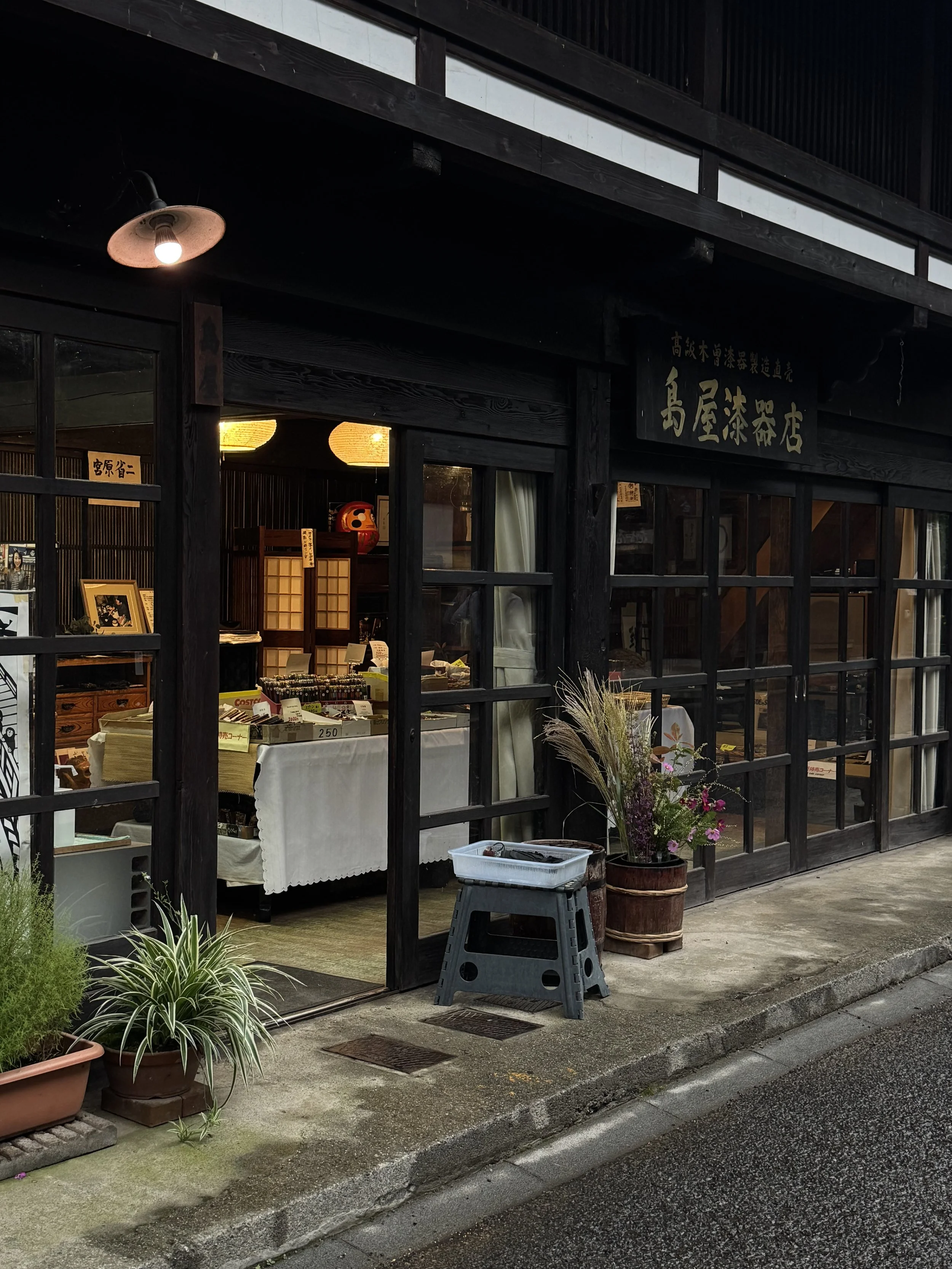
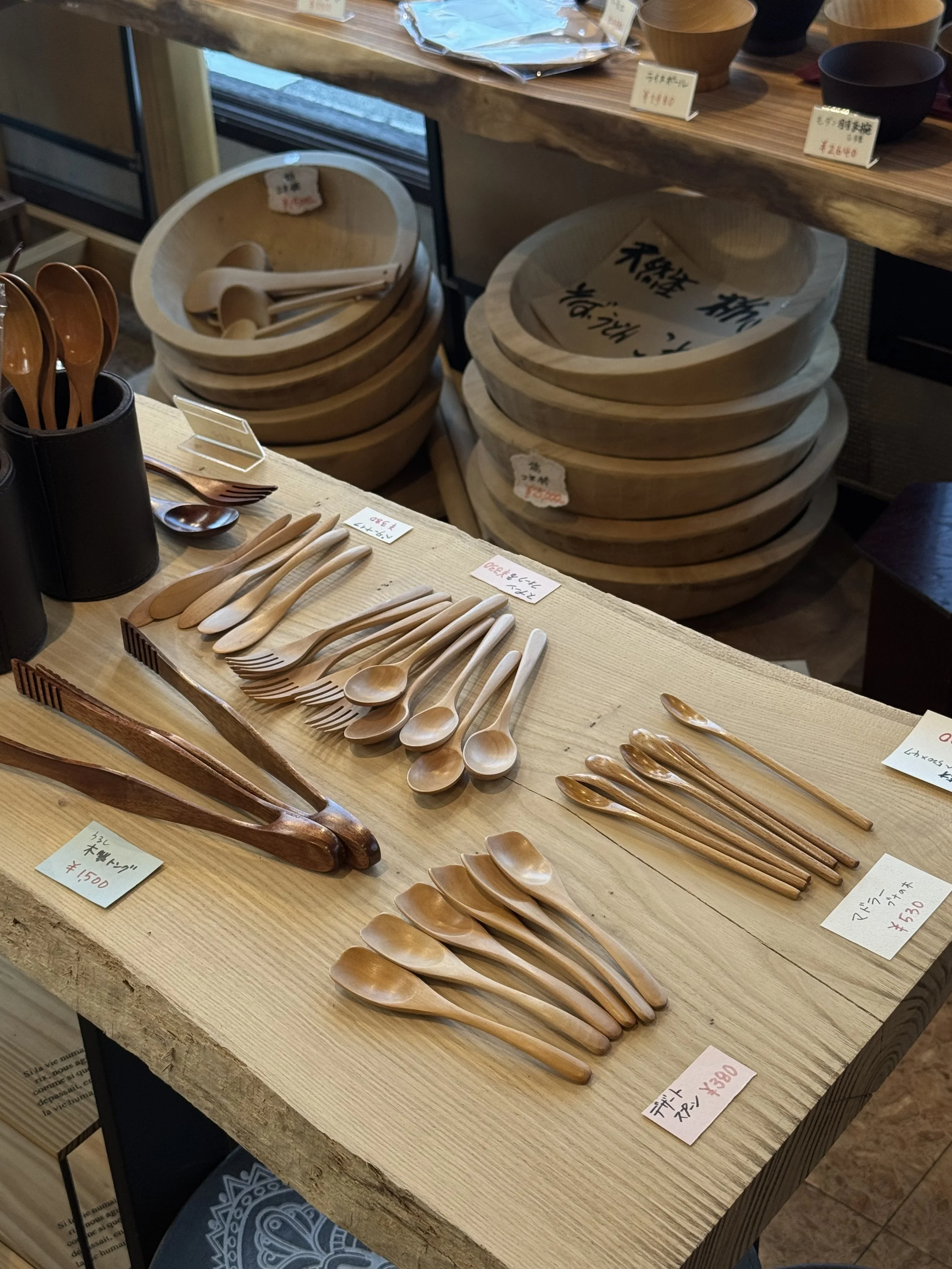
Visit local artisans! Another fantastic and worthwhile thing to do in the area is seeking out local woodworkers, especially around Kijishi no Sato, the woodturners’ village near Tsumago. Here, the regional craft of Nagiso rokuro zaiku involves shaping wood on a lathe, with the grain determining much of the finished piece’s character. The tradition is documented locally from the early 18th century and it’s appeal becomes clear when you pick up a bowl and feel just how carefully it has been made.
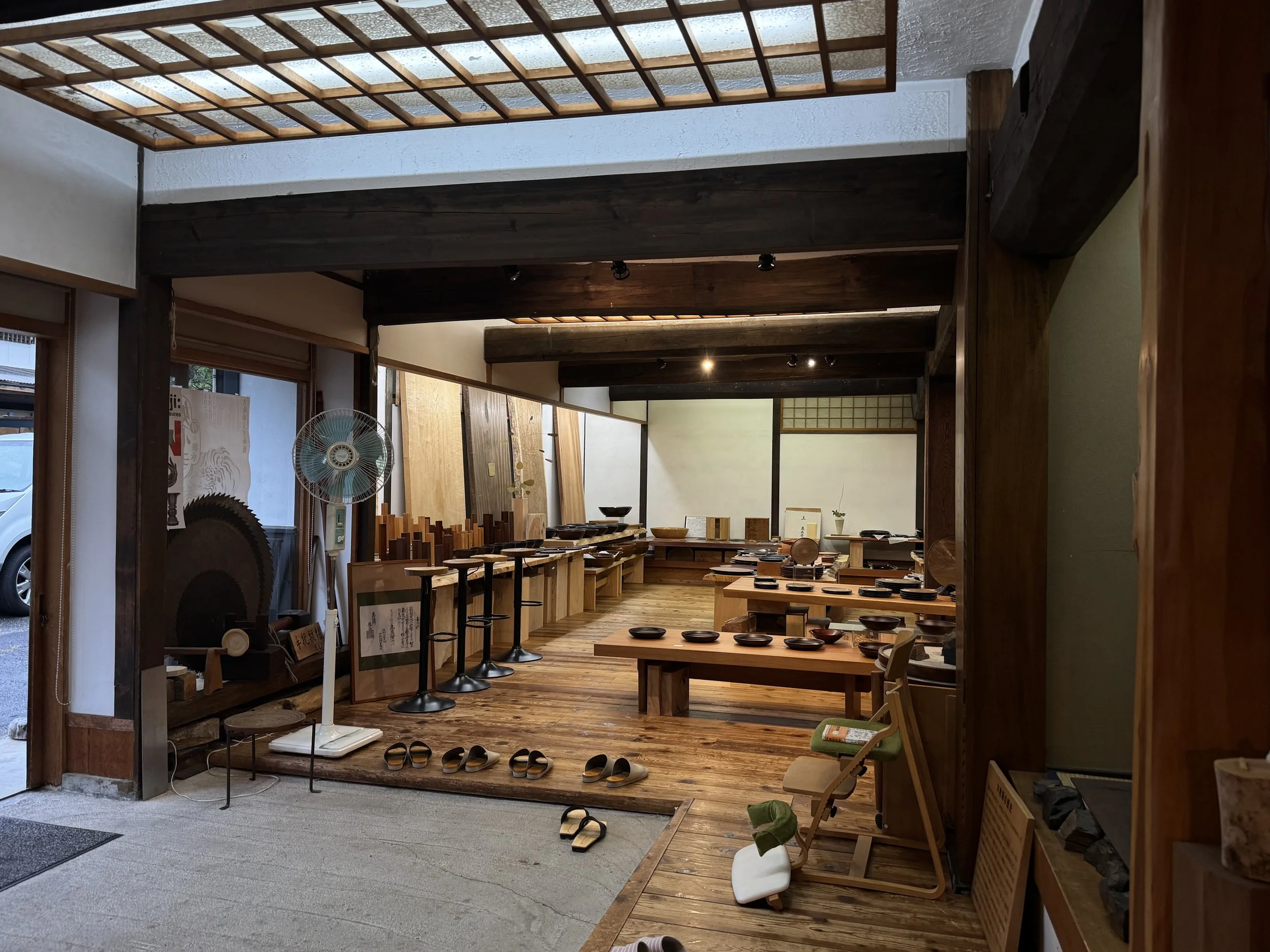
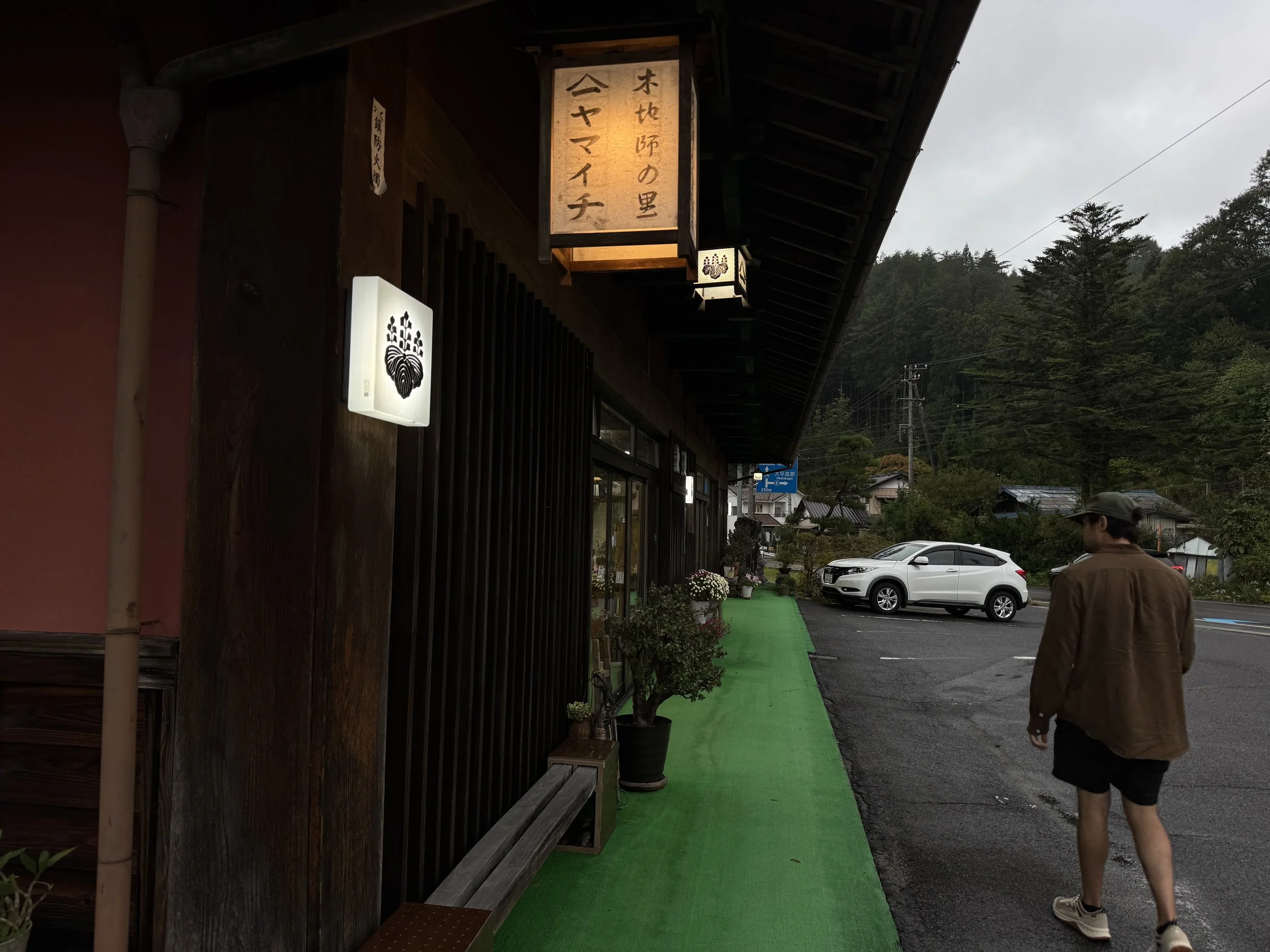
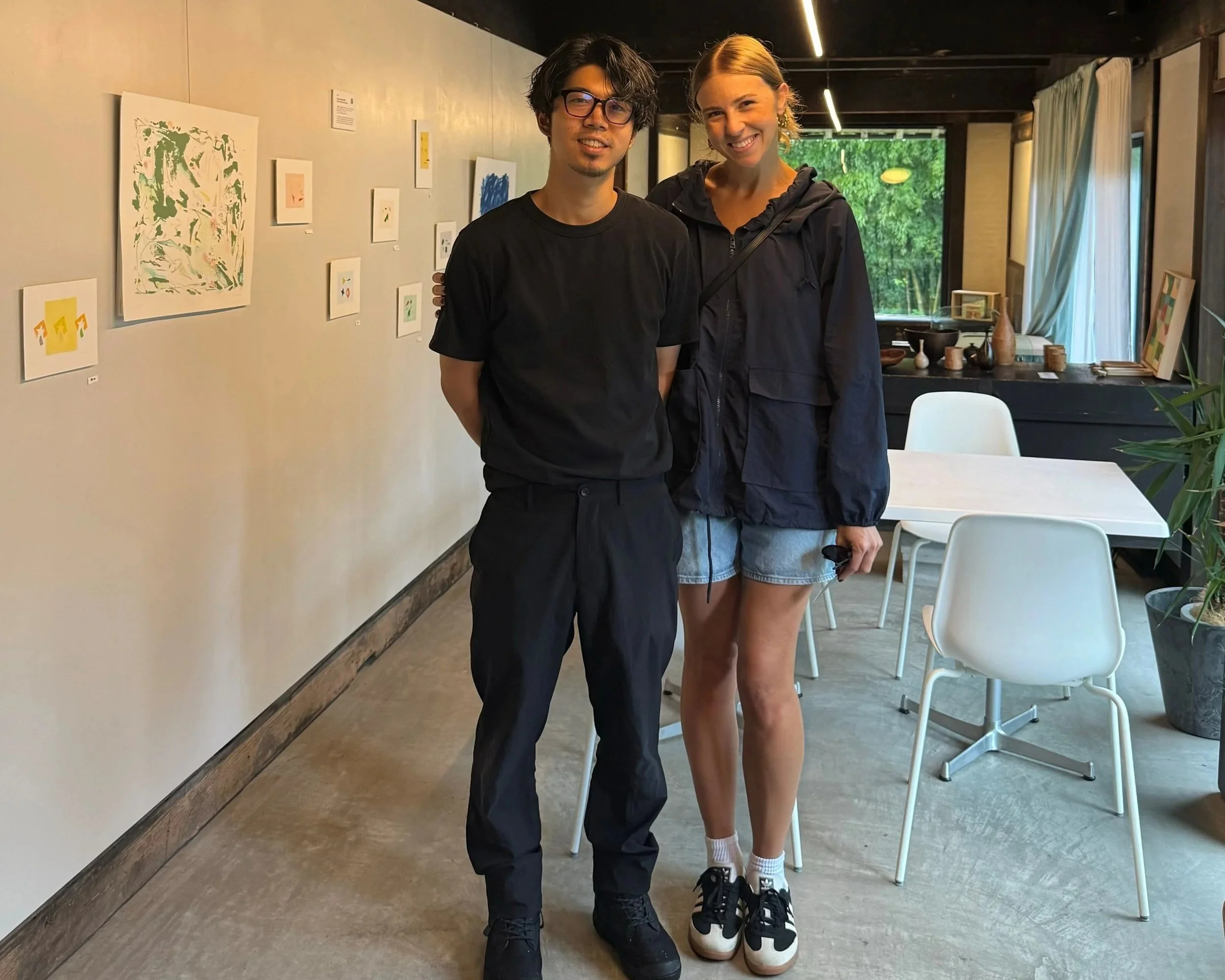
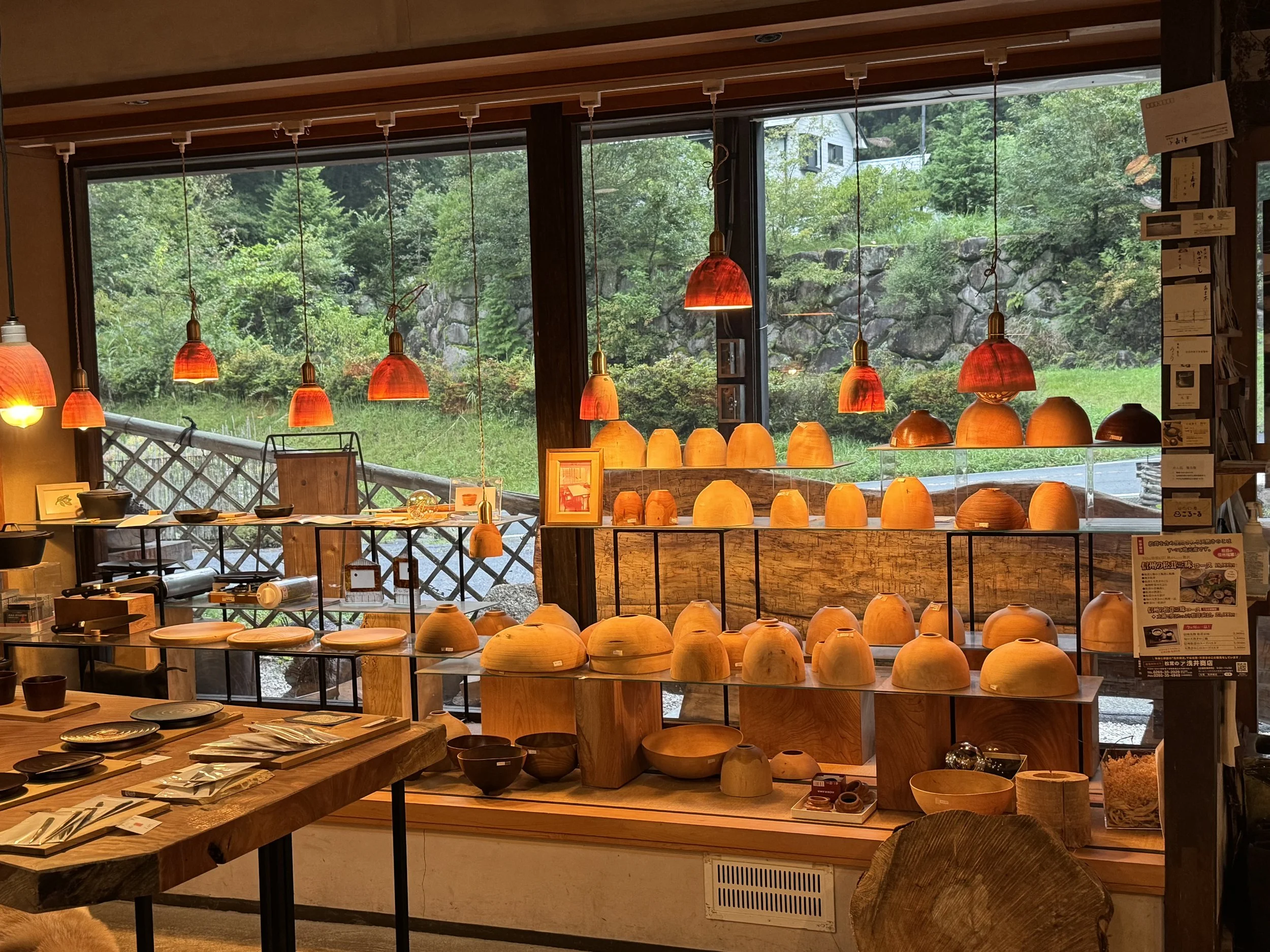
A very special shoutout to the wonderful people at Yamaichi Ogura Rokuro Crafts. Their welcome made this one of our memorable stops near Ame Nakasendo. The business opened its shop in the Urushibata district around 1970 and formally established the company in 1976, although the family’s woodworking heritage reaches much further back. Led by craftsman Kazuo Ogura, the workshop carries forward the region’s woodturning traditions while making beautiful objects for contemporary homes.

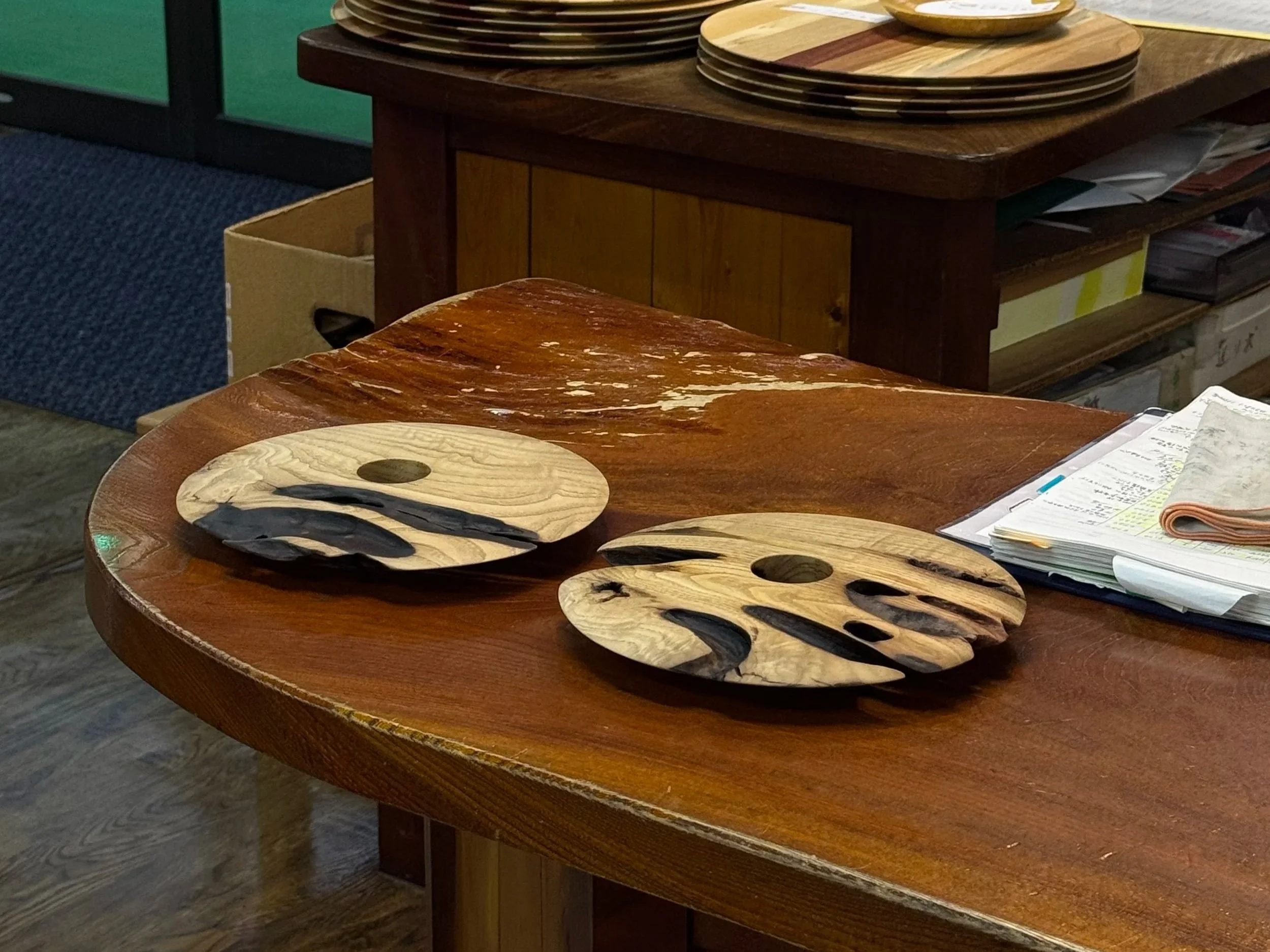
Go look at their beautifully turned bowls and plates, but also the more sculptural pieces, including the UFO-shaped flower vessels (we snagged one!) and round, wall-mounted “full moon” vases. These show how inventive a traditional workshop can be without actually losing its connection to the material. We loved their beautiful work and pieces, but the people deserve equal credit: they made visiting feel personal and warm.

Other great shops nearby include Kanekin Ogura Seibonjo and Yamato Wood Works.
KURASHIKI

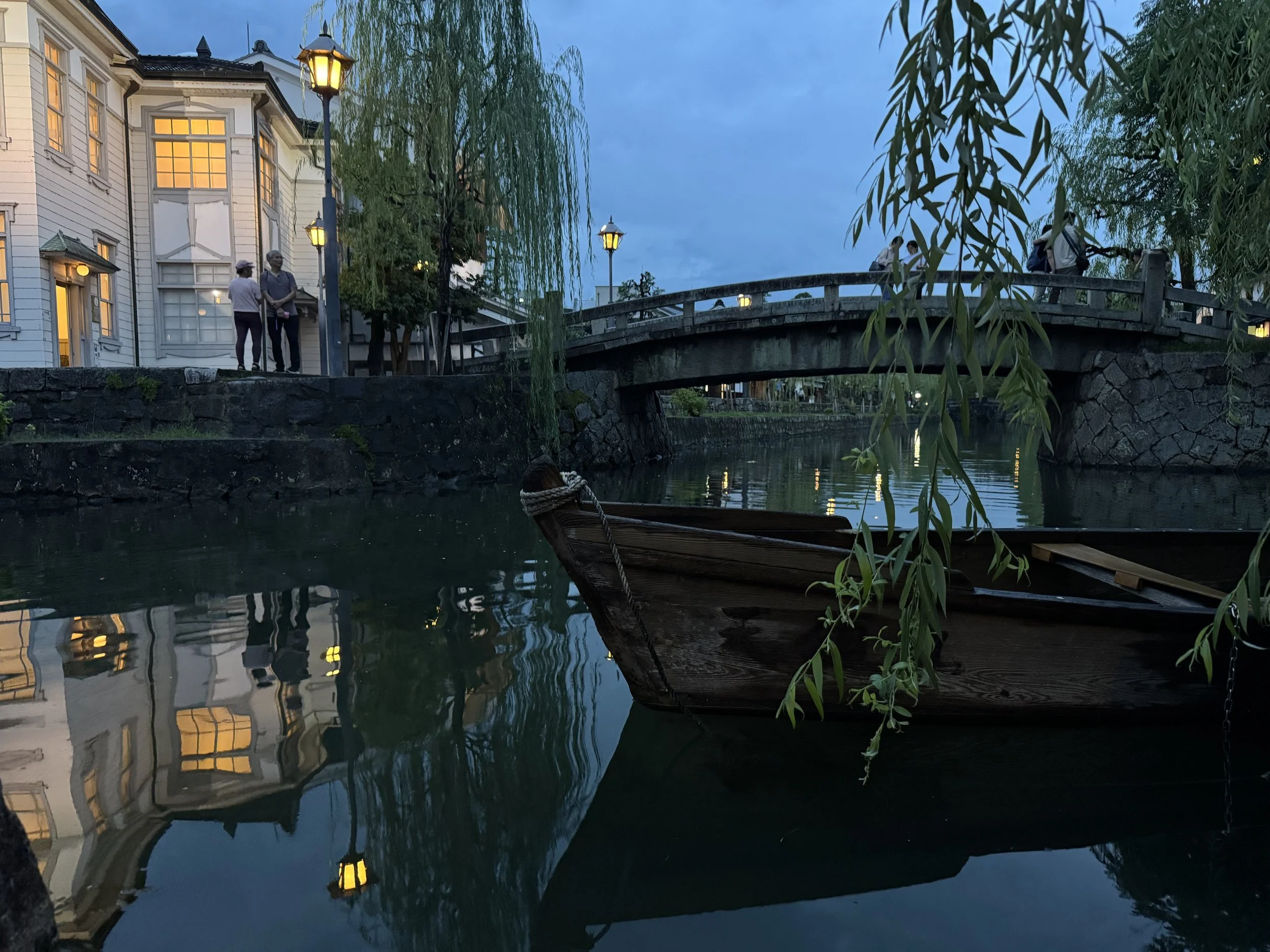
Kurashiki feels a bit like Amsterdam had been plopped into the middle of Japan and we absolutely loved it. In the Bikan Historical Quarter of Kurashiki, white walled storehouses and merchant houses line a willow fringed canal. Many now hold small shops, galleries and cafes, making it easy to spend a day wandering on foot. The buildings and scenery are stunning, but its the town’s connection to craft that gives you a reason to keep walking down alleys and opening doors. Kurashiki has strong ties to the mingei movement, which celebrates the beauty of useful, every day objects.
Where to Stay:

Temari Inn

This was a particularly fitting place to stay. It has three accommodations: Yukikai, Oitoma and Madoromi, each welcoming just one group per night, in renovated traditional buildings within or near the historical quarter. Original beams and pillars remain, alongside contemporary comforts and carefully selected Japanese craft. This was a very convenient and cozy stay, with all the amenities you could hope for.

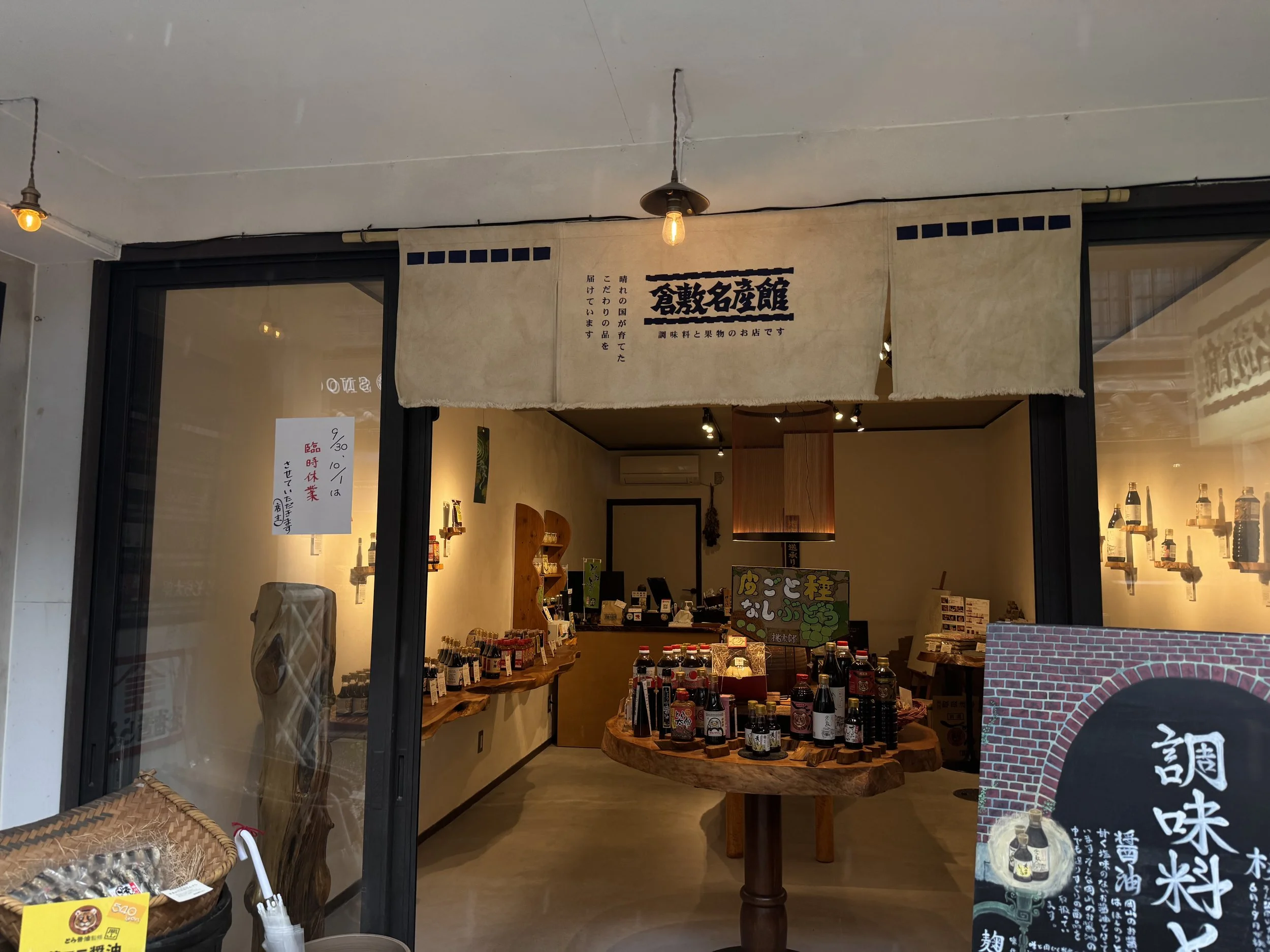
Where to Eat/Drink: Itokichi wine bar, Future 100 Cafe, Bar Cuore Kurashiki were some of our favorites. Cafe Yuurin-an is also worth considering for a meal built around Okayama ingredients. For something sweet, Haremokemo makes sweets from scratch using seasonal ingredients. Pro tip: for natural wine, look for bottles from Grape Ship, a producer working with Muscat of Alexandria grown in Kurashiki’s Funao district. The winery is outside the historic quarter, so treat a visit as a separate outing and confirm arrangements beforehand.

Where to Explore: Explore the Kurashiki denim district, find Bizen ceramics throughout the town, go to the Ōhara Museum of Art, Hayashi Genjuro Shouten, Matou denim. If you have additional time, plan a separate trip to Kojima, the wider city’s denim-making district. It deserves its own visit!
ONOMICHI/SETO ISLANDS

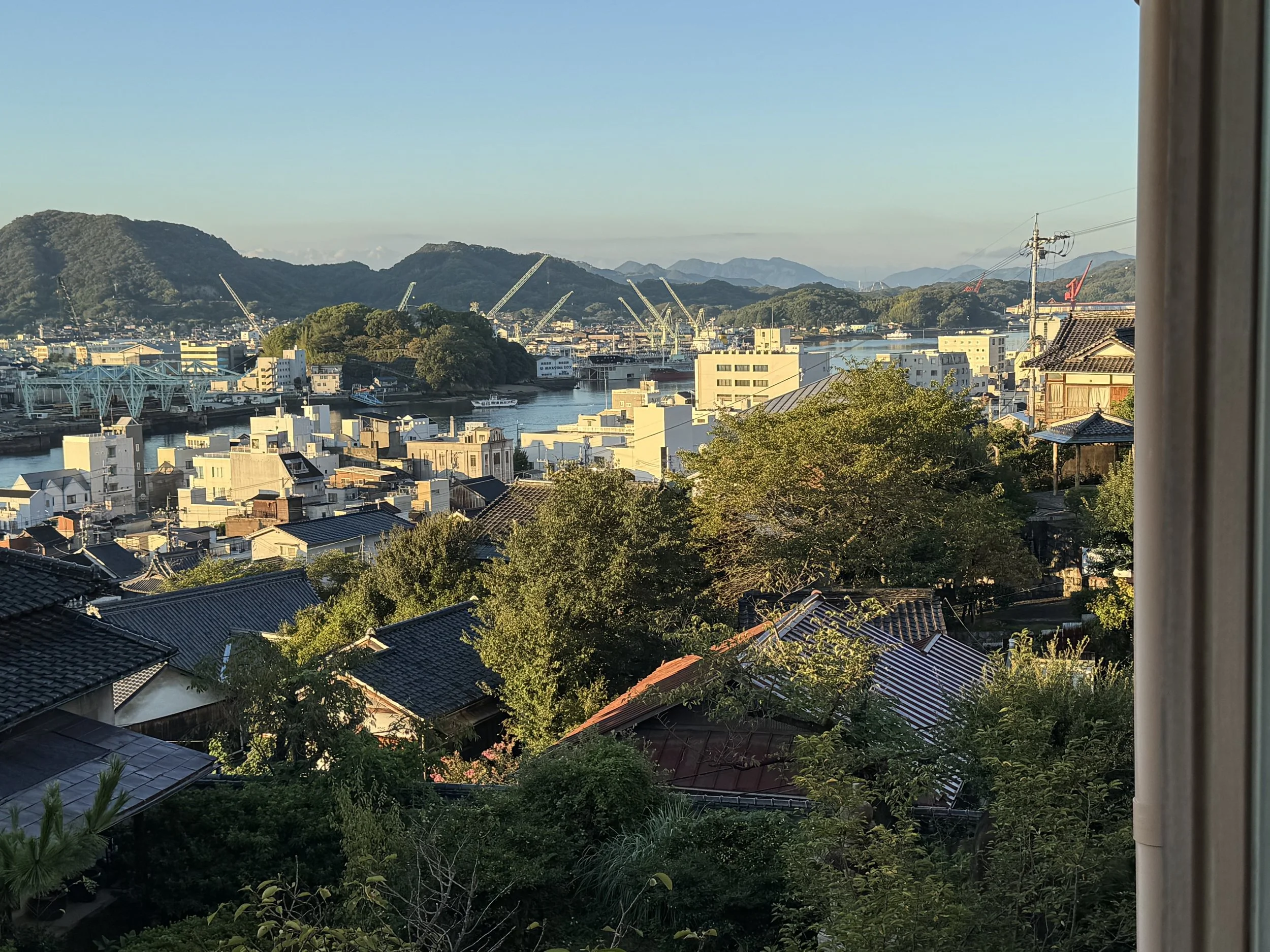
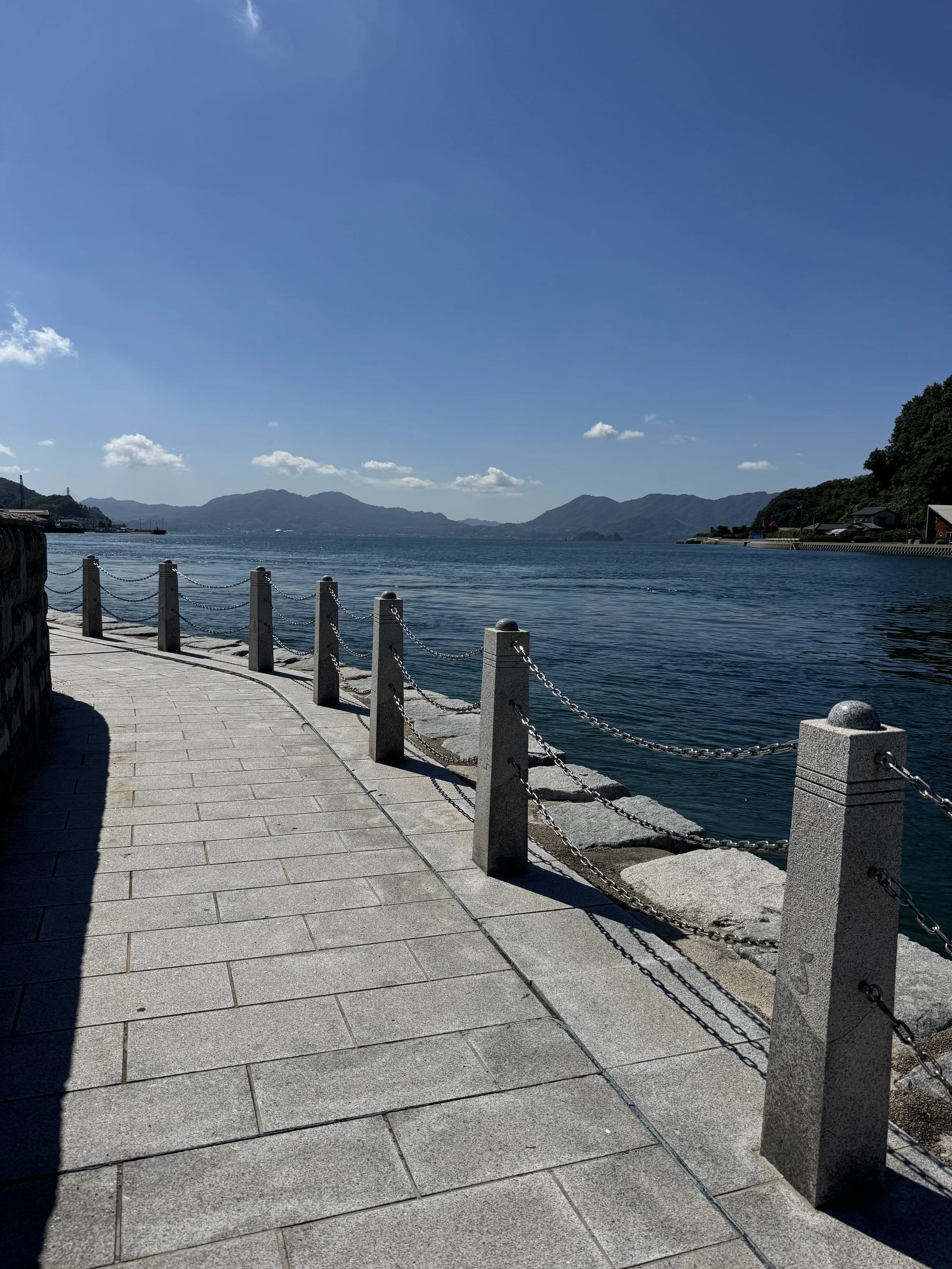
Onomichi was one of the places I was most excited to see and it did not disappoint. A port town squeezed between the water and steep hills, it has temples above the rooftops and small streets that give you plenty of reason to want to go off piste and wander. It also makes a wonderful starting point for exploring the Seto Island Sea.

The Shimanami Kaido connects Onomichi on Honshu with Imabari on Shikoku, crossing six islands along the way. It is famous as a cycling route, but we explored by rental car, leaving time to get off the main expressway and follow the smaller coastal roads. The bridges are spectacular, looking like DNA double helixes rather than boring, practical structures. Another example of the small beauty of every day things.
Where to Stay:

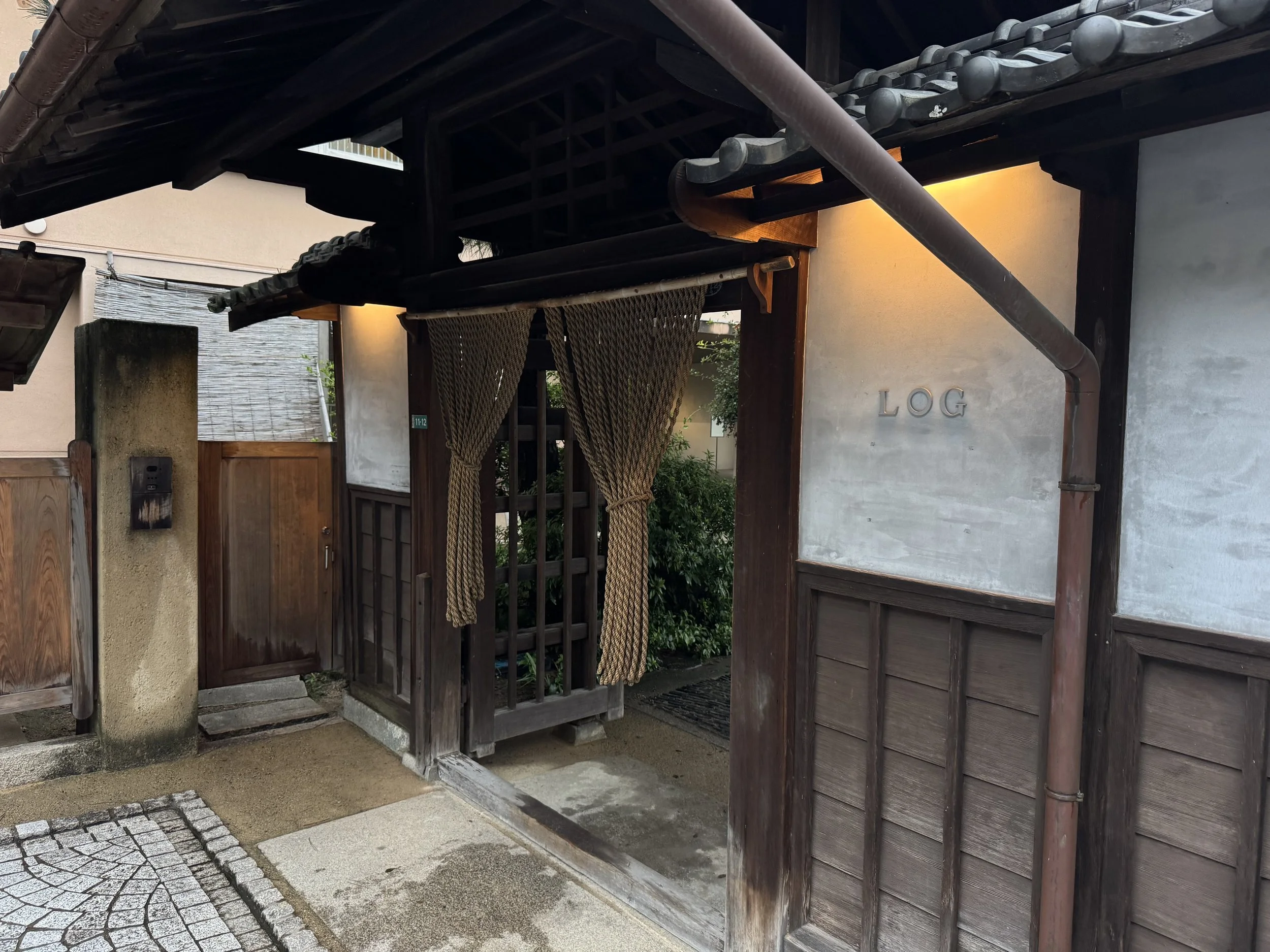
LOG or SOIL Setoda

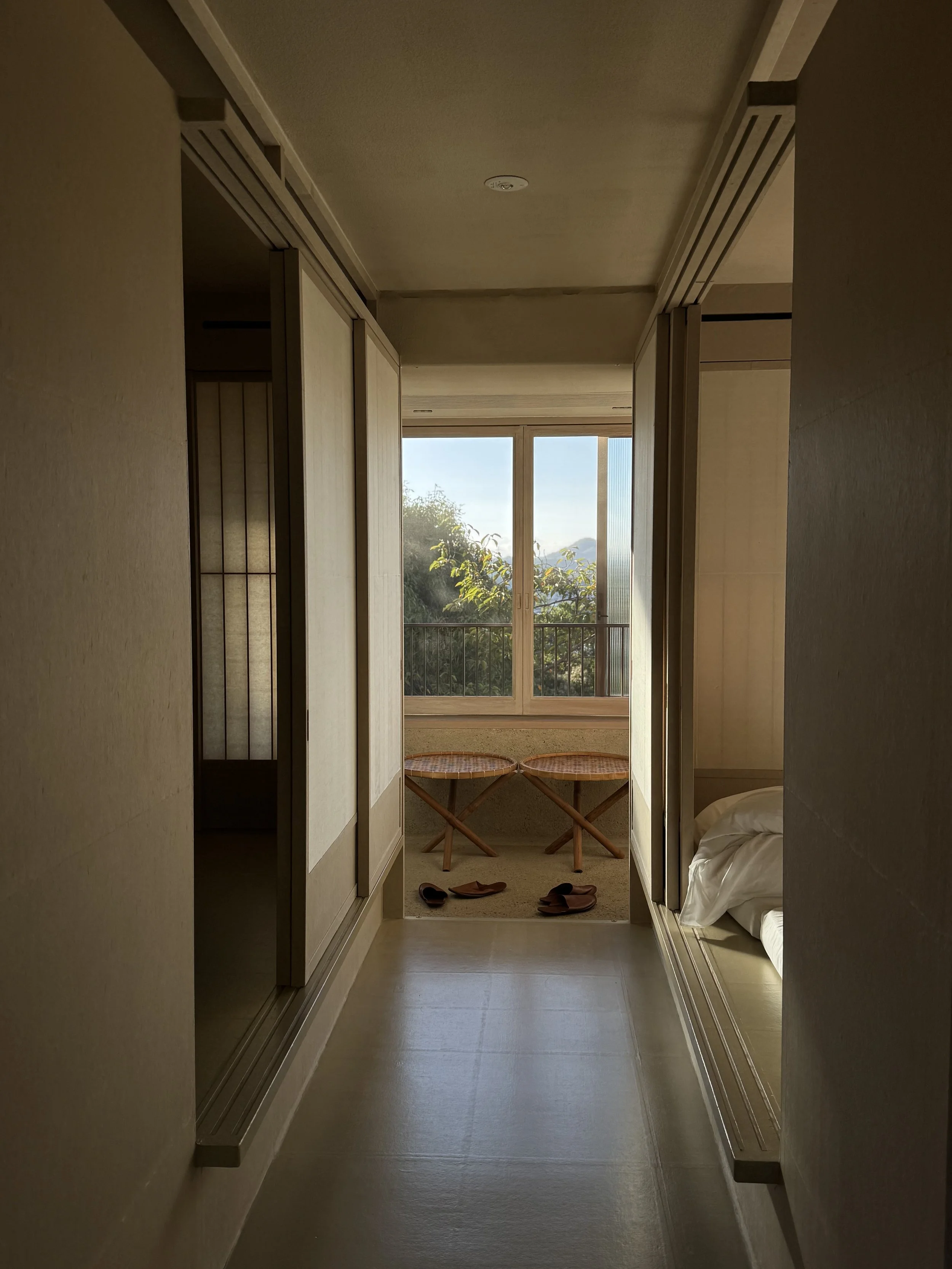
LOG was a major incentive for visiting Onomichi. Its name stands for Lantern Onomichi Garden, and the building began as a hillside apartment block in 1963. Studio Mumbai, led by architect Bijoy Jain, transformed it into a small hotel. It’s a beautiful example of giving an existing building another life. The hillside setting itself is part of the experience (though, do be prepared to walk uphill with suitcases!) You reach LOG on foot along the paths leading toward Senkoji, with views opening over Onomichi as you climb up. Give yourself time to enjoy the building and the garden itself as they’re very much part of the experience and boast incredible views over the harbor. We highly recommend including dinner in your stay as well, to allow you to stay put without needing to wander.
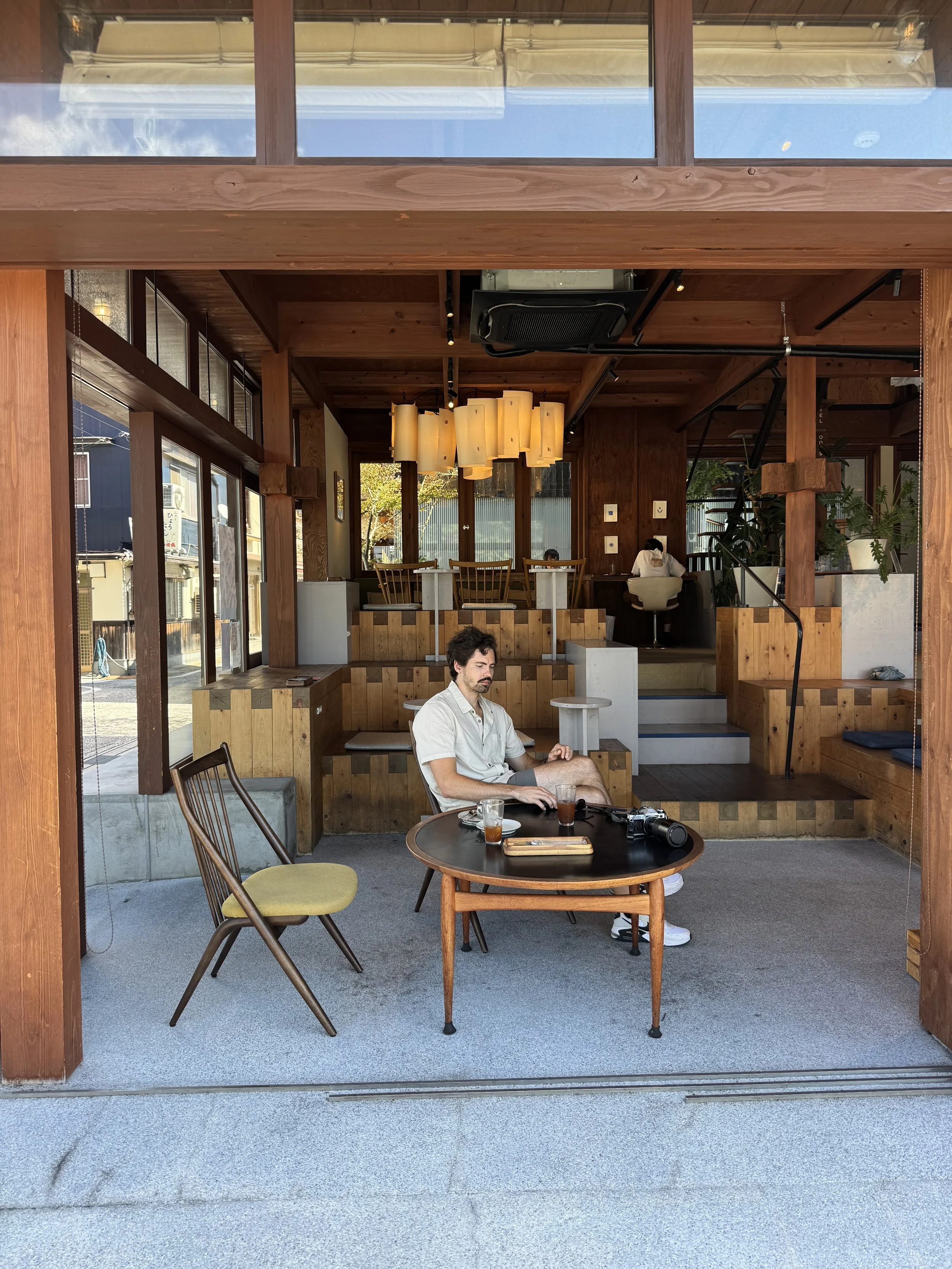
SOIL Setoda is an appealing alternative if you want to base yourself on the islands themselves, albeit I’d warn that it is a much quieter stay. SOIL sits by Setoda Port on Ikuchijima, with accommodations connected to a neighborhood of places to eat, drink coffee and browse. A meiji-era storehouse houses the coffee roastery, while the waterfront restaurant looks out onto the sea. It is all stunning, but felt a bit quiet / off season when we were there in October, so choose your time of year to visit wisely.
Where to Eat/Drink:

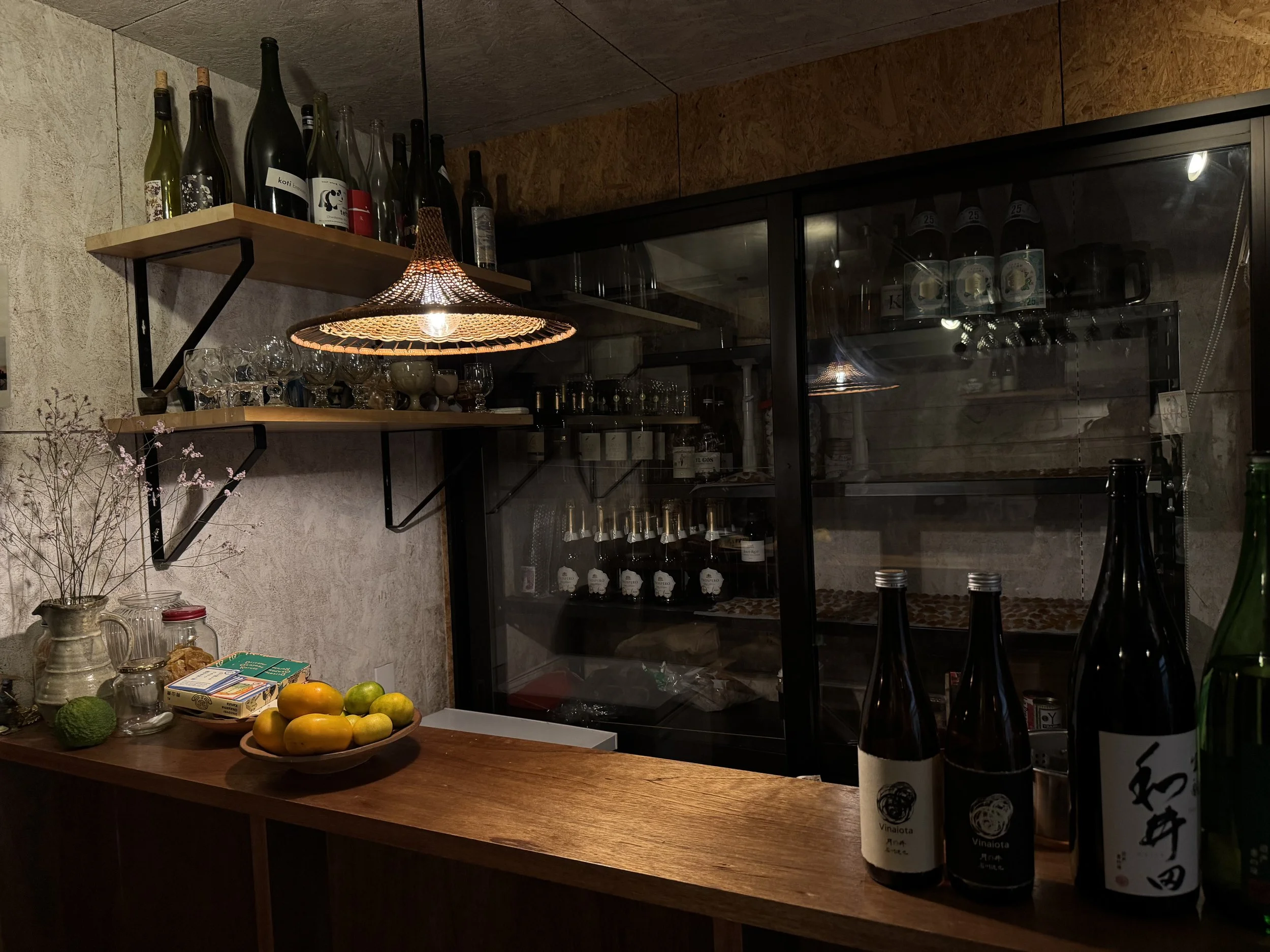
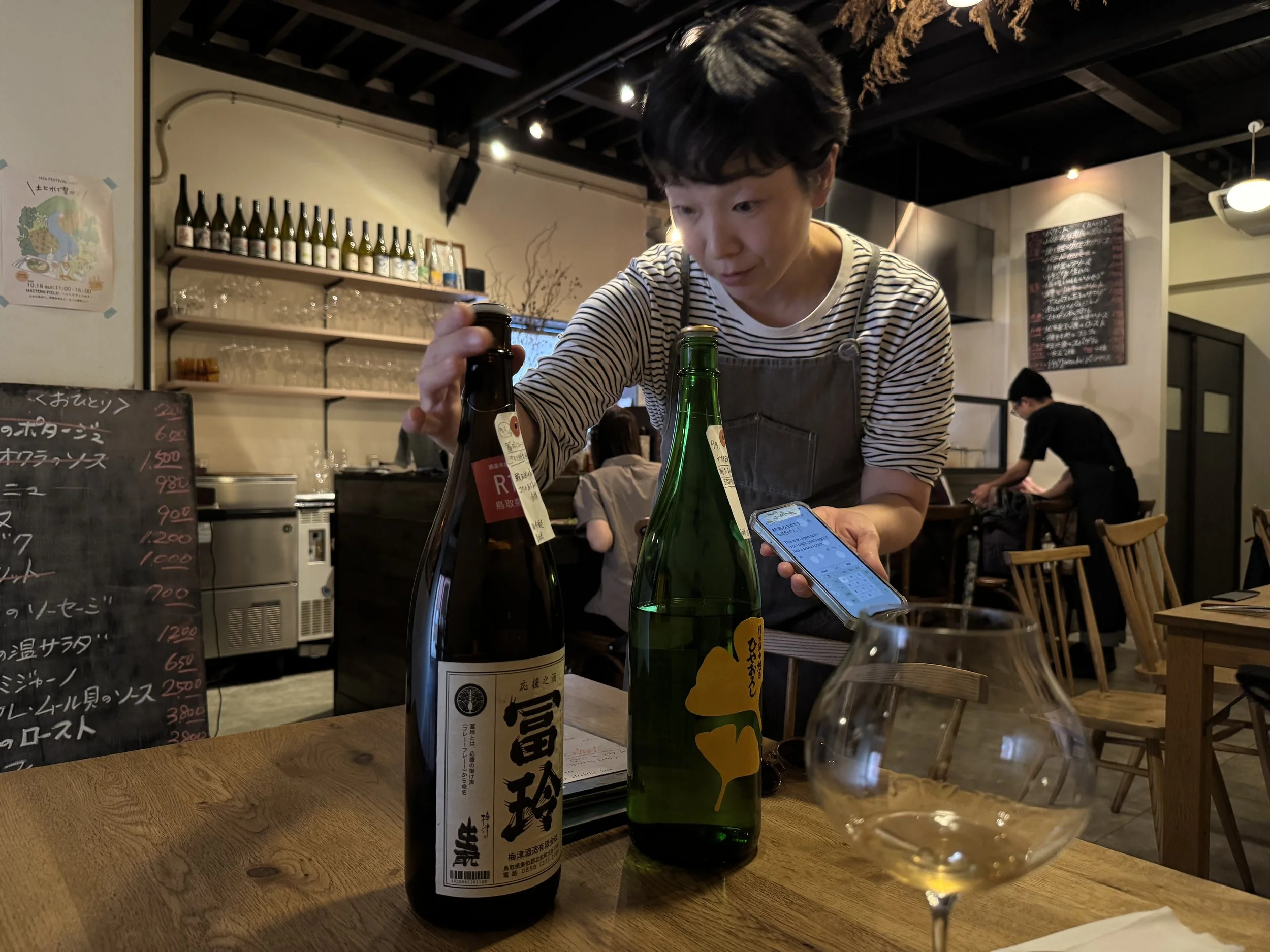
Pino Onomichi was our favorite stop and in fact, one of our favorite stops the entire trip. I would make room for it without exception. This was a totally unexpected natural wine discovery for us and I think we’ll be talking about it for a lifetime. Give it time as a place to sip new and interesting natural wines, try some exotic sakes, and importantly: eat delicious homemade and generously portioned food. There are so few wine bars these days that actually serve real homemade food alongside wine, and this is one of them that delivers - and then goes above and beyond expectations. If only we had Pino Onomichi at home!!
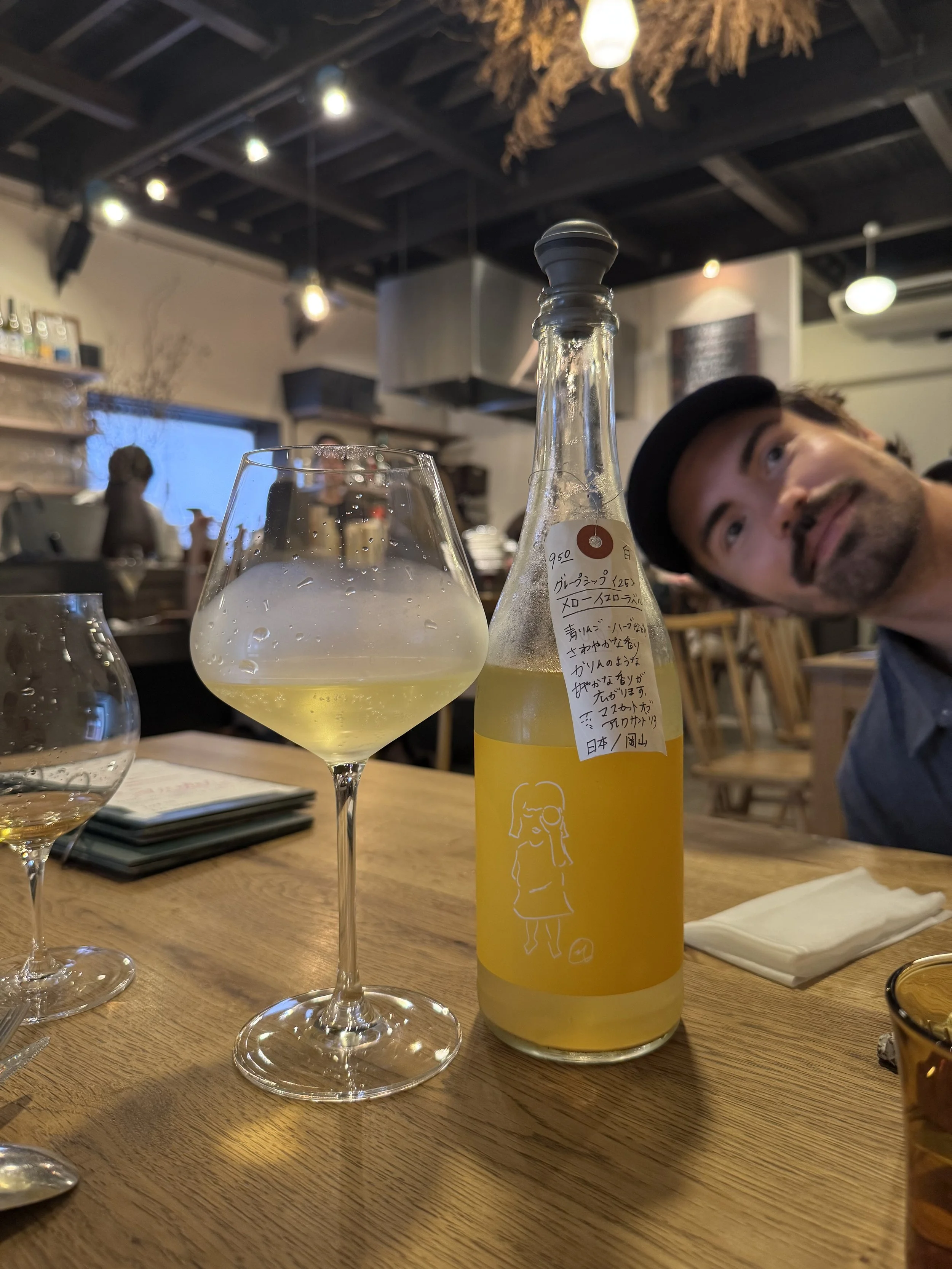
Dinner at LOG. Book a dinner at LOG as part of the stay. The food has been developed with cook and author Ai Hosokawa, whose approach gives seasonal produce room to speak for itself. Her time living in Italy and travels around the world inform cooking that LOG describes as unfussy and rooted in respect for the ingredients. They also had a wonderfully curated natural wine pairing so two thumbs up from us. Also, how nice is it to eat dinner and then just simply walk upstairs to your room? Living for the ease! (Note that you can also book dinner here without staying at the hotel but staying there made things all that more convenient.)

Things to Do:

Walk uphill toward Senkoji. The climb gives you a sense of how the town fits together: houses layered up the slope, the narrow channel below, then islands beyond. Visit the Senkoij Temple and continue up to the PEAK observatory for a wider vantage point. You can take the ropeway up as well if you’re feeling lazy.

Follow part of the Temple Walk. A designated route links 25 temples through the town’s hillside streets. You don’t need to make completing them a task that hangs over your head, but choose a section and wander slowly, stopping when something interests you.

Explore the shopping streets and waterfront. Leave a stretch of the day for the arcades, small shops and cafes below the hills. Then go sit by the water. It’s a lovely place to just watch the day’s going-ons without any pressure.

Explore the Seto Islands! Make the drive part of the day. From Onomichi, the main island sequence goes through Mukaishima, Innoshima, Ikuchijima, Omishima, Hakatajima and Oshima, before you get to Imabari. You can explore a few islands without committing to all of them. For a first outing, my recommendation is Ikuchijima and Omishima, with time off the expressway rather than simply crossing bridges endlessly. We loved exploring by car, but a lot of folks do this as a bike route as well. Stop in the harbor towns, look for farm shops (there are a lot of farms!) and follow the coastline whenever you can.

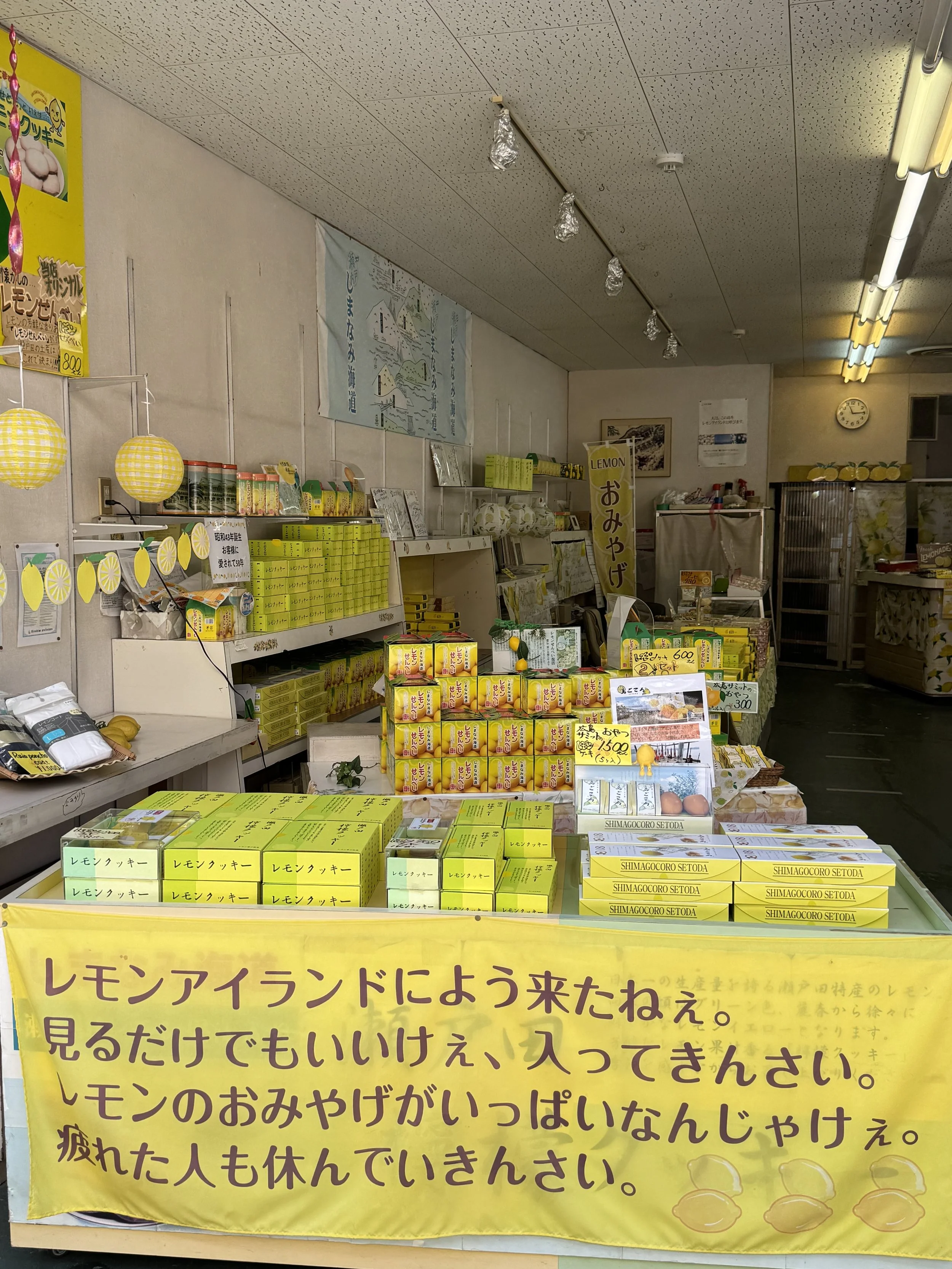
Spend time in Setoda. Setoda is a port town on Ikuchijima around the middle of the Shimanami route. Walk from the waterfront into the Shiomachi Shopping Street, allowing for something citrus-related along the way (this is, btw, the citrus capital!) It’s an awesome place to get lunch, coffee, and do a little browsing. We loved having a light lunch and piece of cake at SOIL Setoda’s restaurant by the water.

Visit a citrus farm! Check hours and dates of opening, but we recommend visiting a citrus farm to really embrace the spirit of the islands. One that pops up often is Safety Fruits, a local grower that has cultivated lemons organically for more than 30 years. There are also seasonal citrus picking experiences at LOROfarm. These are working farms, so arrange access ahead of time.
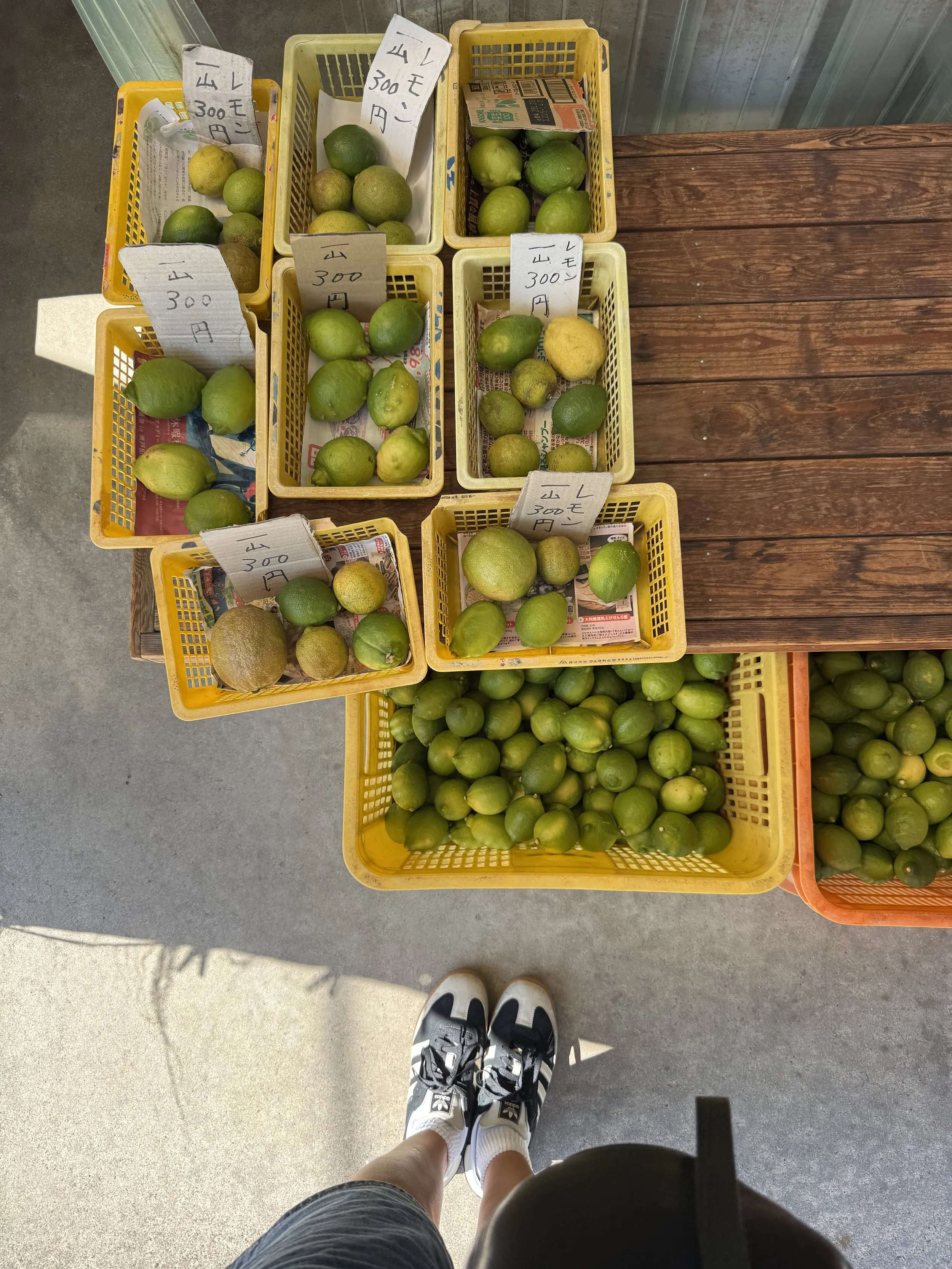
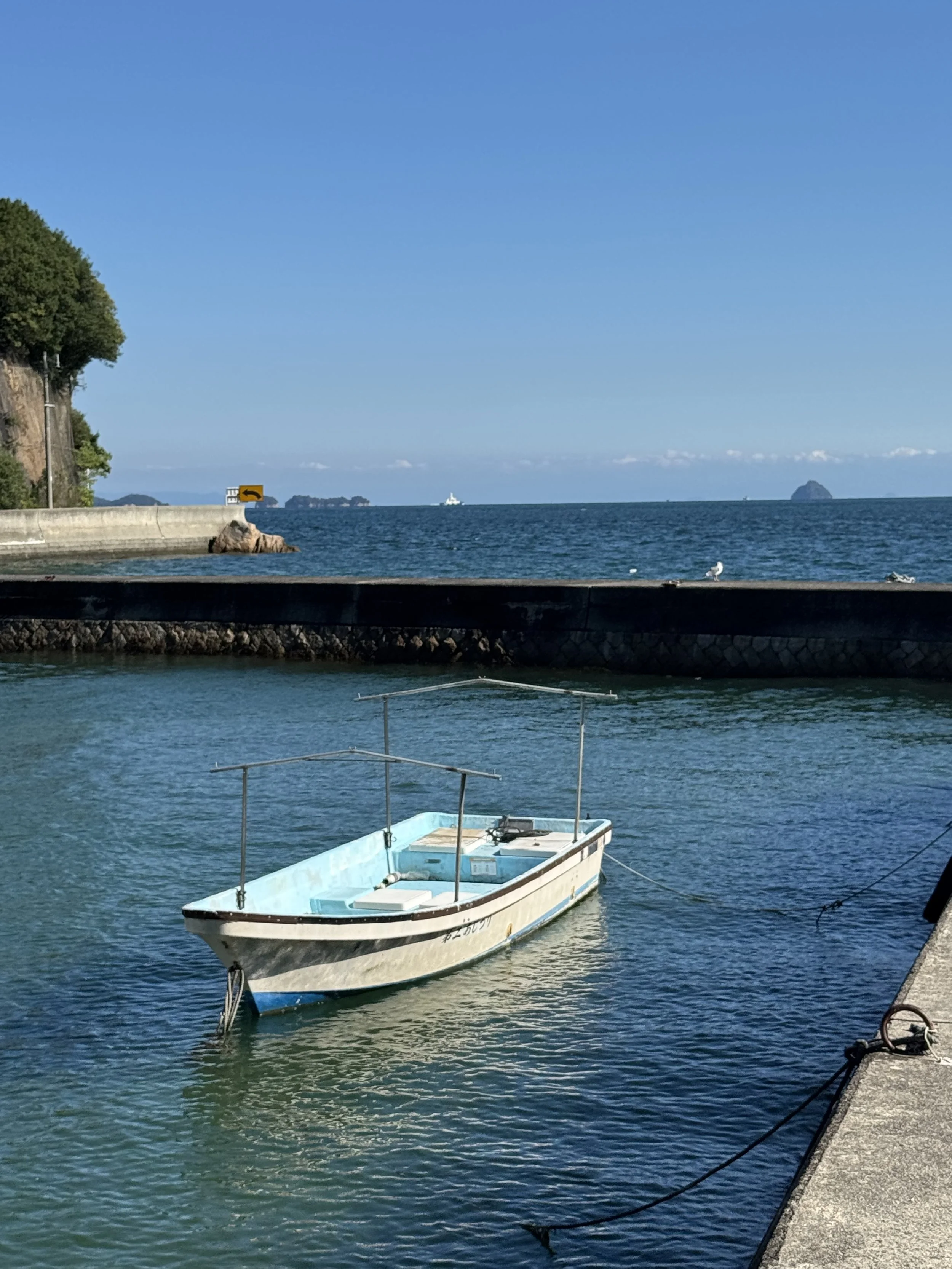
Make several coffee stops! We recommend Overview Coffee Setoda Roastery, Lemon & Cafe Shiomachi-tei, and Minatoya at SOIL.

HIROSHIMA/MIYAJIMA

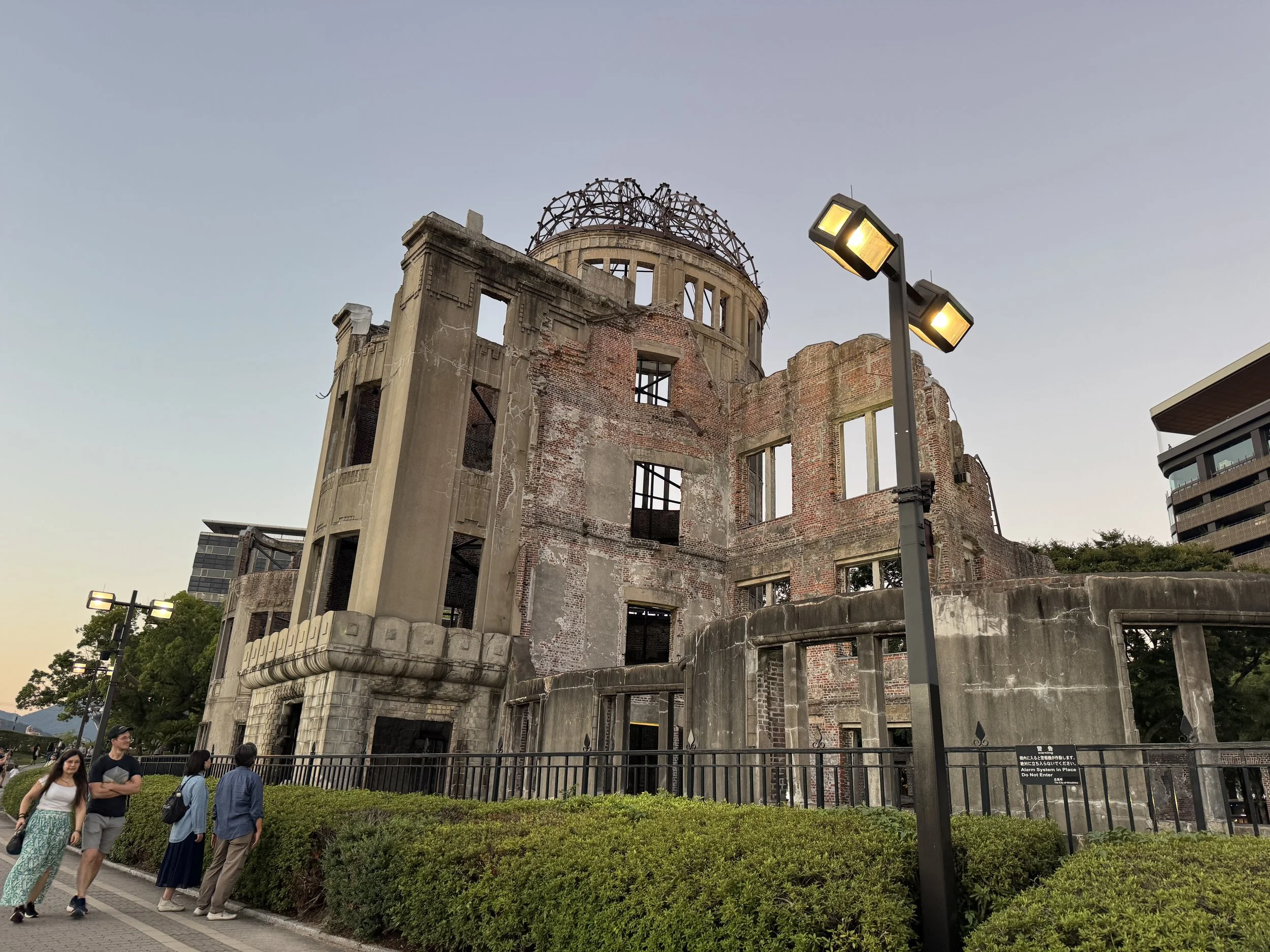
Hiroshima is known around the world for one devastating day in 1945. Visiting the Peace Memorial Museum and Atomic Bomb Dome was absolutely an essential part of our trip… but we also left with a much fuller picture of the place than we ever could have imagined.

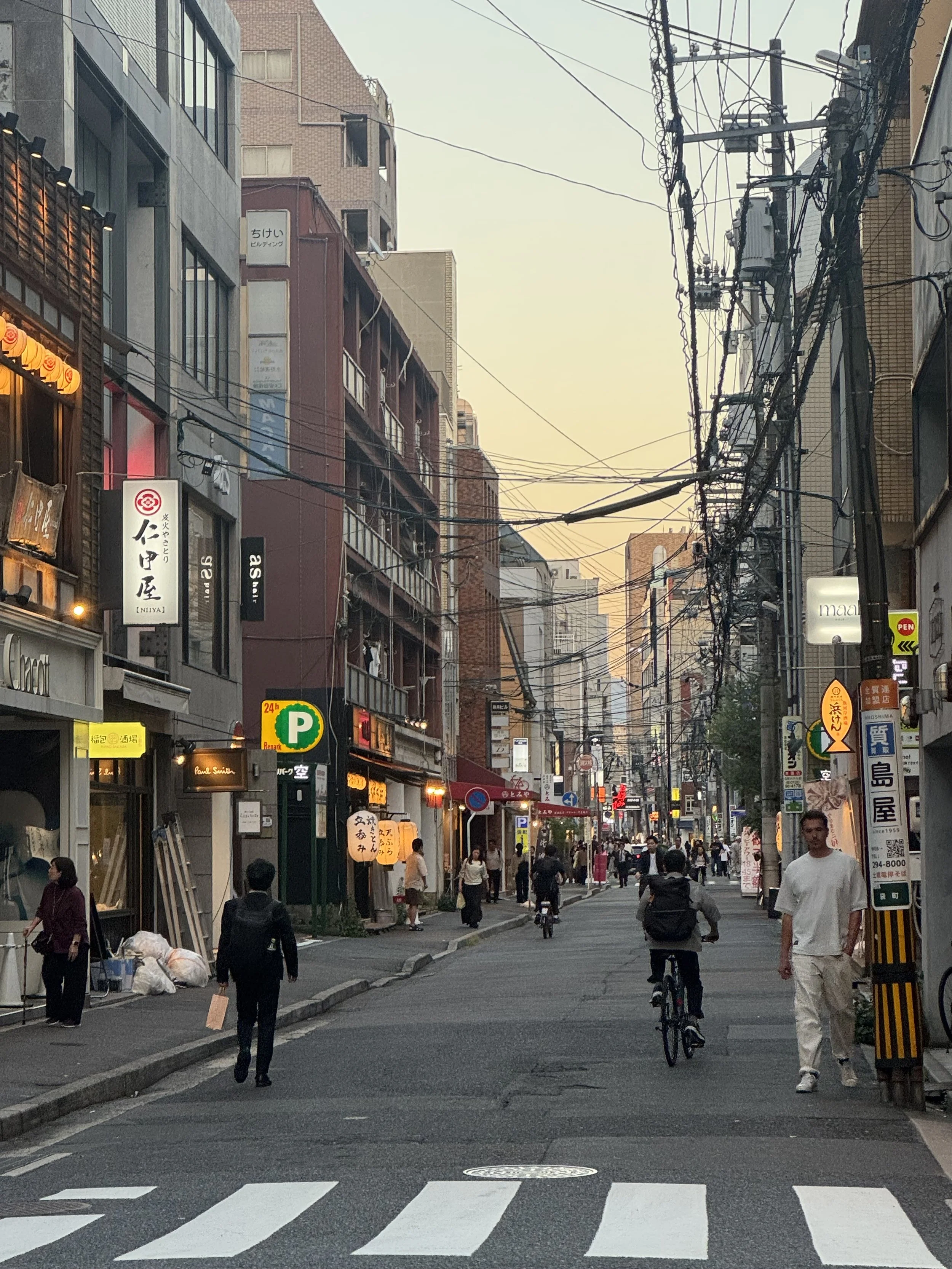
There were packed restaurants and streetcars carrying people about the buzzing city. There were oysters, natural wine bars, and bountiful conversations about baseball. Beyond the city were islands connected by bridges and ferries, with citrus groves running down towards the sea. I had not understood how much there was here, and Hiroshima became one of the places I most wanted to tell people about, partly because I realized how much more it was than what I was taught in history class.
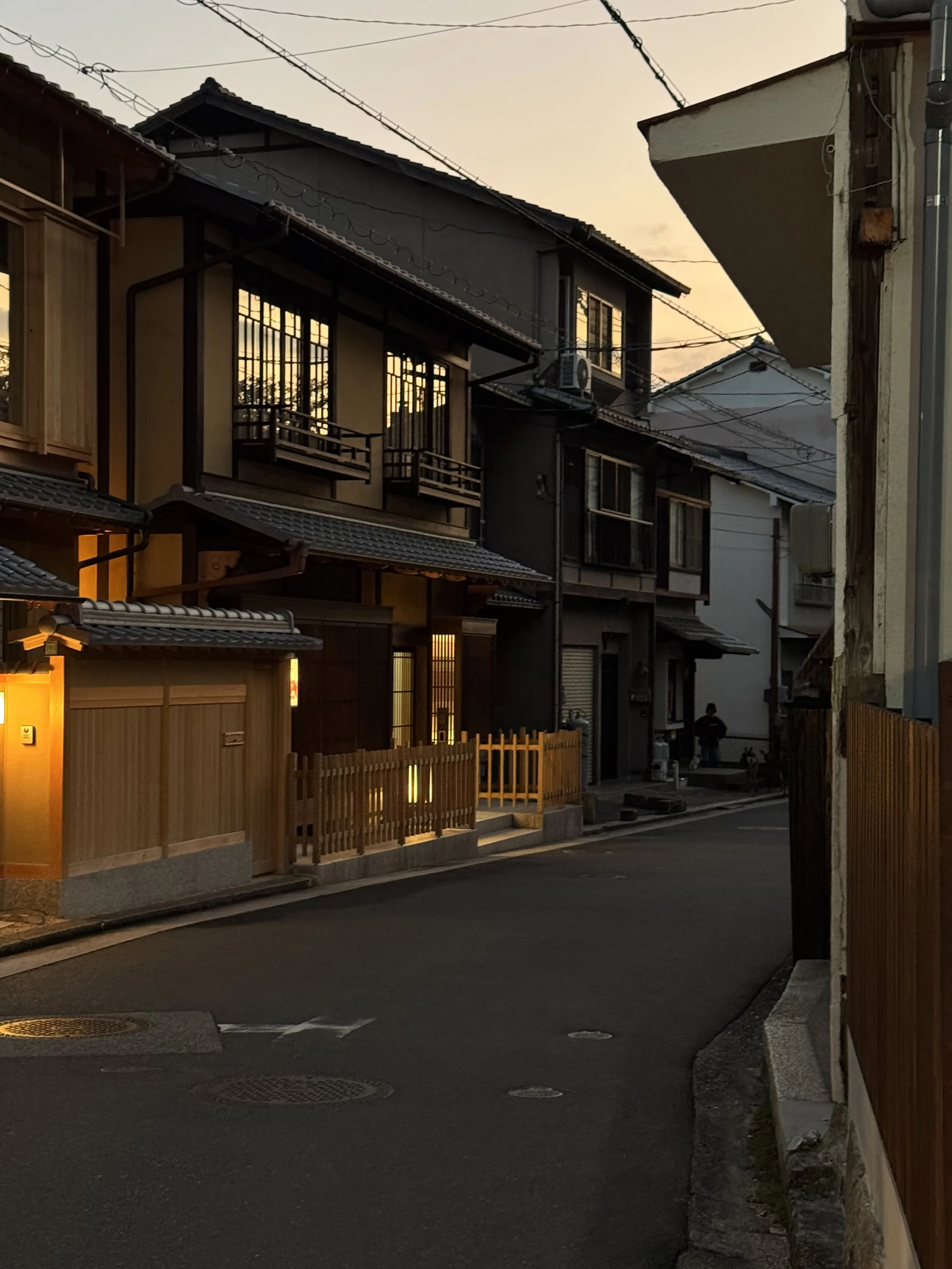
Where to Stay:

Hotel Miyajima Villa

We stayed on Miyajima, the island in Hiroshima Bay best known for its Itsukushima Shrine and its enormous vermillion torii gate. Our base was Hotel Miyajima Villa, conveniently next door to the ferry terminal. The location worked particularly well because we explored both the island and Hiroshima by boat, ditching our rental car for a few days which was a welcome shift from the long days of driving.

I recommend staying on Miyajima rather than fitting it into a hurried day trip. It gave us time talk to walk around after the busiest most touristy parts of the day and return places without watching the clock for a ferry back to a mainland hotel. Miyajima is a popular destination, so I wouldn’t go so far as to say that it is undiscovered, but the advantage of staying overnight is getting more than the busiest few hours of it.

Where to Eat/Drink:

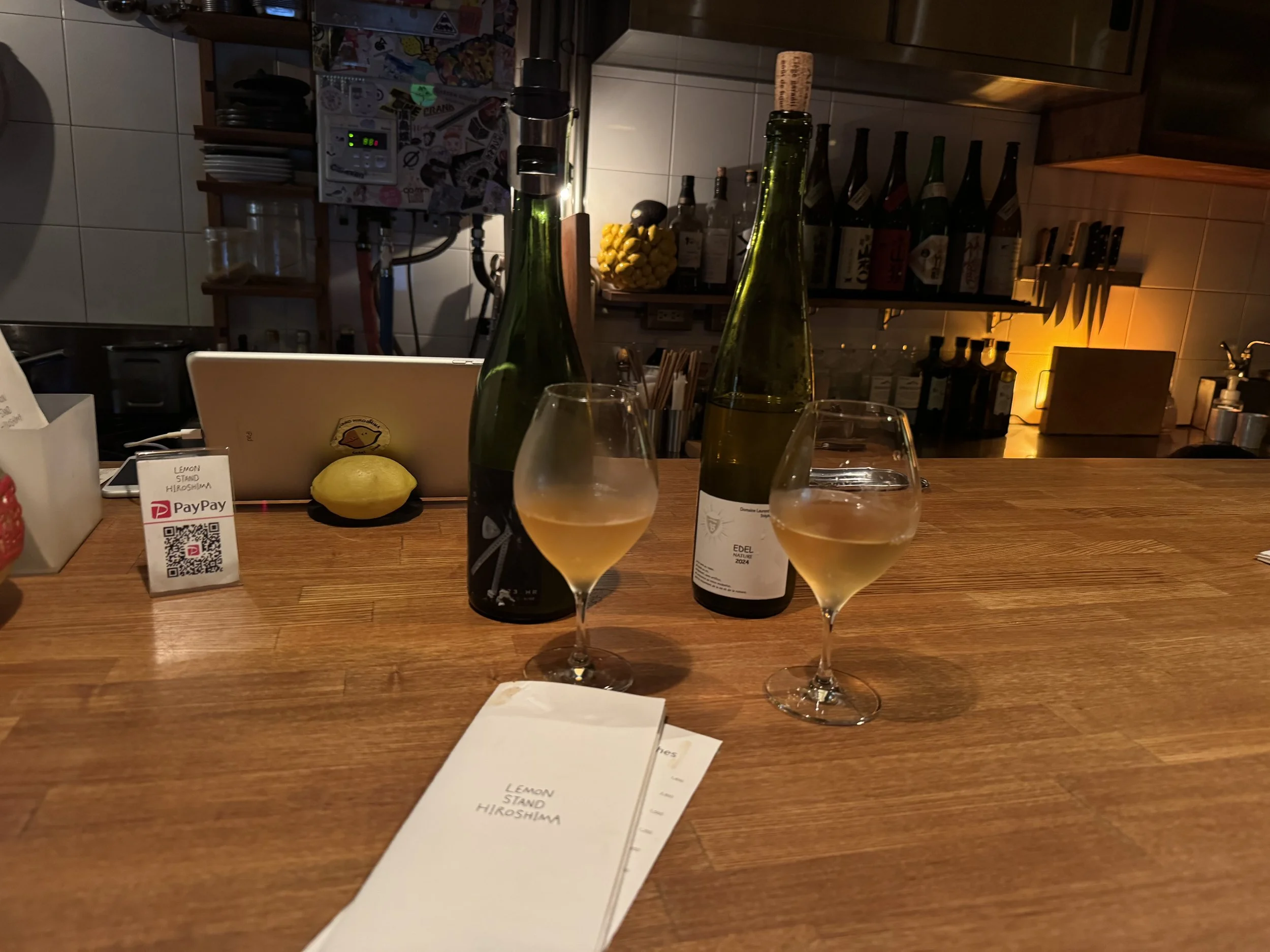
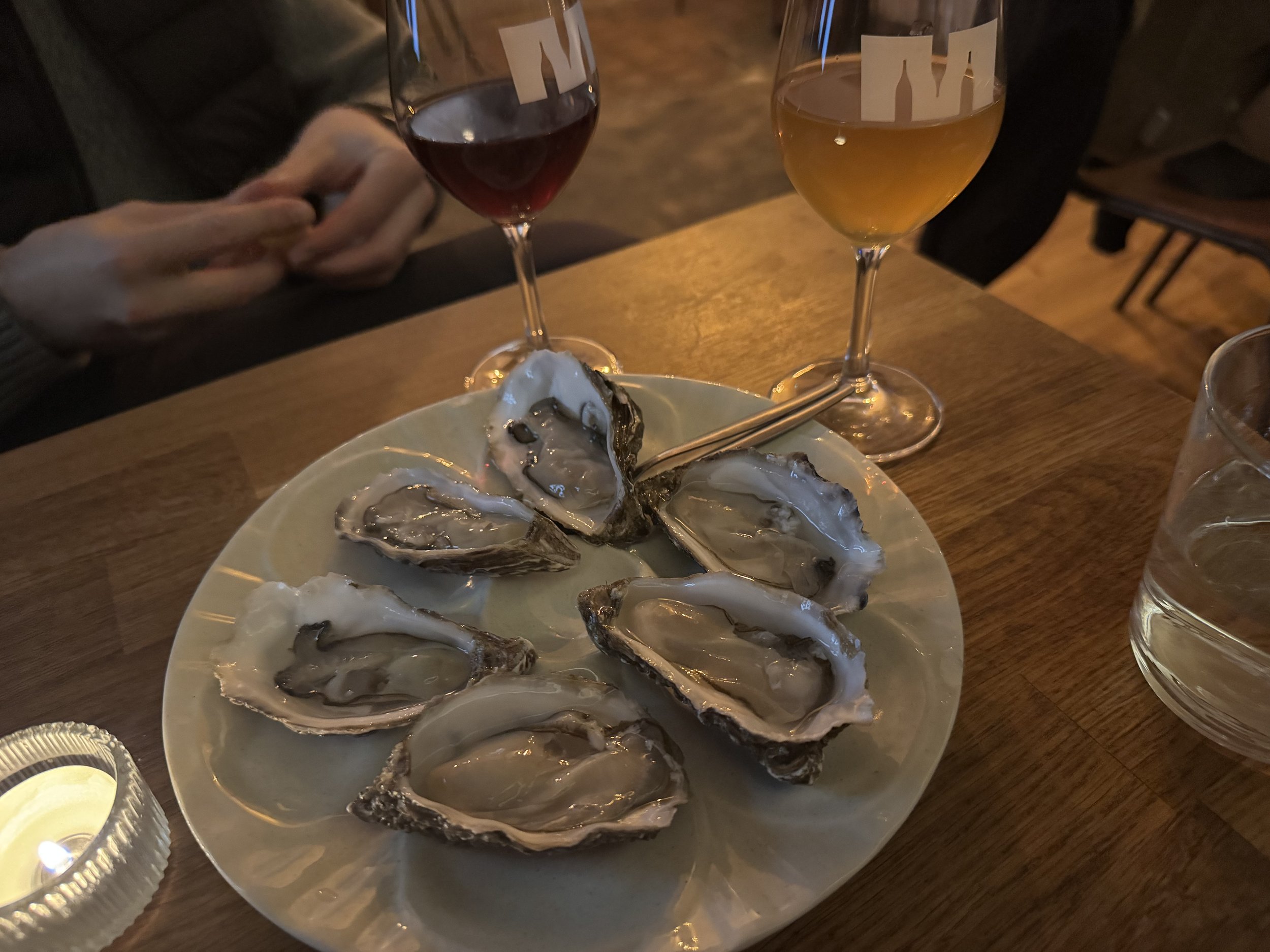
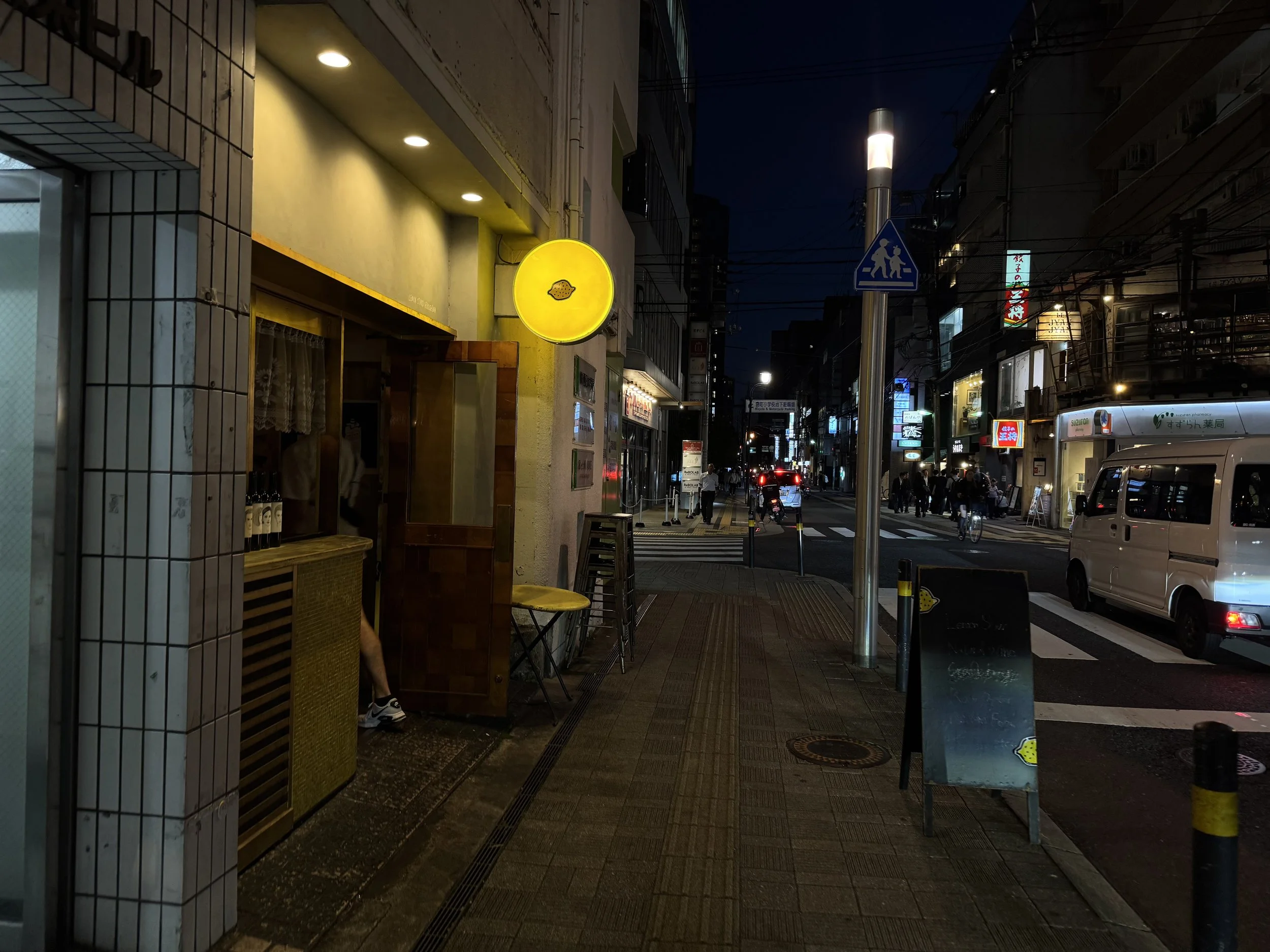
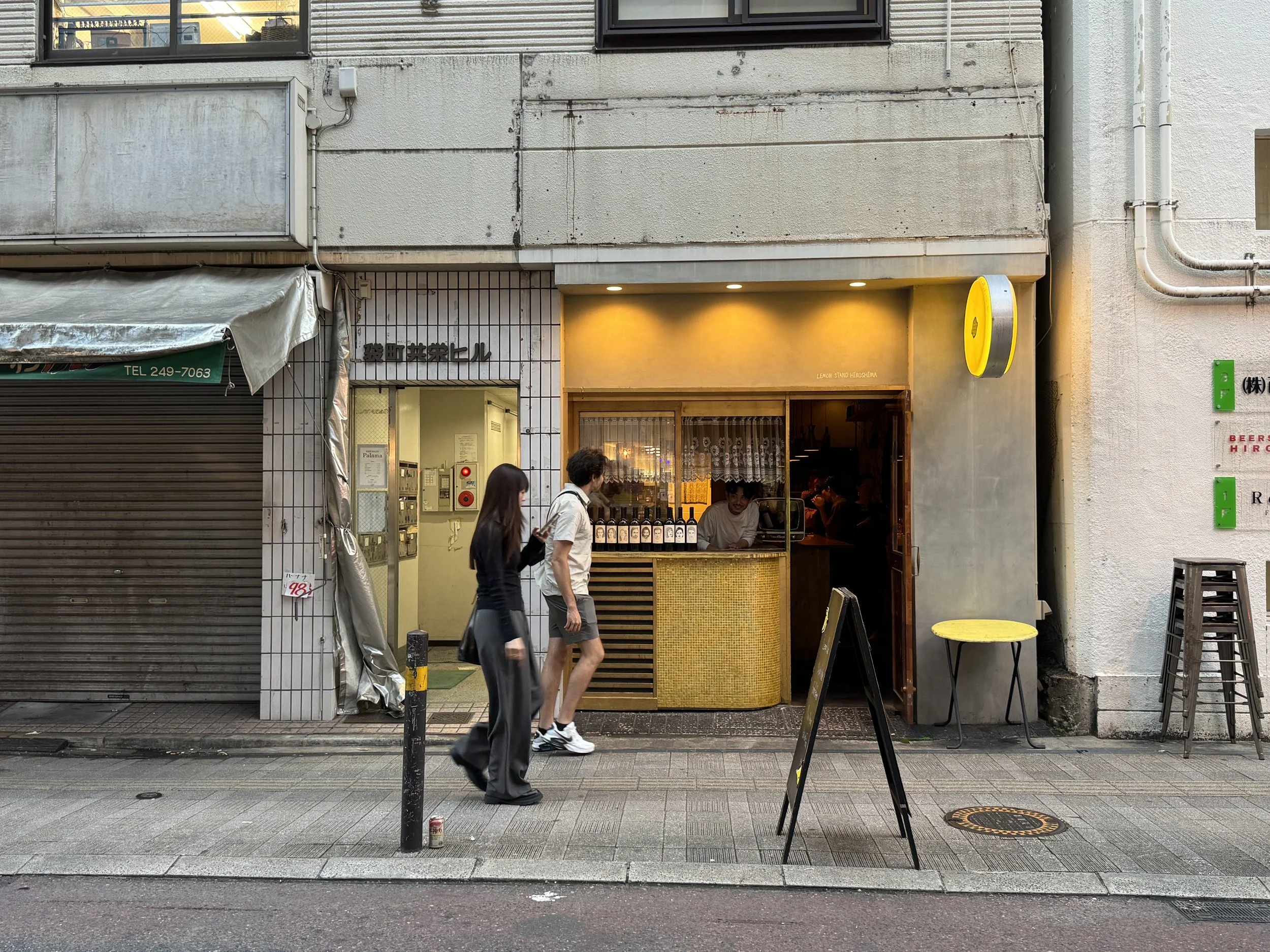
Lemon Stand Hiroshima was a highlight: oysters, sausages and natural wine, in a casual standing bar in Fukuromachi. We stood alongside folks who had just gotten off of work and came in for their post work lemon sour + to chat with the bartender. They were clearly regulars and it made for great people watching alongside our raw oysters and game sausages alongside fantastic natural wine. It’s an easy place to build into an afternoon or evening without becoming the entire affair. Put it on your list, even if you have dinner booked elsewhere. It’s a must!
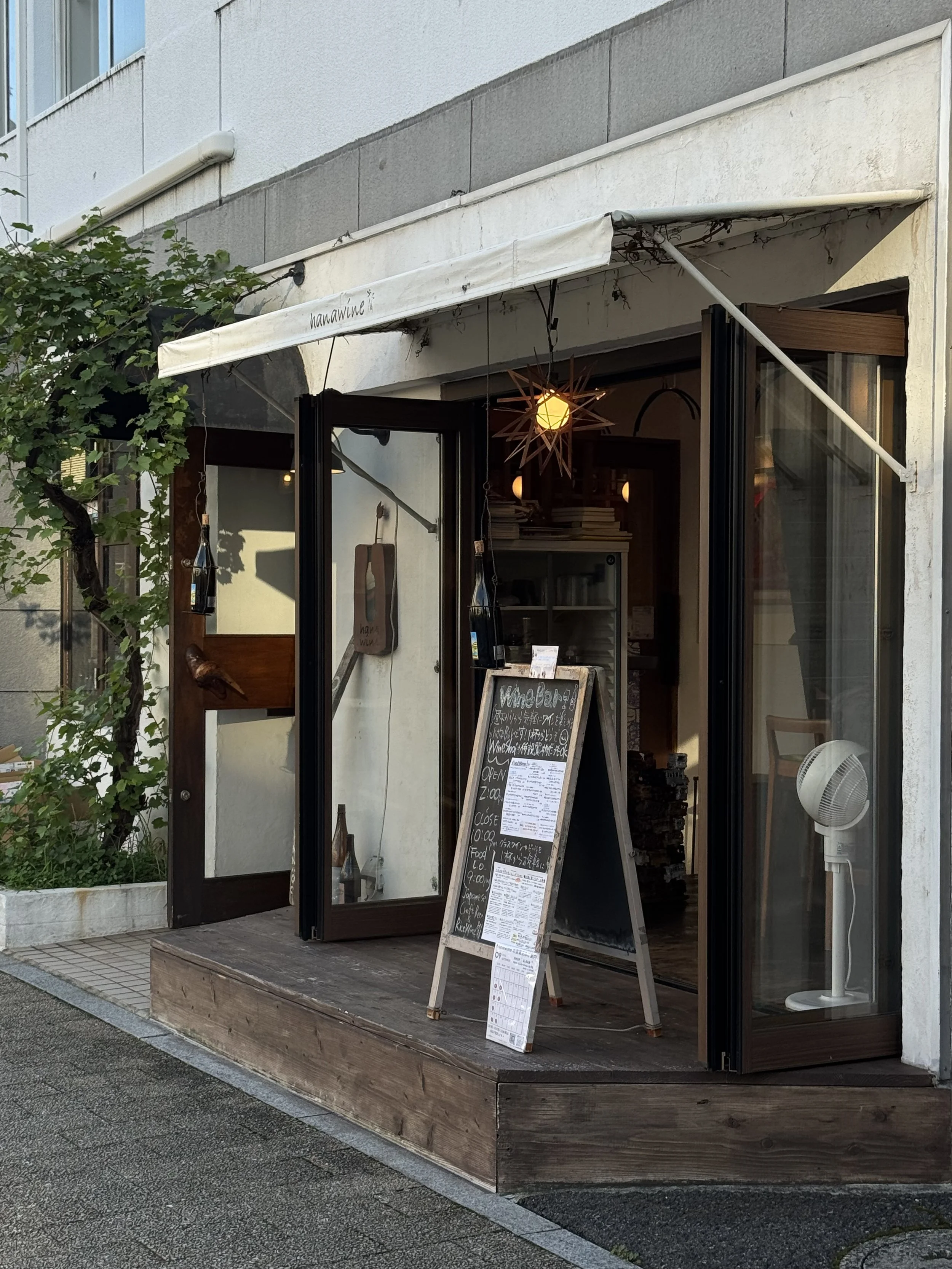
Hanawine was another favorite, combining a wine shop with a place to sit and chat with locals and tourists alike. We made friends with locals from Hiroshima, also in for their afternoon beverage, and shared a bottle of wine with a German couple who were coming to the end of their 4 week Japan trip and eager to share both stories and wine alike. Hanawine has been part of Hiroshima’s natural wine scene since the 2000’s and it shows in the breadth of their selection. This is the exact type of wine shop we look for when we travel: a selection shaped by a real person’s interest, with people who can actually help you choose. Give yourself time to browse and maybe leave room in your suitcase to bring a special Japanese bottle home (we left with two!)
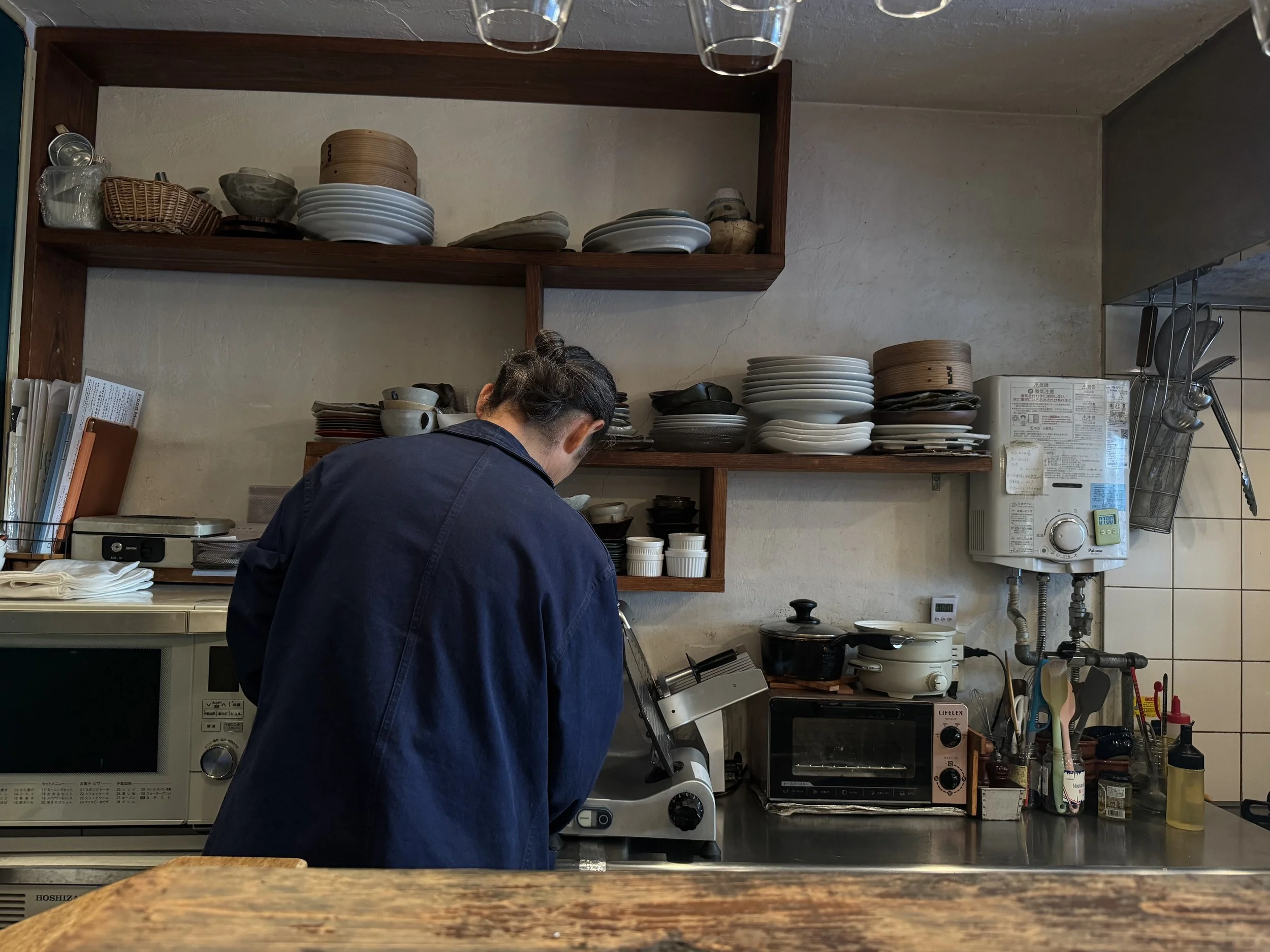
A few other great places for wine to consider: Wine Uluru, Le K2, Mon-to.9.

Given boat times, we actually found it preferable to make our way back over to Miyajima for dinner in the evening and it was the right call. We were able to take 5pm boats back over and park ourselves close to our hotel and then experience a more intimate dinner on the island.

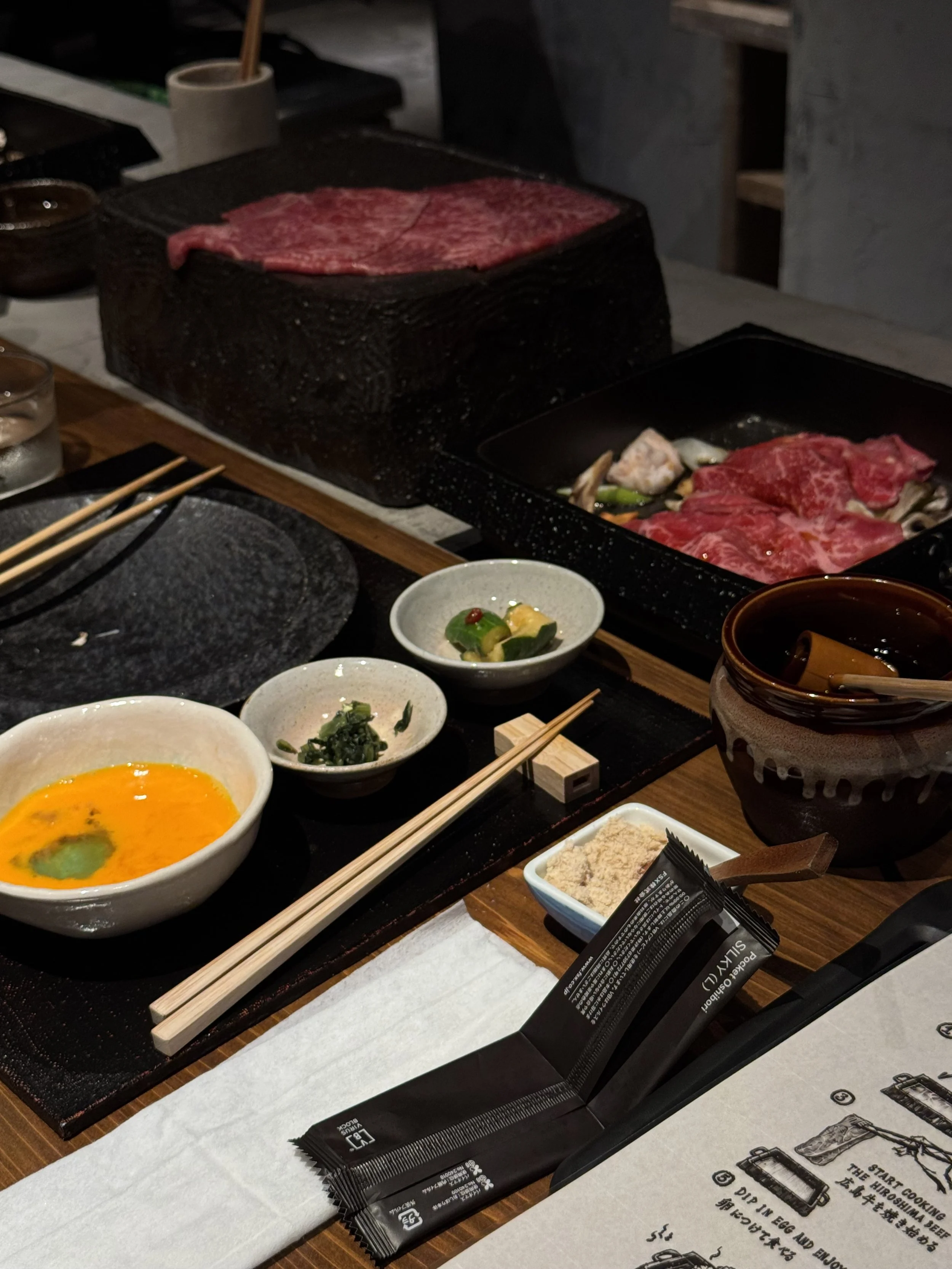
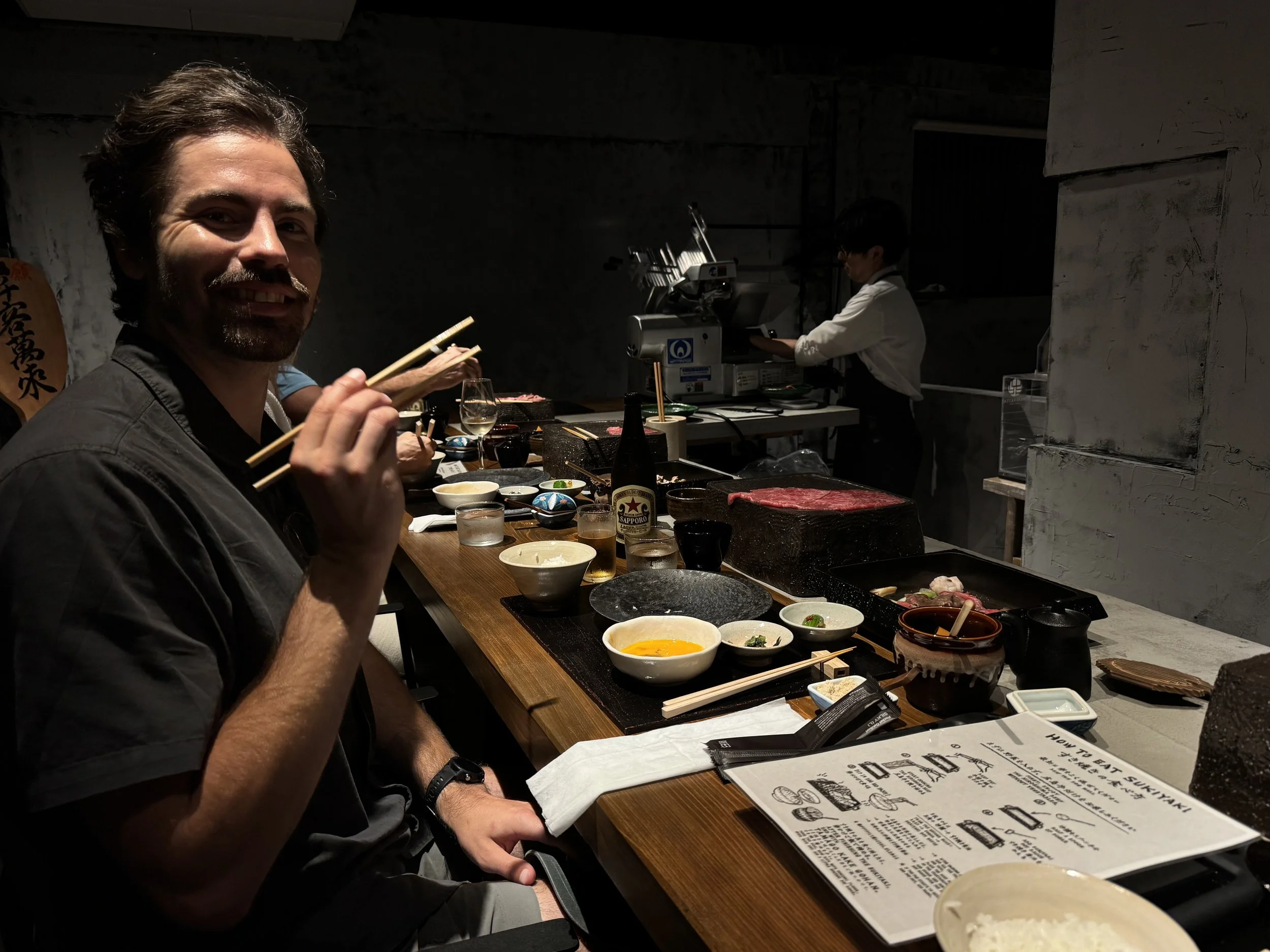
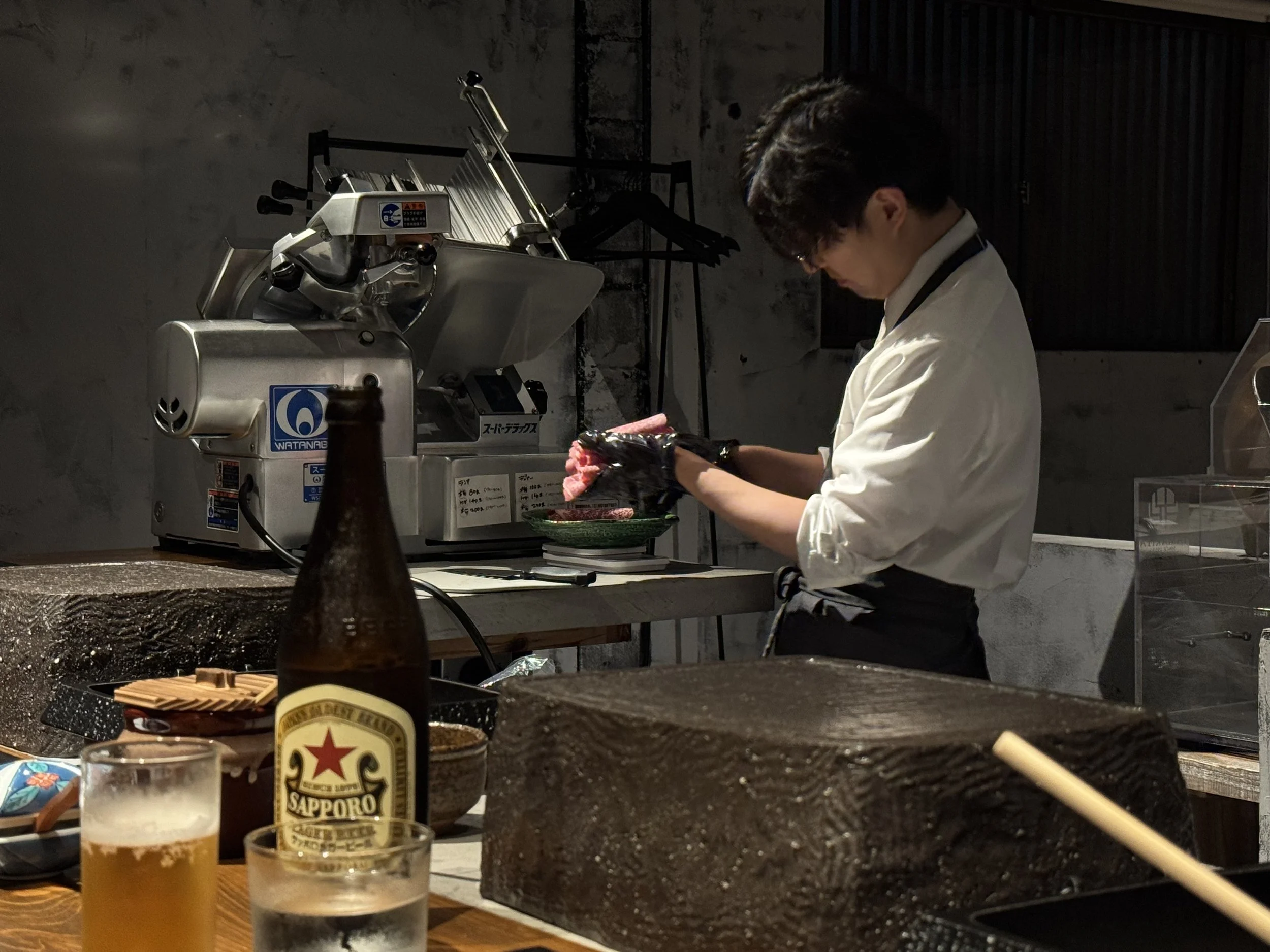
We found an absolutely wonderful dinner experience in Nikudokoro SUI. Over the hill and a mere 5 minute walk from Hotel Miyajima Villa, this small restaurant specializes in Hiroshima beef. We cooked our meat on a hot stone right in front of us, searing each piece to our liking and eating it as we went. We were seated next to an American couple from California and found it a very convivial atmosphere to enjoy hours of conversation, well beyond finishing our meal. It’s an incredibly comfortable, fun, and hands-on dinner to add to your island stay - especially if, like us, your enthusiasm for Japanese beef shows no sign of slowing down. (Bonus: an easy commute “home” thereafter, and we won’t judge you if you swing into Lawsons on the way home for dessert. We did, and it seems many others were doing so too. Konbini culture FTW!)
Things to Do:

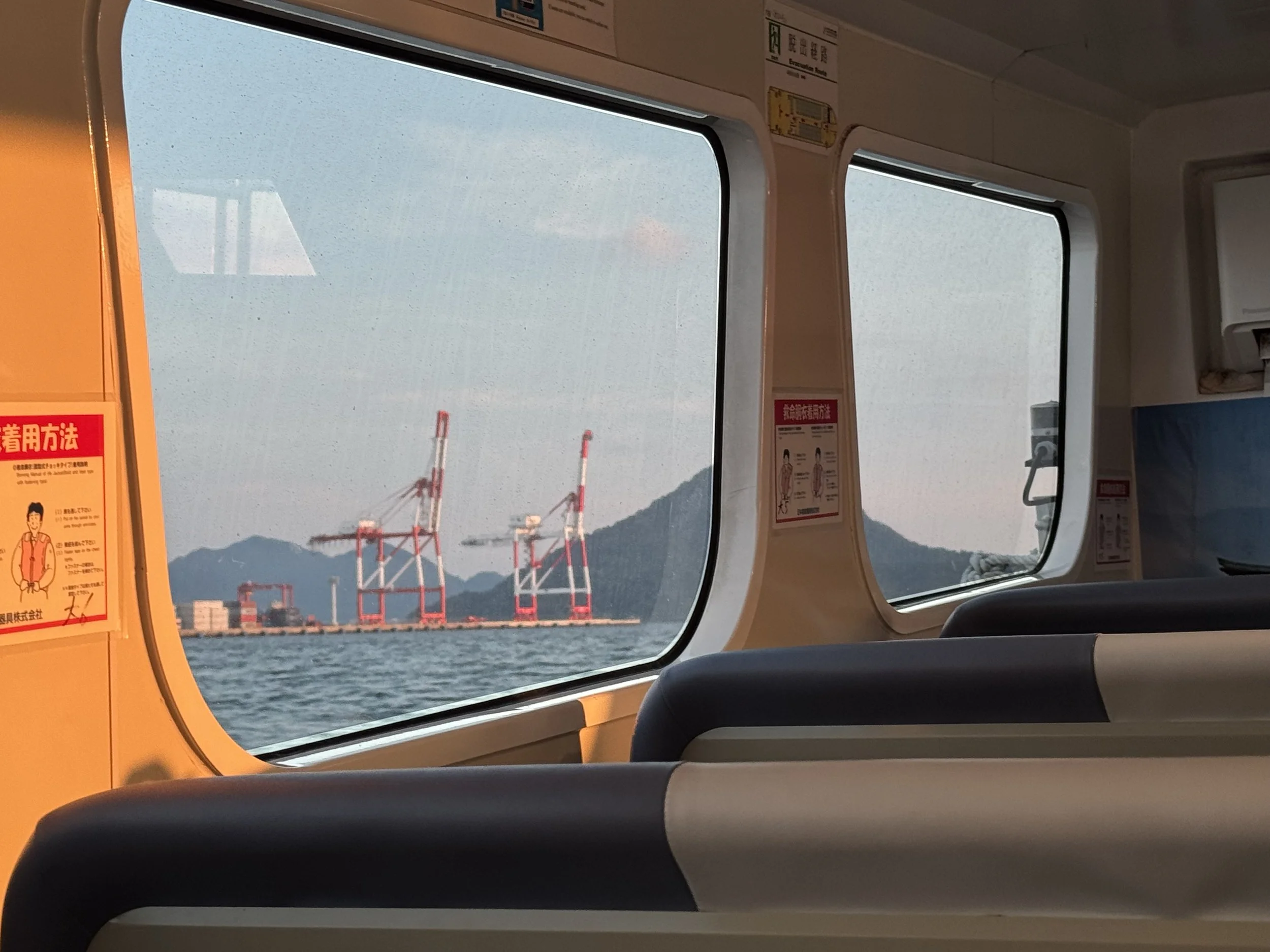
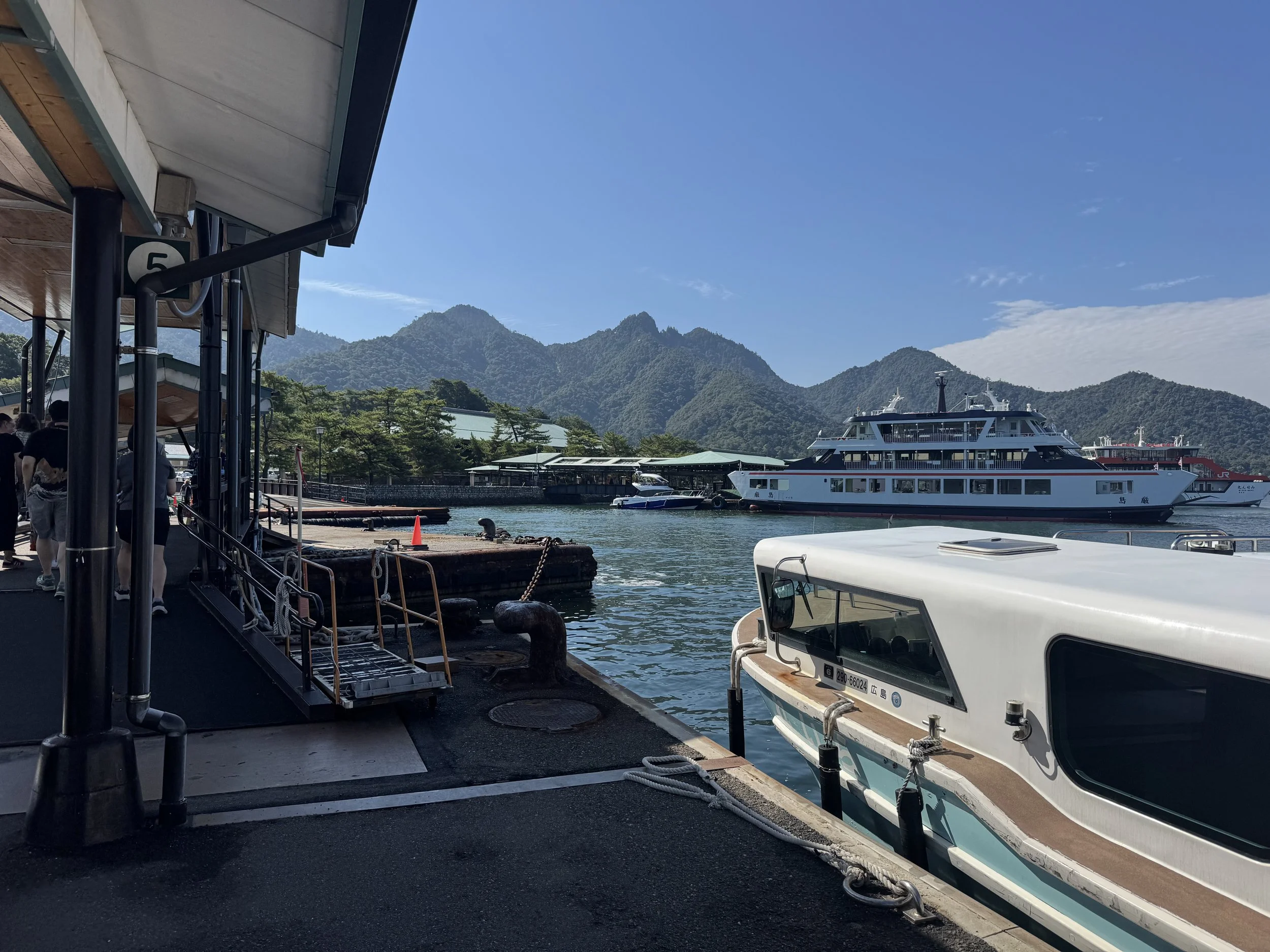
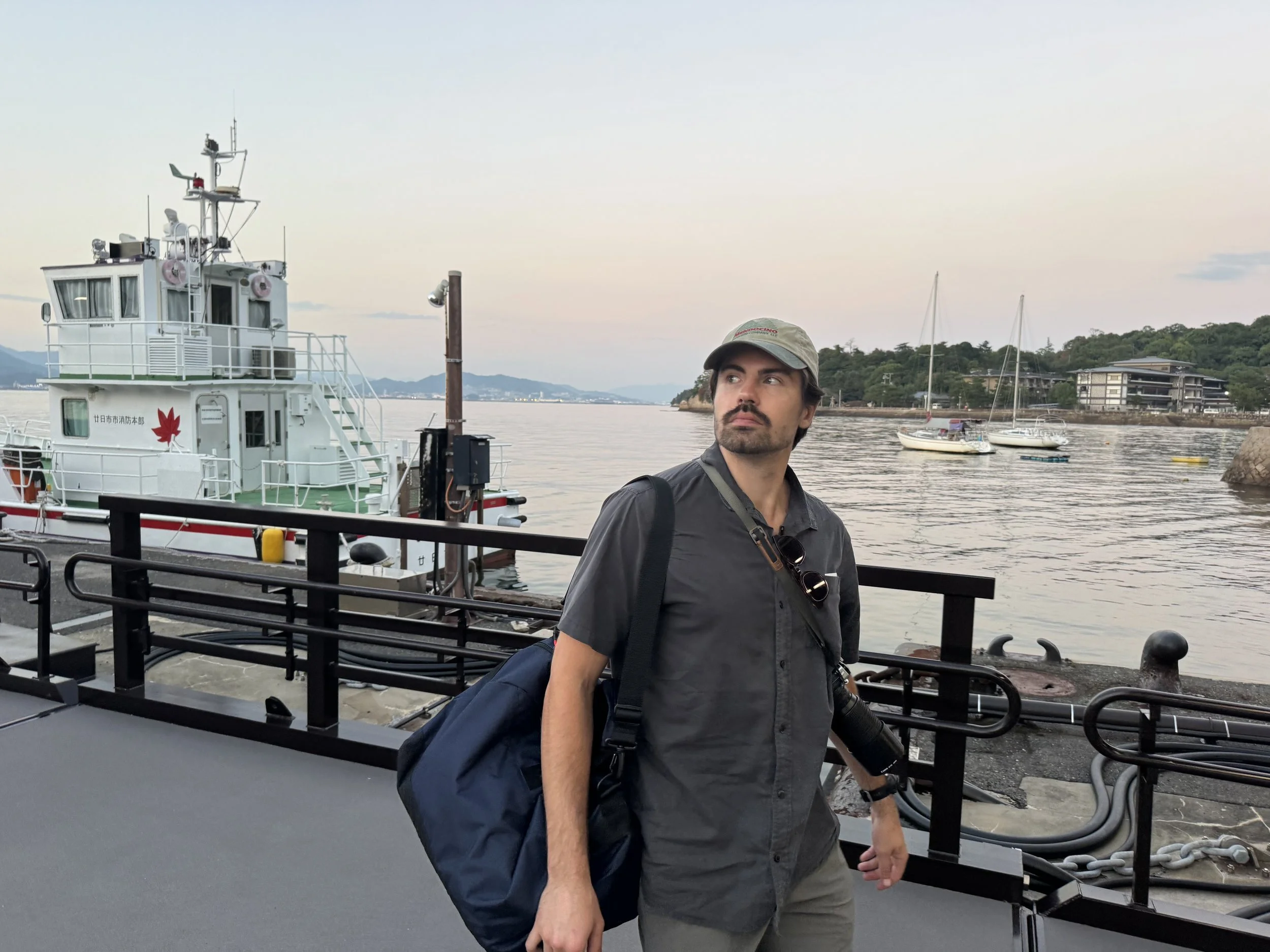
Take the boat directly to Peace Memorial park from Miyajima. This was one of the best practical decisions of our trip, an experience in its own right. We took the boat from Miyajima to Hiroshima, arriving right beside the Peace Memorial area, then returned to the island by boat afterward. The World Heritage Sea Route connects Miyajima with the Motoyasu River pier near the Atomic Bomb Dome in approx 45 minutes, without any transfers. The journey was beautiful, too! You travel across the bay, then into the city by river, watching the surroundings change as you approach Hiroshima. It gave us a solid sense of the relationship between the city and the bay - one we would have missed had we arrived by road.

It was also incredibly convenient: we just hopped off the boat and we were exactly where we wanted to be to start our day. Same thing at the end of the day: the return crossing was convenient and gave us time to process the day’s events by sunset boat ride. A note: check the current timetable and tide related service changes and arrange your return sailing early enough to leave time for the city. The schedules can be a bit wonky and earlier than you’d think.
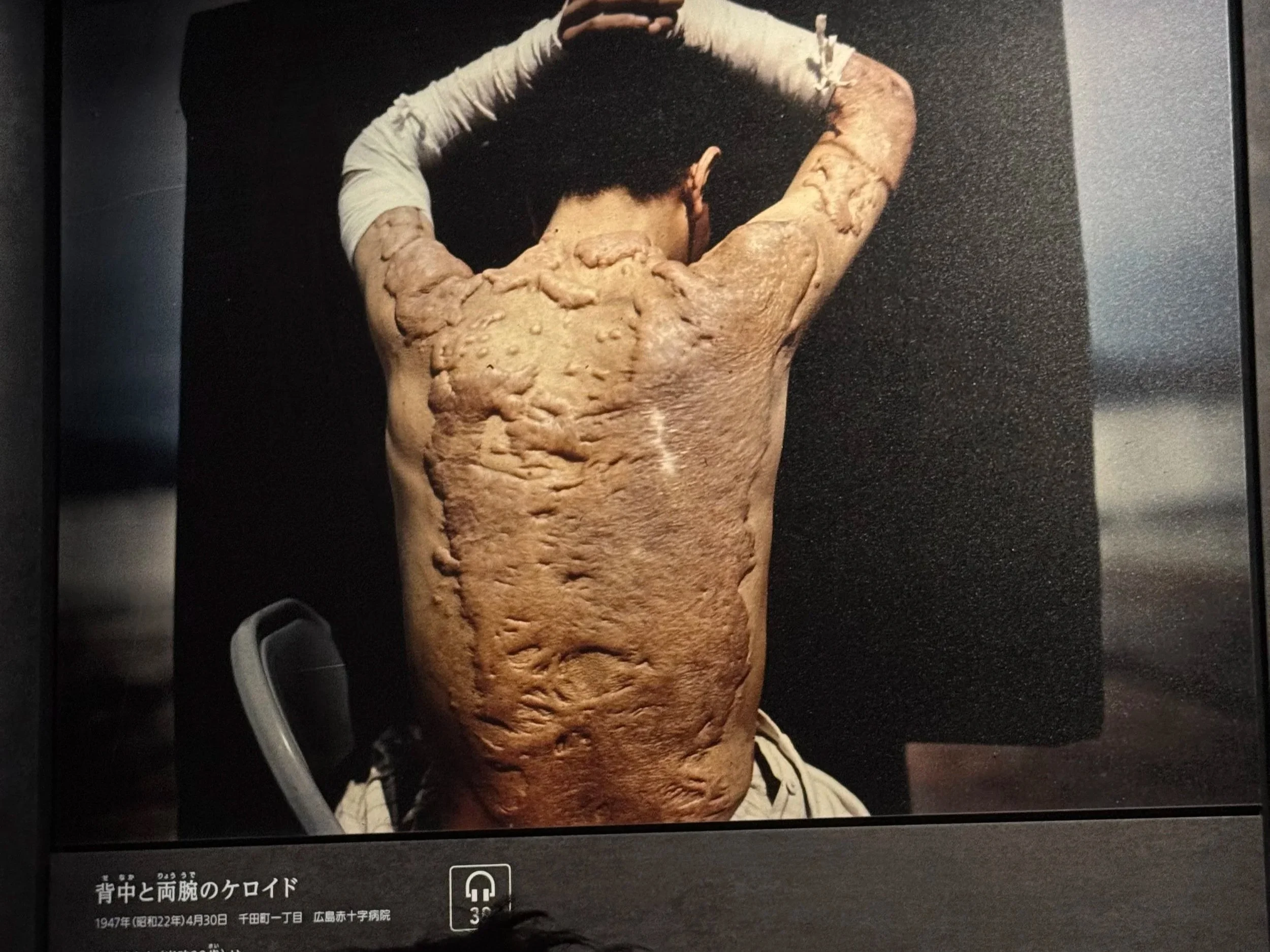
Visit the Peace Memorial Sites. Give this part of Hiroshima proper time; I would reserve a substantial part of the day. As we all know, at 8:15am on Aug 6, 1945, the U.S. dropped an atomic bomb on Hiroshima. The memorial sites put you through an immersive and personal experience as to what it felt like to be there, not only on the day of, but in the many years that followed. The consequences lingered for decades and the memorial itself does not shy away from showing not telling you about this fact.

Hiroshima Peace Memorial Museum. This was one of the hardest museums I have ever walked through. The museum brings the entire catastrophe into focus through people’s belongings, photographs and first hand accounts. It also documents Hiroshima before and after the attack, and delves into the continuing threat of nuclear weapons. Though painful to witness, I really enjoyed how individual and personal the stories were, as it made it very real and so much more than a surface level history lesson. An incredibly powerful and moving experience that might take some time to digest after the fact.
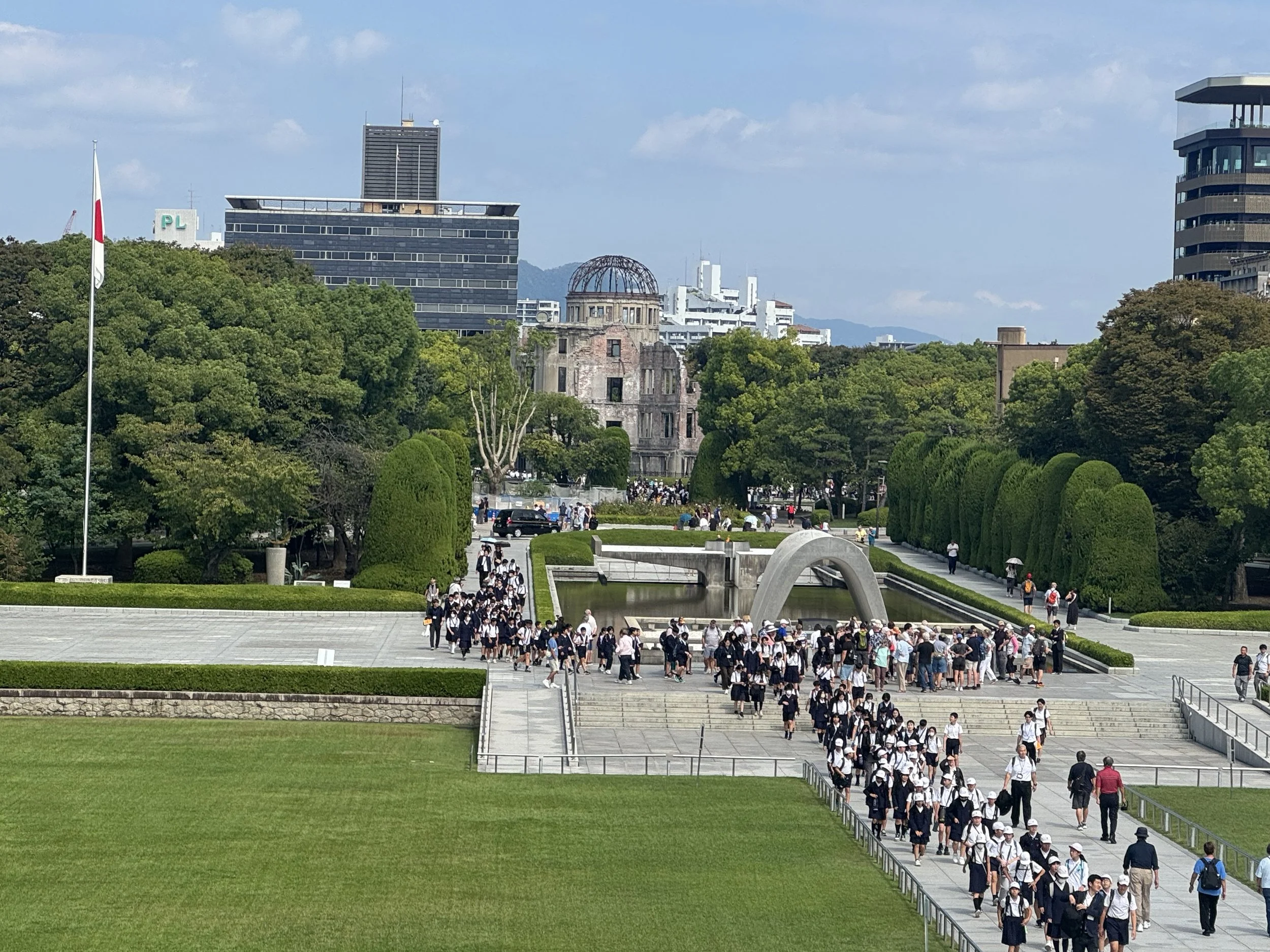
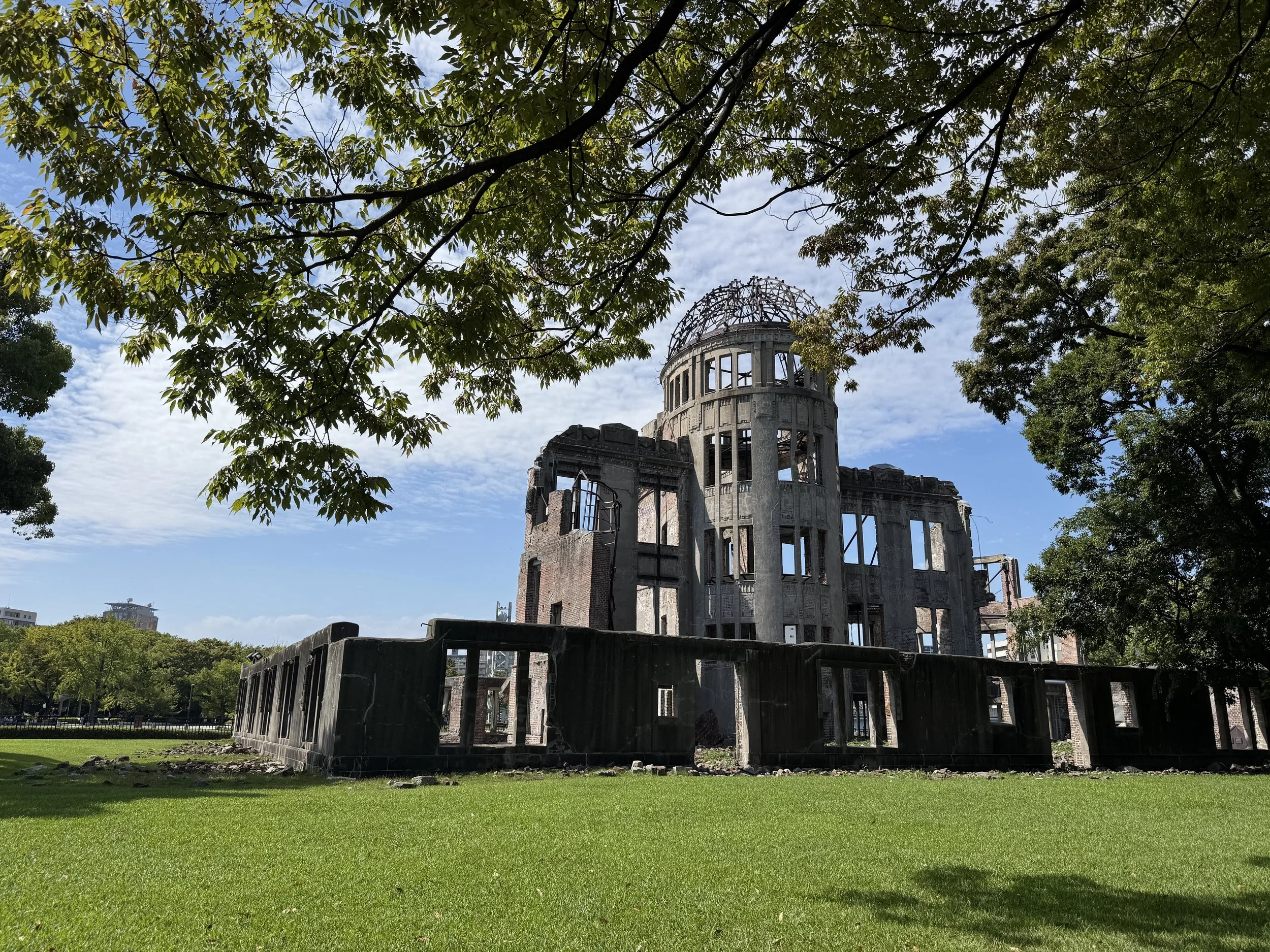
The Atomic Bomb Dome. The Dome is the preserved remnant of the former Hiroshima Prefectural Industrial Promotion Hall, which stood almost directly beneath the dropped bomb. Seeing its exposed structure beside the river, contrasted to the bustling every day city makes the distance between then and now feel very small. A truly moving place to be held with great reverence.

And once you’re ready to move on from all the heavy stuff (and have truly taken some time to process)…

Go get oysters. Hiroshima is Japan’s oyster capital. It carries about 60% of national production and is a substantial part of the local food culture and working landscape of the bay. The geography helps explain why. Rivers bring nutrients into Hiroshima Bay, supporting the plankton on which the oysters feed. Growers cultivate them on suspended systems beneath floating rafts, linking what you see on the water with what arrives on your dinner plate. After spending the day driving through citrus country and then traveling across the bay, sitting down to oysters with fresh lemon felt like a very direct and literal introduction to the region.

KYOTO
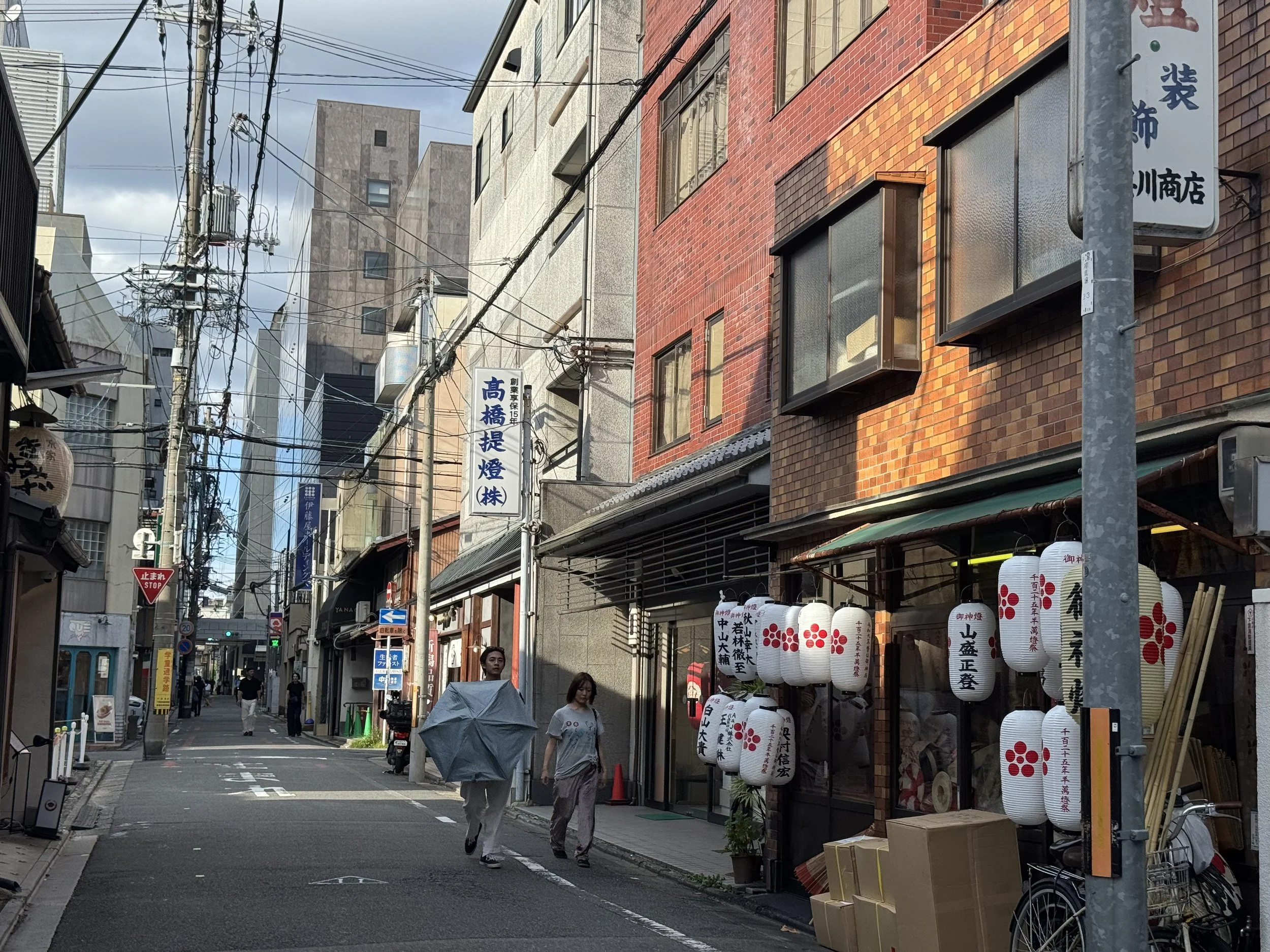
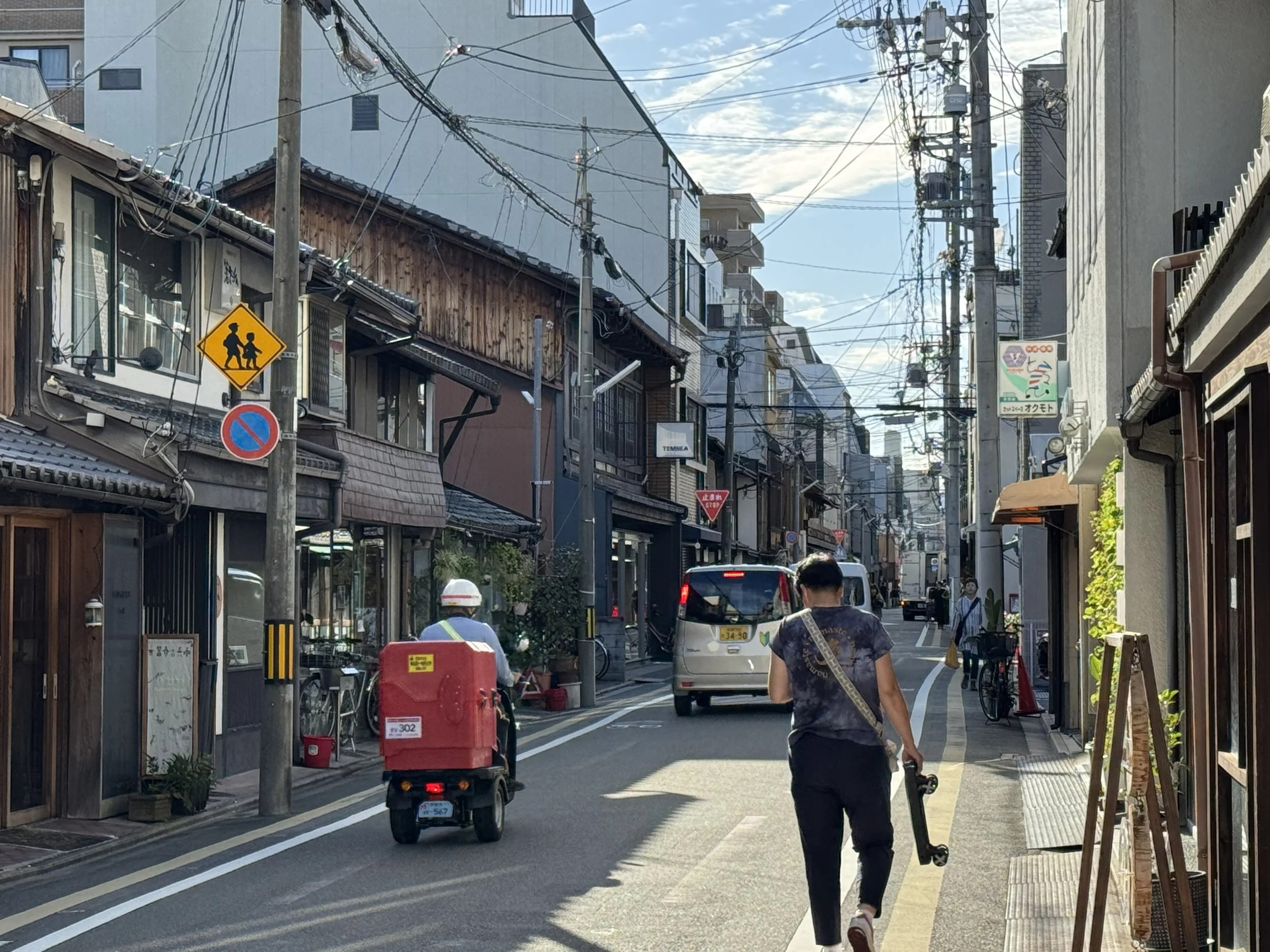
Kyoto deserves time beyond its most photographed tourist streets. The temples are certainly extraordinary, but so are the smaller more subtle encounters: the textile workshops, furniture stores, family-owned knife shops, or the quiet evenings that start with a meander along the river.

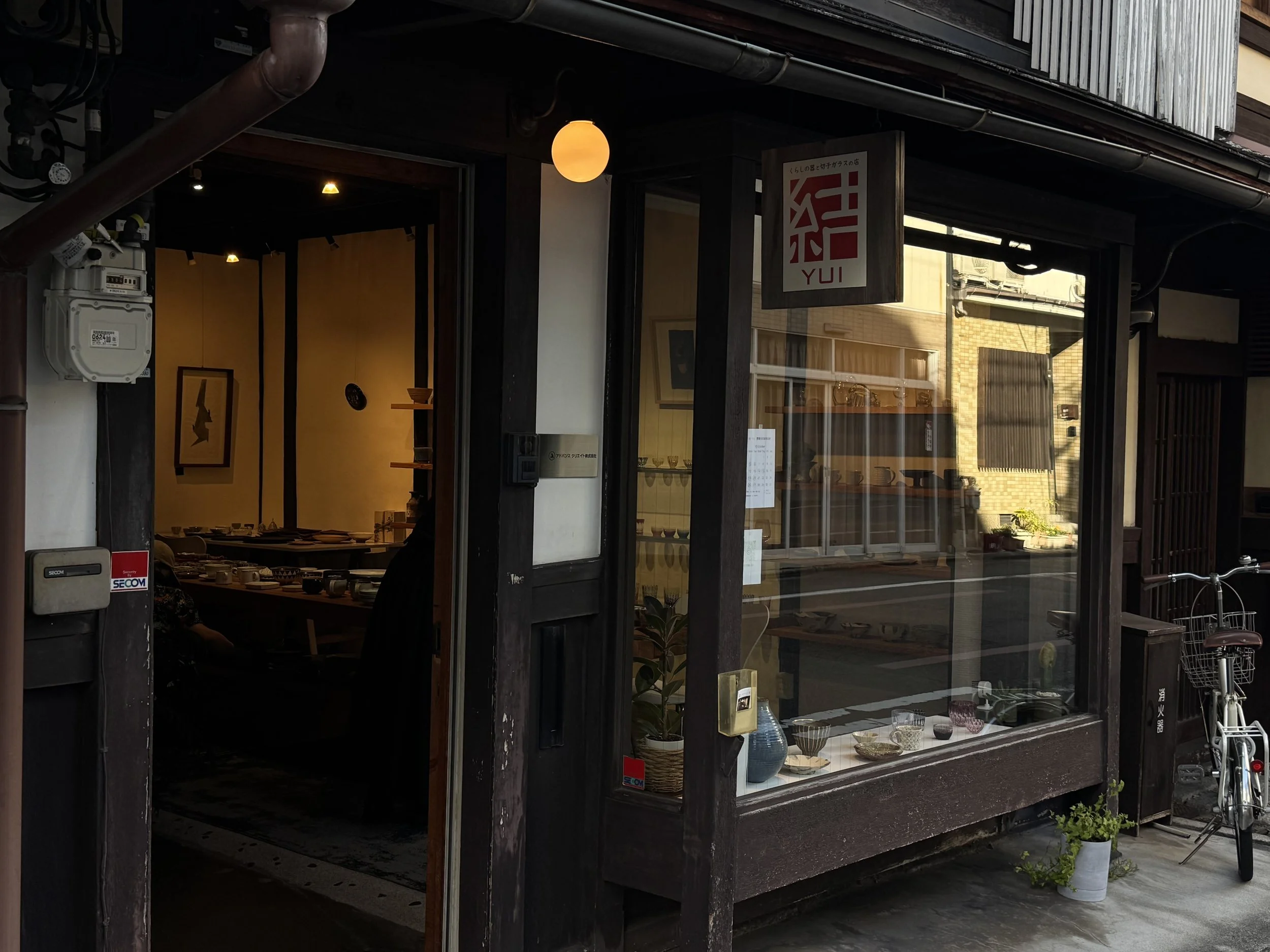
Something we loved is how much you can experience the city through craftsmanship and the people who spend their days making things. Give yourself time to visit those places and pay attention. You could spend your entire trip moving between famous shrines and tourist stops, but you would miss a lot of what makes Kyoto interesting.
Where to Stay:

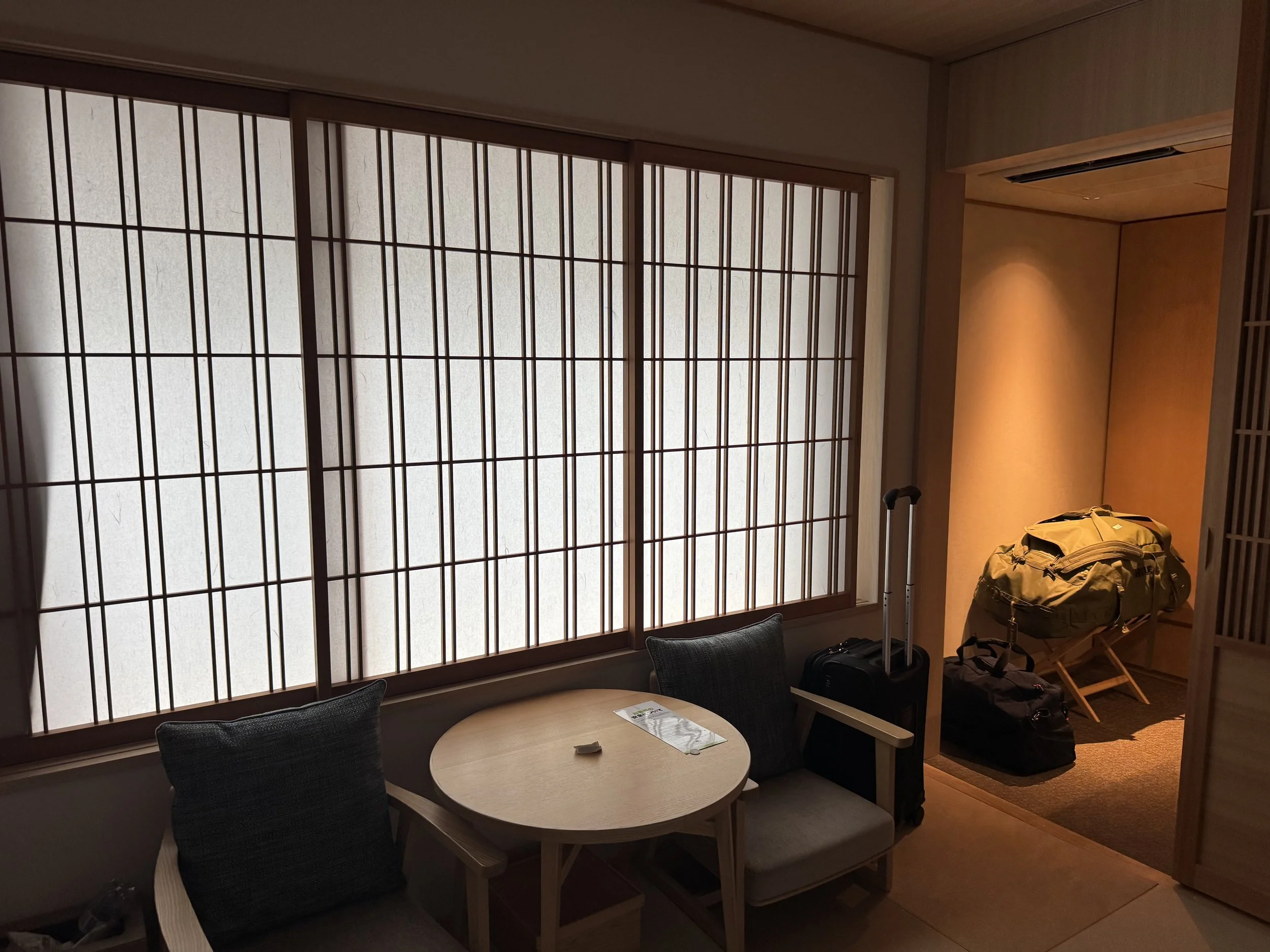
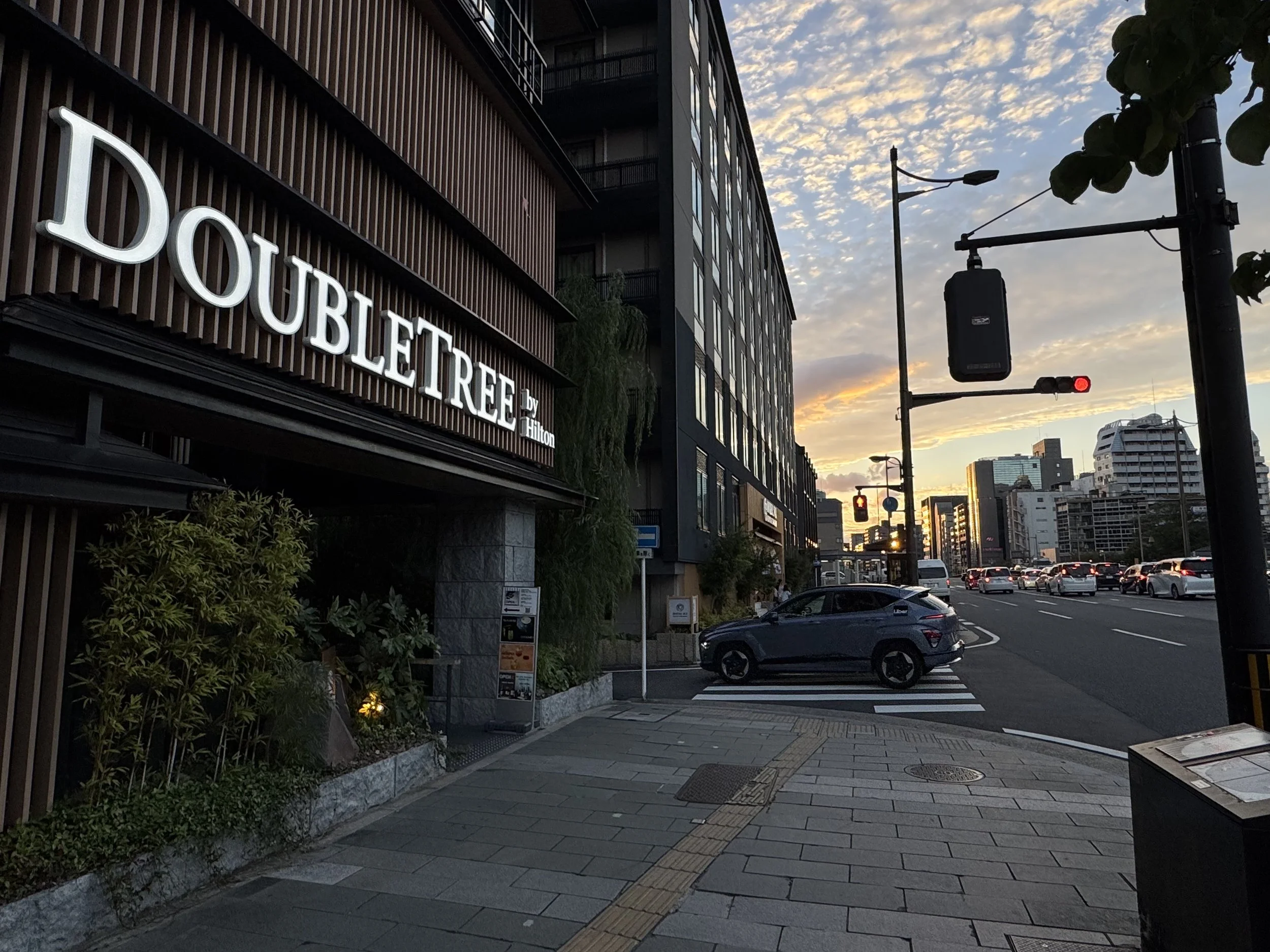
DoubleTree Hotel Kyoto Higashiyama

The DoubleTree sounds like a very American vanilla boring type of choice, but honestly, zero regrets.

It felt nothing like the DoubleTree hotels we’ve got back home that line suburbia or the big cities. This gorgeous, well-appointed hotel makes a practical base for exploring on foot. It sits near the eastern side of the Kamo River, a minute’s walk from Kiyomizu-Gojo station. From there, you can walk north toward Gion or cross the river to explore the downtown. It’s convenient location makes for days that require little planning and a great deal of just wandering. The rooms were cute, authentic and well updated and the buffet breakfasts provided more than ample sustenance as a protein-heavy baseline for our days of snacking and wandering.
Where to Eat/Drink:

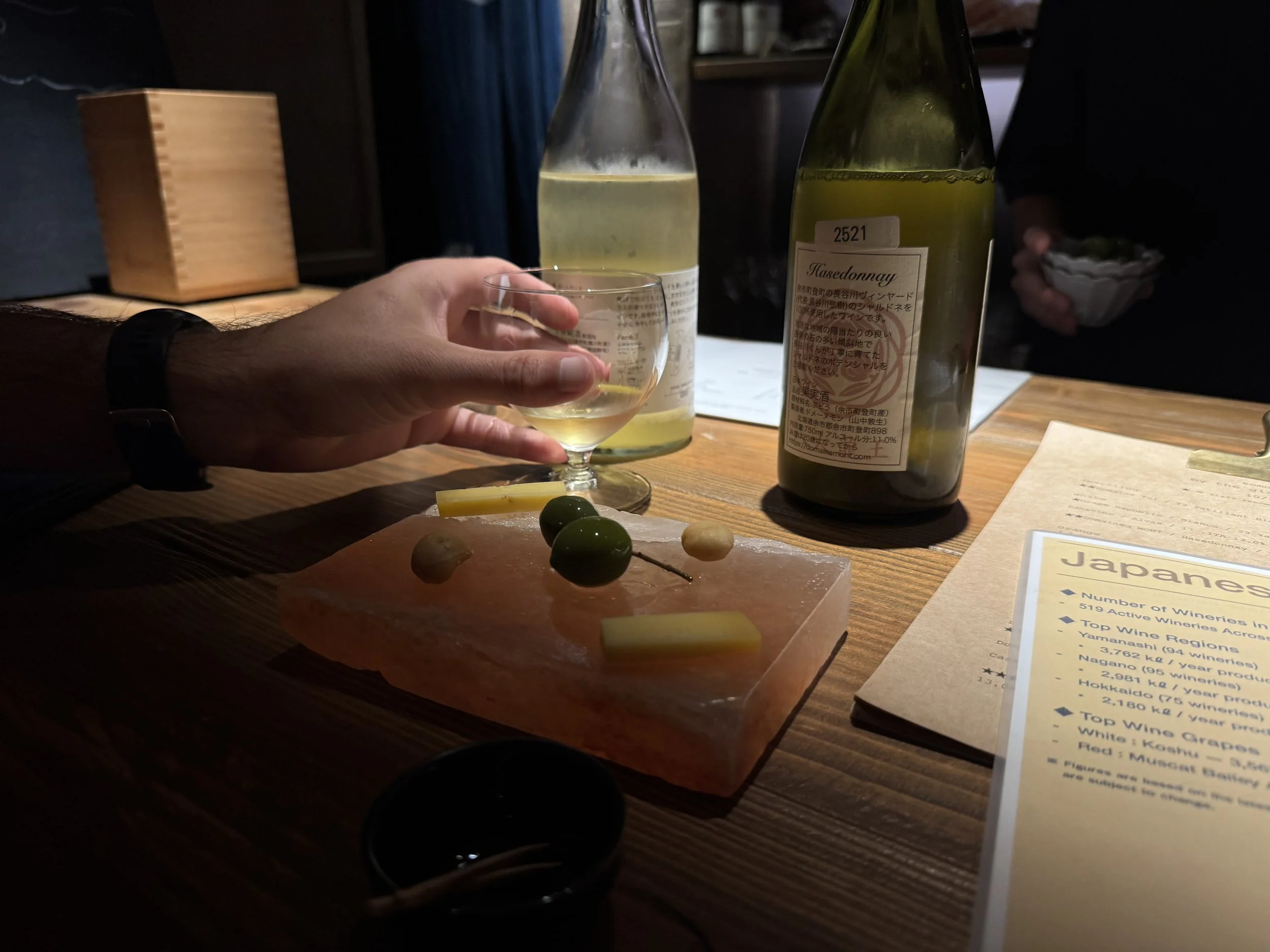
Komorebino was one of our favorite stops of the trip and certainly belongs on the list if you are at all curious about Japanese natural wine. Located in Gion, it serves natural wines from Japan and overseas, with a Japanese wine flight that lets you explore through different regions in one sitting. Paired thoughtfully alongside Japanese cheeses, this was the very experience we had hoped to find - a wander through all kinds of Japanese wines all in one evening. A special shoutout to Naru, our wine “guide” for the evening, who was exceptionally knowledgeable and taught us so much that we walked away feeling like we had just left class. We became friends in just a couple short hours and look forward to visiting with him again in the future! After driving through so much of the country leading up to this visit, tasting a wide variety of wines from various geographies gave us another way to think about the places we had visited. An awesome experience that will stay with us for a long time to come!
Nishiki Market: Come hungry. The market is a great place to notice all of the ingredients behind Kyoto cooking, from pickles and dried foods to yuba, the delicate skin formed when soy milk is heated. Buy things that interest you (we brought home some killer yuzu flavored sesame seeds!), and sample from various stands at each shop’s designated area before moving on. Note: you should try to not eat while walking… it’s considered rude in Japanese culture. Not that you needed an excuse to take a load off and sit down to rest. We highly recommend eating any kobe/wagyu beef you can get your hands on. I’m salivating thinking about it.

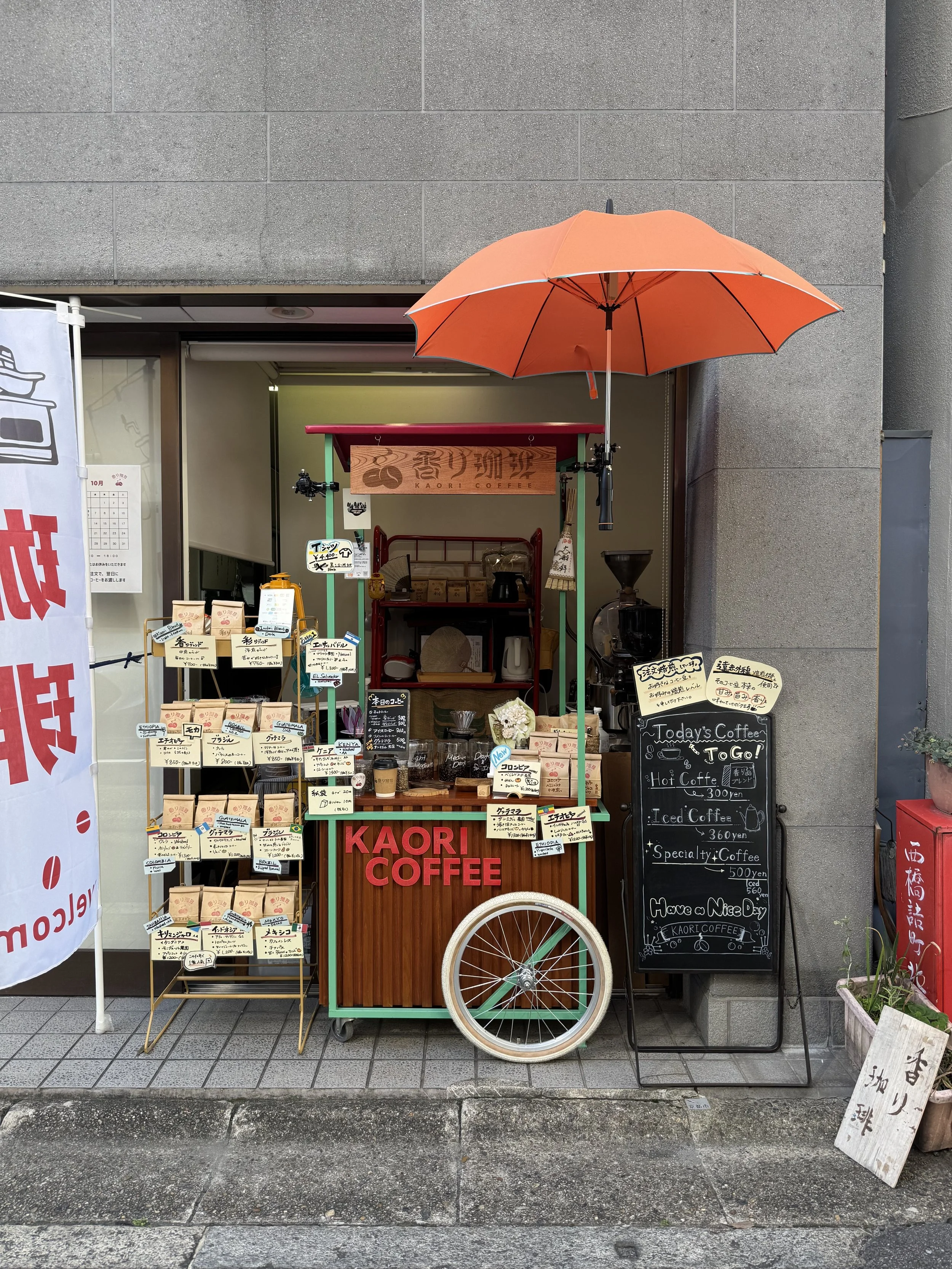
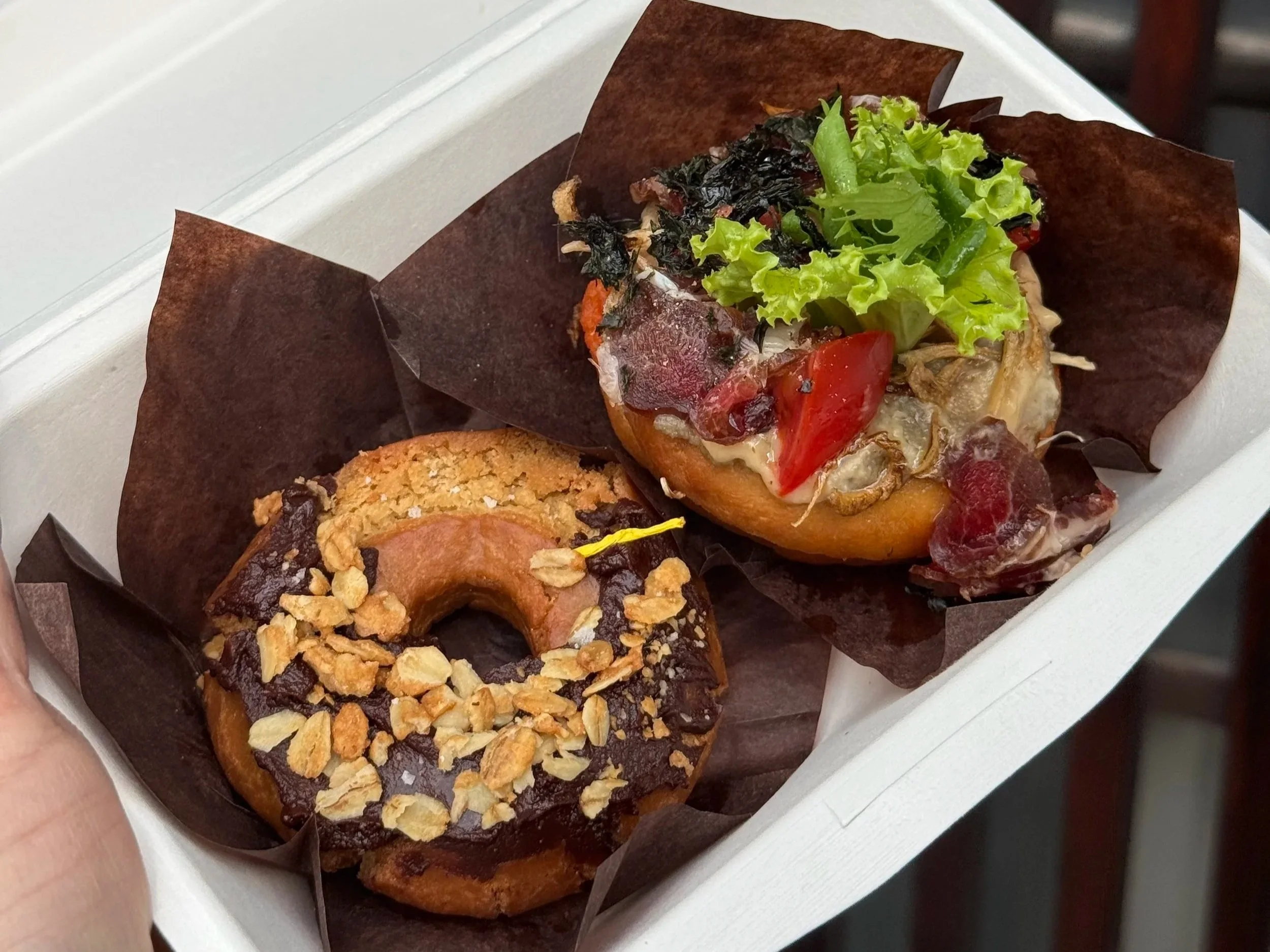
Some restaurants and coffee shops we loved: Hitsuji Doughnuts, Micasadeco&cafe, Kaori Coffee, Cafe DOnG, Natural Wine Taproom Kyoto, Matatabi Hanare, Ietem, To, Mizukami Seisakusho, Dunstan Coffee Roasters, RONMADOR, Harmonika, Cafe Kawataro, ALKAA, BRUN, Walden Woods Kyoto.
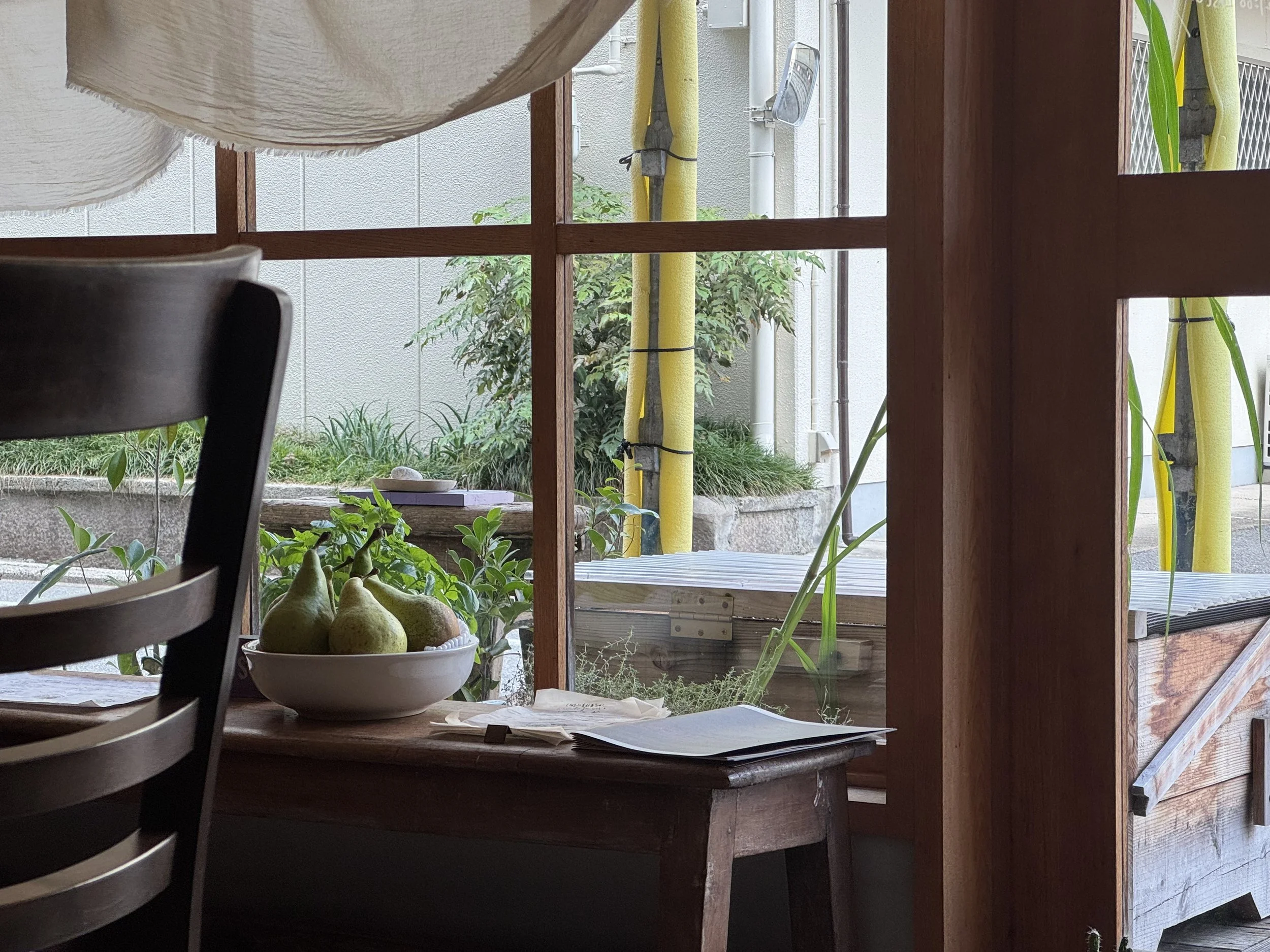
Things to Do:

Make time for Kyoto’s makers. Aizenkobo was one of our stops, and I’d highly encourage anyone interested in textiles to leave room for this side of Kyoto. Seeing indigo-dyed cloth in person gives you a great appreciation for the variation in its color and texture. It also makes souvenirs feel much more personal when you saw firsthand the work behind what you’re taking home.

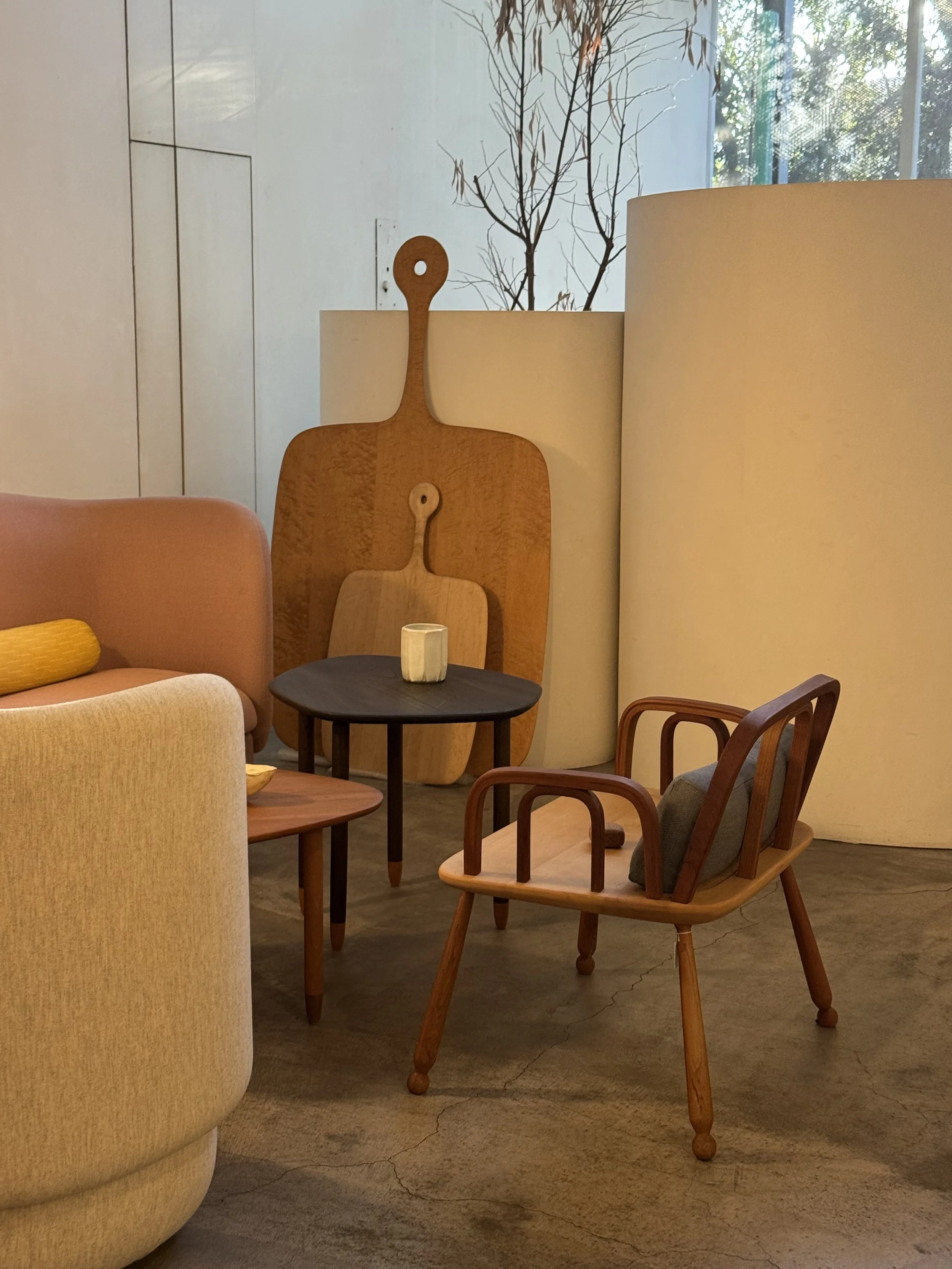
Explore the furniture and antique streets. Ebisugawa-dori has a long association with furniture making and selling, particularly between Teramachi and Karasuma. Pair it with a walk along the northern section of Teramachi for antiques and traditional objects. An excellent area to give yourself an afternoon and let yourself be inspired. Leave room in your suitcase for spontaneous purchases.

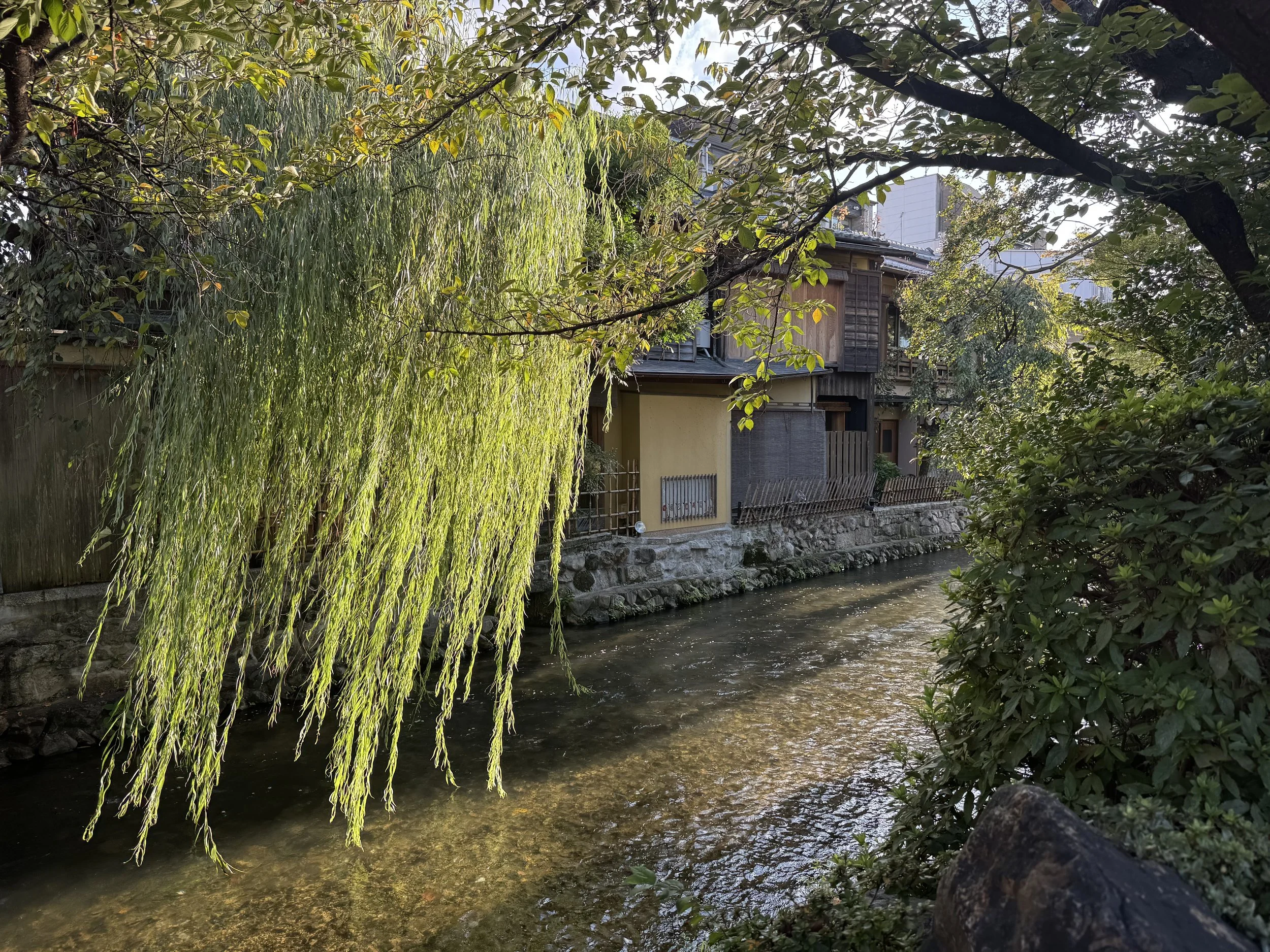
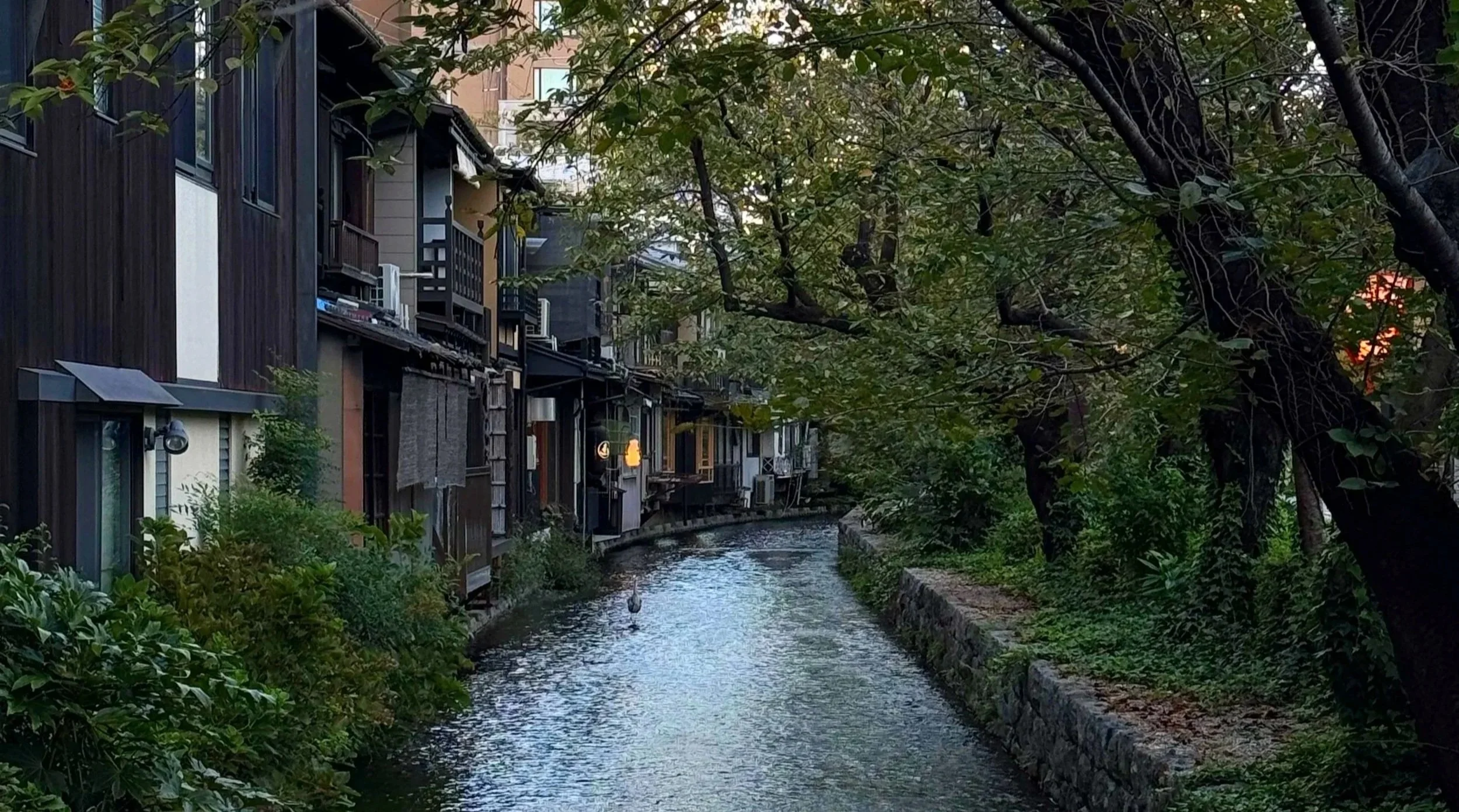
Walk Gion and the Shirakawa canal. Go slowly and take it all in. Gion remains a working neighborhood with an active geiko and maiko tradition, so follow the signs around private lanes and photography.
OSAKA

Osaka admittedly was not our favorite city of the trip, as it felt quite like a normal bustling city with a bit of the charm missing. We found Kyoto to feel much more intimate, charming and villagey, but to each their own. Osaka is, however, a city that I would happily organize around eating. In our case, we aren’t embarrassed to say that we returned to the same wagyu stand 3 times, which tells you something about both the beef there and our commitment to “research”. Because it does feel a bit sterile on the surface, the city also rewards those willing to look a bit deeper. There are excellent design shops and quieter streets where you can spend afternoons browsing.

Where to Stay:

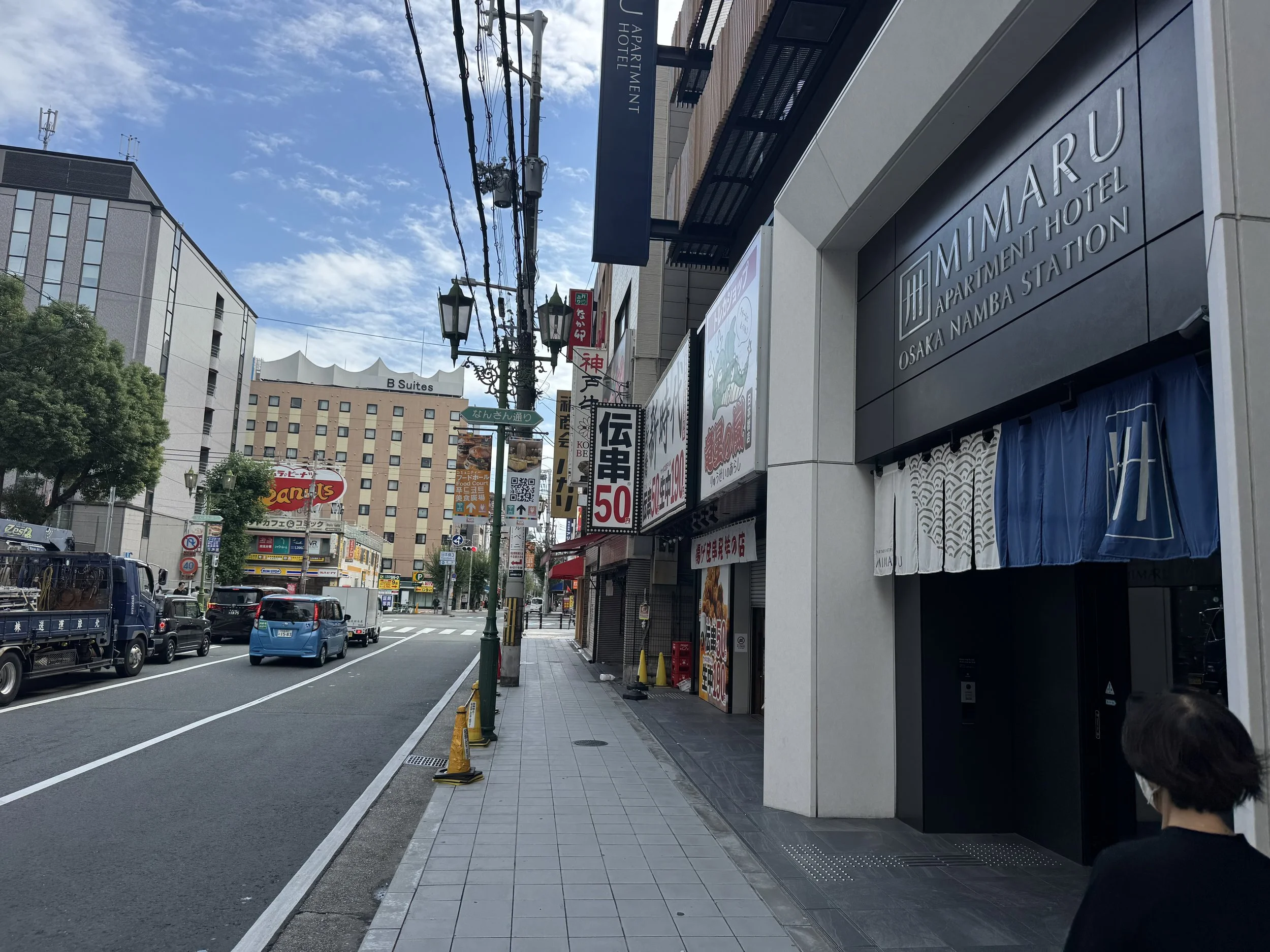
MIMARU Hotel - Namba Station

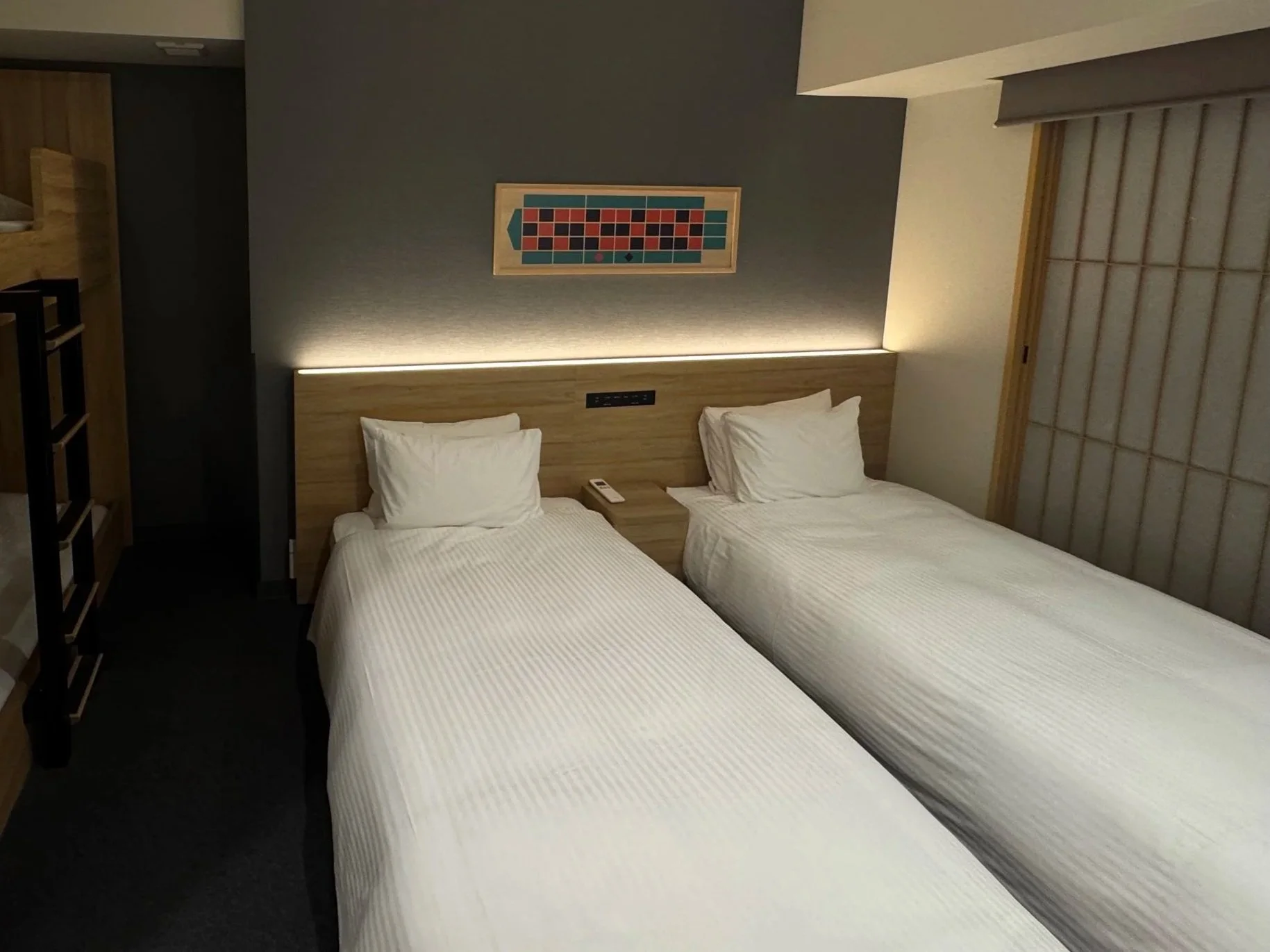
MIMARU is a particularly appropriate choice of stay if you want more space or somwhere to properly unpack. Much like Koti, the room sizes are generous and we found it to be a perfect place to end our trip given the need to do a bit of finagling of souvenirs into our bags to bring home. The apartment-style rooms have kitchens with cooking equipment and a dining area, which makes longer stays or stays with a family easier as well.

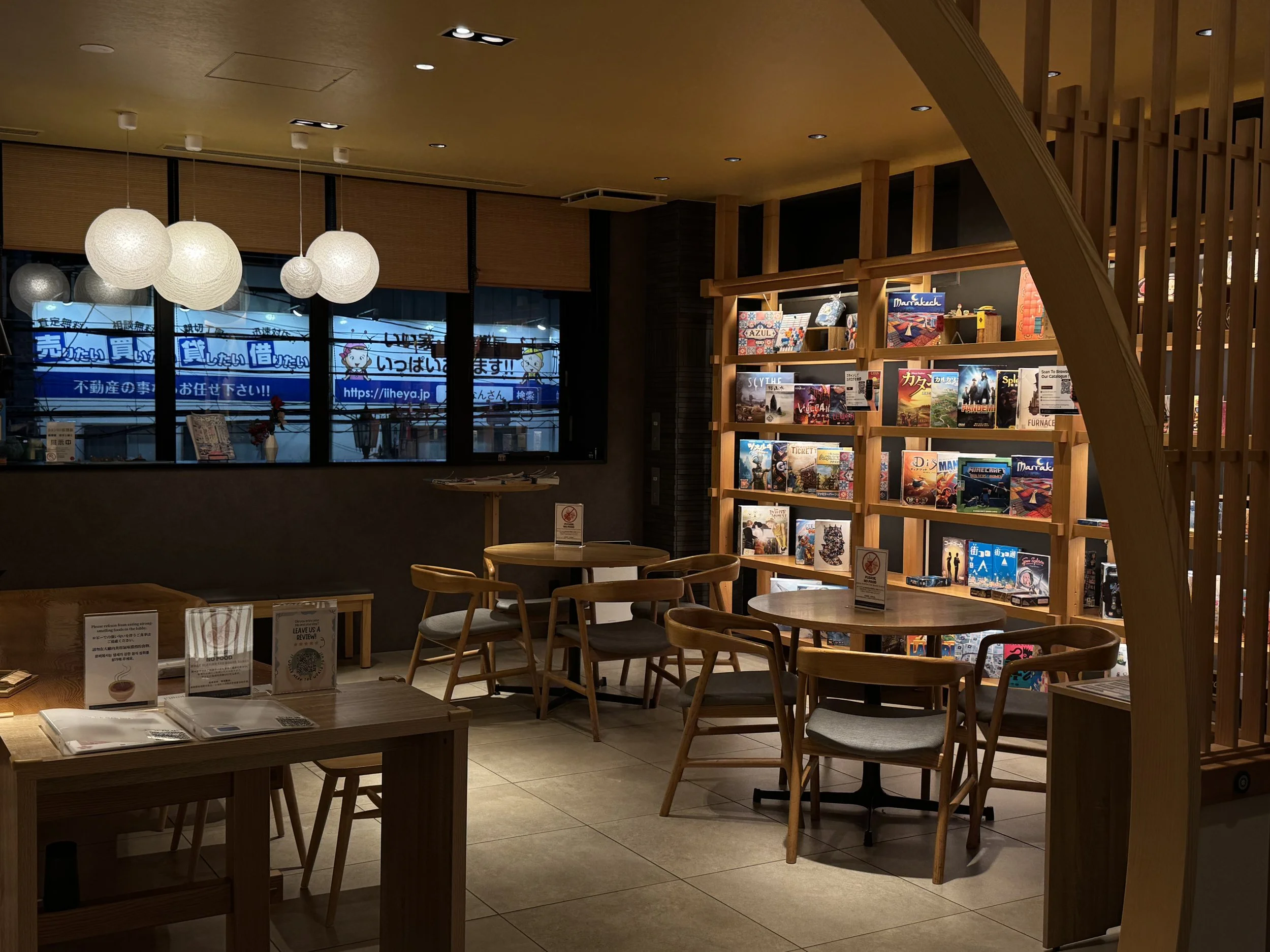
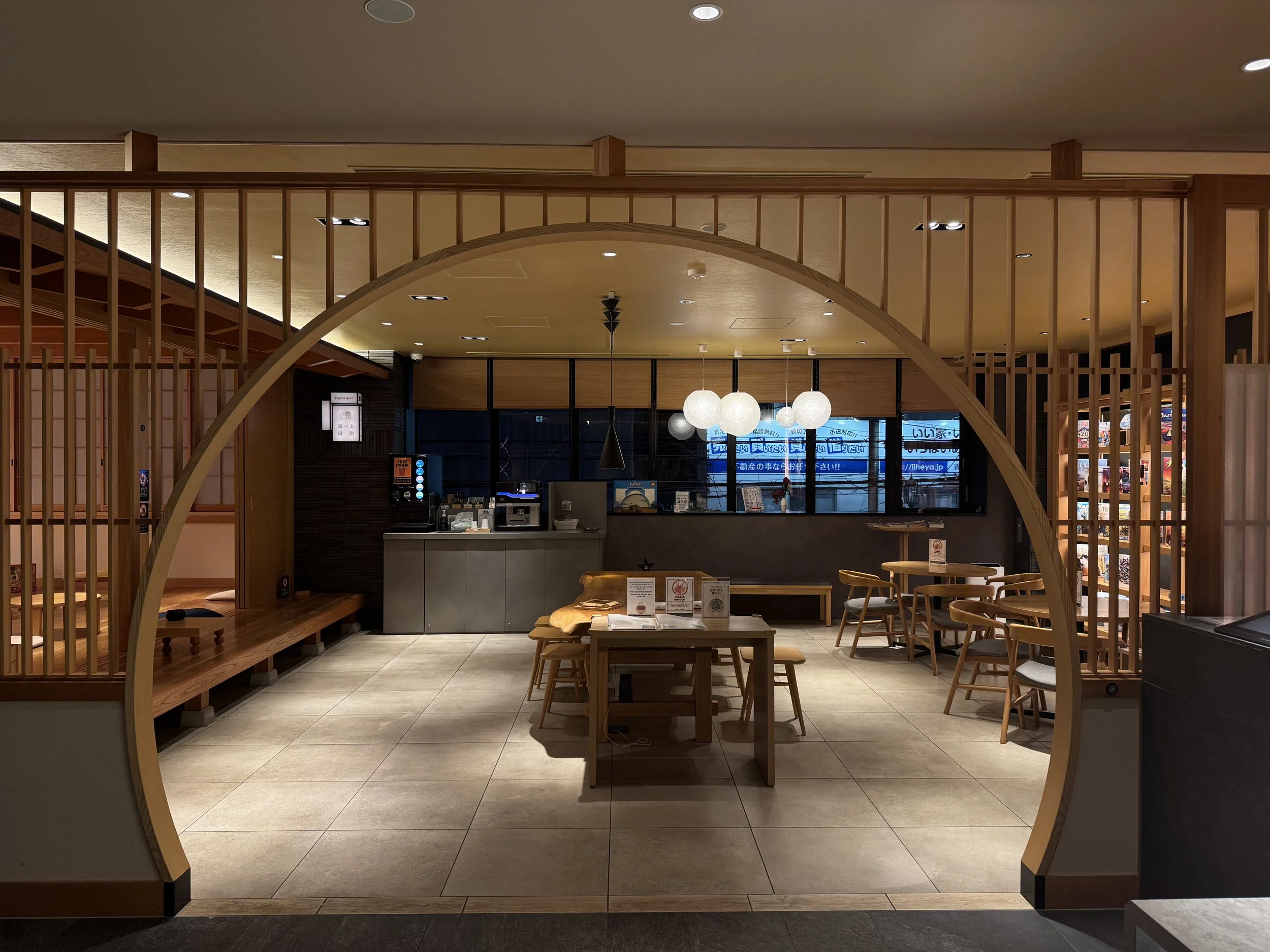
The Namba location puts you within reach of the Kuromon market and the surrounding shopping and restaurant streets. But the hotel’s most unexpected feature? It’s board game collection! There are more than 100 games to borrow, plus games created specifically for the hotel. After a day outside, there’s something to be said for having a cozy spot to sit down and play as an alternative to immediately collapsing into bed.
Where to Eat/Drink:

AMBER was one of our Osaka dinners and a great place to go if you love Italian food and natural wine. The menu includes charcoal-grilled meat, and the wine selection is abundant.

Kuromon Market: go browsing for lunch rather than arriving already committed to just one large meal. Seafood is central, but there are plenty of options to investigate.

Pasania in Nakanoshima is another great option for a natty wine dinner. It brings together Japanese natural wine, Osaka-style okonomiyaki and dishes influenced by South Indian cooking.

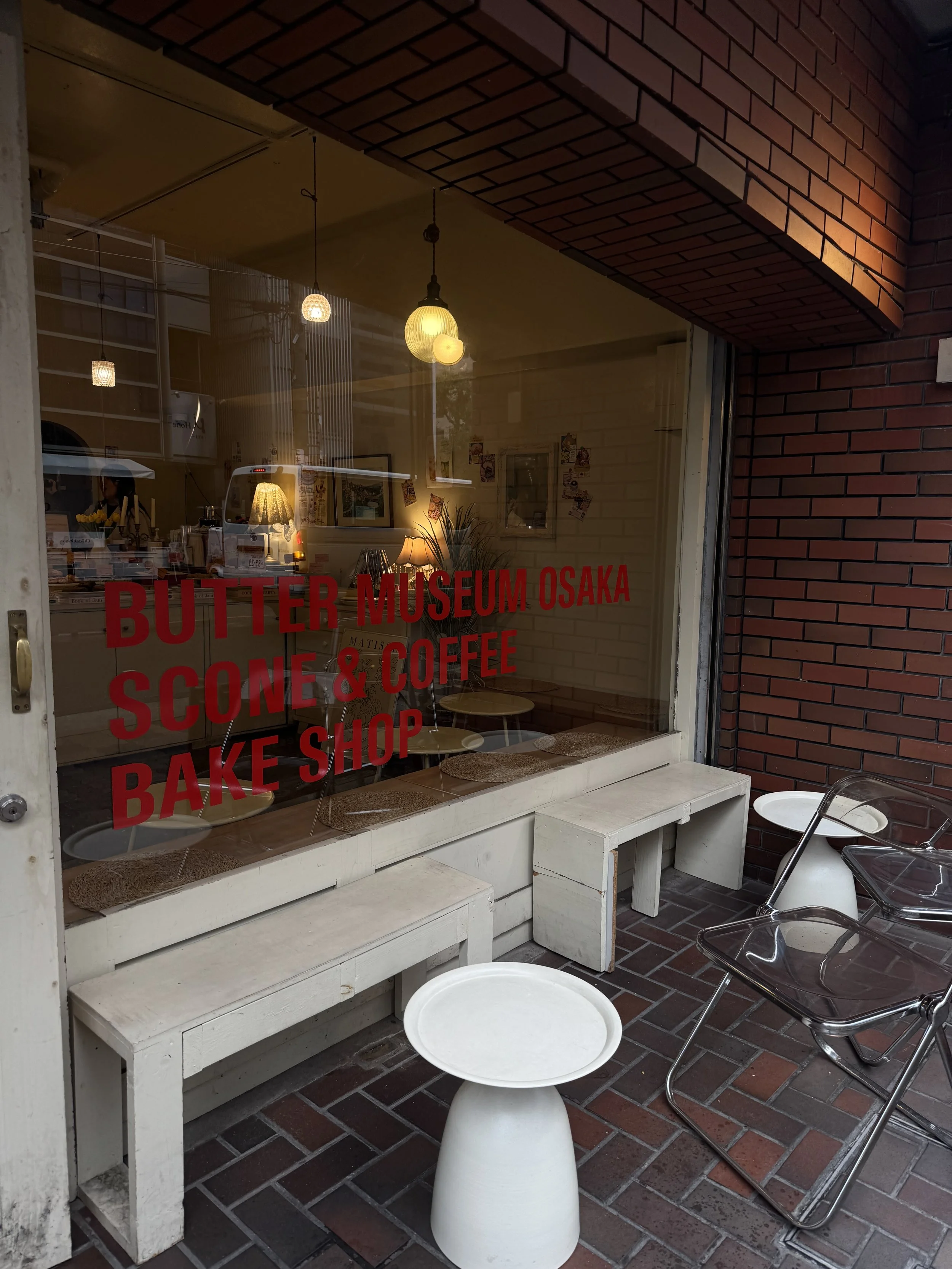
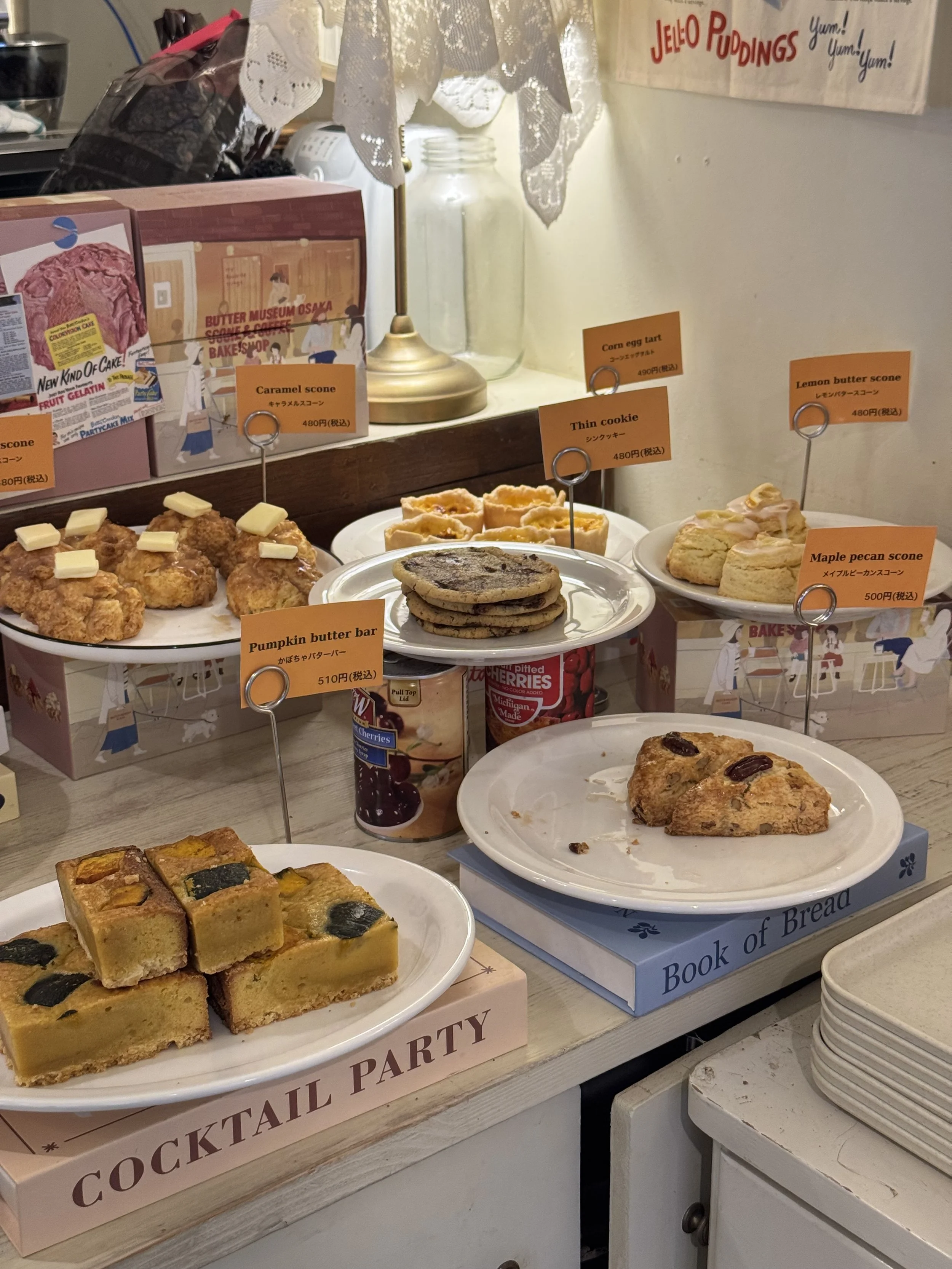
We also loved the Butter museum Osaka, a fantastically charming little bakery made with all kinds of things - you guessed it - butter! Delicious. Grab with a coffee to go.
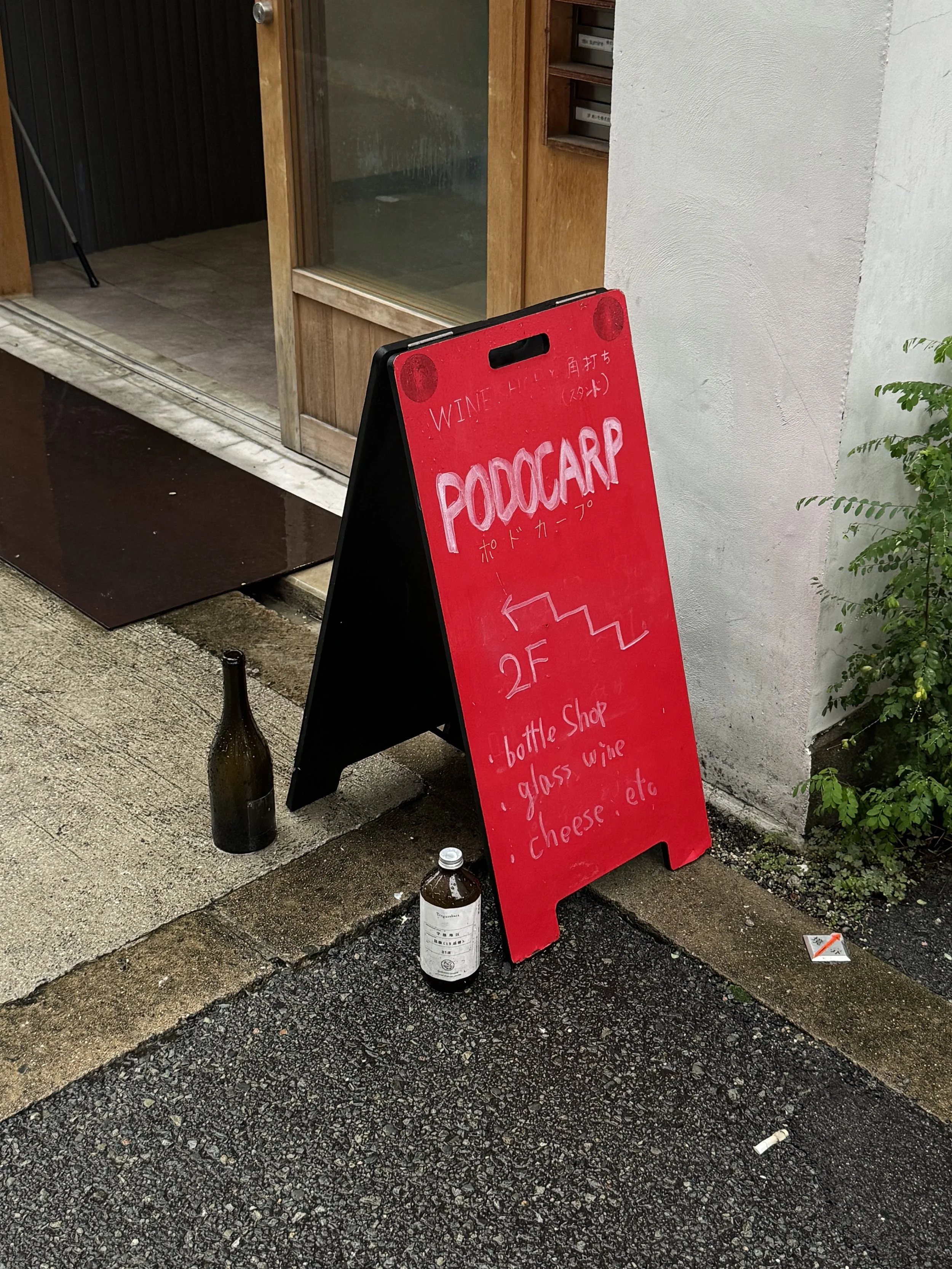
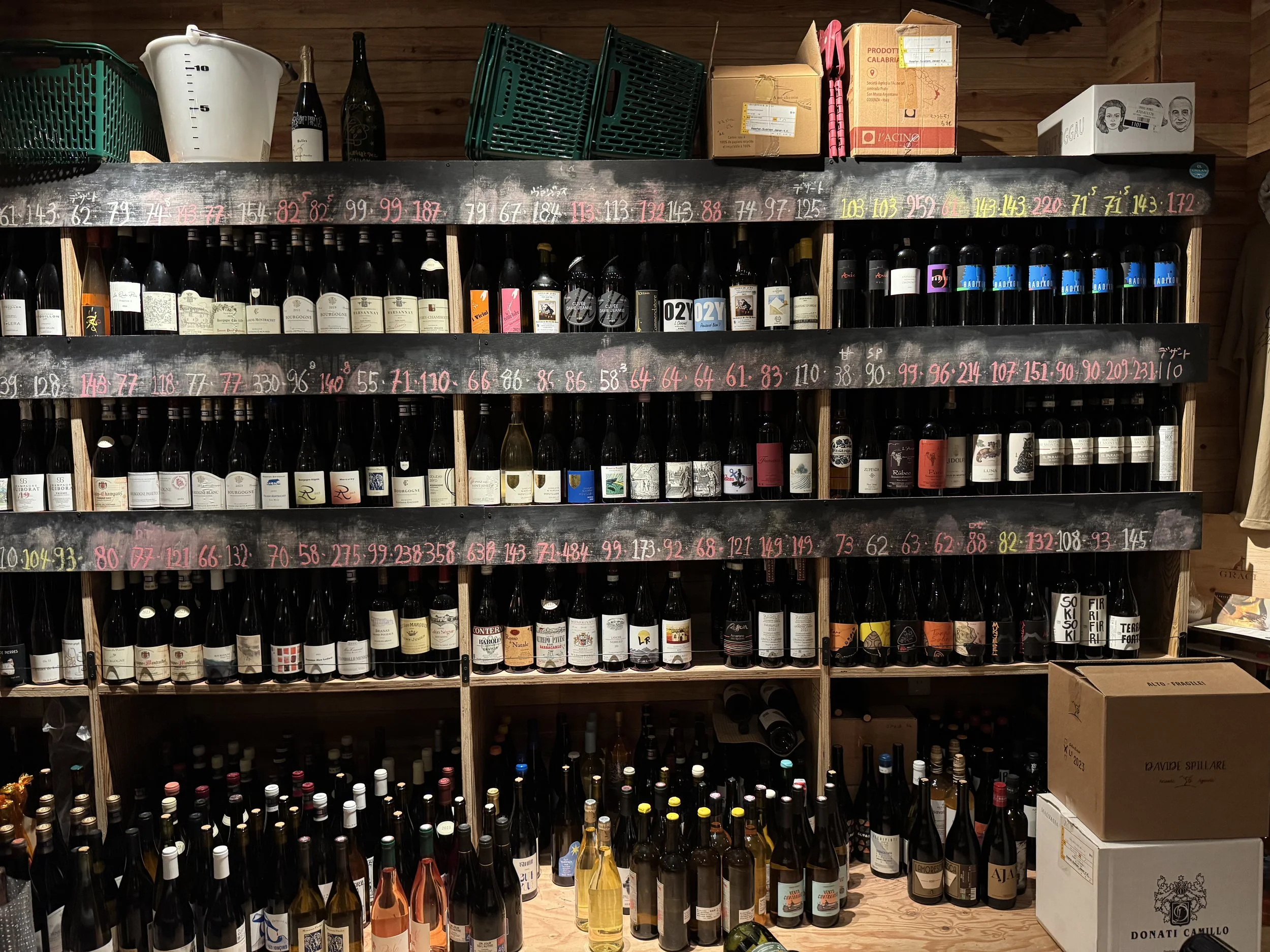
PODOCARP is another absolute must. Before you even open the door at PODOCARP, there’s a clue to the owner’s other great enthusiasm: a baseball home plate at the entrance. Owner Mr. Aramaki is a lifelong Hiroshima Toyo Carp fan, and the shop’s name carries a nod to that allegiance. His own account of childhood fandom includes listening to games on the radio and scattering homemade paper confetti around the room. Clearly, this was never a casual interest for him. Inside, the focus shifts to natural wine. The selection of wines available here is world class - maybe one of the best we’ve seen anywhere across the globe - and extends well beyond Japan, with bottles from places such as Slovenia and Georgia alongside French and Italian producers. There’s also a small place to drink on site, so you can make this more than a quick bottle shopping trip. We had the pleasure of meeting a Hokkaido chef and hotelier at the table over from us, as they offered to share their wine and subsequently invited us to come see them in Hokkaido next year. The vibes in this place were decidely “on” and we left with incredibly warm hearts.

Other restaurants/cafes/shops we loved: Natural Wine Shop Passion et Nature, Cafe Sourire, Belo, Winestand Perche, Fujiya 1935, obra, aoma coffee.
Things to do: Osaka is a great city to explore with loose plans. Give yourself a few spaces to aim for, but lots of time to step into the things you pass along the way.

Explore Horie and Orange Street. If you like interiors and independent shops, make time for Horie. Orange Street, or officially Tachibana-dori, grew out of the neighborhood’s furniture trade, and some longstanding furniture businesses remain alongside newer boutiques and cafes.

Browse Kuromon Market, then shop for kitchenware on Doguyasuji. Start at Kuromon for something to eat, then head to Sennichimae Doguyasuji, where shops sell the very equipment that keep restaurants in Osaka running. Browse professional cookware or spend an ungodly amount of time deciding which small bowl deserves a spot in your suitcase. These make a natural pairing for an afternoon wander.

See Dotonbori after dark. Go for the illuminated signs and crowds along the canal, then turn down the smaller streets. Definitely go at night when it’s most vibrant.

Go to a baseball game! We did not get a chance to do so, but not for lack of trying. The schedules just didn’t work out with our dates. I’ve had friends go in the past and have a blast, so check the calendar and even plan your dates accordingly.

Owl Cafe Chouette. I’m going to make this recommendation carefully and with a caveat. Owl Cafe Chouette, in Shinsaibashi, offers close encounters with owls in a woodland-themed interior, including experiences where an owl perches on your arm. Being close to these birds is an understandable draw, and did give us a greater appreciation for the ones we see in our backyard at home. But I have mixed feelings about including an owl cafe in a travel guide, because mentioning somewhere will of course encourage others to go. My hesitation is about the animals’ experience. Frequent handling and the conditions of a visitor attraction where the animals are held in captivity in perpetuity certainly raises welfare questions, no matter how common these cafes have become. I am therefore cautious about presenting owl cafes as an uncomplicated recommendation. But if you must encounter one up close: this is the place to be.
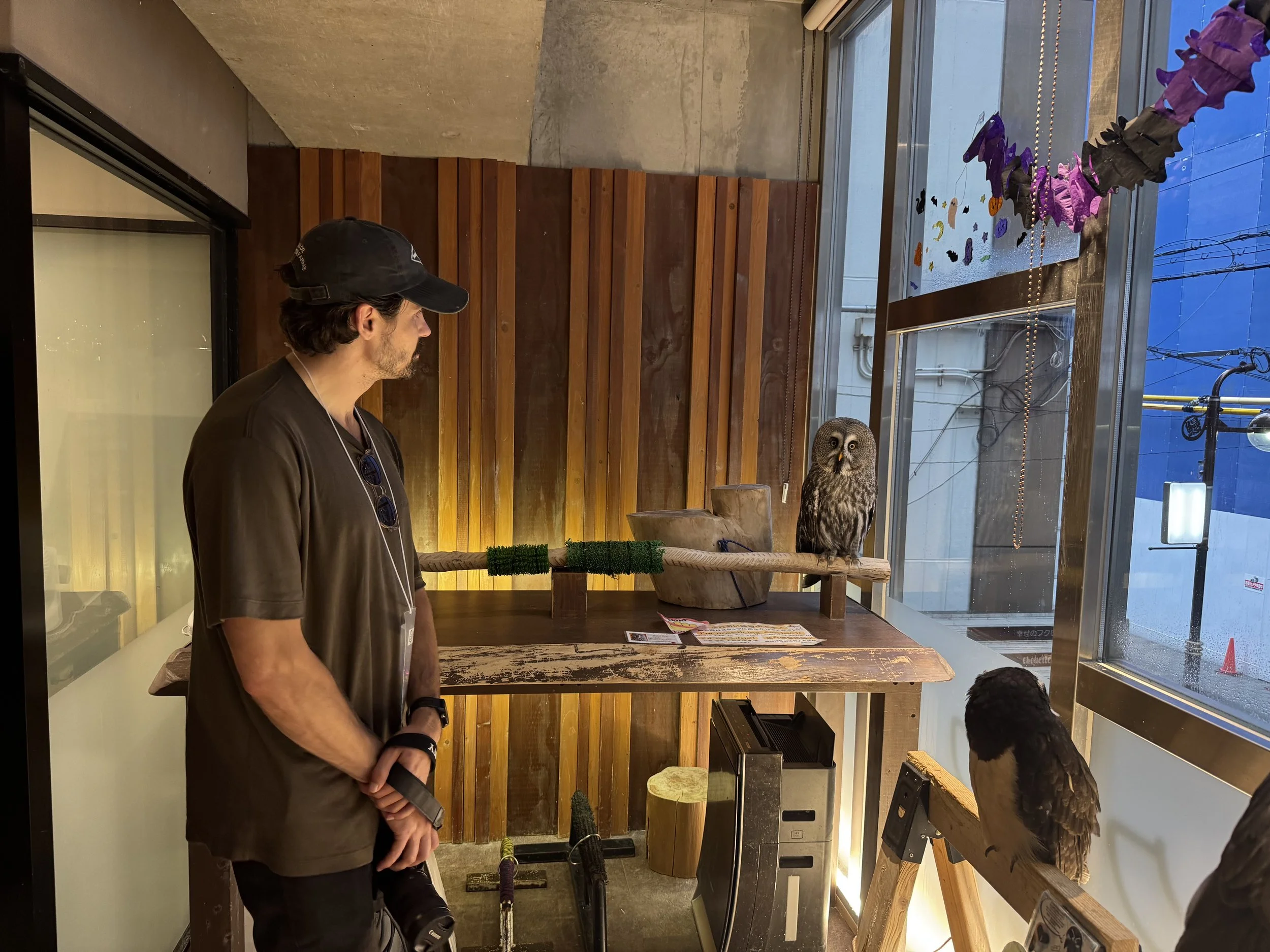
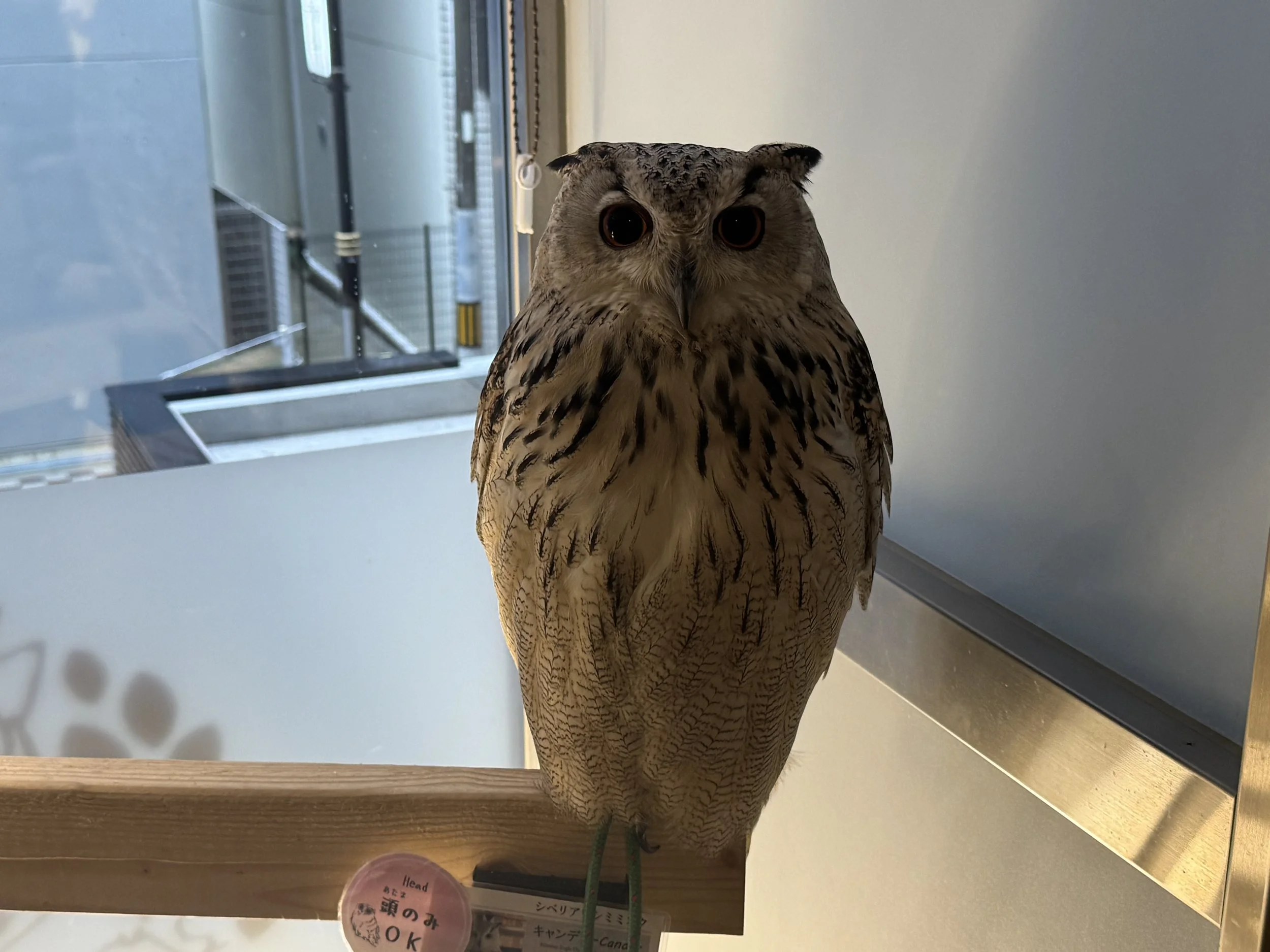
Spent an afternoon in Nakanoshima. For a quieter adventure in Osaka, head toward Nakanoshima’s waterfront and museums. The Museum of Oriental Ceramics is particularly worth considering. It gives a much broader historical context for the pieces you’ve seen in contemporary shops.

Consider a food tour early in your stay. We didn’t do this, but a friend of ours did (Hi Omri & Sandra!) and absolutely raved about it, so we are including it. It’s a great if you want someone to explain dishes and ordering customs before you explore independently. Choose one that allows you to talk with the guide and understand the neighborhood. You want interactive, not lecture.

A final note: we absolutely loved driving the majority of the trip and if you aren’t afraid of a little bit of adventure with learning to drive on the other side of the road, we’d highly recommend it. It enabled us to see an immense amount that we otherwise would not have. With that said, we are also a big fan of bullet trains and all of the public transportation available in Japan - so we front loaded our trip with driving, and then once back in the big cities, from Hiroshima to Kyoto to Osaka, we relied exclusively on public transit. It worked out perfectly. Only piece of advice: plan your trip routes out early and if traveling with big bags, be sure to book the proper seats which allow for oversized luggage. It saved us time and time again.

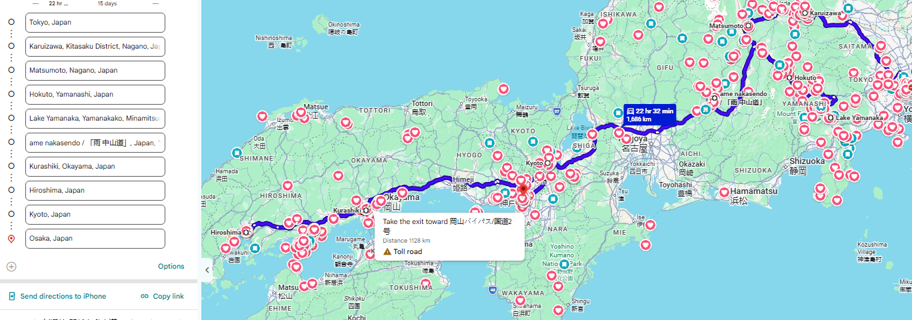
As we come to the end of our journey, I’ve included our trip itinerary below as a guide. Feel free to use it directly, or make it your own, and most of all: have fun!
Off the Beaten Path: Napa, Sonoma, Healdsburg and the Coast

Planning a trip to California wine country? This is our version: Frank Lloyd Wright detours, Healdsburg, Dawn Ranch, natural wine, redwoods, coastal seafood.

I hate to say it, but Napa and Sonoma are pretty easy to do badly. I know from experience. There is a version of both that is all stuffy tasting room reservations, wildly overpriced pours, overly polished restaurants, and the same old world wine banter spoken at you all weekend long. I guess I can see the appeal if you’re looking for a classic experience that looks good on paper, but for us it feels sterile and flat. There is actually so much vibrancy in the area - you just need to know where to look for it.

It starts with the scenes on the road and carries throughout the entire journey, from the moment your plane wheels hit the ground. We’re talking architecture, old tree canopy-lined streets, bakeries, farm stands, fresh oysters, markets.

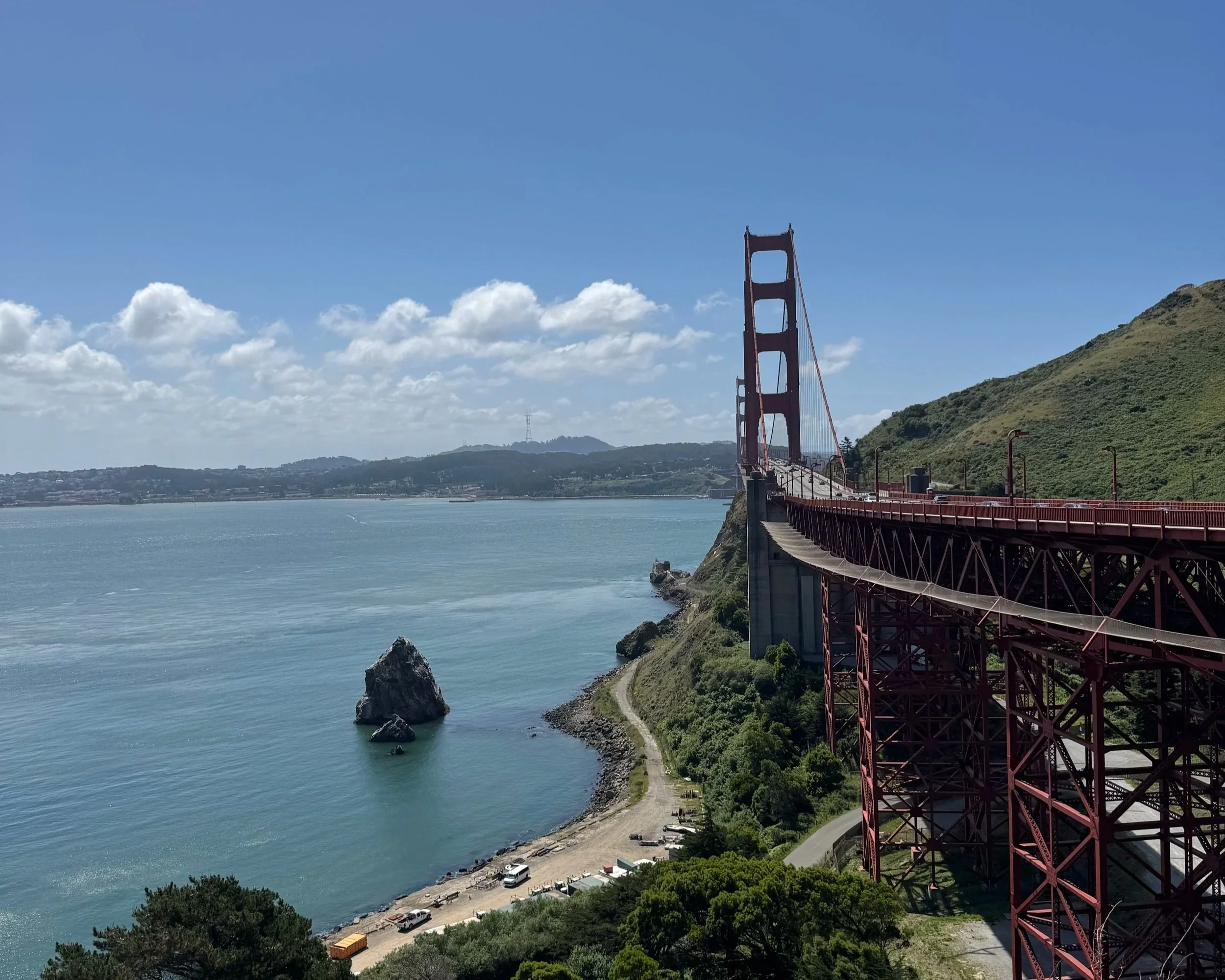
We flew into the Bay Area on a Monday (side note: highly recommend a slightly off season weekday trip, as it’s much quieter and cooler), crossed the Golden Gate at sunset, traced a line through Marin, Petaluma, Napa, Sonoma, Healdsburg, Forestville, Bodega Bay, Jenner, and Point Reyes, then looped back through San Francisco.

If you are planning a Northern California wine country trip and want a less obvious but more cozy and intimate version, this is the route I would recommend.

Start in Marin: the Frank Lloyd Wright detour

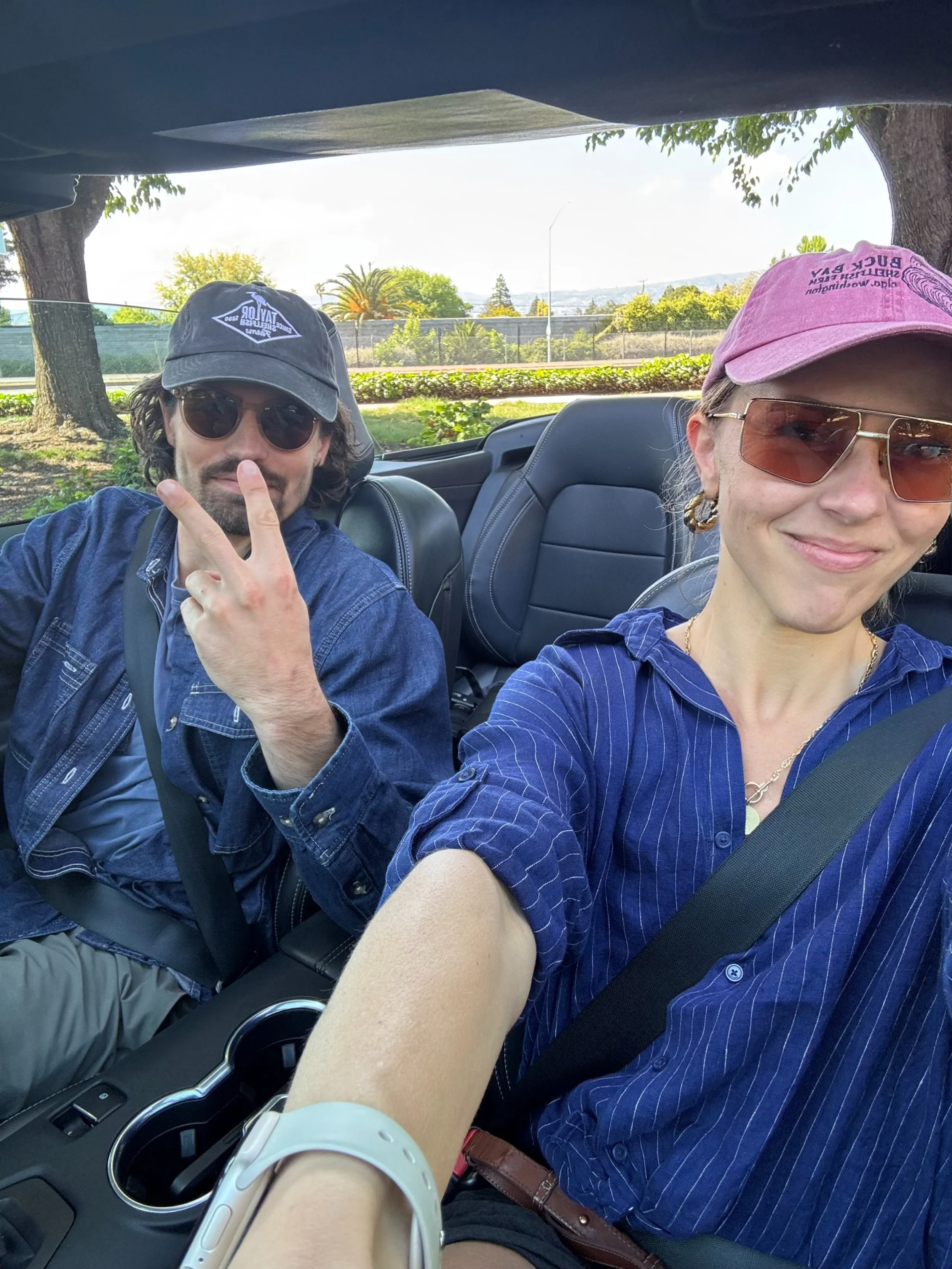
We landed, made the airport shuffle from San Jose to SFO, and picked up a rental car that turned out to be better than expected: a convertible Mustang with enough power, trunk space, and exactly the right level of fun (and sun!) for this kind of roadtrip adventure.

From there, we crossed the Golden Gate Bridge and pulled off at the viewpoint. A heck of a way to start the journey and see the full vantage point of the city just in time to leave. The smartest thing we did, though, was not heading straight into wine country. We started in Marin.

Marin Civic Center

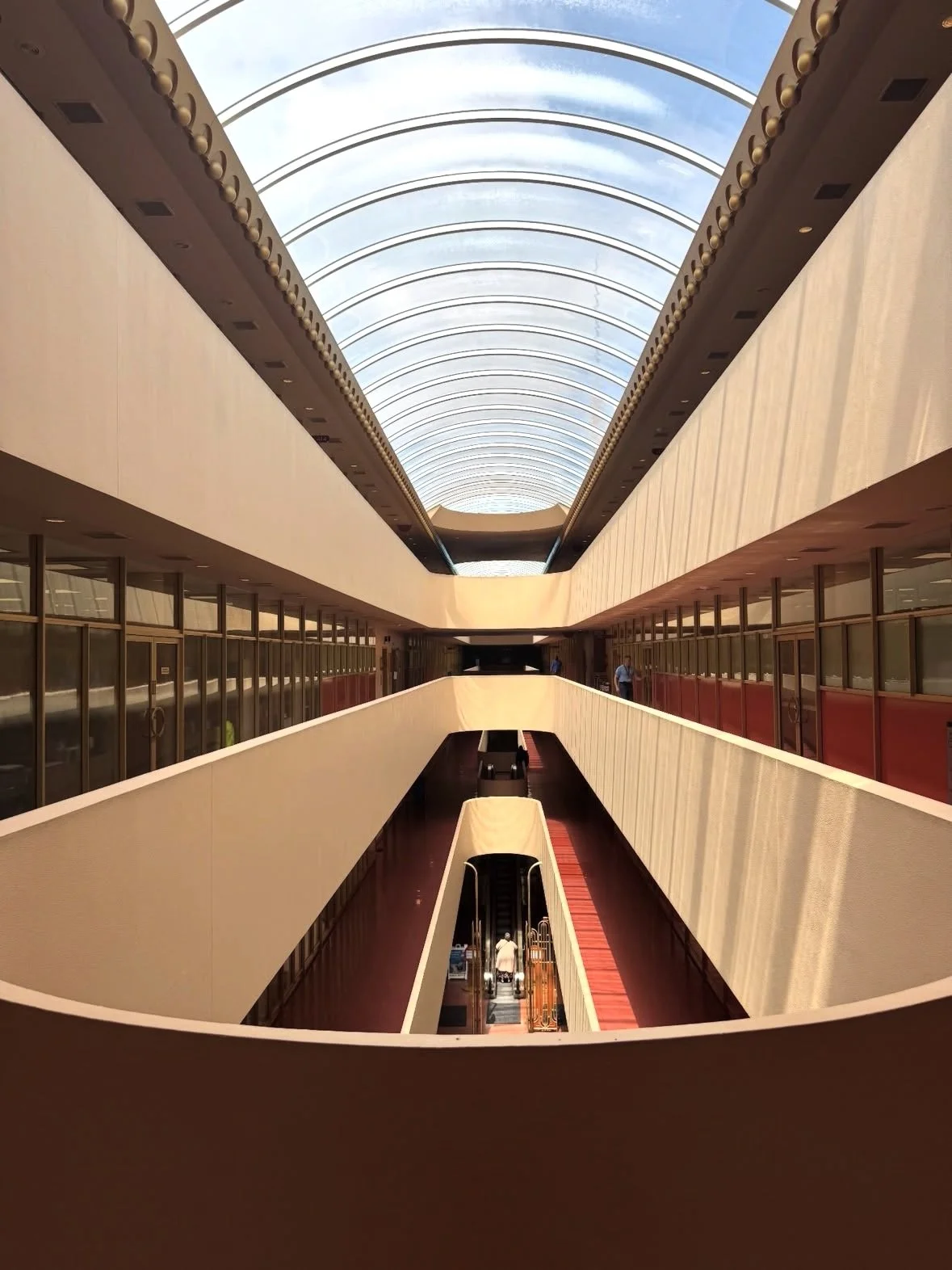
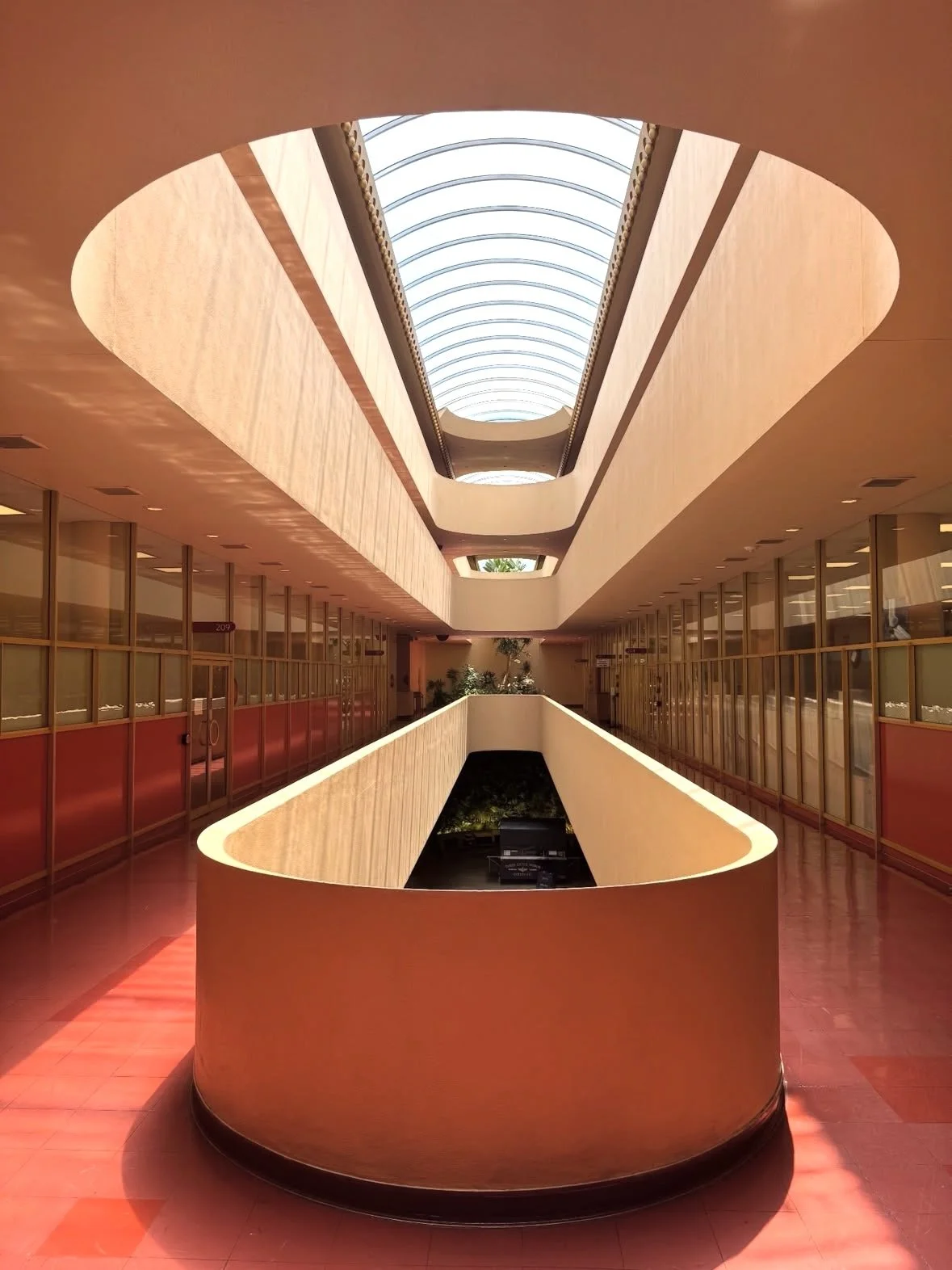
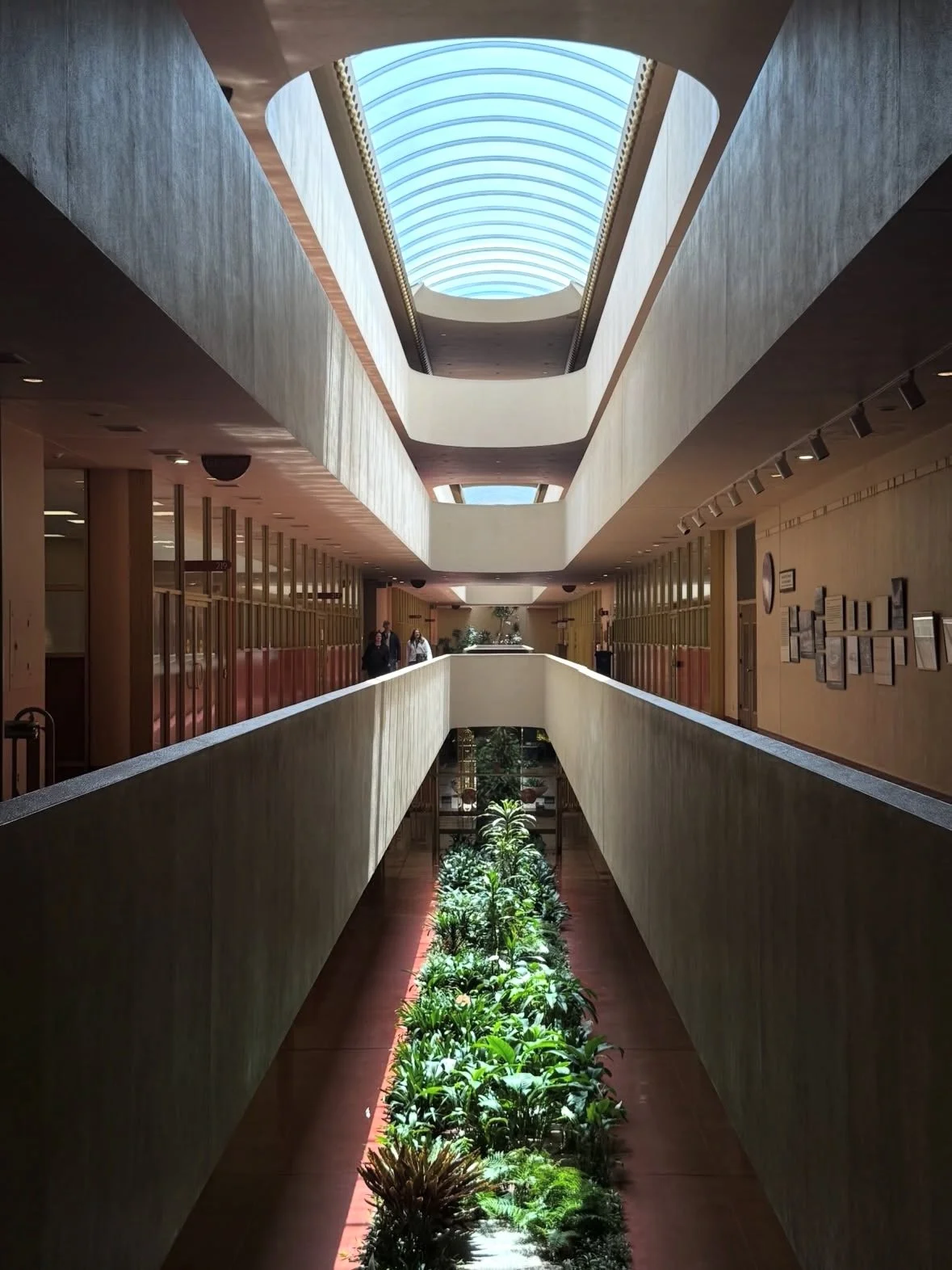
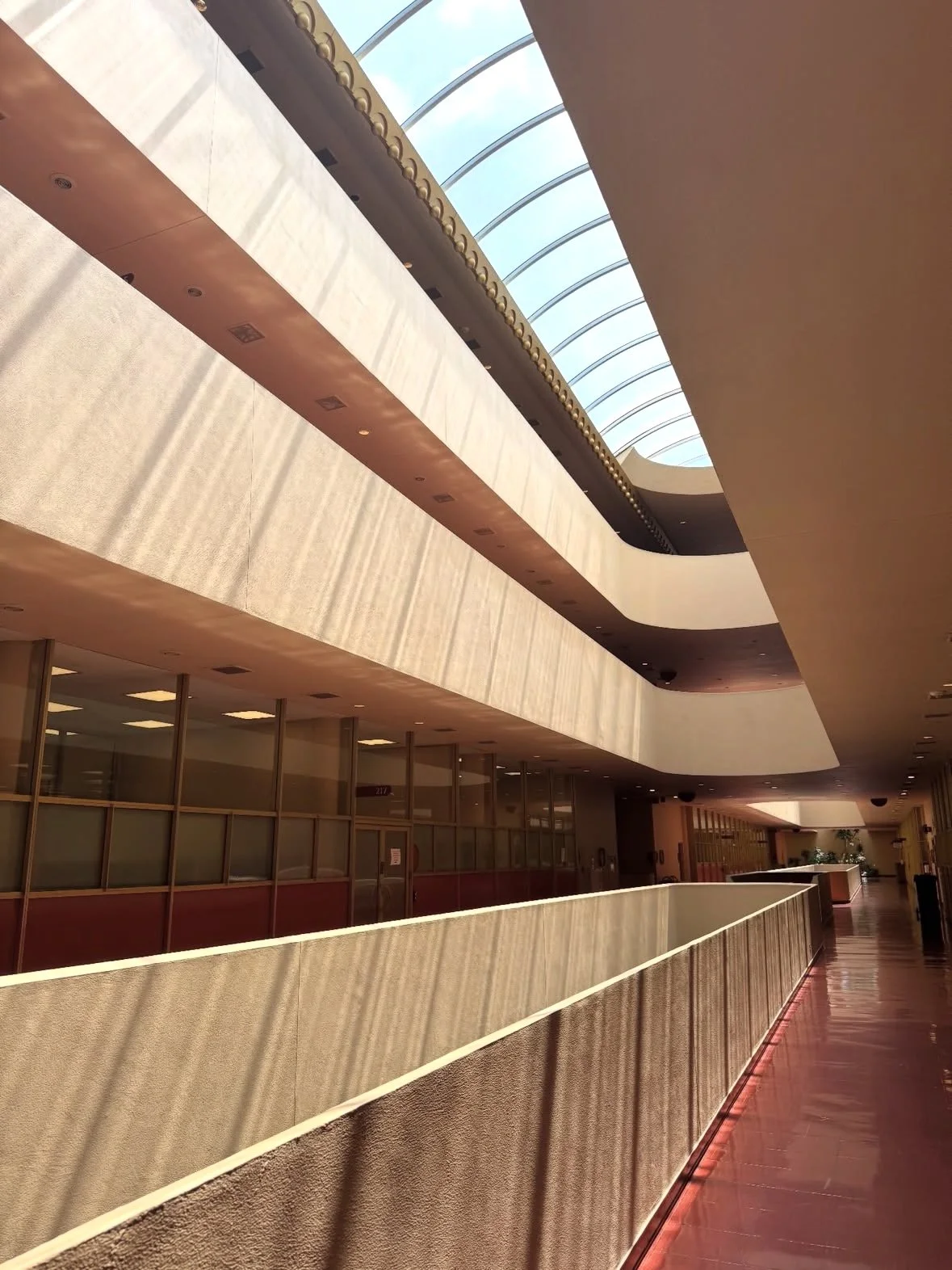
We started at the Marin Civic Center, and this is the stop I would recommend to any fellow architecture appreciator. This was Frank Lloyd Wright’s last major public commission. It is large, but it does not feel punishing. It includes civic services, offices, gardens, a jail, a long central concourse, a spire, blue rooflines, gold-toned escalators, water, circles, light… everything you could imagine could fit into one (very large) building. Most government complexes are built to project authority but this one feels built for actual humans to move through.

The building has earthiness, greenery and warmth. It has rhythm. Light moves through it in a very fluid way, making it feel intimate. Even the formal large-scale geometry feels somehow gentle and inviting. Birds can be found flapping their wings around the inner courtyards. This is one of the best openings to a wine-country trip because it immediately draws your attention into *details*, which certainly shaped the mentality with which we approached the rest of the trip.

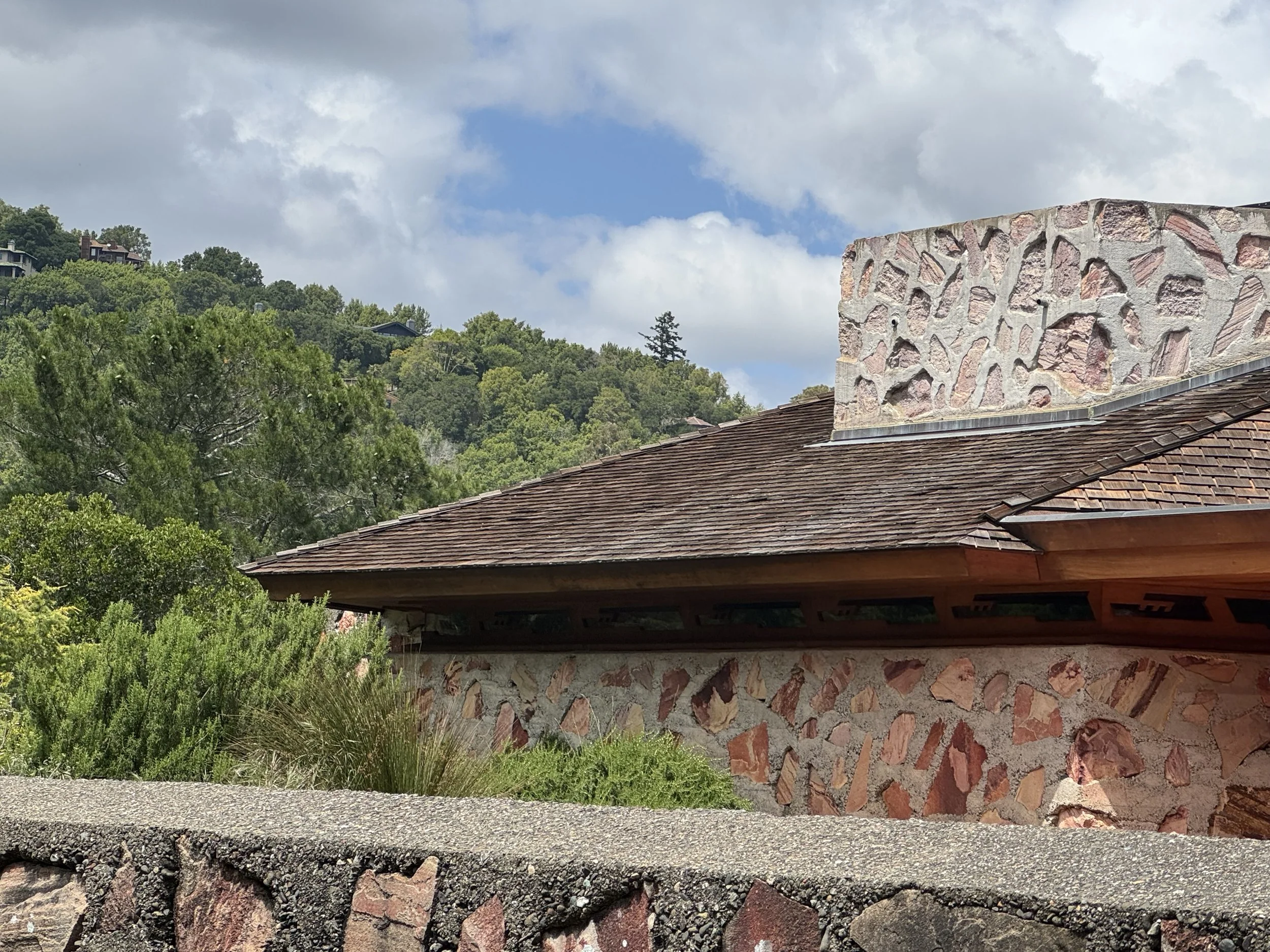
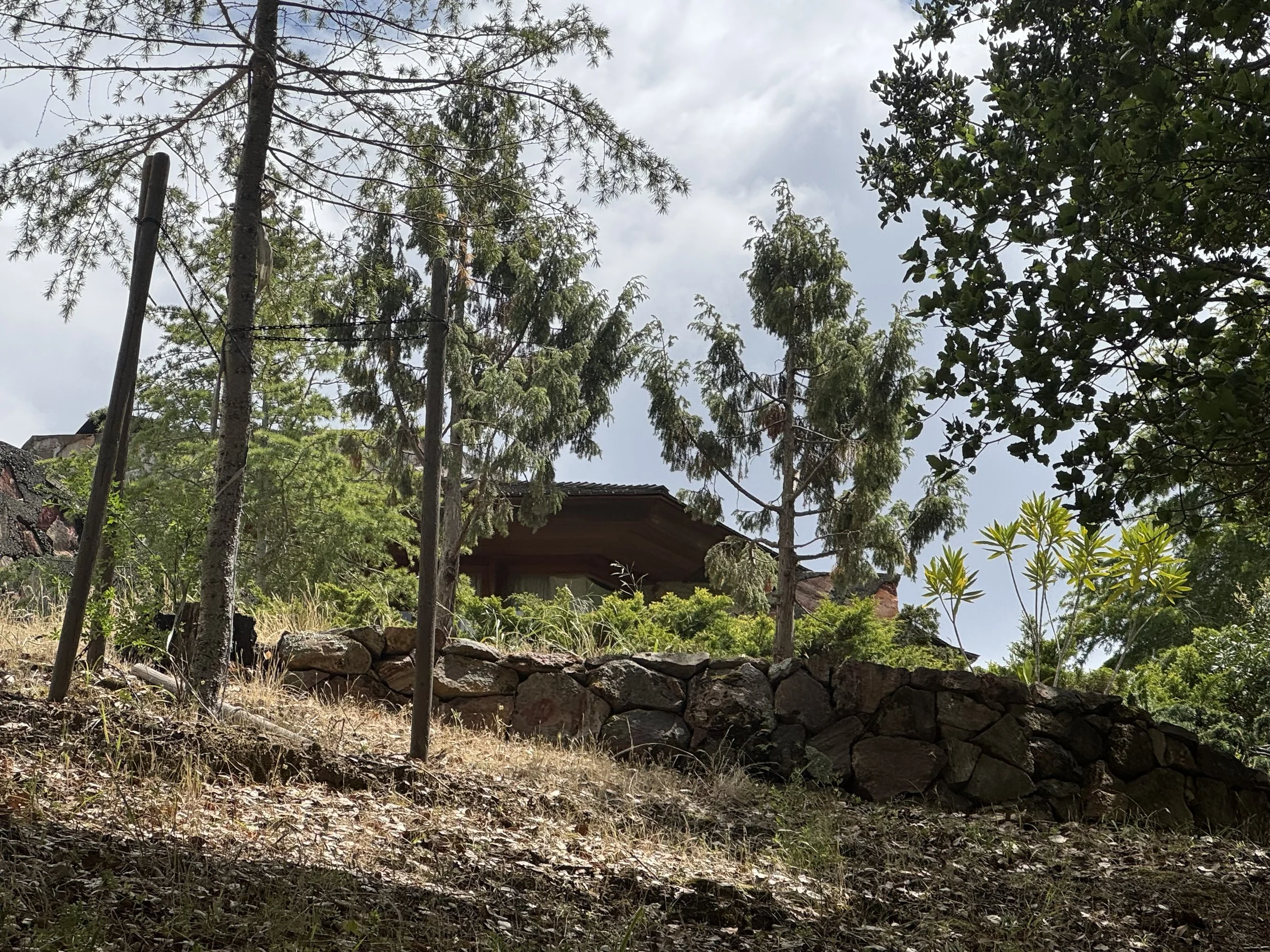
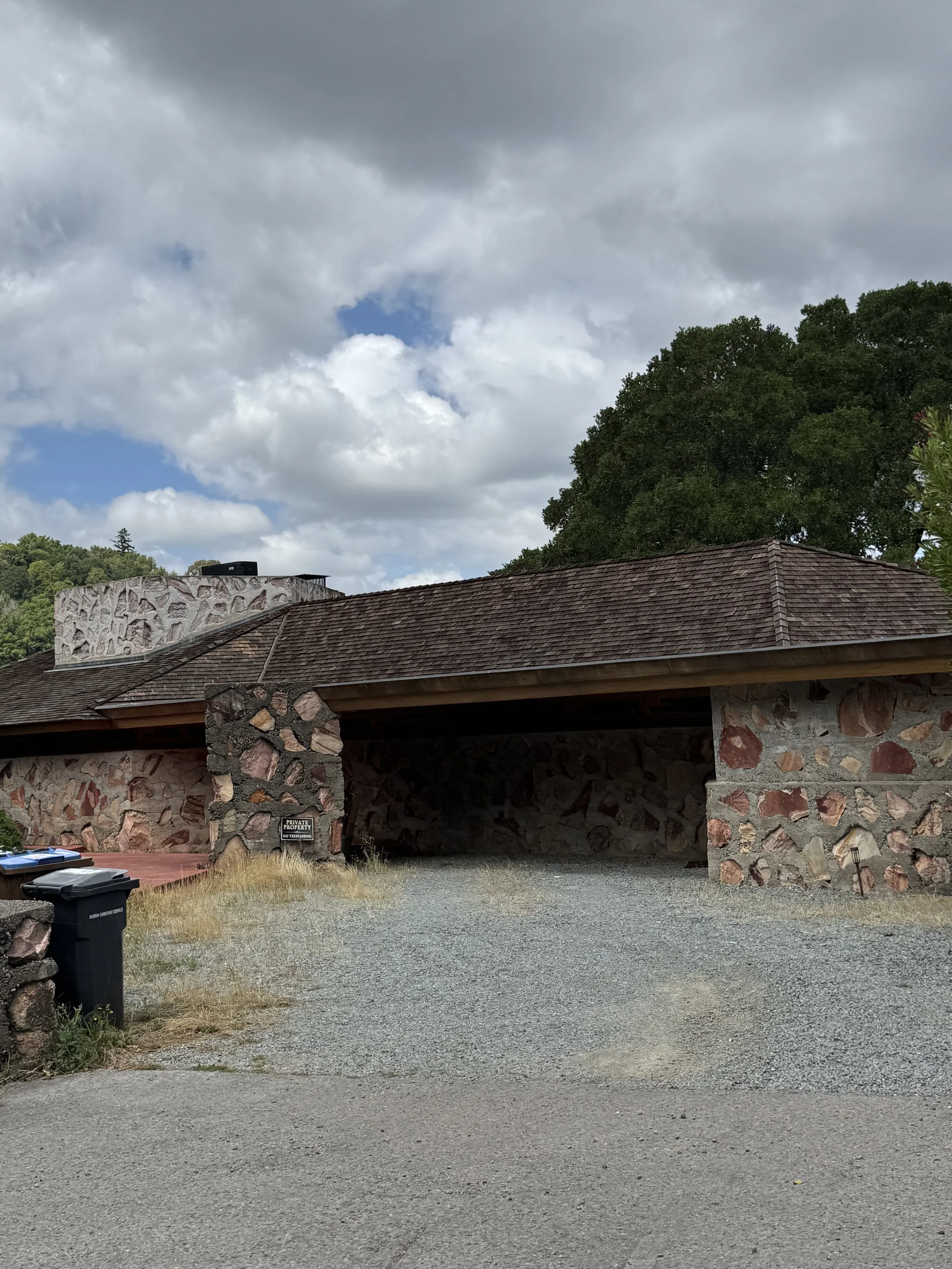
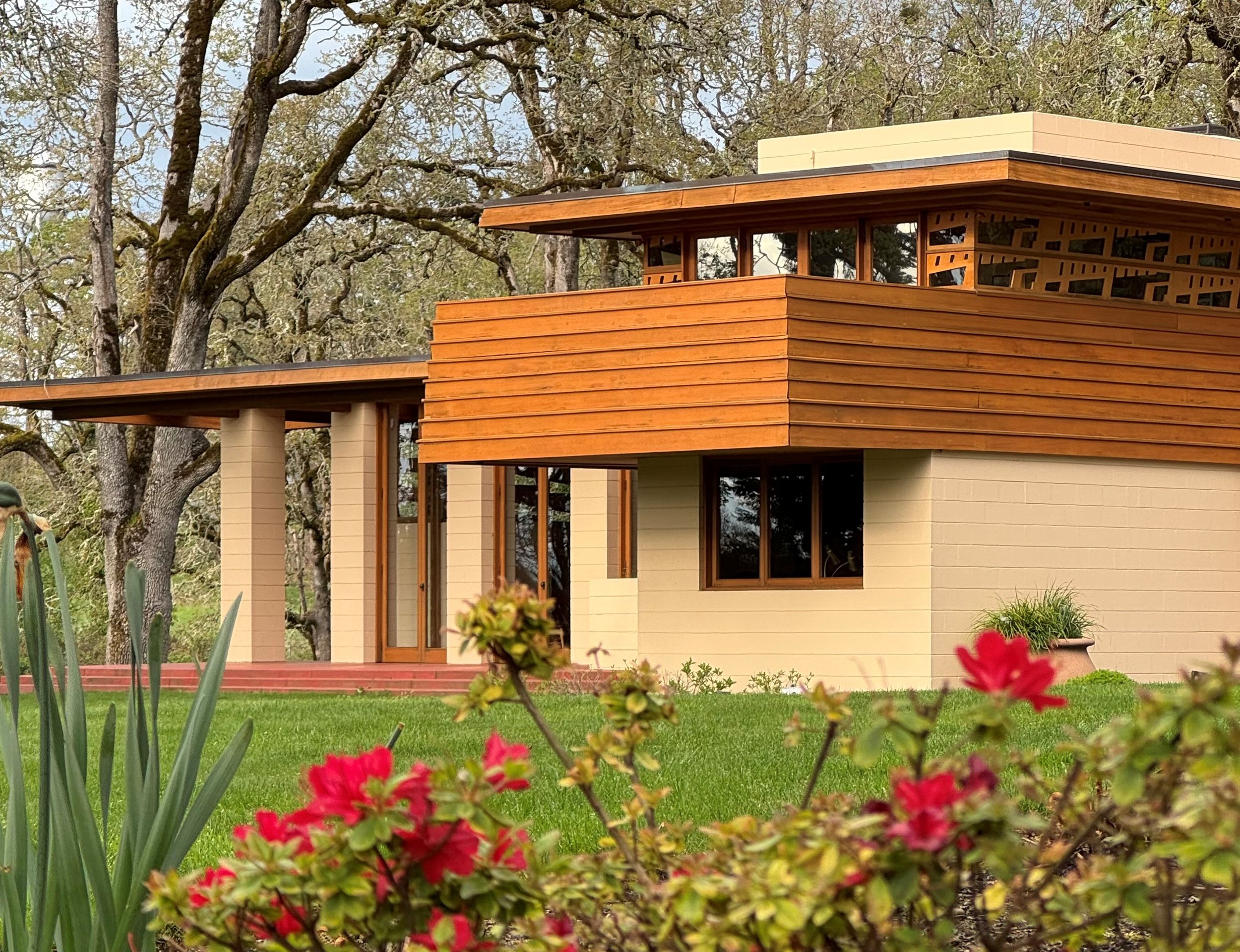
We then continued onto the Robert Berger House, which is not a public attraction. It is private, and the visit to this FLW house is essentially a respectful drive-by. That said, it is still incredibly worth it if you care about architecture.

Berger commissioned Frank Lloyd Wright, then built the home himself over several years, camping on site while major portions came together. It’s incredibly recognizable from the moment you lay eyes on it; from the classic FLW window cutouts to the way it blends into the land itself. The Marin hills have a Mediterranean quality to them: narrow roads, steep grades, houses tucked into slopes, dense pockets of development. It feels more Italian than suburban. A perfect setting and even better place to get lost for an afternoon.

Berger House, San Anselmo

The Road North: Bakeries, Farms, and Markets

One of the easiest mistakes in Napa and Sonoma is building every day around one high-ticket tasting in a stuffy overproduced climate. You’re robbing yourself of the diversity of the place by sitting in one chair on one vineyard! The approach we recommend is to layer the trip with smaller, more useful stops that give the region (and your taste buds!) shape.

Petaluma: A Small-Town Vibe with Everything You Need

Petaluma always surprises me; Napa does not. It has such a sweet and endearing quality to it - not too big, not too small, but contains everything you could possibly want in a small little town, complete with a charming local market filled with an abundant supply of produce, bread, pastries, chocolates and local goods. I’d pick Petaluma 10 times out of 10 if I had to choose between it and Napa.

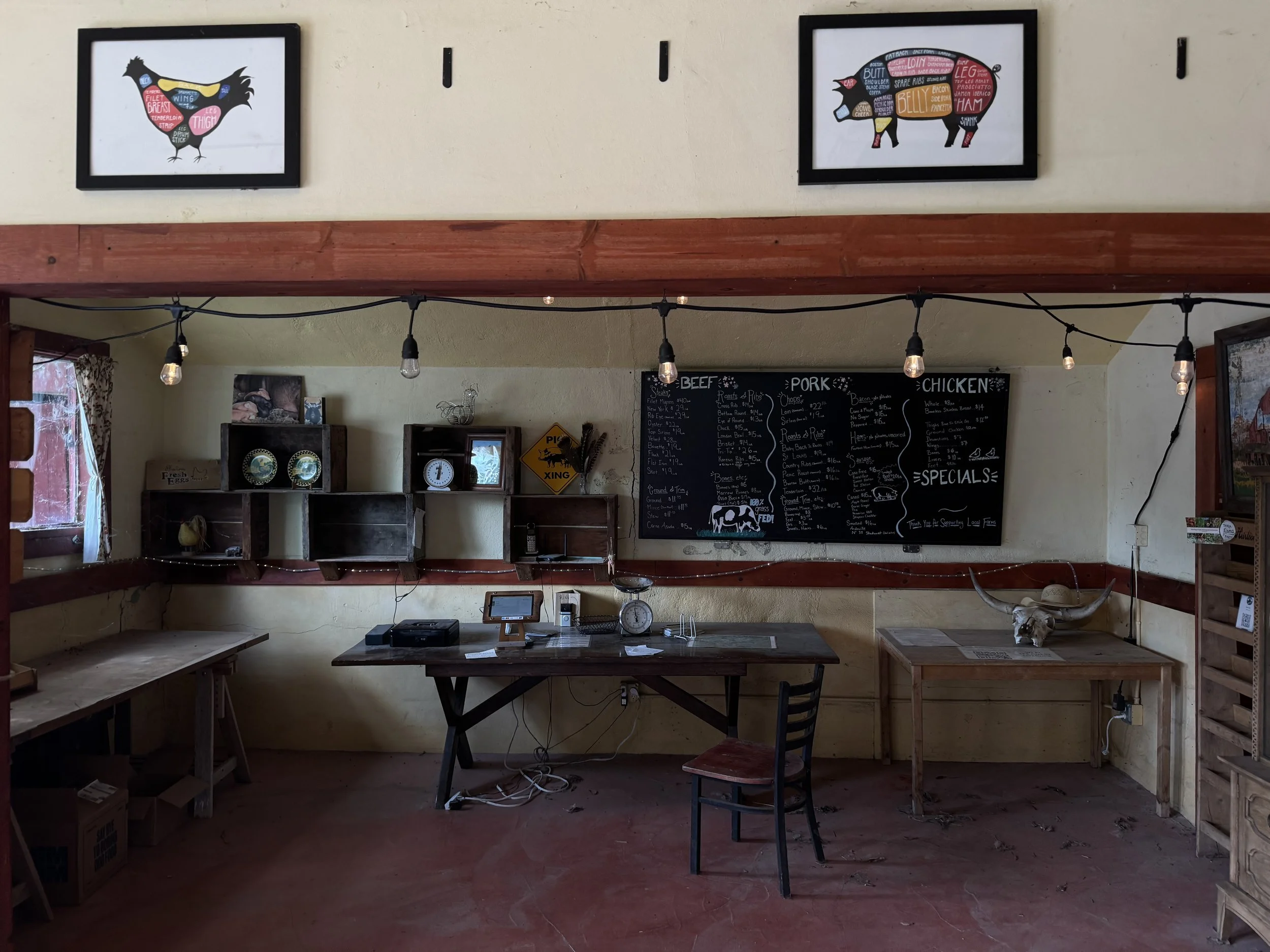
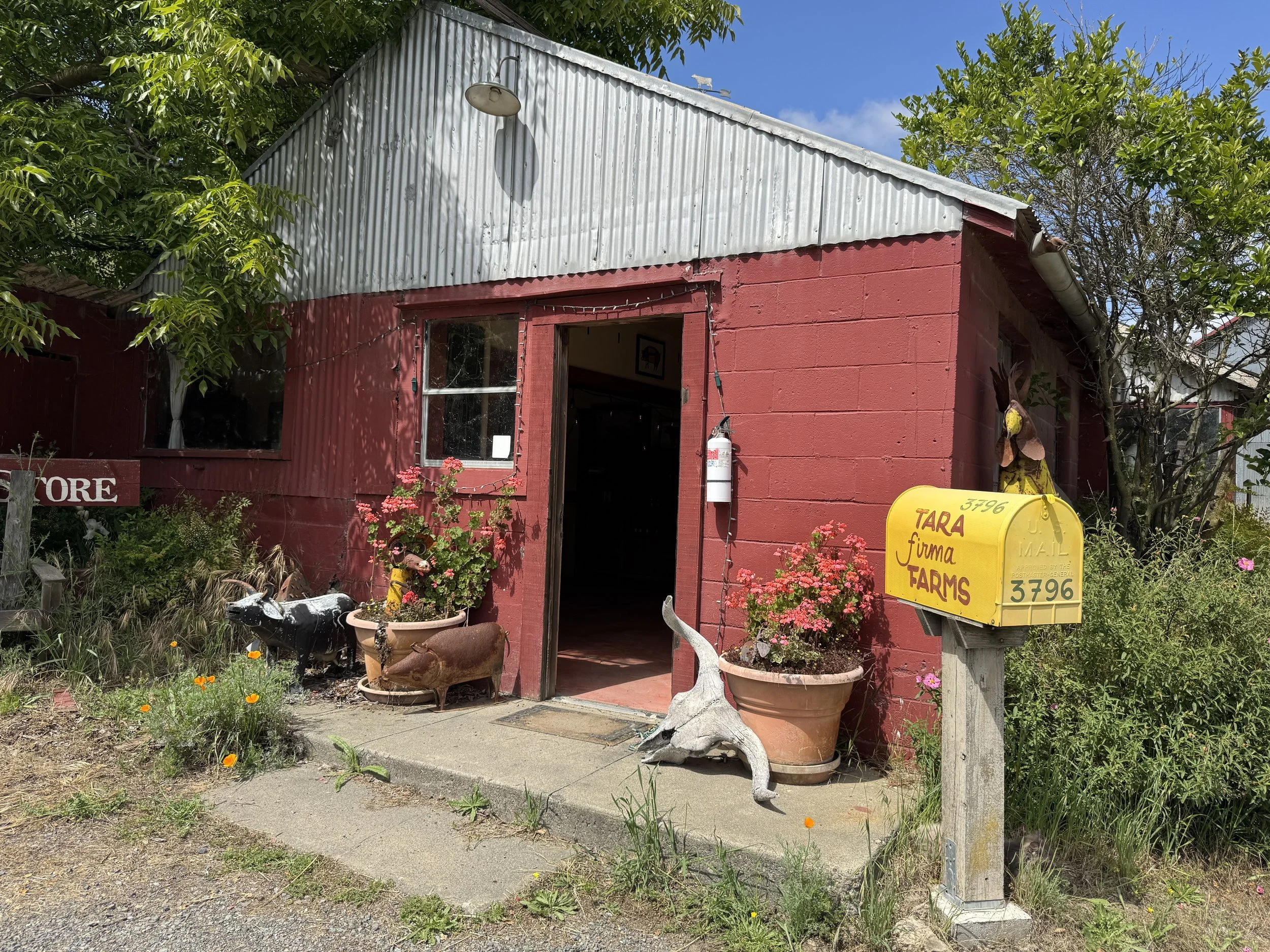
Tara Firma Farms

Lovely, community-minded, and rooted in the landscape southwest of Petaluma. A must stop!

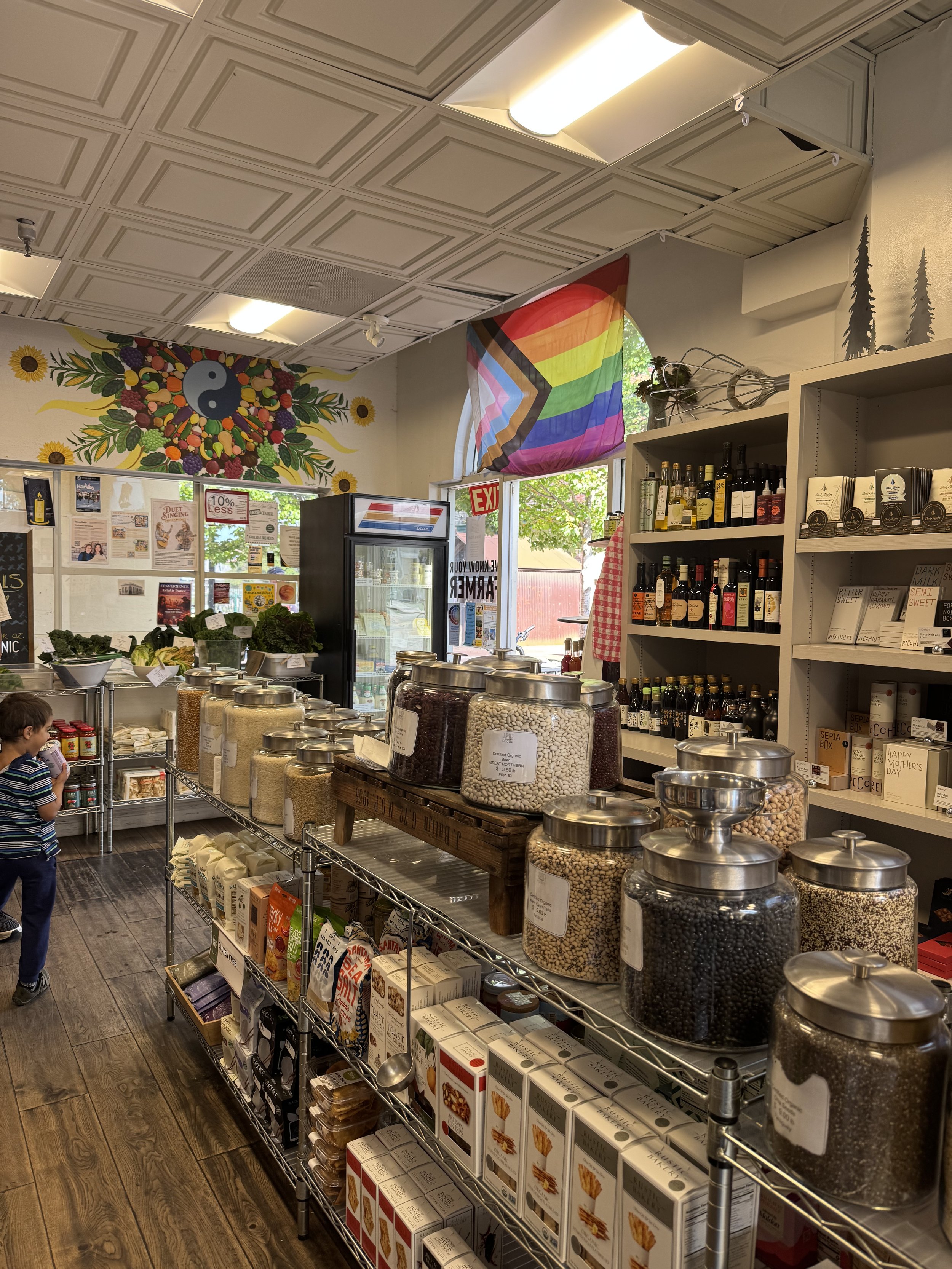
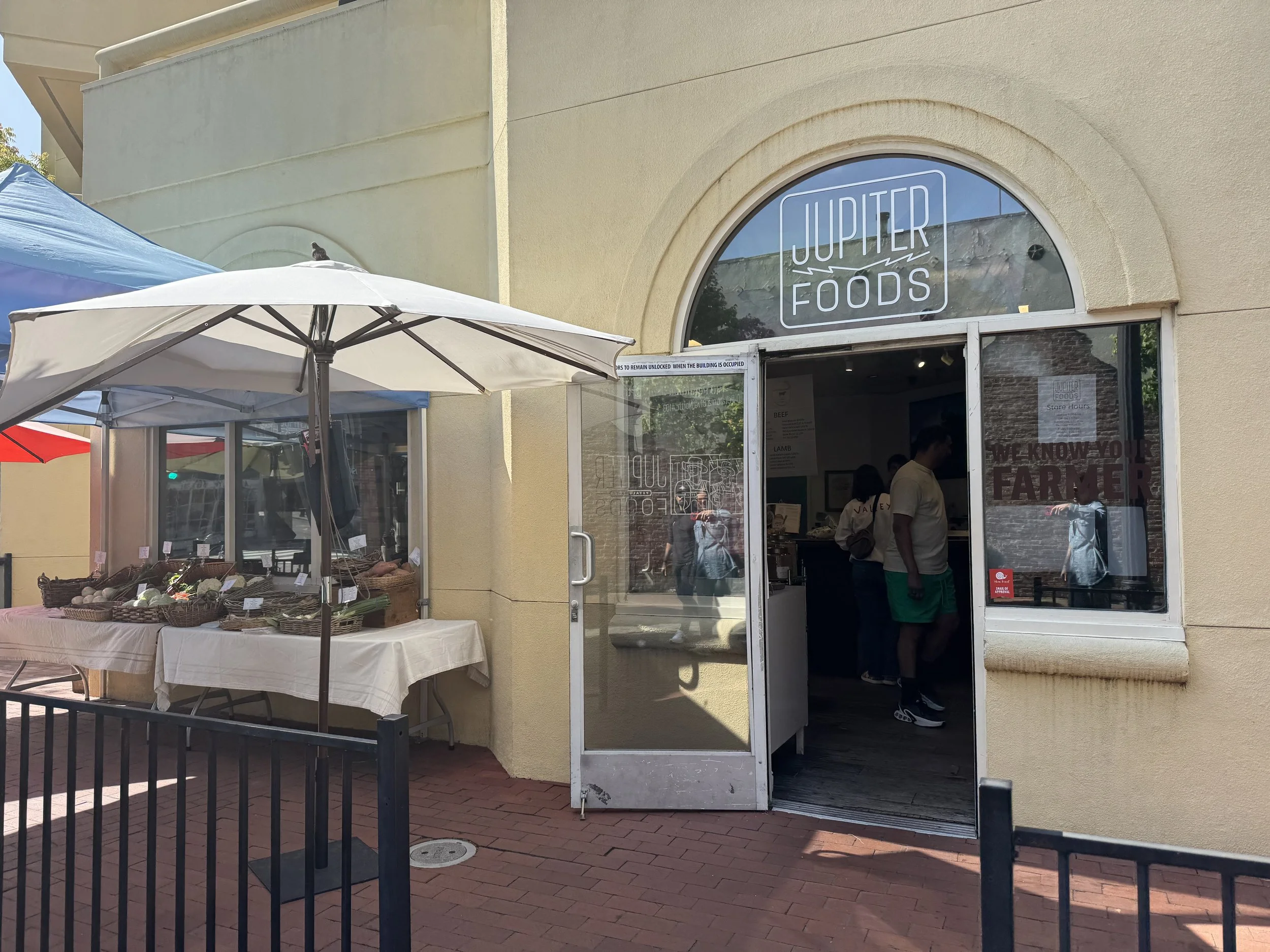
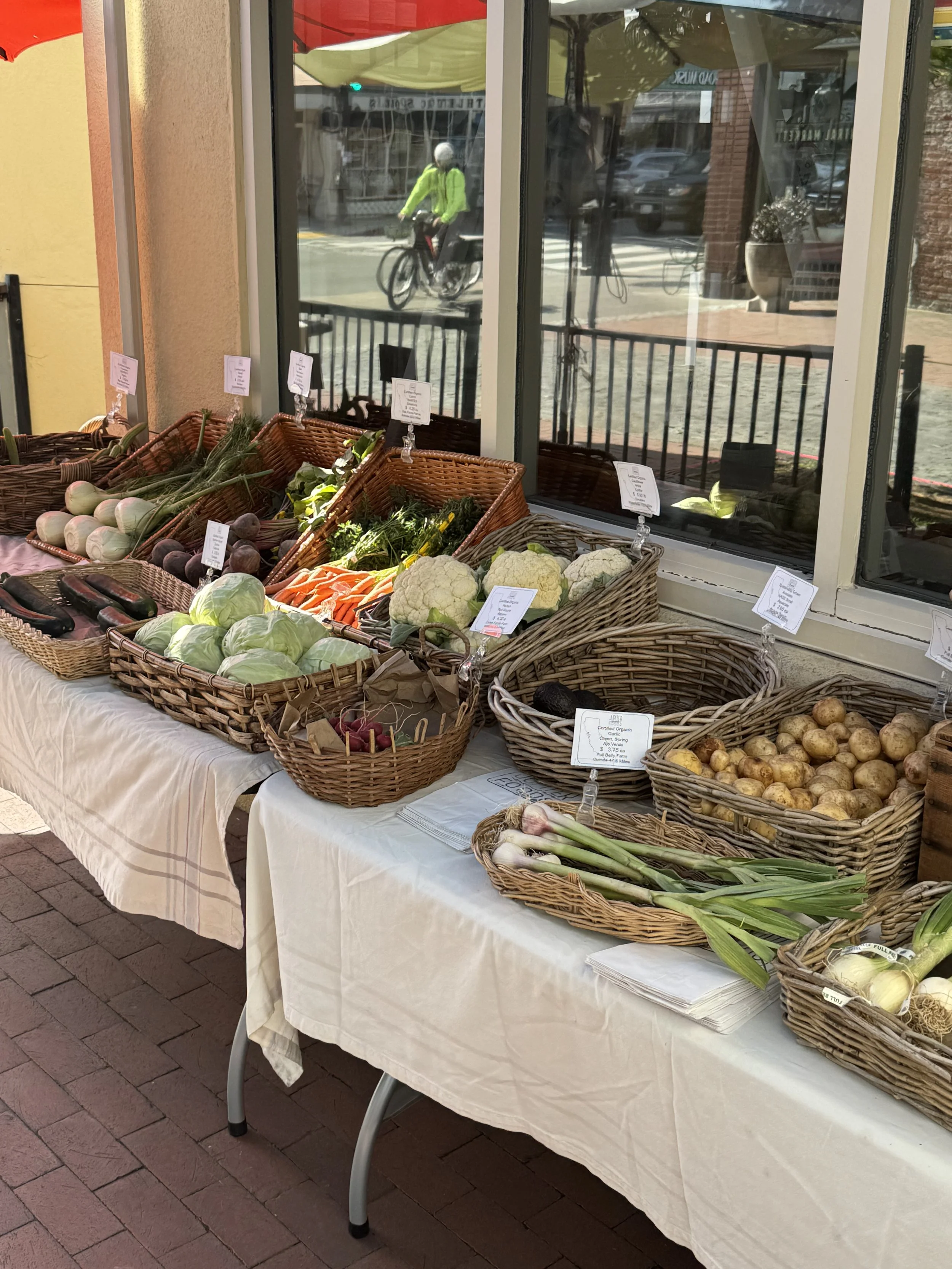
Jupiter Foods

Opened in 2021 in the middle of the pandemic, Jupiter Foods is a specialty grocery store selling all the best ingredients. “Good Groceries,” was the founders call them, are exclusively organically grown and local. They have a small space, which they boast “only contains the good stuff” due to its limitations. I wish all grocery stores were like this and not filled with glyphosate-laden overly processed junk! A must stop!

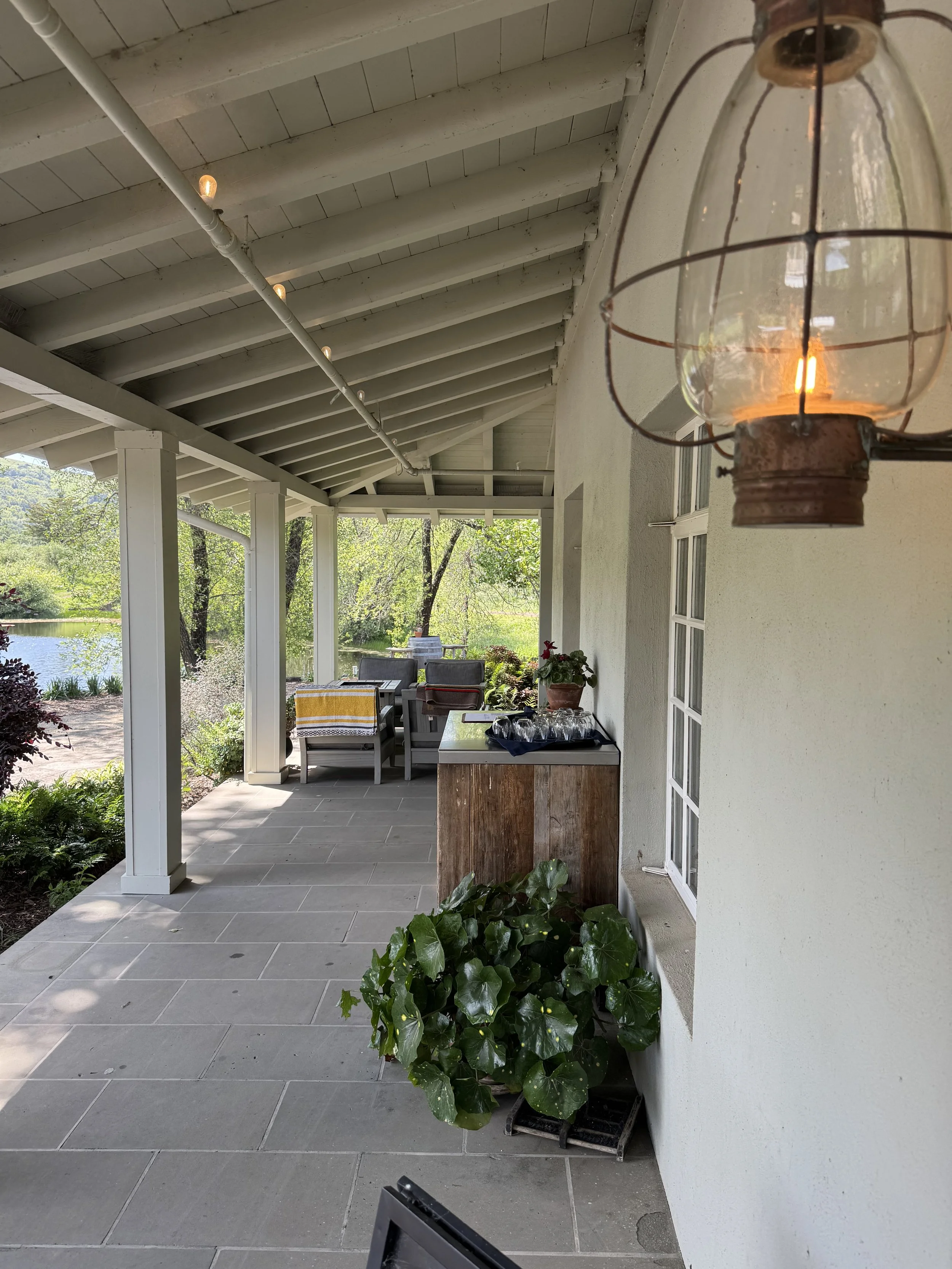
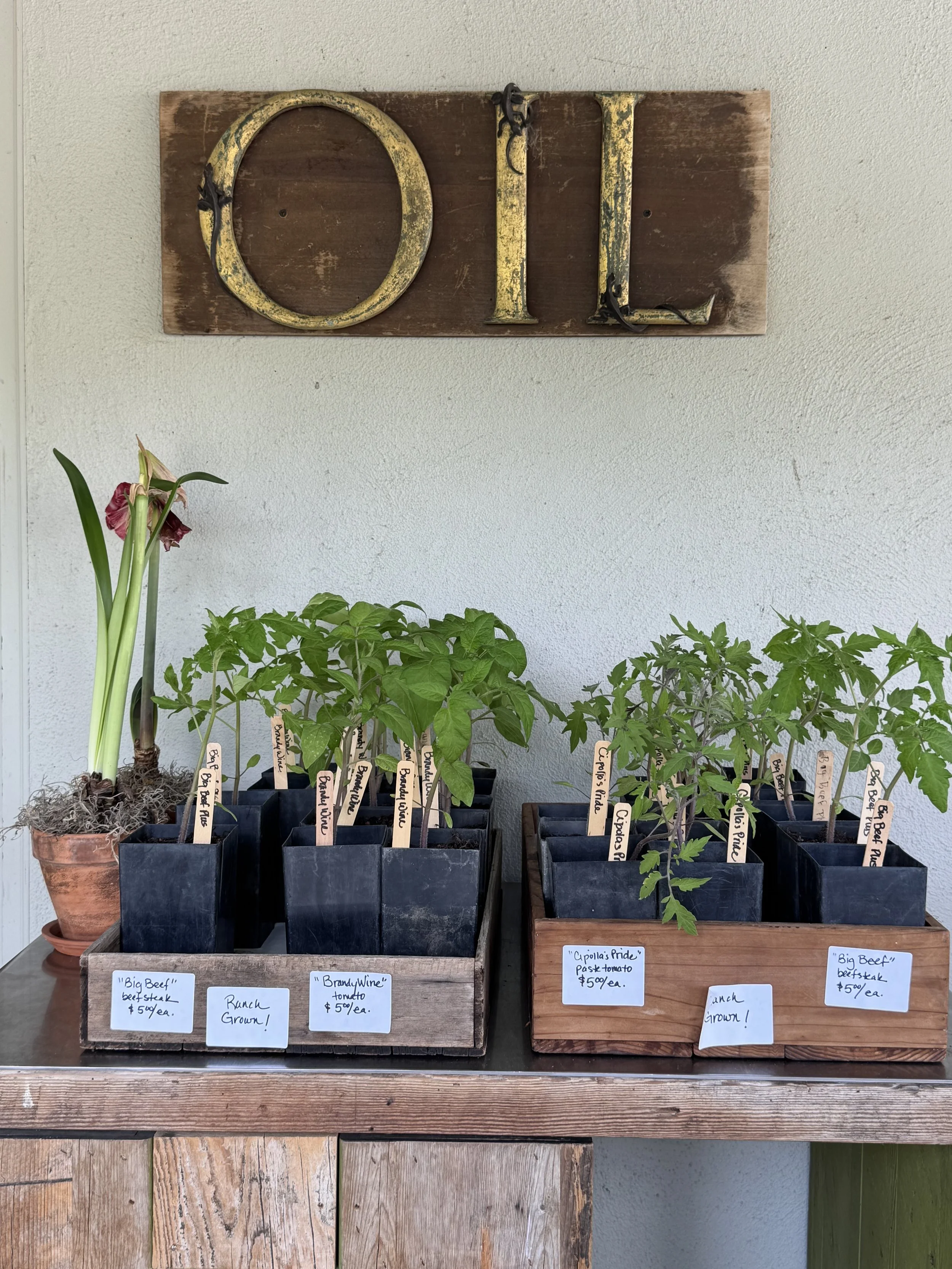
McEvoy Ranch

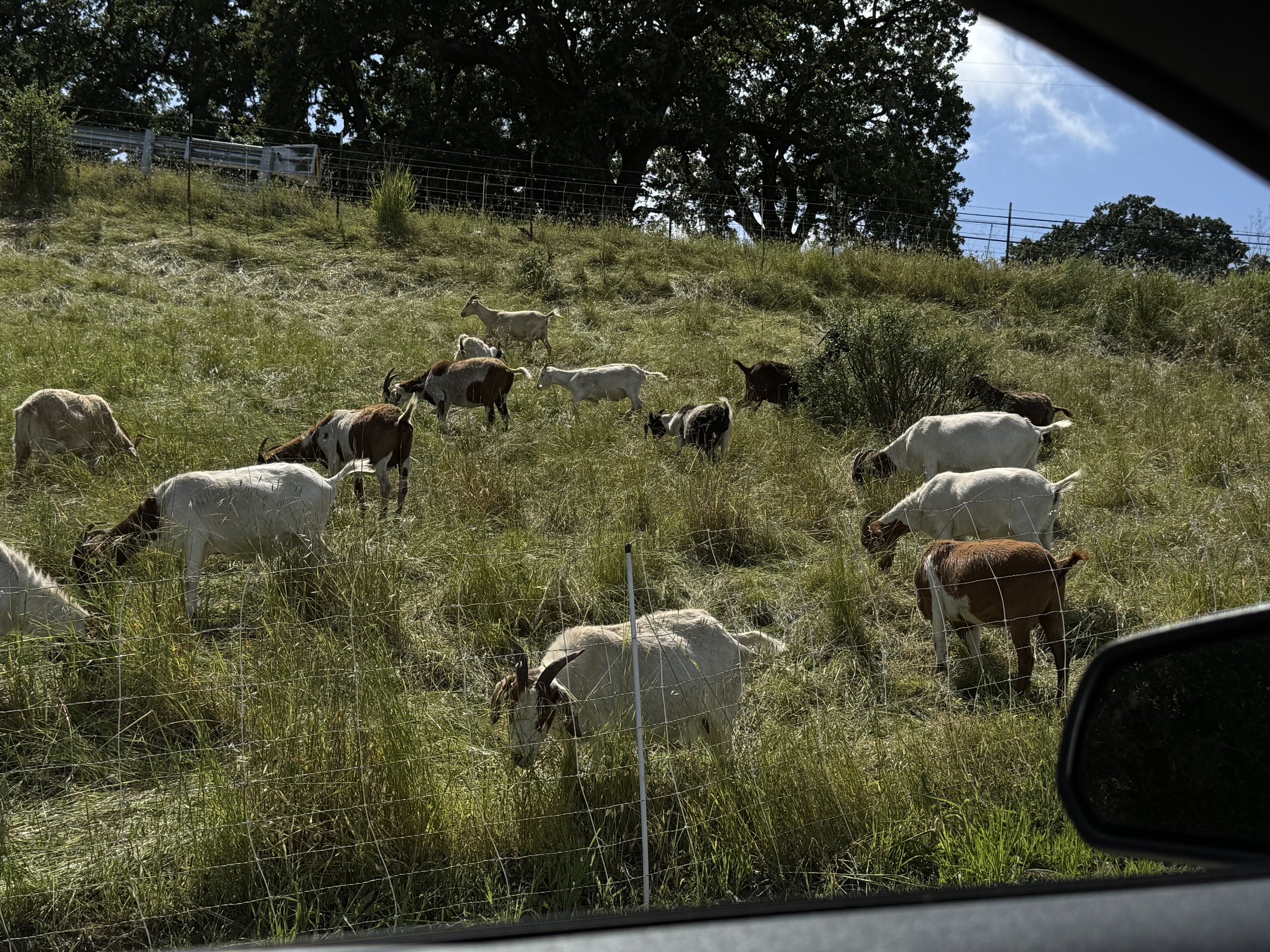
McEvoy Ranch was one of the most visually satisfying stops of the trip. The long entrance, rolling hills, olive groves, pond, farmhouse setting, patio, goats, and vineyard structure all just *work*. It is polished, but not in a hollow, mass produced type of way. It feels expansive and yet, composed. The olive oil focus gives it a slightly different center of gravity than the usual wine-country stop, which helps. Something about seeing the goats roaming the pastures leading onto the property healed me inside.

Downtown Petaluma

Walkable, appealing, charming, and easy to browse for a few hours. Good bakeries, some worthwhile shops, a comfortable rhythm. The natural wine scene felt lighter than I hoped, and the retail selection was just fine, but the town itself had more character than some of the places with bigger reputations.

Downtown Napa

Downtown Napa felt polished and we tend to prefer a bit more rough around the edges. This may not be everyone’s opinion but it was ours. It felt clean, curated, well-managed - which is great for a quick day or two, but it was as if the edges had been sanded off.

Now let me get it straight: that does not mean there is nothing useful or enjoyable there. It simply means I would not make it the emotional center of the trip and to manage your expectations around that. My favorite place which I entirely forgot to take photos of was actually Gotts Roadside. They have killer burgers - including my personal favorite, the ahi tuna burger - and are an easy and filling bite after a long day of exploring and/or wine tasting. Don’t miss it, I dream of it!

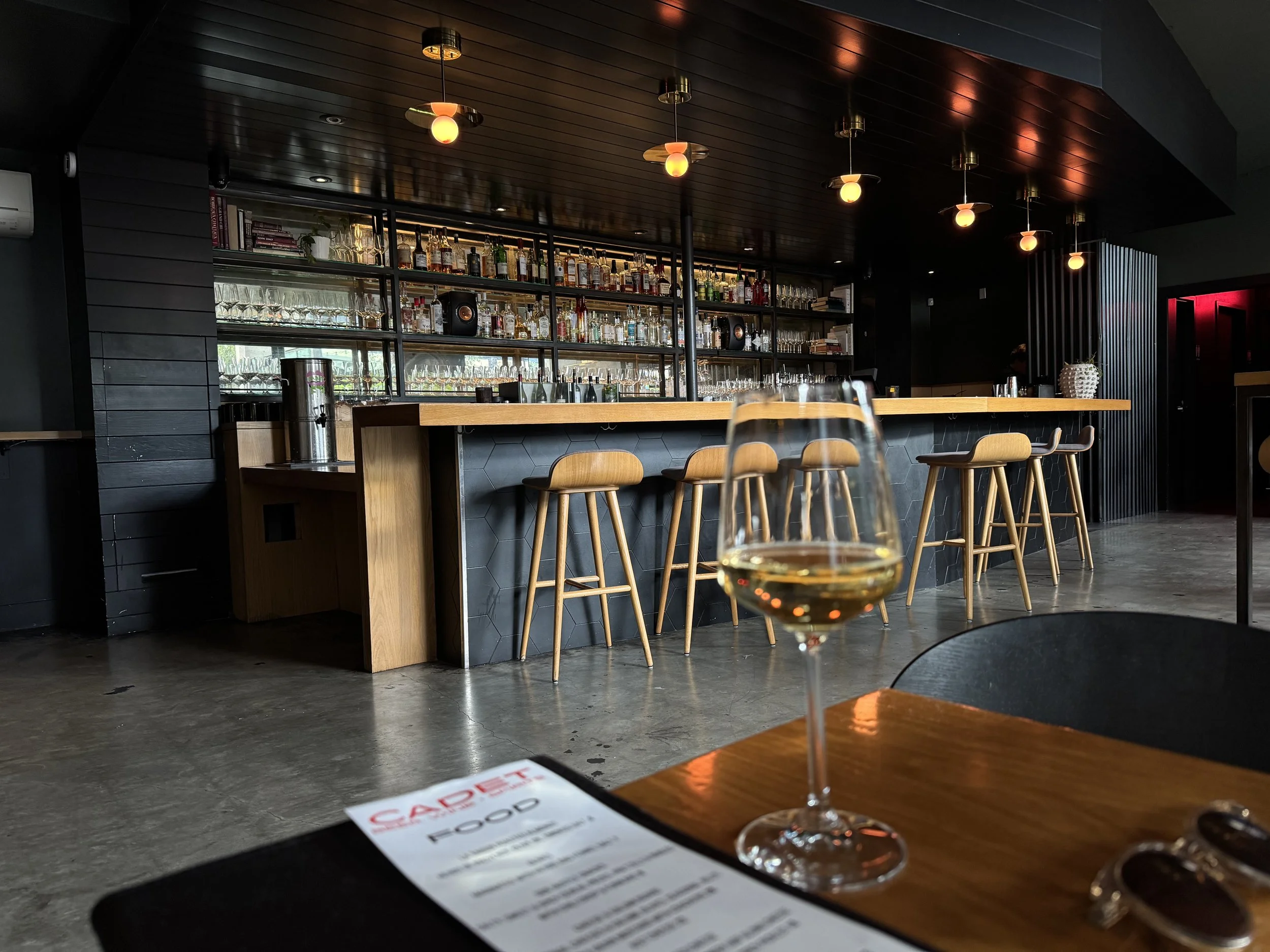
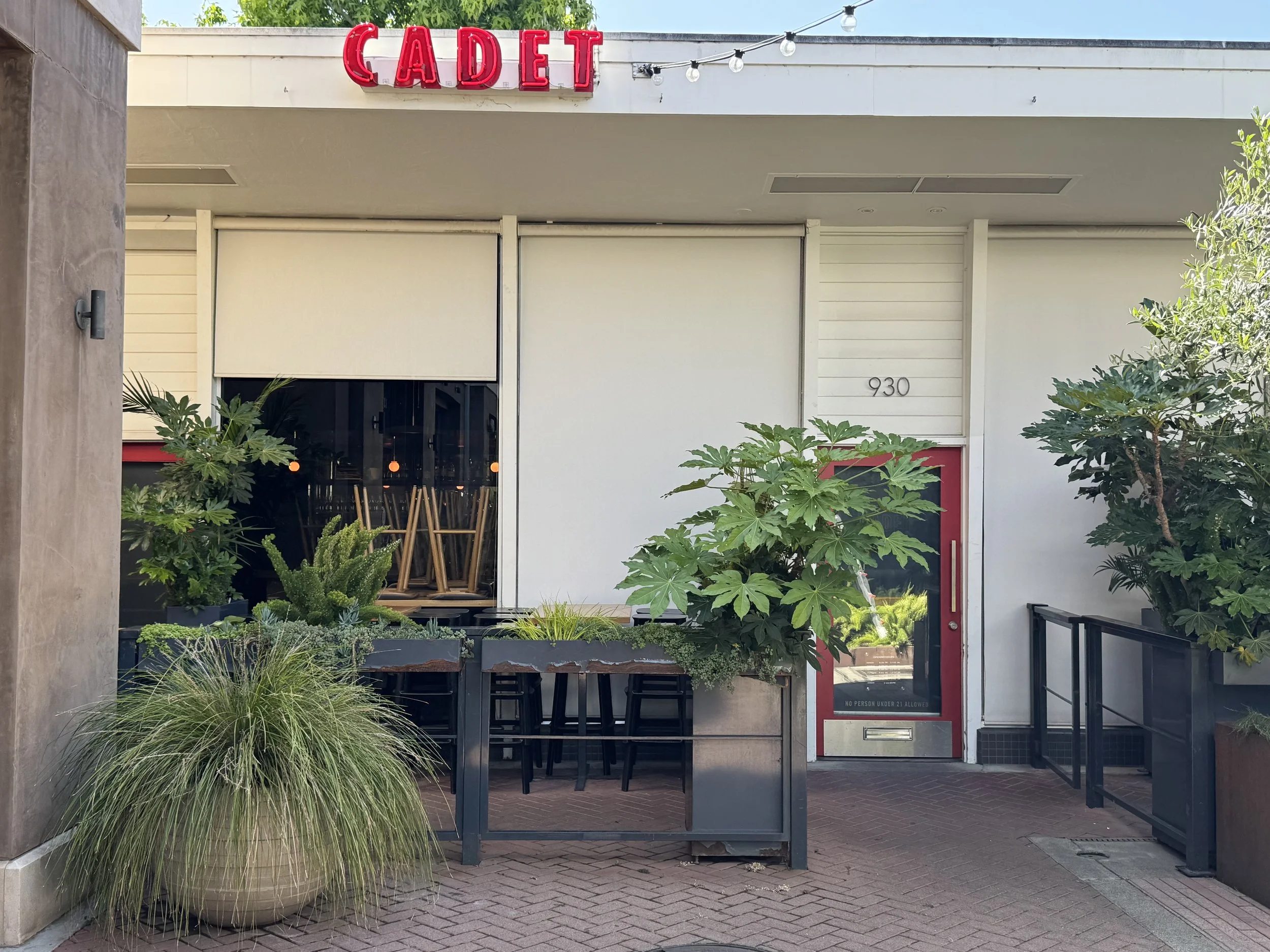
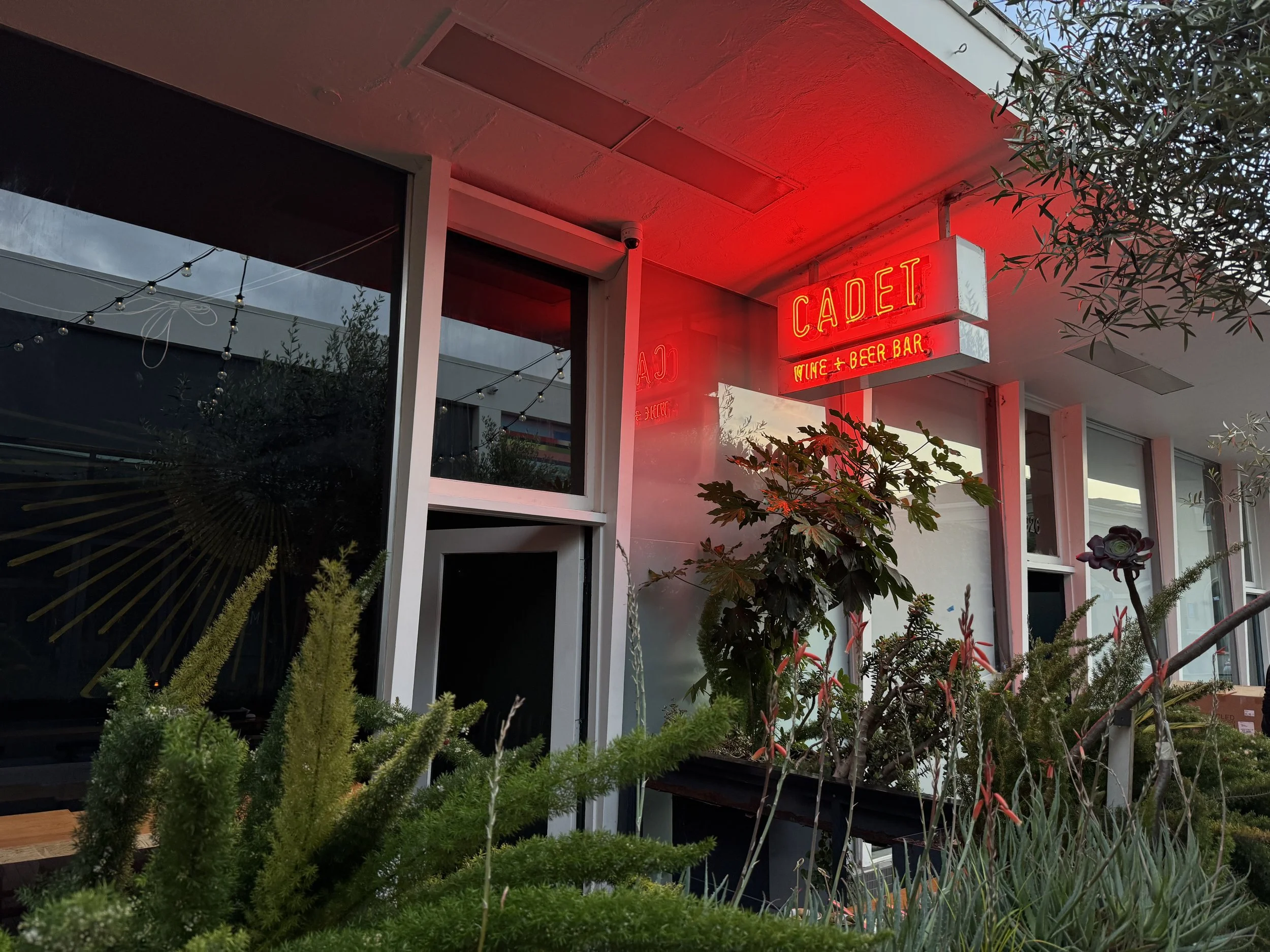
Cadet

Natural-wine-adjacent in branding, safer in execution. Don’t expect to find anything crazy funky or rare here but it does it’s job of providing a great cozy wine third place well. They have a few light bites like olives and charcuterie, but best to plan this as a stop before dinner, not make it the main event.

Oxbow Public Market

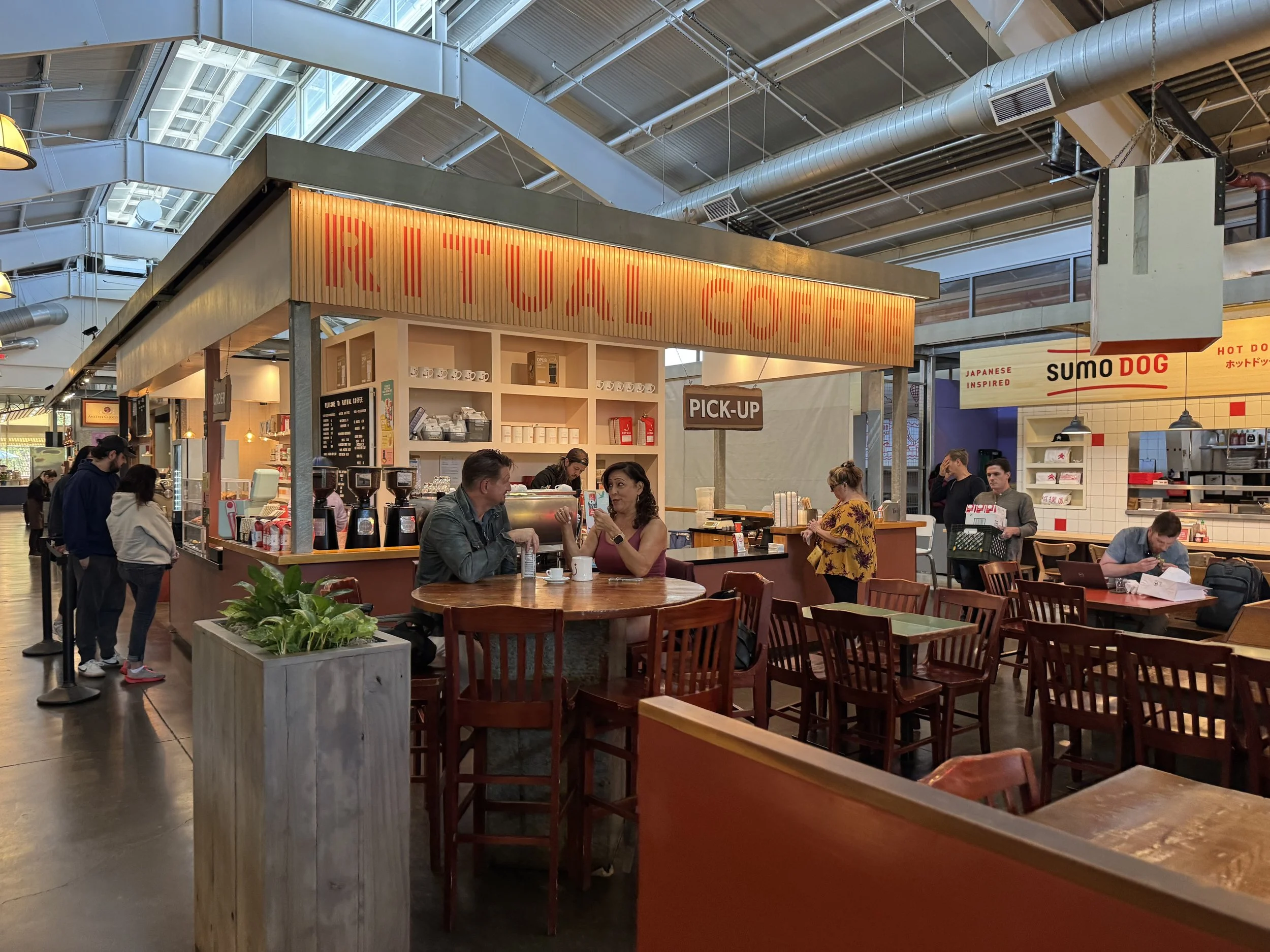
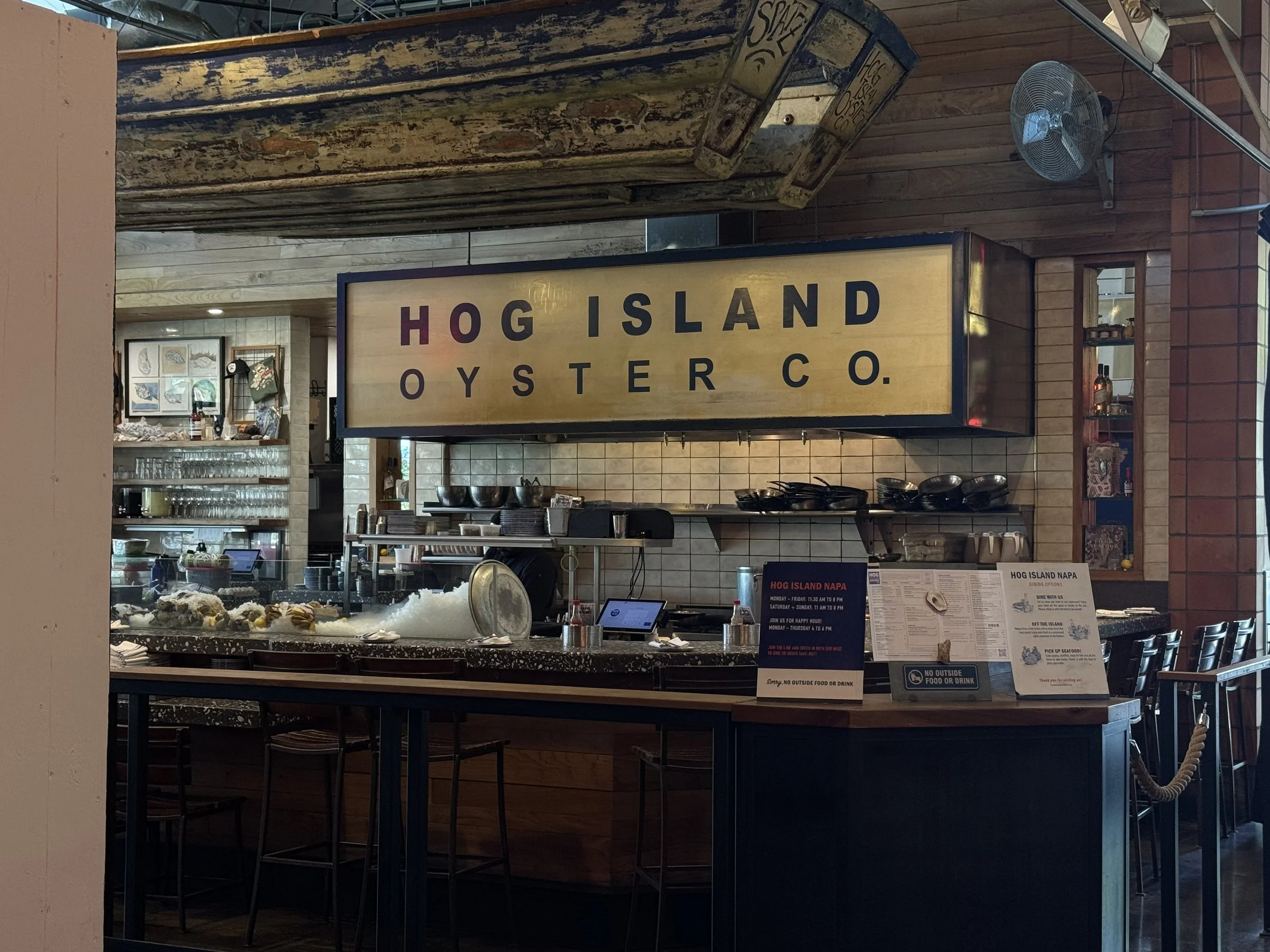
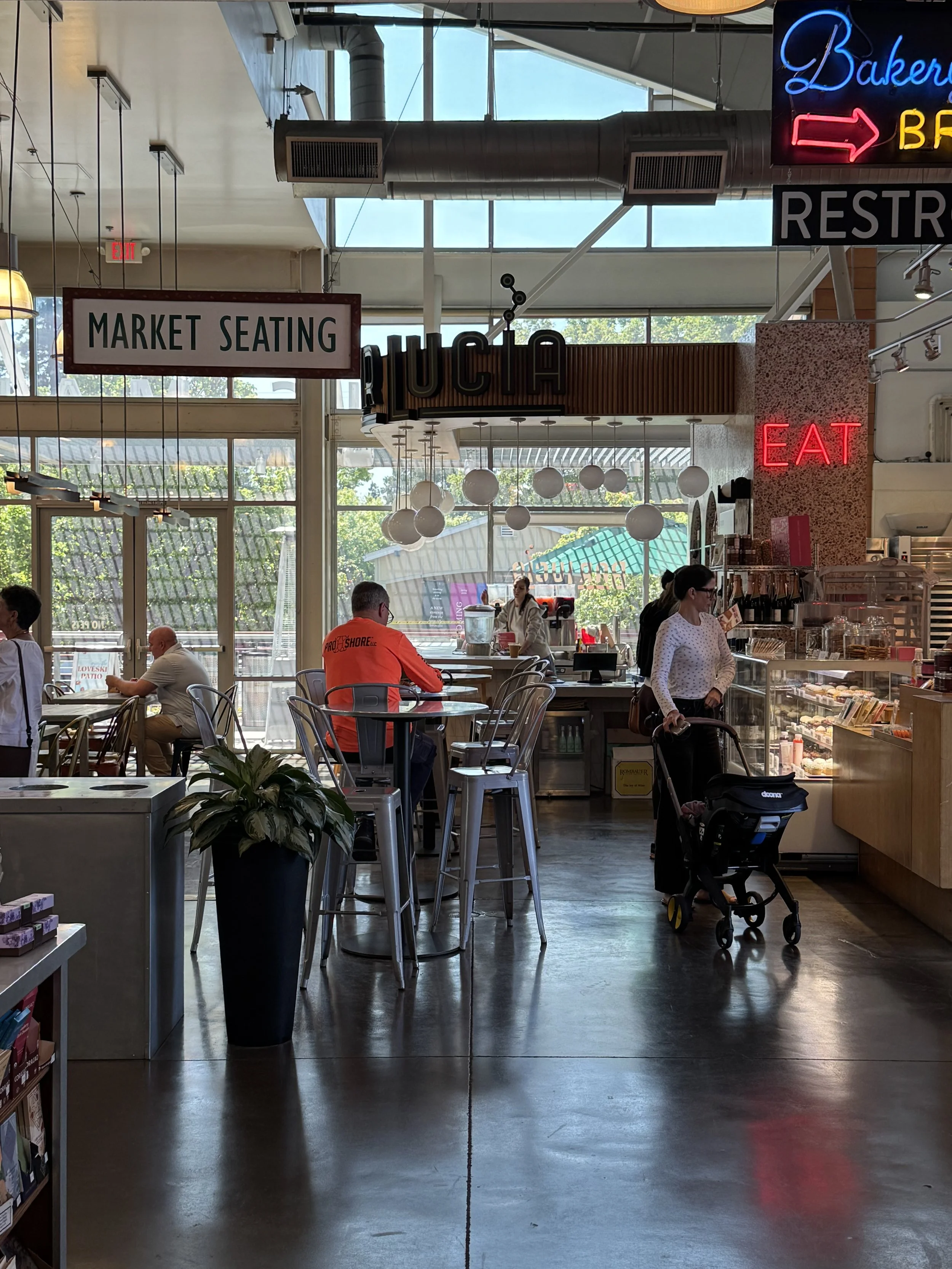
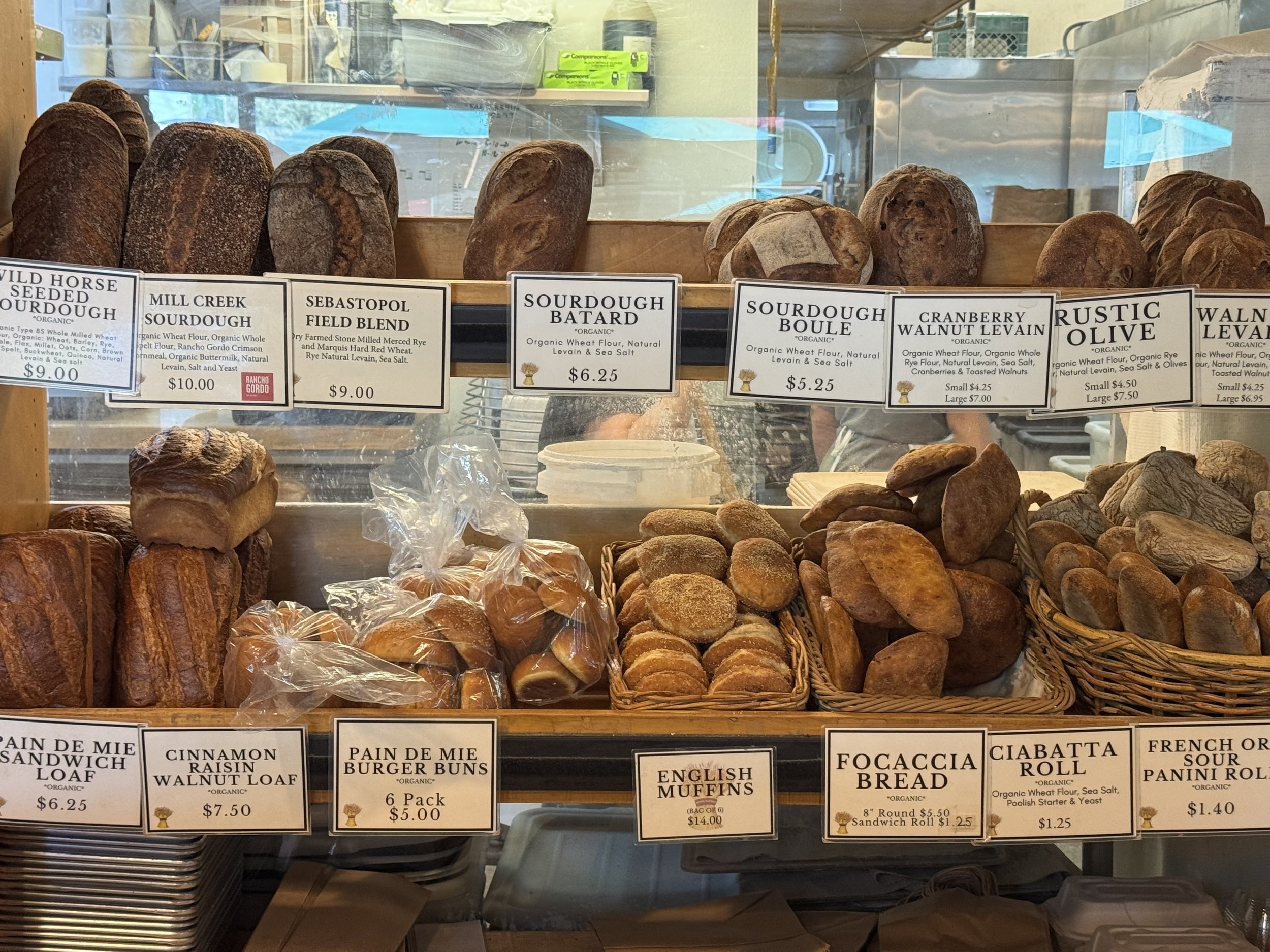
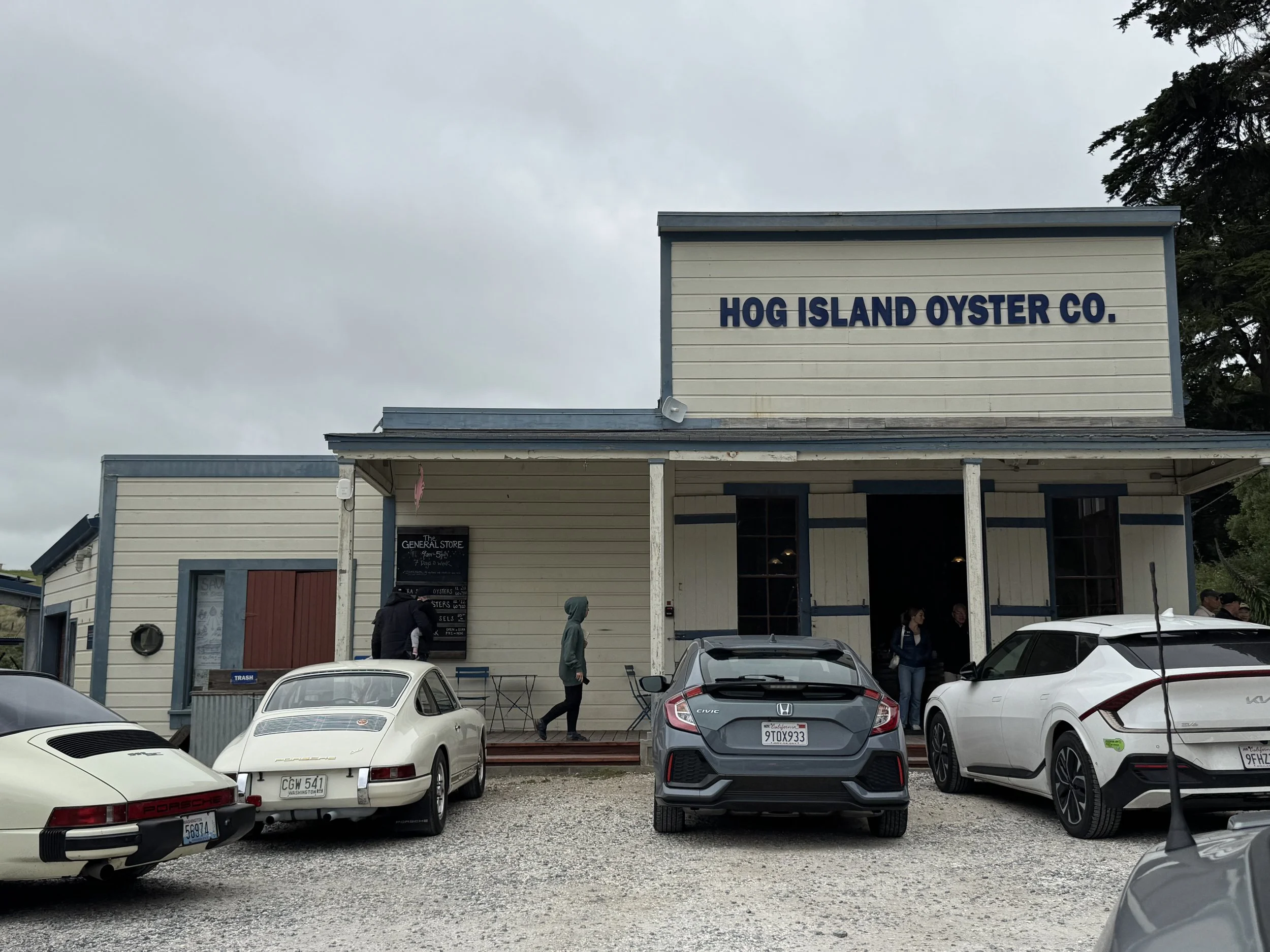
This is our favorite local gathering place in Napa, and it has pretty much everything you could need from a fancy market with artisan goods and plentiful produce to oysters (Hog Island, which are some of the best!) and a couple great coffee and pastry spots. You can feel the buzz here, and that was nice to get a sense of the community feel amidst the many acres of vineyards.

TLDR; this was the Napa stop I would absolutely keep. It worked as a hub, not a centerpiece, and in that role it was one of the most useful stops of the trip.

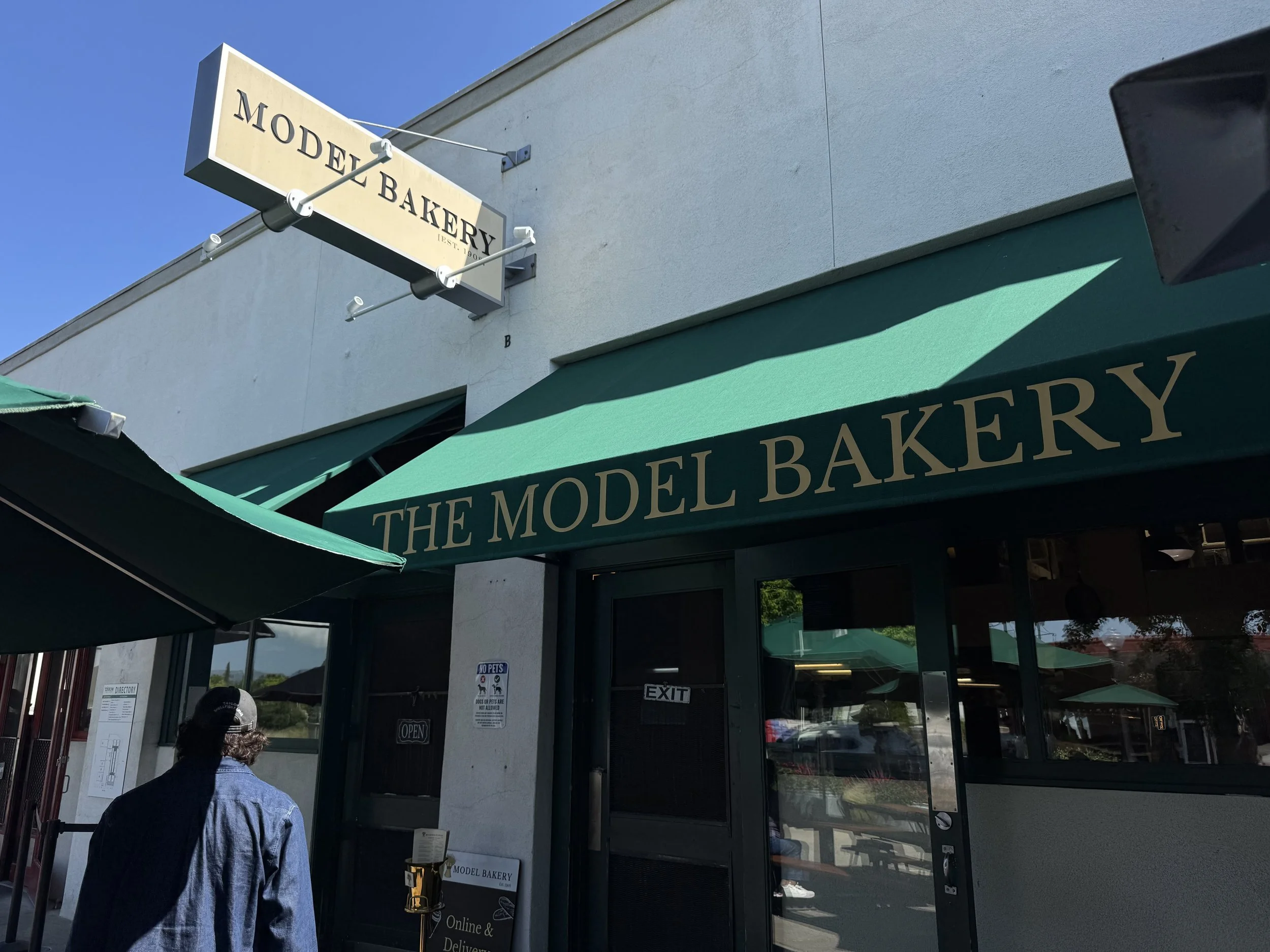
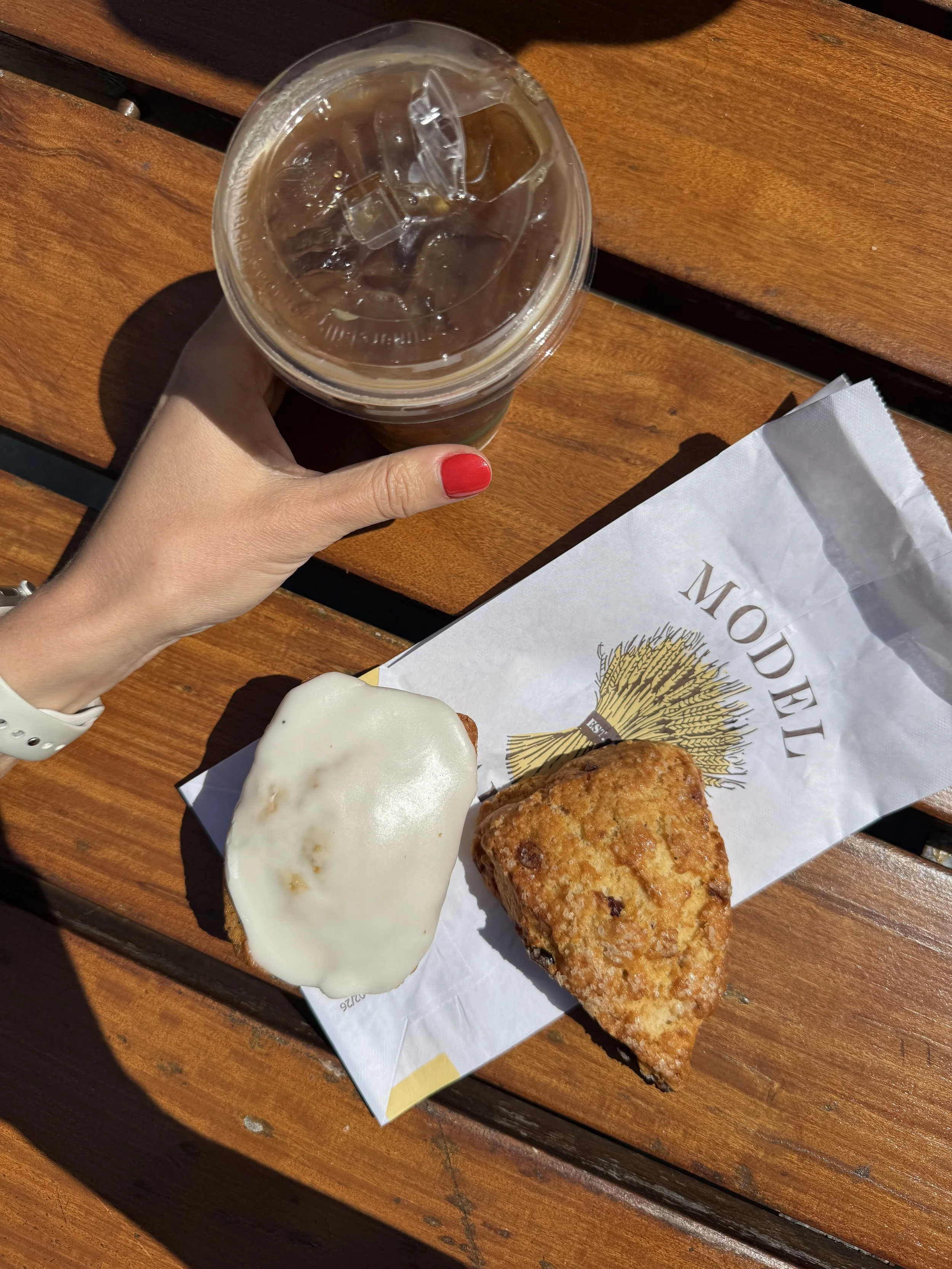
Model Bakery

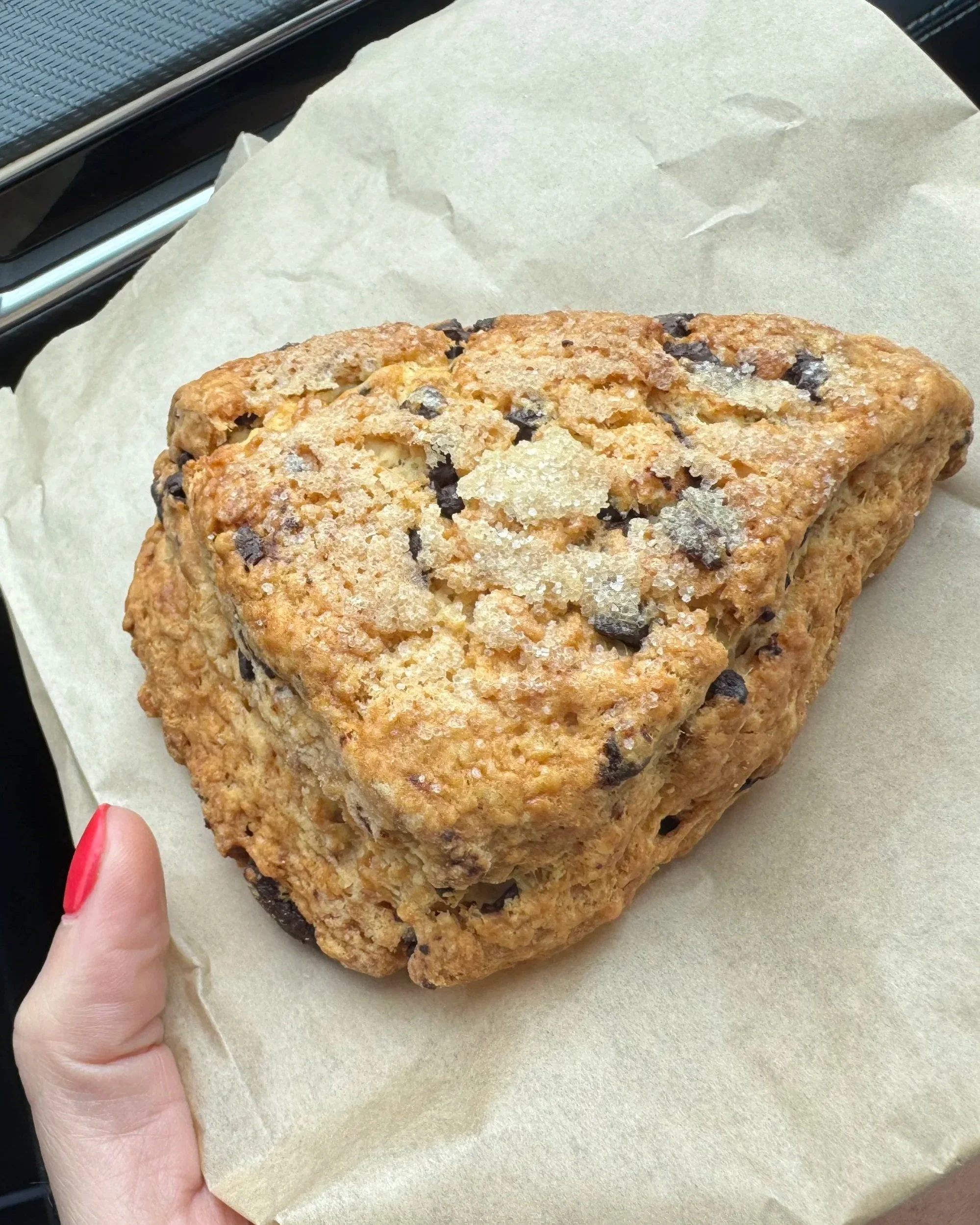
The Model Bakery has long been a Napa mainstay and for good reason. It’s rustic and rough around the edges, which is exactly what we love in a bakery. Their selection of daily baked breads, english muffins, and pastries was plentiful - and we highly enjoyed the scone and lemon bread with a large cold brew. Don’t overthink it, just go.

Other Great Stops in Napa/St Helena:

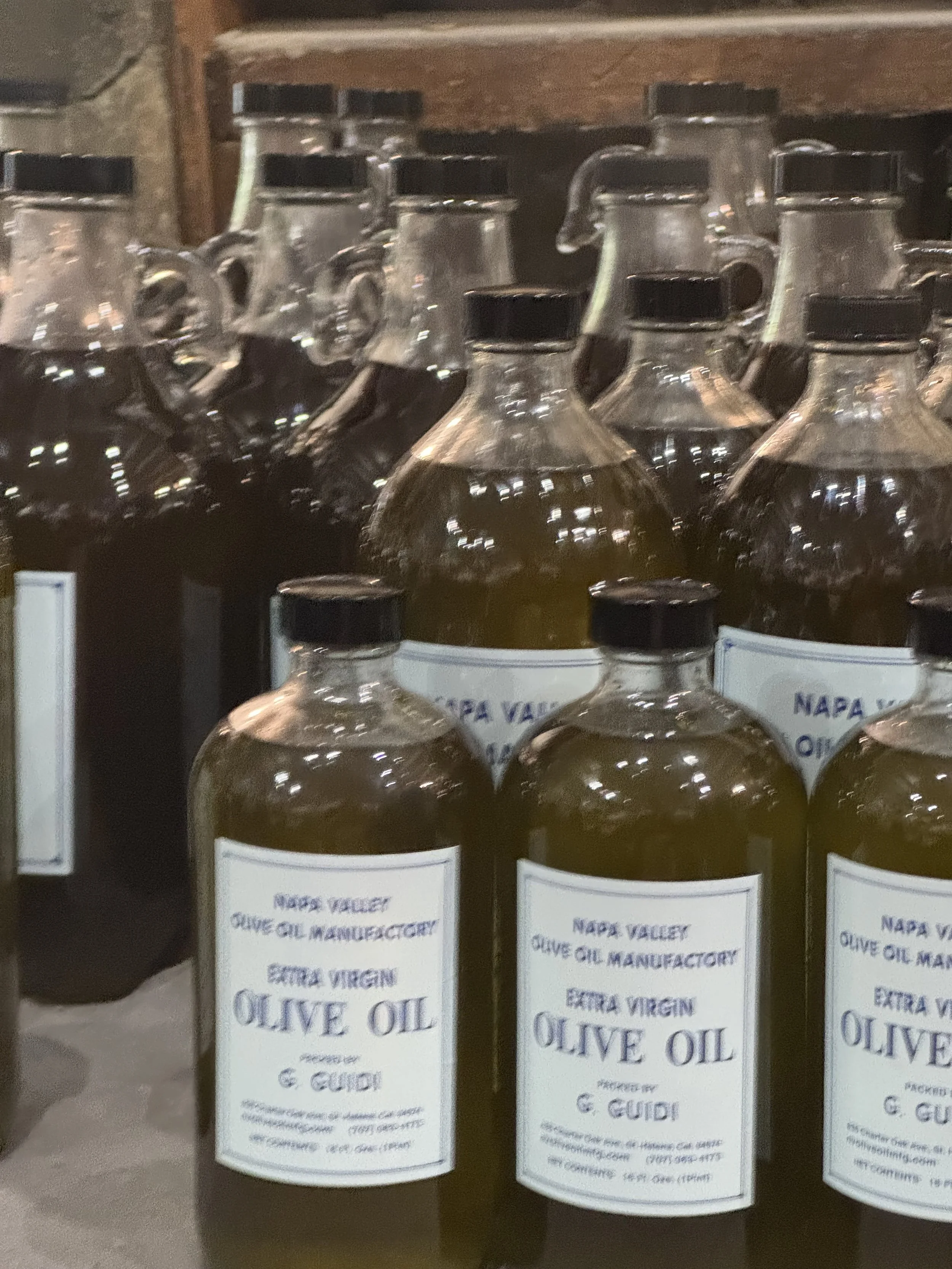
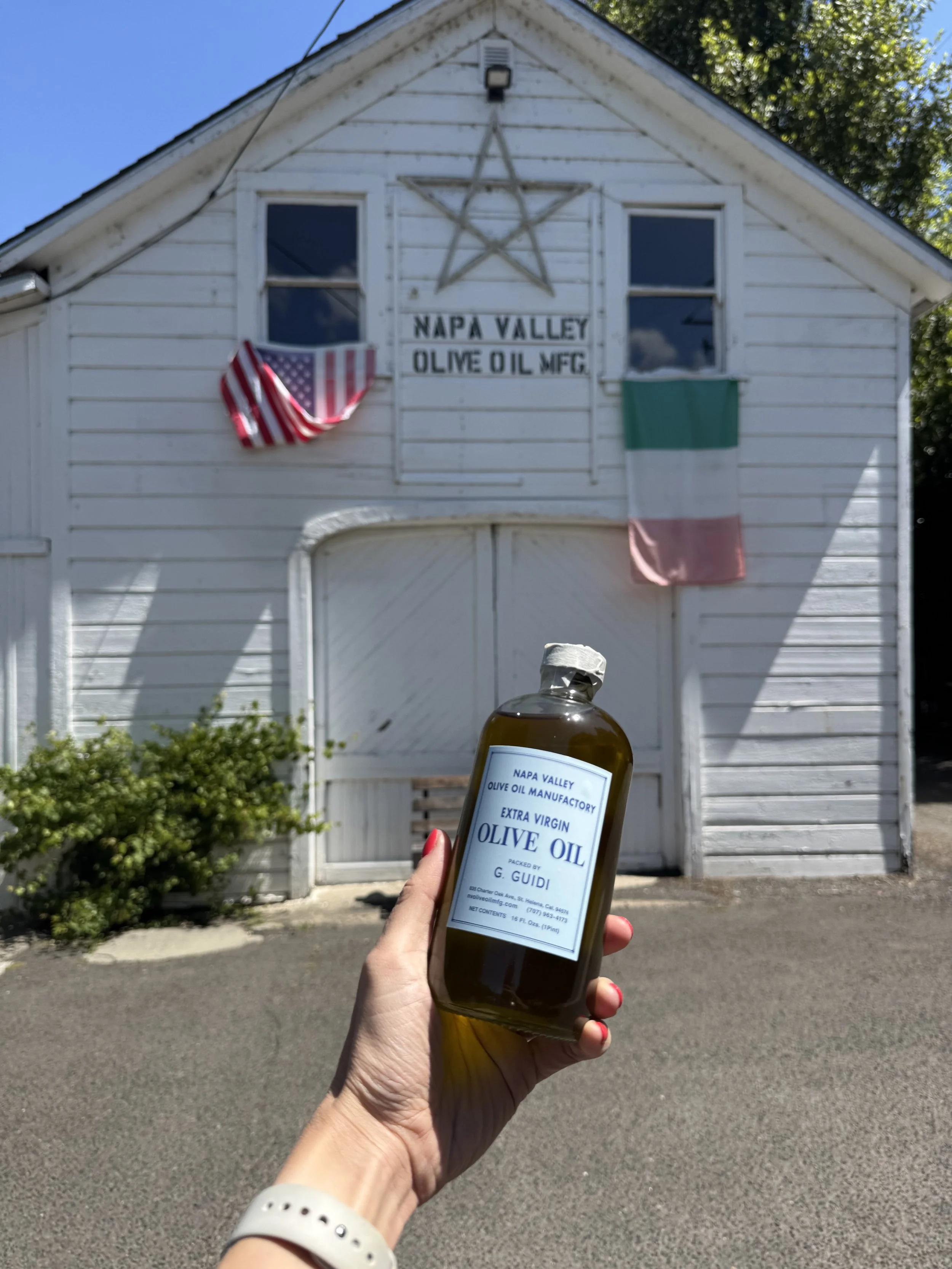
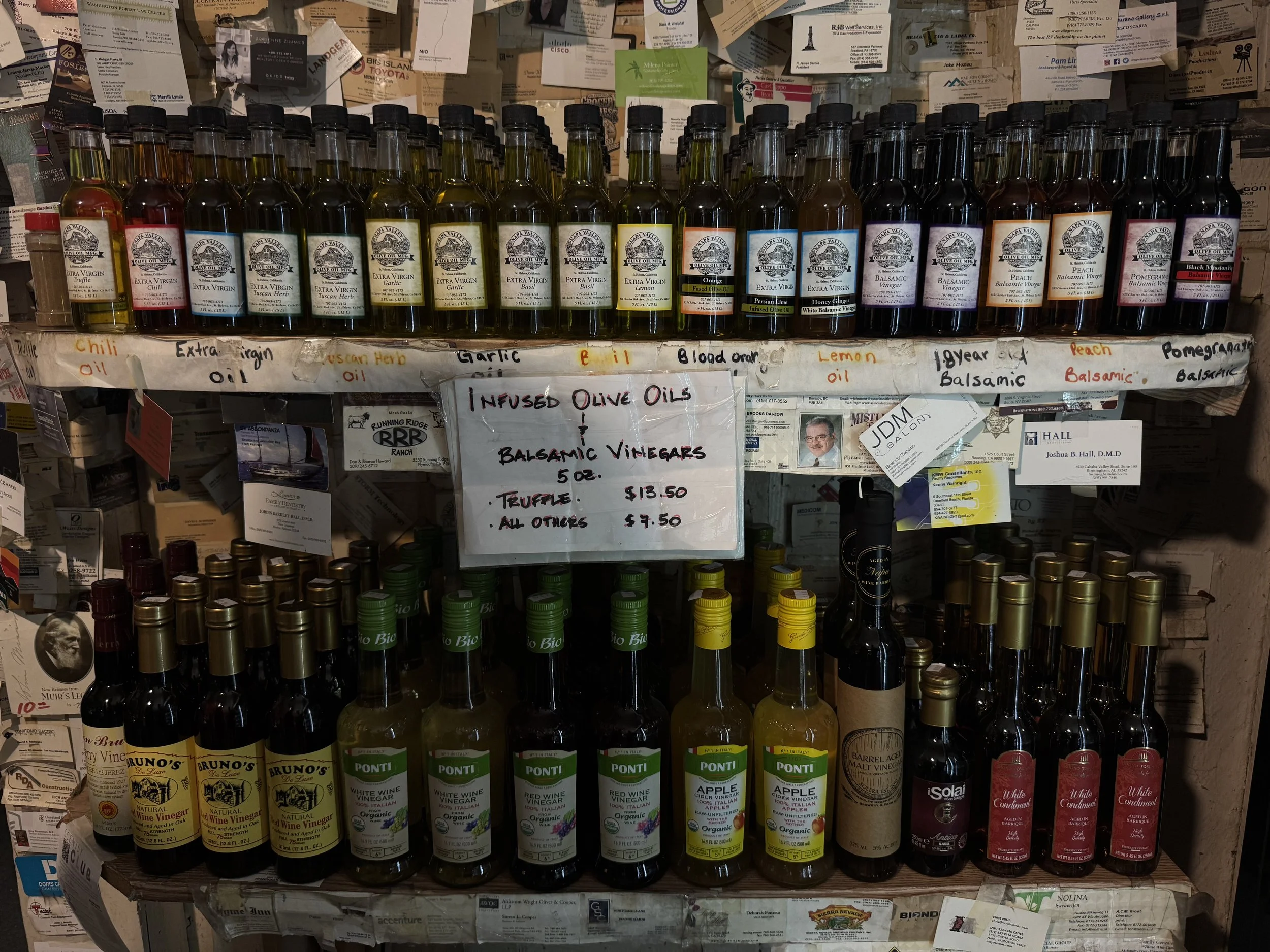
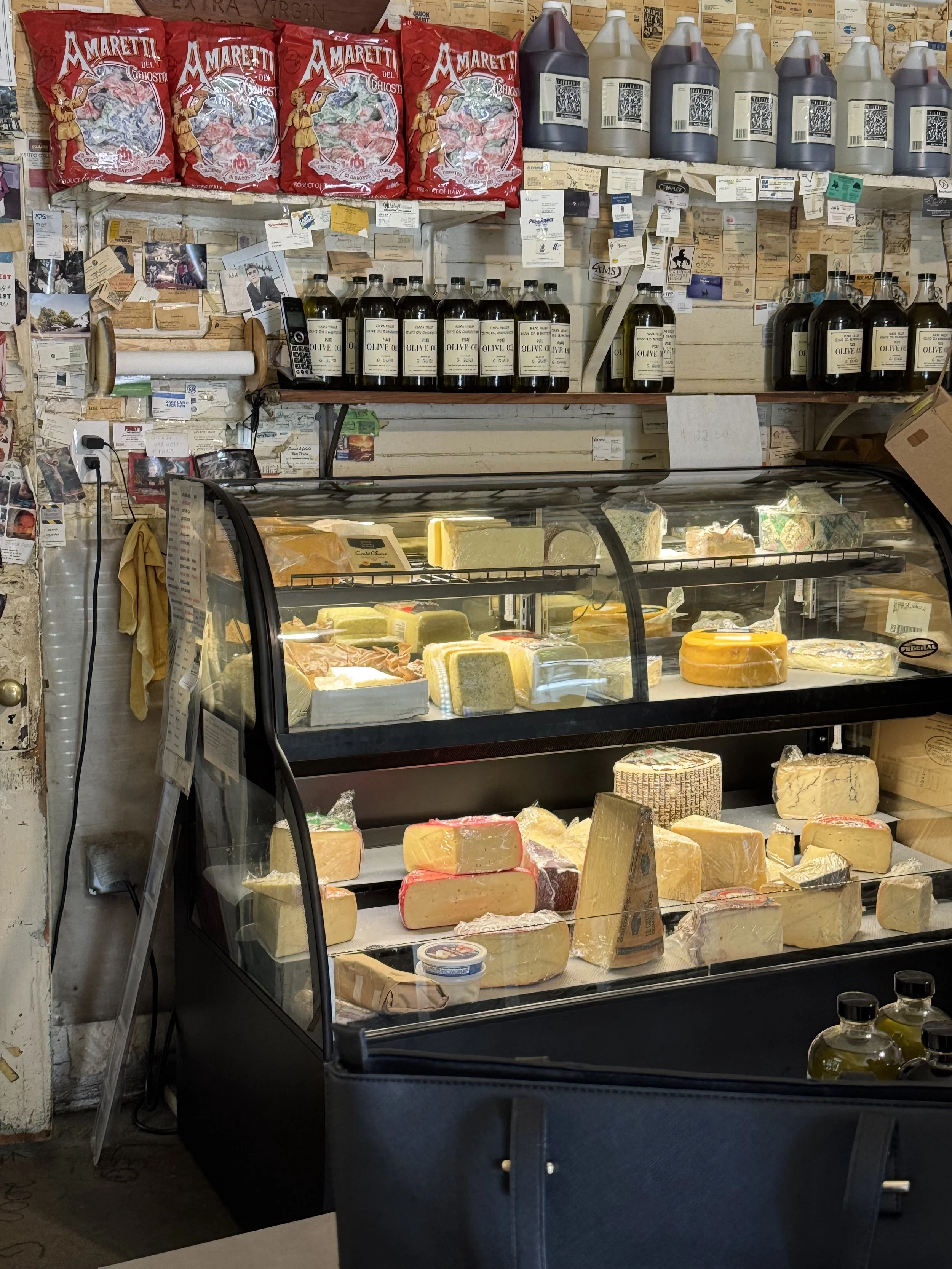
Napa Valley Olive Oil Manufacturing Company

What an incredible, worthwhile stop this was! This very sweet little shop an Italian grocery store hidden away on a back street of St. Helena, California. Founded in 1931 by Italian immigrant Gugliemo Guidi in St. Helena, the Napa Valley Olive Oil Company (now Manufacturing Co.) began as a Northern outpost for Italian goods, operating out of an 1890s barn. The family-owned business, operated by the Particelli family since the 1960s, shifted from local, onsite oil production to sourcing olives from the Sacramento Valley in the 1970s due to disappearing local groves. What a pleasure it was going somewhere “old” as a contrast to all of the newly developed places in Napa. Loved how they sold the olive oil in apothecary bottles as well - a great gift for friends/family or yourself, to bring home!

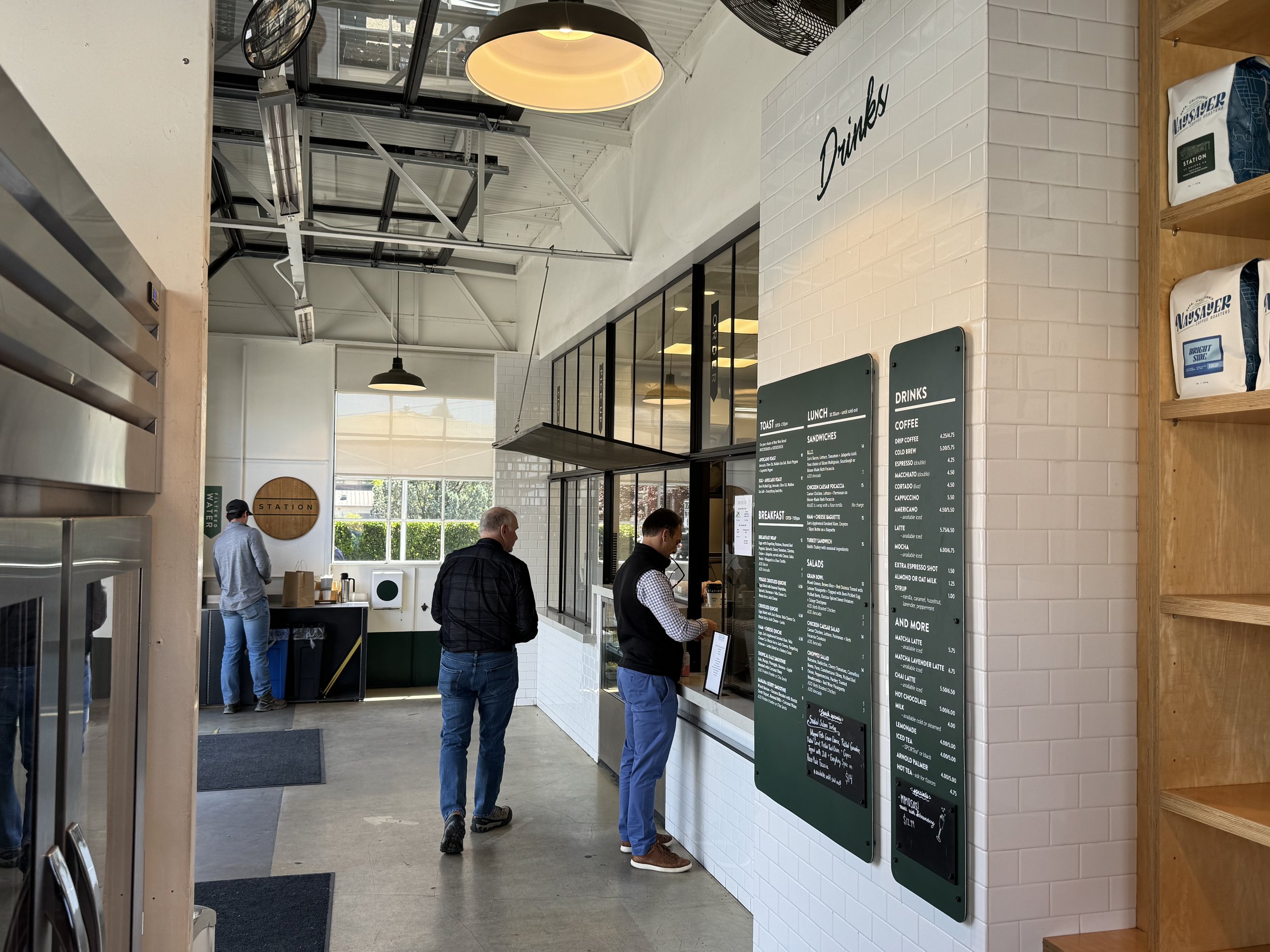
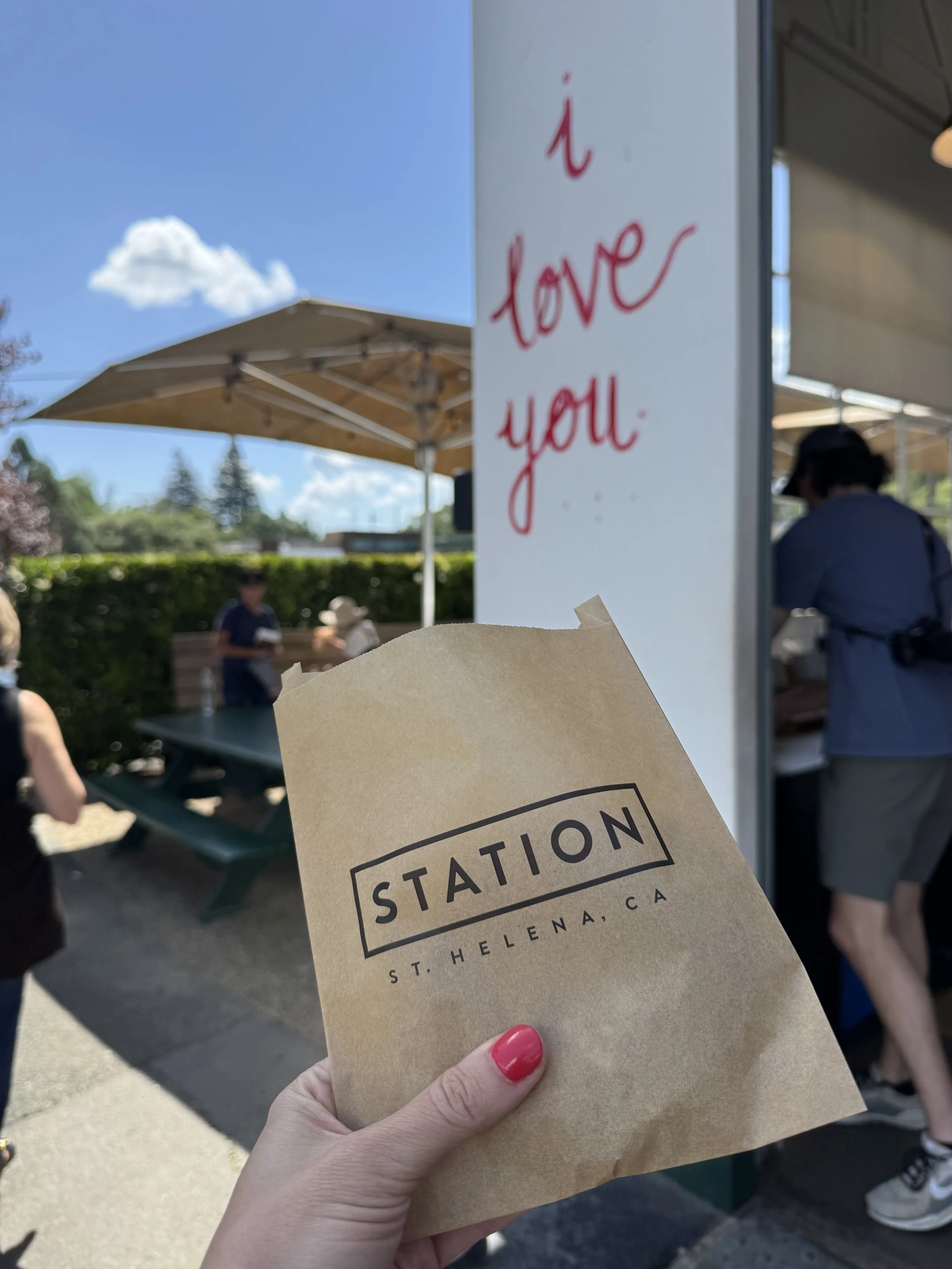
The Station St Helena

We noticed a recurring theme of great coffee shops and/or wineries finding their homes in old garages or train stations. What a great way to repurpose the real estate, in my opinion! Founded in 2019 by fourth generation vintner and St. Helena local Joel Gott (also owner and founder of Gott’s Roadside), it serves as an awesome hub to fuel up for adventures. We ordered the club sandwich and added chicken and it was a hit that kept us fueled through a full day of driving and hiking!
Where to stay in Napa

We checked into the Napa Marriott, which was shockingly cool for a Marriott in a way we didn’t expect.

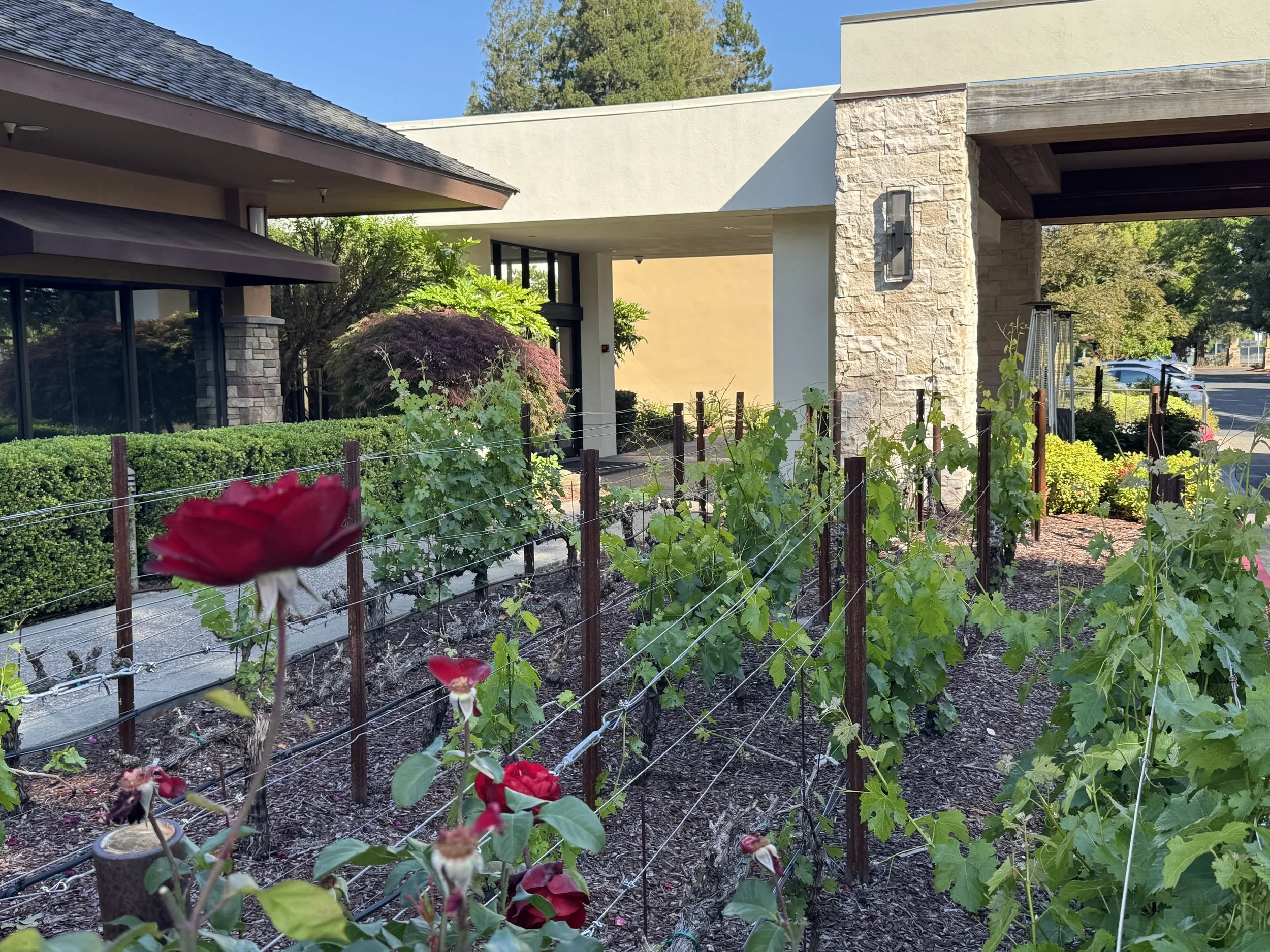
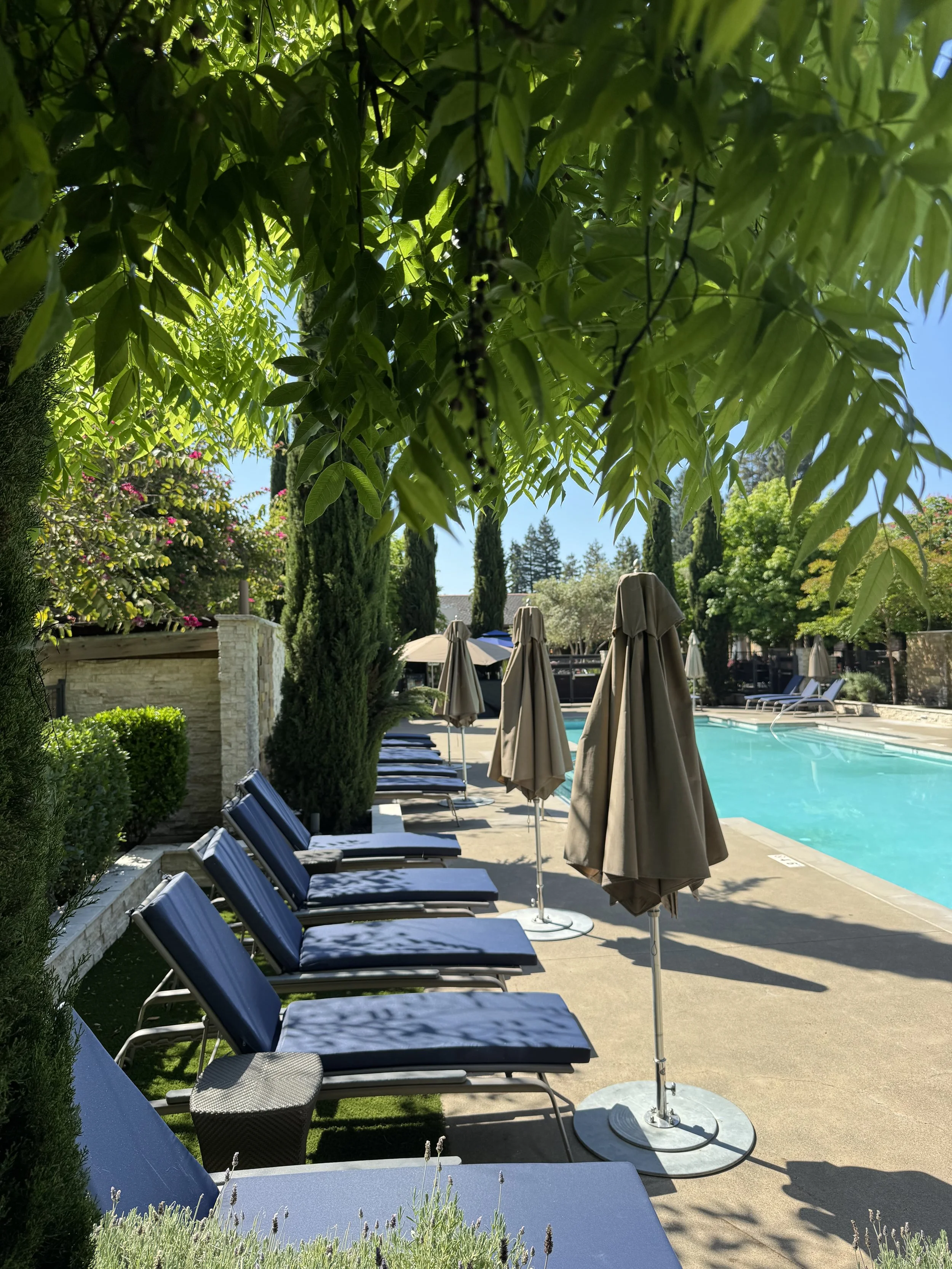
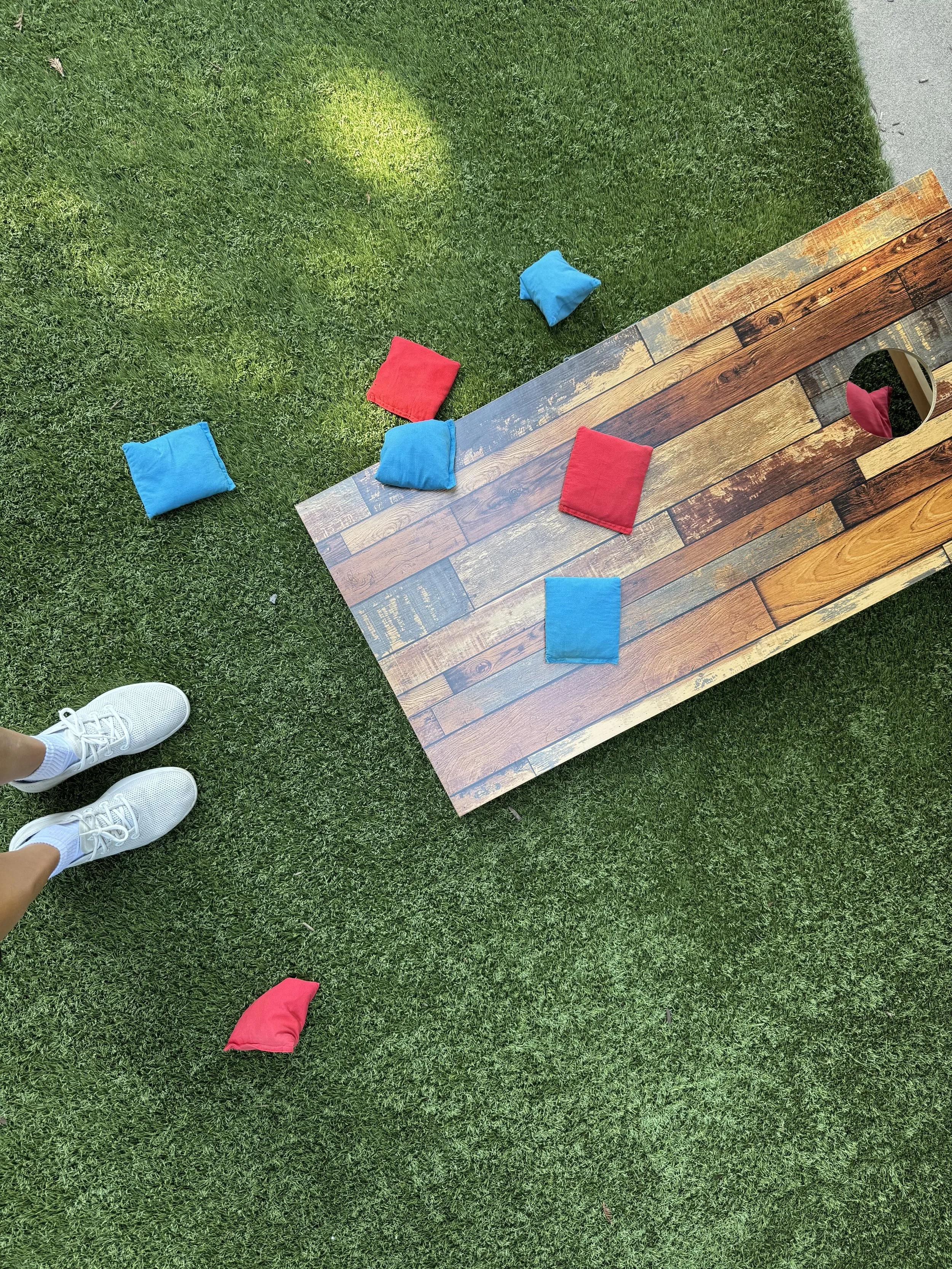
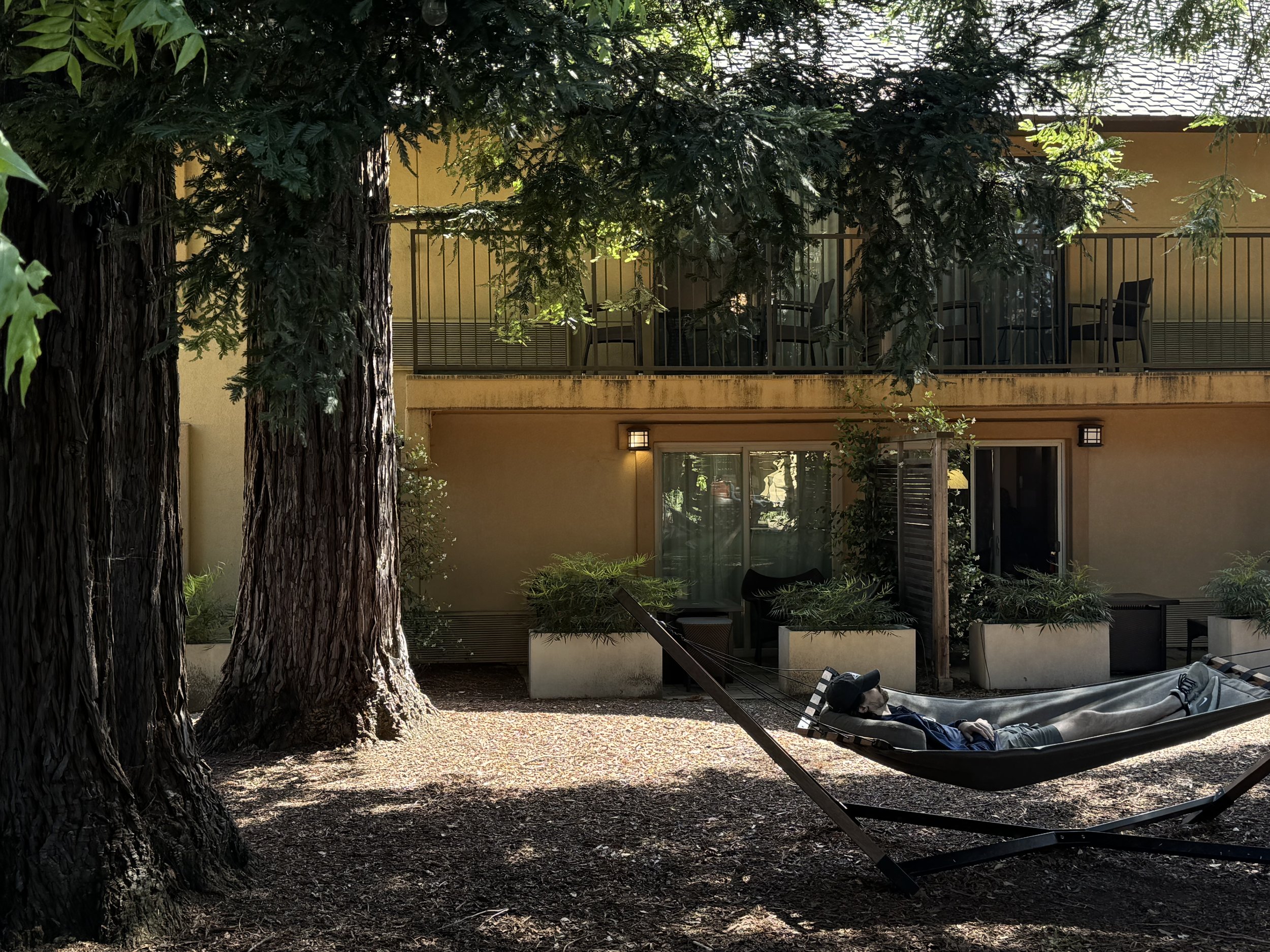
When you drive up, there are vineyards in the front of the property, which truly sets the tone for where you are in the world. There is a huge amount of cool, trendy and woodsy outdoor space centrally located on the property with hammocks and outdoor games to be enjoyed fireside. The spa and pool are worth loafing in for a few hours, and we were pleased to find that they also had bike rentals available to guests for scooting around town. Now that’s our style of travel!

We also had breakfast and snacks at the M club included in our stay which was an excellent way to get a hearty start to each day of adventures… we loved the coffee and rotating menu of protein sources + a few pastries to take away. A very solid choice of a stay and was central to absolutely everything we needed.

Sonoma: Incredible Meals & Outdoor Adventures

We had planned to do an evening at Valley Bar but didn’t find a chance so will need to go back. We also favored more casual options on this trip, so opted for Michelin rated tacos and mediterranean food and neither disappointed in the least.

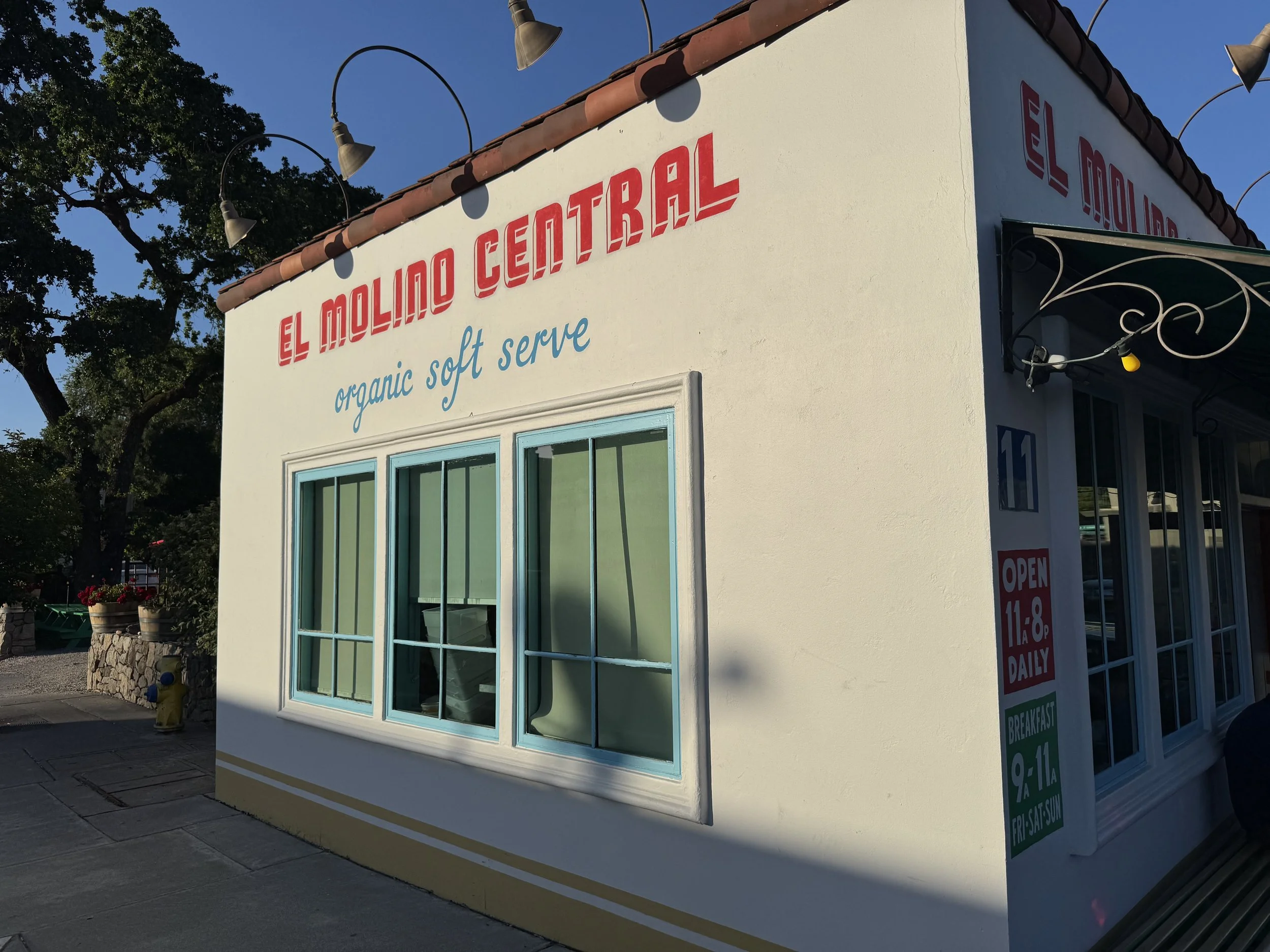
El Molino Central

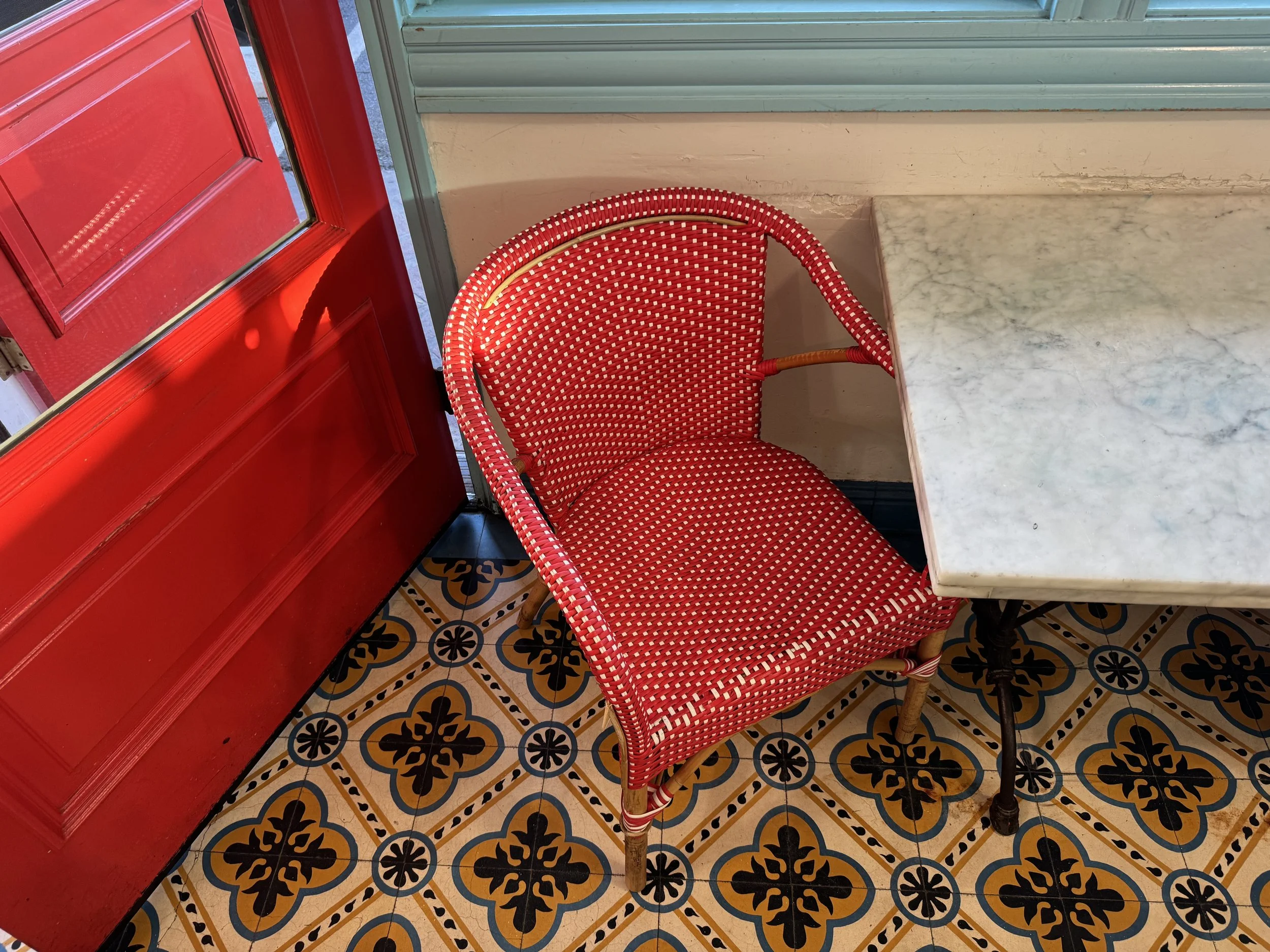
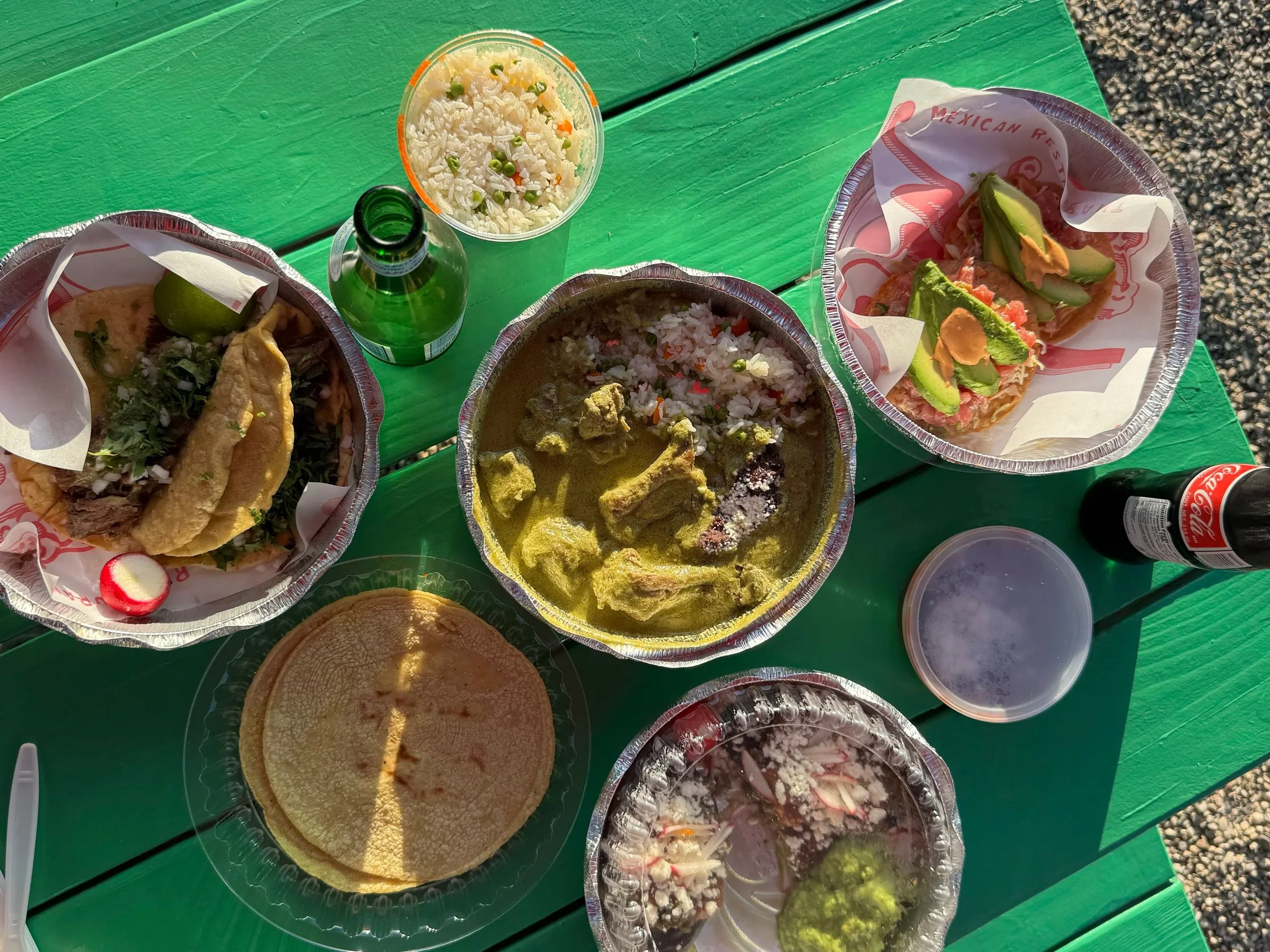
it's a chic-yet-totally-approachable taqueria/tortillaria serving up incredible regional Michelin rated Mexican fare. This was one of the more satisfying meals of the trip: generous, direct, deeply flavorful, and completely unconcerned with being delicate. This raised the bar for us for Mexican food going forward!

Spread Kitchen

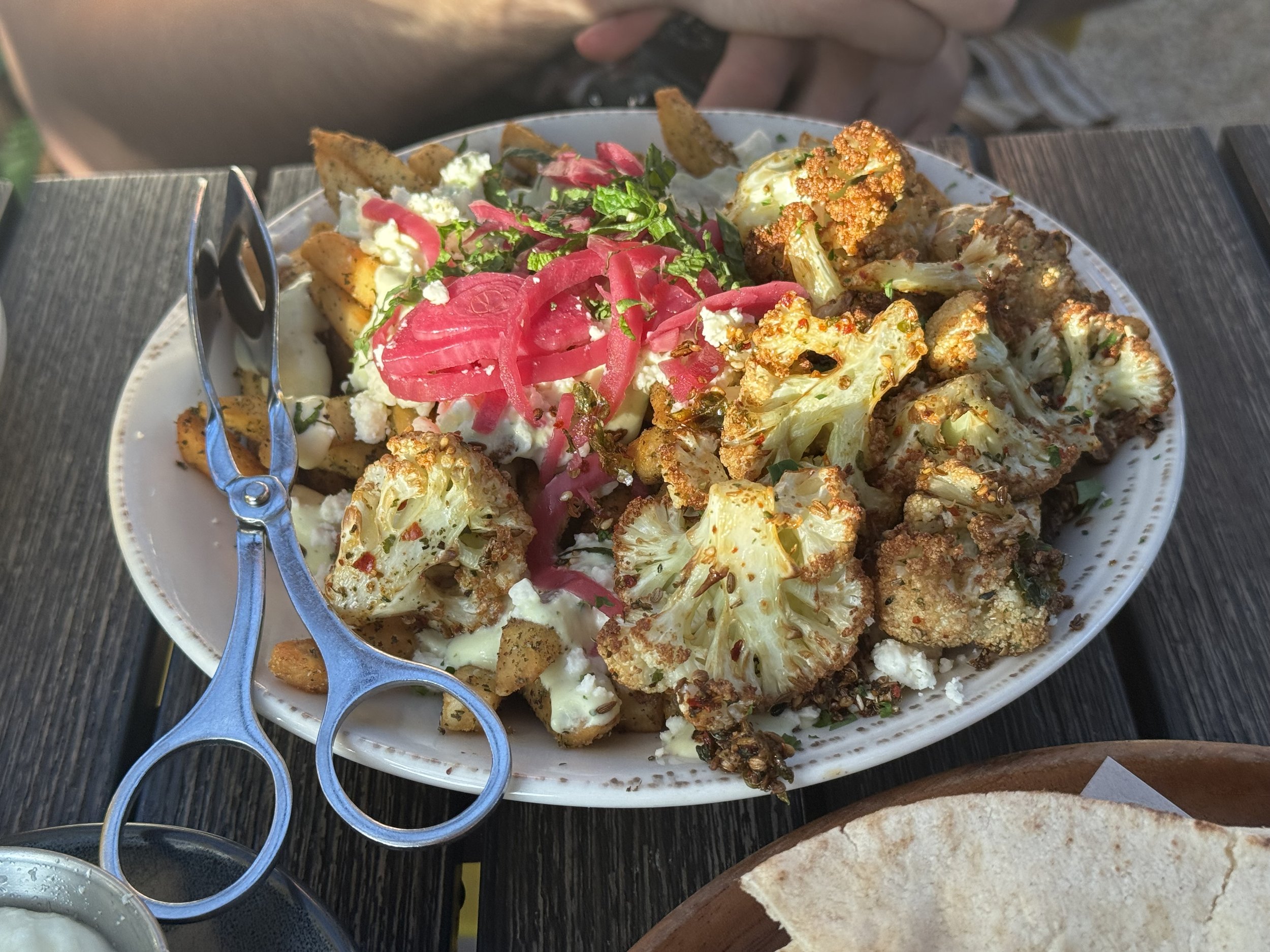
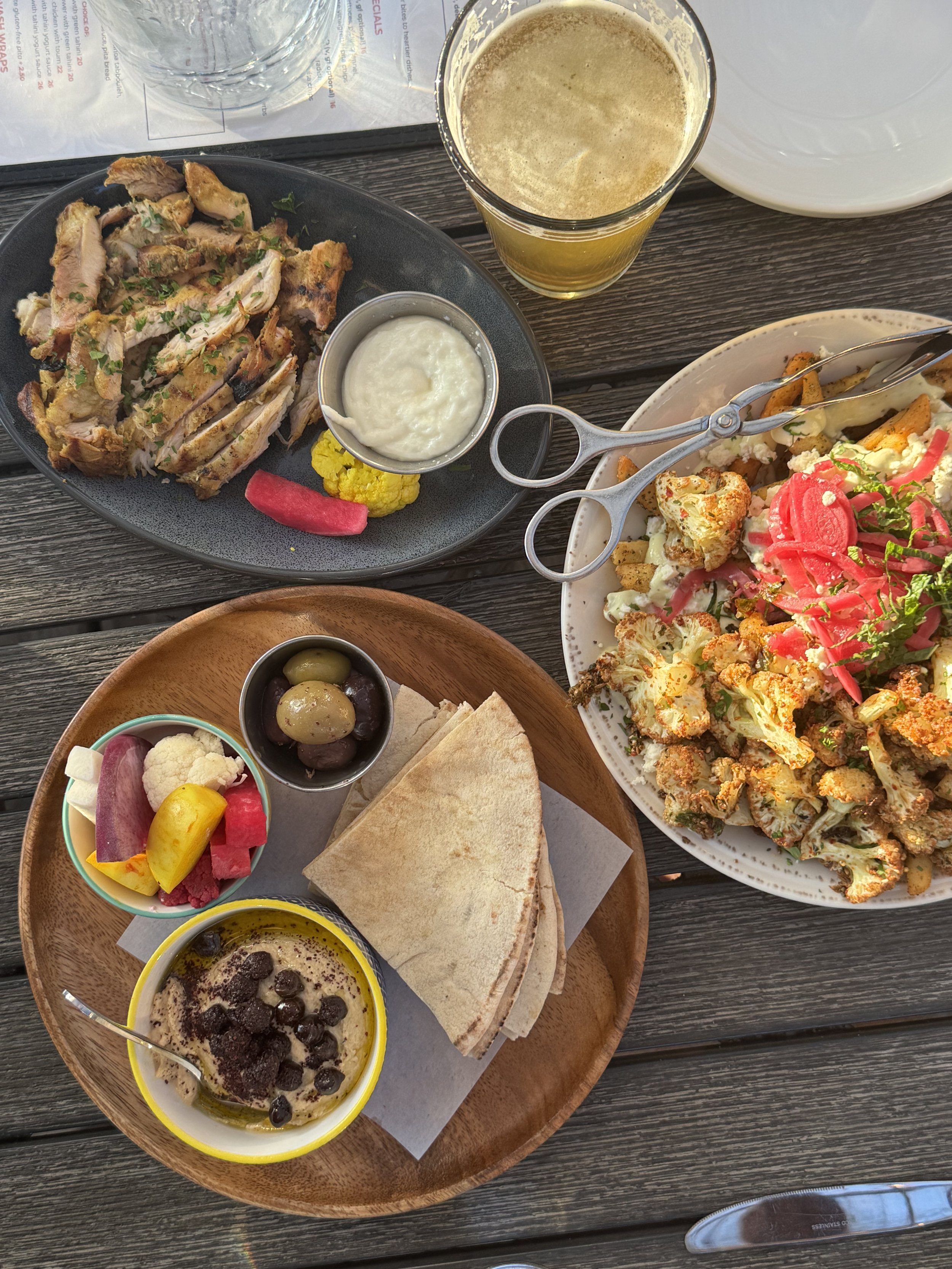
Owner/chef Cristina Topham launched Spread as a catering service in 2016 and, as its reputation in Sonoma Valley built momentum, she expanded to meal kits and prepared foods (and drop-off catering) during the pandemic, before opening its current brick-and-mortar location in 2022. This meal was an absolute highlight and my favorite of the trip. Strong pickled produce, clear point of view, reliably incredible ingredients. The region moved up ten notches when this place opened. What a colorful delightful indulgence - if I could have brought the entire place home to Seattle with me, I would. I remain dreaming of Spread weeks later…

Bothe-Napa Valley State Park

Worth the stop and in April had some incredible vantage points, wildflowers, and a few turtle and interesting bird sightings. It never ceases to amaze us just how quickly you can step off of the well-trodden path and wineries and head out into nature in this part of California. The perfect balance.

Tank Garage Winery

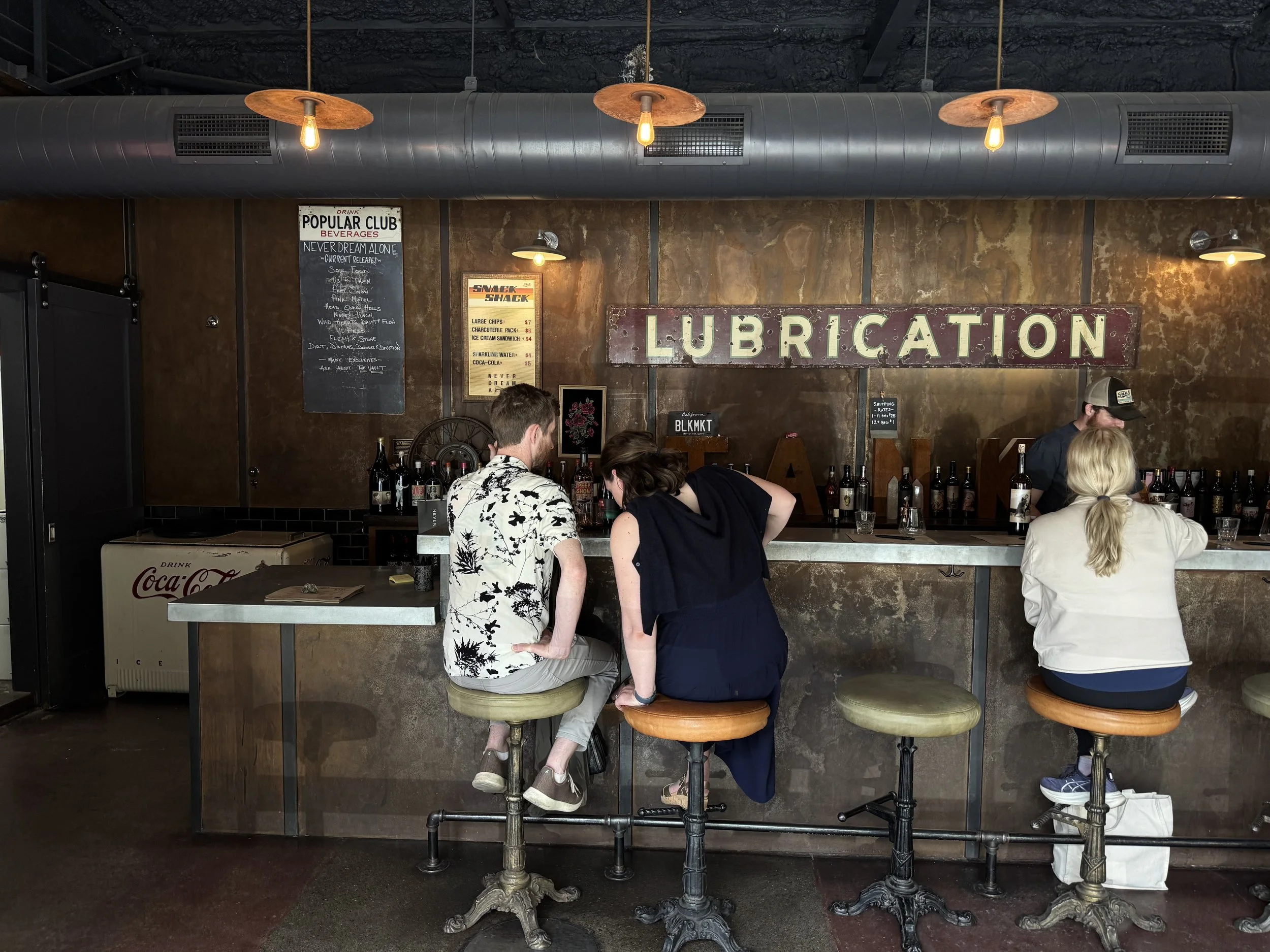
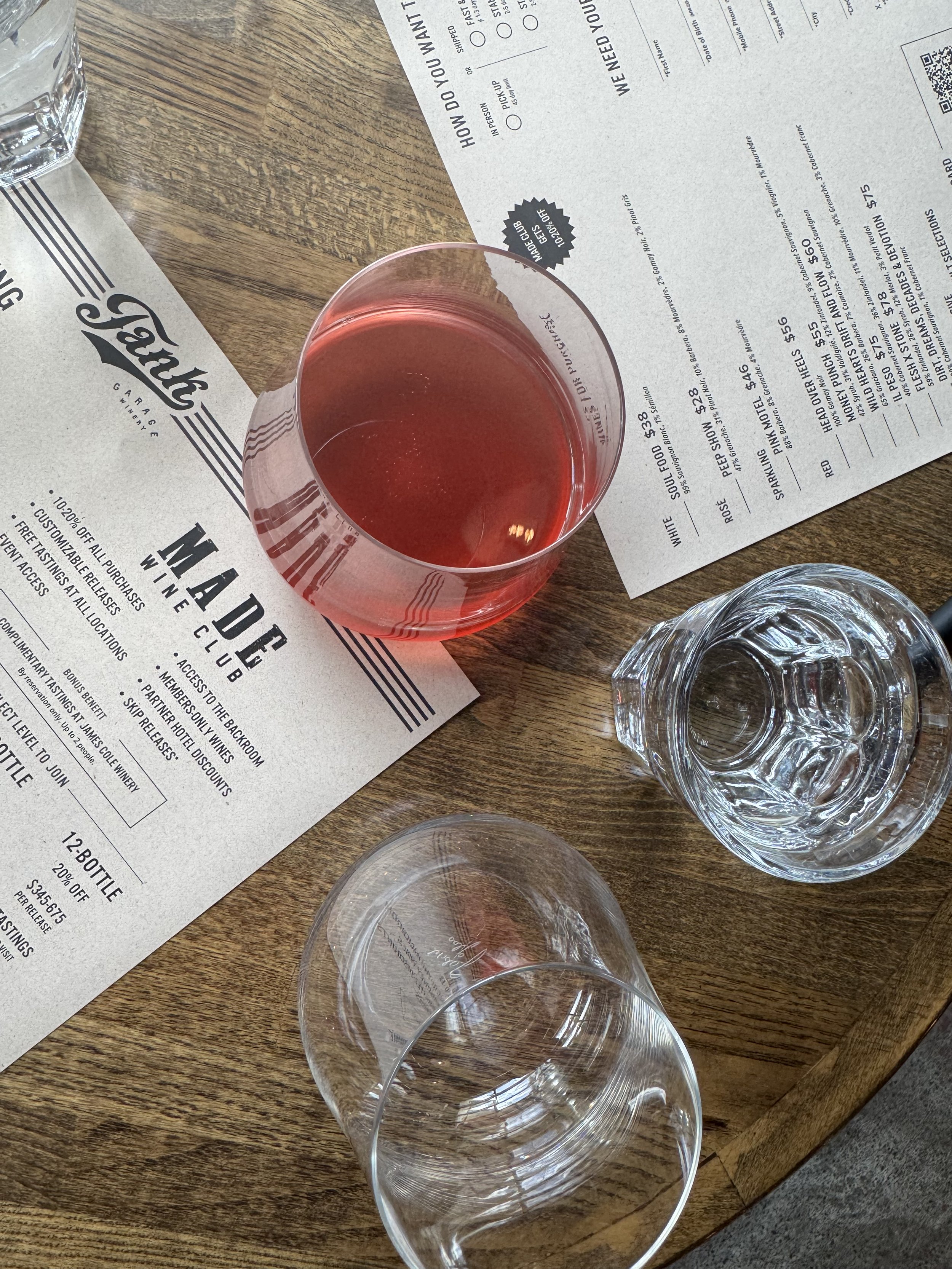
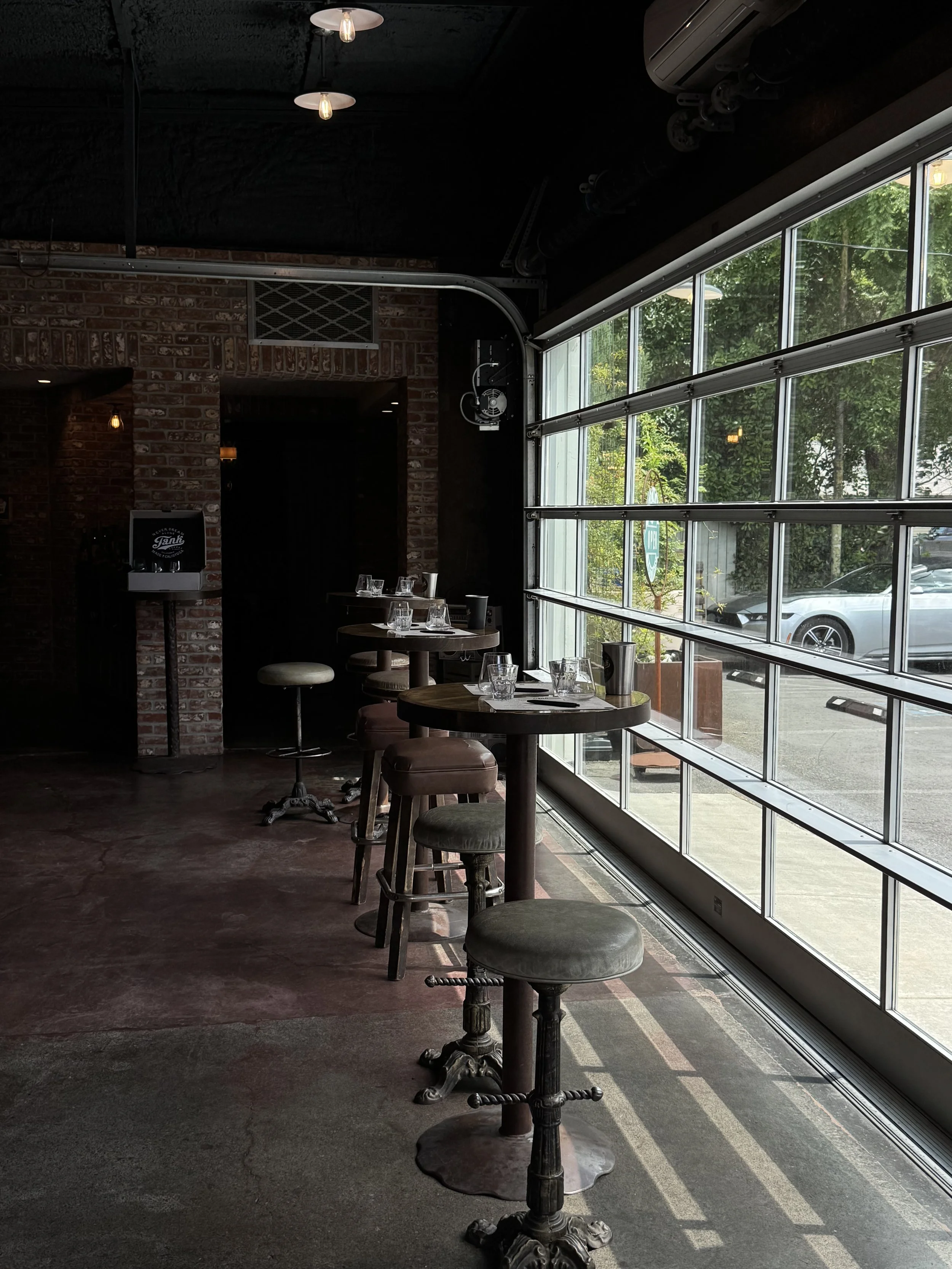
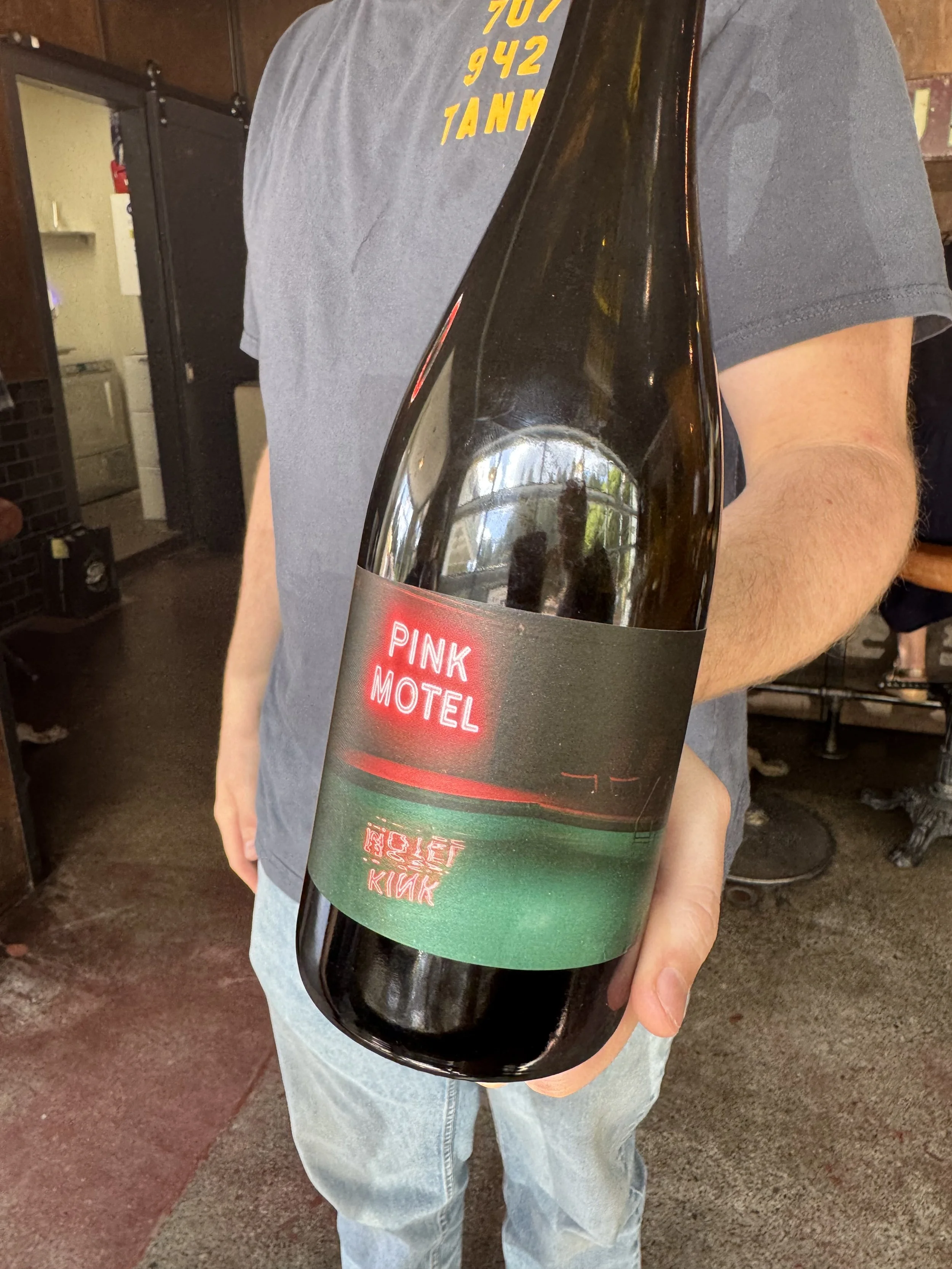
We stopped into this great little funky tasting room in Calistoga on one of our afternoon drives and it was the first place we started to find more of “our” style of new world, funky, interesting, unpretentious but creative wine. They make very, very small batch bottles which makes you appreciate each glass that much more. A great contrast to the large scale producers of the area, and a place we’d return to time and time again. Not to mention, what a cool rustic garage venue inside a restored vintage gas station.

Healdsburg: the Best Town in Northern California Wine Country

I said what I said! We both agreed that if we had to redistribute time on this trip, we would take it away from Napa and give it to Healdsburg without hesitation. Healdsburg feels composed: tree-lined, well-shaded, stylish, and anchored by good food, strong stores, local producers, and a more relaxed relationship to itself.

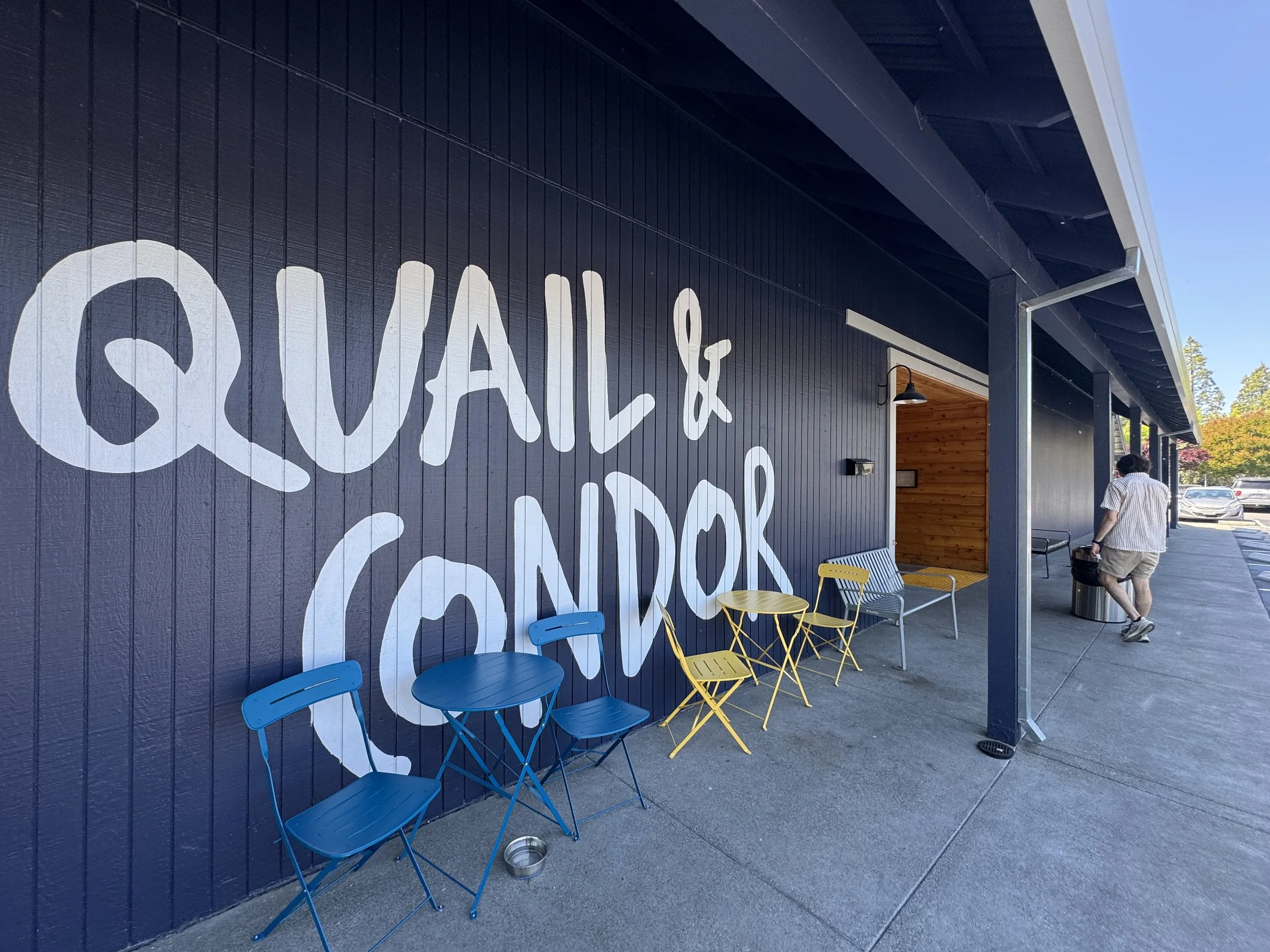
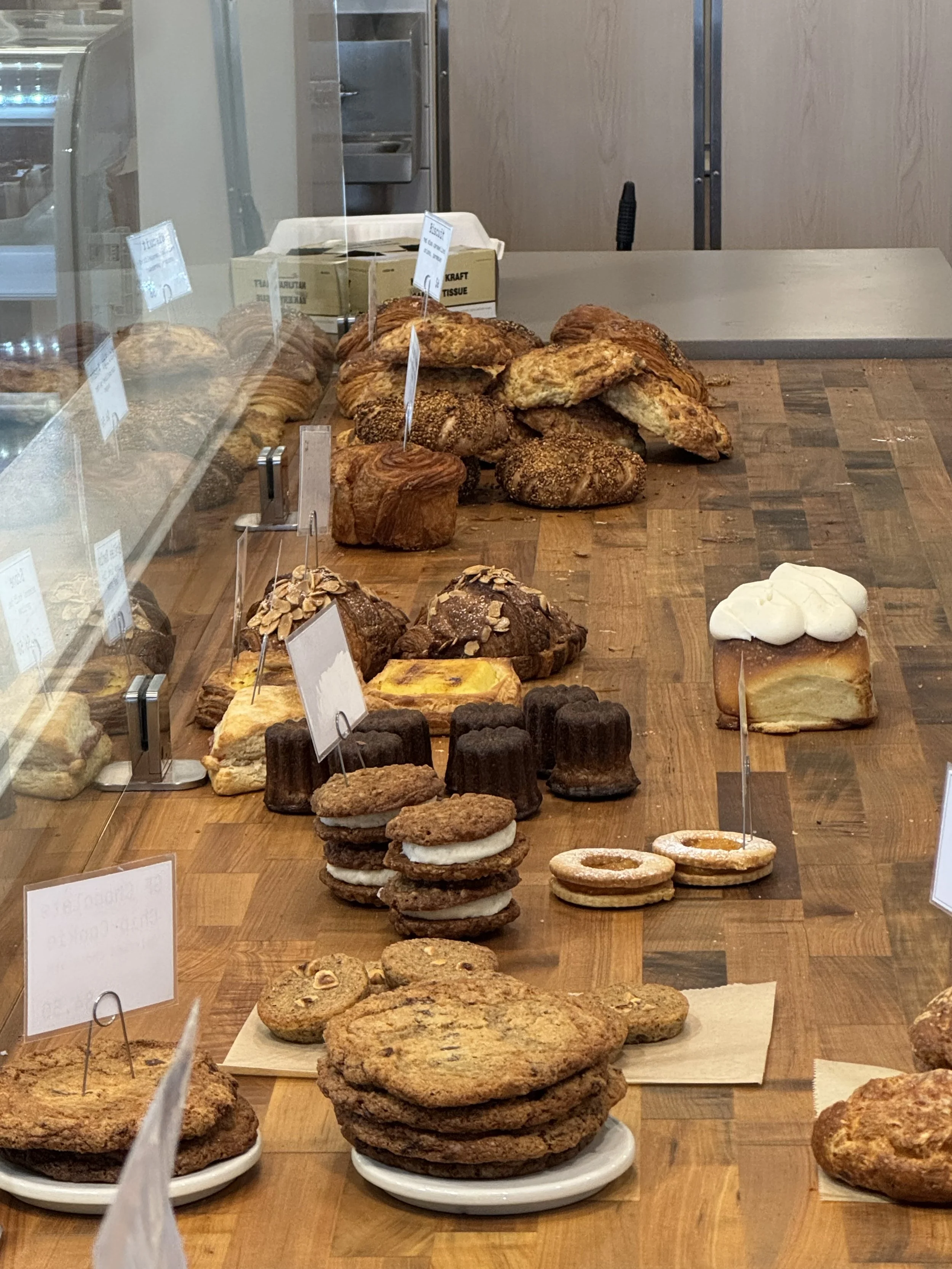
Quail & Condor

A rare large space, which not only serves up great baked goods but also provides an excellent third place for the community. We saw quite a few friends catching up, co-working, or planning future adventures here and I love to see a space that provides both good food and a sense of community in that way.

Little Saint

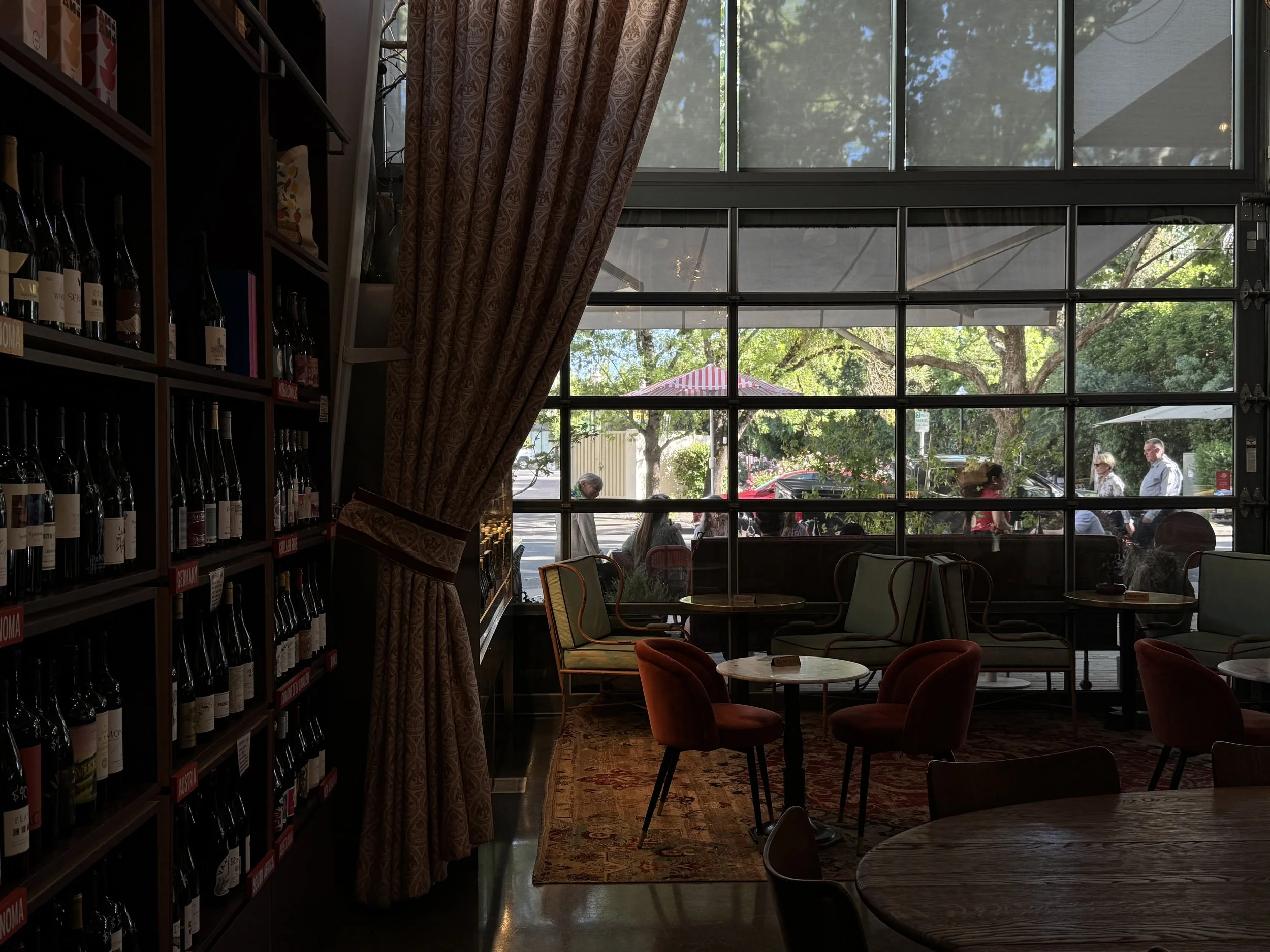
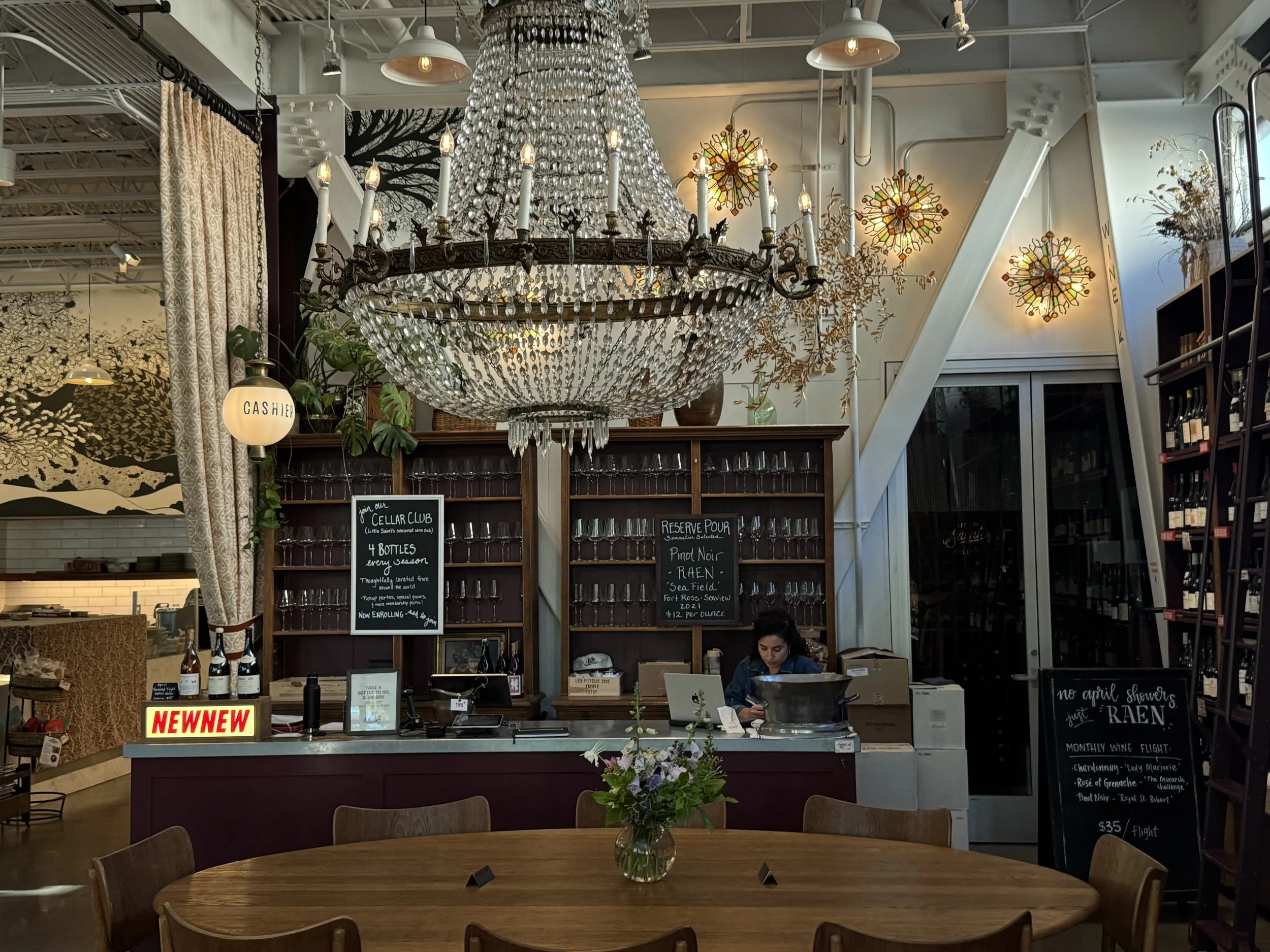
One of the strongest anchors in town. Restaurant, wine, shop, and the coolest space I’ve seen in quite some time. Erick actually remarked “I don’t think I’ve been in a space this well curated in years,” and I have to agree. It felt like being in my own living room - filled with love, buzz, and a ton of character. Bonus points for the huge selection of natty wines available to boot!

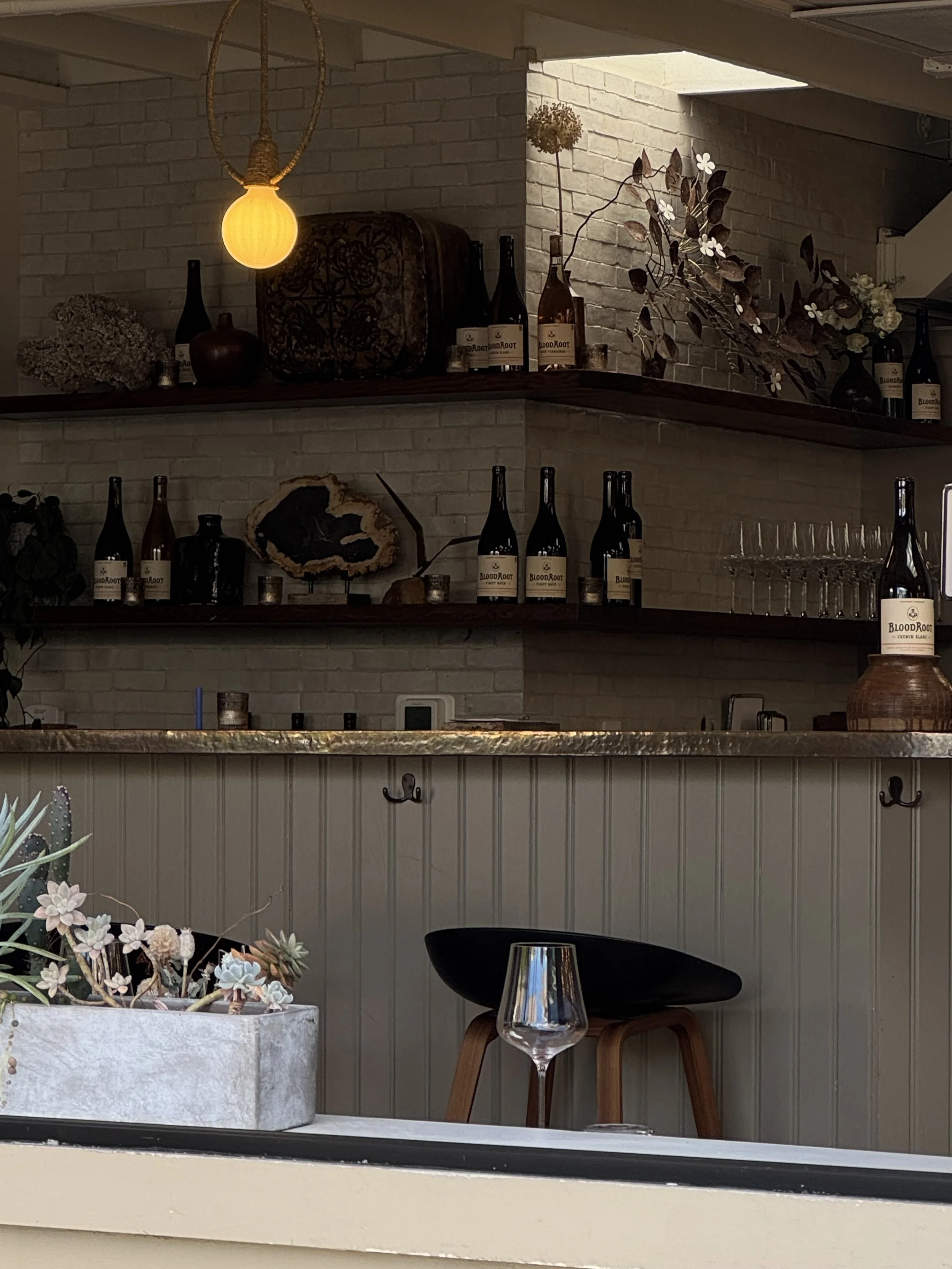
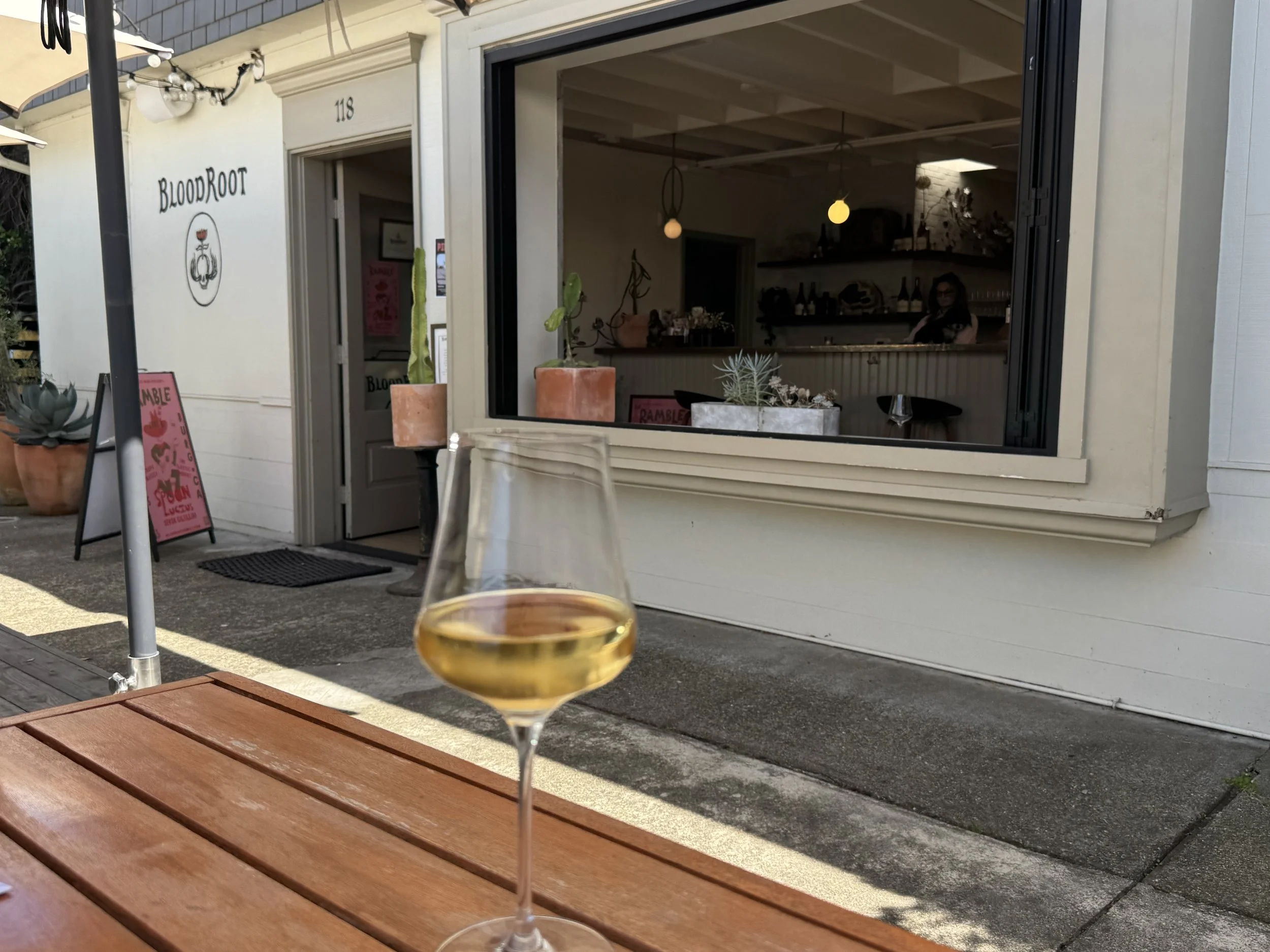
BloodRoot

BloodRoot connotes “life from death” as the “blood” of the vines is nourished by the “roots” and terroir that surround each plant, and how truly special this cycle is. Noah and head winemaker Katy Wilson are adept at making very serious wines that garner all the accolades. Importantly, they pride themselves on making serious wines at value-based prices. BloodRoot is experimental and creative and a staple of the wine community in Healdsburg with friendly staff in their tasting room.

Martha Stoumen

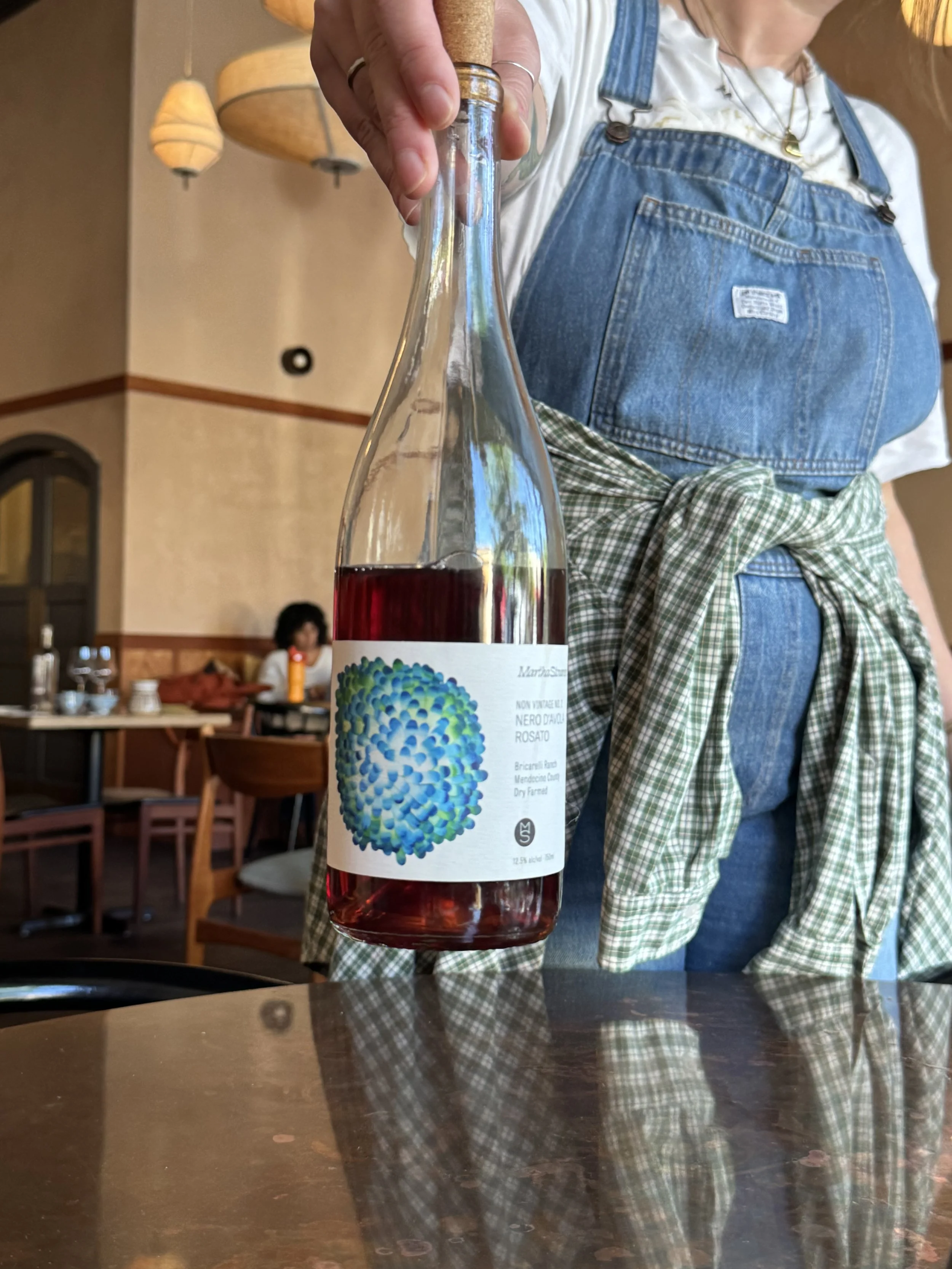
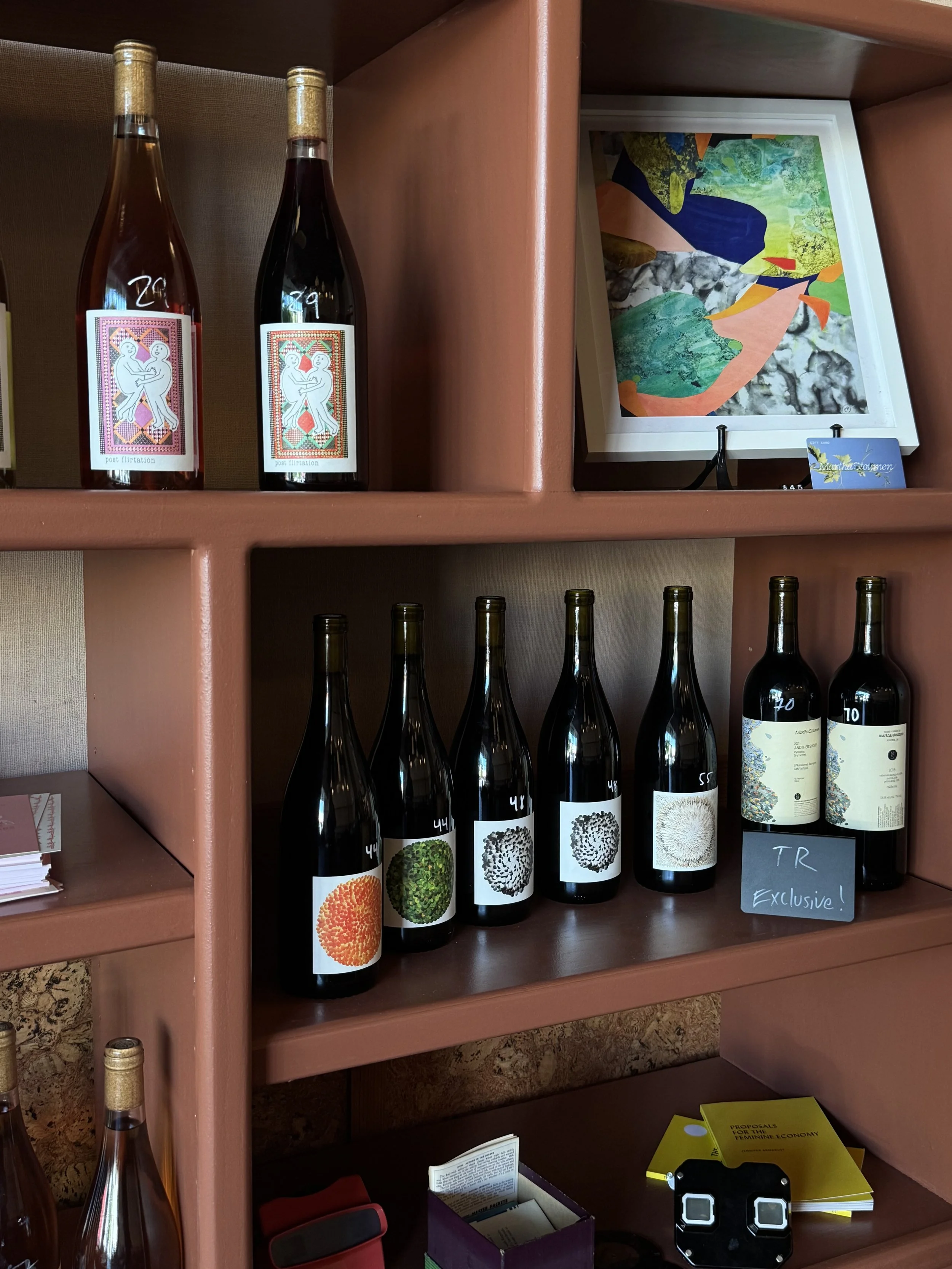
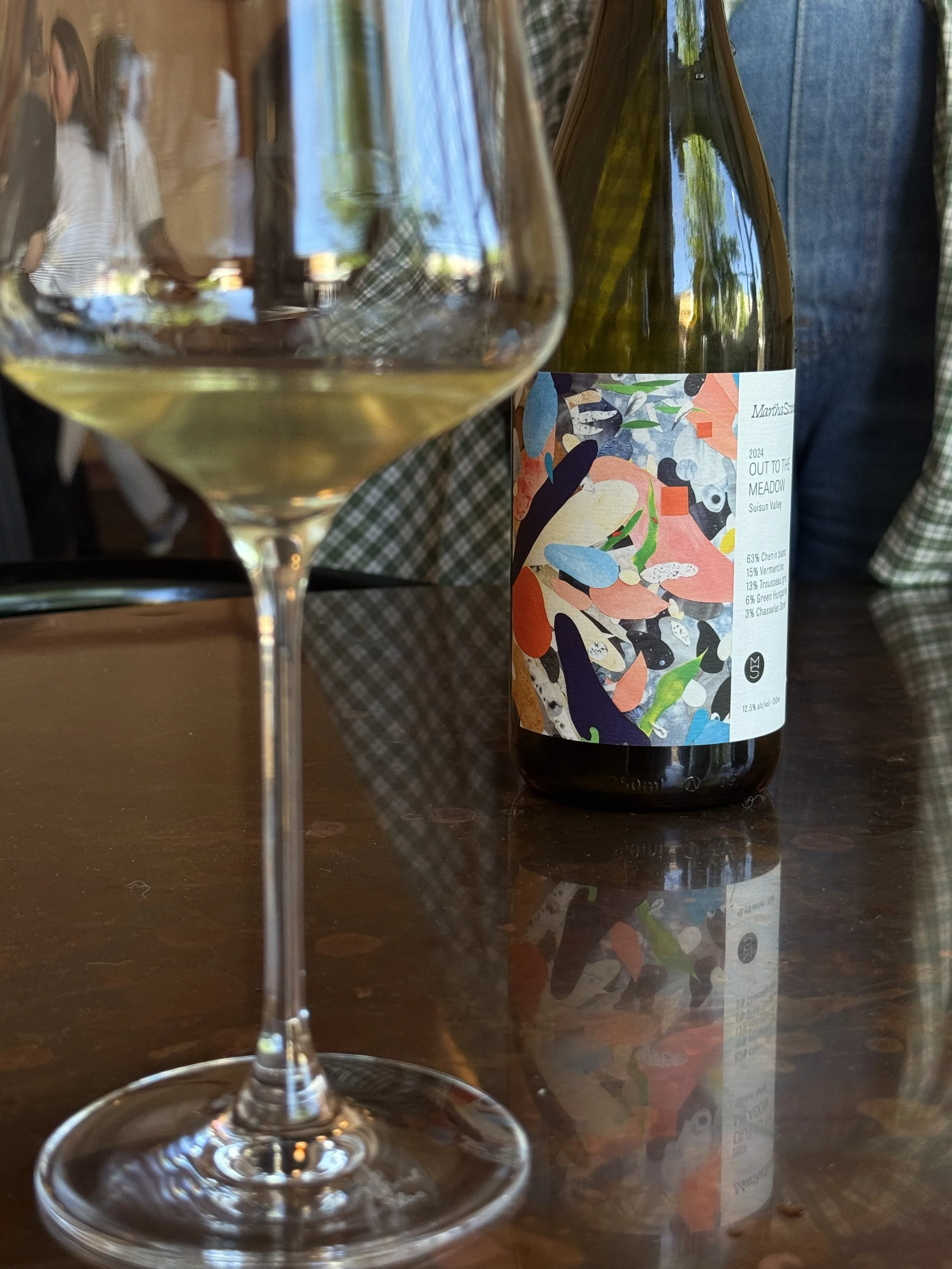
Founded in 2014 by Martha Stoumen, this is a California-based winery known for its low-input natural wines. Stoumen, who holds a master's degree in Enology and Viticulture from UC Davis, emphasizes organic and dry-farming practices, using native yeasts and bacteria for fermentation, and producing vegan wines. They offer various bottlings, including easy-drinking blends and varietals like Carignan, often noted for their freshness and of course some funkier ones and “Mystery” pours as well, which humbled us immensely. Their tasting room just opened in 2025 but already has a very strong foothold and presence in the community. We absolutely loved spending time with Hana and David for our tasting, and found many of the details to be super charming - such as providing miniature toy goggles for looking at old pictures of the vineyards and grapes. Wish we could come back every weekend!

The Coast: Bodega Bay, Oysters, and Cold Air

One of the best parts of this region is how quickly inland heat gives way to coast.

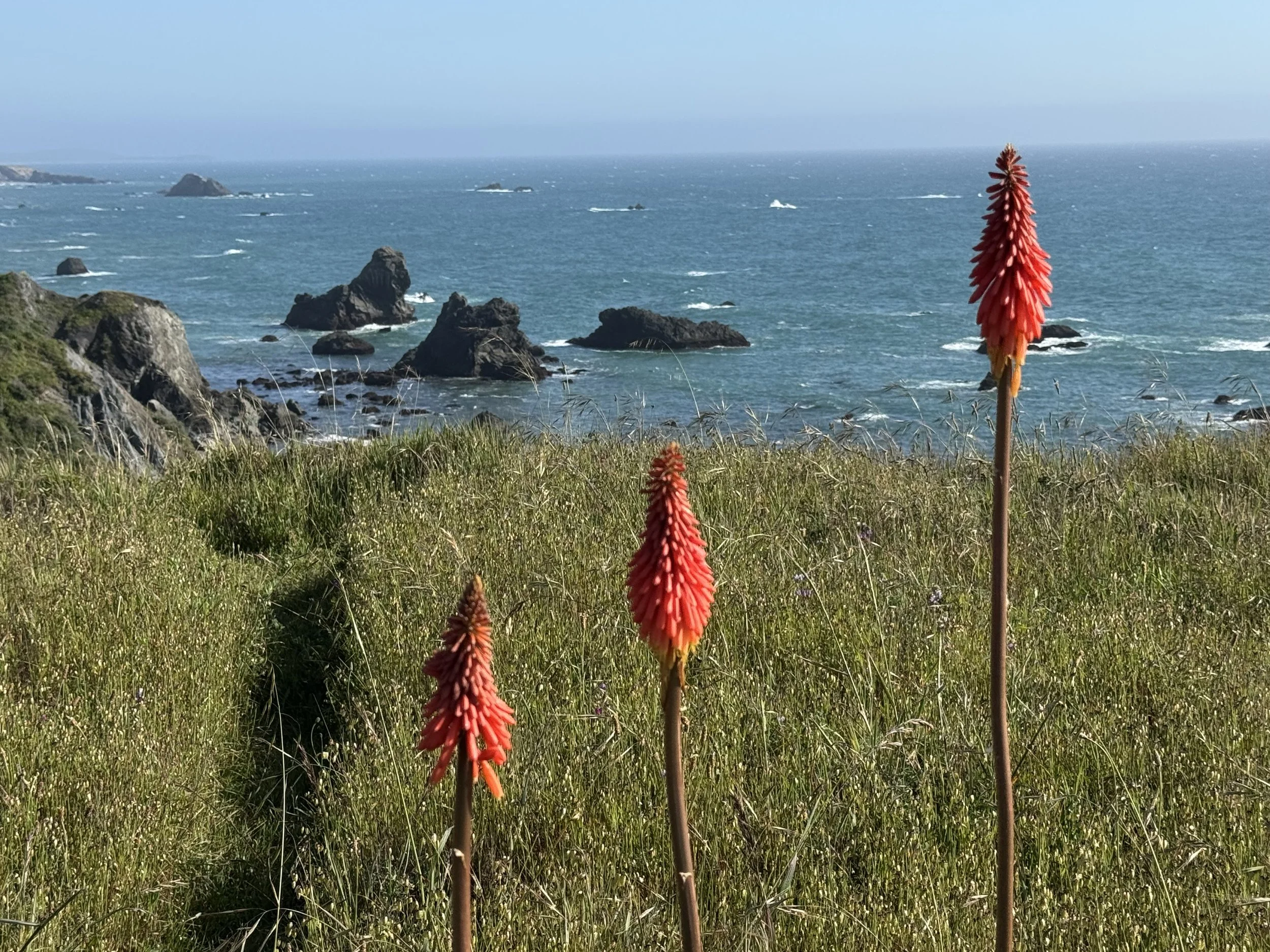
The drive to Bodega Bay was one of the more beautiful transitions of the trip. Dry Mediterranean hills gave way to rolling coastal slopes, bluffs, rock, wind, and colder air coming in off the Pacific. The whole landscape changed register.

Fishetarian

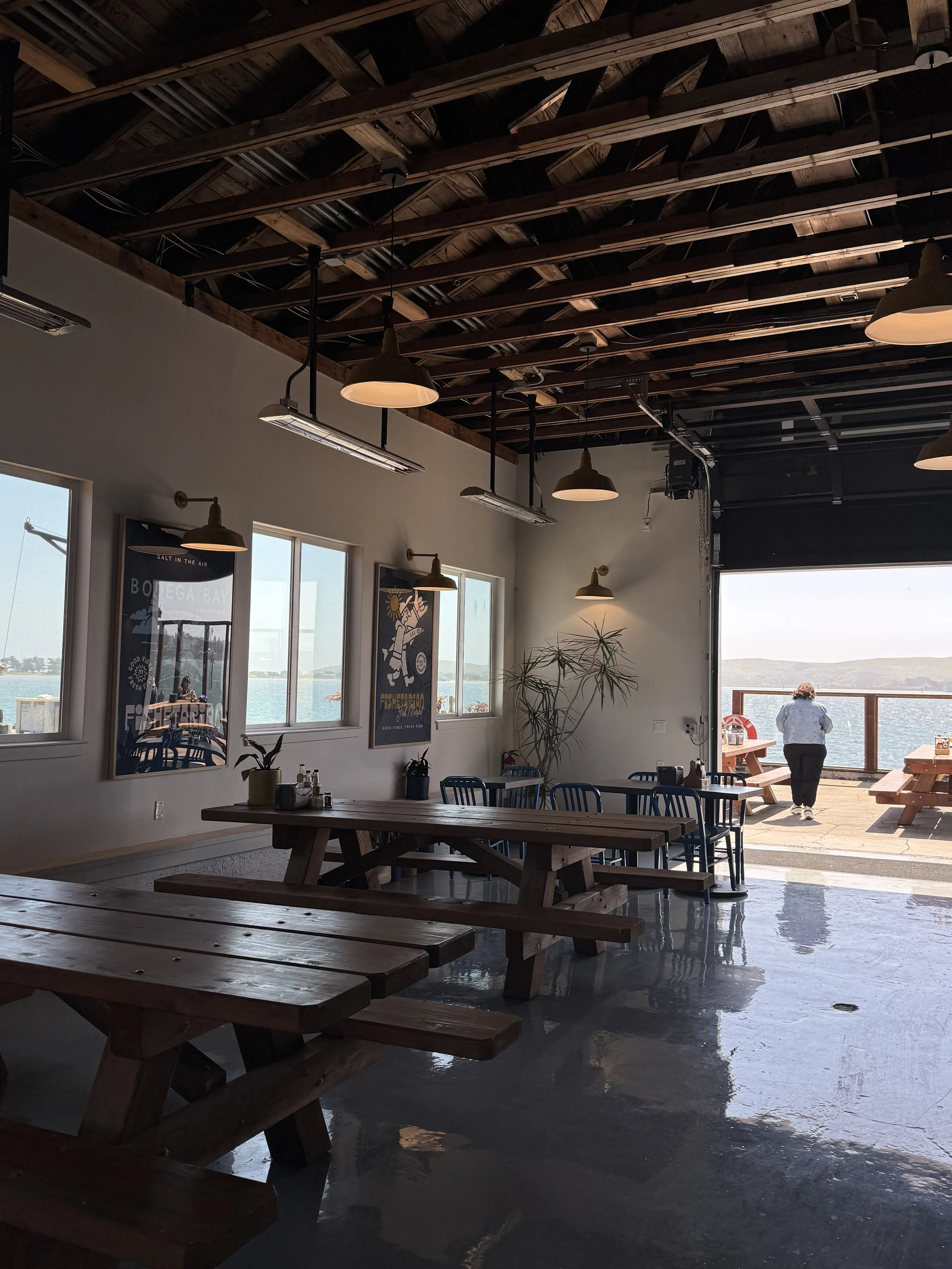
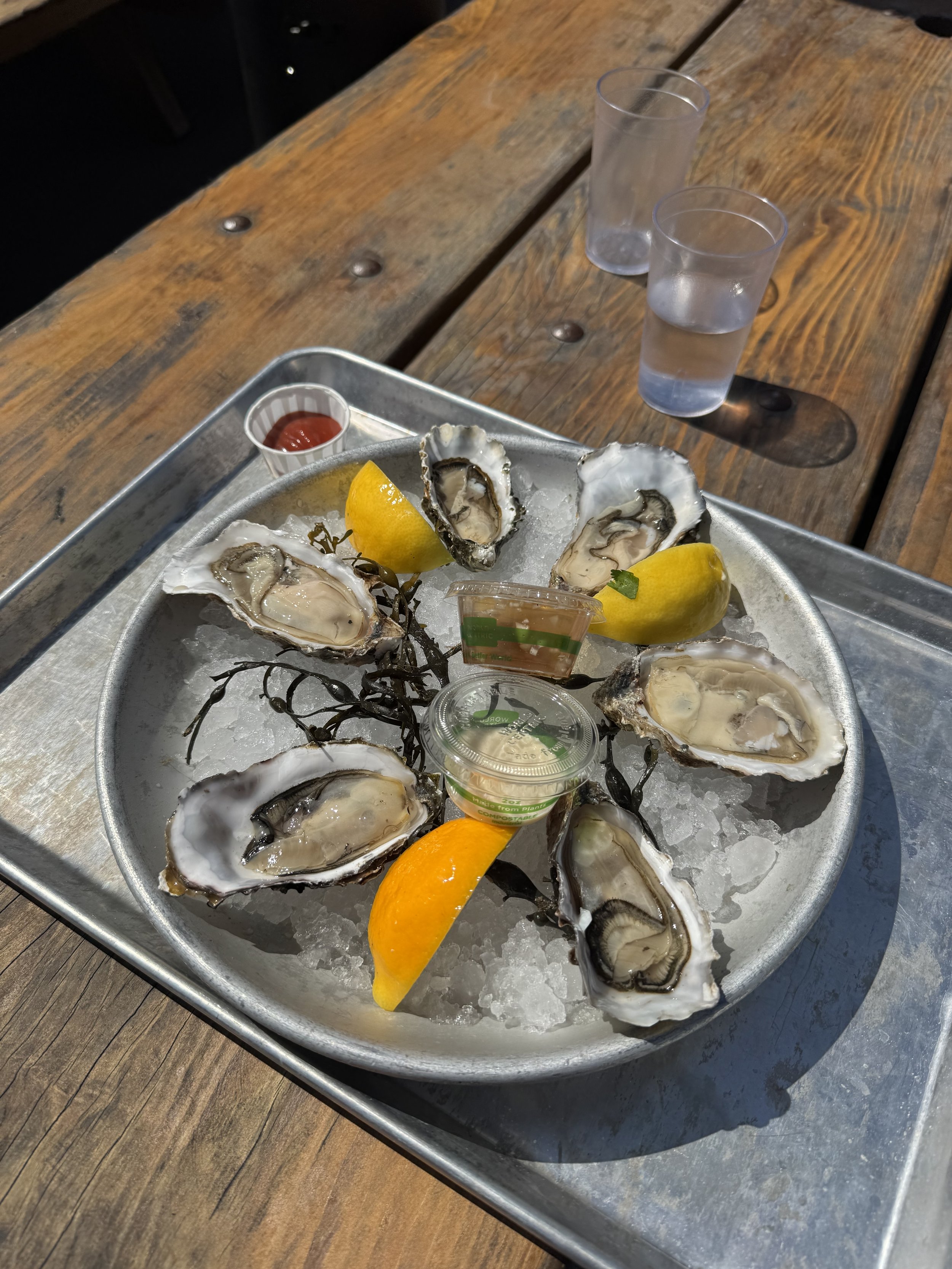
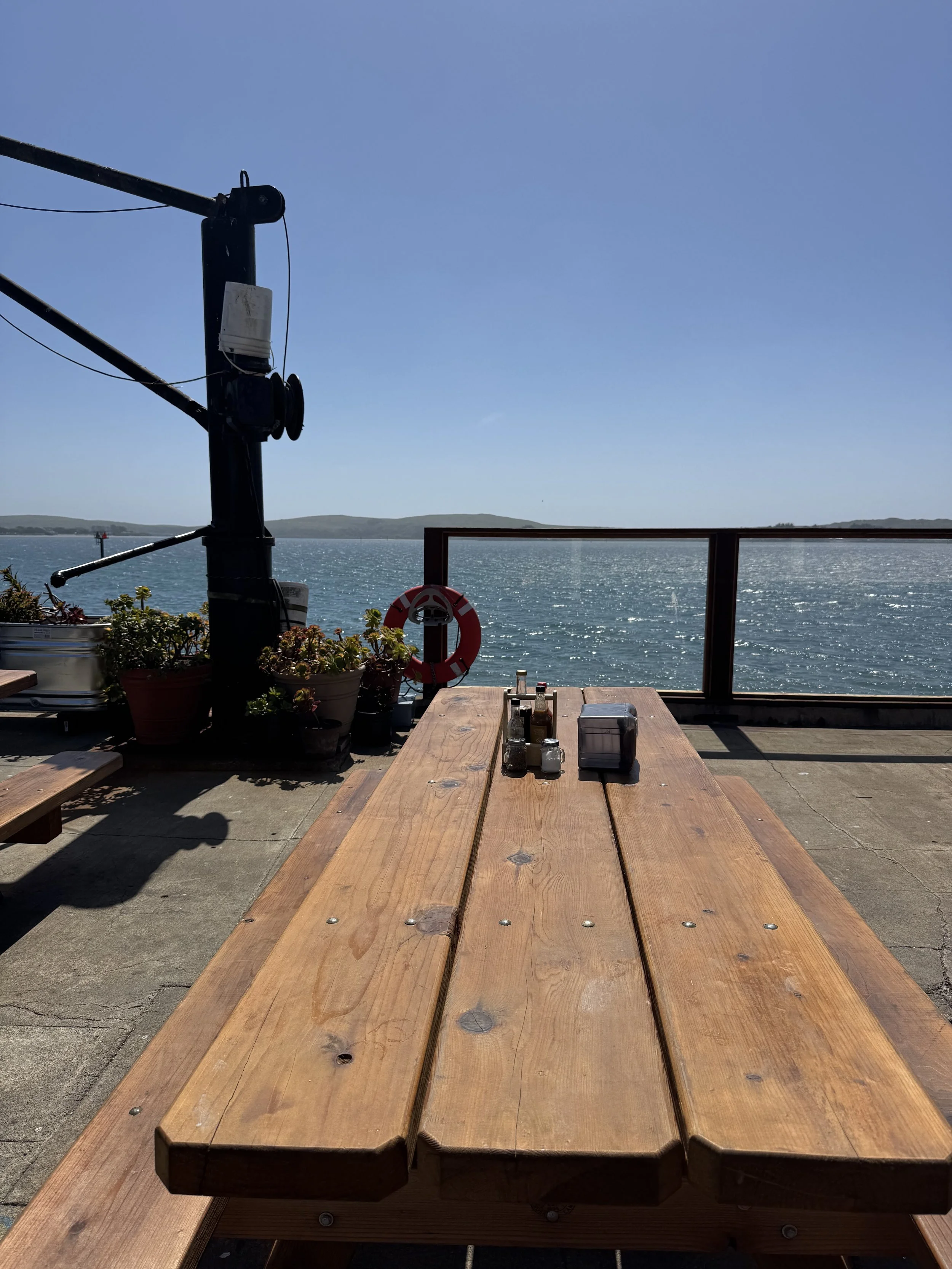
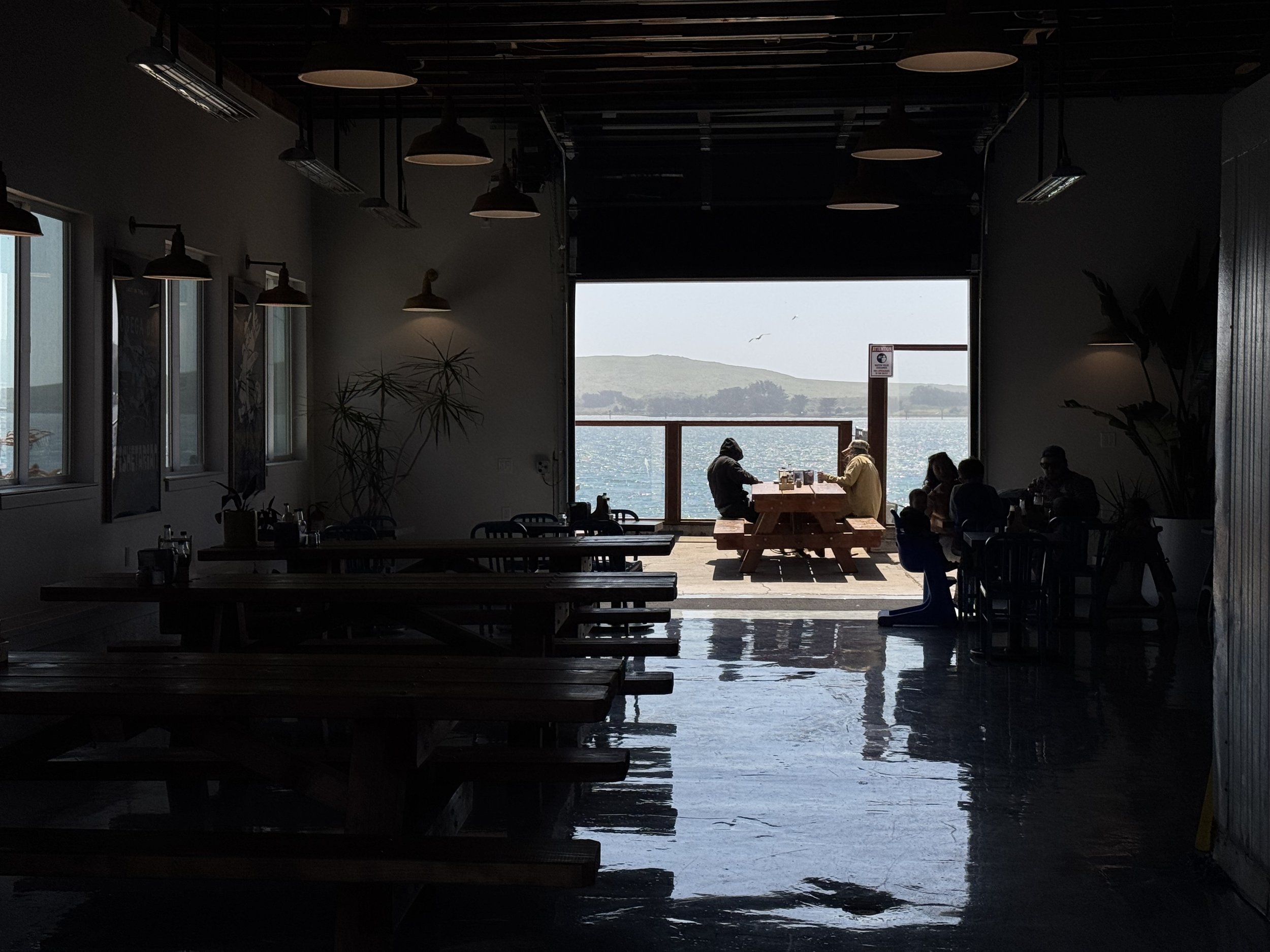
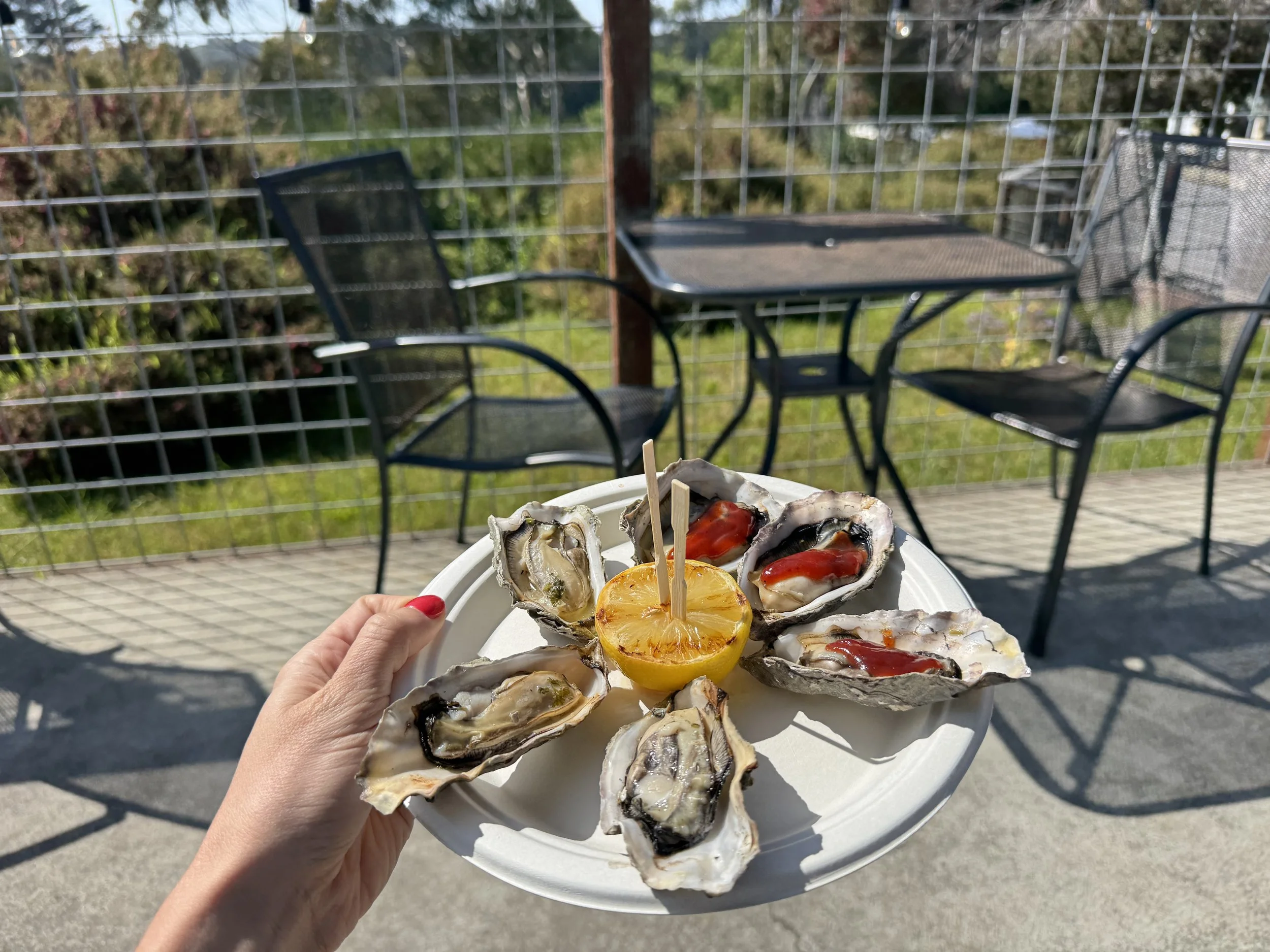
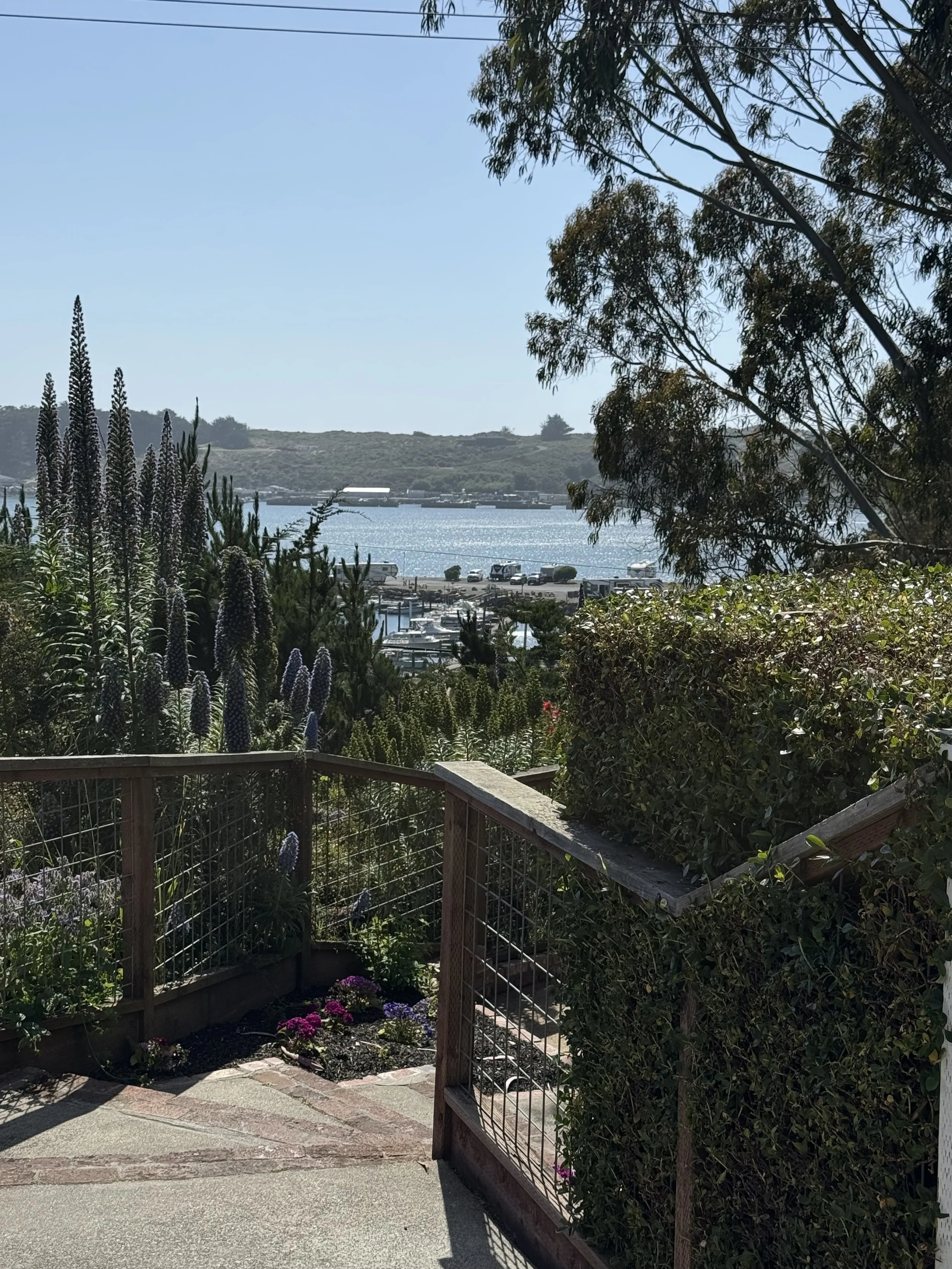
Founded in 2012 by Shane and Dana Lucas in Bodega Bay, Fishetarian is a popular, sustainable, and fisherman-owned restaurant and market offering fresh, locally sourced seafood with "Bummer-Free" service. Located on Highway 1, they serve casual favorites like fish and chips, chowder, and grilled fish tacos in an awesome waterfront setting. They’ve recently expanded and there’s plenty of space for vegging out for an afternoon whilst indulging in all of your favorite salty seafood favorites!

The Birds Cafe

Great outdoor seating with views and we found it to be a more relaxed setting slightly back from the coldest part of the coast. You can get coffees, oysters, pastries, sandwiches, anything you want here - so pick your poison!
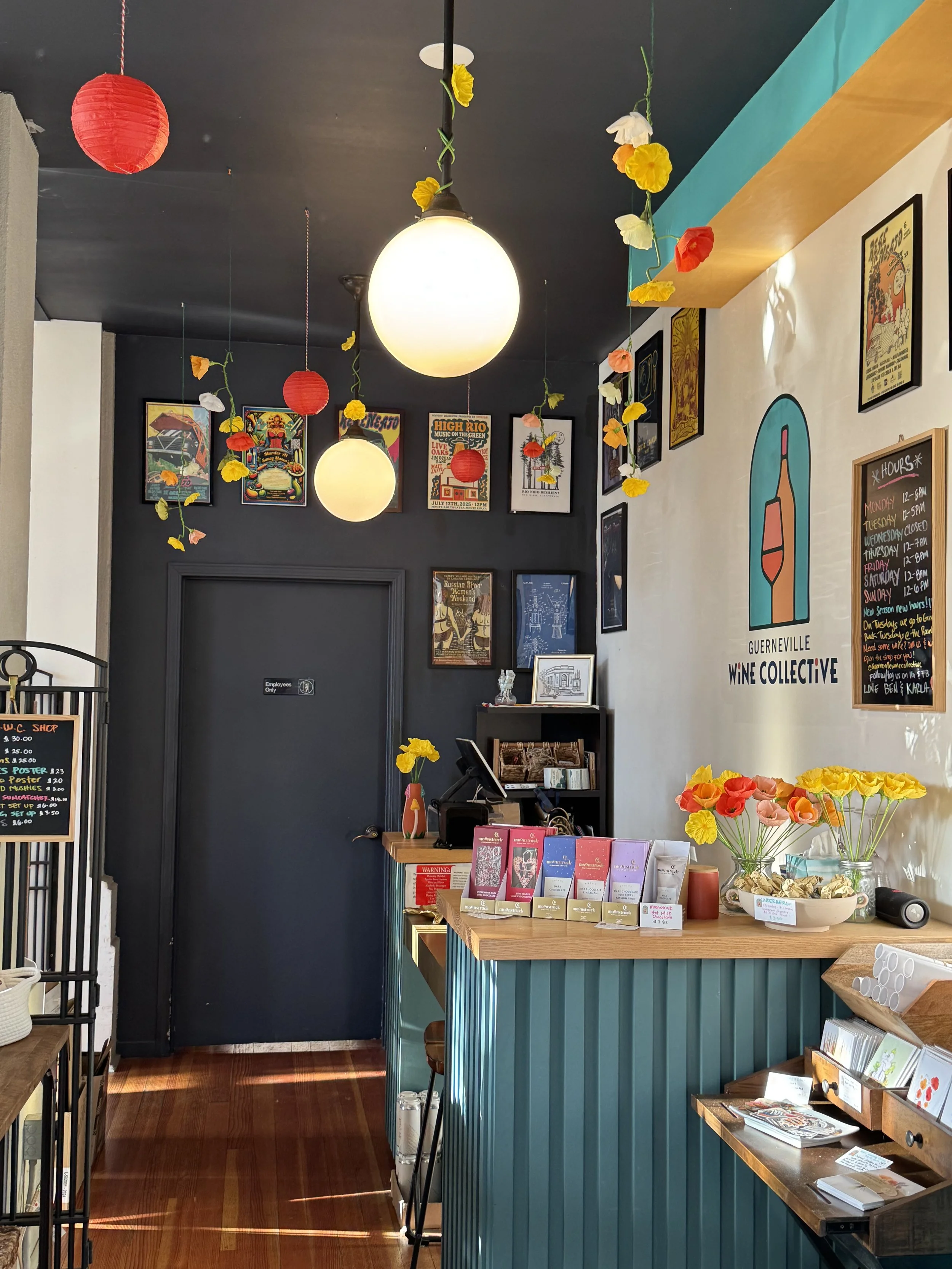
A truly stunning part of the coast, especially if you happen to catch it on a sunny day. Make sure to bring a jacket as the sea breeze can be unpredictable and at times a bit chilly, even when in the 70’s inland!
Dawn Ranch: the Best Place to Stay Near the Russian River

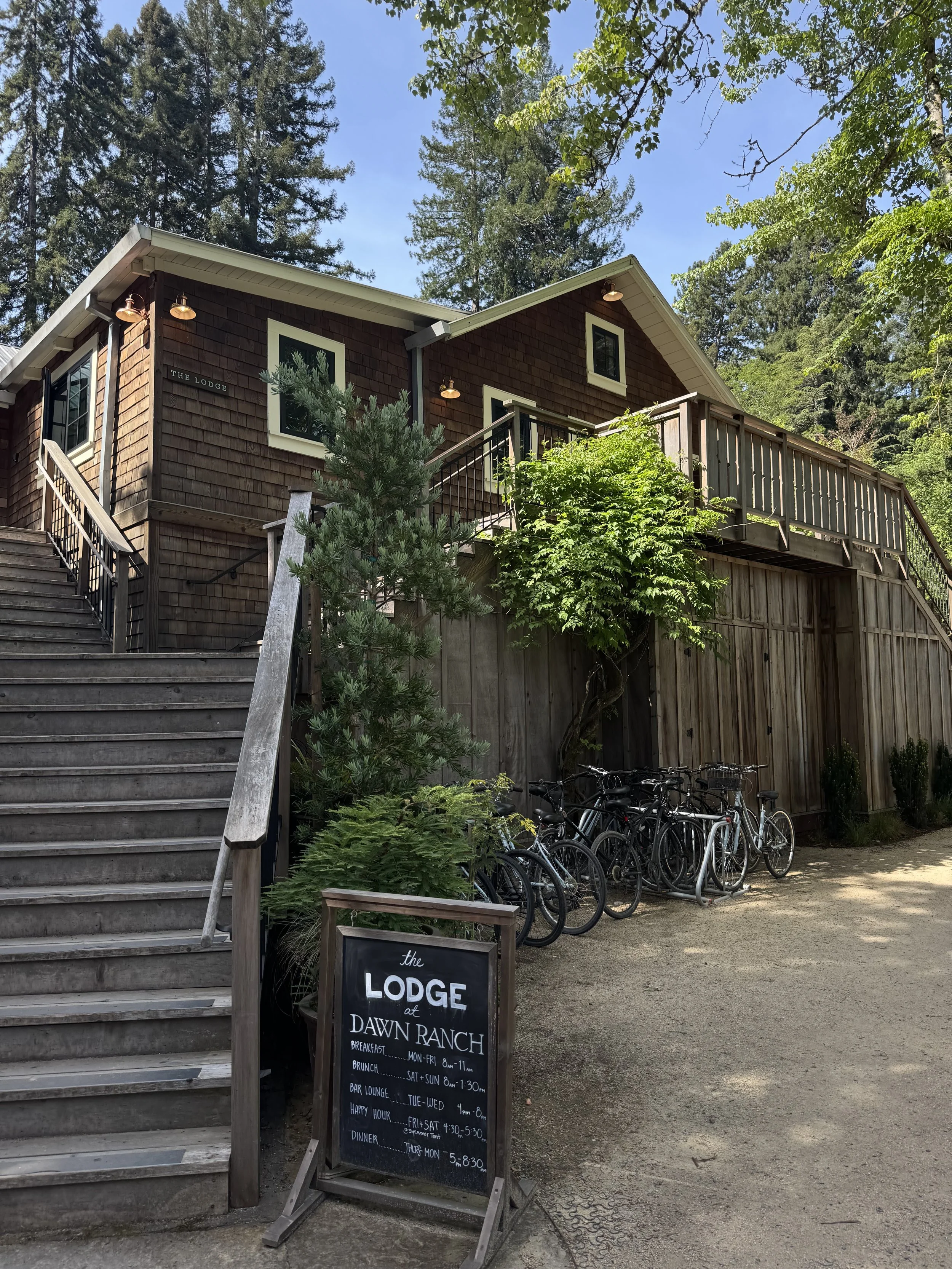
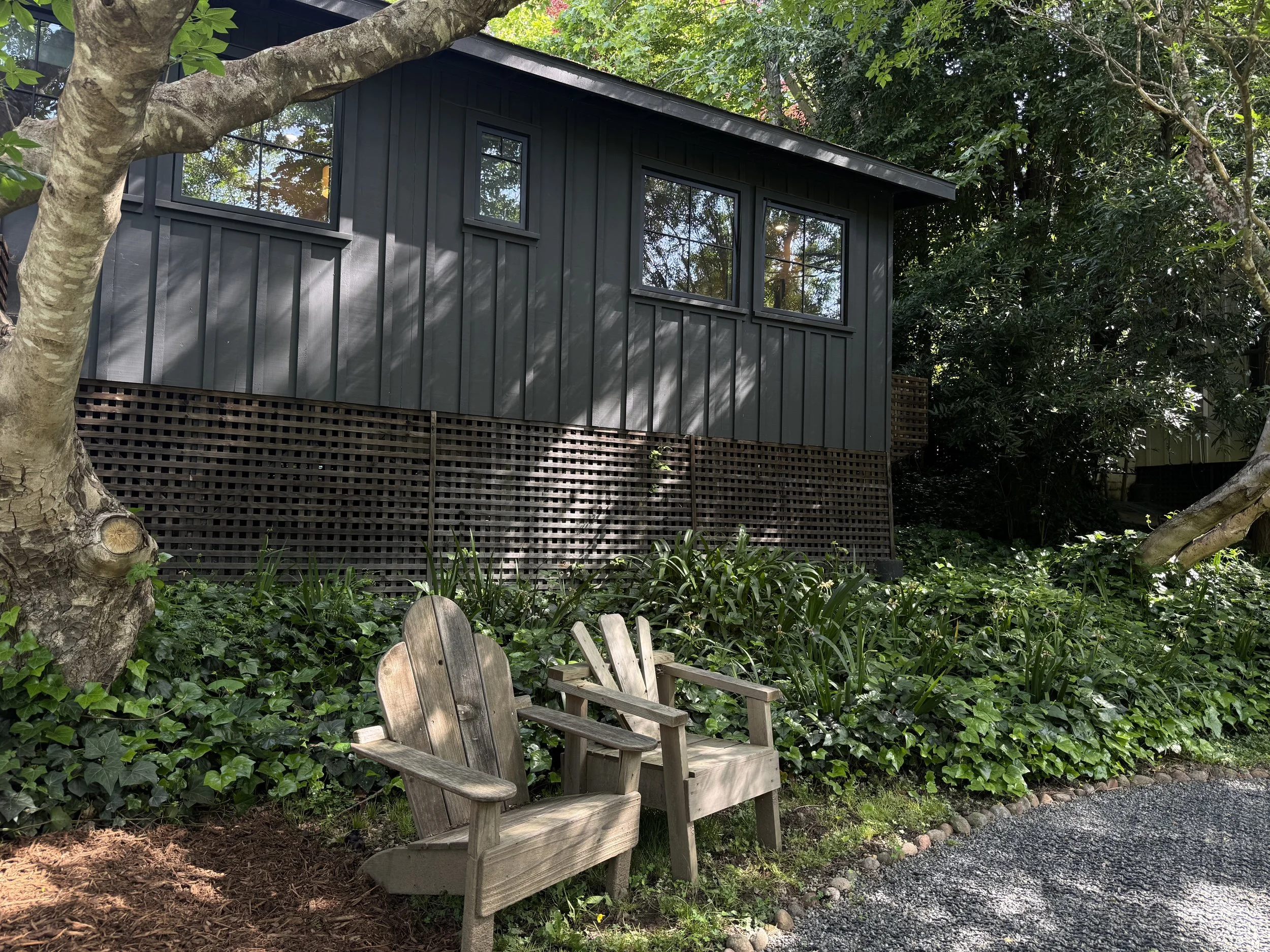
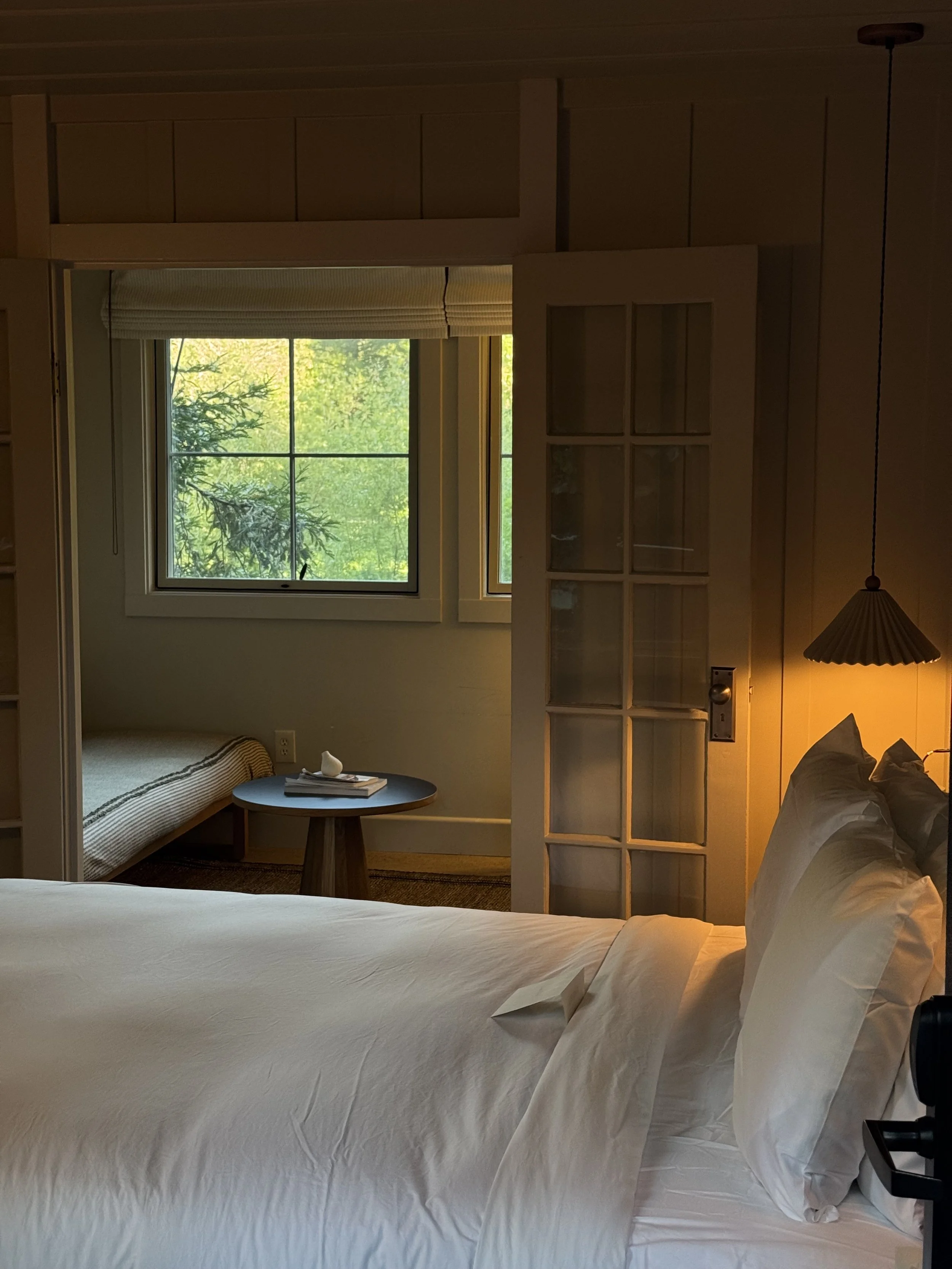
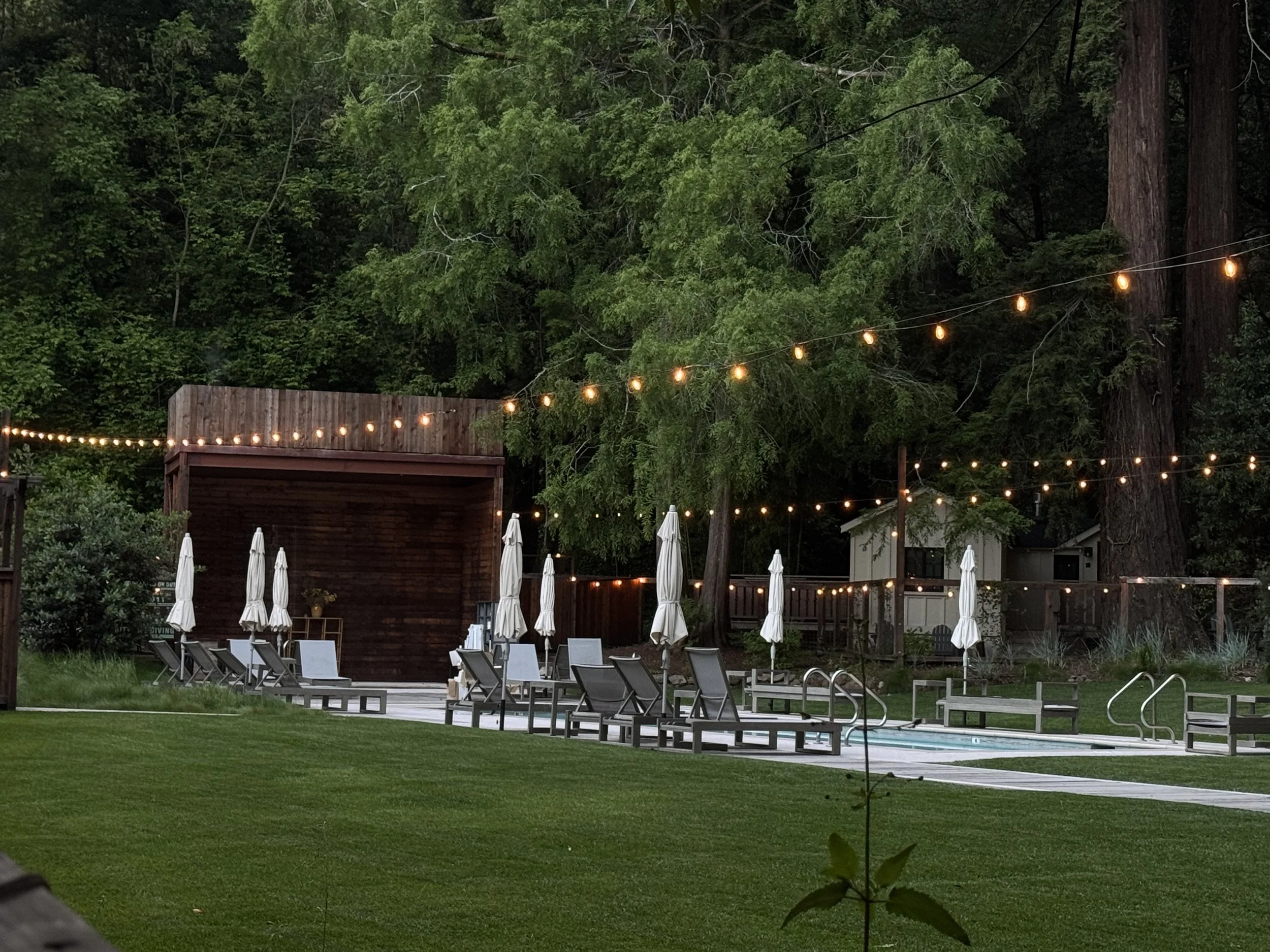
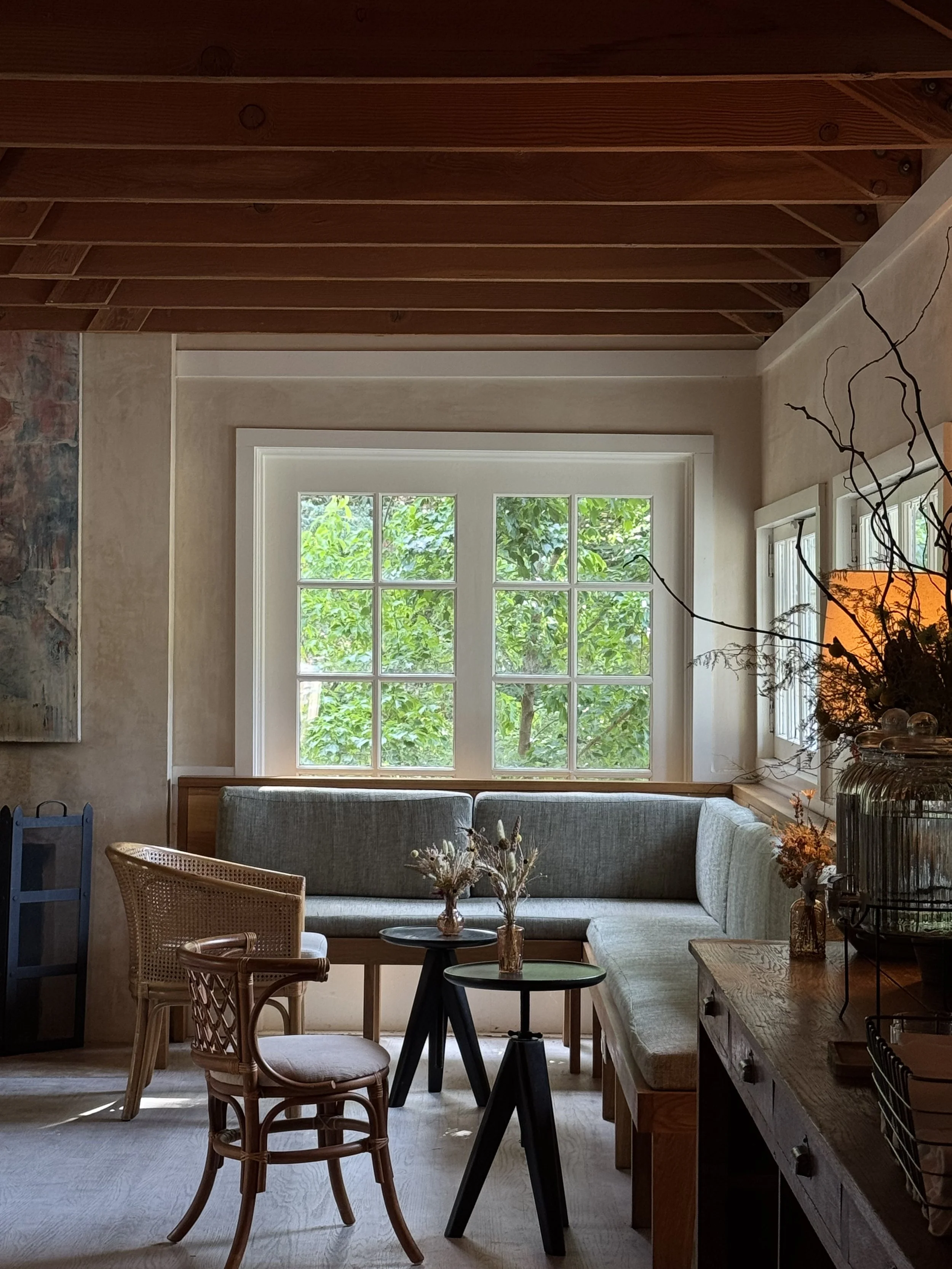
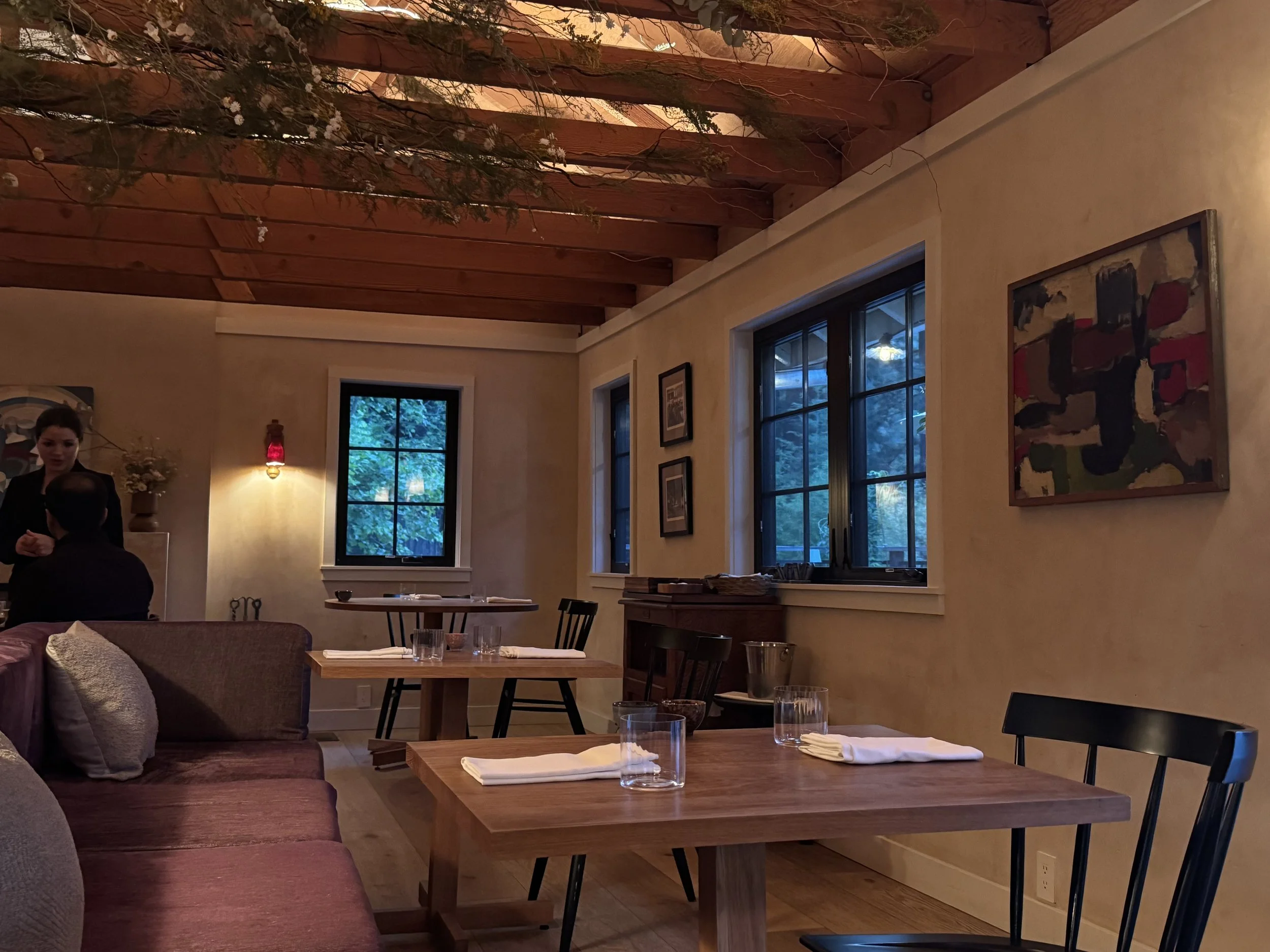
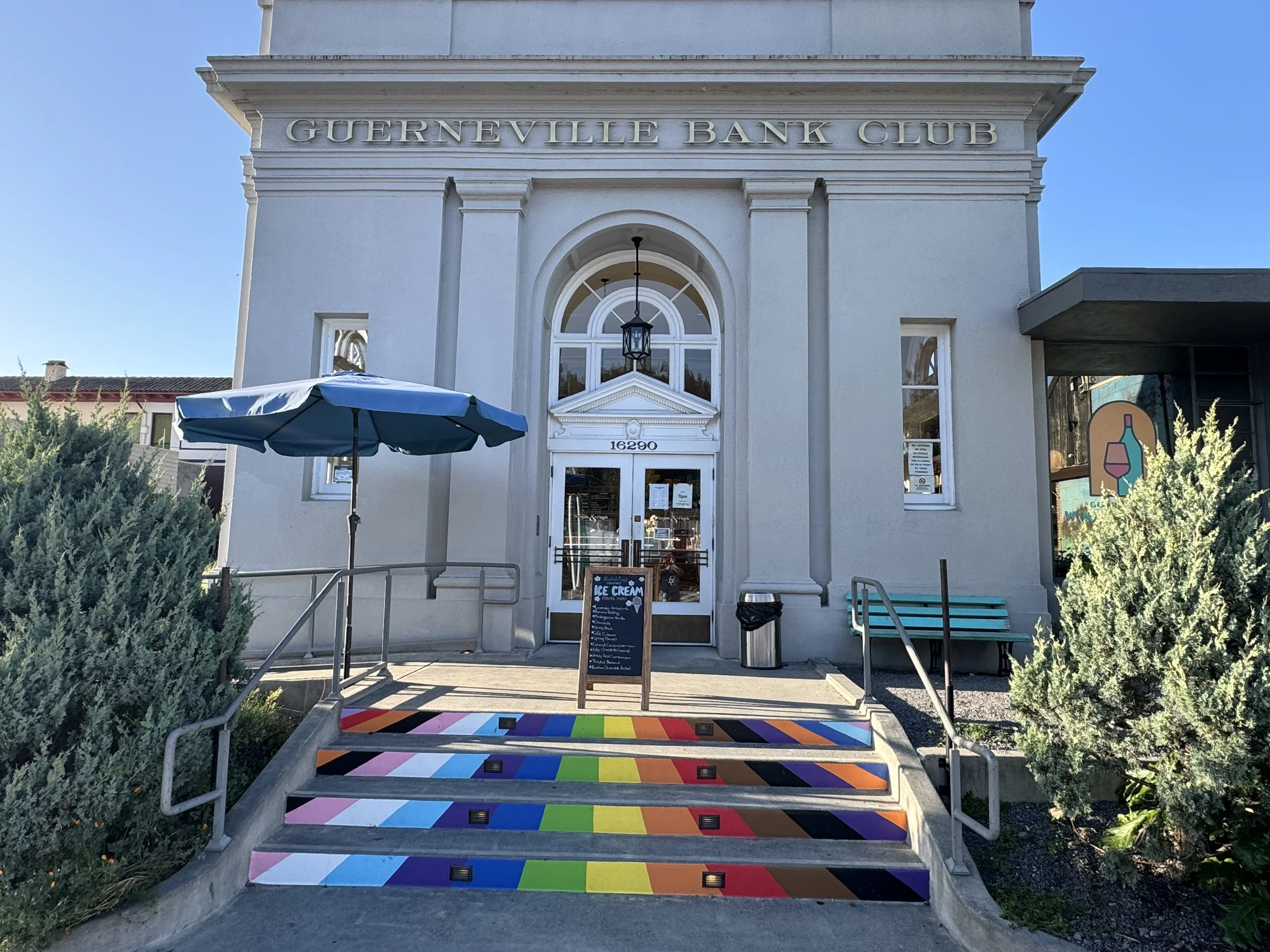
Dawn Ranch ended up being one of the strongest hotel experiences of the trip. It is an impeccably cute setting with cabins layered across the property, and a pool plus gorgeous dining room (more on that later). You can walk into Guerneville within 3 minutes, which makes it feel both removed but also incredibly connected to the buzz of the town.

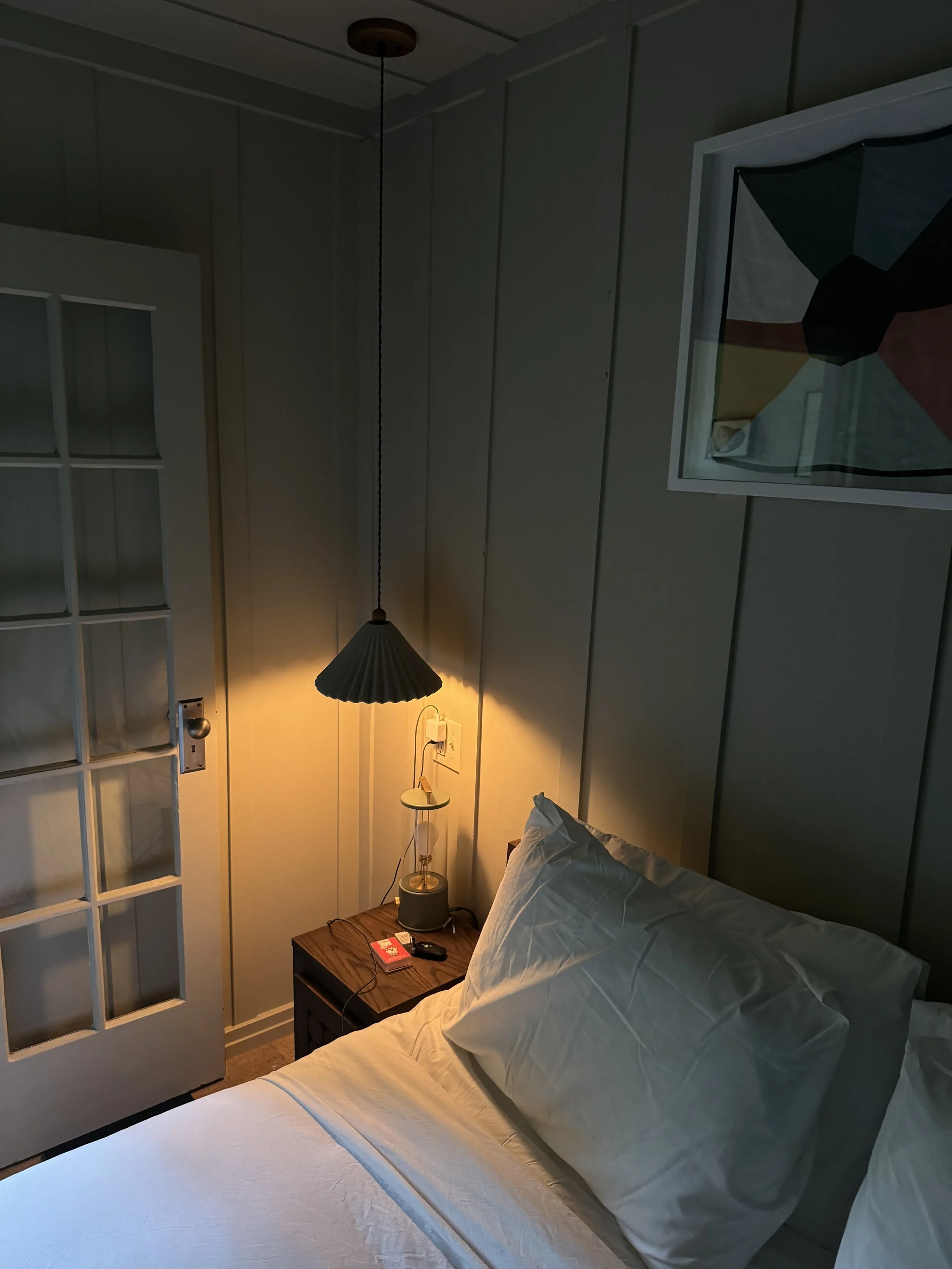
Upon arrival, you park your car and can then take a plant cart like you’d see from a garden center and bring your luggage to your cottage. The cottages are cozy, polished and quaint and have everything you need: fridge, coffee, bed side lamps, a small porch w/ chairs, and a good cooling system for warm days. Beds are comfortable and cozy and there was plenty of space in our cabin for evening relaxation and games.

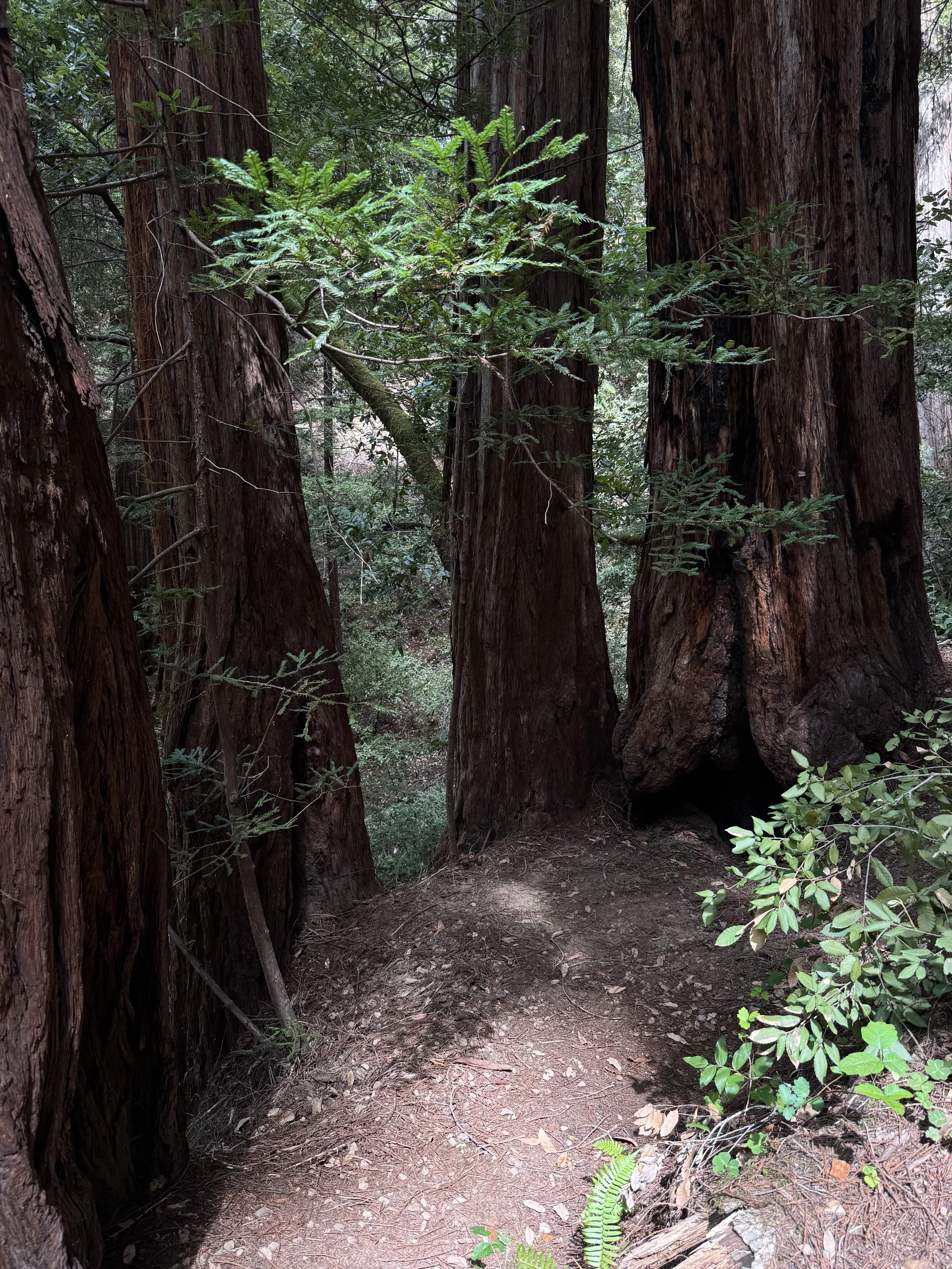
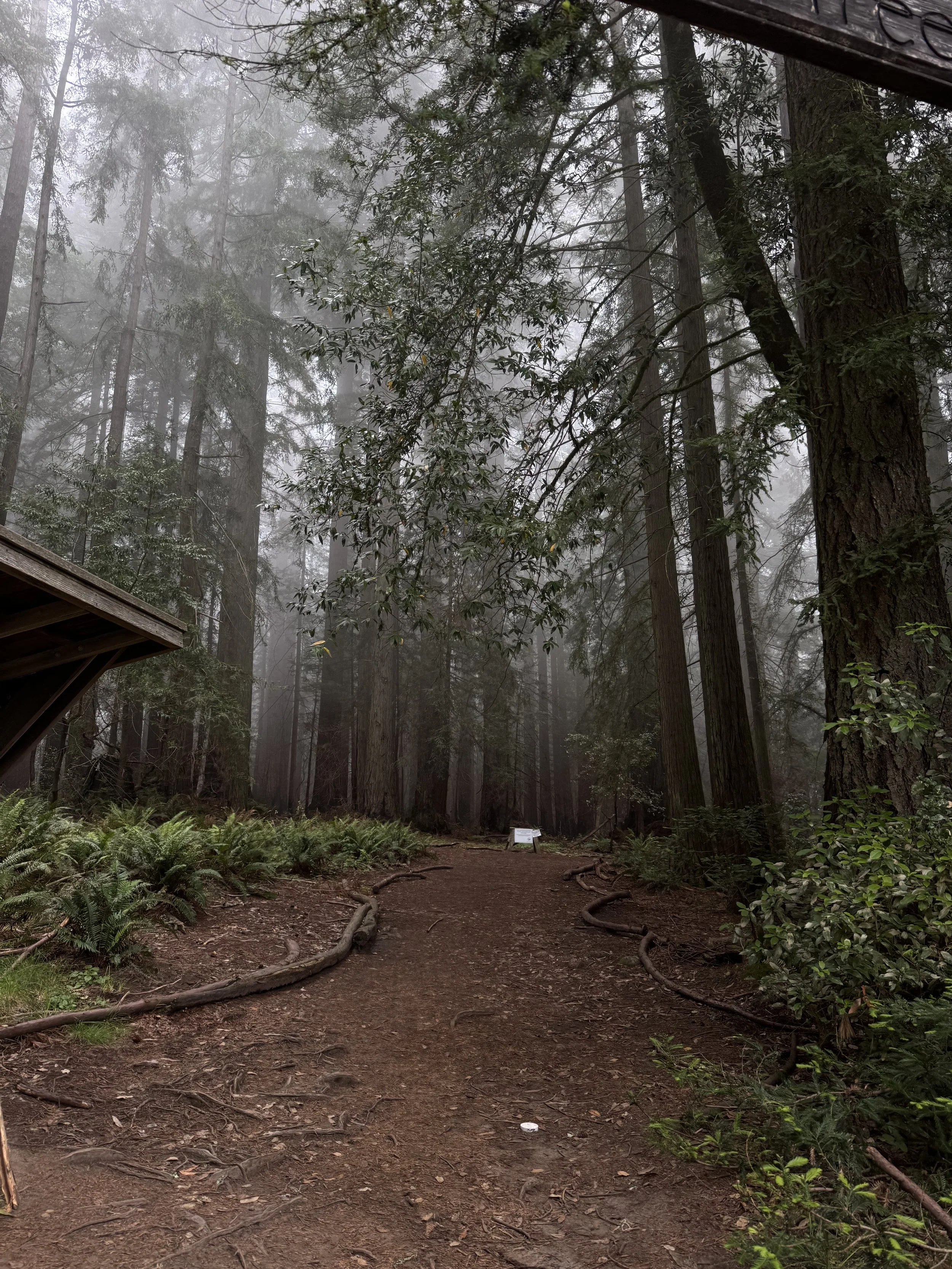
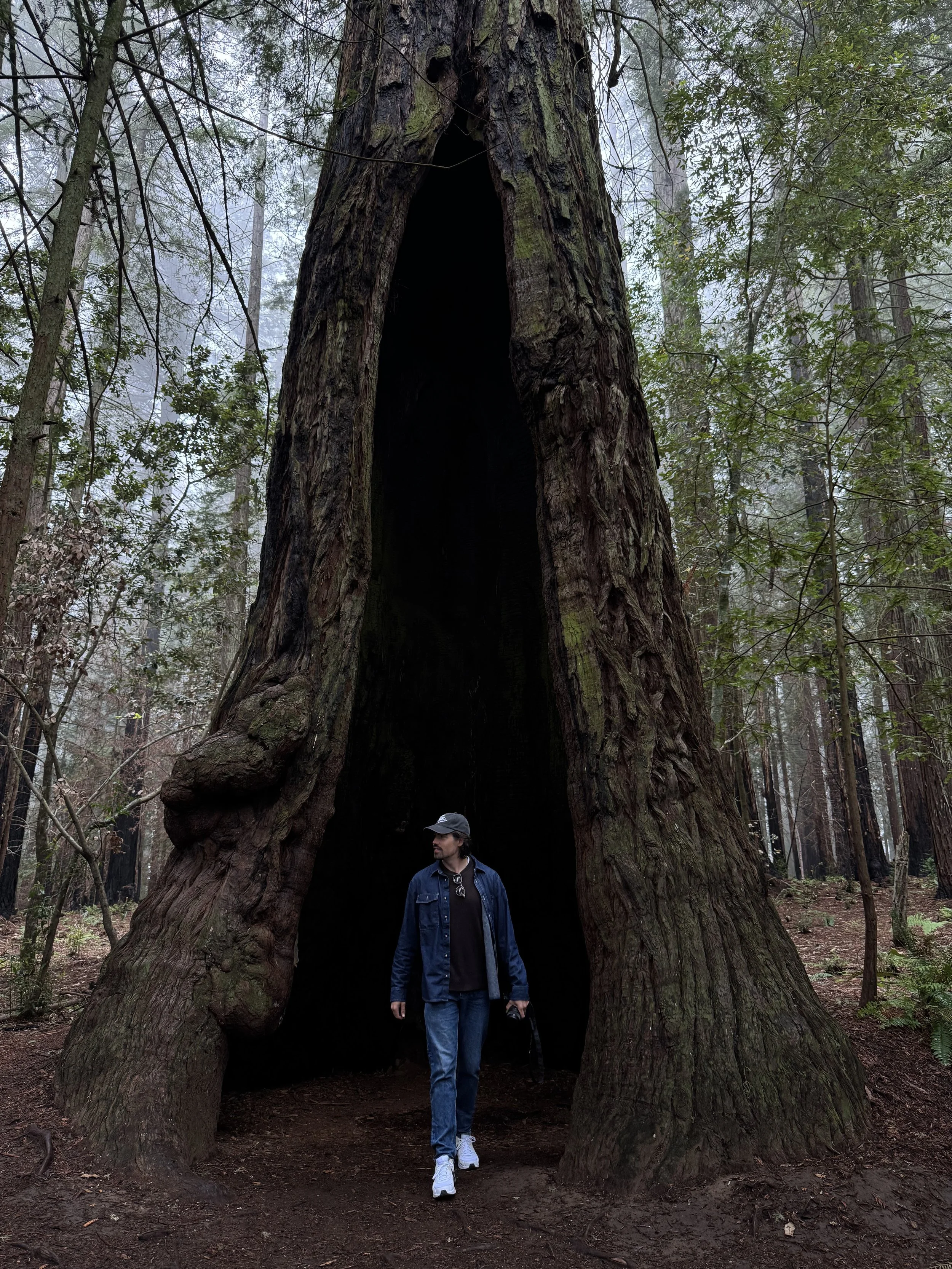
Walking around, you quickly see how small you are around the towering redwoods. The juxtaposition of the cabins amongst these giants is a powerful contrast of mother nature’s immense strength and time. I appreciated the integration into the forest, as it creates a unique experience unlike any other. Again, it has remnants of Frank Lloyd Wright’s approach in that the property feels built *into* the Earth rather than on it. The integration with nature is evident from the moment you walk on its campus. The pool is incredibly nice and clean, and the spa retreat even better.

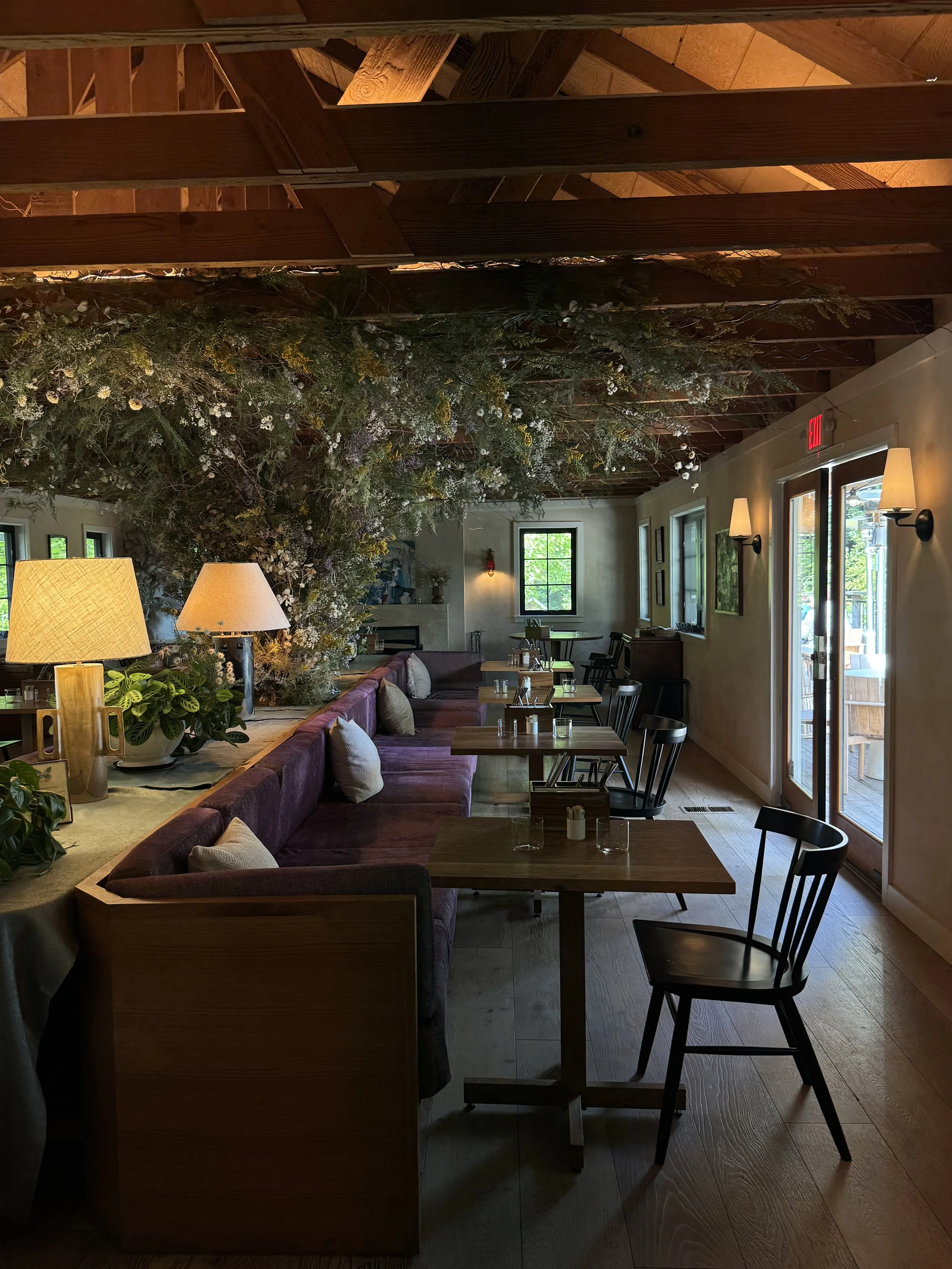
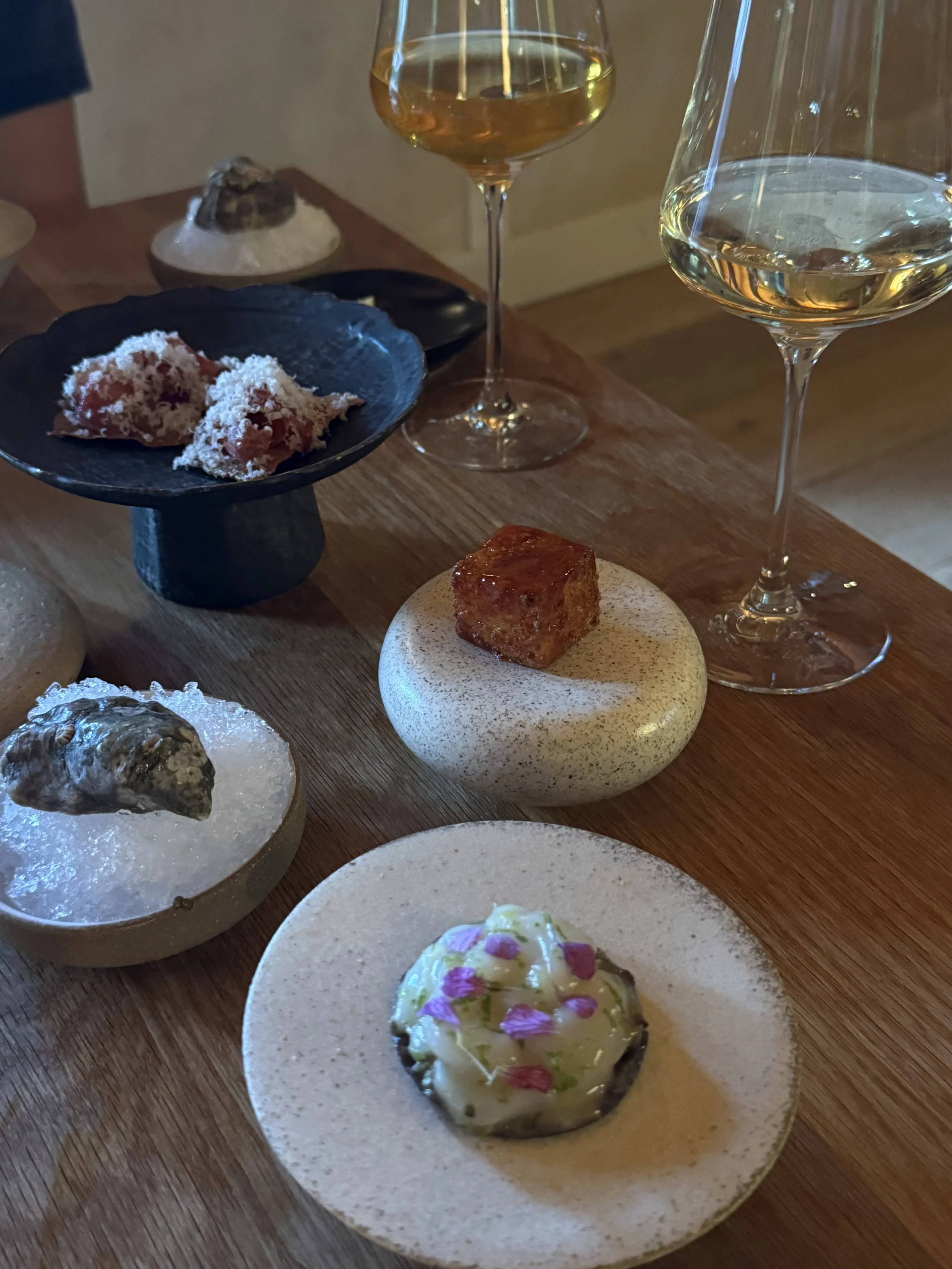
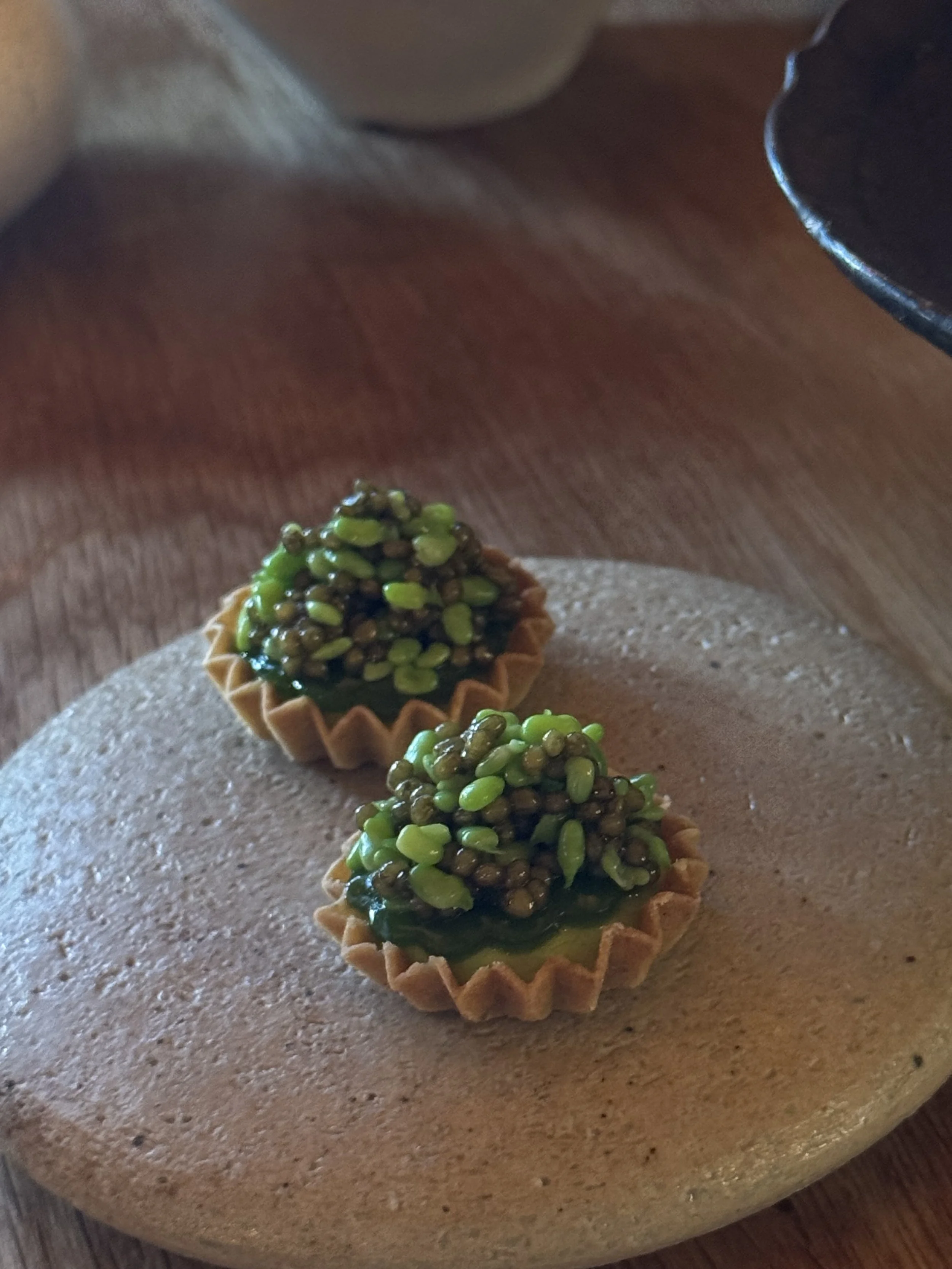
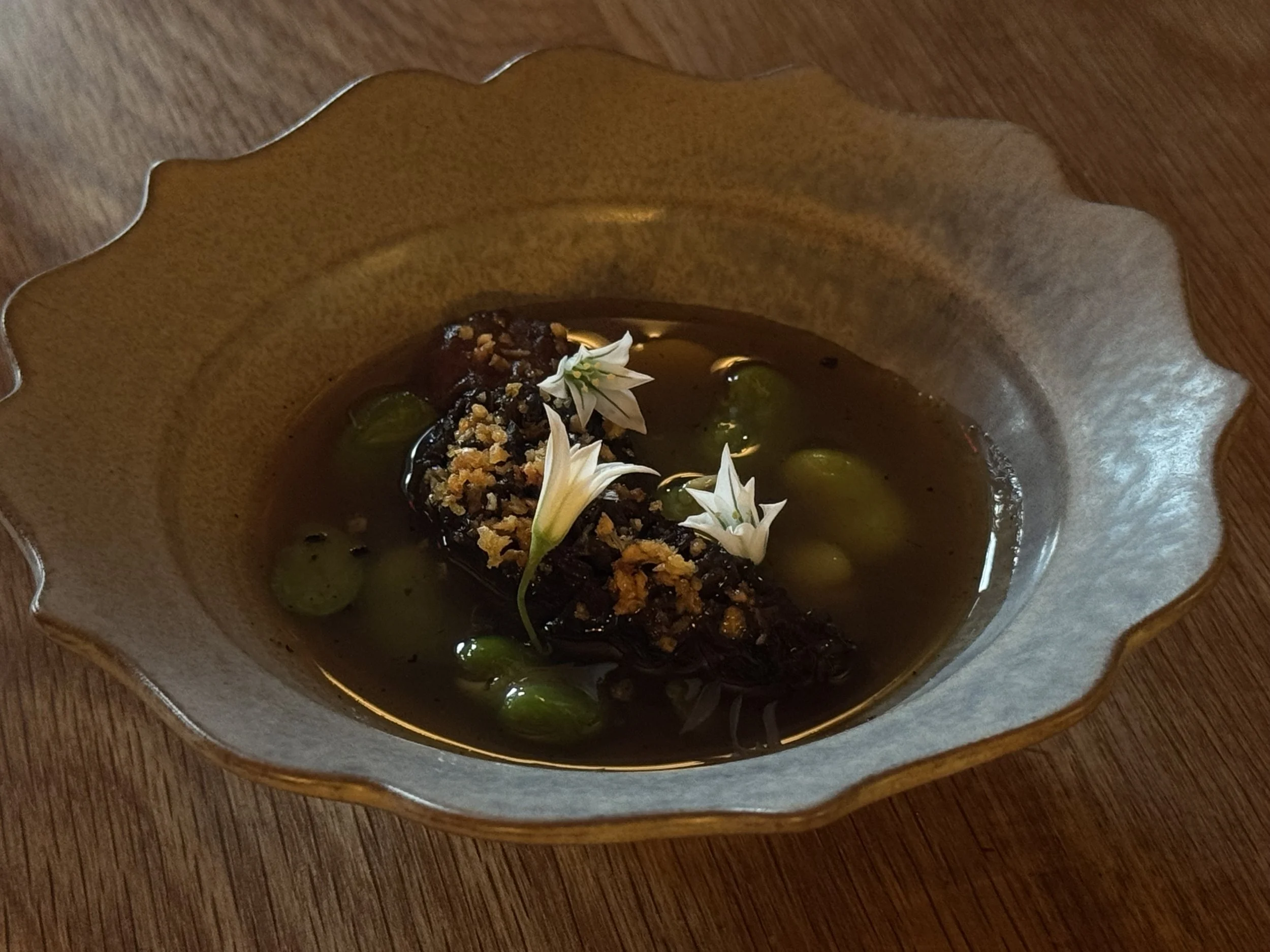
Dawn Ranch also offers a culinary experience that blew us away. We enjoyed it on our second night and haven’t stopped talking about it since.

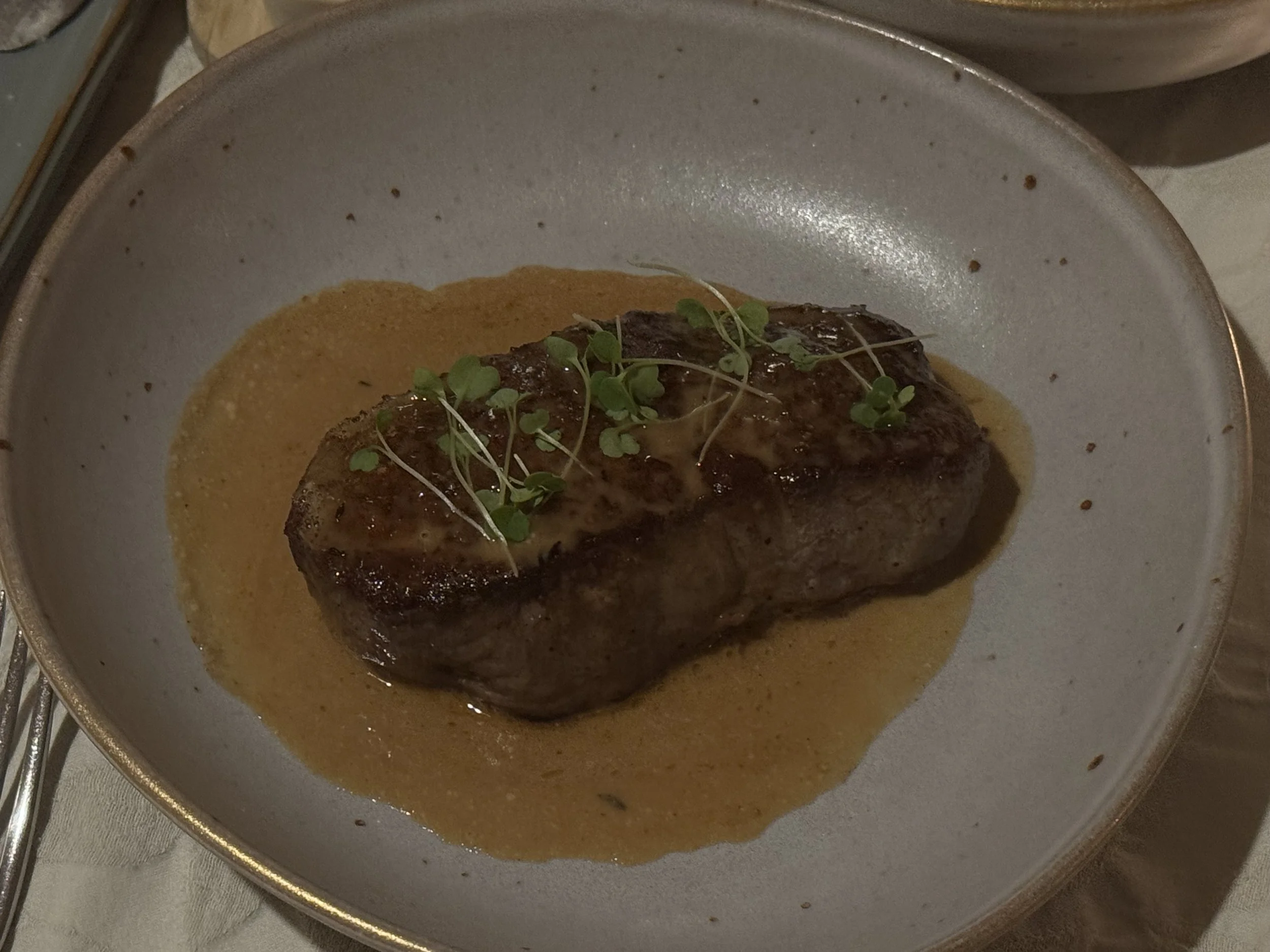
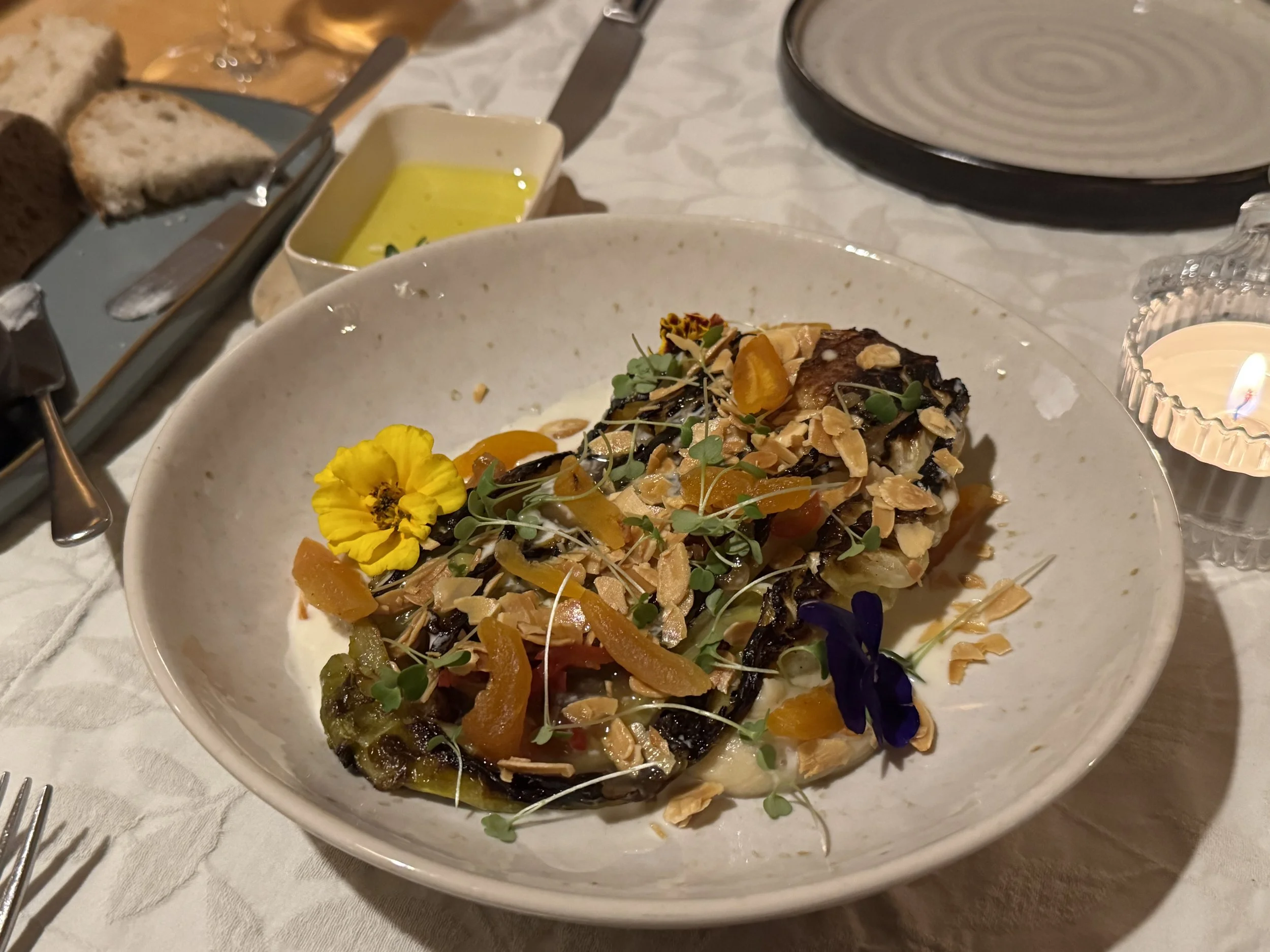
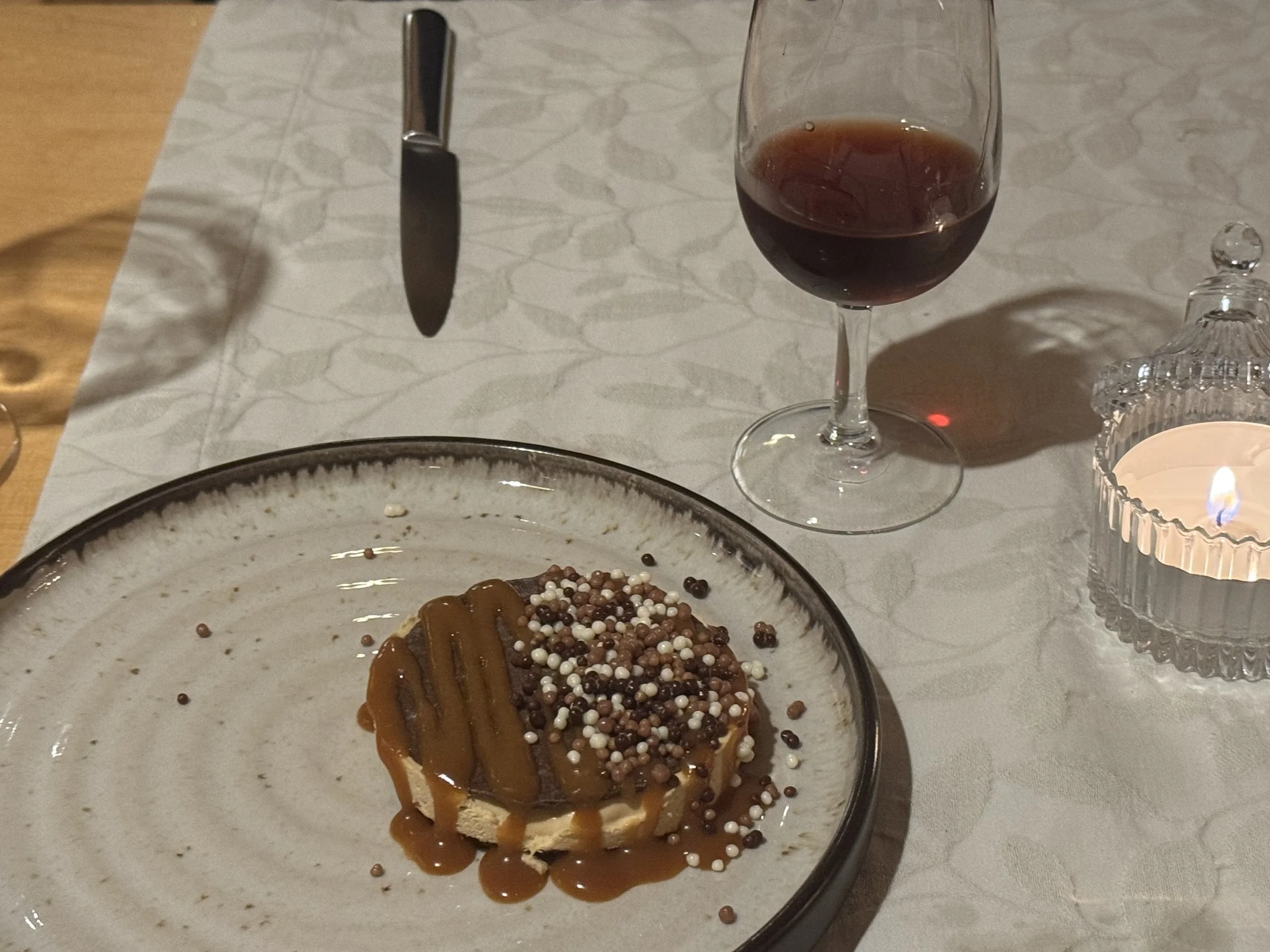
Don’t Sleep On: Dinner at Lodge at Dawn Ranch, the Best Meal of the Trip

The biggest surprise at Dawn Ranch was dinner. This was not just good hotel dining. It was one of the most complete meals of the trip: precise, well-paced, generous, and memorable without trying too hard. Courses arrived all evening long with confidence.

Oysters with kiwi. A scallop tostada with yuzu vinaigrette. Peas with prosciutto. Tapioca with chili jam. Iberico ham on rye cracker with shaved Brazil nut. Asparagus. Dungeness crab with moqueca and plantain. Trout. Snake River beef with chimichurri. Meyer lemon sorbet. A date dessert that just melted into itself.

The food was thoughtful. The pacing was excellent. The service was sharp without becoming ceremonial. The sommelier listened carefully and steered the wine in a way that made sense for our taste rather than simply leaning on the list. Erick greatly appreciated the somm working with his preferences of a more “natty” leaning wine and found the perfect chilled red to accompany the second half of his meal. He fully understood the assignment, and we are hopeful we will see more and more of those wines making future lists!

We both agreed that we would’ve traveled to Dawn Ranch for a meal alone. It’d be a crime to visit here and *not* indulge so be sure to add it to your itinerary the moment you book.

Worth Noting: Guerneville is a Worthwhile On Its Own

We’ll let you explore the town on your own, but there are a few great little spots worth visiting including the Guerneville Wine Collective, some artisan shops, and a great sushi and taco place. There’s plenty to do here between sleeps!

Stops Along the Way: Jenner, Forestville, and Inbetween

The Russian River side of the trip gave us some of the most memorable smaller moments.

Duncan Mills

This is the ultimate old town energy, with antique shops, with lots of history. It’s cute and quaint but has a modern touch as well. The Gold Coast Coffee & Bakery is a must.

Jenner and Cafe Aquatica

Jenner was tiny and excellent. Upon the strong advice of a good friend, we popped by Café Aquatica which turned out to be one of the very best casual stops of the trip: a strong crab roll, a very good Earl Grey cookie, an attached market, outdoor seating with a view, and small town coastal energy. We learned that they are soon to open an adjoining wine bar next door which will be a great addition to this cute part of town.

Armstrong Redwoods

Even with some closures and shorter hiking options, it was worth it. Walking through redwoods always helps us reorder our brain and meet our step counts on a trip.

Ryme Cellars, Forestville

Ryme has 5 stars on Google reviews and for good reason; this was one of the best wine stops of the trip. The standout was an aged Ribolla from California that managed to tap into some of the structure and seriousness we usually chase in Slovenian and Friulian wines. Not a copy of Radikon or Klinec. Not trying to be. Just a genuinely good bottle with herbaceous lift, grip, and time in it. The Cabernet Franc was also excellent and had real character. They offered a very clear and compelling point of view. No need to over-explain it.

Ruth Lewandowski Wines

For us, this was the most memorable stop (with Martha Stoumen just about on the same level for us!) Evan showcased a lineup that felt distinct, broad, and fully coherent. The wines were playful when they needed to be, serious when they needed to be, and always grounded in a real palate behind them. This stop felt 100% aligned with how we like to drink and experiment with our palette. We enjoyed their Stock Pot wine, their Obed, Tetra. Every single one was perfectly executed and matched to our profile. We brought a few home and can’t wait to buy a few more in the near future. Ironically, a friend of ours was recently visiting from New York right after we returned from this trip. He started telling us about the “best wine I’ve ever had” that he had recently enjoyed at a local NYC wine bar and pulled up a picture of it on his iPhone; sure enough, it was a Ruth Lewandowski chilled red.

If that’s not a ringing endorsement and confirmation of just how good they are, I don’t know what is.

Santa Rosa, Sebastopol, Point Reyes, and the Coastal Drive South

LandPaths Grove of Old Trees

A friend had also recommended we go here for an otherworldly forest escape and it sure did not disappoint. We walked through mist and some of the largest trees I’ve ever seen and it made me forget my troubles for a couple of hours. Very few crowds compared to other places, and equally majestic and impressive scenery.

Red Bird Bakery

Excellent little versatile bakery that tends to sell out. They are incredibly thoughtful about their baked goods. We arrived late morning when most things were already gone so I took a “risk” on their matcha donut and it may now be one of my absolute favorite things. Who would’ve thought! Earthy gritty goodness + sugar = my kryponite.

Marla SR Bakery

Marla is your go-to place for fresh baked breads, pastries and catering for events large and small. Old World recipes made with New World ingredients, a ton of bread for takeaway, and a small but mighty wine selection. Also just a great, well-lit gathering place for catching up with a friend or doing work for a few hours.

Imwalle Gardens

Imwalle Gardens is a historic, family-owned farm and nursery in Santa Rosa, California, operating since 1886 as an agricultural oasis in the city. Located at 685 W. Third St., it offers locally grown seasonal produce, bedding plants, and seeds, serving as both a retail stand and a wholesale supplier to local restaurants. Founded by German immigrant Joseph Imwalle, it has been run by four generations of the family. The 17-acre property operates as a "farm in the middle of the city," growing tomatoes, squash, kale, cucumbers, and more. Such an enjoyable place to have a browse!

Pax Wines (Sebastopol)

Pax Wines is a small, family-owned and operated winery in West Sonoma County producing globally renowned cool climate Syrah and esoteric varieties. Following a classic & minimal winemaking philosophy, each wine is foot-stomped, fermented using only ambient yeasts, aged primarily in Neutral French Oak and concrete, and bottled with no unnatural additions in order to purely express the unique and ephemeral quality of each vintage and site. Rugged and laidback FTW.

The Punchdown (Sebastopol)

An offshoot of the original Oakland location, this is a popular venue specializing in natural, organic, and biodynamic wines, founded in 2023 by DC Looney and Lisa Costa. This is the best wine shop we’ve been to in California by a long shot. We brought home a bunch of bottles and discovered a bunch of new to us producers from both near and far. The staff here are super friendly and helpful and educated us on local producers.

Region. (Sebastopol)

A new-to-us concept that we are very into, Region is a modern, self-serve wine bar and tasting room located at The Barlow. It offers over 50 small-production Sonoma County wines via automated dispensers, allowing guests to choose pour sizes (1, 2.5, or 5 oz). Region serves as a hub for exploring local, independent wineries in a casual setting. Though slightly more modern than we are used to, we really appreciated the chance to try many things without having to gas an entire afternoon in each place. A great way to get acquainted with the “region”!

Wildflour Bread (Freestone)

Wildflour is a renowned rustic bakery famous for its wood-fired, brick-oven sourdough breads and seasonal scones. Founded in 1998 on the Bohemian Highway, it is an institution of sorts and a very popular stop for tourists and locals, offering a cozy atmosphere with a picturesque, fragrant garden. There are literal “lanes” for the wait lines here, so get there early and come with a good attitude in case you need to wait. It will be worth it.

Madeline Sone Wildlife Preserve

A quiet surprise. The Madeleine Sone Wildlife Preserve is a 24-acre non-profit sanctuary in Sebastopol, California, founded to “promote harmony between people and nature.” It was established in 2016 by Madeleine Sone and features a public 1-mile loop trail through redwoods and ponds, dedicated to environmental conservation, wildlife protection, and the preservation of rural Sonoma County scenery. Good bang for your buck!

Point Reyes

Hog Island Oyster Co was packed (no thank you, to a two hour wait!), so we kept moving but not without first getting out to take a few pictures, as it is a pretty killer location and spot to hang out if you’ve got the time to spare. We carried along our way to Point Reyes Farmstead Cheese Co. which was modern, appealing, and worth a stop for the samples of cheese and jams alone.

From there, we drove Route 1 south back toward San Francisco, which turned out to be one of the best decisions of the trip. The coast gave the whole thing a stronger ending than another valley tasting ever could have.

Point Reyes Station

West Marin Culture Shop

This is a fabulous boutique shop containing picnic and pantry items with a focus on preservation and fermentation. They also have a nice lunch counter with prepared as well as grab & go items. We found a couple great local natty wines here and loved the fermentation emphasis. A health nut’s dream shop!

Brickmaiden Breads

Brickmaiden is a lovely artisan bakery in Point Reyes Station, CA, established in 2000 by Celine Underwood to create organic, wood-fired sourdough and pastries. Located in a cozy cottage, it focuses on sustainability, local grains, and community, offering favorites like spelt chocolate chip cookies, olive bread, and pastries in a charming garden setting.

Some Closing Thoughts

If I were planning this again, I would do less Napa and more Marin, Healdsburg, Russian River, and coast.

I would keep the architecture detours.
I would keep the bakeries.
I would keep the farm stops and all of the wineries
I would stay at Dawn Ranch again.
I would return to Healdsburg without question.
I would make more time for Ryme and for the smaller corners of Sonoma County - there is still so much left to explore.

Redwoods, coast, farms, old roads, good pastries…this is the way to see the region and is the one worth roadtrippin’ for.

A Weekend in Oregon: Sosta House, Gordon House, Small Town Wanderings

We wanted to get out of the city life up in Seattle in search of more grounded days and nights - if only for the weekend. Whenever we go to Oregon wine country, we return calm, with full bellies and even fuller hearts and this trip fit the bill. In three short days, we managed to fit in all of the things we love most: design, wine, tiny towns with charm, excellent pastries, surprising entrees, and open roads with very, very big trees.

We stayed at Sosta House first, then spent one “Night with Wright” at the Gordon House in Silverton, Oregon. This is Frank Lloyd Wright’s only house in Oregon, and it is not often open to the public, so it was a treat to stay. In between, we wandered McMinnville, Newberg, Dundee, drove through wine country, ate by candlelight, talked with other diners and travelers doing the exact same slow, meandering adventuring.

Life in Oregon always feels like turning a kaleidoscope - there are so many colors, textures, flavors - depending on the season and sometimes even the time of day. We just can’t stay away. If you’re in search of the same, look no further.

Sosta House

We’ve had a stay here on our list for awhile. The word “sosta” means something akin to a stopover, or a truck stop, which I love because it sounds so utilitarian and yet also fleeting - but also, Sosta is anything but. In fact, you pretty much had to pry my room key from my hand and kick me out the door to make me leave.

Sosta House is in fact the anti-rushed version of a roadside stop. It’s entire ethos is designed around settling in for awhile, sitting by one of the many low lights or perhaps the evening fire, while reading a cozy book or chatting with companions. It’s tempting to spend the entire day wandering the grounds, with vineyards stretching as far as the eye can see in every direction. Hours pass through your fingers like quicksand as you watch the day carry through the just budding vines.

The dynamic here also makes a lot of sense once you understand the family behind it. The Ponzis are not just another wine family in Oregon; they are one of *the* foundational Oregon wine families. Dick and Nancy Ponzi were among the early believers in Willamette Valley wine and helped shape what the region became. Their story is part farming, part ambition, and all history in the making.

Sosta House feels like a newer iteration of its own making, but also an extension of the legacy. It is hospitality to the highest degree, romanticized daily life, and a gorgeous experience curated around the pure purpose of empowering people to enjoy themselves and appreciate their surroundings. Something we all certainly need more of in our fast-paced industrial world.

I also have a great appreciation for watching a pioneering family continue to evolve rather than calcify. We’ve spent a fair bit of time with old wine families in France, for instance, and many of them stubbornly refuse to budge even an inch - despite the world whizzing by and leaving them in its dust. Sosta feels still very much connected to the Ponzi story, but also to its new chapter, including the next generation and the newer Lerzi wine label, the makings of mother/daughter duo Luisa and Mia.

Notably, there are regular artist residencies held on the Sosta property as well, supporting the local creative community in their endeavors. You feel that thread throughout the property, with much of the art, ceramics, and extra touches the makings of each of the many artists who has spent time here.

All meals were served by candlelight on a rainy April weekend, which made them feel cozy and slow.

Low light spread warmly throughout the dining room, catching twinkling wine glasses and unique thrifted dishwares. The other dining party in the room during our dinner was a group of girlfriends, who we enjoyed watching catch up on one another lives, take selfies, and share a few too many pours of wine over gossip about work and boys.

In the ongoing unprecedented times, it’s nice to see people connecting and finding ways to stay close, enjoying without rushing. Better yet, it’s nice to see a place that offers the environment to do so, as we watch so many of our third places disappear. Notably, Winery Lane Collective is also on site and houses both Mia and Luisa’s Lerzi wine, but also Suzor and Hamacher, both excellent small scale, high-quality wines that hold their own.

The breakfasts at Sosta are what dreams are made of. Truthfully, I’d have driven to Sosta for breakfast alone.

Fluffy garlicky eggs made with heavy cream, lavender sea salt maple syrup + sourdough pancakes, sausages from Pendleton farms were spread out in front of us with a steaming pot of coffee. My favorite kind of breakfast is one that stays simple and light but has a creative, unexpected spin or two that you won’t soon forget. This was undoubtedly that. It’s been days now and I’m still thinking about it.

Our room for the weekend was a lofted studio, and it was the perfect amount of space for two. It overlooks part of the winemaker’s barn and we enjoyed peeking in at barrels in the morning before we headed out on adventures. Cute trinkets adorned the shelves, and minimalist and abstract art peppered the walls. The wood ceiling gave a midcentury + Japandi vibe that we can’t get enough of, visible from the vineyard at night if you looked closely.

But what really makes the place is Mia and her family. Mia’s attention to and clear care for every detail is what makes this a top notch experience for guests. You can really feel whether someone is connected to what they do or not, and Mia hasn’t lost her spark for this thing. In fact, it seems like it might be snowballing with every guest that comes through. She greets you by name, handwrites every menu in calligraphy, and shares passionately where all of your food came from. She carries an immense amount of wisdom and you can see her real time navigating how to respectfully balance both the old and the new Ponzi and Sosta stories - and she excels. We can’t wait to go back.

McMinnville

McMinnville was in full spring awakening mode, with dogwoods flowering on every corner and the Main Street just starting to glow green again under the tree canopy. It was that beautiful inbetween where winter had not yet fully left but the longer days were clearly winning. Buds were opening in every yard and the town felt lighter than it had in some time.

We wandered into Third Street Books, poked around the antique store, stopped in for jam, a scone, and a shortbread cookie at Alchemist’s Jam. We also swung by Mac Market, which was a stop we’d had on our list for awhile. It was a perfectly cute shopping hall and event space, with the lovely Alea bakery, market with local goods, and a garden/plant shop out back. I can envision the patio open in the summer, and know our friends at Liska Wine (amongst many others) often do tastings in the courtyard.

A great place to bike or walk to in the summer, slightly sun-drunk to grab a bottle of local natty wine or a brownie.

Food Stops Worth Remembering

Syun Izakaya

On Saturday, we ate sushi at Syun Izakaya in the basement of a local library in Hillsboro, which is already a sentence I enjoy. The setting was gorgeous, with a huge dogwood tree spreading out over the front yard, and the food was incredible. We had sake salmon nigiri, an Alaska roll, a fancy shrimp tempura roll, and the premium California twist, paired with a traditional sapporo, of course. One of the better sushi dinners we’ve had in awhile which was surprising for small town Oregon.

Red Hills Market

This place deserves its own blog but I’ll keep it short. The vibes are always on at Red Hills. The turkey apple sandwich for takeaway absolutely rocks, and the place still has the sign proudly noting 200,000 sandwiches sold. Erick became a bit fixated on the future day when it will finally roll to 250,000 which has to be quickly approaching given we purchase what feels like 50,000 every time we’re in town. A highlight of this trip for me was the chocolate chip potato chip cookie. Yep, you heard that right. I had already tabbed their monster cookie as one of my top 3 worldwide, so I had to try another variety and honestly? Might be my new #1. You heard it here first.

The Wines

Sequitir

What a delight this was; one of my favorite stops of the weekend, and a last minute plan for us.

Sequitir Wine is a smaller estate with around 12 acres, focused primarily on Pinot Noir, with Chardonnay just beginning to enter the picture through outside fruit. The winemaker Michael Etzel previously ran Beaux Freres Vineyard down the road, but this is a quieter passion project. He bought what had been a 60-acre Douglas fir tree farm from a local schoolteacher named Frank Dummer in 2010 and slowly turned it into what it is today.

The tasting room is top notch and very architecturally cool inside. What we really loved was the Japanese-inspired floor-sitting nook tucked into the corner, overlooking the lush green valley floor stretching out toward Ribbon Ridge. We could’ve sat there for hours, wine or no wine. But the delicious wine, of course, was a nice bonus. It should be noted that this is also a fantastic venue for wasting away an afternoon if you have friends in town. Under the canopy of trees, it is cool to hang out either inside or outside and the architectural interest makes it visually stunning in a way that you could admire for hours.

Ayres Vineyard

Ayres has been on my radar for many years as an old friend of mine went to school decades ago with Kathleen, the wife of the husband-wife duo that runs the place. I had tasted their wines over the years and always been thoroughly impressed (they punch at the same level as fancy French reds I drank overseas!). Brad and Kathleen have built something here that feels deeply personal and real. They don’t try to perform luxury or flashiness; they are real people undertaking a very real and serious wine operation and they don’t shy away from the fact. As a result, they produce incredibly good wine with real conviction, and the specific kind of Willamette Valley warmth that brings people together.

Their pinots were absolutely incredible. Elegant, nuanced, alive and very much in that Oregon register I love when it lands (and at many places, it doesn’t always land- but not here.) What I appreciated most about Ayres was the scale of it, the humanness.

This place was built from the ground up with love, passion, and a belief in great wine, and it translates directly to the Riedel glass. A must stop, and a light suggestion to consider joining their wine club so you can order delicious, discounted wines whenever your cellar looks empty.

Mount Angel/Silverton

One of the best stretches of the weekend was the one that braided together Mount Angel, Silverton and Silver Falls State Park. What a way to combine three of my favorite things in one small orbit: great design, small town hospitality, and being outside in that full on damp green PNW spring landscape.

A design detour: Mount Angel Abbey Library

Having seen this on Instagram, I knew I had to pop by. What a stunning library on the Mount Angel Abbey campus. The library has many architectural points of interest aside from the books contained within. It’s curving design with intricate and shapely windows call to be seen and certainly also photographed. It made for a perfect stop as it set the tone for the Frank Lloyd Wright Gordon House later.

A totally different architectural language, of course, but part of the same larger picture of being reminded the importance of a beautiful building in shaping a space.

Silverton

After driving into town, we stopped at Silverton Bake Shop for a cookie, coffee cake and iced coffees then meandered some of the vintage shops and food trucks downtown. We eventually made our way to Farmer’s Corner Deli & Market where we grabbed an incredible breakfast burrito and turkey BLT’s to go for our hike.

We are very big deli sandwich fans over here and would put Farmer’s Corner pretty high up on the list. Bold statement, but it may rank higher than any we have in Seattle, so that’s certainly saying something. They have perfected the art of making food that feels accessible, abundant and homey, but also overflowing with flavor. Exactly the type of sandwich you want with you before or after a hike. We went back again twice in 48 hours, so do with that information what you will.

We also stopped at E.Z. Orchards in Salem on our way into Silverton. E.Z. Orchards was a special find, as it was overflowing with so many market favorites: fresh produce, local goods, tulips and an excellent small town vibe that makes you overspend. I caught a lady taking photos of the bounty of fresh produce in her cart and I leaned in to whisper that I, too, get really photo happy at the sight of fresh abundant veggies. She chuckled.

Keep an eye out for the freshly made apple cider donuts on site too, and grab a bag or two to go… we won’t judge.

Later, we grabbed Oso Spanish & Mediterranean Inspired Cuisine for takeout and brought it back to the Gordon House for our Night with Wright. We had patatas bravas, meatballs, roasted carrots, chicken aleppo, and a homemade hummus and it was warm, colorful, generous and exactly right for our night dining in.

Silver Falls State Park

Wow, what a treat to meander through Silver Falls State Park. And to think we didn’t even know it existed until recently! At one point on the trip, we mentioned to someone that we were going to Silverton and they said, “oh, the place with all the waterfalls!” and that’s honestly a great way to bookmark this place in one’s mind. And many waterfalls there are, indeed!

We hiked, foraged for salmonberries and hostas, and took in many deep breaths of fresh Oregon air in Silver Falls. Having just rained, everything was damp and bright and intensely alive, and the brightening deciduous trees contrasted the darker pines.

There are a few different routes you can take depending on your preference for mileage, so make a plan and then head out, and prepare to get wet, as you can even walk behind some of the waterfalls!

A Night With Wright at the Gordon House


The Gordon House is Frank Lloyd Wright’s only house in Oregon. It was commissioned by Conrad and Evelyn Gordon in 1957 but not completed until 1963, after Frank’s death. Originally built near the Willamette River, it was meticulously moved to Silverton in the early 2000’s to save it from a demolition (literally, as the wrecking ball was sitting mere feet away as it was carefully relocated).

The Gordon family story is one of those stories that brings the house to life. Conrad and Evelyn Gordon met and fell in love through their mutual involvement in the laundry industry. He sold soap, and her family ran the commercial laundry business. Later, after returning from a stint in California, they bought a farm so Conrad could return to his cowboy roots and so they could raise their family (2 sons and a daughter) on the land. Evelyn wanted to replace the old musty farmhouse they had outgrown, but didn’t quite know yet with what. Years later, they traveled to Taliesin West on holiday and there met Frank Lloyd Wright in person. Evelyn reportedly was awe struck and couldn’t speak a word, but Conrad carried the conversation with Frank and somehow convinced him to accept the commission to design them a new house.

The Gordon house was meant to be a Usonian, Wright’s more democratic vision of the American house. In theory, it was meant to be something ordinary families could afford. Of course, often times these things don’t go perfectly to plan and the lowest bid came in around $56,000. The Gordons had to save for years before building, but did eventually carry out their dream, with the house being completed in 1963.

There are so many incredible details contained within its walls. Burton Goodrich, a fully trained Wright apprentice, carried out the plans and the precision shows. The 7x7 grid is beautifully executed. Piano hinges are everywhere on cabinets and fixtures, despite being brutal to install. The carpenter who made the wooden framed version of the perforated window elements reportedly joked that he should’ve charged by router bit because he went through so many.

And then there’s my favorite story: Mr. Gordon found Wright’s furniture uncomfortable and didn’t shy away from telling him so. When Wright asked Mr. Gordon what he did like, Mr. Gordon replied that his farm truck was quite comfortable. From there, Wright measured the angle of the truck to a precise 15 degree angle and then folded that angle into all kinds of surfaces of the house in a slightly teasing, brilliant way. It can be observed in shelves, moldings, countertops. It’s everywhere, if you keep looking.

There are long low lines everywhere and certainly by design; in fact, FLW insisted that the horizontal lines between cinder blocks be even further exaggerated and carved, to accentuate the horizontal feel and thus the grounded to the earth. The warmth of the wood bounces off the warm sun in the afternoon. The built in cabinets and shelves allow everything to have its place. The windows constantly return your eyes to the trees outside. The red countertops bring strategic warmth to the kitchen.

I talk a lot about the importance of spaces in dictating our daily lives and nowhere is that more clear than in a FLW house. It feels nature-centered, calm, warm, and like you are virtually inseparable from the outdoors. Perfectly executed, in the way that Wright understood best: a home doesn’t just meet your life where it is, it shapes it.

Between Vines and Valleys: A Fall Road Trip Through Italy & Slovenia's Mountains and Coast

When we sat down for coffee in Ljubljana with Alexander Ruiz, the owner of Crno Zrno, and told him about our trip through Northern Italy and Slovenia, he smiled and said “ah, so you’re doing a bit of what the Japanese call momiji-gari… wonderful”.

The word was new to me, but momiji-gari is a Japanese tradition dating back to the Nara period, and means quite literally, to appreciate the changing colors of the leaves. And yes, that’s exactly what we were doing - following the season as it shifted through the mountains, valleys, and coastlines, from alpine gardens to vineyards and the Adriatic Sea. But this trip wasn’t just about racing through in an effort to check off postcard views; it was about paying attention - to how tomatoes taste at the end of summer, how the air changes as you move south, and how much time, care and restraint are built into daily life here. From the slow food kitchens of Alto Adige to the orange wine producers of Soca valley, every stop offered new perspective and stimulated our senses in a totally new way.

If you’re looking for a 2 or so week road trip guide through Northern Italy and Slovenia to soak in everything from alpine vineyards to the Adriatic coast, you’ve come to the right place. If you have less time than 2 weeks, also great. Just pick the pieces that suit your tastes and make your own adventure. We wanted to be as comprehensive as possible to give you the ‘greatest hits’, but by no means do you have to hit it all.

ALTO ADIGE: Brixen, Bruneck, Bolzano

Brixen/Vals

Where to Stay: Haller Suites and/or Silena, your soulful hotel

Haller Suites & Restaurant in Bressanone is a family-run gem that captures the essence of Sudtirol hospitality in a (chest)nut shell. Perched among the vineyards overlooking the Eisack Valley, the property offers a harmonious blend of architecture, nature, and heart-infused service. The Haller family has created a space with deep connection to the landscape; their instagram handle really says it all @sleepinthevineyards - and that you do at Haller. Minimalist suites are framed by panoramic vineyard views, and everything from construction materials to the food found in their on-site restaurant is all locally-sourced. Every detail, from the sustainable building philosophy to the curated breakfast with regional products reflects their respect for both place and people.

Haller Suites views

Haller lobby

Haller vineyards

Guest sauna at Haller

Great design at Haller

Fig tree in Haller garden

At the heart of Haller Suites are Teresa and Levin, the passionate duo who make up the fabric of what Haller is today. Teresa oversees the guest experience with genuine care and creative flair, while her husband - the chef behind the acclaimed AO Restaurant - brings South Tyrolean ingredients to life with pizazz and creativity not often found. Together they’ve transformed their family legacy into a destination that you can’t help but form a personal connection to. Food tells a story and every moment feels like you are exactly where you are meant to be. Staying at Haller is so much more than just a casual stopover; it’s an immersion experience into the rhythm, flavor and family spirit of the region.

Haller vineyard

Haller outside courtyard

Haller vineyard

SILENA, your soulful hotel is a vacation dream filled with stillness and indulgence. Its design is deeply influenced by Japanese wabi-sabi philosphy with its natural textures, earthy tones, and yet quirky paper lighting, paper cranes, and funky accents all about. For being an adult-only hotel, they also throw in some kid-like fun to humor your inner child: an art room for creating/drawing/painting something memorable from your day, a candy and popcorn station, and a reading room full of large chairs you want to sink your butt into for hours.

Silena landscapes

Silena reading room

Silena dining room

The atmosphere, accordingly, is both alpine and Asian/modern, bringing together South Tyrolean roots with mindful design. The spa area is a world of its own - like walking into the doors of Narnia to another plane of existence. There’s a seemingly endless maze of pools, saunas and serene relaxation rooms (don’t say we didn’t warn you: it’s actually easy to get lost in there!). Each room is also plenty big for 2, with a king size bed and a separate reading room where one can curl up for hours reading a book whilst avoiding the elements. The wabi sabi continues throughout each suite and onto the balcony where one can sit in a swinging hammock and take in the valley views.

Silena spa

Hammock in Silena room

Silena spa

Silena lobby

Mornings begin with an incredible breakfast experience: a buffet made for kings with color and freshness paired with a la carte options that change seasonally. The homemade muesli and fresh squeezed carrot ginger juices alone are worth the trip. Then there are the small rituals that make SILENA so soulful, like the little wooden box each guest receives each day with a daily surprise; often a quote, or a small token, meant as a gentle reminder to be fully present. Evenings bring another kind of magic: a bartender with flair, shaking up cocktails throwing cups around like you’re at the circus. Dinner is included and features delicate but filling dishes of your choosing depending on your hunger level that evening.

Homemade pasta at Silena

Salmon at Silena

Divine dessert at Silena

Calamari at Silena

There’s also an extensive wine list that highlights both South Tyrolean and international bottles and a staff that is always kicking around for any extra indulgence you might need. Design, hospitality and soul blend seamlessly into something quietly unforgettable.

Where to Eat/Drink: AO Restaurant is part of Haller Restaurant in Alto Adige and is our top pick. With Teresa and Levin of Haller at the helm, they bring an obsessive attention to detail to everything from the garden to the glass. The experience feels very intentional but approachable with service and food that’s relaxed but exact, and a tasting menu that shifts with the season and the bounty of the region. Our dinner opened with tomatoes from their own garden topped with pecorino foam and basil oil - a small dish that captures their whole approach: precision, restraint, and produce with a twist. From there, radicchio with blue cheese, venison ragu cappelletti, and beef cheek with carrots three ways. Each plate was well-balanced and clean and paired perfectly with many new-to-us Alto Adige skin contact whites and reds, which was an adventure in and of itself. The beetroot sorbet with chocolate mousse for dessert absolutely blew us away, proof that even nutrient-dense root vegetables can make a perfect dessert.

Dining room at AO Restaurant

Large party dining at AO Restaurant

The wine pairings trace the route from Brixen down to Bolzano, featuring local producers like Roeck, Grawu, and various Lagrein (native to Alto Adige). The pairings don’t just complement the food, they explain the terroir - high acid, alpine whites, textured orange wines, and reds with just enough structure to remind you where you are.

Levin’s background shows in the precision of flavor and timing, but what stood out most to us is how deeply the food is tied to place. Vegetables come from their own type of “chaos” garden, meat from nearby farms, honey from local beekeepers. The cooking is elevated for sure, but also surprisingly grounded and grounding. Alpine ingredients are to be handled with humility and discipline, not ego, and Levin gets it exactly right.

Things To Do: Hike the Adolf Munkel Weg, an easy favorite for the Dolomites, with views of the Odle peaks that truly do not feel real. Stop at one of the mountain hut restaurants along the way (Geisleralm or Dusleralm - just check the hours if traveling in the fall) for ribs, a mountaineer platter of cheese, speck, and pickles and/or a cold beer / aperol spritz.

Odle peaks off the Adolf Munkel

Approaching a hut

Looking cool on Adolf Munkel

Meats and cheese at Geisleralm

Take the lift up to Seceda in Val Gardena for that classic Instagrammable ridgeline view; it’s worth every cliche photo you’ve seen of it. Enjoy a meal or a cocktail or maybe just a nap in one of the many cozy chairs at Baiti Sofie Hutte up top of the lift. After, spend an afternoon exploring Urtijëi (Ortisei) the nearby alpine town. It’s walkable, beautiful and full of small shops, cafes, and a humble but majestic rhythm that makes the whole valley special.

Classic Seceda view

Lunch at Baiti Sofie Hutte

Seceda trails for miles

Gorgeous views at Seceda

Bonus stop in the area: swing by Roeck wines. We first learned about them from our tasting menu at Haller Suites and were ecstatic to find that they were a quick drive away. They represent a newer generation of small alpine producers redefining what it means to make wine in the mountains. The estate focuses on minimal intervention and a deep respect for elevation, working steep slopes where the cool climate, rocky soils and sharp diurnal shifts give their wines tension and clarity. They’ve become known for their expressive whites - riesling, sylvaner, and muller-thurgau, all of which carry the precision of Germanic winemaking but with the texture and minerality that only comes from this part of Italy.

Roeck wine tasting

Steep slopes at Roeck

Outdoor patio at Roeck

Roeck wines

Interesting tidbits to know: This is a bilingual region with three cultures; Alto Adige (or Sudtirol in German) sits in Italy’s far north, bordering Austria. Most locals grow up speaking German and Italian and in some valleys, Ladin, a romanesque alpine language that predates both. Menus, road signs and even surnames often appear in all three languages. The region only became part of Italy after WWI, and much of its Austro-Hungarian heritage remains. It’s why you’ll find knodel (bread dumplings) next to tagliatelle on the same menu, and prosecco poured alongside reisling. The ultimate fusion of regions are seen expressed in all walks of life.

Despite it’s size, Alto Adige produces some of Italy’s best white and orange wines - pinot grigio, gewurtztraminer, and sylvaner thrive in the mountain sun and cool nights. It’s also one of Europe’s largest apple-growing regions, with over 7,000 producers across the Eisack and Adige valleys.

Brixen itself is one of Tyrol’s oldest towns, having been founded in 901AD, with nearly 1,100 years of uninterrupted settlement. The baroque cathedral and bishop’s palace still mark the historic center of town.

Brixen also sits at the heart of “keschtnweg,” or the Chestnut trail, a hiking route that winds through the hills between Brixen and Bolzano. Every autumn, the slopes are lined with ancient sweet chestnut trees, some hundreds of years old, growing alongside vineyards and apple orchards. Locals say the trees are as much a part of the landscape as the mountains themselves as they’ve been cultivated since medieval times, originally planted by monks. The harvest season is marked by torggelen, a South Tyrolean tradition where farmers and locals gather to roast chestnuts over open fires, drink to the novello (new year’s wine), and share platters of meats, cheeses, dumplings.

Bruneck

Where to Stay: Castel Maurn is unequivocably the best choice in the region and is a place we will return to time and time again. It sits quietly in the Puster Valley near Brunico. Originally built as a residence for local nobility, its stone walls impressively date back over a thousand years. The castle passed through several hands before falling into disrepair in the 20th century. In 2019, then current owner and South Tyrolean hotelier Walter and his family took on the project of meticulously restoring it - not as a museum piece, but as a livable contemporary retreat that respects the structure’s past.

Guest room at Castel Maurn

Blue hour at Castel Maurn

Fog rolling in at Castel Maurn

Foggy pool views at Castel Maurn

Breakfast in bed at Castel Maurn

Spacious rooms at Castel Maurn

After years of meticulous renovation, the property reopened its doors in 2021 as a small luxury stay blending medieval architecture (and absolutely stunning all original artwork adorning its walls) with modern design and hospitality conveniences. Original frescoes and vaulted ceilings remain, paired with natural materials and quiet lighting. Each of the 13 suites feels private and fit for a king - as they are around 4-5x bigger than your average hotel room, a huge plus for the weary traveler. Walter’s approach balances heritage and hospitality, trusting guests with an honor bar, inviting local chefs for intimate dinners, and keeping the castle’s atmosphere calm and unforced. You may even see one of the castle’s resident kitties wandering around, if you’re lucky.

Staying at Castel Maurn feels like awakening one’s inner child, fulfilling all of one’s fantasies to someday let their hair down and live in the most luxurious castle, hang out in the spa, and be served breakfast in bed every single morning. Divine!

Castel Maurn at night

Entrance to Castel Maurn

Spa day beds at Castel Maurn

Where to Eat/Drink: alpINN restaurant up the Kronplatz is fine dining at altitude, with creative dishes using local produce and herbs from the mountains paired with panoramic views. Many other exceptional michelin restaurants are in the vicinity as well including SanBrite and Cocun Cellar. We were also a huge fan of Pizzeria Hans in San Candido about 30 minutes away… great easy pastas and pizzas for dining in or taking out. Easy and delicious for post-hike days.

Things To Do: Explore the old town. Bruneck’s center is small but full of life - pastel facades, narrow cobblestone streets and cafes spilling onto the sidewalks. Stop by stadtgasse for boutiques, bakeries and aperitivo spots that feel local rather than touristy. Do not miss the famous Acherer Pastisserie Blumen, one of the best chocolate shops in Europe in our humble opinion!

Streets of Bruneck

Excellent pastries in Bruneck

Foliage in Bruneck

Cinnamon rolls at Brot Pane

Acherer chocolates

Visit Bruneck Castle + the Messner Mountain Museum up the Kronplatz. Created by the famous South Tyrolean mountaineer Reinhold Messner, the Messner Mountain museums are a collection of six sites across South Tyrol and Veneto, each exploring a different aspect of mountain culture. Instead of a single large museum, Messner designed them as a network, from medieval castles to remote peaks, meant to be experienced in the landscape itself. Each location combines art, history and storytelling around themes like rock, ice, faith, philosophy and exploration.

The museums include: MMM Firmian, MMM Juval, MMM Dolomites, MMM Ortles, MMM Ripa (Bruneck Castle), and MMM Corones (the newest, and arguably most striking).

MMM Corones up the Kronplatz is perched at 2,275m atop Plan de Corones and is the architectural centerpiece of the series of museums. Designed by Zaha Hadid, the museum is built directly into the mountain itself - concrete galleries that emerge from the rock like a glacier breaking through stone. Inside, it tells the story of modern mountaineering (no, not the assembly line on Everest kind): risk, courage, and the mindsets that shaped alpine climbing. Large windows open onto the Dolomites, turning the landscape into part of the exhibit, as one watches paragliders drift by outside its windows. The design mirrors Messner’s philosophy: that mountains aren’t just to be conquered, but understood.

MMM Corones

MMM Corones interior

Mountain art in MMM Corones

True words on placard at MMM Corones

MMM Corones architecture

Messner Mountain Museum

When you’re ready for alpine views and hikes, take a drive to the world famous Lago Di Braies. It is one of the most photographed lakes in the Dolomites (which unfortunately means there are often a lot of people there with the same photo aspirations, go early for sunrise to avoid that as much as possible). It is surrounded by steep limestone peaks, and the water shifts from deep emerald to turquoise depending on the light. You can rent an old wooden rowboat, walk the 3.5km trail around the lake or just sit with a coffee from the small cafe on the shore.

Rowboats on Lago di Braies

Lago di Braies

Boathouse on Lago di Braies

Go spend a day hiking and exploring around Tre Cime di Lavaredo (by far our favorite hike of the trip - it is STUNNING!), as they are the Dolomites’ most iconic silhouettes, with massive limestone towers rising straight out of alpine meadows. The loop trail around them starts from Rifugio Auronzo and takes about 3-4 hours, with ever-changing views the whole way around. Be sure to stop by Lago Misurina thereafter for some killer views!

Views en route up to Tre Cime

Happy campers up at Tre Cime

Views en route to Tre Cime

Lastly, take a hike up the gorgeous trail to Lake Sorapis which sits high in the Dolomites near Cortina d’Ampezzo. It’s a glacial lake famous for its unreal milky turquoise color, caused by suspended rock flour from surrounding peaks. The hike starts from Passo Tre Croci and takes about 4 hours roundtrip, climbing through forest trails and rocky switchbacks before opening up to the lake at 1,900m. There is a tiny bit of exposure, so if you’re traveling with a dog or a small child or just not a huge fan of that sort of thing, maybe pick something a bit more tame! Be aware as well that though larch season was in full swing in mid October, the lake was relatively dry and less brilliant blue as it may have been in say, early Spring… so time your visit accordingly!

Lake Sorapis surrounded in larches

Exposed trails en route to Lake Sorapis

Glacial blue at Lake Sorapis

Interesting tidbits to know: Bruneck was established in the 13th century by Prince-Bishop Bruno von Kirchberg - which is where Bruneck gets its name. The castle above town was his seat of power, and it still dominates the skyline today.

This is also known as the beer town of the Dolomites, as Forst beer is brewed just 30 minutes away in Merano. Bruncio also has its own scene - small local breweries and alpine-style bars where beer, speck and music anchor you well into the evenings.

Bruneck is another one of those towns that sits right in the middle of South Tyrol’s German and Italian speaking regions which is why you will hear both languages. Menus, signs, and even small talk naturally switch between the two (and sometimes Ladin in the nearby valleys).

Bolzano

Where to Stay: Theiner’s Garten is a family-run biodynamic hotel and orchard in South Tyrol, led by Ingo Theiner. Their family has farmed the land for three generations and their 7 hectare property produces over a dozen fruit varieties - mostly apples, alongside pears, plums and peaches, all certified Demeter, the highest international standard for biodynamic agriculture.

Room views at Theiners Garten

Room at Theiner’s

Steam room indulgence at Theiner’s

Pool at Theiner’s

The Theiner's Garten approach is rooted in the natural rhythm of the land: fertilizing with the traditional cow-horn compost mixture each spring, spraying mineral preparations in summer to strengthen the trees, and relying on hedgerows, bees, and even hedgehogs to maintain balance instead of chemicals. Their orchards are densely planted and vertically trained, a method that maximizes both sunlight and space in a region where microfarms dominate the valley.

Theiner’s apples

Speaking with Ingo and Nadia

Rows of fruit trees at Theiner’s Garten

Water comes from a strong local table fed by alpine snowmelt, and every part of the ecosystem is given careful consideration - from soil microbiome management to flower planting for pollinators. The result isn’t just healthier fruit but a circular, living farm that sustains itself. Beyond the orchards, the property includes an eco hotel designed entirely around sustainability: solar energy, natural materials (the dining room tables themselves are made out of apple wood!), and an organic kitchen that uses their own produce. It’s less of a resort and more of a working philosophy; proof that luxury and environmental integrity can exist in the same place.

Dinners at Theiner’s Garten reflect everything about how they run the farm - the kitchen works almost entirely from their own biodynamic principles and produce or that of nearby fellow Demeter-certified farms, so the menu shifts constantly with the season. What shows up on the plate is whatever’s ready in the orchards or gardens: apples, plums, root vegetables, herbs and mountain greens. You’ll see the same balance in the food as in the orchards: nothing wasted, everything cyclical. House-pressed juices, local natural wines, and the kind of bread/pastries that you just know someone was up early making. Meals at Theiner’s feel like being invited to a family dinner in the orchard: slow, grounded, and immersed in the land right outside your window.

Dessert at Theiner’s

Dinner with edible flowers from the Theiner’s Garten

Beautifully presented food at Theiner’s

Where to Eat/Drink: We highly suggest enjoying your meals at Theiner’s as they have food around nearly every hour of the day. But if you must expand beyond that, go to Merano and eat at Soulfood (a great recc from our friend Dominic at GRAWÜ wine!) or head to the exquisite Miil in Cermes.

Things To Do: Check out Baron Longo winery. It’s a small, family-run producer that focuses on low-intervention, organically farmed wines made with native grapes like rebula, merlot and cab franc. The philosophy is familiar to us: minimal use of additives, fermentation with native yeasts and long aging to let the wine express the distinct marl and limestone soils of the area. Tastings here feel more conversational and less presentation, which makes it a lovely place to visit to learn and soak in knowledge.

Go to GRAWÜ and enjoy a tasting with Dominic. This was our favorite wine experience in all of Italy/Slovenia, so it’s a must! GRAWÜ is the project of Dominic Grauvogl and his wife Natalie, founded in 2013 in Southern South Tyrol. The name GRAWÜ comes from combining their surnames - Grauvogl and Wulfing - a nod to partnership, both personal and creative.

Leaving GRAWU with a big smile!

GRAWU wines

Enjoying a red at GRAWU tasting

GRAWU cellar

All smiles with Dominc of GRAWU!

Dominic started his career as a somm and winemaker working in top restaurants and vineyards across Europe before deciding to return to the mountains to make wine on his own terms, after being struck with inspiration after one particular blind tasting. His philosophy centers on place, patience, and a dogged determination to create the type of wine HE believes to be the truest expression of the land, not just what he’s told by others his wine should be. Minimal intervention, spontaneous fermentation and no additives other than a touch of sulfur when necessary. Everything is grown organically, with a particular focus on expressing altitude and soil rather than perfect uniformity.

Dominic aspires to make wines that evoke emotion, and that he does with wild success. The wines themselves are textural and alive - high acid, structured, and unapologetically alpine. He’s known for his pinot grigio, which spends five days on skins and tastes like grapefruit and mountain air, his gewurtztraminer which is intense but dry, and his gruner veltliner, one of the few made in Italy, all tension and minerality. For Dominic, wine isn’t a product. It’s a long conversation between vineyard and cellar. He talks about time as an ingredient - so much so that perhaps it should be on the bottle alongside “grapes”. Each bottle feels like it was made by someone who pauses to listen first - a true sign of wisdom - then decides what to do.

We also recommend swinging by Thomas Niedermayr to catch more wines in the same thread as GRAWU. They were closed on our visit, but we’ve heard amazing things so will have to catch it on our next trip.

We also greatly enjoyed swinging by Reyter winery. We probably should have made an appointment, but we didn’t, and they welcomed us with open arms when we knocked on their door late on our way to dinner one afternoon. Family-owned and run by Andreas and Katrin Reyter, they focus on natural winemaking with minimal intervention. Andreas talks about “happy mistakes” and adaptation, letting nature dictate the rhythm of production. When the cellar proved to be too humid, he added a stone wall to improve oxygen flow; when corks failed, he switched to glass closures. Everything is treated as a chance to refine, not control and the result is interesting wine that is alive, expressive and distinctly alpine in its clarity. The lineup changes with the vintage but the standouts are often their rose (a not-so-rose, kissed by skin contact), a structured pinot noir, and a mountain white blend that perfectly captures the minerality of the Eisack valley. The family’s excitement for wine is infectious and on that alone, this is a worthy stop.

Foliage at Reyter

Reyter vines with a view

Gorgeous colors in Reyter wines

Reyter tasting lineup

Reyter cellar with newly built stone wall

Reyter tasting

One last great spot we’d recommend stopping into a bit further south is Azienda Agricola Foradori. Located in the narrow Campo Rotaliano Valley near Mezzolombardo, and surrounded by the Dolomites, Foradori reshaped what Trentino - and mountain wine itself - could mean. When she took over her family’s estate in the 1980’s, Trentino was dominated by cooperatives and industrial-scale production, focused on efficiency and yield. She chose another path. Over decades, she brought back the native Teroldego grape, converted her vineyards to biodynamic farming, and reintroduced amphora aging long before its recent resurgence. Fermentation in clay, wild yeasts, minimal sulfur and an unwavering respect for soil health became her language. Her quiet defiance has made her one of Europe’s most influential voices in natural wine.

Foradori vineyards

Garlic at Foradori

Foradori tasting room

Foradori tasting room

Her influence stretches far beyond the Dolomites - even to Beckham Estate, who we visited earlier this year in Oregon’s Willamette Valley much closer to home. Their founders, Andrew and Annedria Beckham, craft their own clay amphorae inspired by Foradori’s methods. She’s become a mentor and friend to them, part of a quiet exchange between two continents built not on marketing, but on shared values: purity, patience, and trust in the land. Foradori’s children continue the work she began with the same devotion. Their wines - Granato, Morei and Sgarzon - are structured and shaped by alpine light and the gravelly soils of the Rotalian plain. Foradori serves as the alpine counterpart to the likes of Radikon and Gravner.

Interesting tidbits to know: Bolzano sits in a valley surrounded by vineyards and limestone peaks and is the official entrance to the Dolomites. It’s one of the greenest cities in Italy and yet well connected, so you can hike, drink wine, and catch a modern art show all in one afternoon; a true melting pot of culture. Around 70% of locals speak German as their first language, 25% Italian, and a small percentage speak Ladin.

It’s also home to Otzi, the iceman, one of Europe’s most important archeological finds, a 5,300 year old glacier mummy discovered in the nearby Otztal Alps. Otzi is preserved in the South Tyrol Museum of Archaeology and worth a visit as he is Bolzano’s most famous resident.

FRIULI/ GORSIKA BRDA

Where to Stay: La Subida, Klinec Medana, or Peterc Vineyard Estate. We’ve stayed at La Subida in the past which you can read about here, and have heard great things about staying at both Klinec Medana and Peterc. You also have the option to just pass through Gorsika Brda en route to other places. Great news is that everything is so close by that you can be in a bigger city in less than an hour.

Where to Eat/Drink: Edi Simcic, Klinec Medana, La Subida, Osteria Aglia Antenati, Azienda Agricola Terpin Franco, Radikon, Gravner, Nicolas Juretic, Cormons

Our first stop was at Radikon, which was unashamedly the stop we were most coveting, having read about their revolutionary ways of making wine in the book Amber Revolution. Stepping onto their property predictably felt like stepping into a living piece of wine history. Their cellar in Oslavia sits on land that has seen centuries of upheaval - from the Isonzo front in WWI, where the hills ran red with blood, to the Yugoslav border years when the region was literally divided into two. Yet through all of the drama, the vines remained.

When Stanko Radikon took over the family estate in the 1970’s, he saw a system that had traded patience for production: wines built for consistency, not character. In the 1990’s, he and his friend Josko Gravner quietly started a revolution (thus the book title): fermenting white grapes with their skins again, rejecting additives and filtration, and trusting time instead of control. The world thought they were out of their minds at the time - until it realized they were right.

Today, Sasa Radikon and his sister Ivana carry that vision forward, blending tradition with a humble evolution. The philosophy remains the same: long macerations, years in large oak barriques, and wines that speak more of soil and sunlight than of technique. They’ve expanded into the Slovenian side of the hills, experimenting with altitude and soil variation while holding onto the patience that defines the estate. Every detail matters here from the hand-trimmed vines and grass left high to protect biodiversity, to the bees that once saved hail-damaged crop by sealing broken grapes with natural wax. Radikon’s wines aren’t chasing trends, they just simply *are* the foundation of one. What began as an act of resistance - to chemicals, speed, uniformity - has become a blueprint for authenticity in modern winemaking.

Rebula at Radikon

Aw at vintage wines being saved at Radikon

Radikon tasting room

Radikon tasting room with a view on vineyards

Upon our friend Dominic’s suggestion, we popped by Nikolas Juretic next. Nikolas represents the new generation reshaping what “natural wine” means. He’s young, curious, and unburdened by dogma. He’s less interested in rules and more in observing what the fruit tells him it wants to become. His cellar is small, functional, and open to improvisation year over year. While producers like Radikon and Gravner spent decades proving that time could be the most powerful ingredient, Nikolas reminds you that immediacy has its place too. His wines are fresh, alive, and spontaneous - proof that authenticity doesn’t necessarily require age, just intention.

Juretic works with small parcels across Brda, handling each batch differently depending on what the season gives him. Skin contact usually lasts a week or two, enough to give texture and grip without overpowering the fruit. His reds are aged only a year or two, his whites and oranges left to find their own rhythm. The result is a wine that feels… strangely human? Flexible, evolving, a little unpredictable. He talks about fermentation like it’s an experiment, not a ritual, and about how nature will usually correct you if you let it. Compared to Radikon’s slow monumentality, Nikolas’ work feels more present tense. It’s curious, full of energy, and communicates with a quiet confidence that the future of Brda winemaking doesn’t need to be loud, just honest.

Juretic vineyards

Nikolas Juretic and family

Juretic tasting room views

Nikolas shares wines from the barrel

Lastly, we stopped by Edi Simcic for a few hour tasting and made quick friends with our hostess and fellow tasters. Edi Simcic is one of the names that helped put Goriska Brda on the global wine map. Founded in the early 1990’s, the estate grew out of Slovenia’s post-Yugoslav shift - a time when winemakers were rediscovering both freedom and their new identity. Edi began experimenting with barrel-aged whites when most of the region was still chasing volume, not quality. His approach was bold for his time (can you tell we are a big fan of the pioneering type?); extended macerations, long aging in oak, and a deep respect for the character of rebula, chardonnay and sav blanc grown on the region’s ponka soils. These wines felt structured, serious, built to last, bridging the finesse of Burgundy with the soulful character of the Adriatic.

Today, Edi’s son Alek carries on the work, continuously refining without diluting the original message. Their cellar in Vipolze hums with modern equipment and old world patience. While many of their peers on both sides of the border turned towards the radical minimalism of orange wine, the Simcic family has continued to stay focused on balance in their wines. Their “opus di” and “kolos” bottlings are benchmarks for Slovenian whites. In a region defined these days by experimentation, Edi Simcic represents continuity and proof that passion when guided by respect for land and time can coexist.

Edi Simcic courtyard

Edi Simcic tasting

Edi Simcic vineyard

Things to Do: The main attraction in this area is most certainly wine country, so we’d recommend focusing on that whilst in the region. But walk around Cormons, visit the Gonjace Lookout tower, pop into Smartno village, go see the Dobrovo Castle, and also keep your eye out for olive oil tastings. Olive oils here rival anything from Tuscany, and you can find local mills that do tastings with a full spread of cured meats, cheese, etc.

Bonus suggestion: if you are in the area in mid to late October as we were, we very highly recommend stopping by the VNDIMA annual natural wine festival, typically held at Klinec Medana. The whole region slows down and comes together and it’s an incredible opportunity to try all of the big name wines in one singular place. Vndima feels like you’ve been invited into the home of every single winemaker you ever admired, and they give you a peek behind the scenes at themselves, their stories, and of course, their wines. The Klinec family opens their cellar and terrace for a weekend that feels half festival, half reunion. Winemakers, friends, locals, and a few brave tourists like ourselves spill into the multiple courtyards, music plays until late, and bottles move from table to glass faster than anyone can keep track.

The name Vndima means “harvest” and that’s exactly what is being celebrated - the end of months of hard work and the start of something new in the cellar. The setting truly makes it special - views stretching out over the Goriska Brda hills, the sun setting behind the vineyards as a backdrop to your pinkish wine Instagram photo, and the kind of atmosphere that only happens when people who live by the rhythm of the land come together to celebrate it. An absolutely timeless, unbeatable experience!

Kombucha room at VNDIMA

Klinec courtyard

Tastings at Klinec Medana

Winemaker 1:1 at VNDIMA 2025


SLOVENIA: Izola, Kranjska Gora & Ljubljana

Adriatic Coast - Izola/Piran

Piran town center

Piran harbor

Outdoor dining in Piran

Where to Stay: DeGrassi Boutique Garni Hotel in Izola is one of the rare places that really reminds you what hospitality is meant to be. The rooms are modern and quiet, complete with your own jacuzzi and sauna room (!) but what sets it apart is its people. The owners and staff treat you less like guests and more like friends passing through their hometown. Upon checking in, they gave us the full lay of the land: where to park, where to eat in town and in nearby town of Piran, which wine bars and restaurants were worth it, and how to navigate the coastal roads like a local. This level of care is rare. In a region where there are certainly a plethora of properties to choose from, Degrassi stands out precisely because it is small, human, and personal.

Our first night set the tone for the stay. Live music spilled through the restaurant and the courtyard, with locals and guests mingling over glasses of wine, and a relaxed open energy prevalent. It made it hard for us to call it a night, as we walked through the lobby carrying gelato and smiling at all of the enjoyment. Mornings were just as good: a proper breakfast with still-warm local croissants, fresh fruit, and made-to-order omelets.

Courtyard of DeGrassi Boutique Hotel

Dining room of DeGrassi

In-room sauna and daybed at DeGrassi

Entrance to DeGrassi

Where to Eat/Drink: Fortunately, our concierge/all staff at DeGrassi were extremely helpful with finding local favorites (worth booking to stay there on that alone!) and tipped us off to a few excellent spots. Hotel Marina, Rostelin, Kantina Robi Tomsic, Srebrna Vilica, Stara Gostilna Vecchia Osteria, Pri Mari, Hisa Torkla, Mazioli Wine Bar

Hotel Marina octopus

Hotel Marina terrace

Scallops at Hotel Marina

Freshly prepared fish at Hotel Marina

The absolute treat of a meal for us though was in Piran at Rostelin. Rostelin is a small elegant restaurant in Piran that focuses on fresh, house-made pasta and local seafood. It is modern in style but still deeply tied to its Adriatic seafood roots - dishes like black cuttlefish tagliolini, truffle tartare, and simple clams with white wine and garlic come out looking effortless but were assuredly some of the best flavors we enjoyed all trip.

Cuttlefish pasta with clams at Rostelin

Rostelin store

Scallop and truffles at Rostelin

Things to Do: Wander Izola’s old town. Explore the cobblestone streets and coastal breezes of Piran. Visit the Lisjak olive oil farm. Go to Zaro wines or Bric wines overlooking the town of Izola. Swim and sit in the sun at Fornace beach. Ride e-bikes along the Parenzana trail, the old railway turned coastal path.

Lisjak olives

Terrace at Lisjak

Lisjak olive oil farm

Local persimmons

Lisjak olive trees

Izola coast views

Piran is built on a narrow peninsula that juts into the Adriatic. The town folds into itself with stone lanes twisting between faded Venetian facades, laundry strung between windows, and the sound of church bells carrying on the sea breeze. Walking through, it slowly reveals itself to you, from the bright expanse of Tartini square where locals sip espresso under pastel buildings, up towards St George’s church and its bell tower that watches over the entire coastline. From there, you can see Croatia to the south, Italy to the North, and the terracotta rooftops below glowing in the late light. Descending through alleyways, you catch glimpses of turquoise water at the end of each street and may accidentally find yourself wandering into the harbor alongside fishermen untangling their nets. It is a wondrous place to just get lost… to be found. Or something like that.

Rostelin

Walking Piran streets

Piran terraces

Rostelin

Setting up for Pier Izola, a local event to highlight businesses

Adriatic cobblestone streets

Interesting tidbits to know: Izola means island in Italian, and rightfully so as it was once a small island off the coast that was connected to the mainland in the early 19th century when the channel separating it was filled in by the Austrians. The town’s fishing heritage runs deep; it was one of the major ports supplying Venice with fish and olive oil, and many of its stone houses were built by seafaring families.

During the Austro-Hungarian empire, Izola was known for its vino izolanum, a local white wine prized by traders along the Adriatic. The tradition lives on through small coastal producers and the nearby Zaro winery. Speaking of wines, the Manzioli palace, where the Manzioli wine bar now operates, dates back to the 16th century and is one of the best preserved examples of Venetian Gothic architecture in Slovenia.

Piran is often called “little Venice” as it was under Venetian rule for more than 500 years, and you can still see the winged lion of St. Mark carved into its city gates. The town’s most famous resident was Giuseppe Tartini, an 18th century violinist and composer. Tartini Square, the heart of Piran, was built on what used to be the inner harbor. Piran itself is today pedestrian-only. Cars are banned and even deliveries are done on small electric carts. The result is a rare kind of quiet calm for a coastal town.

Salt from nearby Secovlje salt pans, produced using traditional methods dating back to the 13th century, was once one of the main currencies of the region. They aptly called it “white gold” and it financed much of Venetian Piran.

Kranjska Gora/Kobarid

Where to Stay: Nebesa Chalets or Hisa Franko

Nebesa means “heaven” in Slovenian and it’s not hard to see why its owners would have named this property accordingly. The Nebesa Chalets sit high above the Soca Valley near Livek, and boast panoramic views of the Julian Alps and the flowing emerald river below. It was founded by Alenka and Drago Komel, who envisioned a place that embodied calm and simplicity - a retreat built around silence, space, and a connection to nature. Instead of a traditional hotel, they designed four glass and wood chalets that blend into the mountainside, letting the landscape take center stage.

Today, their daughter Maja and her husband Samo Kanellopulos carry the torch and the vision forward into the future. They’ve kept everything intentional - minimalist, quiet, and relaxing. Mornings begin with a spread of still-warm pastries, yogurt, fruit, all arranged in a dining space that feels like a home kitchen. Guests can help themselves throughout the day to a tucked-away room stocked with local Tolmin cheeses, cured meats, olives, and wines from Goriska Brda - everything on the honor system. A small wellness area offers a Finnish sauna, infrared room, and a panoramic relaxation space where the mountains fill every window. In the evenings, the light shifts to pink over the valley and you can walk barefoot out to the terrace with a glass of Rebula or Pinot Gris from nearby producers like Klinec or Edi Simcic.

Hisa Franko

Nebesa

Nebesa entrance

Nebesa perched above valley

Though many come to Nebesa simply to be still, it’s also perfectly placed for year round exploration of the region. Kobarid, a short drive away, is rich in WWI history and home to the Kobarid Museum, Chefs Table Michelin restaurant Hisa Franko, and the impossibly turquoise Soca River, often called the most beautiful river in Europe. Nearby, hiking trails lead to waterfalls, alpine meadows, and the old frontline paths that cross into Italy. But the real draw of Nebesa happens when you come back to your chalet each night: the quiet hum of the sauna, the stirring of the nearby goats, the table laid with wine and speck, and the feeling that high above the valley, time has finally slowed down enough for you to breathe in and appreciate the fresh alpine air.

Nebesa chalets

Nebesa spa

Nebesa goats

Nebesa chalet

Where to Eat/Drink: Hisa Franko is by far the most well-known in the region, as it is Ana Ros’ flagship restaurant (World’s 50 Best, 3 Michelin stars) and is the heart of Kobarid’s food scene. Set in her family home, it’s a boundary-pushing expression of the Soca Valley’s wild abundance - foraged herbs, alpine trout, local butter, all reimagined through Ana’s intuitive, deeply personal cooking. A true once-in-a-lifetime type of meal - or should I say, *experience*. I visited years ago before all the Michelin stars and can attest that it is worth every penny.

That said, Hisa Polonka, just down the road, is a casual tavern run by Ana and her partner Valter Kramar, and is much more approachable. It’s where locals go for craft beer, roasted pork, and the legendary frika (a crispy potato-and-cheese dish you’ll crave long after leaving). They pour natural wines and their own house brews and the energy is pure, easy Slovenian hospitality.

Hisa Polonka interiors

Hisa Polonka

Hisa Polonka gnocchi and english beef

Drink Slowine, run by sommelier Alen Audic is another excellent choice. This cozy natural wine bar in Kobarid is an essential stop for anyone exploring the region’s orange wine scene. Expect an ever-changing list of bottles from Gorsika Brda, Friuli and the Soca valley. It’s relaxed, communal, and you’ll probably walk out with drool down your shirt like we did.

Drink Slowine entrance

Drink Slowine

Drink Slowine selection

Things To Do: Hike Slap Kozjak, Explore the Soca Gorge, visit the Kobarid Museum documenting the Isonzo Front during WWII, walk the Kobarid Historical trail, Mangart Pass, explore the Tolmin Gorge, drive over Vrsic pass, hike to Mount Kolovrat ridge, lined with restored WWII bunkers.

Soca Gorge

Kayakers on the Soca

Slap Kozjak

Interesting tidbits to know: The story of Kobarid begins in war before it turns to peace. Known to Italians as Caporetto, this quiet valley town became infamous during the 12th battle of Isonzo in 1917 - one of the decisive moments of the first world war. The battle was so significant that “Caporetto” entered the Italian language as a synonym for total defeat. Ernest Hemingway served nearby as an ambulance driver and later immortalized the region’s mix of beauty and brutality in a Farewell to Arms. Today, the same ridgelines once carved by artillery are covered in beech forest, and the town’s Kobarid Museum stands as one of Europe’s best small war museums.

The bora wind, which rushes down from the Karst plateau is both feared and revered. It can reach hurricane forces, flatten vines, and clear the skies in a matter of hours. Winemakers around Goriska Brda and Friuli plan their harvests around it, calling it nature’s broom - destructive but at times cleansing.

Kobarid and Tolmin are famous for tolminc, a semi-hard mountain cheese that’s been made the same way for centuries. Many families also keep bees - not just for honey, but as part of biodynamic farming practice. Food serves as a major source of resistance in the region. After the wars, the region’s identity was nearly erased by shifting borders and occupations - Italian, Austro-Hungarian, Yugoslav. The revival of local food traditions (cheeses, cured meats, herbal liquers) became a quiet act of cultural preservation. Today’s slow food and natural wine movement here is in many ways a continuation of that.

Running through it all is the Soca River, the valley’s soul and it’s most famous geographical image. It’s exquisite turquoise color comes from glacial minerals suspended in the water, earning it the nickname of the emerald river. Over the years, it inspired painters, poets and national pride - with Simon Gregorcic most famously writing his poem “To The Soca” in Kobarid in the 19th century. It celebrated the river’s beauty long before the war turned it into a frontline:

you are splendid, daughter of the heights,

you are graceful in your natural beauty;

clear you flow in your purity,

so pure and holy, Soca!

After WWI, the poem became all the more poignant; its final lines mourning the blood that would one day stain the river’s banks was a prophecy. Gregorcic’s words are still taught to every Slovene student, and locals can quote it by heart.

Ljubljana

Ljubljana in October

Ljubljana architecture

Walking the streets of Ljubljana

Where to Stay: AS Hotel Ljubljana is a sleek, design-forward boutique hotel directly in Ljubljana’s vibrant city center. It blends a midcentury-like vibe and contemporary elegance with the city’s relaxed, creative and bustling energy. Housed within a modern architectural gem, it offers spacious, posh, minimalist rooms with high-end finishes, and curated local artwork through the hallways. The attention to detail and class makes even casual corners and ceilings resemble an art gallery. Notably, there are three restaurants on site, including Ana Ros’ (who we love loudly!) more approachable Jaz restaurant. AS restaurant is also on site and known for its Mediterranean-inspired cuisine and excellent wine list. With the central location just a short walk from the Old Town, Tivoli Park, and the riverfront cafes, AS Hotel Ljubljana is a perfect base for appreciative travelers seeking a mix of urban sophistication, quiet, and local charm. Bonus if you’re in town during mid-October as we were, as we also had front row seats to the Ljubljana marathon and enjoyed sipping coffee on our terrace as the runners scampered to the start and hobbled away from the finish line.

AS Boutique Hotel Ljubljana

AS Hotel Lobby

AS Hotel Ljubljana entrance off main streets

AS Hotel lobby

AS Hotel luxury suite

AS Hotel terrace views in the fall

Where to Eat/Drink: Tabar was by far our favorite spot for dinner. It embodies what modern Slovenian dining feels like in 2025: local ingredients, bold techniques, and a lack of pretense. Its chef trained at Noma and in CPH’s culinary scene and it shows in the inventive small plates.

Tabar tasting menu

Tabar tasting menu

Tabar tasting menu

Tabar tasting menu

We also loved trying the many natural wines at both Kletvica and Supernatural naked food & wine. Kletvica is tucked into a quiet side street beneath Castle Hill and feels like a subterranean salon for Ljubljana’s growing natural wine scene. Its shelves are lined with bottles from Slovenia’s most compelling producers - Radikon, Burja, Simcic, Movia, Klinec, alongside smaller, lesser-known winemakers pouring by the glass. It’s a great place to go for discovery. Supernatural on the other hand is different but shares the same spirit. It’s a brighter, looser space where Ljubljana’s creative crowds tend to gather. The wine list leans biodynamic and the food is delicious and unfussy.

Supernatural wine bar

Supernatural interior

Supernatural gorgeous natural wines

Tabar interior

Scrumptious lunches, orange wines and desserts were lovingly consumed at Gostilna Vida. They focus on local ingredients and seasonal menus and keep it casual and approachable. Locals sit in the alleyway out front sipping on Hugo spritzes and welcoming you in with their delight. Right next door, the best Colombian coffee was enjoyed every day at Crno Zrno.

Coffee at CRNO VRNO

Desserts at Vigo

Excellent bakeries for fresh bread

Things To Do: Wander the Old Town. Visit the Ljubljana castle. Check out the Roman wall at Mirje. Explore Plecnik’s Ljubljana. Talk a long meander through Tivoli Park. Visit the Museum of Contemporary Art. Hunt down and taste roasted chestnuts (or kostanj in Slovenian) in the fall, which are a huge part of Ljubljana’s rhythm in October.

Roman wall at Mirje

Walking into town from Ljubljana Castle

Fallen chestnuts in Tivoli

Interesting tidbits to know: No one person influenced Ljubljana more than Joze Plecnik, the architect who quite literally rebuilt the city after WWI. He studied under Otto Wagner in Vienna and worked briefly in Prague, but returned home with the ambition to give Ljubljana the dignity of a true European capital, even though Slovenia was then part of the new Yugoslavia. His design language was classical but deeply personal: he used columns, bridges and proportions in his own signature ways. Every bench, balustrade and window was chosen with intention. People often call Ljubljana “Plecnik’s city” and they aren’t exaggerating.

In 2016, Ljubljana was named Europe’s green capital. The city center is almost entirely pedestrian, the riverfront is lined with trees and bike lanes, and there’s a protected park (Tivoli!) that stretches straight into forested hills. All within the city limits! Cafes spill onto cobblestones, locals cycle past with market produce, and it just feels like a place that is so conducive to living.

For centuries, chestnut trees grew wild across the hills of central and western Slovenia. Before potatoes arrived from the Americas, chestnuts were a rural staple, a source of nutrition that could be foraged, stored and shared. Roasted, boiled, or milled into flour, they sustained families through long winters and were often called the “bread of the poor.” In Ljubljana, the tradition turned into something more beautiful and communal today: every fall, the whole city smells faintly of roasted chestnuts. Street vendors set up metal drums along the river, paper cones stacked high. The sound of shells cracking, the smell of smoke in the air… it’s the most nostalgic scent of Slovenia’ capital. It’s about tradition now, less about the hunger it used to signify.

Ljubljana means “beloved” and I think that’s just a perfect way to wrap up this blog. This absolutely stunning city is small enough to walk across in half an hour and yet layered with history - roman ruins underneath medieval streets, Baroque churches beside 20th century modernism. It’s quiet, creative, and slightly detached from the rush of Europe around it. Charm at its finest!