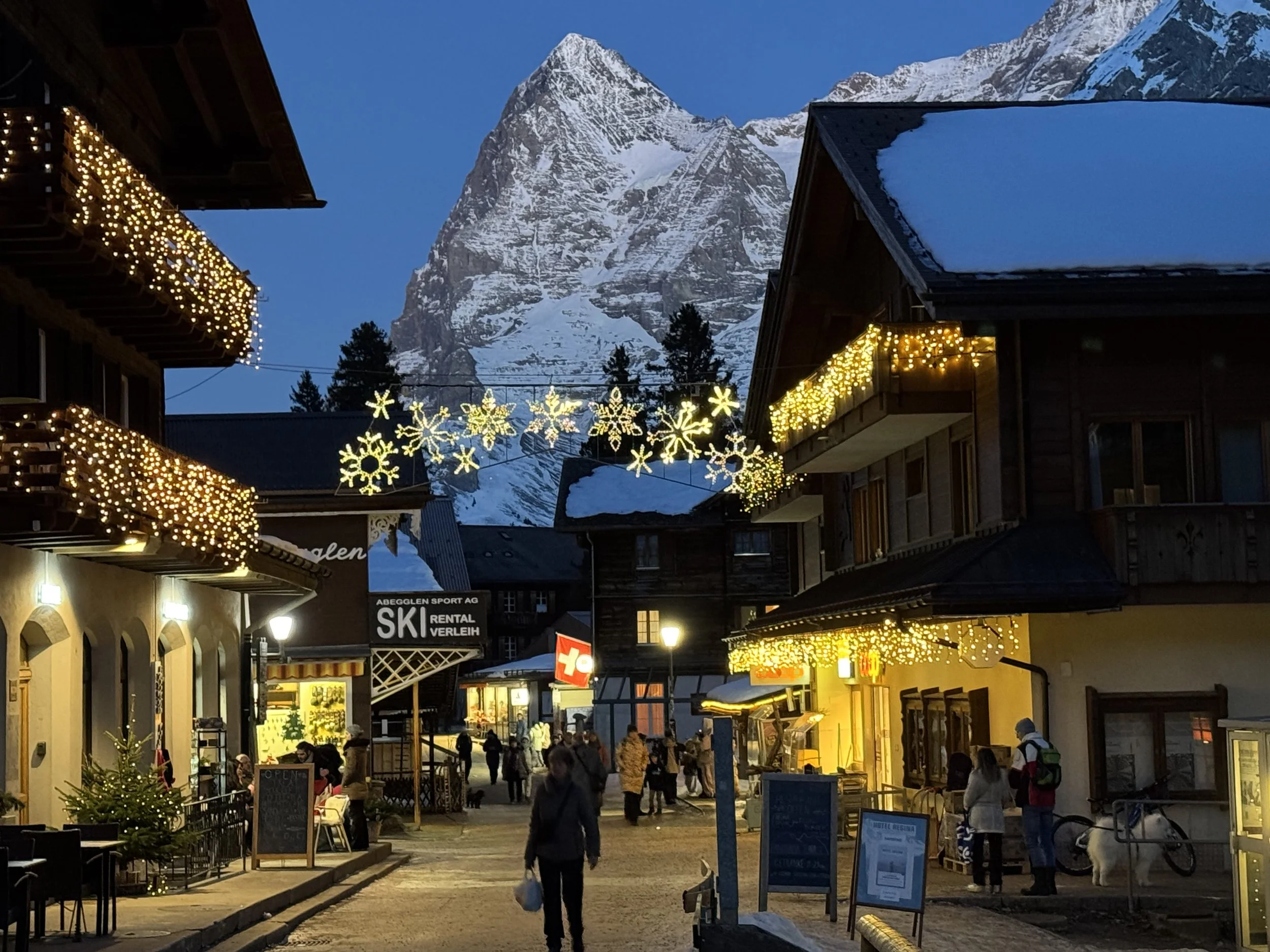
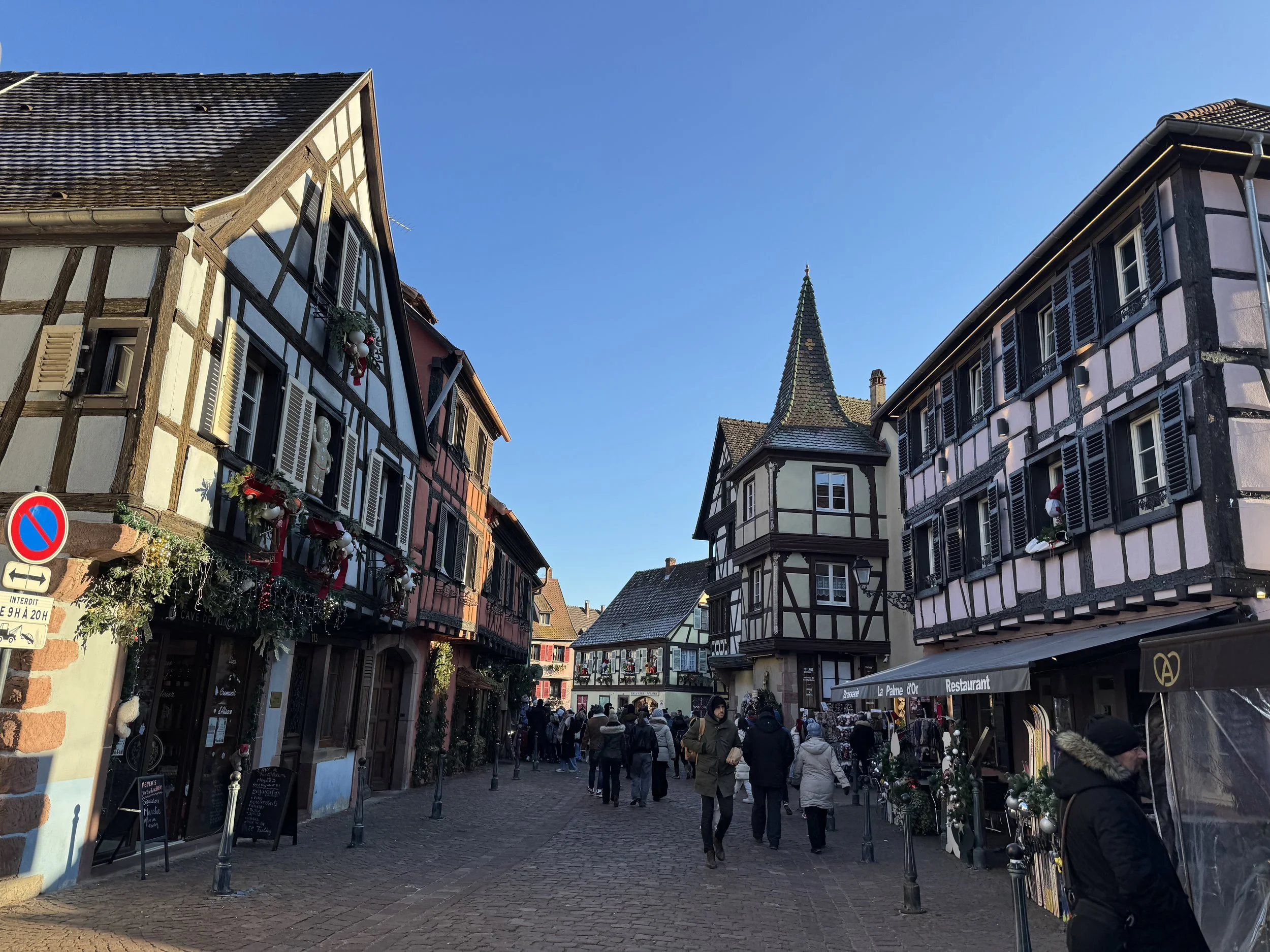
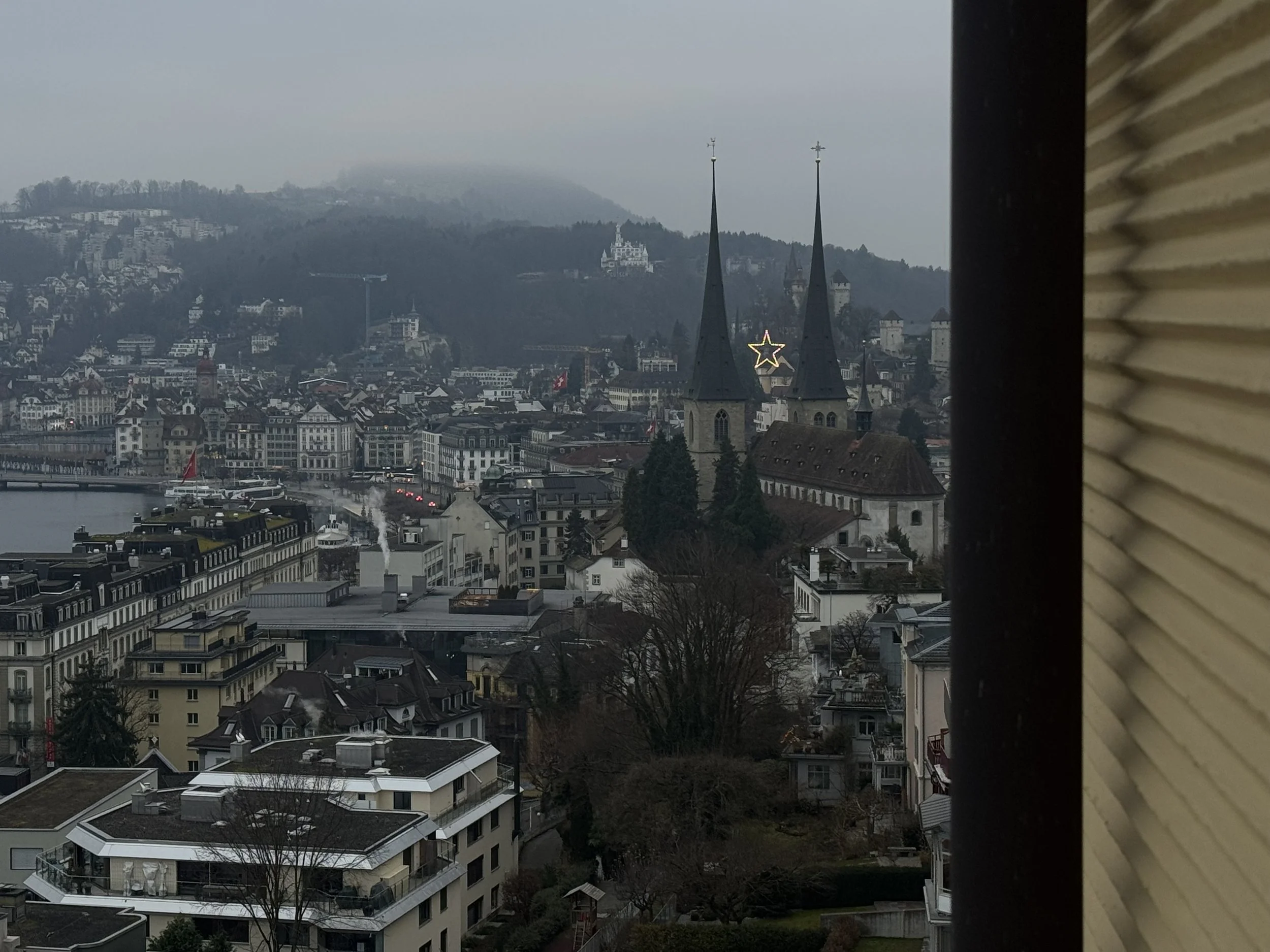
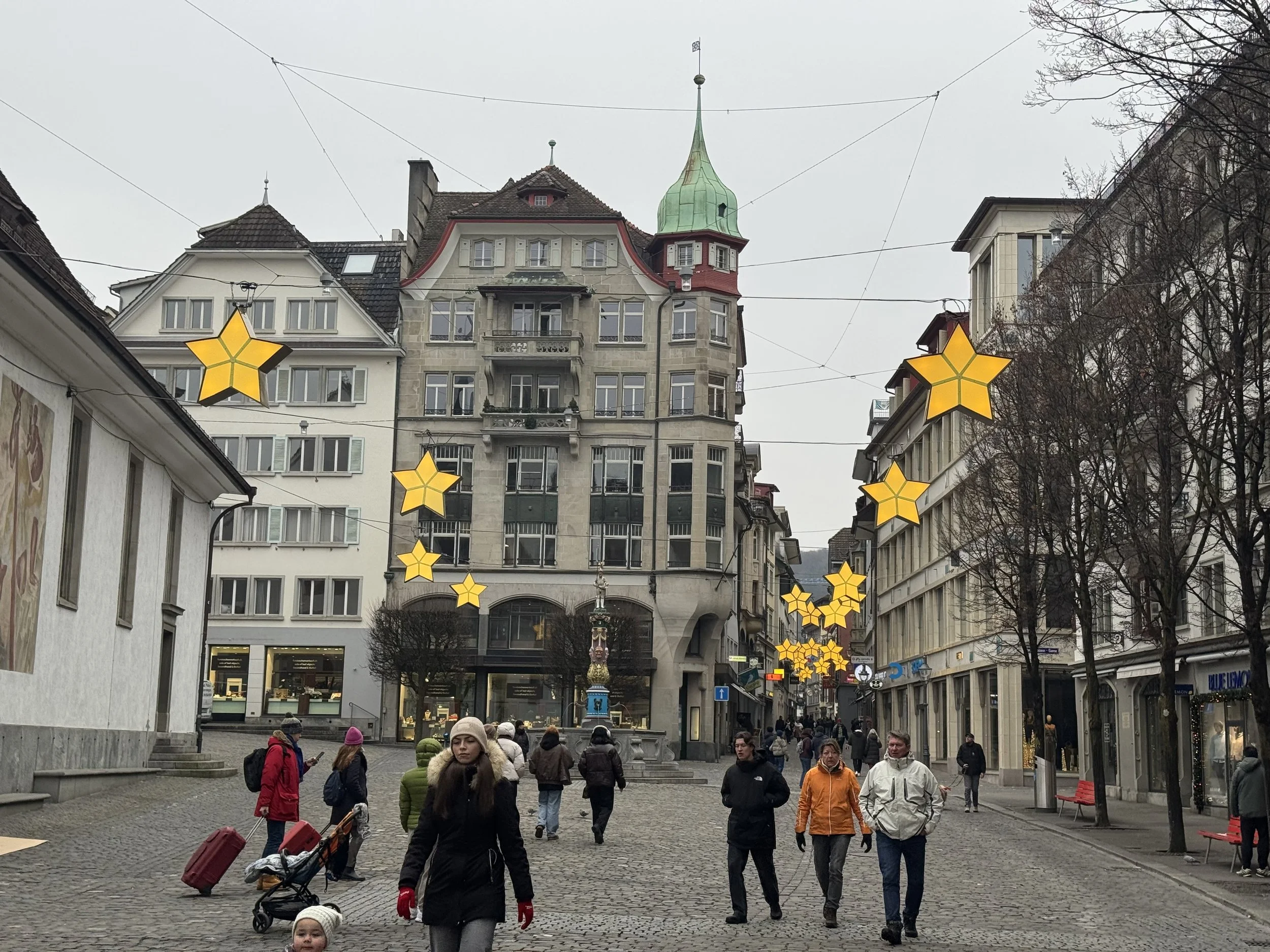
When we visited Italy and Slovenia in September, a café owner had suggested we were traveling for “momji-gari” or appreciation of the season and while true then, it held true now just as much. This annual holiday pilgrimage to Europe felt like the winter version of our fall immersion in Slovenia and the Dolomiti. We followed the (seemingly minimal) light and (seemingly abundant) cold - and also quite often, our noses, to the smells of the holiday season, from spice bread and crepes in Riquewihr to pain du chocolat in Lucerne to lavender in Marseille. Stars were strung down streets in Lucerne, frost hugged the vineyards in Alsace. Fog in the Lauterbrunnen Valley made us feel like we were floating on a cloud in the car-free town of Murren, Switzerland. What could have easily felt like a cold, colorless time of year felt like a delight to the senses, proving that winter too is a perfectly formidable time of year to explore Europe.
And like winter itself, the beginning of our trip in the Alps and Alsace was filled with contrasts. Medieval walls next to everyday modern life. A design pilgrimage one day, a market town the next. Natural wine bars and prisons, sometimes in the same afternoon. Ice-cold temperatures and mugs of glühwein so hot the warm seeps through your gloves.
Portugal was its own kind of contrast, too. Old granite and tile buildings that were built for function, not performatively built for Instagram. Meals that were bold, precise and homey, without trying to show off. In the Douro, we saw almonds and olive trees thriving in rocky schist in the dead of winter.
And then our favorite part, the Serra da Estrela, with Casa das Penhas Douradas and Casa de São Lourenço, wrapped in Burel wool and history. These hotels were born from the era when mountain air was medicine for tuberculosis patients seeking healing, and now serve as a perfectly-constructed and curated ode to craft and good materials. A purposeful place full of stories and heart… exactly what we all need more of.
If you’re looking for a winter itinerary that blends Christmas market energy, mountain towns, natural wine, design pilgrimages, and incredible food, you’re in the right place. Use this as a full route or just pick the pieces that suit your tastes and build your own version.
Route at a glance
Lucerne -> Basel -> Vitra Campus (Weil am Rhein) -> Colmar -> Riquewihr -> Kaysersberg -> Mürren -> Lyon -> Romans-sur-Isère -> Valence -> Crest -> Grignan -> L’Isle-sur-la-Sorgue -> Marseille/Aix-en Provence -> Porto -> Douro Valley -> Serra da Estrela
SWITZERLAND
Lucerne
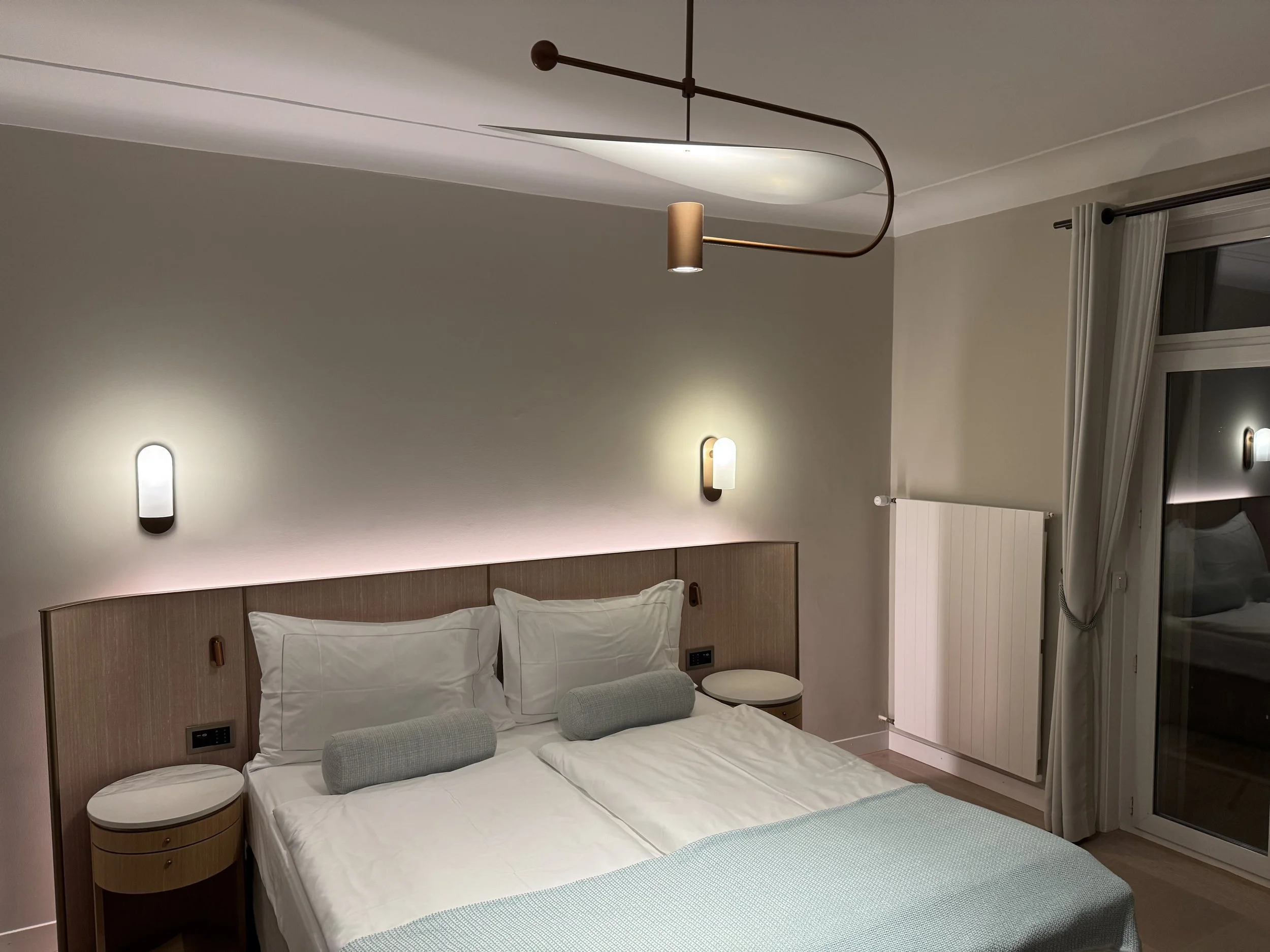
Where to Stay: Art Deco Hotel Montana was an incredible place to call home to kick off our trip. We rode the (very short) funicular ride from street level up to the hotel, perched high on the hill above the lake. Each room and the dining room boast a cinematic Lucerne view, with water, fog, misty mountains, and boats moving like toys all down below, alongside a birds eye view of all of Lucerne itself. The vibe is very classic art deco, but not in a crusty old-school type of way. The rooms were minimalist, large, and comfortable, and each room offered a peekaboo to a stunning castle, vista, or lake view.
Breakfast was also possibly one of our favorite of the trip; muesli multiple ways, omelettes to order, cold cuts, veggies, fruit and detox juices of many varieties, all eaten with THAT lake view in front of you. We spent longer than planned just soaking in the view each morning and chatting with the lovely waiters in the restaurant, who always took a keen interest in our activities for that day.
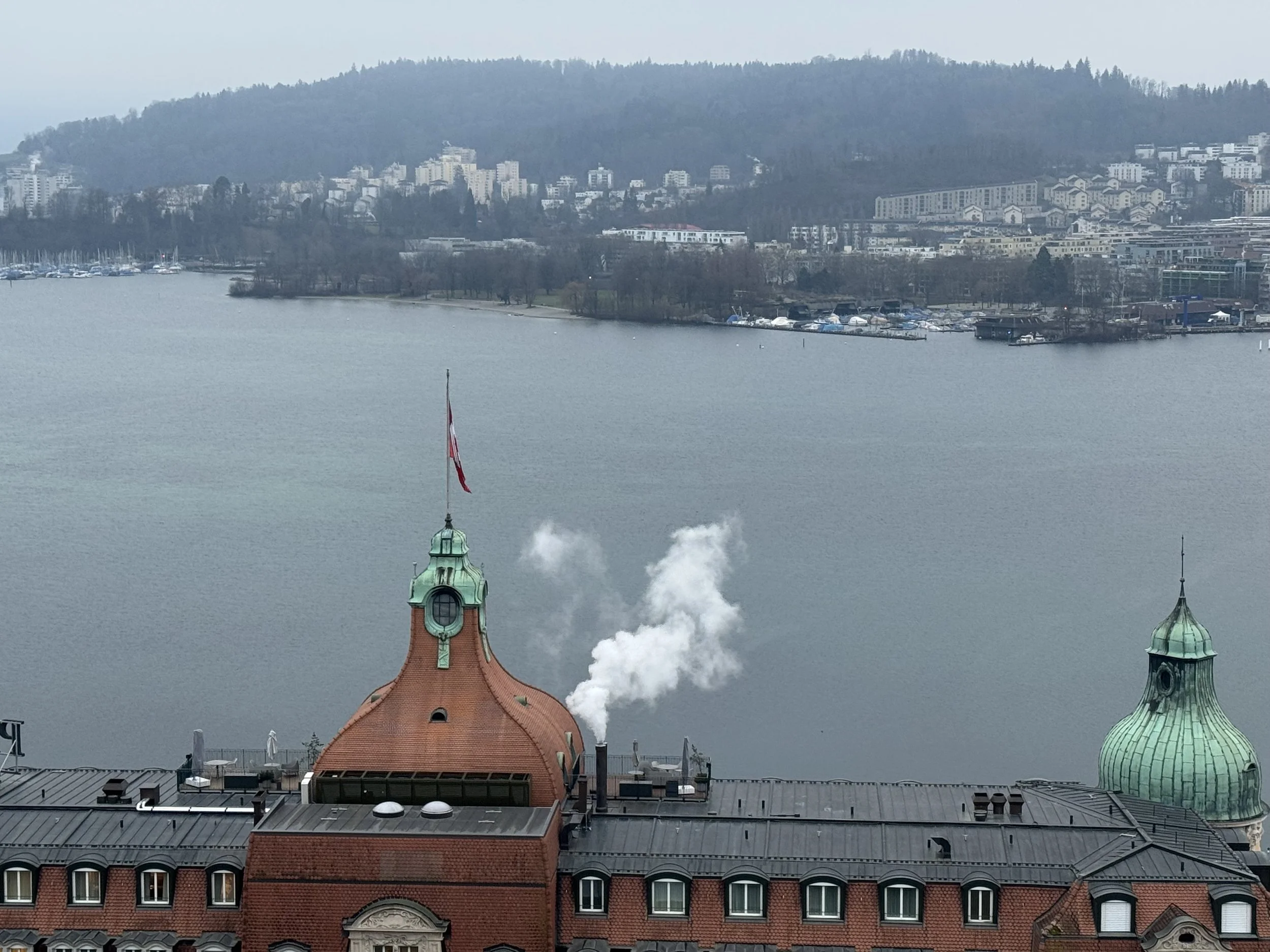
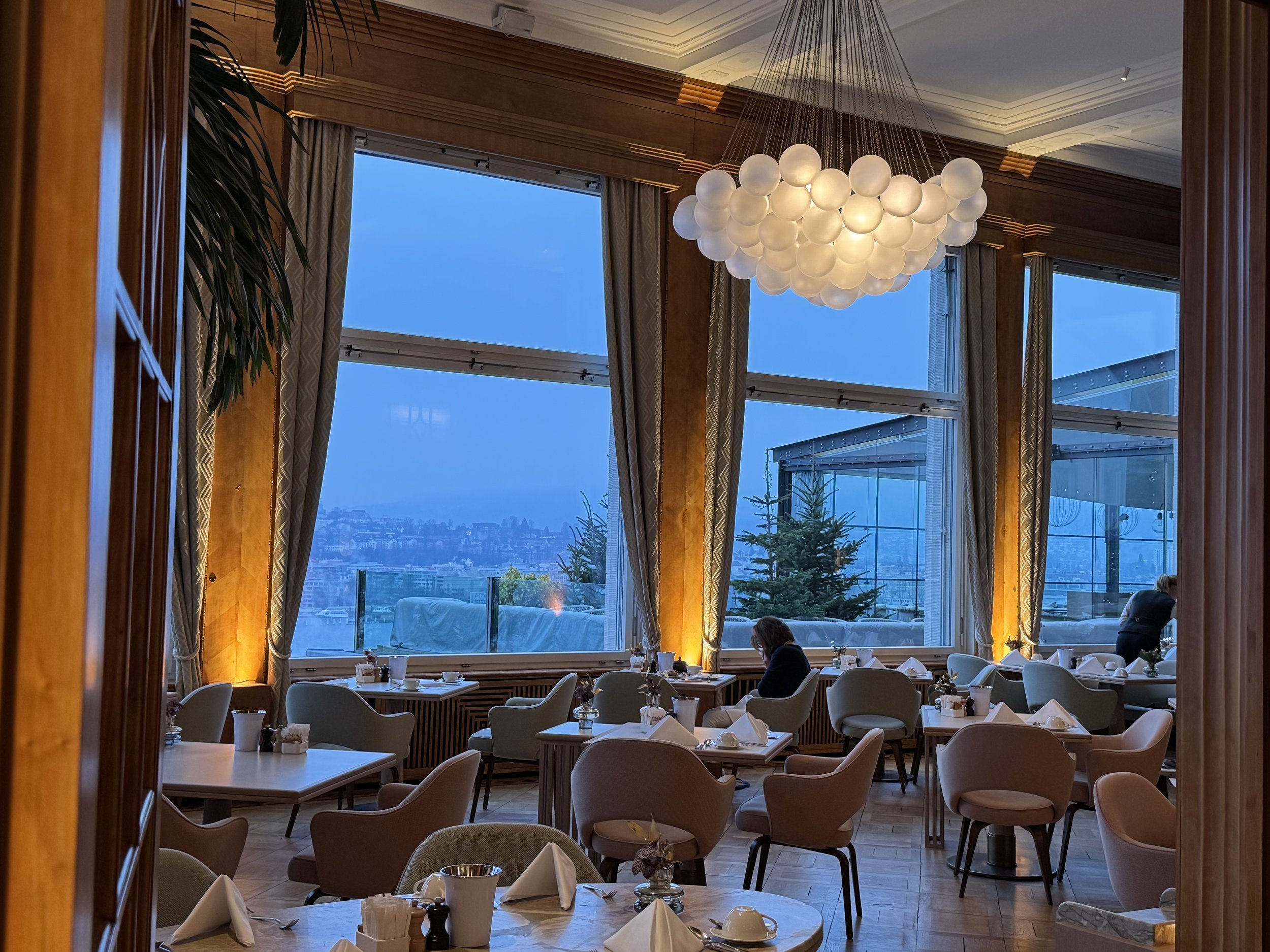
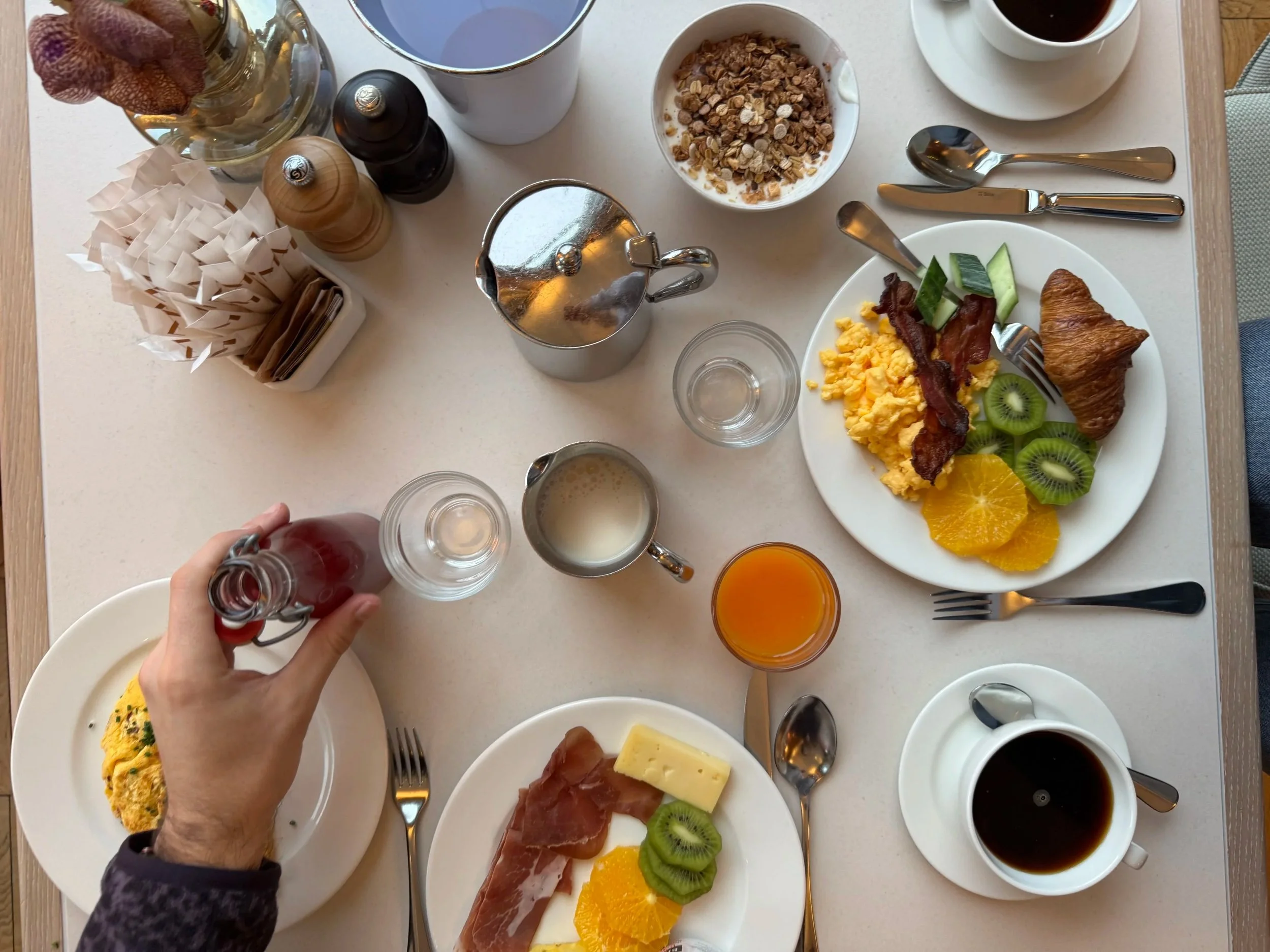
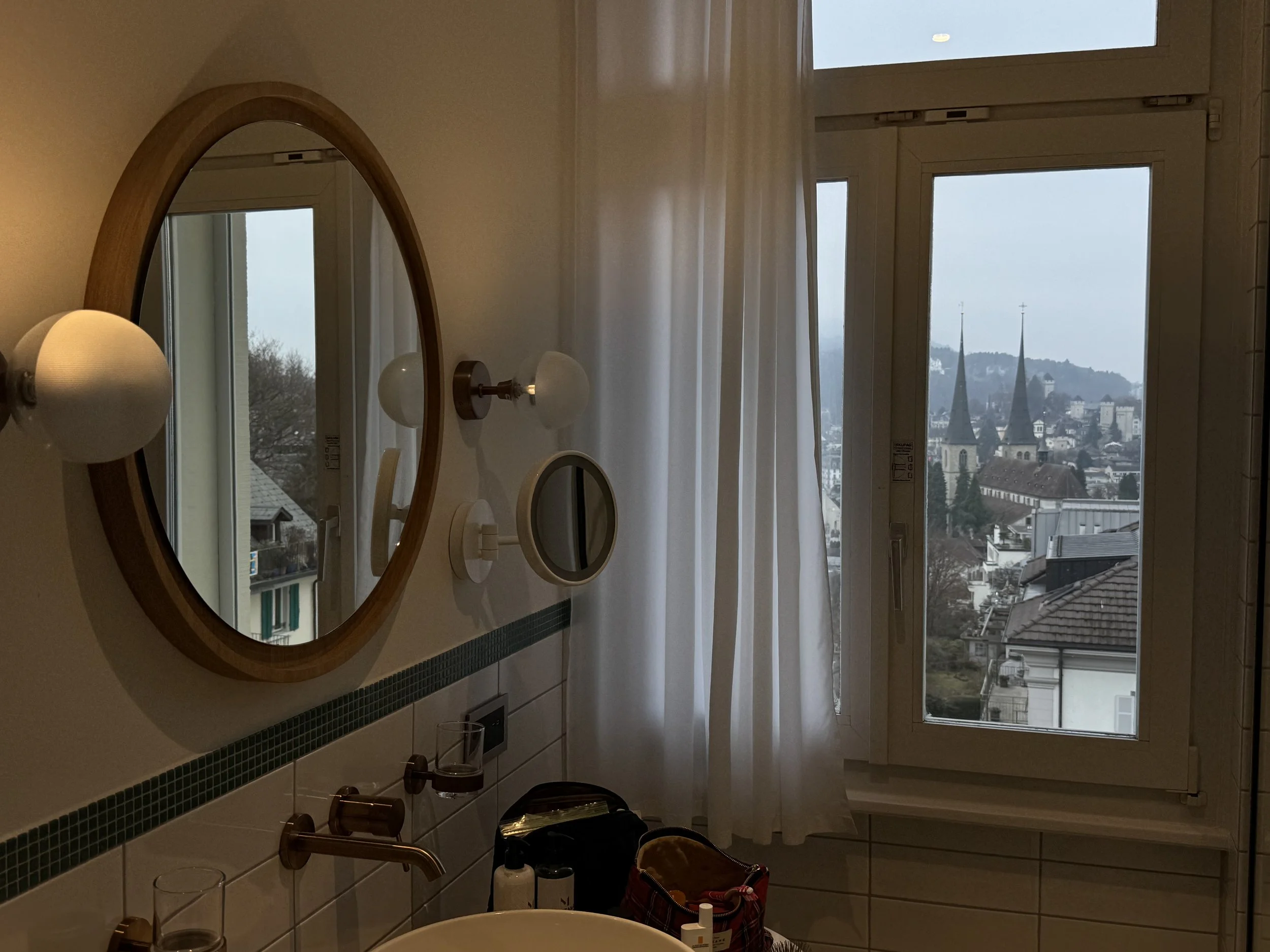
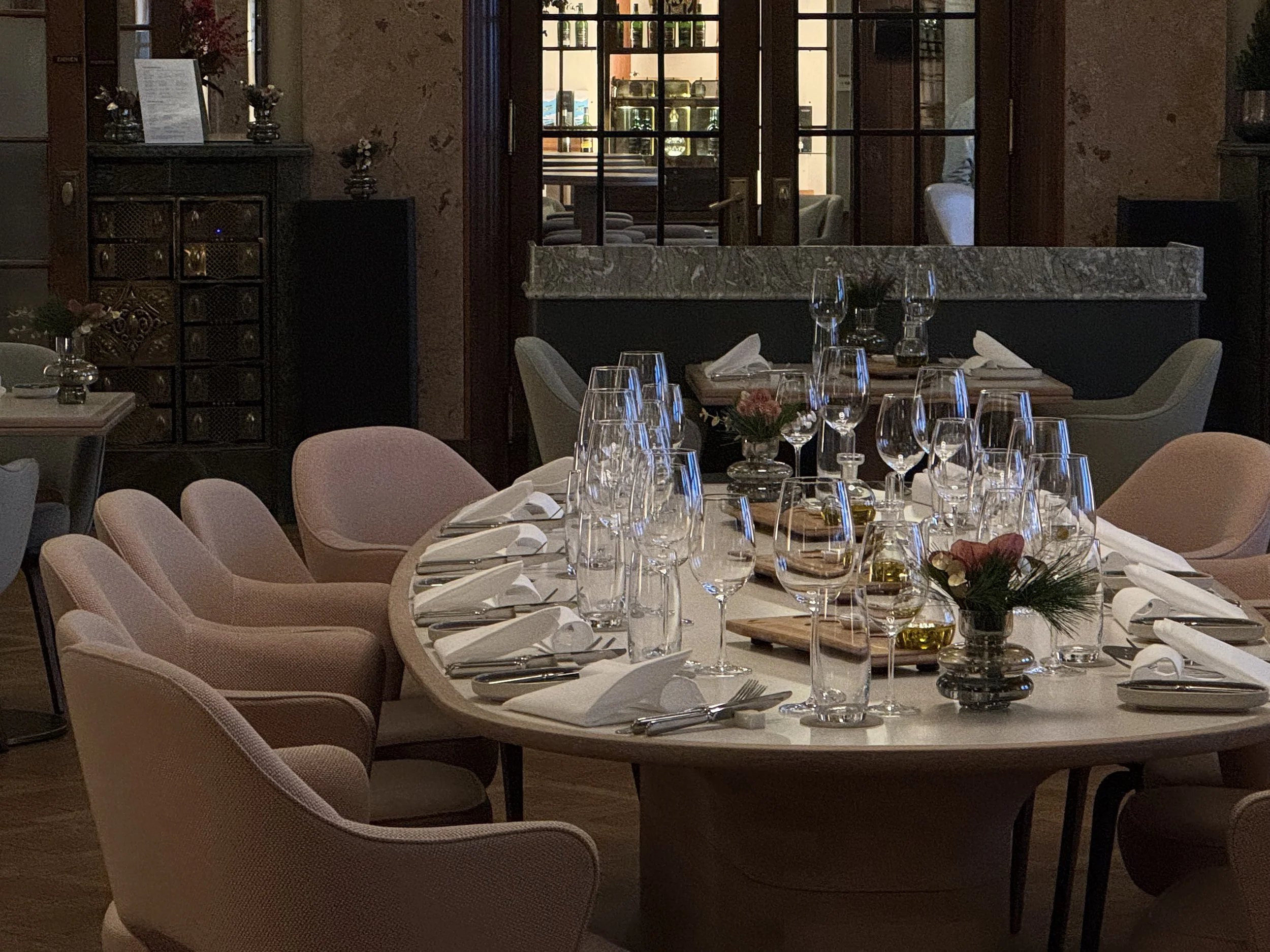
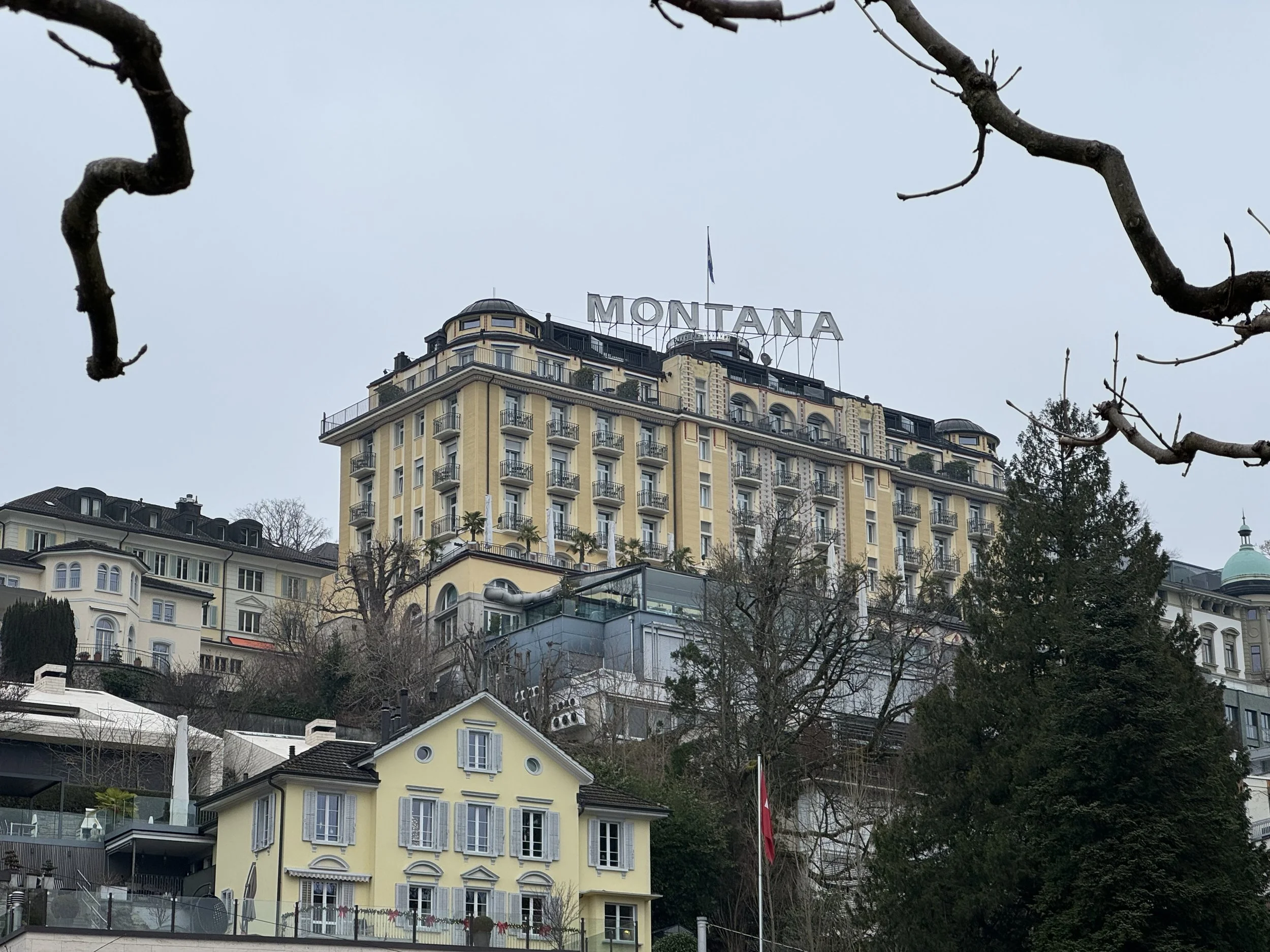
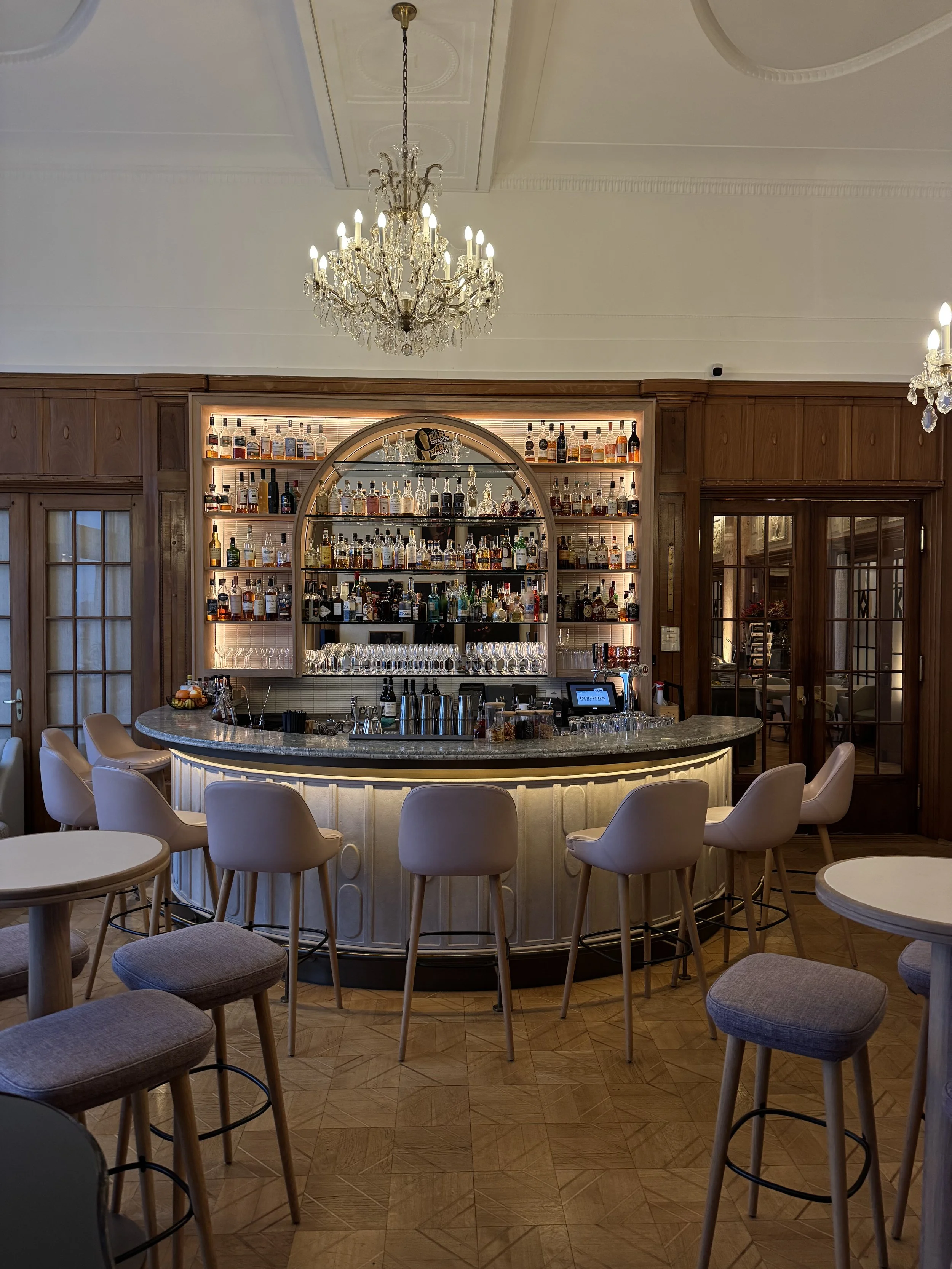
Where to Eat/Drink: Art Deco Hotel Montana also had a wonderful restaurant with very classy, high-end dinners available at night. We happened to be here on Christmas Day and they even had a fixed menu as well as an a la carte menu available, which was a huge bonus given we weren’t sure where we’d find a meal on the holiday.
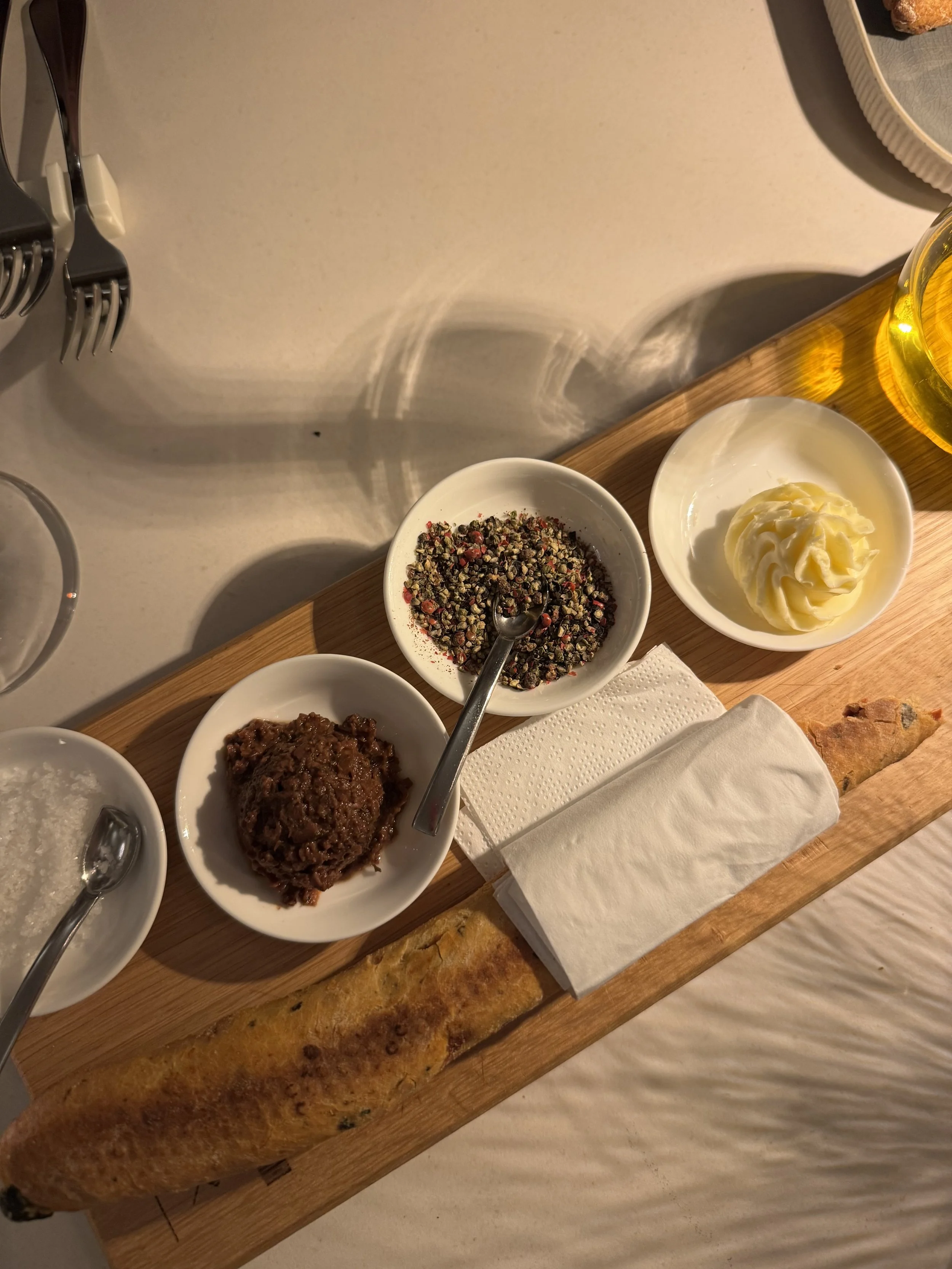
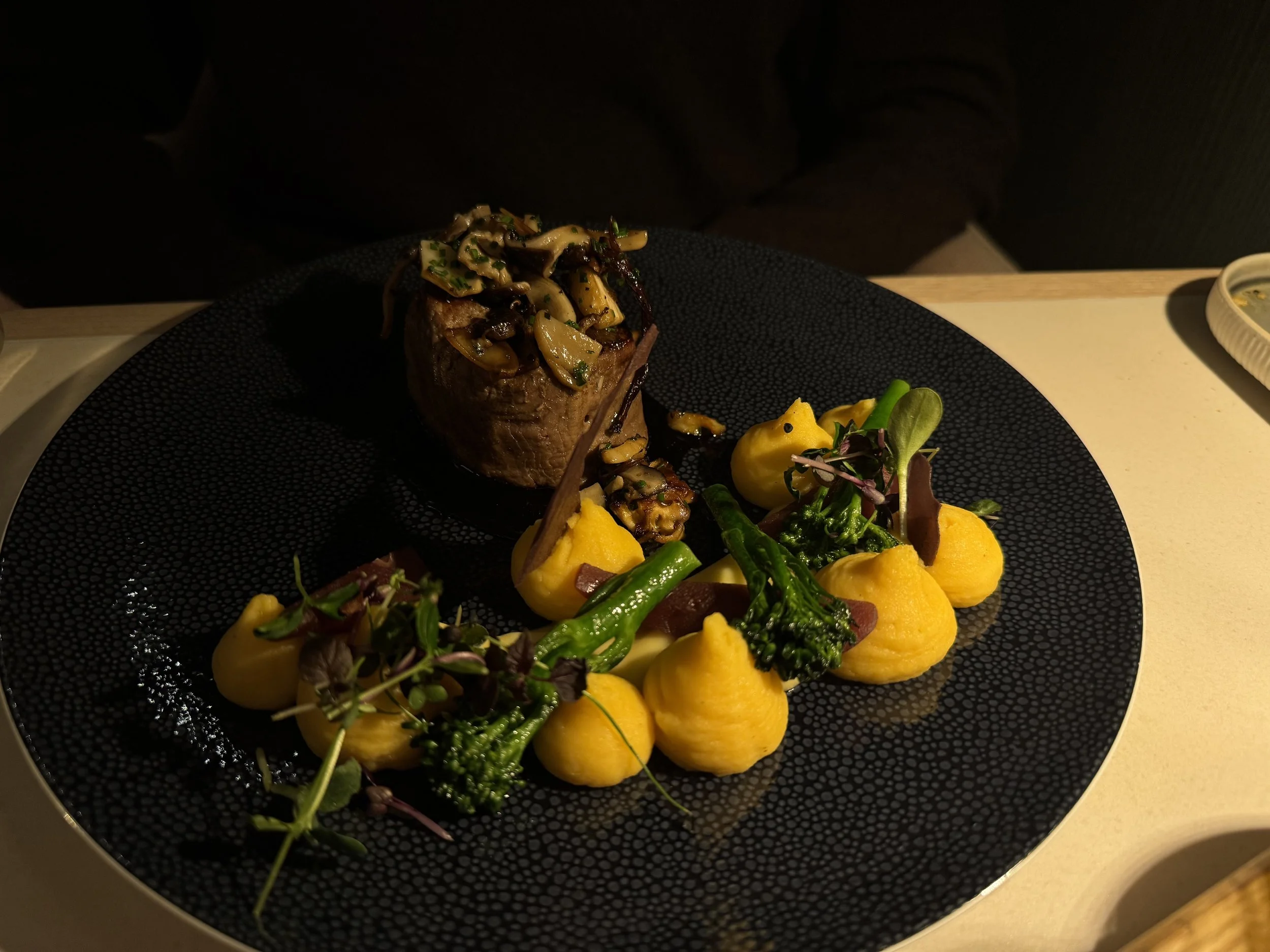
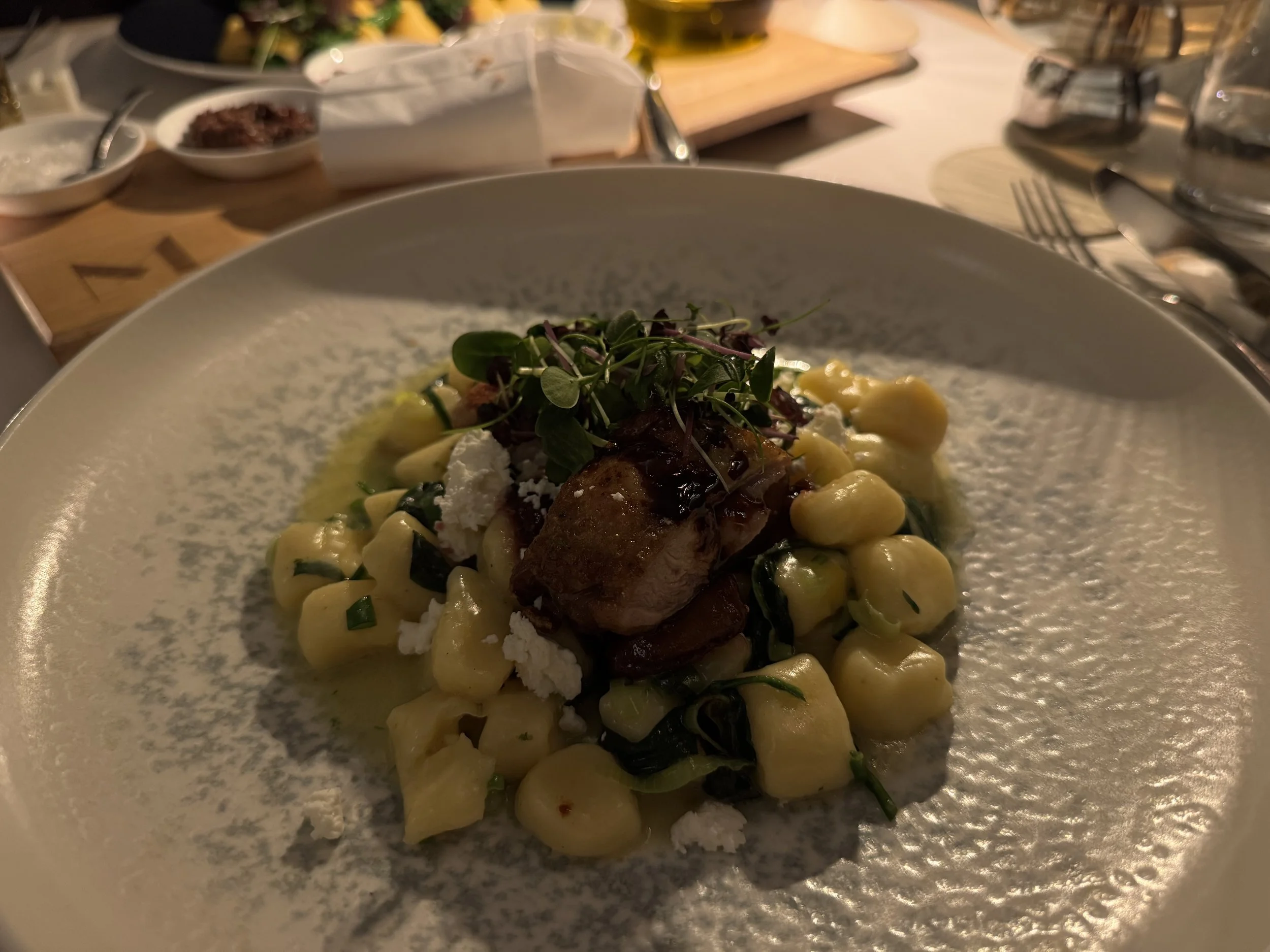
We ordered a beef filet with a delicate sauce and mashed turnips, which came with roasted apple chips for some crunch. We also shared a plate of buttery gnocchi with goat cheese and greens. The waitstaff was awesome, and the atmosphere of eating in a huge ballroom with warm candlelight all around was exactly the vibe we were going for after a long travel day.
Other favorite spots in Lucerne included: Vesper, BaBa Luzern, Mill’Feuille, Barbes, Restaurant Weisses Schloss, La Casita Bistro Tapasbar, and Lucide Restaurant.
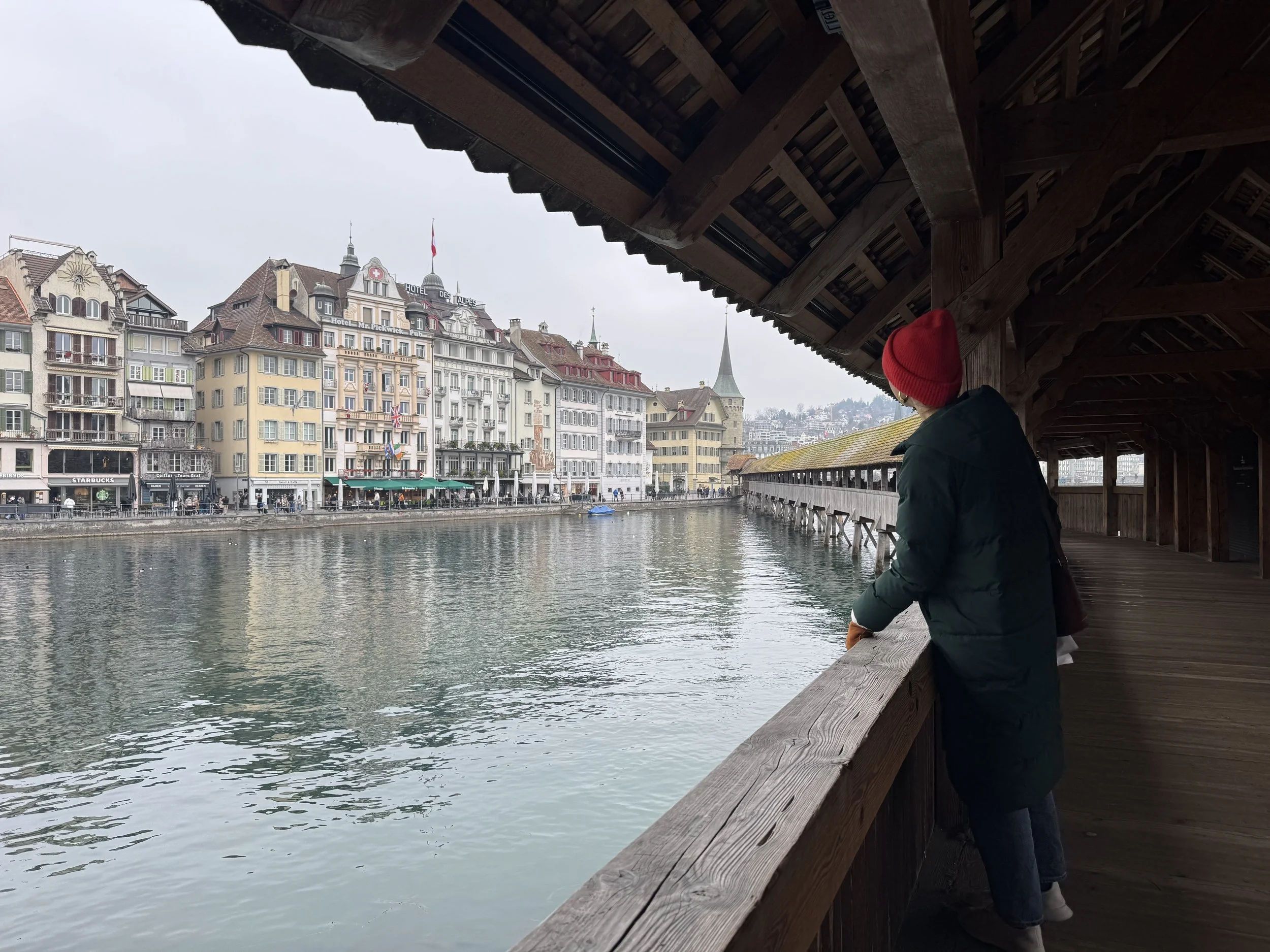
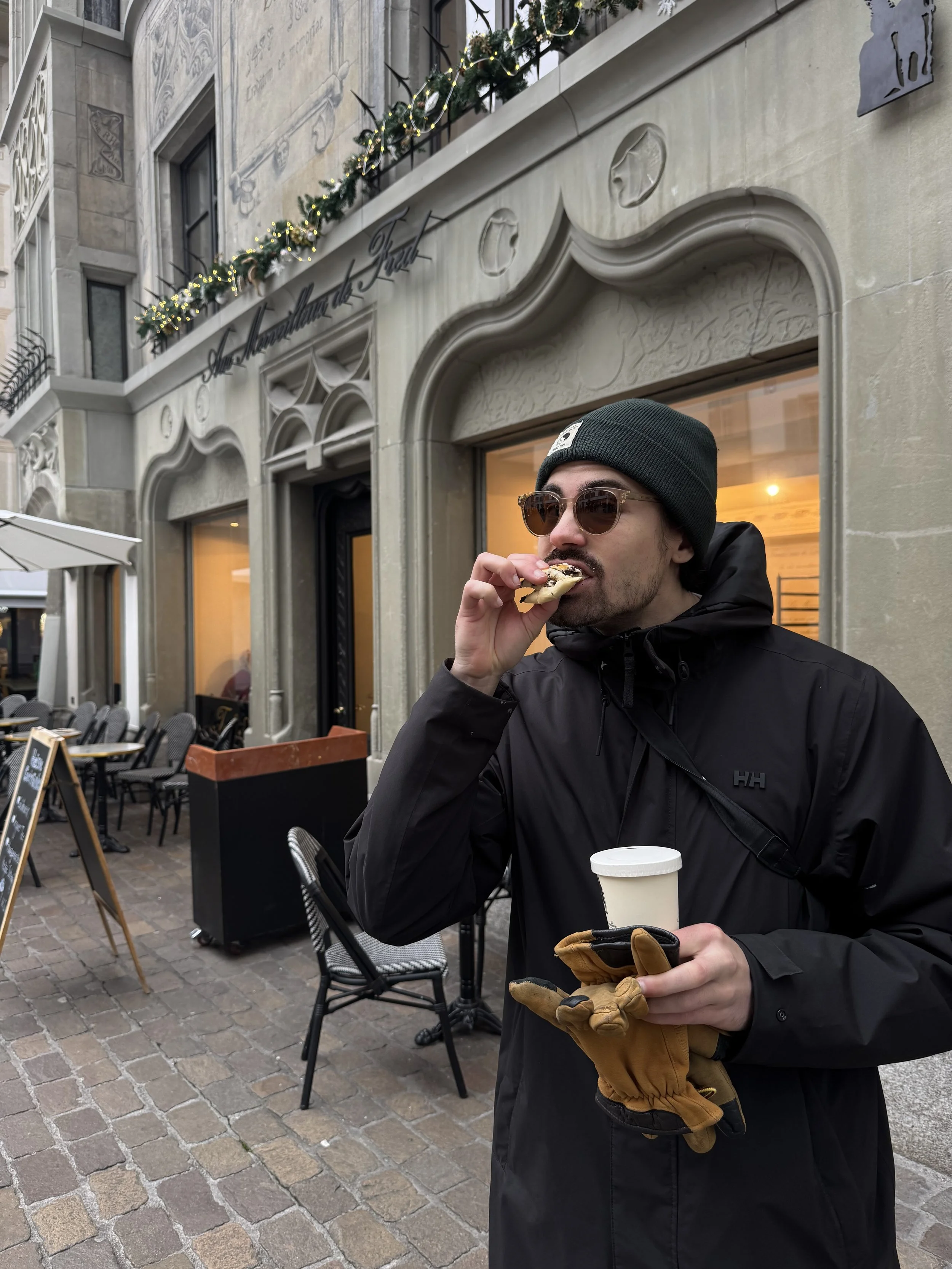
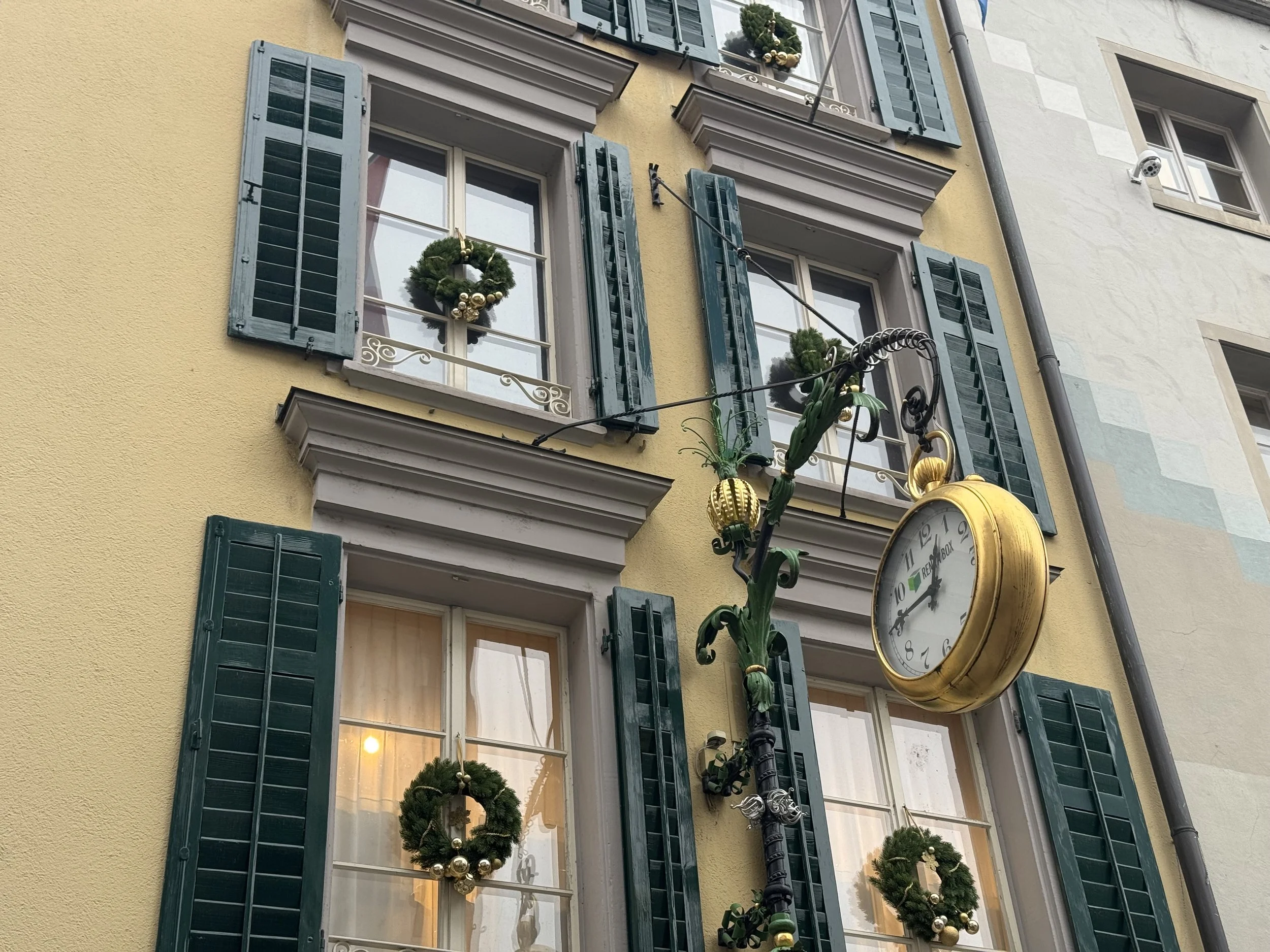
Things to Do: Lucerne is a city that rewards slow walking and exploration. It’s compact, beautiful and layered enough that you can have a full cultural experience on a simple morning stroll. Start the day with a walk through the old town and across the 13th century bridges, especially the Kapellbrucke (Chapel Bridge). The Reuss river runs right below it and is stunning no matter the season. Go early or late in the evening if you want it to feel more intimate, as these do get busy with tourists midday.
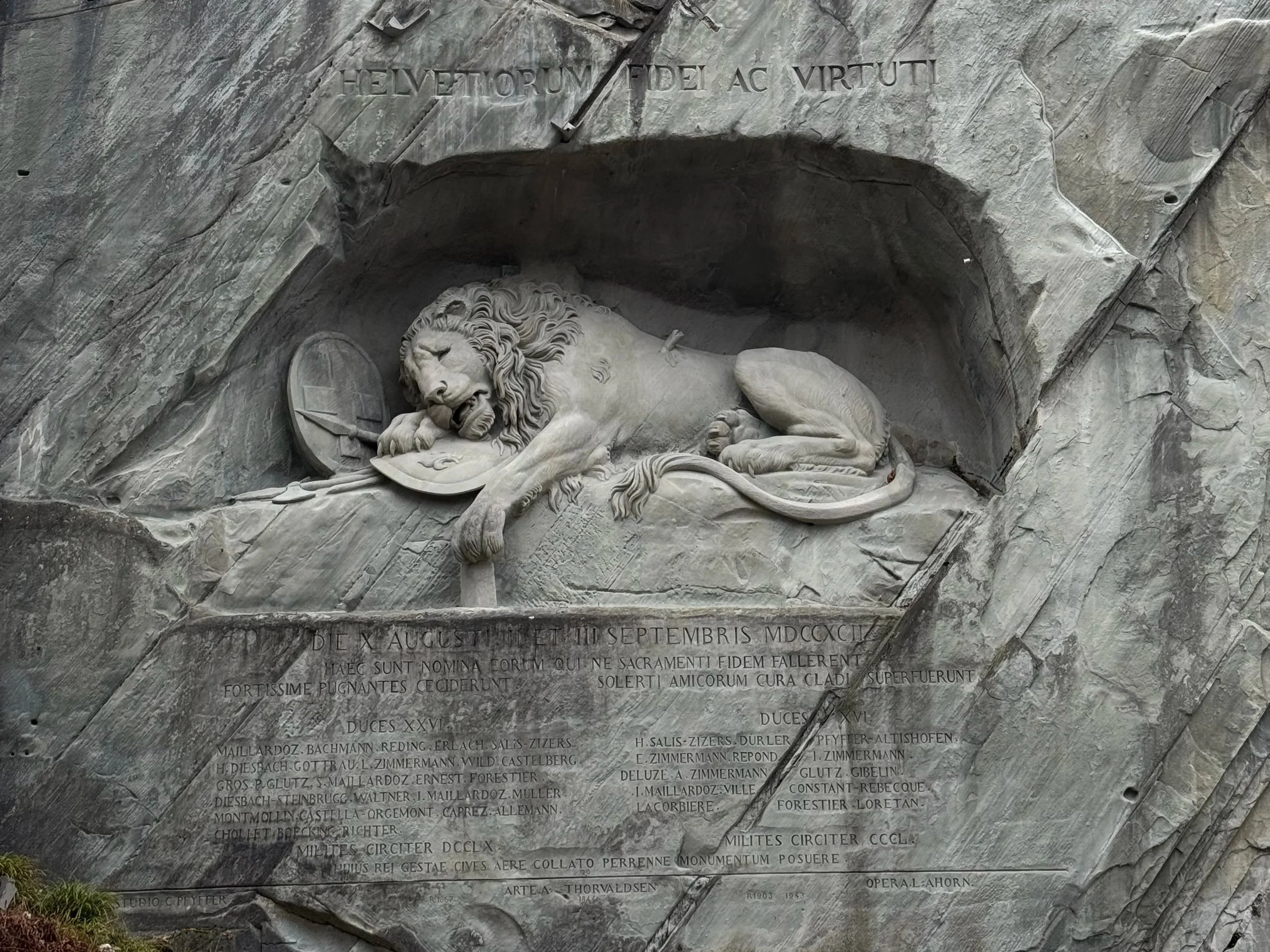
Next, go see the Lion Monument (Lowendenkmal). It’s a lion carved into rock, slumped and wounded, with a spear in its side, tucked into a small sandstone grotto with a still pond in front. The monument was created to honor the Swiss Guards who were killed in Paris in 1792 during the storming of the Tuileries Palace, when revolutionaries attacked the French royal family’s residence. Many of those guards were Swiss mercenaries, hired to protect the monarchy and they did exactly what they were paid to do. Most were killed, a few survived. A swiss officer who was not present that day later pushed for the memorial, and a Danish sculptor, Bertel Thorvaldsen designed it. The carving itself was completed in the early 1820’s and upon seeing it in the late 1800’s, Mark Twain is said to have called it the “most mournful and moving piece of stone in the world.”
From there, walk up to Museggmauer, Lucerne’s old fortification wall, and explore the towers. It’s almost unbelievable that such a place exists just in plain sight. From there, you’ll get sweeping views over rooftops and the lake. Hinter Musegg is also a great farm stop with an accompanying restaurant that’s open in only the warmer months. Still worth a stop to see their animals roaming the pastures.
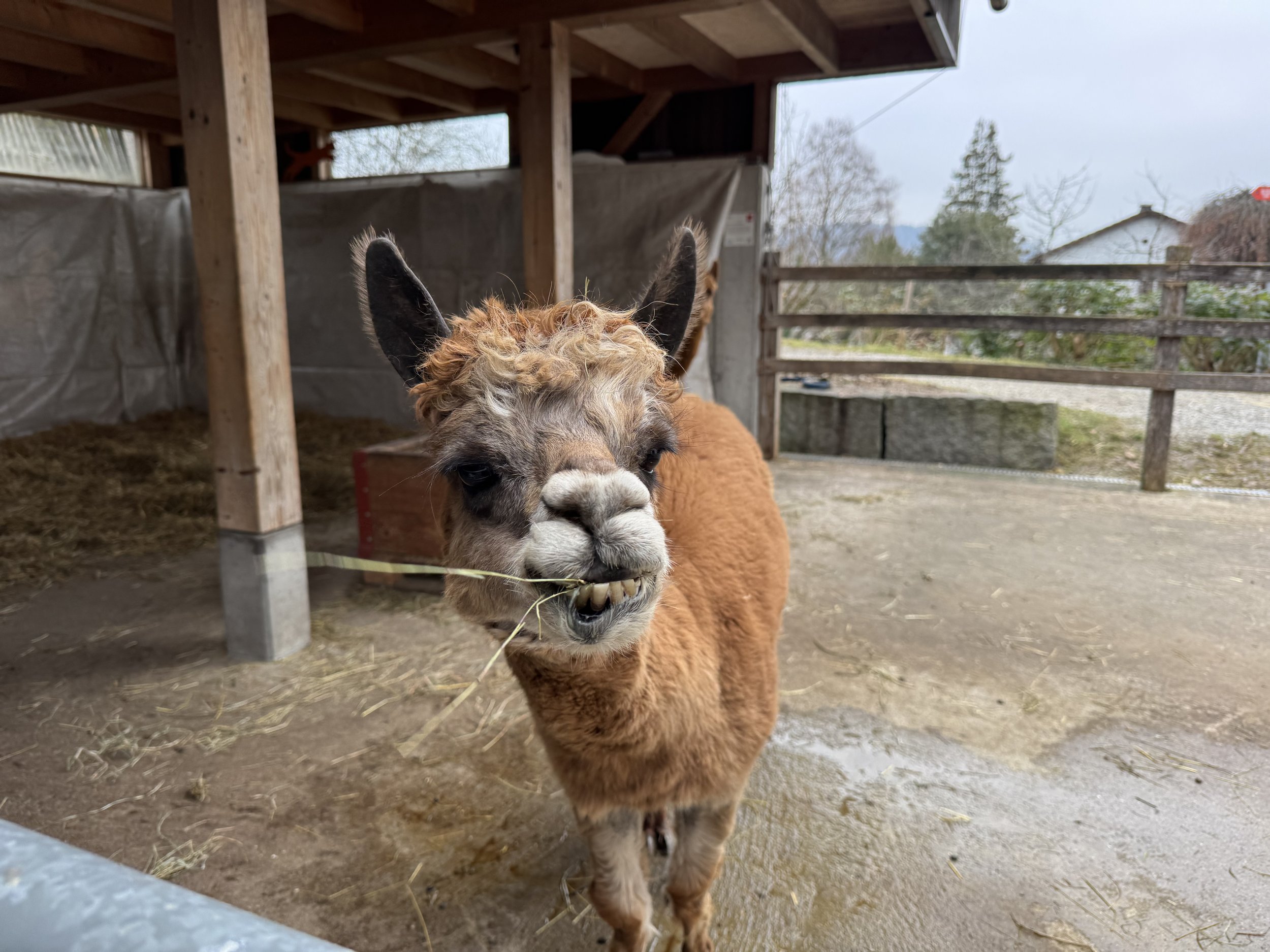
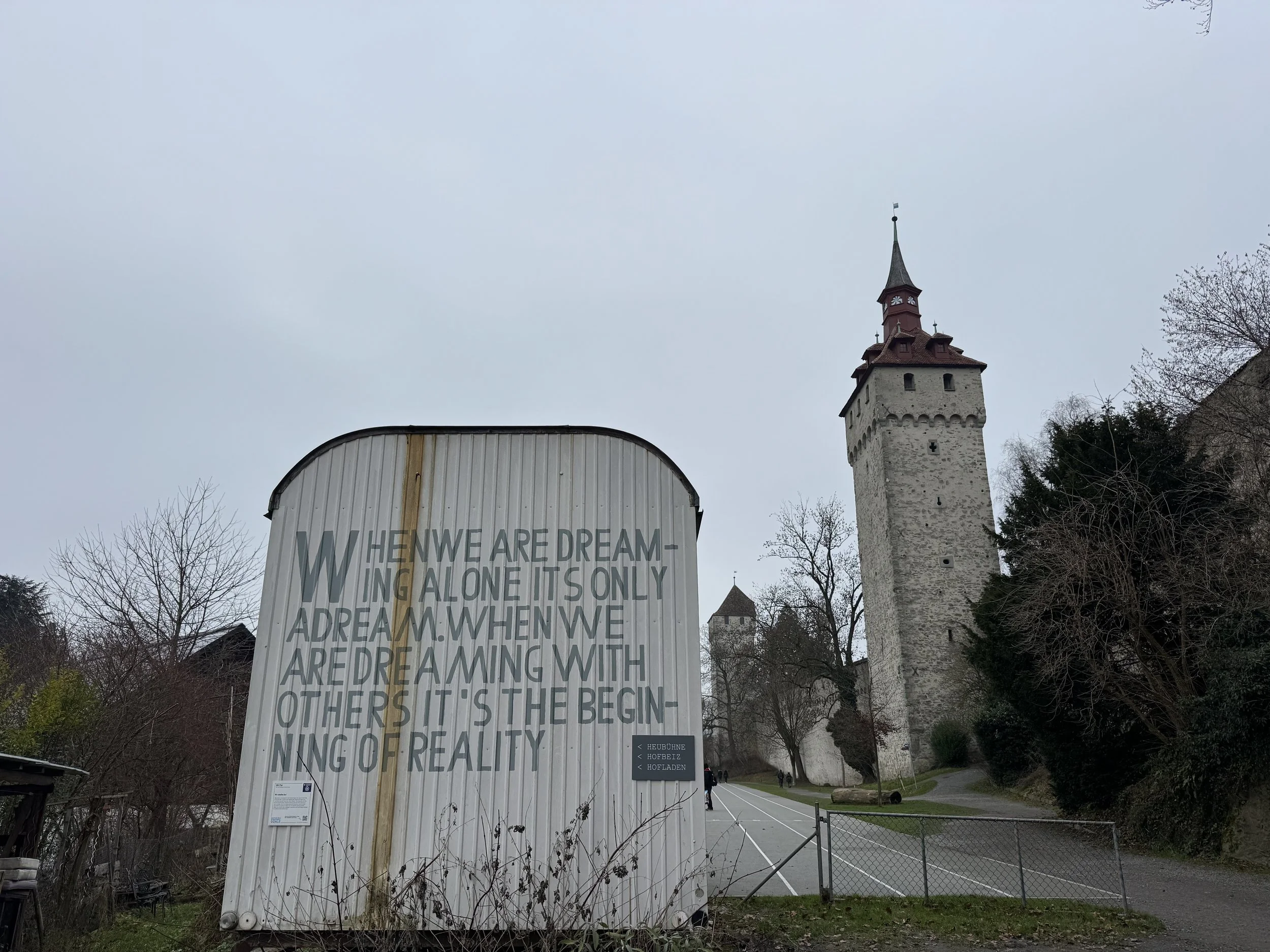
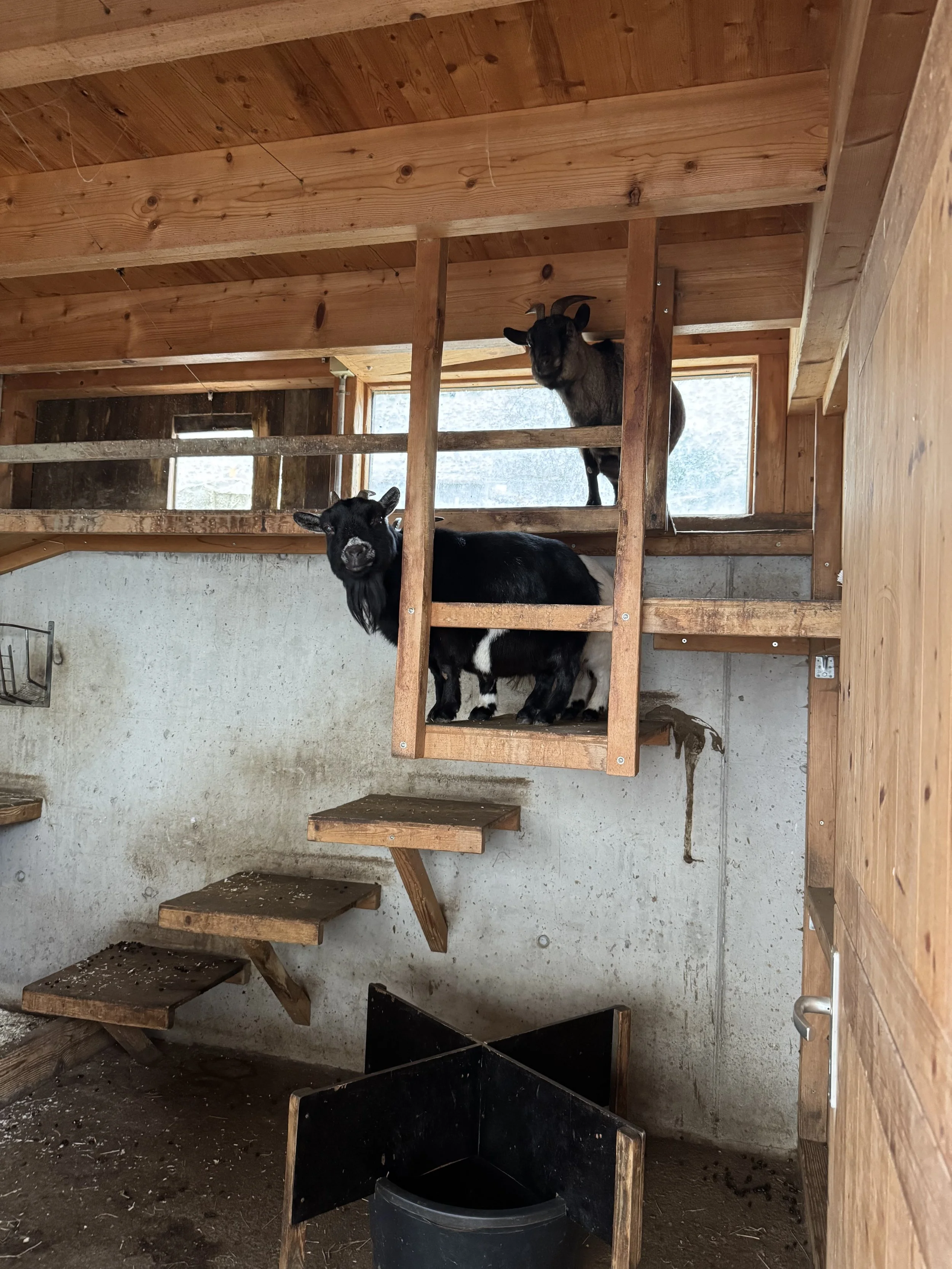
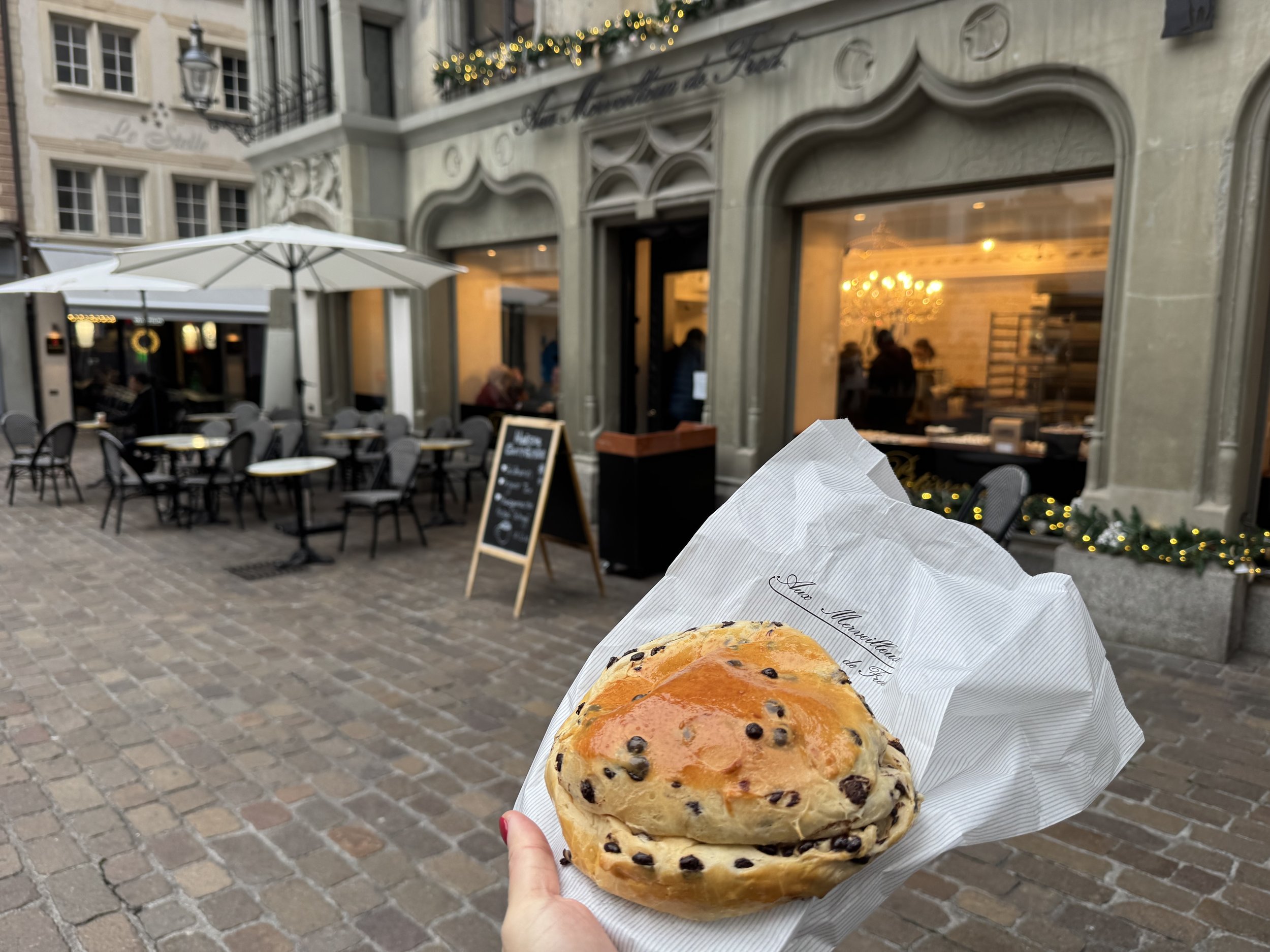
If we have one last piece of advice, it would be to follow your nose. Lucerne is a city where scent actually leads you somewhere. Case in point: warm pain du chocolat, fresh from the oven, pulled apart while still doughy. And there is no shortage of incredible chocolate shops here which waft into the streets… you’re just going to have to find those yourself!
Interesting tidbits to know: Lucerne literally means light. “Lucerna” is tied to the Latin for lamp or lantern, and there’s an old local legend about an angel lighting a lantern to show where the town should be built. The glow to the city hits different after you learn this very sweet fact.
The Chapel Bridge dates to the 1300s and was built as part of the city’s defenses and river control. The painted panels under the roof were put there to teach history and morality to the public. In 1993, most of the bridge burned and Lucerne rebuilt most of it nearly immediately.
The octagonal Water Tower in town was never just a tower. It has functioned over the centuries as a watchtower, an archive, a treasury, and a prison.
Mürren
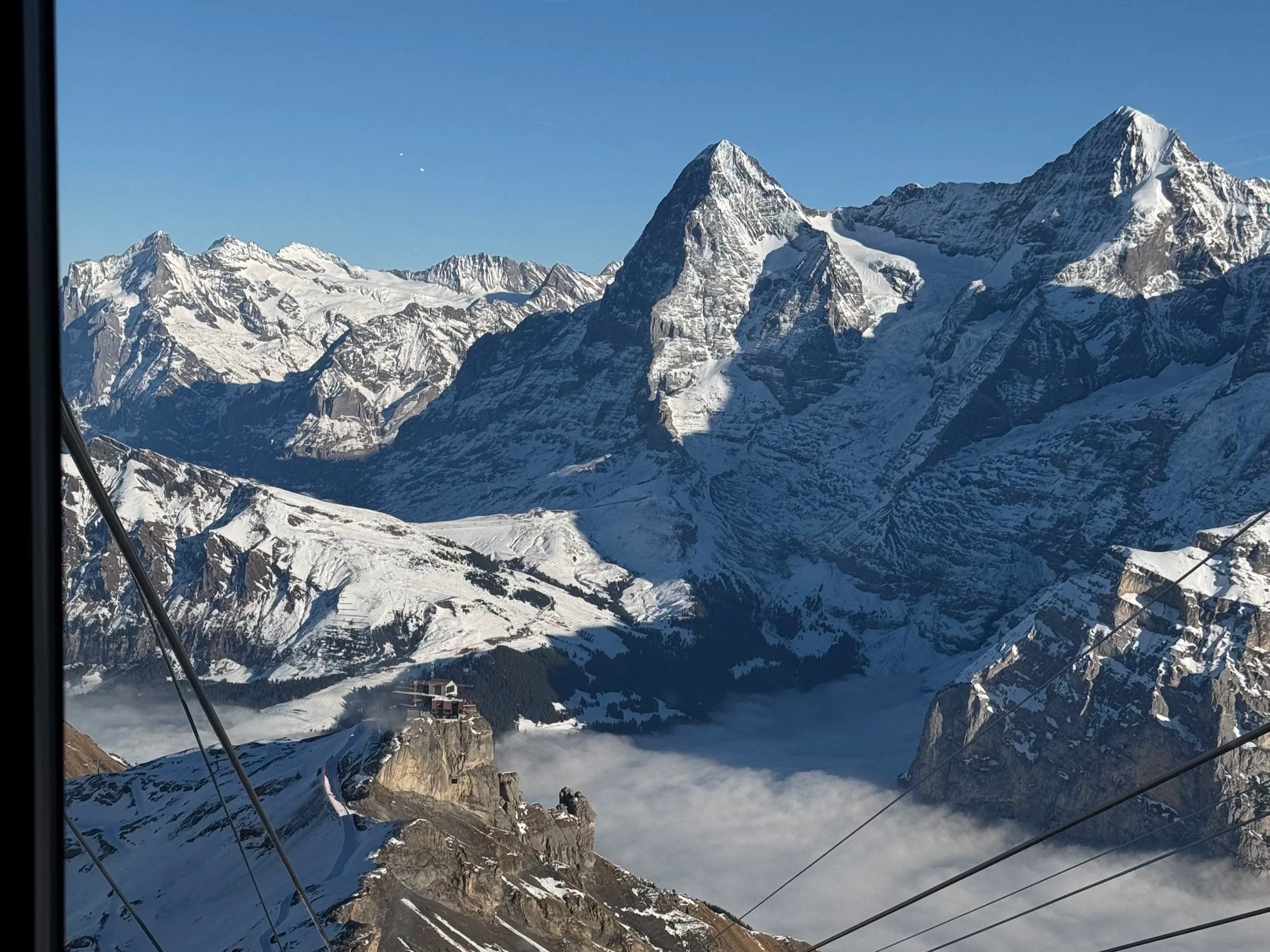
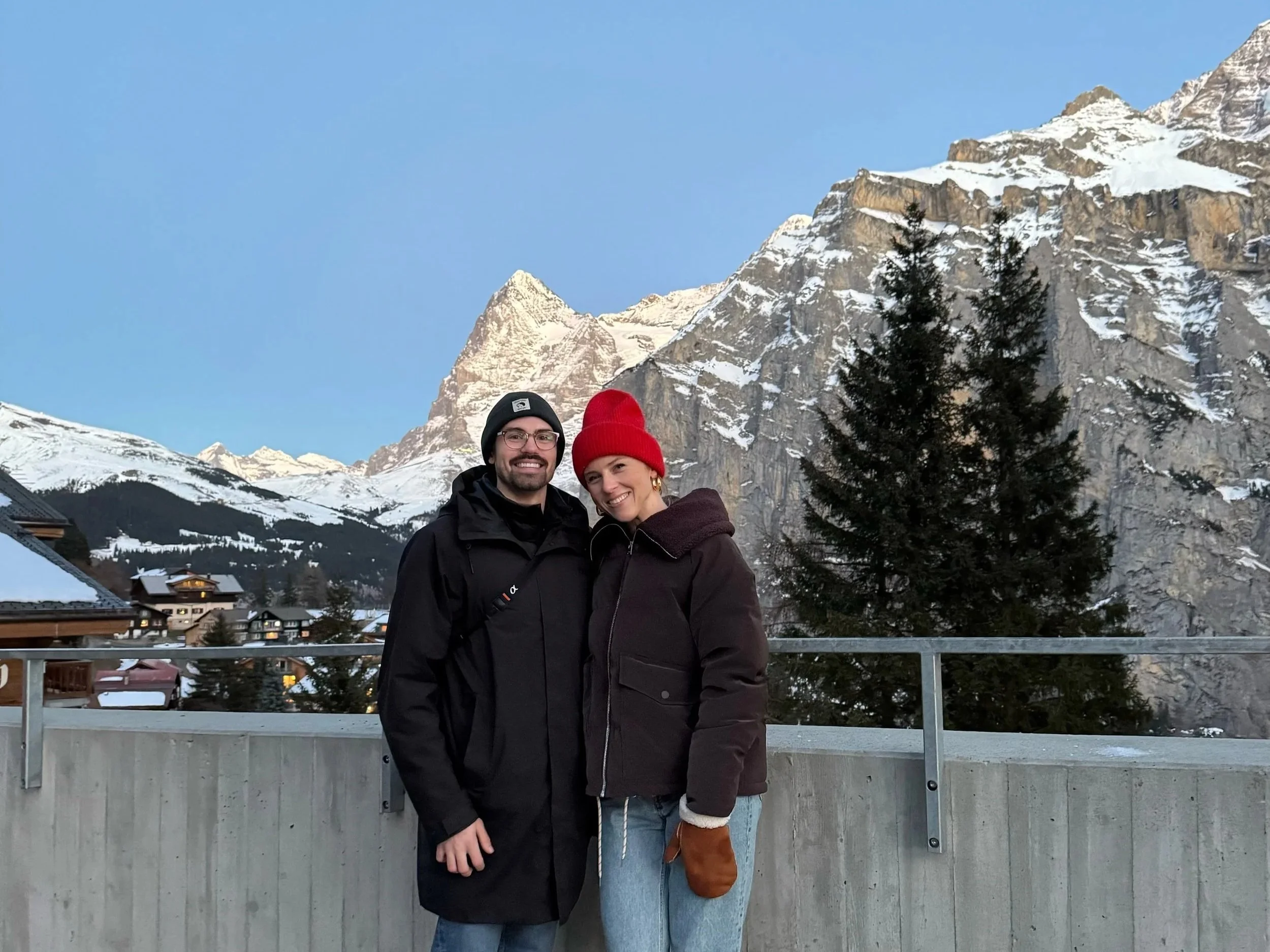
Where to Stay: Hotel Mürren Palace is the only place we’d stay in Murren if we were to go back. We booked it for the insane views of Eiger, Monch, and Jungfrau right outside our bedroom window but what honestly stuck with us was the cozy feeling, with the quirky well-designed rooms and the craftsmanship of the mountain rugs hanging in the lobby. The hotel itself sits right on the cliff edge above the Lauterbrunnen Valley, so the Jungfrau massif is your nonstop view with the mountains looming large every which way you look.
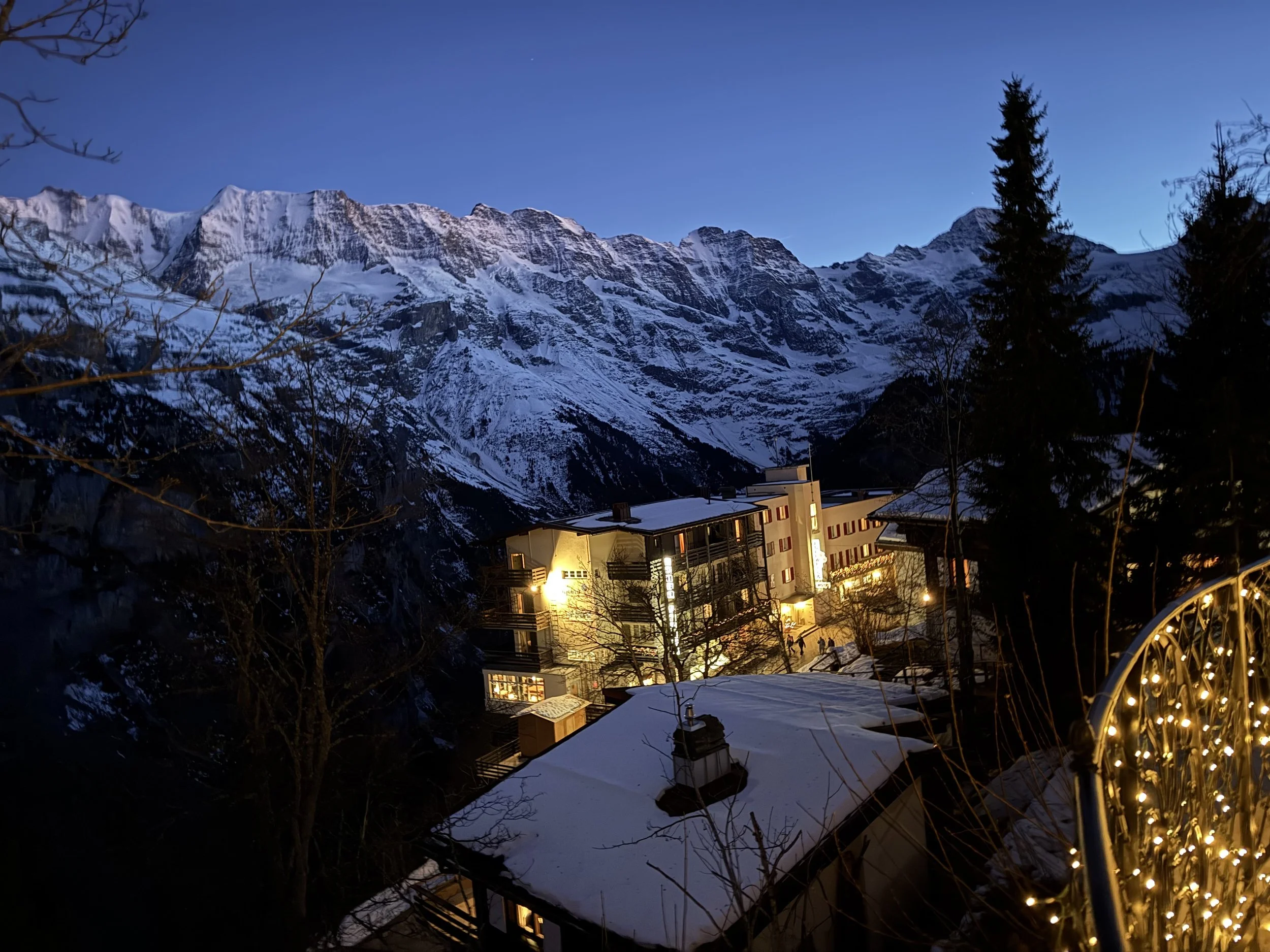
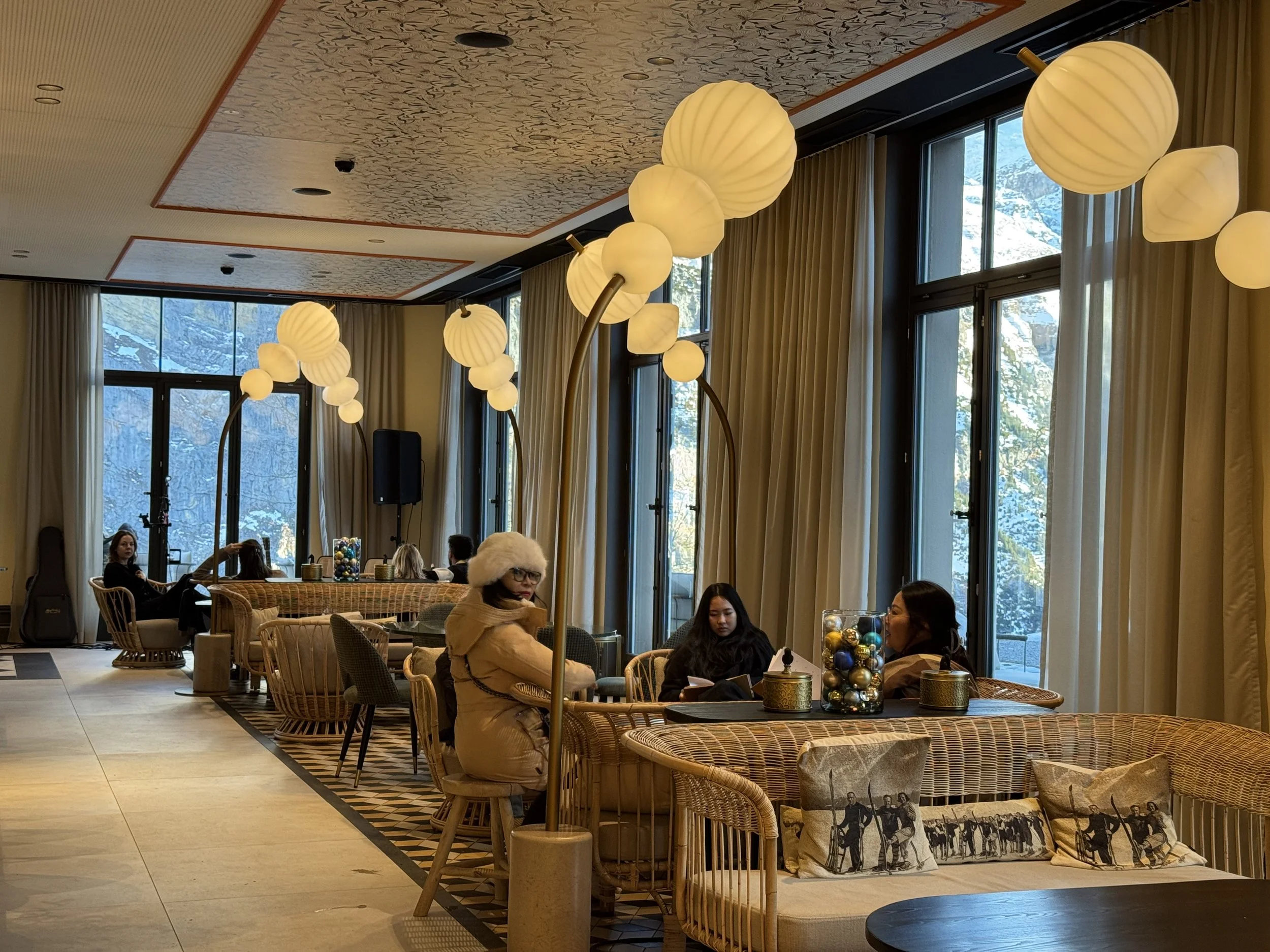
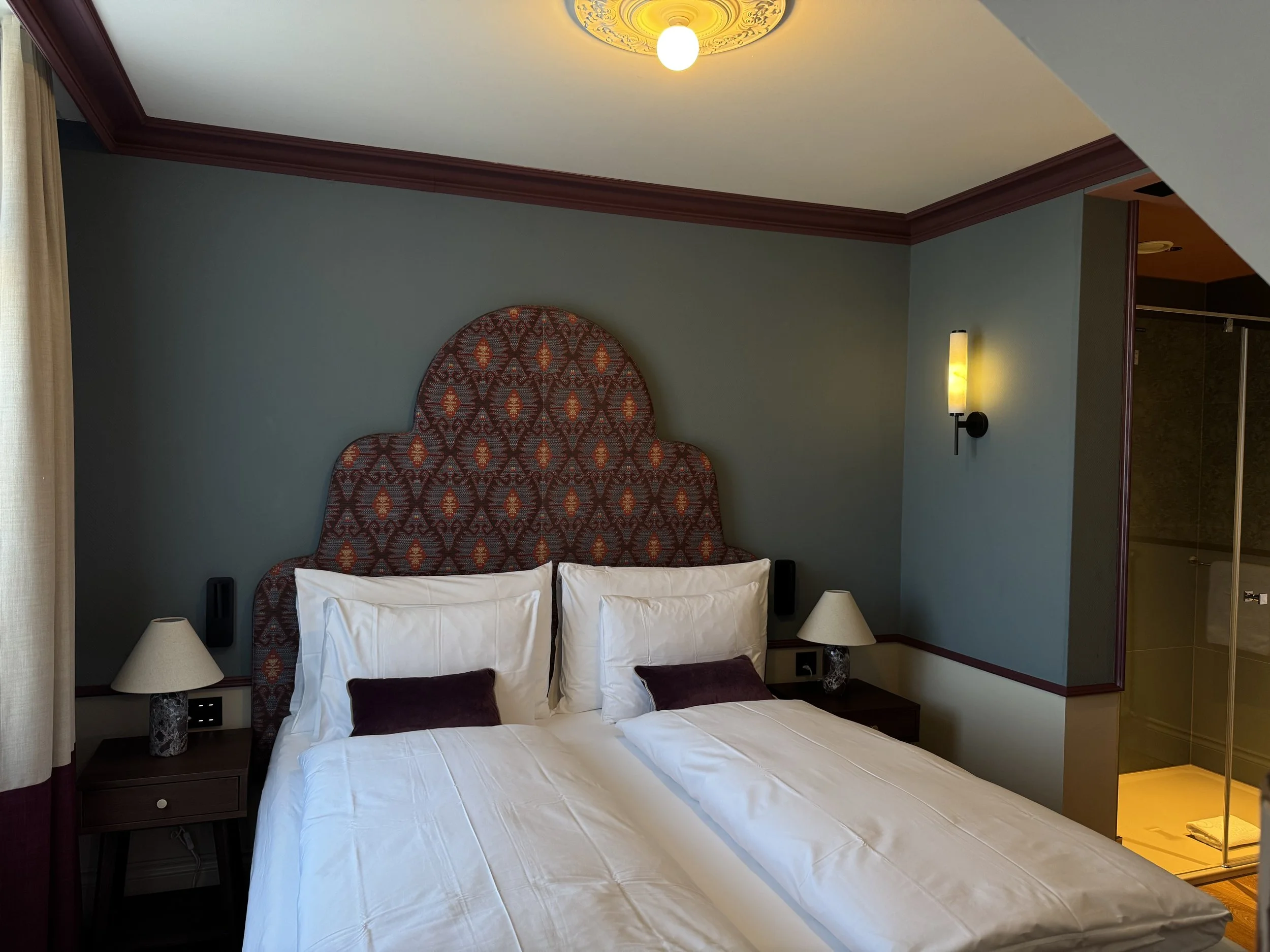
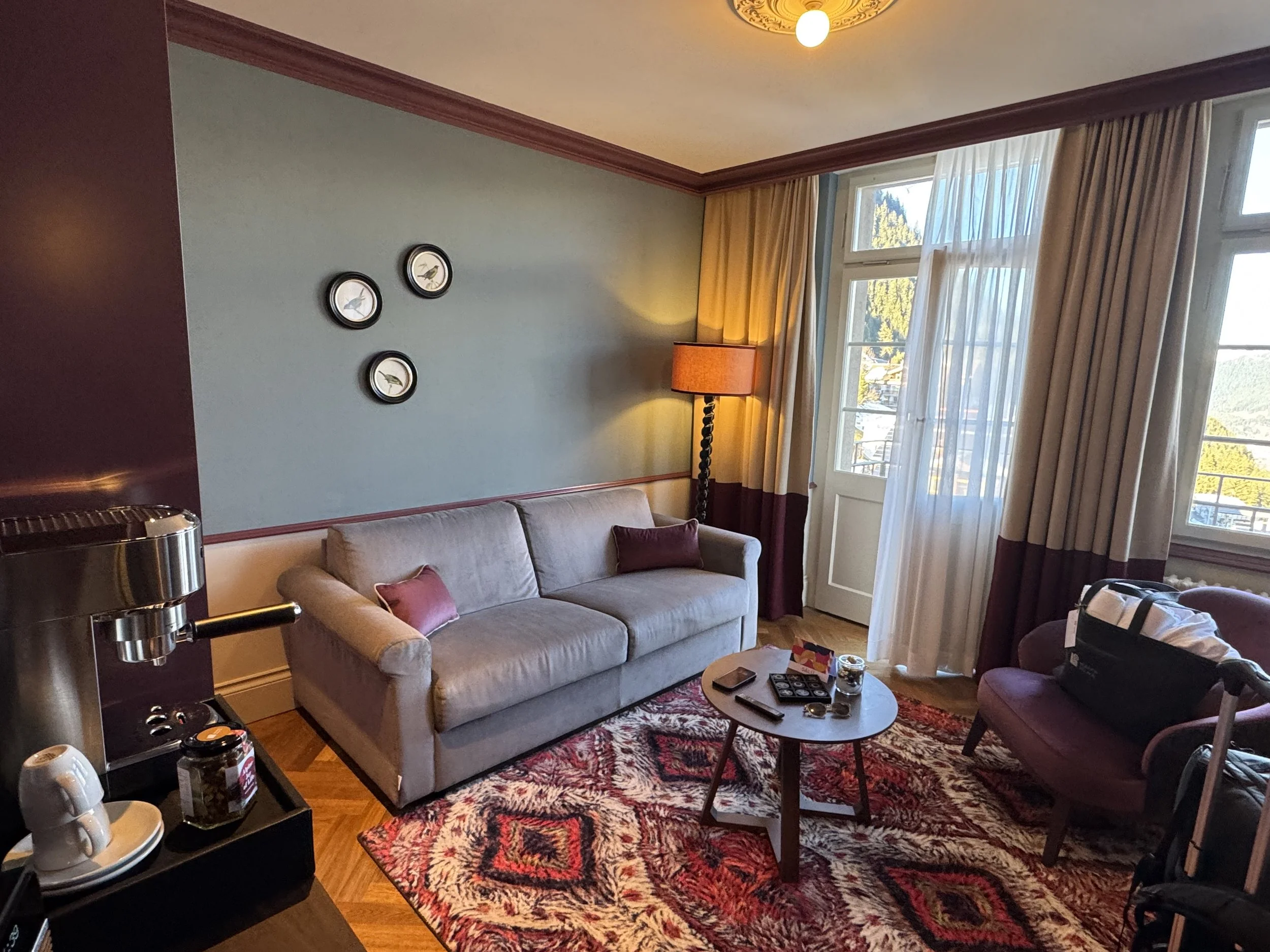
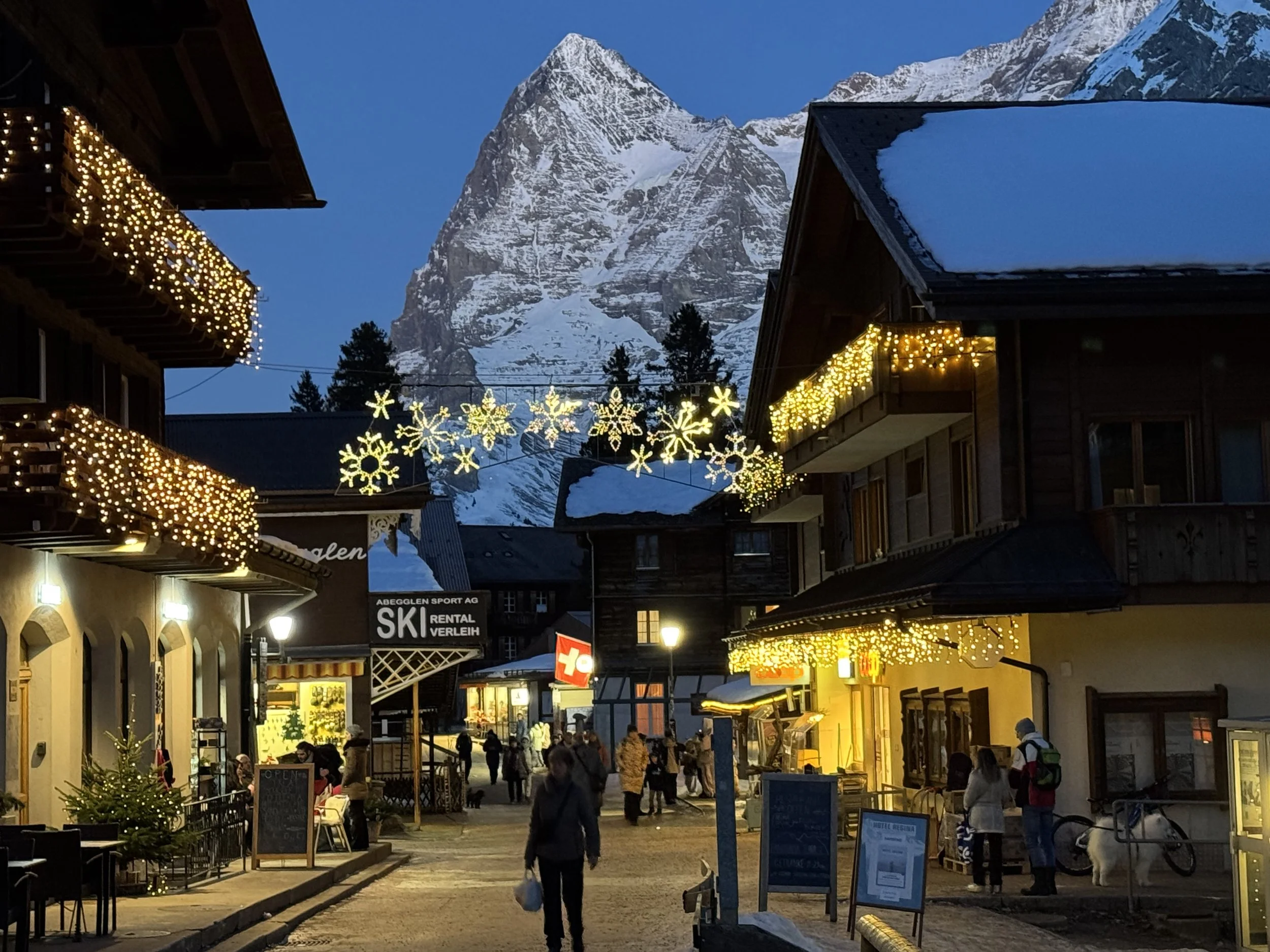
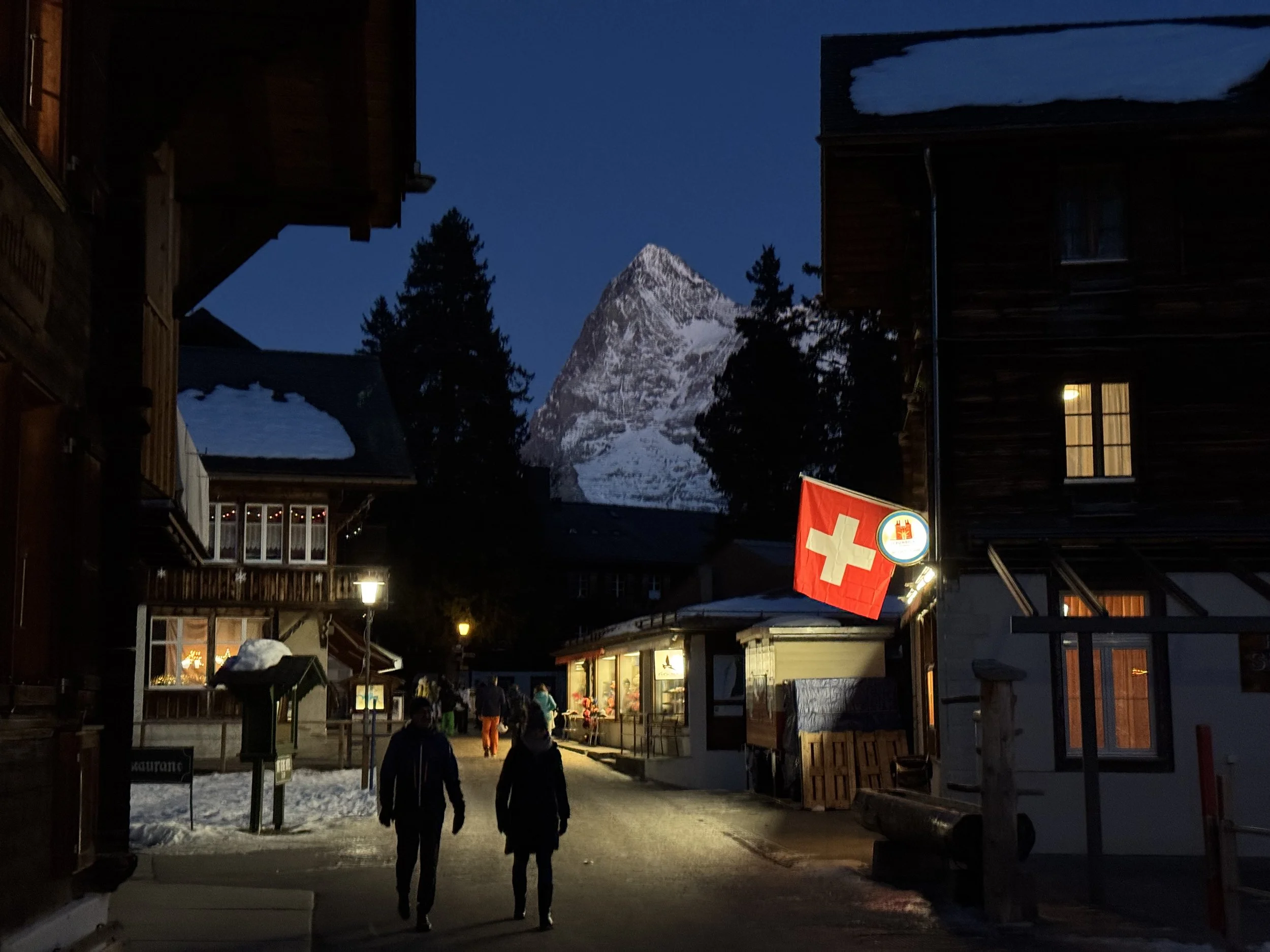
Car free, cliffside, and unapologetically scenic, you arrive to Murren by tram and train, which forces you to slow down and take in every moment of the experience. Blue hour hits in Murren and the entire village turns into a winter wonderland snow globe of my dreams. I’m pleased to report that “that” Instagram photo I kept seeing of Murren leading up to trip is in fact as good as it looks on Instagram; the Eiger front and center, framed by the Swiss flag and shops on btoh sides as you walk through the center of town.
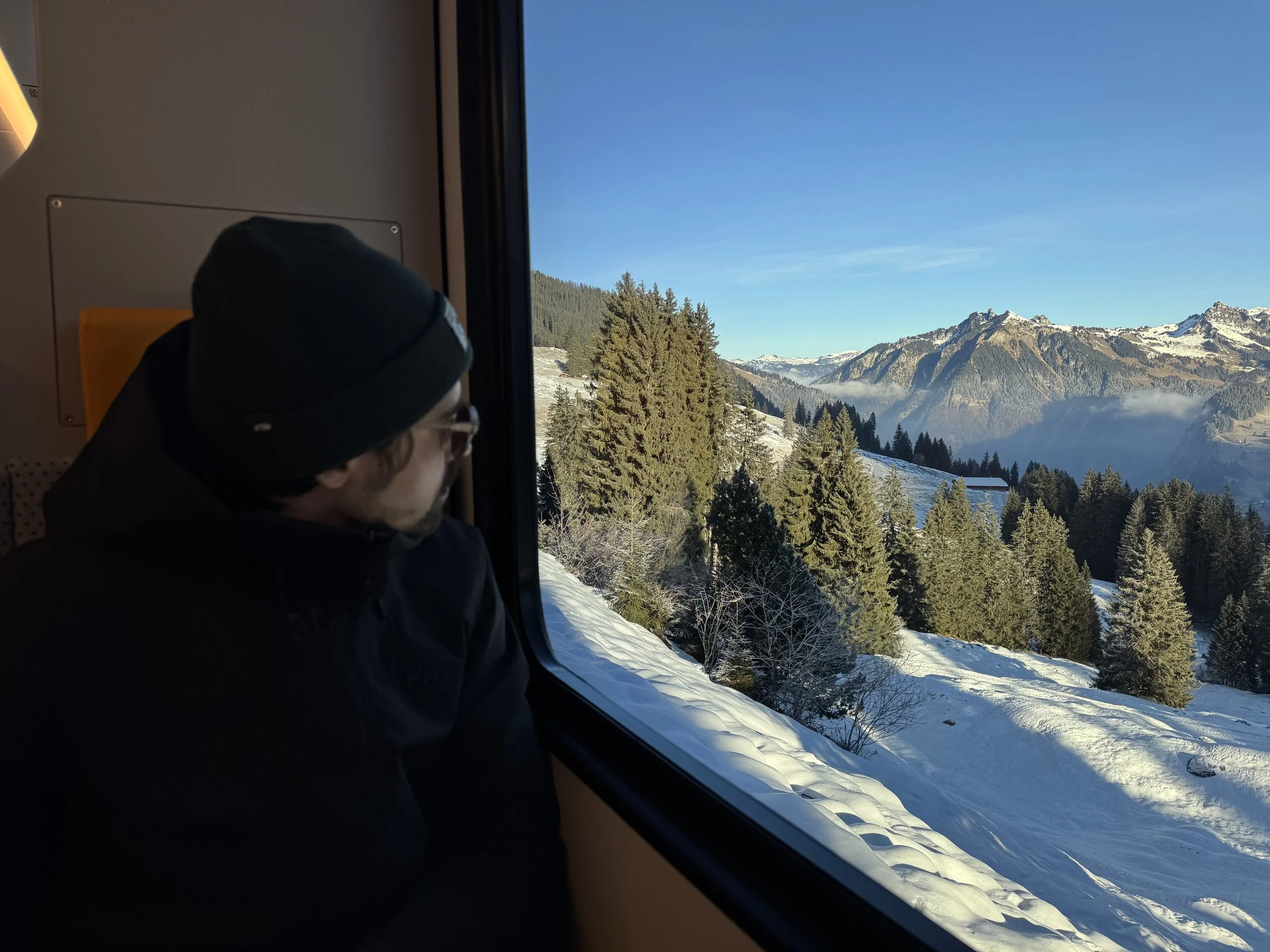
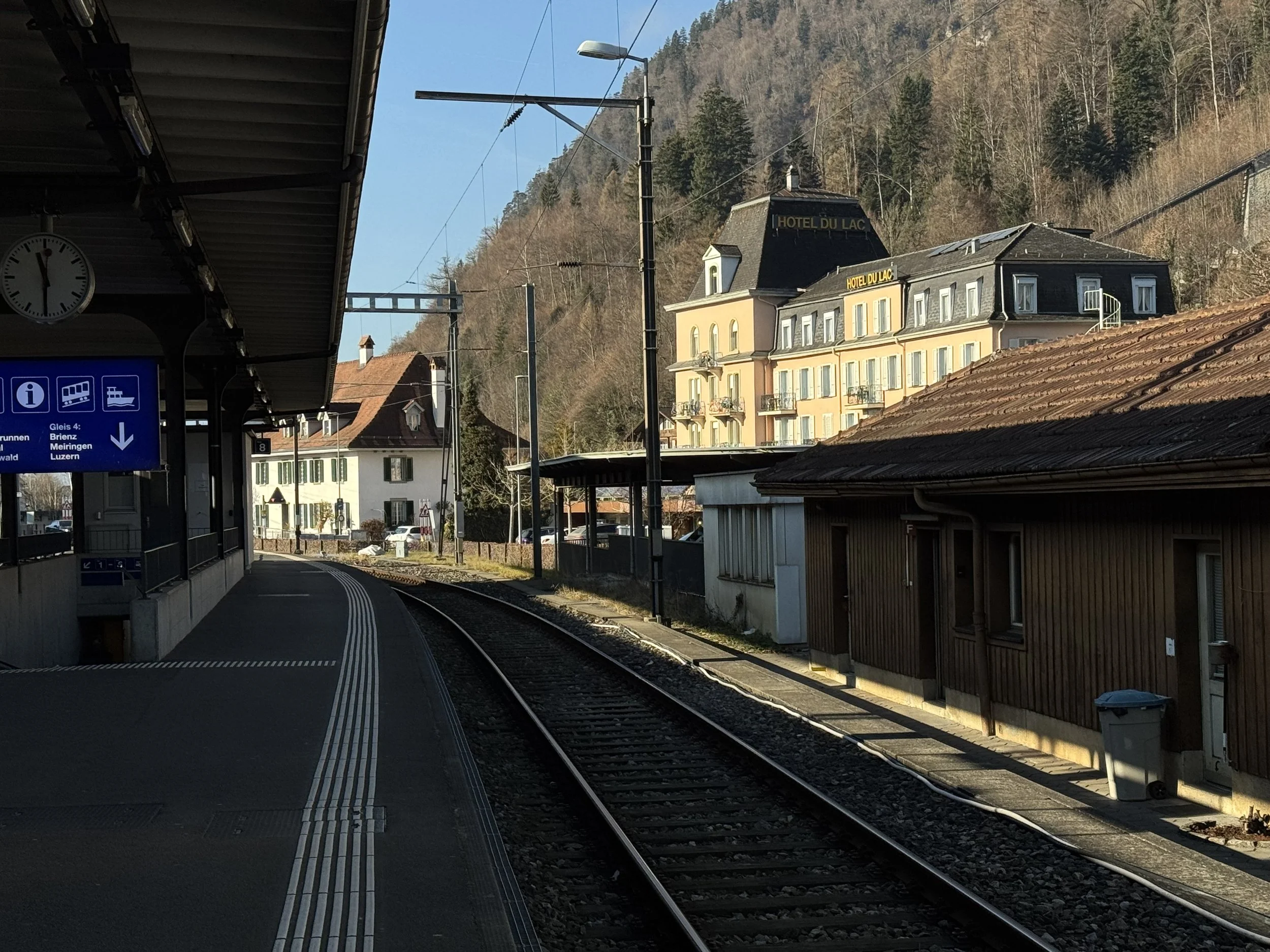
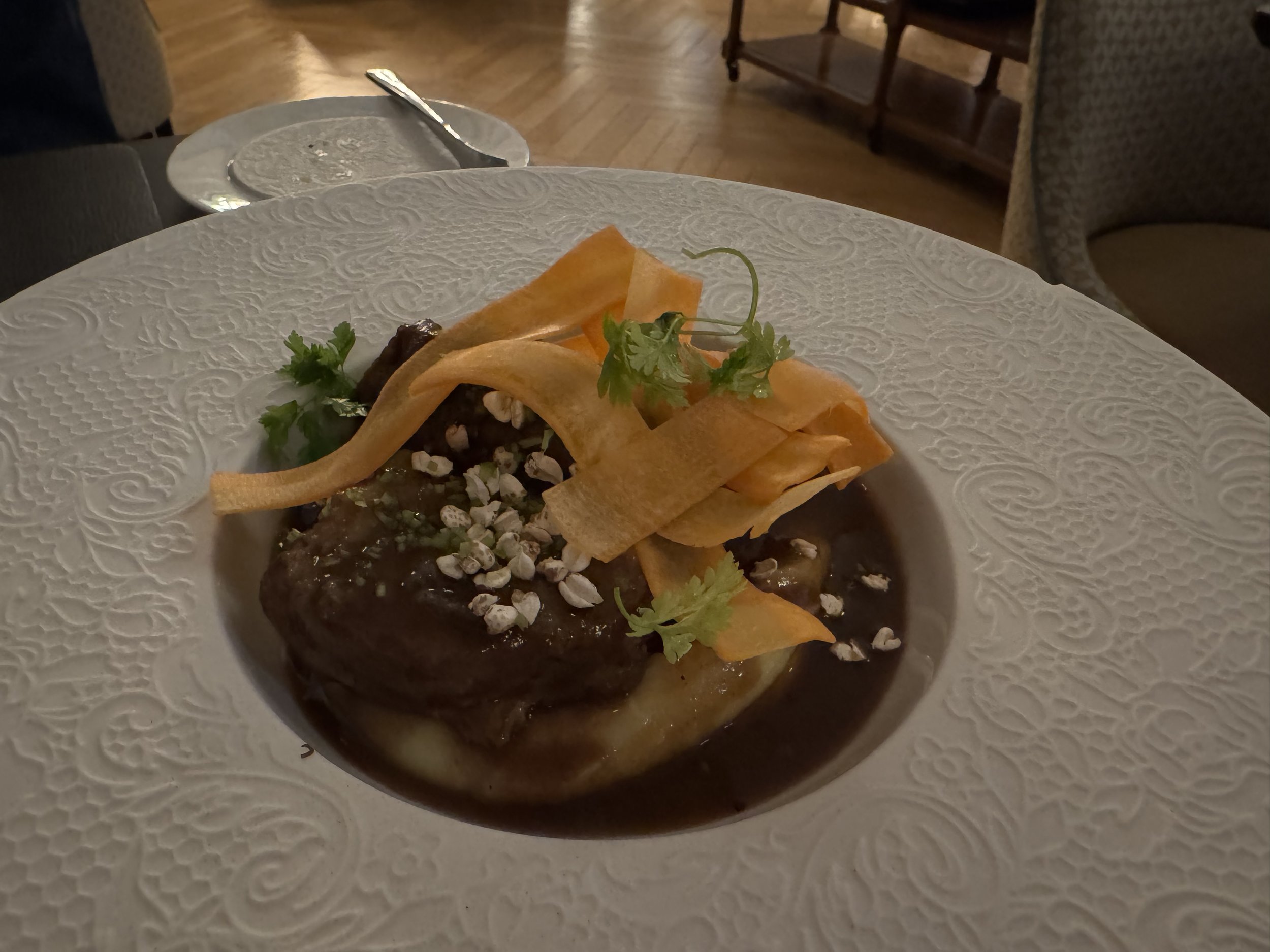
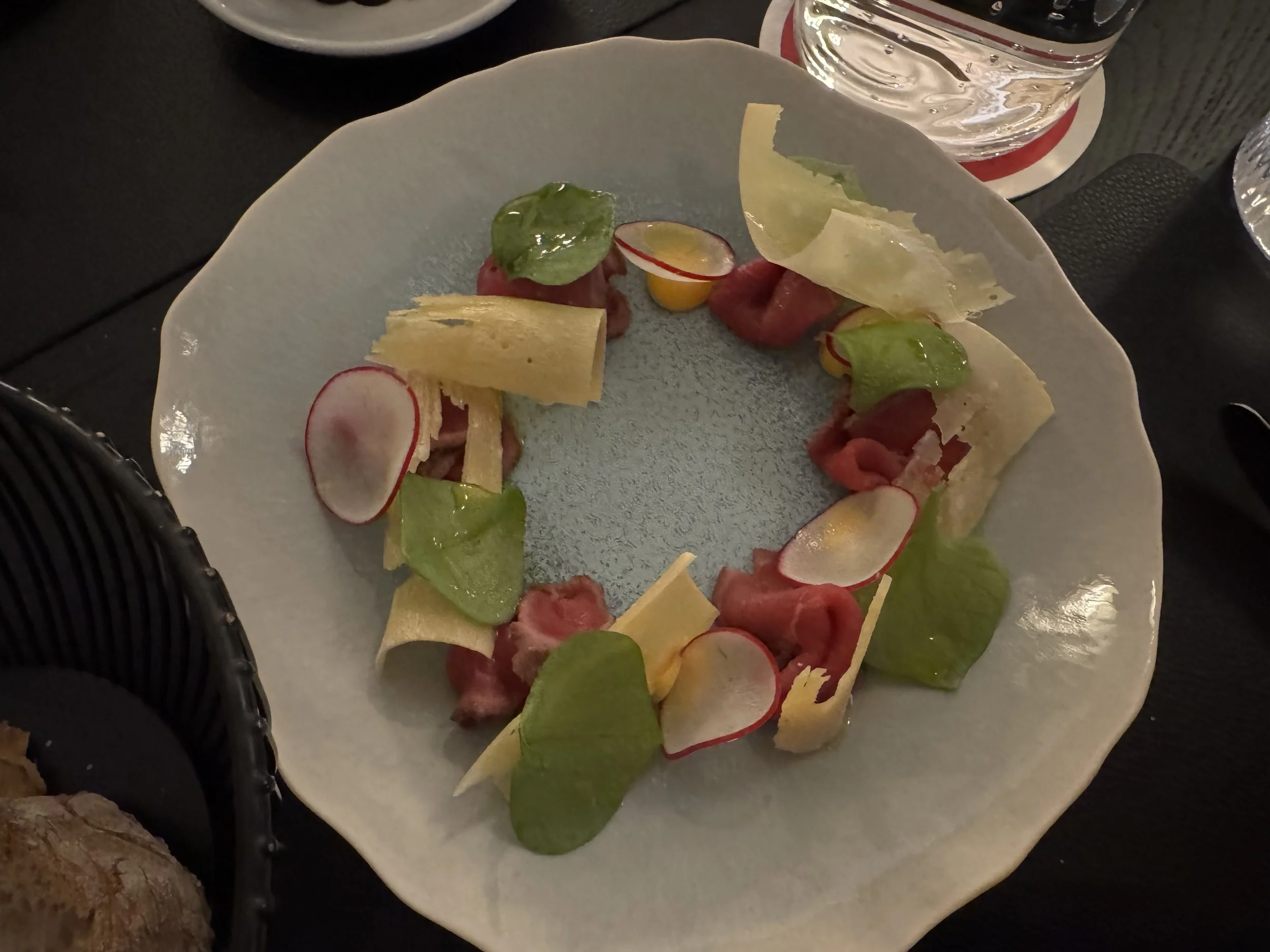
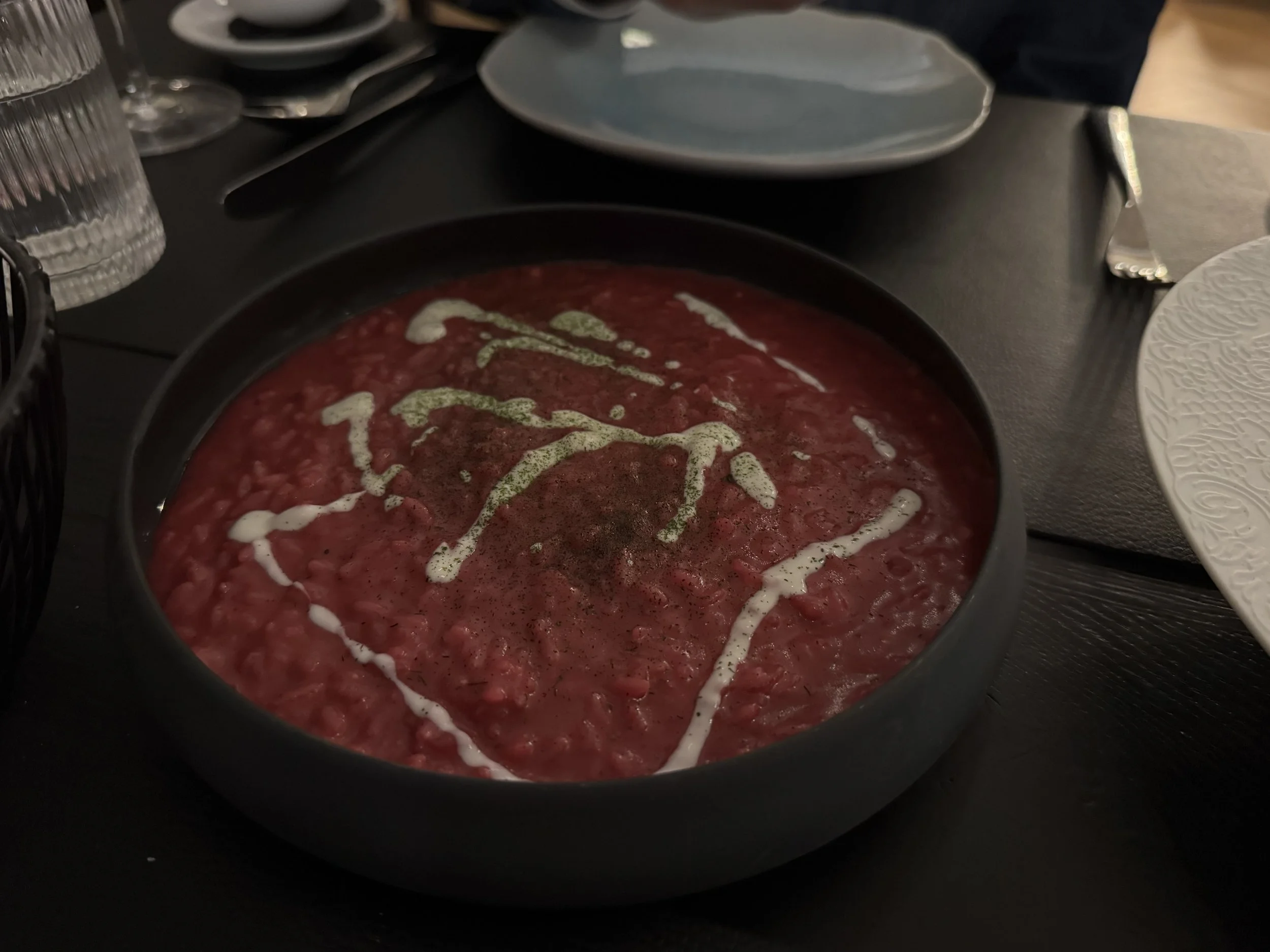
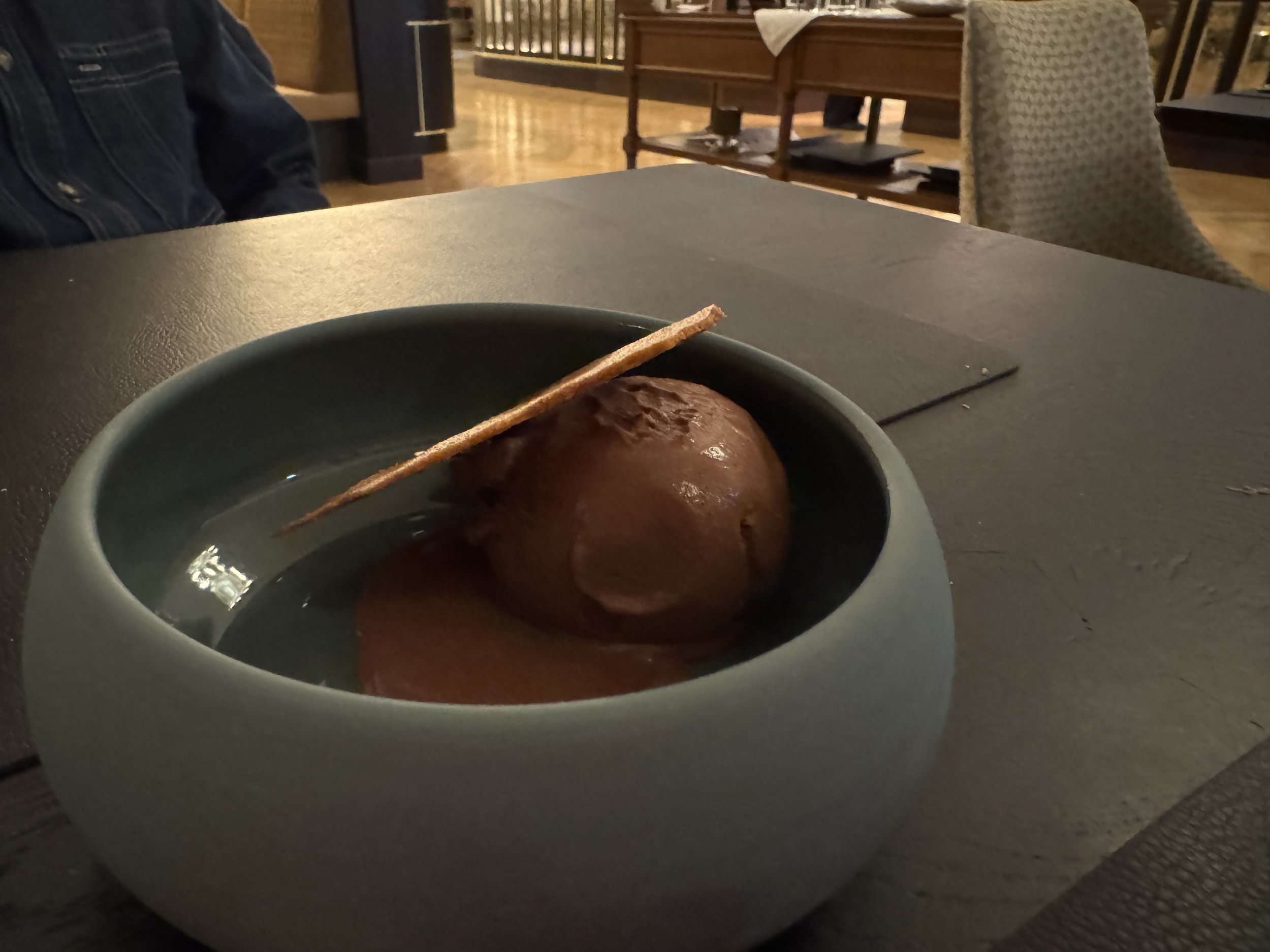
Where to Eat/Drink: Being such a small town with limited hours during the winter season, we found ourselves eating most of our meals at the incredible restaurant at the Hotel Murren Palace, so our recommendation would be just that. We enjoyed gorgeous and well-prepared beet risotto, carpaccio, and meaty dishes with desserts that were just the right amount of rich and decadent. On our last night in town, we actually opted to forego the pricy Swiss meals and simply shop at the well-stocked Coop in town for all kinds of meats, cheeses, breads, crackers and spreads, and we made a huge spread of snacks in our room, which we enjoyed whilst gawking at the mountains outside our window. We are definitely high/low people in that we love a bougie meal or two, but are also equally stoked with a nutritious, delicious homemade meal eaten whilst sitting on the floor. Both things can be true.
Things to Do: Do loops in town for steps. Pop into the many fun shops and pick up some souvenirs. And of course, do what most people come here to do: go skiing or snowboarding. They work the snow machines at night and apply Swiss precision to the slopes, ensuring they are ready each day for eager skiiers.
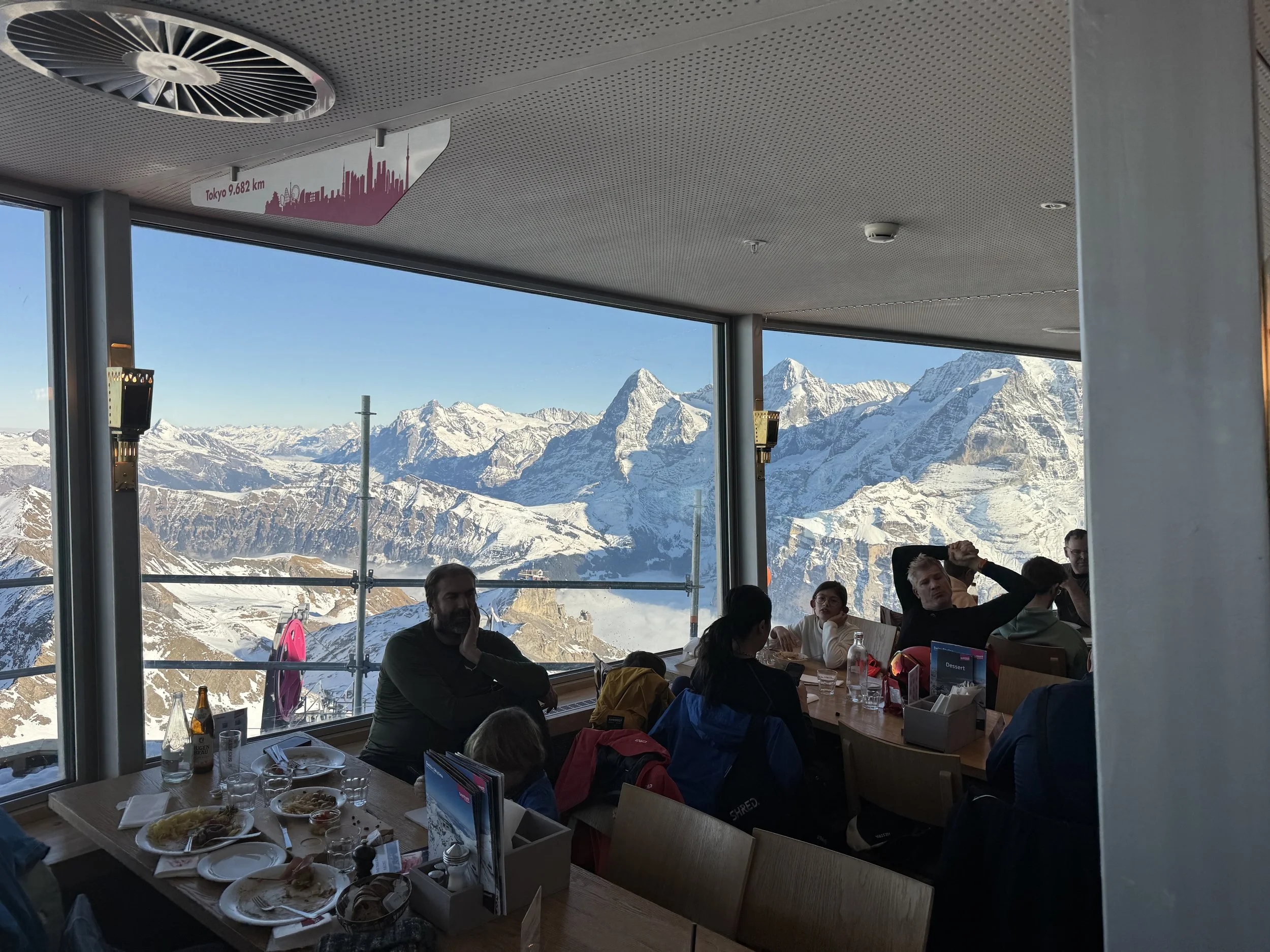
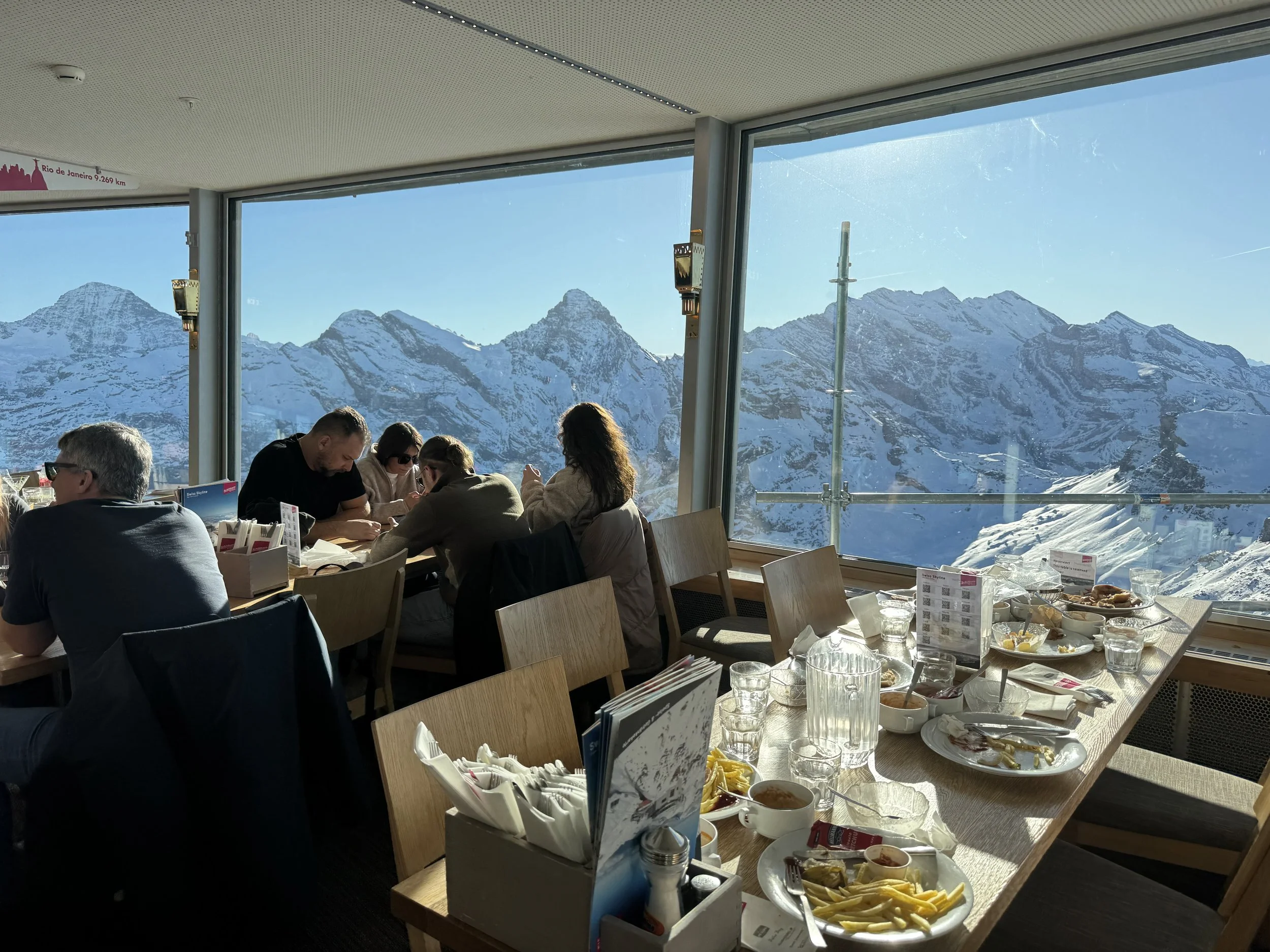
We would also highly recommend that you go up the Schilthorn funicular to the Piz Gloria restaurant, a revolving restaurant, known for its stunning panoramic views of the Eiger, Monch and Jungfrau, and its starring role in the James Bond film, On Her Majesty’s Secret Service. Surrounded by more than 200 alpine peaks and embedded in a pristine mountain environment, the Piz Gloria is located at 2,970m above sea level and you definitely feel it. Make sure you stay hydrated up there. Don’t expect anything wild in terms of food… we were pretty disappointed in the lackluster “burger” we were served, but the views more than make up for the lack of 5 star cuisine.
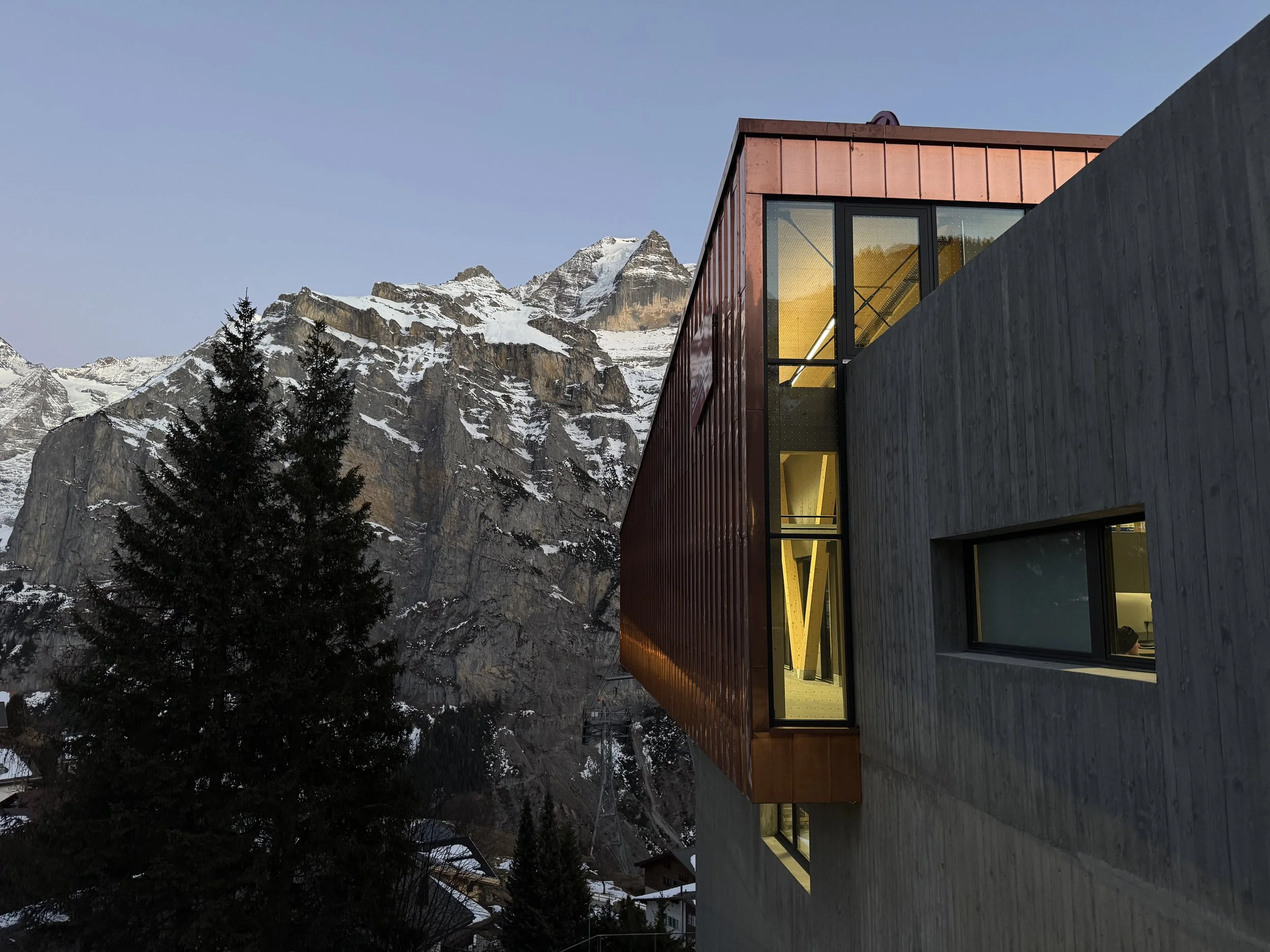
Interesting tidbits to know: Mürren faces the Eiger, Mönch, and Jungfrau. All massive, all glaciated, and also visibly receding.
Murren is also car-free. It has no road access (much like another one of our favorite Swiss towns, Zermatt), so you arrive by lift and train and once there, you’re on your own with your feet, skis, and little delivery carts. It’s part of the peace and calm of the place; no steady hum of car engines.
It also hosts a legendary ski race, the Inferno Race, one of the biggest amateur ski races in the world. It’s been running since 1928, and its an institution.
Lastly, Murren was a “fresh air” destination before that became the wellness trend it is today (funny how all of my favorite places, several on this trip alone, were all “fresh air” places for healing… I’m clearly drawn to them!) The Bernese Oberland became a major alpine tourism area in the late 1800’s and villages like Murren grew into resorts because people were chasing mountain air, rest, and the early ideas of “nature as medicine” that is now common verbiage today.
SIDE QUEST: QUICK STOP IN GERMANY
Weil am Rhein (Vitra Campus / VitraHaus)
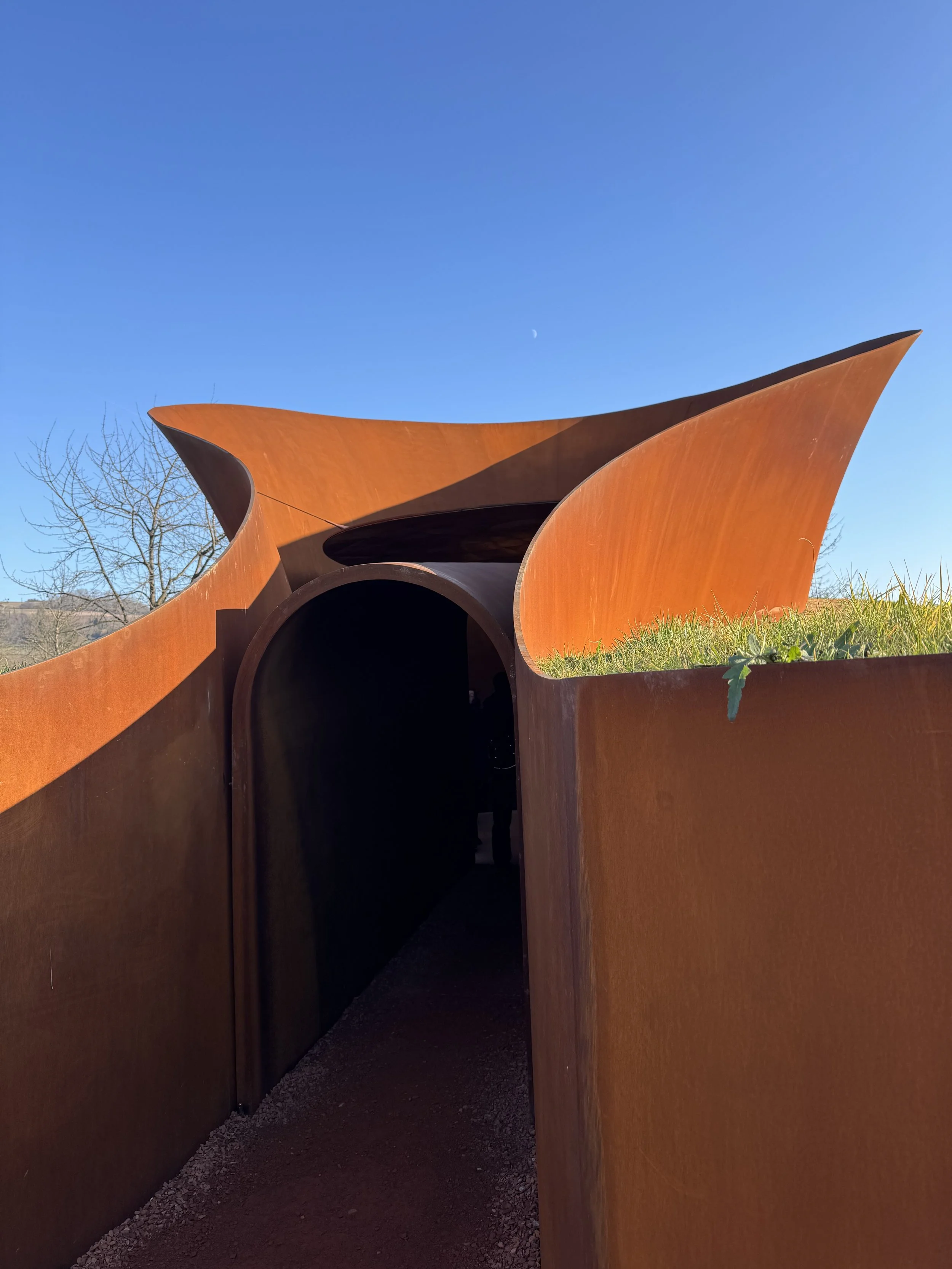
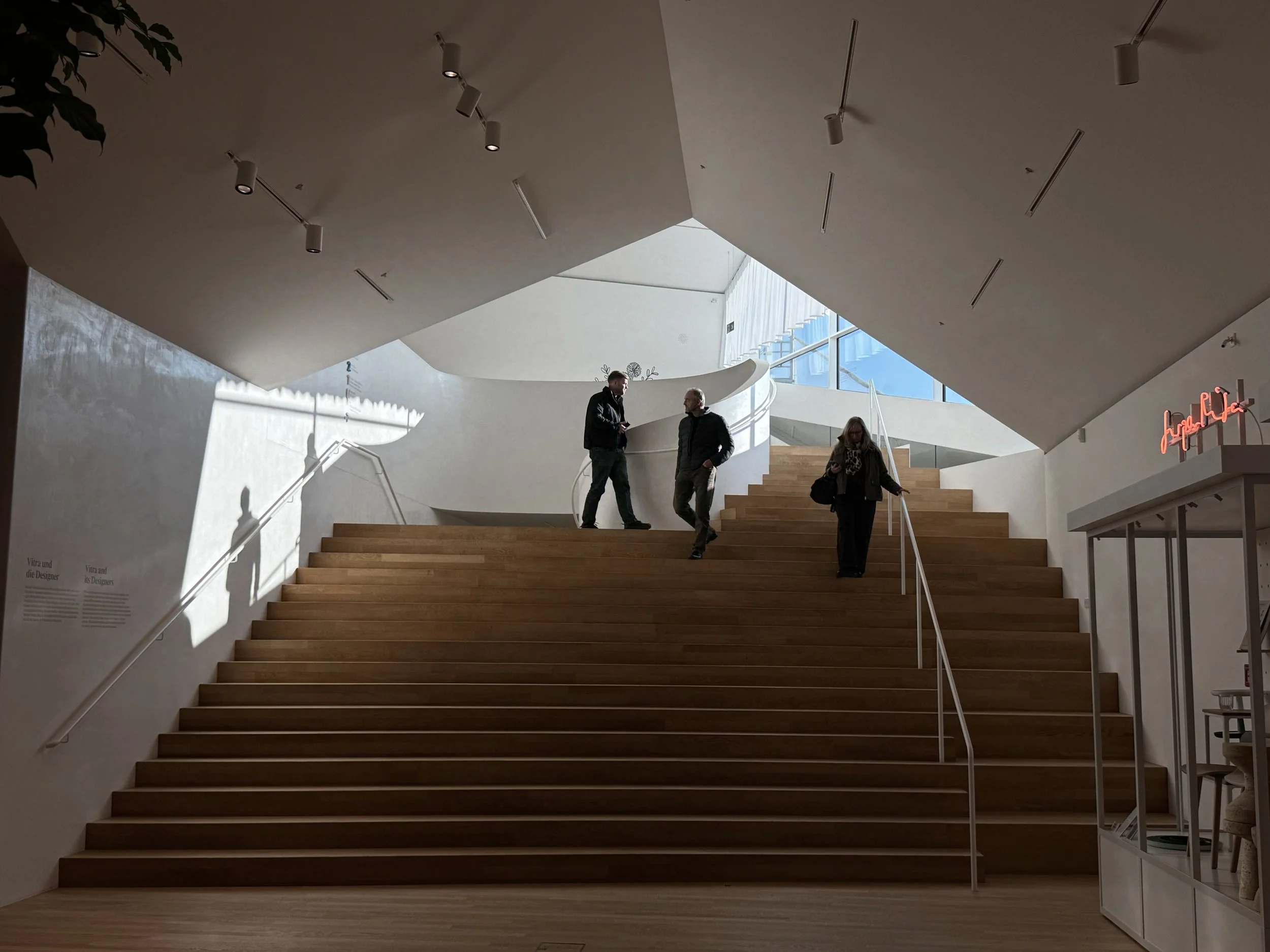
We almost didn’t include this recc, but we would be remiss if we didn’t tell you that it was well worth a side quest to visit VitraHaus on your way from Switzerland to France in Weil am Rhein, Germany. From the outside, the structure looks like someone stacked a handful of long gabled house shapes on top of one another, then rotated them until the angles felt just right. Inside the structure itself, it is part museum, part showroom, part permission slip to totally geek out like the design-loving nerd you are (like me!) You move through staged, curated rooms that are clean but don’t feel hospital level sterile. They are each done with intention, and left me feeling inspired as I moved through each space, finding elements of light and dark and textural inspiration that I’d surely bring home to my own living space.
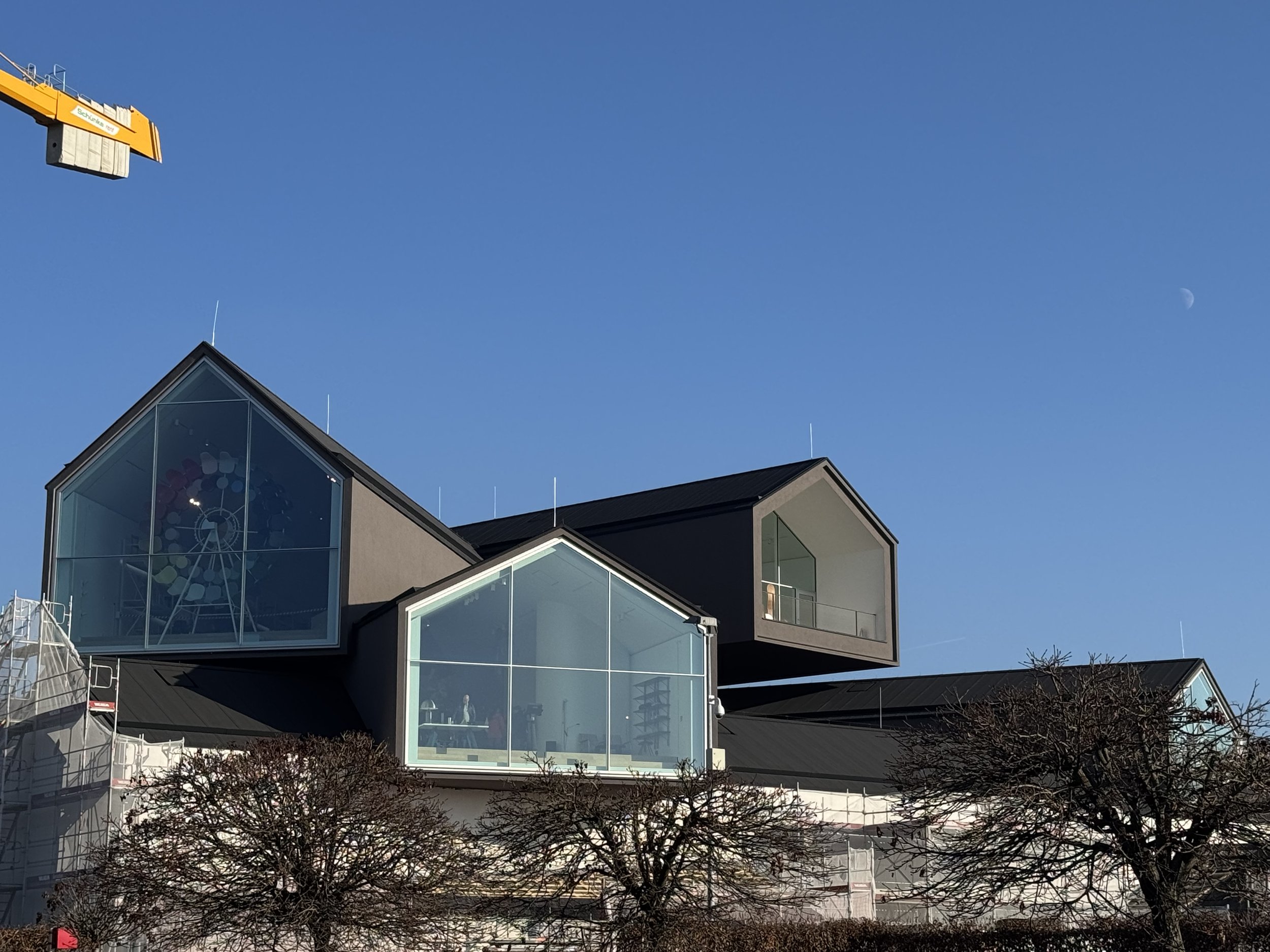
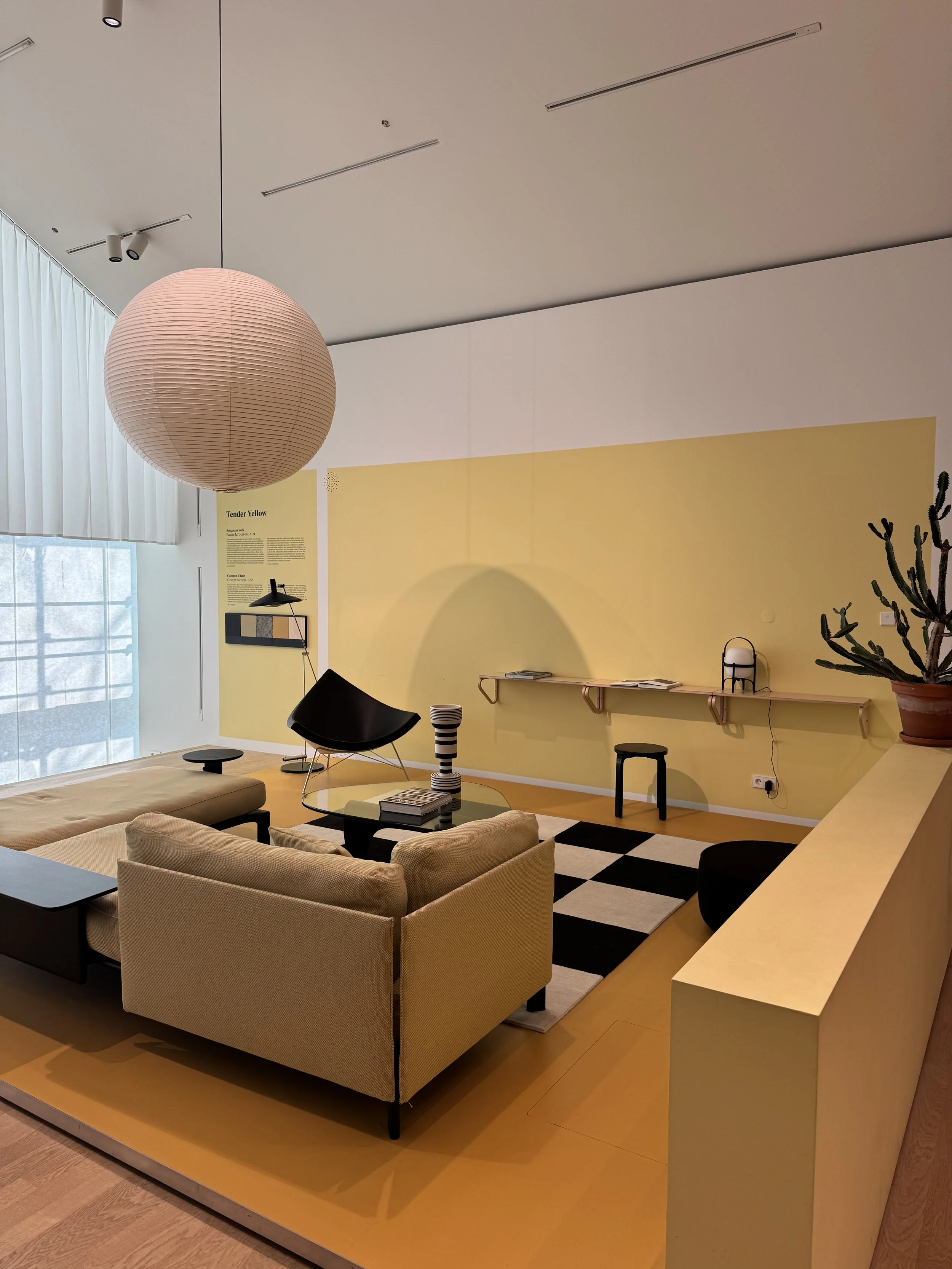
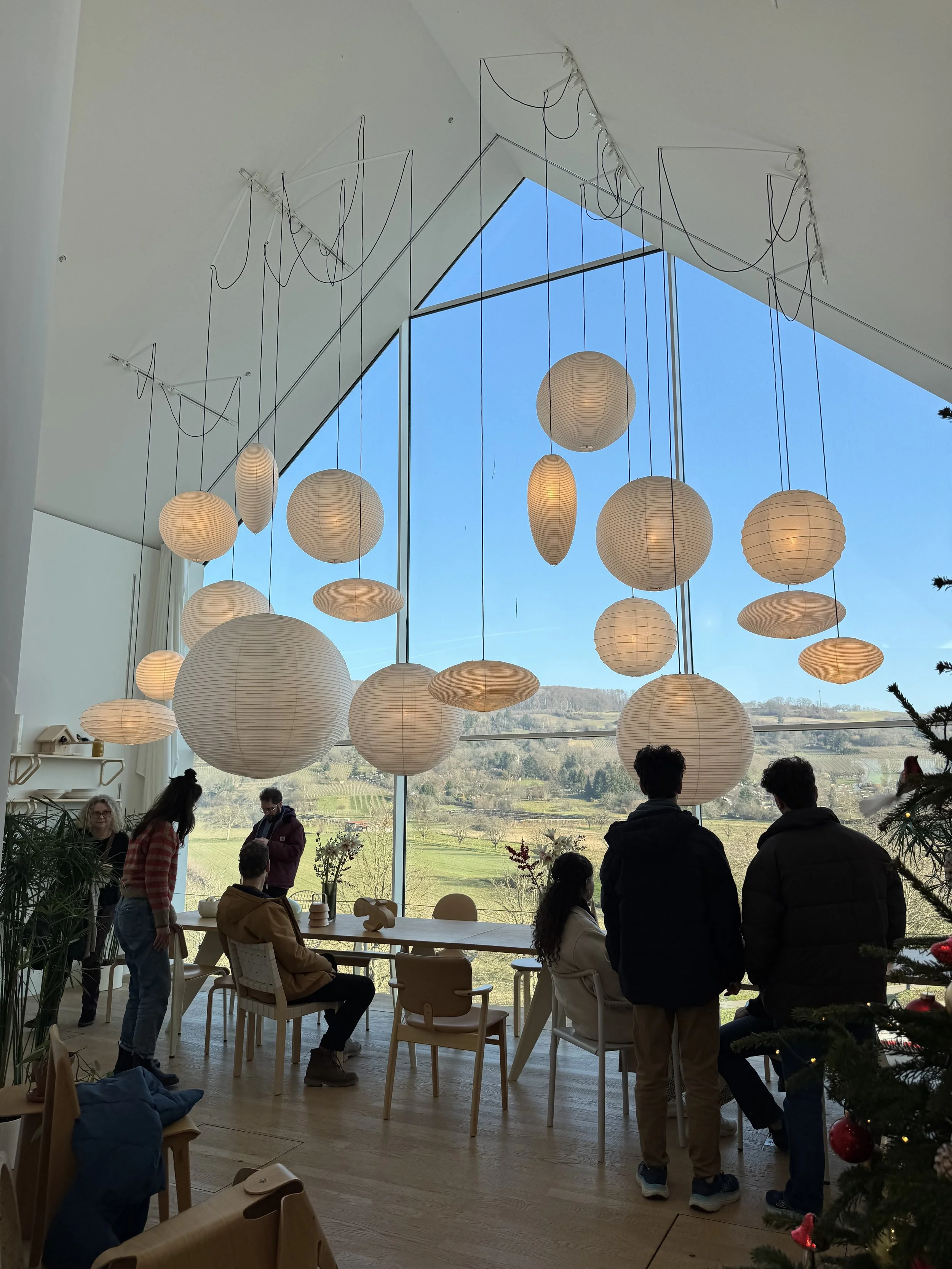
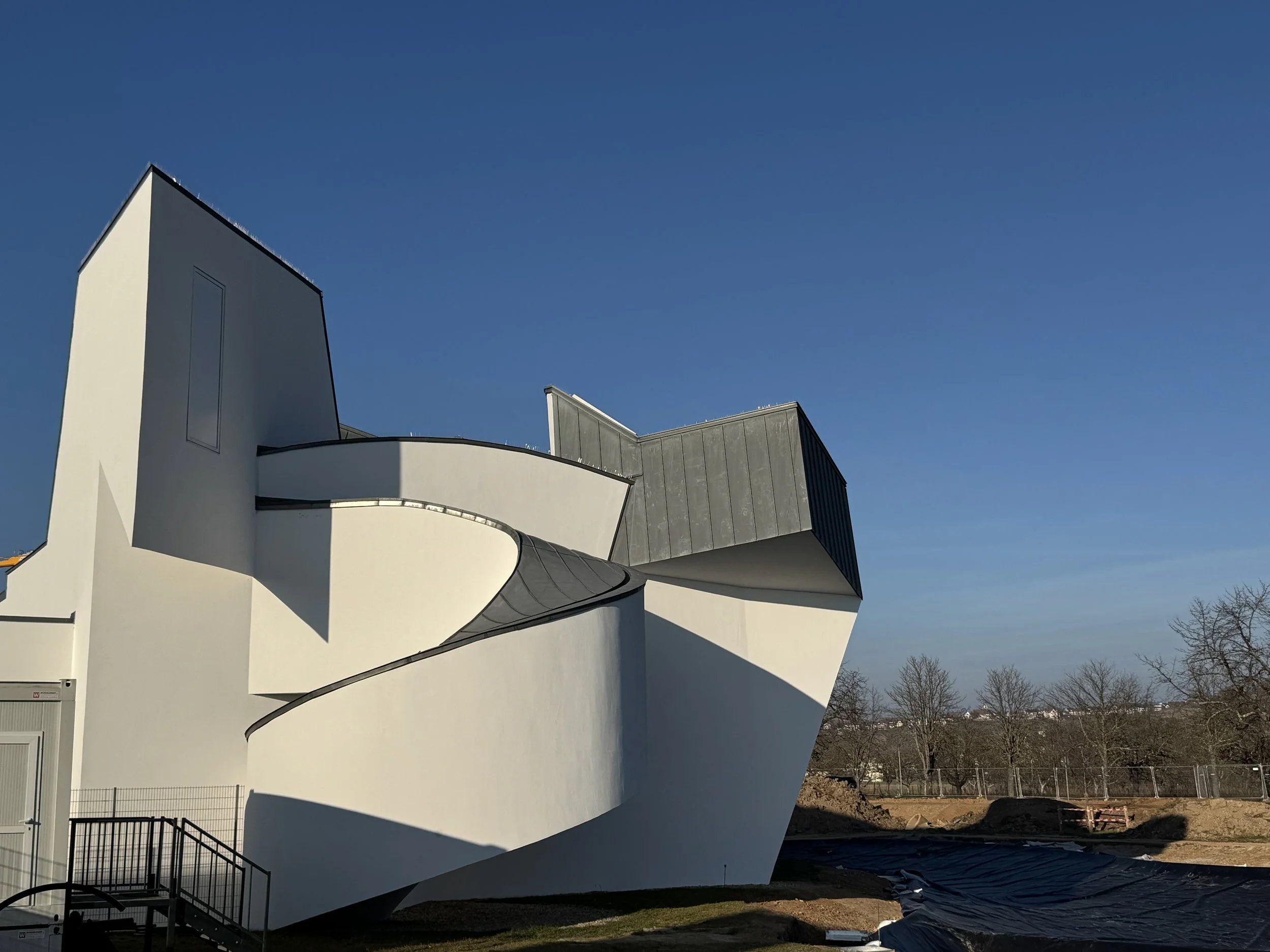
The campus itself became a living timeline of modern architecture after a factory fire in 1981 pushed them to rebuild, and instead of doing the sensible thing, the owners chose to do the iconic thing: they invited well-renowned architects to make statements with the rebuild. Frank Gehry amongst them, his building anchors the entire campus with his quintessentially Gehry Vitra Design Museum building, which opened in 1989 as his first project in Europe. It draws on Gehry’s classic form, which incorporates buildings that appear in motion. White curves, sharp edges, and controlled craziness - it’s Gehry alright. It’s expressive, inspired, and overflowing with personality. Our only regret is that we didn’t have a whole day to spend here, as it was easily worthy. If you can help it, try not to make our same mistake.
FRANCE
ALSACE
Colmar
Where to Stay: We would actually recommend using Riquewihr as your home base for Colmar. It’s a fair bit quieter, less touristy, and smaller… in a good way, and we really enjoyed leaving the craziness of Colmar especially during the holidays for a more relaxed evening stay. As we will get to in the Riquewihr section, we absolutely loved our stay at the I Love Riquewihr accommodation we found on AirBnB. It was homey, cozy, and the owner Jean-Paul Krebs is like an encyclopedia filled with local tips and excitement for the area which he is thrilled to share. His website alone is the best I’ve ever seen of endless recommendations for the area, from a local’s POV. If nothing else, start there!
Where to Eat/Drink: We have a very short but excellent list of recommendations for Colmar. We loved Restaurant La Soi, L’Un des Sens (still thinking about the Dragonbull Muscat pet nat and Einhart Contemplation macerated Riesling we had here!), Pepin, and Sezanne, the wine/food shop recommended to us by a local famed winemaker Pierre Groger. Sezanne’s wine shop is dangerous for any natural wine lover. It’s the kind of ‘we will just peek’ place that becomes ‘should we ship a case home’ in five minutes. Don’t say we didn’t warn you.
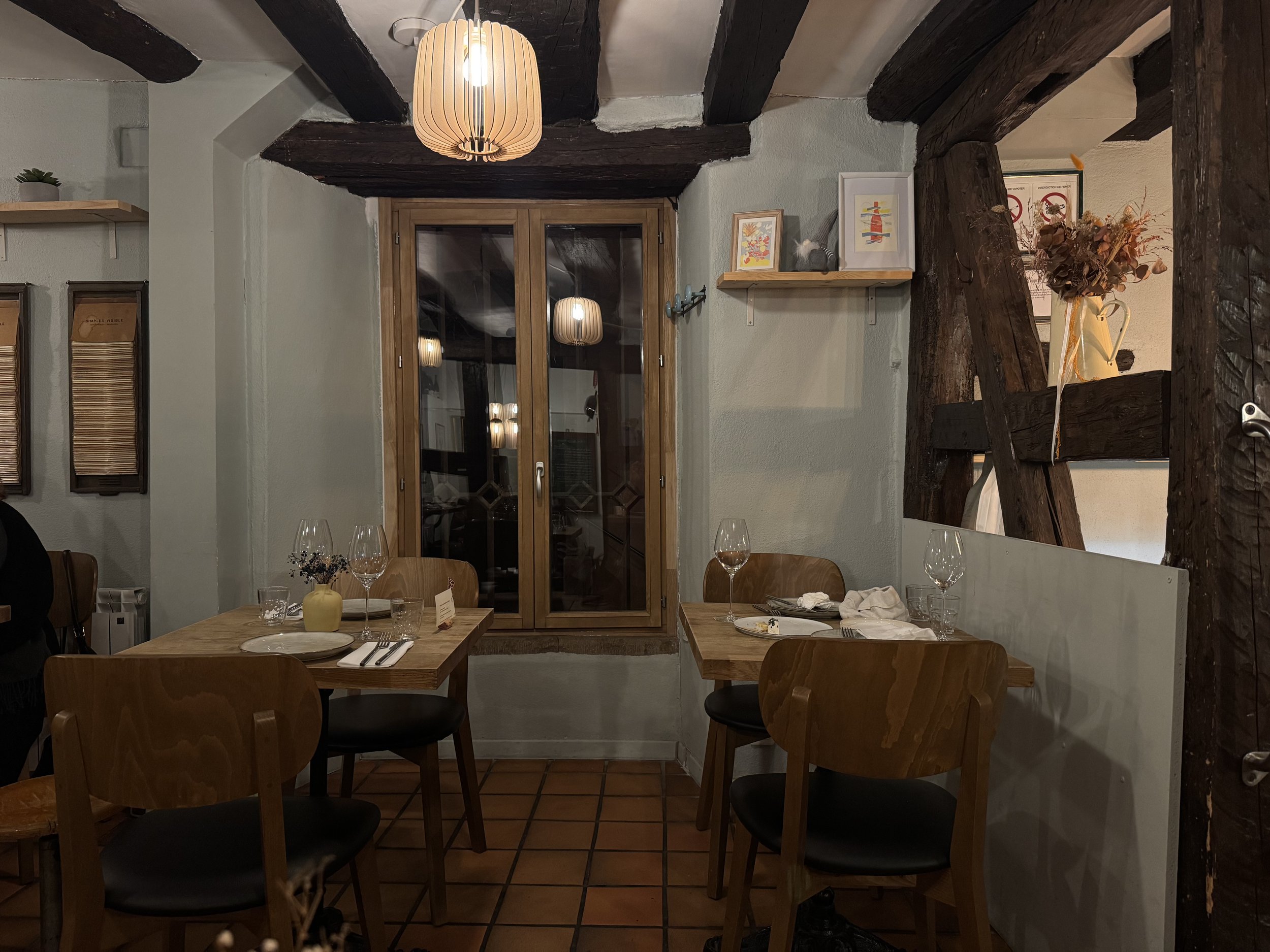
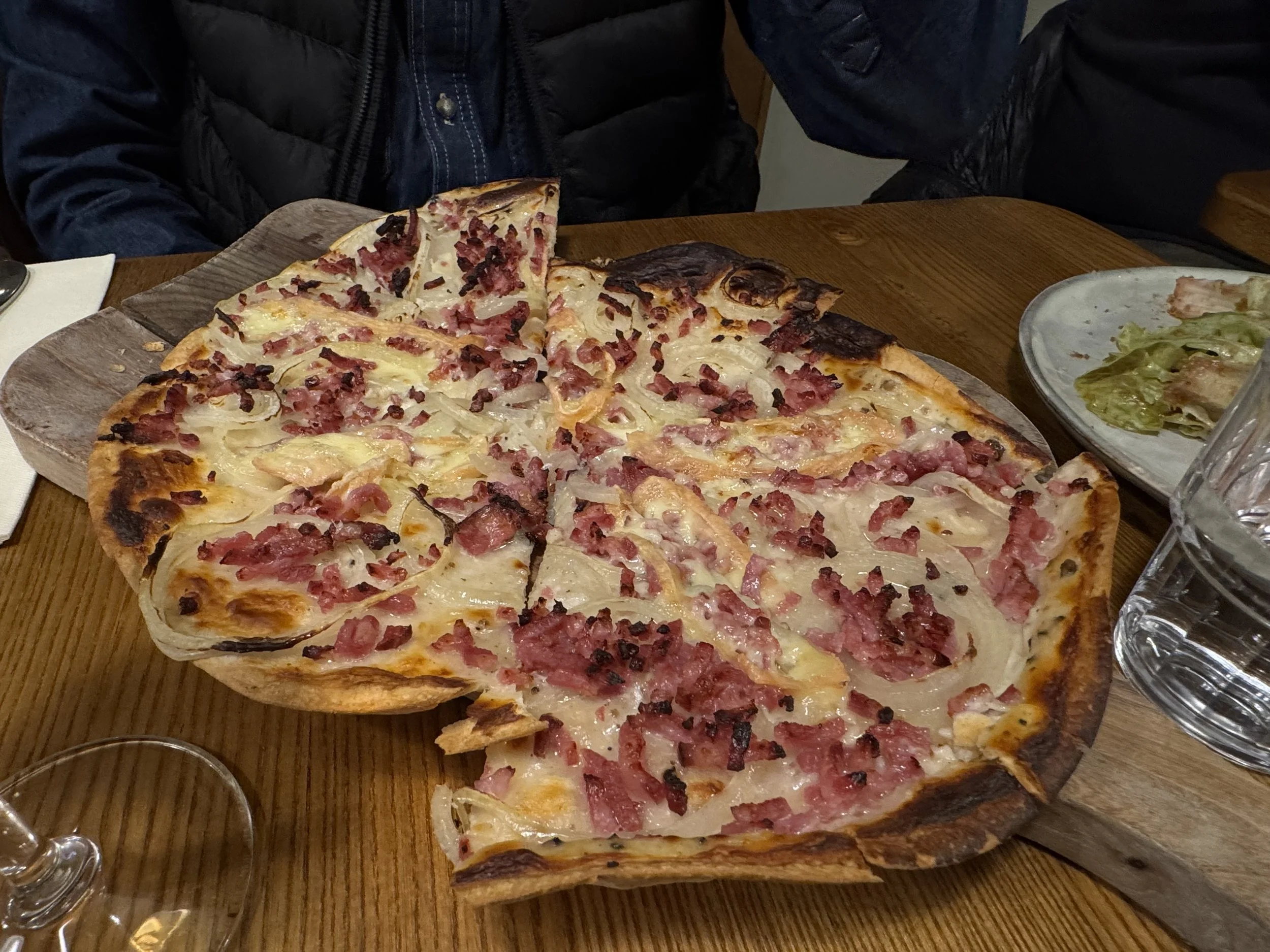
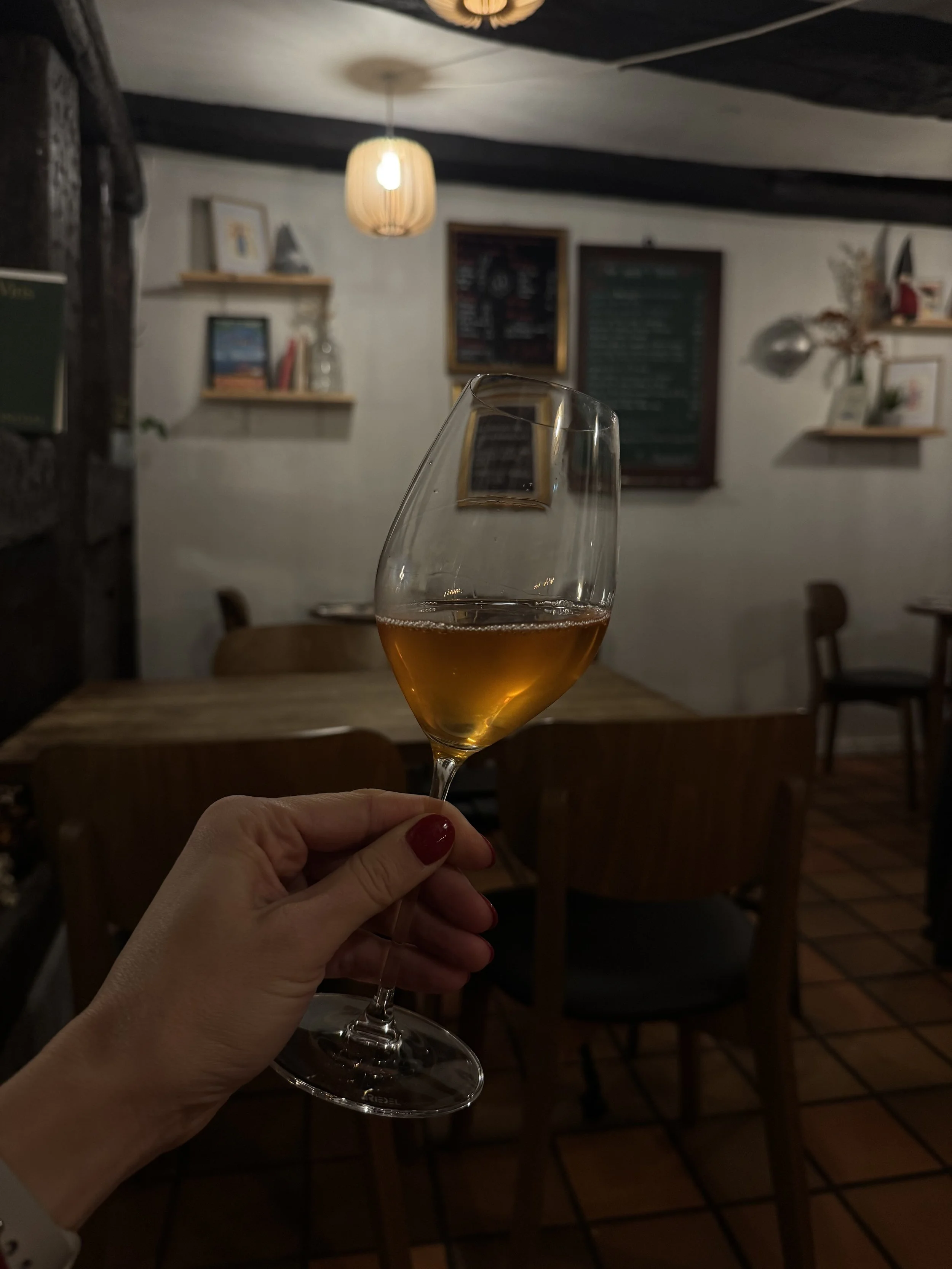
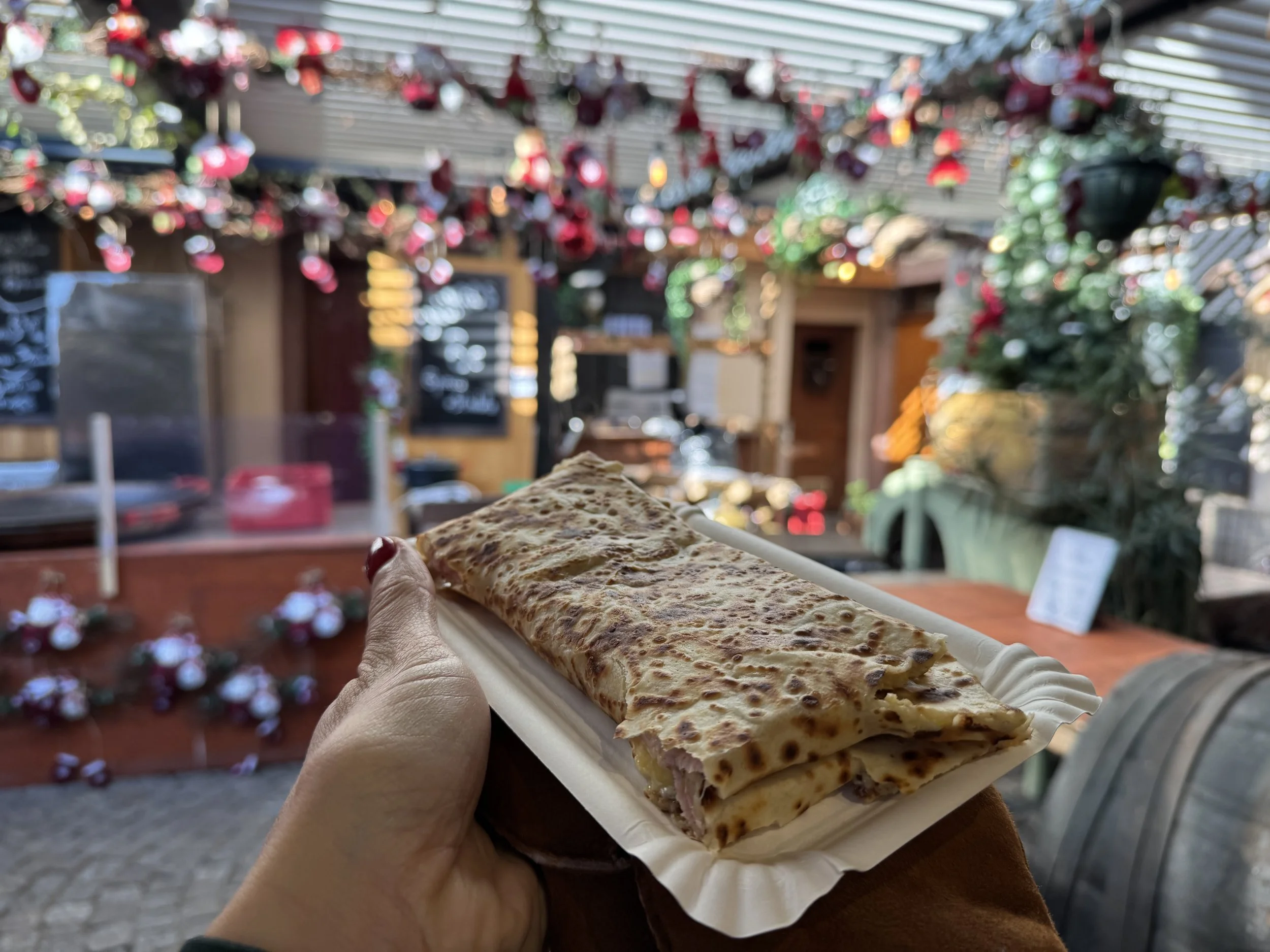
You cannot visit Alsace without indulging in as much flammekuechen as you can fit in your belly, and of course we are big fans of natural wine as an accompaniment, so we chased these as much as possible. Flammekueche, for those of you that don’t know, is Alsace’s answer to pizza, but it is thinner, crispier, and somehow even more addictive. Think paper-thin bread dough baked at high heat until it turns into a crackly, blistered flatbread, then topped with creme fraiche or fromage blanc, sliced onions and smoky bacon. The edges get shatter crisp, the center stays just slightly tender, and the whole thing eats like a savory pastry. I first had flammkueche when I was in Alsace about 10 years ago and hadn’t stopped thinking about it since. It’s that good.
Things to Do: Colmar at Christmas is basically Christmas thrown up on a town, respectfully. Markets everywhere. Wild light setups. People everywhere. Walk the canals at twilight, as Colmar does best at the in-between hour. Pop into shops without a plan, stumble into a wine cave, pay close attention to all of the Christmassy decorations and adornments on the windows. There is truly nothing like it.
Interesting tidbits to know: Parking was shockingly easy both days. Just follow the signs to central, and make sure you pay your very reasonably priced parking ticket before you leave the garage.
Colmar is one of the best preserved old towns in France and a lot of what you see when you wander the cobblestone lanes is genuinely medieval and Renaissance-era. The half-timbered houses aren’t just cute, they are structural, and many of them were originally built by merchants who got rich from the region’s wine trade. It’s also why the buildings feel so proud and decorative.
The town sits right on the edge of the Vosges mountains, which is a big part of why Alsace wines taste the way they do. The Vosges create a rain shadow that makes this one of the driest regions in France, which leads to long, slow ripening and wines with clean, crisp minimal energy. The landscape is doing the heavy lifting here.
Colmar also has an area central to town called “Little Venice” or “La Petite Venise”, which are real canals due to the fact that it was a trading town, and those waterways were used to move goods throughout the city. Today they’re lined with flower boxes and pastel facades and tourists, but the reason they exist is practical, not aesthetic.
One last interesting historical detail: Colmar was historically a Free Imperial City under the Holy Roman Empire before bouncing between German and French control over the centuries, which leads Alsace to feel very hybrid. You can see it in the architecture, the language, and definitely the food. You can jump from something that feels very French to very German over the course of one meal, and a culinary journey sometimes feels like a borderless adventure.
Riquewihr/Kaysersberg
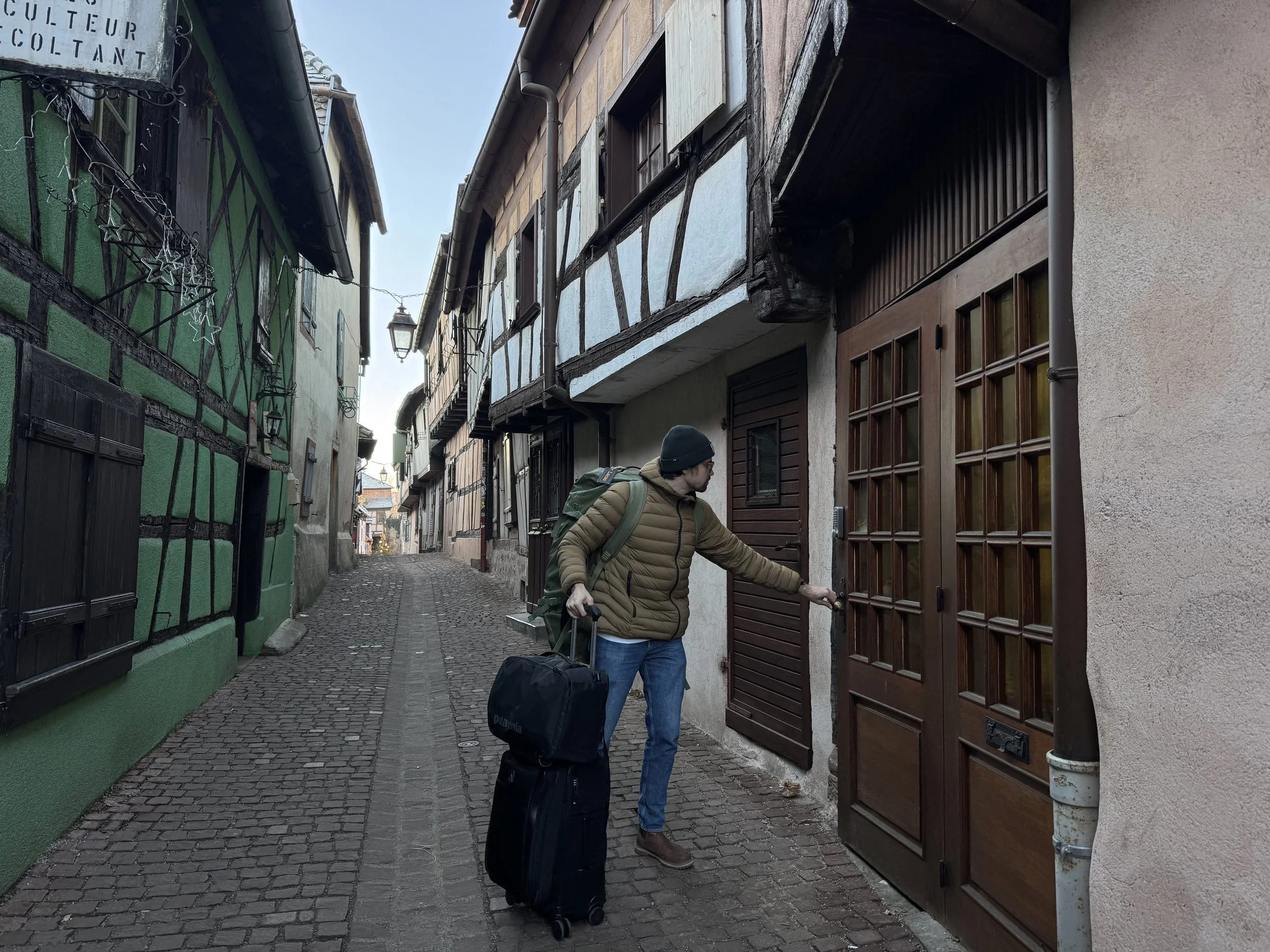
Where to Stay: I Love Riquewihr apartments, as stated above, are easily our top recommendation for a stay in Alsace.
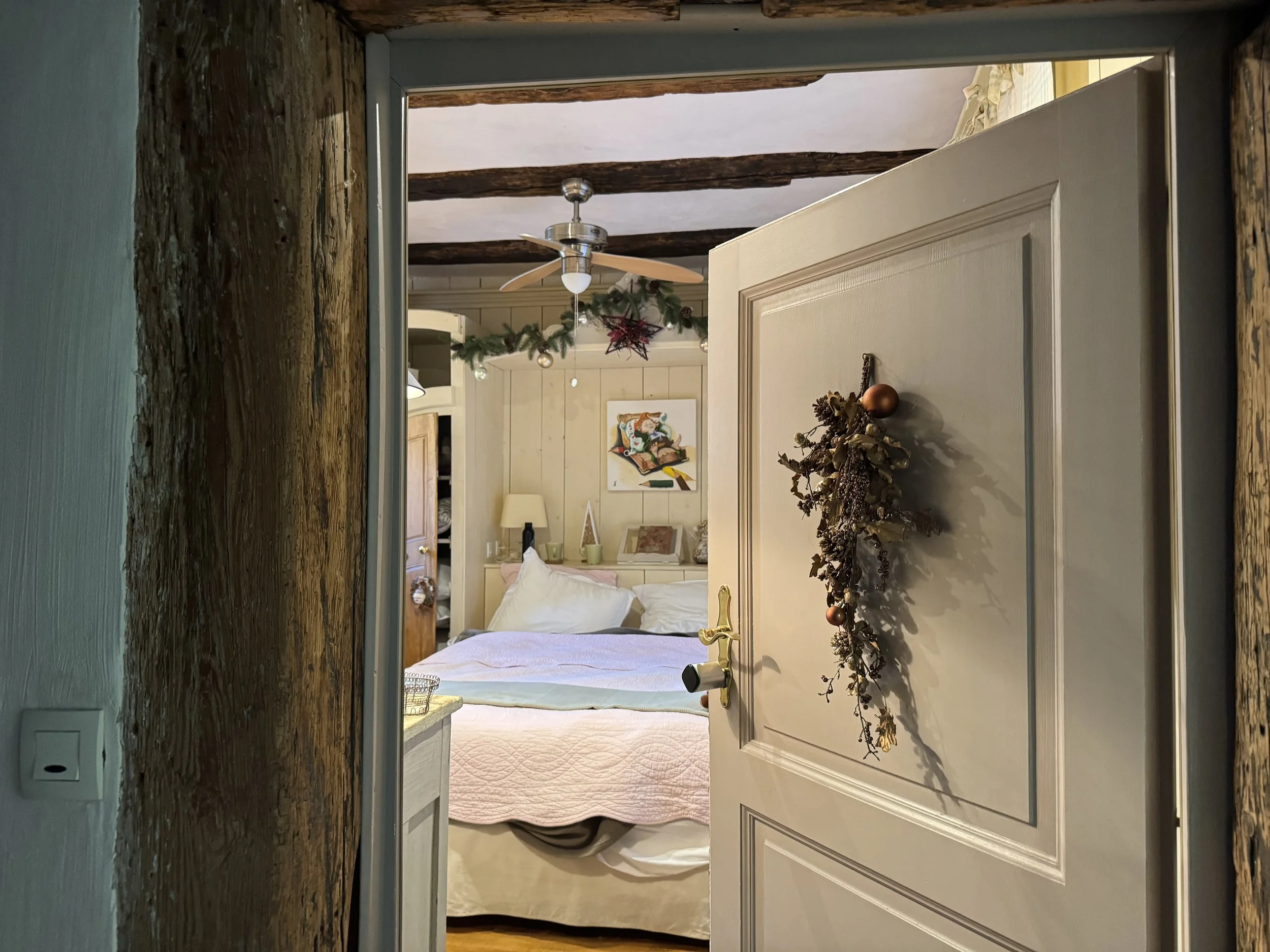
If you’re into a home base that feels both practical but also a little magical, this would be it. There are multiple options (you’ll see them pop up on AirBnB as well under variations of the same name), and they make winter travel so much easier: they’re warm, comfortable, and actually functional. After long days of walking cold streets and lingering at Christmas markets, it is such a relief to come home to a real apartment set up where you can spread out, make tea, stash and snack on market finds, and reset without the constant feeling of living out of a suitcase on a hotel bed. One of my primary barometers for an apartment stay is if I feel like I can make a cozy at-home breakfast in the kitchenette with coffee in the morning, to bring a little semblance of home to the road, and I was easily able to do so here even in our studio-sized abode.
It’s also worth noting that Riquewihr itself is tiny, so location when staying in town is basically always a win, but staying in one of these apartments lets you experience town in the best way: early mornings before the buses arrive and evenings when the streets quiet down.
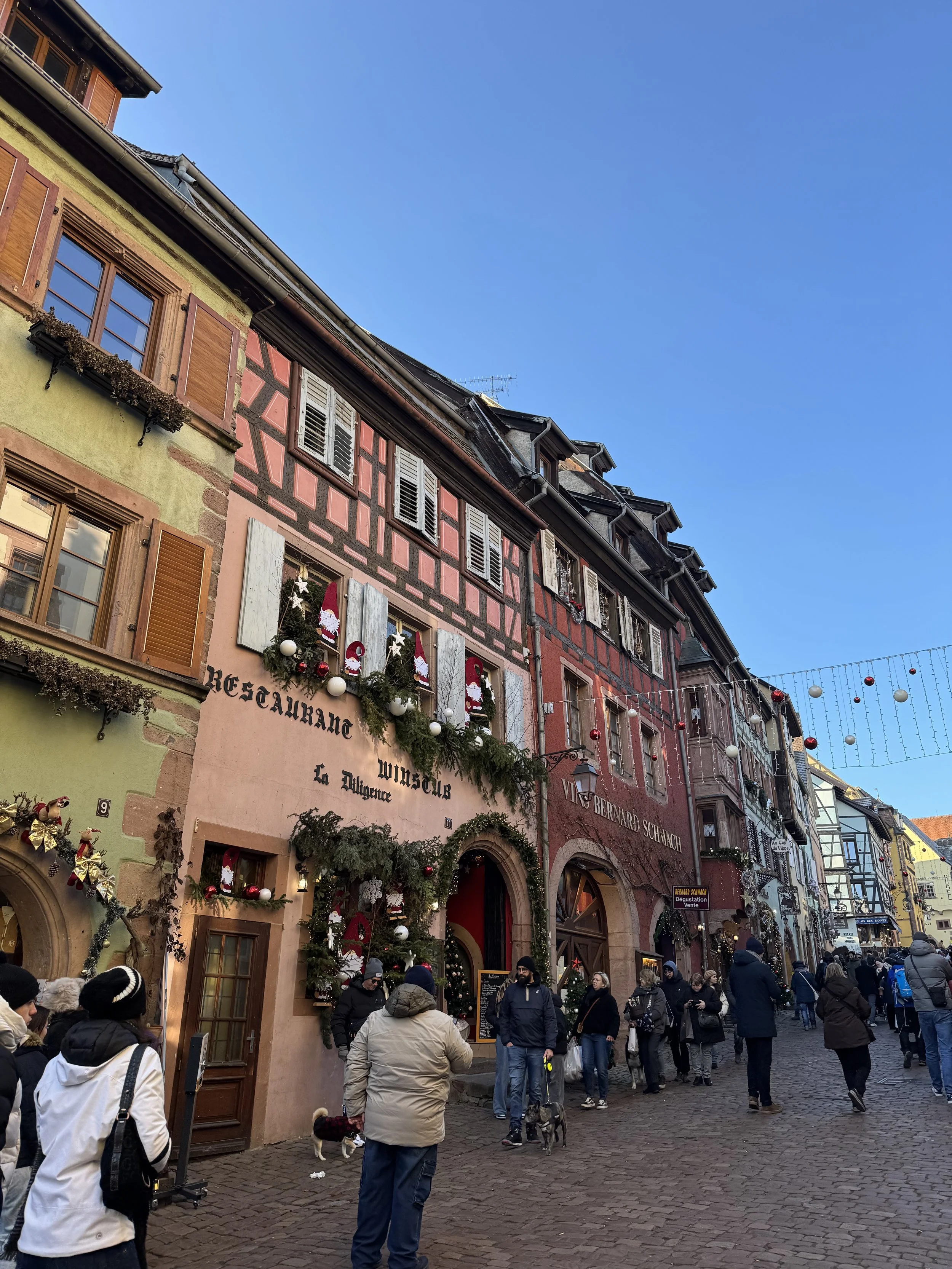
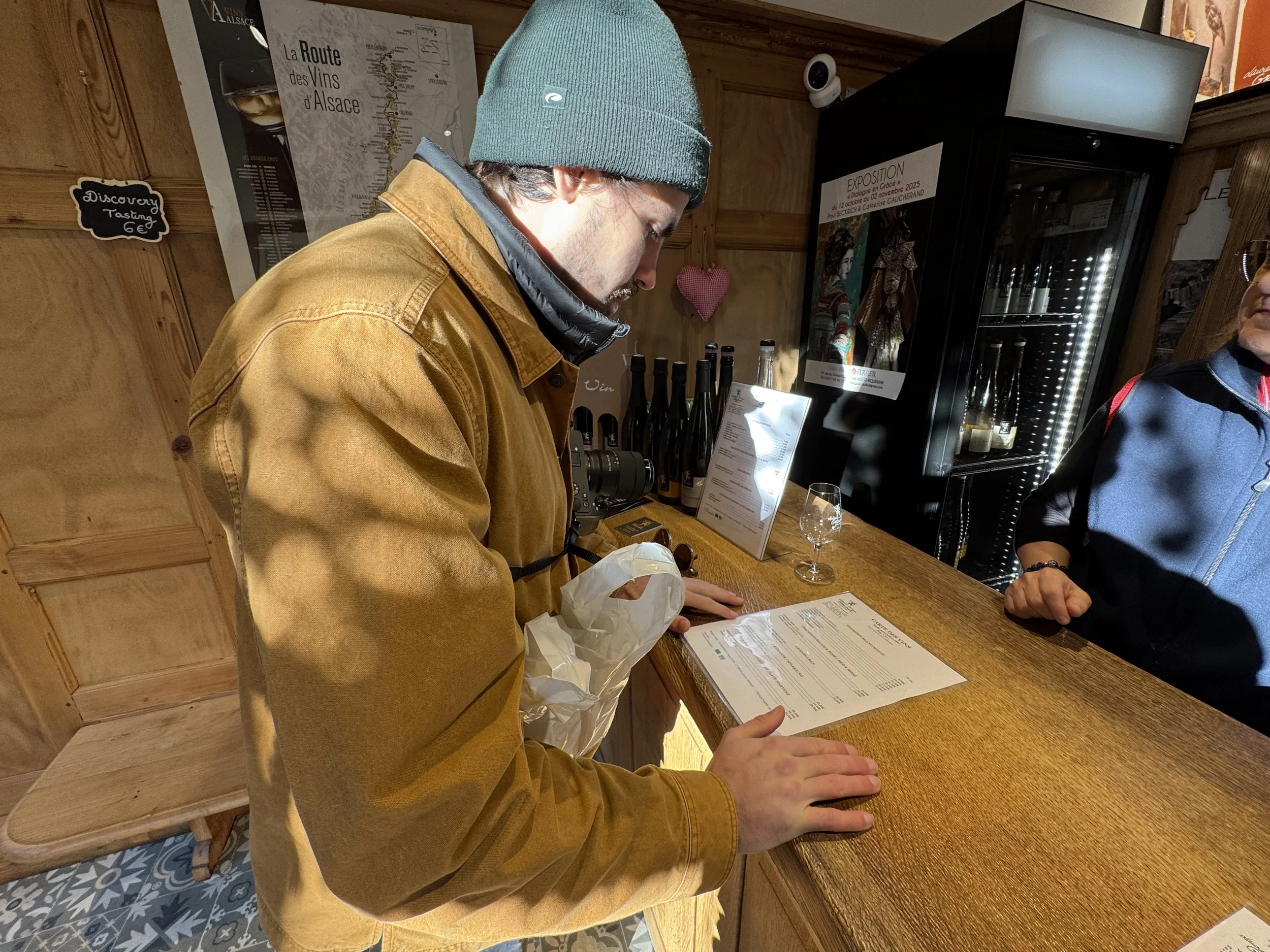
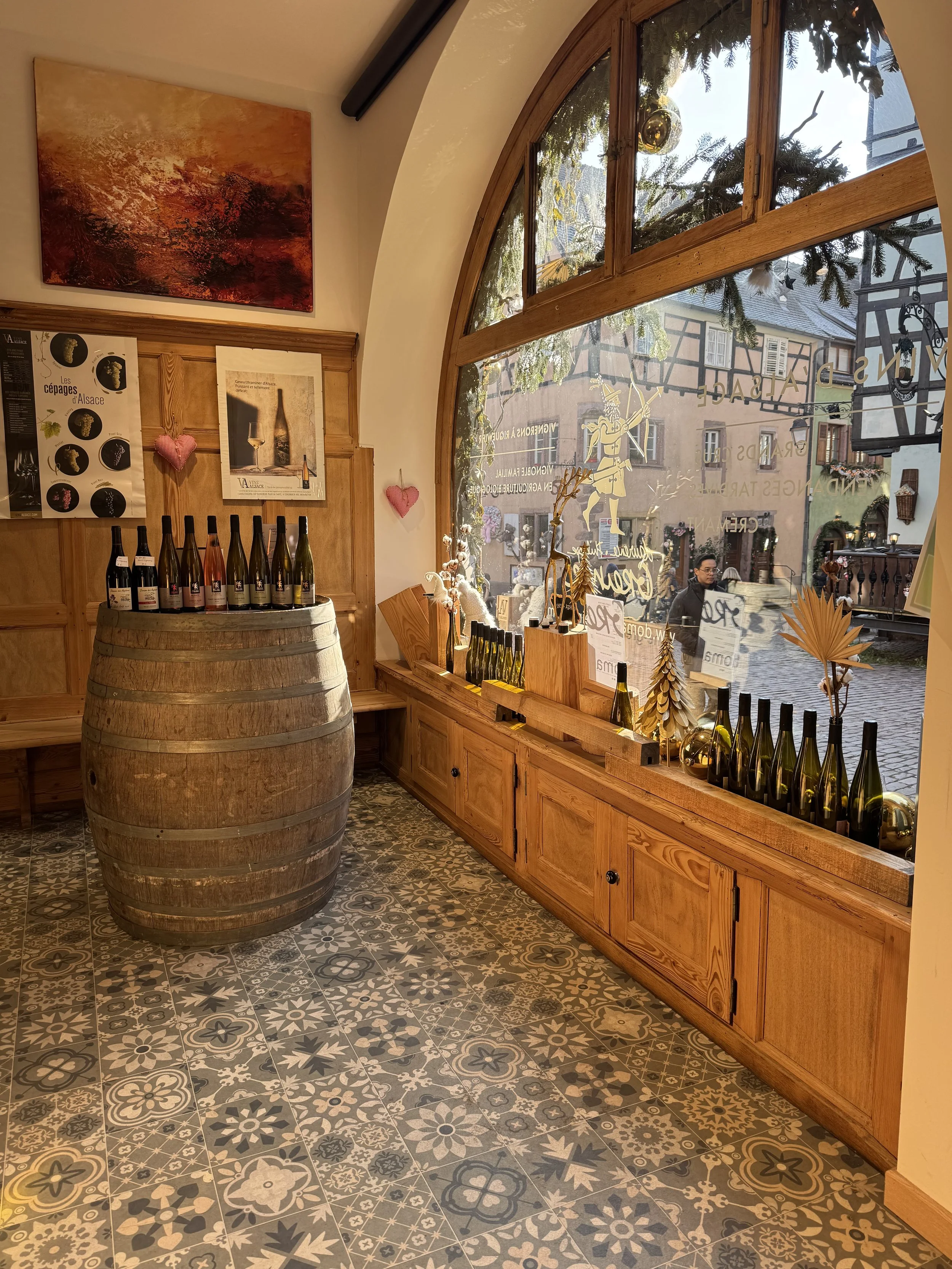
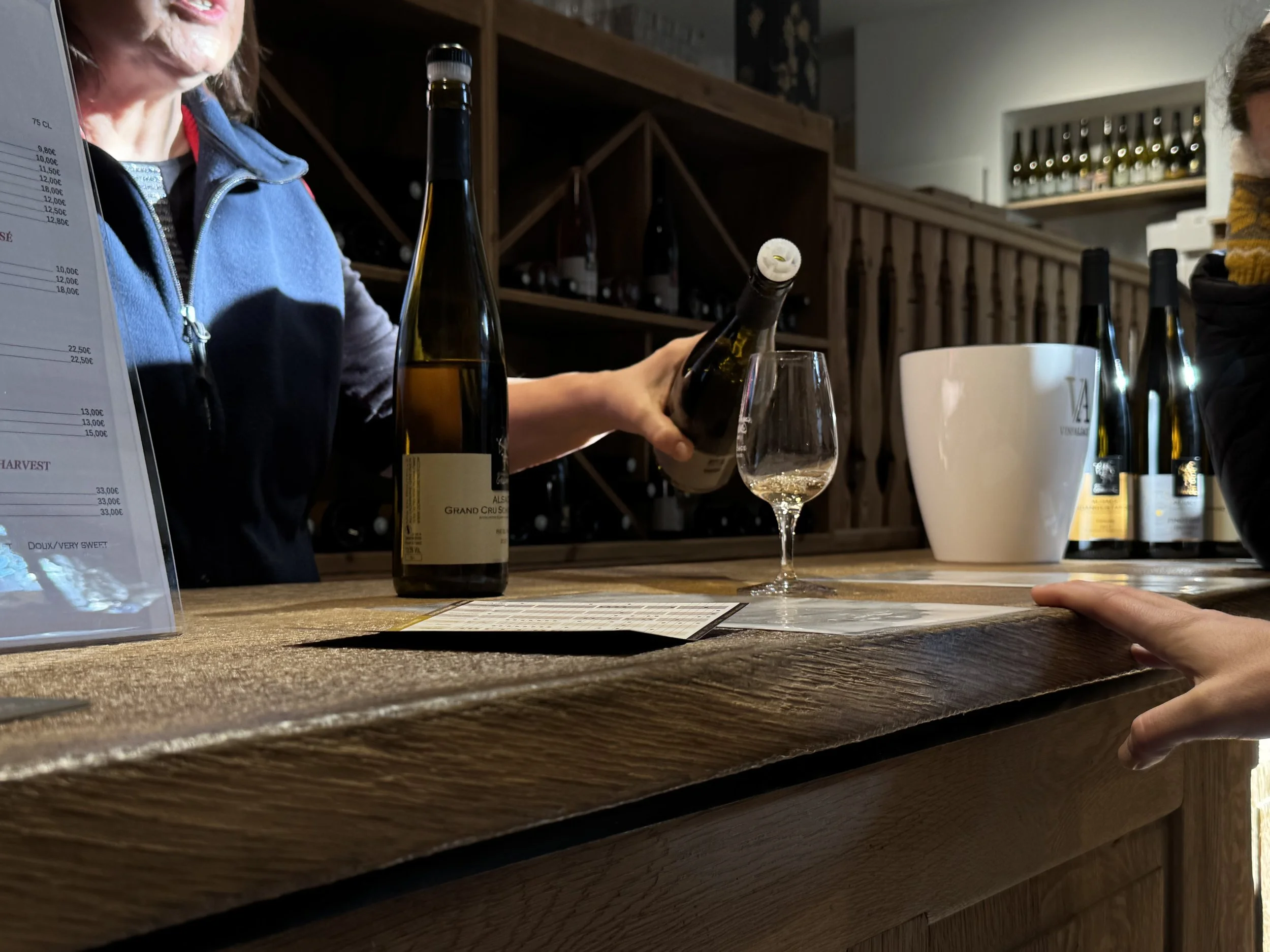
Where to Eat/Drink: Riquewihr is small enough that you can treat it as one delicious culinary adventure as you walk down the main road. The move is definitely to taste a little, snack a little, drink a little, and then buy a few things “for later”. Start with a tasting at Philippe Greiner. It’s approachable, low-stakes and genuinely fun. Alsace is a place where wine is part of daily life, and you really feel that here; it’s a casual stop where you can taste a lineup of Sylvaner (an old grape that they’ve kept around in the region for posterity sake), Pinot Gris, Cremant d’Alsace and of course the classic Gewurtztraminer. Be aware that in Alsace the Gewurtztraminers lean very fragrant, rich, and on the sweeter side - so don’t be surprised if you’re used to a drier style.
For a more iconic tasting experience stitched into Alsace history, make time to swing by the Hugel tasting room, too. They are one of the OG producers of the region that really define the Alsace legacy. Even if you’re more of a natty wine person at heart (as are we), it’s so worth tasting the “classic” house here as it gives you the baseline to really understand Alsace: clean lines, aromatic precision, and the perfect balance of perfume + structure.
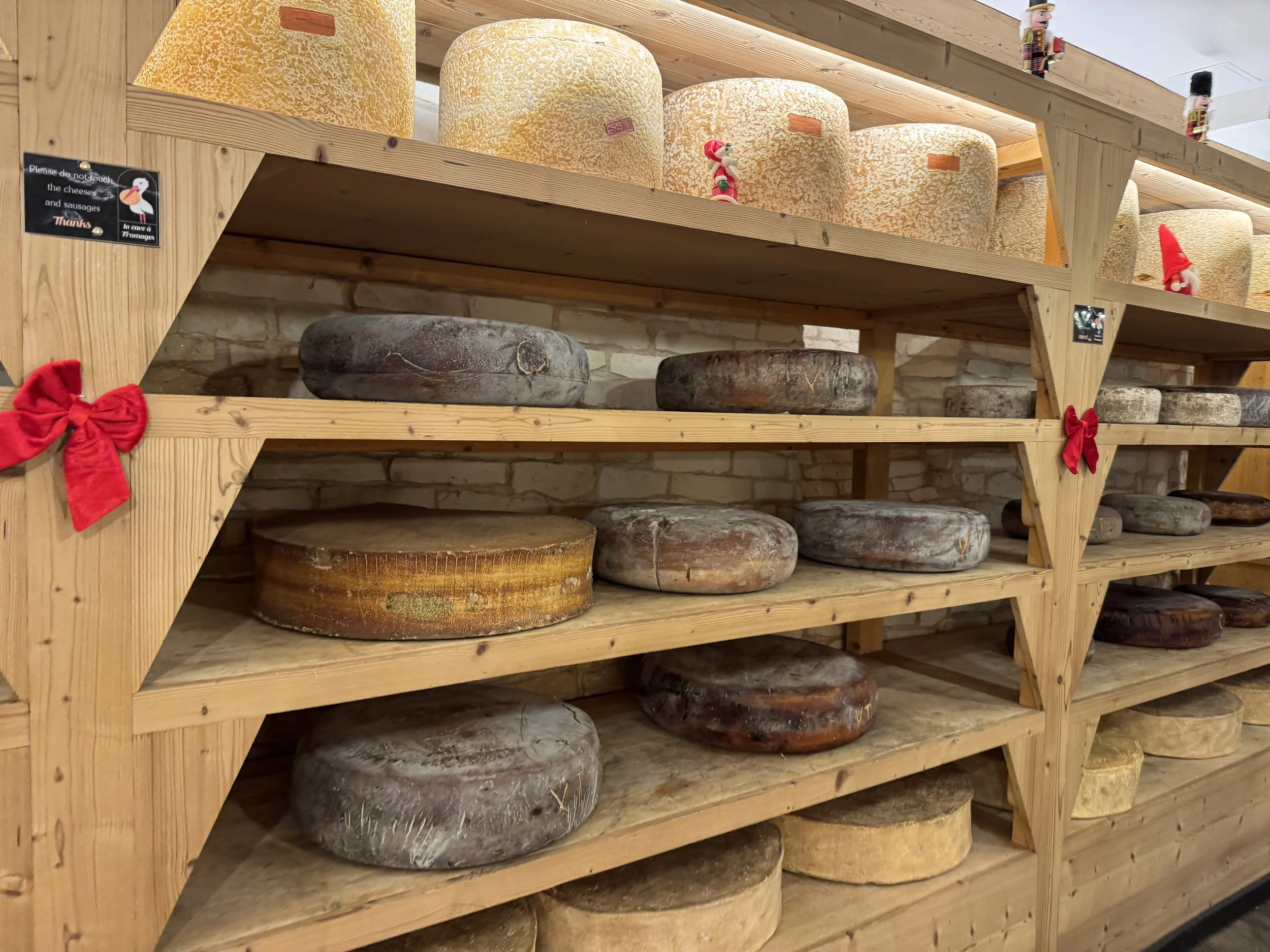
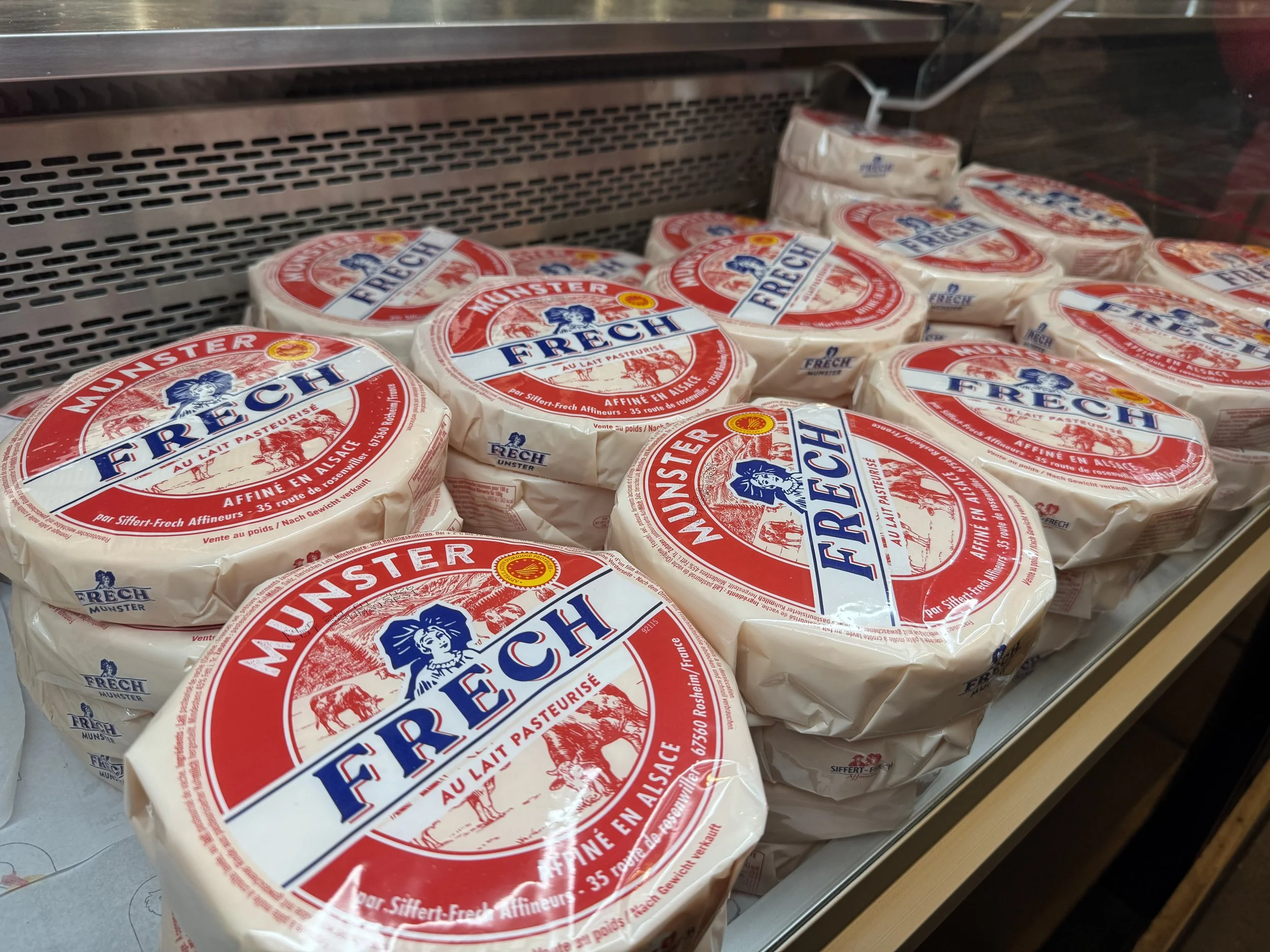
On the food side, find the cheese cave in the downtown. Alsace is very serious about cheese. It’s old, it’s rich, and it’s tradition. Start with Munster if you want the most local, classic option. Add comte, tomme, or whatever looks best and tickles your fancy (many shops have a plethora of things to taste!) and build yourself a cheese board for enjoyment later.
Another favorite of mine is the spiced traveling bread in Alsace. Alsace has a long history of breads made to last; breads that could be carried, traded and eaten over days, not hours. The spiced loaves sold all over Riquewihr tend to lean very anise - which if you’re into that kind of thing as I am, is absolutely divine, especially at Christmas. It’s like the region itself is baked into traveling doughy goodness for consumption whenever you need a bit of delight. As the snack queen who always has a tasty treat in my purse, this tradition and delicacy suits my lifestyle perfectly.
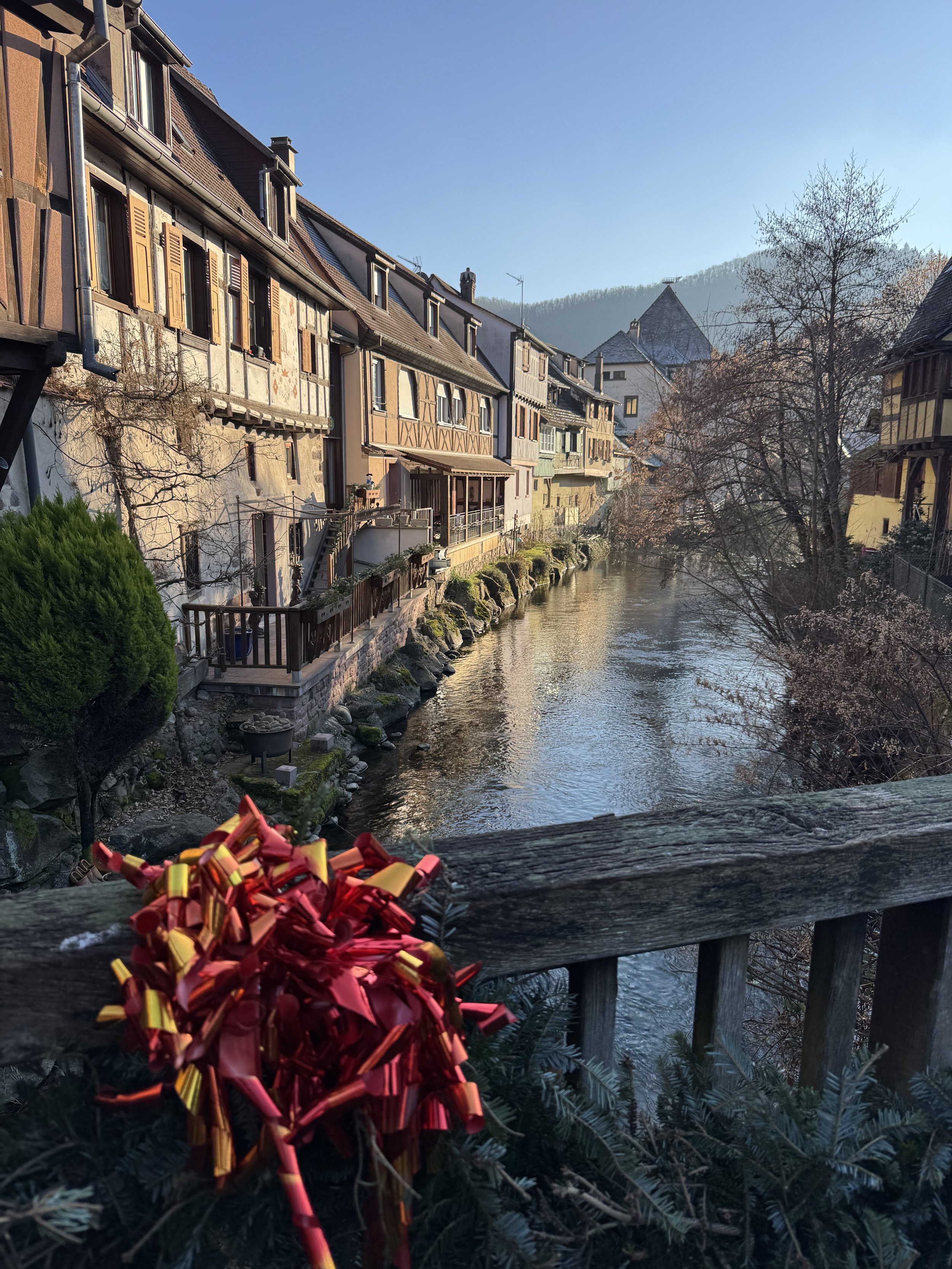
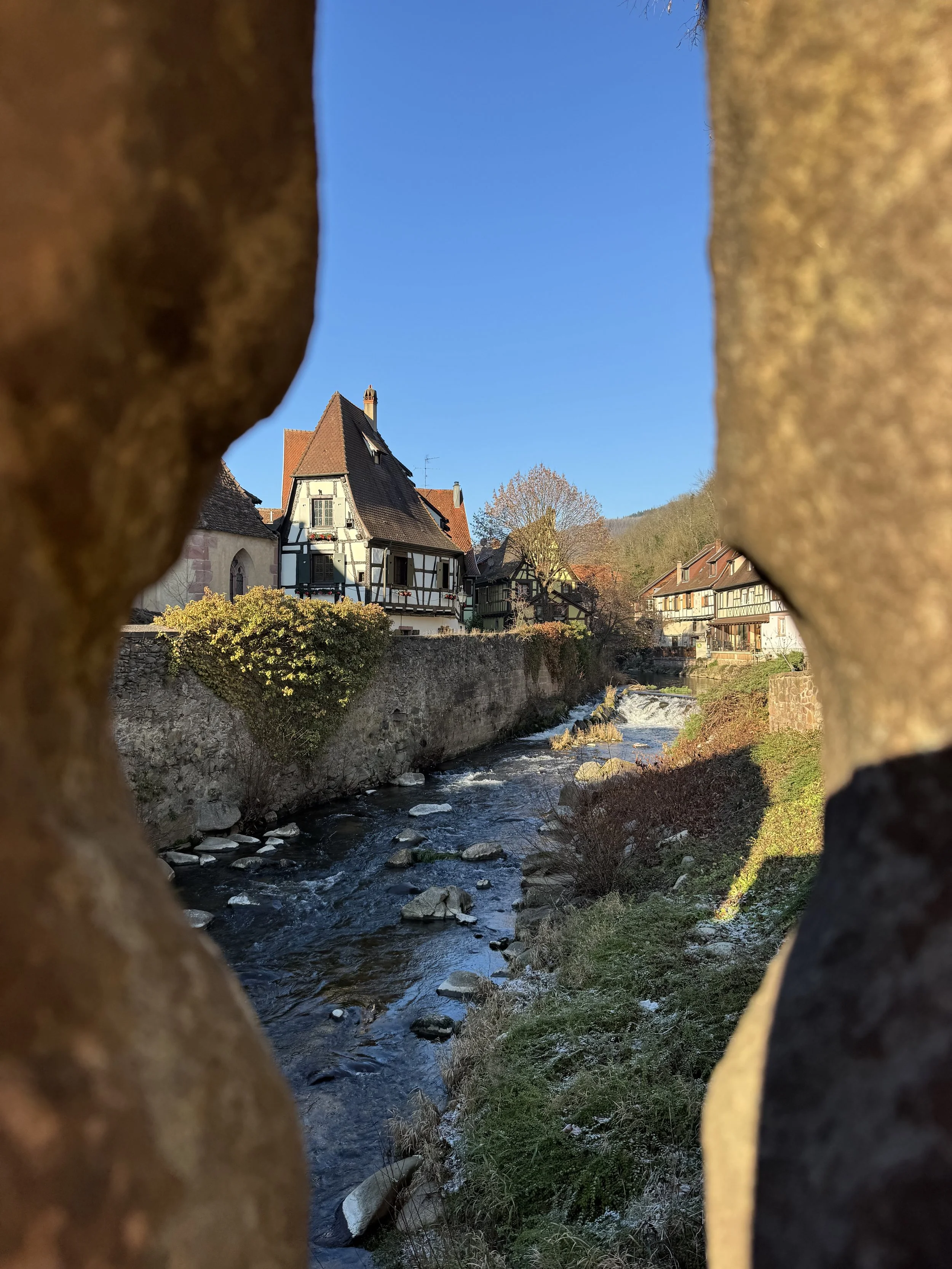
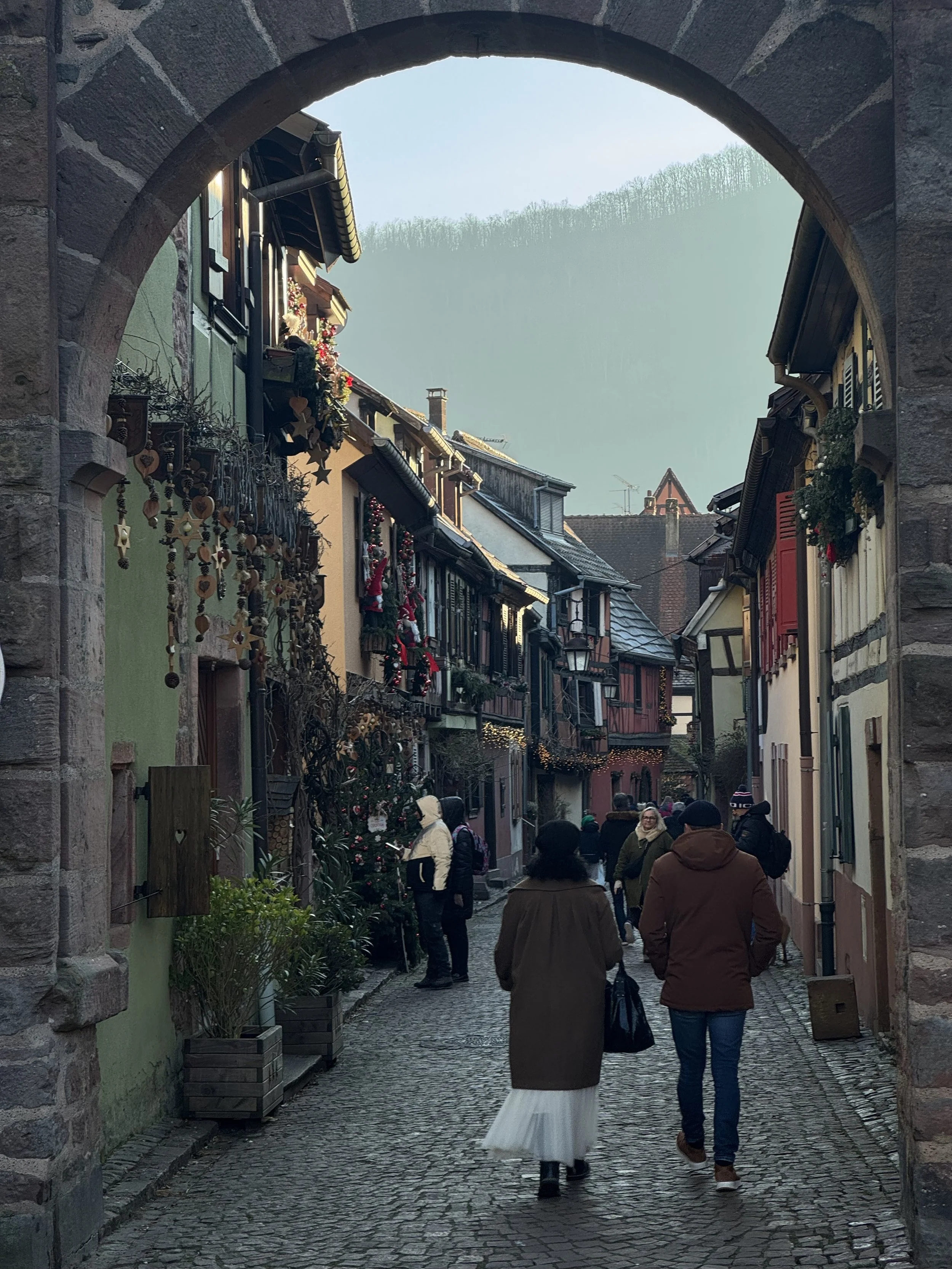
Things to Do: Walk the old town early. Crisp mornings, frost-laden vines, and gorgeous views of the town are abundant before the tour buses fully land. Look closely at the timber frames and deeply set windows. A fun detail: people often say the houses were built almost as an afterthought to the cellars beneath them, because that’s where the true wealth lived. Barrels, cheese, cured meats, anything that could carry you through winter. The whole place is a lesson in building for endurance and preservation. Walk it once, then walk it again. It does not get old.
Look for the defensive walls and towers. Riquewihr was fortified for a reason, and you can still trace parts of its medieval defenses. Step briefly outside the center and you can see just how compact and protected the town really is.
Use it as a base for the Alsace Wine Route. One of the best things about Riquewihr is how easy it makes exploring the surrounding villages. If you have a car, hop to nearby towns like Kaysersberg, Ribeauville, and of course Colmar. We spent an afternoon in Kaysersberg and would do it again in a heartbeat, despite the frigid temps. We’d recommend wandering aimlessly around its shops, and then popping into Bratschtall Manala for a big juicy burger, a steaming bowl of soup, and a glass of vino from their lengthy wine list (and they’re on Raisin, which you know we love!)
Interesting tidbits to know:
The Dolder is the town’s tower gate and it’s not just for photos. It was part of Riquewihr’s defensive system and still sets the tone for the entire vvillage. There’s a small museum inside which is a fun way to see how this storybook town once took on the not so storybook business of protecting itself.
The town was built by merchants, not just peasants and princes. A lot of the beautiful houses were funded by trade and wine money, thus the “extra”ness of the carved details and elaborate facades.
The stork motifs you see everyone are on purpose. The stork is basically the unofficial mascot of Alsace.
Final fun fact: though Disney has never crowned one exact Alsace village as the blueprint for Belle’s town in Beauty and the Beast, artists have long looked to Alsace’s half timbered villages for the exact storybook look depicted.
Lyon
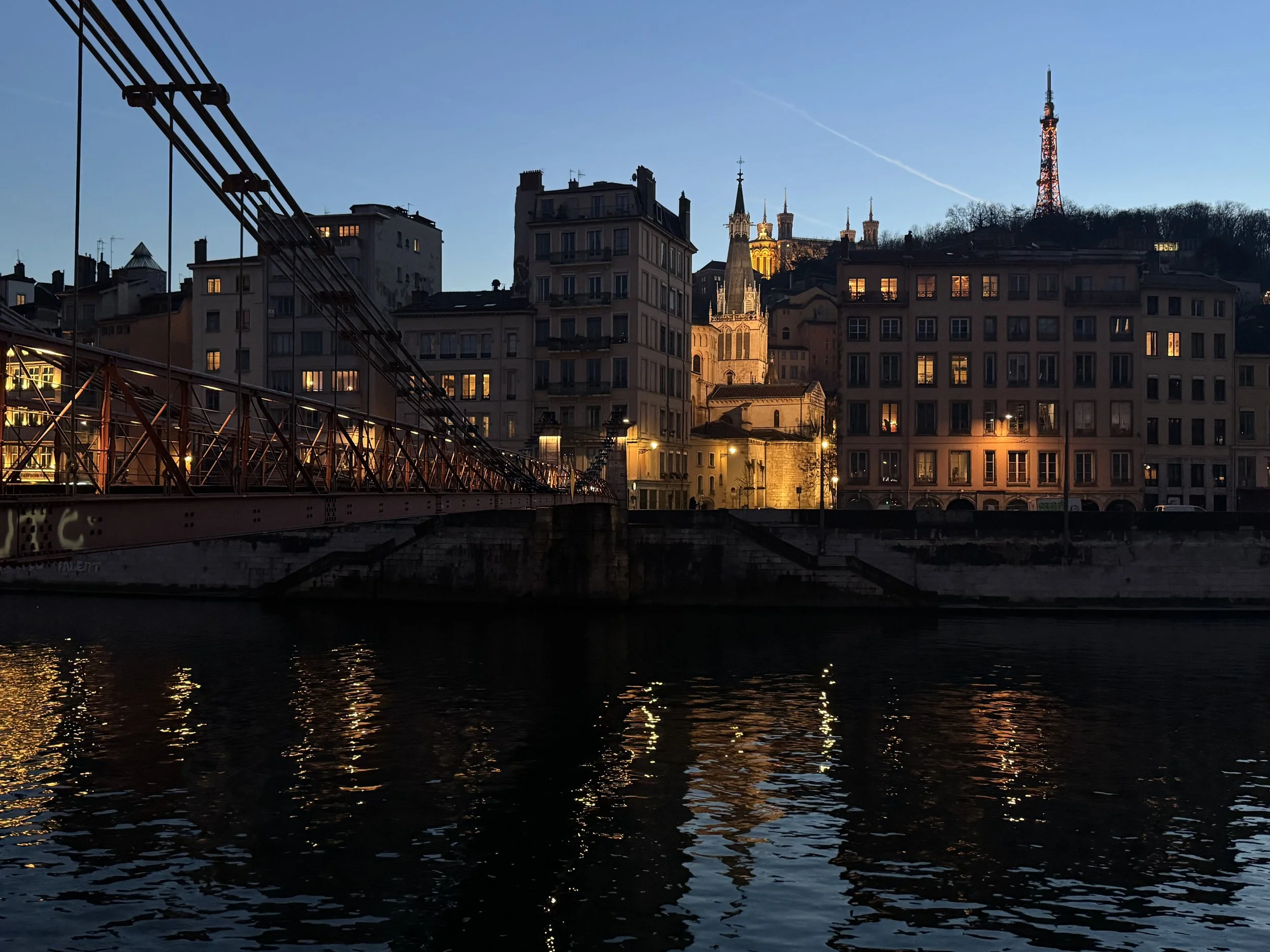
It’s a funny story how we ended up planning this entire trip around Lyon and it all started with a book. Erick had been furiously reading Bill Buford’s book Dirt, and it planted the seed the way that any type of vividly good food writing does. Lyon therefore came to life in our imagination before we had even arrived. We knew it was the capital of French (global?) gastronomy, the land of bouchons and butter… but what we didn’t know is how lively and energetic it would feel. It carried a vibrancy and electricity even in the dark, cold of the winter. Bridges lit up at night, rivers cutting through the city, old streets filled with not quite identifiable but certainly delicious smells…
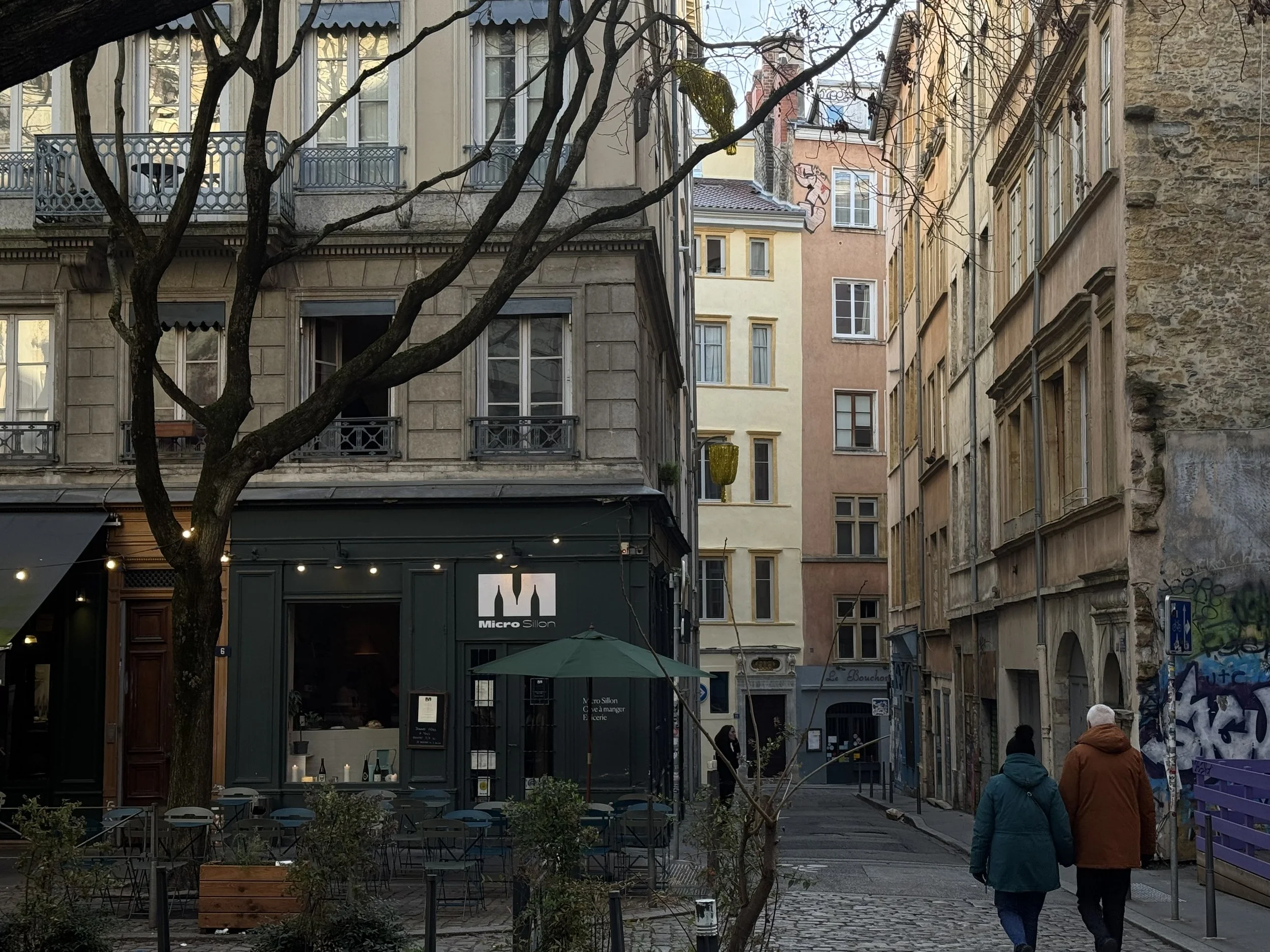
On a particularly lively night, we ducked into Micro Sillon for a snack and a glass of wine. As we waited to pay our bill, Erick couldn’t help himself and leaned ever so slightly toward the next table to admire the gorgeous red wine a group of friends were sipping. One of the women at the table caught him mid-peek, stood up, and without hesitation offered him a sip straight from her glass. Five minutes later, we were deep in conversation, getting a rapid-fire list of the best places to eat in the city and swapping Instagram handles. Turned out she is the head chef at a nearby restaurant called SOMA. If that’s not the most Lyon story you’ve ever heard…I don’t know what is. Smiles all around.
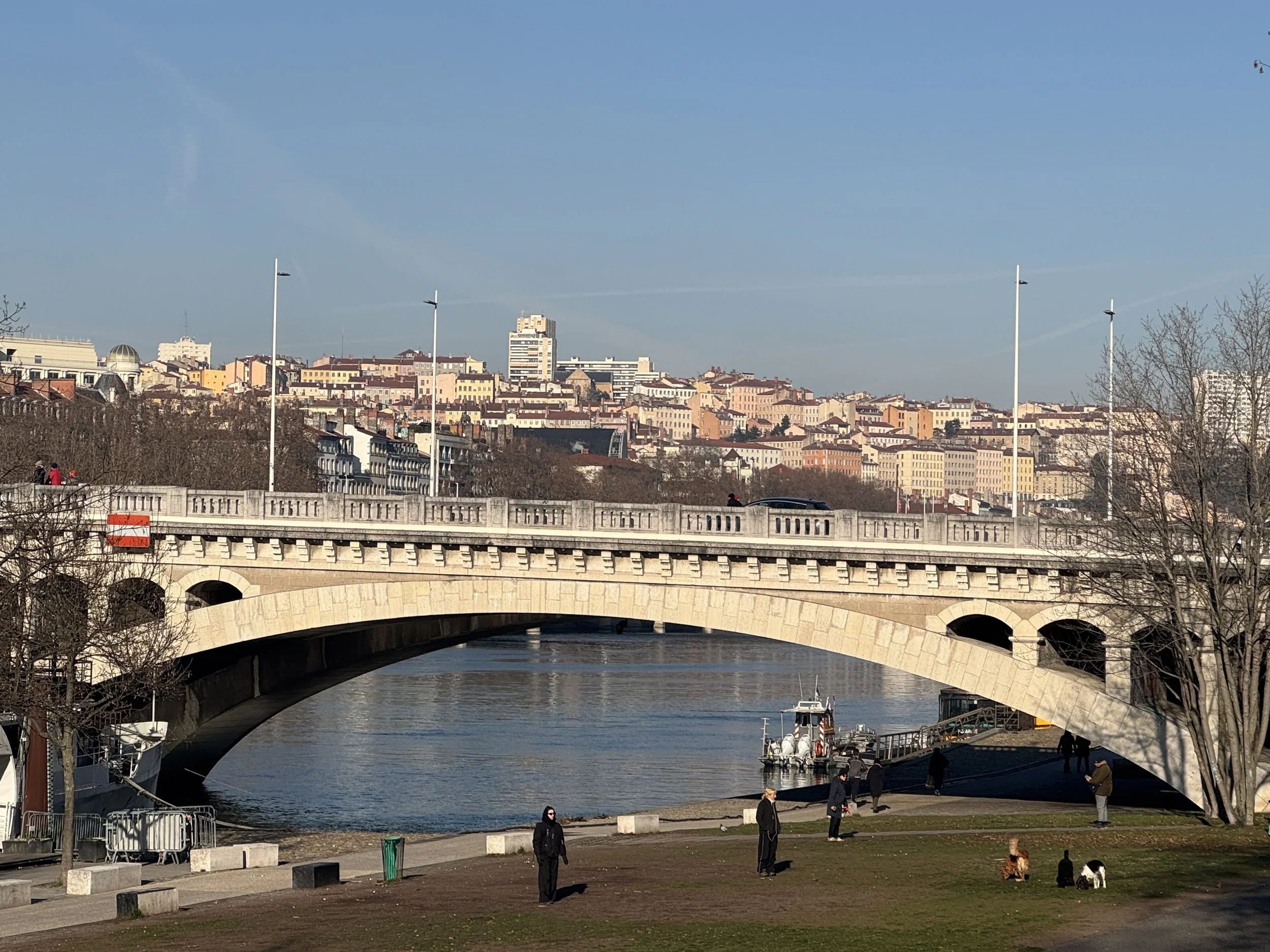
Where to Stay: Honestly, we stayed at the Radisson Blu. It was functional, they had hypoallergenic pillows, and the breakfast was great - with a killer view of the entire city. Would I stay there again? In a pinch, yes. It was a perfectly functional home for a few days. But there are better options, and we’d recommend being closer to the old town so you can easily walk into the coolest parts of the city.
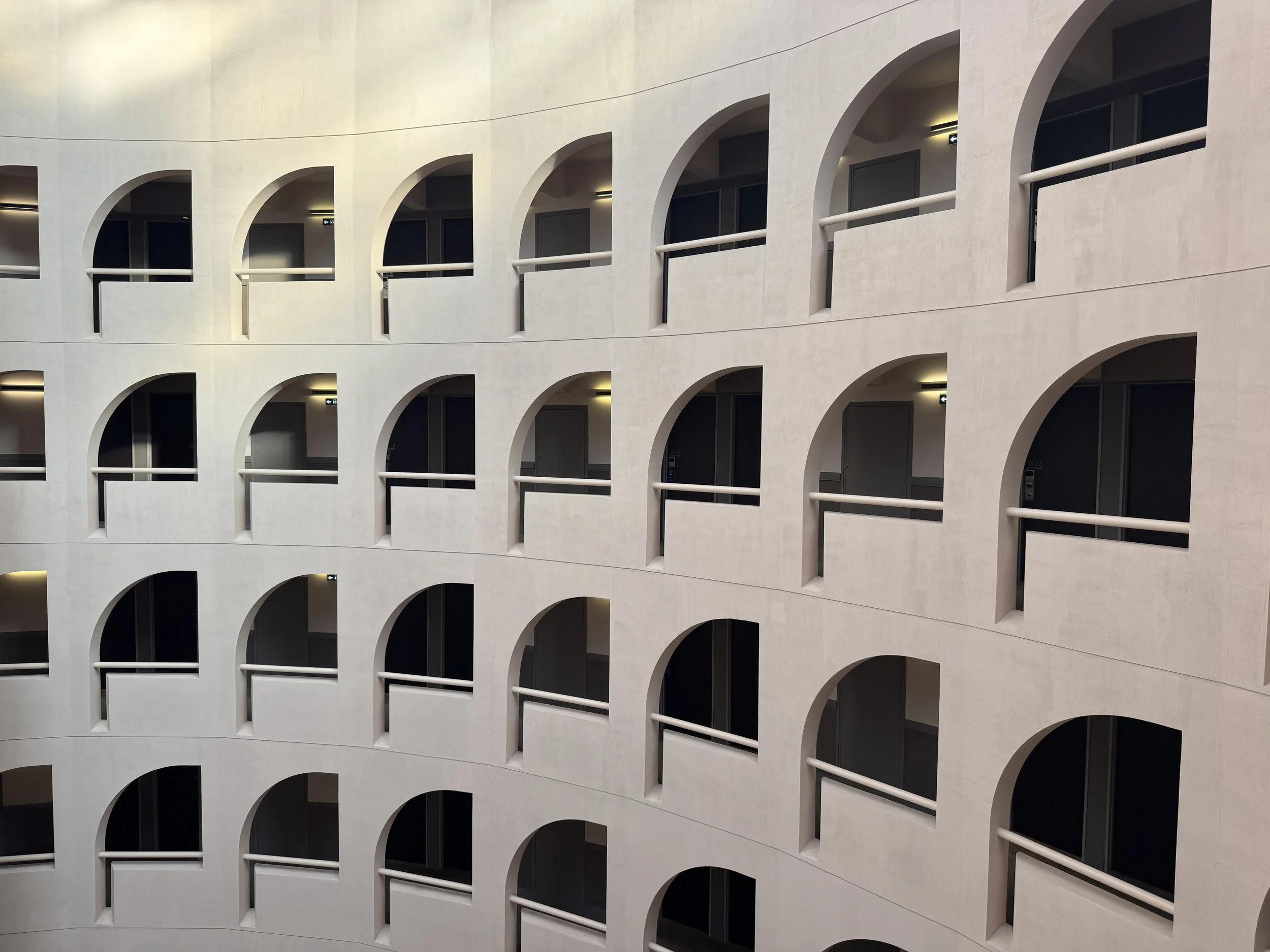
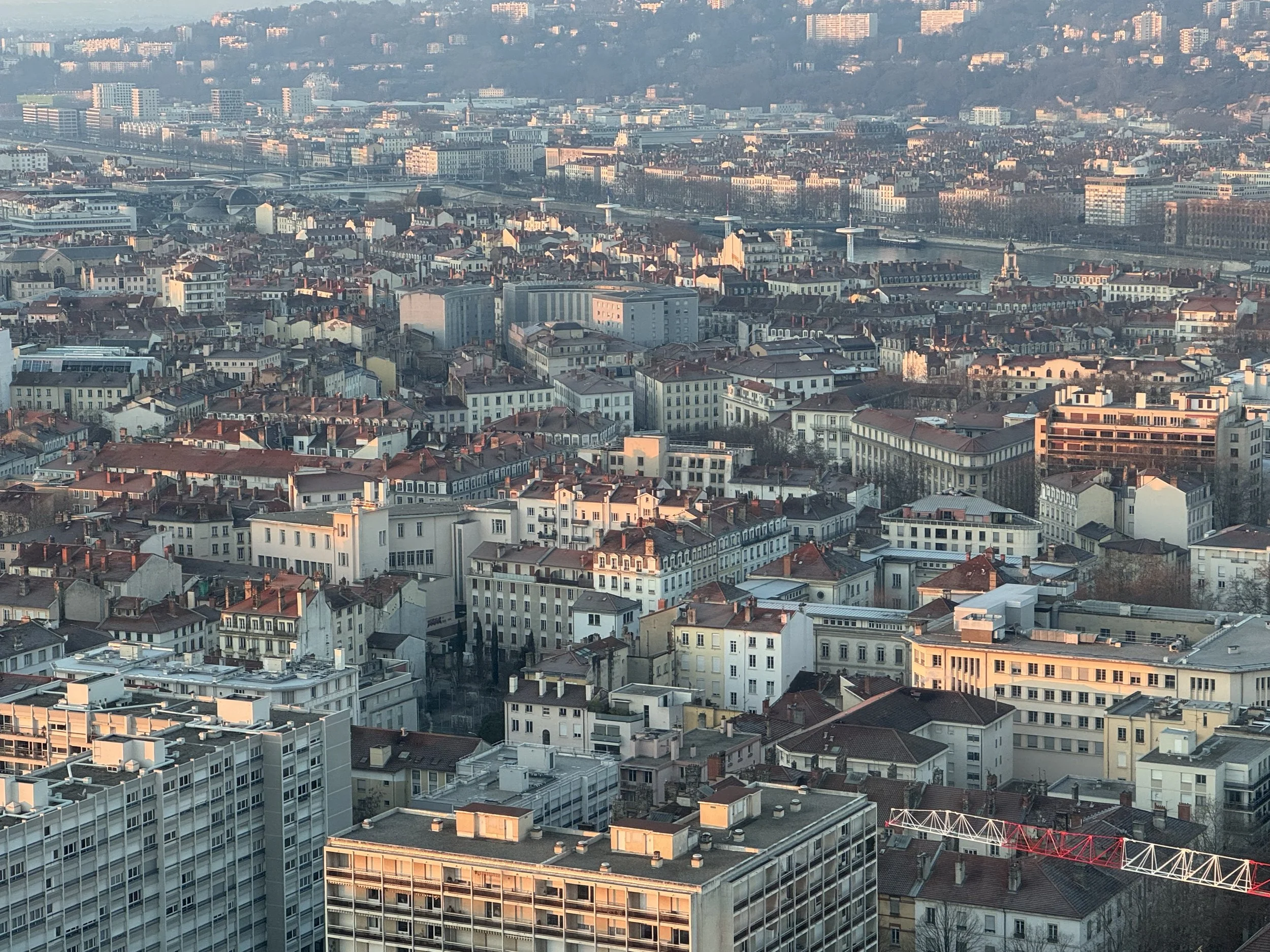
Where to Eat/Drink: We don’t need to tell you, dear reader, that Lyon is chock full of culinary delights. We could’ve spent weeks here and still not run out of incredible restaurants, bakeries, and coffee shops to try. But we did find some killer options to recommend. You can’t go wrong with any of the below.
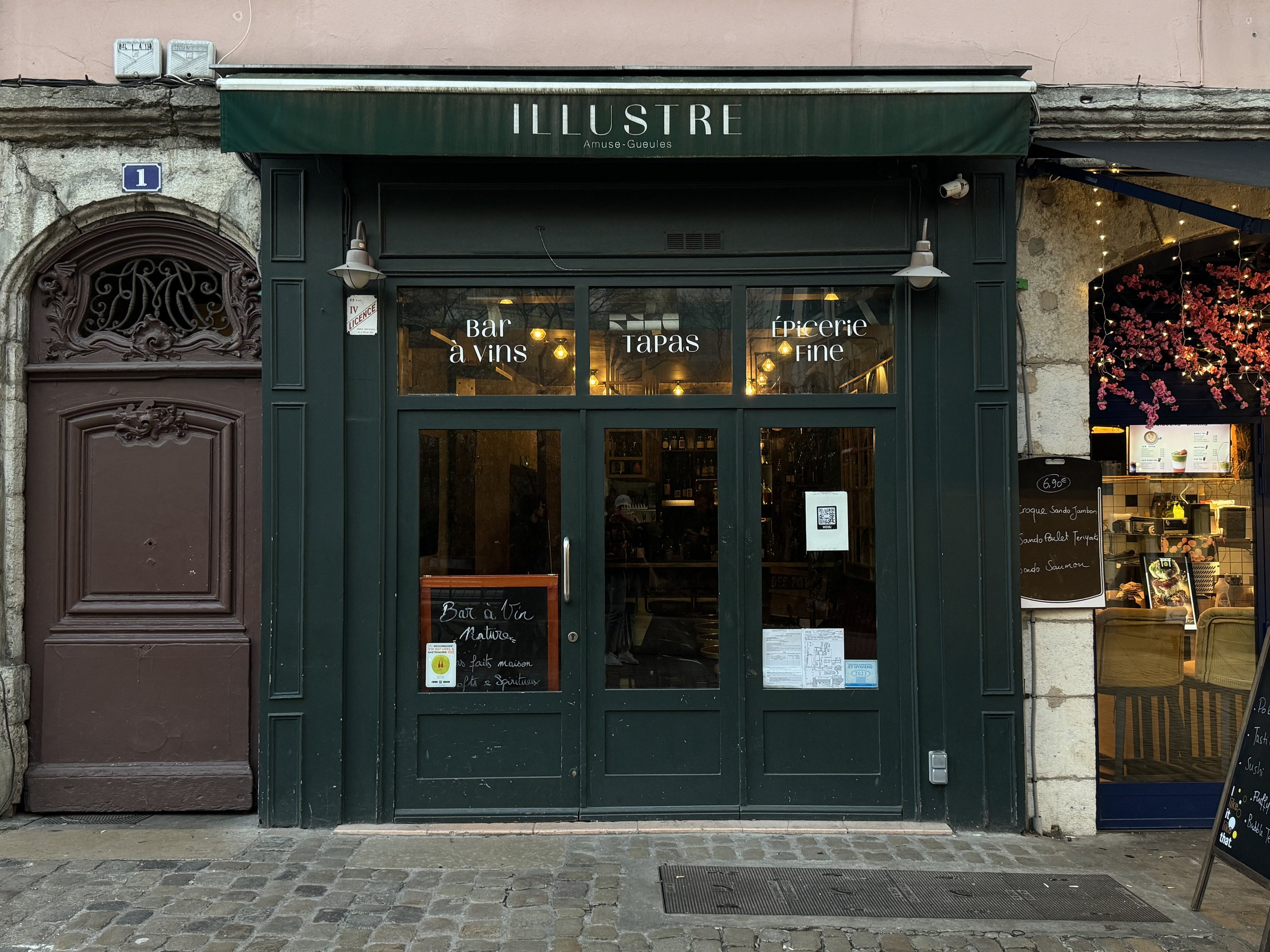
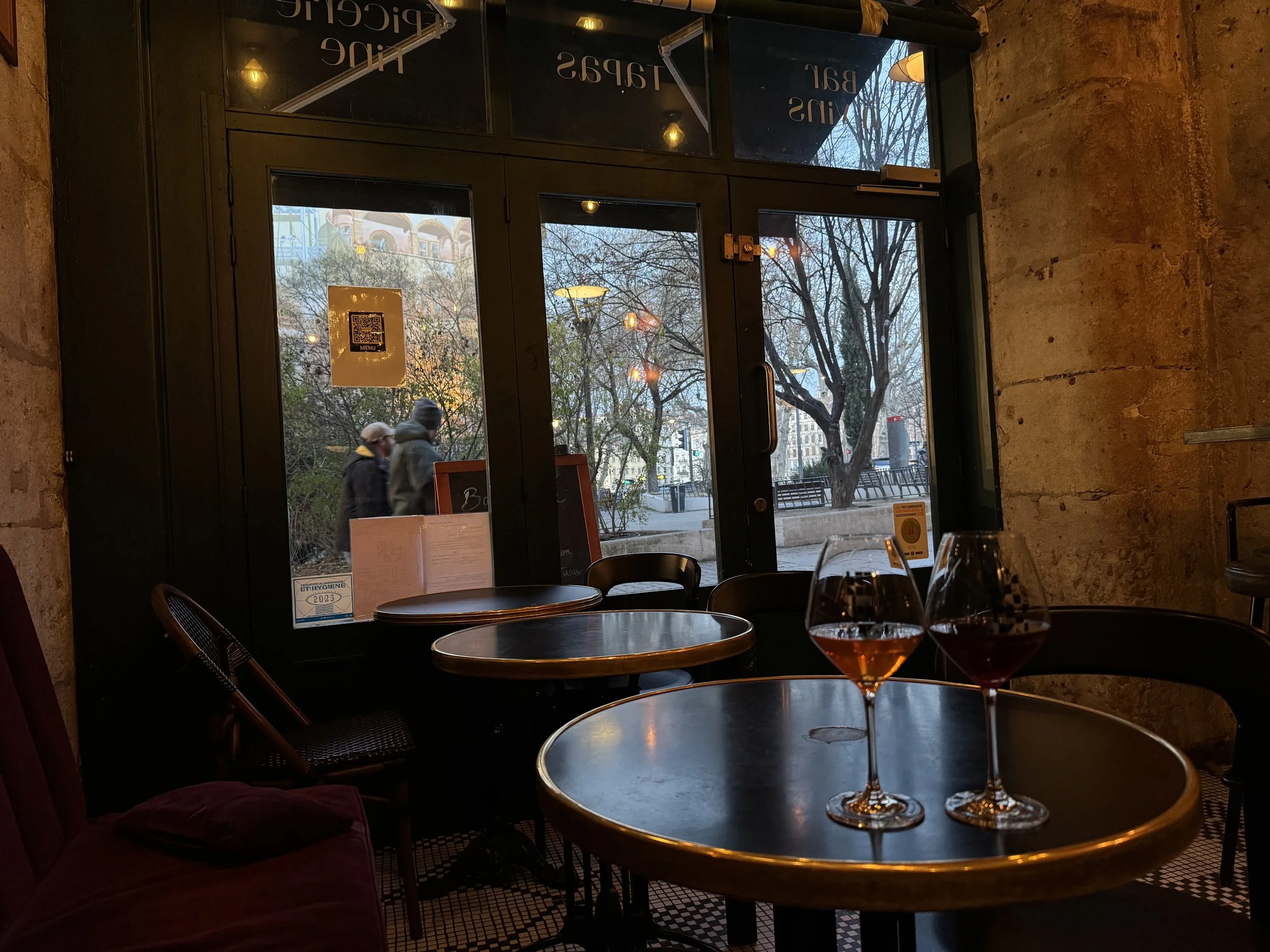
Wine bar Illustre: Killer wine list, fun and engaging bartender, and perfect snacks to accompany; we had smoked duck that was somehow still wildly fatty - great pick!
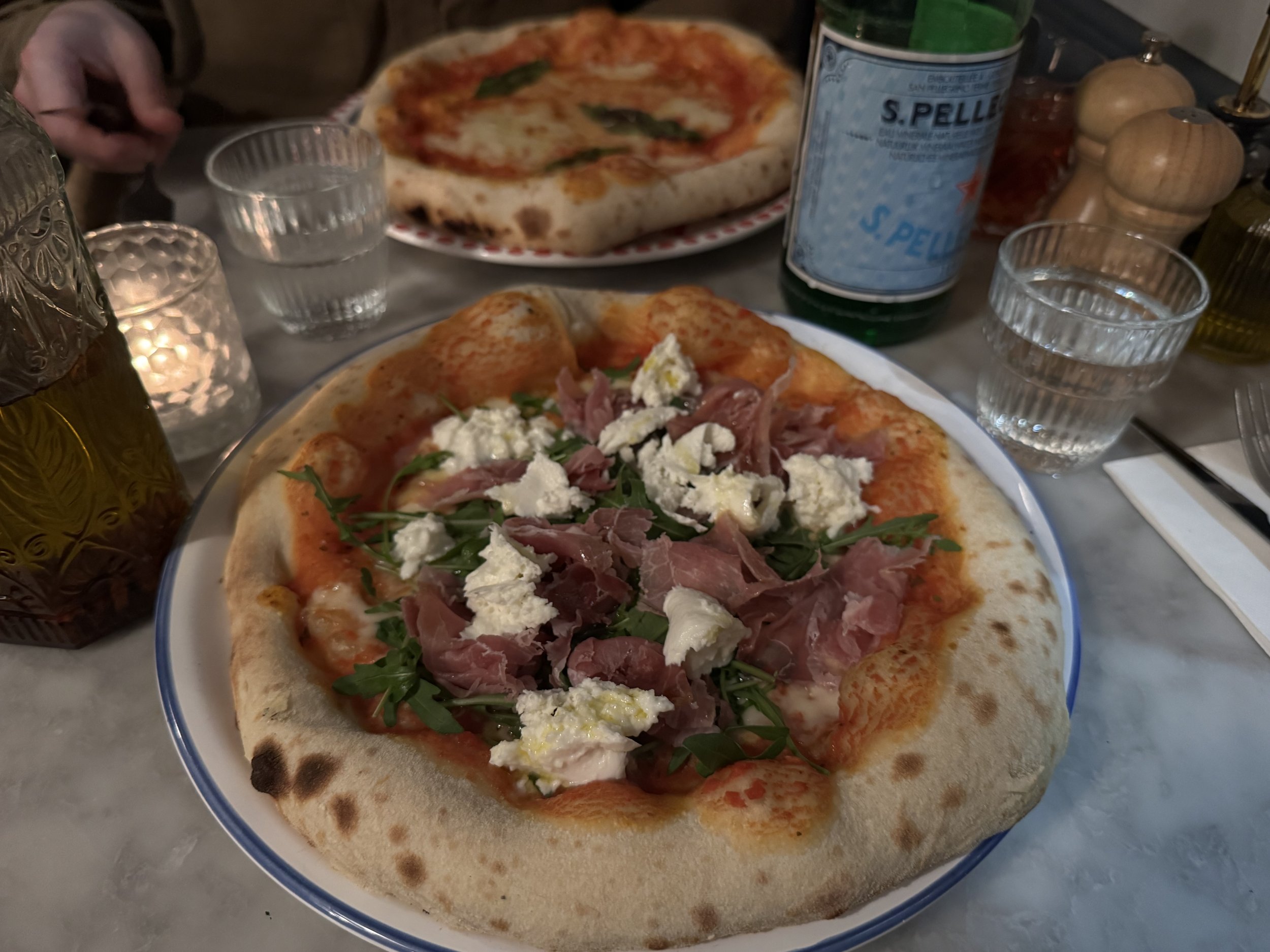
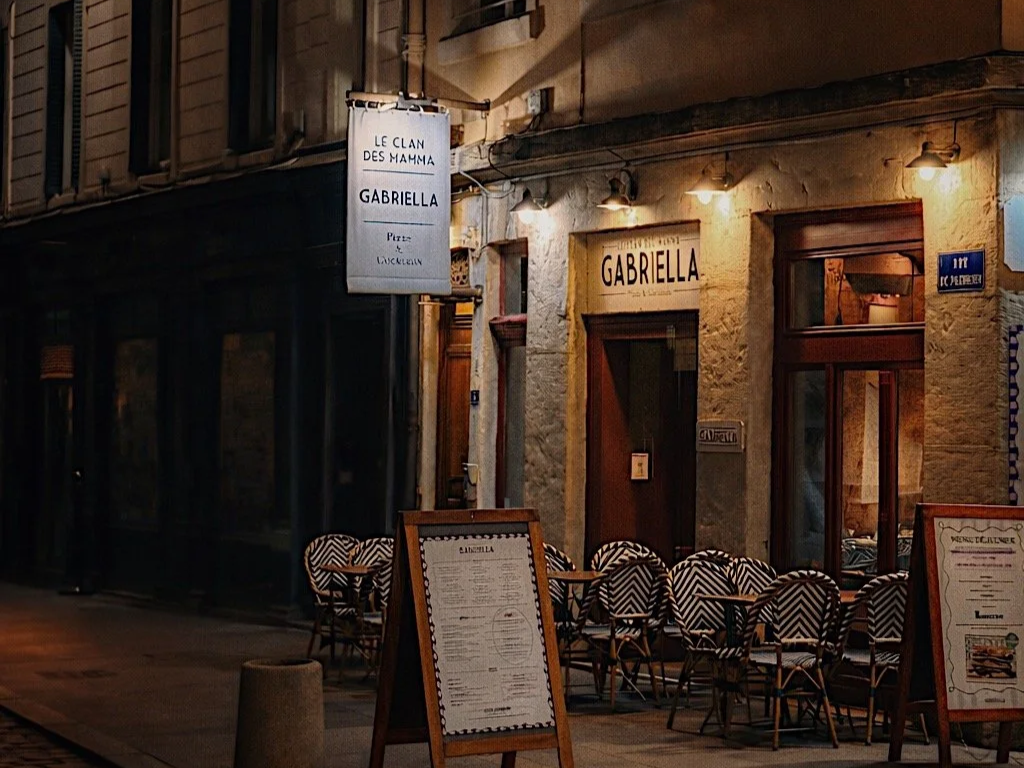
Gabriella: The restaurant was warm, buzzing, and quirky, and they had a million doughy fresh pizzas to choose from. The crust was the main character, blistered and airy and yet also chewy and dense. We loved it, and welcomed the change of pace from the very buttery, heavy French meals we’d enjoyed in the days prior.
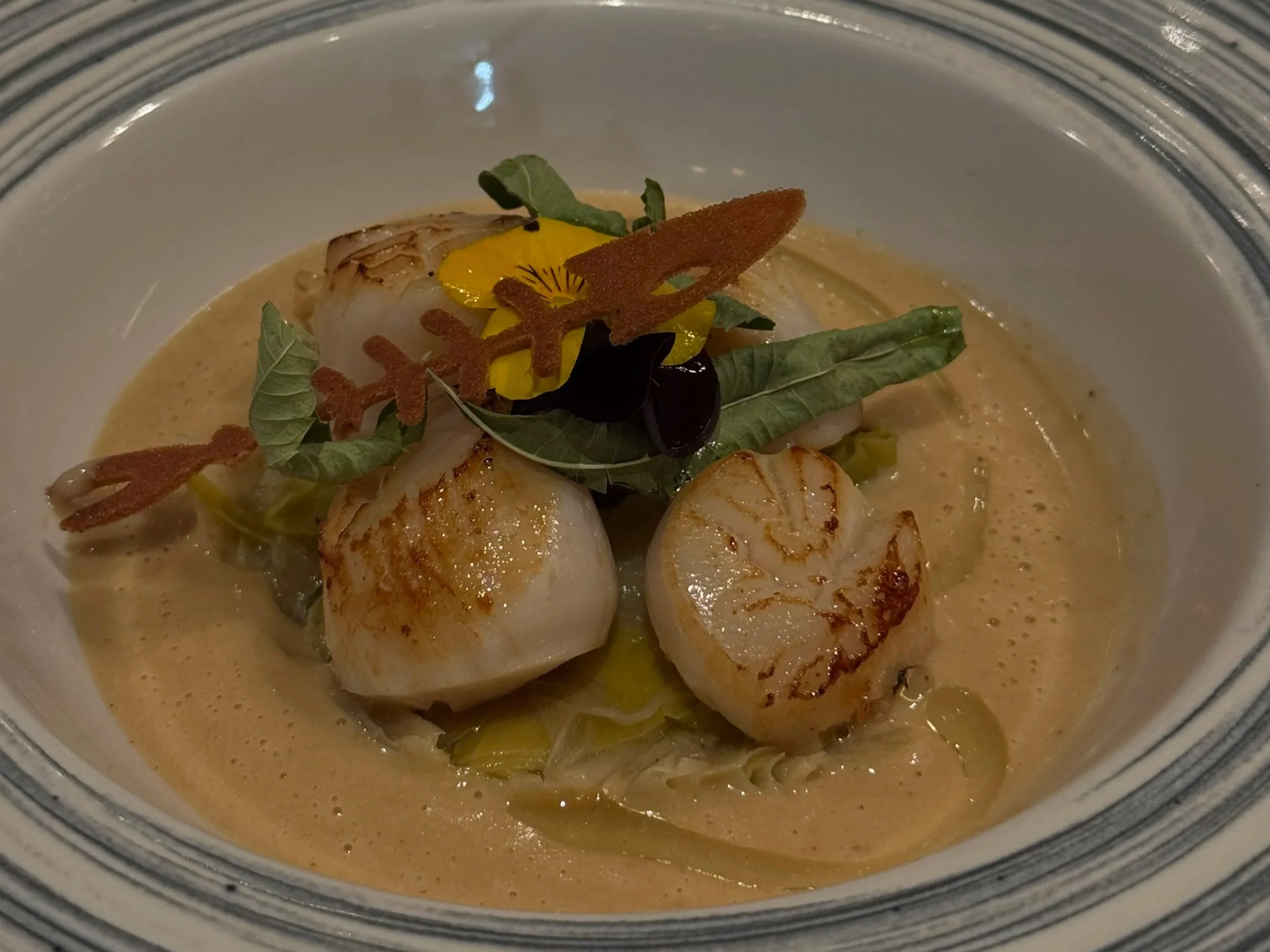
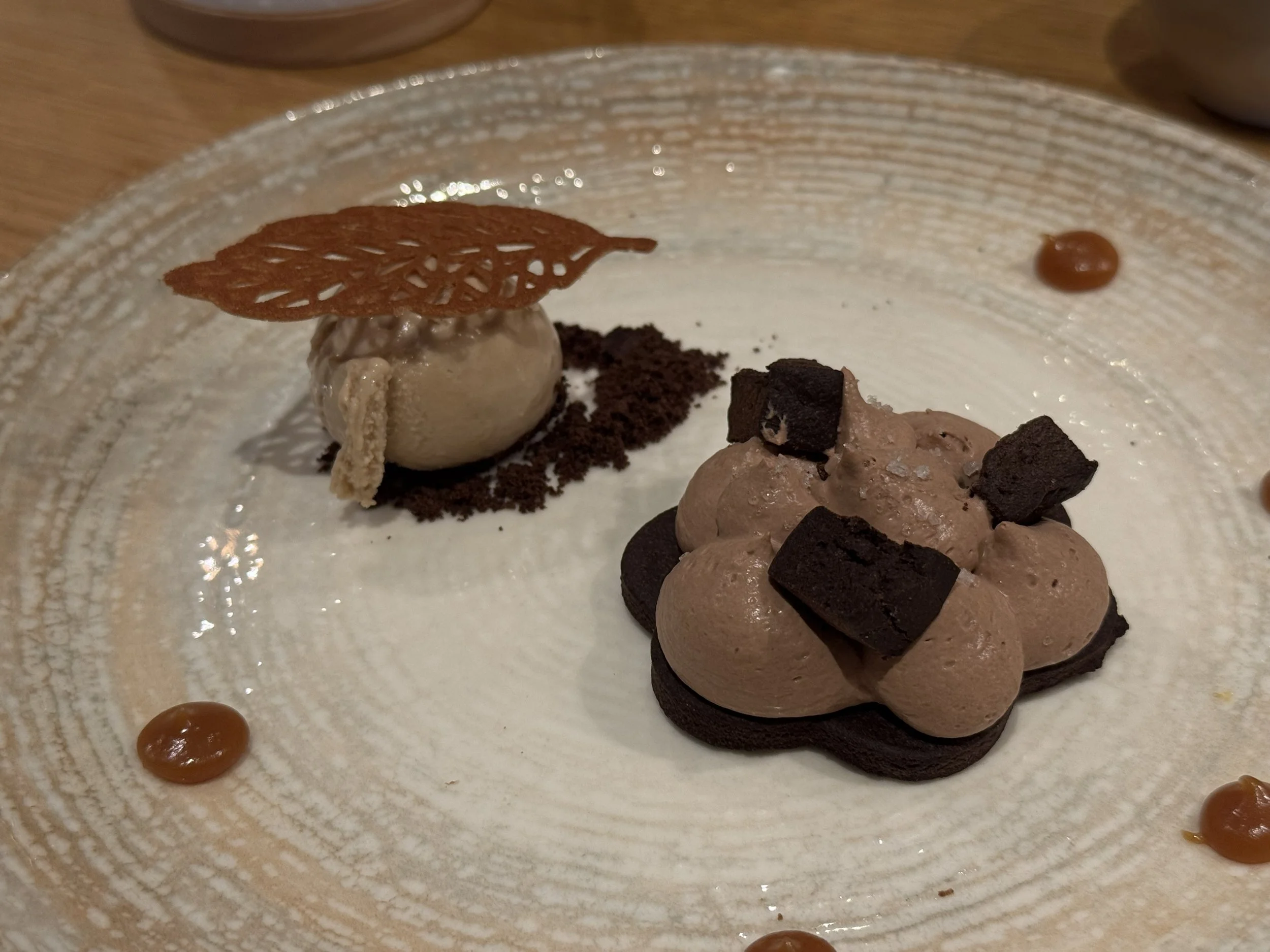
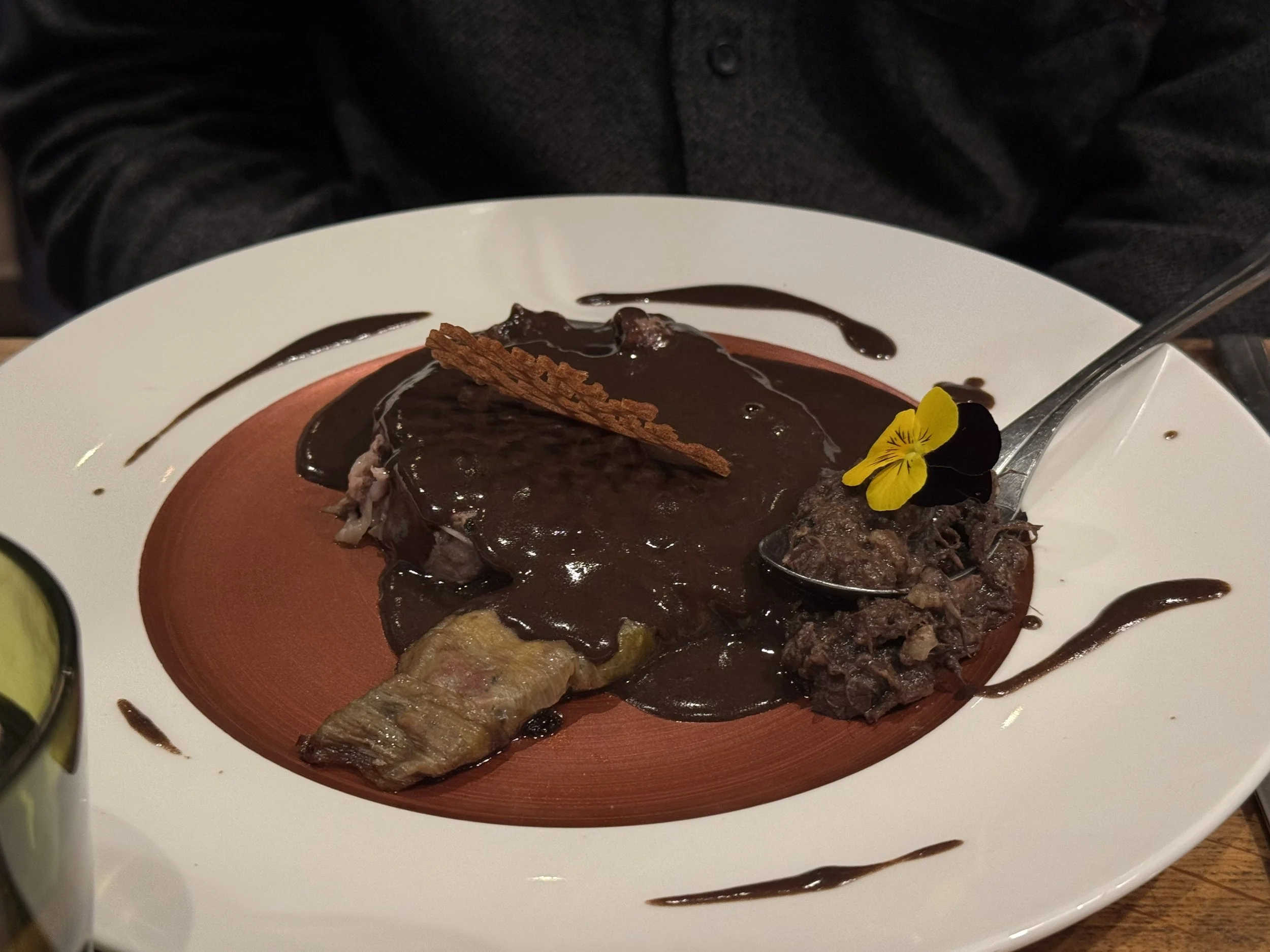
L’Ame Soeur: This was a Raisin find, and as with most Raisin finds, it didn’t disappoint. We had NYE dinner here and it was the perfect way to kick off our Lyon visit. This was certainly our most adventurous and our most French meal, with creative seafood dishes served next to a gamey rabbit with a very dense sauce - and an incredibly creamy chocolate caramel dessert that tested the limits of my gallbladder-less body… but all of it was delicious and felt very Lyon.
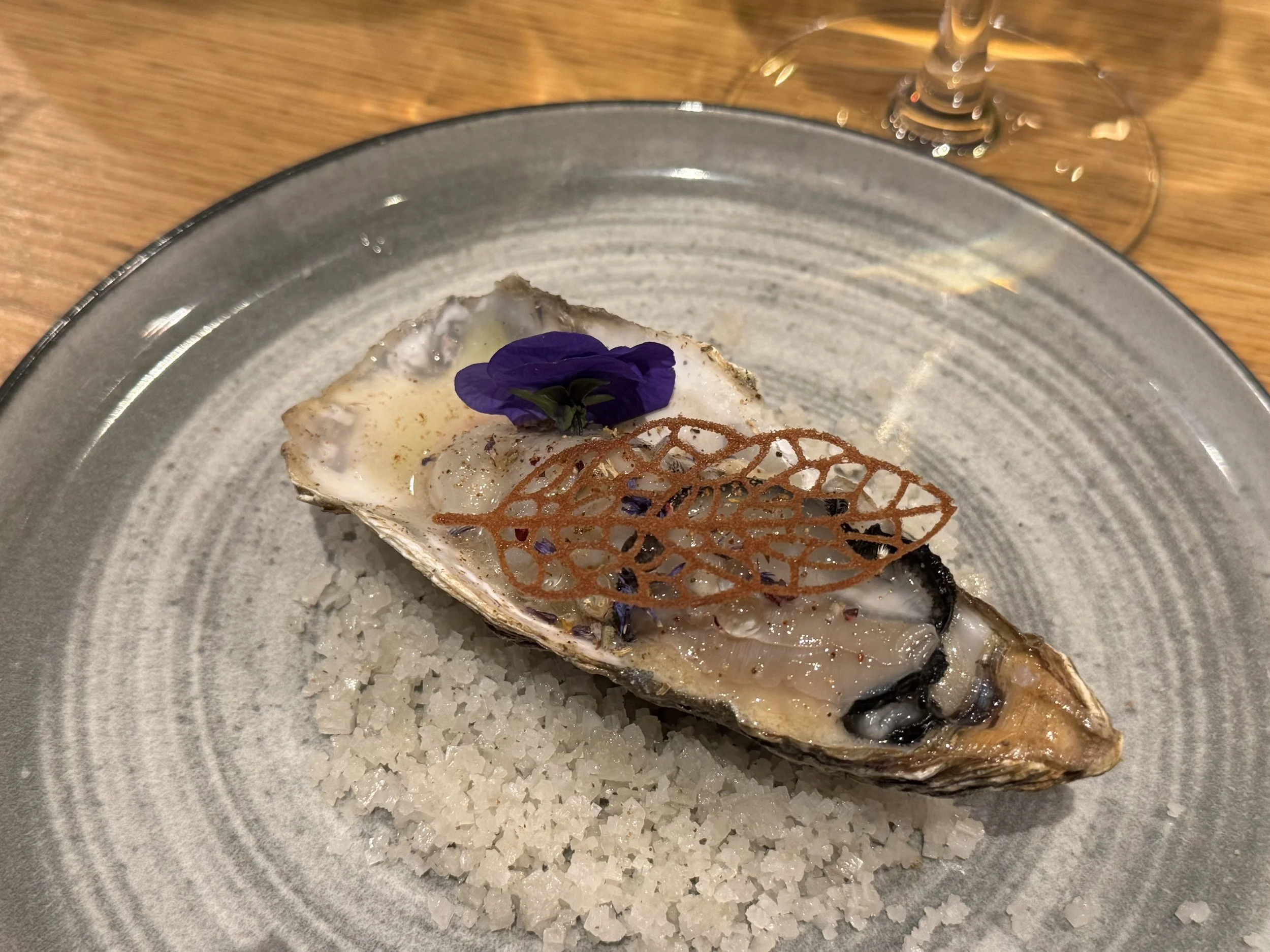
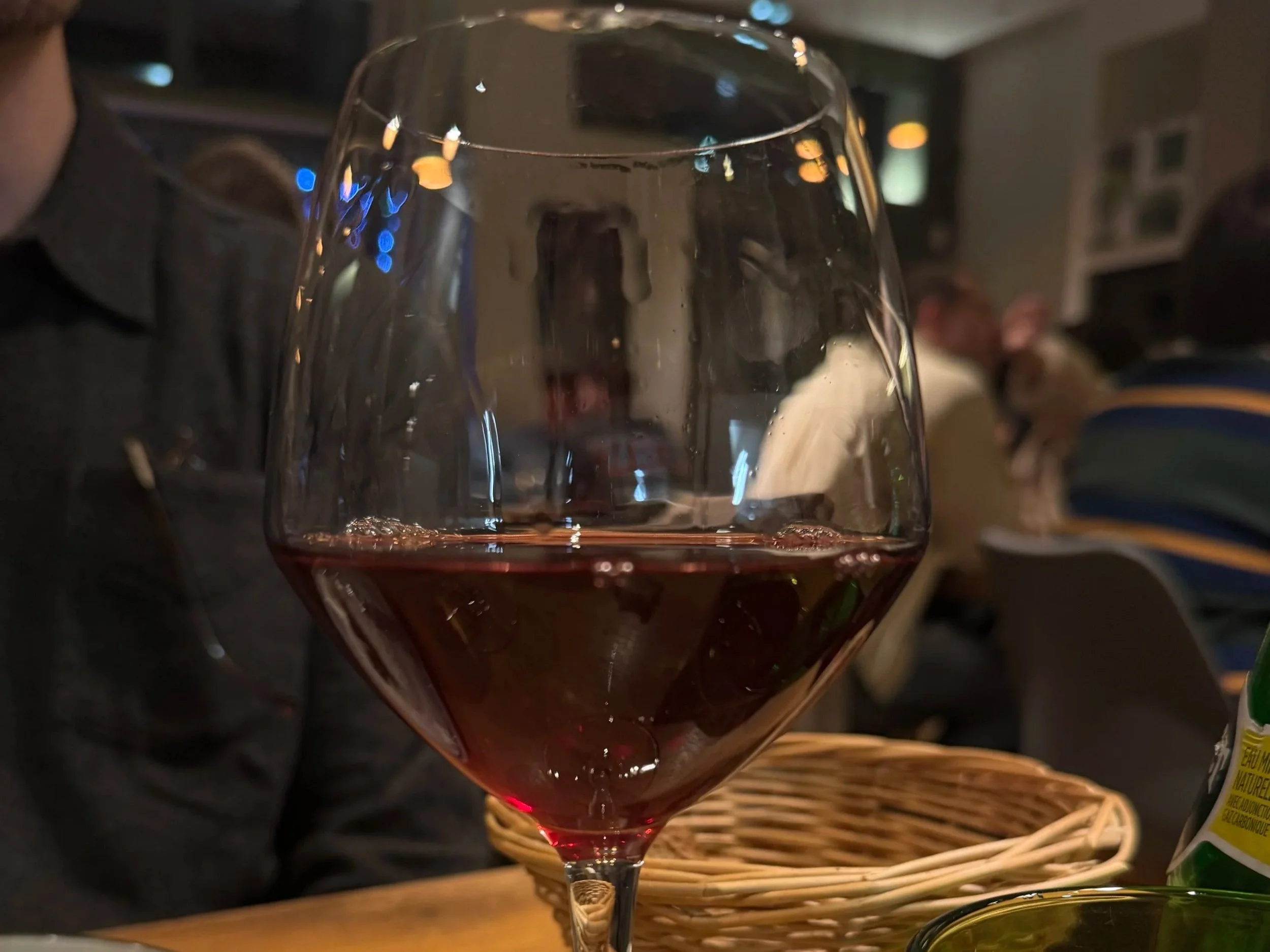
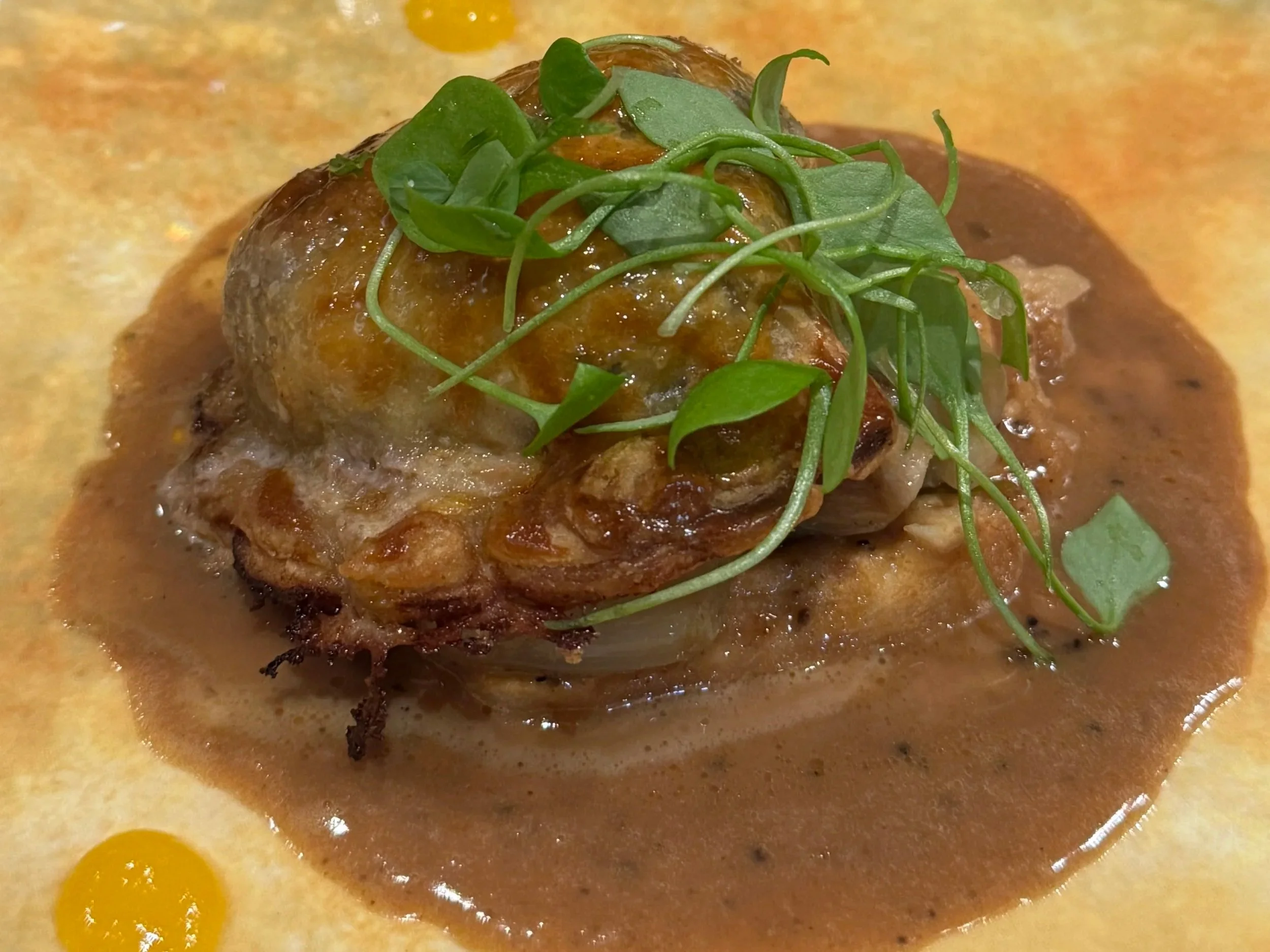
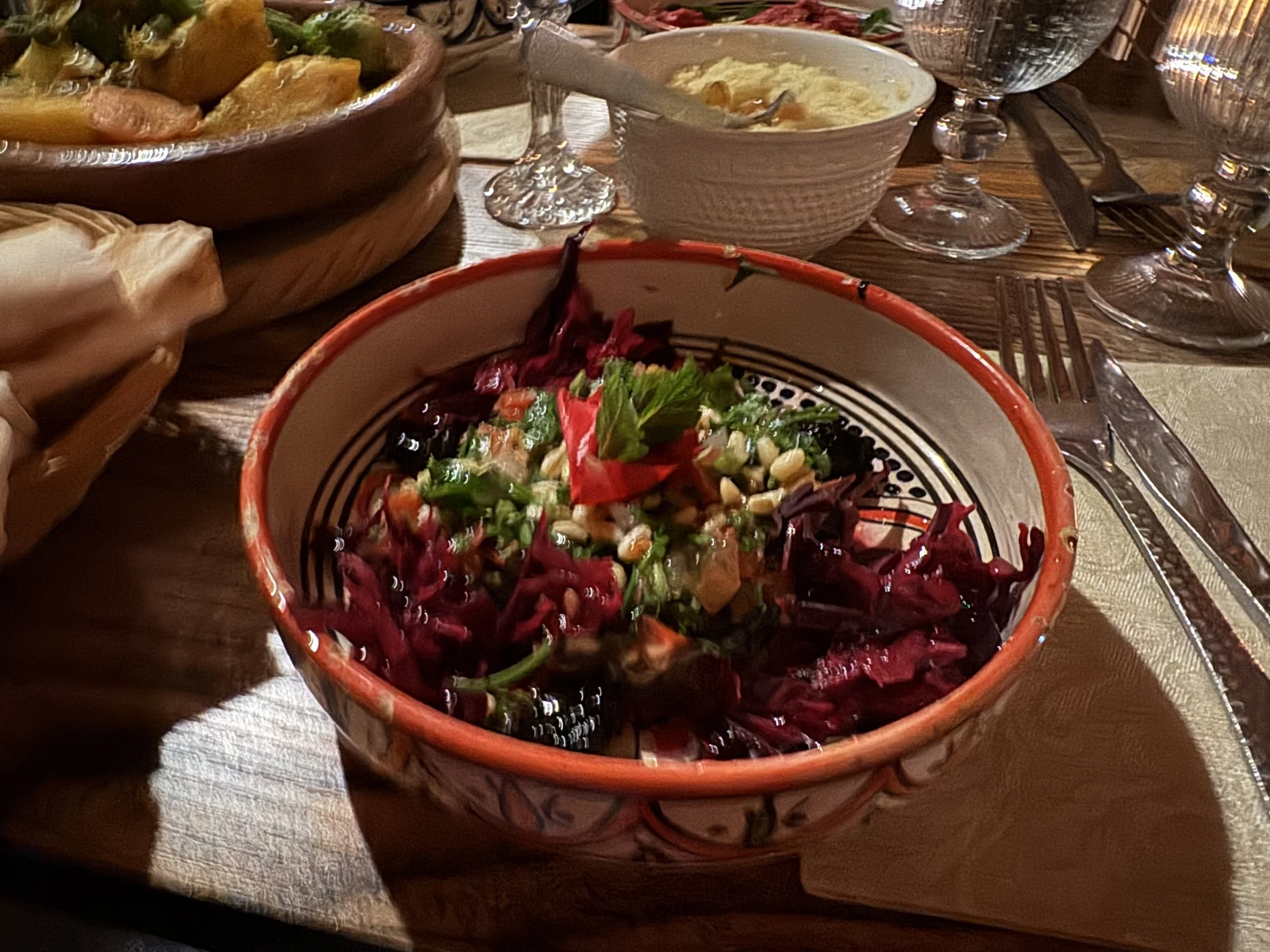
Touareg was one of the best Moroccan meals we’ve ever had! After days of rich French food, walking into this tea house and eating Moroccan food that tasted genuinely fresh and with just the right amount of spice was exactly what my body was asking for. It’s not at all heavy, not overly fussy in display, but was perfect with bright herbs, subtle warming spices, and vegetables that taste like…vegetables. My favorite kind. I felt better than when I arrived here which is saying a lot for eating food when traveling, which often leaves you feeling the opposite. If you want one meal in Lyon that is nourishing, soulful, and completely delicious, put Touraeg at the top of your list.
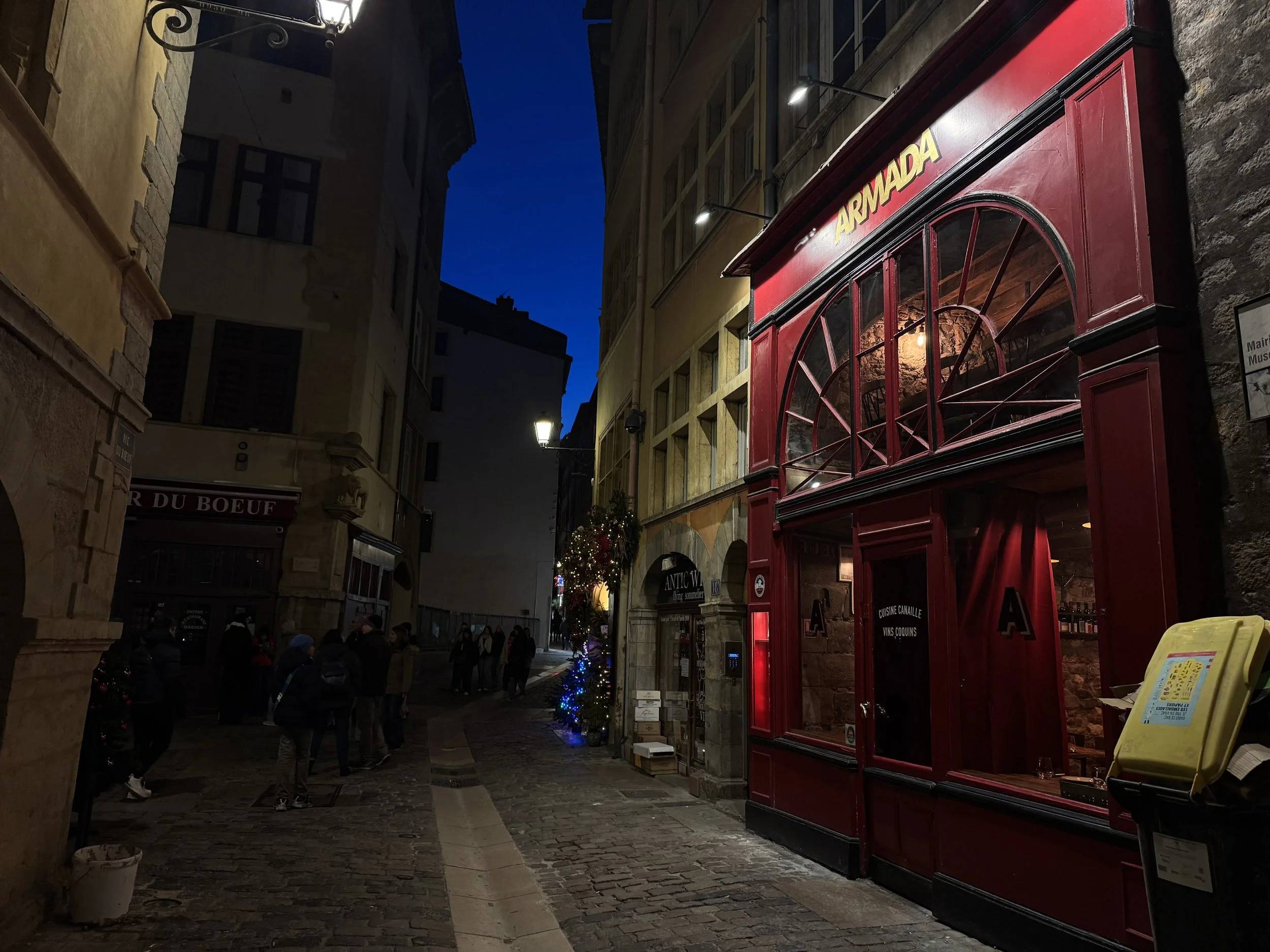
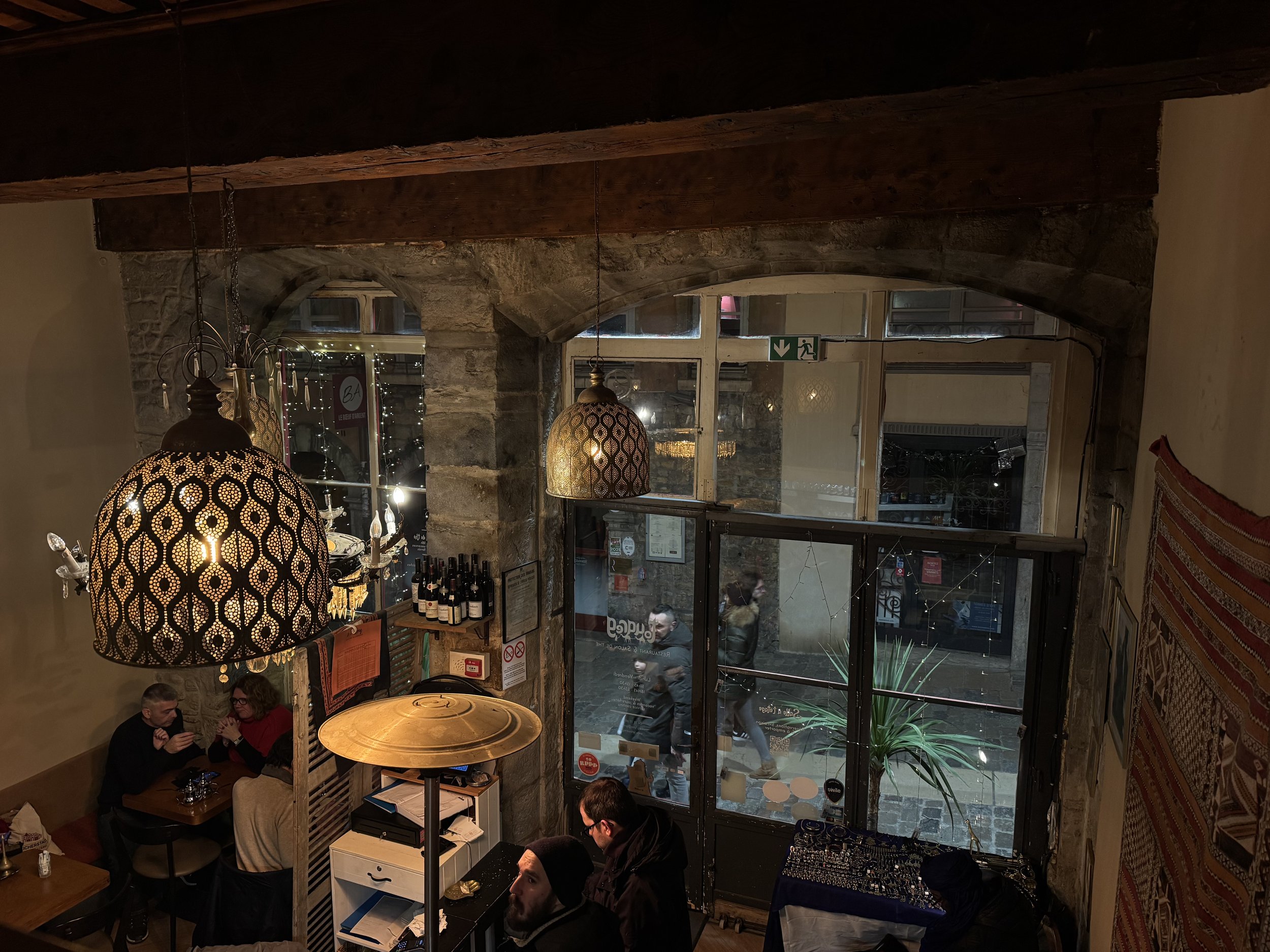
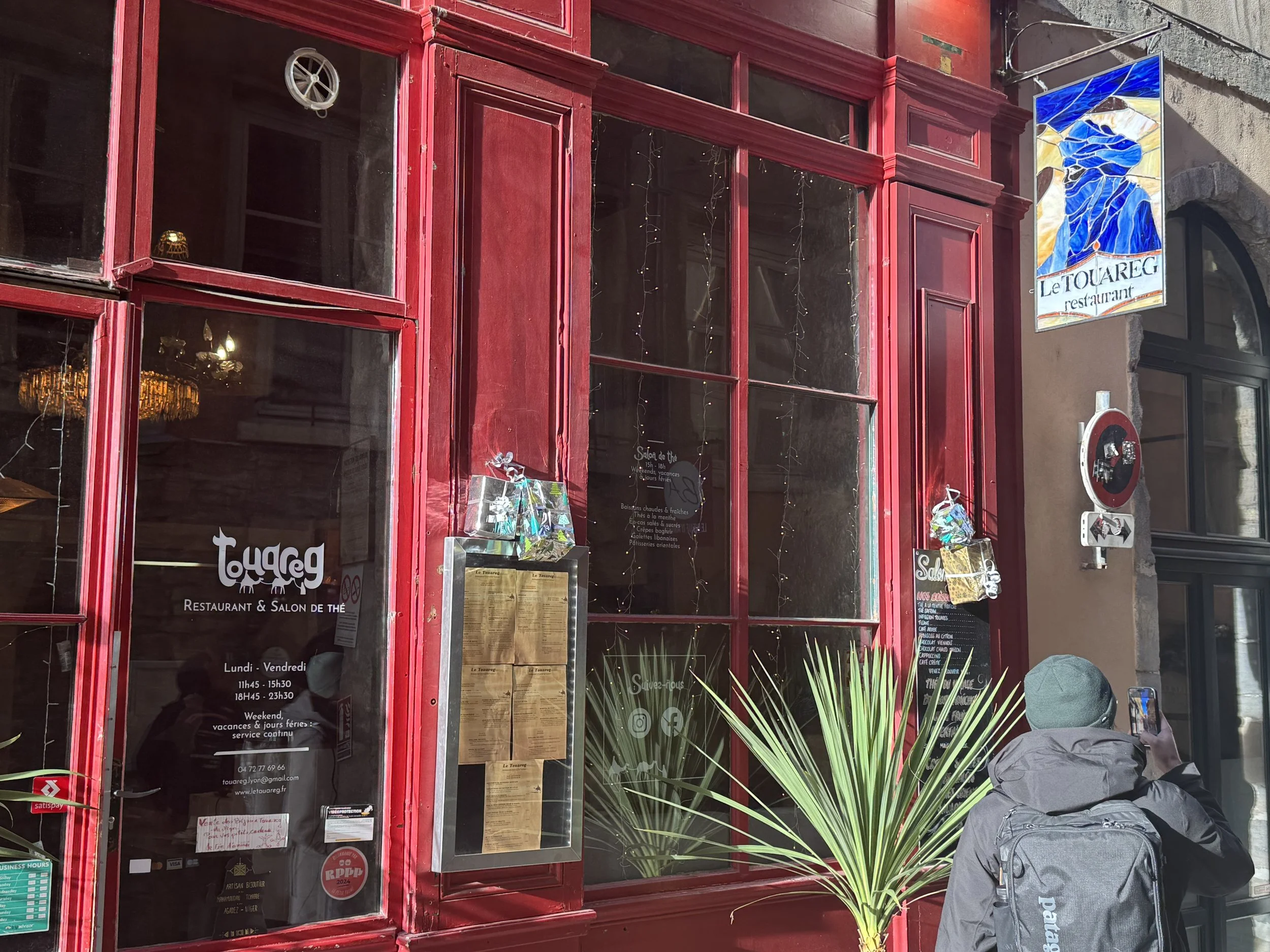
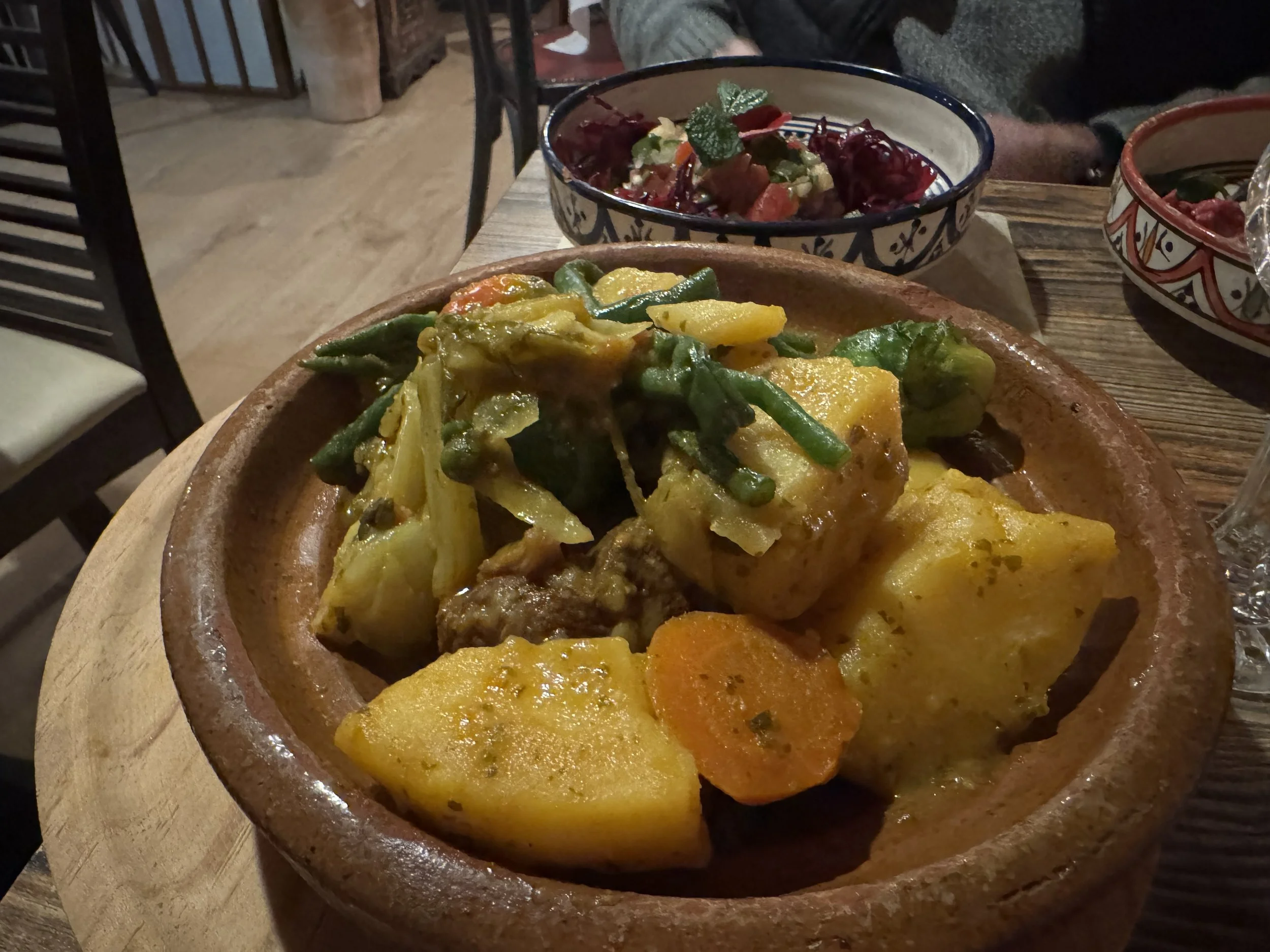
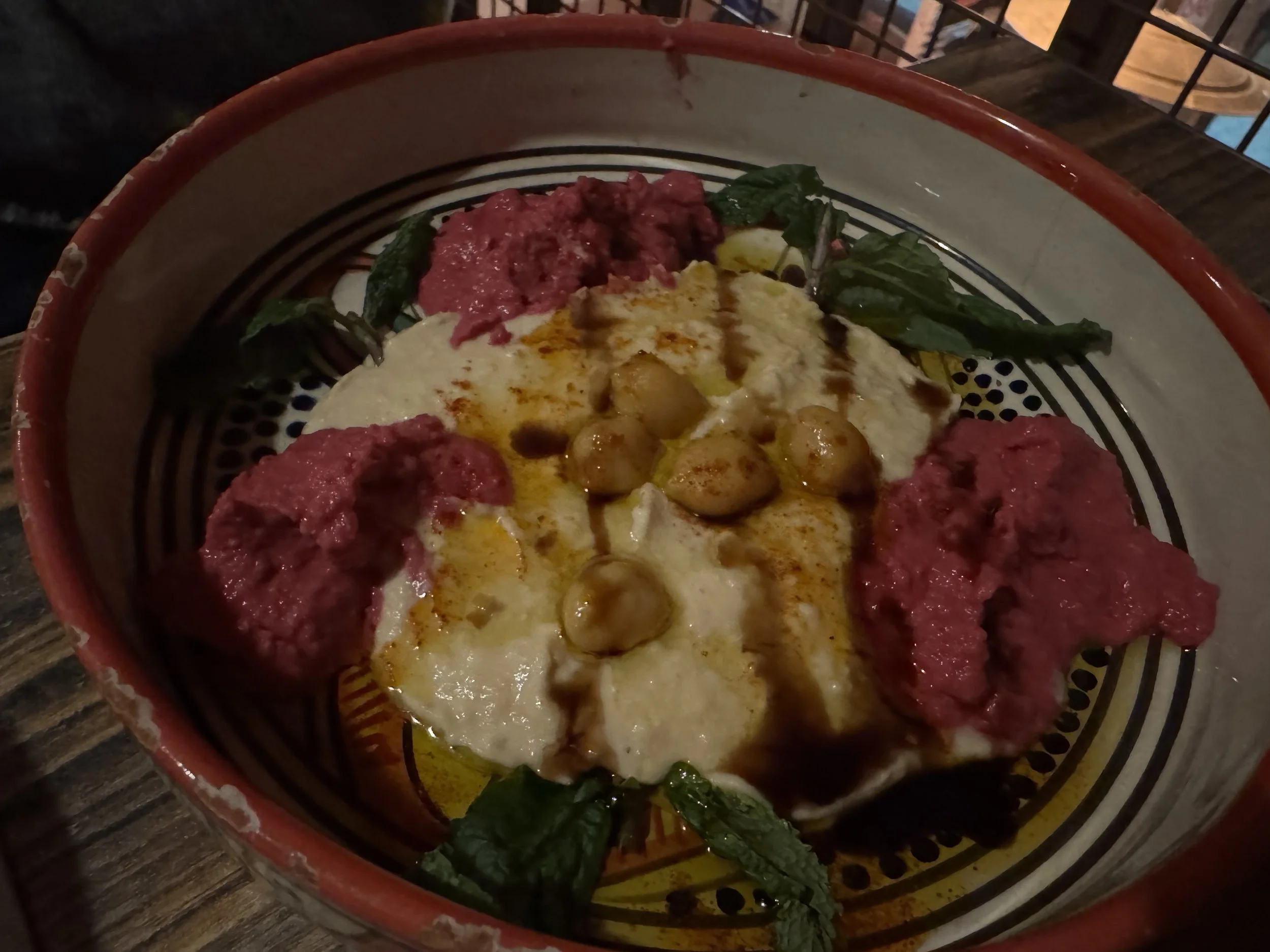
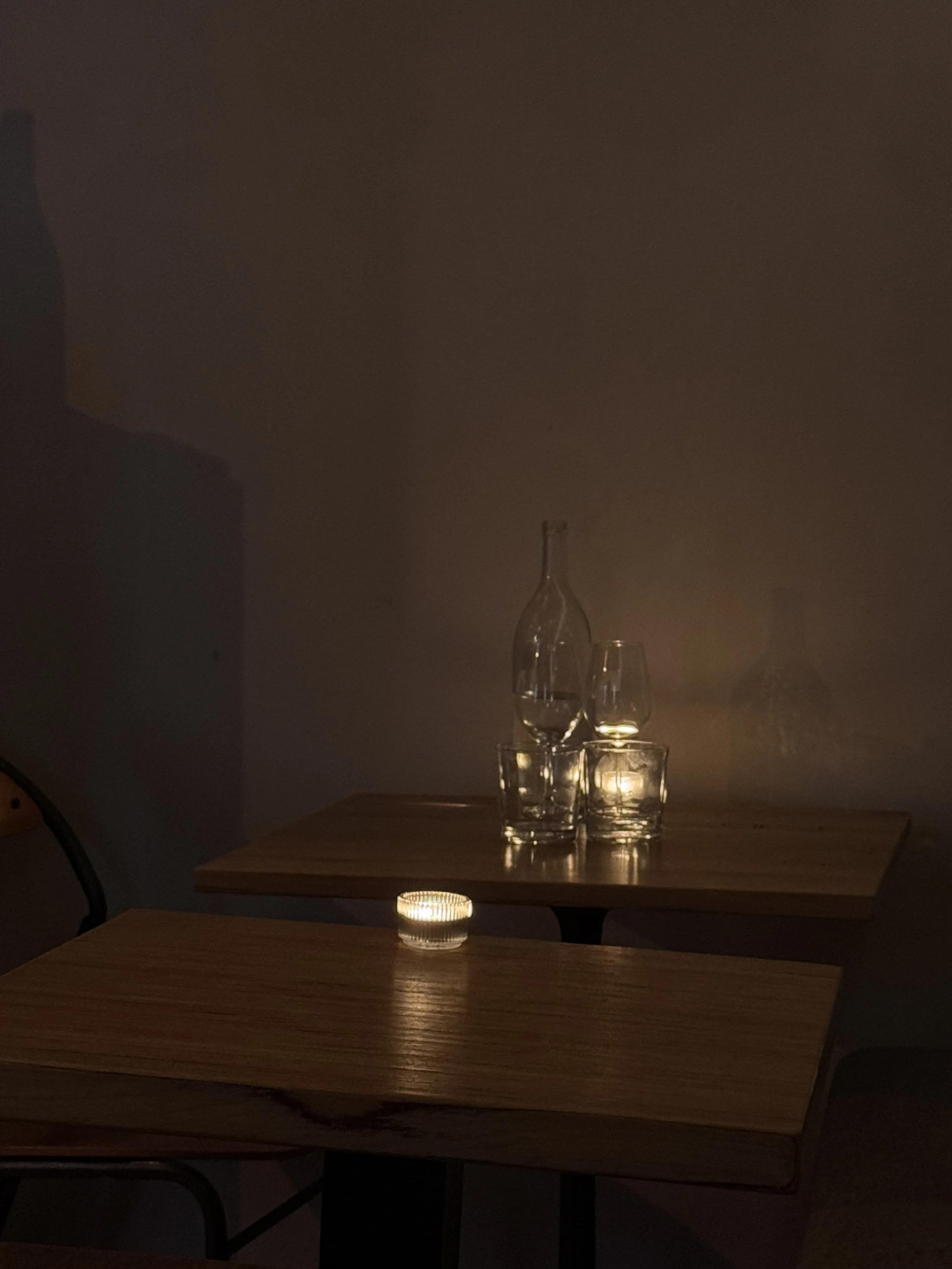
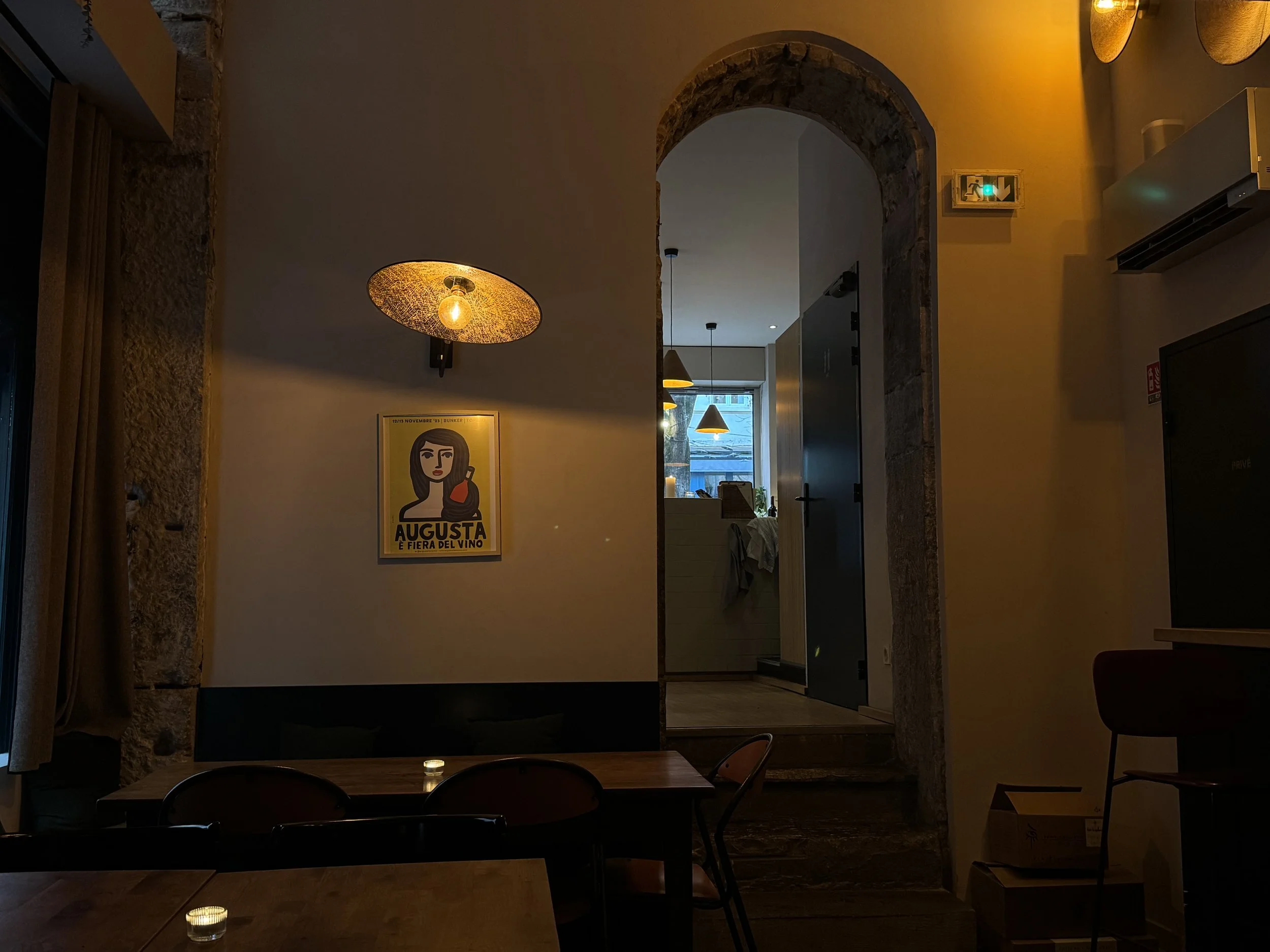
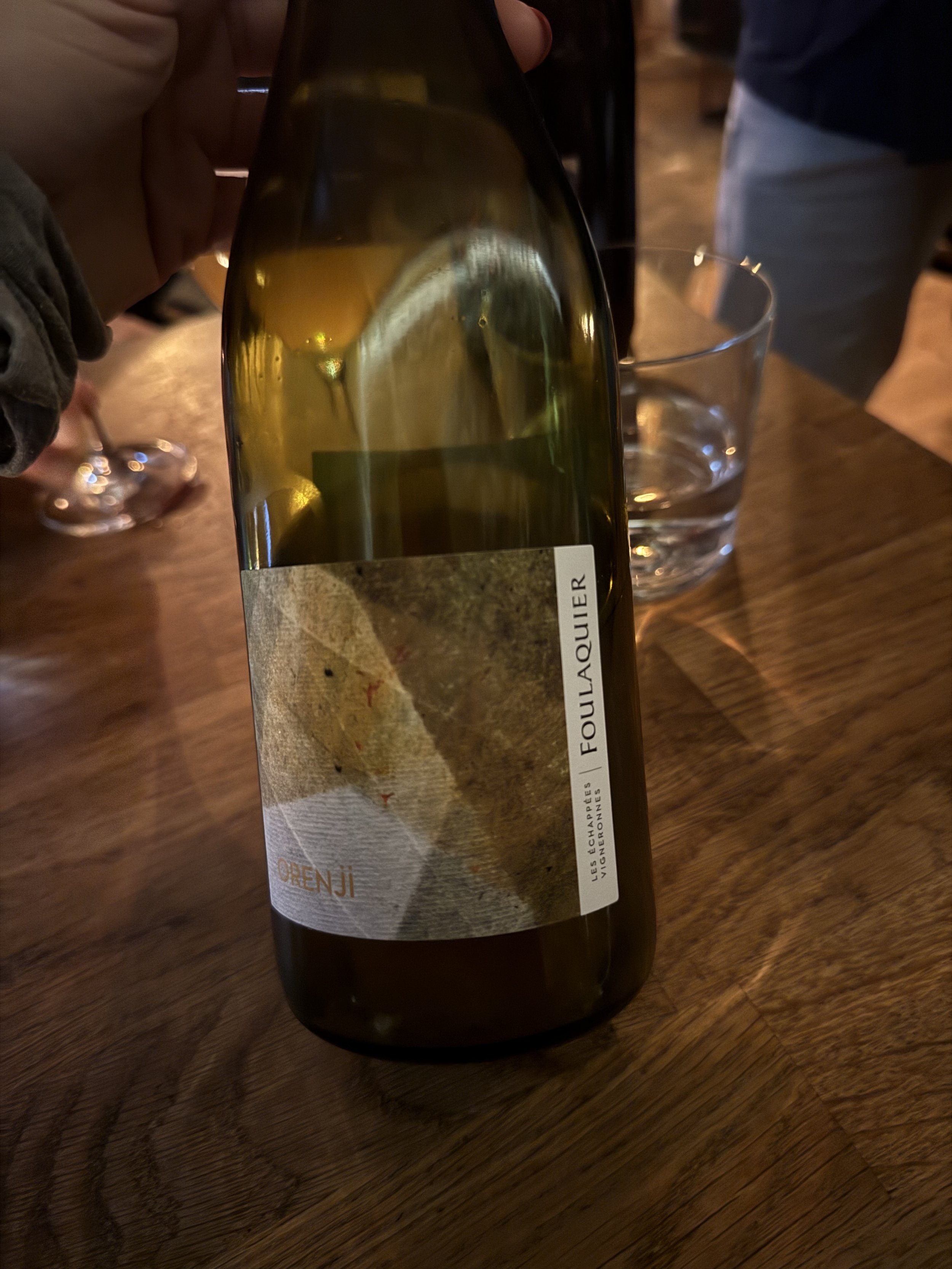
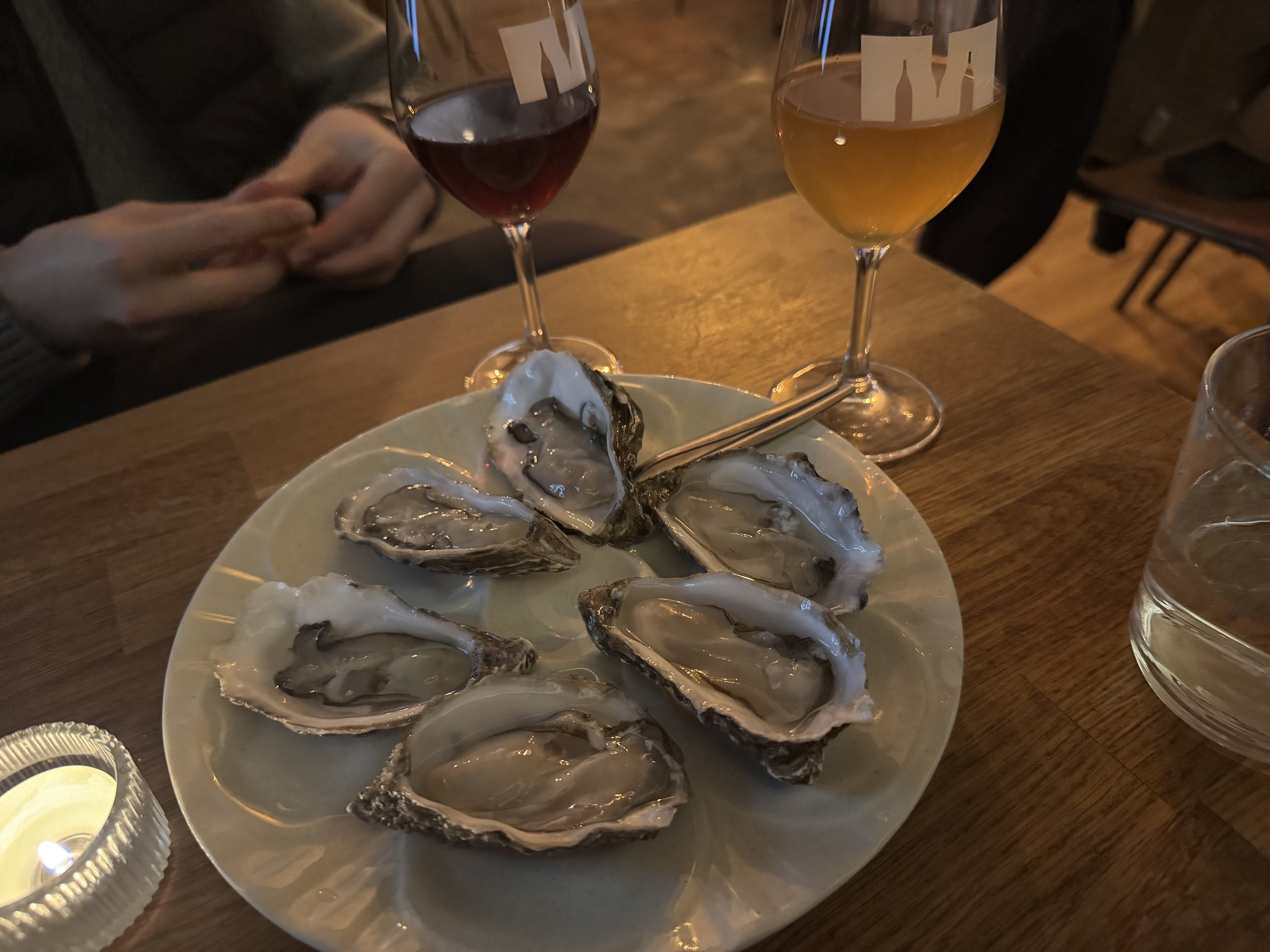
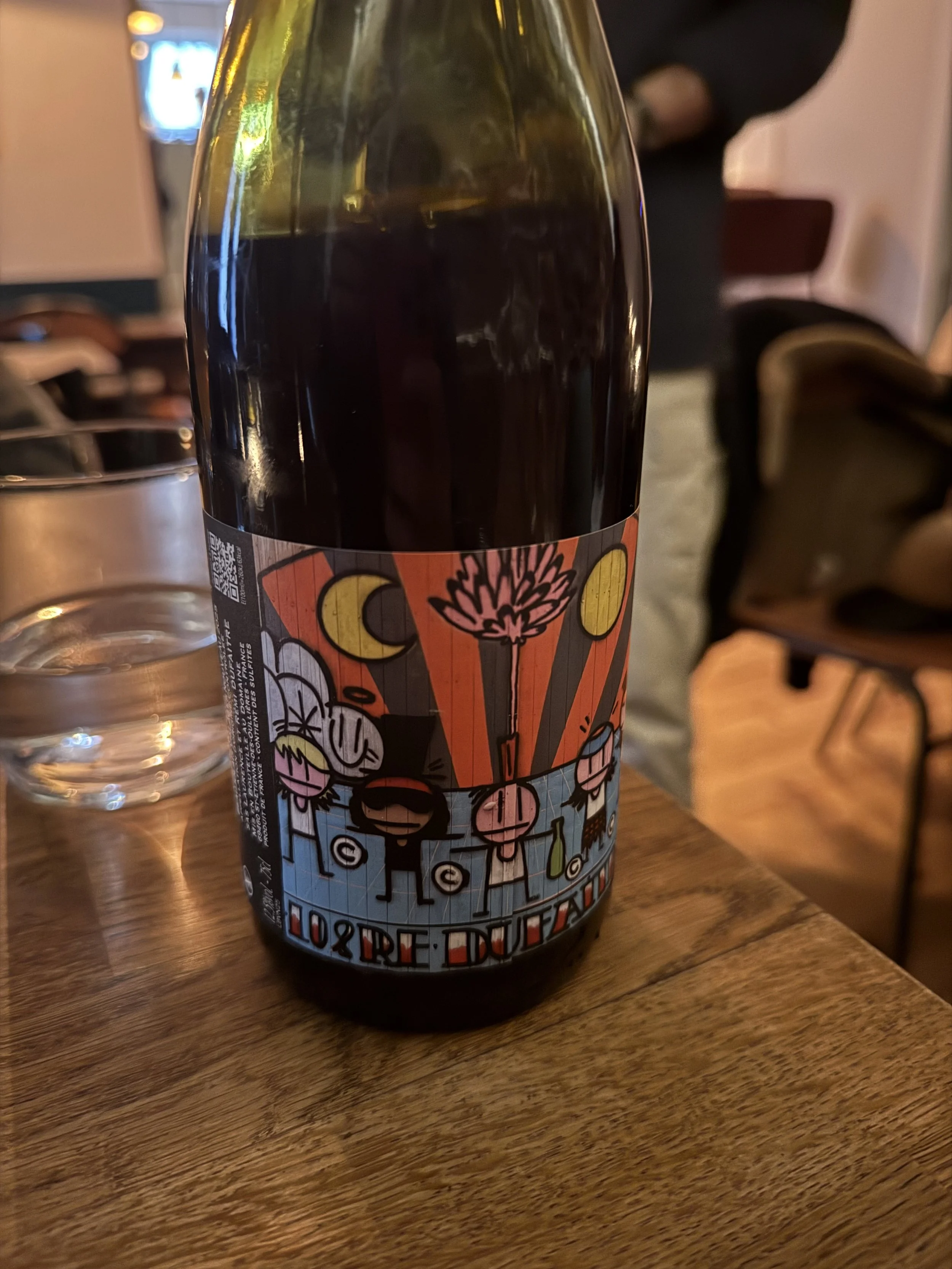
We mentioned it earlier, but it was worthy of repeating: Micro Sillon was our absolute favorite wine bar/restaurant vibe in the city. It is low-lit, warm, humming and feels intimate. We spent a few hours here and could’ve spent a few hours more. I loved how their wine list leaned heavily natural, but they also had enough food on offer to easily make a full meal. And they had oysters! Anywhere with oysters is a win.
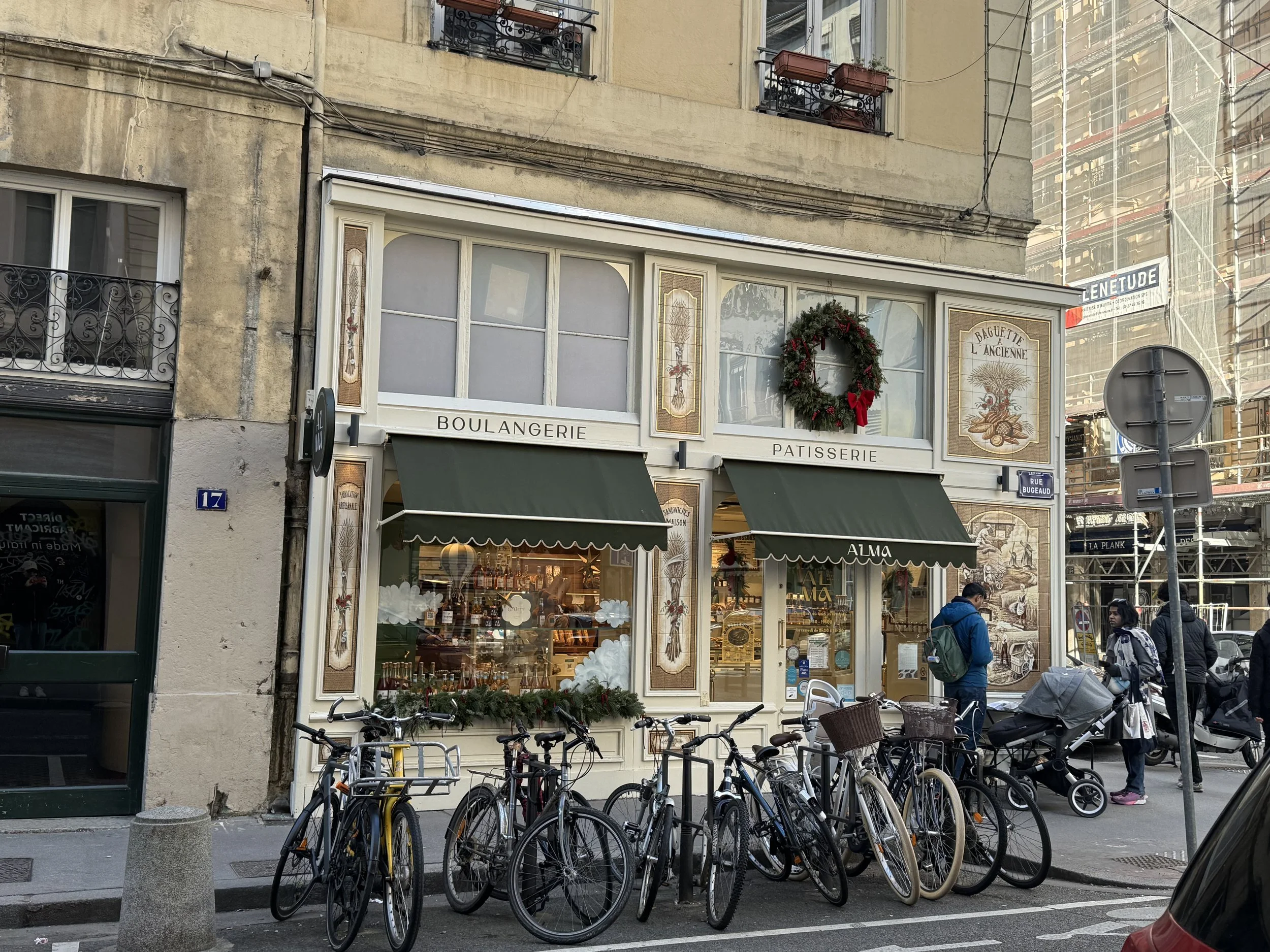
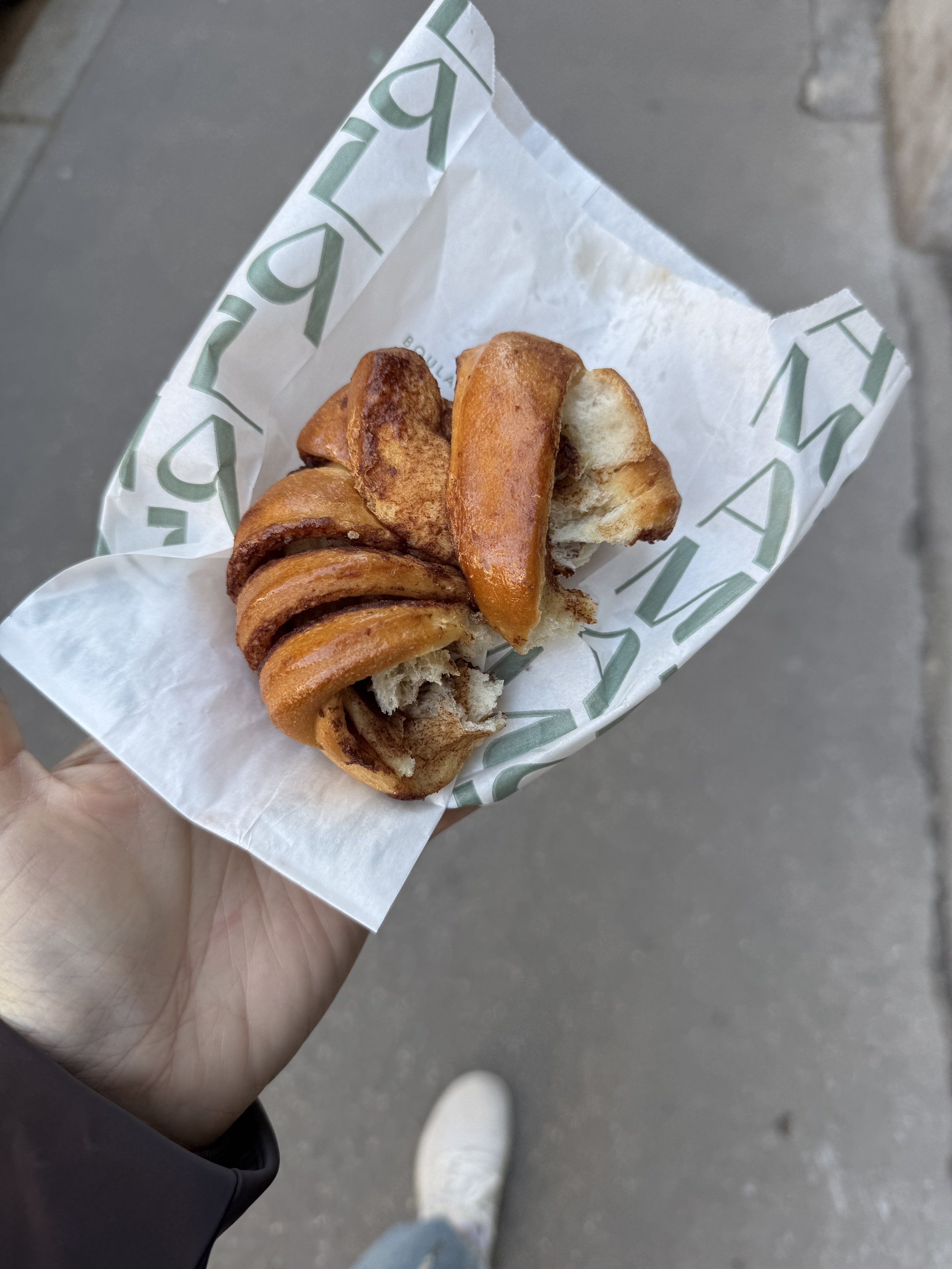
Alma Bakery was above and beyond our favorite pastry shop in Lyon. They’re known for both their chocolates and their pastries, and we went off piste for us (from the normal cinnamon bun or cardamom bun - though we got one of those too!) and selected a chocolate mousse-like treat which was *chefs kiss*. They of course also perfected the cardamom/cinnamon knot, and their sandwiches were abundant, too. Not too sugary, not too buttery, juuuust right.
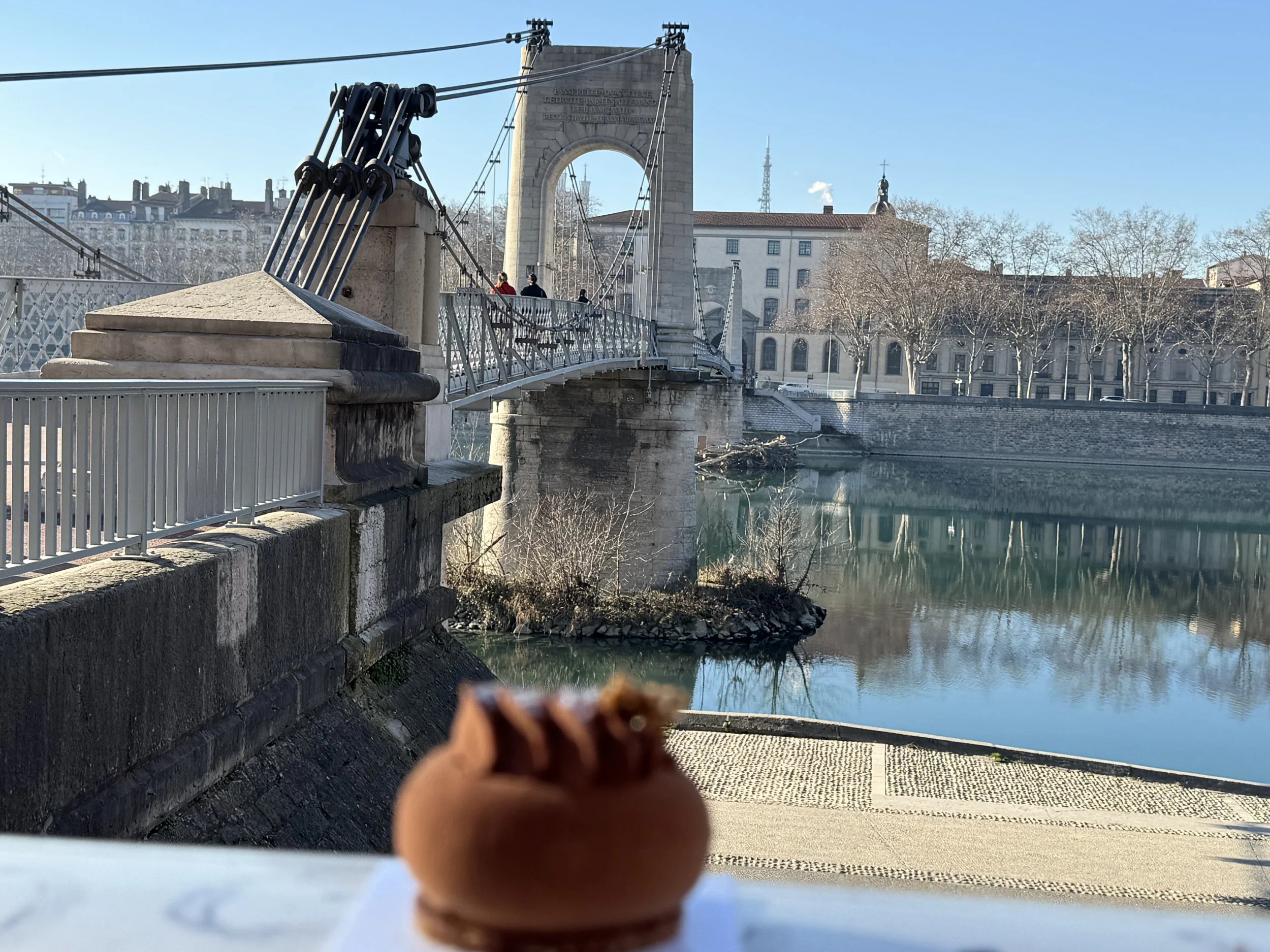
Things to Do: Walk the rivers and bridges at night. Start with a slow loop along the Rhone and Saone, cross a few bridges, and just breathe and take it all in. It’s clean, it’s magical, and even on your average weekday there always seems to be a buzz in the air.
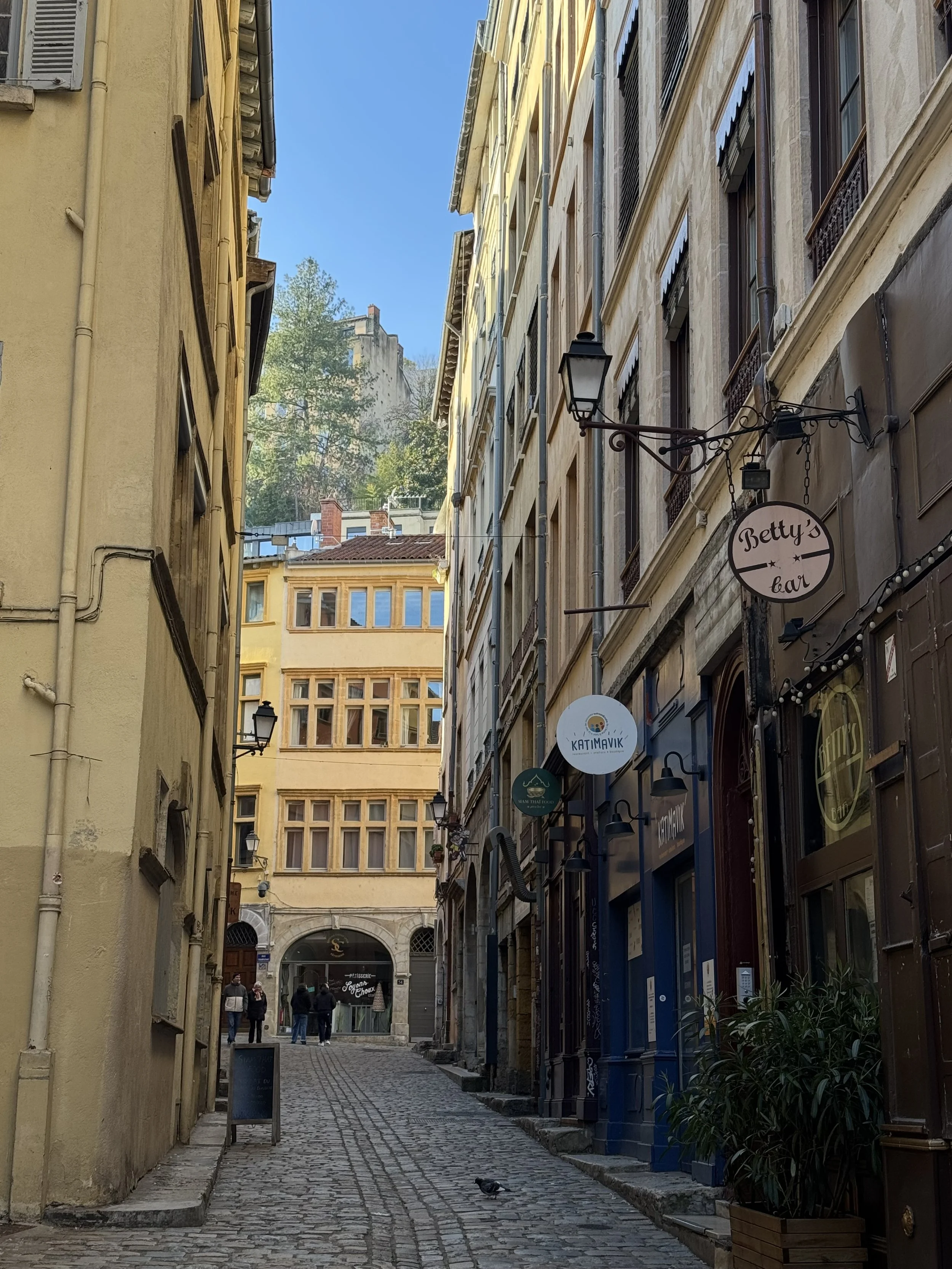
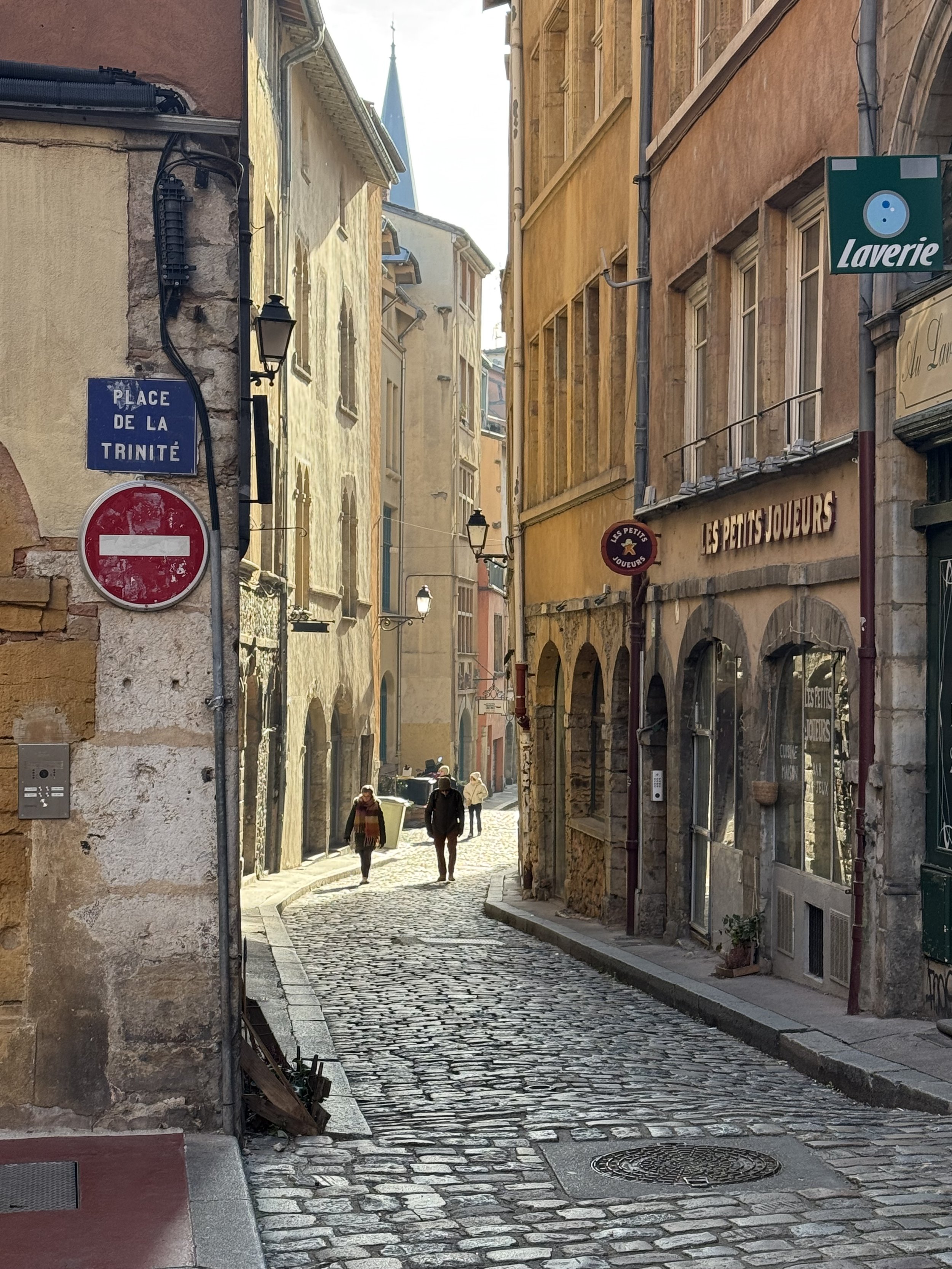
Get lost in Vieux Lyon and the traboules. The old town is all narrow streets, honey-colored stone and is filled with little surprises. Look for traboules, which are hidden passageways that cut through buildings… these were originally used by silk workers to move through the city. It’s secretive and romantic and makes for a great scavenger hunt for kids, too.
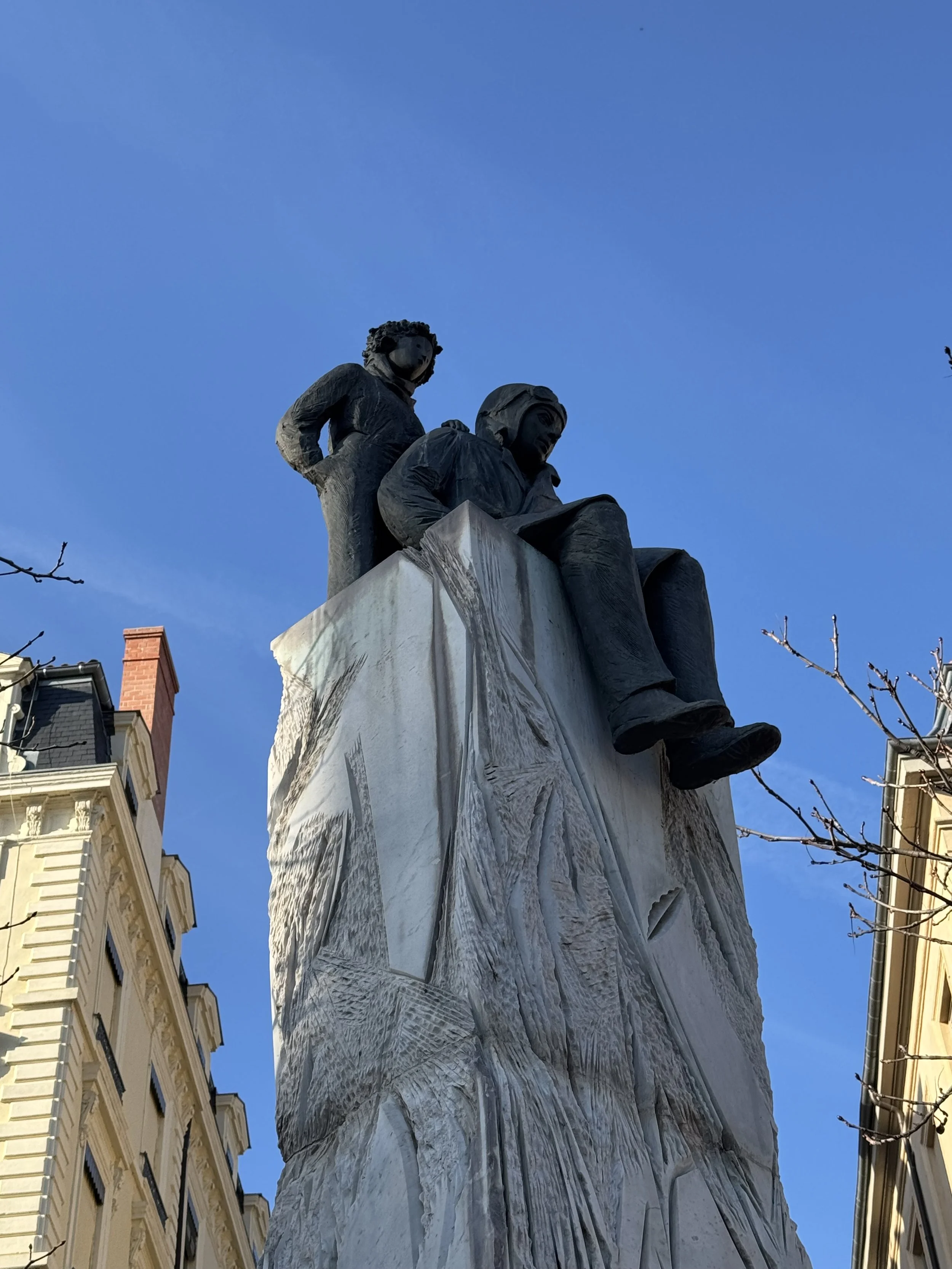
Go see the Saint-Exupery statue. If you love The Little Prince or Wind, Sand & Stars as much as I do, go pay your respects. Saint Exupery was born in Lyon and his presence in statue form is a reminder of the city that shaped him. I absolutely loved seeing Saint Exupery and the Little Prince juxtaposed in statue form and it brought a lot of childlike joy into our day. You also won’t easily miss the Little Prince paraphernalia and postcards on seemingly every corner - be sure to grab some to bring home!
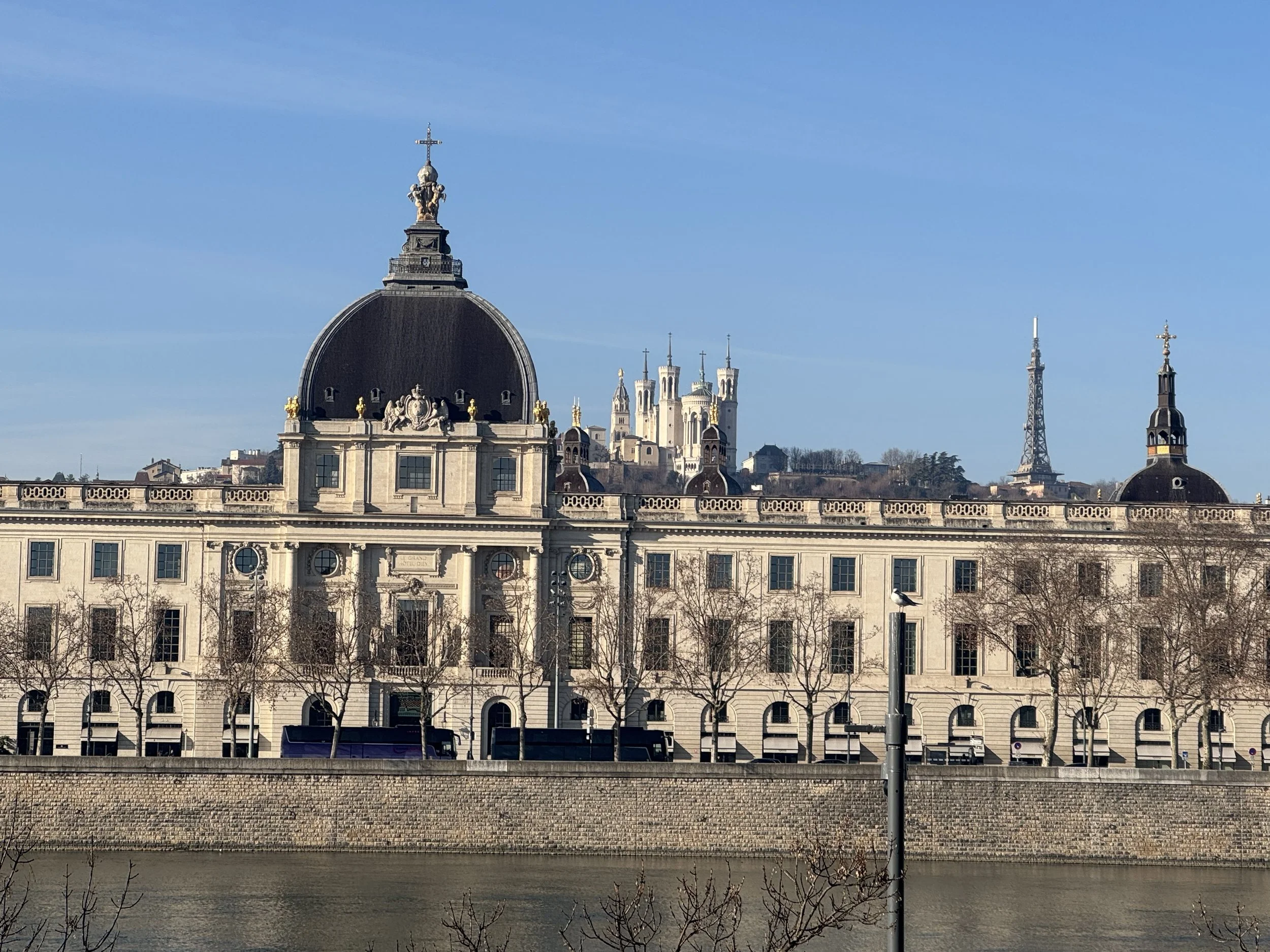
Ride the funicular up to Fourviere. Lyon has Roman bones and lots of dramatic hilltops, and Fourviere is the best spot to catch the panoramic views. Time it at golden hour and you’ll enjoy stunning views of the city aglow.
Interesting tidbits to know: Lyon was founded by the Romans in 43 BC as Lugdunum. It became the capital of Roman Gaul, which is why the city feels important. Two Roman emporers were also born in Lyon: Claudius and Caracalla.
Lyon also sits at the meeting point of two major rivers: the Rhone and the Saone, which is precisely what made it a trade powerhouse. This is a huge reason why Lyon became ultra wealthy… wealth is what builds beautiful cities, after all.
Lyon was also a silk capital for centuries and the silk industry shaped whole neighborhoods, especially the Croix-Rousse area, where you will see buildings with unusually high ceilings because the looms literally needed the space.
Lyon is also considered the birthplace of modern publishing in France. Johannes Gutenberg’s printing press spread quickly and Lyon became one of Europe’s major printing centers during the Renaissance.
Lyon has its own local word for it’s iconic meal culture: the bouchon. There’s a semi-official stamp of approval for traditional bouchons. A bouchon is a traditional Lyonnais restaurant, usually small, cozy and very unfussy, that serves classic local comfort food in a warm, slightly chaotic atmosphere. Think shared tables, chalkboard menus, and a place full of regulars. It’s been part of the city’s identity for a very long time and is the epitome of hearty, old school cooking and atmosphere.
If you are planning a future winter wine trip, the Percée du Vin Jaune in the Jura happens the first week of February. Maybe we’ll catch you there!
Side Quest: Romans-sur-Isère/Valence/Crest/Grignan
Where to Drive: When driving from Lyon to Avignon, we wanted to see as much of France as possible, so we mapped out a route that took us through Romans-sur-Isere, Valence, Crest, Grignan, and a few other stops inbetween. We recommend aiming to do dinner in Grignan as there are a few lovely places to eat, with one, Le Pied de la Lettre, topping the list.
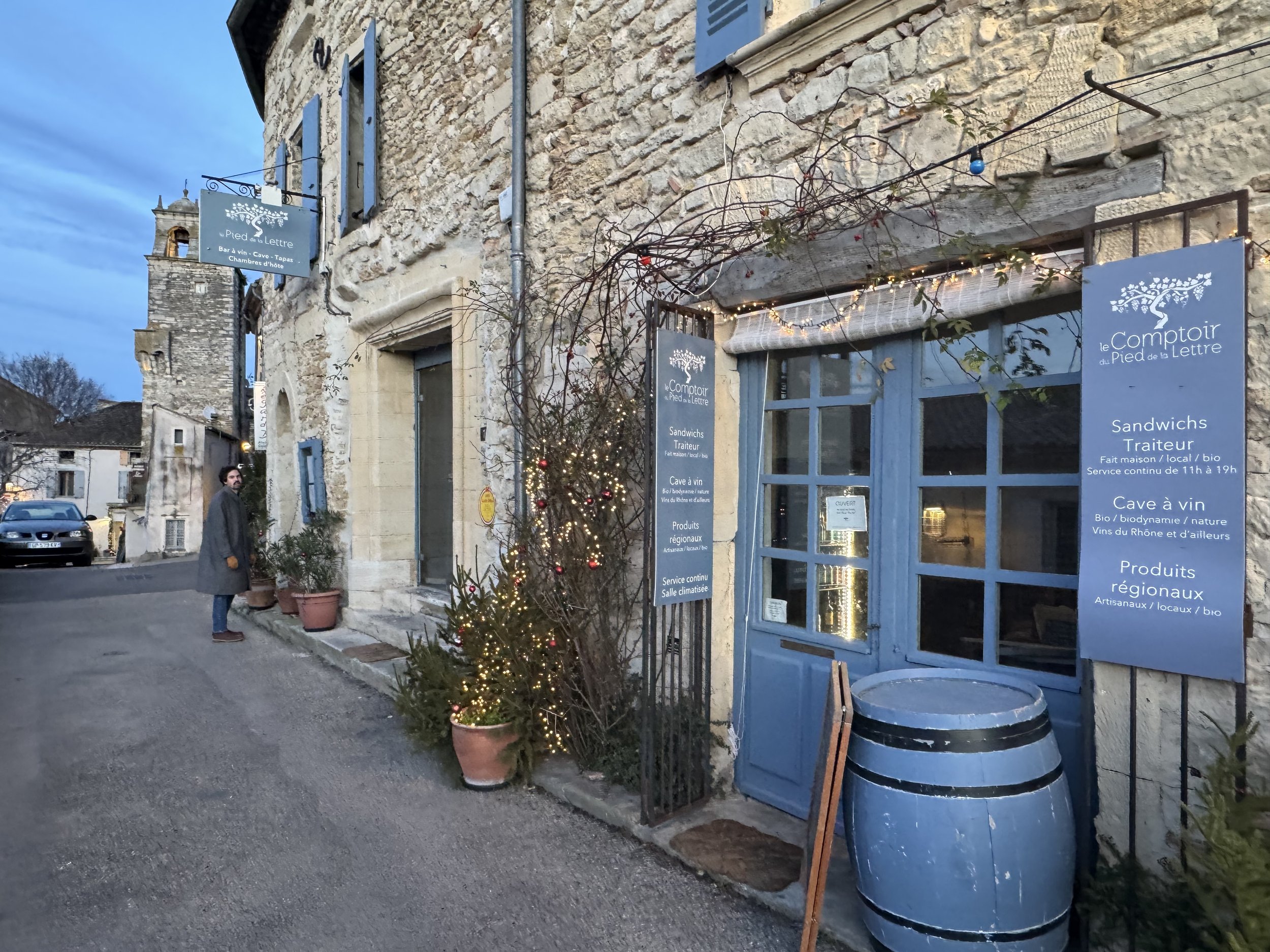
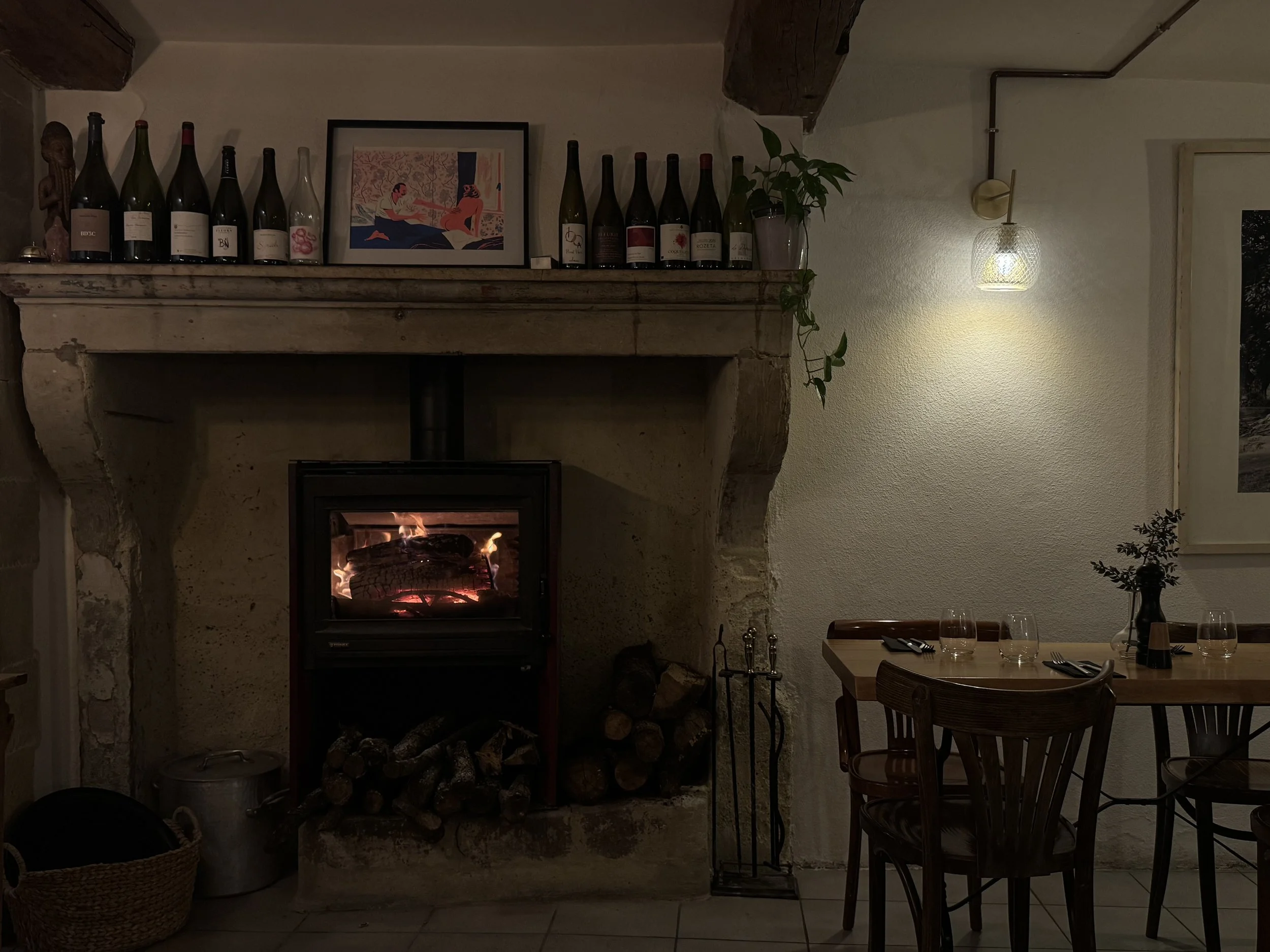
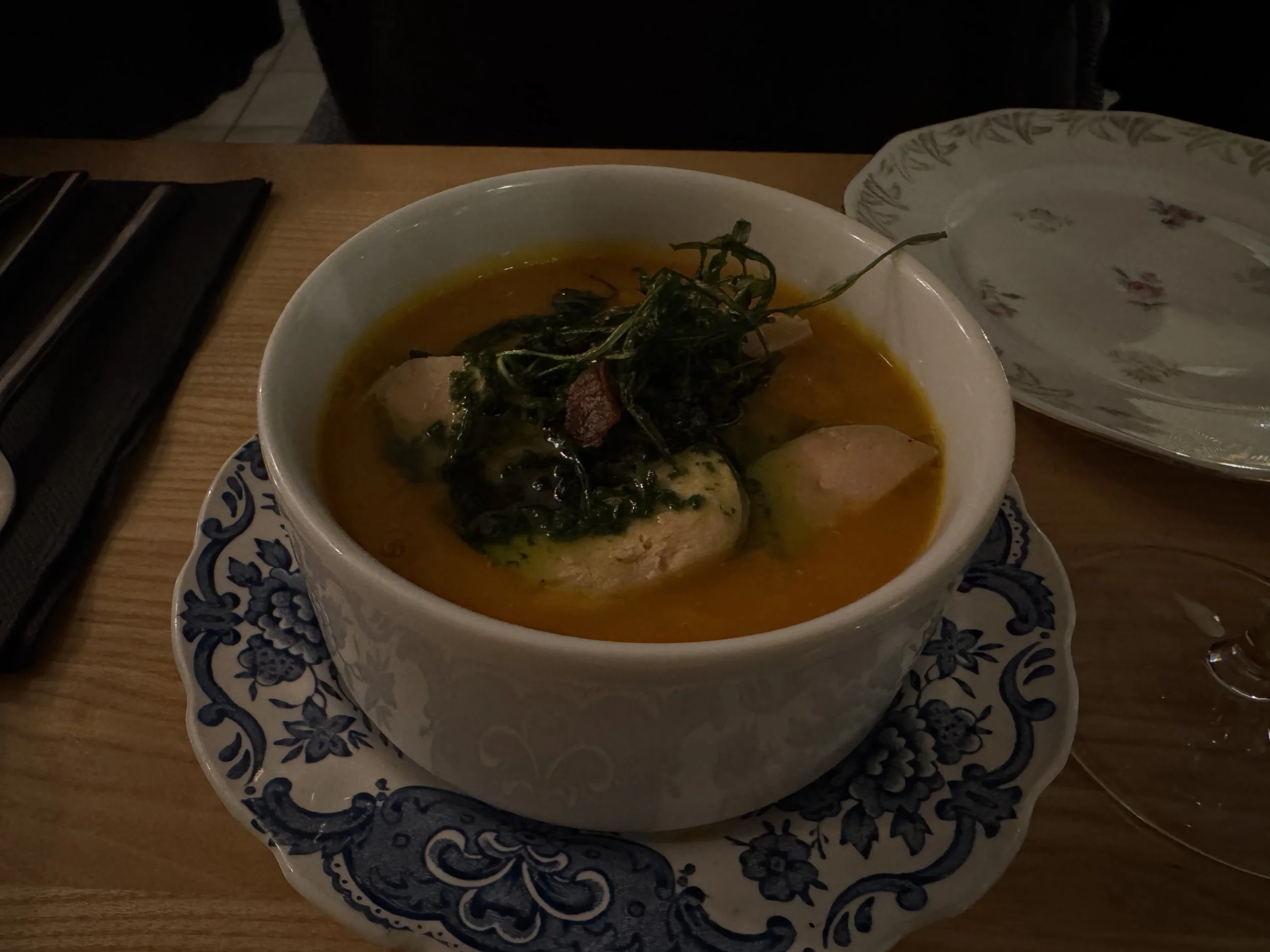
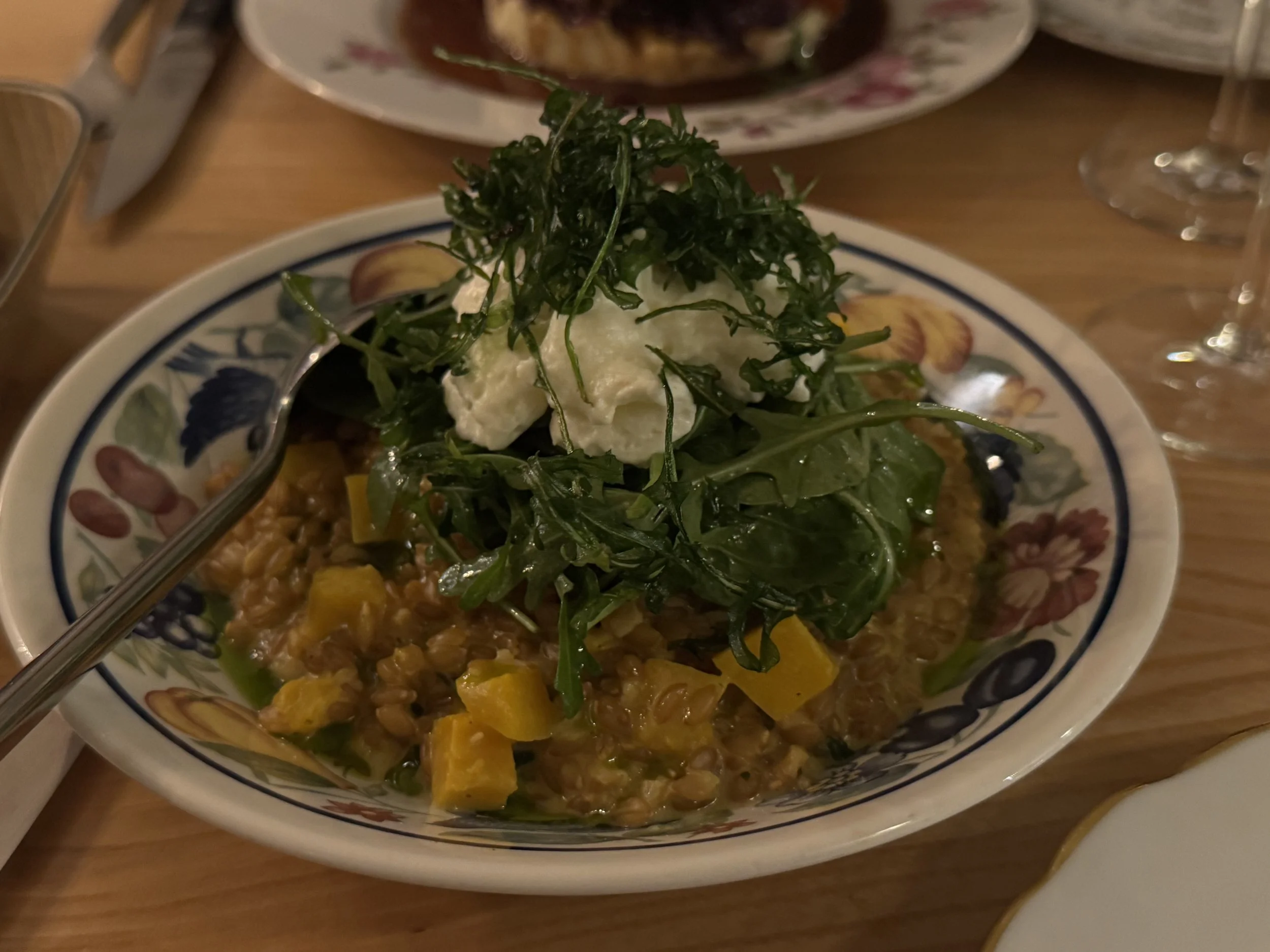
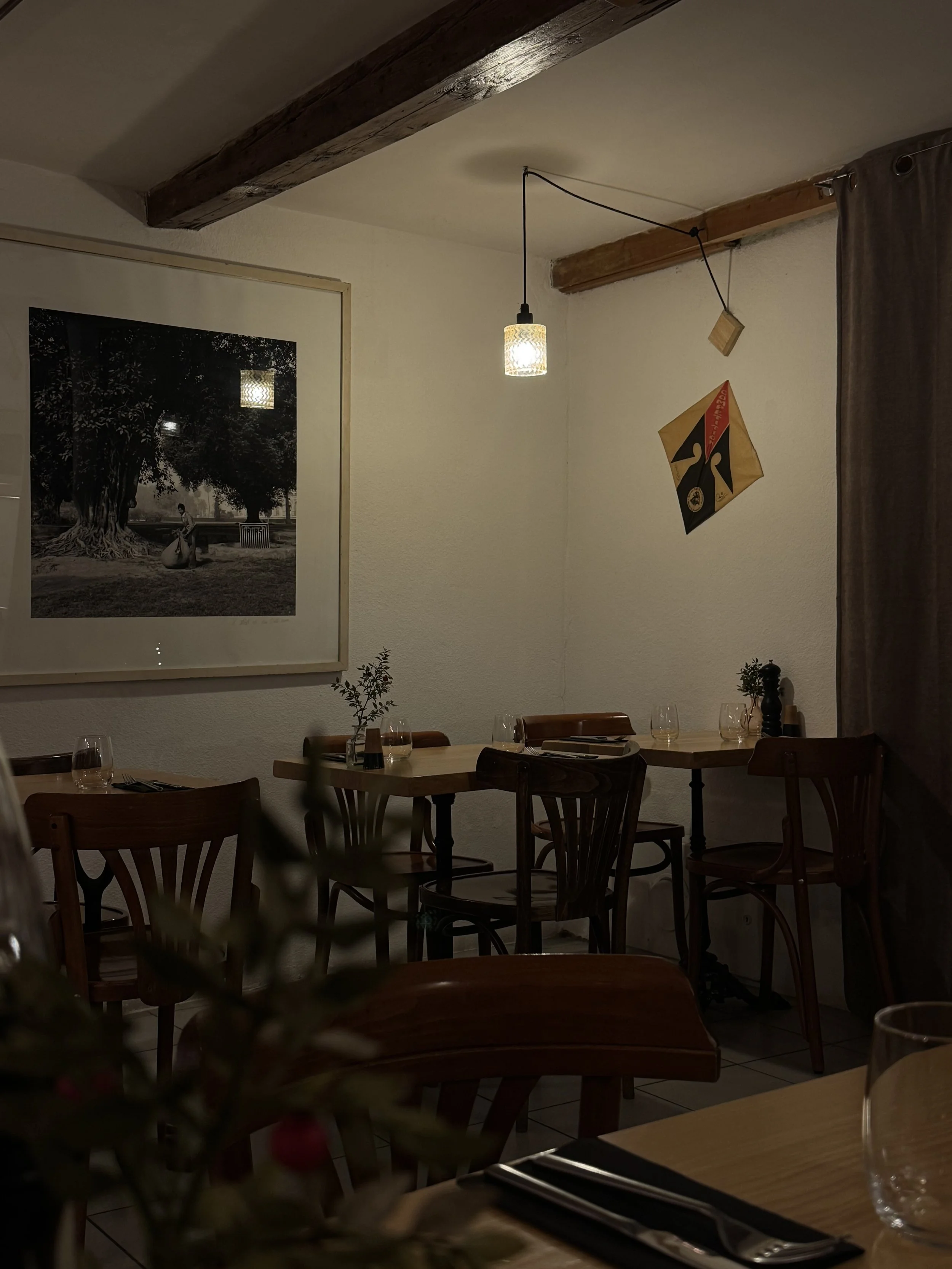
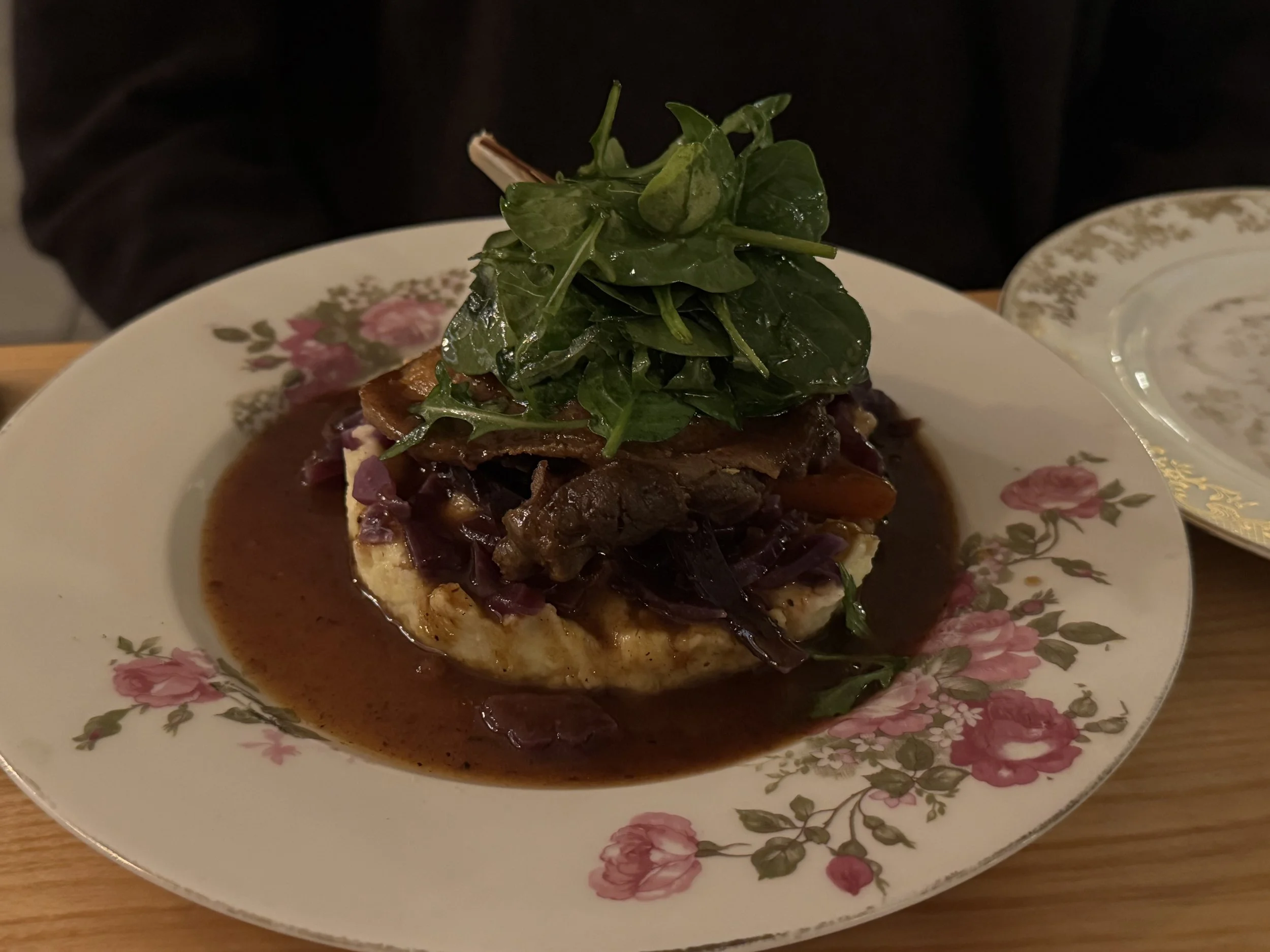
Where to Eat: Le Pied de la Lettre is our top recommendation for this drive and the Grignan area, not to mention Grignan itself is a stunning town worth visiting. This restaurant was the perfect winter “fireplace dinner” type of meal, and we remember the vibe and the kindness of the owners of the restaurant just as much as we remember the food itself. Another Raisin find, they had great Rhone reds on offer amongst many other excellent selections on their wine list. We enjoyed one carbonic and bouncy red and another a bit more traditional and jammy. We ordered oysters with a mignonette, which were less briny than coastal ones we are used to back at home but a perfect way to ease into the meal. Then came a squash soup topped with foie gras, followed by a standout risotto, made with butternut squash and local barley-like grains that gave it a nutty bite under all that creamy, buttery comfort. The owners spent time chatting with us, learning our story, our preferences, and emanated nothing but kindness and hospitality. If only we could’ve transported this restaurant home with us…
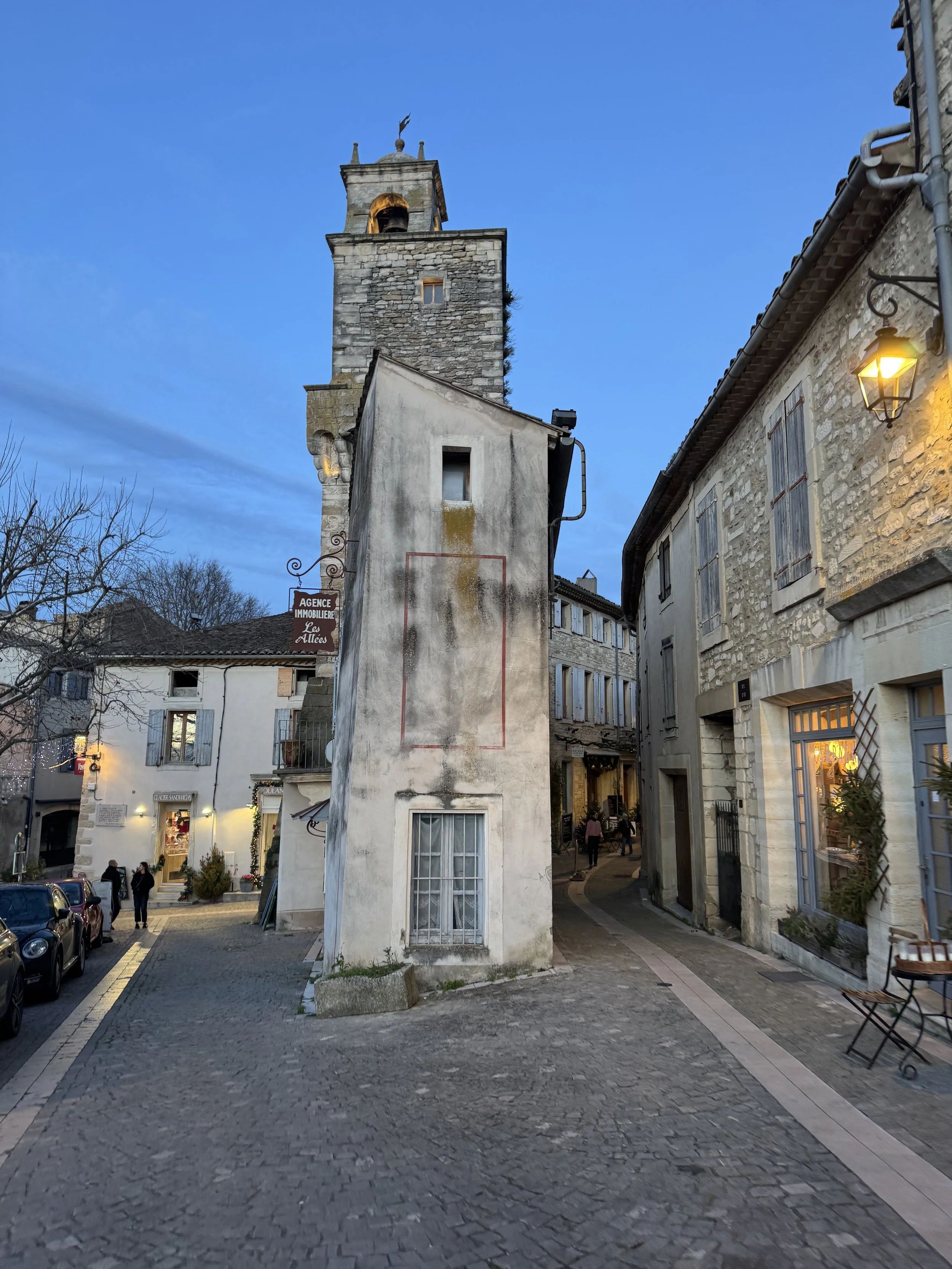
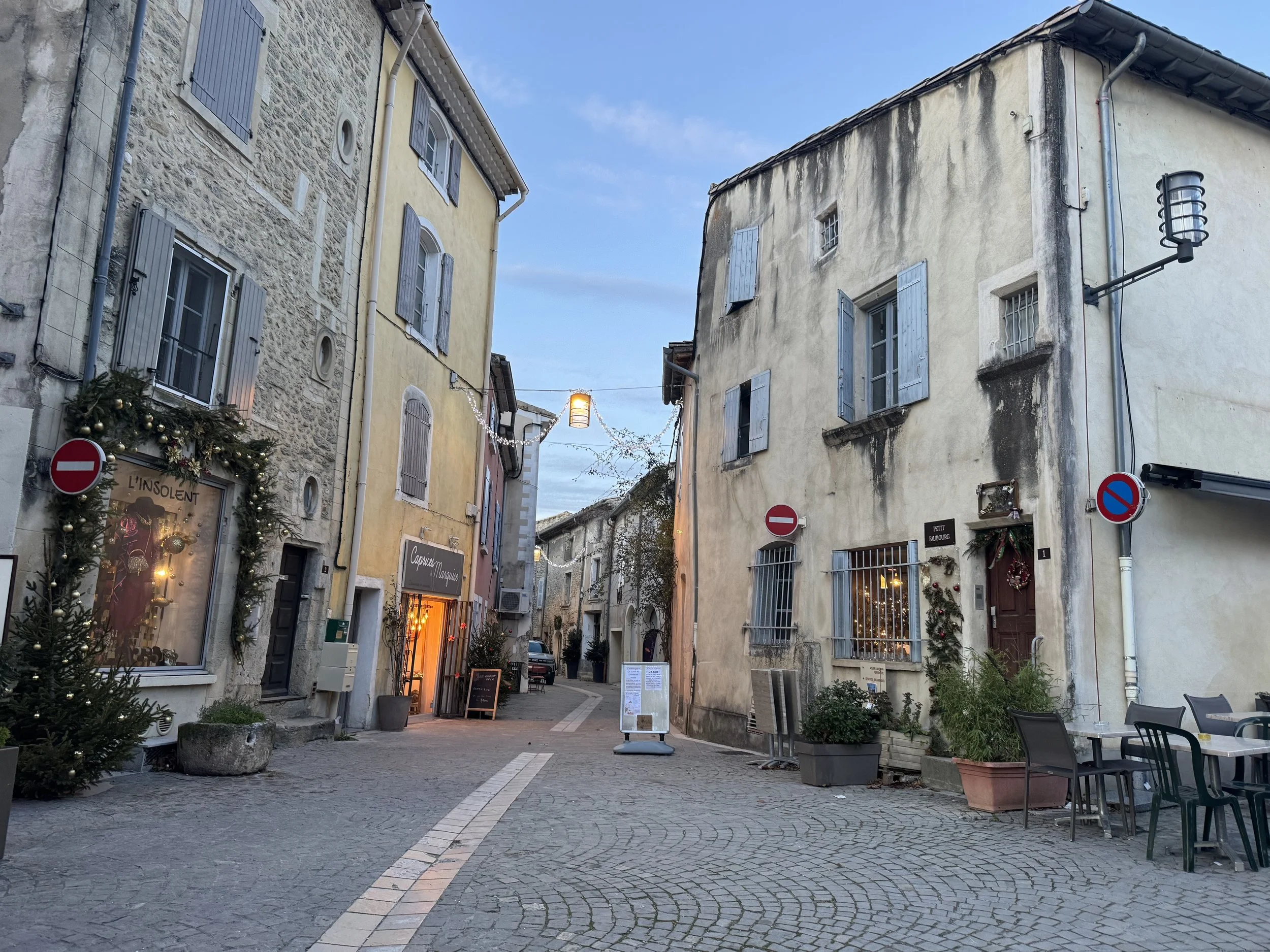
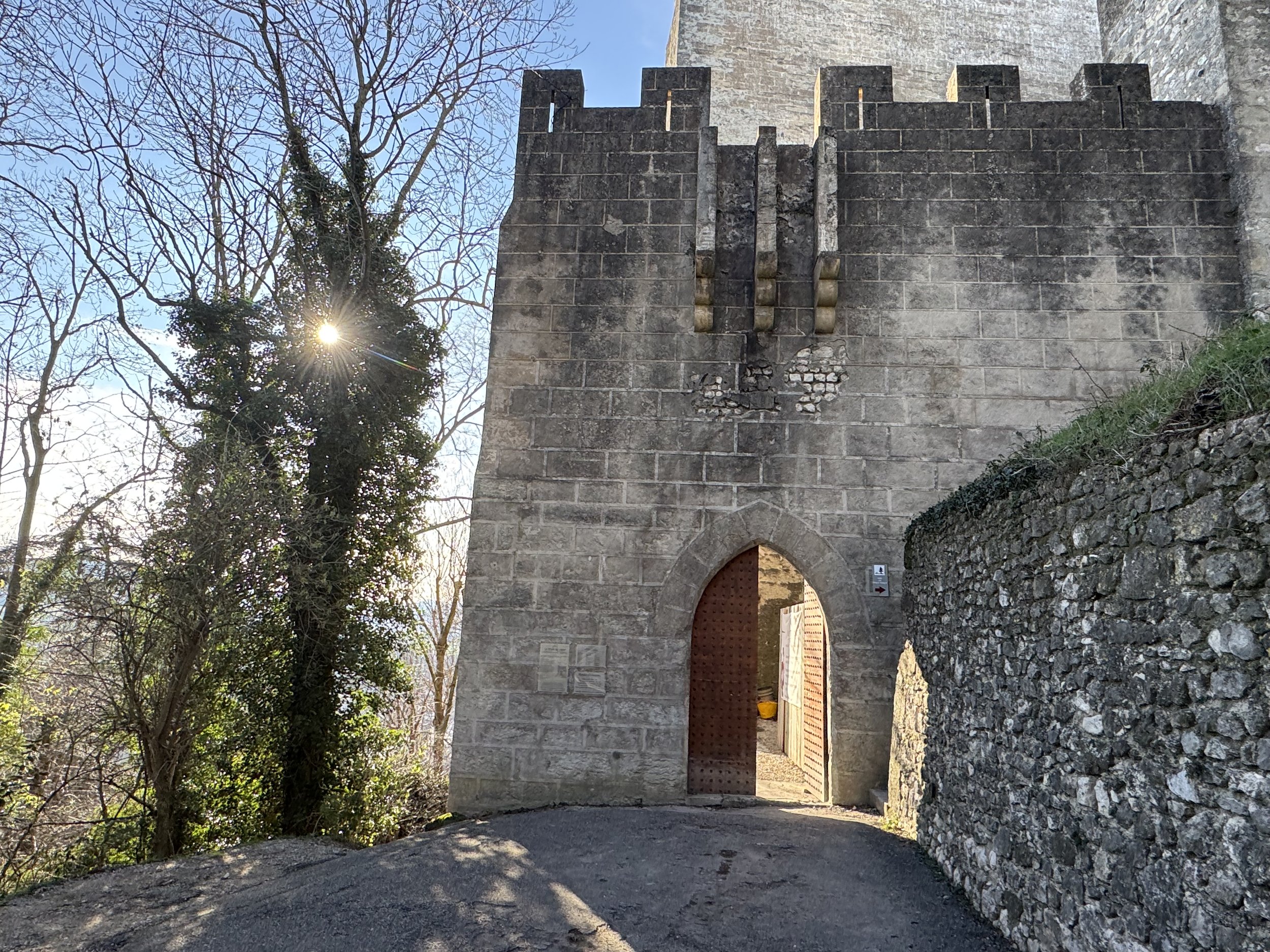
Things to Do: You can do this drive however you see fit, and take it as slow or as fast as you’d like. We spent about 7 hours meandering through each town, getting out to snap photos and grab a pastry or view, spending the most significant amount of time at the Crest Prison. But your focus may be different, and we love that for you, and encourage you to chase what’s interesting!
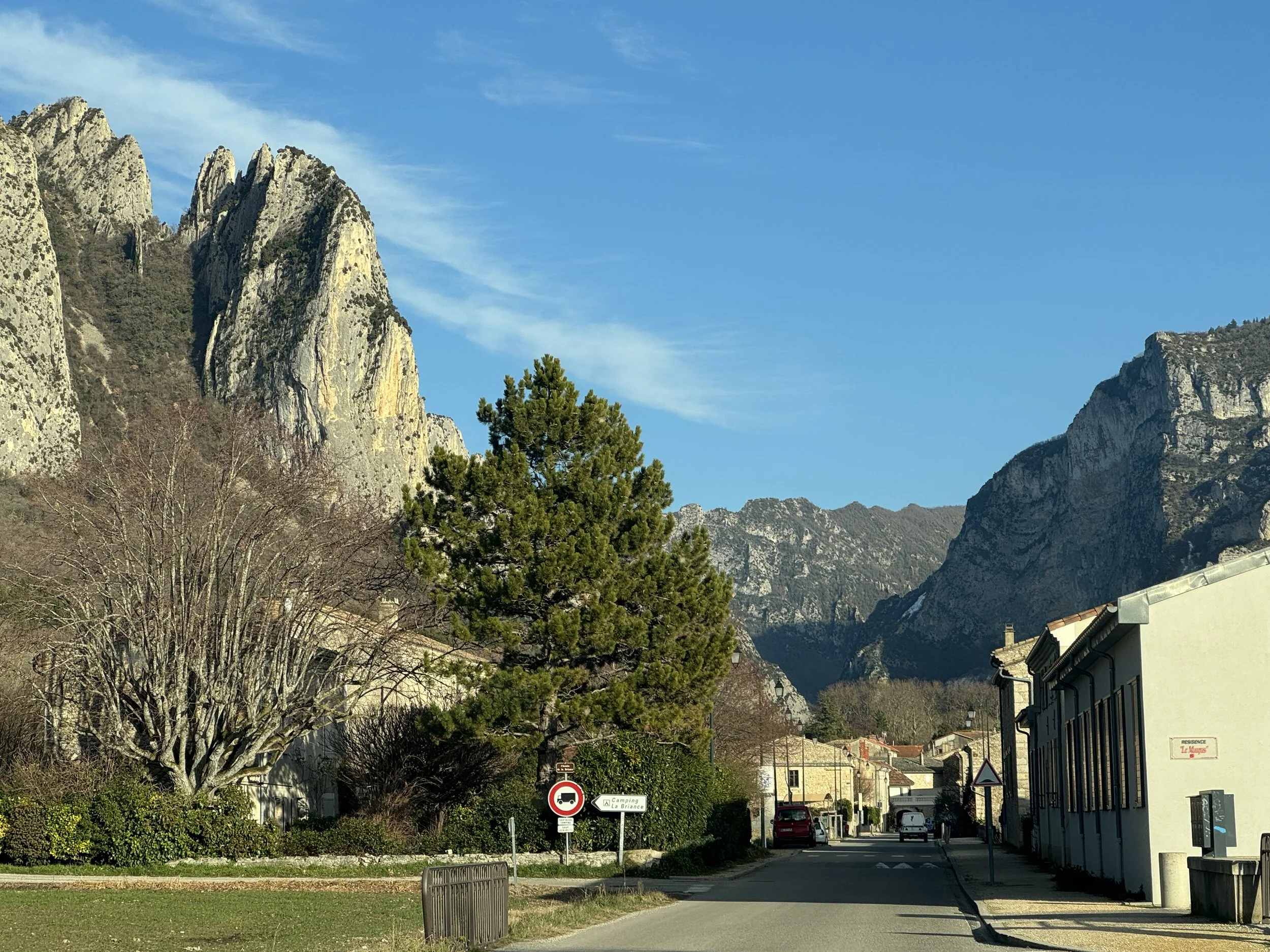
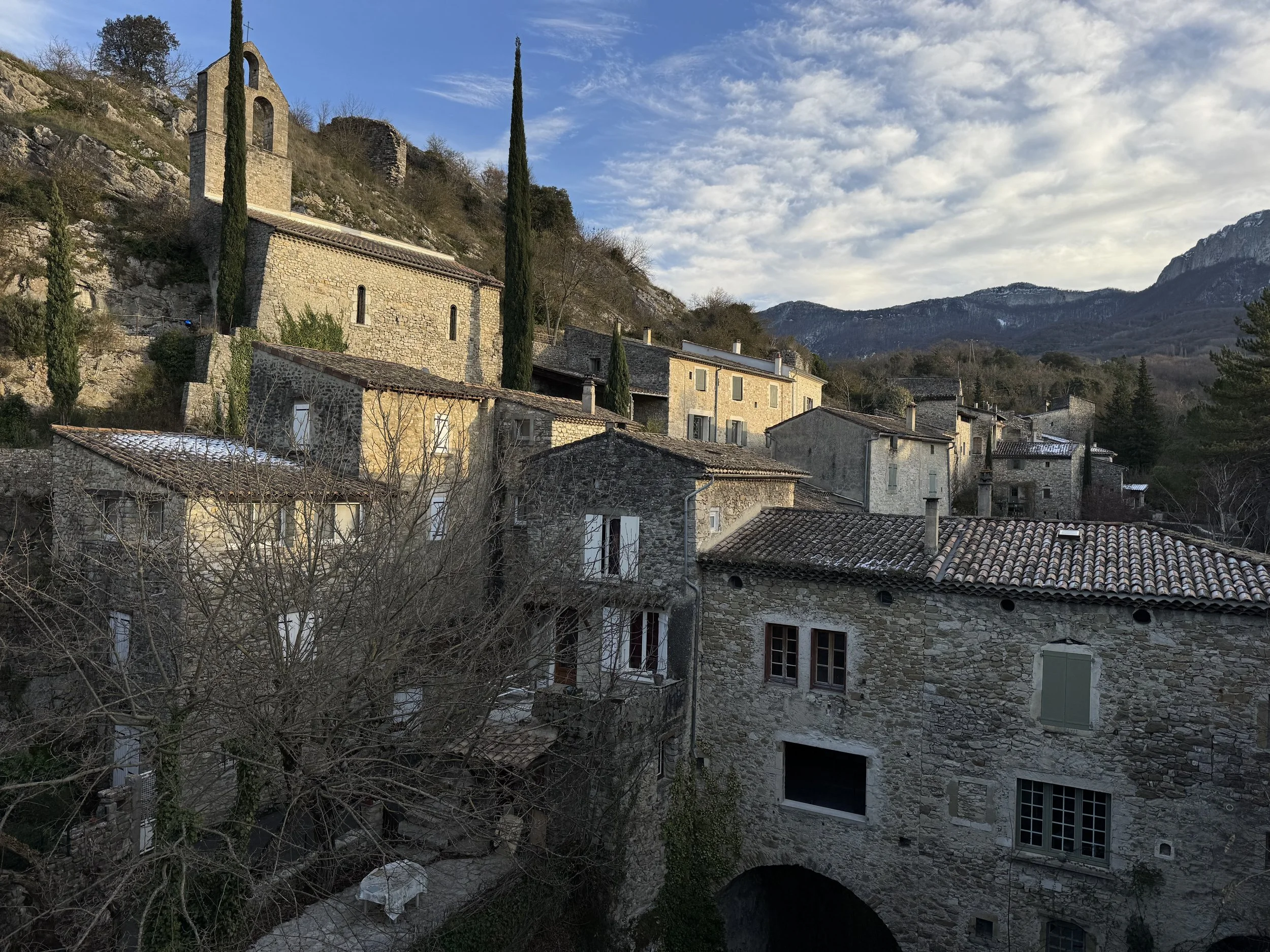
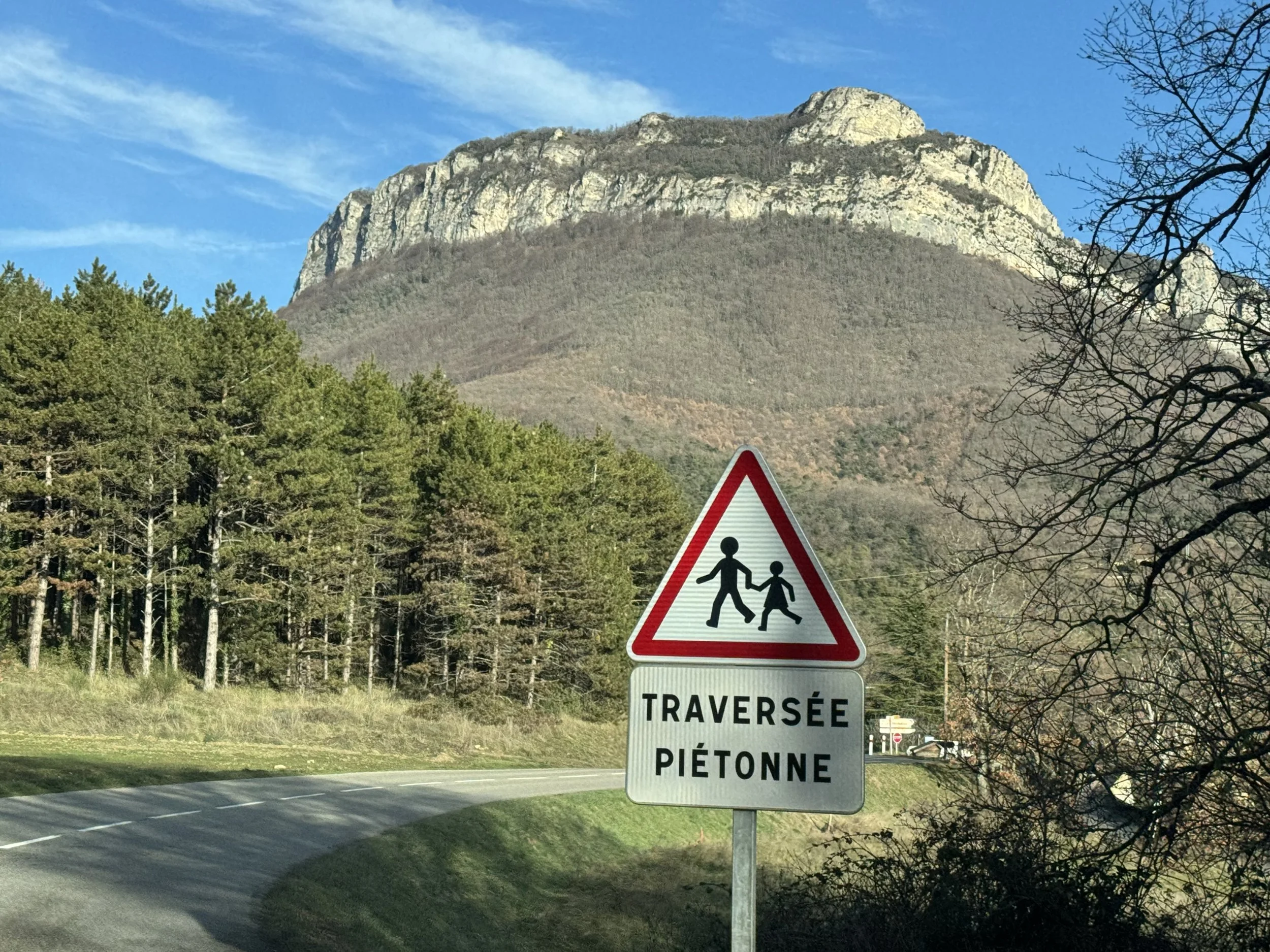
Romans-sur-Isere: wander the old town for cobbled lanes and fun photos, pop into a chocolate shop or patisserie and look for local specialties like pogne (crown-shaped brioche) or ravioles du Dauphine. If you have time, the International Shoe Museum is a great stop, as this town built an entire identity around luxury footwear.
Valence: stretch your legs in the historic city center and do a quick loop of the older streets. This isn’t a big sightseeing stop, but more of a pleasant break before continuing onto Crest.
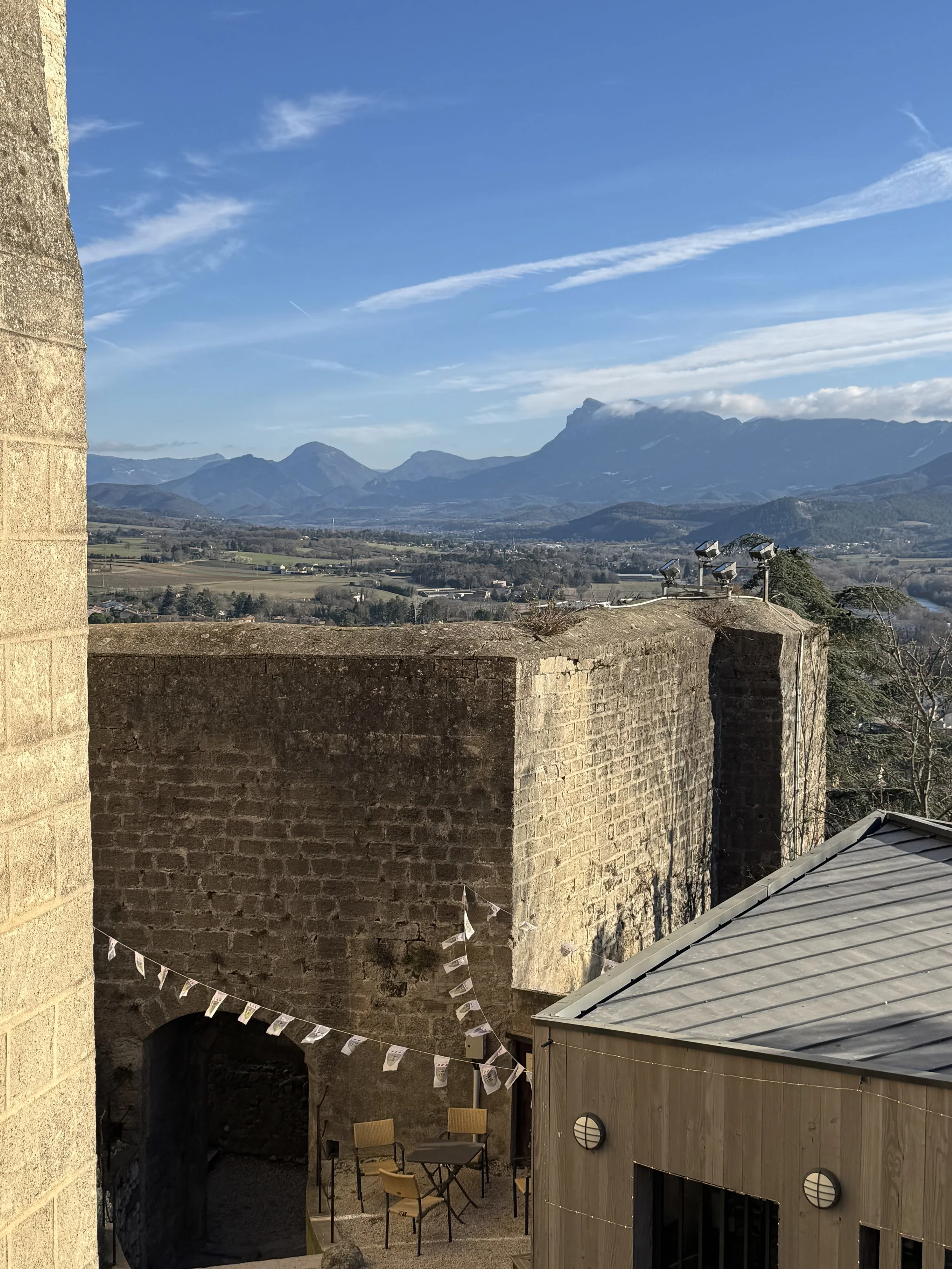
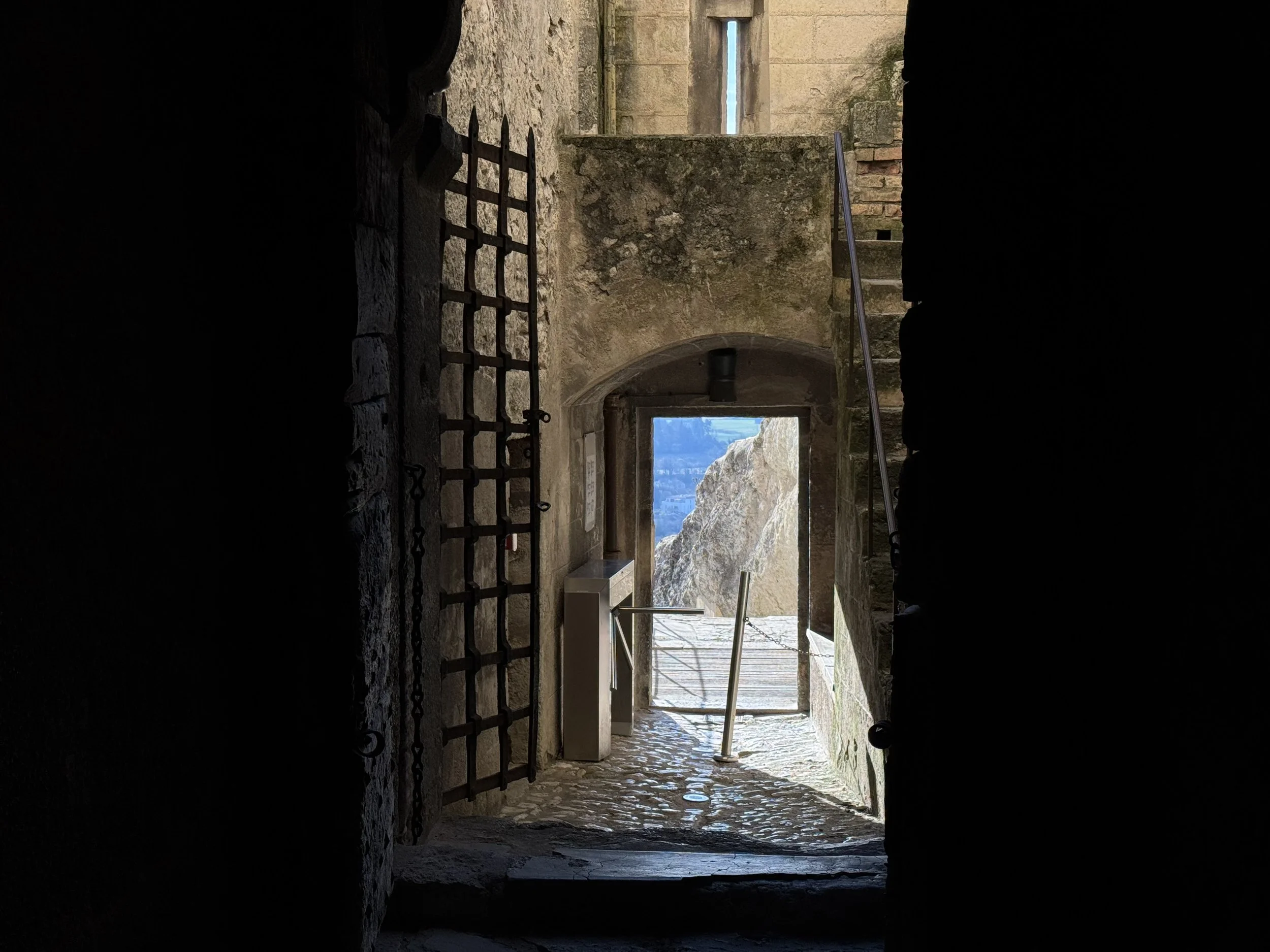
Crest: go to the Crest Tower and the prison. This tower is famous for being the highest medieval keep in France, and the history inside is fascinating. You can definitely feel the bone-chilling, isolating cold vibe of the prison as it used to be. Climb to the top for the views if you can as well; it’s a great panoramic of all of the surrounding mountains and Rhone Valley below.
Grignan: arrive for golden hour before dinner; it’s stunning in that just before the sun goes down light that transitions into blue light. Walk up to the chateau and through the village. The stone streets, gentle uphill wandering are romantic and demand literally nothing of you except for a little legpower!
Interesting tidbits to know:
Romans-sur-Isere is NOT actually Roman-founded, which seems silly given its name. The town grew around a monastery founded in the 9th century and became a trade hub over time. It later earned it’s reputation as a French center for luxury footwear, which is why the shoe museum exists.
Valence has always been a crossing point. It sits in the strategic Rhone corridor where north meets south, which is what makes it feel like a pass through city. Merchants, armies and trade have been moving through Valence for forever.
Crest’s tower is the tallest medieval keep in France, and later became a prison. The structure was metaphorically built to dominate the landscape and its people.
Grignan is literary Provence. The chateau is famously tied to Madame de Sevigne, whose letters made Grignan part of French cultural mythology.
PROVENCE
Avignon
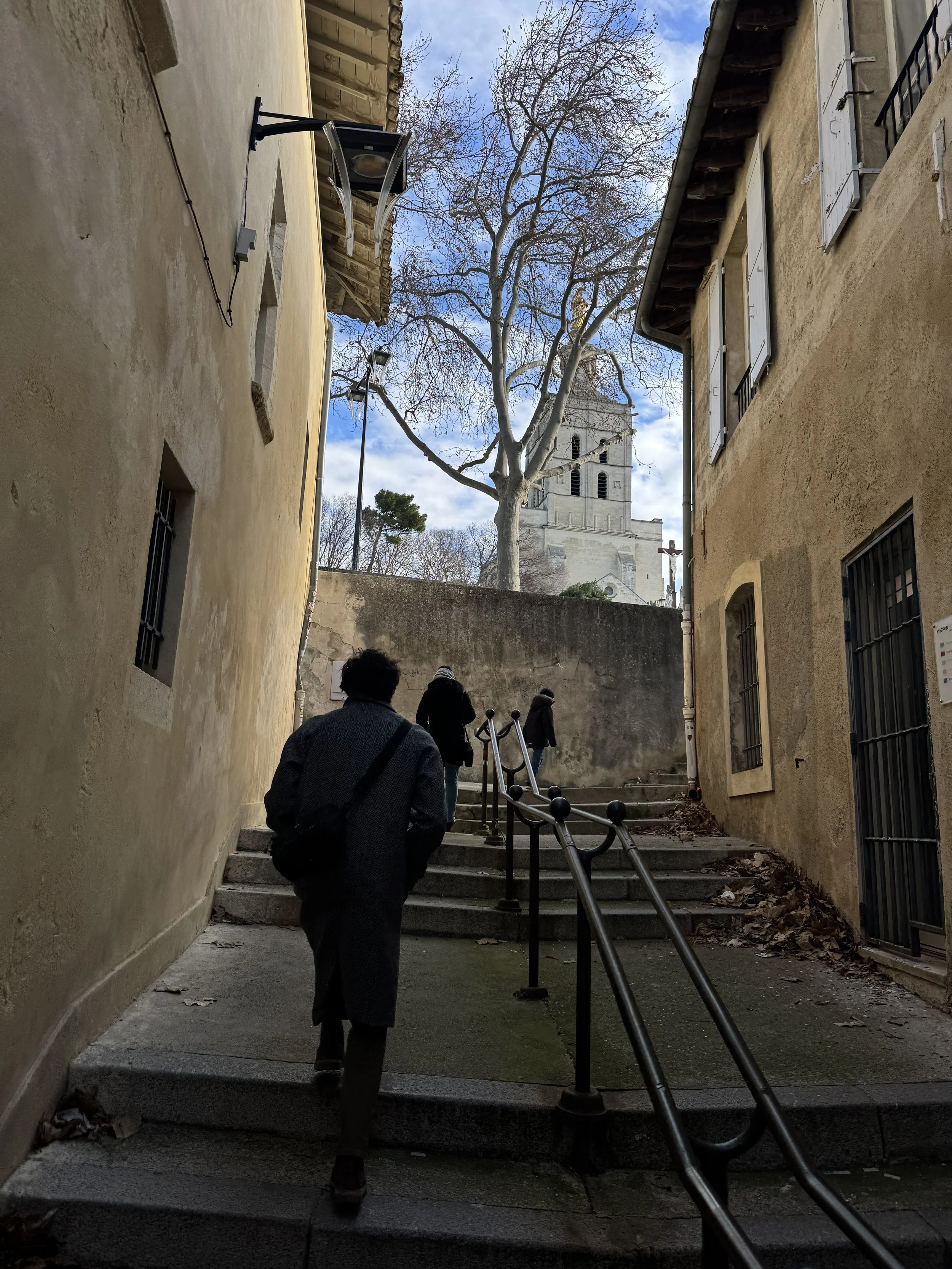
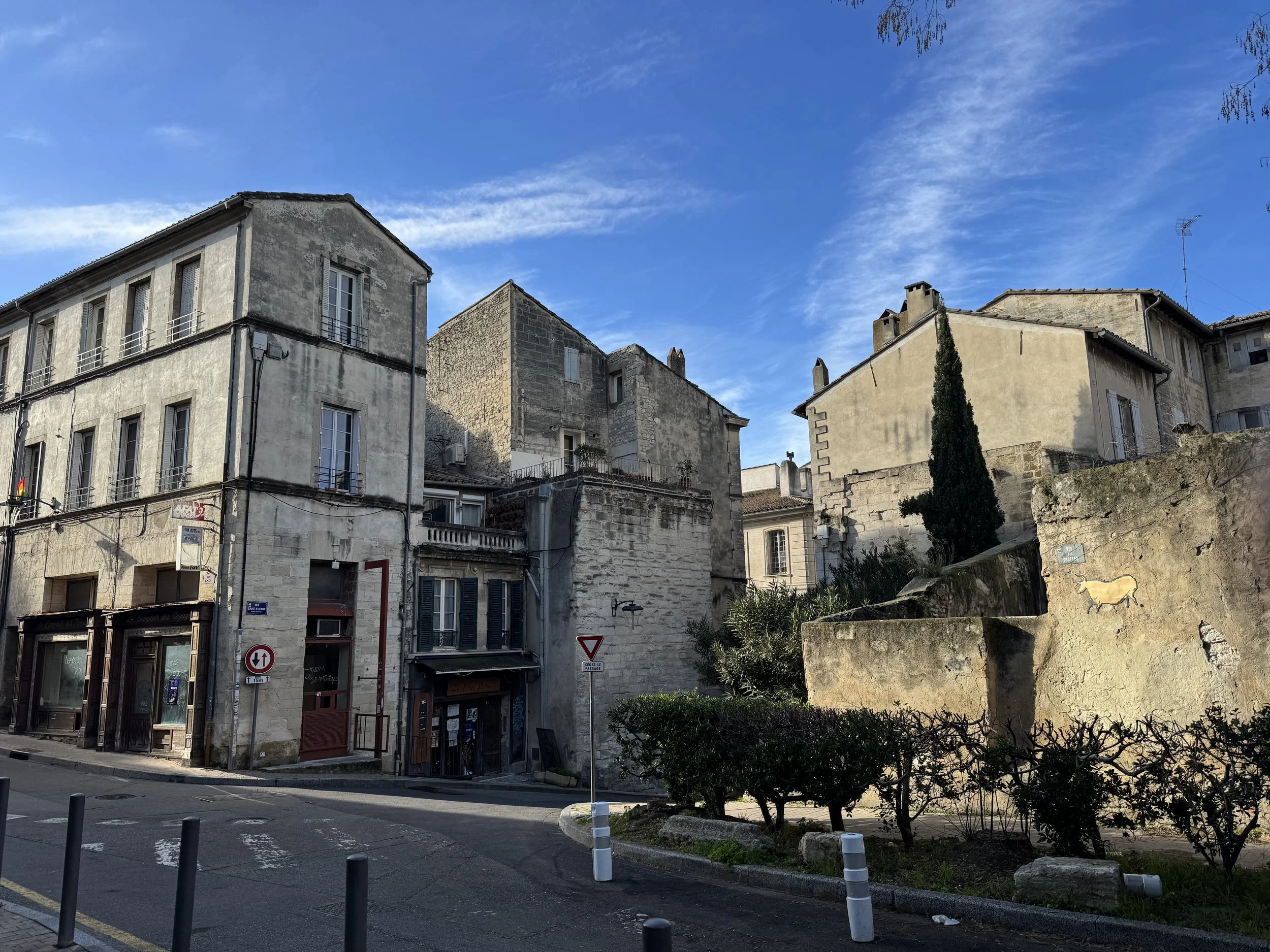
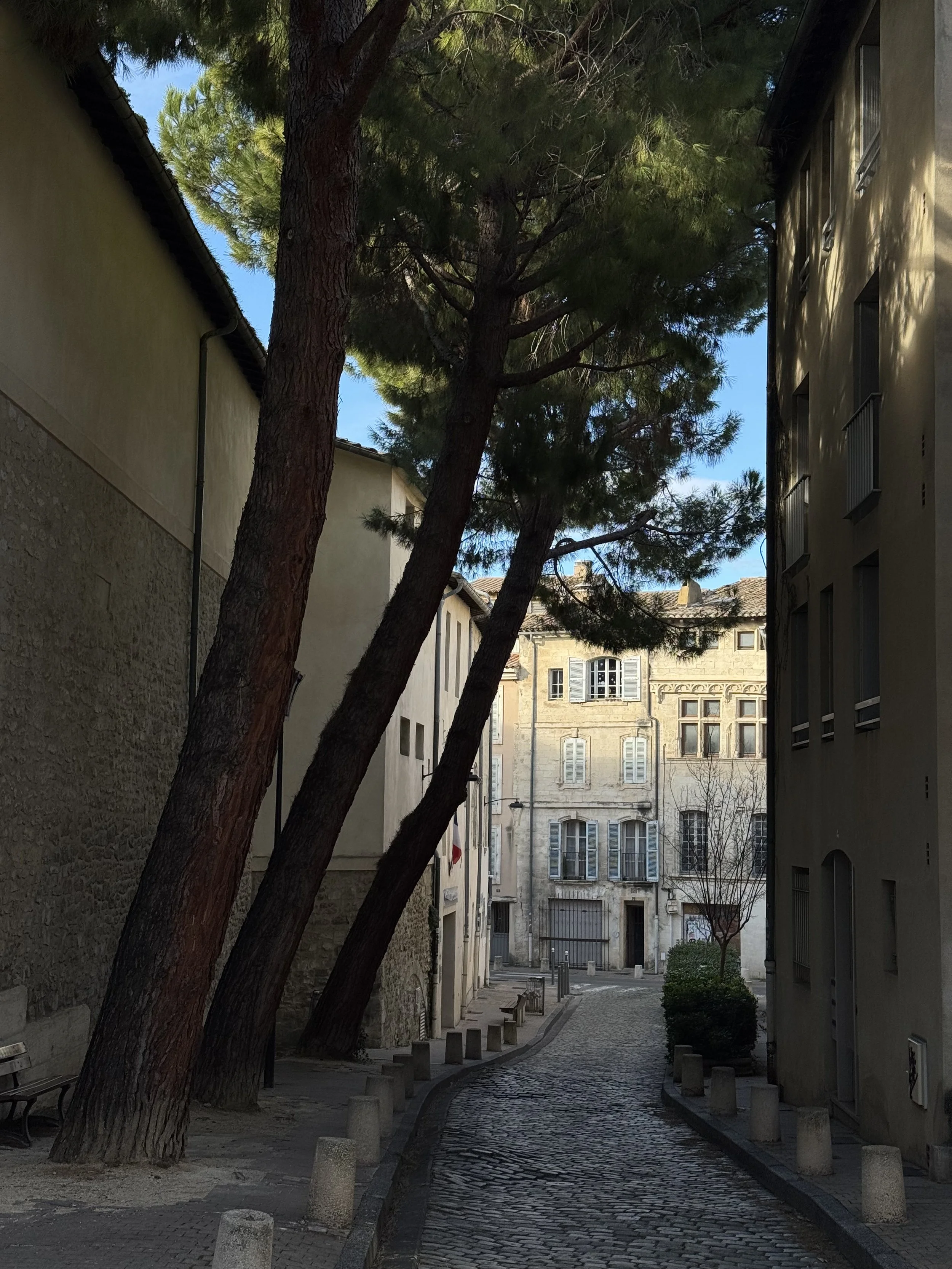
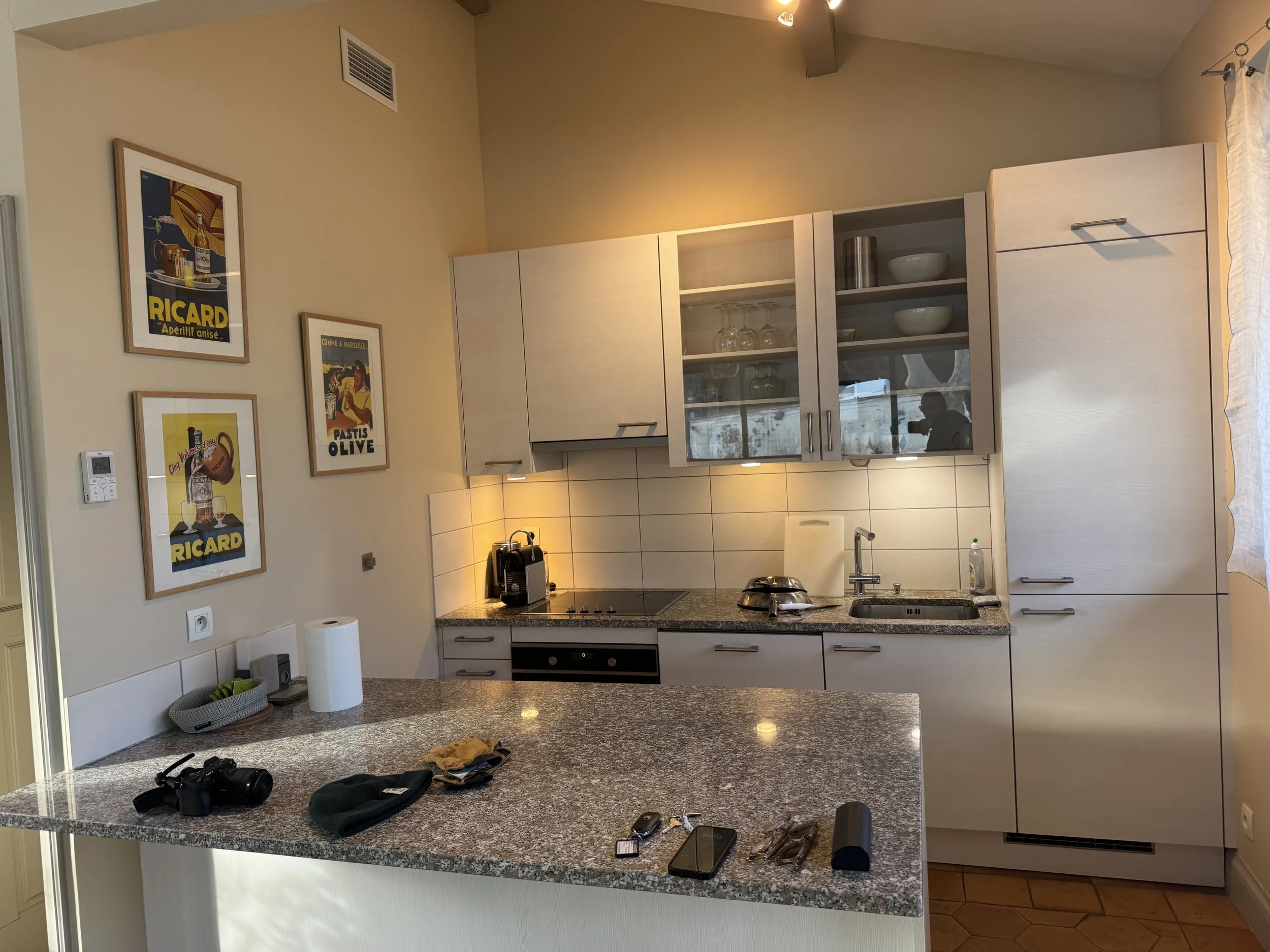
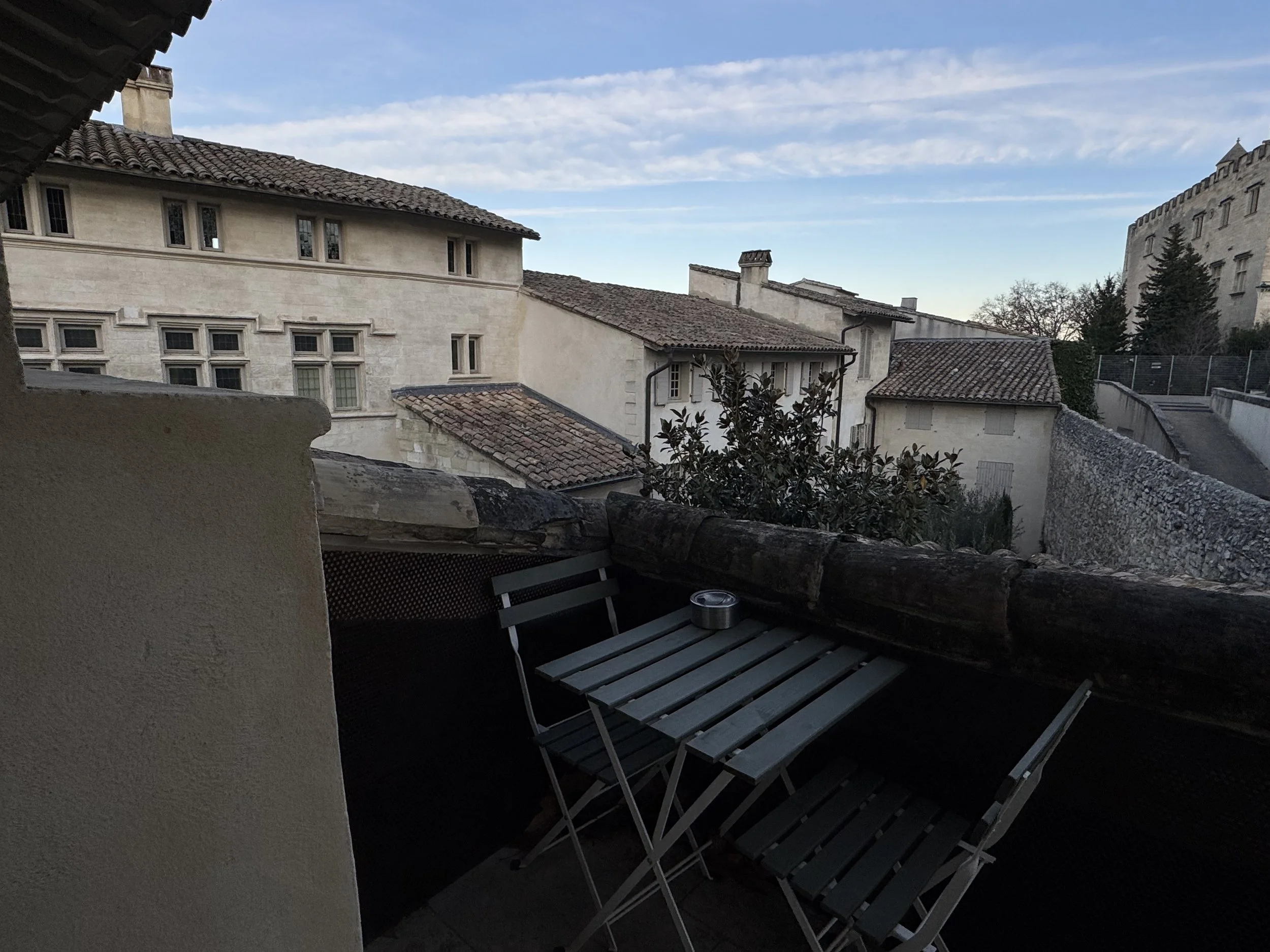
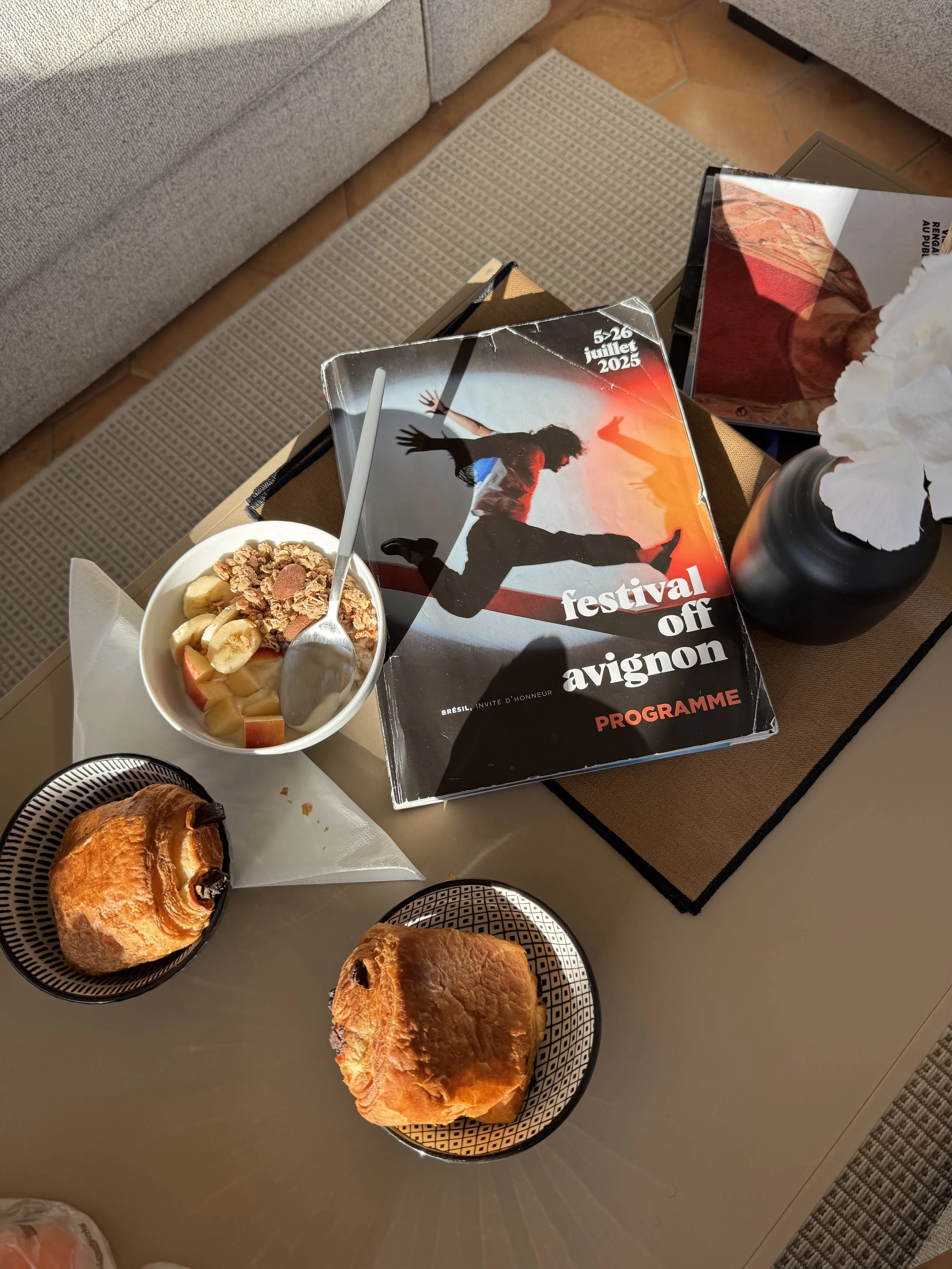
Where to Stay: We are big fans of staying somewhere that feels like home and Conciergerie Provencale fit the bill perfectly. We first found our stay on AirBnB but you can book directly as well. Positioned immediately next to the famous Palais des Papes, the views were insane and the apartment was extremely roomy. We had a cozy 2 bedrooms to spread out, a front patio in the sun, and a full kitchen which we made good use of for cooking full hearty breakfasts every morning. On top of that, the owner, Bertrand, was a pleasure to interact with. He isn’t the type of owner that insists you check out everything immediately surrounding the apartment due to some local bias, he encouraged us to go further afield to Les Baux-de-Provence and some of the surrounding towns. We loved using this place in Avignon as our landing pad, with stunning morning coffee views and evening light.
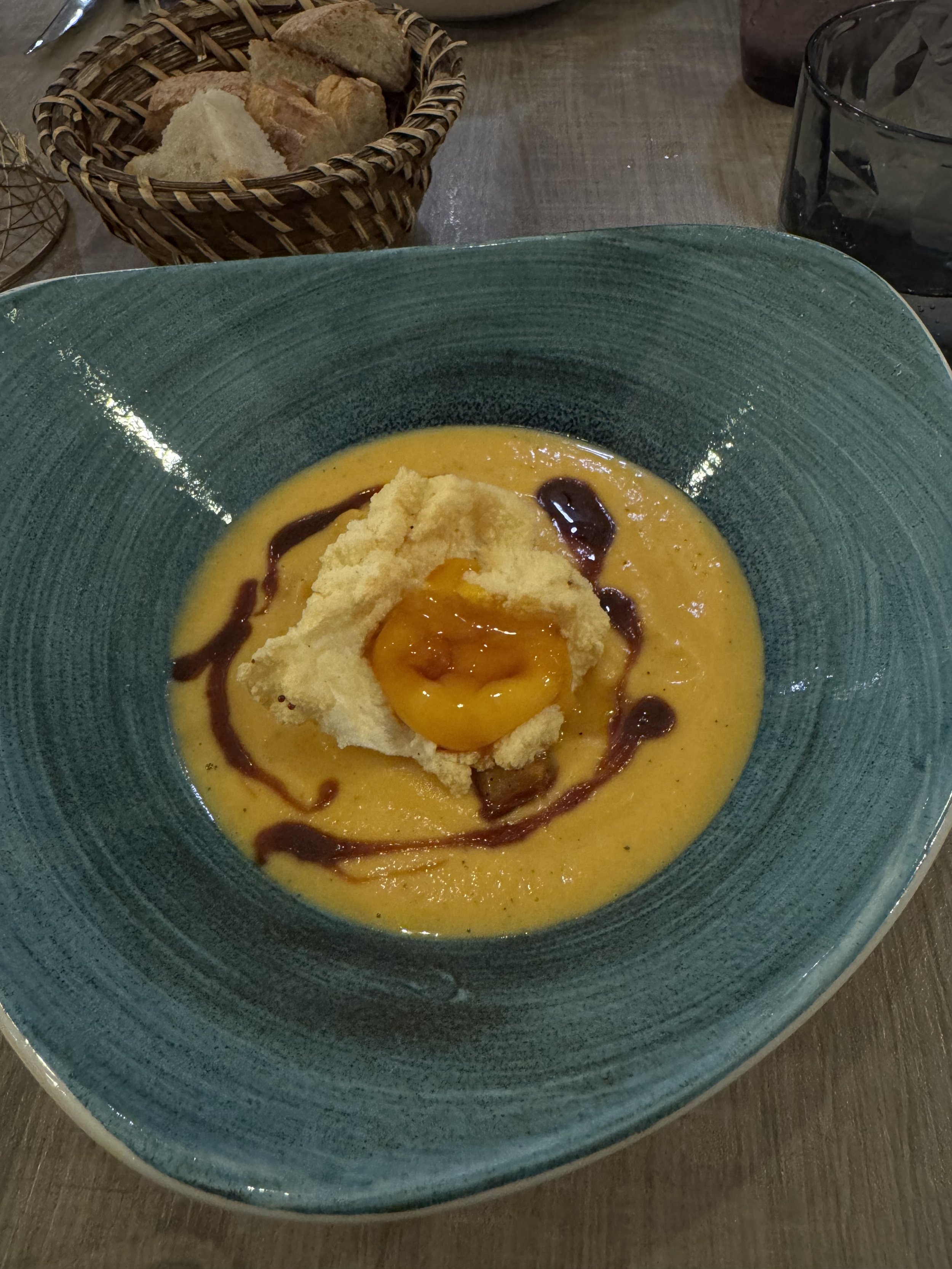
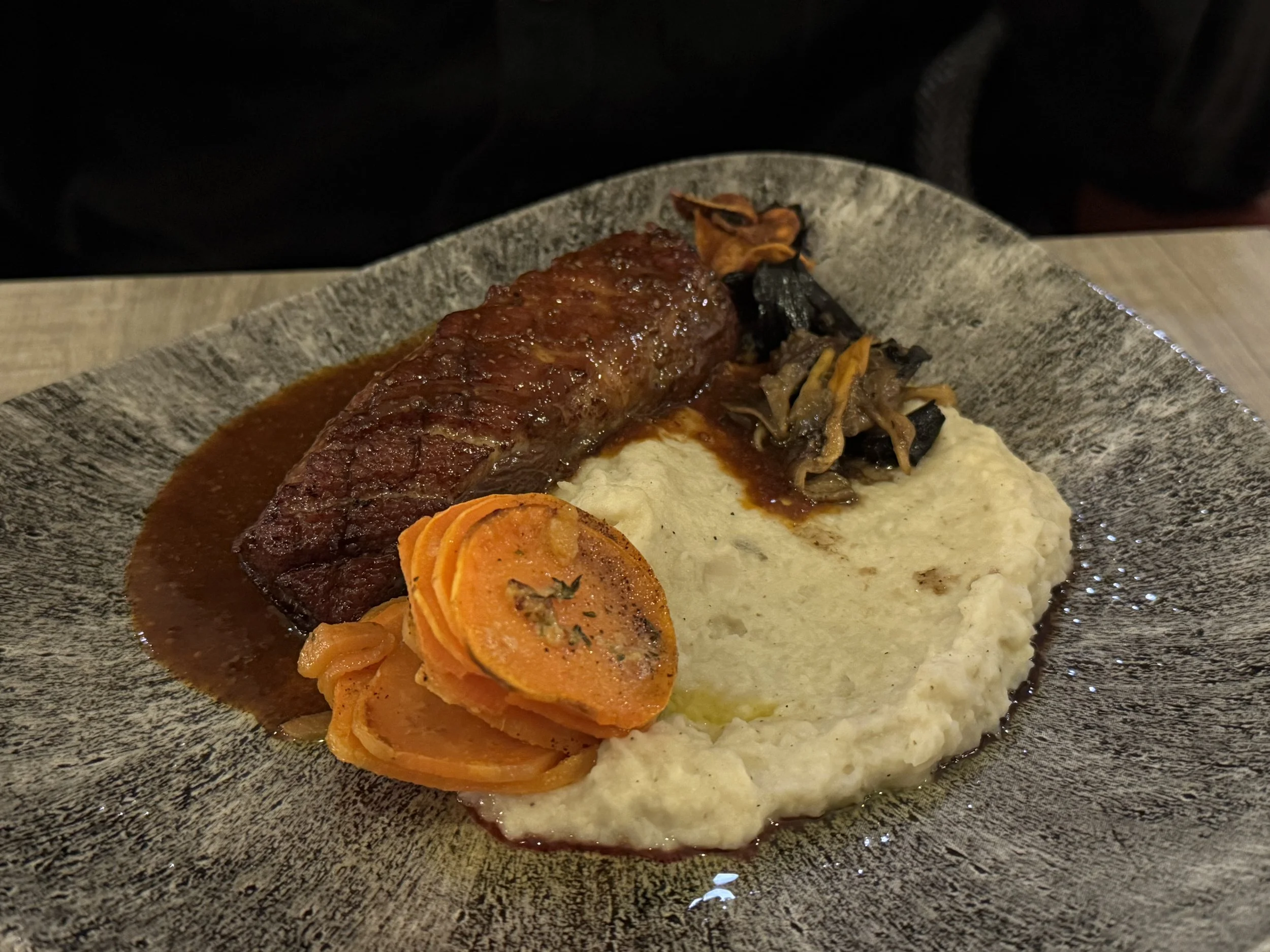
Where to Eat/Drink: La Fourchette, Simple Simon, Moloko, DIMMI, Les Pequelets, Le JOAT, and Buna Cafe were some of our favorites!
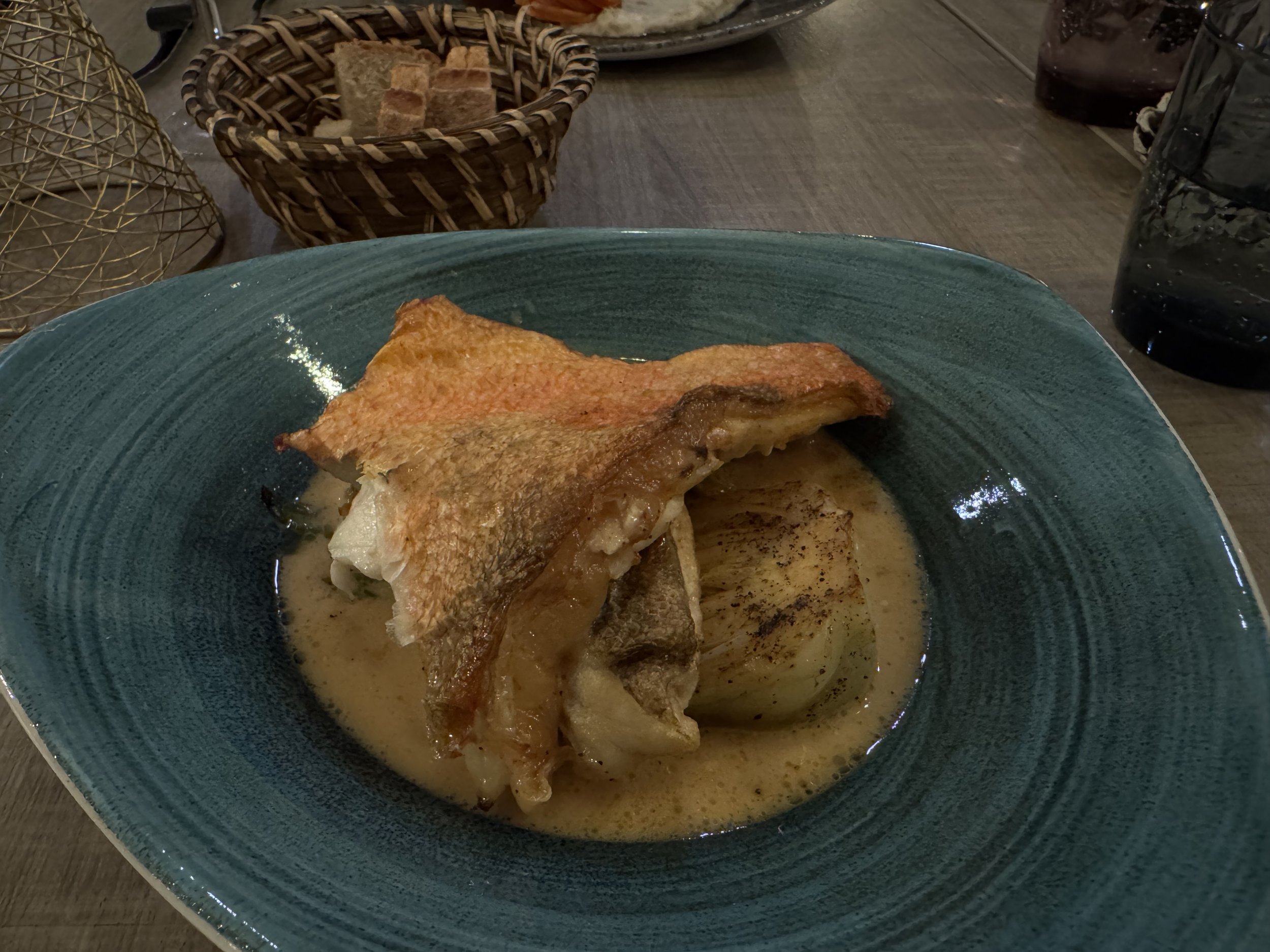
Things to Do: Walk the walls. Avignon is one of those rare places where the medieval fortifications are still alive and well. Do a slow loop along the ramparts and take in the scale of it all. You can really get a sense of how contained and protected the place once was.
Go to the Palais des Papes, obviously. What a powerful place.
Roam the old town without a plan. Duck into courtyards, side streets, and take in all of the tree-crowded streets, which I found to be quite unique to Avignon. Make your way over to Pont d’Avignon, the iconic half-bridge. You don’t necessarily need to walk across it but it’s worth a glance so you can understand the state of disrepair after it was abandoned after multiple wars and lack of funding rendered it unusable.
Check out the Marche Les Halles. Great market for produce, cheese, snacks. Also a great spot to pick up anything you might need for an apartment breakfast.
Interesting tidbits to know: Avignon was once the center of the Catholic world. In the 1300’s, a series of popes moved the papacy from Rome to Avignon, and for several decades it served as essentially the Vatican of Europe.
The city walls as you see them today were built in the 14th century and still wrap around the historic center.
Every summer, Avignon becomes almost a completely different city during the Festival d’Avignon, one of the most important theater festivals in the world. Think of it as the world’s stage for a brief interlude; power, art, spectacle all in this huge fortress.
L’Isle-sur-la-Sorgue
Where to Stay: Keep your home base in Avignon at Conciergerie Provencale , it’s close by
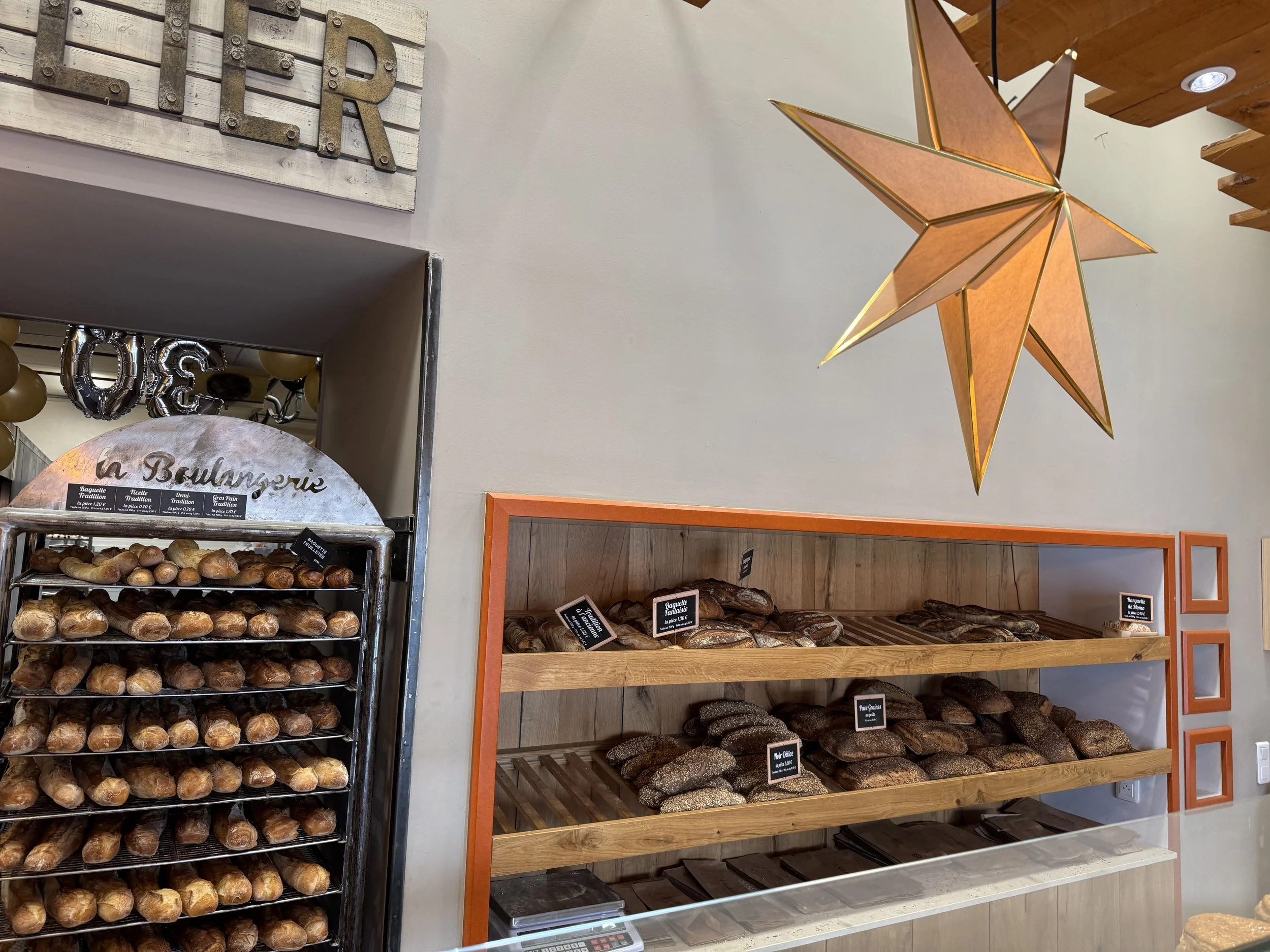
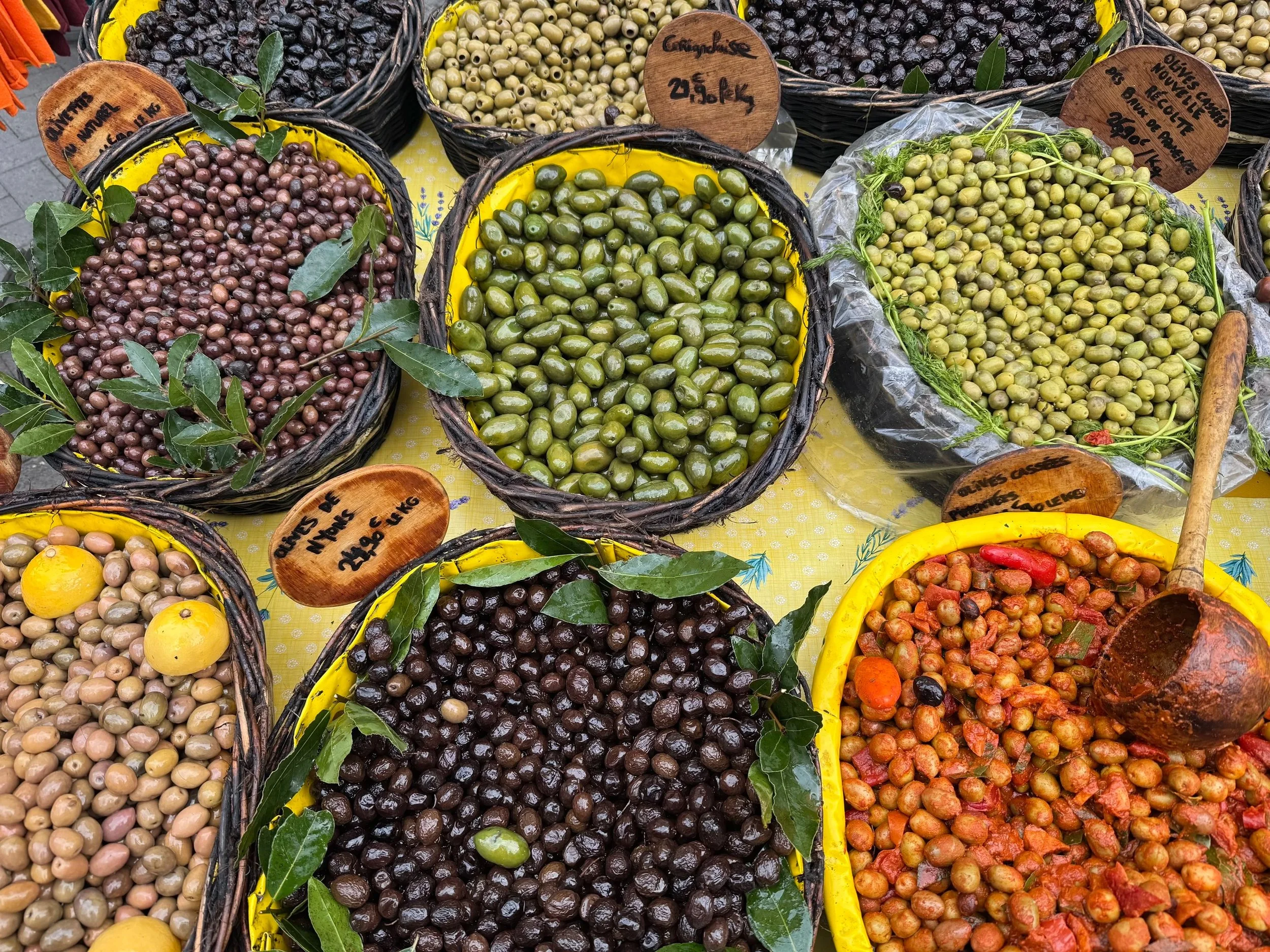
Where to Eat/Drink: We were there on a market day, which for all we know is every day, and we’d highly recommend trying to catch one. Paella and fresh veggies and pastries abound and it was fun to see all of the locals out and about enjoying their day. We also loved Maison Moga, a cheese and wine cave shop with a MLG Roadster somehow placed in a courtyard like a magic trick. La Maison Jouvaud was a full on discovery moment for us and possibly one of our favorite pastry shops ever. We walked in a little hesitant as an afterthought, and we walked out with our arms overflowing with treats and gifts to bring home. Gifts, jars, chocolates, biscuits, perfectly styled pies and pastries... a place we won’t soon forget!
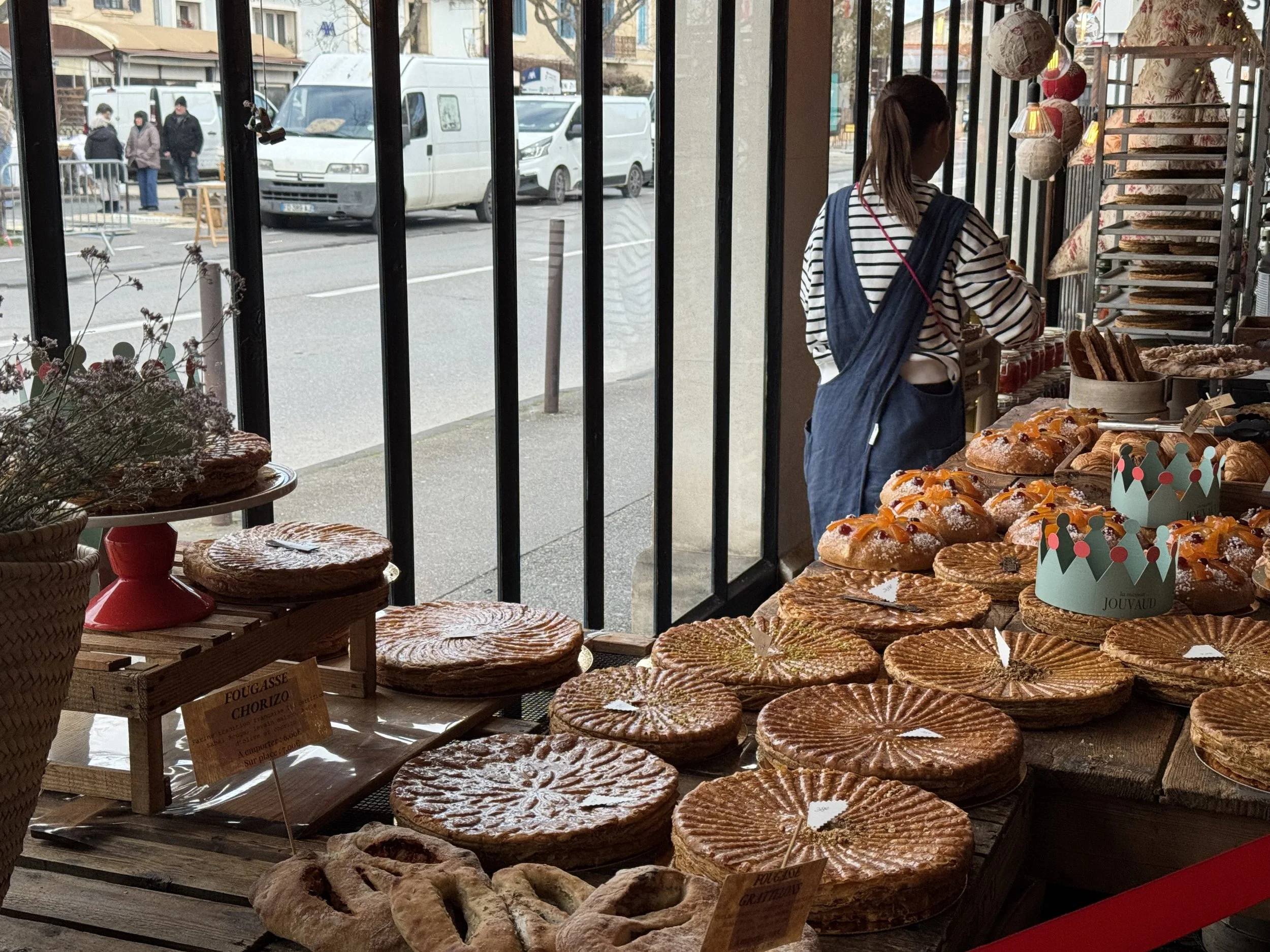
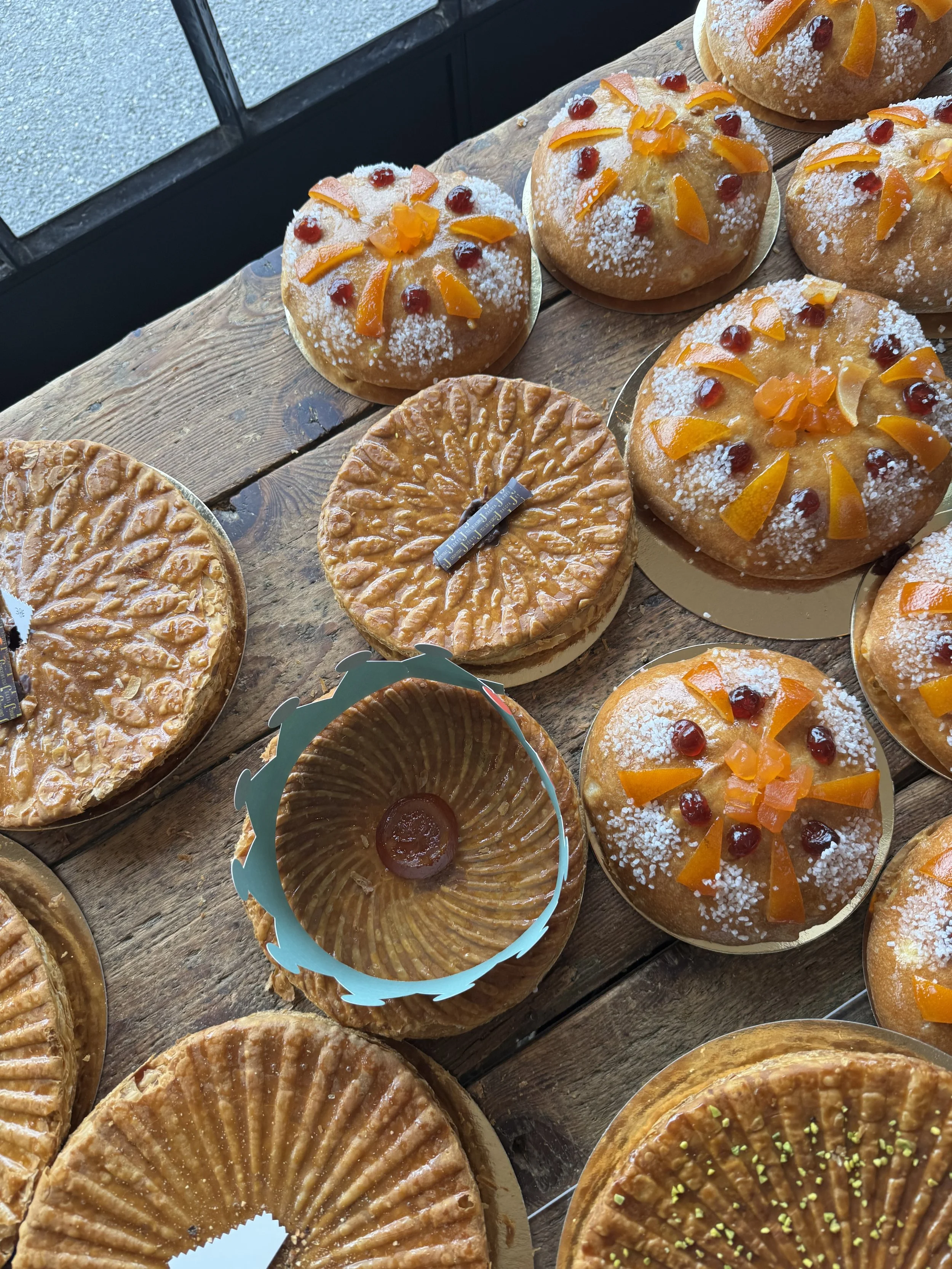
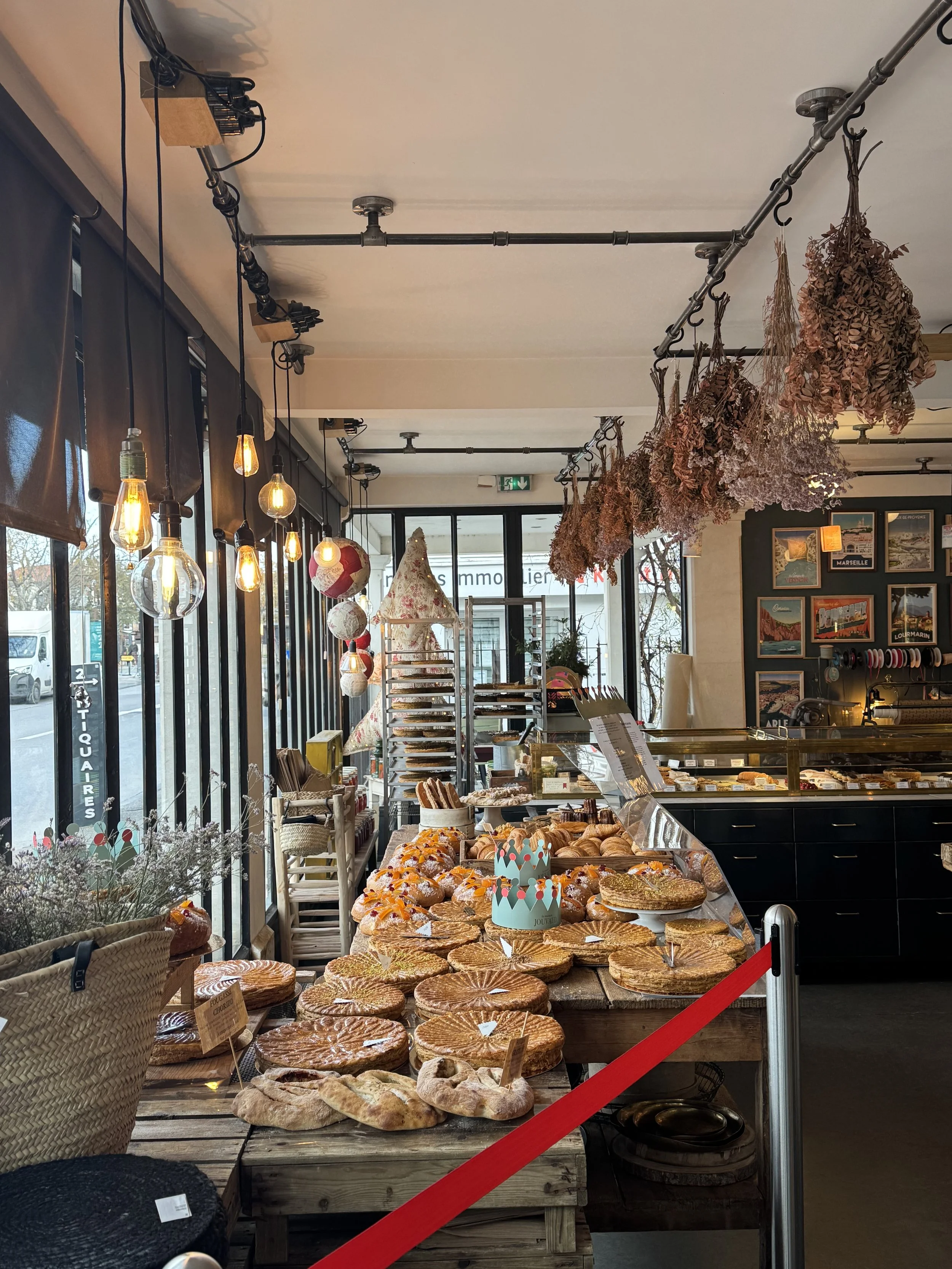
Things to Do: Follow the water. The town is built around canals with clear fast-moving water and old stone edges. Do a loop and then do it again. Pop into a wine bar canal-side and people watch. Wander the antique district; this is one of France’s most famous towns for antiques and brocantes. It’s fun to browse even if you don’t have room to bring anything home. The Campredon Art Center is also a good option for a quick modern-art stop.
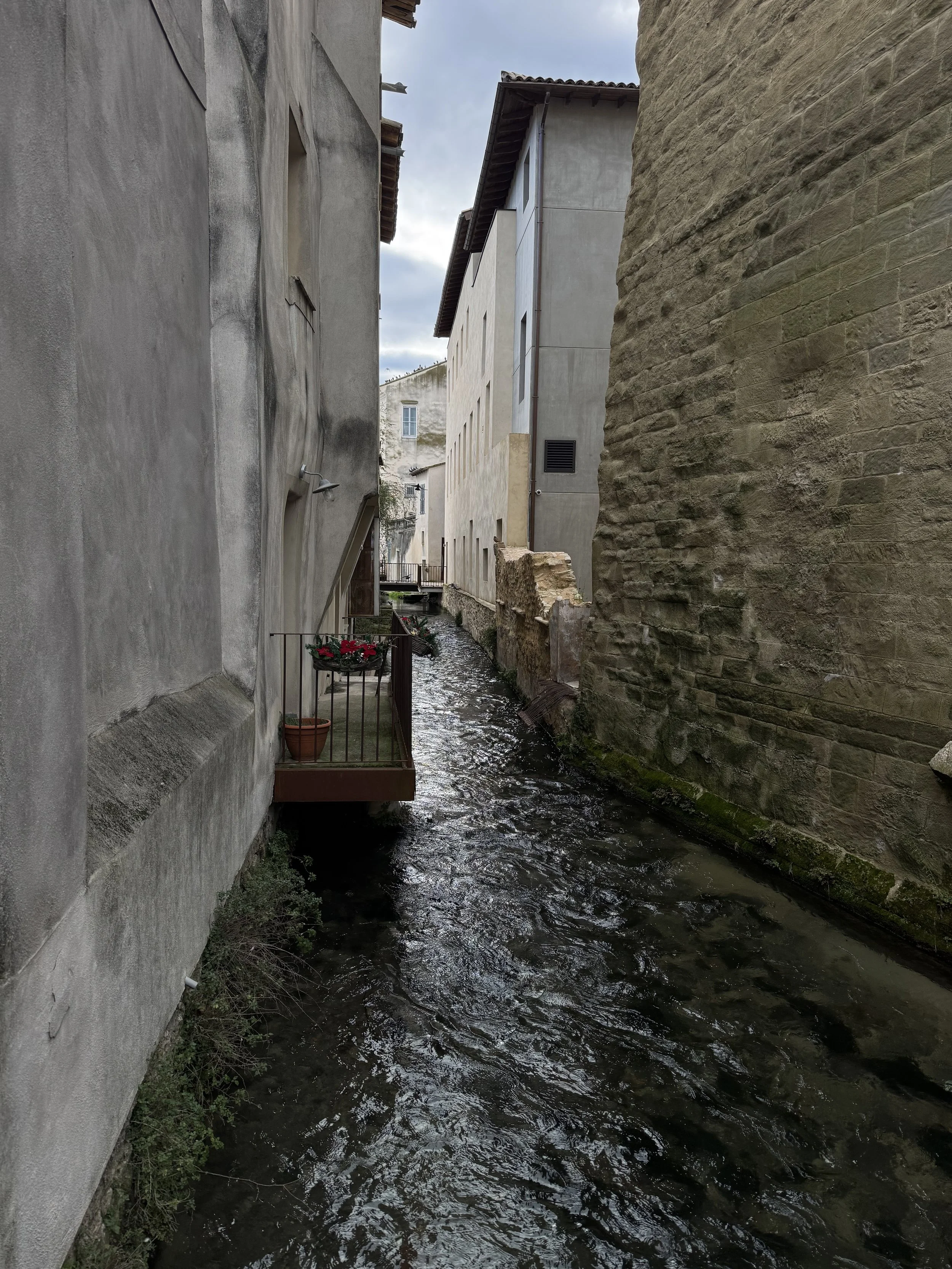
Interesting tidbits to know: People call this town the Venice of Provence and honestly, that feels right. The town is shaped by the river and the Sorgue splits and wraps around the center so you are constantly crossing water, doubling back over bridges, and catching glimpses of reflections in unexpected directions. The “isle” part of the name is real, as this place was built to live with water. Accordingly, those old wooden waterwheels you see around town are leftovers from when the river powered local industry, especially paper mills and textiles. The wheels became a part of the town’s identity.
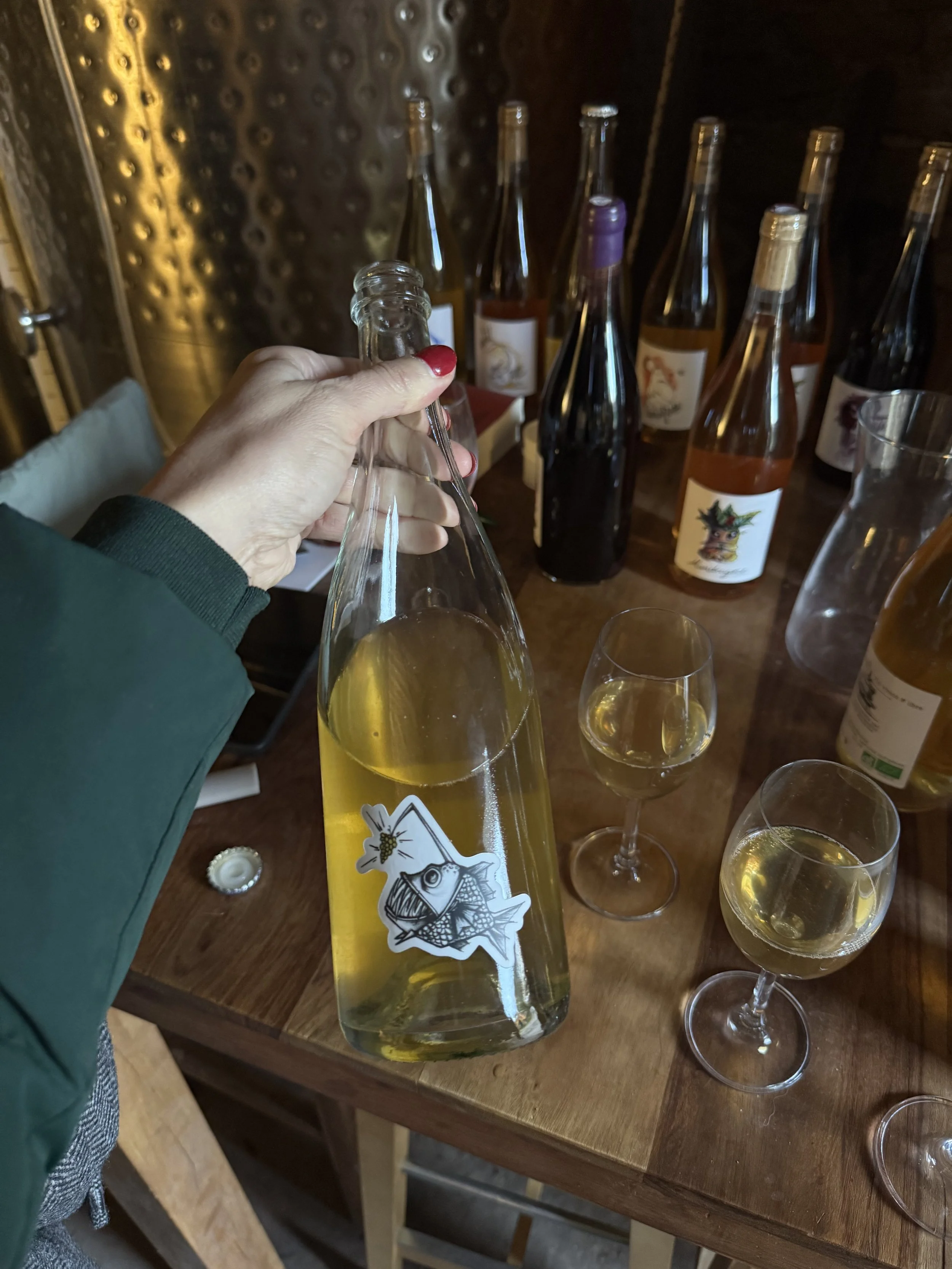
Detour: Stop and do a tasting with Kambyum
This is a tiny operation with a big point of view. Kambyum is five hectares at the foot of the north face of the Luberon between Oppède and Ménerbes. Started in 2021, the plots were fallow and overgrown, lucky not to see humans or tractors for years. Now they are being brought back with deliberately minimalist practices and their shepherd, Vincent.
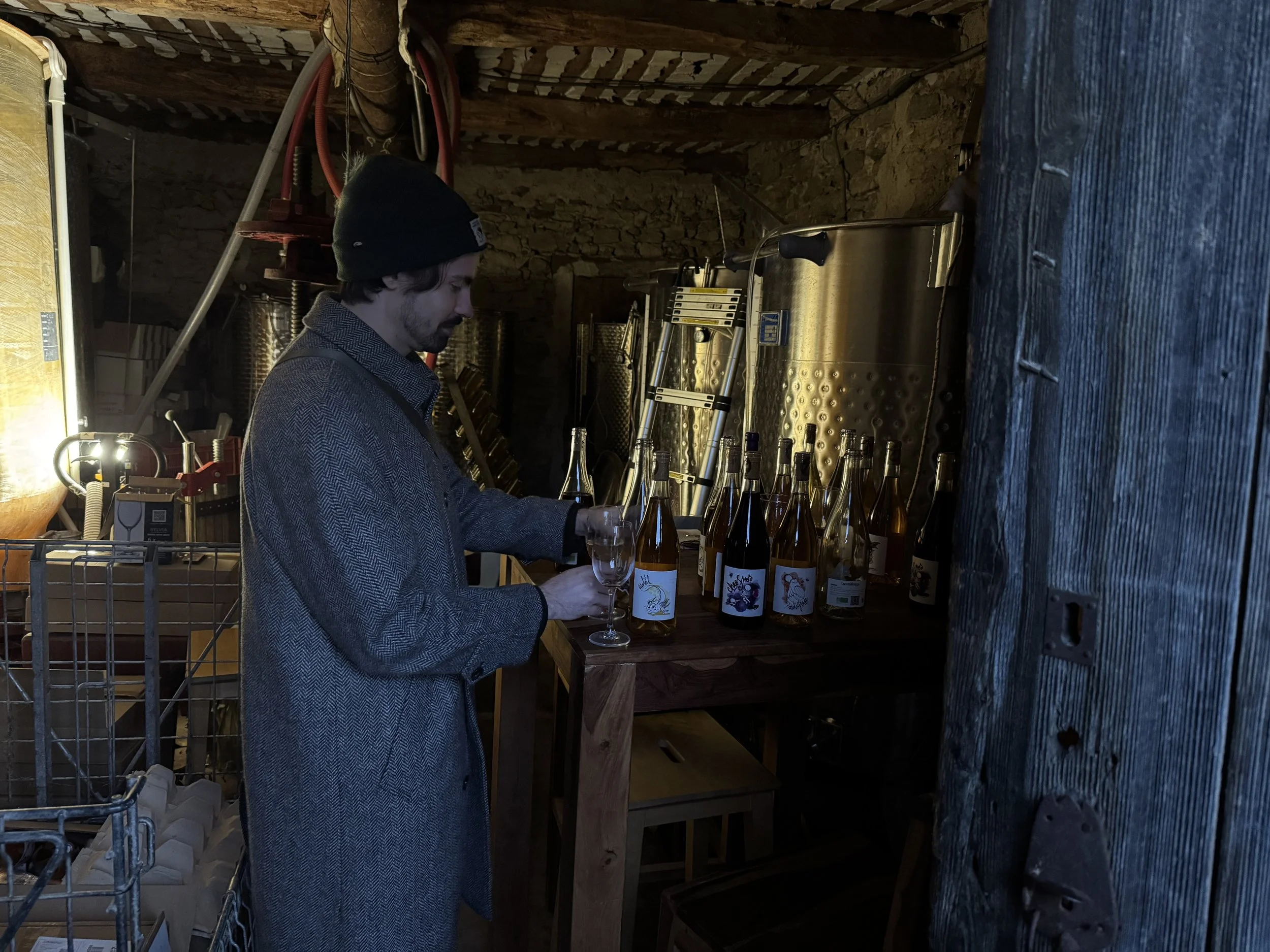
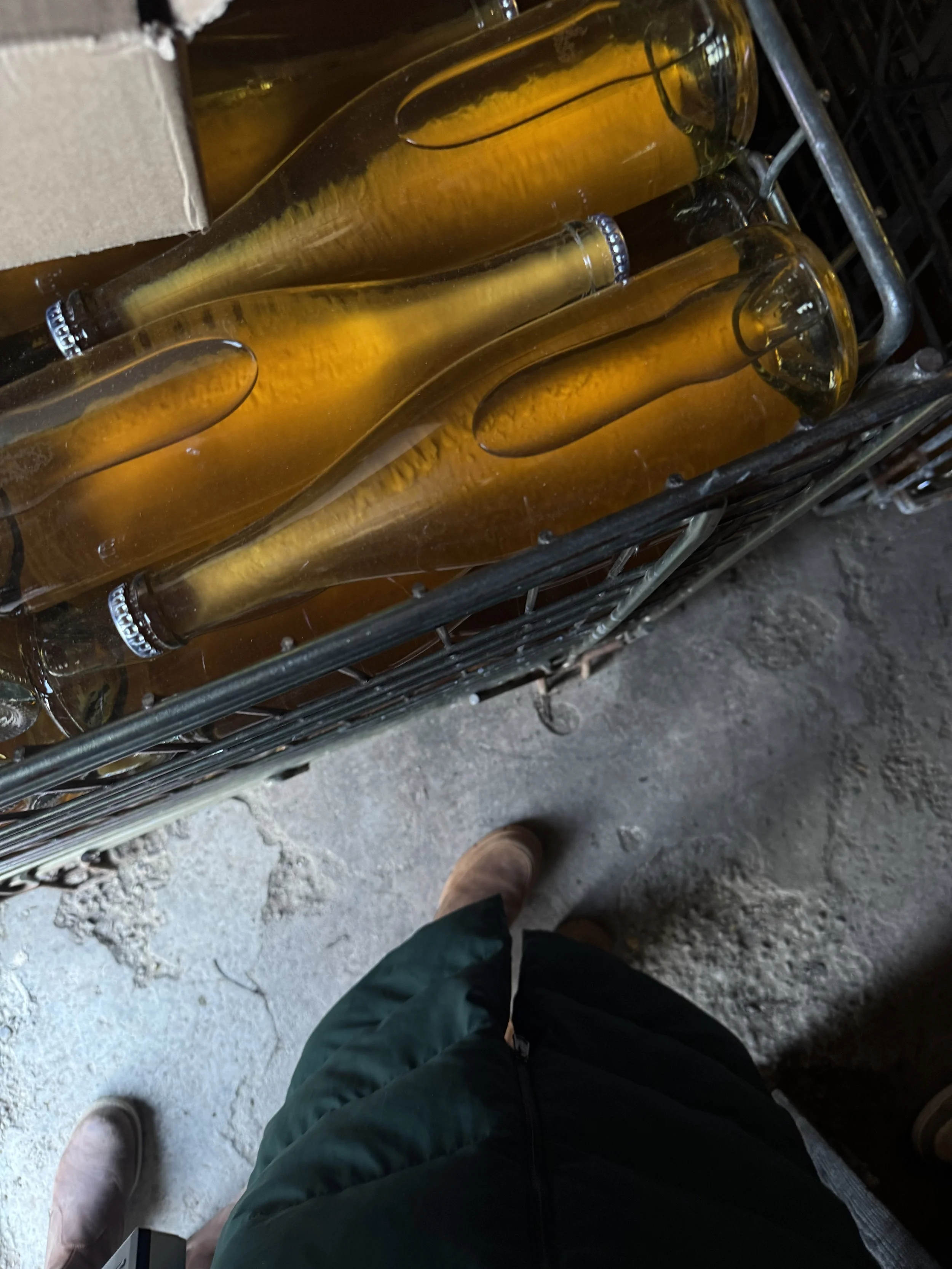
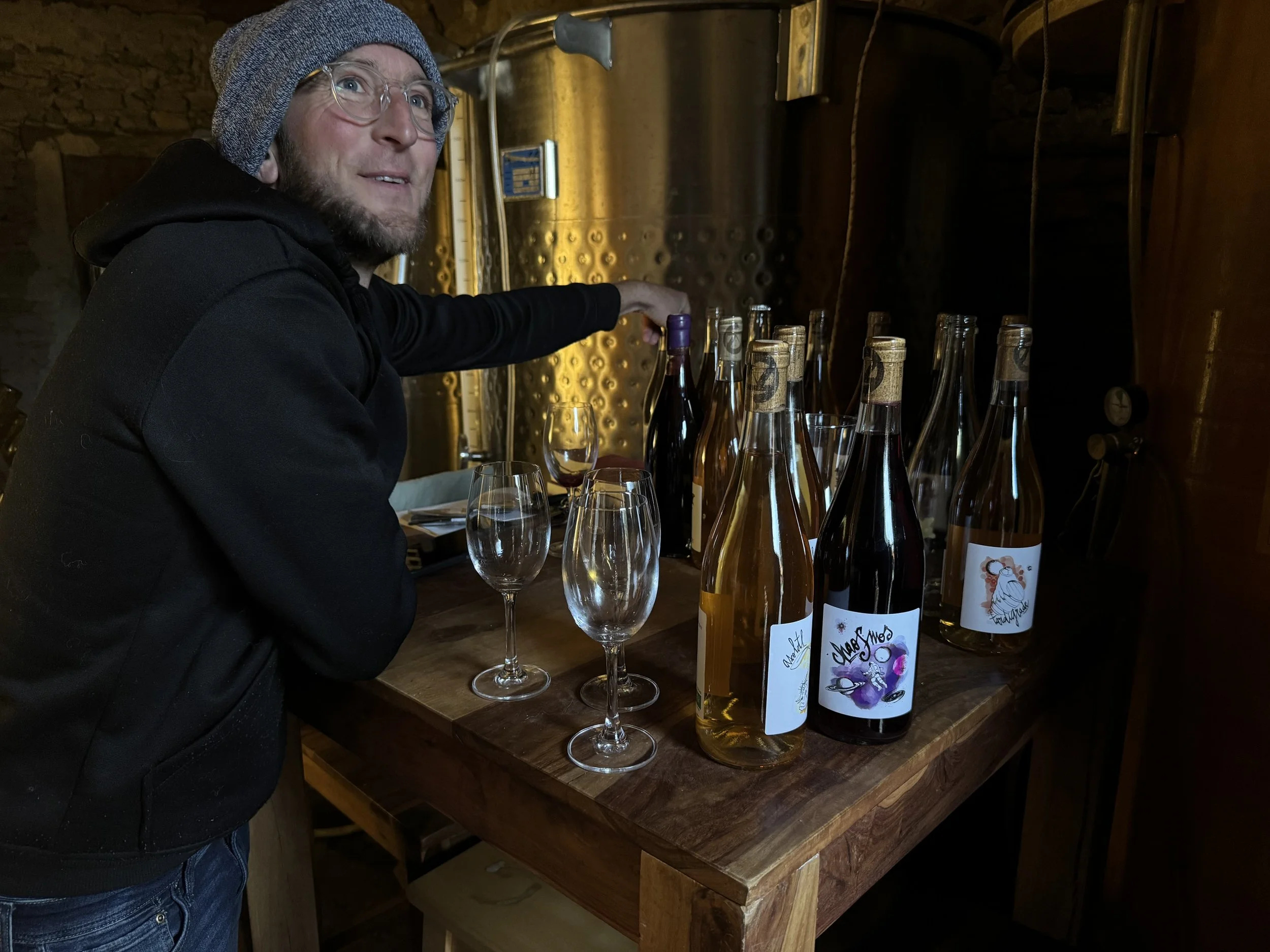
We met Vincent the way we meet the best things on a trip: relatively unplanned, spontaneous, and with little expectations. We drove down a dirt road where we were instructed to park “next to a grey van” and we somehow managed to follow instructions appropriately. Vincent, newly back from vacation, opened up his tiny cellar and began a hunt for a wine opener whilst we stood in the cold, winter light observing the hundreds of bottles of orange wine surrounding us. Our conversations immediately drifted to our life philosophies, as they often do. “We try to keep the vine calm,” Vincent said, “that is the goal. Calm vine, calm wine.” We liked him immediately.
“We don’t chase the outcome of the wine, we don’t push. From pruning to harvest, everything is done in a way to avoid agitation. If the vine is stressed, it shows. If we are stressed, it shows too. We do everything by hand… harvest by hand, press by hand, and then we let the wine live.” “No magic powders to ward off fear, “ he continued.
Fear seems to be so present in winemaking (and in life?) these days… the ever present urge to fix, to protect, to sterilize, to get a guarantee of a certain outcome. Not at Kambyum… they just let life do it’s thing, and we love that philosophy. “We wait, we taste… presence, patience, energy. Those are the ingredients.” We smiled as Vincent describes how he takes one week after bottling each year where he turns off all technology and goes out into nature, just him and his wine, and “gets to know his wine,” as he drinks generously and scribbles down every single thing he notices about its profile. Only to then throw away the notes at the end of the week.
“And then I know my wine!” he exclaims.
Before we left, we talked about how young Vincent’s project is and what it means to start something new in a world that loves credentials and long histories - especially in France. Kambyum began in 2021. There’s no centuries-old family crest on his cellar door. No inherited brand story. Just 5 hectares of vines and a decision to start.
Erick said to Vincent, “starting something from nothing takes a particular kind of confidence,” to which Vincent replied “or a particular lack of fear… sometimes it is the same thing,” with a smile.
We walked away with that feeling I always love from a producer visit, the one that makes us keep coming back: not just “good wine” (and we had plenty of that, indeed), but a sense of how someone thinks. Kambyum left an impression that will not soon be forgotten.
Side Quest: Arles/Saint-Remy-de-Provence, Les Baux-de-Provence
If you’re anywhere near here and have a sliver of extra time and curiosity, do the Alpilles loop. Limestone ridgelines, adorable buildings clinging to cliffs, and olive trees everywhere… it’s a much more humble but truly authentic version of Provence.
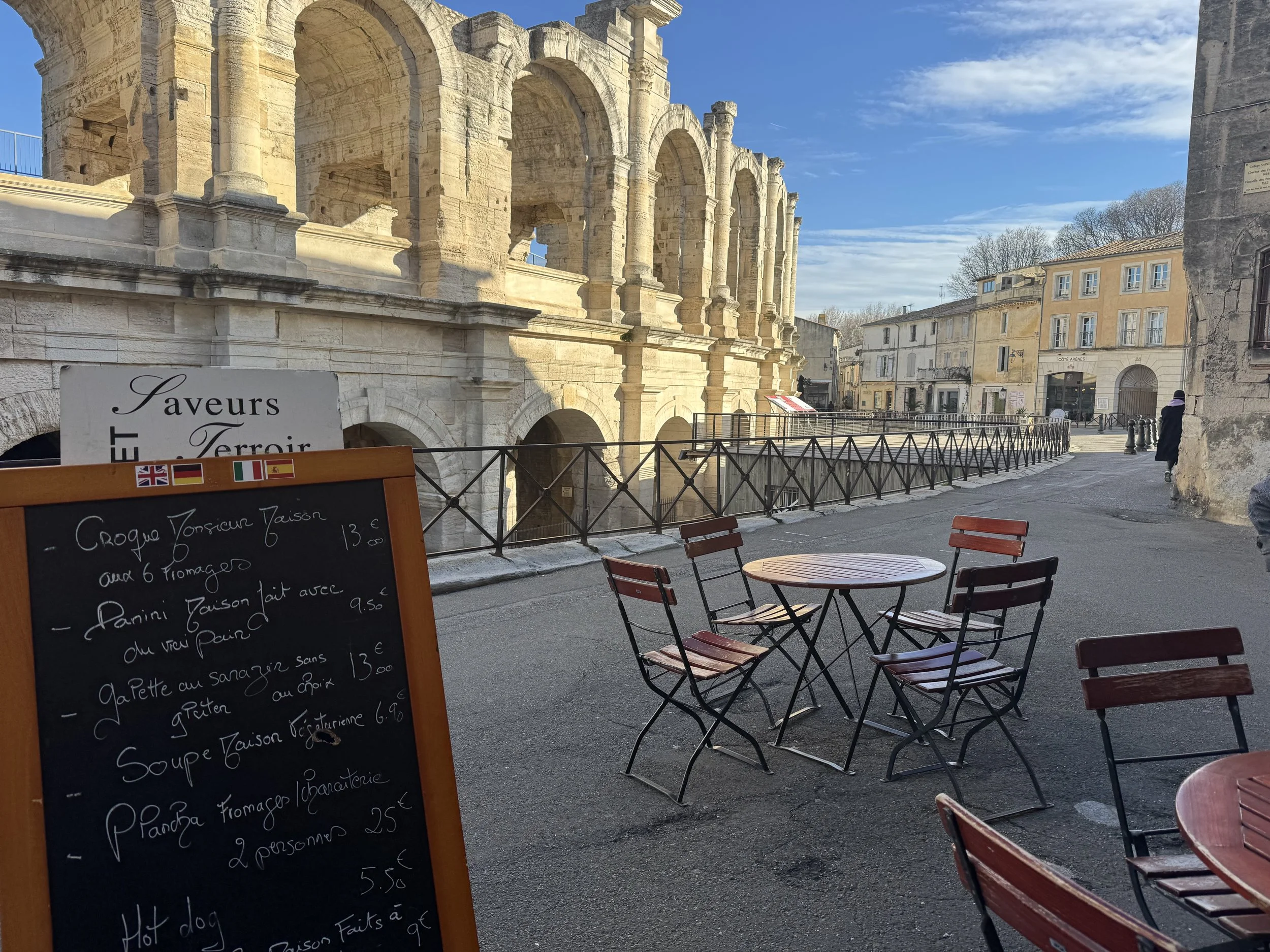
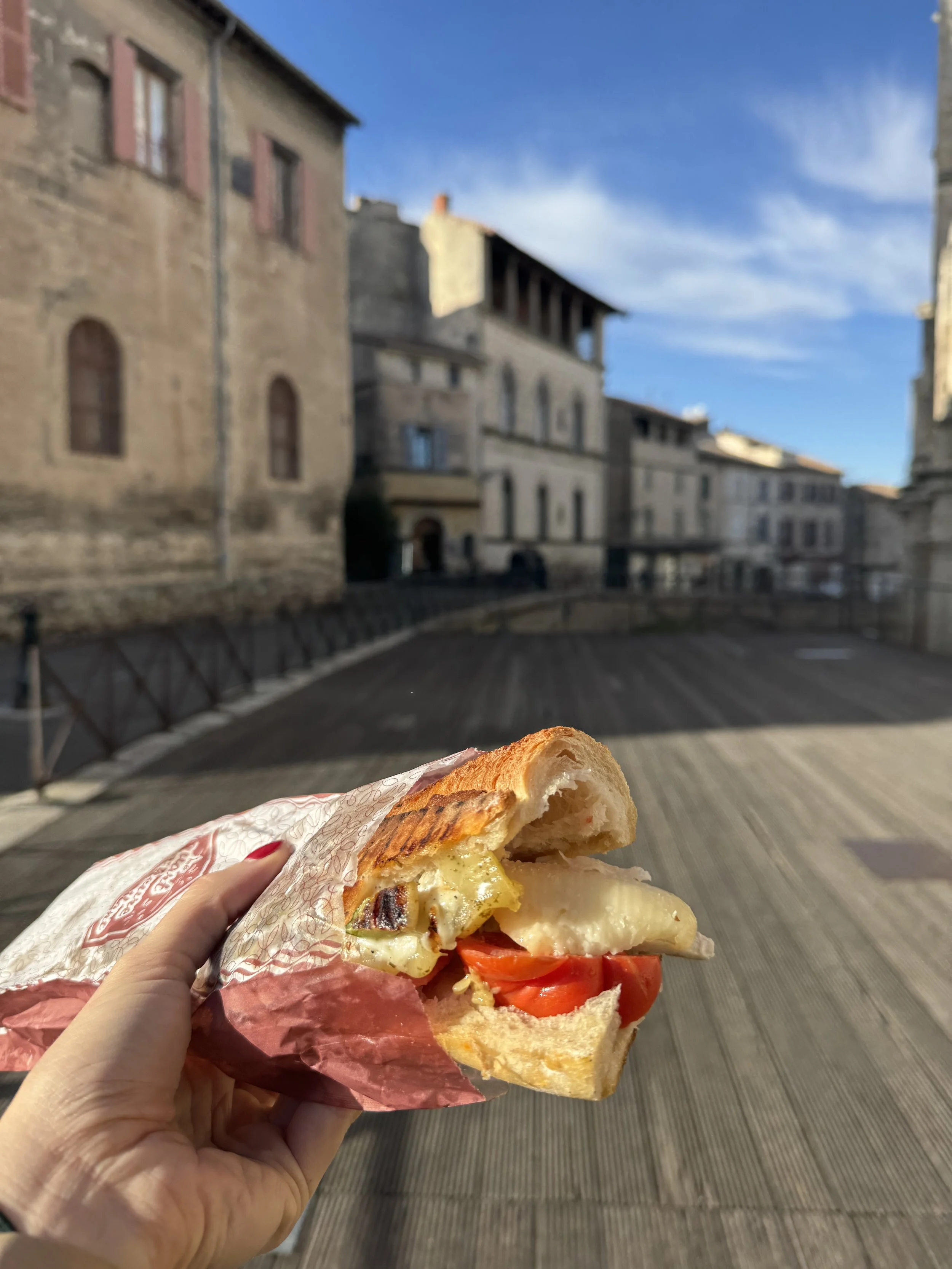
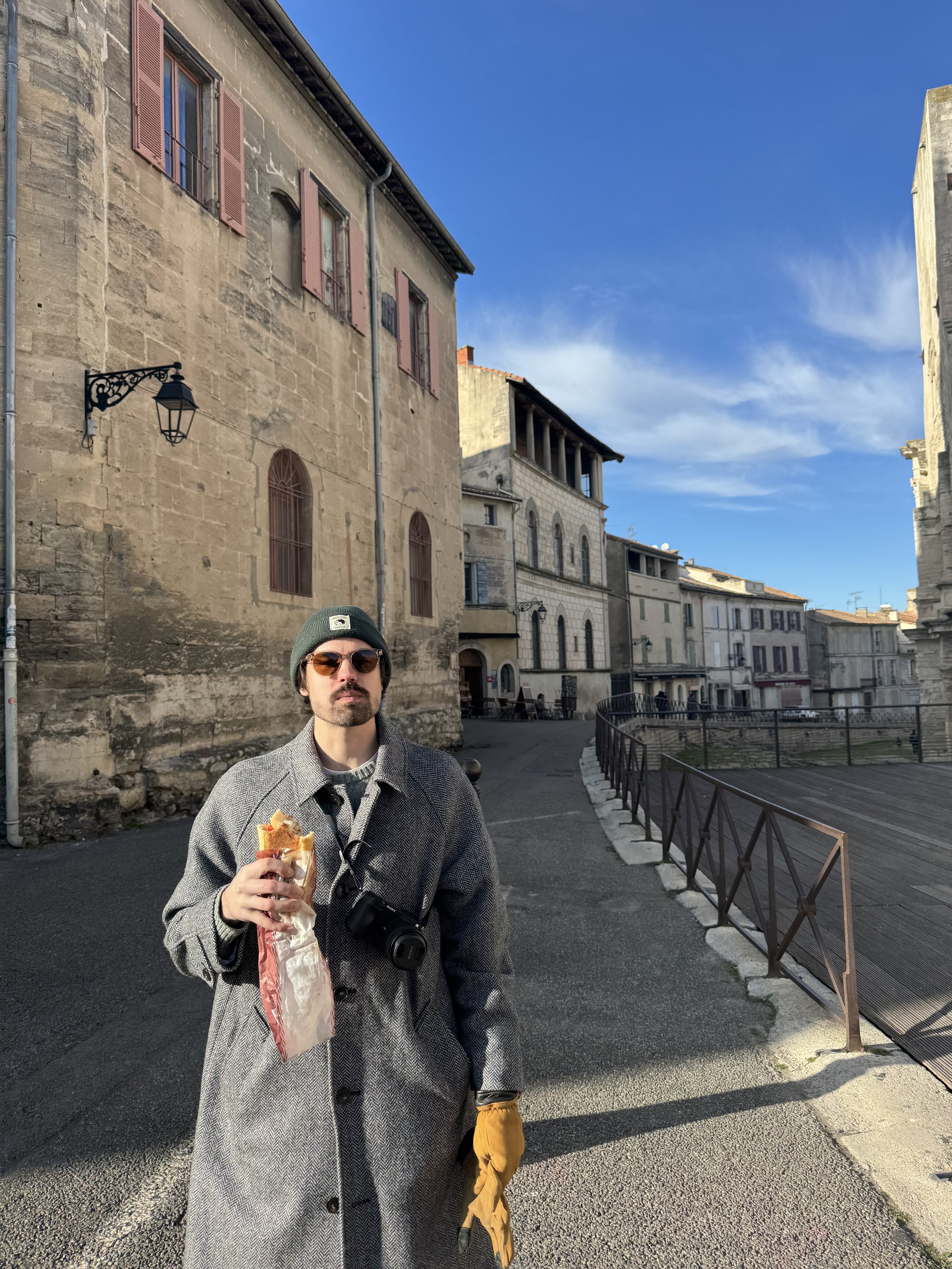
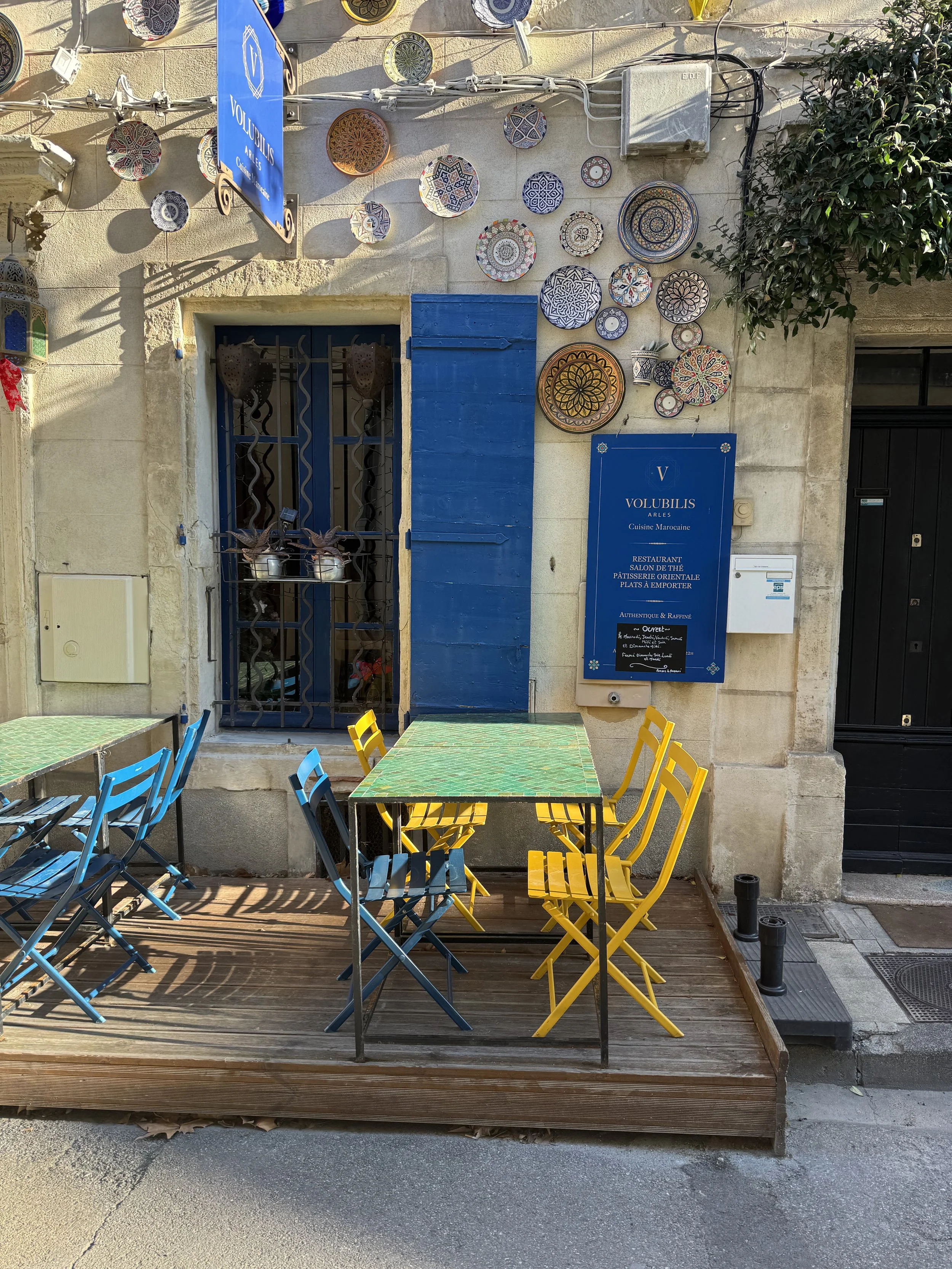
Where to Eat/Drink: There are quite a few great restaurants in Arles and Les Baux-de-Provence, but amongst our favorites were: L’Antonelle le bistrot, Jardin des Arts, Restaurant L’Oriel, Le Seize, and the most charming little shop to get a sandwich: Saveurs et Terroirs.
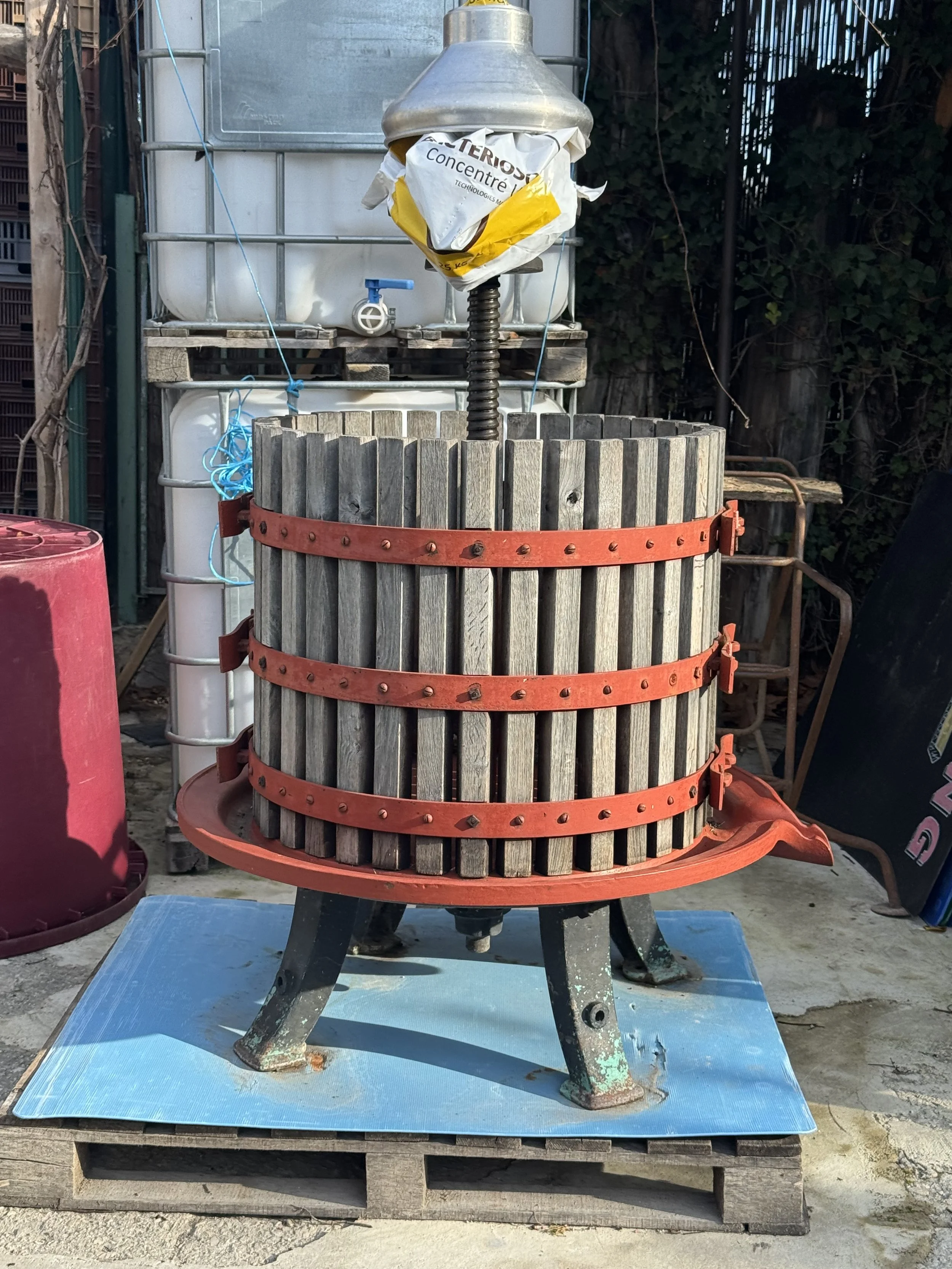
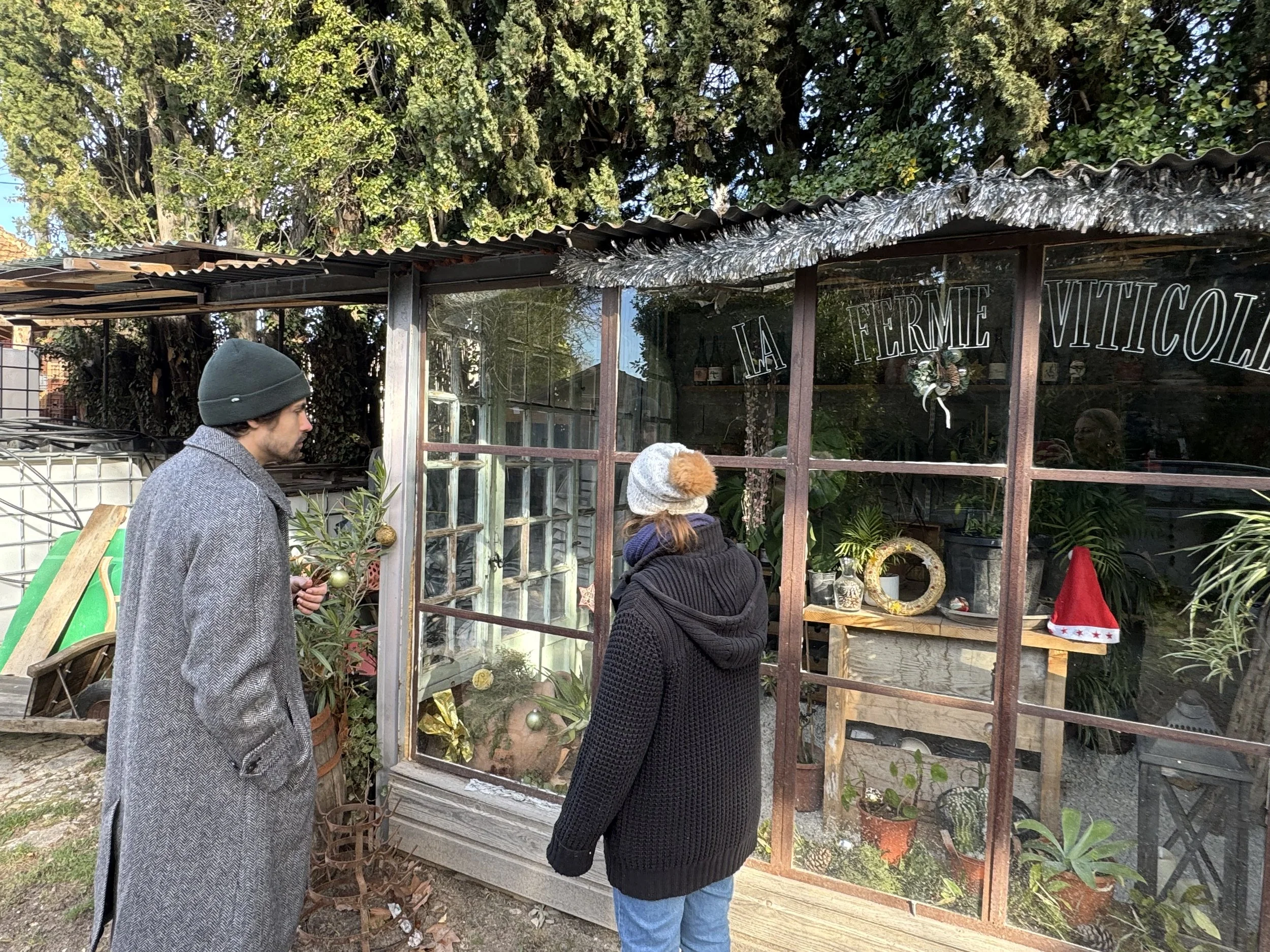
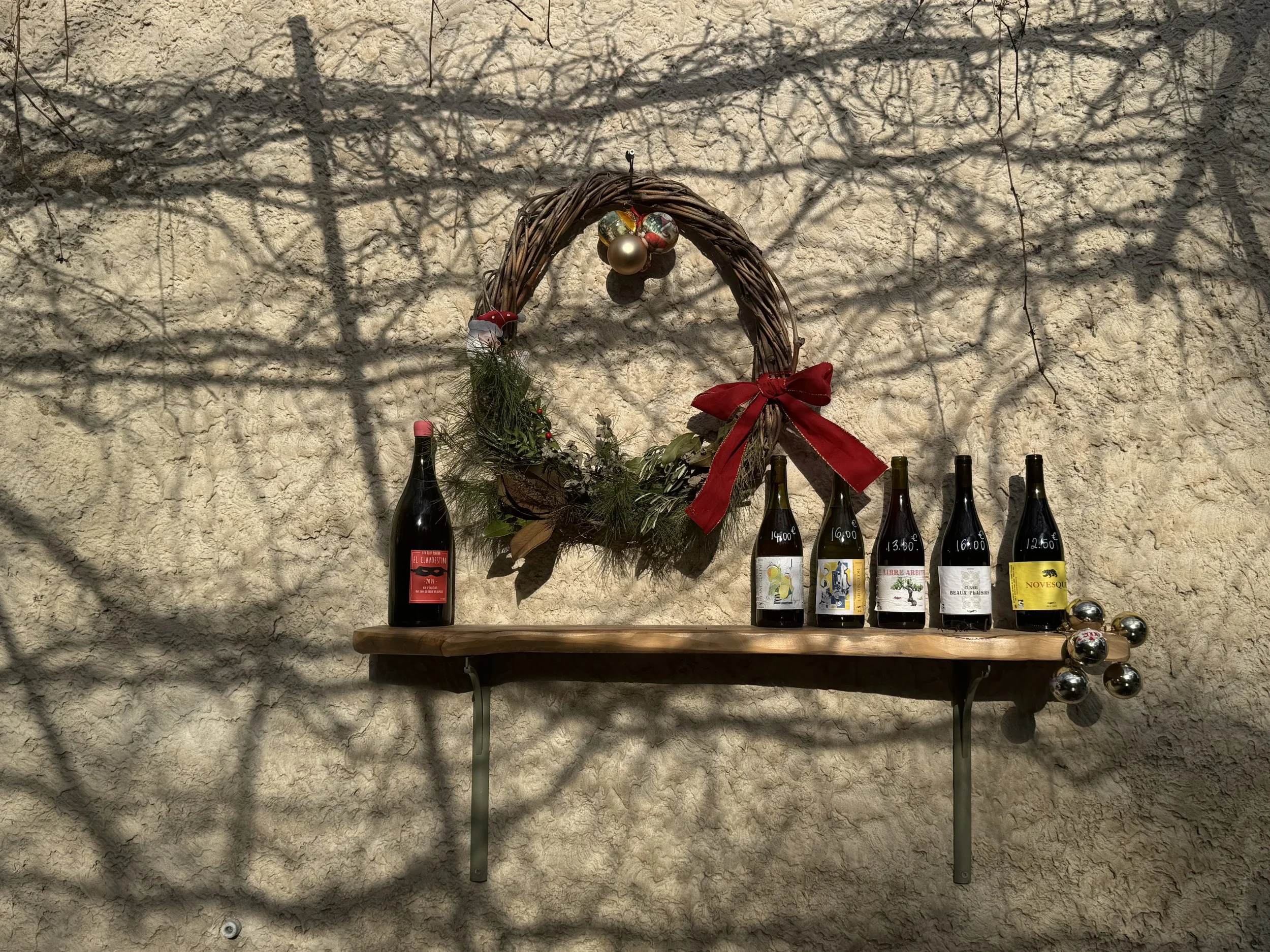
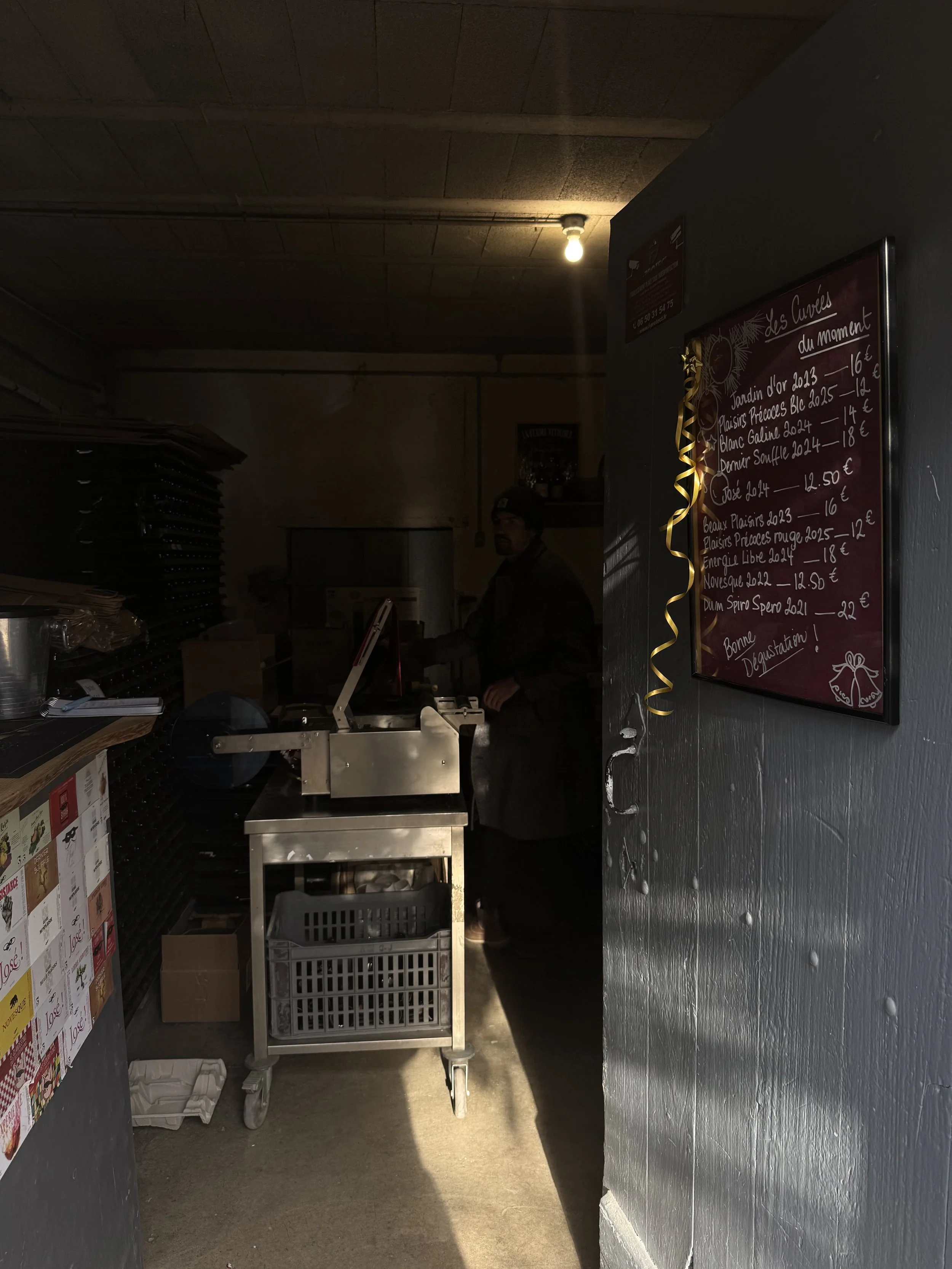
Things to Do: A non negotiable is to stop by Ferme Viticole and see Emilie and Bastion. We stumbled in here with no appointment and Emilie was gracious enough to host us. Again, another reminder of why we love visiting small producers… Ferme Viticole is a tiny 3 hectares but with a very big heart. Despite its size, they are somehow working 32 varieties of grapes (yep, you heard that right!), split across multiple parcels that each operate completely differently. Up in the mountains, you get clay and chalk, down closer you get sandier soils, and you can taste the shift in the glass even if you can’t place exactly why. Emilie and Bastion plant many varieties together and let them support each other. They let the strong support the delicate, and let the season of life decide who shines. Yes, we’re talking about vines and also philosophy, in case you were wondering :-) When disease arrives, it tends to hit only one variety at a time, so diversity becomes resilience.
Emilie also dropped one of our favorite nuanced phrases of the trip: it’s not “orange” wine, but “blanc de maceration,” according to her and Bastion. Same idea, but its more precise and in their mind, more respectful of what the wine actually is.
She also talked a bit about Villard Blanc, once frowned upon and still forbidden because it is disease-resistant. Of course it was forbidden at some point; we love a dramatic ag backstory. We talked about DOCs and trade zones and the absurd puzzle of getting wines across borders. After seeing all of the behind the scenes process, we left feeling empowered, like we could actually make wine too… and they gave us renewed passion for the craft of making things by hand with patience. A worthy visit!
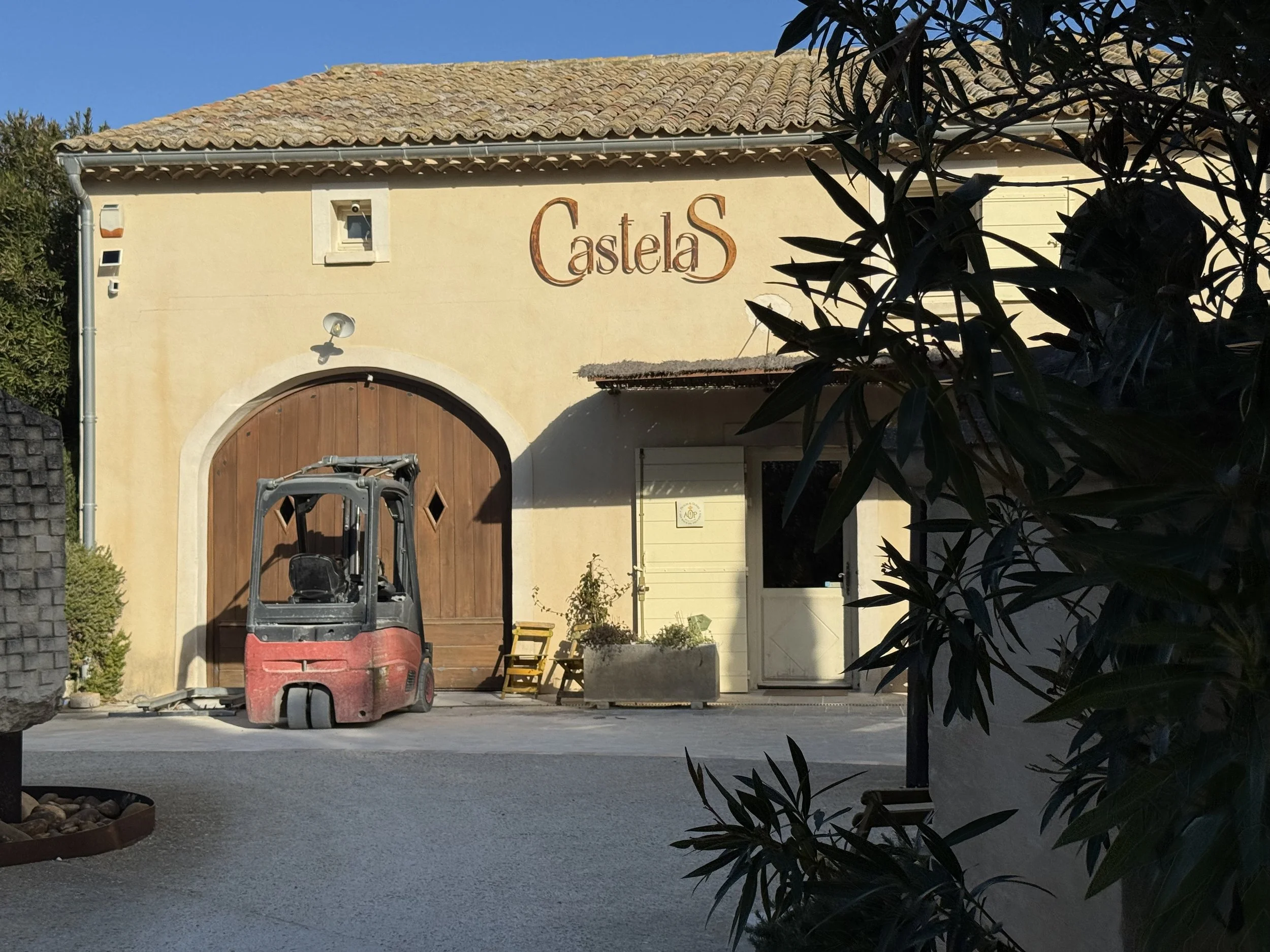
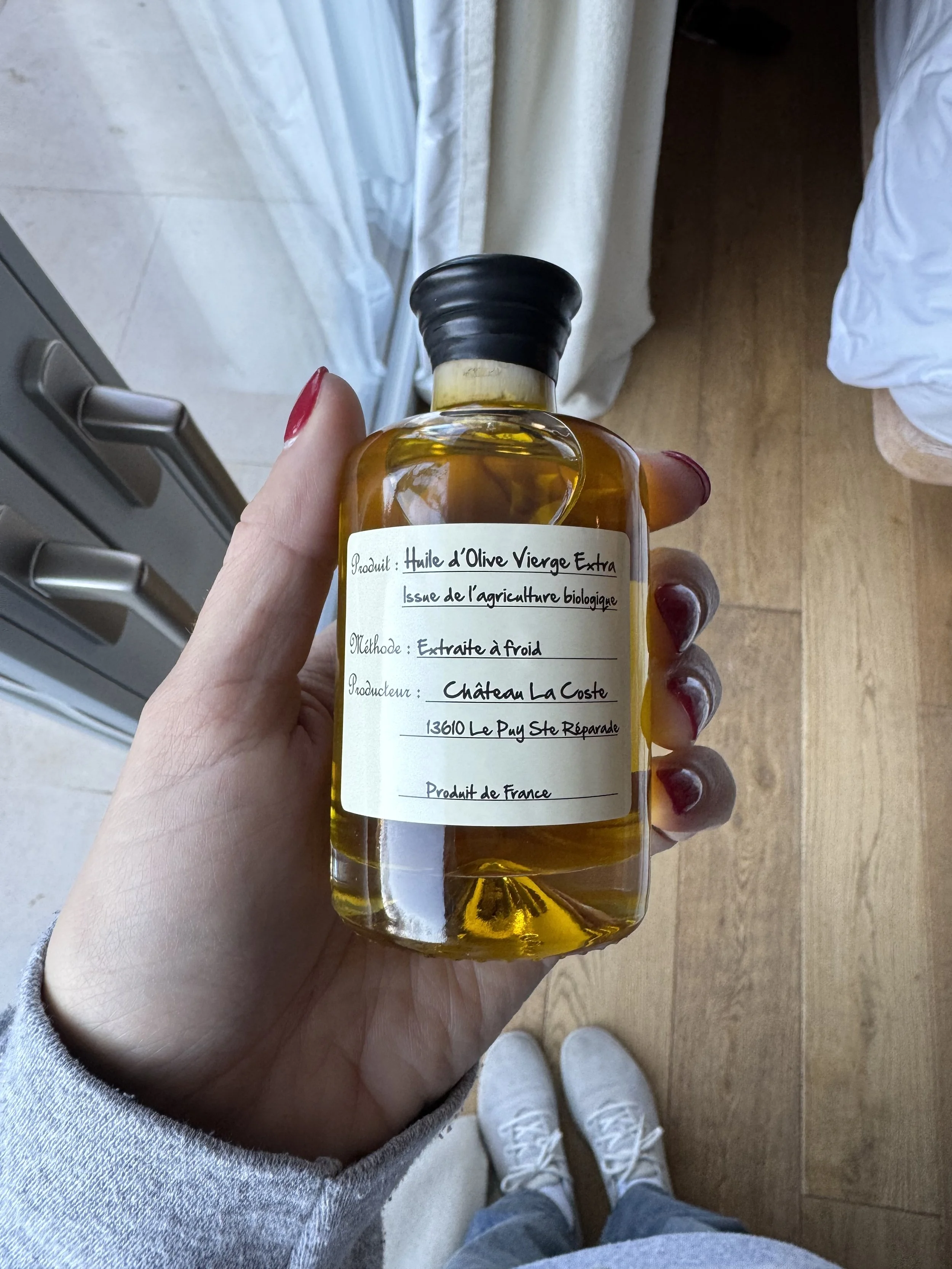
As we parted ways, Emilie also recommended that we stop at Moulin de Castelas, which was a very worthy recommendation as well. Right outside of Les Baux-de-Provence and flanked by olive trees on all side, it’s an olive farm where you can stop and do a tasting as well as walk the fields. We loved it and most certainly purchased some to bring home!
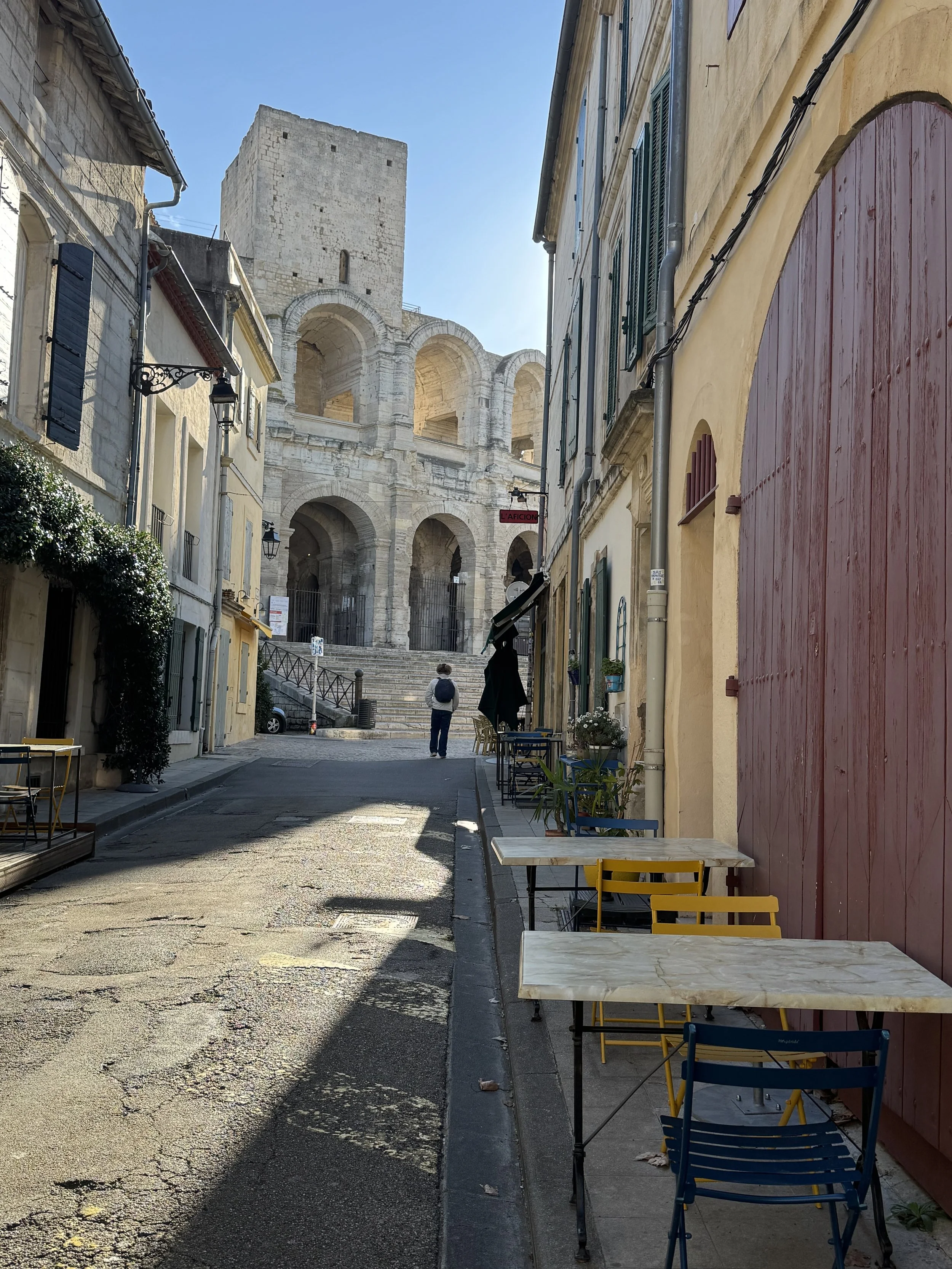
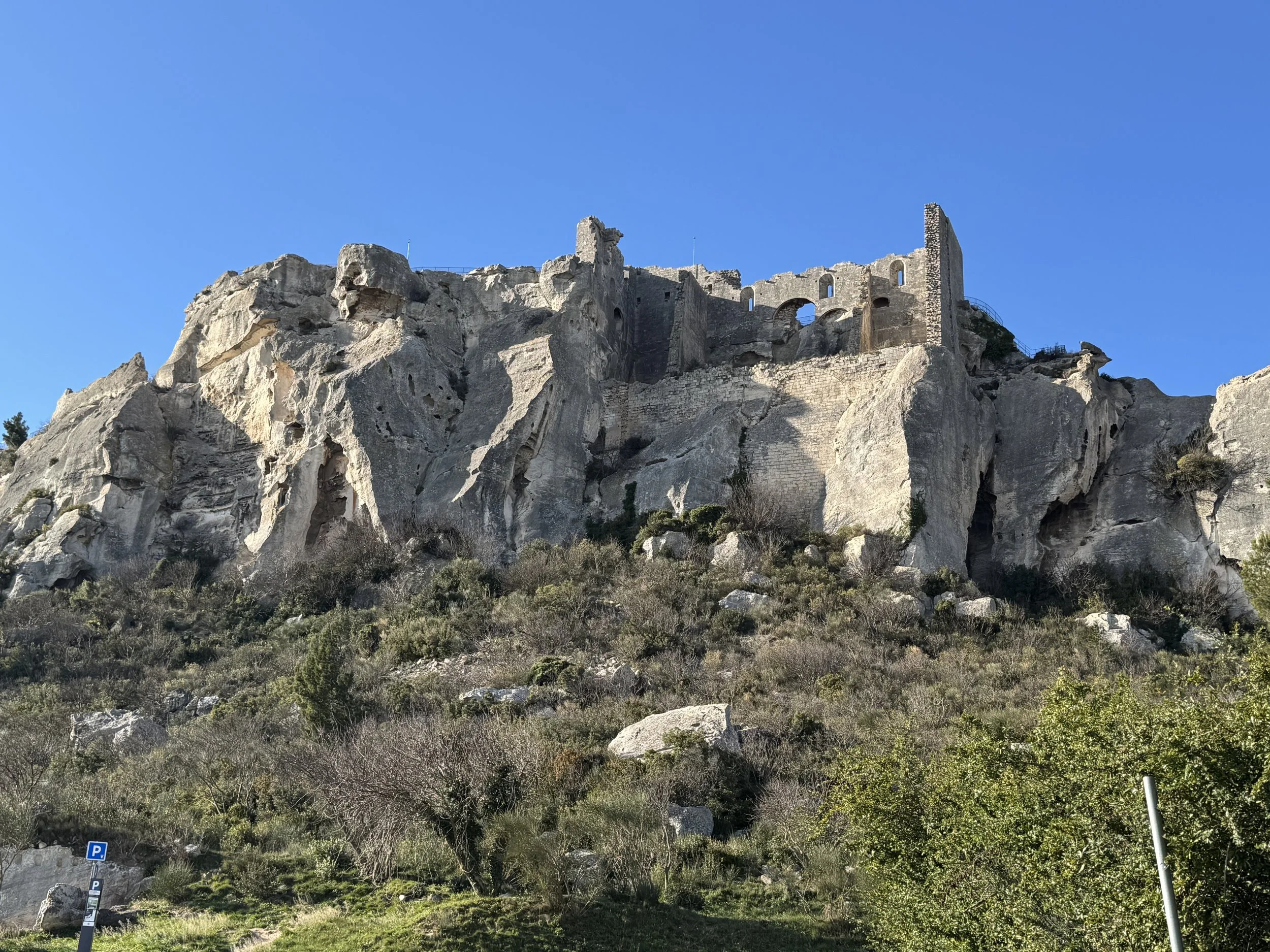
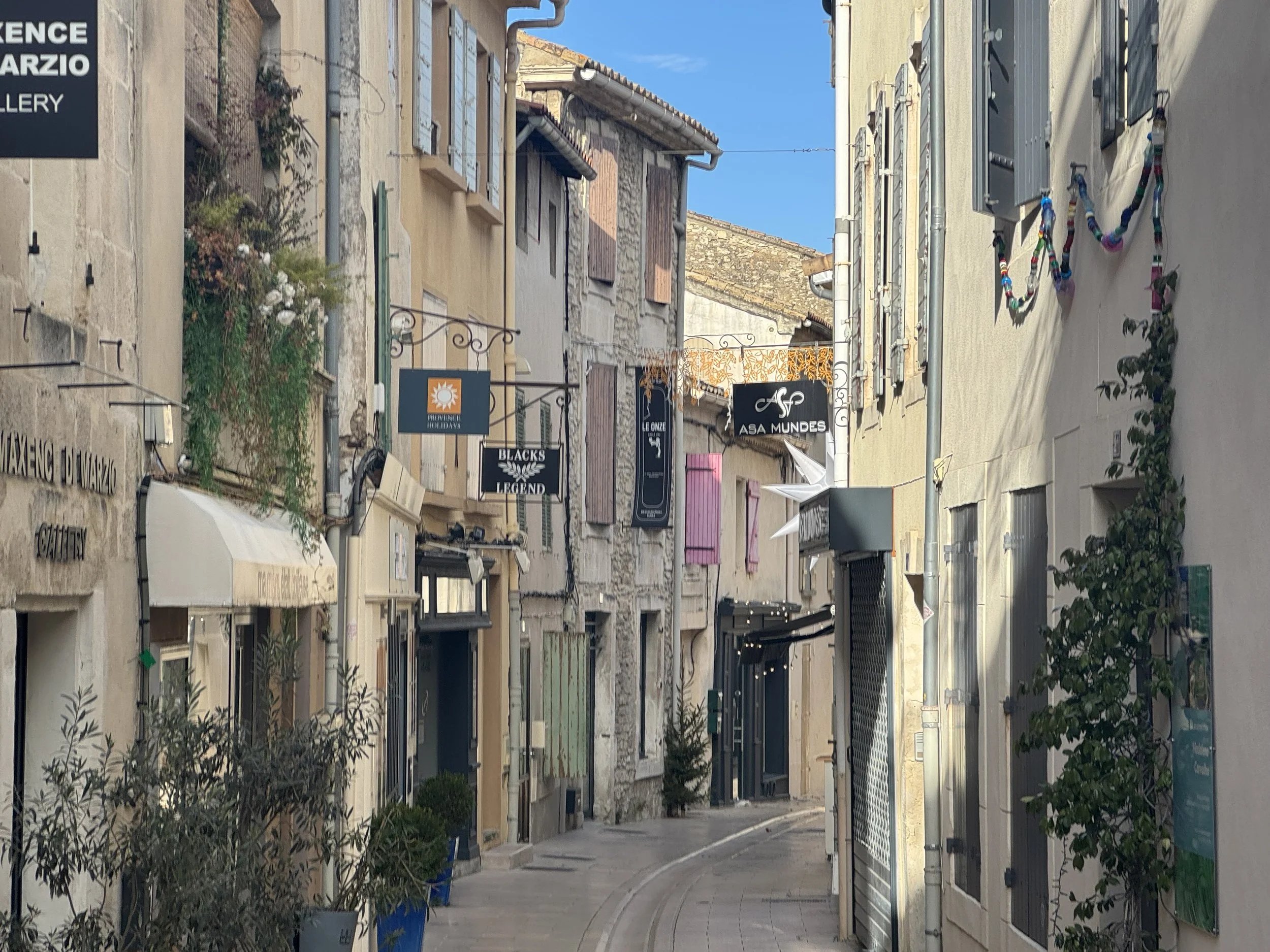
We also highly recommend a stop through Les Baux. It’s a stone village perched on a rocky outcrop in the Alpilles, with medieval streets and views for miles over the olive groves. The limestone is striking, and seemingly appears out of nowhere. Walk the villages and lanes and then carry on to Arles, the land of Van Gogh. Walk the Roman core, the amphitheater and surrounding streets.
A fun fact that Emilie shared with us about Arles that stuck with us: Van Gogh moved to Arles with high hopes to paint vines but winter in Provence had other plans. He spent many years painting the quiet everyday scenes of Arles and Provence instead, and finally, in his later years, he got his wish: vines right outside his window. A lesson in patience, for certain.
Marseille/Aix en Provence
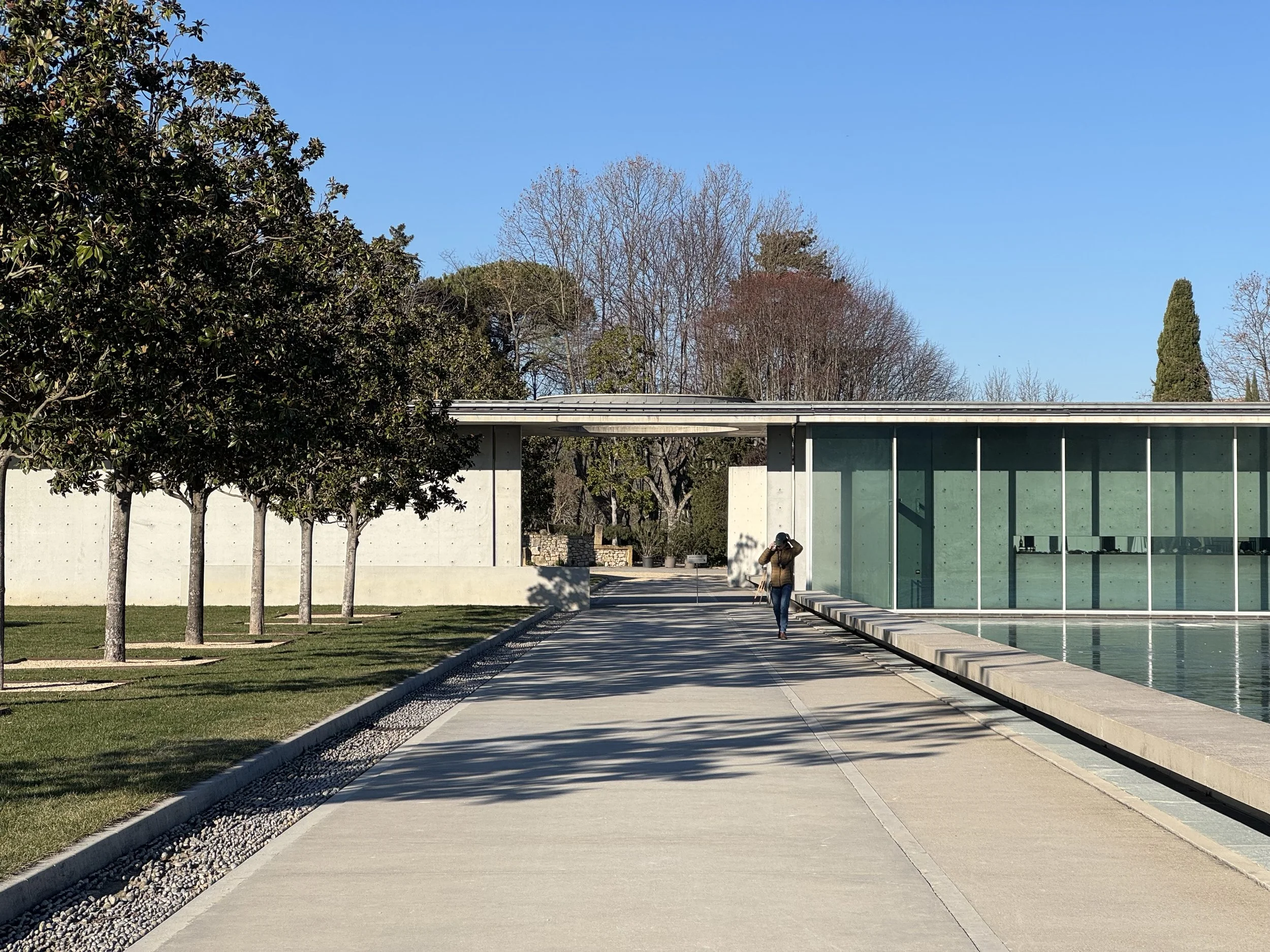
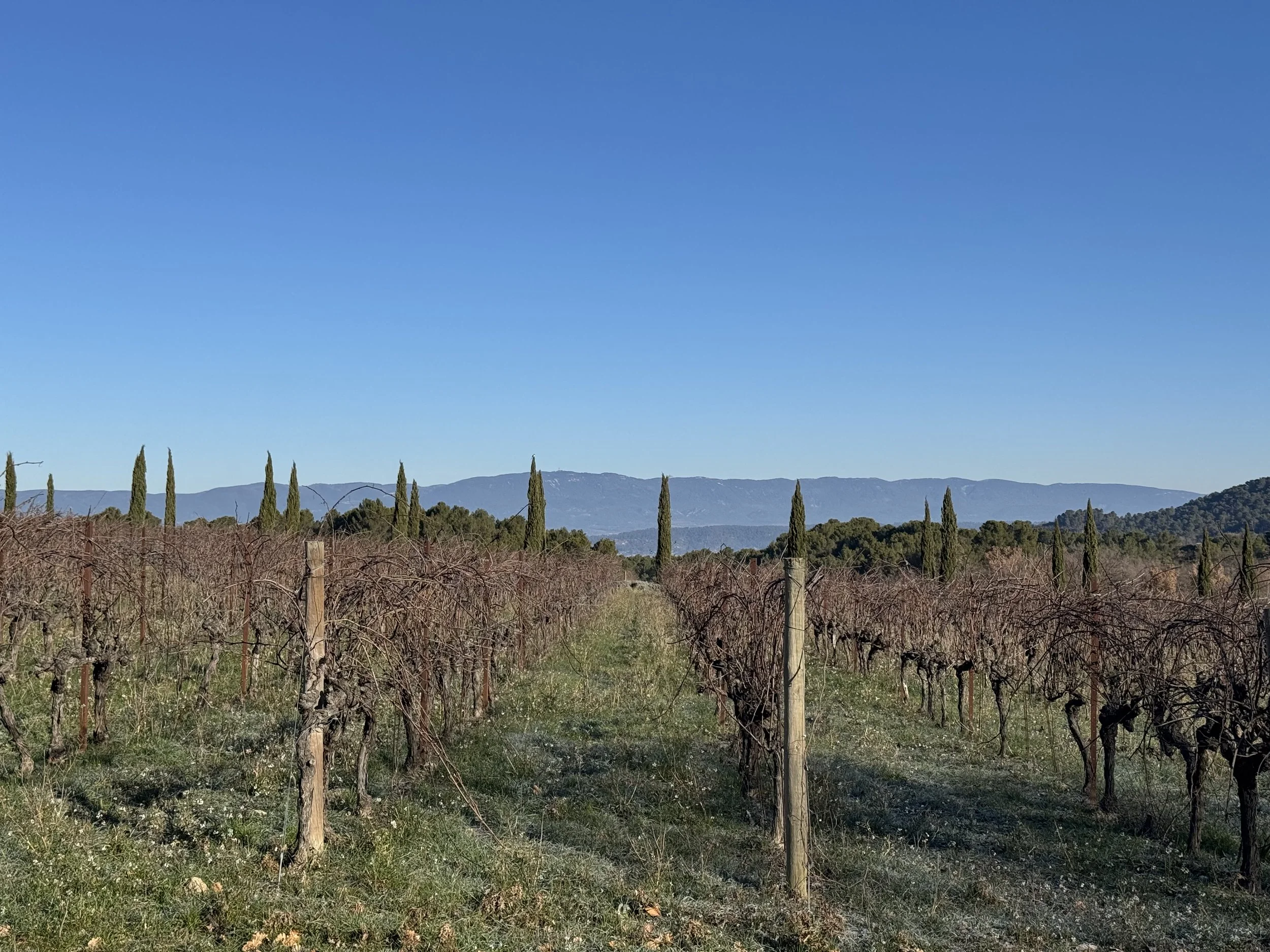
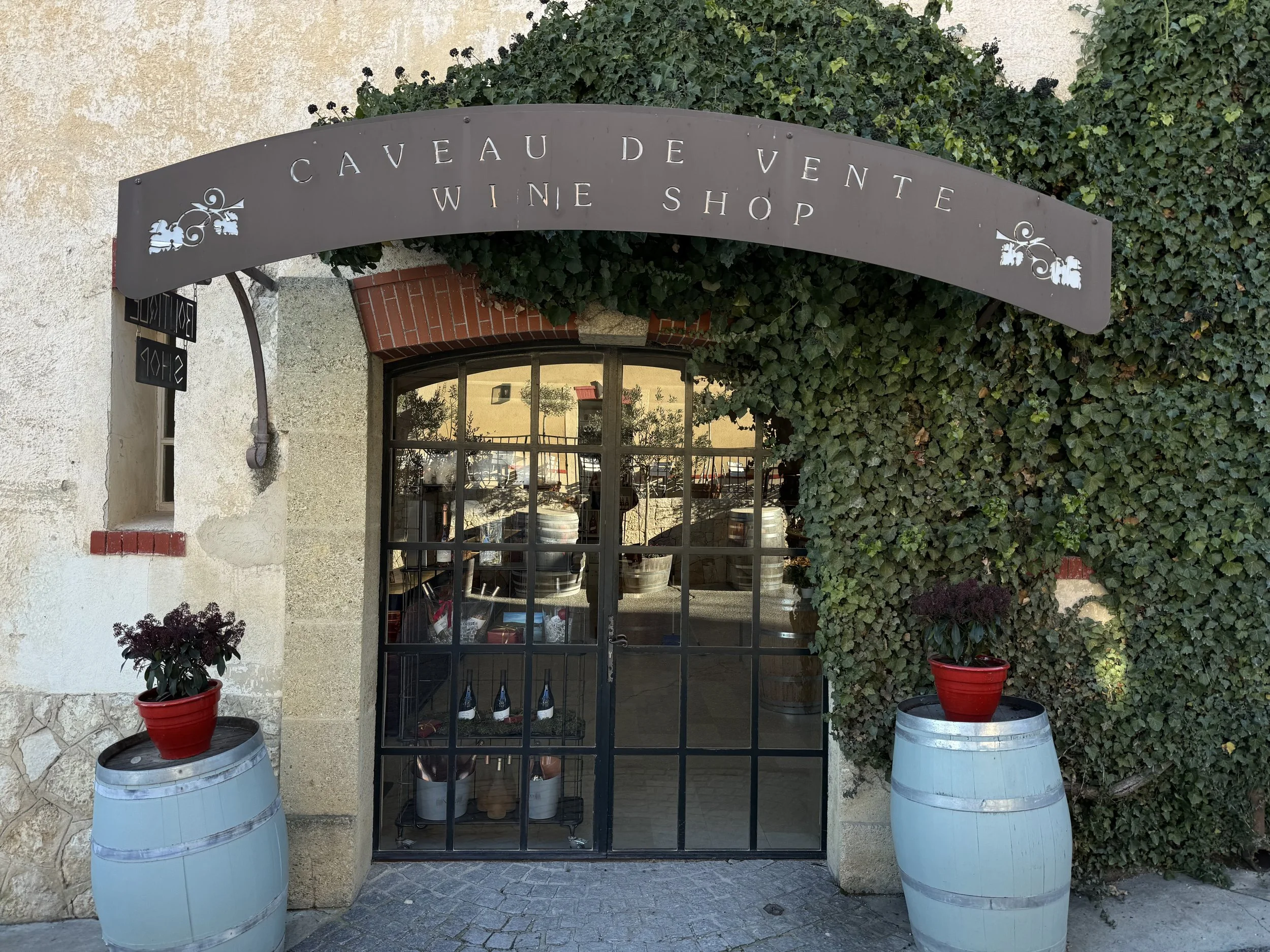
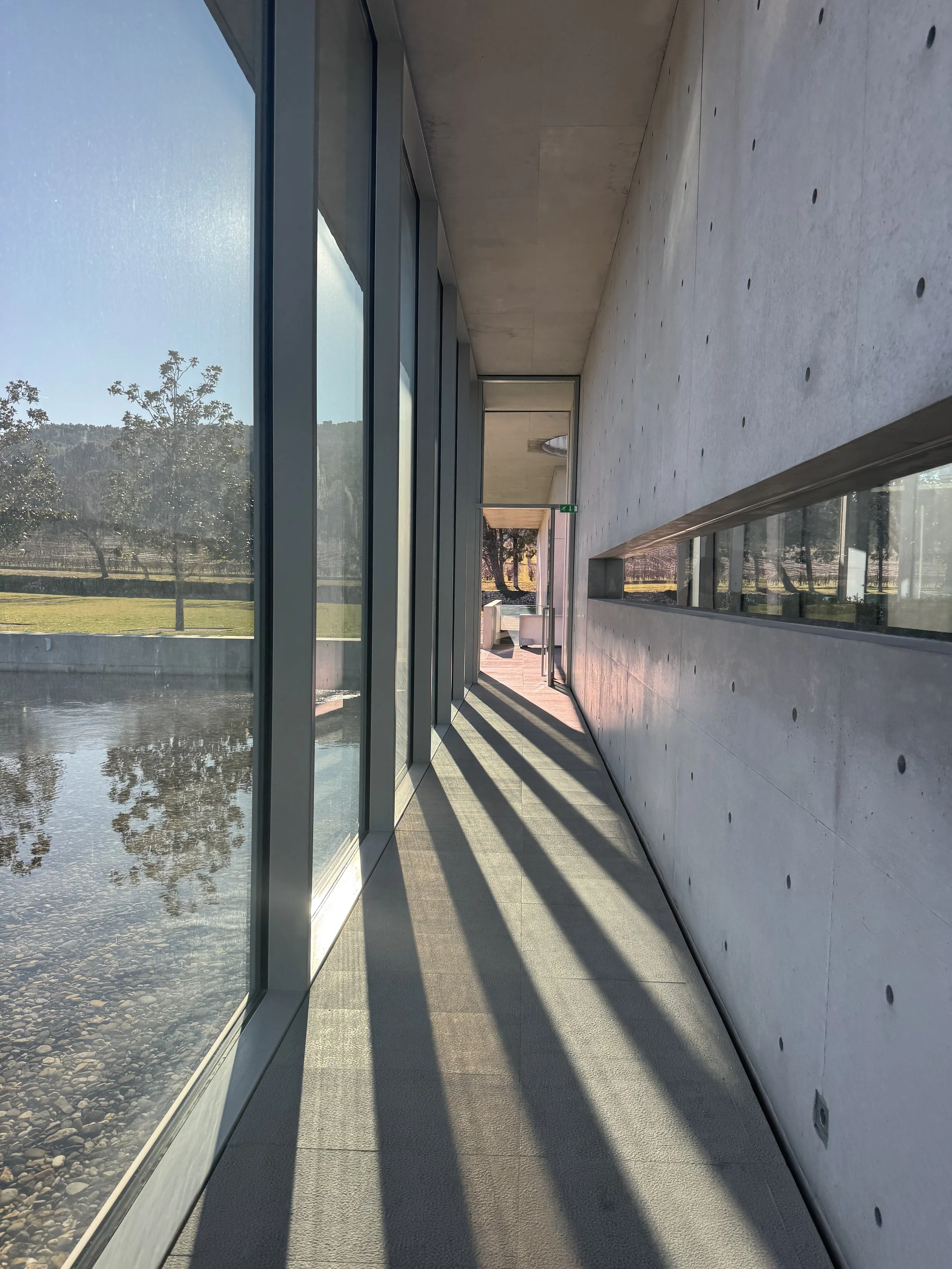
Where to Stay: Auberge La Coste was one of the most impressive places we’ve ever been as this is not just a hotel, but an *experience*. Upon check in here, you realize that you are on an actual art-and-architecture campus. You go for a morning walk with coffee in hand and casually stroll past incredible sculptures, continue on through vineyards and olive groves, and then stumble into a Frank Gehry designed structure. Wine is of course woven through everything (it is Aix-en-Provence, after all!) but what I loved most is how the estate treats art and creativity like an integral part of daily life. The entire landscape is treated with intention and care… the vineyards look like something out of a Van Gogh painting, the skies stretch far and wide, the modern architectural lines contrast against the very old earth. Our room was the most luxurious of our France trip, calm and minimalist but with all the fancy upgrades you’d hope for maximum comfort - a bidet (!), beautfifully designed shower and bath, plush bathrooms and the works. Breakfast was also incredible and plentiful, with brioche french toast, eggs, bacon, yogurt 3 ways, fresh juices and more all on tap.
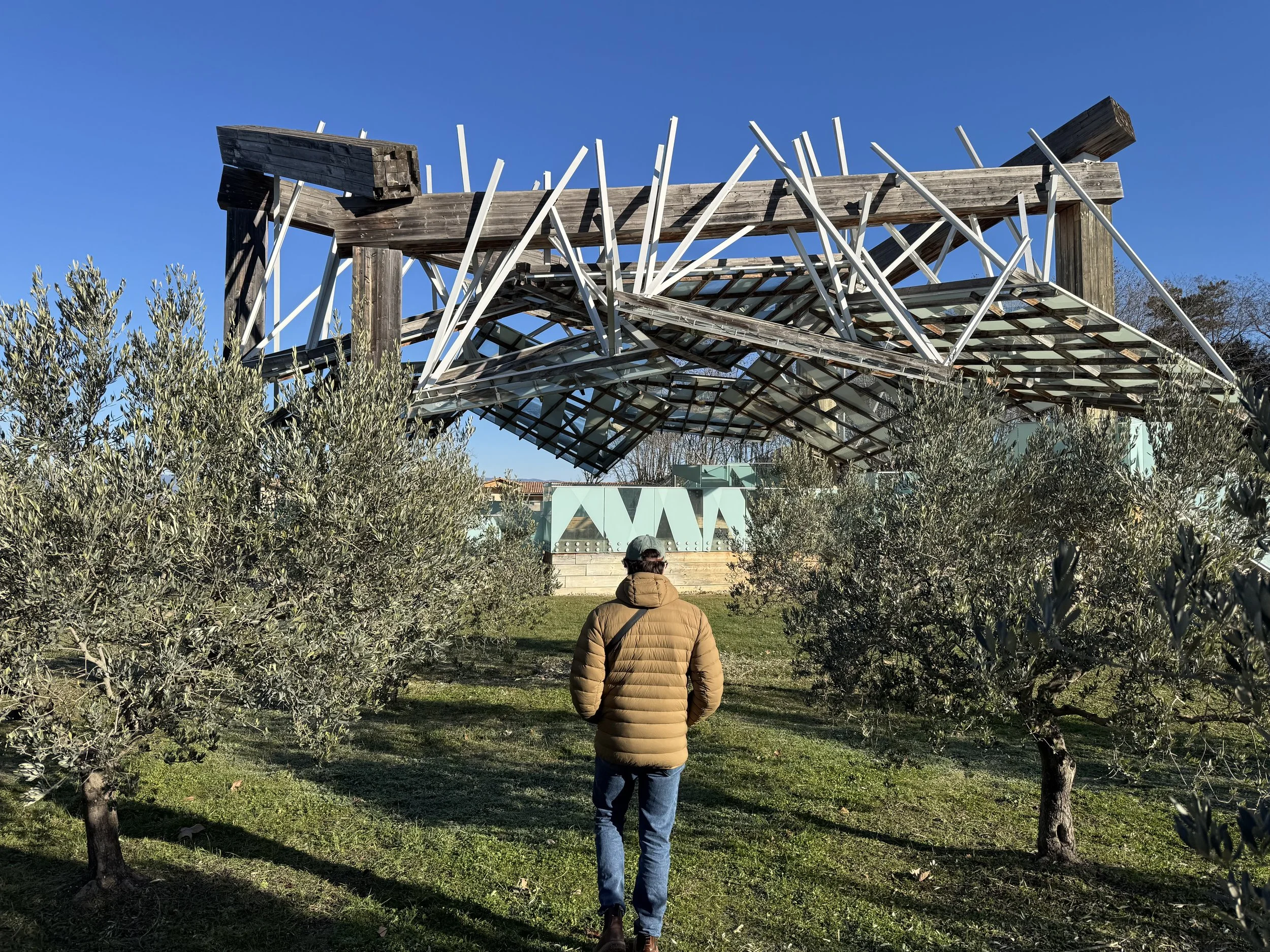
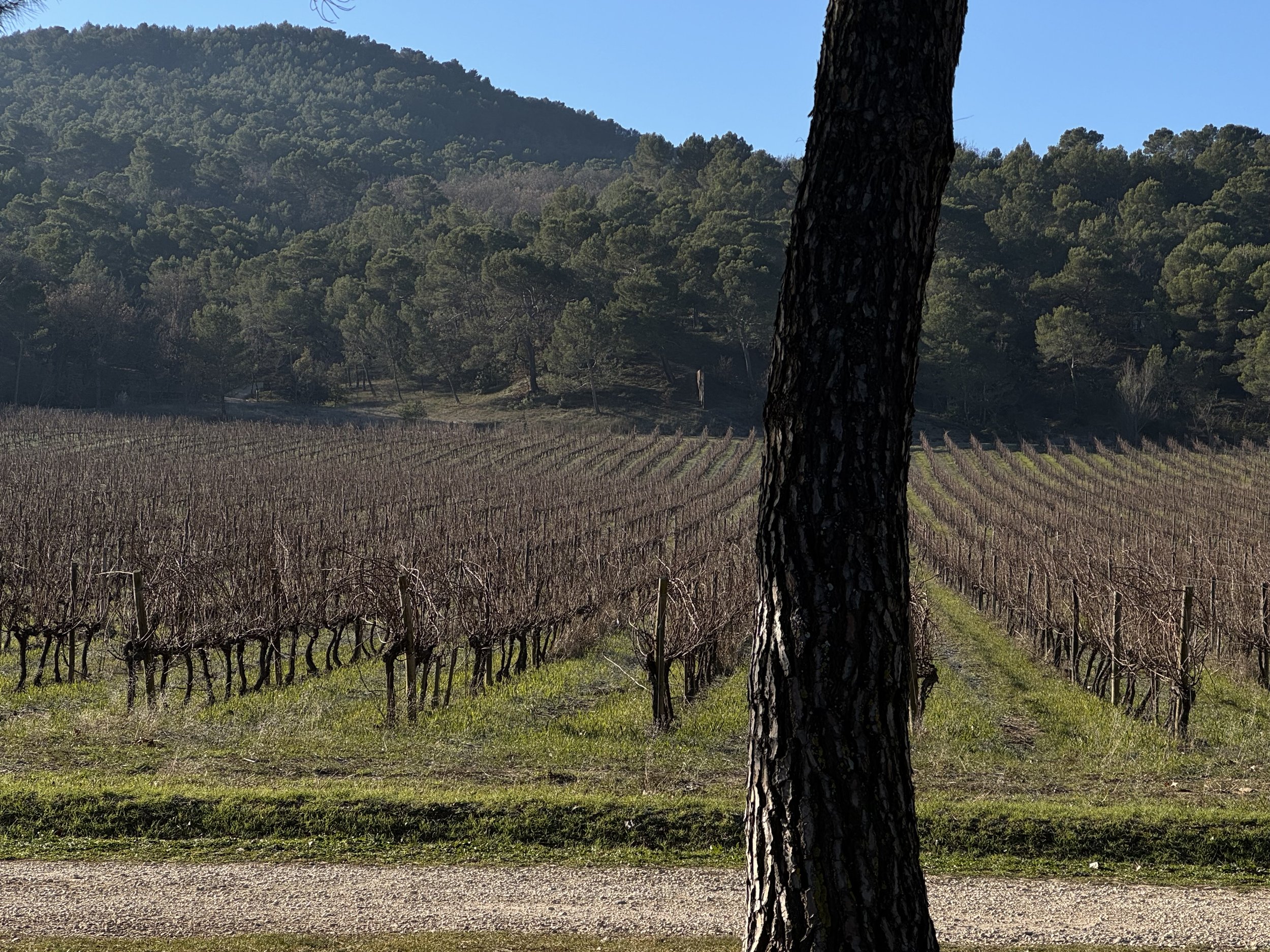
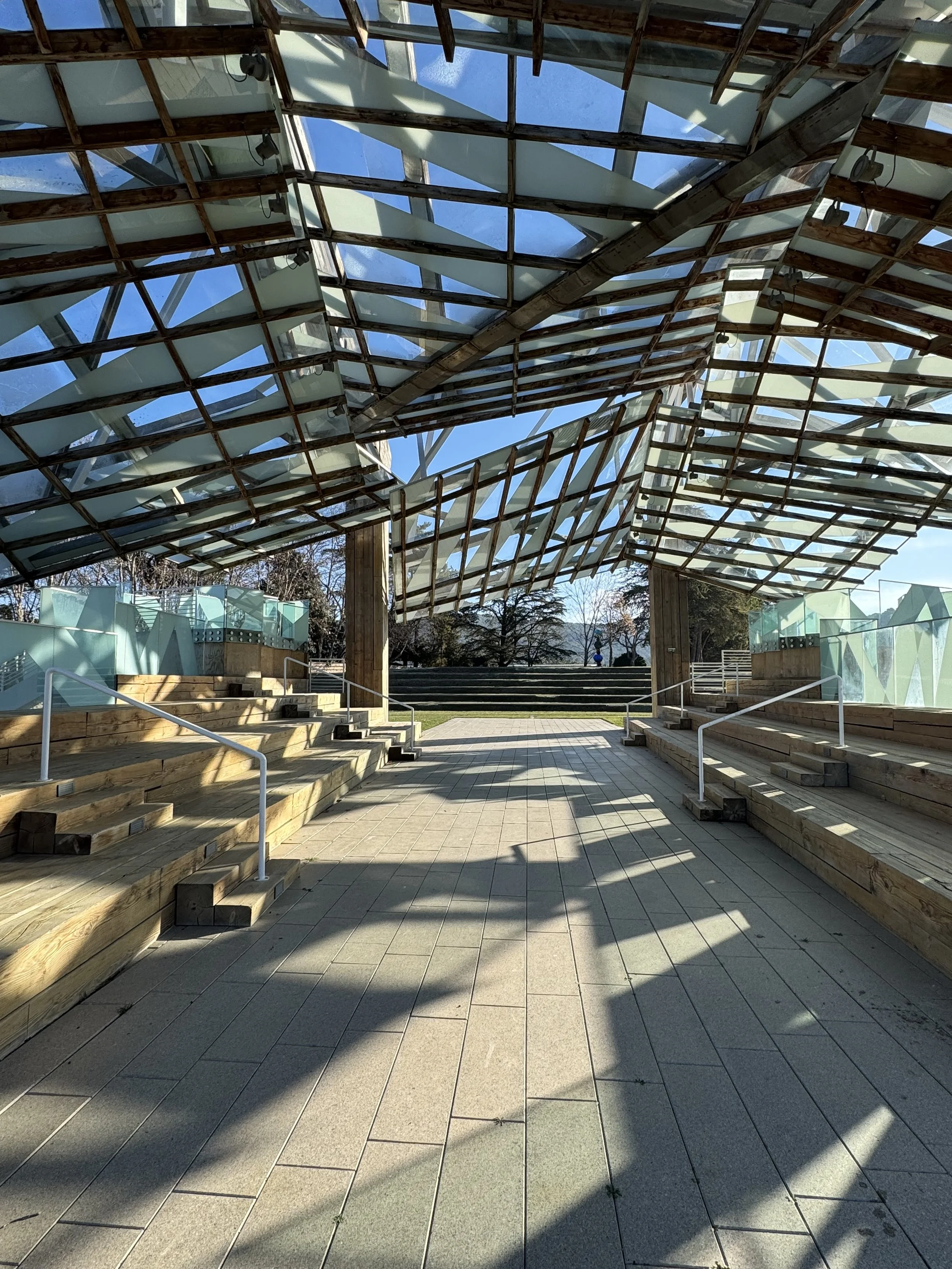
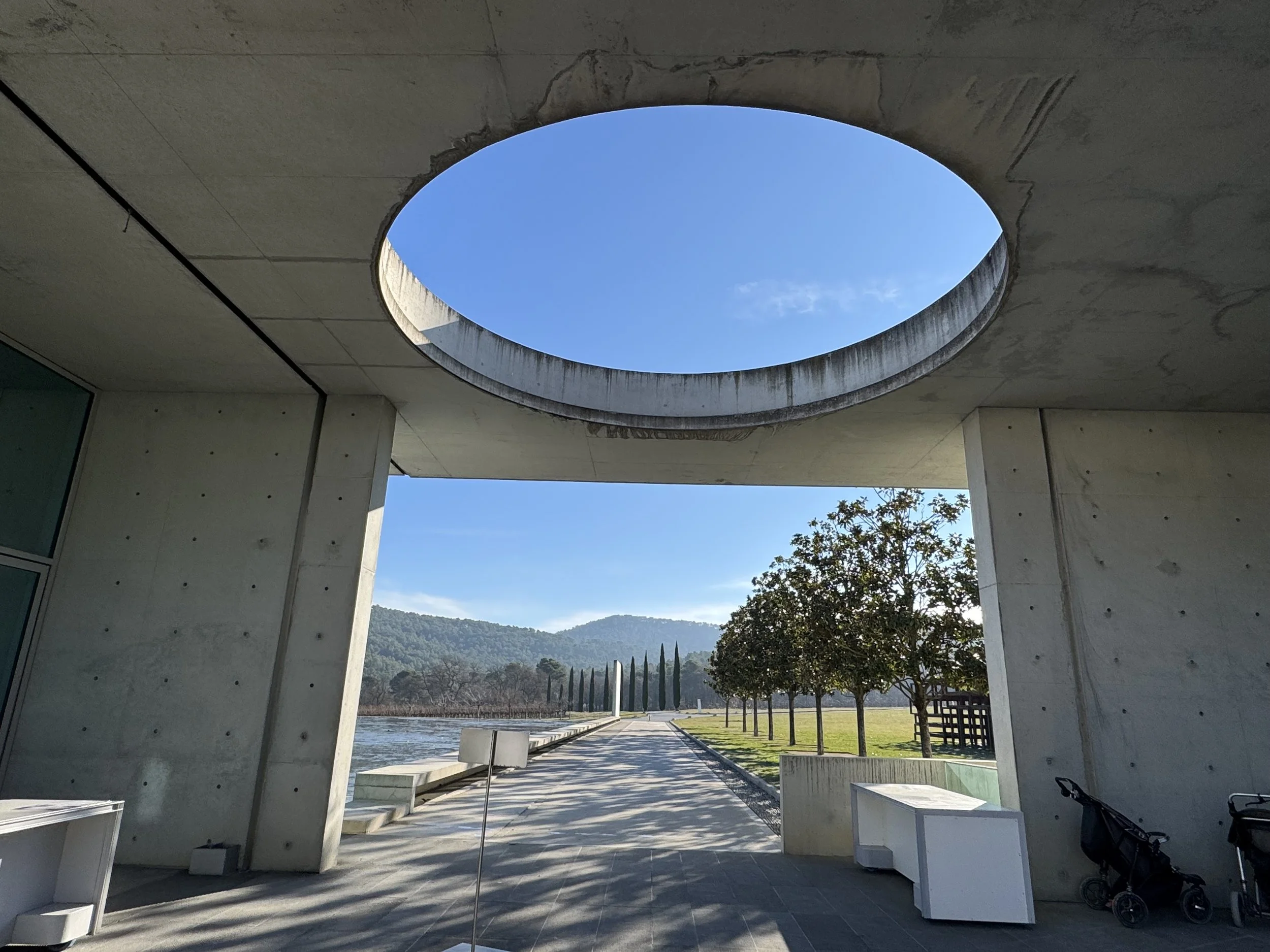
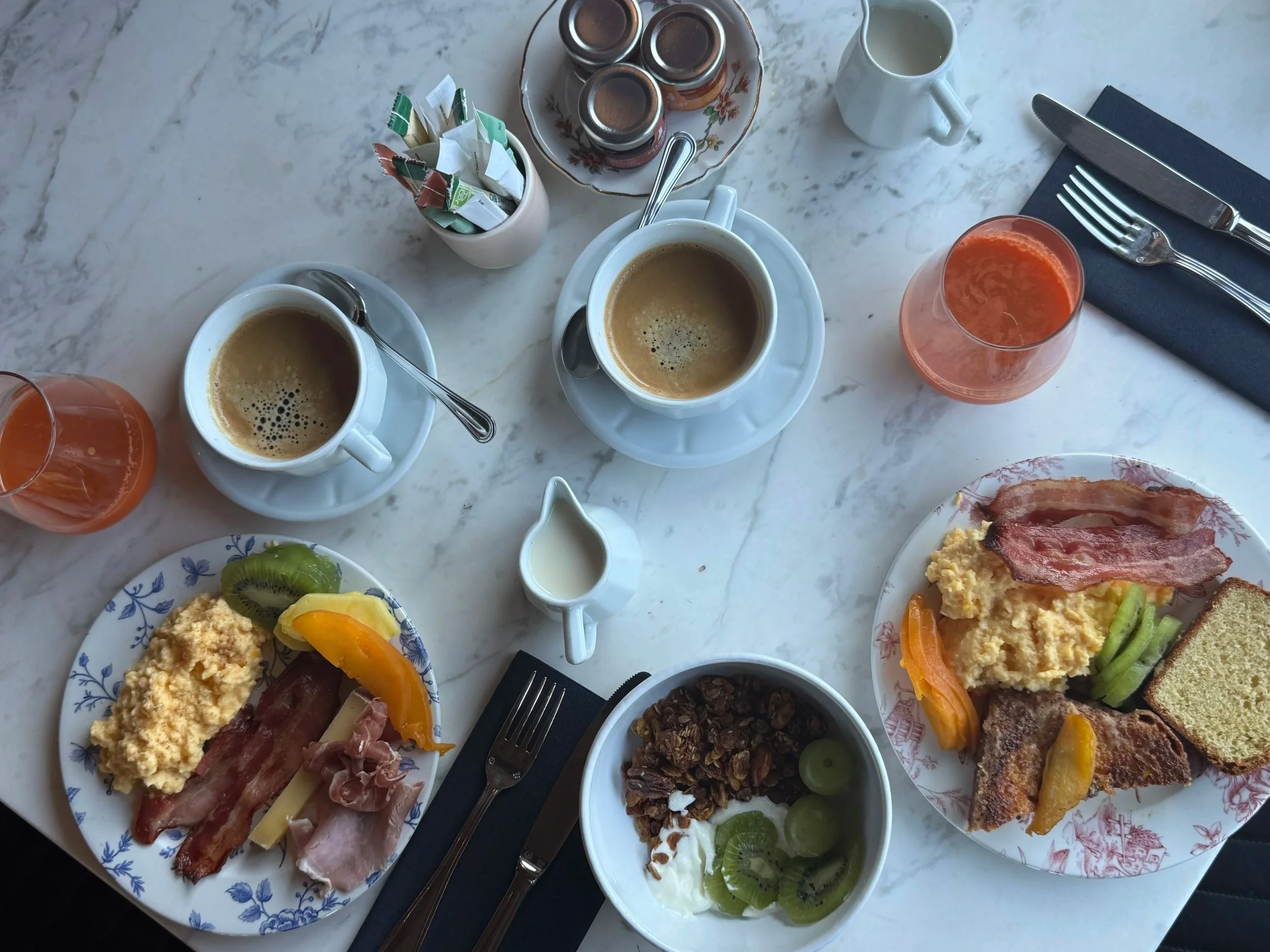
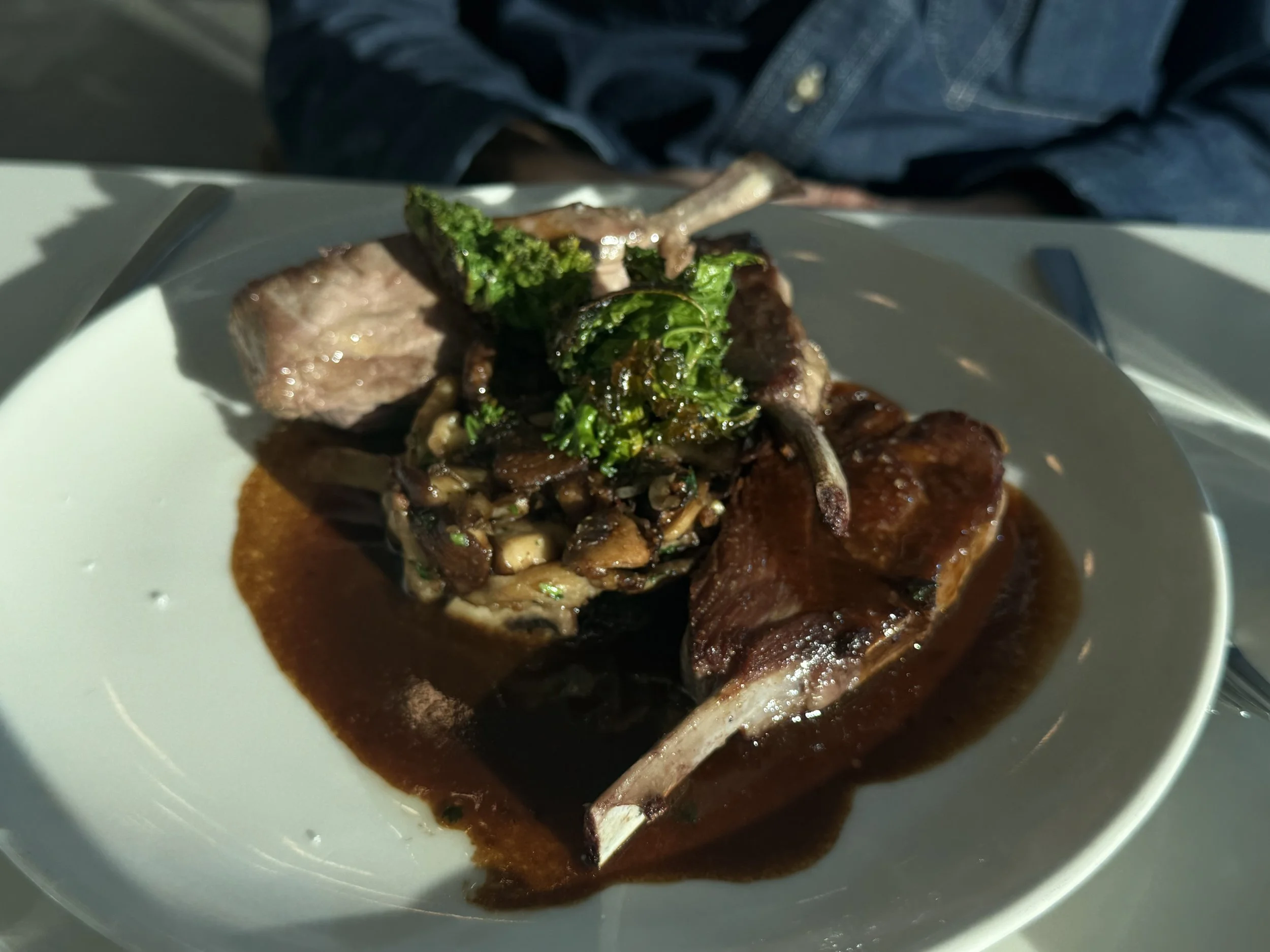
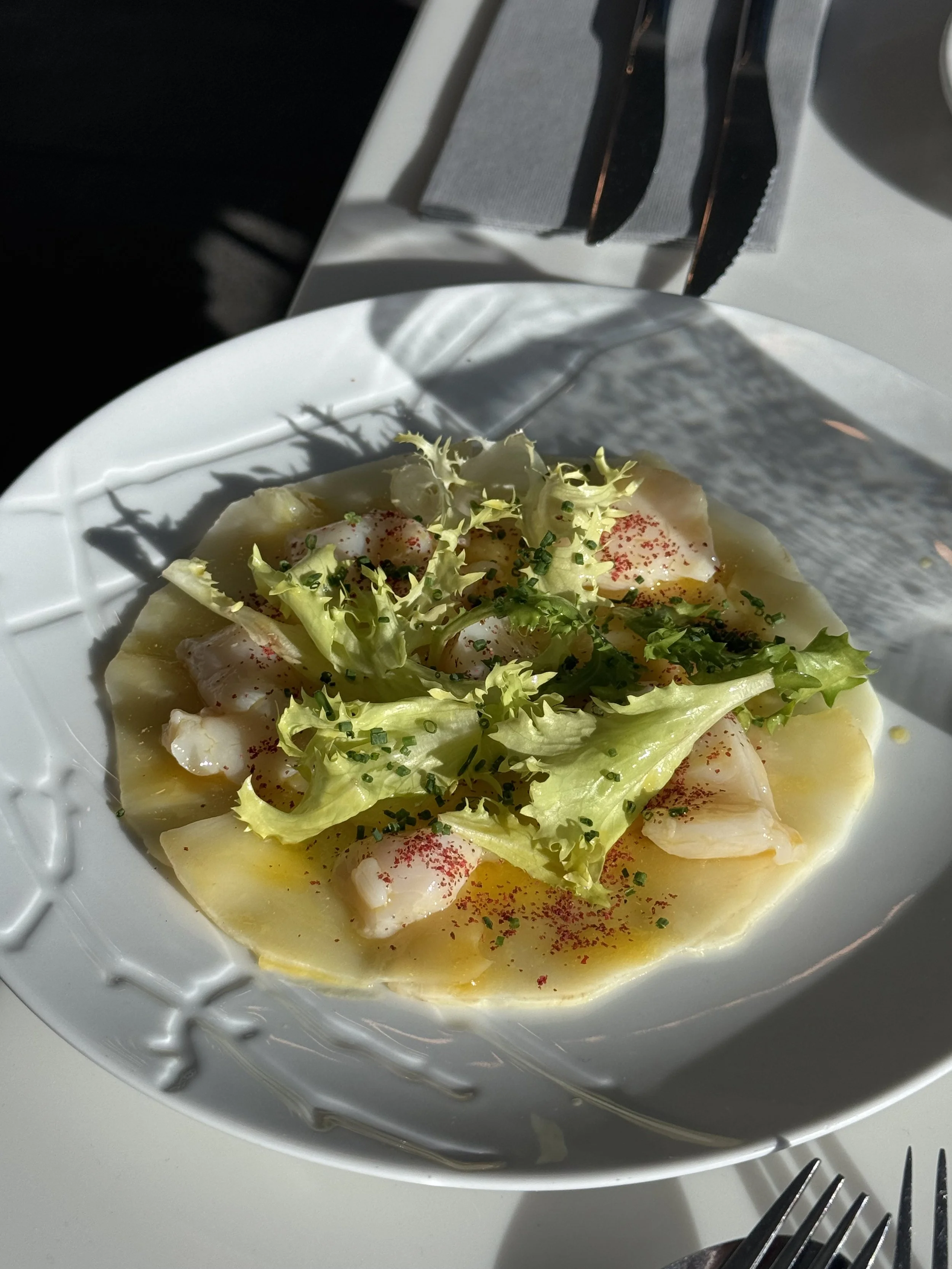
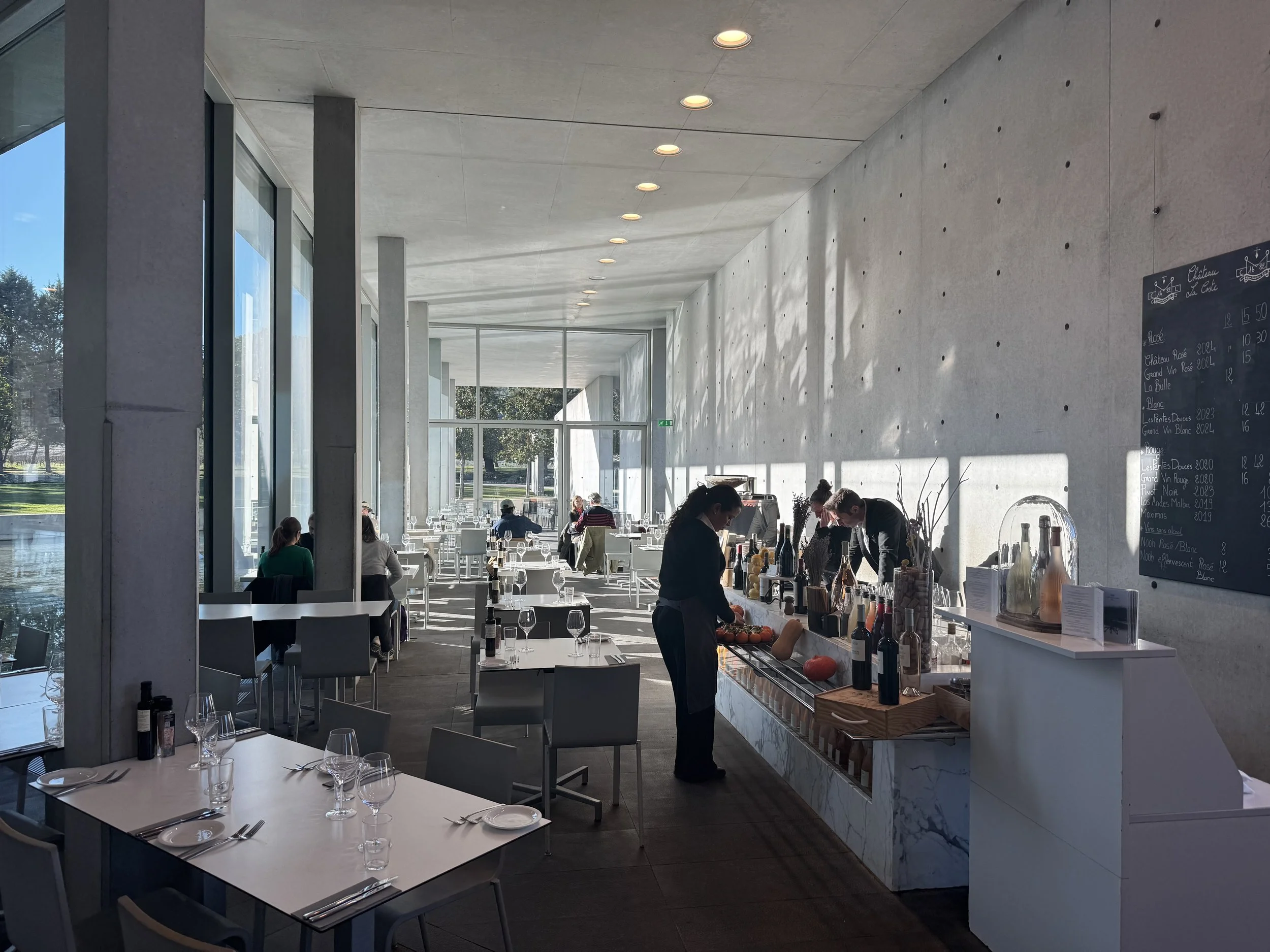
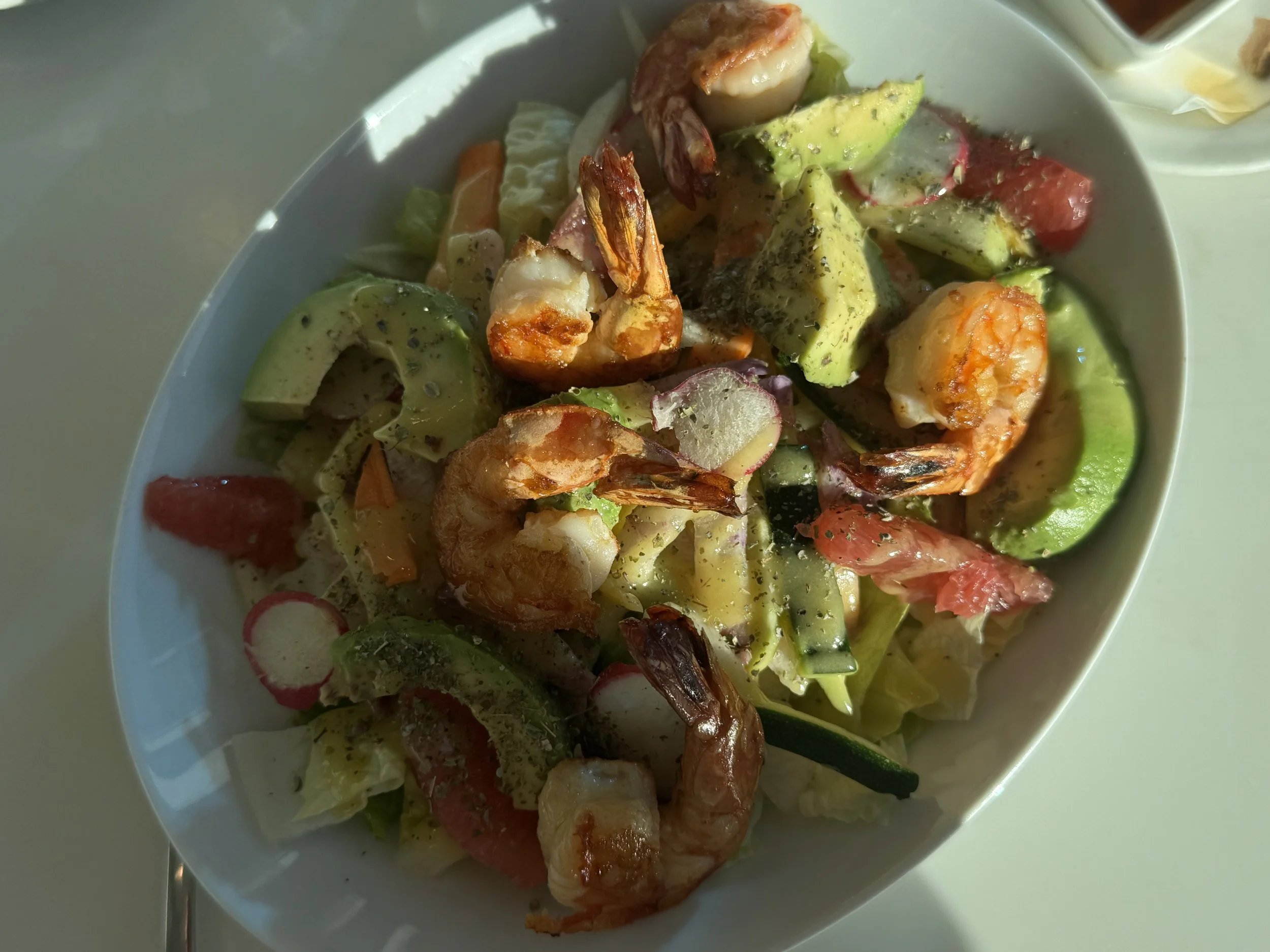
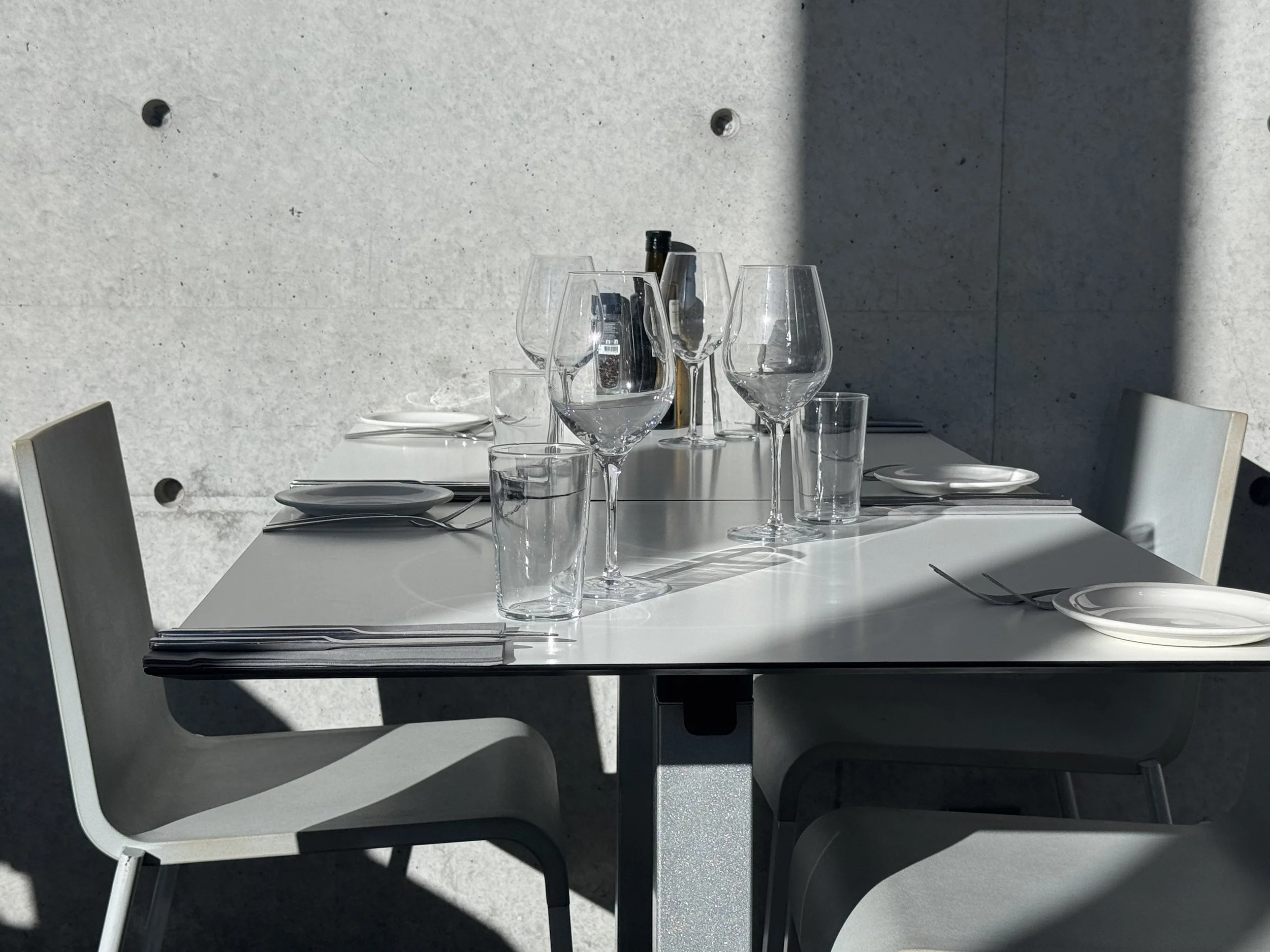
Where to Eat/Drink: Marseille and Aix-en-Provence are both bubbling over with options for food and wine, but we opted to stay local to make the most of our stay at Auberge La Coste. We had lunch at Tadao, their on site restaurant, where we enjoyed a well-lit dining room and happily consumed marinated scallops with passion fruit and carpaccio of cooked celeriac followed by plancha grilled prawns and lamb chops with thyme and garlic and coco beans fricassee; sautéed mushrooms. All of it was divine.
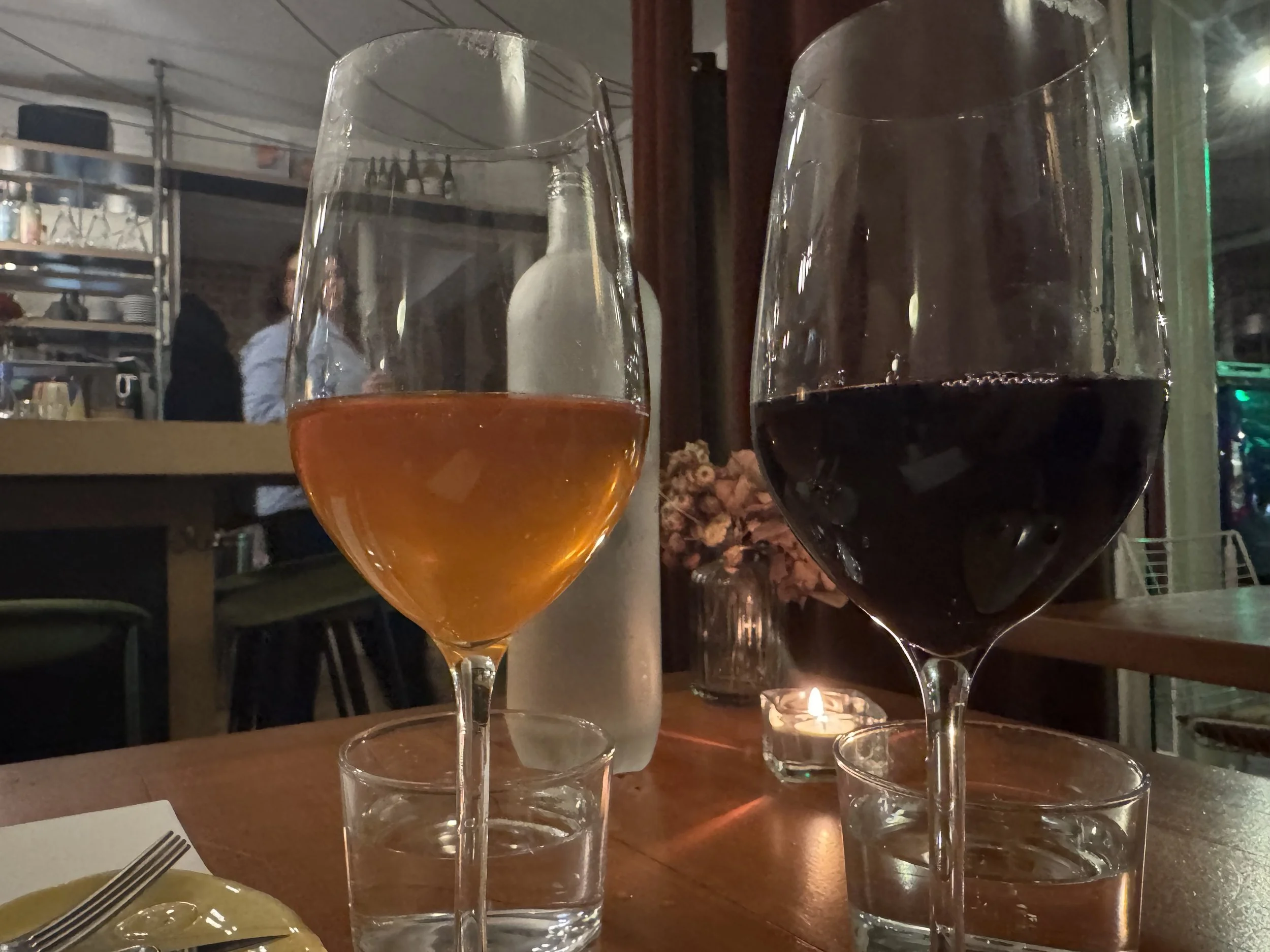
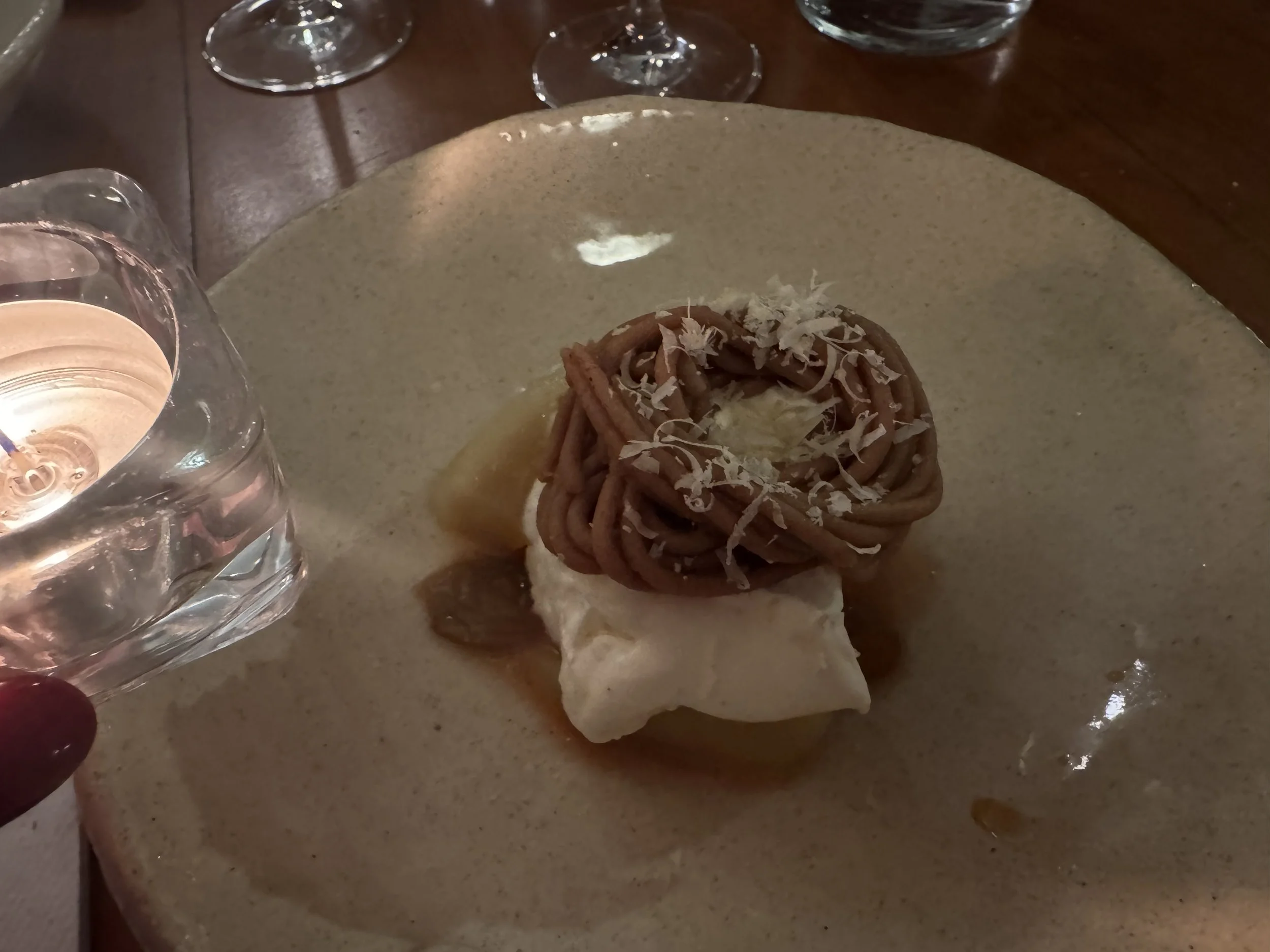
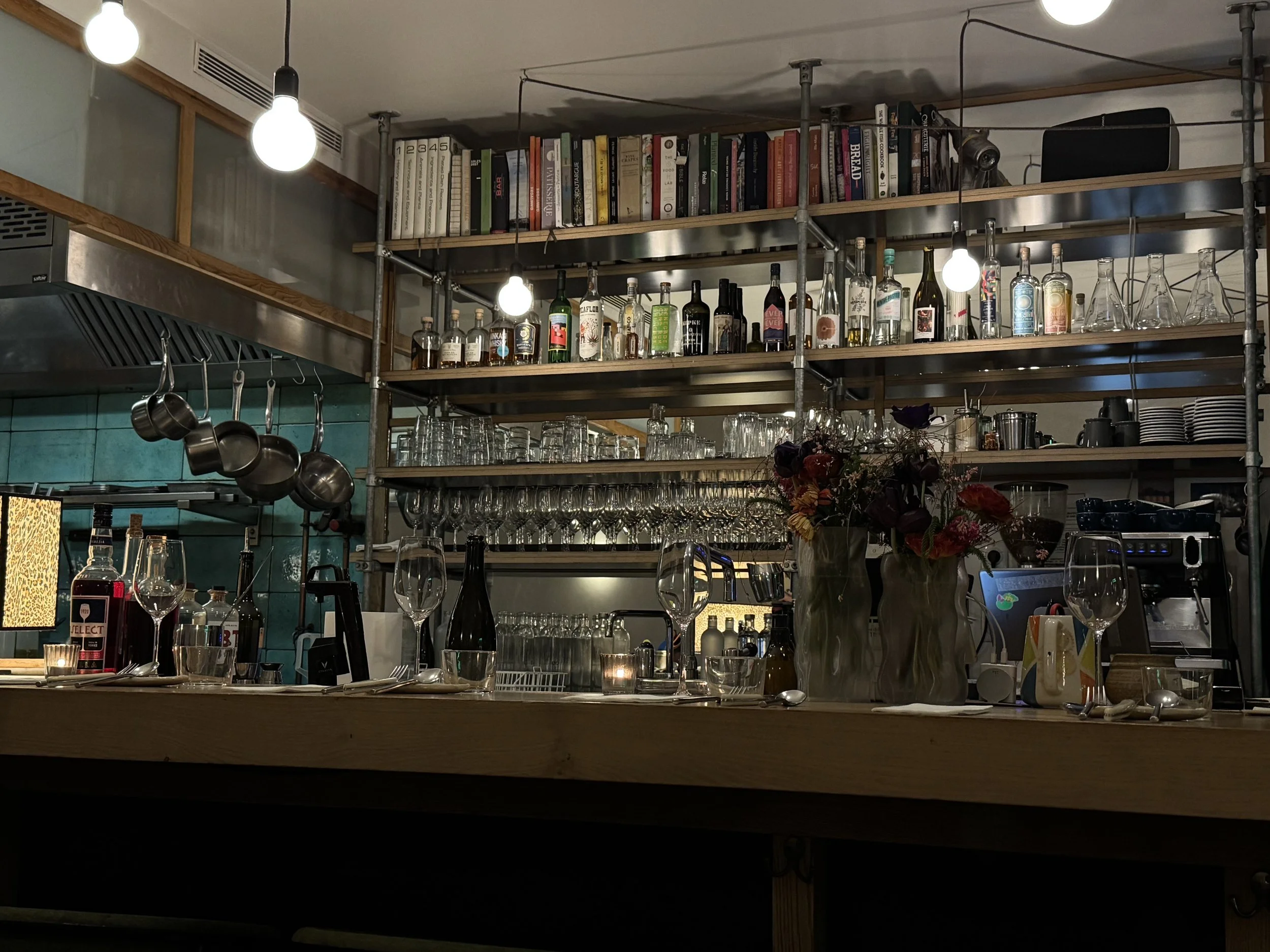
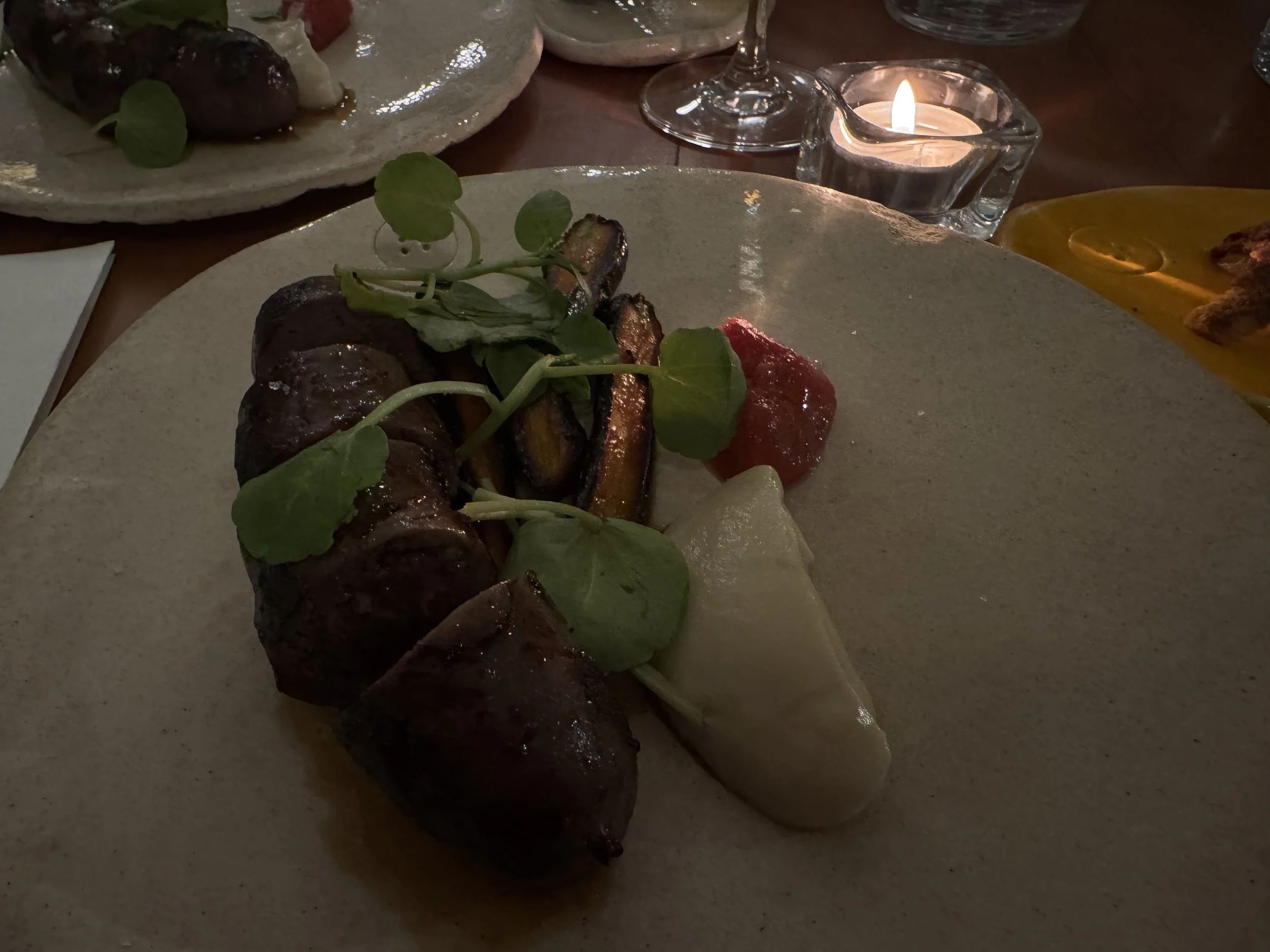
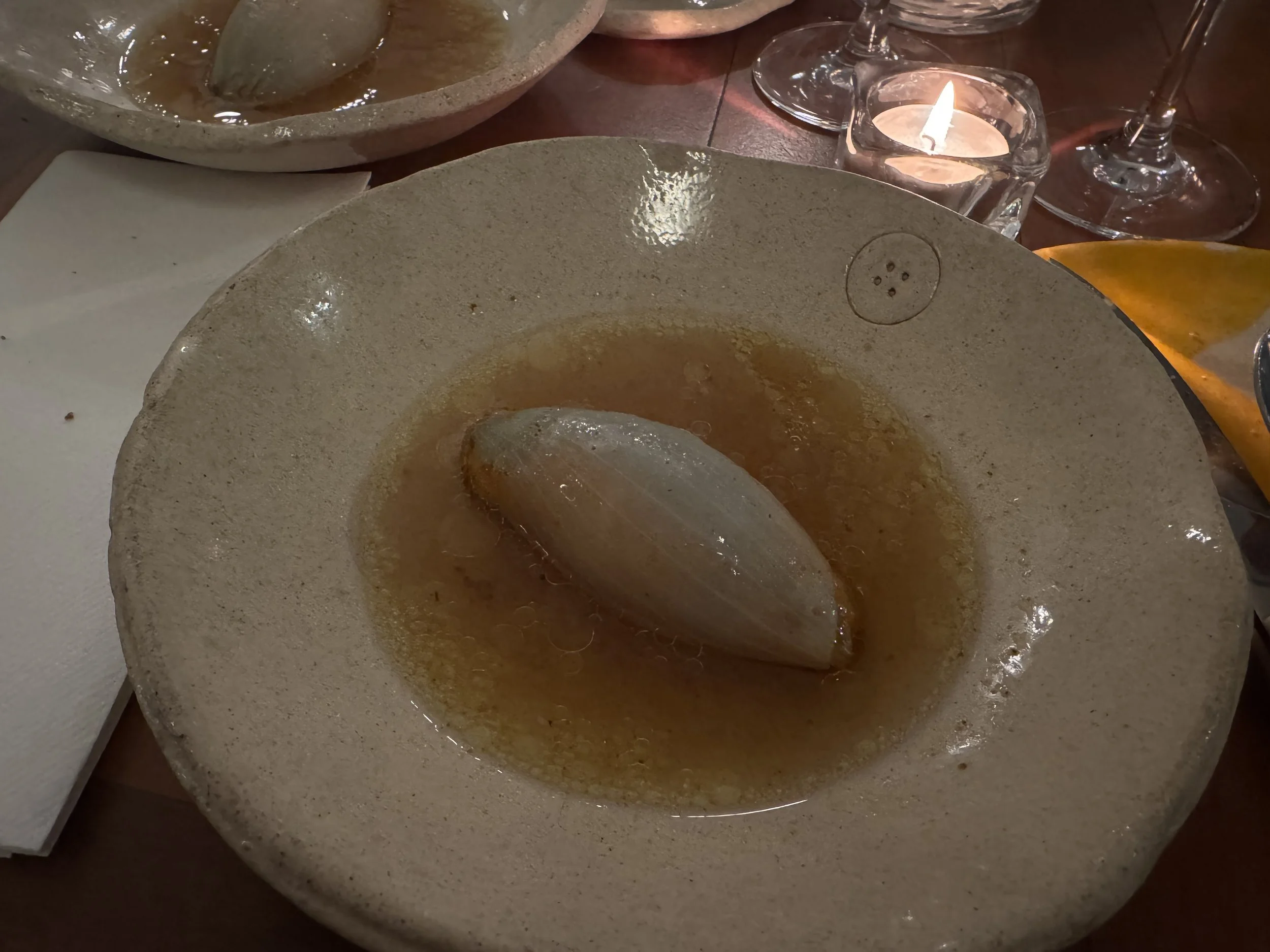
We also swung down to Marseille one evening to take in a sunset and check out a Raisin find: La Mercerie, where we enjoyed a winter veg ceviche with a salty anchovy backbone, a squash stuffed inside a translucent onion in a broth, and then a venison sausage with cozy polenta. We finished with the traditional Mont Blanc dessert as they call it, which is famous in Provence and consists of chestnut “spaghetti”, rum pears, whipped heavy cream. A very solid find by Erick!
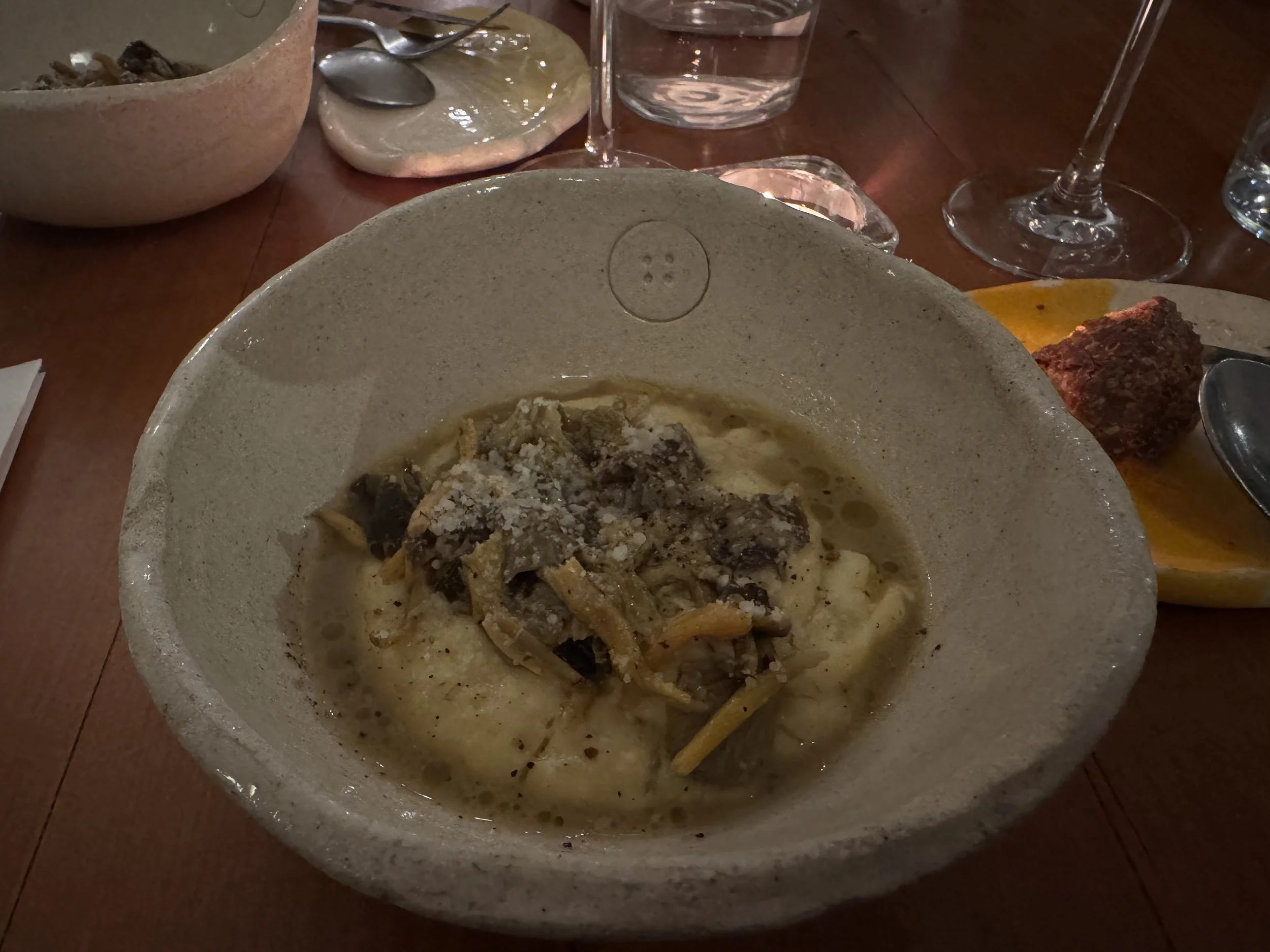
·Things to Do: First and foremost, make time for the art and architecture on the Auberge La Coste property. There’s an entire campus that you could easily spend a few days exploring alone. It’s not just a filler between meals and wine, it’s actually a main attraction and should be treated as such. If you still have time after that, head to Aix-en-Provence or Marseille.
Aix is famously a fountain city; go exploring for as many fountains as you can find. Check out the markets. Do a pastry + espresso + chocolatier crawl and let your senses lead the way. We approached these cities with a wandering spirit and we were the better for it. So many places would otherwise not be found if you didn’t just simply stumble into them. And if you’re here in the summer, certainly explore the many stunning beaches around Provence as well. We will be back for those!
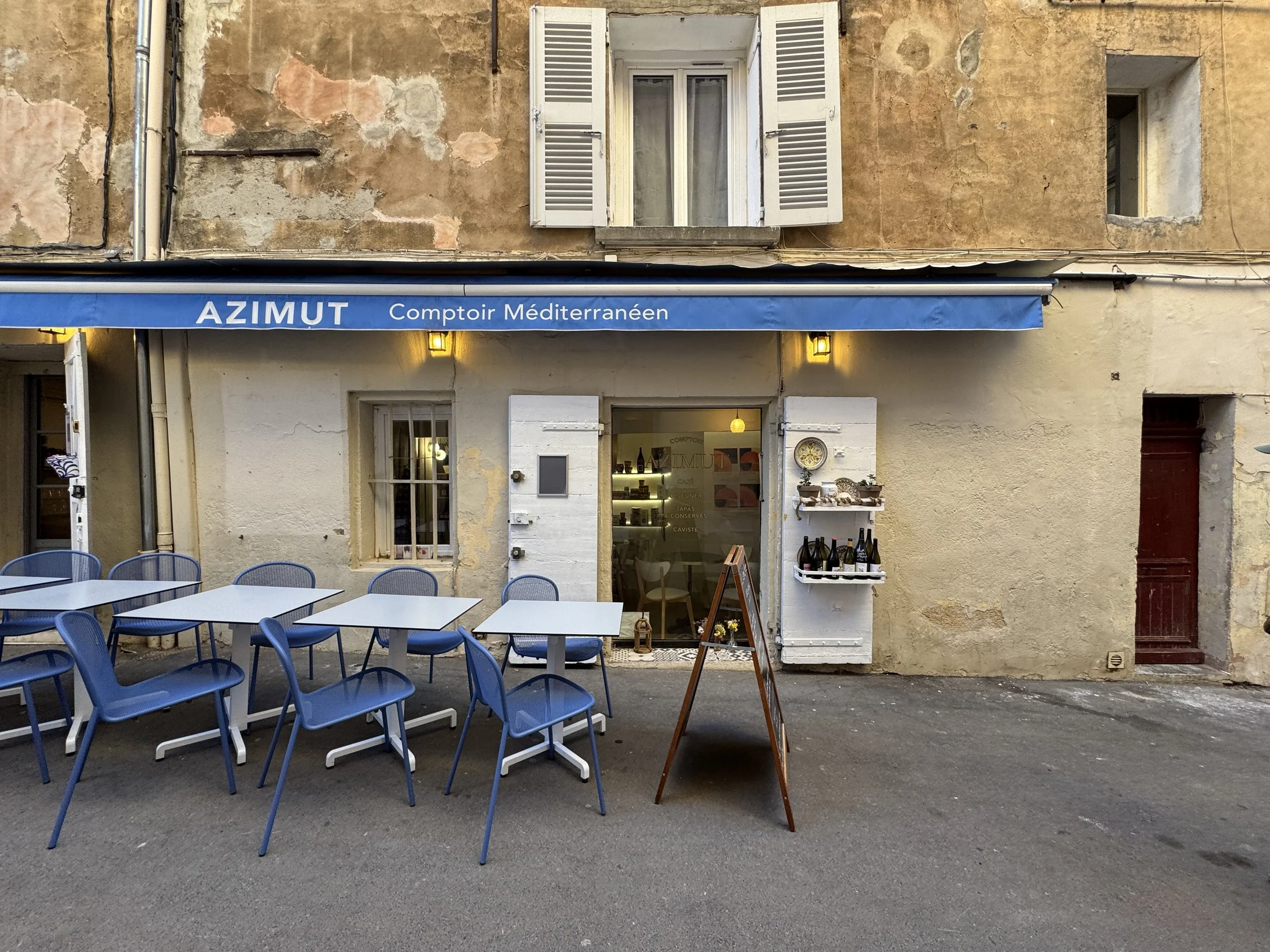
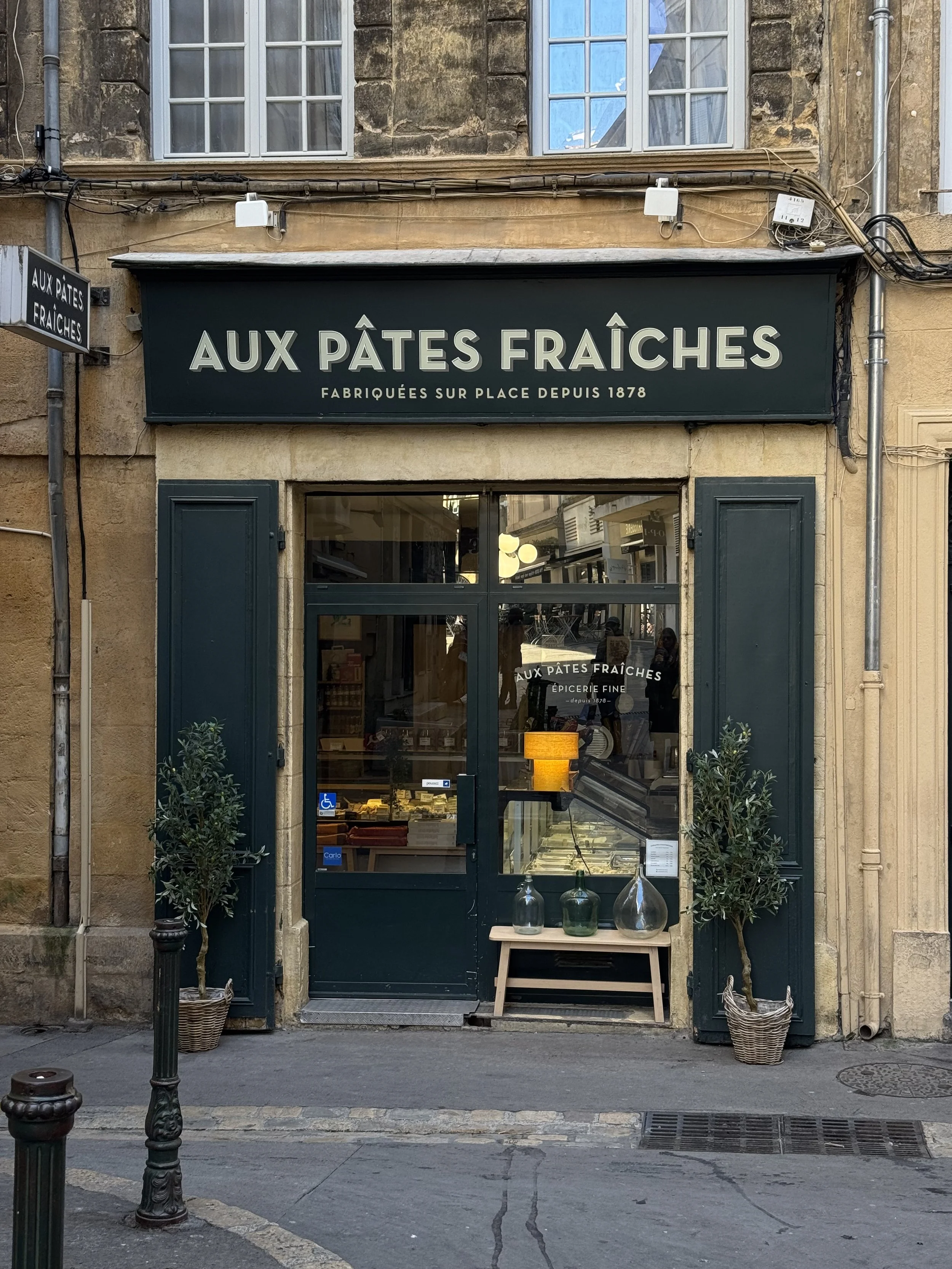
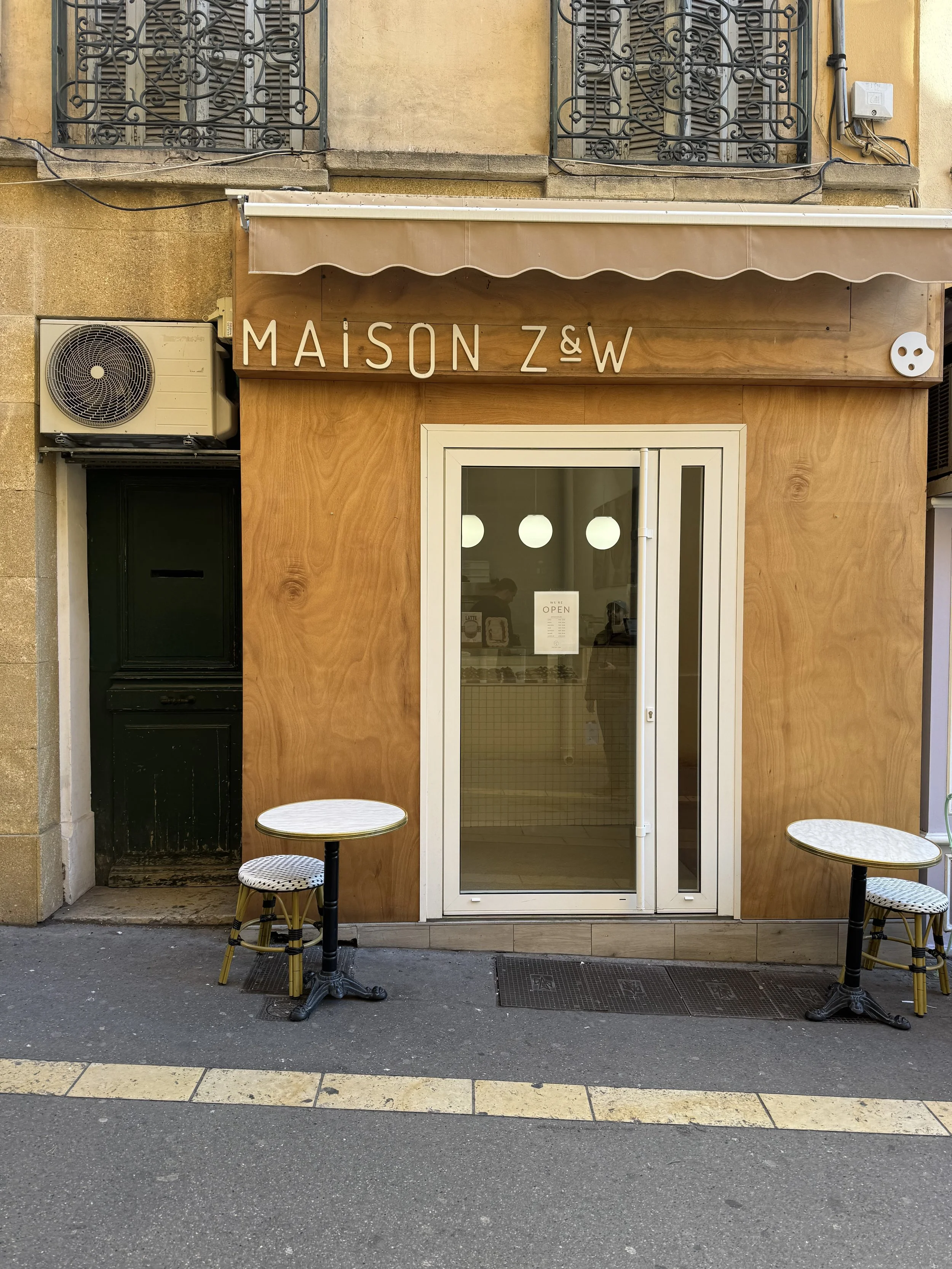
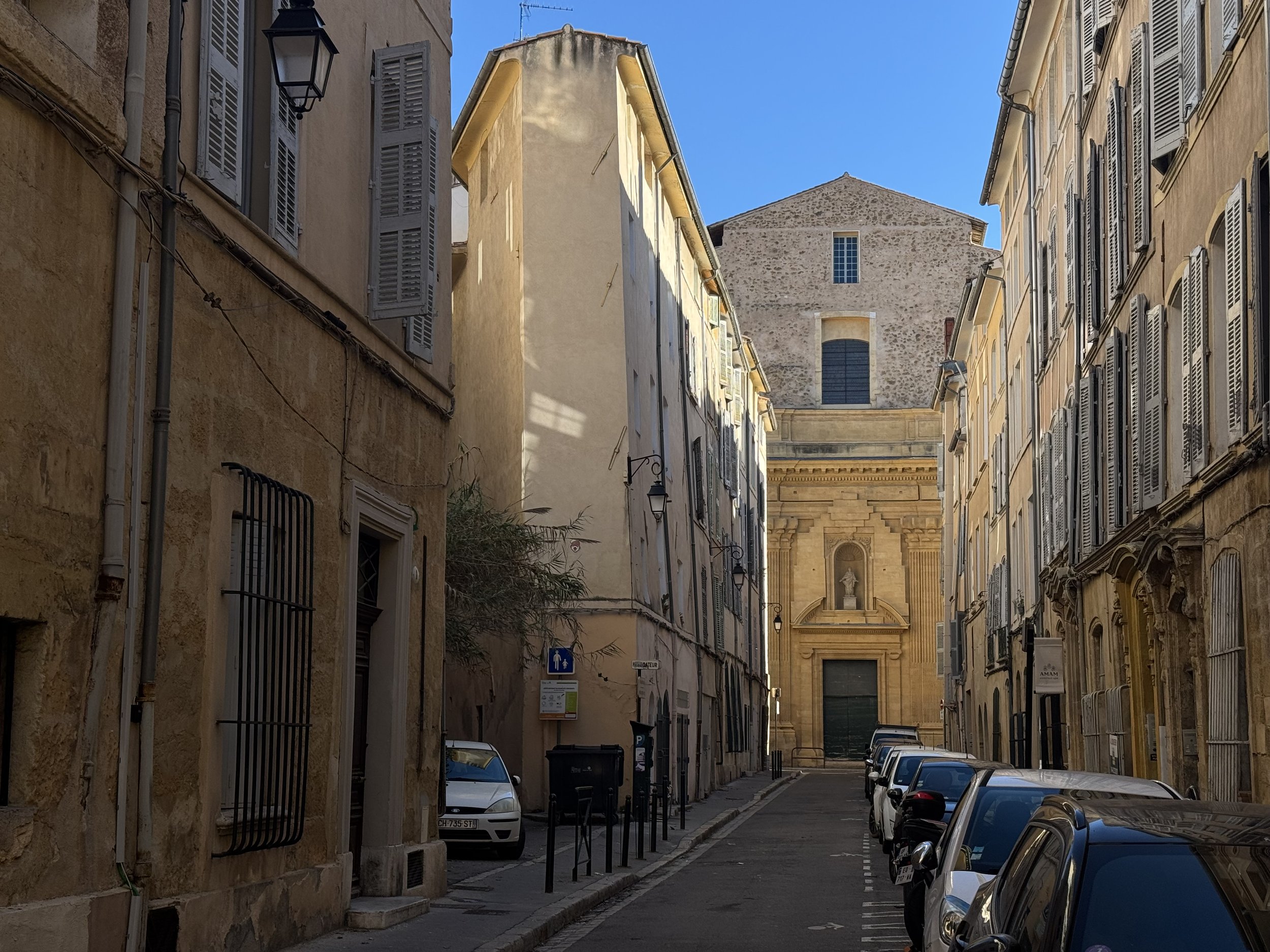
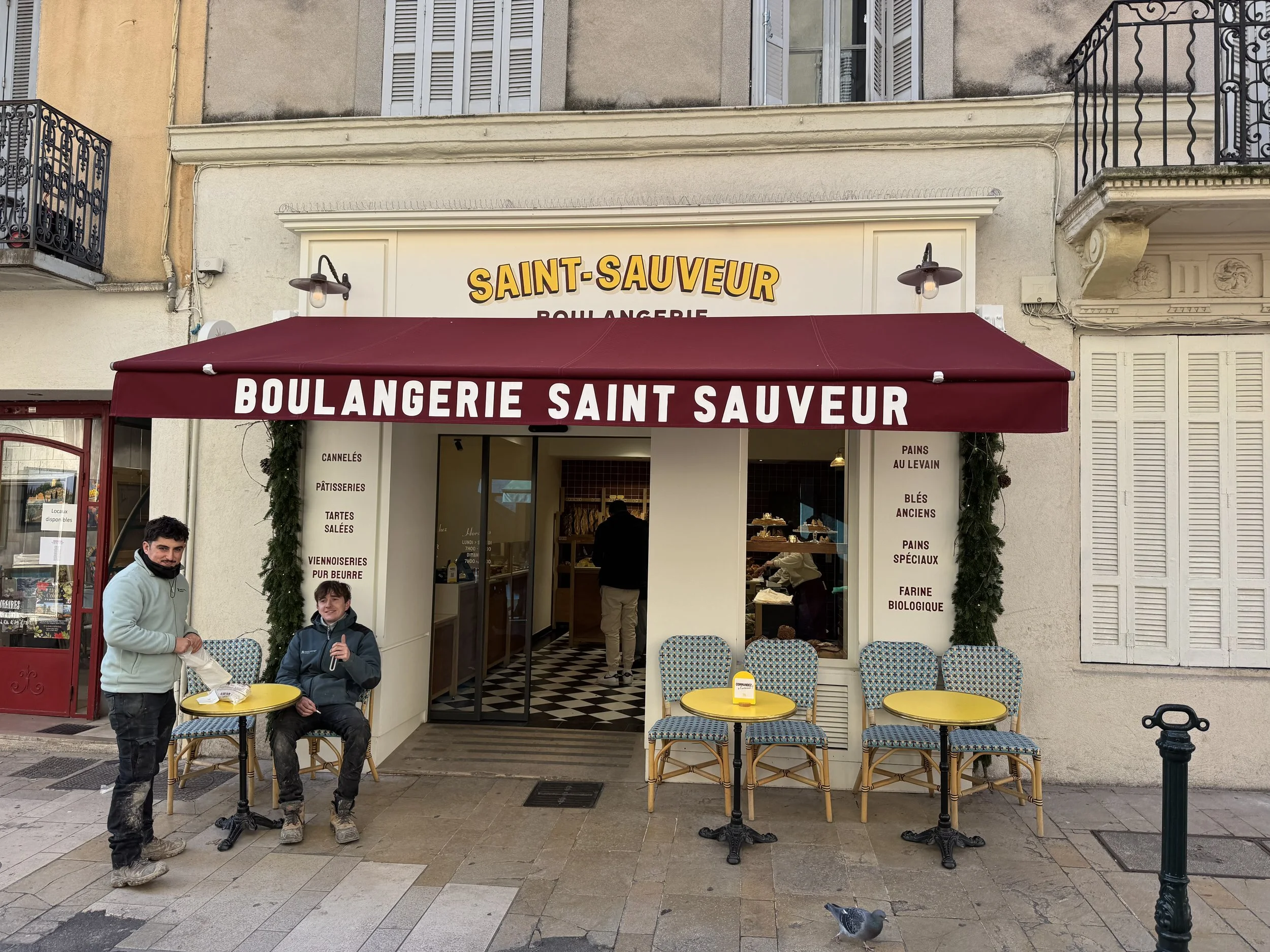
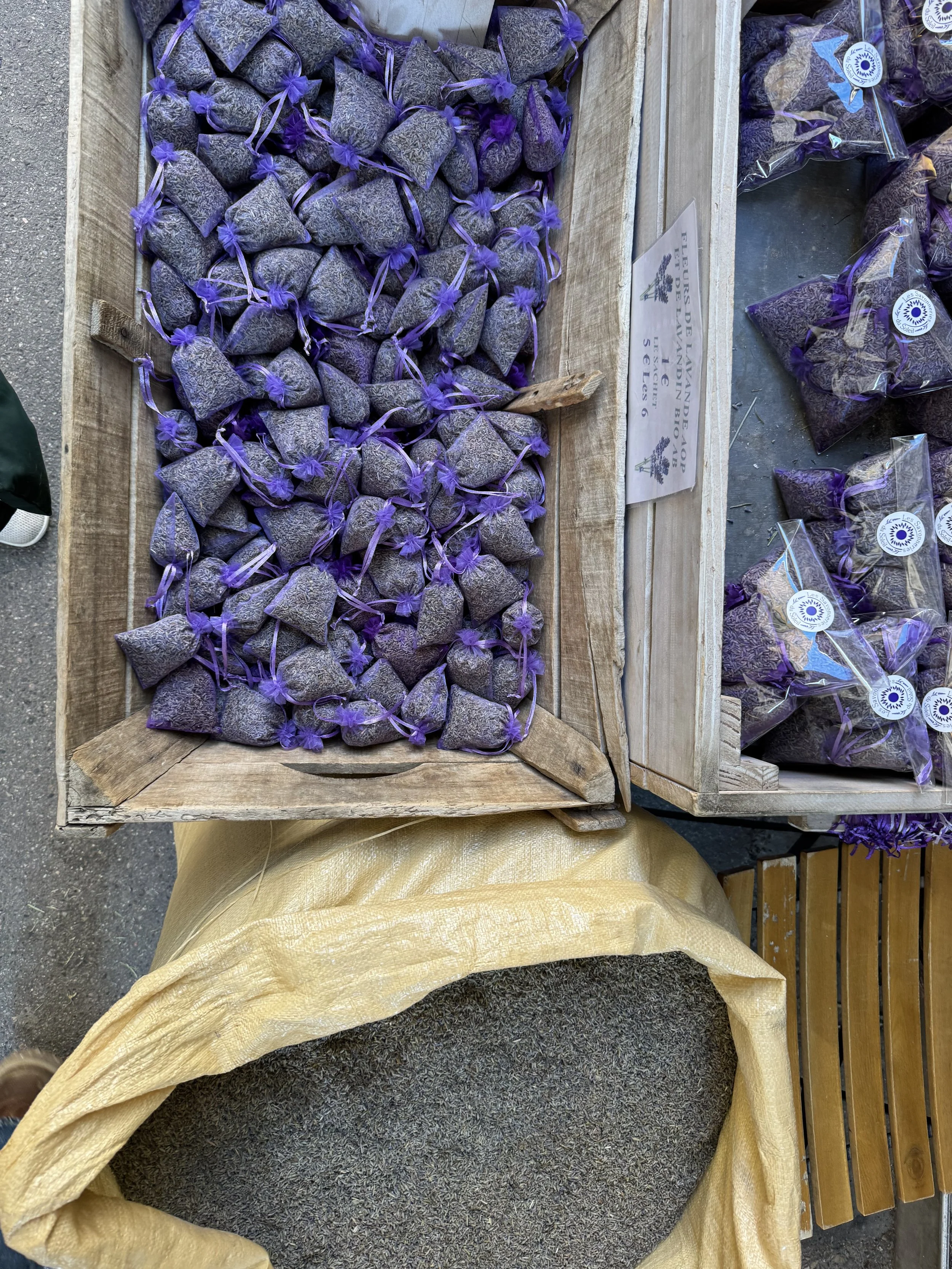
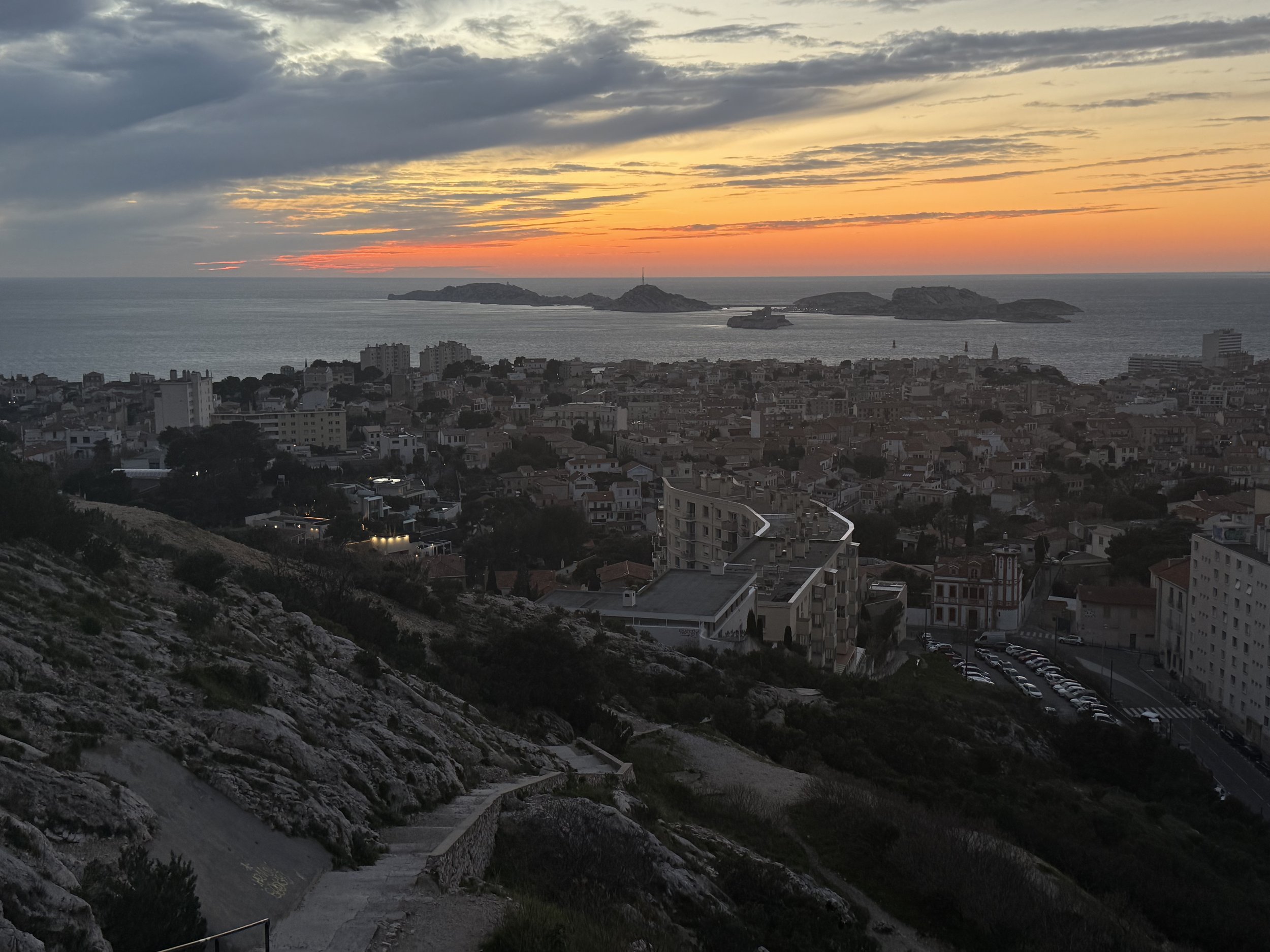
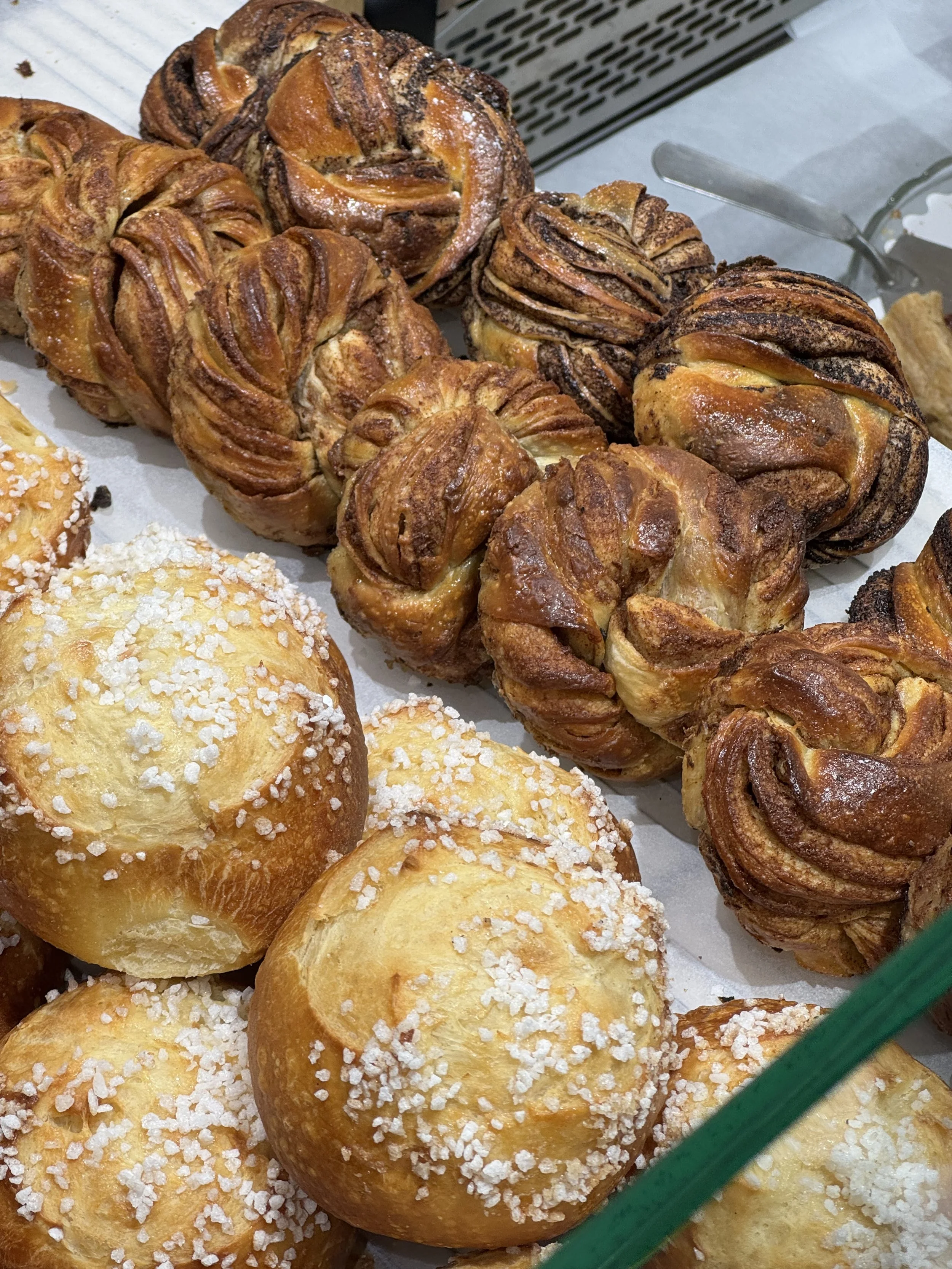
Interesting tidbits to know: Aix was a Roman spa town before it was a chic cafe/restaurant/market town. The name comes from Aquae Sextiae, founded by the Romans in 122 BC. Aquae = waters.
One of the most famous battles in southern France took place right by Aix. The Battle of Aquae Sextiae was a big Roman victory over the Teutones and Ambrones.
Provence has a long tradition of “field blends” and mixed agriculture. It wasn’t always the row after row of vines that it is today. Olives, almonds, herbs and vines all lived side by side in one plot of land in the old school Mediterannean times… diversity at its finest.
Provence is loaded with garrrigue which is wild rosemary, thyme, juniper, lavender, sage. That’s what makes this place smell so magical!
PORTUGAL
Porto
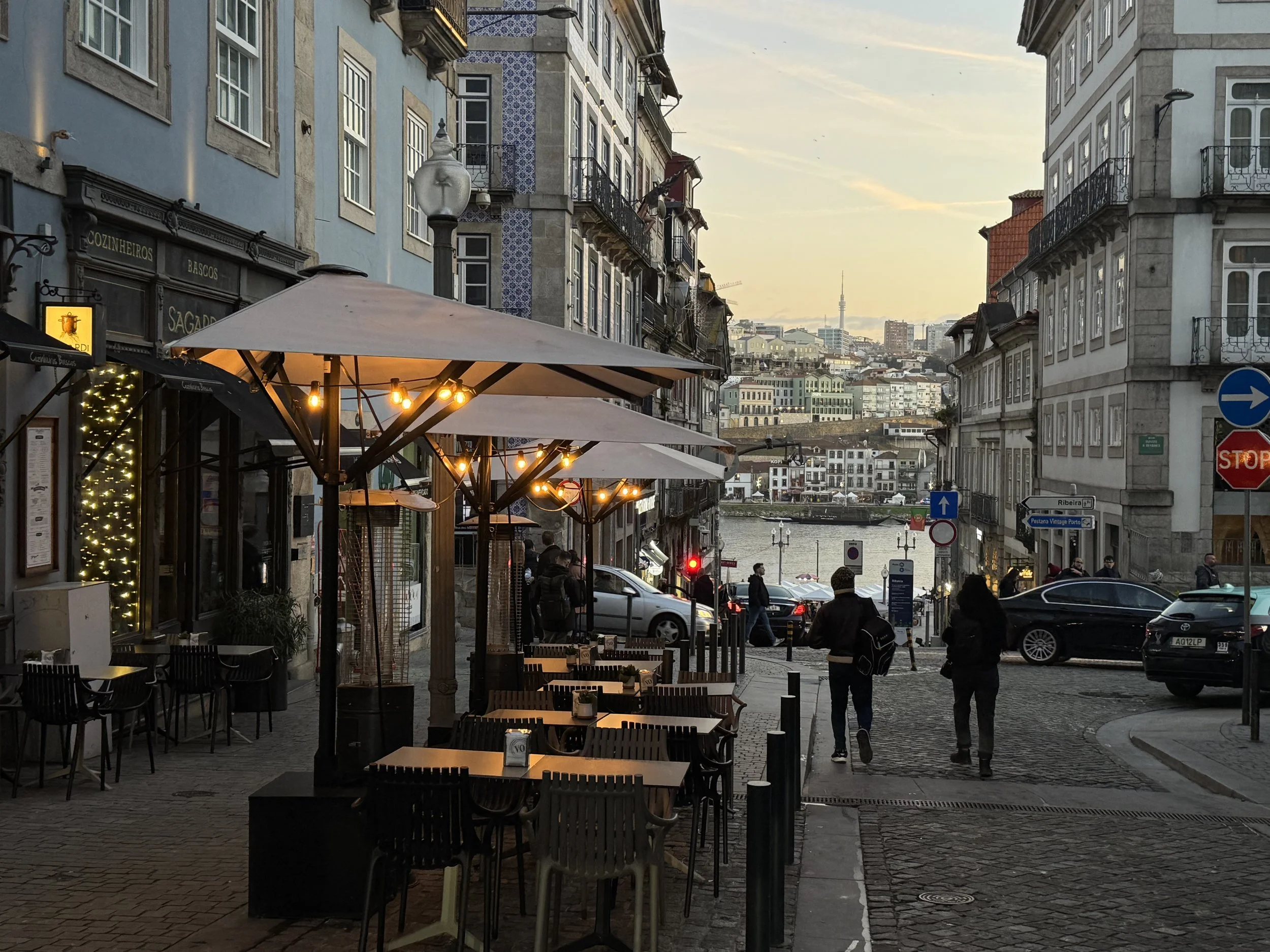
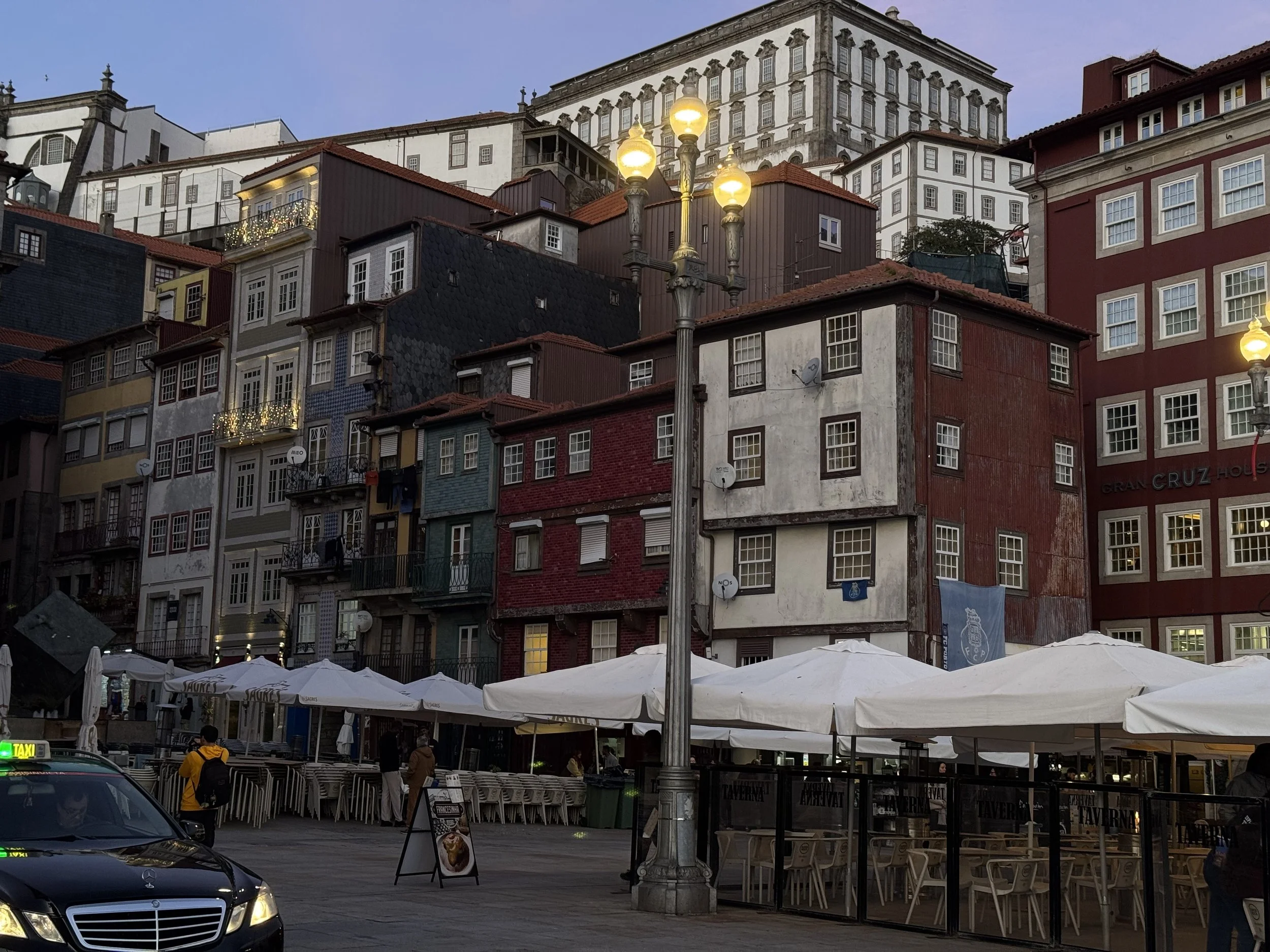
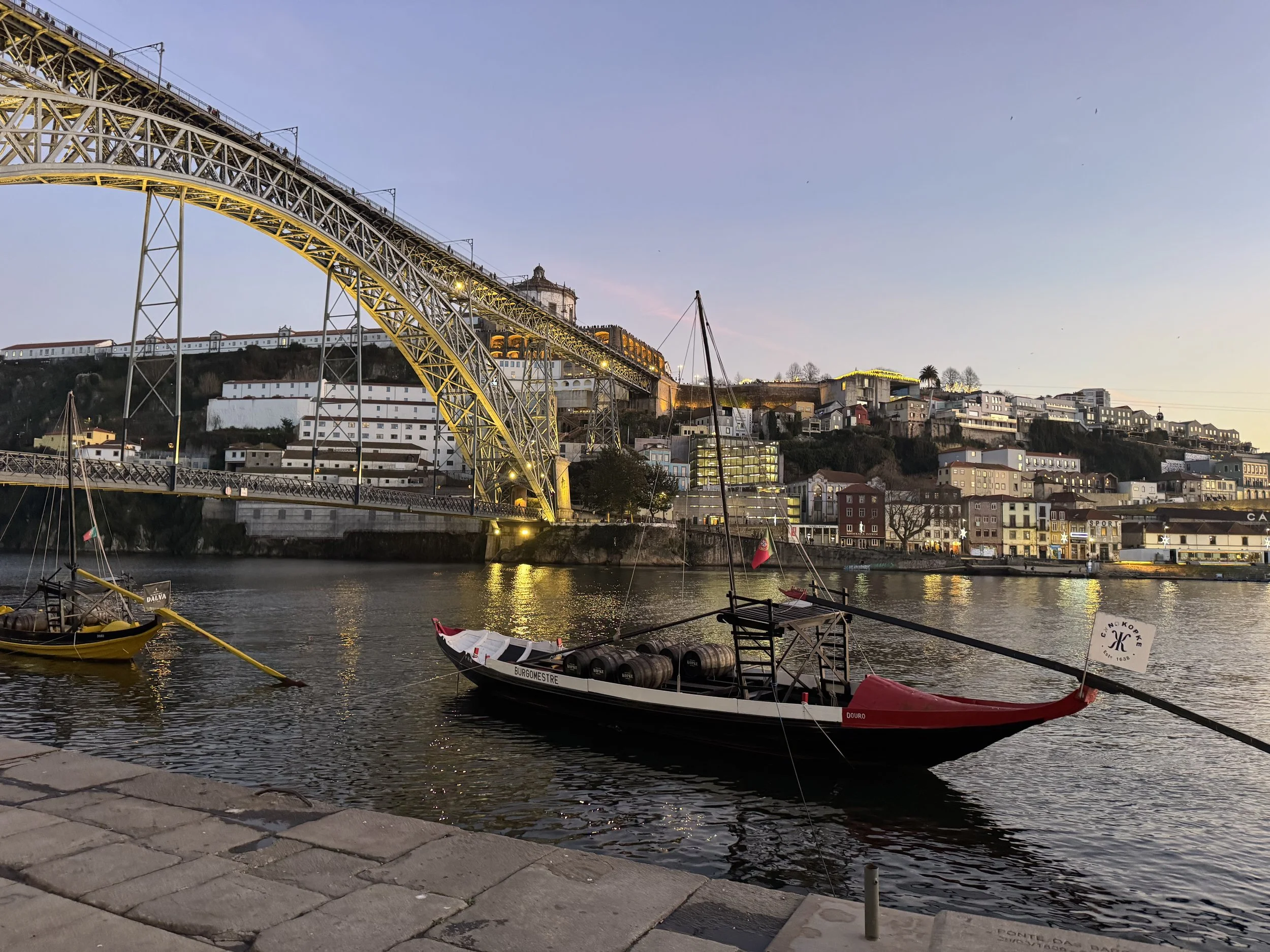
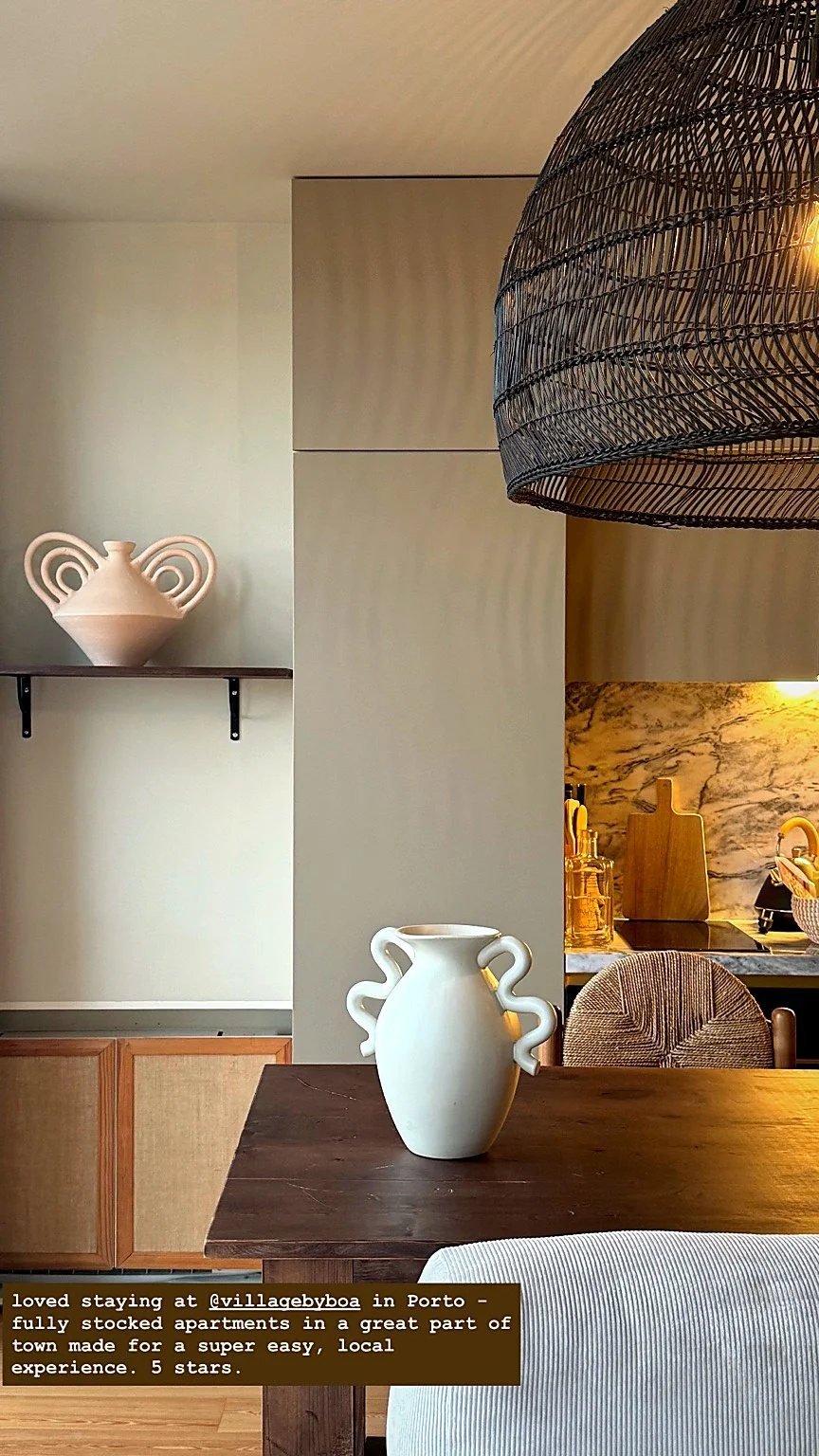
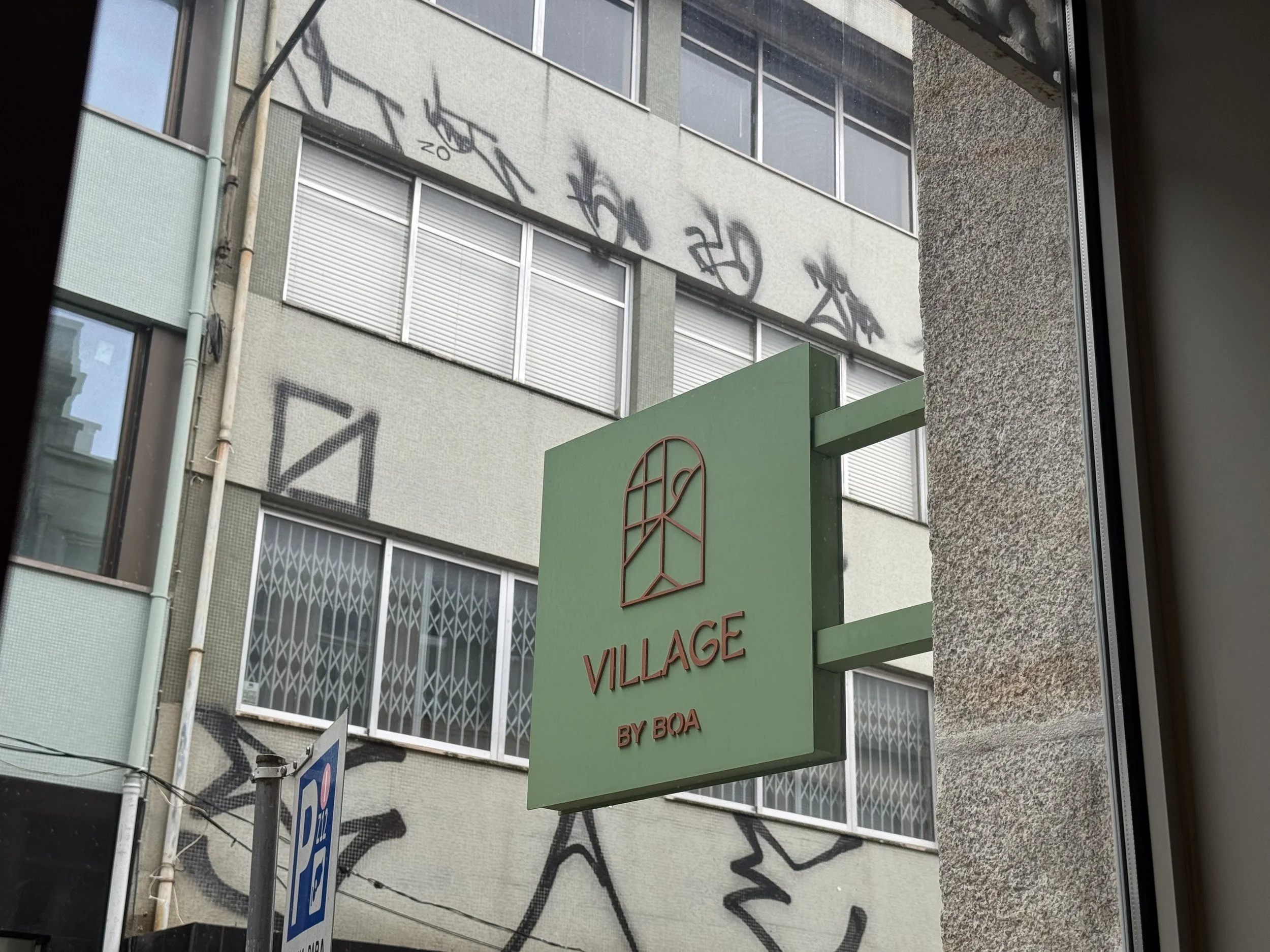
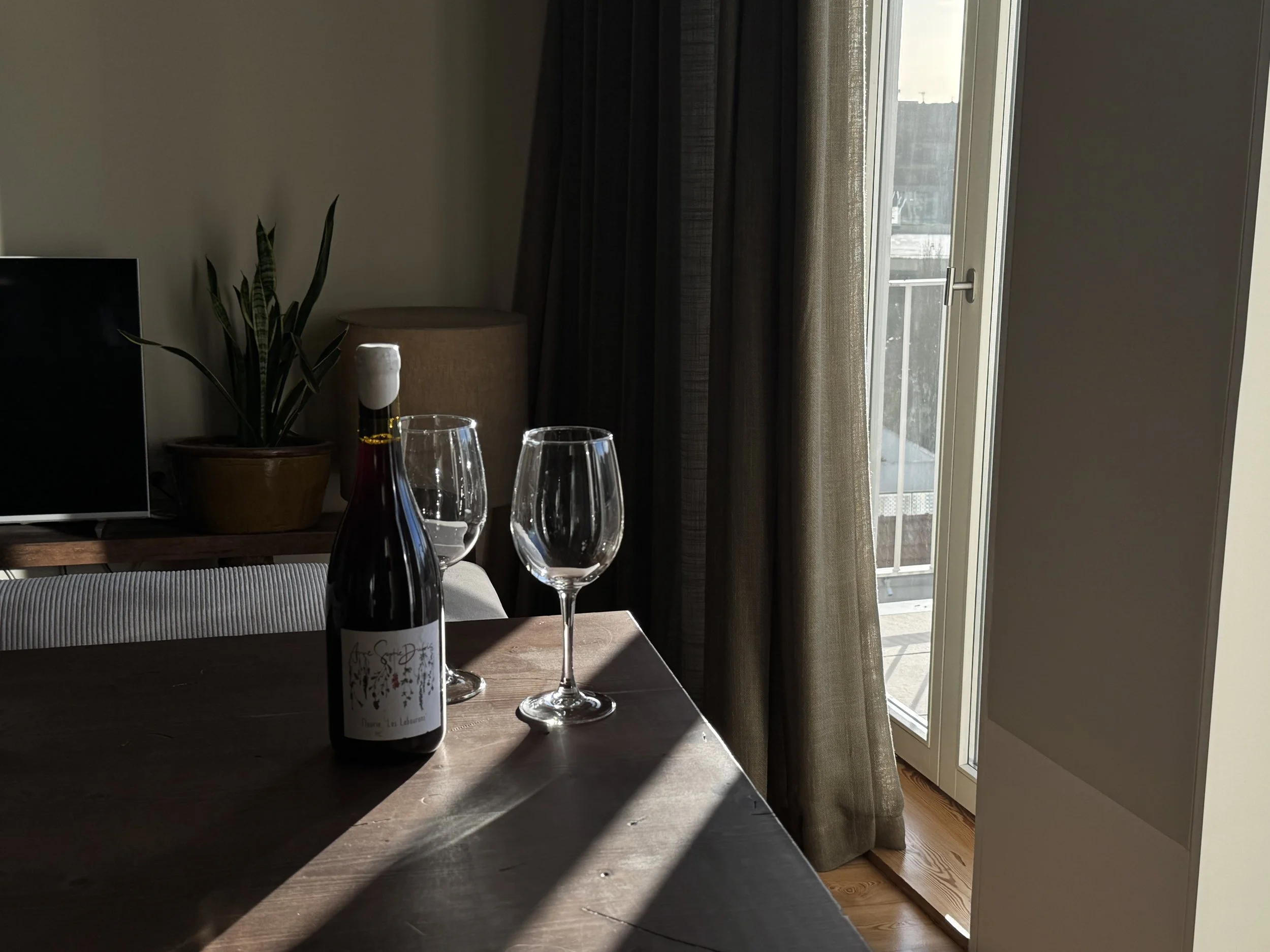
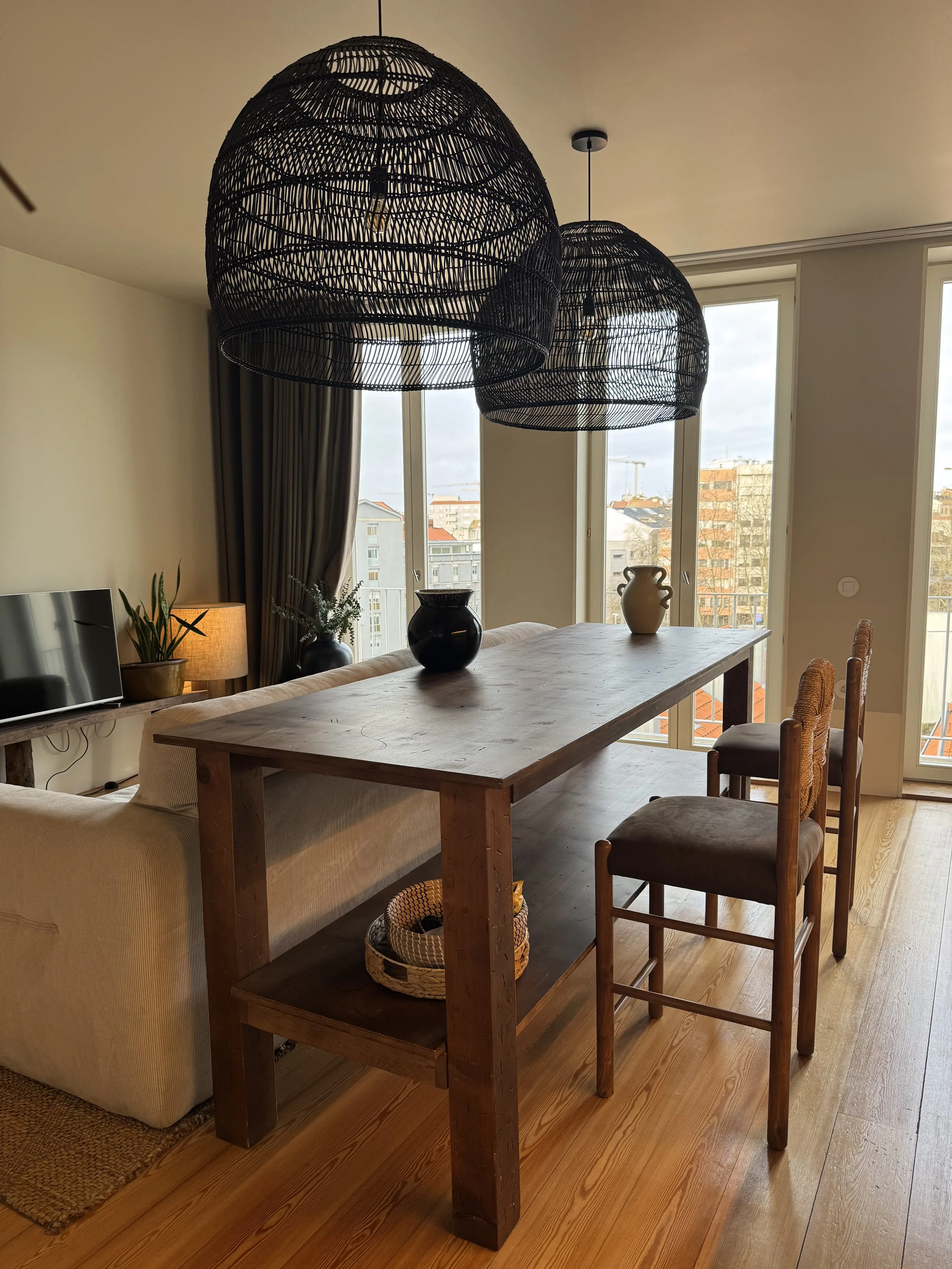
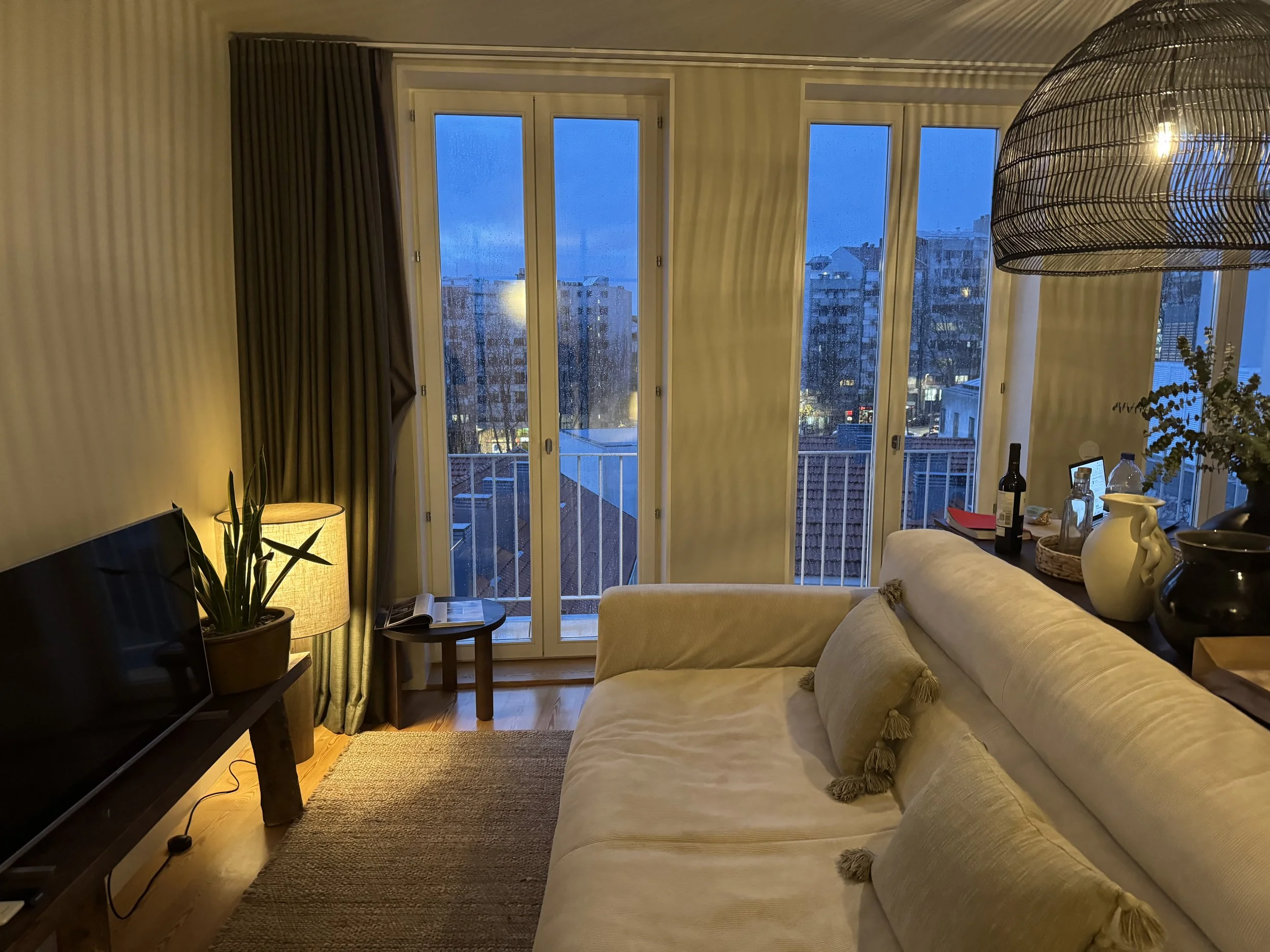
Where to Stay: We love a good “live like a local” situation and Village by BOA executes on this perfectly.
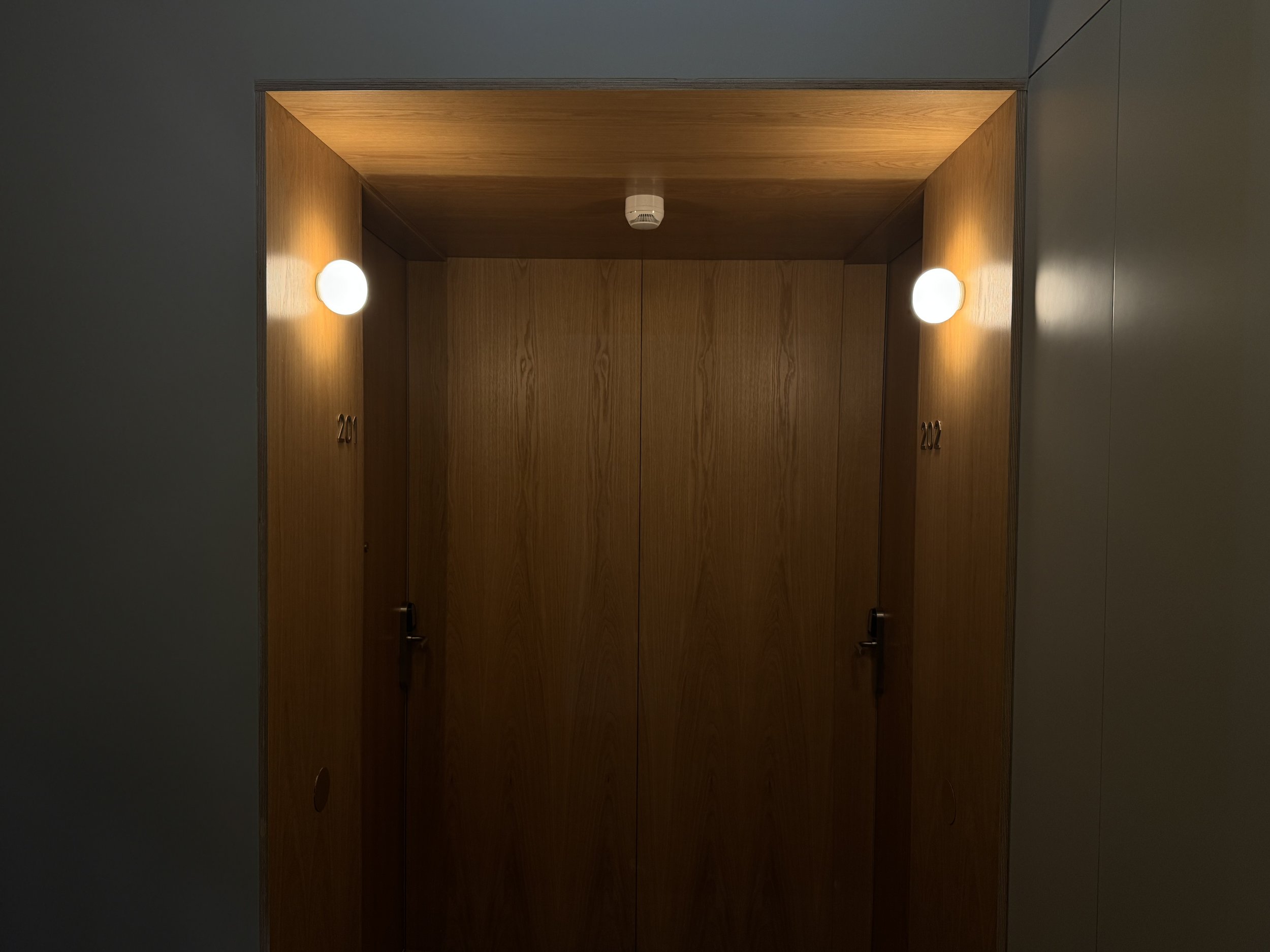
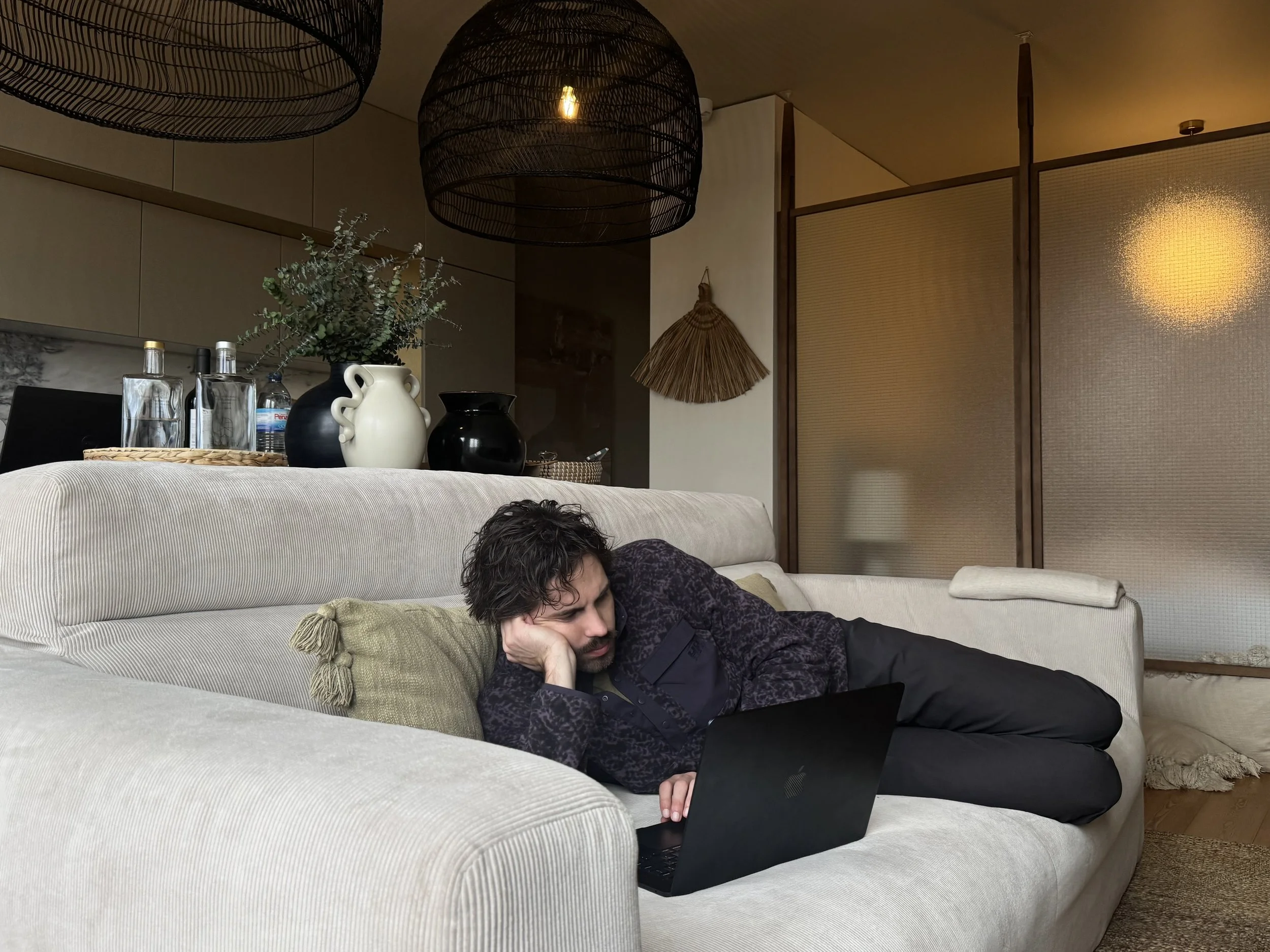
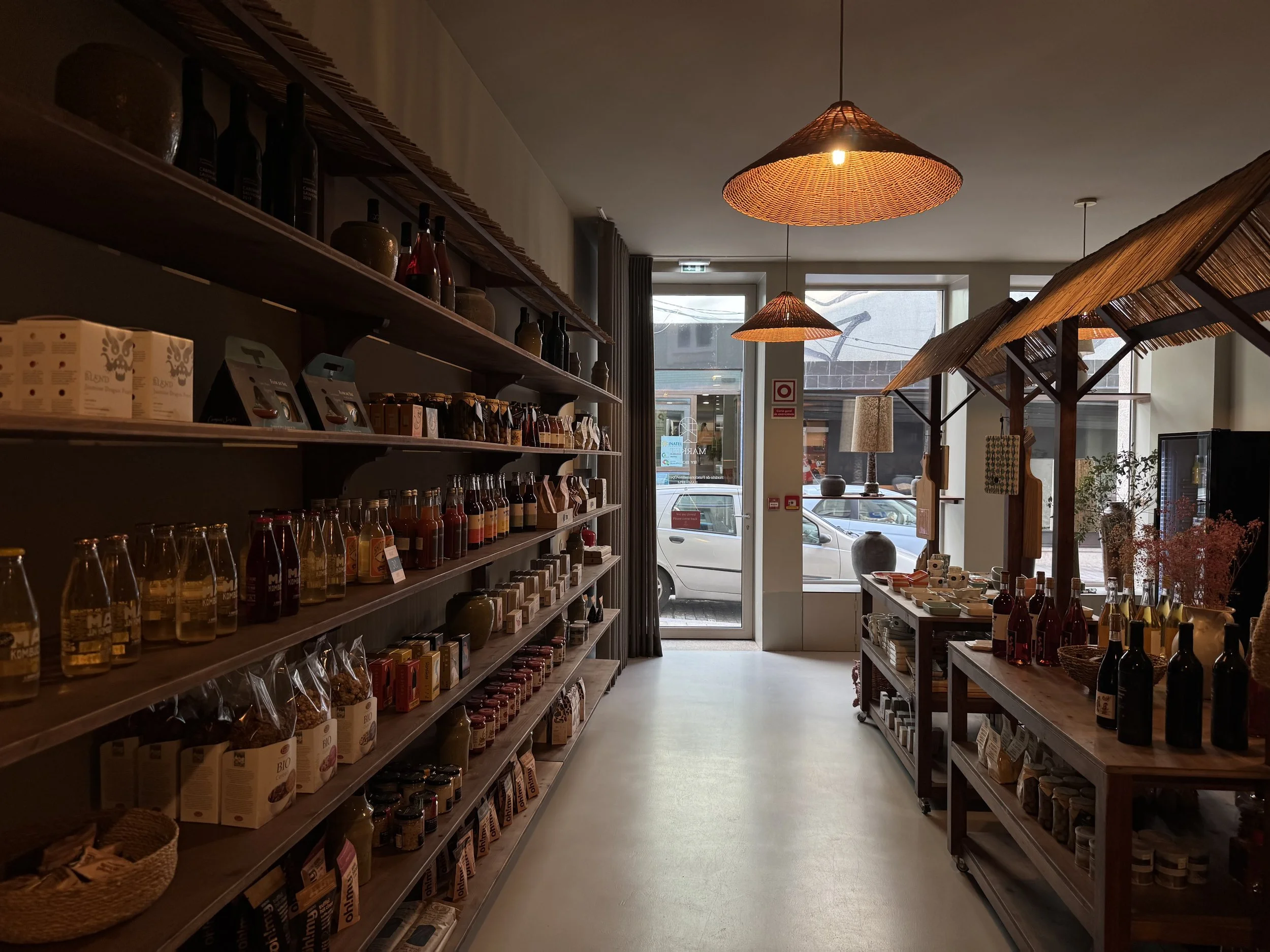
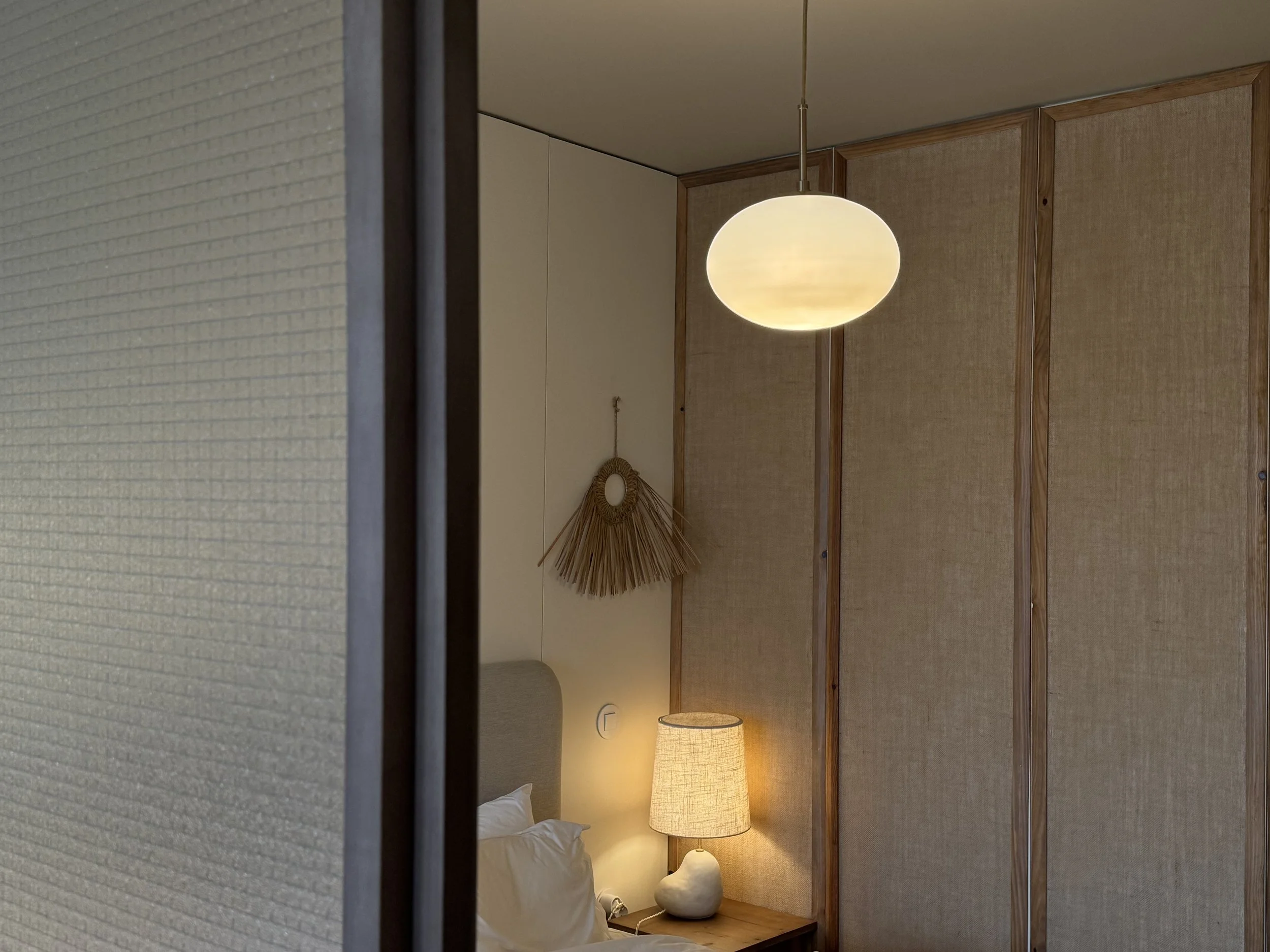
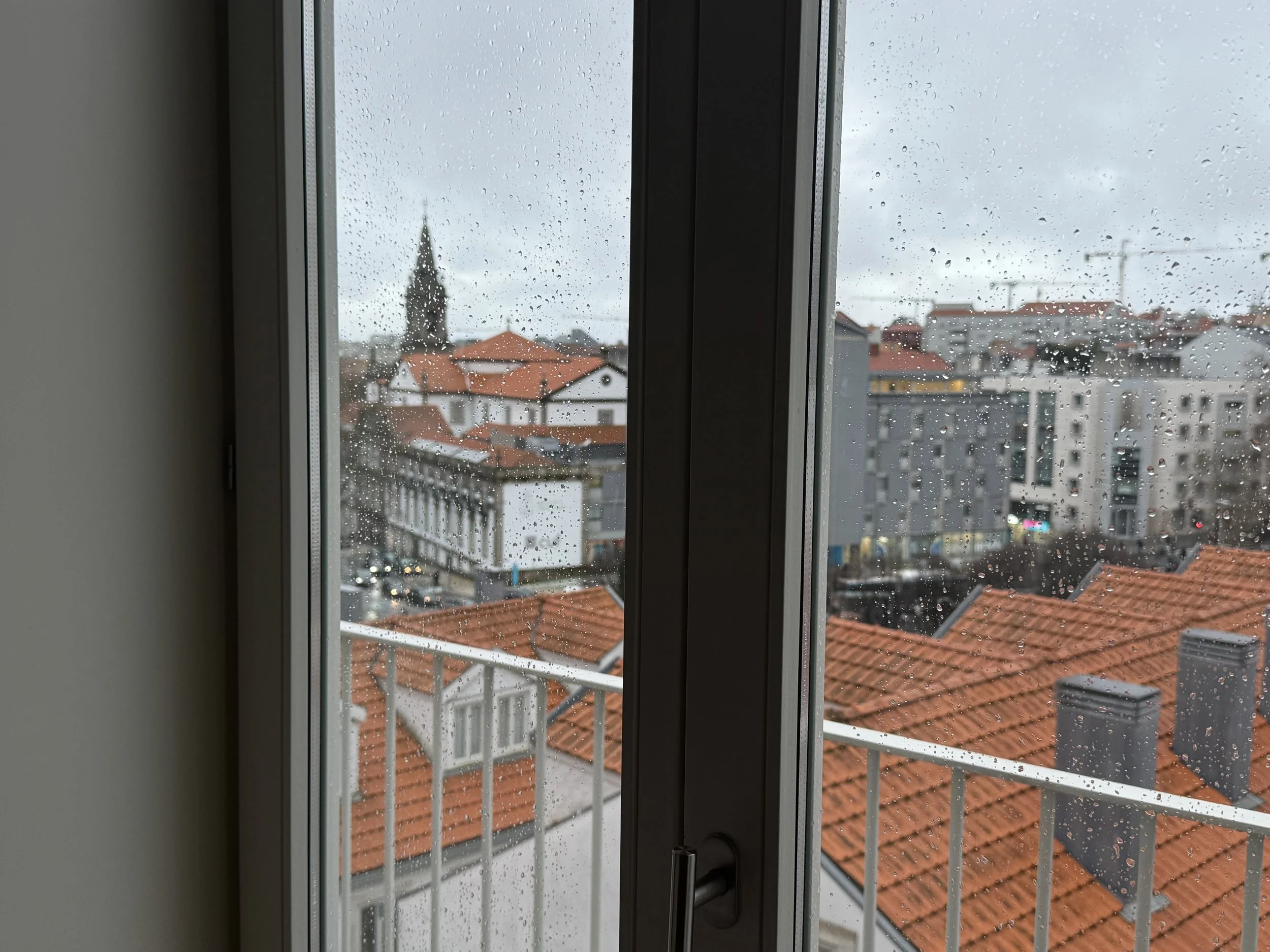
We absolutely loved checking in at the front desk, which is also strategically placed in a store full of local goodies, home goods, and favorite wines (we immediately spotted a wine Erick has been searching for for years, which gave instant credibility… Sarava wine is the best!). The rooms felt like being at home, were extremely spacious, and also allowed us to feel comfortable enough to truly unpack for the first time all trip without having to live out of a suitcase on a tiny luggage rack. The room had everything you could want in Porto: a balcony with a view, AC for hotter months (or folks like me who love sleeping in frigid cold temps!), a roomy shower, a coffee setup, still and sparkling water, and a full kitchen so you bring home goodies from market visits and make a spread like in your own kitchen.
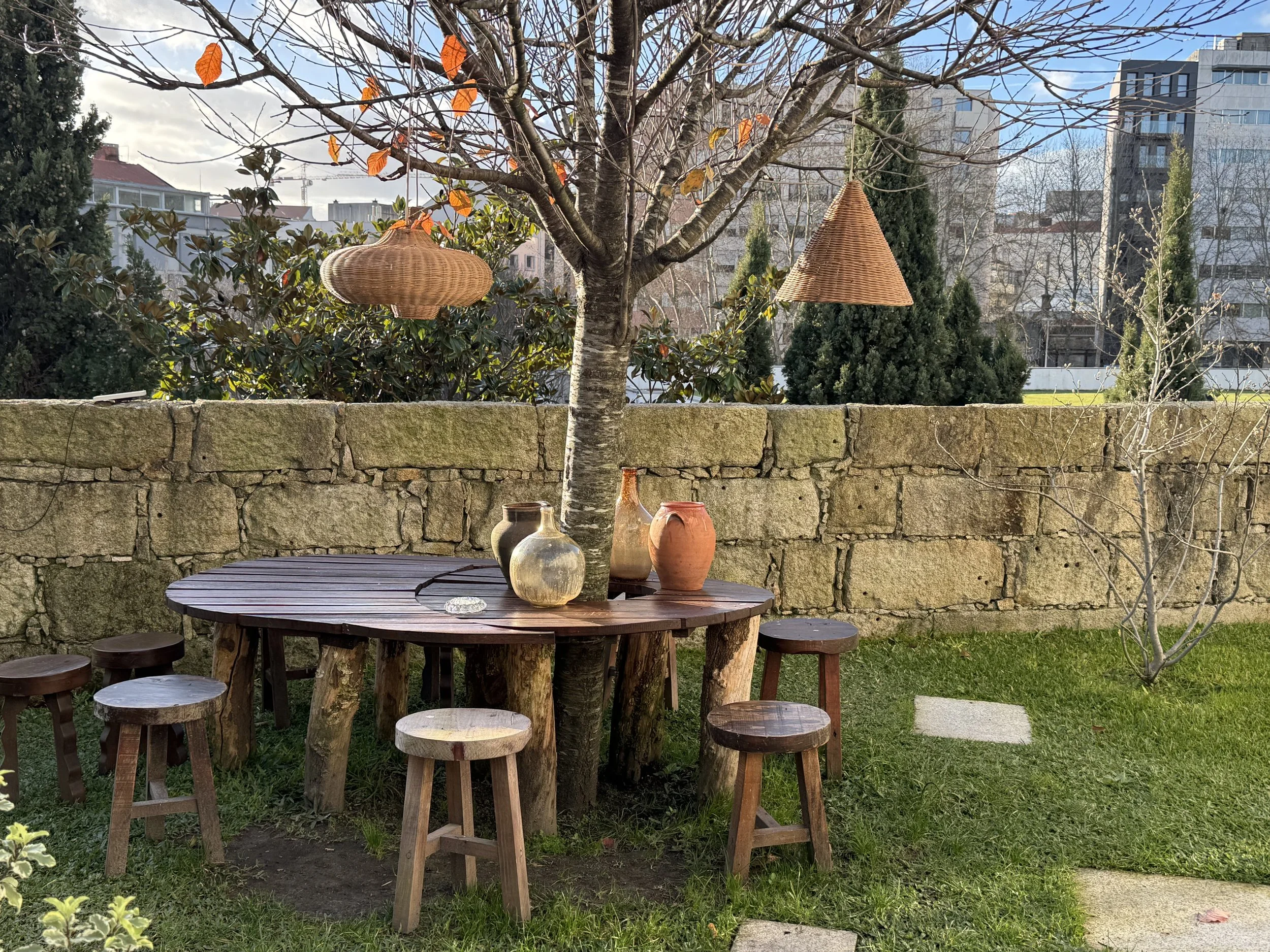
The design is quirky and well thought out, and after seeing their picnic table wrapped around a tree in the courtyard, I think I may now need my own at home.
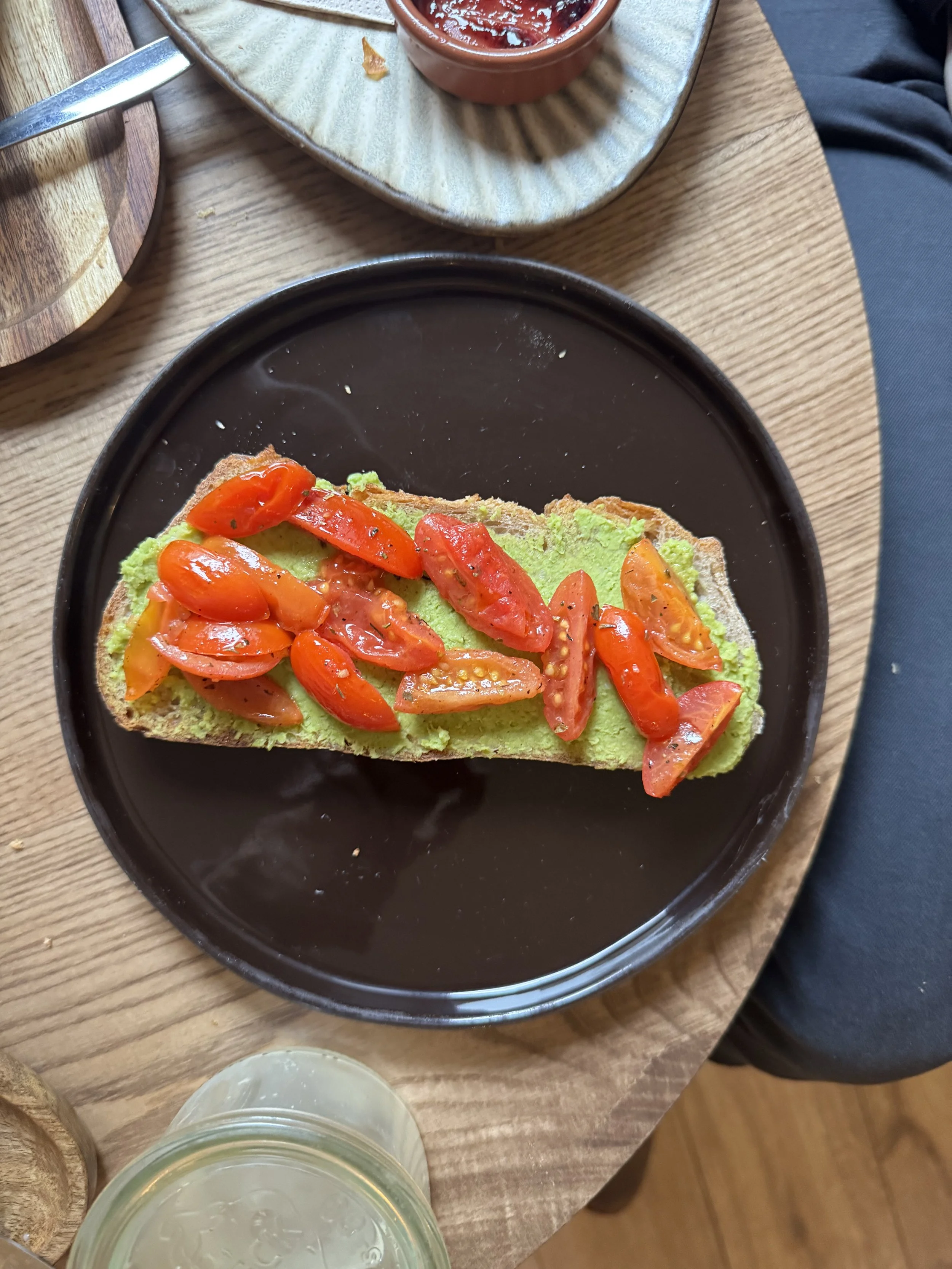
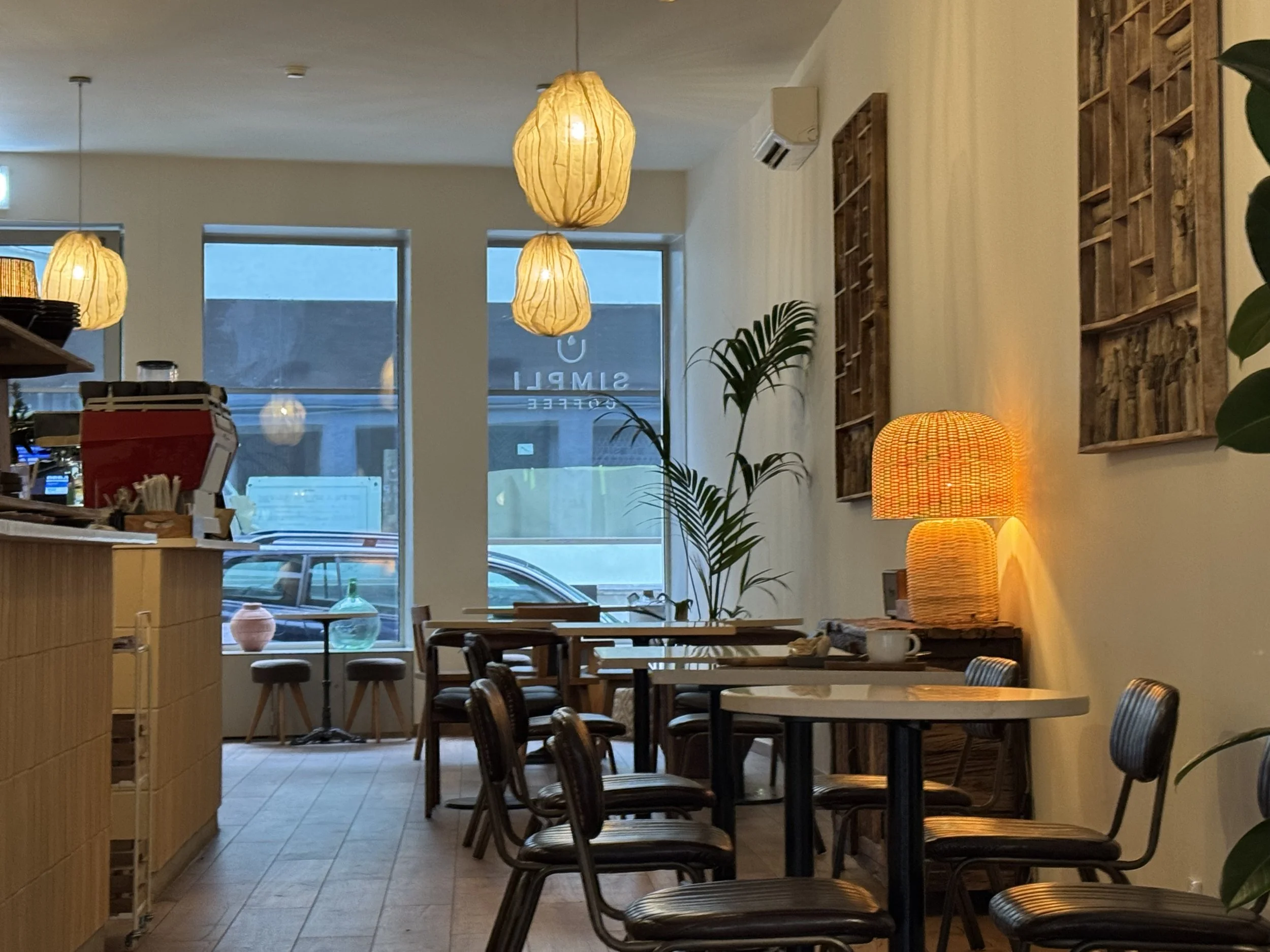
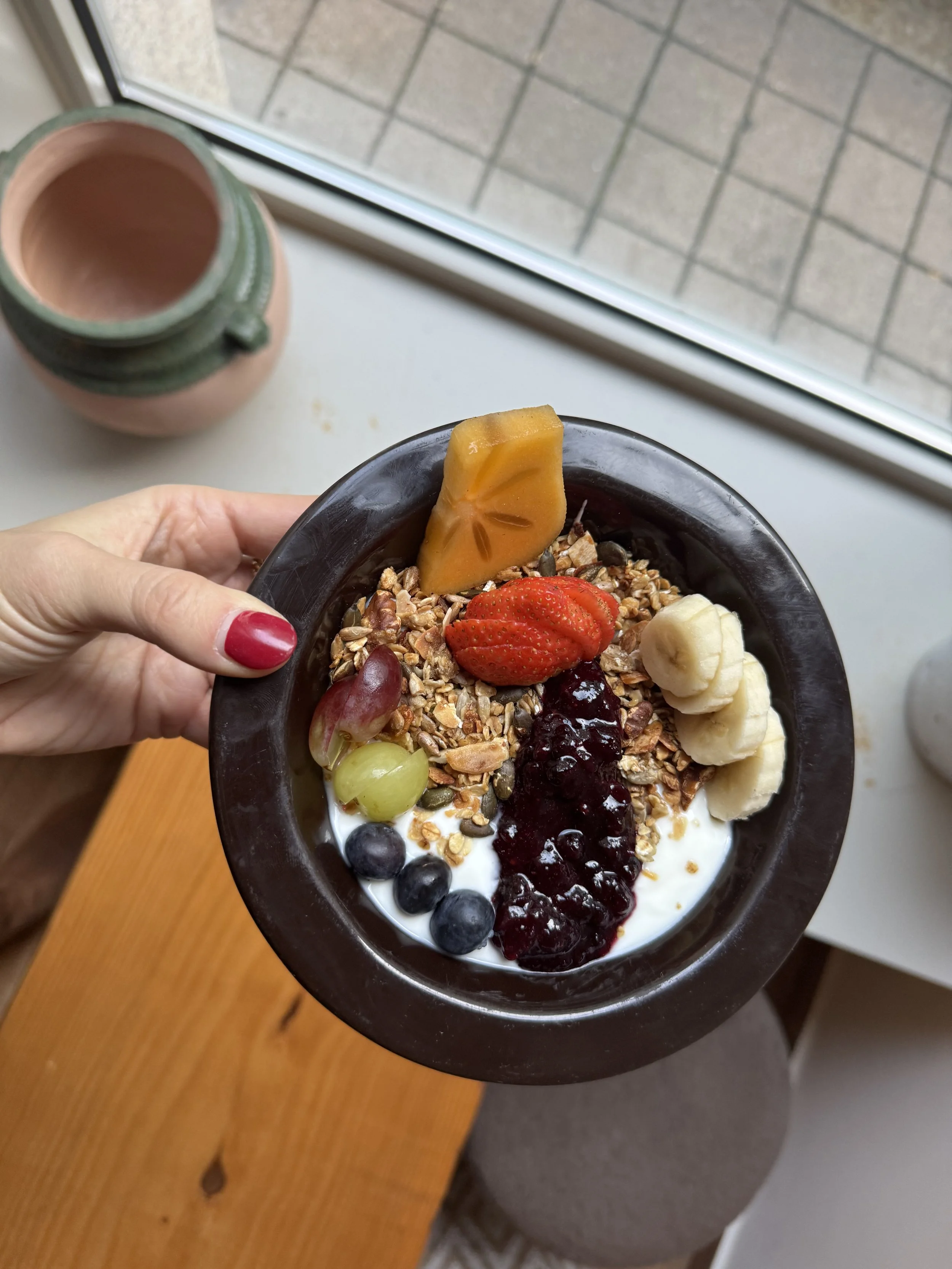
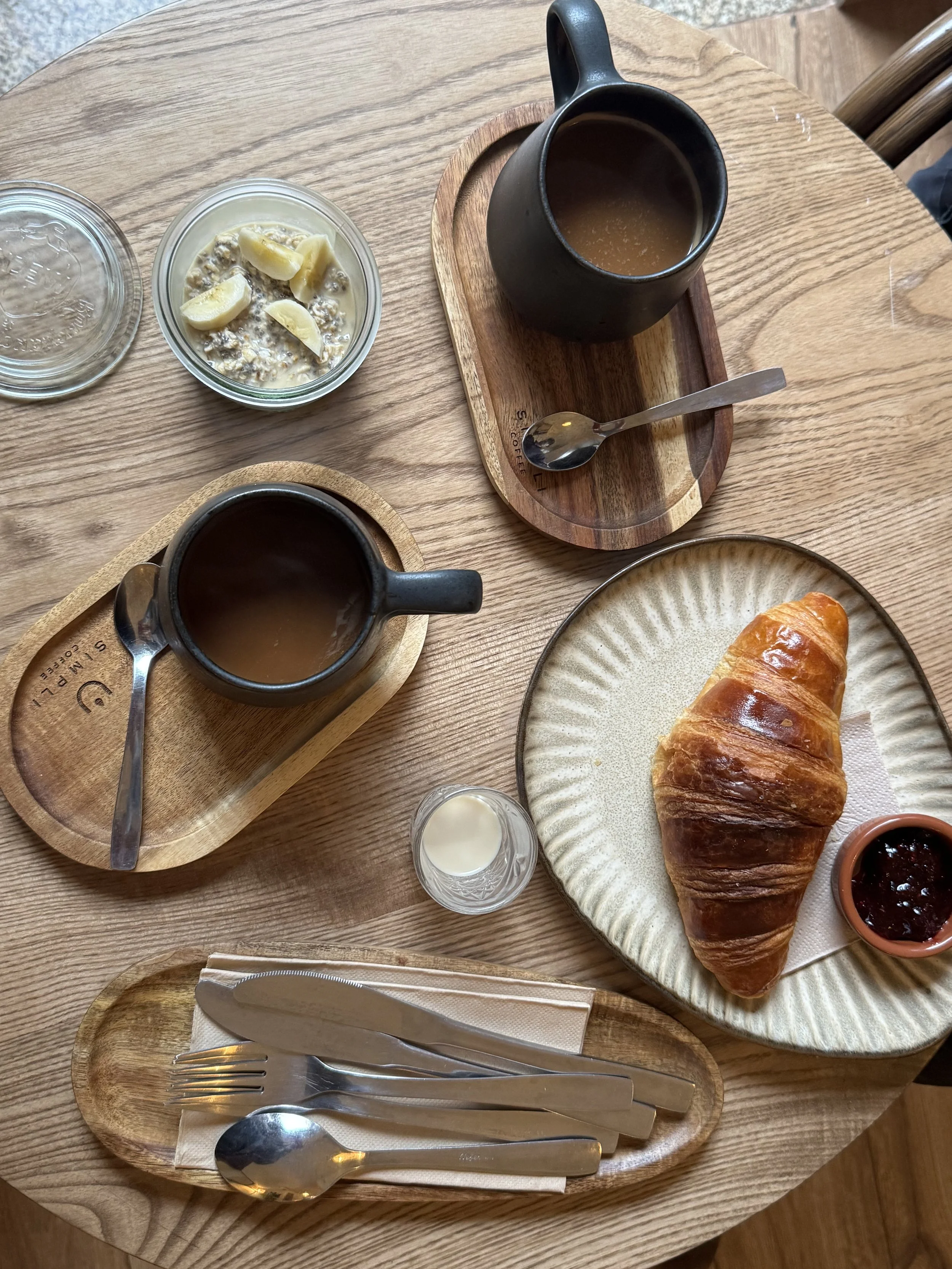
We also loved their partnership with the coffee shop, Simpli Coffee, conveniently in the immediate downstairs of the apartments. Breakfast is included in the stay, and they give you a little menu card to make your selections every day - from omelettes to yogurt + granola bowls, to croissants and sweet cakes, there were a plethora of options that helped set us up for full days of exploring the town.
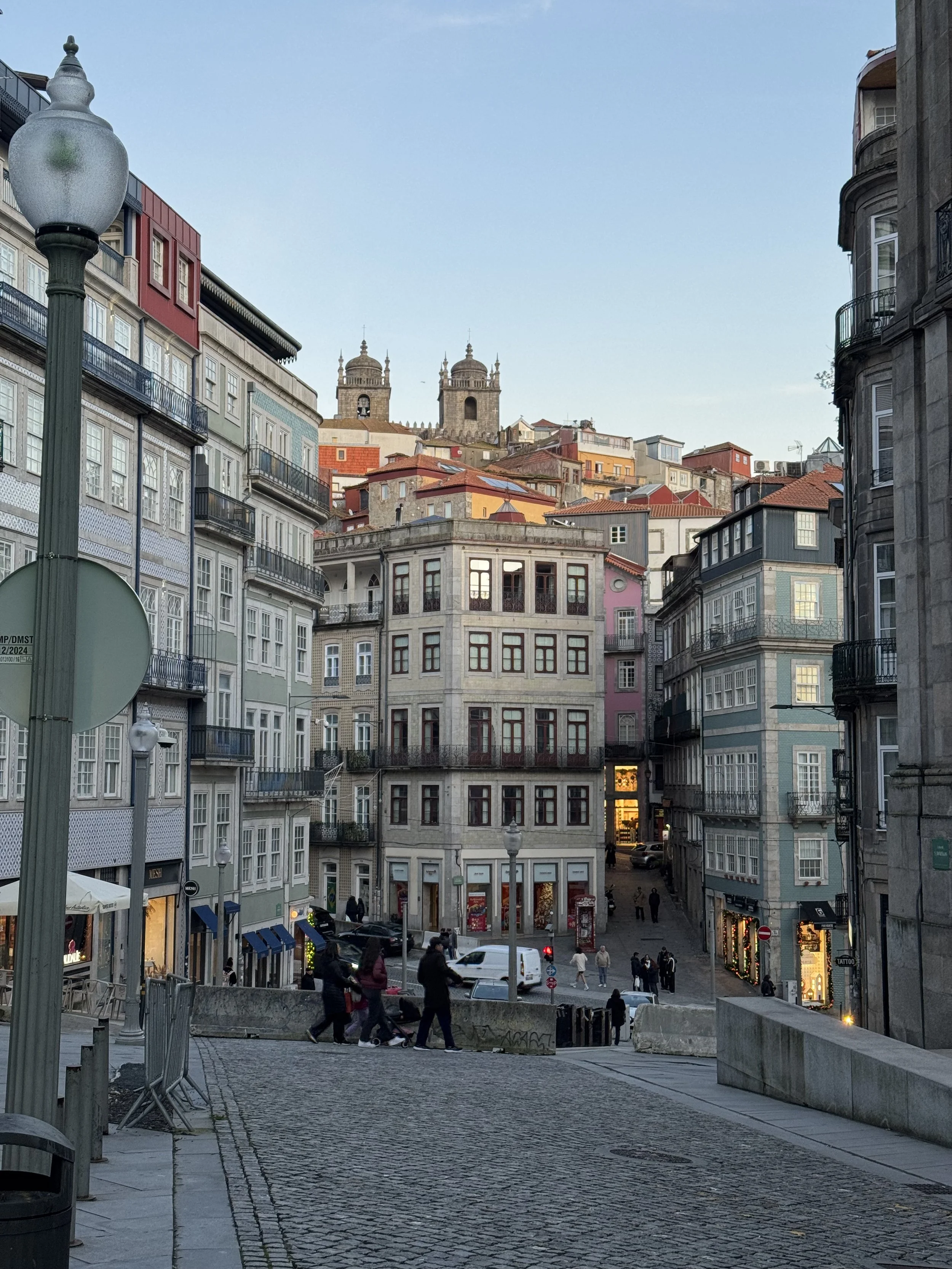
Location, location, location. We were able to walk to everything we wanted to see within 10-15 minutes from the apartment. The market, the main shopping streets, wine shops and bars, the Douro riverfront… all just a short jaunt away. With Porto being a walking city, Village by BOA made it extremely easy for us to just step into the rhythm of the streets and go.
Where to Eat/Drink: We had two favorite restaurants in Porto and honestly, I think these were the two best meals we ate our entire 3 week trip in Europe, so that’s saying something.
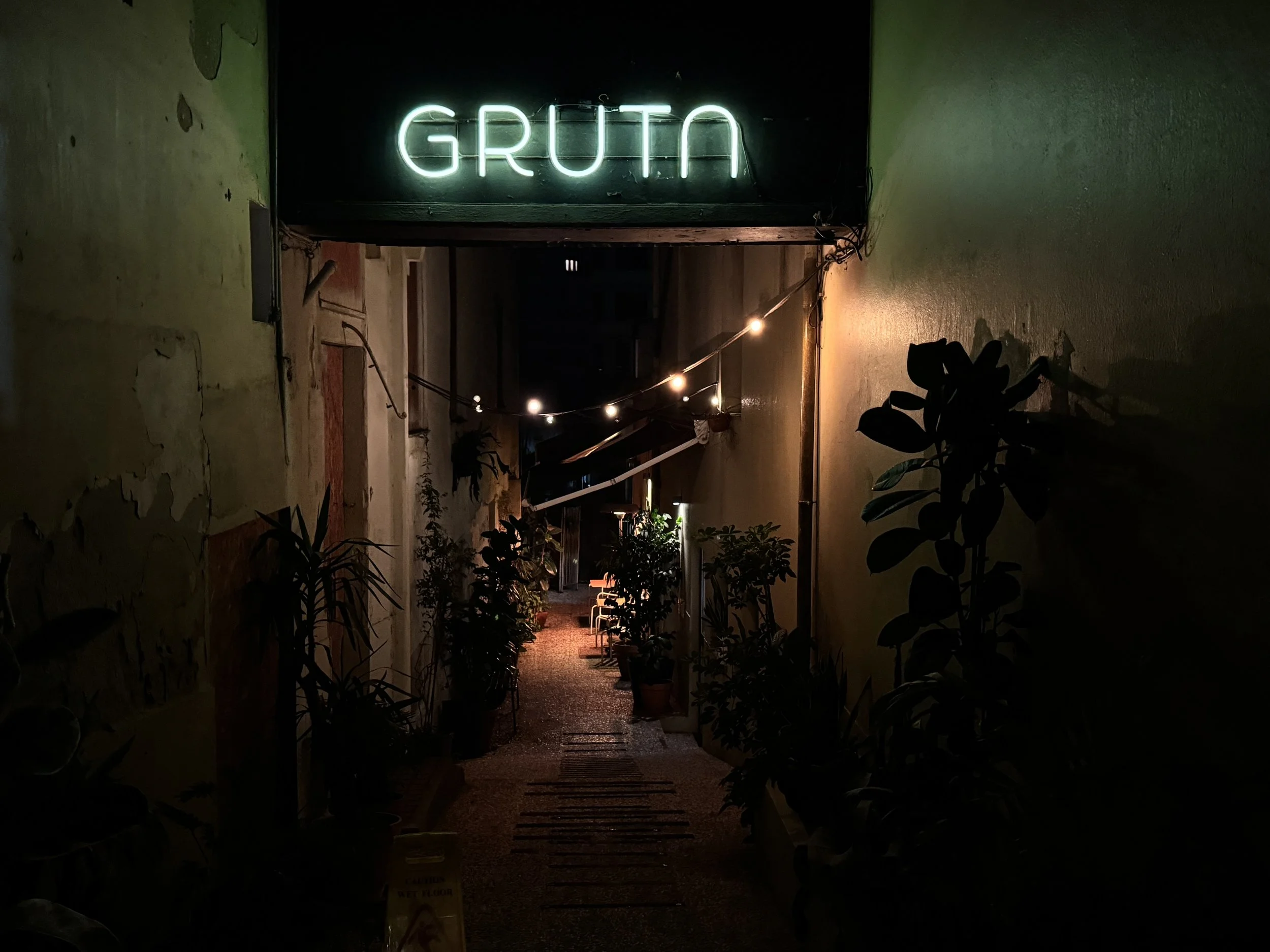
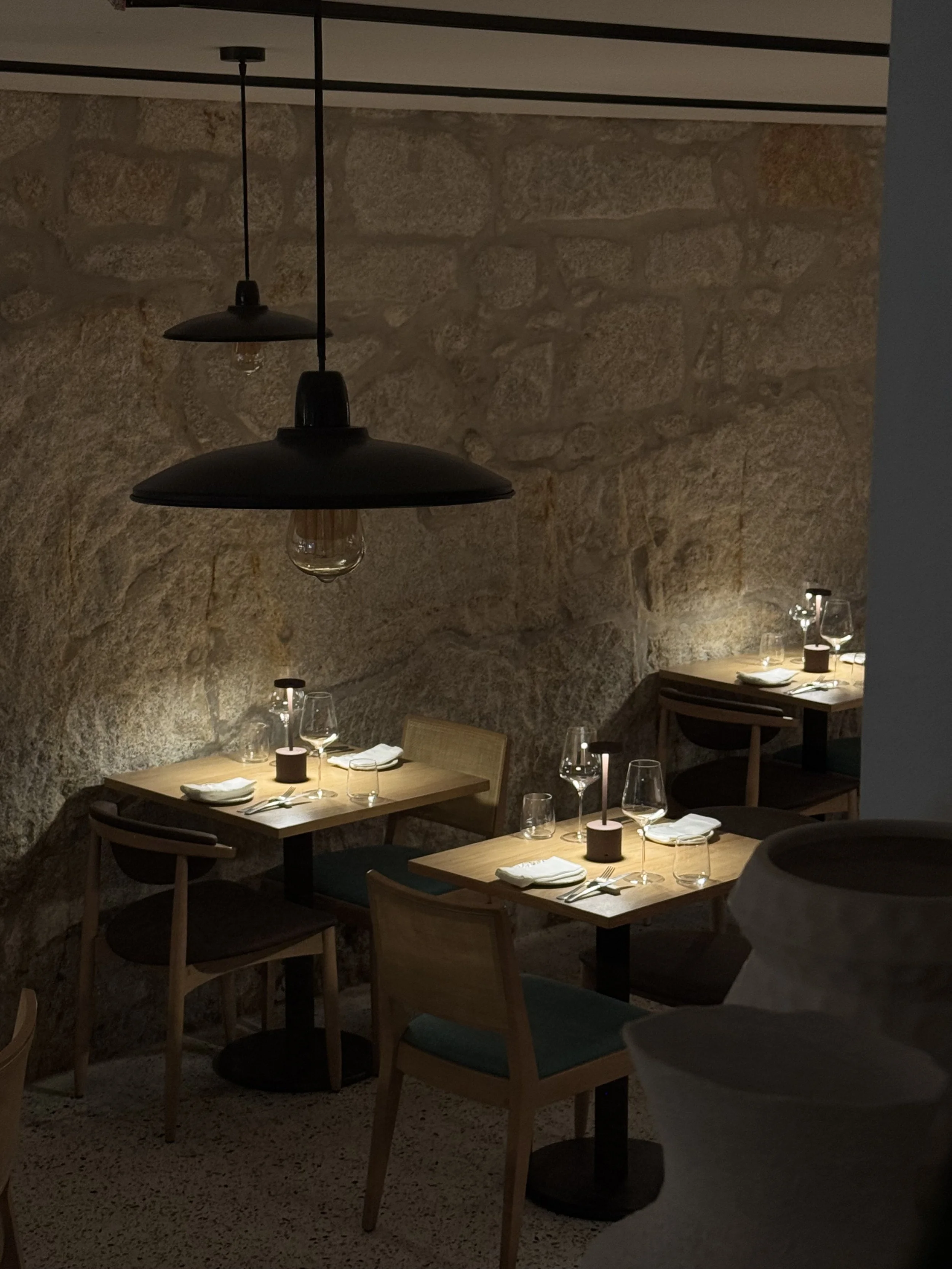
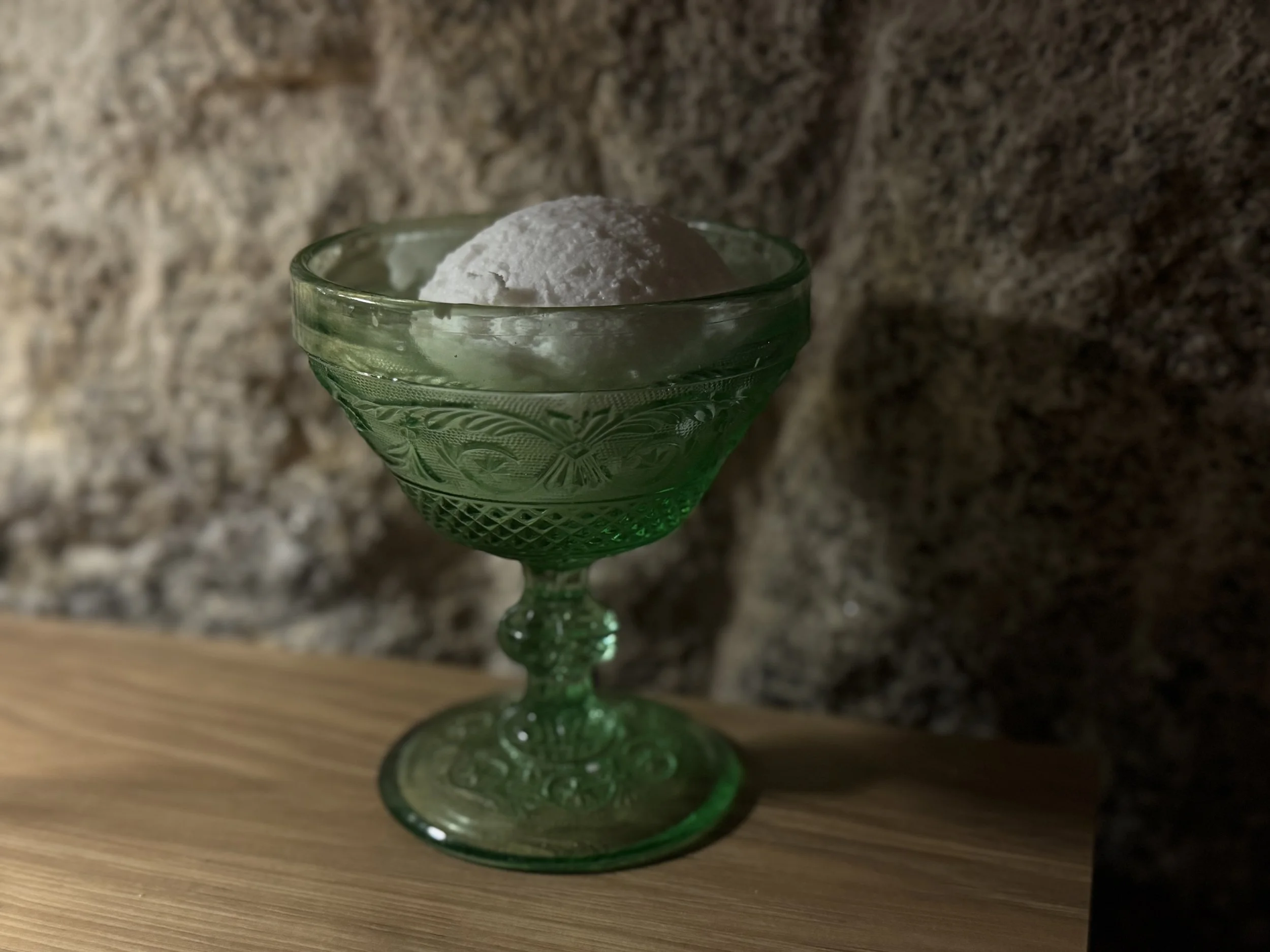
Let’s start with Gruta. You walk underground into a cavey type of vibe, which sets the tone and feels like you’ve walked into the coolest underground dinner party. The food lives in a delicious overlap of local Portugese ingredients, Brazilian flavor, and French technique - and once you taste this funky fusion, you won’t soon forget it. They brought warm focaccia with rosemary to the table which set the stage - and tempted us to ruin our appetites for the rest of the meal. The accompanying butter had fermented seaweed in it and the olive oil wasn’t just good; it tasted aggressively like olives, spicy, herbacious, ALIVE. Add cassava breadsticks that shatter like edible glass and our palettes were primed for the rest of the meal.
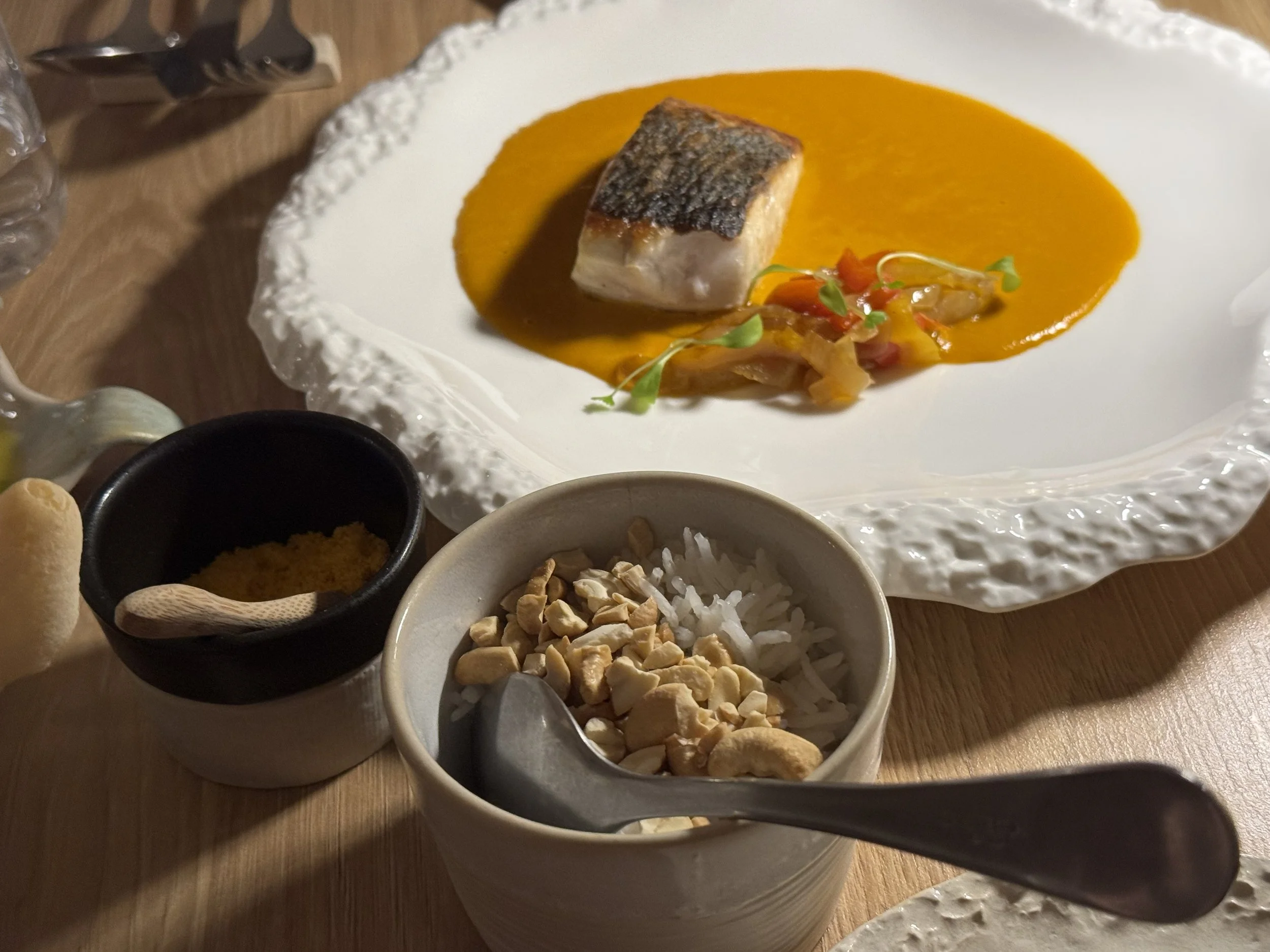
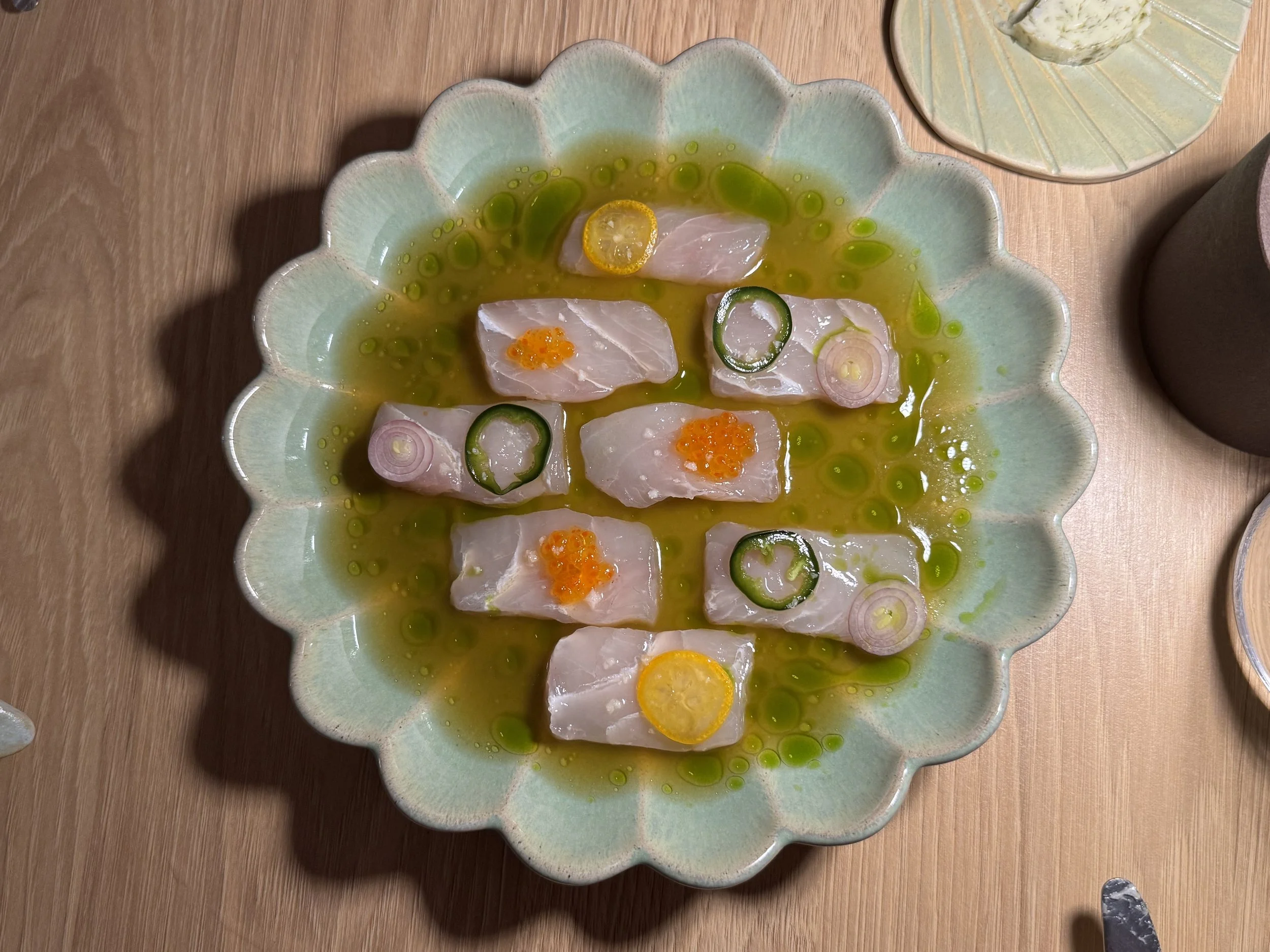
The crudo course brought super fresh white fish treated almost like a sweeter sashimi, topped three ways with a dashi-like umami undercurrent and coriander-infused olive oil that turned everything jewel toned. One version had pickled jalapenos and we both agreed it was our favorite. From there, we enjoyed scallops with caramel and tangerine in a way that sounds dessert-adjacent but eats clean and subtle. Then a pumpkin and beet dish with mint oil, and prawns in a fermented cashew sauce with a subtle chili oil. Just enough heat to tempt the senses. A white fish was then brought to the table with a coconut base sauce, with basmati + cashew crunch to add to your preference, and cassava flour to bring some additional texture.
The presentation of the plates was absolutely impeccable and showed why they deserve every bit of their Michelin star. Their staff were also impressively knowledgeable and more importantly, truly passionate about their food and wine - which carried over to us through our immersion. 10/10!
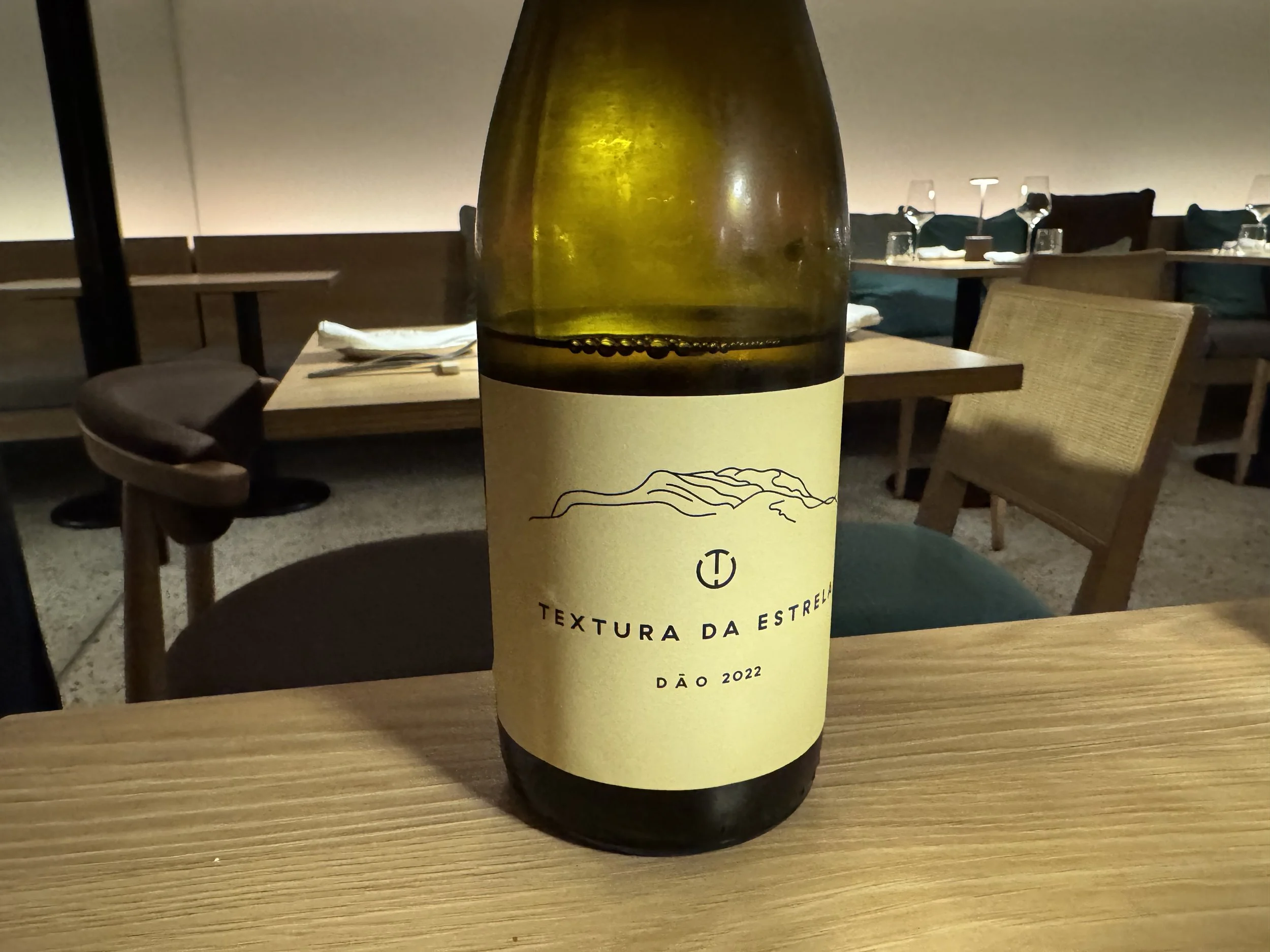
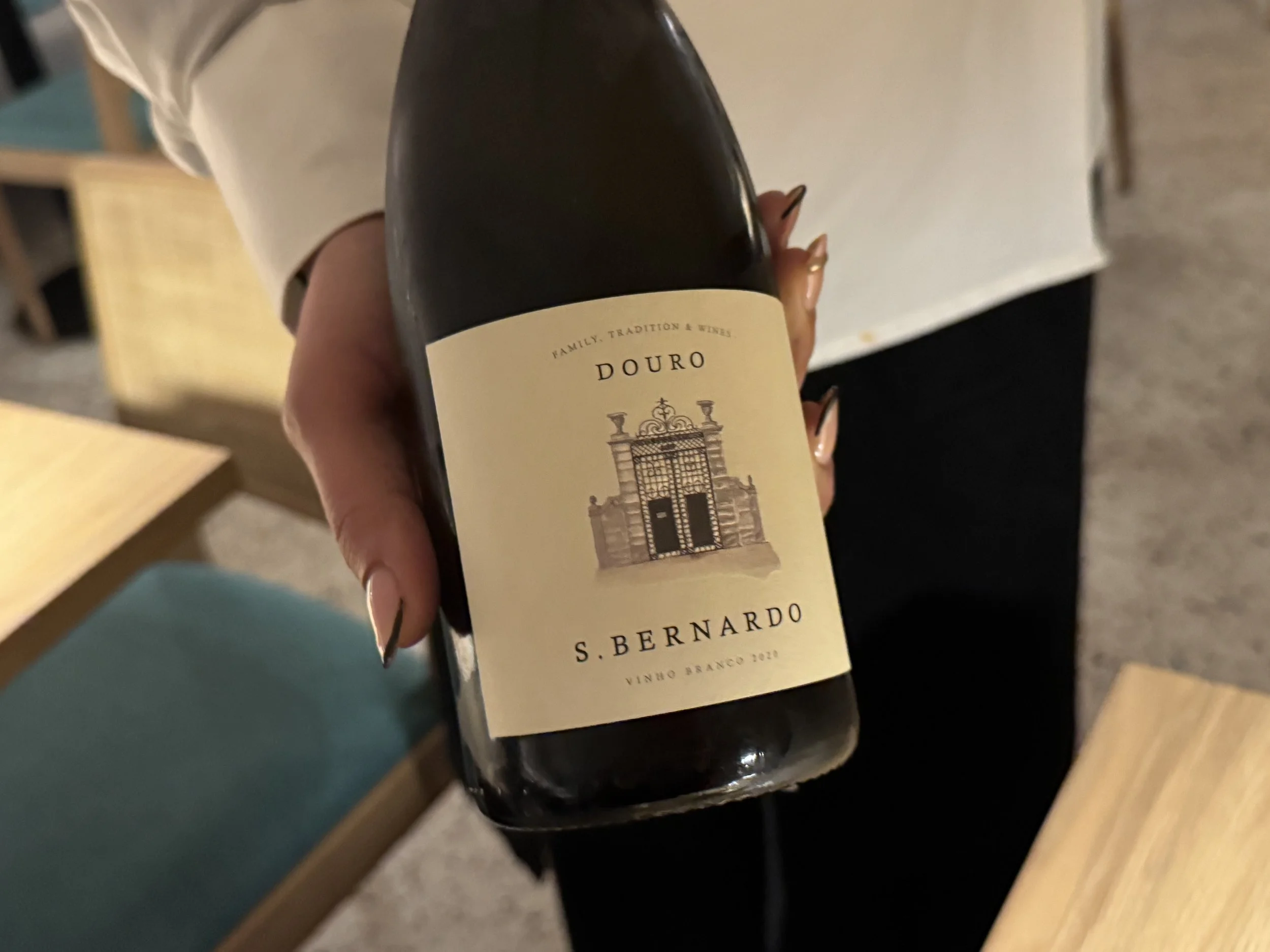
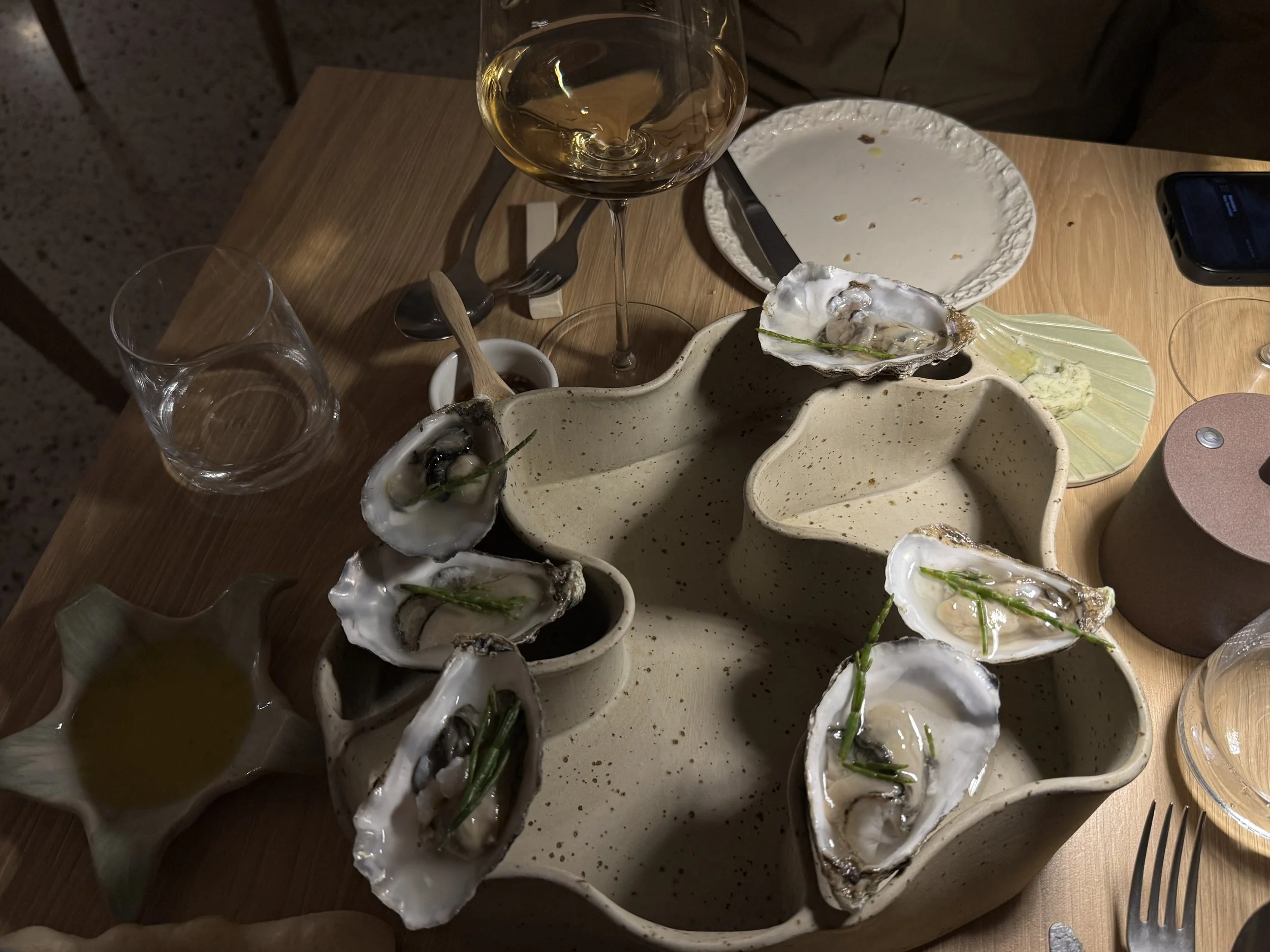
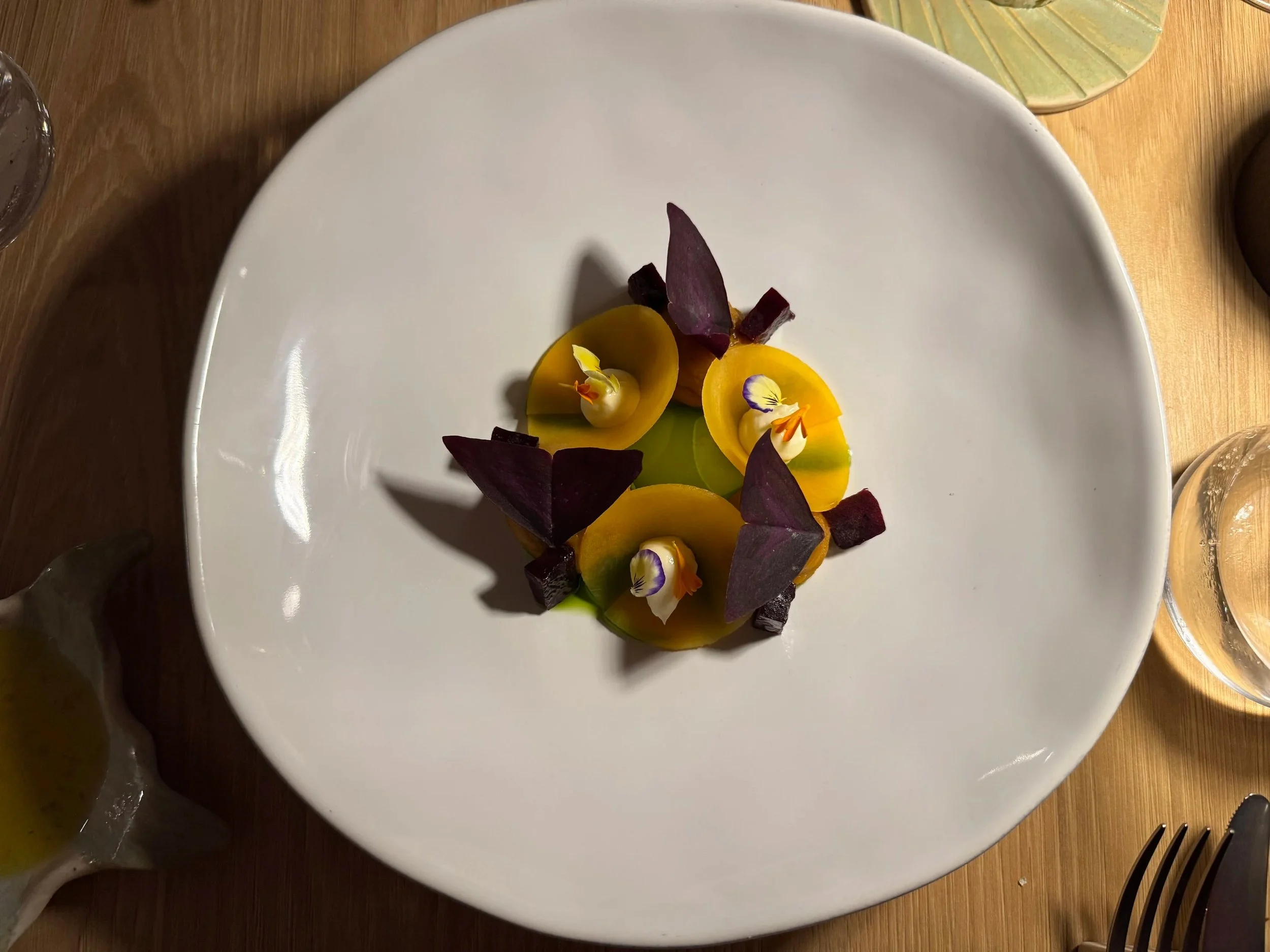
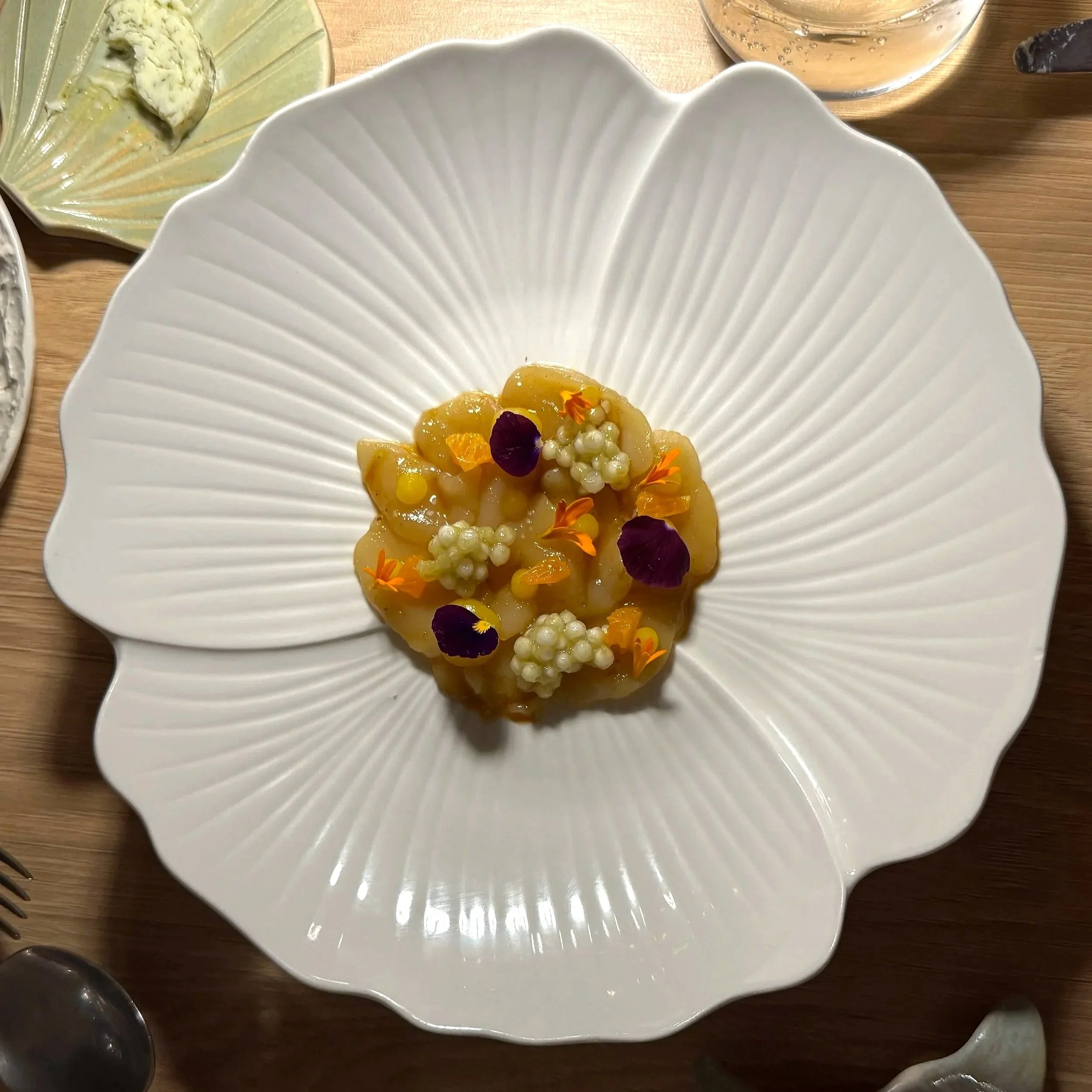
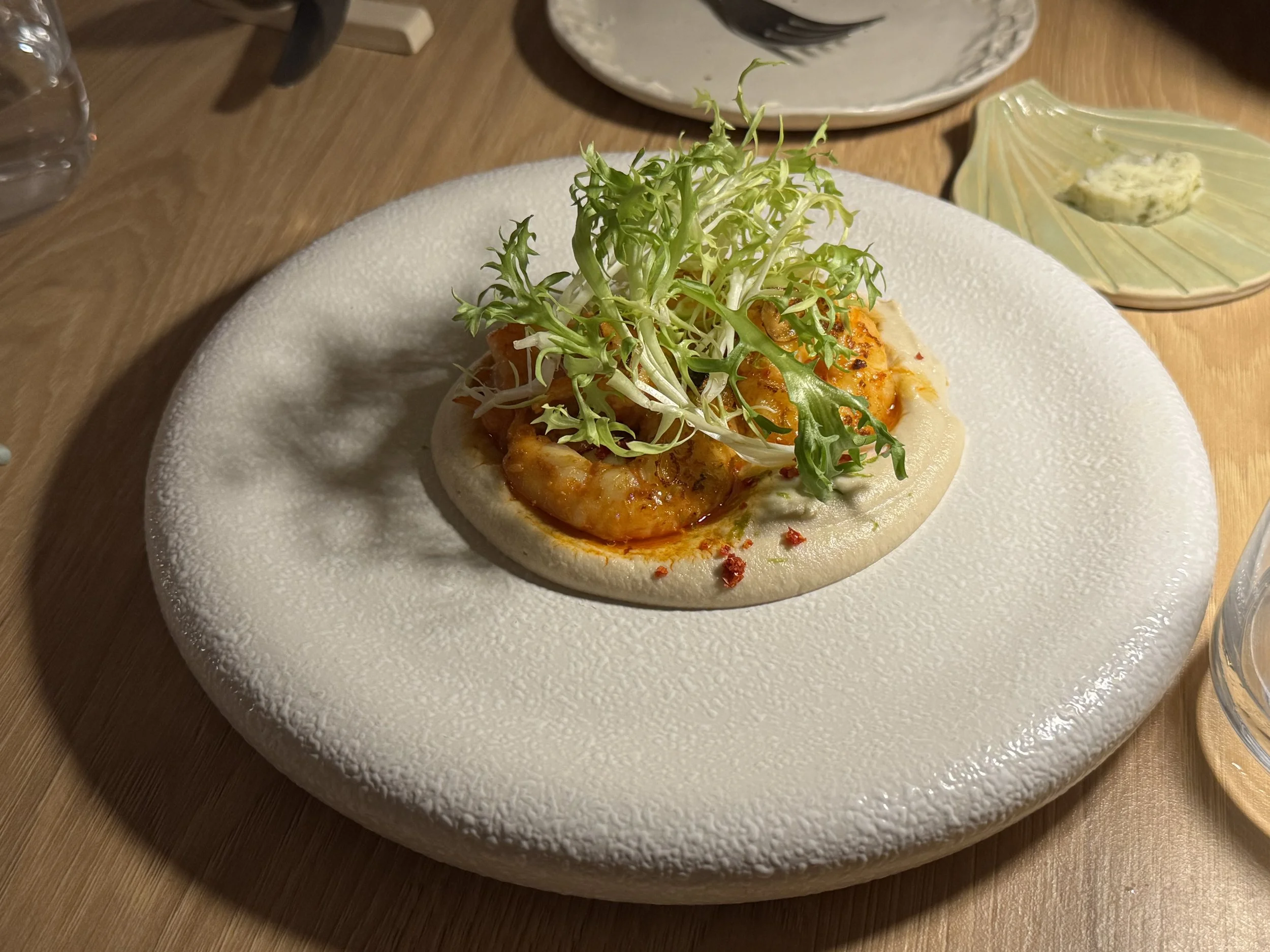
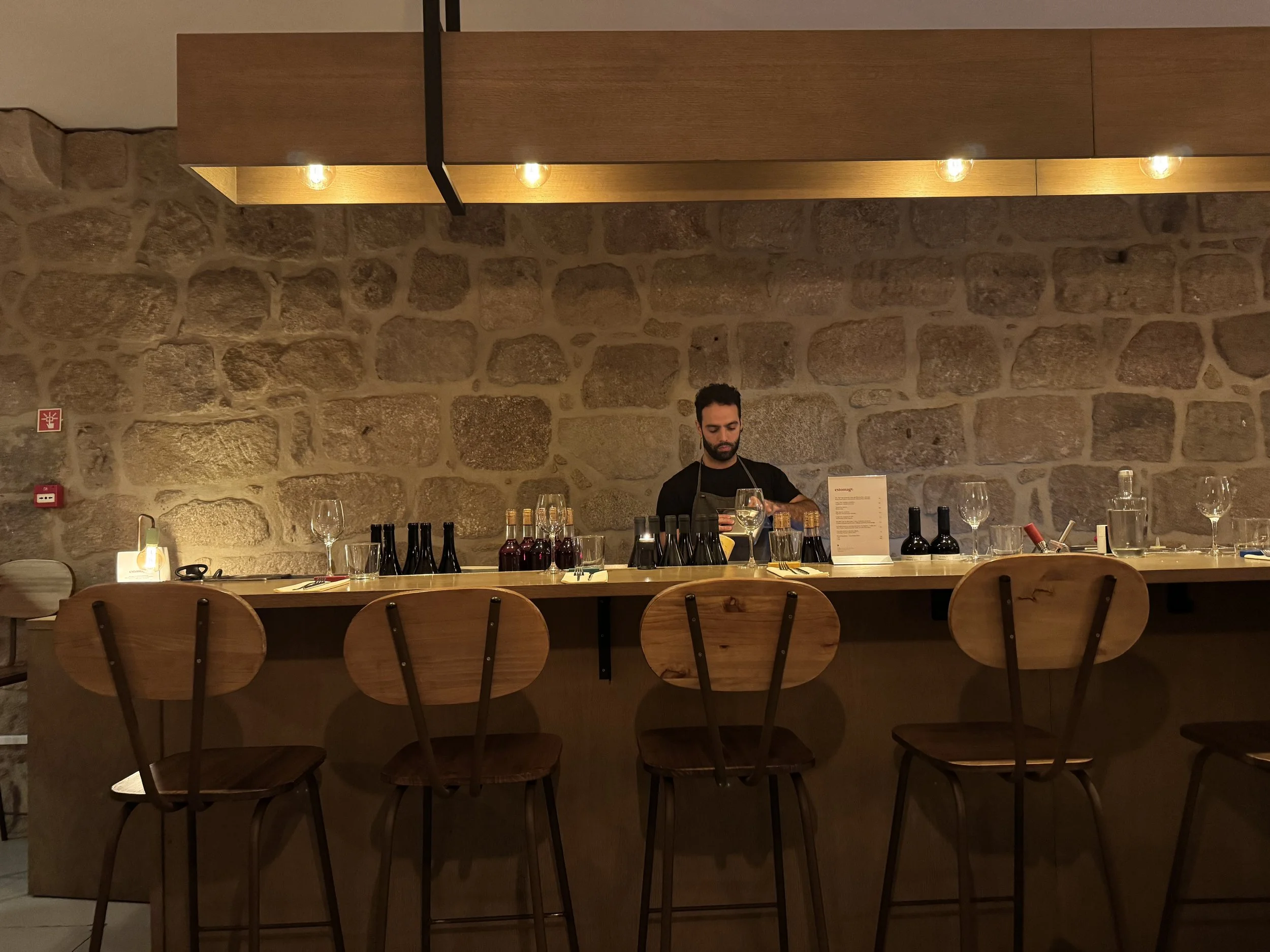
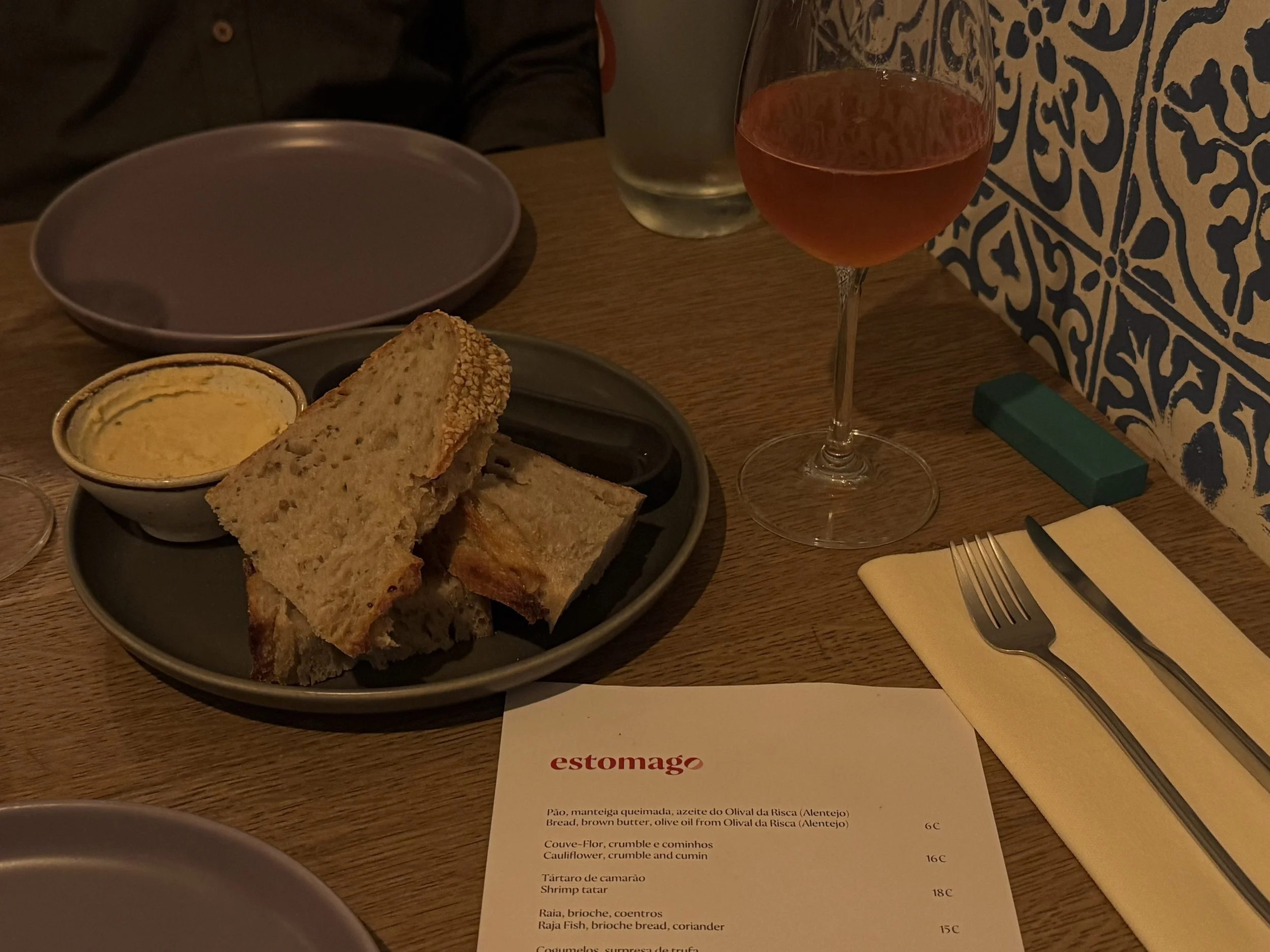
And then there was the incredible Estomago. Joana and Pedro, the owners of Estomago, have truly outdone themselves and it shows in every single detail of the experience.
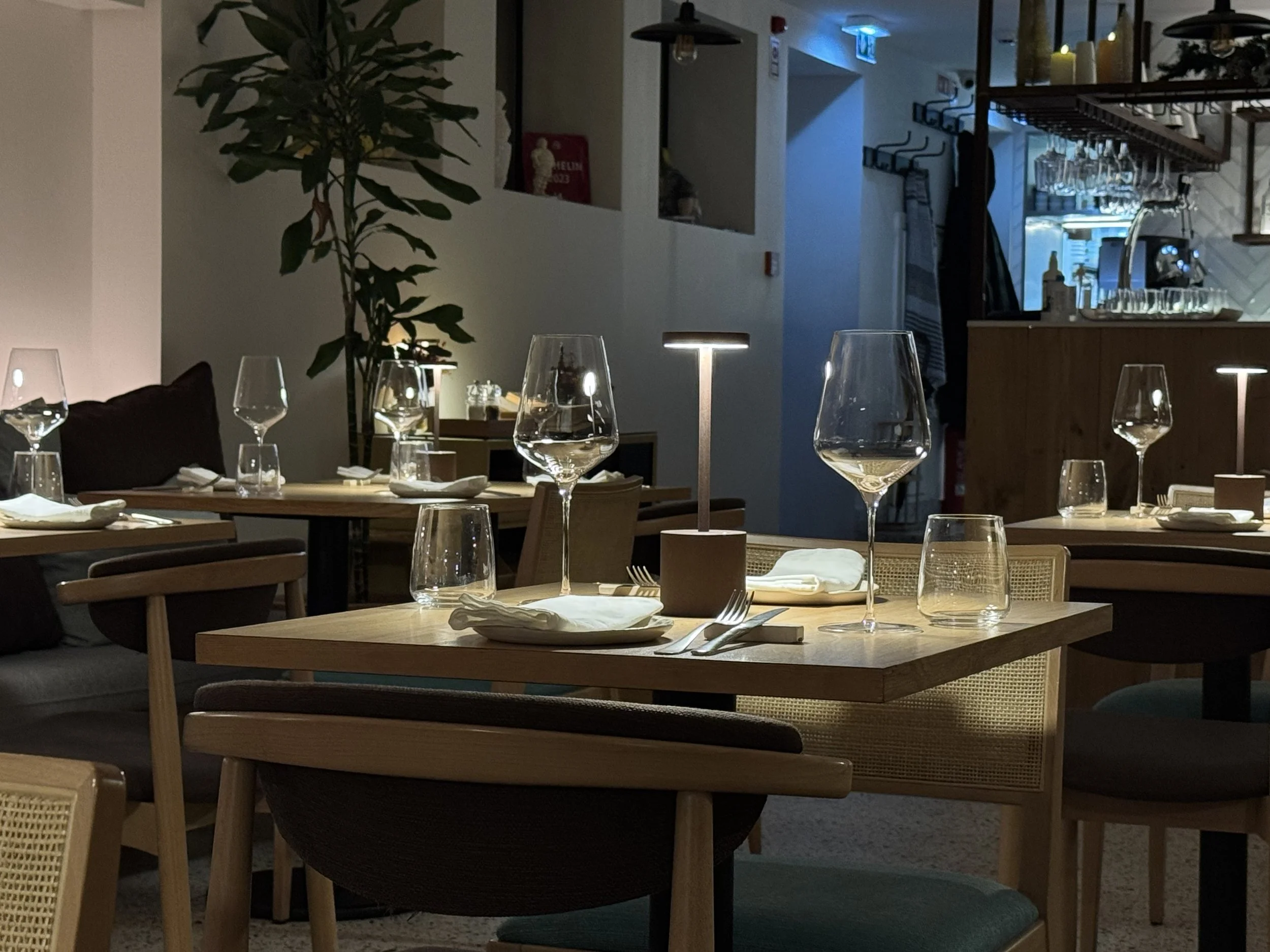
We are very big fans of approachable restaurants that don’t feel stuffy, and Estomago had a family-like feel from the moment we walked in. A group lingered eating at the bar from the time we arrived to the time we left, and it was evident they were regulars who felt comfortable treating this space as theirs. I love that. We need more third places in this world which are welcoming to that degree.
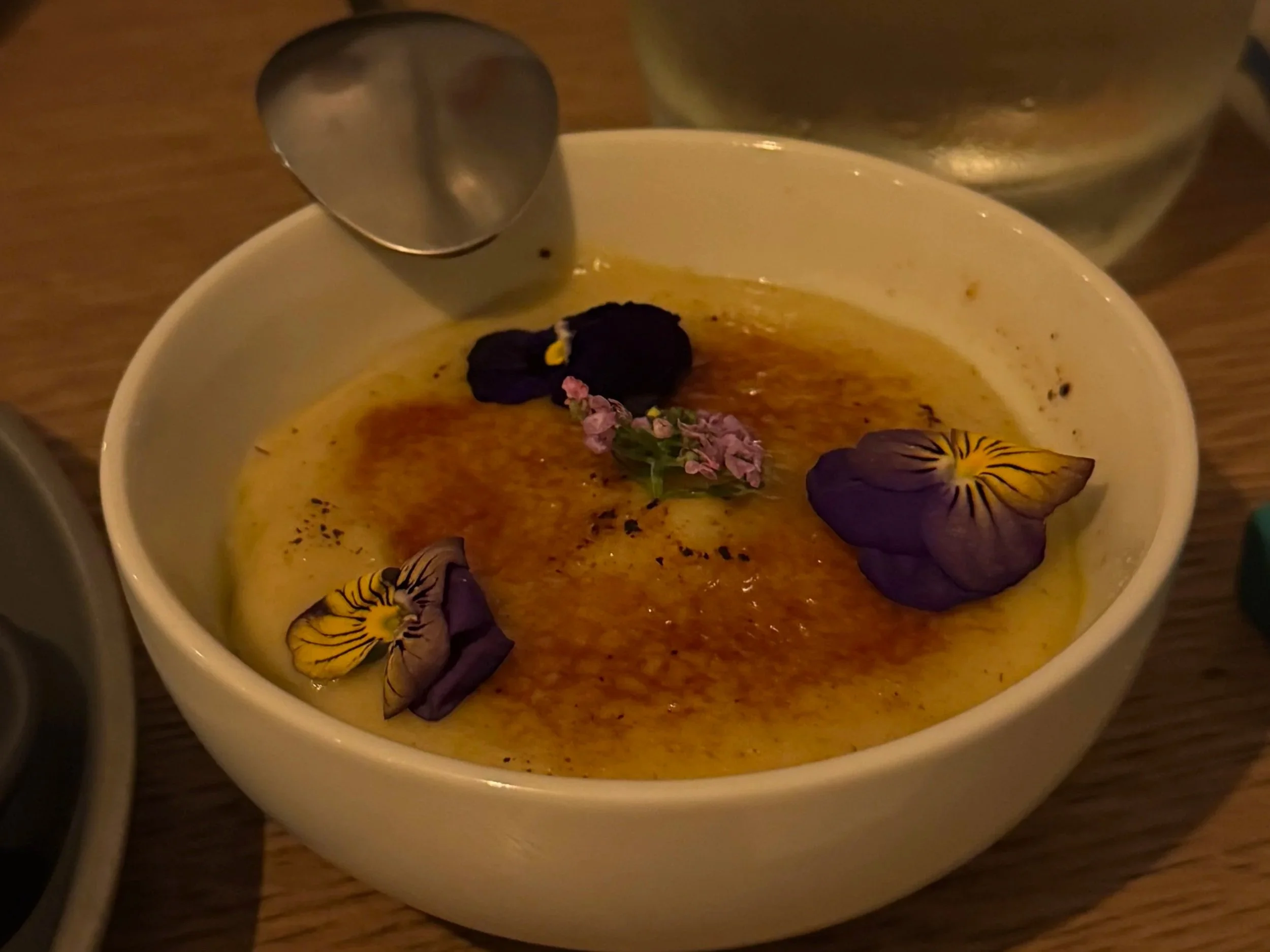
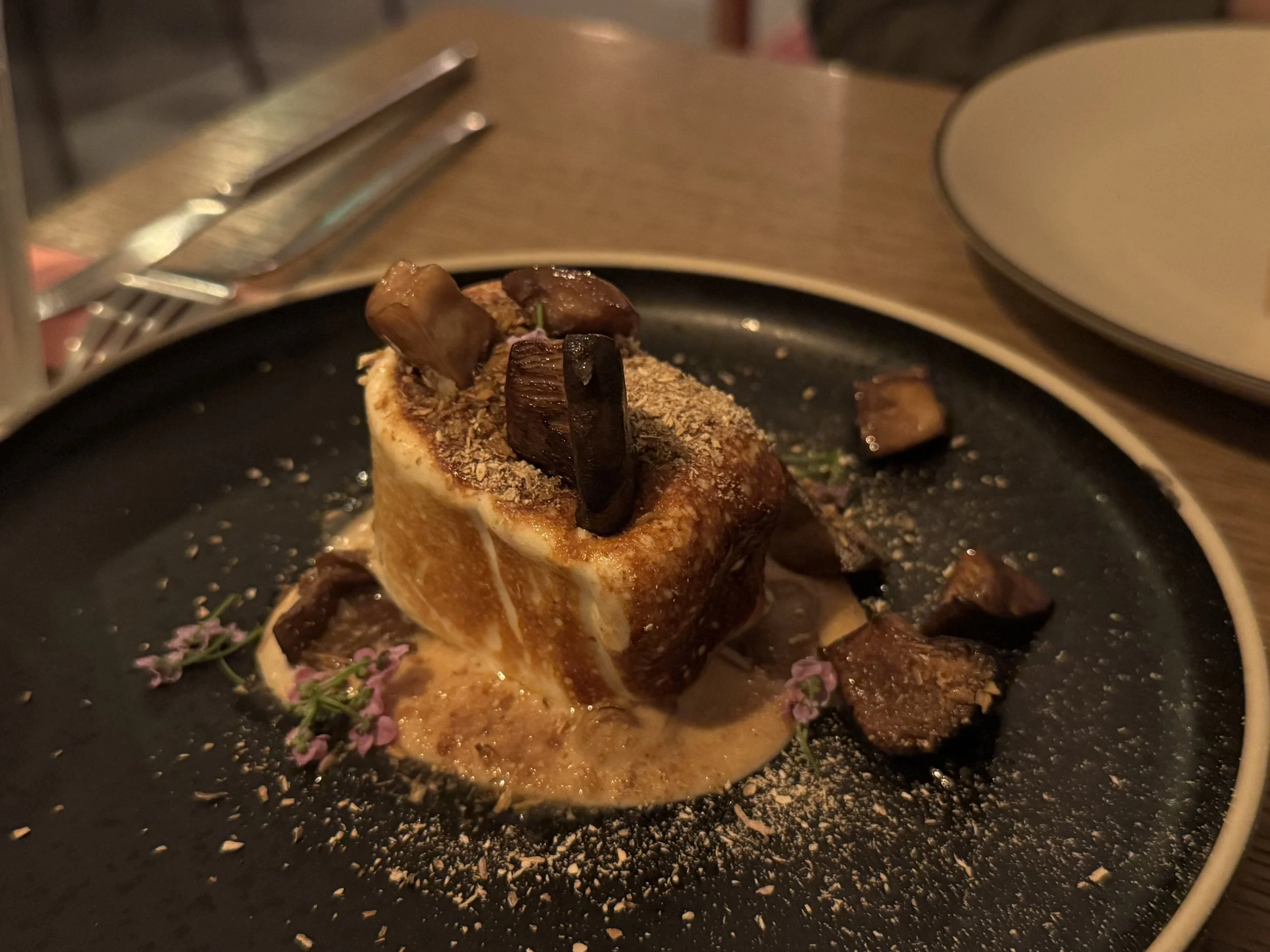
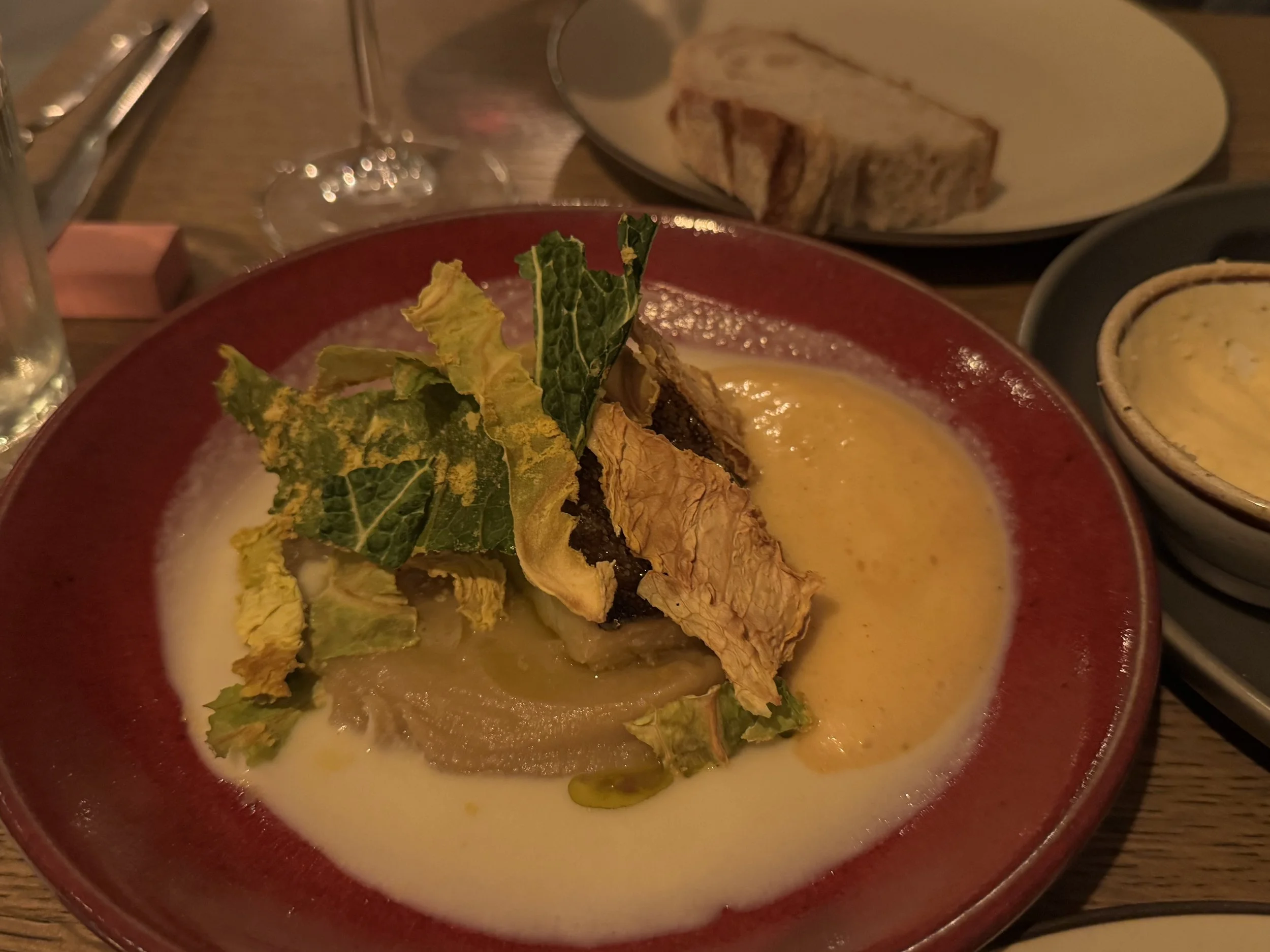
We found Estomago’s dishes and flavors to be precise without being overly precious, and more creative than any other dishes we had tried in quite some time. We started with a cauliflower and cumin dish with a thin creme brulee type of topping - creamy, nutty, savory, sweet, crackly - all in one bite! It set the tone early: an adventurous menu! Music to our ears!
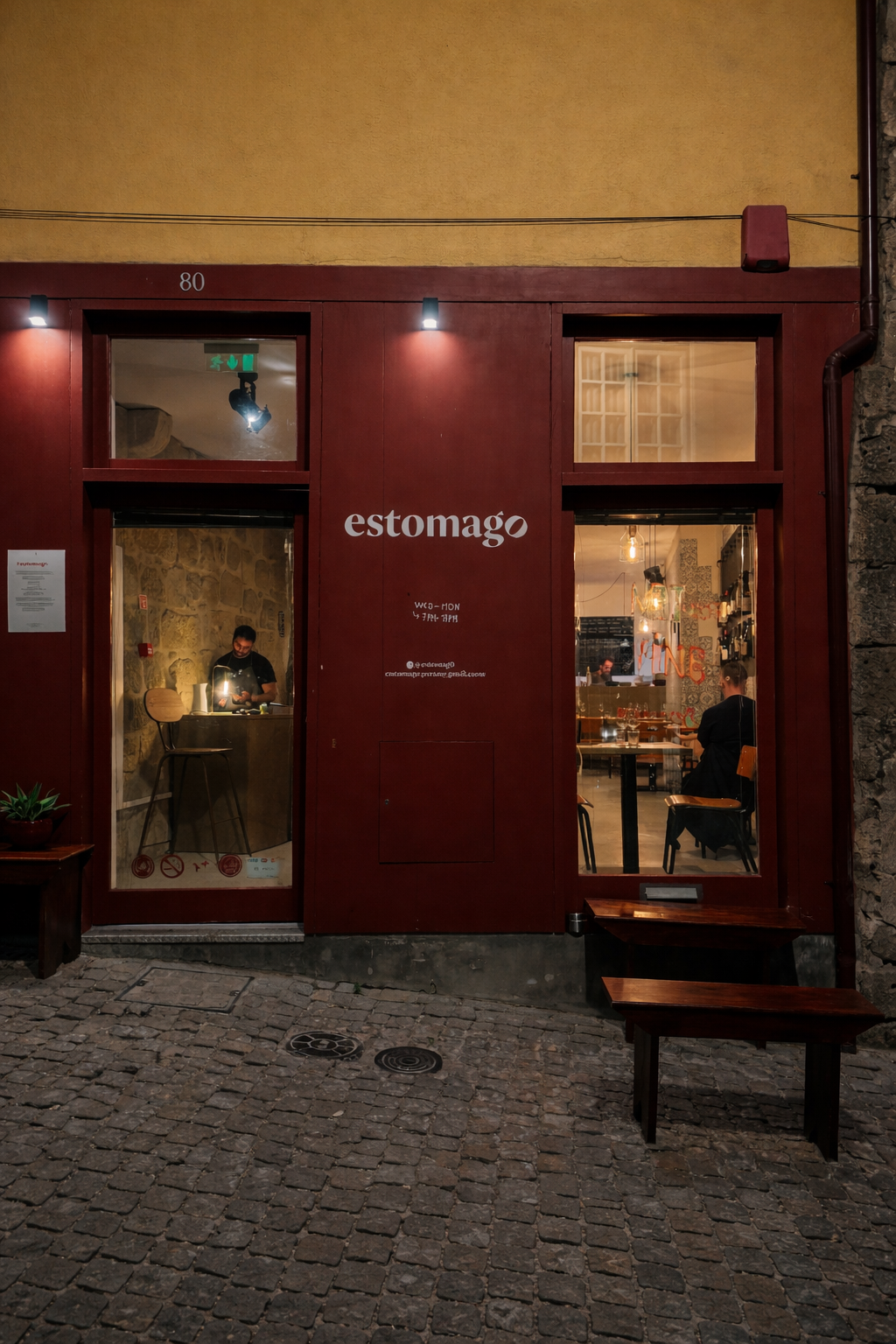
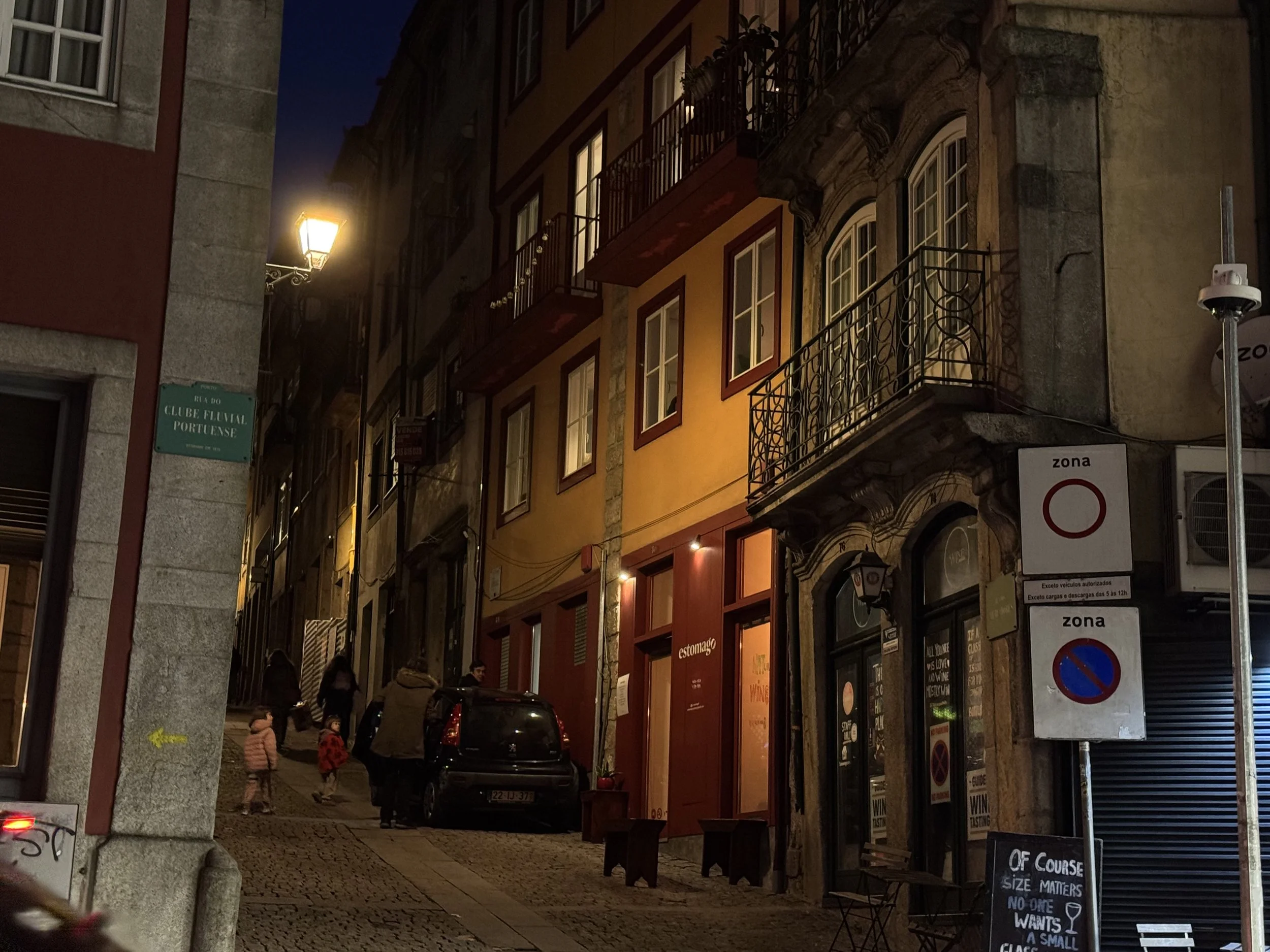
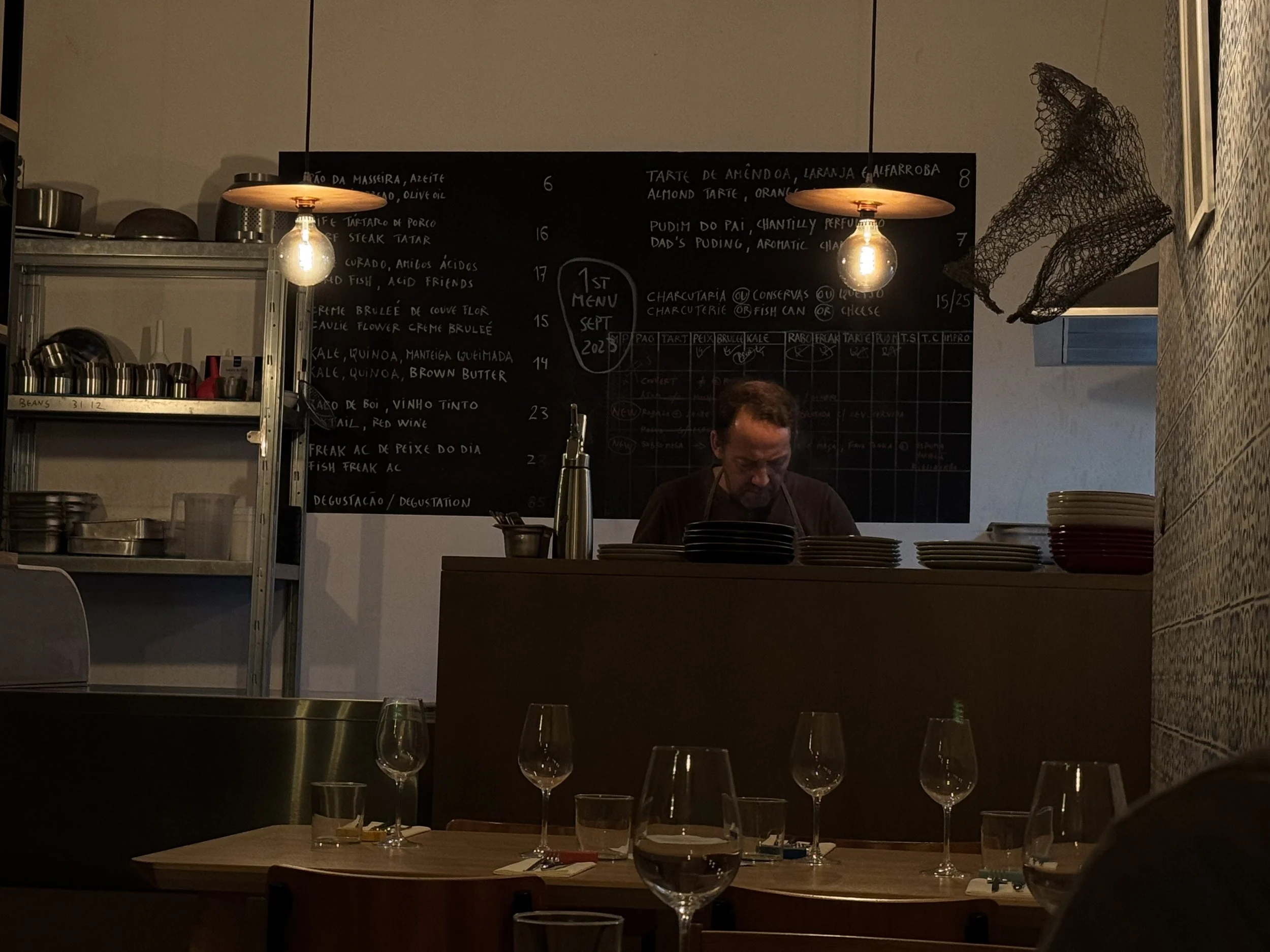
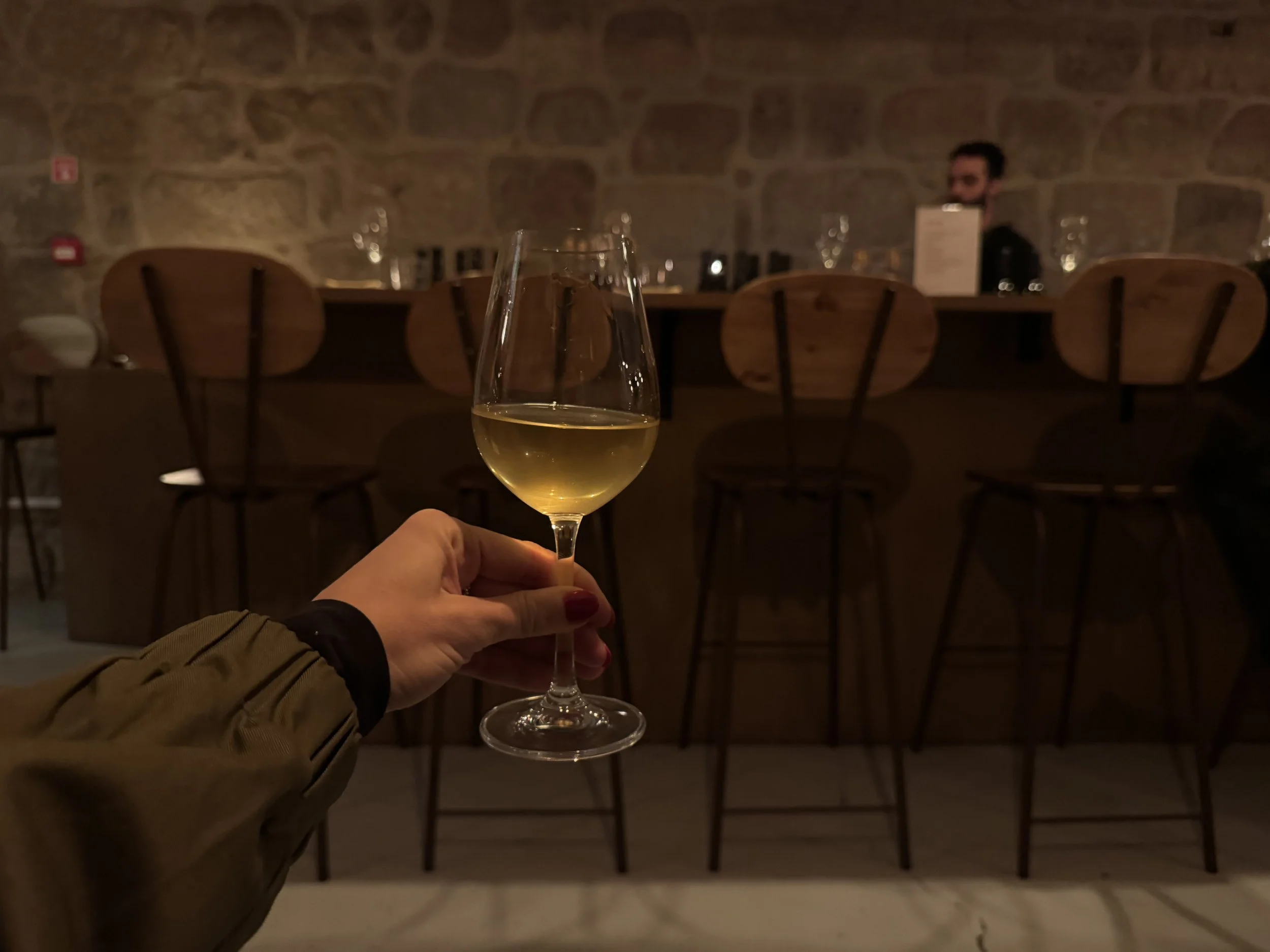
Then came the seafood course that short circuited our brains: shrimp tartare, nuts, cured tuna and a bisque poured over the top for good measure. Olives showed up in the middle of the flavor story of this dish as well and made everything feel very local. One of the accompanying wines that stuck with us was made from a pical grape (more common in Portugal than sparkling) - it was floral and bright and weirdly perfect with how the meal kept toggling between smoke, salt, brine, and richness.
We noticed that the fish dishes had a sneaky way of feeling smoky without actually being smoked - a trick of the trade by way of interesting sauces, foam, and the way aromatics cling to your palate.
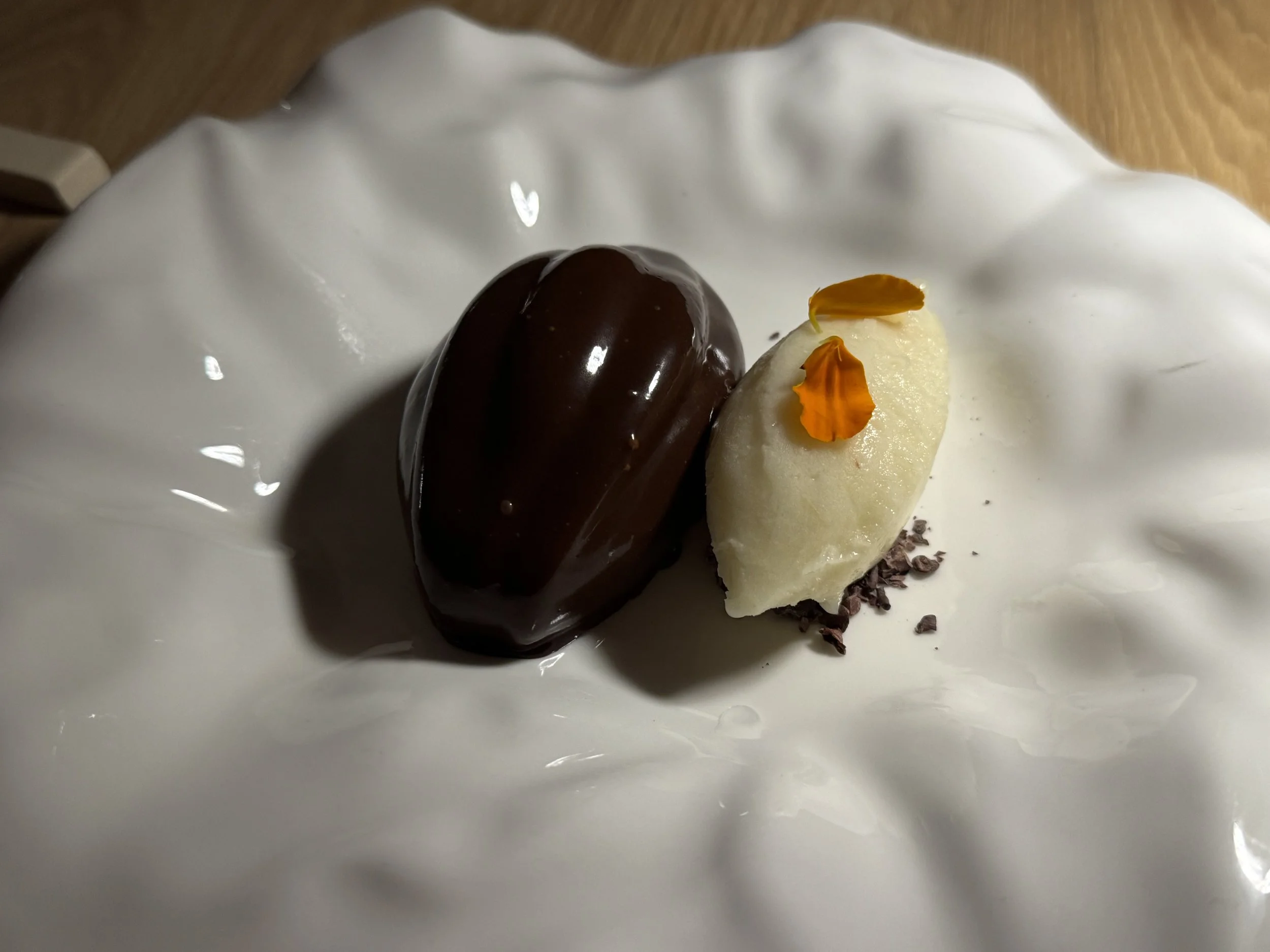
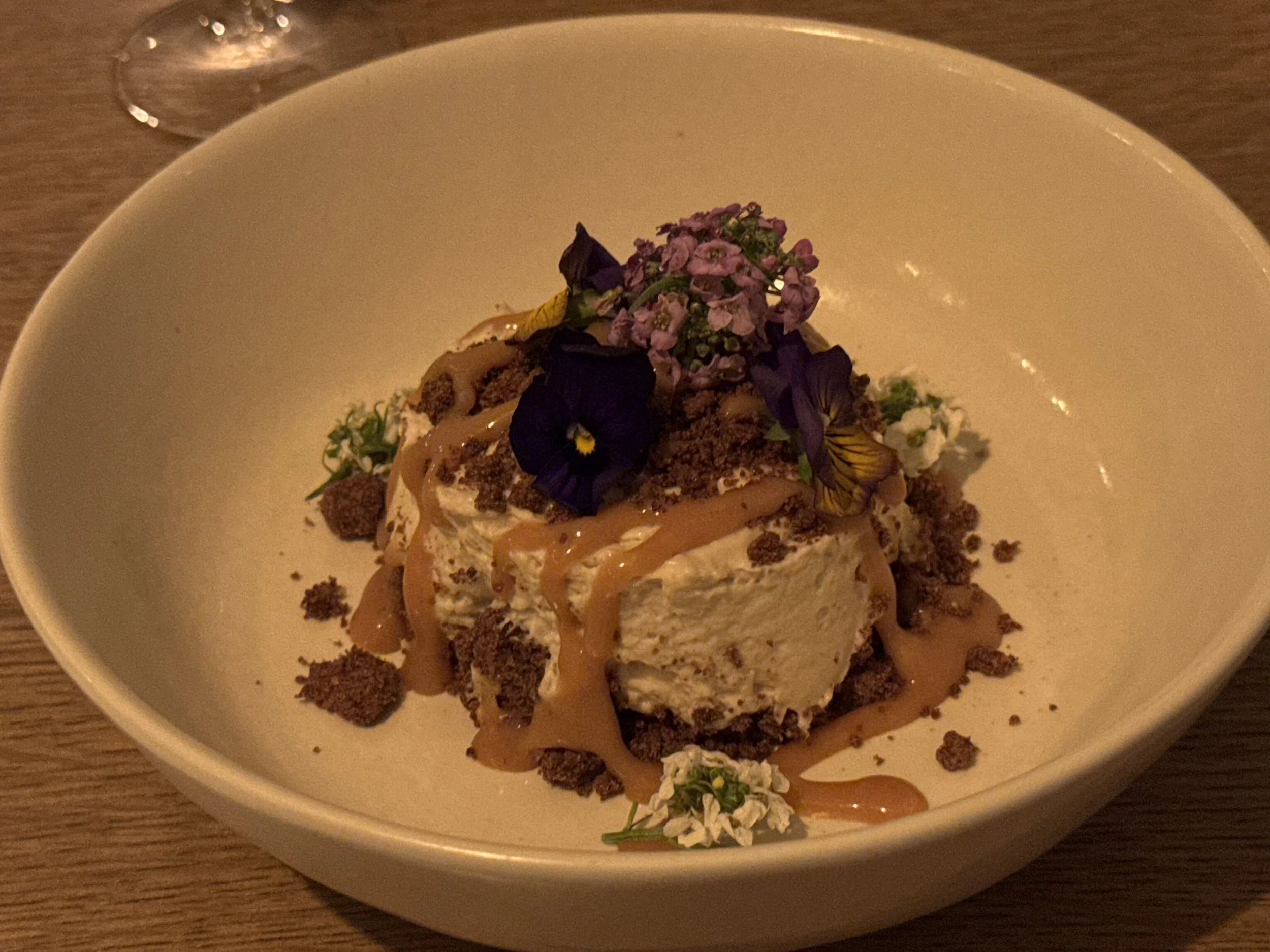
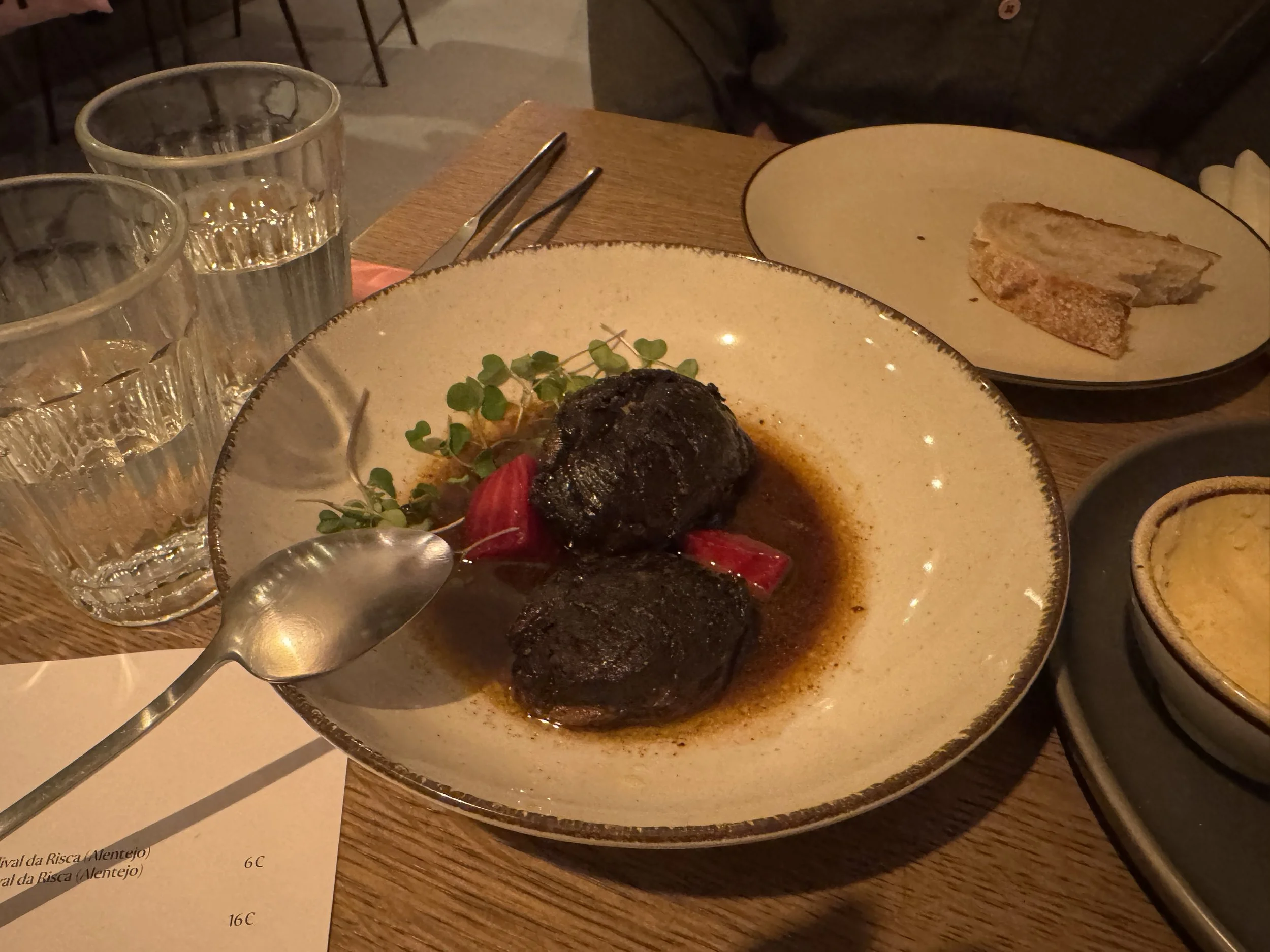
As our bellies filled, we moved onto the pork cheek that was charred edge to edge but somehow fork-soft inside, with beets and turnips bursting with flavor alongside. Dessert blew our minds with bananas + oats + caramel bursting with flavor. Every dish had us saying to one another “how can they top that one?!” and somehow, yet, they did… right to the very end. You cannot miss Estomago and the brilliant people running this place. 5 stars, no notes.
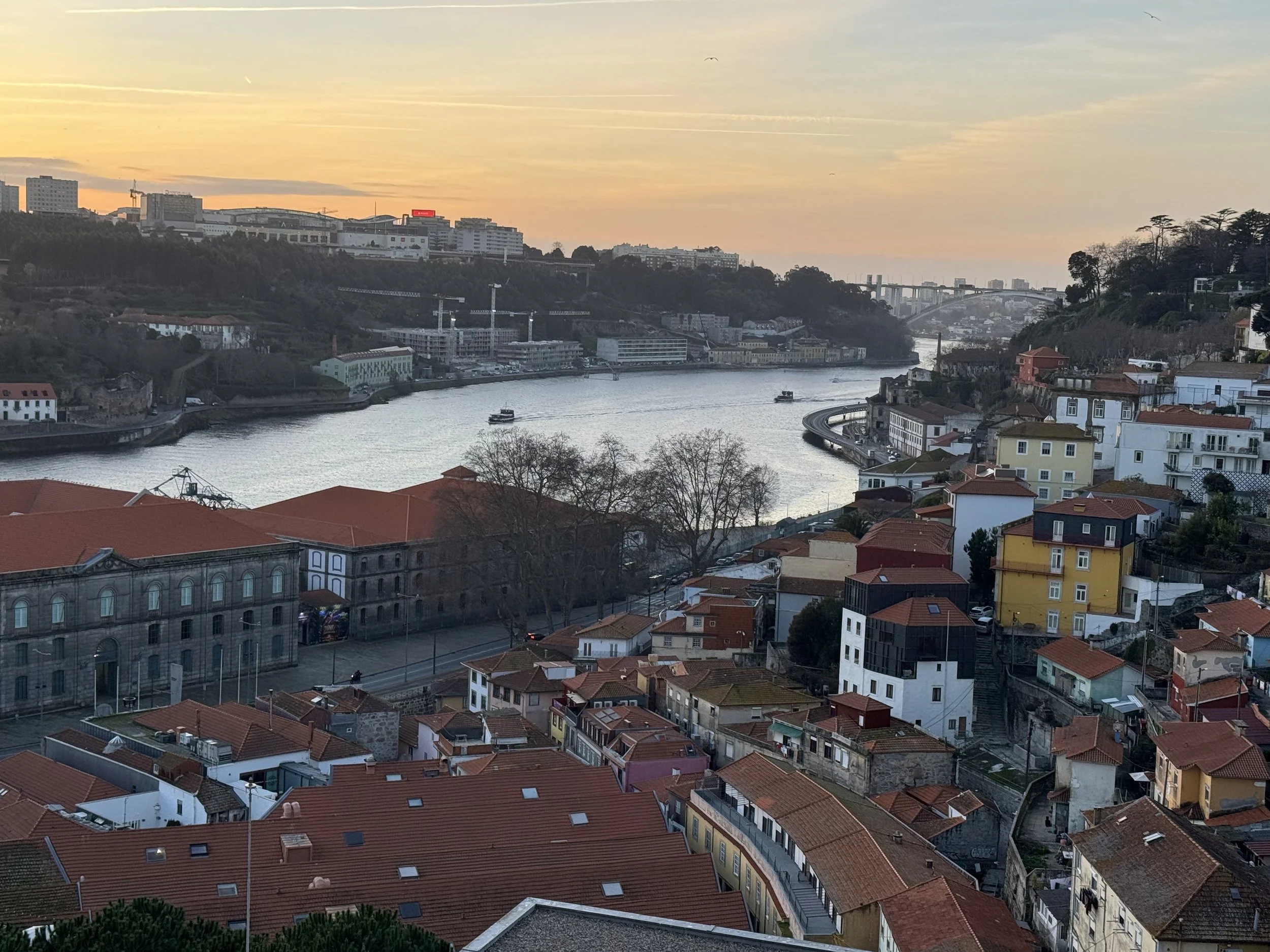
Things to Do: Walk the riverfront. Go tile-spotting (azulejos) and look up constantly to spot the blue and white tiles, iron balconies and ginormous granite buildings all around. Cross the Dom Luis I Bridge on the upper deck and then continue onto the Jardim do Morro.
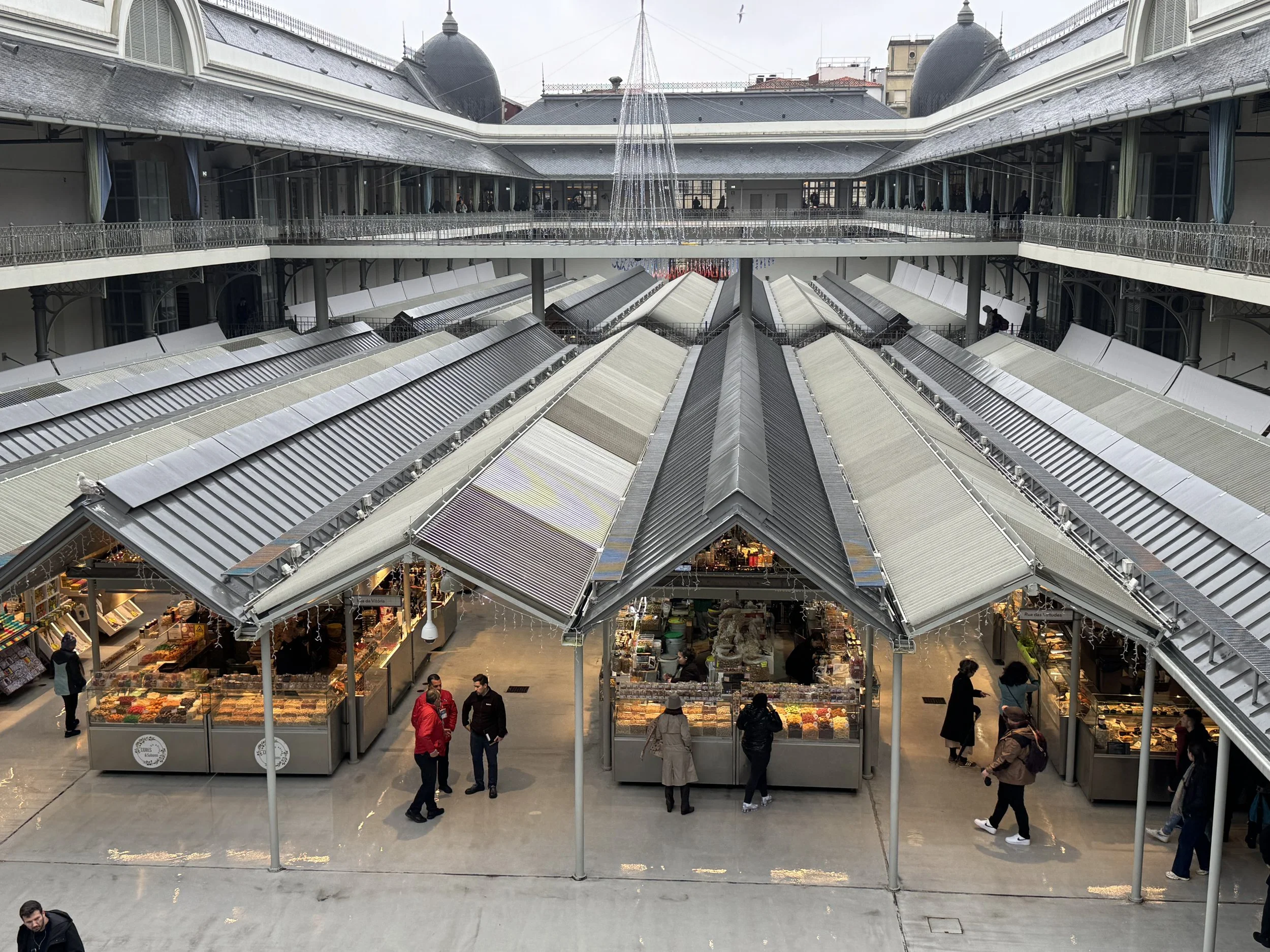
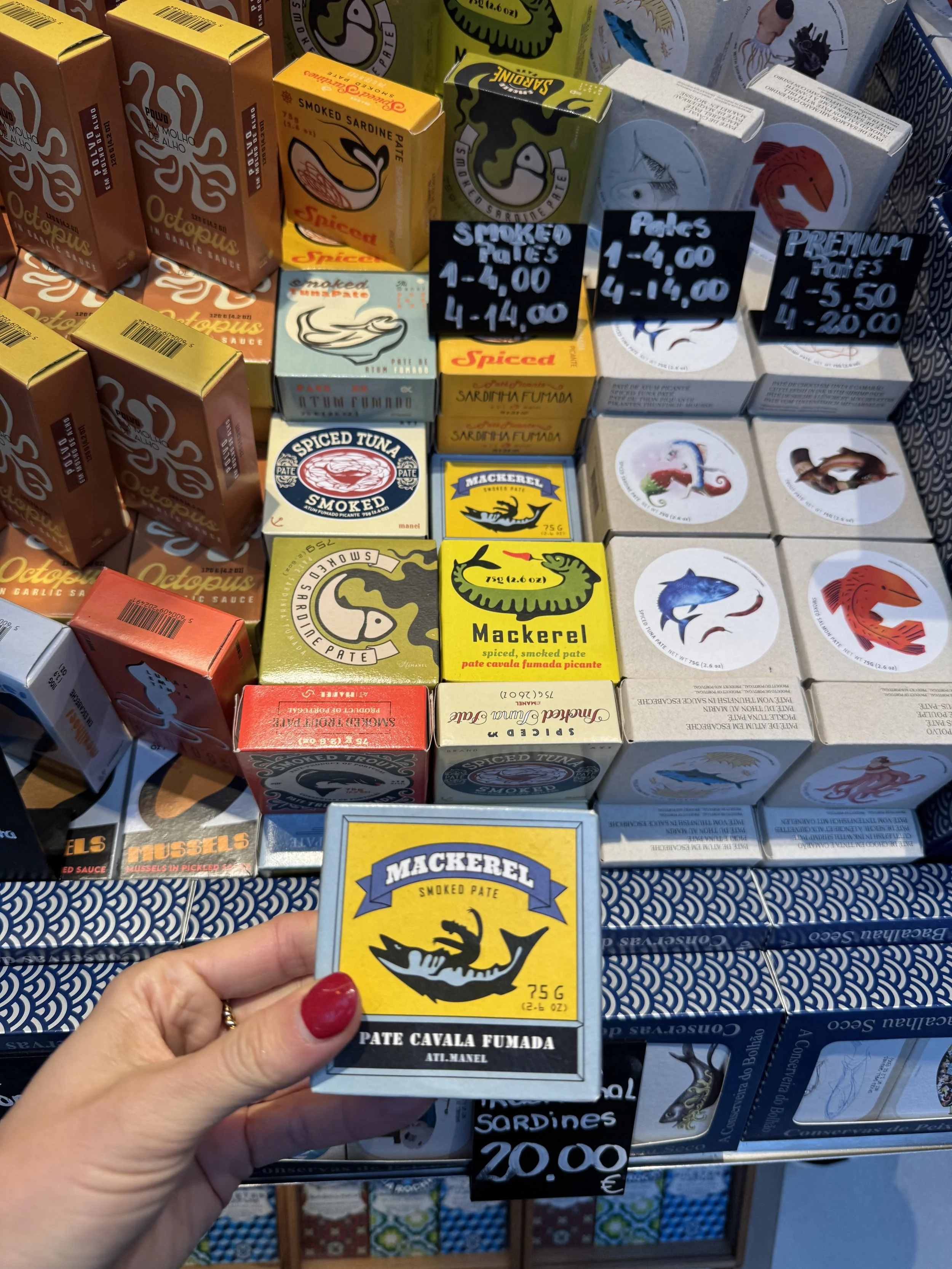
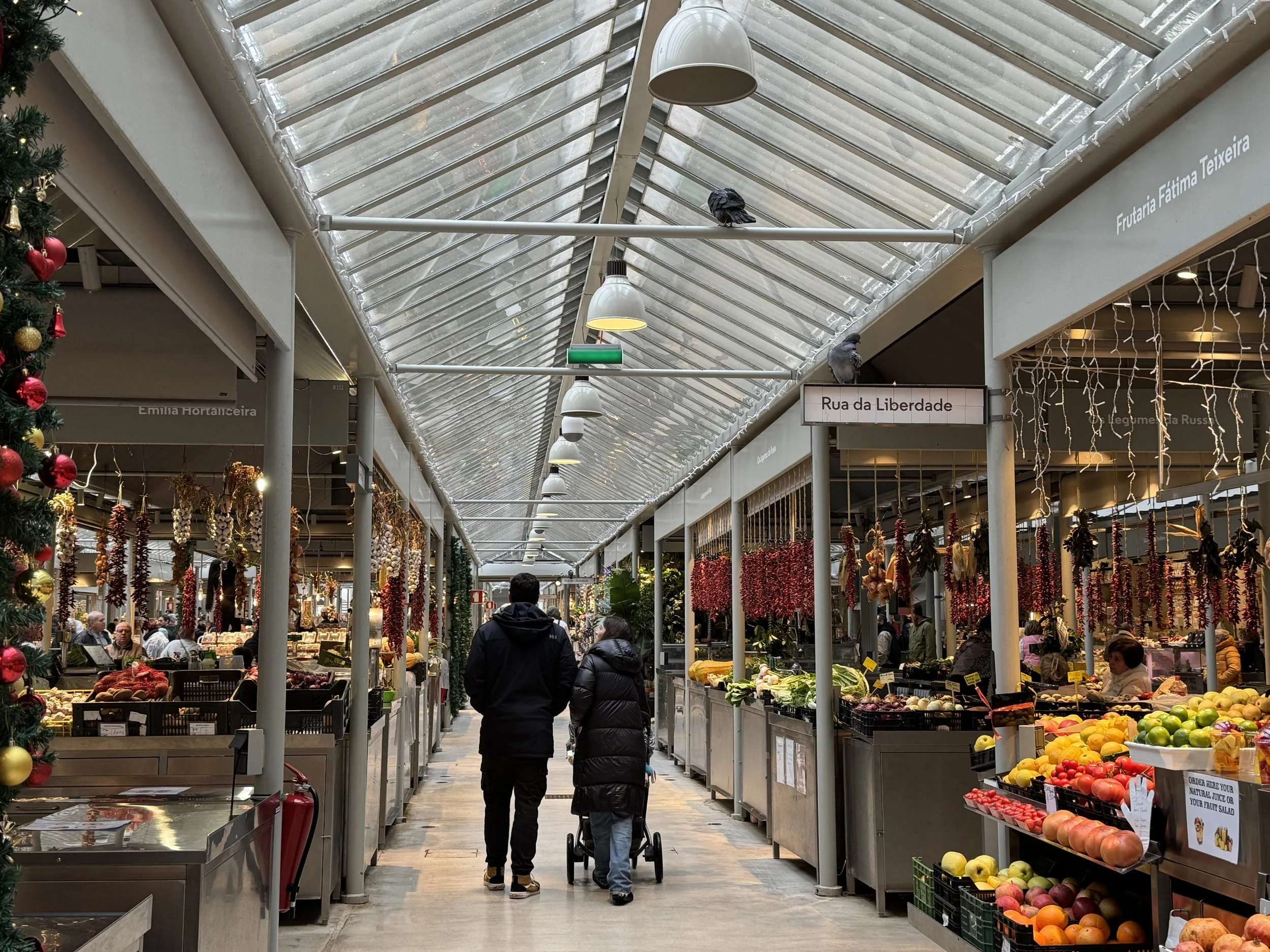
Hit Mercado do Bolhao for a huge Porto market filled with tinned fishes, lots of seafood, pastries, fruits and souvenirs to bring home to friends and family.
Take a bridge and miradouros walk and stroll to Miradouro da Vitoria, Jardim do Morro, Miradouro das Fontainhas.
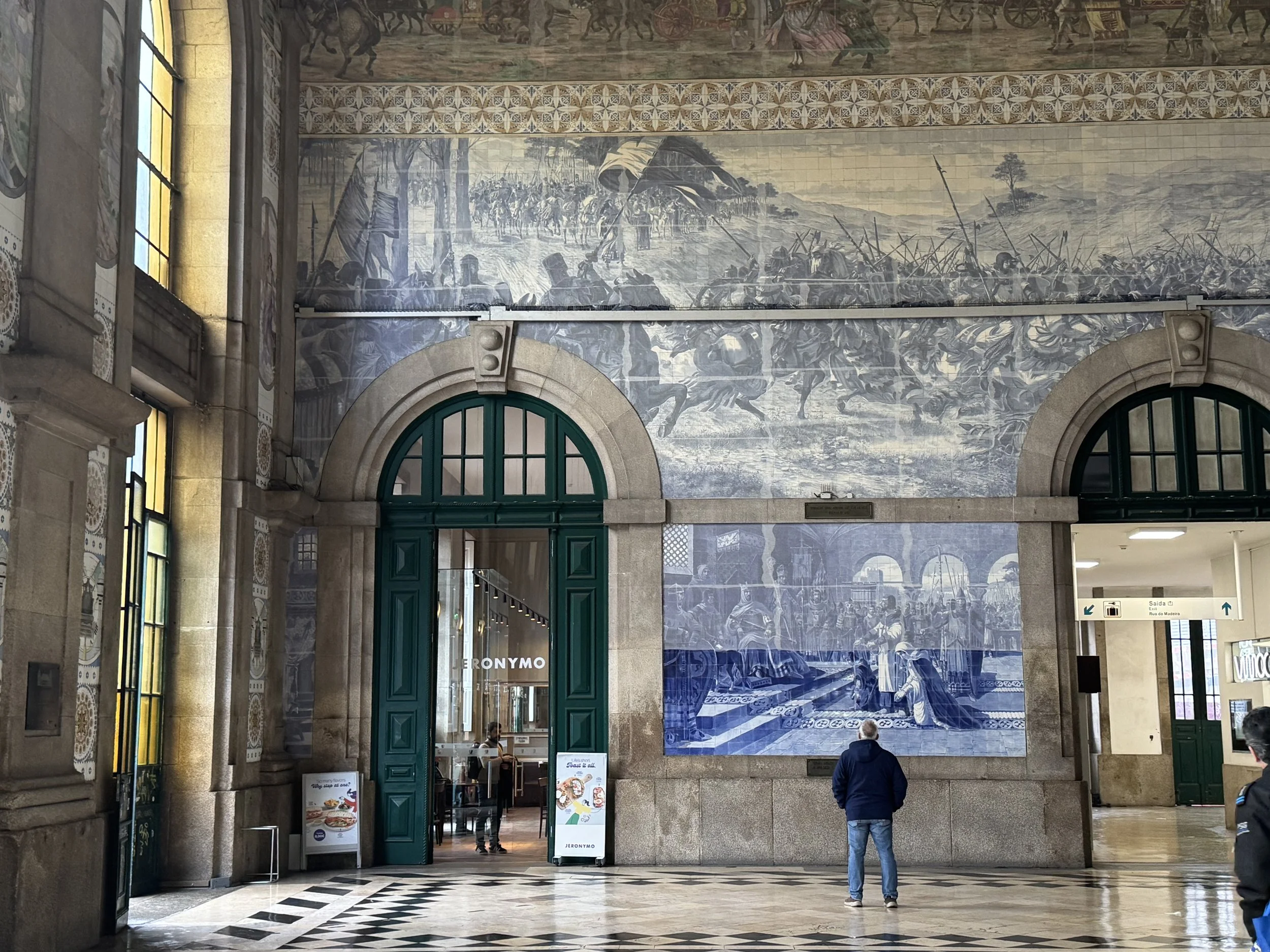
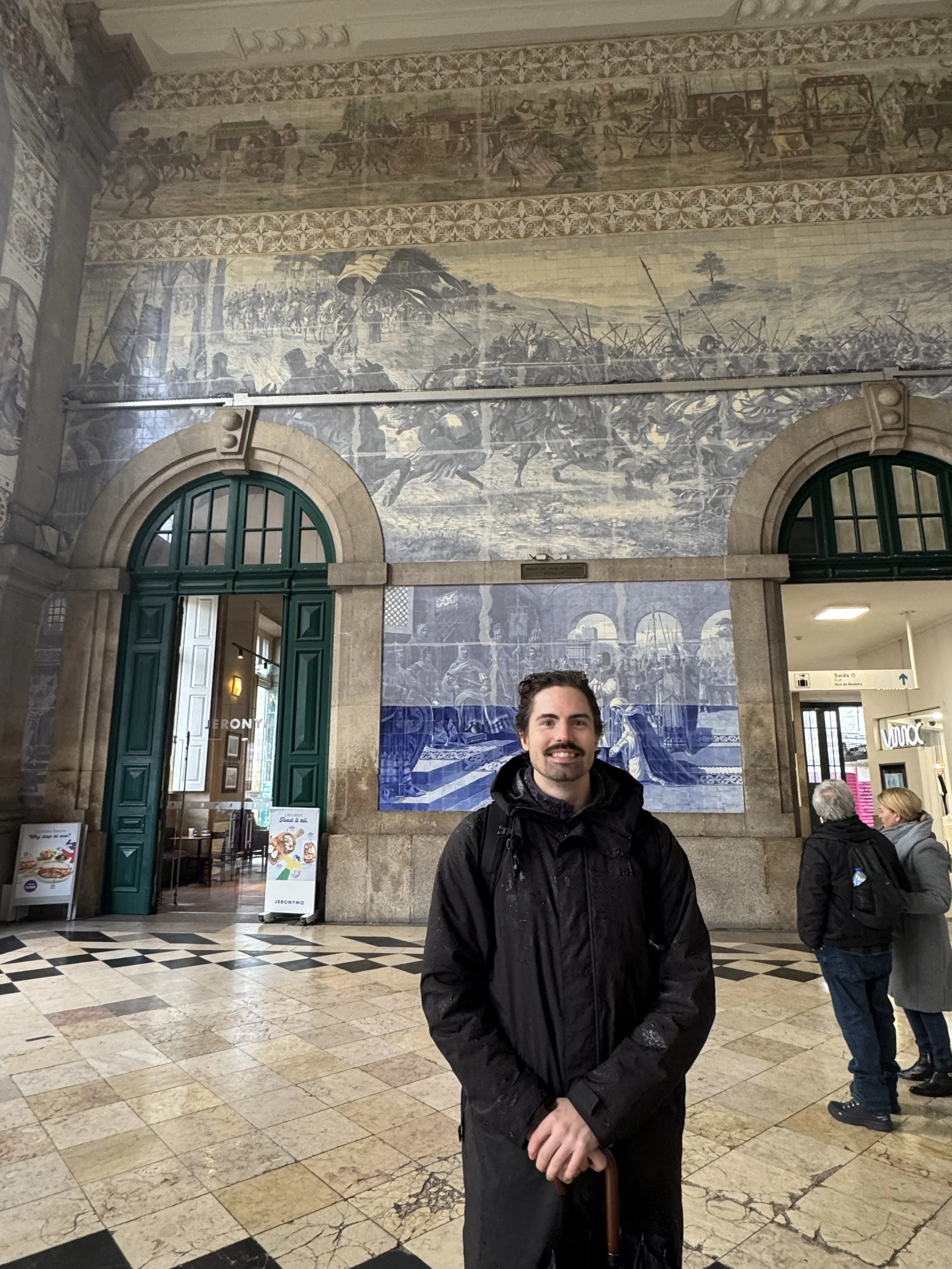
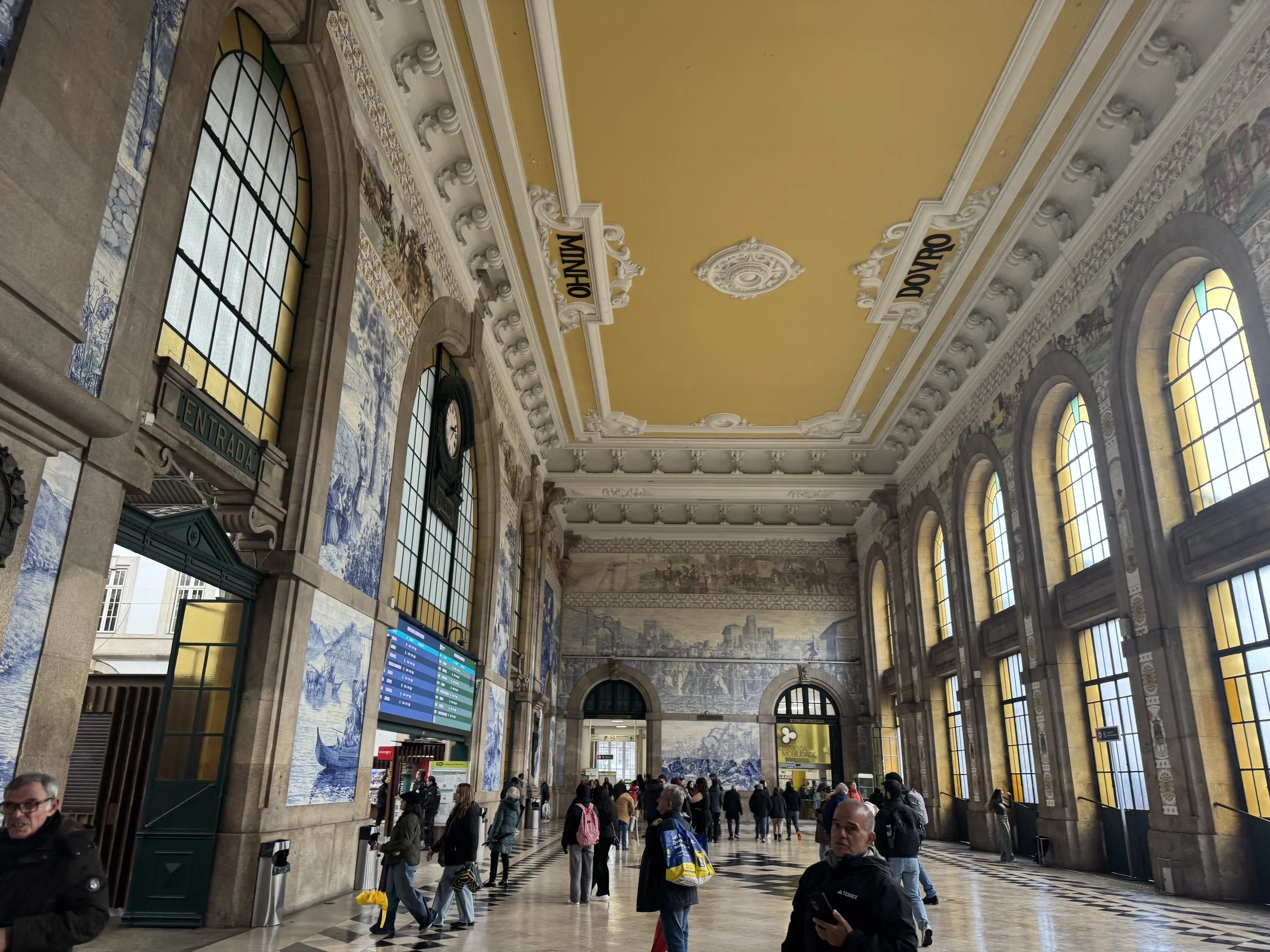
Check out the very picturesque train station filled with the classic white and blue tiles. Just beware of influencers; they seem to love this place!
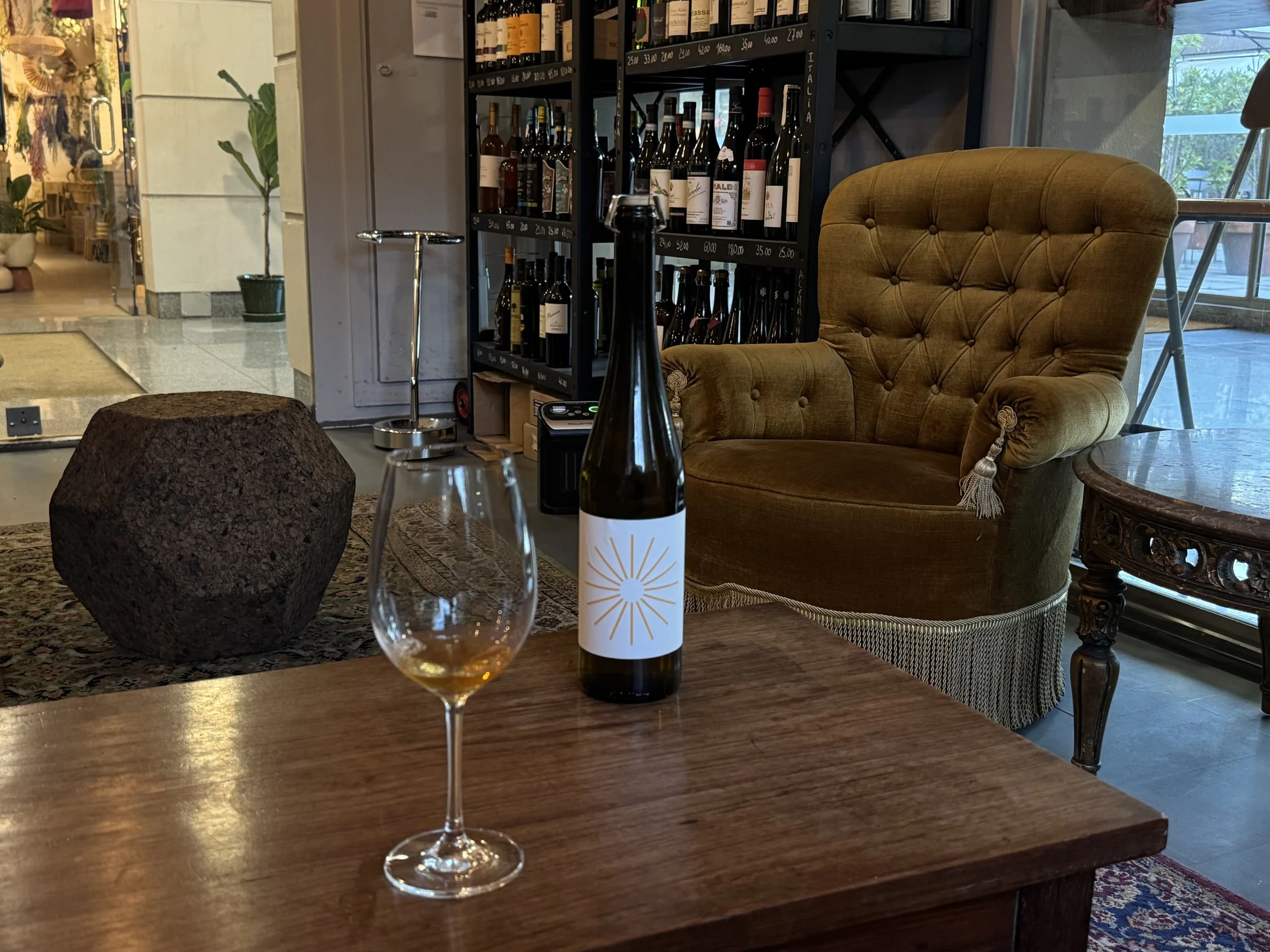
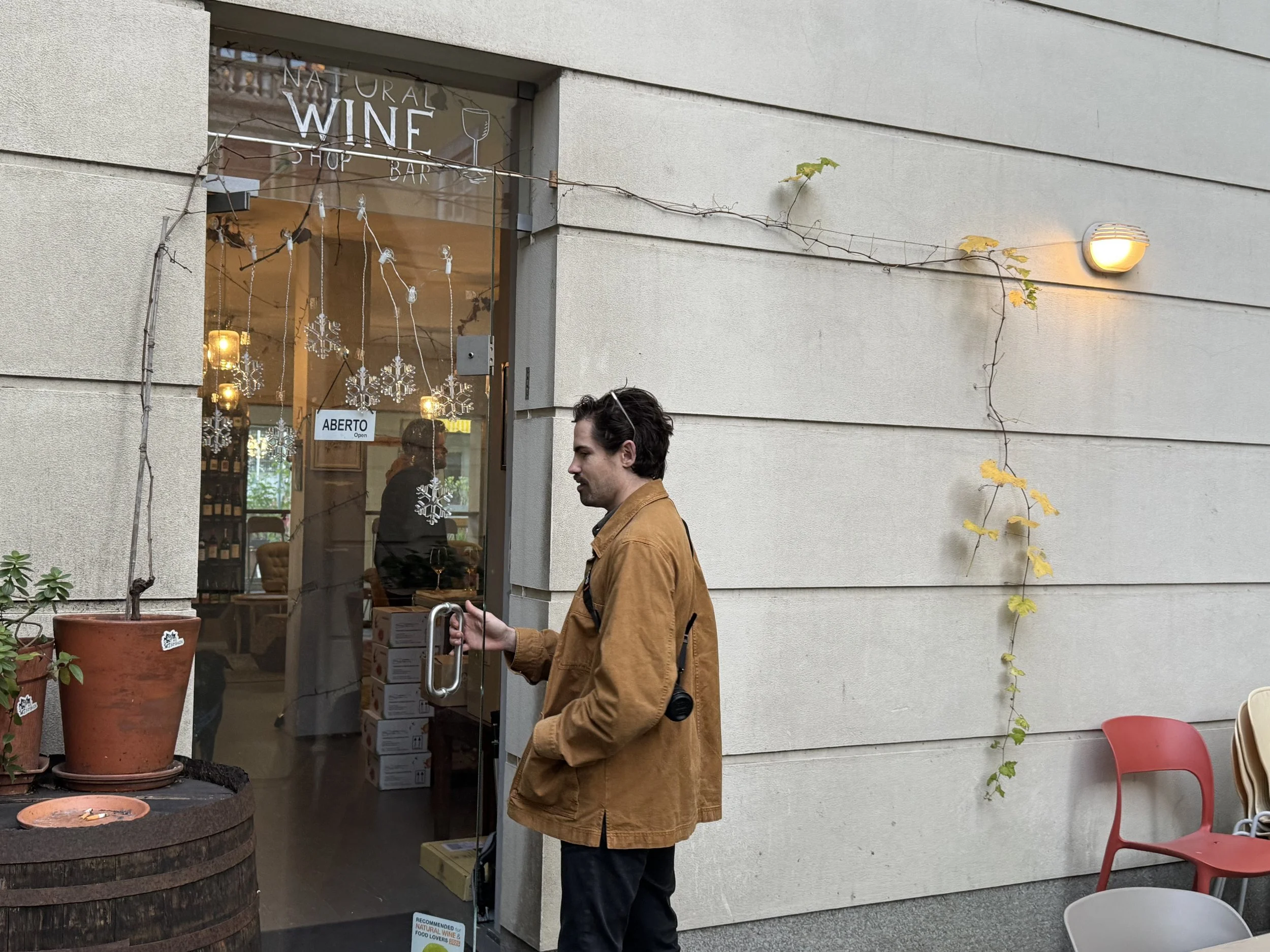
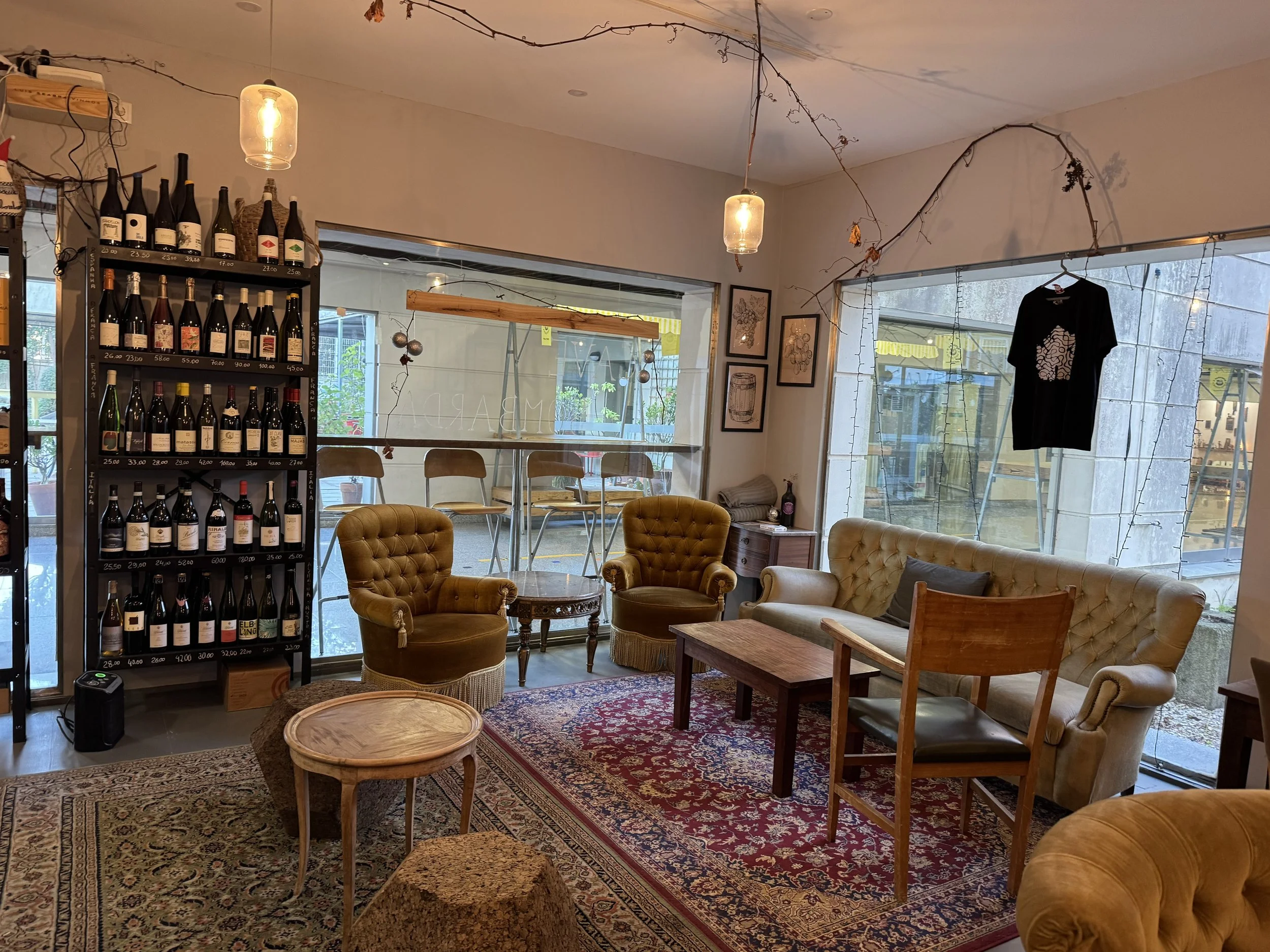
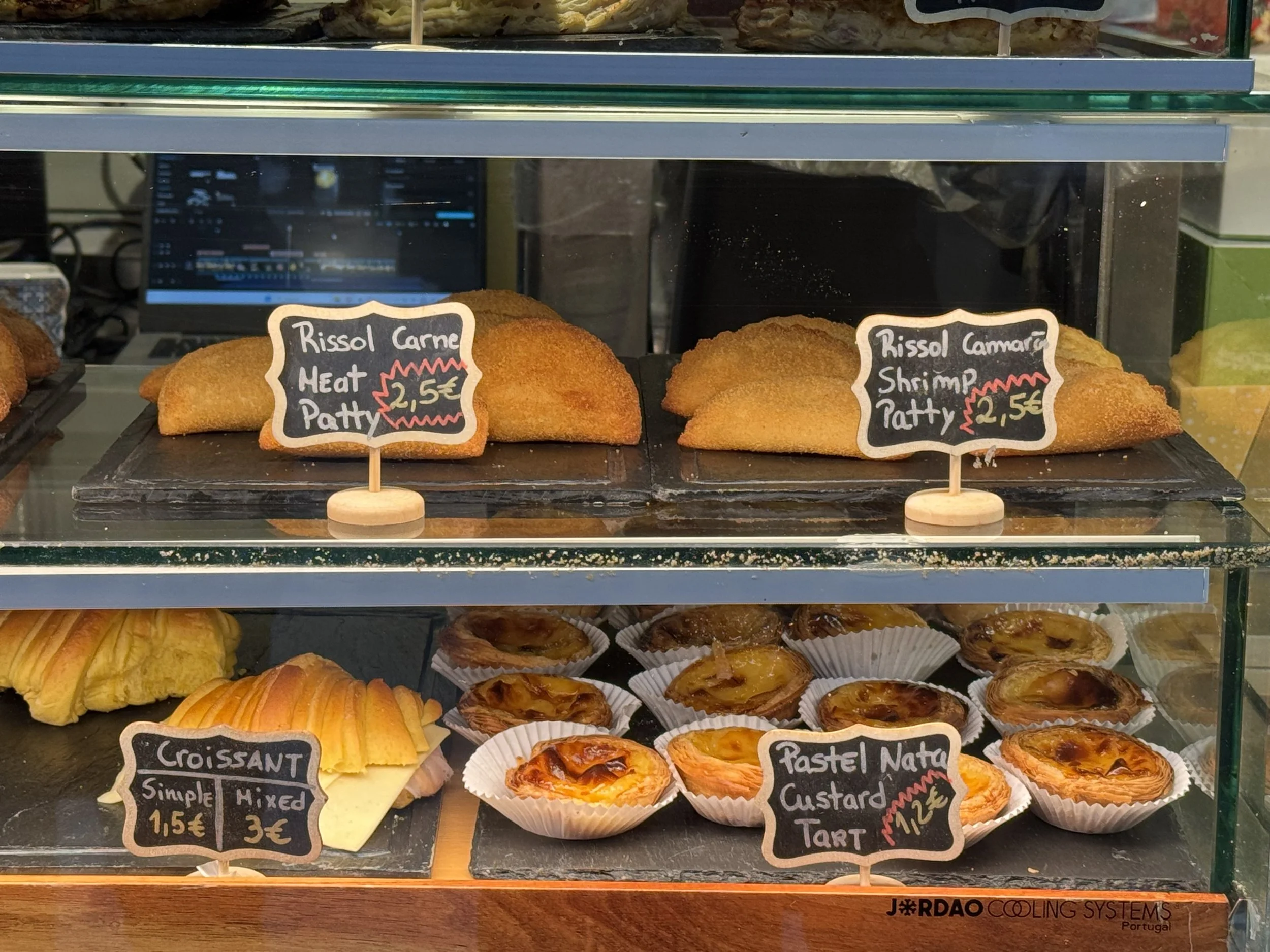
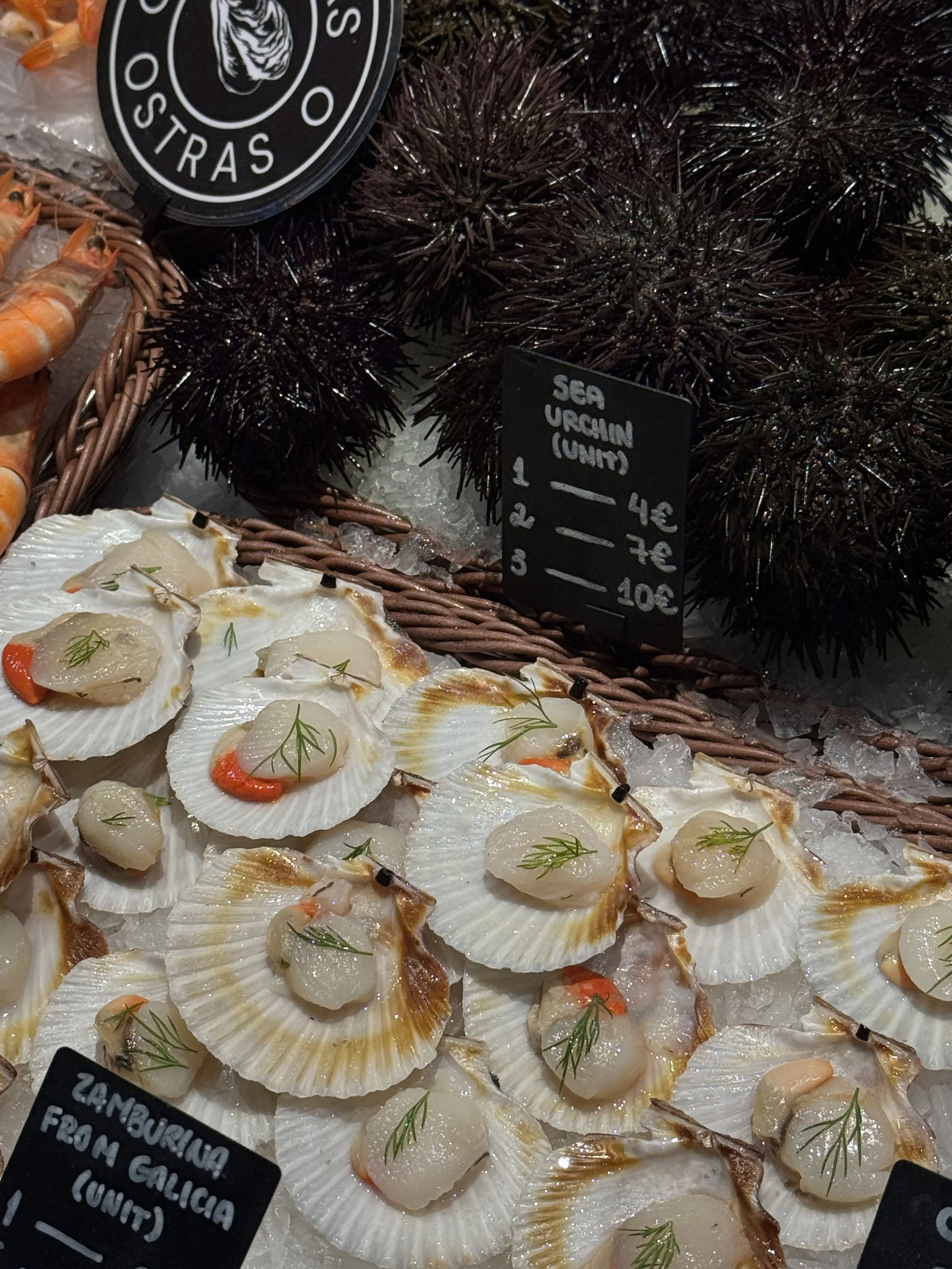
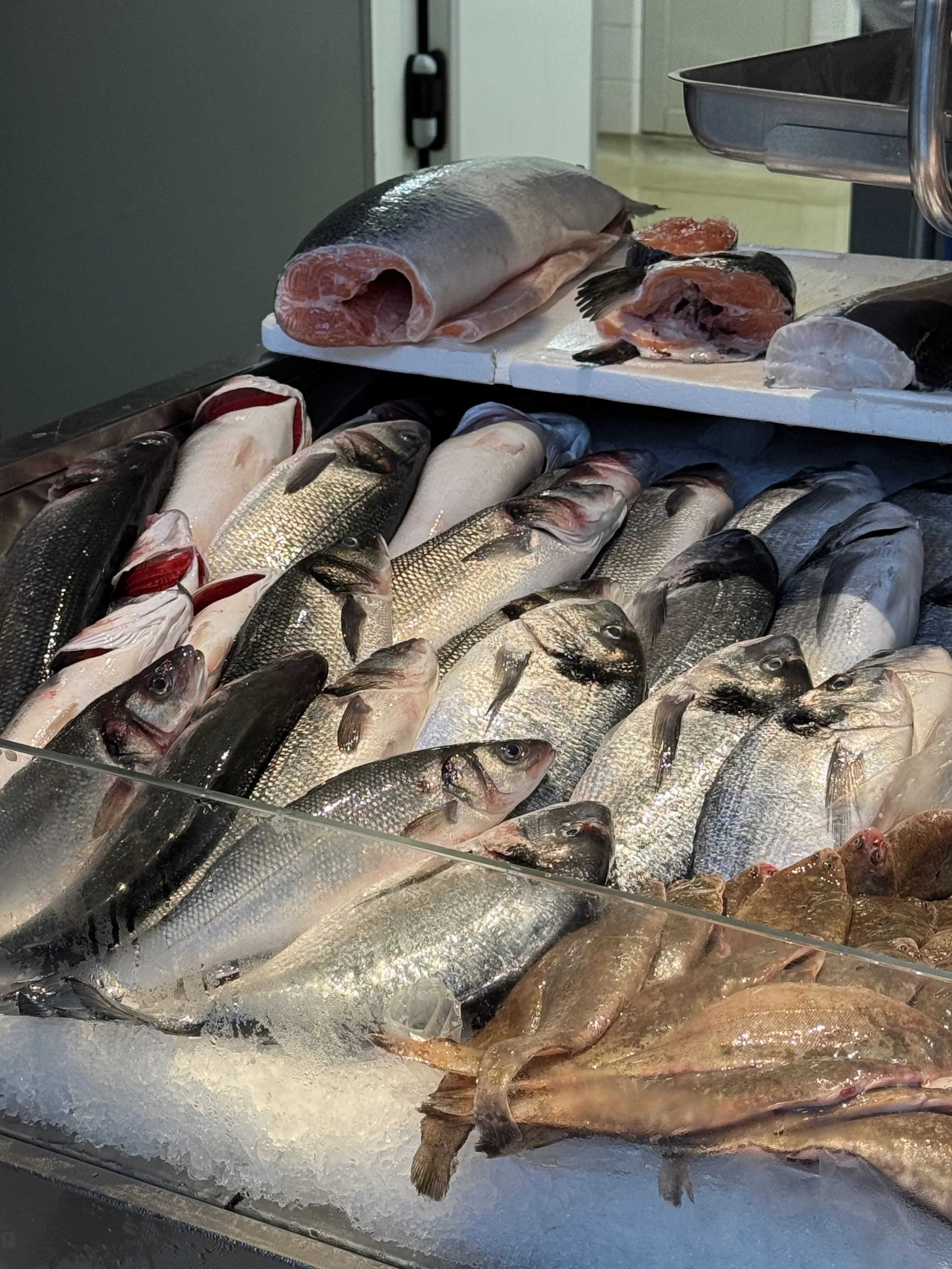
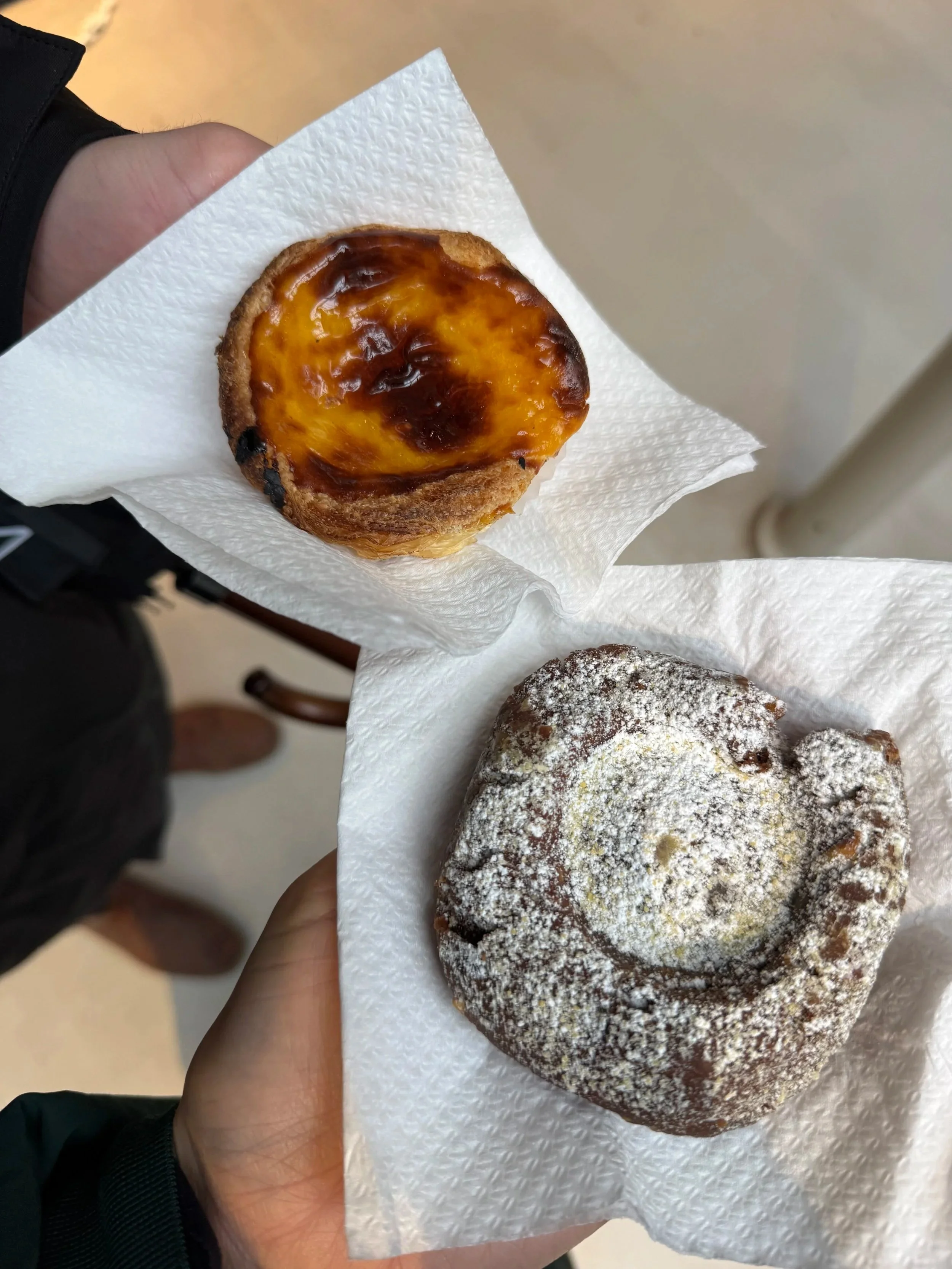
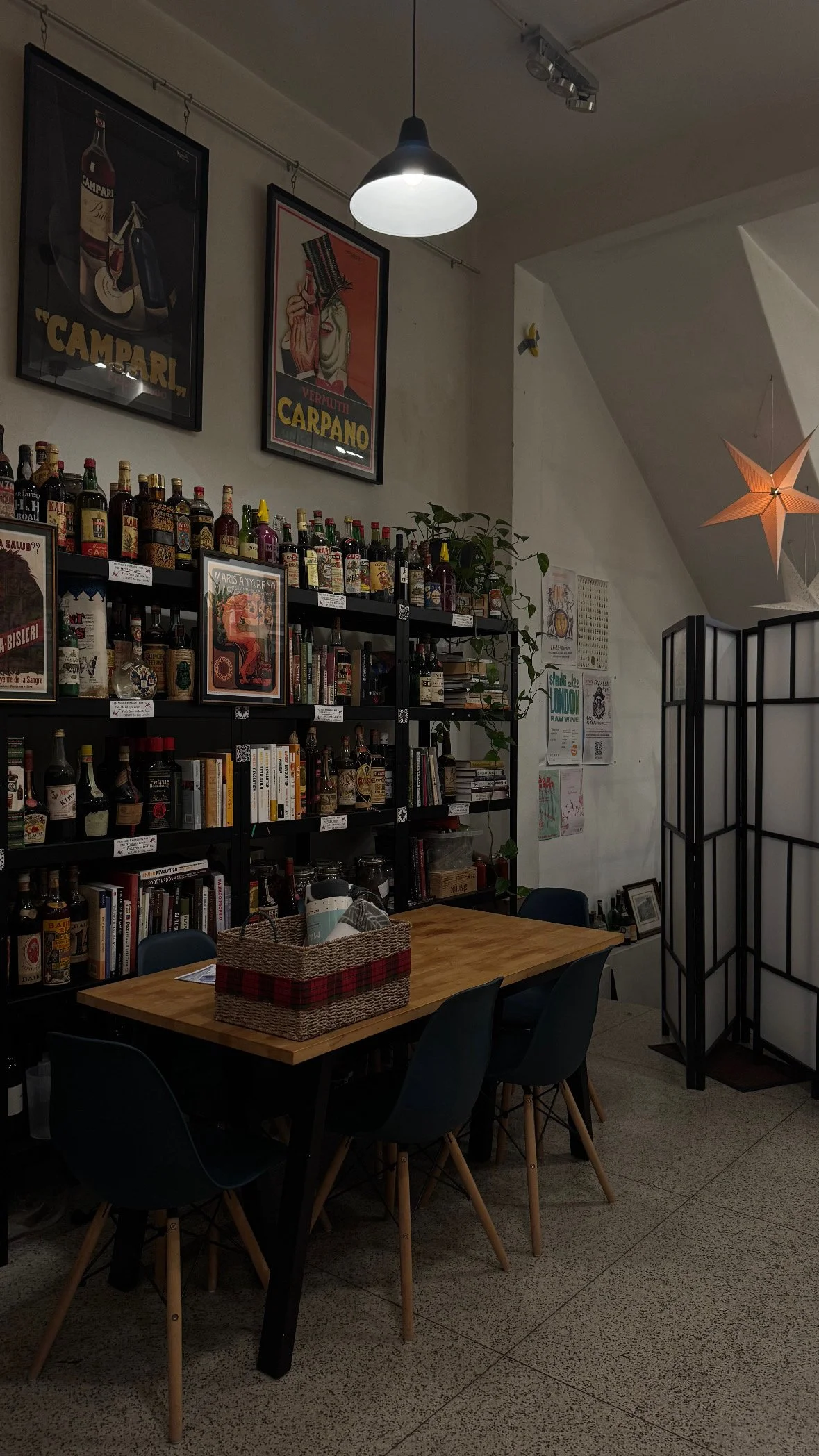
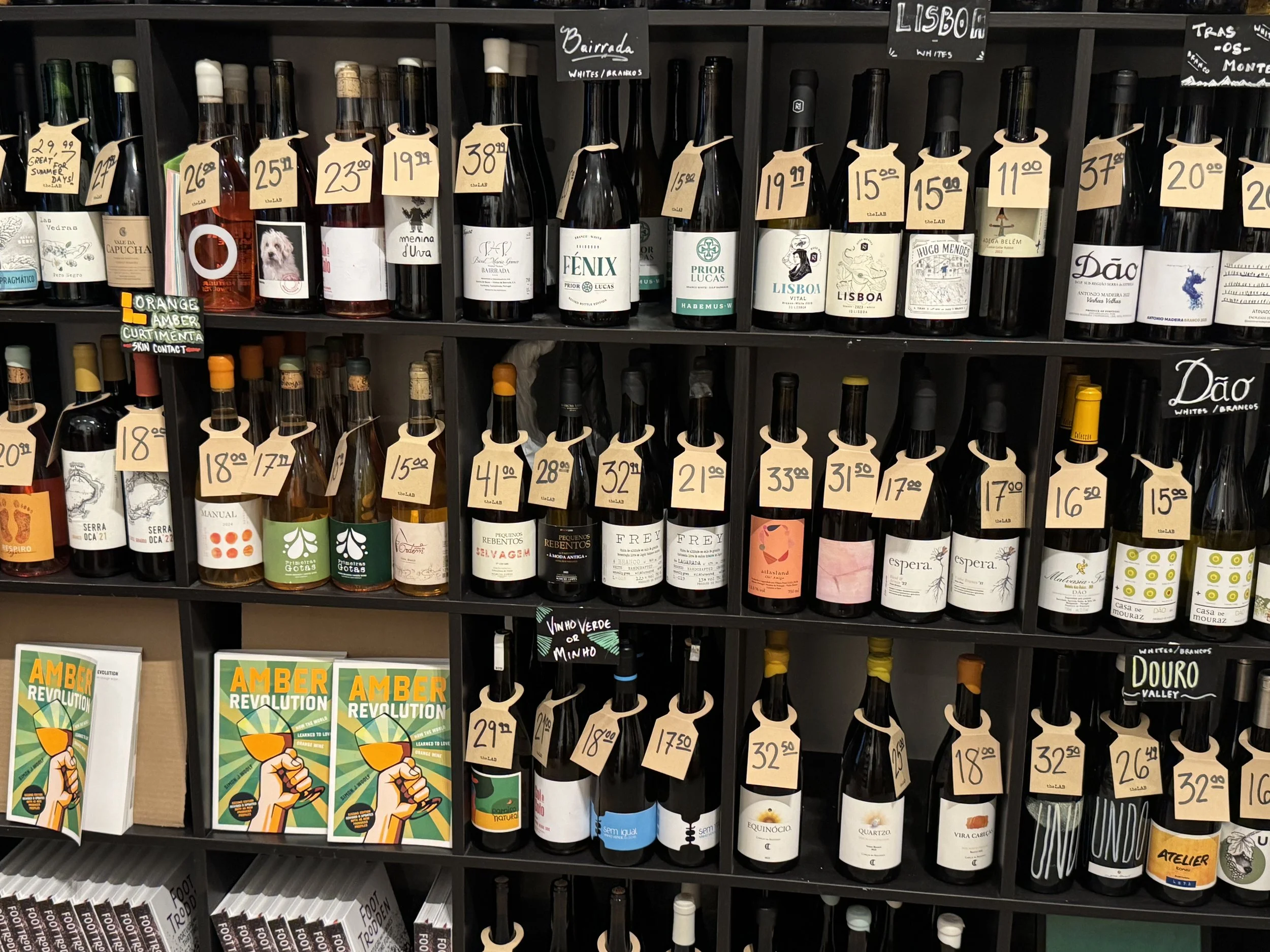
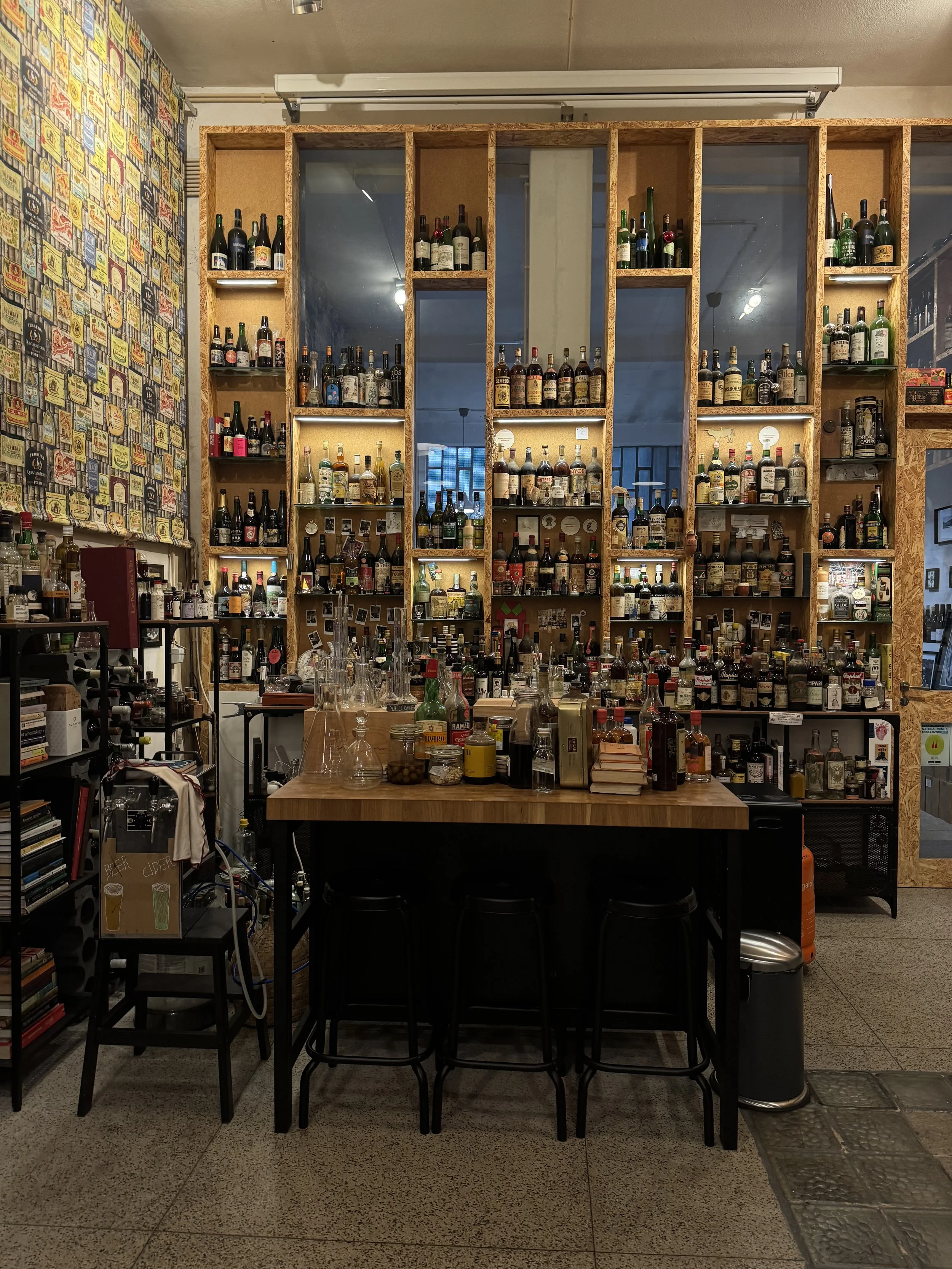
Visit theLAB Porto, a fantastic natural wine shop that also serves as a hub for dynamic Porto events of all varieties. We spent a solid hour hanging out with Mike who runs the shop, and he taught us a bunch of stuff we didn’t know about Portugese wines, techniques and regions, and enlightened us on some other local Porto knowledge, too. An absolutely fantastic find of a shop and one we wish we had locally back at home!
Also a big shoutout to Cave Bombarda, which was another exceptional natural wine shop experience. We discovered some new favorites and found the owner to be really kind and helpful! A common theme in Porto!
Interesting tidbits to know: Porto is literally the reason Portugal is called Portugal. The name traces back to Portus Cale, an early settlement around the river (and over time it basically becomes Portugal). This city is where it all began.
The nickname Invicta has real legs beneath it. Porto is often called Cidade Invicta or “Unvanquished City” because it held out through major conflicts, including resisting a long siege in the 1800s.
Azulejos are not just “pretty tiles” and they certainly weren’t built for Instagram selfies. They’re a part of Portugal’s visual storytelling of religion, history, daily life, and a method of keeping buildings cooler and wet-proof.
Port wine isn’t a Porto thing by coincidence. The Douro valley made the wine itself, but Porto served the trade and identity. Barrels came down the river and the business happened in Porto.
“Tripeiros” is a real nickname for Porto locals. Legend says Porto gave the best meat to ships heading out, leaving locals with tripe - thus, “tripeiros”.
Douro Valley
Where to Stay: In the winter, we recommend driving through for a day, making a few stops, and then heading further south to Serra de Estrela.
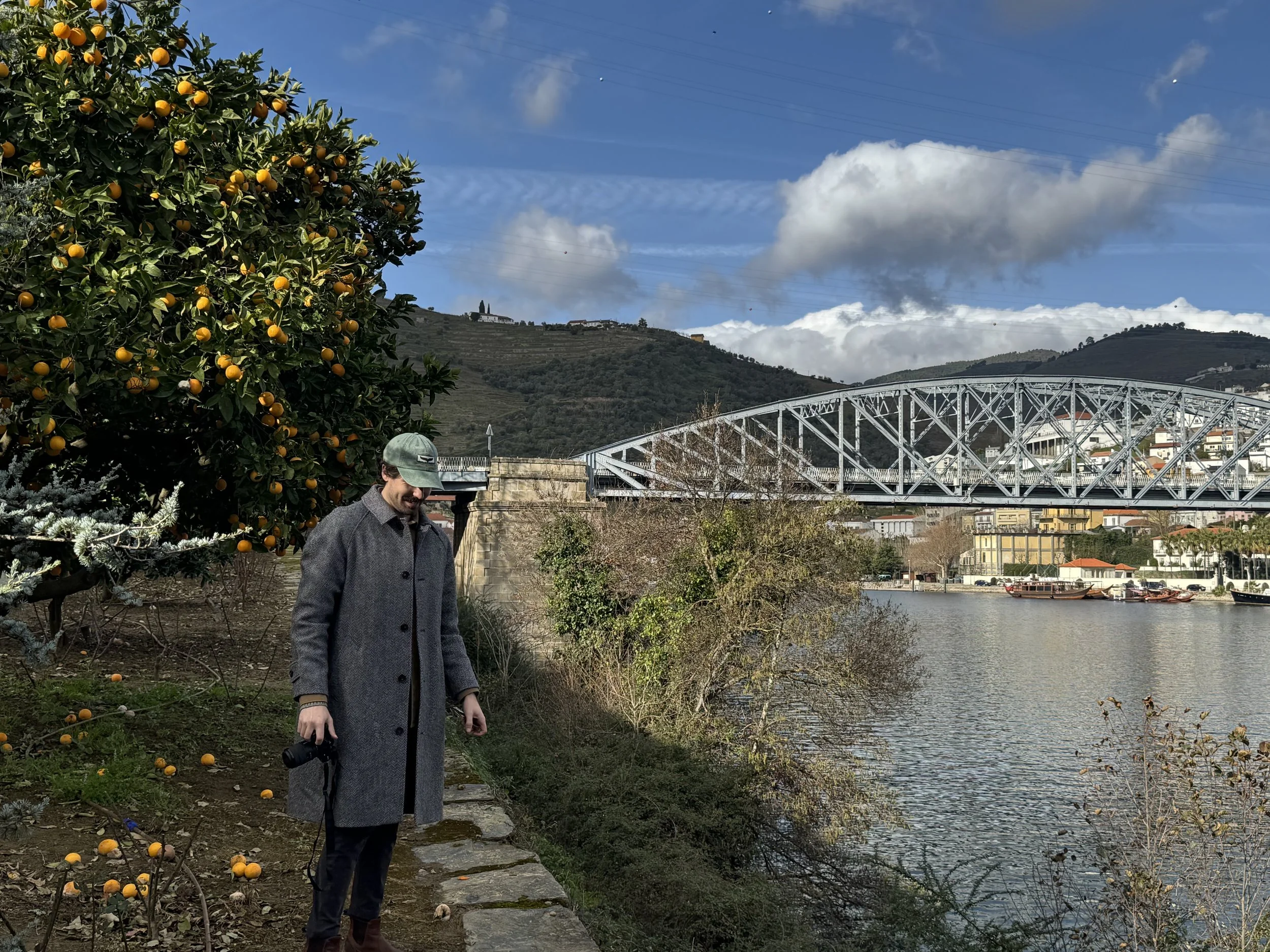
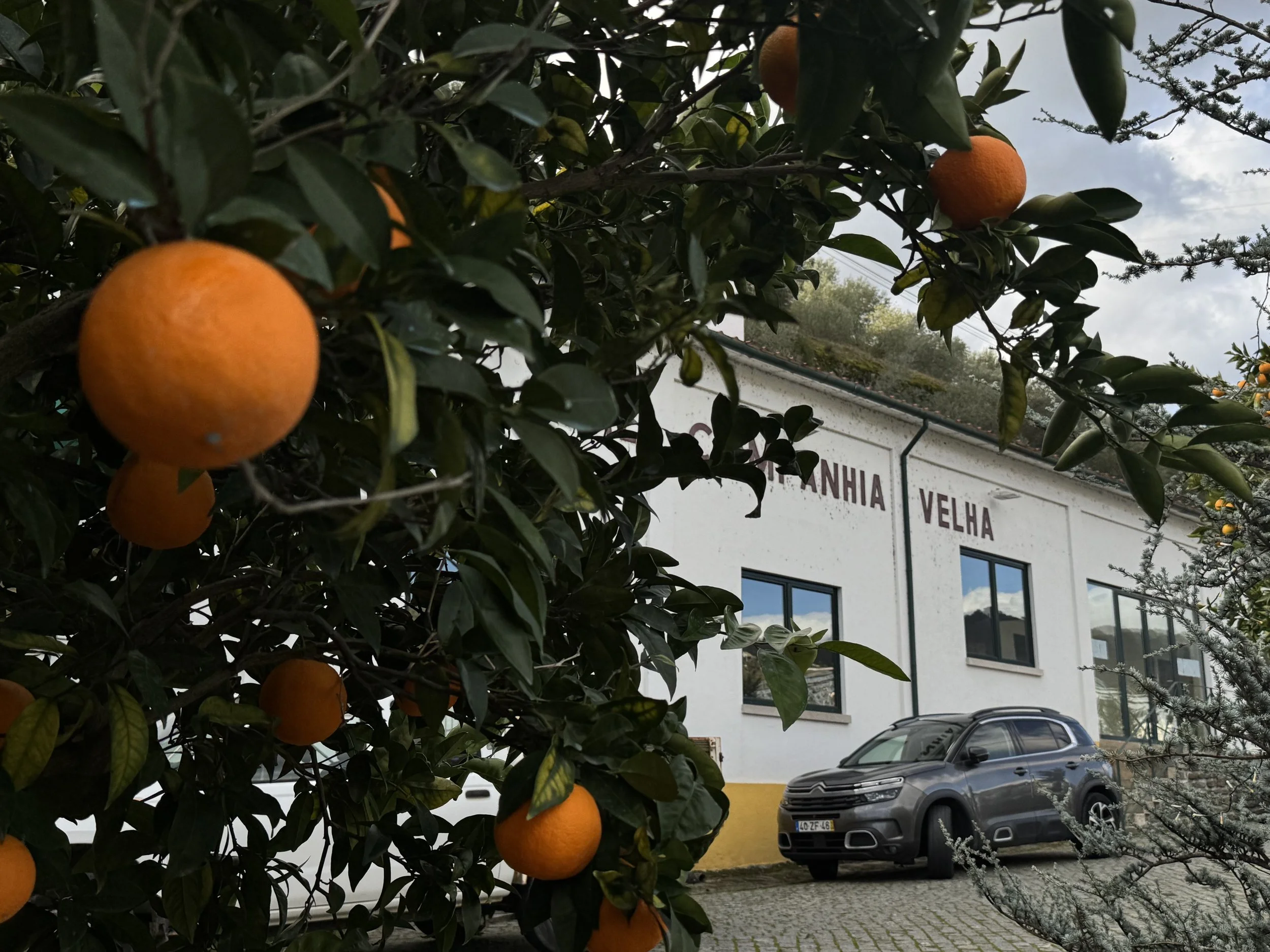
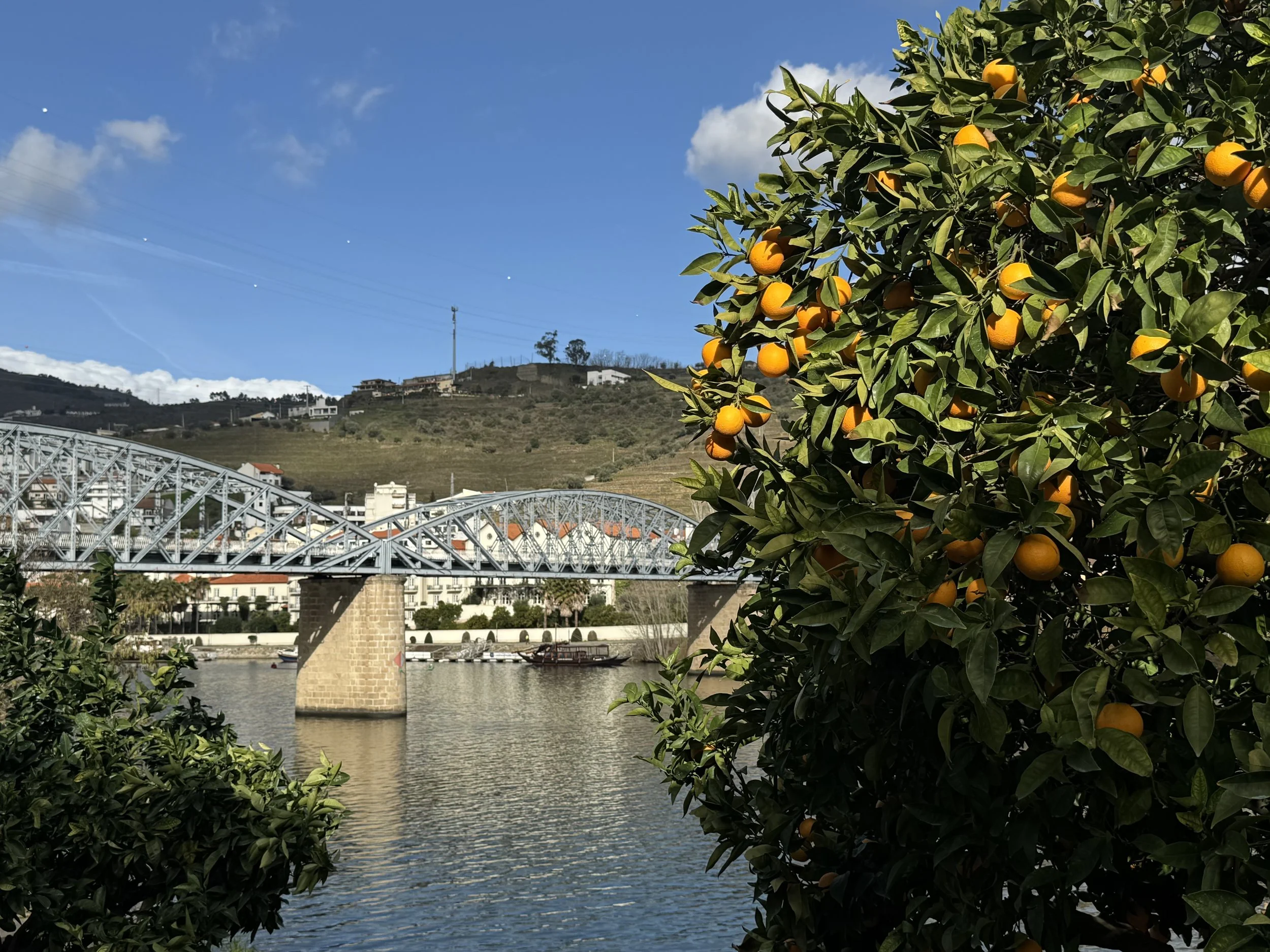
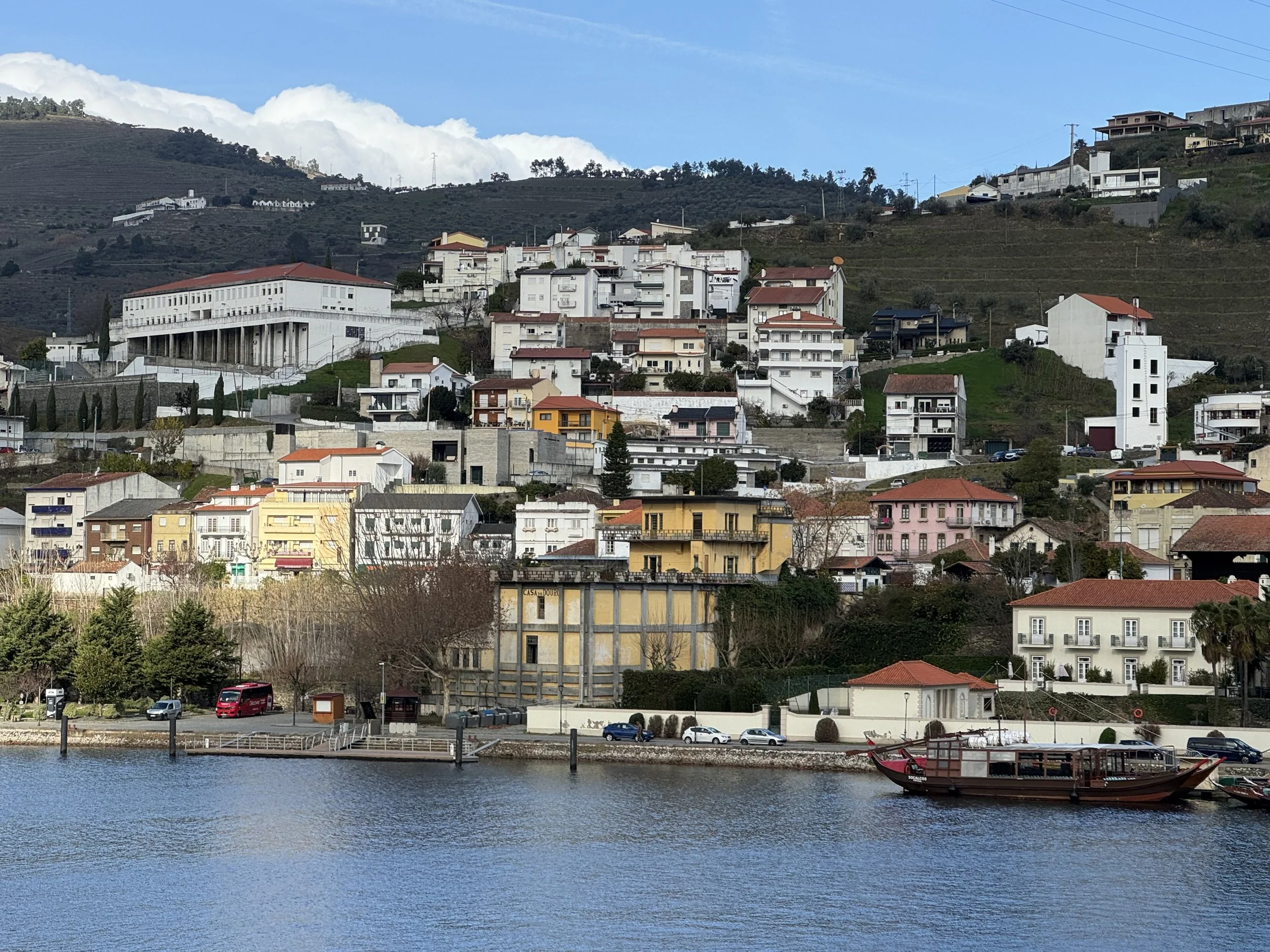
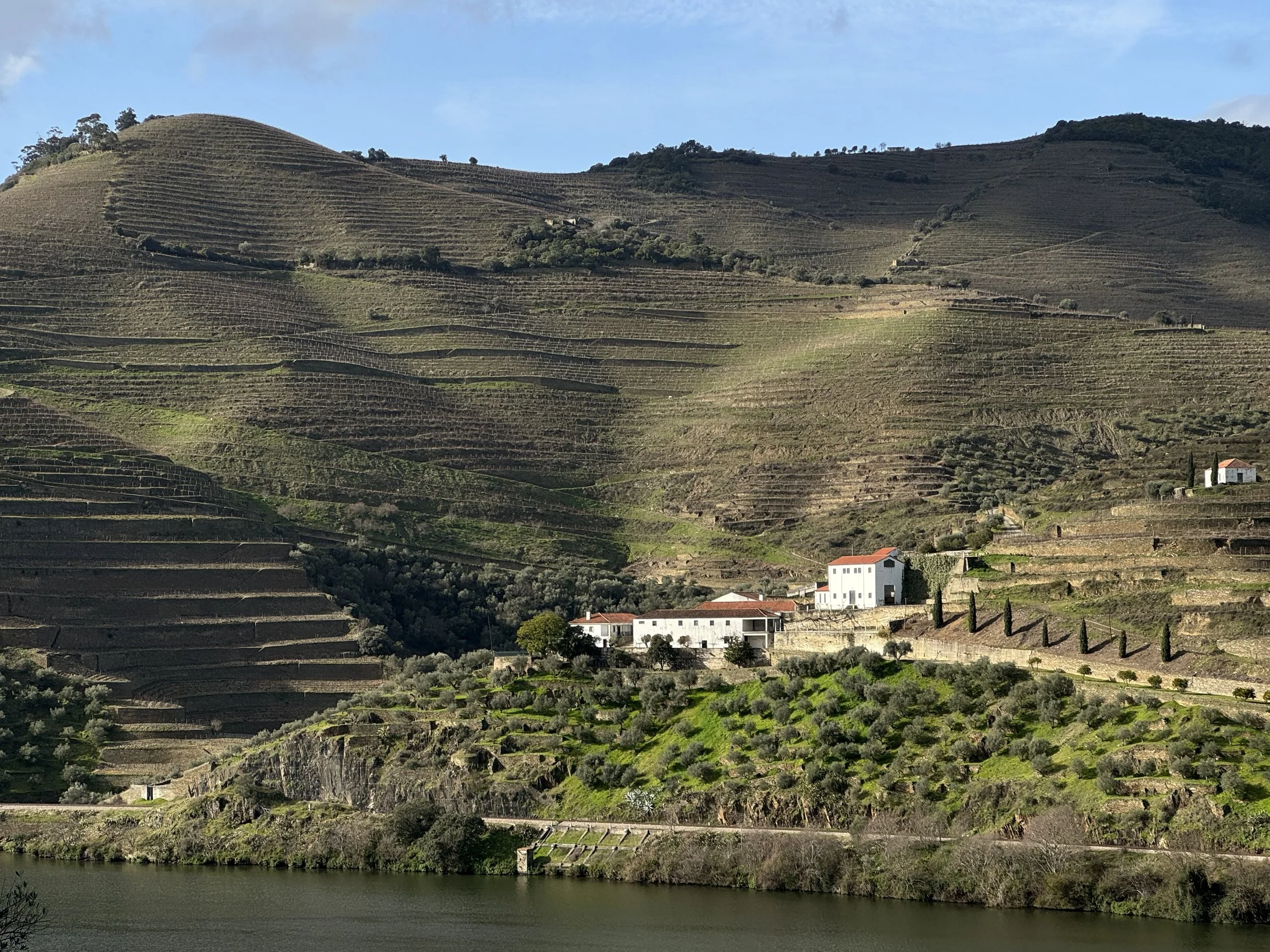
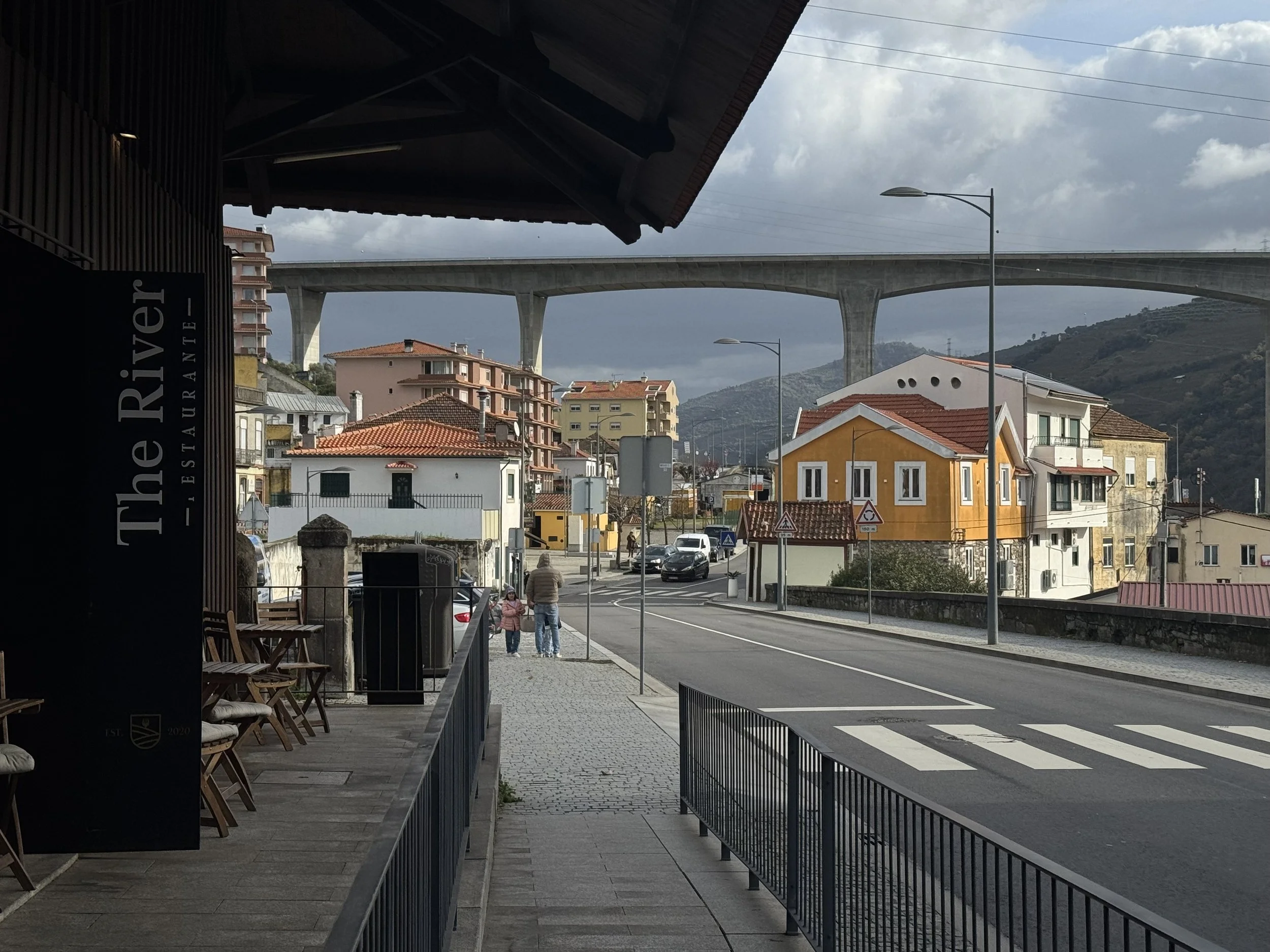
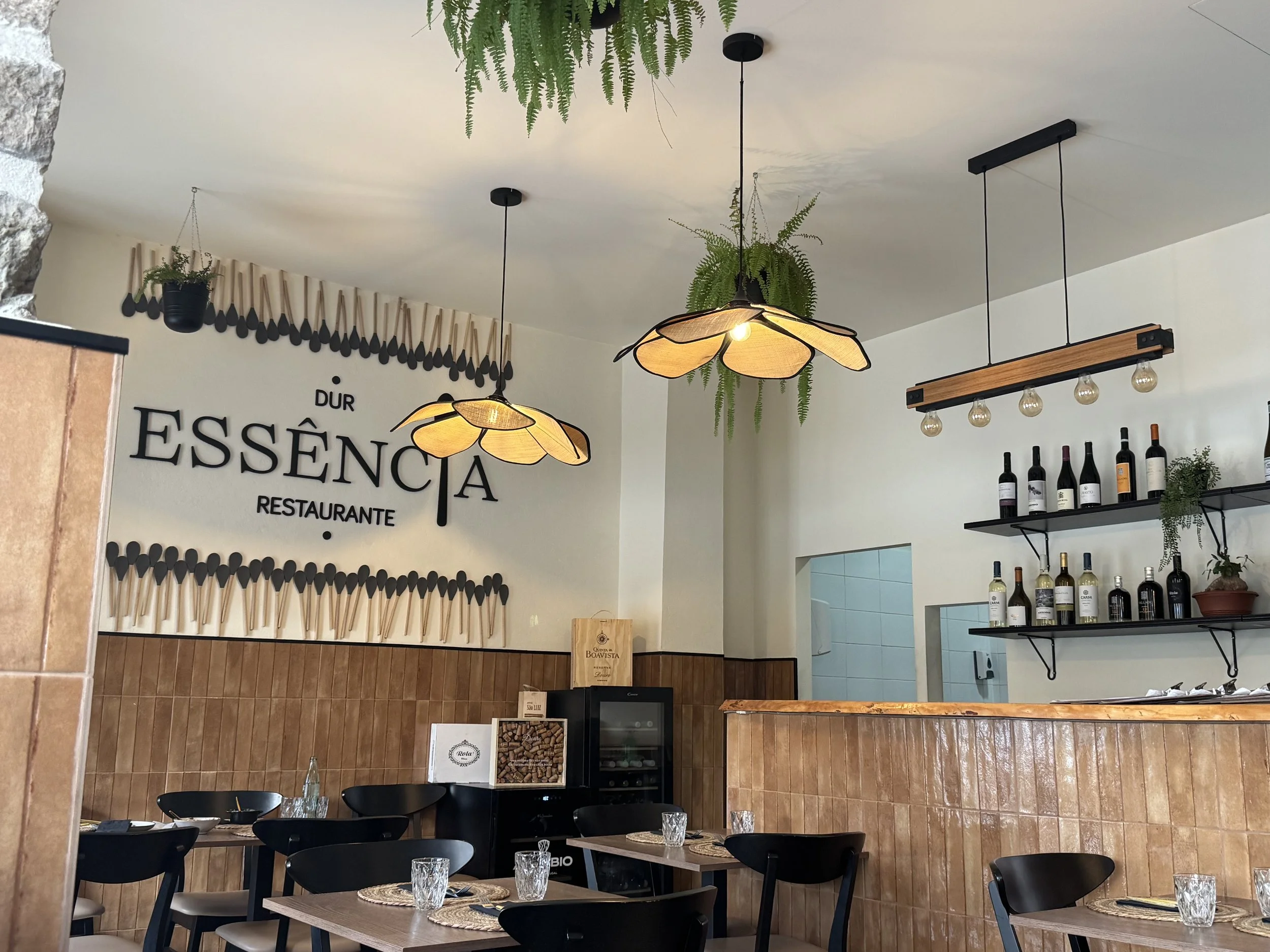
Where to Eat/Drink: We recommend DOC Chef Rui Paula for a fancier option, Aneto & Table, and be sure to schedule a tasting/visit at the Libatio wine bar in Regua!
Things to Do: Drive the scenic roads, taking slow loops along the N222. It’s famous for a reason and the terraces all around are impressive. Pull over whenever the light strikes in a way that interests you.
Do a “walk the vineyard” tasting. If a quinta offers a short vineyard walk or viewpoint stroll, we recommend it. Winter makes the terraces especially gorgeous and tastings that include a tour of the lagares/cellar are not weather dependent.
Go to the Quinta das Carvalhas viewpoint and hill climb. This can be a great winter climb (we hear it’s toasty in the summer!) because it’s half hike, half sightseeing. Do the climb for your 10,000 steps then reward yourself with a tasting.
Walk the waterfront in Regua and Pinhao. Watch the boats, peek at the rabelo imagery, and take it all in. No big expectations.
Visit the Douro Museum. This is a great place to take in context, history.
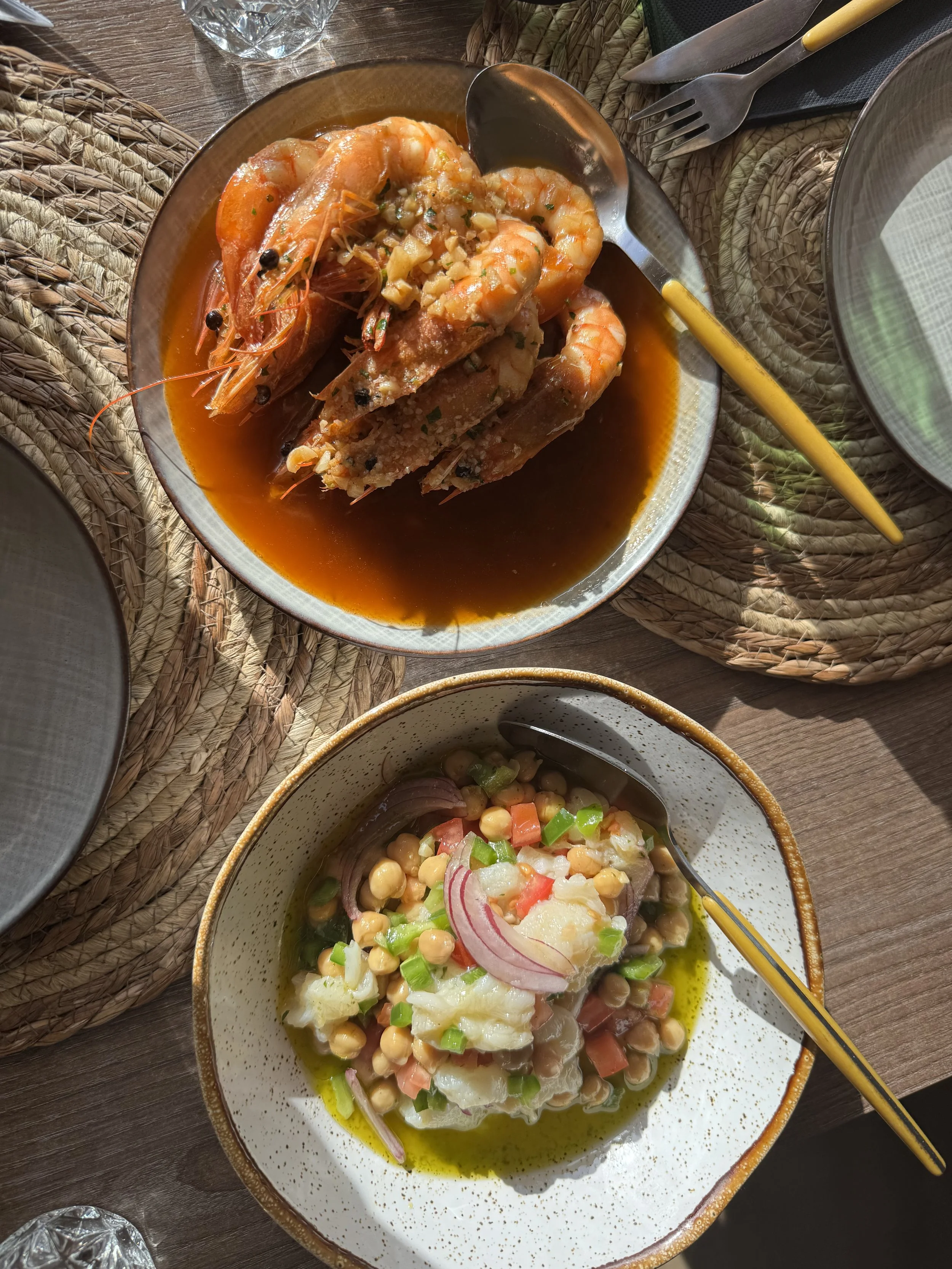
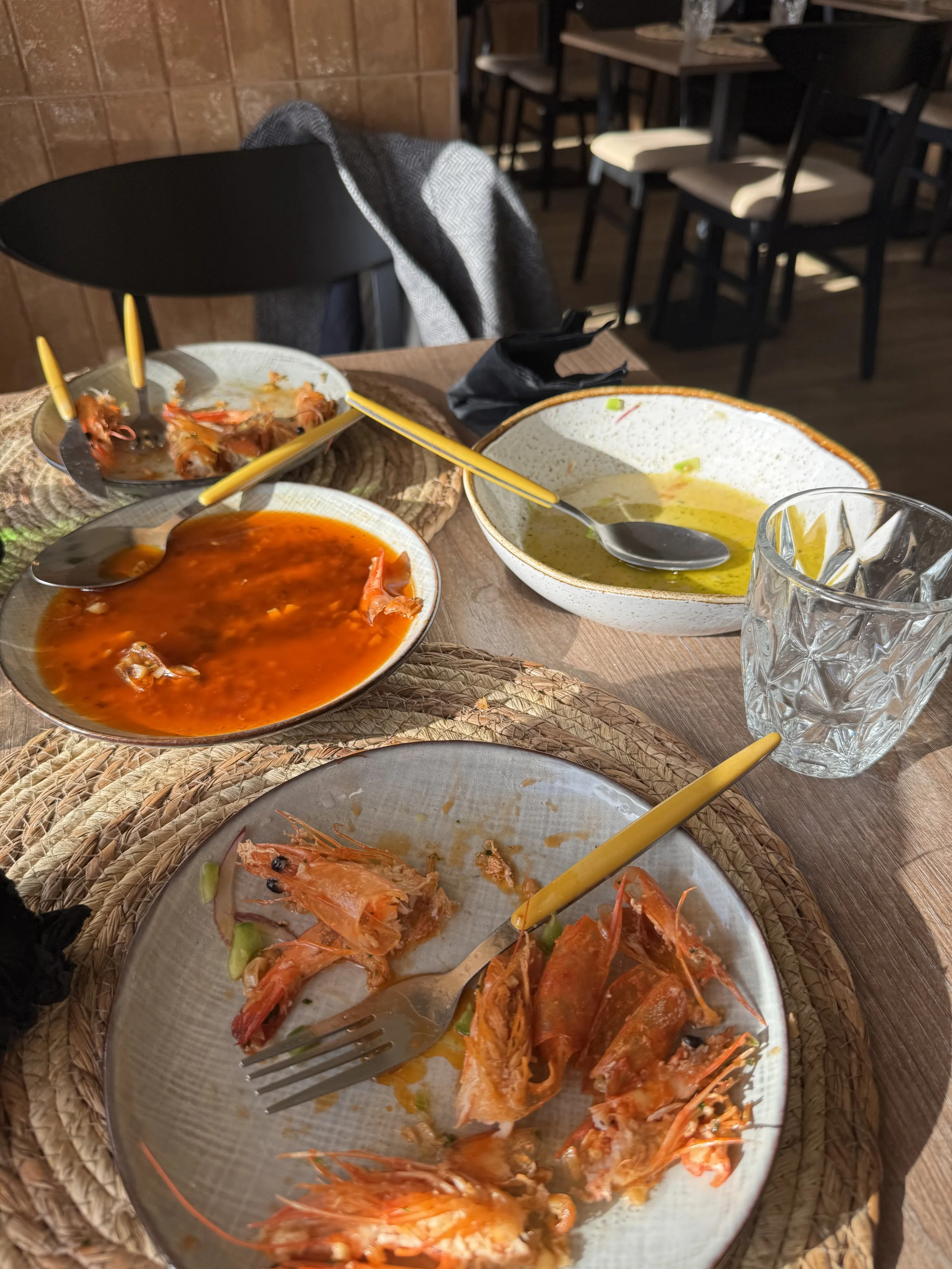
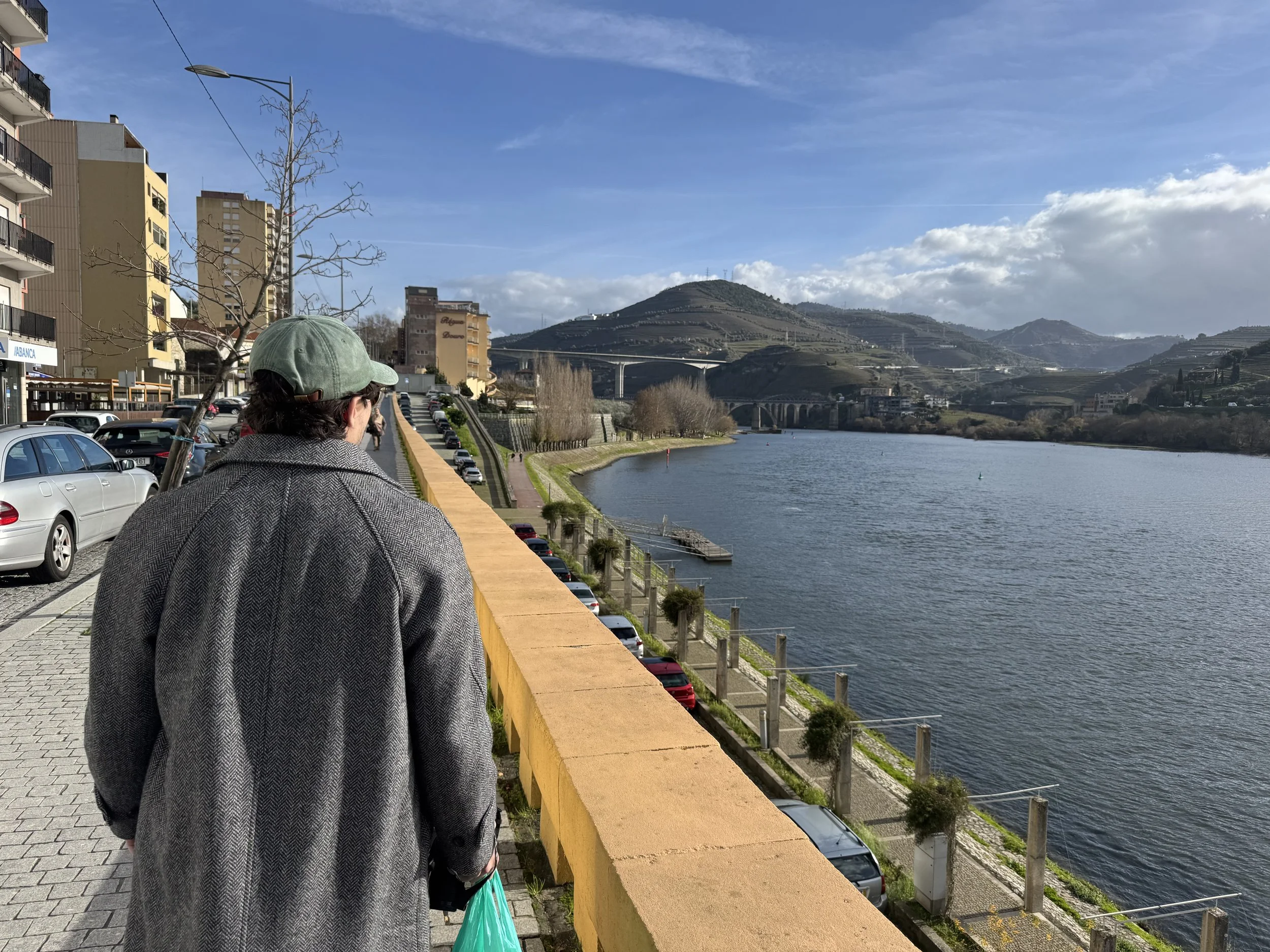
Interesting tidbits to know: Almonds and olives thrive here because the valley is hot and dry and the soils are rocky schist. Historically, families relied on mixed farming, not just grapes. Almonds show up everywhere in sweets and snacks and pair perfectly with tawny port and oxidative whites.
The Douro is often described as the world’s oldest formally demarcated wine region (mid 1700s), which essentially means they were doing “protected origin” wine law before it became what it is today.
Schist is the secret character to the region. It is flaky, dark rock that fractures easily, lets roots push deep, holds heat, and drains fast. In a hot, dry valley that matters a heck of a lot. The vines survive because they can reach water far below the surface and because the stone stores warmth.
Before roads, barrels were moved on rabelo boats down the Douro to Porto. The boats you see today are mostly ceremonial but the whole wine economy was built on the river route.
A lot of Port wine’s signature style comes from the original problem the Douro had to solve: how to get wine to survive a long trip. Fortification wasn’t about taste; it was about stability and trade. The taste of Port is therefore partly the taste of logistics.
Serra da Estrela (Casa das Penhas Douradas)
Where to Stay: Casa das Penhas Douradas and/or Casa de Sao Lourenco
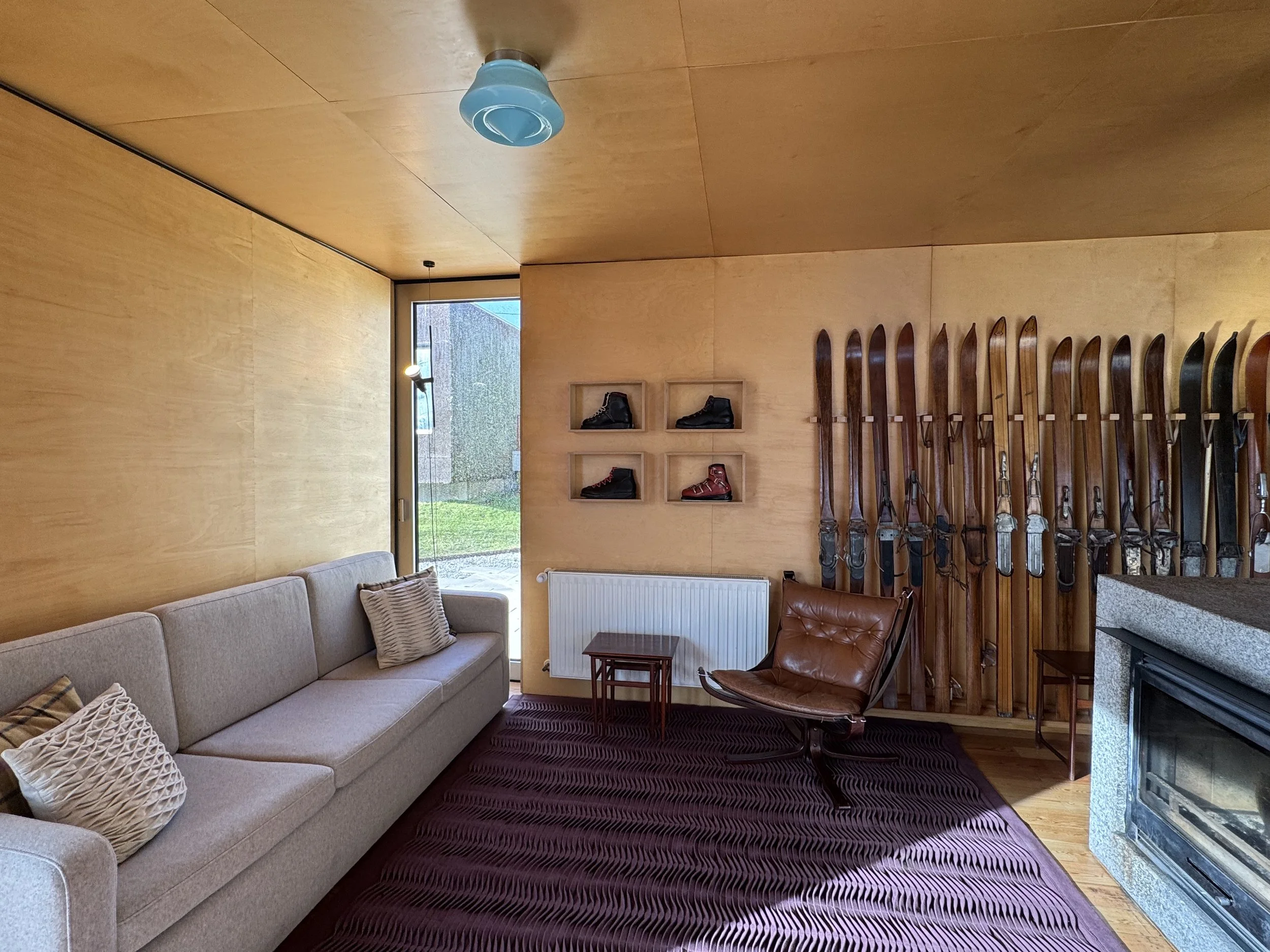
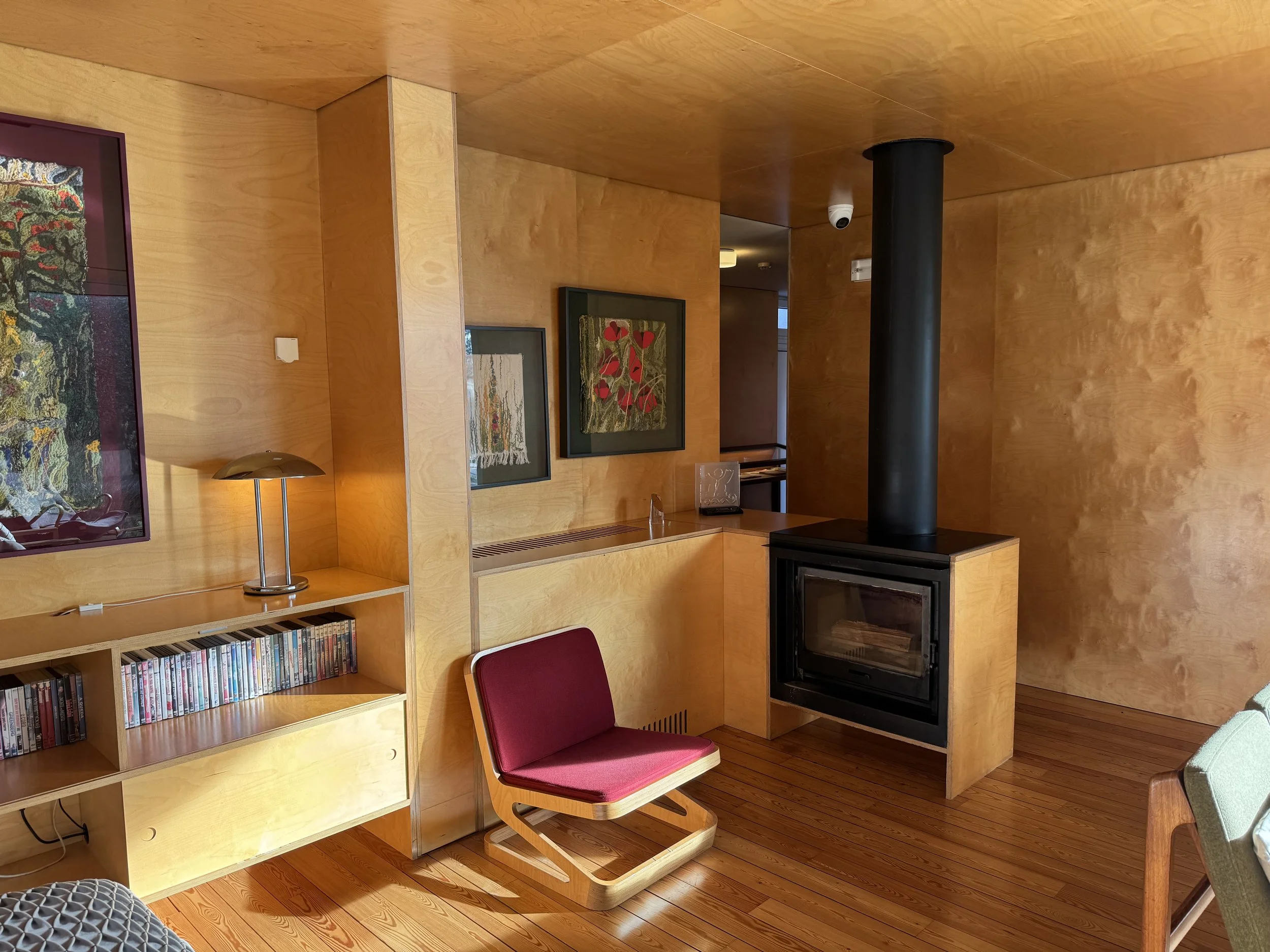
Wow, not sure a more special place exists in the world than these two hotels. Casa das Penhas Douradas sits up in the Serra de Estrela and is the design hotel of my (and likely everyone else’s) dreams. Long before it was a design lodge, though, this mountain air was treated like medicine. In the early 20th century, Penhas and nearby properties were used as treatment centers for tuberculosis patients, back when “clean, cold, pure air” were one of the only prescriptions available before antibiotics changed everything. You feel that origin story the second you arrive; the stillness is not manufactured. It’s innate. It’s baked into the altitude, the pine-scented wind, the boulders spread across the geography, and the way the building comforts you like a warm shelter from the elements.
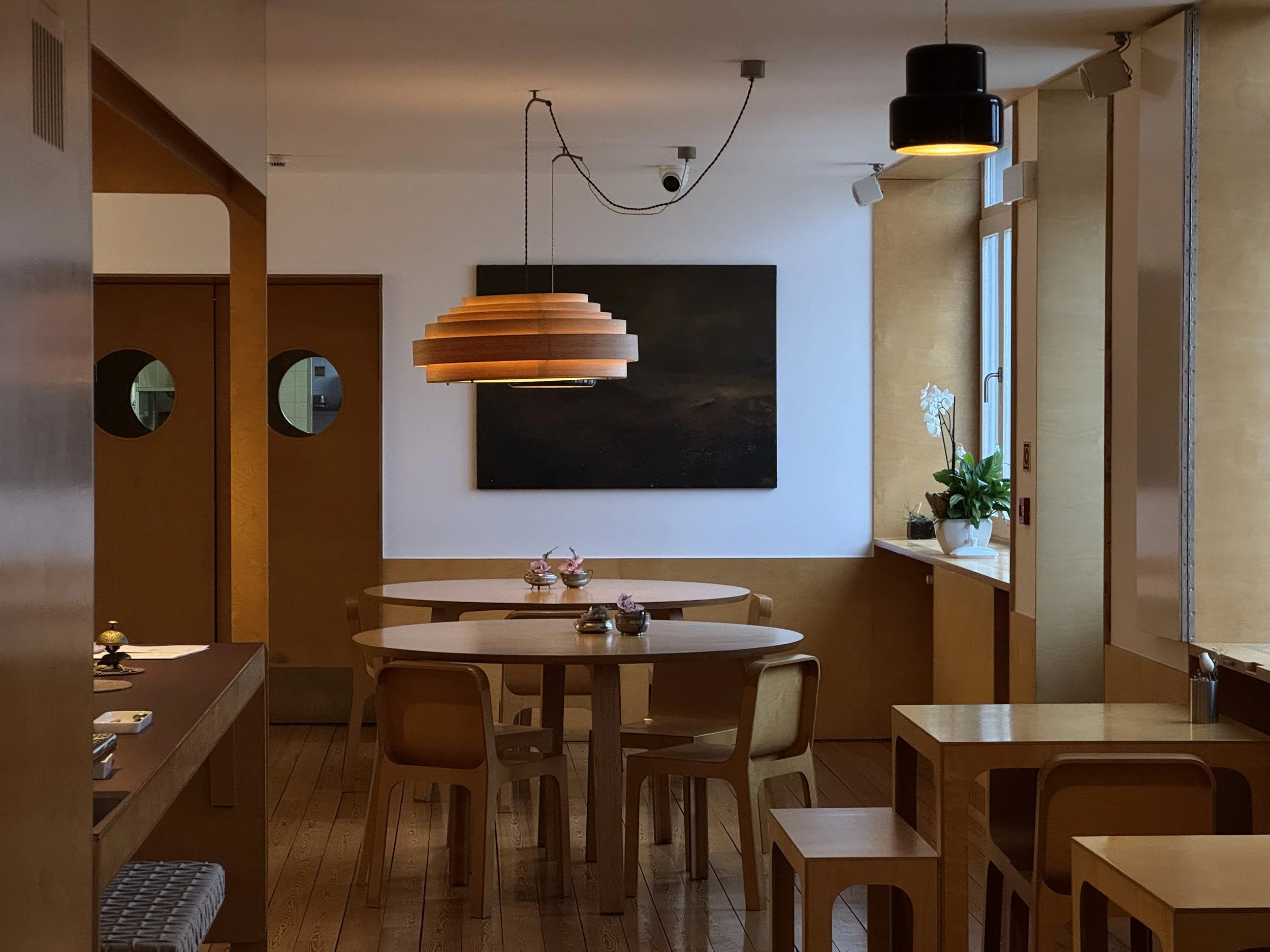
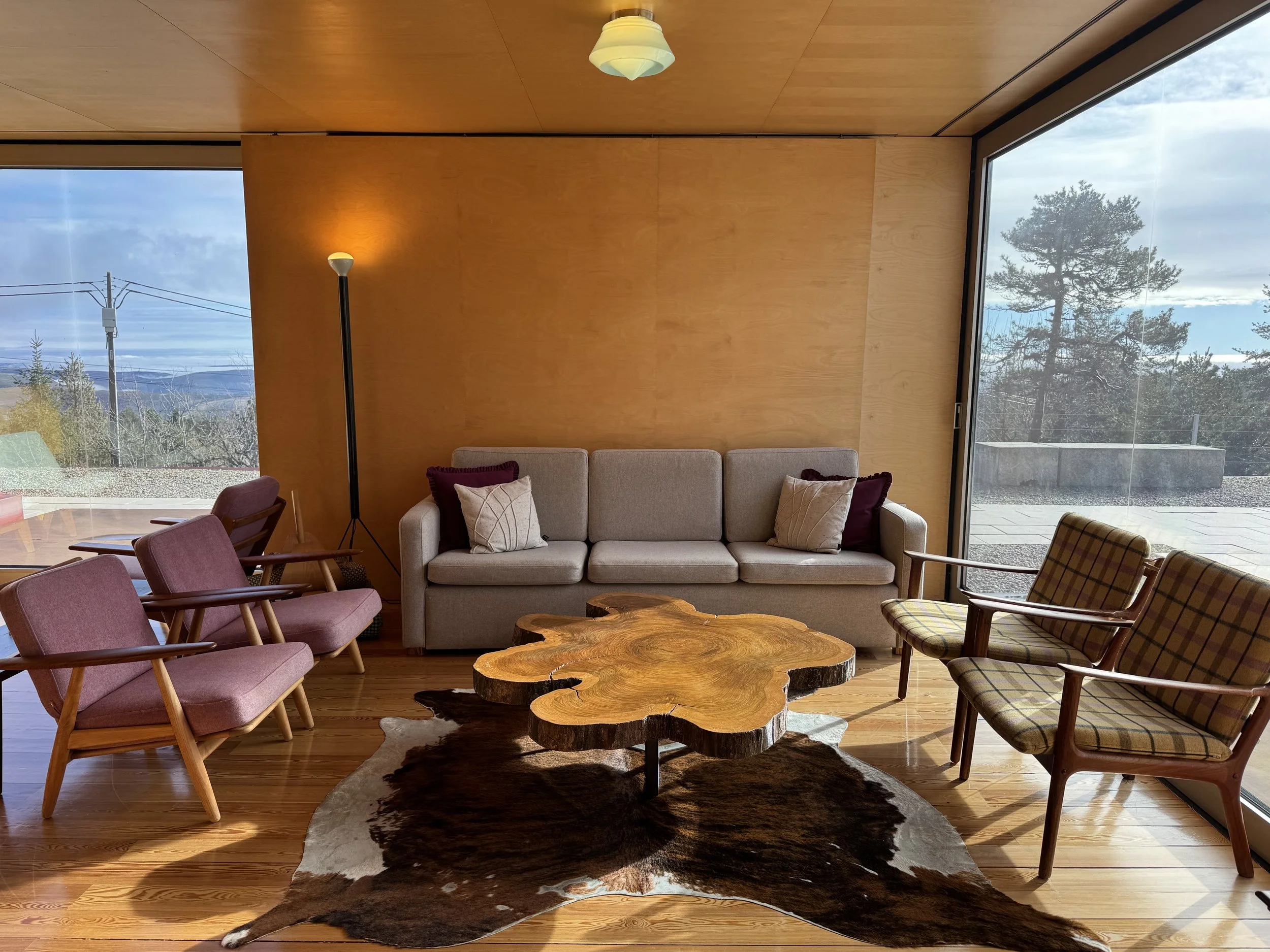
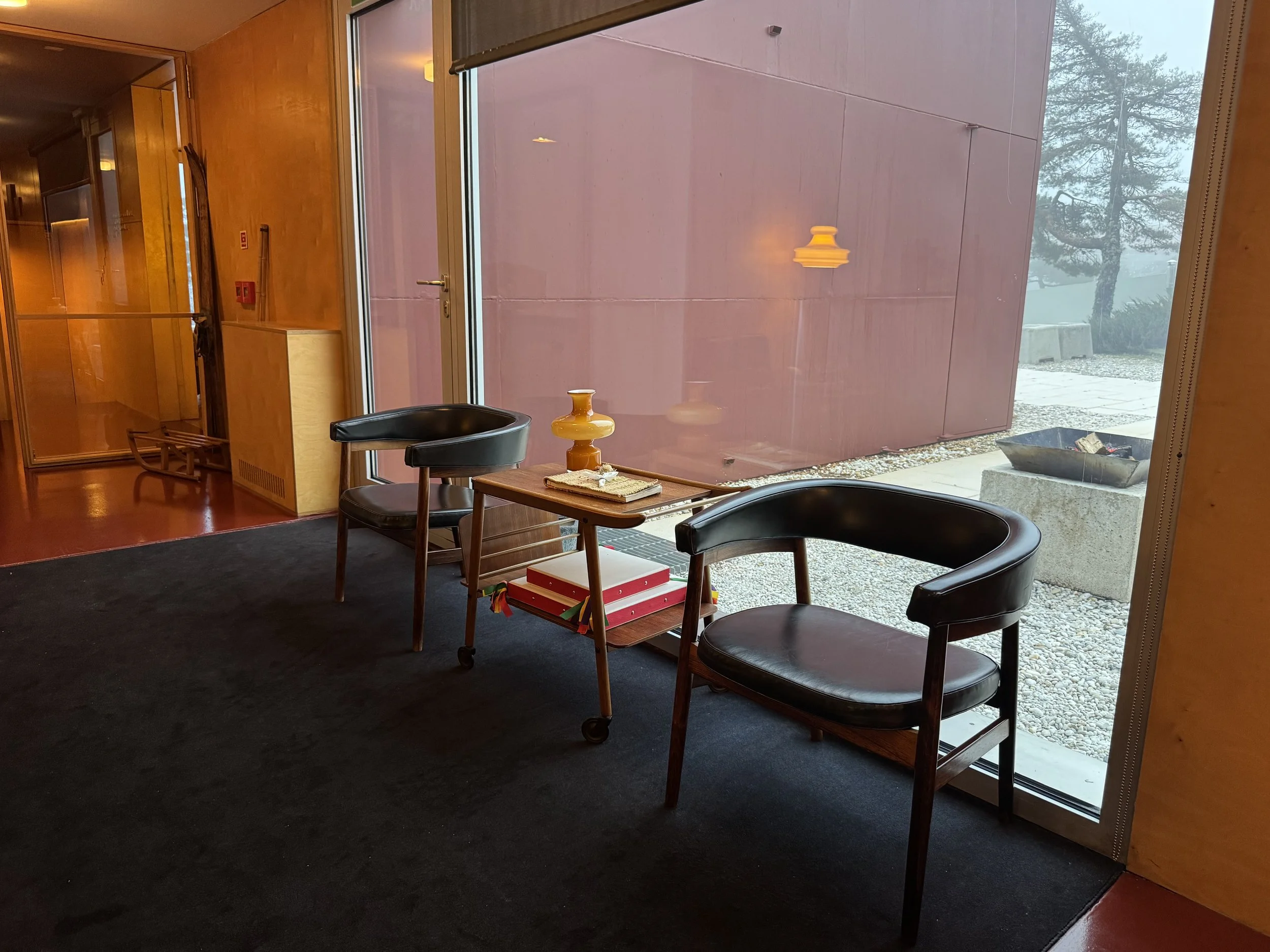
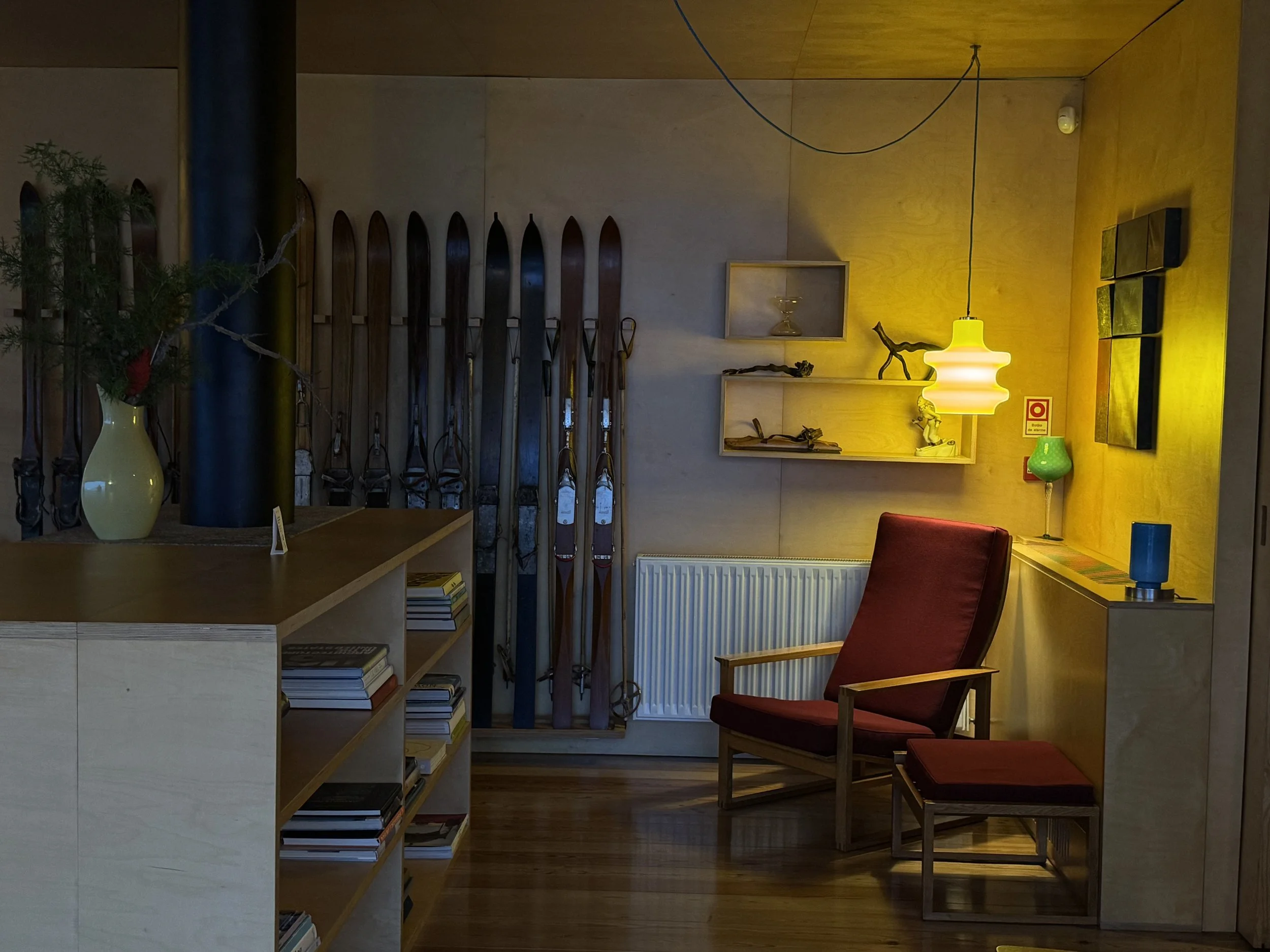
What makes Penhas extraordinary though is not just that it’s a hotel with a nice view (and that, it does, to be clear). It’s part of a living craft ecosystem, tied directly to the Burel Factory and the revival of Portugese wool heritage. In the early 2000’s, when Isabel Costa and João Tomás, a husband-and-wife duo acquired the Burel Factory, they did something genius: they integrated the factory and hospitality experience in such a way that the material becomes the story, and the story becomes the feeling of the stay.
Burel is made from wool sourced from sheep that have long been part of this mountain landscape. It’s the same fiber shepherds relied on for capes and outdoor gear in the Serra de Estrela. The cloth is thick, felted, naturally water and fire resistant, and insulates in only the way that wool can. And the Penhas owners have made it the soul of the hospitality of the hotel, with fabrics throughout the hotels produced entirely from Burel factory. They bring in unique furniture pieces from around the world and reupholster it in Burel because of its rare combination of beauty and quality.
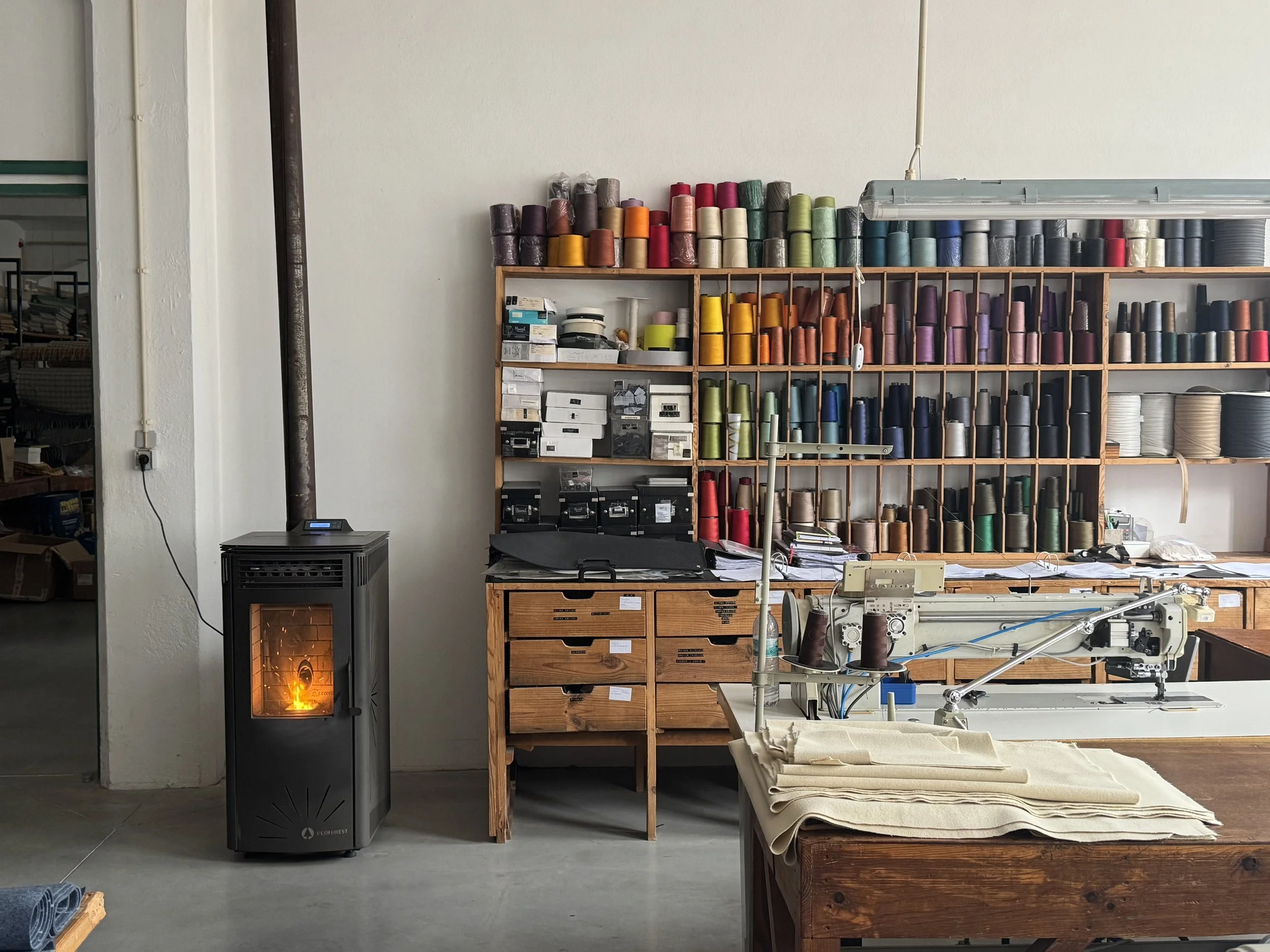
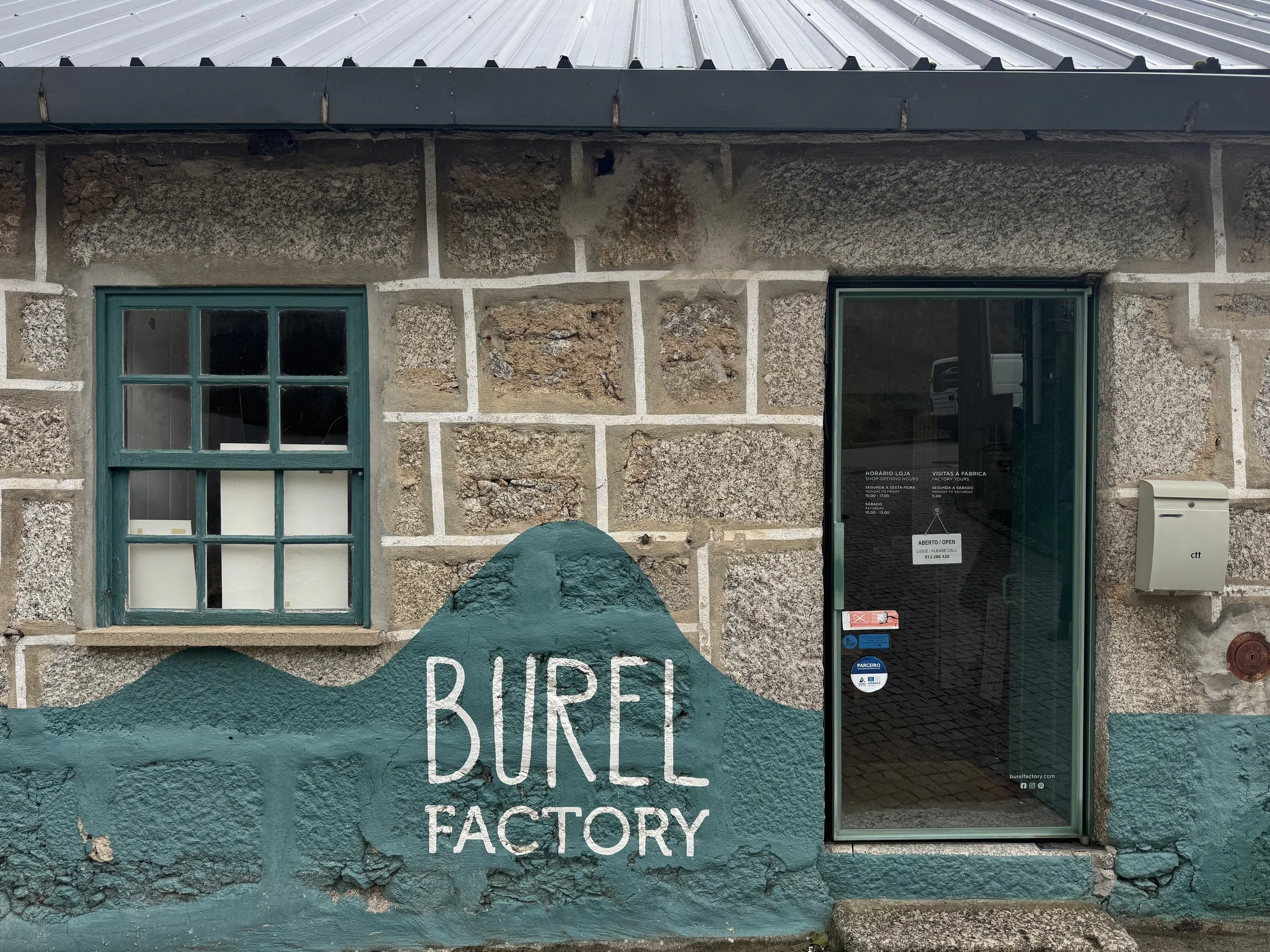
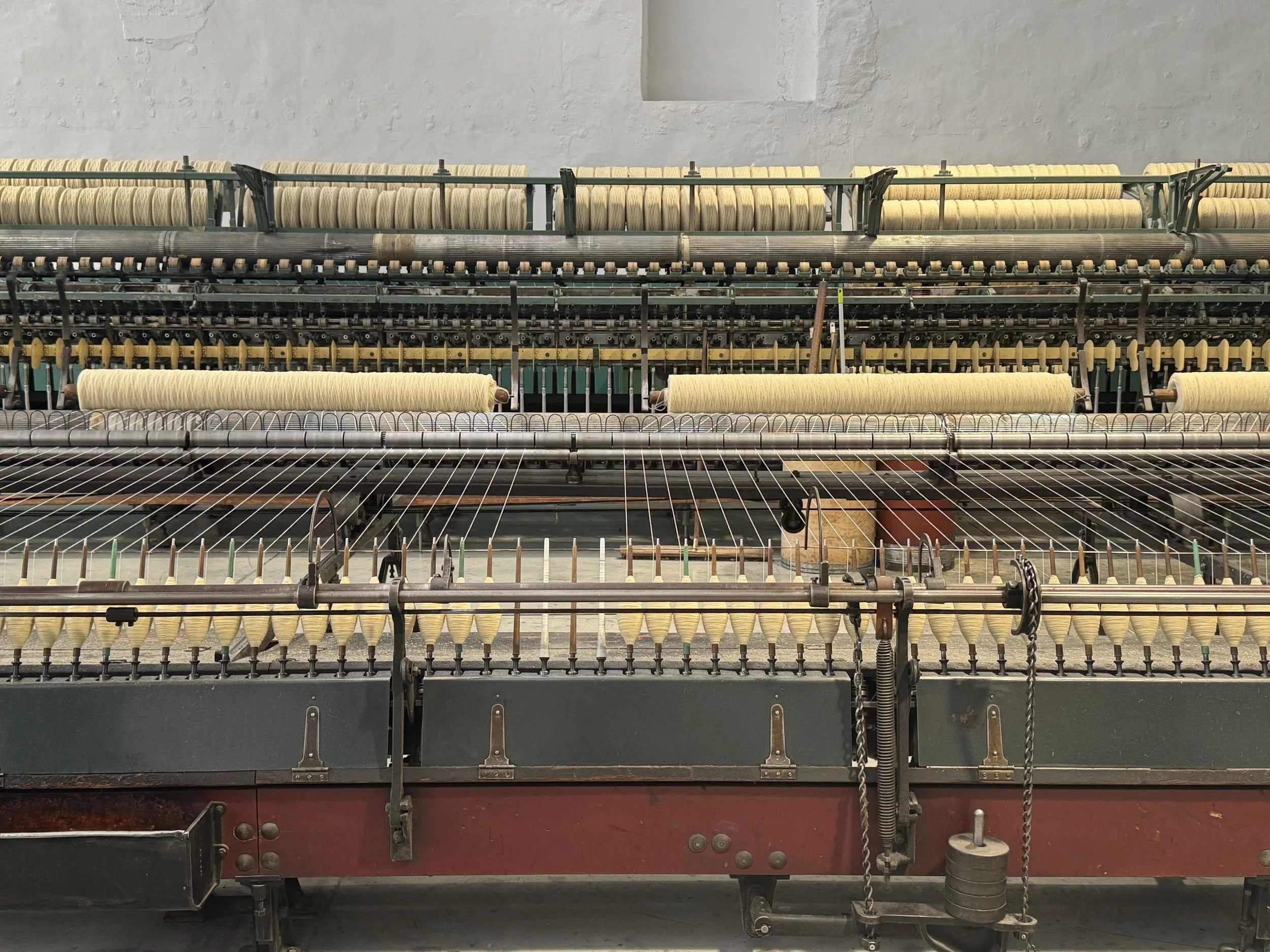
We had the privilege of visiting the Burel Factory and seeing the whole story in motion. Walking inside, you immediately notice the steady hum of consistent work. It feels alive, even though that’s silly because it’s just machines after all. The processing feels almost musical, like the building is a living breathing process, and the workers ushering the wool along are conductors. We watched the wool moving through its stages, in a well-worn rhythm. It feels disciplined and you can tell why this is a kind of craft people feel strongly matters enough to protect. The connection deeply clicked for us when actually seeing things in motion; this isn’t a borrowed storyline or aesthetic… it’s history being preserved, real time, one blanket pattern at a time.
Casa de Sao Lourenco carries the same mountain energy, but in its own distinct voice. It shares the same Serra de Estrela setting and deep respect for materials and craft and while very design-forward, it’s grounded and purposeful. Together, Penhas Douradas and Sao Lourenco tell a story. They show that hospitality can be so much more than just luxury. Their stories are not generic; they are rooted and they show a working legacy that still employs people and keeps a regional craft alive. If only we could all have this much meaning in our daily lives.
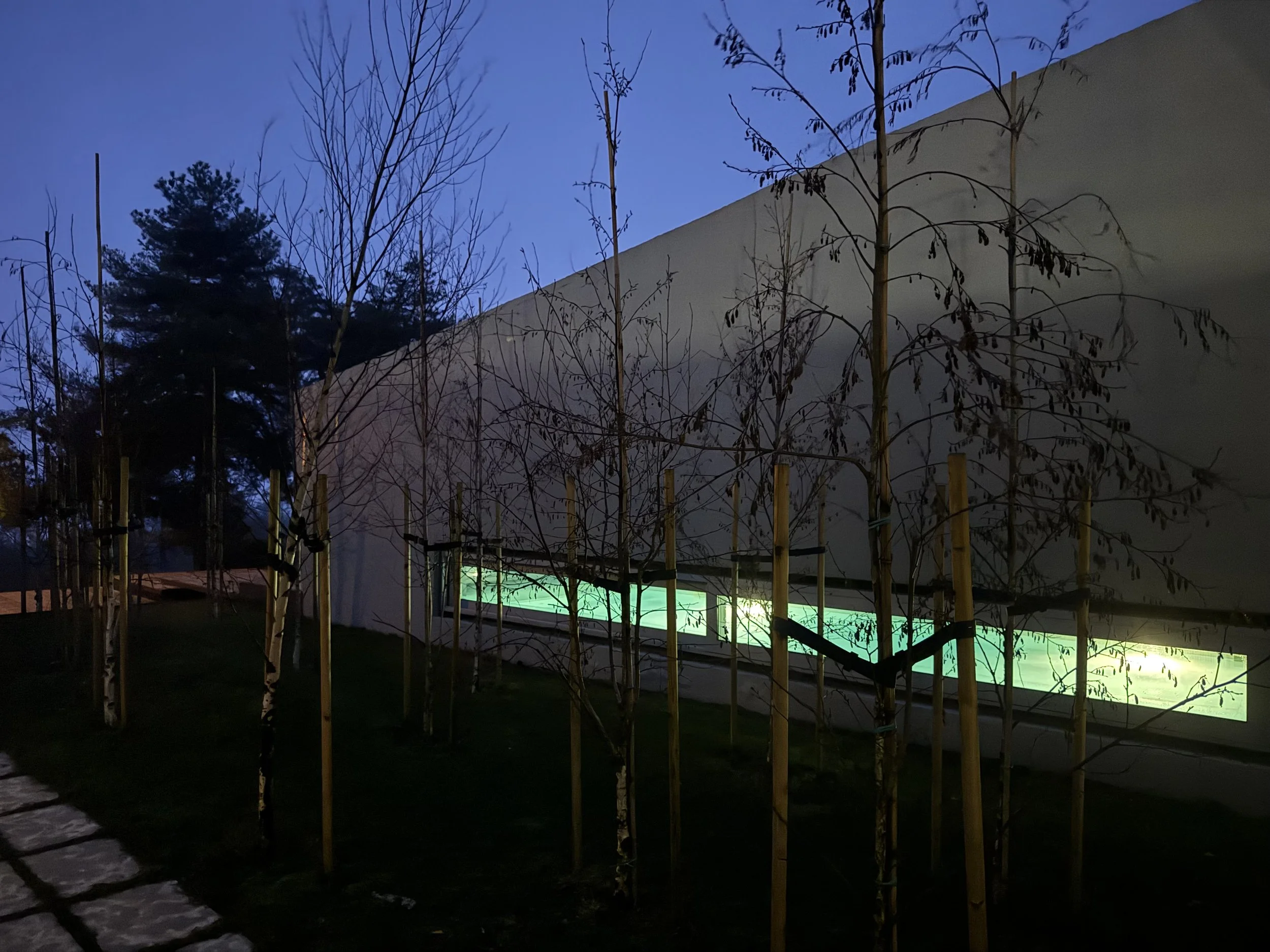
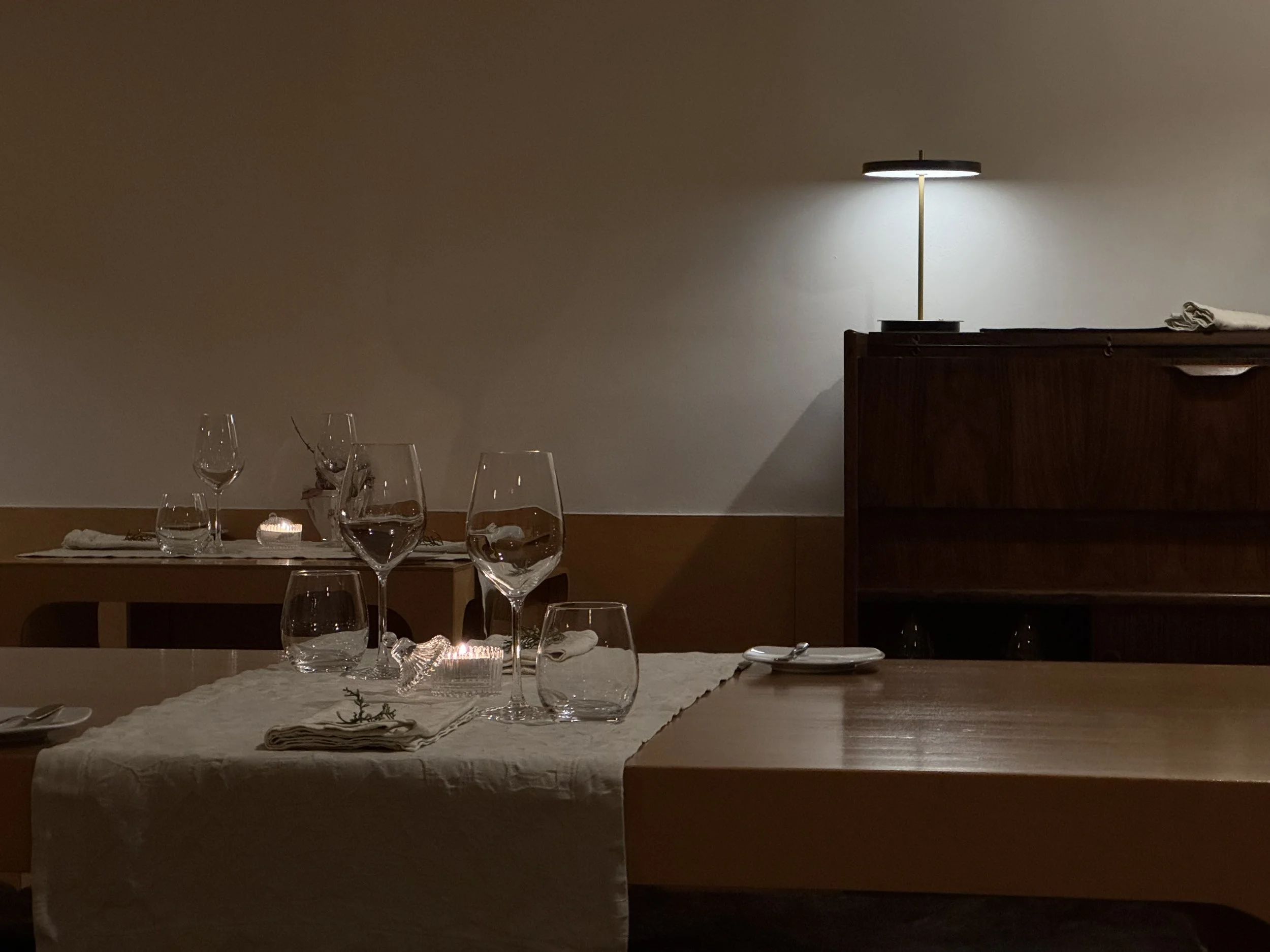
Where to Eat/Drink: When it comes to these mountain hotels, you want to stay put exactly where you are. We had the privilege of enjoying our meals at the Nubbin restaurant on the Penhas Douradas property and would eat there every night of the week if we could… so that’s our recommendation. Look no further.
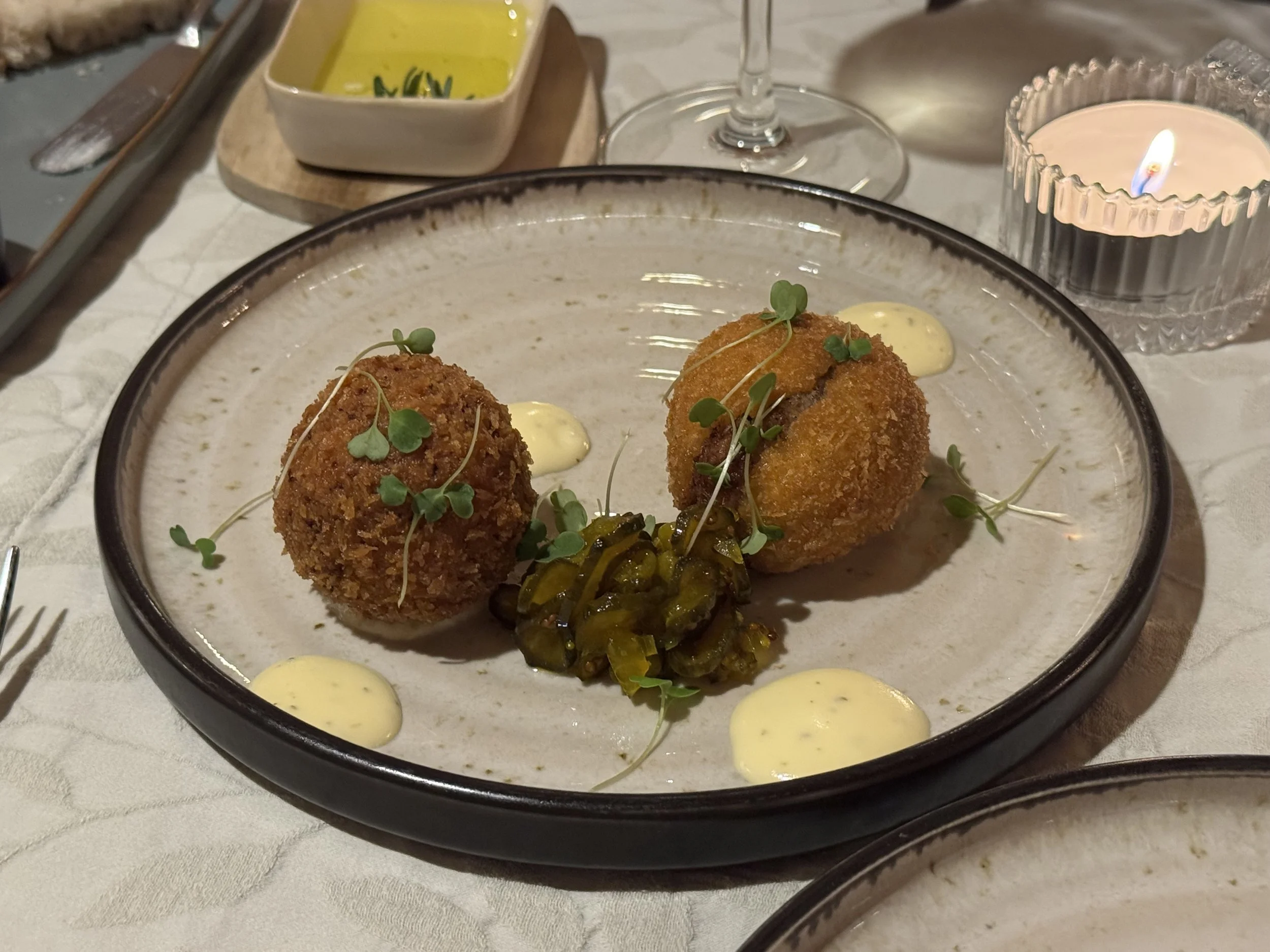
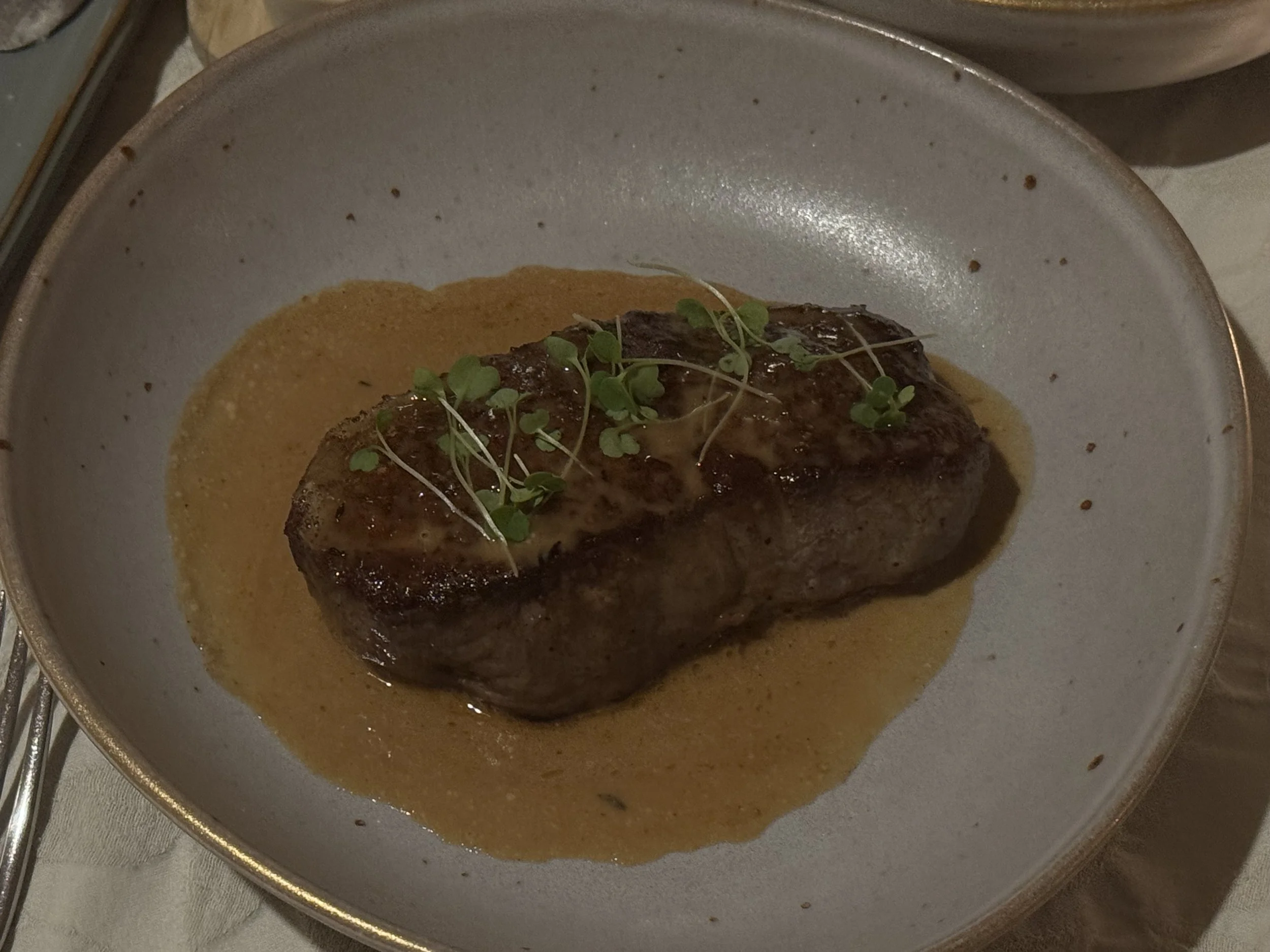
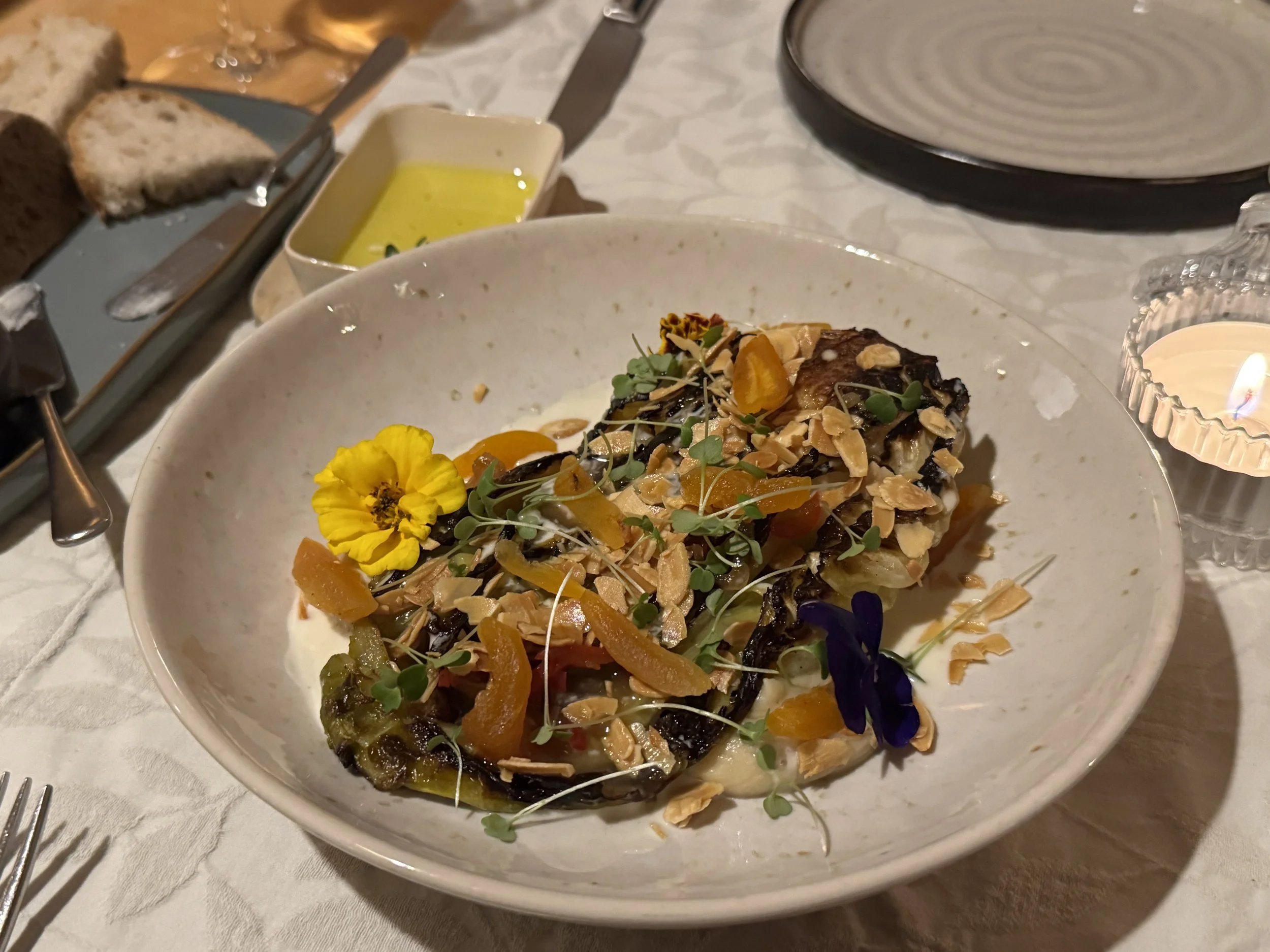
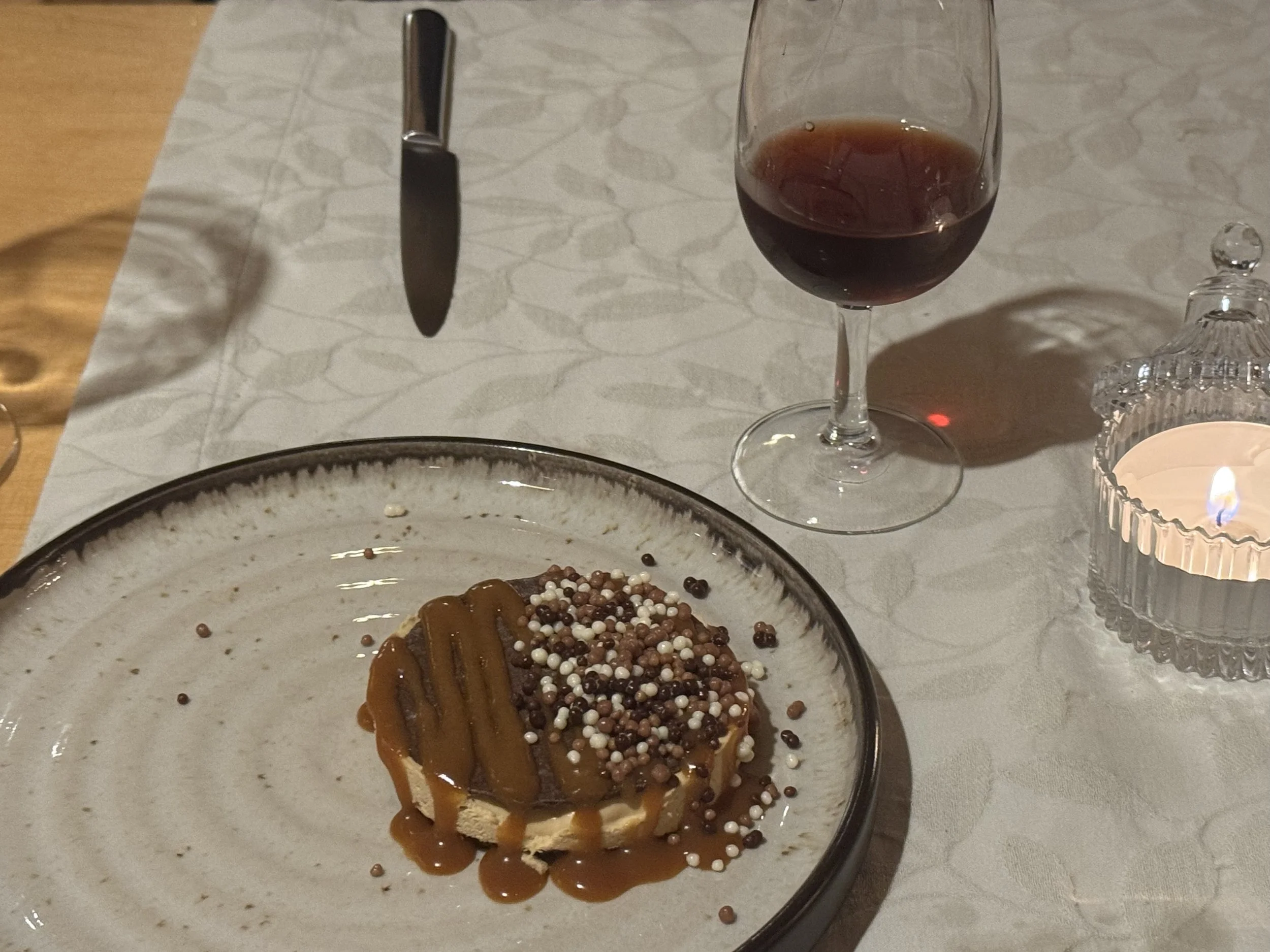
Things to Do: Start with the Burel Factory. Make time for a proper visit, not just a quick pop in. Seeing the wool become fabric in real time really changes how you experience the whole region.
Go up to Torre (the highest point) and the surrounding ridgelines. A great way to see Serra from its “roof”.
Do one real walk or snowshoe (the Casa can arrange this with a guide if you desire!) so you can get a feel for the terrain and take in all of the surrounding rockiness. Pick a trail and get out into the pine air for an hour or three.
Eat cheese. Serra de Estrela cheese is a big part of the region’s identity. Seek out a shop, tasting, or local producer if you can. Its rich, creamy, and very specific to the mountain landscape and its sheep.
Interesting tidbits to know: For a long time, Burel wool existed only in two colors, off white and brown, until dyeing became part of the factory’s evolution.
Serra da Estrela is mainland Portugal’s highest mountain range, and is full alpine, with snow, granite peaks, wind and everything you’d expect from an alpine environment.
Estrela means “star” and the range has long been tied to old navigation and folklore. It feels quite mythical and by the way, the starry skies are not so coincidentally absolutely brilliant.
I find it only appropriate to end this blog with a favorite Saint Exupery quote from The Little Prince, accordingly:
“You — you alone — will have the stars as no one else has them... In one of the stars I shall be living. In one of them I shall be laughing. And so it will be as if all the stars were laughing, when you look at the sky at night”. -Antoine de Saint-Exupéry